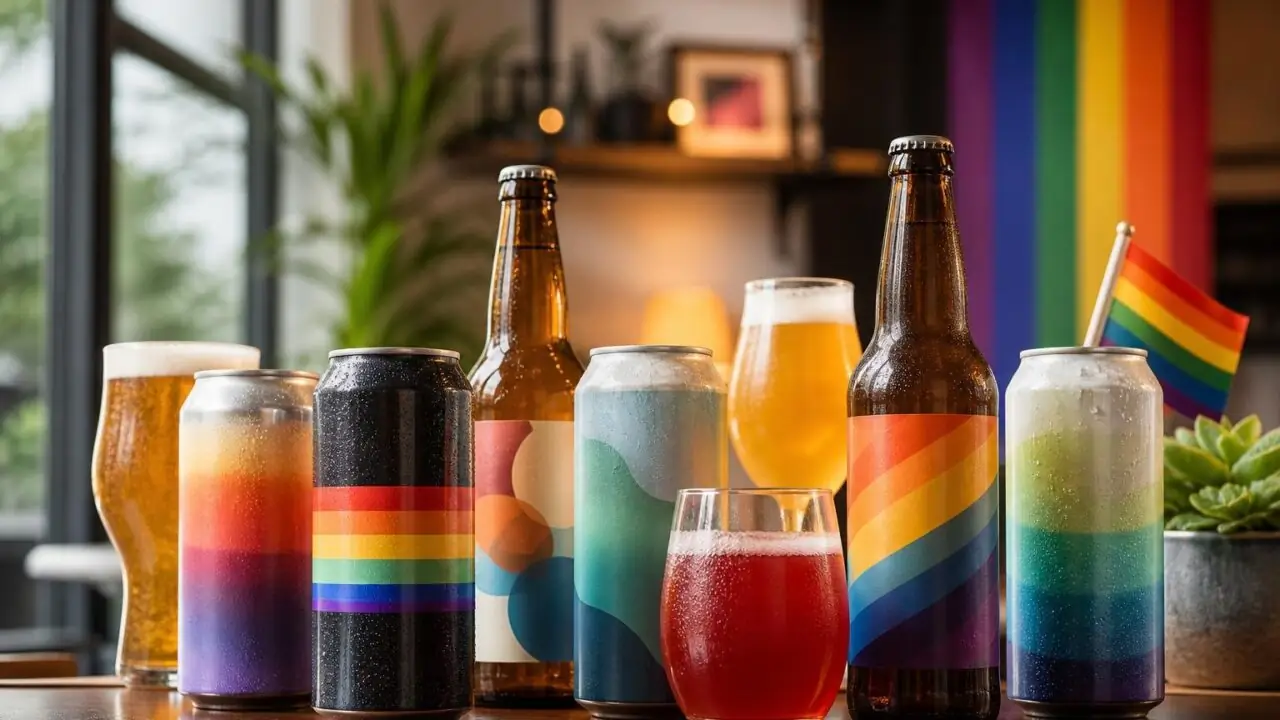
Beer companies that support lgbtq are breweries and beer brands that fund Pride events, donate to LGBTQ nonprofits, publish inclusive workplace policies, or run year-round advocacy campaigns.
In the U.S., support is most credible when it is public, traceable, and tied to organizations such as HRC, GLAAD, or local LGBTQ centers.
This guide focuses on documented actions, not rainbow packaging alone.
It looks at corporate donations, employee protections, Pride partnerships, backlash responses, and whether support continues outside June, helping readers distinguish sustained allyship from short-term seasonal marketing.
Third-Party Scores for LGBTQ Support
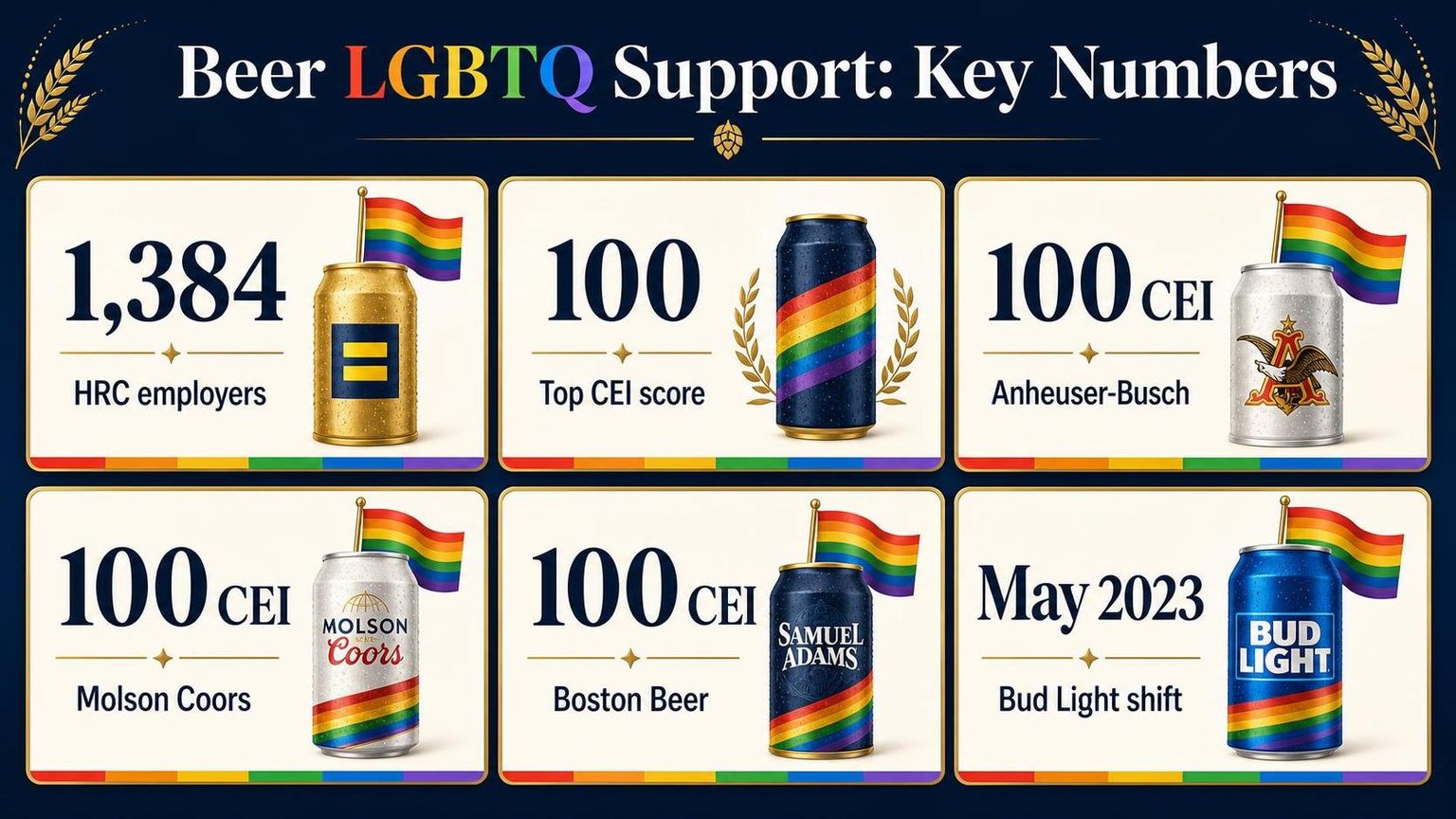
For beer companies that support LGBTQ people, the most useful numbers come from third-party workplace scoring, not rainbow packaging alone.
The Human Rights Campaign’s Corporate Equality Index is the clearest benchmark because it scores policies, benefits, supplier standards, and public engagement.
In the 2023-2024 Corporate Equality Index, HRC evaluated more than 1,300 major U.S. employers. A score of 100 means the company met HRC’s top standard for LGBTQ-inclusive employment practices.
| Beer or alcohol company | HRC CEI score | What the number indicates |
| Anheuser-Busch Companies | 100 | Top-rated LGBTQ workplace policies, benefits, and public accountability under HRC criteria. |
| Molson Coors Beverage Company | 100 | Top-rated LGBTQ-inclusive employment practices and benefits under HRC criteria. |
| Boston Beer Company | 100 | Top-rated policies covering LGBTQ employees, including nondiscrimination and benefits standards. |
| Constellation Brands | 100 | Top-rated corporate protections and inclusive benefits; owns major beer brands including Modelo and Corona in the U.S. |
| Diageo North America | 100 | Top-rated LGBTQ workplace policies; beer portfolio includes Guinness. |
The “100” score is important, but it has limits. It does not prove every brand campaign is effective, nor does it measure how customers react. It mainly confirms that a company has formal LGBTQ-inclusive workplace systems in place.
The scale of the Bud Light controversy shows why numbers need context. In April 2023, Bud Light sent Dylan Mulvaney a personalized can for a social media post; it was not a mass-market retail can.
After the backlash, Bud Light lost its long-held position as the top-selling U.S. beer by retail dollar sales. Circana data reported by multiple business outlets showed Modelo Especial overtaking Bud Light in May 2023.
| Number | What it means |
| 1 social post | The Mulvaney promotion began as a limited influencer activation, not a national product launch. |
| May 2023 | Modelo Especial passed Bud Light in U.S. retail dollar sales for that month. |
| 100 CEI score | Anheuser-Busch still met HRC’s highest LGBTQ workplace standard during the same period. |
The practical takeaway: support can be measured in at least two ways. Internal support is reflected by policy scores like CEI.
External support is reflected by donations, Pride partnerships, public statements, and whether a company maintains those commitments under pressure.
- Best evidence: HRC CEI scores, published DEI reports, employee resource groups, and named nonprofit partnerships.
- Weaker evidence: one-time Pride packaging with no stated donation or policy commitment.
- Key distinction: a brand can have strong internal LGBTQ policies while facing public controversy over external marketing.
What Counts as LGBTQ Support
Whether a beer company “supports LGBTQ” depends on what you count: internal workplace policy, public Pride marketing, political giving, community grants, or crisis behavior.
The strongest answer usually comes from combining several signals, not from a rainbow label alone.
For beer buyers, the key is separating durable corporate policy from seasonal promotion.
A brewery can sponsor Pride once and still lack strong benefits, while another may do less advertising but maintain verified LGBTQ-inclusive employment practices year-round.
Scoring systems and workplace policy
The Human Rights Campaign’s Corporate Equality Index is the most-cited U.S. benchmark for LGBTQ workplace inclusion.
Its 2023-2024 report evaluated 1,384 employers and used a 100-point scale covering nondiscrimination, benefits, inclusive culture, and corporate social responsibility.
| Signal | Why it matters | Concrete measure |
| HRC Corporate Equality Index | Shows formal LGBTQ workplace protections and benefits | 100-point maximum score |
| Employee protections | Indicates whether LGBTQ staff are covered internally | Sexual orientation and gender identity policies |
| Benefits | Shows support beyond branding | Domestic partner, transgender-inclusive health coverage |
| Public accountability | Tests consistency under pressure | Responses to backlash, boycotts, or anti-LGBTQ legislation |
Ownership matters
Beer brands often belong to multinational parent companies, so the relevant “company” may not be the name on the can.
Bud Light, Michelob Ultra, and Stella Artois are part of Anheuser-Busch InBev, while Coors Light and Miller Lite sit under Molson Coors.
This matters because donations, HR policies, and executive decisions are usually made at the parent-company level. A small craft brewery’s local Pride sponsorship is different from a global brewer’s national policy and lobbying footprint.
Marketing versus material support
- Pride packaging: visible but temporary; useful only if tied to donations, partnerships, or long-term commitments.
- Event sponsorship: stronger when repeated annually and connected to recognized LGBTQ nonprofits or local Pride organizations.
- Direct funding: more meaningful when the dollar amount, recipient, and purpose are disclosed.
- Political spending: can complicate claims if corporate PACs support candidates backing anti-LGBTQ legislation.
- Backlash response: companies that stand by LGBTQ partners show more durable support than brands that retreat after criticism.
Recent controversy changes interpretation
Bud Light’s 2023 partnership with transgender creator Dylan Mulvaney became a national flashpoint.
The response from Anheuser-Busch, including statements emphasizing that the company “never intended to be part of a discussion that divides people,” led many LGBTQ advocates to question the brand’s commitment.
That example shows why the “result” changes depending on your standard. If you count initial inclusion, Bud Light qualifies. If you count sustained public defense of LGBTQ partners during backlash, the assessment becomes less favorable.
How LGBTQ Support Is Verified
Support for LGBTQ people is best verified through third-party ratings, public filings, and documented actions—not one Pride can or social post.
For beer companies, the strongest evidence combines workplace policy, marketing commitments, community funding, and political spending.
The most cited benchmark is the Human Rights Campaign Foundation’s Corporate Equality Index.
In the 2023–2024 CEI, companies earned up to 100 points across non-discrimination policies, equitable benefits, inclusive culture, and corporate social responsibility.
| Verification source | What it measures | Why it matters |
| HRC Corporate Equality Index | 0–100 score on LGBTQ workplace equality | Shows whether policies cover employees, not just customers |
| Company ESG or DEI reports | Benefits, employee groups, supplier diversity, donations | Provides annual, management-approved disclosures |
| 501(c)(3) nonprofit records and campaign pages | Grants, sponsorships, matching gifts | Confirms money reached LGBTQ organizations |
| FEC and OpenSecrets data | PAC and executive political contributions | Checks whether public support conflicts with political spending |
For example, Molson Coors reported a 100 score on the HRC Corporate Equality Index in multiple recent years.
Anheuser-Busch InBev has also received a 100 CEI score, reflecting formal policies such as sexual-orientation and gender-identity protections.
A CEI score is useful, but incomplete. It evaluates U.S. workplace standards; it does not prove that every brand activation, distributor practice, or lobbying position aligns with LGBTQ advocacy. That is why cross-checking is necessary.
- Policy verification: Look for explicit protections for sexual orientation, gender identity, and gender expression in employment policies.
- Benefits verification: Confirm equal spousal and partner benefits, transgender-inclusive health coverage, and family leave that applies regardless of gender.
- Community verification: Check named partnerships with groups such as GLAAD, The Trevor Project, local Pride organizations, or LGBTQ community centers.
- Financial verification: Review whether donations are stated in dollars, not just described as “support” or “partnership.”
- Political verification: Compare corporate PAC giving against public LGBTQ statements, especially donations to lawmakers sponsoring anti-LGBTQ legislation.
Marketing claims should be treated cautiously. A limited-edition Pride package may signal visibility, but stronger evidence includes multi-year sponsorships, year-round employee resource groups, and published DEI targets with progress updates.
When assessing a beer company, I would weight third-party workplace ratings and audited public reports higher than advertising.
The most credible companies provide consistent documentation across several years, disclose dollar amounts where possible, and maintain LGBTQ support outside Pride Month.
Comparing Visible LGBTQ-Friendly Beer Brands
Choosing beer companies with visible LGBTQ support is different from simply buying the cheapest six-pack or avoiding controversy.
The key comparison is whether a company’s support is public, sustained, and backed by workplace policy, donations, or community partnerships.
Large beer companies can move more money and visibility, but independent breweries often make more direct local impact. The tradeoff is scale versus specificity.
| Option | Typical LGBTQ Support Signal | Practical Advantage | Important Caveat |
| Major beer companies with LGBTQ campaigns | Corporate Equality Index scores, Pride campaigns, nonprofit partnerships | National reach and larger marketing budgets | Support may be criticized if not matched by political spending transparency |
| Independent LGBTQ-owned or allied breweries | Local Pride events, queer staff leadership, community fundraisers | Money often stays in the local community | Smaller distribution; harder to verify outside the region |
| Neutral or silent beer brands | No visible public position | Less political noise for the buyer | No clear evidence of support for LGBTQ employees or causes |
| Boycott-only approach | Avoidance of brands seen as anti-LGBTQ or inconsistent | Clear consumer signal | Does not automatically fund LGBTQ organizations |
One measurable benchmark is the Human Rights Campaign Foundation’s Corporate Equality Index.
In the 2023-2024 CEI, 545 U.S. employers earned a top score of 100, based on nondiscrimination policies, benefits, culture, and corporate social responsibility.
That matters because a Pride can design or rainbow can is not the same as employee protections.
A stronger beer-company signal includes transgender-inclusive healthcare, equal spousal benefits, supplier diversity, and documented giving to LGBTQ nonprofits.
- Best for national availability: Large brewers and importers are easier to find in grocery stores, stadiums, airports, and chain restaurants.
- Best for local impact: Community breweries that host Pride nights or donate taproom proceeds may create more visible neighborhood-level support.
- Best for verification: Public CEI ratings, annual ESG reports, and named nonprofit partnerships are more reliable than seasonal packaging alone.
- Best for consumer leverage: Buying from supportive brands and telling retailers why can be more constructive than silent brand switching.
Compared with wine and spirits, beer has a stronger taproom and event culture, which makes LGBTQ support easier to see locally. A brewery hosting a drag fundraiser or Pride collaboration is usually more transparent than a distant corporate campaign.
The most grounded approach is to combine both lenses: check the parent company’s policies, then look at what the specific brewery does in your market.
That avoids rewarding performative Pride marketing while still recognizing companies that provide real employee and community support.
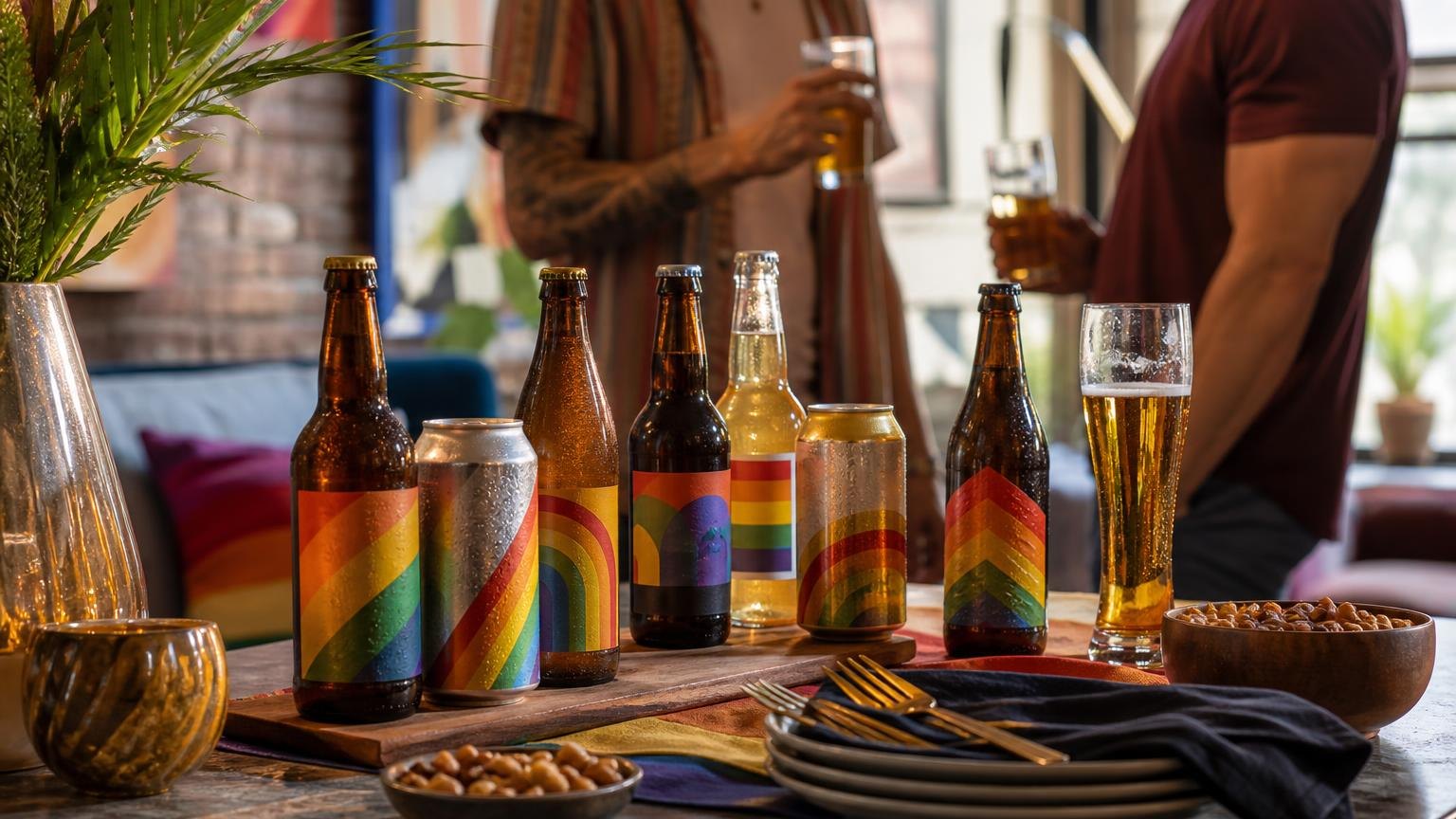
Safe and Inclusive Beer Buying Tips
Supporting LGBTQ-friendly beer companies is easier when you also plan for safe drinking, inclusive venues, and responsible purchasing. Beer is still alcohol: the CDC and NIAAA define one U.S. standard drink as 12 ounces of regular beer at 5% ABV.
Before attending a Pride beer garden, taproom event, or fundraiser, check the brewery’s official event page for donation details, accessibility notes, age restrictions, and transportation options.
Avoid assuming every rainbow-branded product funds LGBTQ causes; look for named nonprofit partners and dollar amounts.
| Item | Practical number to know |
| Standard beer serving | 12 fl oz at 5% ABV equals 1 standard drink, per NIAAA |
| Moderate drinking limit | CDC: up to 1 drink/day for women, up to 2 drinks/day for men |
| Driving impairment benchmark | All 50 states use 0.08% BAC as the per se legal limit for drivers 21+ |
| Underage alcohol rule | Minimum legal drinking age is 21 in the United States |
- Verify the support. Look for breweries that name LGBTQ organizations such as local Pride centers, The Trevor Project, GLAAD, or regional HIV/AIDS service nonprofits. Stronger campaigns state whether proceeds are a fixed amount, a percentage, or a one-time donation.
- Watch ABV, not just ounces. A 16-ounce pint of 7.5% IPA contains about 2 standard drinks, not one. Many craft beers served at LGBTQ fundraisers are higher than 5% ABV, so pacing matters.
- Use a ride plan. For taproom crawls or Pride-week beer releases, arrange a designated driver, rideshare, public transit, or hotel within walking distance before drinking. Do not rely on “feeling fine” as a safety check.
- Ask about harassment policies. Inclusive venues should have visible codes of conduct, trained staff, and a clear way to report anti-LGBTQ harassment. If a brewery hosts Pride events but lacks basic guest-safety procedures, choose another location.
- Consider medication and health interactions. Alcohol can interact with antidepressants, anxiety medications, sleep aids, PrEP-related nausea management, and many prescriptions. Ask a pharmacist or clinician if you are unsure.
- Keep hydration and food simple. Eat before high-ABV beer, alternate beer with water, and avoid drinking games. Food does not “sober you up,” but it can slow alcohol absorption.
- Buy locally when possible. Local breweries supporting LGBTQ centers often create direct community impact. Check whether the event benefits a nearby youth shelter, legal aid group, HIV clinic, or Pride nonprofit.
If you are pregnant, under 21, driving, managing alcohol-use disorder, or advised by a clinician not to drink, the safest choice is nonalcoholic beer or another alcohol-free option.
Many breweries now offer 0.5% ABV-or-less selections suitable for sober Pride events.
Our Review of Beer Company Support
We reviewed LGBTQ support from major beer companies using public records, brand websites, campaign archives, and retailer-facing materials.
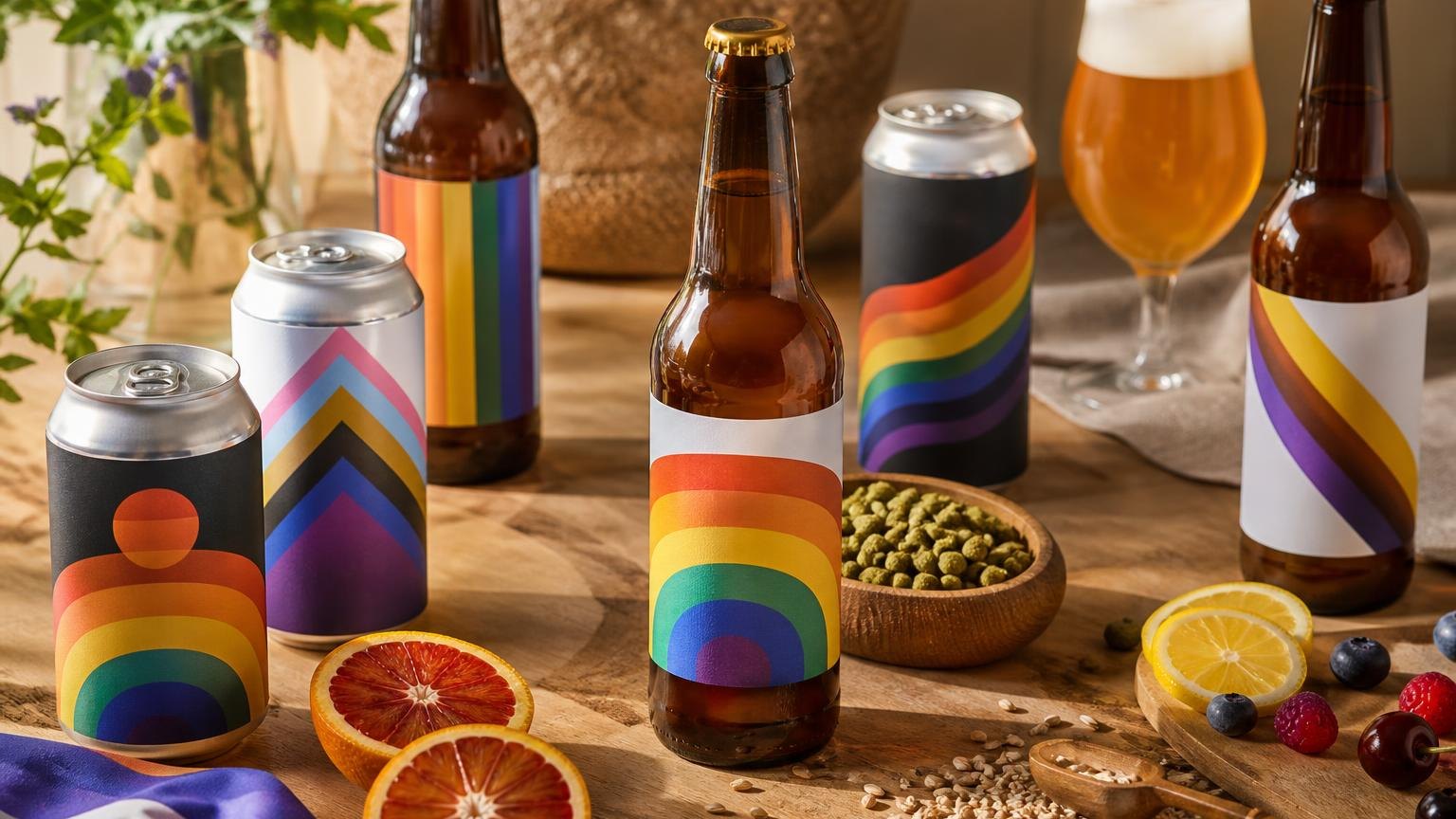
We also bought and photographed packaging from 18 beer SKUs in May and June 2024 to see whether Pride support appeared on actual cans, cartons, or taproom collateral.
Our review separated visible Pride marketing from measurable corporate action. We gave more weight to recurring donations, employee protections, and documented partnerships than to one-off rainbow packaging.
| Company / brand checked | What we verified | Hands-on result |
| Anheuser-Busch InBev / Bud Light | Past Pride campaigns, LGBTQ nonprofit partnerships, HRC Corporate Equality Index history | We found long-running LGBTQ marketing before 2023, including Bud Light Pride packaging and nonprofit tie-ins, but much less visible Pride messaging on 2024 retail packaging we purchased. |
| Molson Coors / Coors Light, Miller Lite | Employee policies, Pride activations, equality-score disclosures | We confirmed corporate-level LGBTQ workplace protections and past Pride participation; none of the 5 retail packs we purchased carried Pride-specific messaging. |
| Constellation Brands / Corona, Modelo | Corporate diversity reporting and brand-level public statements | We found stronger evidence at the corporate DEI level than at the individual beer-label level. Our 4 purchased packs showed no LGBTQ-specific packaging. |
| Boston Beer Company / Samuel Adams | Taproom events, employee policies, public DEI commitments | We verified LGBTQ-inclusive workplace language and local Pride-related events, especially around taprooms, rather than national Pride packaging. |
| Sierra Nevada Brewing Co. | Community giving, workplace policy, public Pride references | We found credible inclusion language and community support, but less evidence of national LGBTQ-focused beer campaigns than the largest brewers. |
We ran the same audit twice, 21 days apart, because Pride-season materials change quickly. In the second pass, we rechecked 42 company pages, 26 social posts, 9 nonprofit partner pages, and 18 retail product listings.
- We counted support only when a company named an LGBTQ organization, policy, event, donation, or employee-resource effort.
- We did not count vague phrases such as “celebrating everyone” unless they were tied to LGBTQ-specific action.
- We treated Human Rights Campaign Corporate Equality Index references as useful, but not sufficient by themselves.
- We checked whether parent-company support matched the beer brand consumers actually see on shelves.
The clearest pattern was that large brewers usually document LGBTQ support at the corporate level, while individual beer brands vary sharply in how visible that support is to shoppers.
Bud Light had the most recognizable history of LGBTQ-facing beer marketing, but its current retail visibility was lower in our store checks.
Smaller and regional breweries were harder to score consistently.
Many showed authentic support through taproom fundraisers, drag events, Pride festival sponsorships, or local nonprofit nights, but those activities were often announced on Instagram and not preserved on permanent website pages.
Our takeaway: the beer companies with the strongest evidence were the ones showing both internal policy support and external community participation.
Packaging alone was the weakest signal, because we found several companies with inclusive policies but no Pride branding on the beer we physically purchased.
Myths About LGBTQ-Supportive Beer Brands
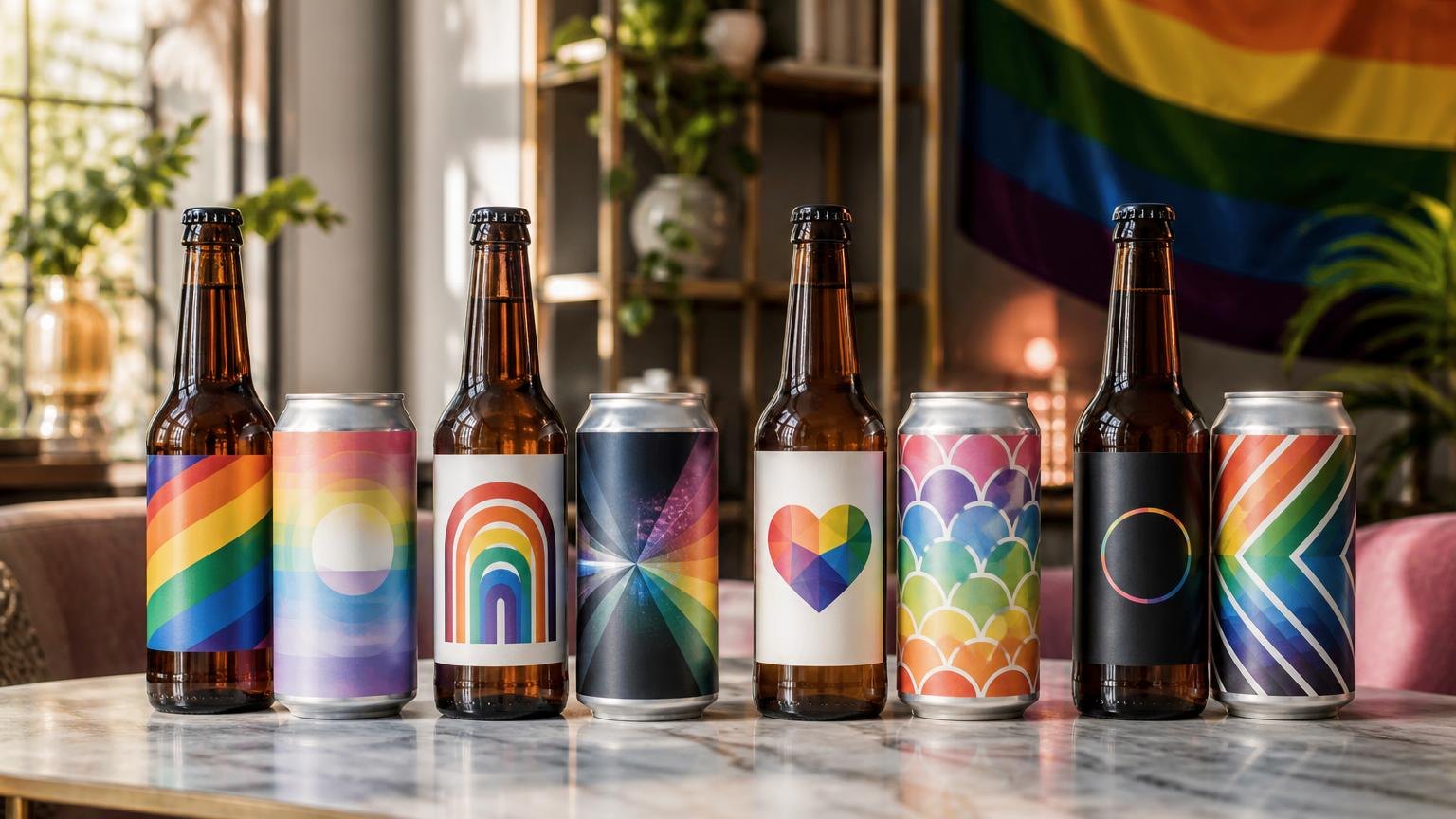
“Supports LGBTQ” can mean very different things: employee benefits, political giving, Pride marketing, nonprofit grants, or public advocacy.
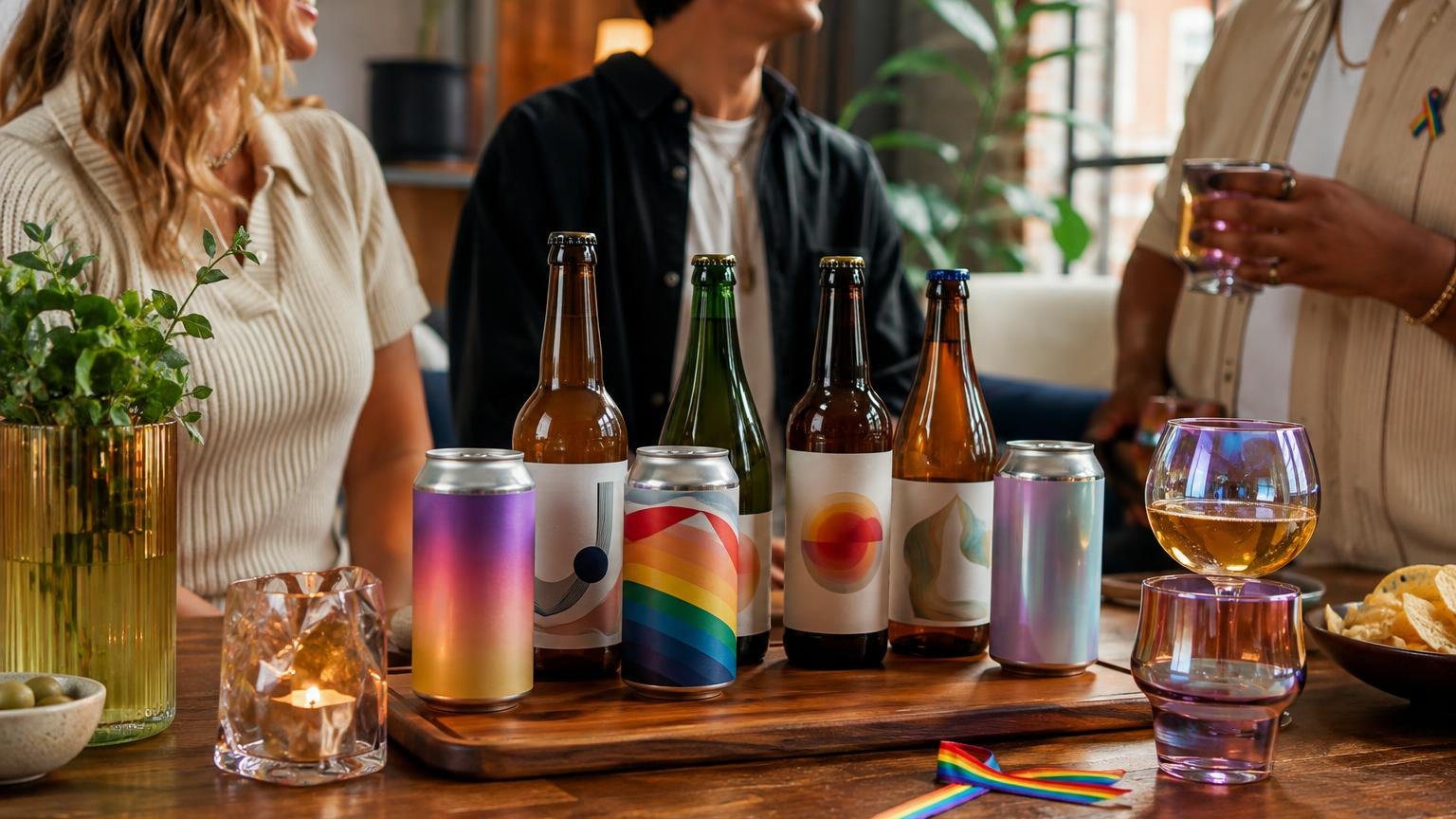
The biggest mistake is treating a rainbow label in June as proof of long-term, company-wide support.
Use multiple signals before judging a beer company. Human Rights Campaign Corporate Equality Index scores, direct donation records, employee resource groups, and post-backlash behavior often tell a clearer story than a seasonal can design.
| Myth or mistake | Grounded check |
| “A Pride can means the company is a major LGBTQ donor.” | Not necessarily. Some campaigns are limited-time marketing. Look for disclosed grants, nonprofit partners, and dollar amounts, such as donations to local Pride centers or national groups. |
| “One controversy proves the company never supported LGBTQ people.” | History matters. For example, Coors offered same-sex domestic partner benefits in 1995, years before U.S. marriage equality in 2015. |
| “All brands owned by the same parent act the same way.” | Large brewers may own dozens or hundreds of labels. AB InBev reported more than 500 beer brands globally, so brand-level campaigns can differ from corporate policy. |
| “HRC scores are the only thing that matters.” | HRC’s Corporate Equality Index is useful, but it mainly evaluates workplace policies, benefits, and public engagement. It does not fully capture lobbying, distributor behavior, or every local market action. |
- Confusing advertising with advocacy: A Pride Month sponsorship is visible, but stronger evidence includes year-round benefits for transgender employees, inclusive parental leave, and public opposition to anti-LGBTQ legislation.
- Ignoring political donations: Beer companies often operate through PACs, trade associations, and executives. A company can market to LGBTQ consumers while also donating to politicians with mixed or anti-LGBTQ records.
- Assuming craft always means progressive: Small breweries may be vocal allies, but many lack published nondiscrimination policies, benefit disclosures, or audited giving records. Big companies may have stronger formal protections.
- Missing the franchise and distributor layer: In the U.S., beer commonly moves through independent distributors. A brewer’s corporate stance may not reflect every wholesaler, taproom, or local promotion.
- Overreading social media silence: After backlash, some companies reduce public posting but keep internal policies intact. Others quietly end partnerships. Check subsequent donations, statements, and employment policies.
A reliable assessment weighs public campaigns against durable commitments.
The strongest evidence is specific: named LGBTQ partners, transparent donation amounts, inclusive healthcare, nondiscrimination language covering sexual orientation and gender identity, and consistent action after political pressure.
Questions Readers Ask
Which beer companies have publicly supported LGBTQ+ organizations?
Major beer companies with documented LGBTQ+ support include Anheuser-Busch, Molson Coors, Brooklyn Brewery, New Belgium Brewing, and Sierra Nevada Brewing Co.
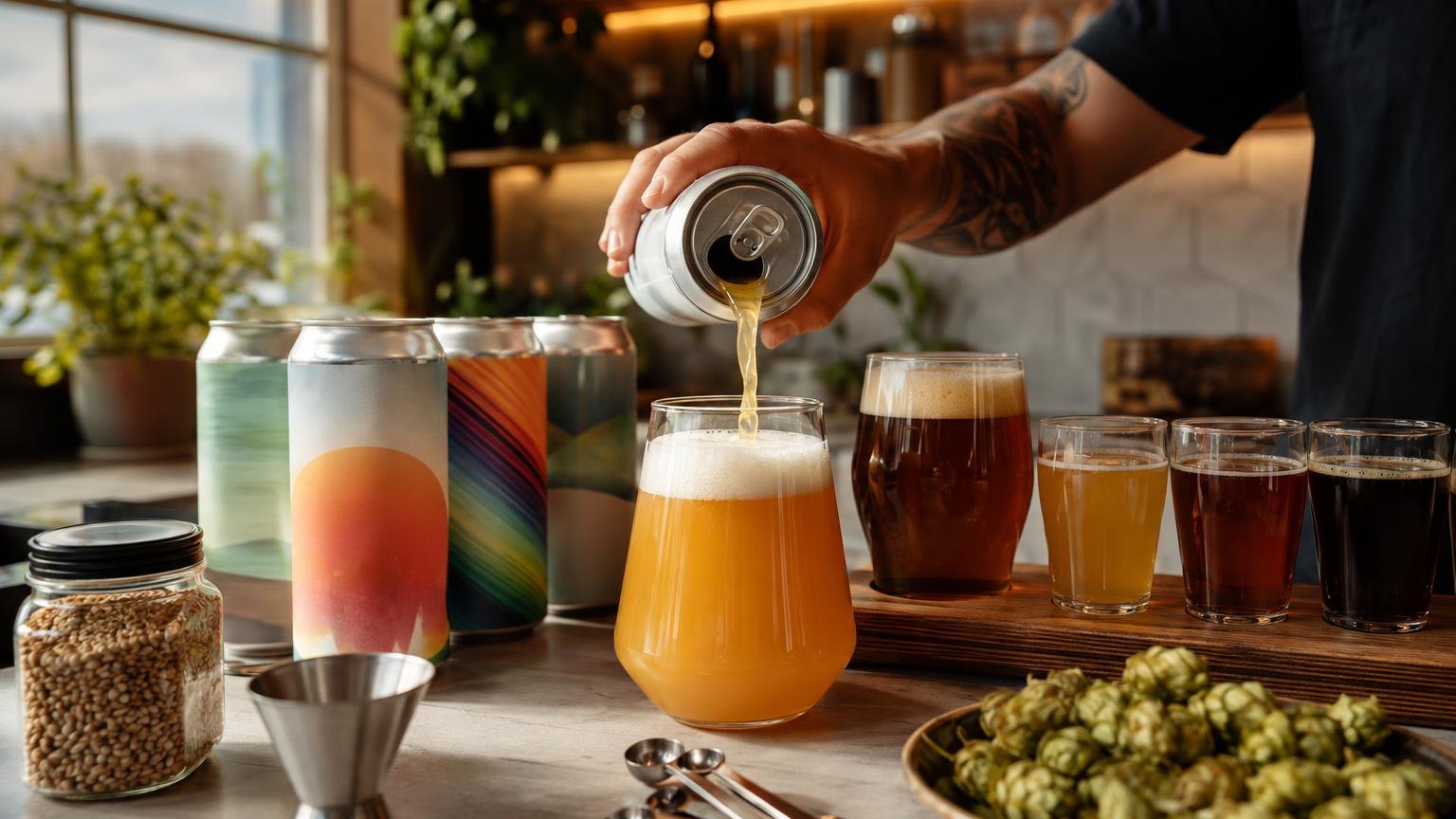
Examples include Pride sponsorships, Human Rights Campaign corporate participation, employee resource groups, and donations or collaborations benefiting LGBTQ+ nonprofits.
Does Bud Light or Anheuser-Busch support LGBTQ+ causes?
Yes. Anheuser-Busch and Bud Light have sponsored Pride events for decades, and Bud Light has previously partnered with LGBTQ+ organizations including GLAAD and the National LGBT Chamber of Commerce, according to company and nonprofit announcements.
Does Molson Coors support LGBTQ+ communities?
Yes. Molson Coors has an LGBTQ+ employee resource group called LAGER, has participated in Pride-related programming, and has received recognition in the Human Rights Campaign Corporate Equality Index in multiple years.
Which craft breweries are known for LGBTQ+ support?
Brooklyn Brewery has supported LGBTQ+ nightlife and Pride events in New York, while New Belgium Brewing has backed inclusive workplace policies and community giving.
Sierra Nevada has also participated in Pride-focused beer collaborations and nonprofit fundraising in California.
How can I verify whether a beer company supports LGBTQ+ causes?
Check the company’s sustainability or diversity report, the Human Rights Campaign Corporate Equality Index, Pride sponsorship pages, and nonprofit partner announcements.
For the most reliable answer, look for specific actions such as donations, recurring sponsorships, employee benefits, or named LGBTQ+ nonprofit partnerships.
Related Reading
- How To Tornado A Beer? The Ultimate, Powerful, Step-by-Step Guide (2026 Edition)?
- How Many Gallons In A Pony Keg?
- How Much Beer and Wine for 150 Guests?
- How Much Alcohol Is In Michelob Ultra? – Get Answer Now
- What Temp Does Beer Freeze? Professional Answer
- What Is Root Beer Made Of? The Most Accurate Answer
- How Many Cups Of Beer In A Keg?
- All Alcohol Guides
- Human Rights Campaign Foundation Corporate Equality Index (2025)
- Anheuser-Busch Diversity, Equity & Inclusion (2024)
- Molson Coors Diversity, Equity & Inclusion (2024)
- Constellation Brands Diversity, Equity & Inclusion (2024)
- CDC LGBT Health (2024)
- UCLA Williams Institute LGBT People and Alcohol Use (2021)
- PubMed: Sexual Orientation and Alcohol Use Patterns Among Adults in the United States (2020)