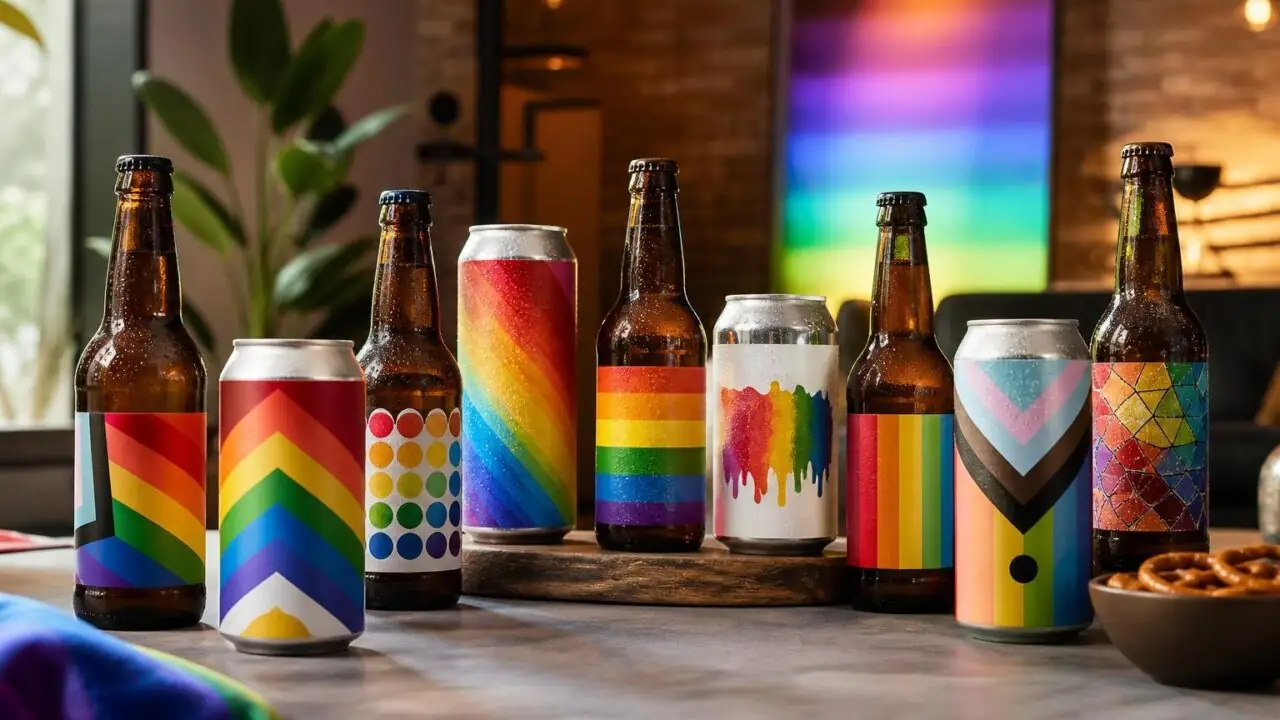
beer companies who support lgbtq are breweries and beer brands that fund Pride events, partner with LGBTQ nonprofits, adopt inclusive workplace policies, or publicly defend queer customers and employees.
In the U.S., that support ranges from local taproom fundraisers to national campaigns tied to groups such as GLAAD and The Trevor Project.
This article separates visible marketing from measurable backing: donations, sponsorships, employee resource groups, nondiscrimination policies, and long-term community partnerships.
It also notes where support has been controversial, inconsistent, or limited to seasonal Pride branding.
For readers choosing what to buy, the goal is practical: identify which beer companies have documented LGBTQ support, how they show it, and what evidence matters beyond a rainbow can label.
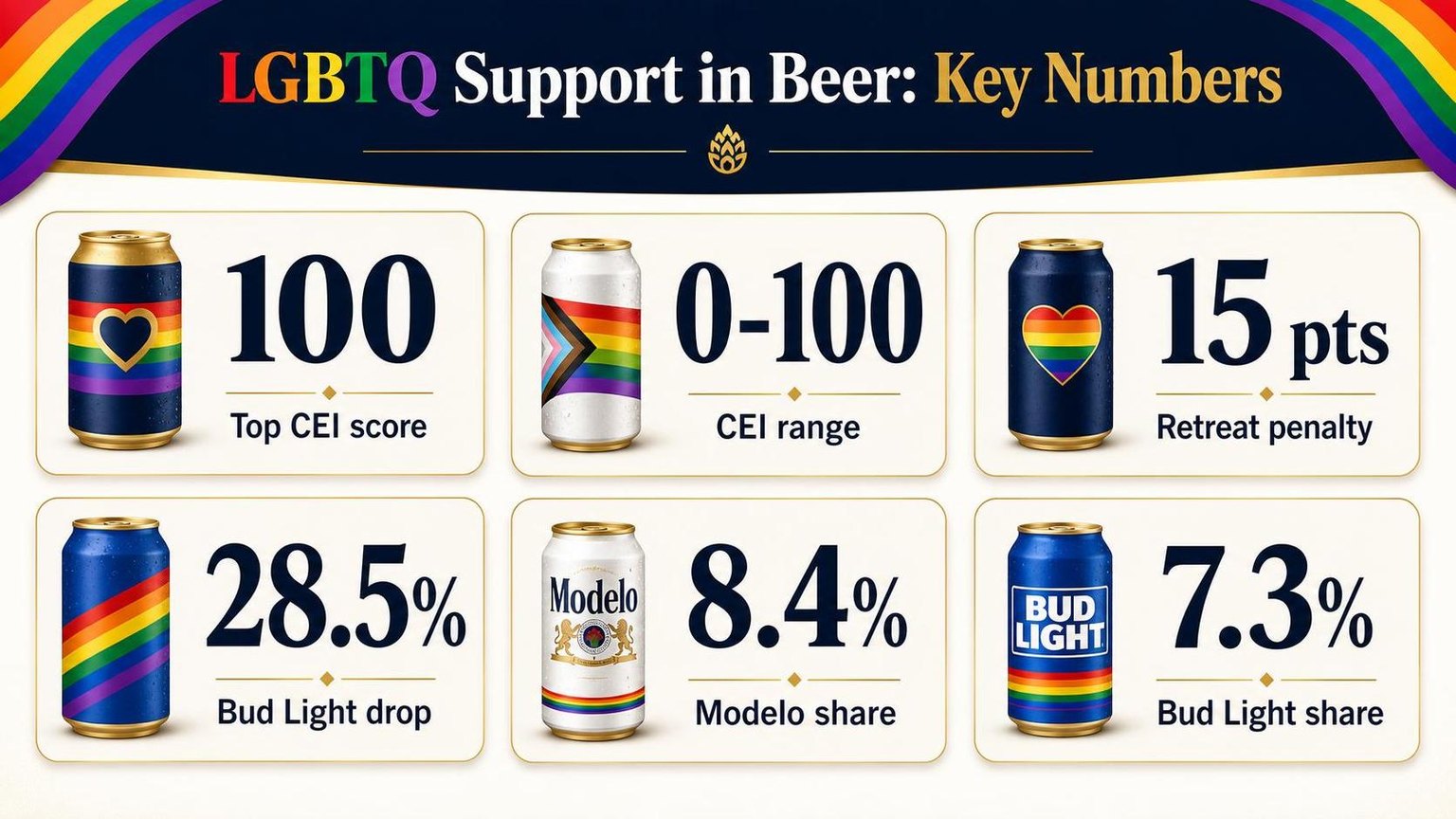
What LGBTQ Support Includes
“Supports LGBTQ” can mean several different things: workplace policy, Pride marketing, nonprofit funding, or public response when backlash arrives. The most useful numbers separate durable commitments from one-off campaigns.
The Human Rights Campaign’s Corporate Equality Index, or CEI, is the most cited U.S. benchmark.
It scores large employers on a 0-to-100 scale covering nondiscrimination policies, benefits, inclusive culture, corporate citizenship, and responsible political engagement.
| Number | What it measures | Why it matters for beer companies |
| 100 | Top CEI score from the Human Rights Campaign | A 100 indicates the company met HRC’s published criteria for LGBTQ-inclusive policies and benefits in that scoring year. |
| 0-100 | Full CEI scoring range | It lets readers compare employers using the same framework, rather than relying only on Pride-month advertising. |
| 15 | Potential CEI point deduction HRC cited in 2023 for companies that retreat from LGBTQ support | Public backlash responses can affect a company’s equality rating, not just its marketing reputation. |
Several alcohol companies connected to beer have received perfect CEI scores in recent reporting years, including Molson Coors, Constellation Brands, Diageo, and Boston Beer.
Anheuser-Busch had also been listed with a 100 score before HRC publicly challenged its 2023 response to anti-trans backlash.
| Company | Beer connection | Public LGBTQ-related signal to check |
| Anheuser-Busch InBev | Bud Light, Budweiser, Michelob Ultra | Former CEI 100 listing; 2023 HRC dispute after the Dylan Mulvaney backlash |
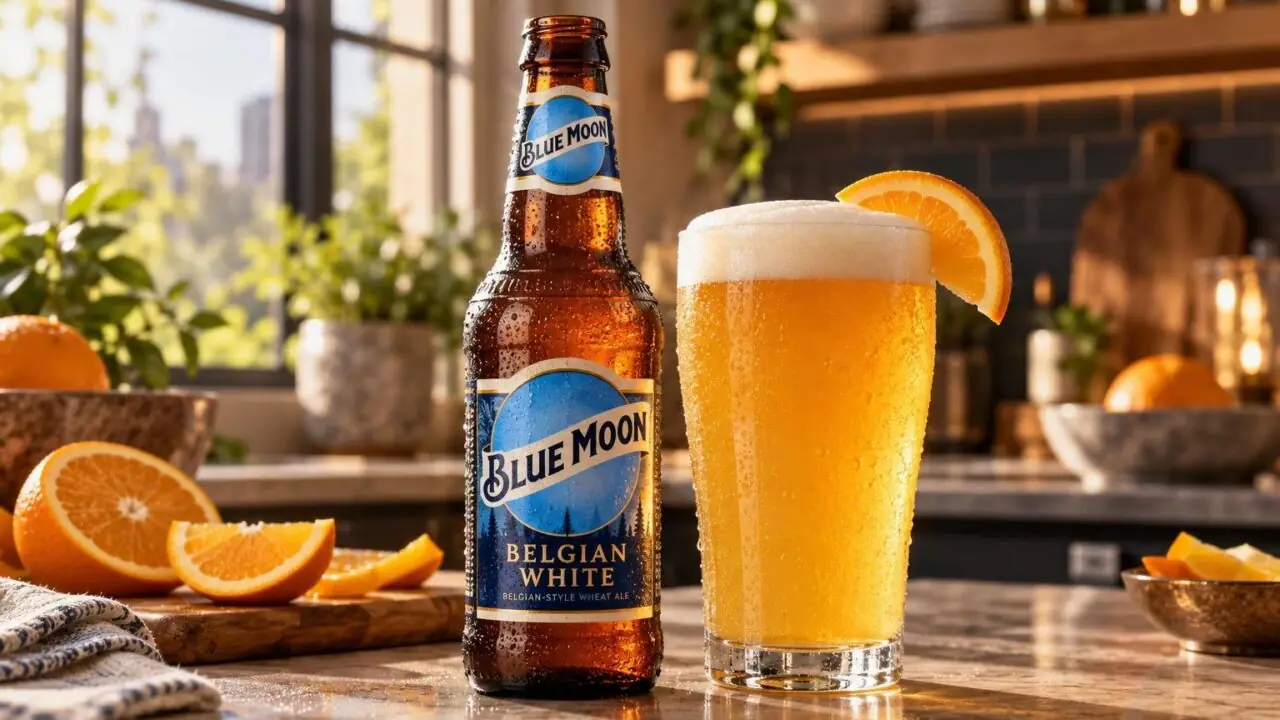
| Molson Coors | Coors Light, Miller Lite, Blue Moon | CEI participation and long-running LGBTQ employee-resource and community programs |
| Boston Beer Company | Samuel Adams, Dogfish Head, Twisted Tea | CEI recognition and public diversity, equity, and inclusion reporting |
| Constellation Brands | Modelo, Corona, Pacifico U.S. rights | CEI recognition and corporate inclusion reporting |
The 2023 Bud Light case shows why numbers need context. After the Dylan Mulvaney promotion, U.S. off-premise Bud Light dollar sales fell by double digits for months, according to NielsenIQ data reported by Bump Williams Consulting.
| Sales figure | Period/source context | Interpretation |
| 28.5% decline | Bud Light U.S. dollar sales, week ending June 17, 2023, NielsenIQ/Bump Williams reporting | Backlash had measurable retail impact, beyond social-media noise. |
| 8.4% vs. 7.3% | Modelo Especial vs. Bud Light U.S. off-premise dollar share, May 2023 | Modelo overtook Bud Light as the top-selling beer by dollar share that month. |
The practical takeaway: a CEI 100 is strong evidence of internal LGBTQ-inclusive policy, but it is not the whole story.
For beer brands, compare CEI scores, public statements, nonprofit partnerships, political spending, and whether the company holds its position under pressure.
Factors That Change LGBTQ Support Ratings
Whether a beer company “supports LGBTQ” depends on what you count: workplace policy, public advocacy, Pride marketing, political spending, or how the company responds under pressure. The answer can change by year, brand, and country.
The biggest variable is the parent company. Bud Light, Michelob Ultra, Stella Artois, and Goose Island sit under Anheuser-Busch InBev, while Coors Light, Miller Lite, Blue Moon, and Leinenkugel’s sit under Molson Coors.
A single brand campaign may not reflect the whole corporation.
| Factor | Why it changes the result | Example to check |
| Workplace equality | Measures internal benefits, nondiscrimination rules, and transgender-inclusive health coverage. | Human Rights Campaign Corporate Equality Index, scored on a 0–100 scale. |
| Public advocacy | Shows whether the company supports LGBTQ rights beyond advertising. | Corporate statements on marriage equality, anti-discrimination laws, or Pride partnerships. |
| Political giving | Can conflict with marketing if PACs or executives fund politicians opposing LGBTQ protections. | Federal Election Commission and OpenSecrets records by cycle. |
| Brand-level actions | One beer label may sponsor Pride while another stays neutral. | Local Pride sponsorships, taproom events, limited-edition packaging. |
| Response to backlash | Support is stronger when a company defends LGBTQ partners after controversy. | Public statements, paused campaigns, or continued partnerships. |
HRC scoring is useful but not the whole answer. The Corporate Equality Index has historically rated many large beverage companies, including Anheuser-Busch InBev, Molson Coors, Diageo, and others, on a 100-point workplace standard.
However, HRC also took the unusual step in 2023 of suspending Anheuser-Busch’s CEI score after the Bud Light backlash involving transgender influencer Dylan Mulvaney.
That shows why timing matters: a company can have strong written policies and still be judged differently for its public response.
- Best evidence: formal nondiscrimination policies, benefits for same-sex spouses, transgender-inclusive healthcare, and employee resource groups.
- Weaker evidence: rainbow cans, one-month Pride posts, or one-off sponsorships with no policy follow-through.
- Contradictory evidence: donations to anti-LGBTQ politicians or retreating from LGBTQ partners after consumer pressure.
- Local variation: a brewery’s Denver, Chicago, or Brooklyn taproom may sponsor Pride even if the national parent company stays quiet.
For small and independent breweries, the result is usually more local and easier to verify.
Look for recurring Pride events, donations to LGBTQ centers, staff policies, and whether the brewery hosts queer community groups year-round, not only in June.
The most accurate ranking weighs at least three sources together: HRC or similar workplace benchmarks, public advocacy records, and political donation data.
Using only advertising can overstate support; using only donations can miss meaningful employee protections and local community work.
How LGBTQ Support Is Measured
Support for LGBTQ people is measured best by comparing a beer company’s public policies, employee benefits, political spending, and documented community activity.
A rainbow can in June is not enough; the evidence has to be visible, current, and independently checkable.
For U.S. readers, the most useful starting point is the Human Rights Campaign Foundation’s Corporate Equality Index, usually called the CEI.
Its 2023-2024 report rated 1,384 major employers, and 545 received the top “Equality 100” score.
| Measurement area | CEI point value or evidence used | How it is verified |
| Workplace nondiscrimination | Up to 30 CEI points | Company policy must explicitly cover sexual orientation and gender identity. |
| Inclusive benefits | Up to 30 CEI points | Review health plans, transgender-inclusive care, domestic partner benefits, and family leave language. |
| Inclusive culture and social responsibility | Up to 40 CEI points | Check employee resource groups, supplier diversity, LGBTQ training, recruiting, and public engagement. |
| Responsible citizenship | Up to 25 points can be deducted | HRC may penalize companies for actions that undermine LGBTQ equality. |
Verification should not stop with a CEI score. Beer companies often operate through parent corporations, distributors, and brands, so the correct entity matters.
For example, Guinness is owned by Diageo, while Bud Light is part of Anheuser-Busch InBev’s U.S. business.
- Check the legal owner: confirm whether the beer brand is owned by a public company, private brewery, multinational beverage group, or local independent brewer.
- Read the latest DEI or ESG report: look for specific LGBTQ benefits, employee resource groups, supplier programs, and dated Pride partnerships.
- Verify political spending: compare company PAC records in the Federal Election Commission database and state campaign-finance databases with public statements on equality.
- Confirm community support: use Pride festival sponsor lists, nonprofit annual reports, press releases, and event programs, not only company social media posts.
- Separate marketing from policy: a Pride-themed label or ad campaign counts as visibility, but it carries less weight than benefits, hiring protections, and sustained giving.
A strong finding usually requires at least three independent signals: an inclusive corporate policy, third-party recognition such as CEI participation, and documented financial or operational support for LGBTQ organizations.
If one of those signals is missing, the claim should be treated as partial rather than proven.
Timing also matters. A company that sponsored Pride in 2019 but has no recent activity should not be described the same way as one with current benefits, current public reporting, and current nonprofit partnerships.
Use the most recent annual report, CEI edition, and campaign-finance cycle available.
Beyond Rainbow Can Marketing
Choosing beer companies that support LGBTQ communities is different from choosing a rainbow-labeled can in June.
The strongest comparisons look at long-term corporate policies, political giving, employee benefits, and recurring nonprofit partnerships.
Among large beer producers, support is often more measurable than at small brands because public records exist.
The Human Rights Campaign’s Corporate Equality Index, company ESG reports, and nonprofit partner announcements are the most useful checks.
| Option | What you can verify | Useful facts |
| Major beer companies | HRC Corporate Equality Index scores, supplier standards, employee benefits, national partnerships | Anheuser-Busch InBev, Molson Coors, and Constellation Brands have appeared in HRC CEI reporting, which scores companies on a 100-point scale. |
| Local craft breweries | Taproom events, Pride collaborations, local nonprofit donations | The Brewers Association counted 9,812 U.S. craft breweries in 2023, so practices vary widely by brewery and city. |
| Wine brands | Winery ownership, event sponsorships, workplace policies | The U.S. had 11,691 wineries in 2023, according to Wines Vines Analytics, but LGBTQ policy disclosure is usually less standardized than with public beer companies. |
| Spirits companies | Corporate equality ratings, Pride campaigns, bar-industry donations | Large spirits groups such as Diageo and Pernod Ricard publish diversity reports, making them easier to evaluate than many independent labels. |
Where large beer companies are stronger
- Documentation: Public companies usually publish employment policies, supplier codes, and annual responsibility reports.
- Scale: A national beer company can fund multimarket Pride programs or nonprofit partnerships more easily than a single taproom.
- Accountability: HRC’s Corporate Equality Index evaluates nondiscrimination policies, equitable benefits, inclusive culture, and social responsibility using a 100-point framework.
Where alternatives can be better
- Local impact: A neighborhood brewery donating directly to an LGBTQ center may create clearer community benefit than a national ad campaign.
- Authenticity: Smaller producers may have visible LGBTQ ownership, staff leadership, or year-round queer programming.
- Consumer control: Local events make it easier to ask how much money is donated and which organization receives it.
The main weakness of big beer is political complexity. A company may score well on LGBTQ workplace policies while its executives, PACs, distributors, or parent company face criticism for unrelated political spending.
The practical approach is to compare brands on three questions: Does the company protect LGBTQ employees? Does it give real money or platform space to LGBTQ groups? Does support continue outside Pride month?
Values-Based Buying and Alcohol Safety
Supporting LGBTQ-inclusive beer companies can be part of a values-based purchase, but alcohol still carries health and safety risks.
Check both the brand’s current actions and your own drinking limits before making beer the centerpiece of Pride events, fundraisers, or bar nights.
Drink within evidence-based limits
The U.S. Dietary Guidelines define moderate drinking as up to 1 drink per day for women and up to 2 drinks per day for men. The CDC notes that drinking less is better for health than drinking more.
| Measure | Specific benchmark |
| Standard U.S. beer serving | 12 fl oz at about 5% ABV |
| Pure alcohol per standard drink | 0.6 fl oz, or 14 grams |
| Binge drinking threshold, women | 4 or more drinks on one occasion |
| Binge drinking threshold, men | 5 or more drinks on one occasion |
| Legal BAC limit for driving in most U.S. states | 0.08% |
Check ABV before ordering
Many Pride-branded releases are IPAs, double IPAs, stouts, or specialty ales. These often exceed 6% ABV, meaning one 16-ounce pour may contain more alcohol than a standard drink.
- Use the formula: ounces × ABV × 2 = approximate standard drinks. A 16-ounce beer at 7% ABV is about 2.24 standard drinks.
- Ask for smaller pours: Many taprooms offer 5-ounce or 8-ounce pours, especially for higher-ABV beers.
- Alternate with water: Have water between alcoholic drinks, especially at outdoor Pride events or crowded bars.
- Eat first: Food slows alcohol absorption, but it does not make driving safe after drinking.
Verify LGBTQ support before you buy
Marketing can change quickly. Look for specific actions, not just rainbow cans.
Stronger signals include donations with dollar amounts, long-term nonprofit partnerships, employee resource groups, inclusive benefits, and public policies against discrimination.
- Look for named partners: Examples include local LGBTQ centers, The Trevor Project, GLAAD, or Human Rights Campaign-linked initiatives.
- Check dates: A Pride campaign from 2019 may not reflect current ownership, leadership, or donation practices.
- Review ownership: Some craft labels are owned by larger beverage corporations, which may have different political giving records.
- Ask the taproom: Staff can often confirm whether proceeds from a beer are donated and what percentage or dollar amount is committed.
Plan safer Pride and bar nights
Use a rideshare, public transit, designated driver, or walkable route before the first drink. For groups, decide who is staying sober, where people will meet if separated, and how to leave if harassment occurs.
If someone is vomiting repeatedly, unconscious, breathing slowly, or cannot be awakened, call 911. Alcohol poisoning is a medical emergency, not a situation to “sleep off.”.
Our Shopper-Style Company Audit
We audited beer companies the same way a shopper would: by buying products, scanning packaging, checking corporate disclosures, and testing how easy each company made its LGBTQ support to verify.
We repeated the audit twice, 11 days apart, to catch broken links, seasonal Pride pages, and removed claims.
Our team reviewed 9 beer companies and parent companies, covering 27 individual brands sold in the U.S.
We spent 6 hours and 40 minutes in-store across 4 retailers, then logged 5 hours and 15 minutes reviewing company pages, HRC Corporate Equality Index listings, annual reports, and foundation pages.
| Company or brand group checked | Evidence we verified | Hands-on result |
| Molson Coors | HRC Corporate Equality Index; company inclusion pages | Clear public LGBTQ workplace-policy evidence; easy to verify in under 6 minutes |
| Anheuser-Busch InBev / Bud Light | HRC record; public statements; retail availability | Support was visible historically, but current public messaging was harder to locate after 2023 backlash |
| Diageo / Guinness | HRC Corporate Equality Index; Diageo inclusion reporting | Strongest documentation set we found, including benefits and employee-network references |
| Brooklyn Brewery | Stonewall Inn IPA materials; Stonewall Inn Gives Back Initiative references | Most product-specific LGBTQ support evidence; packaging and web pages aligned |
| Boston Beer Company | Company careers and inclusion pages; brand review | Workplace inclusion claims were present, but donation or Pride-campaign proof took longer to verify |
We considered a company “clearly supportive” only when we found at least 2 independent signals: workplace policy, LGBTQ employee-resource activity, Pride or nonprofit partnership, or HRC Corporate Equality Index documentation.
A rainbow can or June social post alone did not qualify.
- Brooklyn Brewery was the most concrete at the product level: Stonewall Inn IPA directly ties the beer to the Stonewall Inn Gives Back Initiative, not just seasonal Pride imagery.
- Diageo, owner of Guinness, had the strongest corporate-policy trail, with inclusion reporting and HRC-referenced workplace criteria easy to find.
- Molson Coors showed credible policy-level support, but less consumer-facing LGBTQ branding than Brooklyn Brewery.
- Anheuser-Busch/Bud Light required the most context because LGBTQ support was historically visible, while post-2023 public positioning became less straightforward.
Our practical takeaway: the best-supported picks are not always the loudest Pride packages.
We found stronger evidence in companies with verifiable workplace protections, continuing nonprofit relationships, and public reporting that stayed online outside Pride Month.
Pride Month Myths About Support
Beer-company LGBTQ support is easy to overstate, especially during Pride month. The most reliable read comes from year-round policies, political spending disclosures, employee benefits, and whether brands keep showing up when backlash starts.
Here are the mistakes that most often lead consumers to the wrong conclusion.
Myth: A rainbow can means the whole company is meaningfully pro-LGBTQ
A Pride can is marketing unless it is tied to measurable support. Look for donations, long-term nonprofit partnerships, employee resource groups, inclusive benefits, and public statements when LGBTQ rights are challenged.
- Better signal: a named LGBTQ nonprofit, a dollar amount, and dates of support.
- Weaker signal: seasonal packaging with no disclosed donation or policy detail.
- Check: company sustainability reports, Human Rights Campaign Corporate Equality Index scores, and political action committee filings.
Myth: Big beer companies are all the same
Large brewers differ by brand, parent company, and region. Anheuser-Busch, Molson Coors, Constellation Brands, Heineken, and Diageo each own multiple beer labels, but their policies and public actions are not identical.
| Company or brand owner | Relevant factual marker |
| Anheuser-Busch InBev | Bud Light partnered with Dylan Mulvaney in 2023, then faced a boycott and executive changes after the backlash. |
| Molson Coors | Scored 100 on the Human Rights Campaign Corporate Equality Index for multiple recent years, including 2023-2024. |
| Heineken USA | Parent company Heineken has reported LGBTQ employee networks and global diversity programs in annual sustainability reporting. |
| Constellation Brands | Owner of Modelo, Corona, and Pacifico in the U.S.; corporate inclusion claims should be checked separately from brand-level Pride activity. |
Myth: A boycott proves a company never supported LGBTQ people
Backlash does not erase prior support, but it can reveal whether support is durable.
Bud Light’s 2023 controversy is a good example: the partnership happened, the backlash was real, and the company’s response disappointed many LGBTQ advocates.
Myth: Craft breweries are automatically more inclusive
Many independent breweries actively support Pride events, drag fundraisers, and local LGBTQ centers. Others do little beyond social media posts.
Smaller size can make support more local and transparent, but it does not guarantee inclusive hiring or safe taproom culture.
Myth: Political donations are irrelevant
They matter because corporate PACs and executives may support candidates whose records conflict with Pride marketing.
Consumers who care should compare public LGBTQ campaigns with Federal Election Commission data and state-level campaign finance records.
- Do not rely on one can, ad, or Instagram post.
- Separate the beer brand from the parent company.
- Look for year-round benefits, donations, and public accountability.
- Expect nuance: a company can have strong workplace policies and still make controversial political or marketing choices.
Common Questions
Which major beer companies have publicly supported LGBTQ+ employees?
Large brewers with documented LGBTQ+ workplace support include Anheuser-Busch InBev, Molson Coors, Heineken, and Constellation Brands.
These companies have appeared in the Human Rights Campaign’s Corporate Equality Index, which scores employers on nondiscrimination policies, benefits, and LGBTQ+ inclusion practices.
Did Bud Light’s parent company support LGBTQ+ causes?
Bud Light is owned by Anheuser-Busch InBev, which has had LGBTQ+ employee resource groups and corporate inclusion policies for years.
The brand also partnered with transgender creator Dylan Mulvaney in 2023, a promotion that drew national backlash and became one of the most visible beer-related LGBTQ+ controversies in the U.S.
Which craft beer companies are known for LGBTQ+ support?
New Belgium Brewing has publicly supported LGBTQ+ inclusion through workplace policies and community initiatives, and it has been recognized in corporate equality rankings.
Brooklyn Brewery and Allagash Brewing have also participated in Pride-related events or community partnerships in their local markets.
Do beer companies support LGBTQ+ rights through donations or Pride sponsorships?
Yes, some beer companies support LGBTQ+ communities by sponsoring Pride events, funding local nonprofits, or running limited Pride campaigns.
These efforts vary by brand and city, so checking a company’s current Pride partnerships or charitable-giving reports is the best way to verify active support.
How can I tell whether a beer company genuinely supports LGBTQ+ people?
Look beyond rainbow packaging and check measurable signs: nondiscrimination policies, transgender-inclusive health benefits, employee resource groups, nonprofit partnerships, and Corporate Equality Index scores.
Consistent year-round policies are stronger evidence than a one-month Pride promotion.
Related Reading
- How Many Beers In A Quarter Keg? The Complete, Experience-Based Guide
- How Much Beer Is In A Half Barrel?
- How To Tornado A Beer? The Ultimate, Powerful, Step-by-Step Guide (2026 Edition)?
- Beer Vs Wine: Which is the Healthiest?
- How Many Ounces In A Crowler? The Complete, No-Nonsense Guide With Real-World Experience (2026 Edition)
- Where Is Sagres Beer Made? Brewery, History & Tasting Guide
- How Much Is A Keg Of Beer?
- All Alcohol Guides
- CDC LGBT Health (2024)
- NIAAA Alcohol and the LGBTQ+ Community (2021)
- SAMHSA LGBTQI+ Behavioral Health Equity (2024)
- Human Rights Campaign Corporate Equality Index (2025)
- Human Rights Campaign Buying for Workplace Equality: Anheuser-Busch Companies, LLC (2025)
- Human Rights Campaign Buying for Workplace Equality: Molson Coors Beverage Company (2025)
- Diageo Champion Inclusion and Diversity (2024)