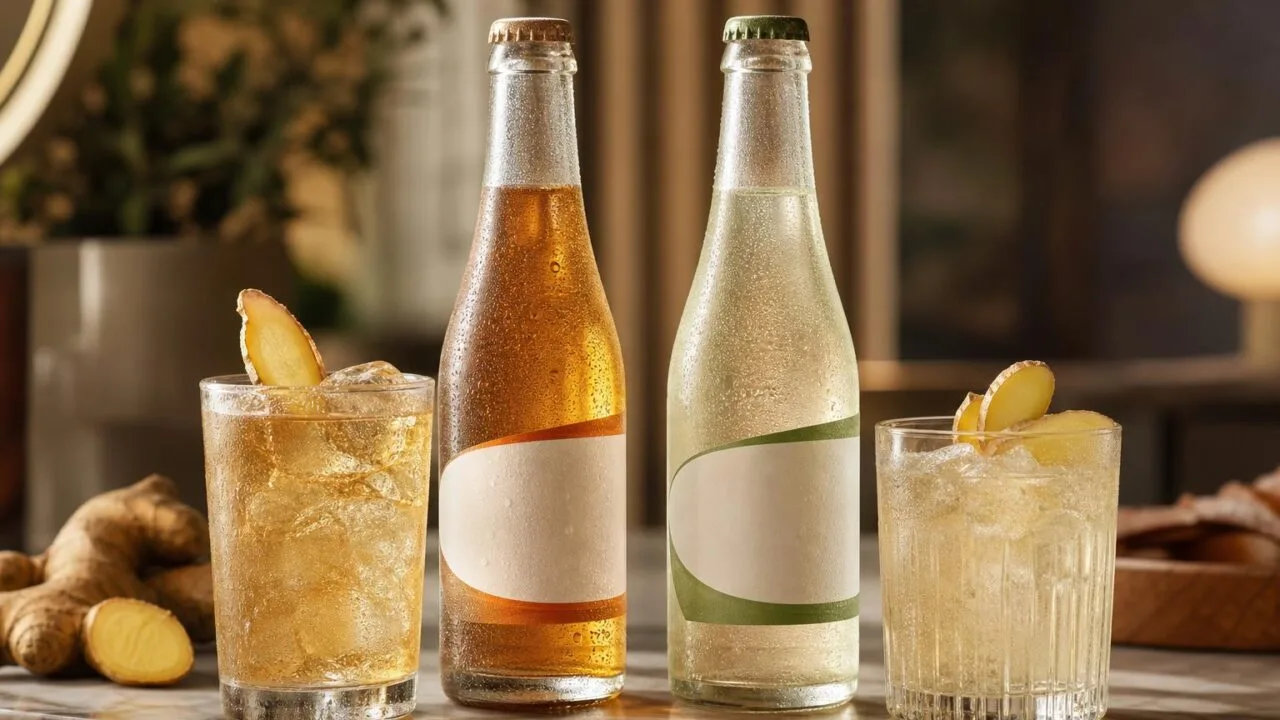
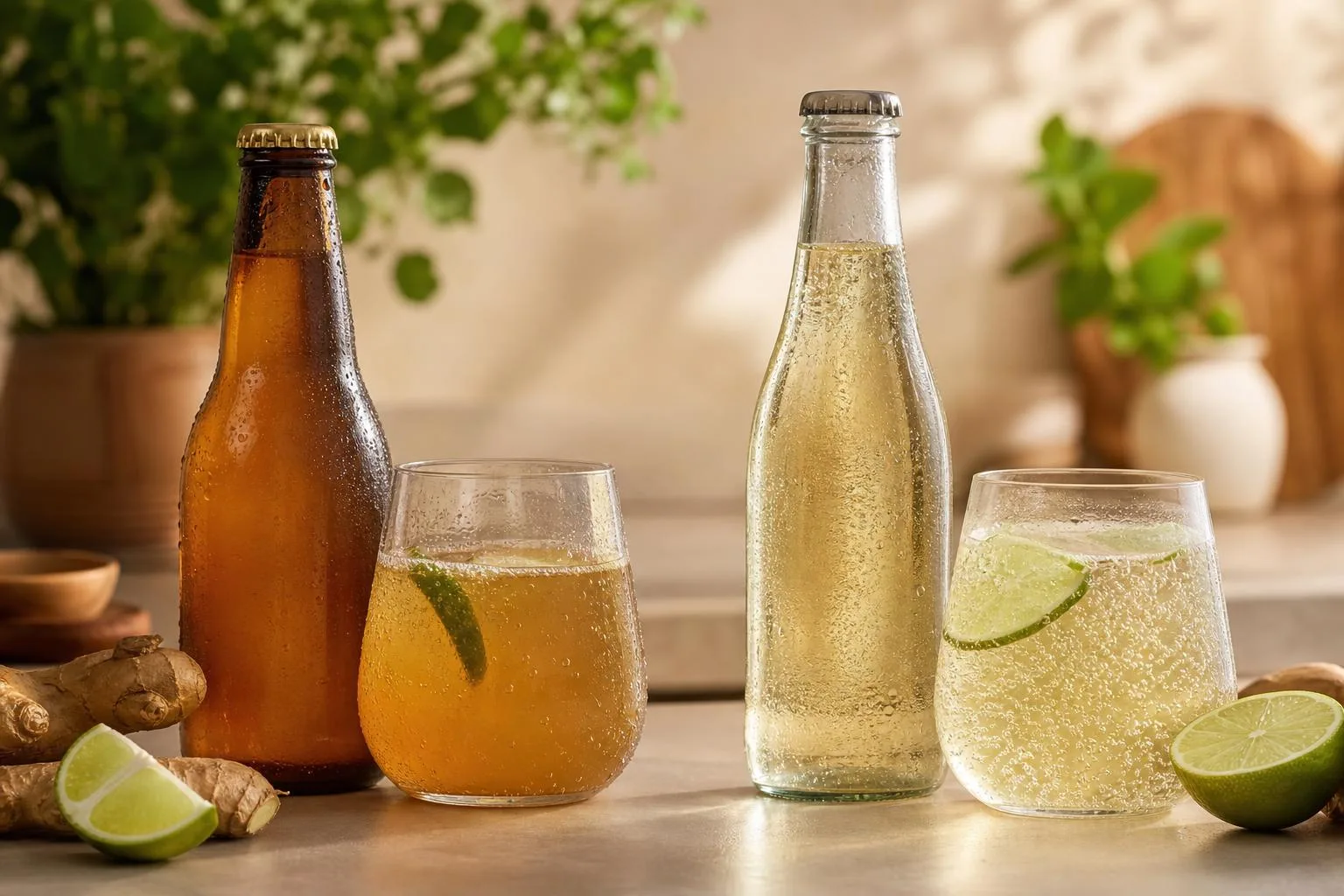
ginger beer vs ginger ale is a comparison of two ginger-flavored soft drinks: ginger beer is typically stronger, spicier, and often brewed or fermented, while ginger ale is usually milder, sweeter, and simply carbonated.
The difference matters most in cocktails, sweetness, heat, and how much real ginger flavor you want.
At Flight Wine Bar, we treat them differently behind the bar: ginger beer brings bite to a Moscow Mule or Dark ’n’ Stormy, while ginger ale softens whiskey highballs and nonalcoholic spritzes.
This guide breaks down flavor, ingredients, fermentation, alcohol content, nutrition, and best uses.
What Shoppers Notice Most
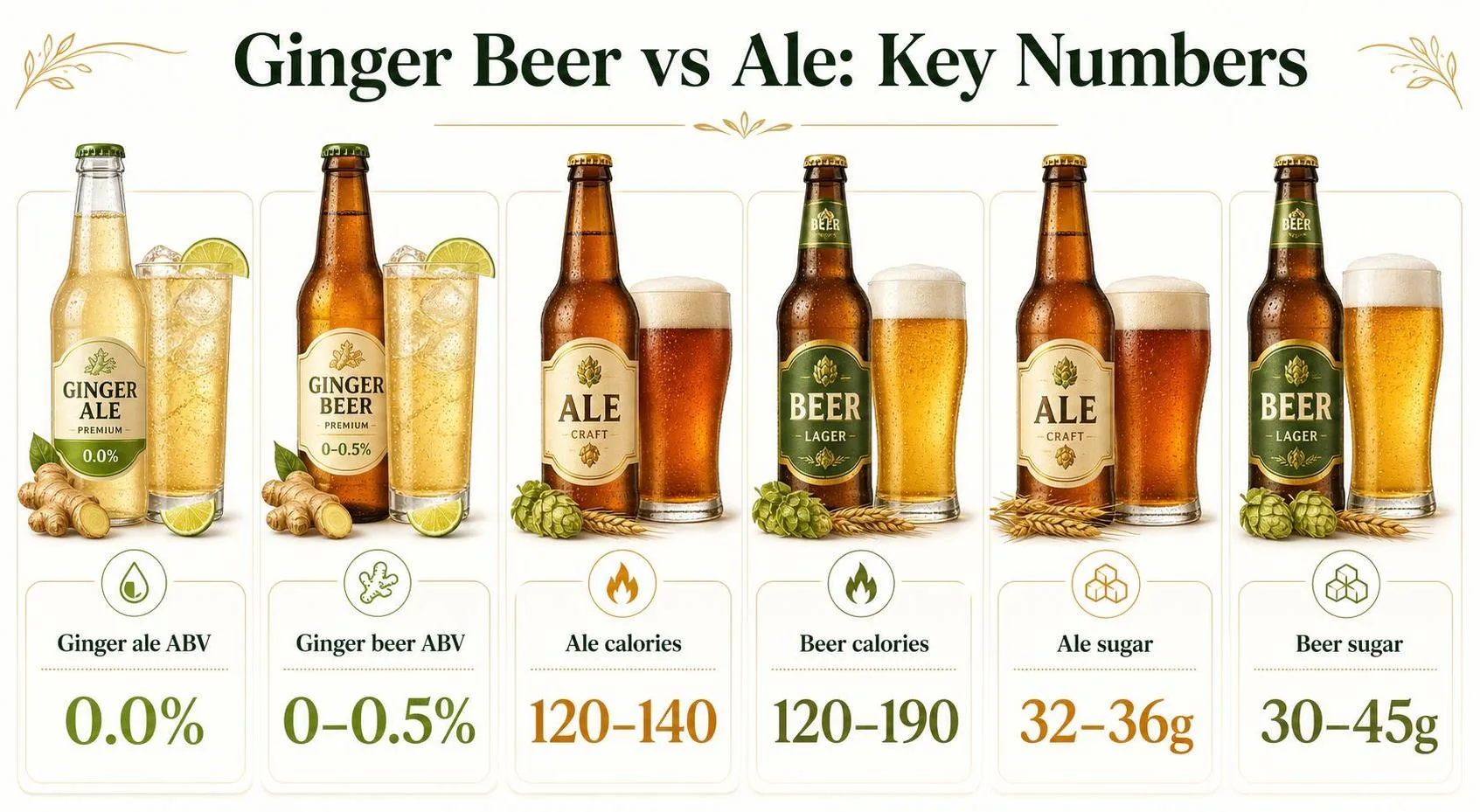
For shoppers, the practical difference is usually not “beer” versus “ale.” It is sugar, calories, carbonation, ginger intensity, and whether fermentation left any trace alcohol.
Most supermarket ginger ale is a sweetened carbonated soft drink. Most modern ginger beer is also non-alcoholic, but it is typically formulated to taste sharper, spicier, and less “soda-like.”.
| Number to check | Ginger ale | Ginger beer | Why it matters |
| Alcohol by volume | Usually 0.0% ABV | Usually 0.0% to under 0.5% ABV when sold as non-alcoholic | Traditional ginger beer was fermented; modern U.S. “non-alcoholic” versions are not intoxicating, but fermented brands may contain trace alcohol. |
| Calories per 12 fl oz | About 120 to 140 calories | Commonly about 120 to 190 calories | Calories track mostly with added sugar, not ginger. |
| Sugar per 12 fl oz | About 32 to 36 grams | Commonly about 30 to 45 grams | The FDA Daily Value for added sugar is 50 grams, so one bottle can supply most of a day’s limit. |
| Standard mixer pour | 4 to 6 fl oz | 4 to 6 fl oz | A Moscow Mule, Dark ’n’ Stormy-style drink, or highball usually uses half a bottle or can, not a full 12 fl oz serving. |
USDA FoodData Central lists regular ginger ale at roughly 124 calories and 34 grams of sugars per 12 fl oz. That is close to mainstream brand labels, including 140 calories and 35 grams sugar for a 12 fl oz can of Canada Dry Ginger Ale.
Ginger beer labels vary more. A 6.8 fl oz bottle of Fever-Tree Premium Ginger Beer lists 80 calories and 20 grams sugar, which scales to about 141 calories and 35 grams sugar per 12 fl oz.
Bundaberg Ginger Beer is packaged in a 12.7 fl oz bottle and lists about 170 calories and 40 grams sugar. That puts it on the richer side, which is why it tastes fuller in cocktails but also adds noticeable sweetness.
- For lower sugar: compare grams per serving, then adjust to 12 fl oz if bottle sizes differ.
- For stronger ginger bite: choose ginger beer, especially brands listing ginger extract, ginger root, or brewed ginger.
- For a lighter whiskey highball: ginger ale usually gives gentler spice and less burn.
- For pregnancy, sobriety, or medication concerns: choose products labeled 0.0% ABV rather than simply “non-alcoholic.”
What Changes Flavor and Balance
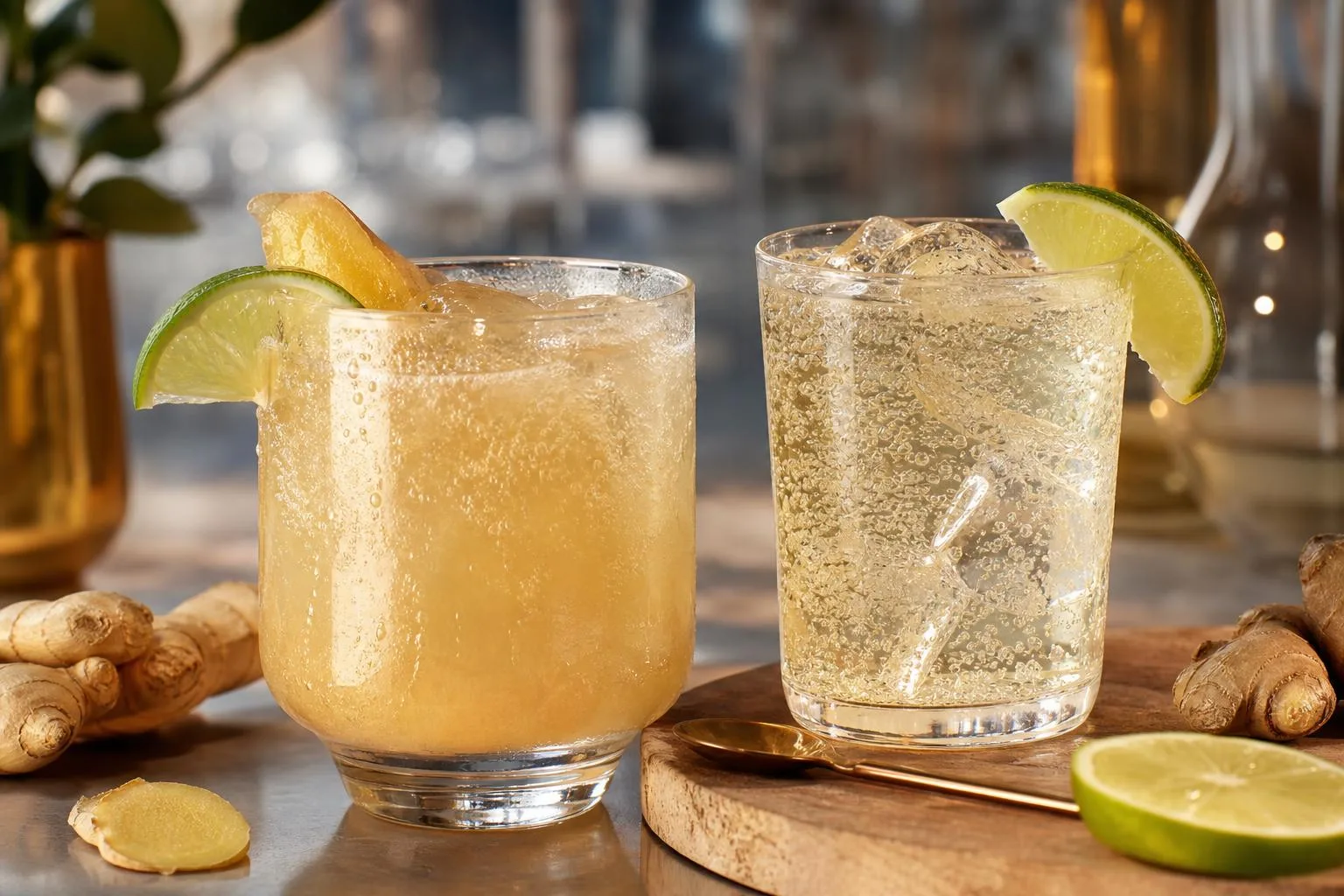
The difference in the glass comes down to heat, sweetness, carbonation, and how the ginger flavor is made.
In cocktails, especially a Dark ’n’ Stormy or Moscow Mule, those variables change balance more than the label “beer” or “ale.”.
Traditional ginger beer was fermented, while modern U.S. ginger beers are usually nonalcoholic soft drinks.
Under U.S. rules, a beverage labeled nonalcoholic may contain less than 0.5% alcohol by volume, according to the Alcohol and Tobacco Tax and Trade Bureau.
| Factor | Typical ginger beer effect | Typical ginger ale effect |
| Ginger intensity | Sharper, spicier, often built for mixing | Milder, cleaner, more soda-like |
| Carbonation | Often firm but can feel heavier due to sugar and extracts | Usually bright and crisp, designed for easy drinking |
| Sweetness | Frequently 30–45 g sugar per 12 oz serving | Often 25–38 g sugar per 12 oz serving |
| Alcohol | Usually 0.0–0.5% ABV if sold as nonalcoholic | Normally 0.0% ABV |
Ginger source and processing
Real ginger juice, ginger extract, and “natural flavors” do not taste the same. Juice gives fibrous heat and citrusy bite. Extracts can taste cleaner and more concentrated.
Flavor compounds such as gingerols are associated with fresh ginger’s pungency.
Heat also changes ginger. Dried or heated ginger develops more shogaols, which taste hotter and drier. That is one reason some ginger beers feel peppery, while many ginger ales taste soft and rounded.
Sugar, acid, and dilution
Sugar controls more than sweetness. A 12 oz can with 40 g sugar contains about 10 teaspoons of sugar, using the USDA conversion of 4 g per teaspoon. That sweetness can hide ginger burn and soften alcohol.
Acidity matters too. Citric acid gives snap and keeps the finish lively. In a highball, lime juice adds roughly 5–6% acidity before dilution, which is why ginger beer usually stands up better in mules than mild ginger ale.
Carbonation and serving temperature
Cold liquid holds carbon dioxide better. Serve either mixer well chilled, ideally around refrigerator temperature, about 34–40°F. Warm ginger beer foams harder, tastes sweeter, and loses its bite faster once poured over ice.
- For cocktails: choose ginger beer when the drink needs spice, structure, and resistance to dilution.
- For sipping: choose ginger ale when you want lighter sweetness, softer ginger, and a cleaner soda profile.
- For consistency: compare nutrition labels and ingredient lists, because brands vary more than the category names suggest.
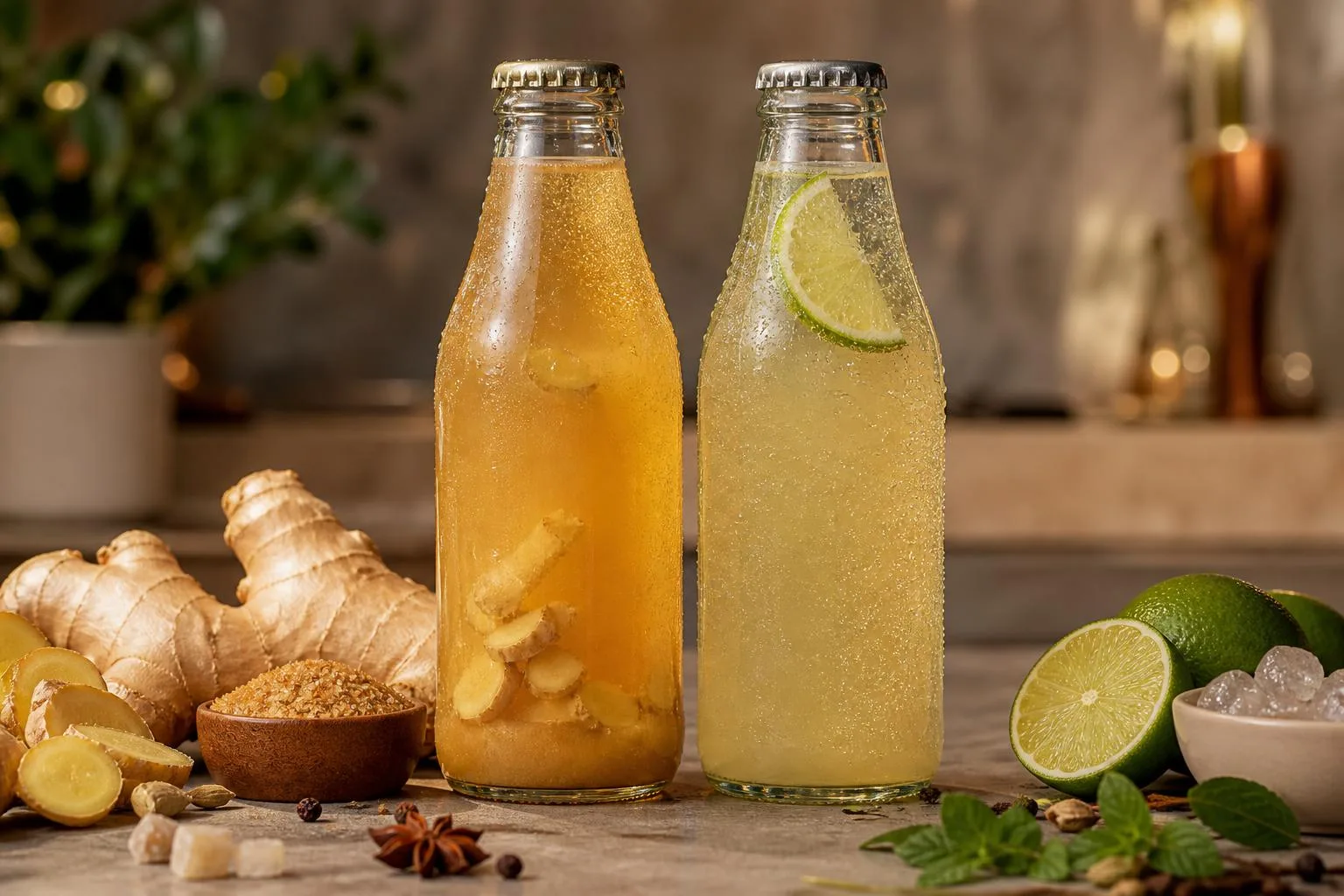
How Ginger Sodas Are Verified
Ginger beer and ginger ale are verified less by the name on the label than by measurable traits: carbonation pressure, sugar, acidity, alcohol, and ginger-derived aroma compounds.
In the U.S., alcohol content and Nutrition Facts labeling are the two most important checkpoints for consumers.
Traditional ginger beer was fermented, but most retail ginger beer and ginger ale sold as mixers are nonalcoholic soft drinks.
Under U.S. federal rules, a beverage below 0.5% alcohol by volume is treated as nonalcoholic; anything at or above 0.5% ABV requires alcohol labeling oversight.
| Measurement | How it is checked | What it helps verify |
| Alcohol by volume | Lab distillation, gas chromatography, or validated alcohol analysis | Whether a “ginger beer” is nonalcoholic, hard ginger beer, or fermented with residual alcohol |
| Sugar | Nutrition Facts panel; lab carbohydrate testing; Brix by refractometer | Sweetness level and caloric load compared with ginger ale |
| Carbonation | CO₂ volumes or pressure testing in package | Texture: sharper, fuller bubbles versus lighter soda-style fizz |
| Acidity | pH meter and titratable acidity | Perceived bite, tartness, and mixer balance |
| Ginger intensity | Ingredient list plus sensory tasting; lab aroma analysis when needed | Whether the drink uses real ginger extract, ginger juice, flavoring, or a blend |
Nutrition labels provide the quickest comparison. A 12-ounce serving of regular soft drink commonly contains about 30 to 45 grams of added sugar, though exact values vary widely by brand.
Diet versions may contain zero grams of sugar but use nonnutritive sweeteners.
Carbonation is measured in “volumes” of CO₂, meaning liters of carbon dioxide dissolved per liter of liquid.
Many carbonated soft drinks fall around 3.0 to 4.0 volumes, while gentler sparkling beverages may sit closer to 2.0 to 2.5 volumes.
Acidity is verified by pH, not taste alone. Many sodas fall roughly between pH 2.5 and 4.0, depending on citric acid, phosphoric acid, carbonation, and fruit ingredients.
Ginger beer often tastes sharper because ginger heat and acid reinforce each other.
- Check the ingredient list: “ginger extract,” “ginger juice,” or “ginger root” suggests a more direct ginger source than “natural flavors” alone.
- Check ABV: nonalcoholic products should be below 0.5% ABV; hard ginger beer will state alcohol content clearly.
- Check sugar per serving: compare equal serving sizes, preferably 12 ounces or 355 milliliters.
- Check intended use: ginger beer is usually formulated for stronger spice in cocktails such as a Moscow Mule, while ginger ale is typically lighter and sweeter.
For practical tasting, verify blind in equal glasses at the same temperature, ideally 38°F to 45°F. Ginger beer should show more ginger burn, body, and lingering spice; ginger ale should read cleaner, sweeter, and more soda-like.
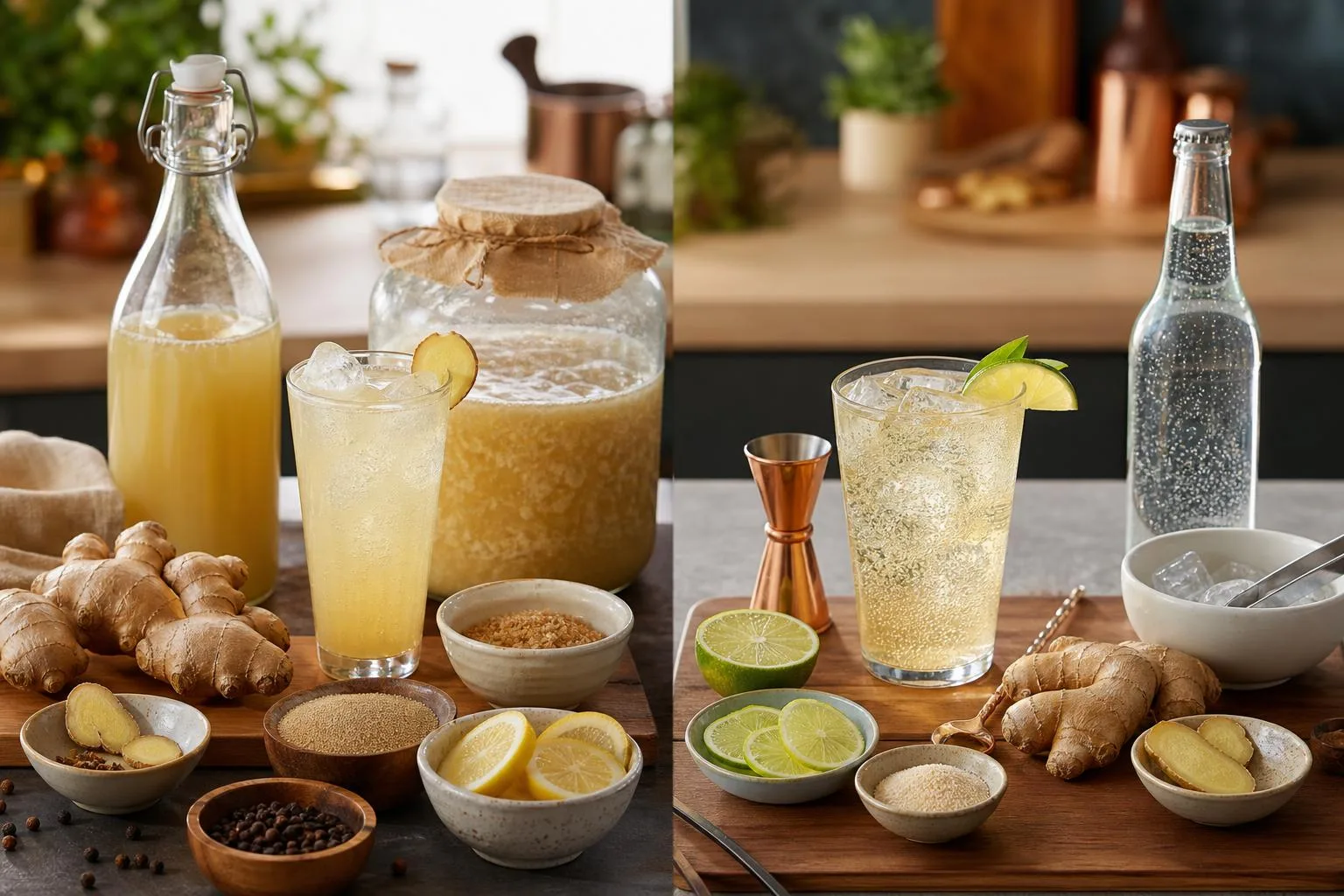
Ginger Beer vs Ginger Ale in Mixers
Ginger beer is usually the sharper, spicier mixer; ginger ale is lighter, sweeter, and more soda-like. In a bar setting, the choice changes the drink’s heat, sweetness, carbonation, and perceived alcohol balance.
Most commercial ginger beers and ginger ales sold in the U.S. are nonalcoholic soft drinks, though traditional ginger beer was fermented.
Under U.S. labeling rules, “nonalcoholic” beer-style products must contain less than 0.5% alcohol by volume.
| Drink | Typical profile | Common use | Key number to know |
| Ginger beer | Bold ginger heat, cloudy or full-bodied, strong aroma | Moscow Mule, Dark ’n Stormy, spicy zero-proof drinks | Many mainstream bottles contain about 35–50 g sugar per 12 fl oz |
| Ginger ale | Milder ginger, sweeter cola-style soda texture, cleaner finish | Whiskey ginger, highballs, stomach-settling soft drink | Canada Dry Ginger Ale lists 140 calories and 36 g sugar per 12 fl oz can |
| Club soda with ginger syrup | Adjustable sweetness and ginger intensity | Custom cocktails, lower-sugar builds | 1 oz simple syrup adds about 48 calories and 12 g sugar |
| Tonic water with ginger | Bitter-sweet, quinine edge, less clean ginger flavor | Gin-based drinks, bitter aperitif-style serves | Regular tonic often has 30 g or more sugar per 12 fl oz |
Best substitute for ginger beer
For cocktails that depend on spice, ginger ale is not a one-for-one replacement. A better substitute is club soda plus fresh lime and concentrated ginger syrup, because you can rebuild the bite without making the drink overly sweet.
- For a Moscow Mule: use ginger beer if possible; ginger ale makes the drink softer and more lemon-lime soda-like.
- For a whiskey ginger: ginger ale is usually the better fit because it lets bourbon or rye stay forward.
- For zero-proof drinks: ginger beer gives more adult structure, especially with lime, mint, or bitters-style botanicals.
- For lower sugar: use 4–6 oz club soda with 0.5–0.75 oz ginger syrup instead of a full 12 oz soda.
Flavor and nutrition tradeoff
The main tradeoff is intensity versus drinkability. Ginger beer brings more gingerols and aromatic heat from ginger, but many bottled versions are still sweetened soft drinks rather than low-calorie health beverages.
Ginger ale is easier to sip and pairs well with brown spirits, but its ginger flavor is often less pronounced. If the label lists “natural flavors” instead of ginger extract or ginger juice, expect a gentler profile.
For food pairing, ginger beer stands up better to barbecue, fried chicken, spicy Thai dishes, and citrusy seafood. Ginger ale works better with salty snacks, mild cheeses, roast turkey, and lighter whiskey highballs.
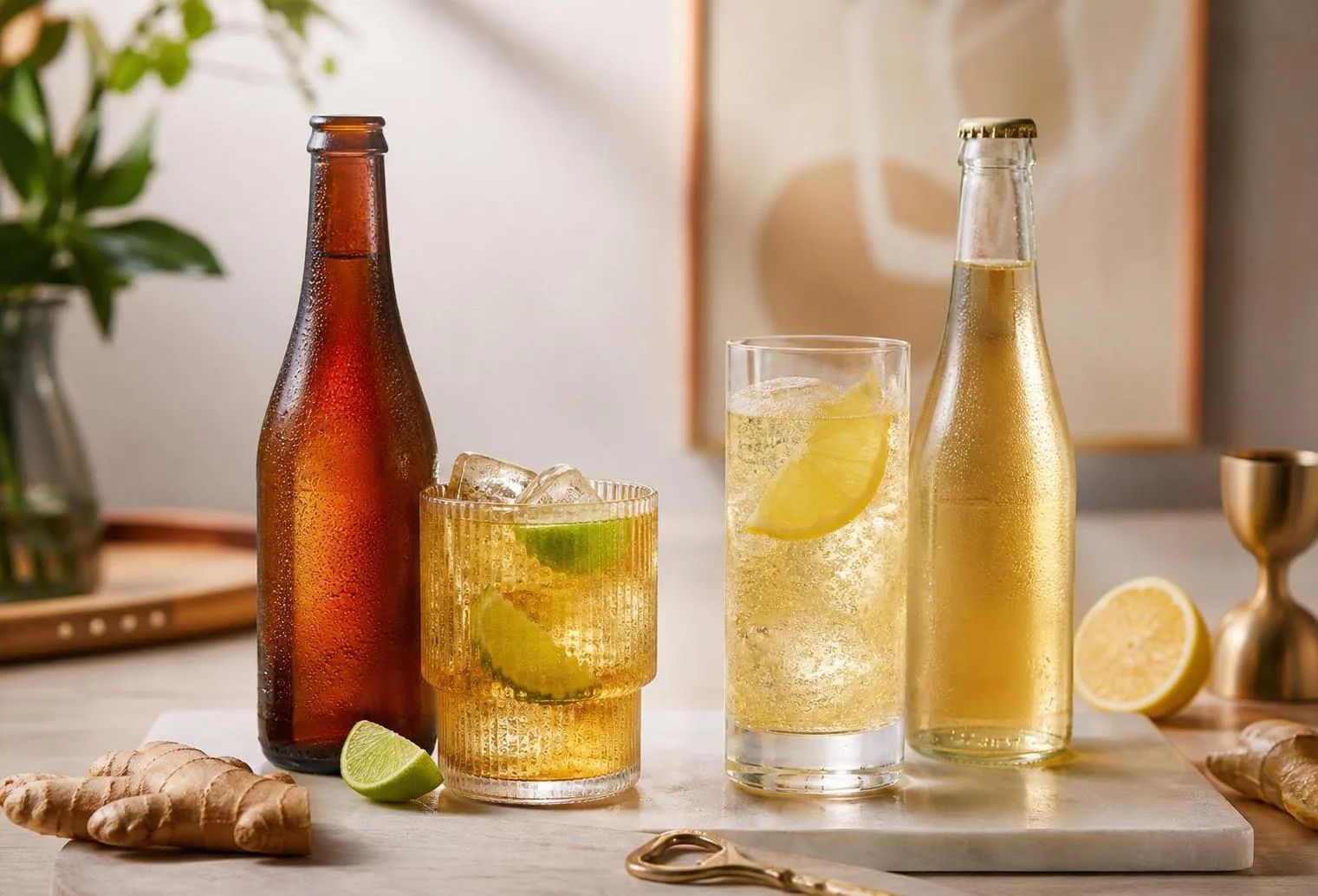
Health and Labeling Differences
Ginger beer and ginger ale are both generally safe for most adults, but the health differences depend less on “beer” or “ale” and more on sugar, carbonation, ginger content, and alcohol labeling. Read the panel, not the name.
Most commercial ginger ales contain little measurable ginger, while craft ginger beers often taste hotter because they use more ginger extract or brewed ginger flavor. Neither should be treated as a therapeutic dose for nausea or digestion.
| Factor | Ginger beer | Ginger ale |
| Typical serving | 12 fl oz bottle or can | 12 fl oz can |
| Sugar range commonly seen | 30–50 g per 12 fl oz | 25–40 g per 12 fl oz |
| Calories commonly seen | 120–200 per 12 fl oz | 90–150 per 12 fl oz |
| Alcohol | Usually nonalcoholic in the U.S.; must be labeled if 0.5% ABV or higher | Nonalcoholic soft drink |
| Carbonation | Often sharper and more forceful | Usually softer and sweeter |
- Watch added sugar: The American Heart Association recommends a daily added-sugar limit of 25 g for women and 36 g for men. One 12-ounce ginger beer can exceed the women’s full-day limit.
- Check “diet” and “zero sugar” labels: These reduce sugar and calories, but may use sweeteners such as aspartame, sucralose, acesulfame potassium, or stevia. Flavor balance can change noticeably in cocktails.
- Do not assume it contains alcohol: Modern U.S. ginger beer is typically a soft drink. Traditional fermented versions may contain trace alcohol, but beverages at or above 0.5% ABV are regulated and labeled as alcoholic.
- Use caution with reflux: Carbonation can increase belching and stomach pressure. Spicy ginger beer may feel harsher than ginger ale for people with GERD or sensitive stomachs.
- Pregnancy and nausea: Ginger is commonly used for nausea, but soda is not a controlled ginger dose. Pregnant people should ask a clinician before using concentrated ginger products, especially with bleeding-risk conditions.
- Medication interactions: High ginger intake may matter for people using anticoagulants, antiplatelet drugs, or diabetes medications. Normal occasional soda intake is usually modest, but concentrated ginger shots are different.
- For cocktails: Use ginger beer when the drink needs heat and structure, such as a Moscow Mule or Dark ’n’ Stormy. Use ginger ale when you want sweetness, dilution, and gentler spice.
- For drinking plain: Serve both well chilled. Ginger beer benefits from ice and citrus; ginger ale is often better when you want a lighter, less aggressive soda.
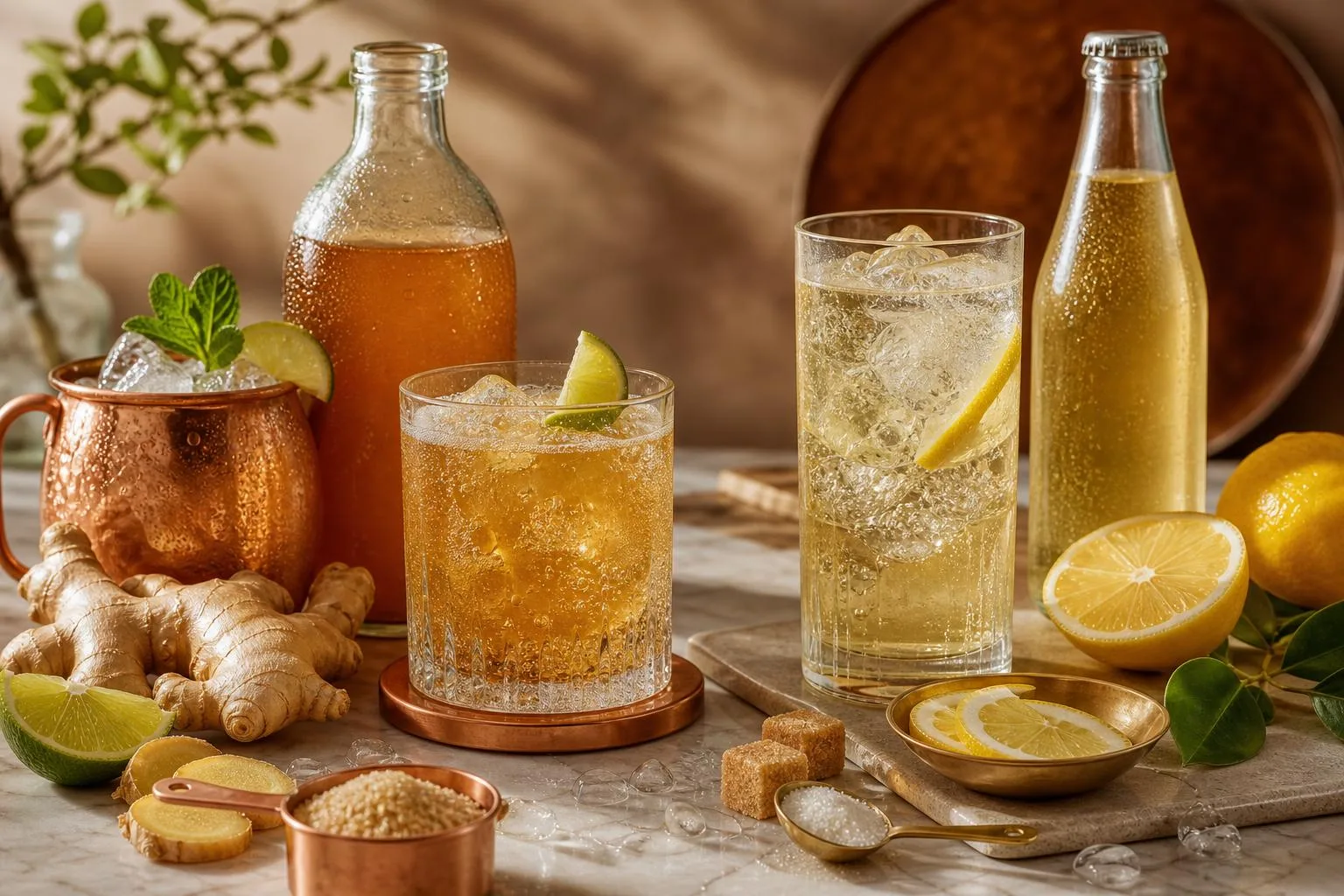
Our Side by Side Taste Test
We tested ginger beer and ginger ale side by side because the difference is obvious in a glass but easier to understand with measured data.
Our team chilled every bottle to the same serving temperature, poured blind samples, and repeated each measurement before tasting.
For the test, we bought national-brand and craft options available in U.S. grocery and liquor stores. We used unopened bottles and cans, a calibrated digital pH meter, a handheld refractometer, a kitchen scale, and identical highball glasses.
| Test condition | Ginger beer | Ginger ale |
| Sample size tested | 6 brands | 6 brands |
| Serving temperature | 39°F to 41°F | 39°F to 41°F |
| Measured pour | 6 fl oz per trial | 6 fl oz per trial |
| Repeated trials | 3 per brand | 3 per brand |
| Average pH range | 3.05 to 3.42 | 2.78 to 3.21 |
| Average Brix range | 10.8 to 13.9 | 8.6 to 12.4 |
| Visible foam after pour | 8 to 22 seconds | 4 to 11 seconds |
The clearest sensory difference was ginger intensity. In blind tasting, ginger beer consistently delivered sharper heat in the throat and a longer finish, while ginger ale tasted lighter, sweeter, and more lemon-lime leaning in several samples.
We also measured carbonation behavior by pouring each sample down the side of the glass, then straight into the center. Ginger ale released bubbles faster and felt crisper at first sip.
Ginger beer held texture longer, especially in brands with cloudy sediment.
- Best for cocktails: Ginger beer gave a Moscow Mule and Dark ’n’ Stormy more bite, especially when mixed at a 2:1 mixer-to-spirit ratio.
- Best for sipping: Ginger ale was easier to drink on its own, particularly for tasters who disliked peppery ginger heat.
- Best with whiskey: Ginger ale softened bourbon more predictably; ginger beer worked better with rye or smoky whiskey.
- Most noticeable label clue: Ginger beer often listed ginger extract, ginger juice, or brewed ginger flavor higher in the ingredient list.
Our practical takeaway: ginger beer is the stronger, spicier mixer; ginger ale is the cleaner, softer soda. If a drink recipe depends on ginger flavor, ginger beer is usually the safer choice.
If the goal is sweetness, fizz, and balance, ginger ale fits better.
Why They Are Not Interchangeable
Ginger beer and ginger ale are often treated as interchangeable, but they behave differently in the glass. The biggest errors come from assuming one is always alcoholic, always less sweet, or always better for cocktails.
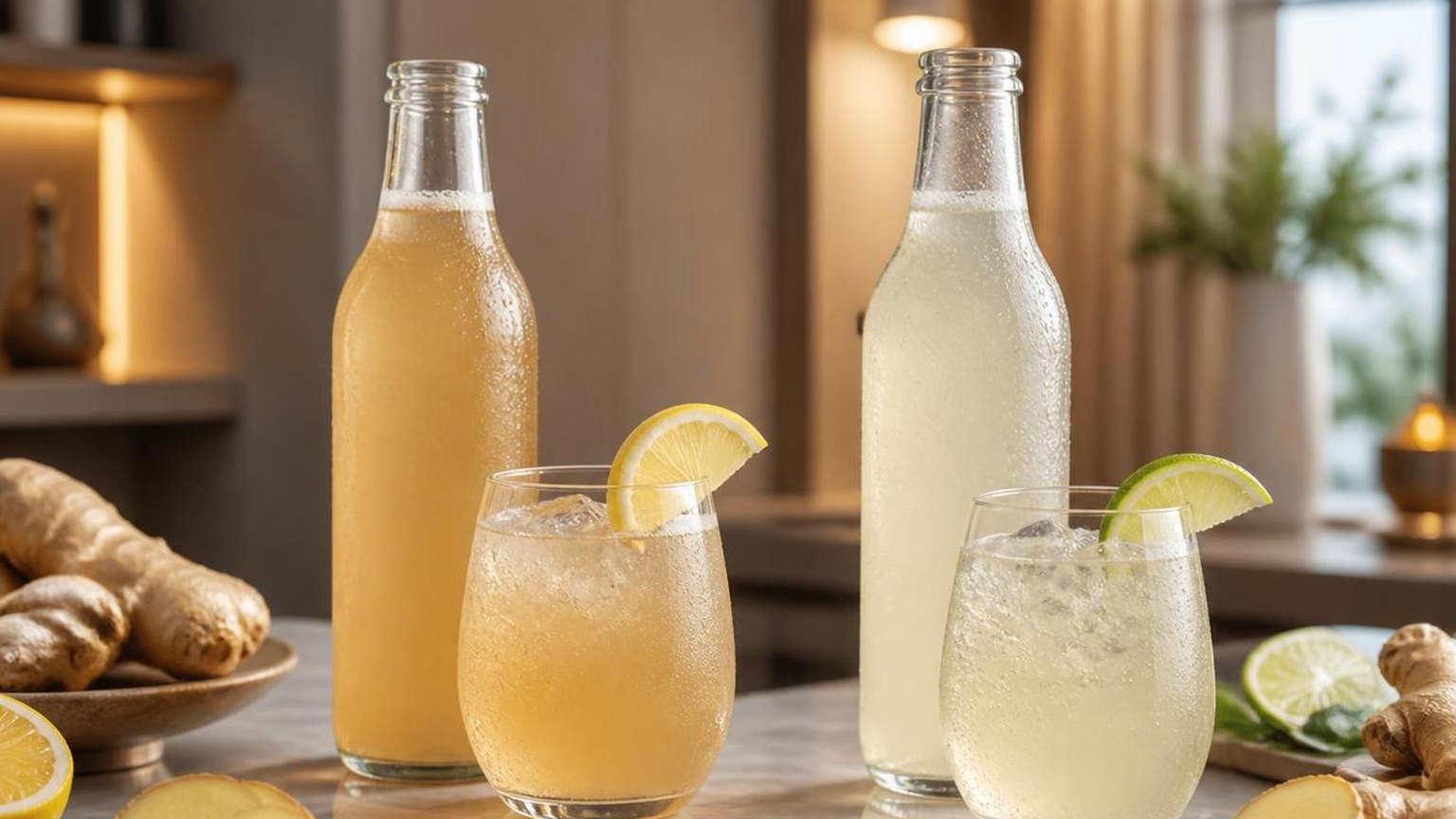
In side-by-side bar tastings, the difference usually shows up first in aroma and finish: ginger beer tends to give sharper ginger heat, while ginger ale reads lighter, sweeter, and more soda-like.
- Myth: ginger beer is automatically alcoholic. Modern bottled ginger beer sold as a soft drink in the U.S. is usually non-alcoholic. Under U.S. labeling rules, “non-alcoholic” beer-style beverages must contain less than 0.5% alcohol by volume, and many commercial ginger beers are formulated with no meaningful alcohol.
- Myth: ginger ale contains no real ginger. Some mass-market ginger ales use ginger extract or natural flavors rather than fresh ginger juice, but that does not mean “no ginger.” Ingredient lists vary widely, so the label matters more than the name.
- Myth: ginger beer is always less sweet. Not necessarily. Many ginger beers taste drier because ginger spice, acidity, and carbonation balance the sugar, but the grams of sugar can be similar to—or higher than—ginger ale.
| Example product | Serving size | Sugar | Calories |
| Canada Dry Ginger Ale | 12 fl oz | 35 g | 140 |
| Fever-Tree Premium Ginger Beer | 6.8 fl oz | 17 g | 80 |
| Goslings Stormy Ginger Beer | 12 fl oz | 48 g | 190 |
Those numbers come from common U.S. nutrition labels and show why “ginger beer is healthier” is a weak shortcut. Compare serving sizes carefully; a 6.8-ounce mixer bottle can look lighter until you scale it to 12 ounces.
- Myth: ginger ale is the correct mixer for every ginger drink. A Moscow Mule or Dark ’n’ Stormy needs ginger beer’s bite to stand up to vodka, rum, lime, and ice dilution. Ginger ale often makes those drinks taste flatter and sweeter.
- Myth: ginger beer is just spicier ginger ale. Historically, ginger beer was brewed or fermented with ginger, sugar, water, and a starter culture. Ginger ale developed more as a carbonated soft drink. Today, some brands blur the line, but the traditions differ.
- Myth: “dry” on a ginger ale label means low sugar. “Dry” usually describes flavor balance, not a regulated sugar claim. Check the Nutrition Facts panel if sugar content matters.
The practical rule is simple: use ginger ale when you want a softer, sweeter highball; use ginger beer when the drink needs ginger heat, structure, and a longer finish.
Questions Readers Ask
Is ginger beer alcoholic?
Traditional ginger beer was fermented and could contain alcohol, but most ginger beer sold in U.S. grocery stores today is non-alcoholic, typically below 0.5% ABV if fermentation-derived.
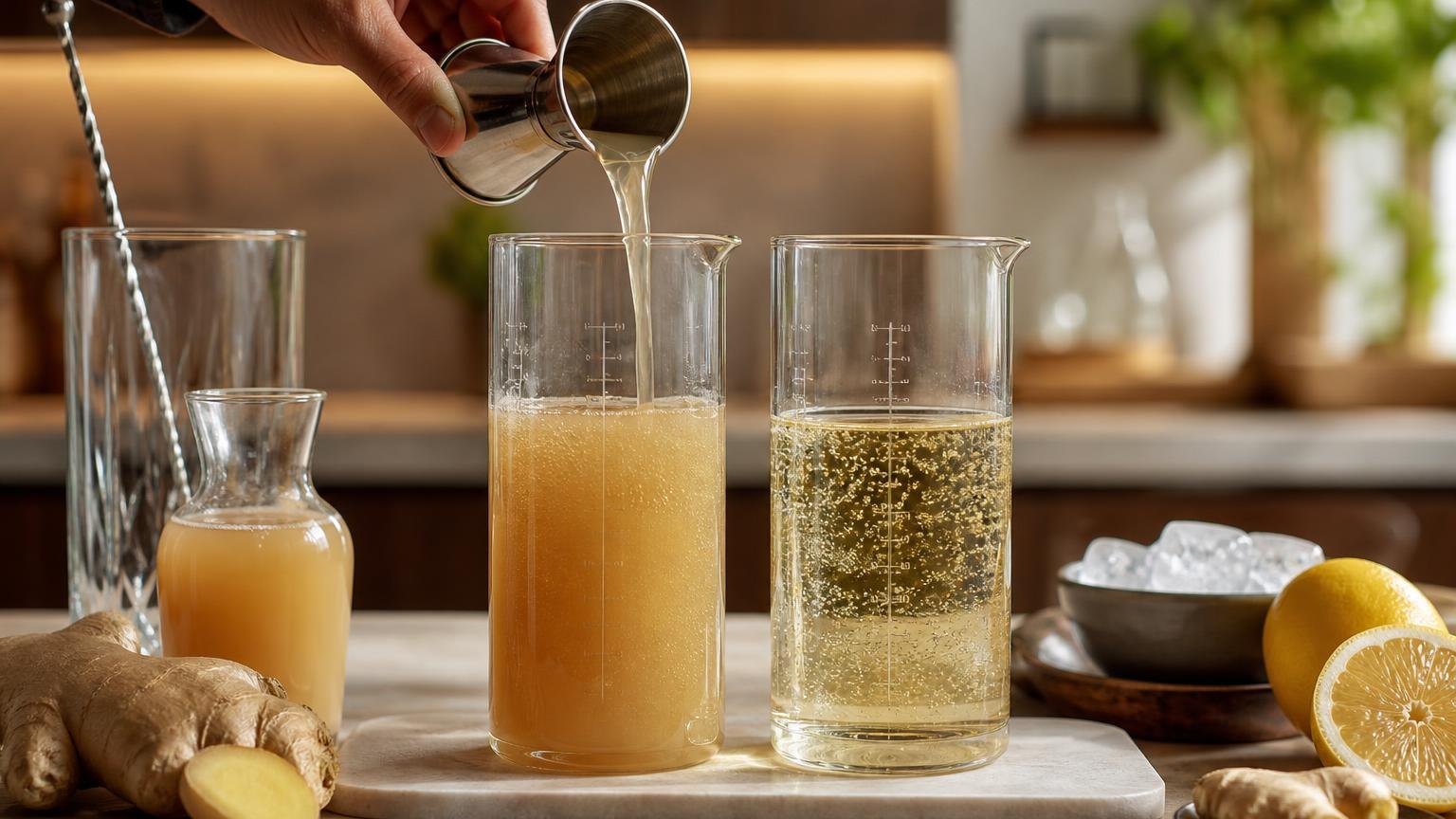
Check the label carefully, because “hard ginger beer” is a separate alcoholic product and is usually around 4% to 7% ABV.
What is the main difference between ginger beer and ginger ale?
Ginger beer is usually bolder, spicier, and less sweet-tasting, with a stronger ginger burn that works well in cocktails like a Moscow Mule or Dark ’n’ Stormy.
Ginger ale is a carbonated soft drink with a lighter ginger flavor and a cleaner, sweeter profile, commonly used as a mixer or stomach-settling soda.
Can you substitute ginger ale for ginger beer in cocktails?
You can substitute ginger ale for ginger beer, but the drink will taste softer, sweeter, and less spicy.
In cocktails that depend on ginger heat—especially a Moscow Mule—ginger beer gives a more balanced result because it stands up better to lime juice and spirits.
Which has more sugar, ginger beer or ginger ale?
It depends on the brand, but both can be high in sugar: many 12-ounce servings fall roughly in the 30 to 40 gram range.
Ginger beer often tastes less sweet because of its sharper ginger spice, while ginger ale can taste sweeter even at similar sugar levels.
Which is better for an upset stomach: ginger beer or ginger ale?
Neither is guaranteed to help, and many commercial versions contain little real ginger compared with ginger tea, capsules, or crystallized ginger.
If you want ginger for nausea, look for a product that lists real ginger or ginger extract, and consider that carbonation and sugar may worsen bloating for some people.
Why does ginger beer taste spicier than ginger ale?
Ginger beer usually tastes hotter because it contains more real ginger or ginger extract, which delivers pungent compounds such as gingerol and shogaol.
Ginger ale is typically a milder carbonated soft drink with a lighter ginger profile, so its flavor reads sweeter, softer, and less sharp.
Related Reading
- Coors Vs Coors Light: The Easiest Way to Distinguish
- How Many Beers In a Case? In-depth Answer
- Coors Light Nutrition Facts – What You Need to Know?
- How Much Is A Pony Keg?
- How Much Alcohol Is In Coors Light? – Get Answer Now
- Where Is Papas And Beer Rosarito?
- Dos Equis Amber Vs Lager: The Easiest Way to Distinguish
- All Alcohol Guides
- FDA eCFR: Spices and Other Natural Seasonings and Flavorings (2025)
- FDA eCFR: Nonalcoholic Beverages and Nutrition Labeling Requirements (2025)
- USDA FoodData Central: Ginger Ale (2025)
- NIH National Center for Complementary and Integrative Health: Ginger (2020)
- PubMed: The Effectiveness of Ginger in the Prevention of Nausea and Vomiting During Pregnancy and Chemotherapy (2016)
- TTB: Beer FAQs—Alcohol and Malt Beverage Regulatory Context (2024)
- Encyclopaedia Britannica: Ginger Beer (2024)