
difference between winery and vineyard is that a vineyard grows wine grapes, while a winery makes wine from grapes through crushing, fermentation, aging, and bottling.
A single business may own both, but the land and production facility serve different roles.
Vineyards are agricultural sites shaped by climate, soil, slope, vine spacing, irrigation, pruning, and harvest timing. Wineries are production sites equipped with presses, tanks, barrels, labs, bottling lines, permits, and cellar teams.
Knowing the distinction helps when reading wine labels, booking tastings, or comparing estate-grown, single-vineyard, and purchased-fruit wines.
It also explains why some tasting rooms sit beside vines, while others operate in towns far from any planted acreage.
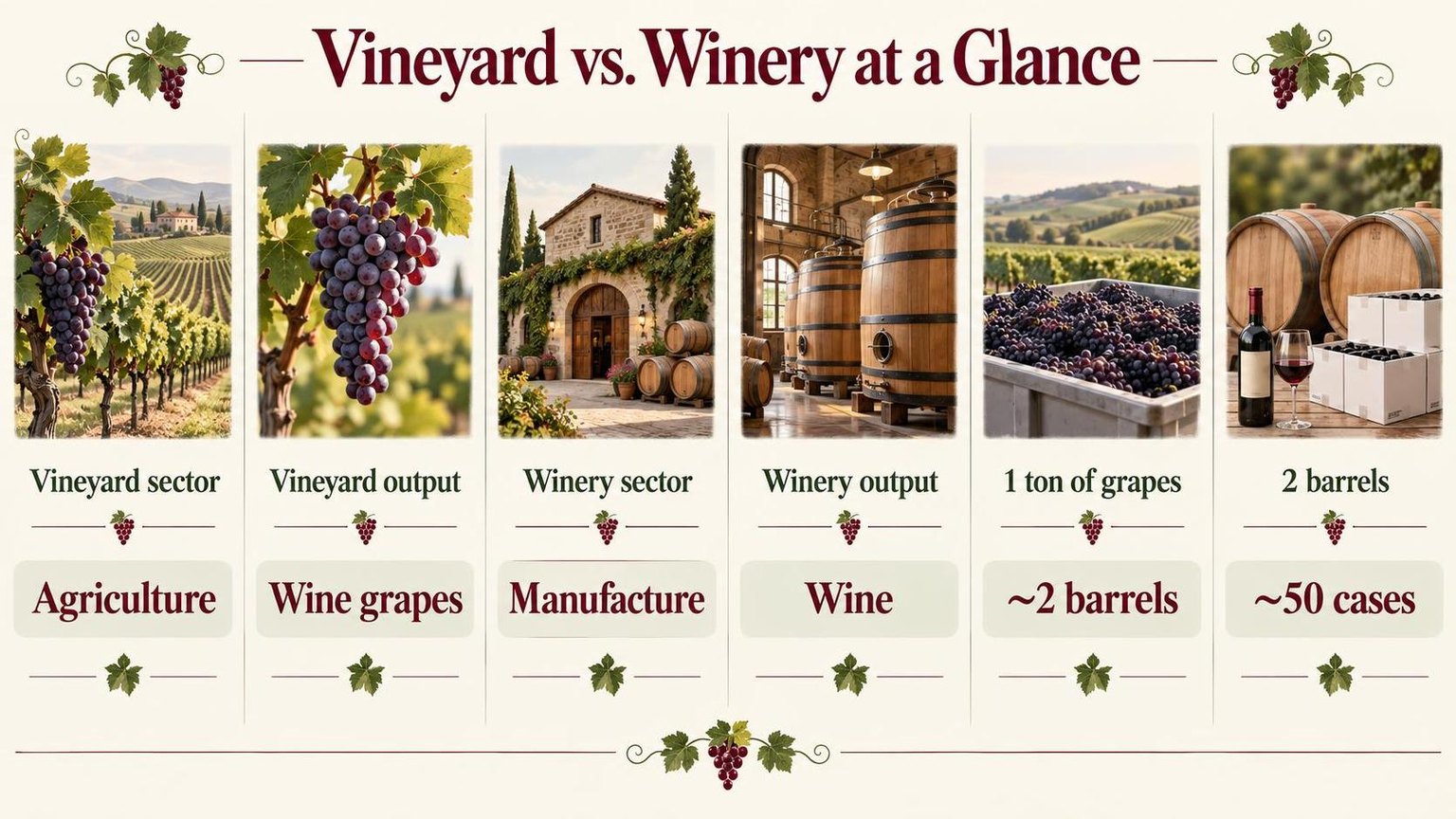
Winery Versus Vineyard in Plain Terms
A vineyard is agricultural land where grapevines grow; a winery is a facility where grapes become wine. One business may operate both, but the words describe different places, work, equipment, regulations, and sources of revenue.
What Happens in a Vineyard
Vineyard work follows the vine’s annual cycle. Crews prune dormant canes, manage shoots and leaves, control weeds and pests, monitor ripeness, harvest grapes, and maintain trellises, irrigation lines, roads, and soil health.
The vineyard’s principal product is fruit. It may sell grapes to outside wineries, supply an affiliated winery, or divide its crop among several buyers. Ownership of a vineyard does not mean the owner makes or bottles wine.
- Core assets: planted acreage, grapevines, trellis systems, tractors, harvest equipment, water access, and suitable soil.
- Key decisions: grape variety, rootstock, row orientation, pruning method, crop load, irrigation, harvest timing, and disease control.
- Primary risks: frost, hail, wildfire smoke, drought, excessive rain, pests, fungal disease, labor shortages, and weak grape prices.
What Happens in a Winery
A winery receives grapes or juice and manages fermentation, maturation, blending, stabilization, packaging, and storage.
Typical equipment includes crushers, destemmers, presses, fermentation tanks, pumps, barrels, filtration systems, bottling machinery, and temperature controls.
The winery’s principal product is finished wine. It may own no vines at all, purchasing fruit, juice, or bulk wine under contract. Conversely, a vineyard can exist without a winery and sell its entire harvest to producers.
- Core activities: crushing, pressing, fermenting, aging, laboratory testing, blending, bottling, labeling, warehousing, and sales.
- Key decisions: yeast selection, fermentation temperature, extraction, barrel use, aging duration, blending, alcohol adjustment, and release timing.
- Primary risks: stuck fermentation, oxidation, microbial spoilage, packaging faults, inventory costs, regulatory violations, and changing consumer demand.
Side-by-Side Distinction
| Point of comparison | Vineyard | Winery |
| Economic sector | Agriculture | Beverage manufacturing |
| Main input | Land, vines, water, labor | Grapes, juice, or bulk wine |
| Main output | Wine grapes | Finished or bulk wine |
| Typical measurement | Acres and tons harvested | Gallons, cases, and bottles produced |
| Federal oversight | Agricultural rules apply; pesticide use is regulated primarily through federal and state programs | Alcohol production, labeling, records, and taxes fall under the Alcohol and Tobacco Tax and Trade Bureau |
| Illustrative conversion | A ton of grapes is commonly estimated to yield about two standard barrels | Two standard barrels hold roughly one hundred twenty gallons, or about fifty cases |
“Estate” language can connect the two.
Under federal labeling rules, “estate bottled” means the winery grew the grapes on land it owns or controls within the named viticultural area, and the wine was crushed, fermented, finished, aged.
And bottled in one continuous process on that winery’s premises.
For visitors, the distinction is practical: vineyard scenery does not guarantee tastings, and a tasting-room winery may overlook no vines.
Check whether a destination offers vineyard access, production tours, tastings, food, or retail sales rather than relying on its name.
What Happens at a Vineyard
A vineyard grows wine grapes; it does not necessarily make wine. Its work centers on managing vines, soil, water, pests, and harvest timing so grapes reach the winery with the desired sugar, acidity, flavor, and physical condition.
Seasonal vine management
Work begins during winter dormancy with pruning. Crews remove most of the previous season’s growth and retain selected buds, controlling the number and position of future shoots.
Pruning decisions affect crop size, canopy density, disease exposure, and fruit ripening.
After bud break, workers train shoots onto trellis wires, remove unwanted shoots, and manage the canopy. Leaf removal around clusters can improve airflow and spray coverage, but excessive exposure may cause sunburn.
Timing and intensity depend on cultivar, climate, row orientation, and intended wine style.
| Vine stage | Typical vineyard work |
| Dormancy | Pruning, trellis repair, soil amendments, and erosion control |
| Bud break to flowering | Shoot thinning, frost protection, weed management, and disease monitoring |
| Fruit set to veraison | Canopy positioning, irrigation management, crop adjustment, and pest control |
| Veraison to harvest | Fruit sampling, bird protection, irrigation decisions, and harvest scheduling |
| Post-harvest | Maintaining healthy leaves, replenishing soil nutrients when needed, and preparing for dormancy |
Water, soil, and crop control
Vineyard managers monitor soil moisture, vine water status, weather, and irrigation performance.
Regulated water stress can limit excessive shoot growth and influence berry development, but severe stress reduces photosynthesis, delays ripening, and may damage vines. Irrigation rules and needs vary sharply among regions.
Soil work may include cover crops, compost, mowing, cultivation, and targeted nutrient applications. Managers use soil tests and leaf or petiole analysis rather than assuming every block needs fertilizer.
Excess nitrogen can produce dense canopies, increase disease pressure, and delay fruit maturity.
Pest and disease management
Powdery mildew, downy mildew, Botrytis bunch rot, insects, birds, and vertebrate pests can reduce usable fruit. Integrated pest management combines scouting, weather data, canopy practices, biological controls, and precisely timed treatments.
UC IPM and Cornell Cooperative Extension publish region-specific monitoring and control guidance.
- Crews inspect leaves, shoots, and clusters for symptoms or insect activity.
- Weather stations track temperature, rainfall, humidity, and leaf-wetness conditions.
- Records document treatments, worker-entry intervals, irrigation, yields, and block performance.
- Damaged, diseased, underripe, or raisined clusters may be excluded during harvest.
Deciding when to harvest
Harvest timing is not based on sugar alone. Vineyard and winery teams sample representative clusters, taste berries, inspect seeds and skins, and measure soluble solids, pH, and titratable acidity.
The target depends on grape variety, wine style, weather risk, and the winery’s fermentation plan.
Grapes may be hand-picked into small containers or mechanically harvested. Speed matters because crushed berries begin oxidizing and can support microbial growth.
Many vineyards harvest at night or early morning to deliver cooler fruit, reduce heat exposure, and lower the winery’s immediate cooling demand.
Once picked, the vineyard’s primary job ends at delivery. Crushing, fermentation, aging, blending, and bottling occur at a winery, although one property may operate both businesses on the same site.
What Happens Inside a Winery
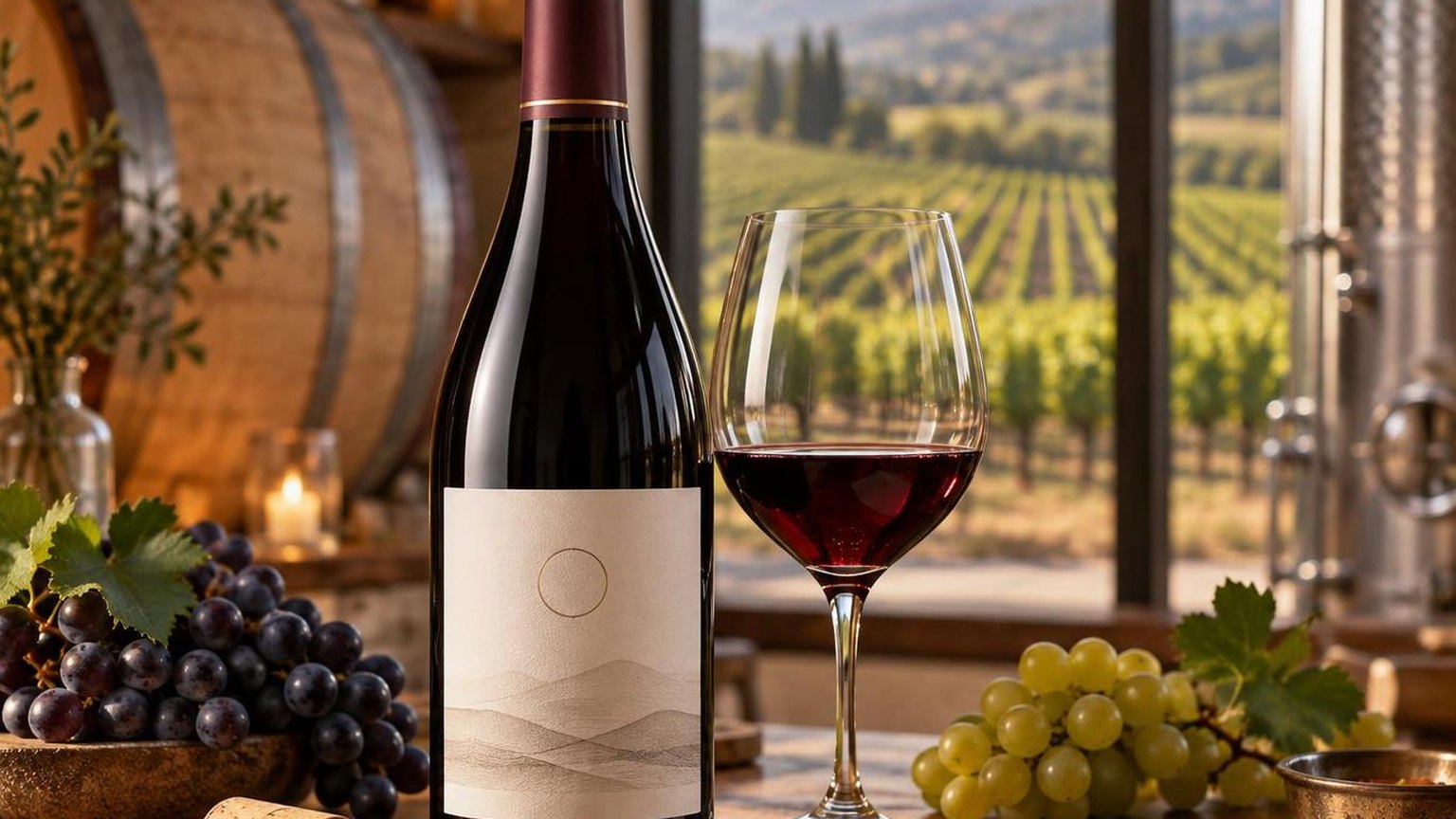
A winery receives harvested grapes and converts them into a stable beverage through crushing, fermentation, clarification, aging, and bottling.
The facility may stand beside vineyards, but its work begins after grapes leave the field and continues until sealed bottles reach storage or distribution.
Receiving starts with weighing, sampling, and inspecting each load. Staff measure sugar with a refractometer, acidity through laboratory testing, and grape condition by checking for mold, rot, damaged berries, and unwanted plant material.
Sugar readings help the winemaker estimate potential alcohol before fermentation begins.
Crushing and Pressing
Red grapes are commonly crushed and fermented with their skins, seeds, and sometimes stems. White grapes are usually pressed soon after arrival, separating juice from skins before fermentation.
A destemmer can remove stems while leaving berries sufficiently intact for controlled processing.
Pressing applies mechanical force to extract juice. Wineries often separate the first free-run juice from press fractions because later fractions can contain more tannin, potassium, and bitter compounds.
Each fraction may be fermented separately, then blended after tasting and laboratory analysis.
Fermentation
Yeast converts grape sugar into ethanol and carbon dioxide. Winemakers may use naturally occurring yeast or selected commercial strains.
Fermentation vessels include stainless-steel tanks, concrete tanks, oak barrels, and food-grade plastic containers, each affecting temperature control, oxygen exposure, and handling efficiency.
| Stage | Typical operating range | Primary purpose |
| White-wine fermentation | 50–65°F | Preserve fresh fruit and floral aromas |
| Red-wine fermentation | 75–90°F | Extract color, flavor, and tannin from skins |
| Skin contact for red wine | 5–30 days | Control structure and concentration |
| Barrel aging | 6–24 months | Develop texture and oak-derived flavors |
During red-wine fermentation, workers pump juice over the floating skins or push the cap downward. This keeps the skins wet and increases extraction.
Temperature, sugar decline, and density are checked regularly, because excessive heat can damage aroma and stress yeast.
Clarification and Stabilization
After fermentation, suspended yeast, grape solids, and tannins remain in the wine. Racking transfers clearer wine away from sediment. Some wineries use settling, filtration, or fining agents such as bentonite.
Cold stabilization can reduce tartrate crystals that might otherwise form in a bottle.
Malolactic fermentation is common in many red wines and selected white wines. Bacteria convert sharper malic acid into softer lactic acid, reducing perceived acidity and adding texture.
The process requires monitoring because unwanted bacterial activity can produce unpleasant aromas or volatile acidity.
Aging, Blending, and Bottling
Wine may mature in stainless steel, concrete, oak, or bottle. Oak can contribute compounds associated with vanilla, toast, spice, and tannin, while porous barrels permit gradual oxygen transfer.
Winemakers taste individual lots before blending to achieve the intended balance of acidity, alcohol, tannin, fruit, and texture.
Before bottling, the finished wine is tested for stability, dissolved oxygen, alcohol, acidity, and microbial condition. Bottles are filled, sealed with cork or an alternative closure, labeled, and stored under controlled conditions.
The winery’s role ends with a market-ready product; the vineyard’s role is growing and harvesting the grapes.
Estate Winery and Vineyard Overlap
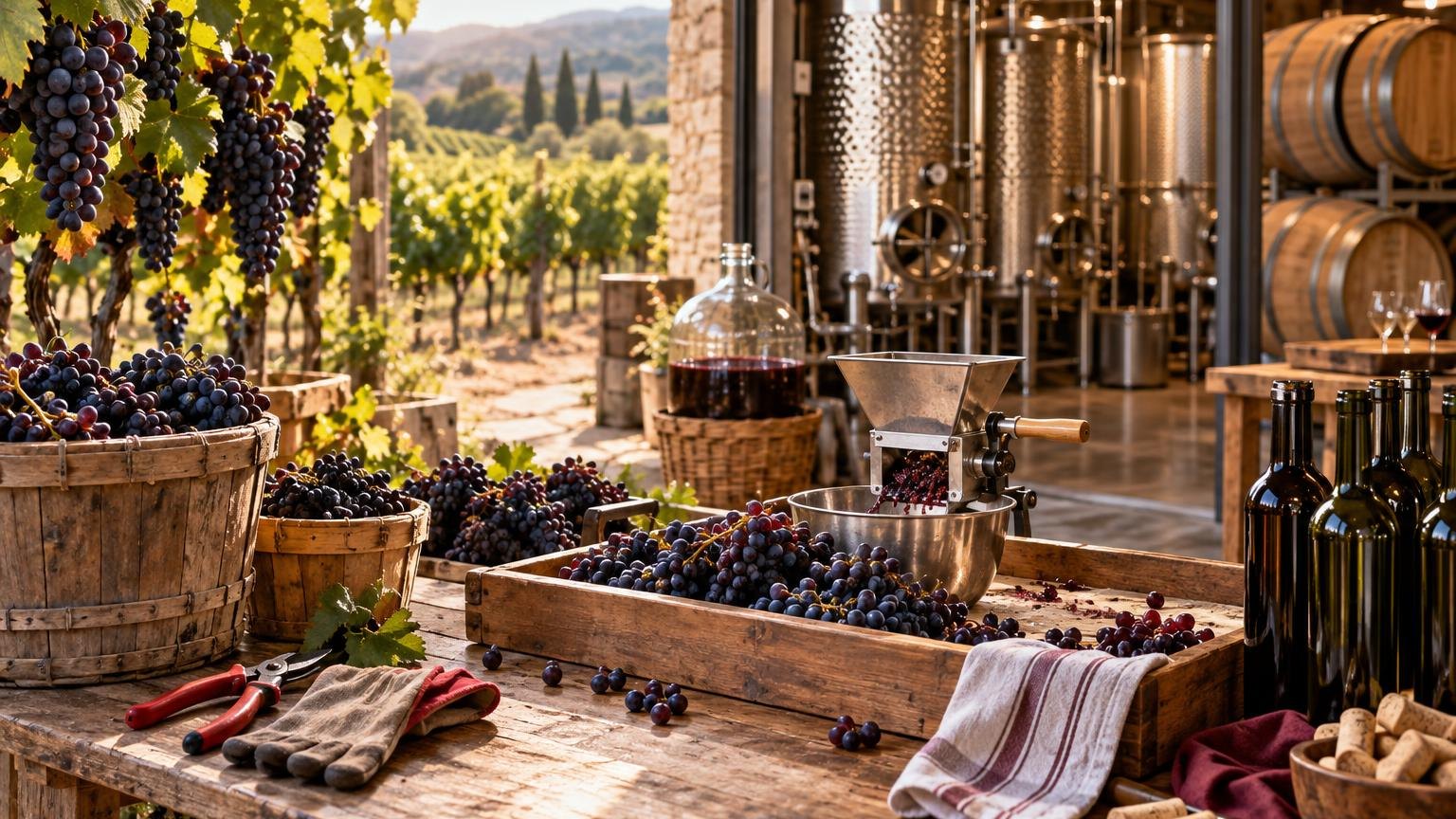
An estate winery combines vineyard control and winemaking under one producer, but the vines and production building need not occupy the same parcel.
The federally regulated phrase is “estate bottled,” not simply “estate winery.”.
Under U.S. Alcohol and Tobacco Tax and Trade Bureau rules, an estate-bottled wine must carry an American Viticultural Area designation.
The bottling winery must be located within that named AVA, and every grape must come from land the winery owns or controls inside the same AVA.
| Federal requirement | Standard AVA-labeled wine | Estate-bottled wine |
| Minimum grapes from named AVA | 85% | 100% |
| Winery located inside named AVA | Not generally required | Required |
| Winery owns or controls vineyard land | Not required | Required |
| Continuous production at bottling winery | Not required | Required |
| Primary federal authority | 27 CFR § 4.25 | 27 CFR § 4.26 |
“Control” involves more than purchasing fruit under a supply contract.
TTB guidance interprets control as the winery holding the legal right to make, and actually making or directing, vineyard-management decisions such as pruning, cultivation, irrigation, spraying, and harvest timing.
The vineyard can therefore be leased rather than owned. It can also sit miles from the cellar, provided both locations fall within the AVA printed on the label. A producer may control several noncontiguous vineyard blocks and still qualify.
Production must remain with the winery
The bottling winery must crush the grapes, ferment the juice, finish the wine, age it, and bottle it on its premises.
The process must be continuous; transferring unfinished wine to another winery for production generally breaks estate-bottled eligibility.
- Estate vineyard: Common trade language for vines owned or controlled by a producer; the phrase alone does not establish federal estate-bottled compliance.
- Estate winery: Usually describes a winery closely connected to its own or controlled vineyards, but federal labeling rules regulate the claim placed on the bottle.
- Estate bottled: A defined label term requiring common geographic origin, vineyard control, and continuous production by the bottling winery.
A winery may own a vineyard yet buy additional grapes for non-estate wines. Conversely, a winery can produce estate-bottled wine from leased vineyards when it exercises qualifying viticultural control.
Estate status applies to the particular wine and label claim, not automatically to every bottle the business sells.
The distinction matters when visiting or buying. A vineyard identifies where grapes grow; a winery identifies where wine is made.
An estate operation overlaps both functions, while “estate bottled” adds verifiable federal conditions documented through vineyard records, production records, and label approval.
Choosing Which One to Visit
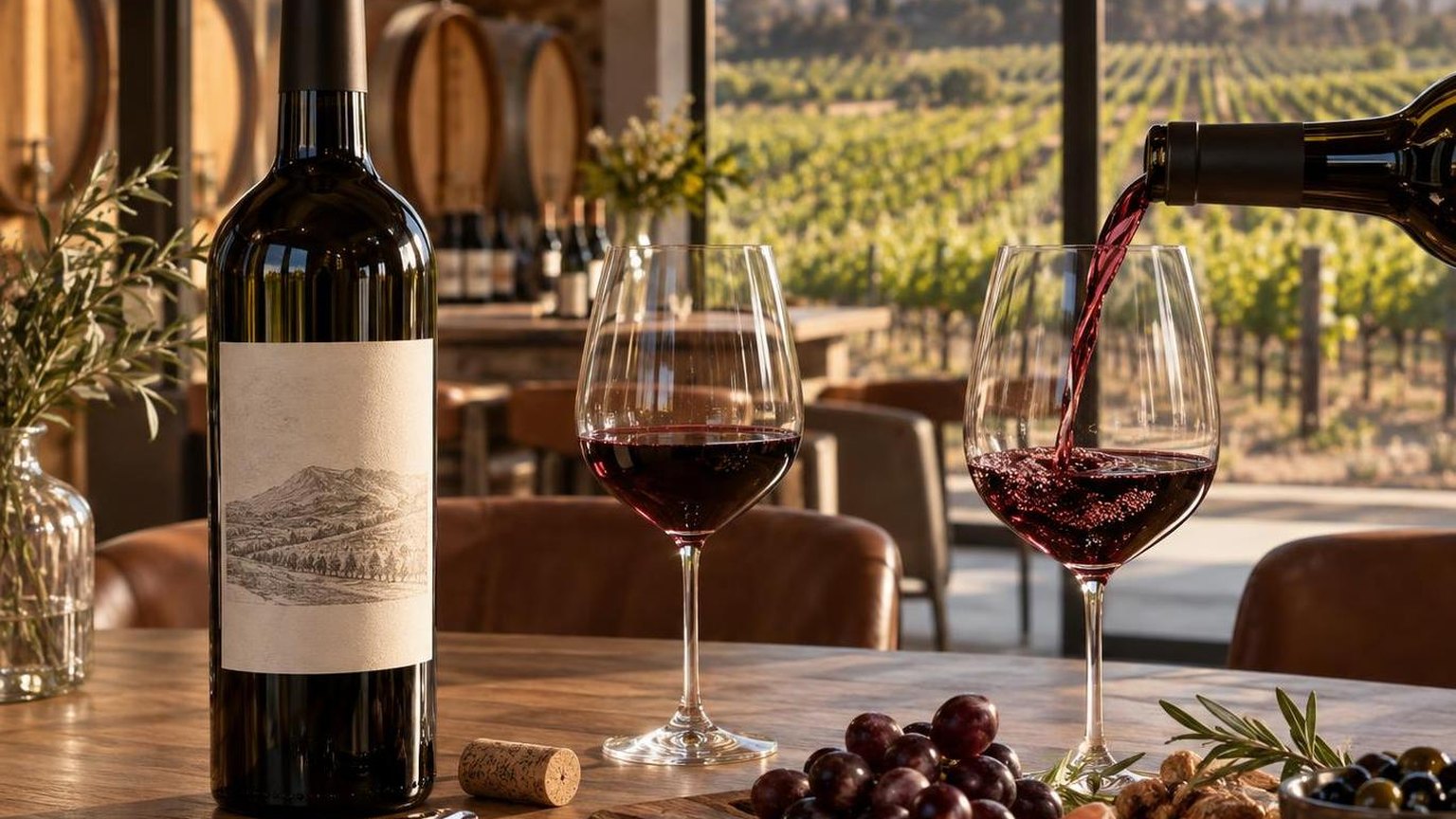
Choose a winery for guided tastings, cellar access, and finished bottles. Choose a vineyard for farming, scenery, and a clearer view of how grape variety, soil, slope, and harvest decisions shape the wine before fermentation begins.
Visit a Winery for the Wine-Making Experience
A winery receives grapes or juice and turns them into wine through crushing, fermentation, aging, blending, and bottling. Many wineries offer tasting rooms, food pairings, barrel samples, production tours, wine-club pickups, and direct bottle sales.
Ask whether the tour enters the working cellar. Some “winery tours” remain in a hospitality building, while production-focused visits may show crush pads, presses, fermentation tanks, barrel rooms, bottling equipment, and laboratories.
- Best for: Comparing several wines, learning cellar techniques, buying bottles, and visiting outside the growing season.
- Ask about: Reservation requirements, tasting fees, food service, accessibility, children, pets, and whether the tasting fee is waived with purchase.
- Look for: Concrete explanations of fermentation vessels, yeast decisions, oak use, blending, aging, and vintage variation.
Visit a Vineyard for the Farming Experience
A vineyard is agricultural land planted with grapevines. A vineyard may supply several wineries and may have no tasting room, winemaking equipment, public entrance, or wine sold under its own name.
Vineyard visits are most informative when staff can explain canopy management, irrigation, pruning, disease pressure, soil drainage, harvest timing, and grape sampling.
Conditions change seasonally: dormant vines reveal pruning structure, while the growing season shows shoots, flowers, clusters, and ripening fruit.
- Best for: Landscape, viticulture, photography, geology, and understanding why grapes from neighboring sites can taste different.
- Ask about: Closed-toe shoes, uneven terrain, weather cancellations, harvest restrictions, and whether guests may enter vine rows.
- Do not assume: Grapes are available to taste. Vineyard fruit is a crop, and unauthorized picking can spread pests, damage clusters, and reduce saleable yield.
Use the Label Claims Carefully
Federal labeling rules provide useful clues, but they do not prove that a visitor can tour vines or production areas. The Alcohol and Tobacco Tax and Trade Bureau defines these claims; hospitality access remains a business decision.
| Label or claim | Federal requirement | What it means for a visit |
| American Viticultural Area name | At least 85% of the grapes must come from the named AVA. | The wine may still be produced elsewhere, so confirm the tasting address. |
| “Estate bottled” | 100% of the grapes must be grown on land owned or controlled by the winery, with production and bottling in the same AVA. | This strongly connects farming and production, but public vineyard access is not guaranteed. |
| Varietal name | Generally at least 75% of the wine must come from the named grape variety. | It identifies composition, not whether the property grows that grape. |
For the fullest visit, book an estate that operates both vineyard and winery on one property. Confirm that the reservation explicitly includes a vineyard walk and production tour, because a tasting appointment alone may include neither.
Questions Readers Ask
What is the main difference between a winery and a vineyard?
A vineyard is agricultural land where grapevines are grown and harvested. A winery is a facility where grapes are crushed, fermented, aged, blended, and bottled as wine.
Can a vineyard exist without a winery?
Yes, many vineyards sell their grapes to outside wineries rather than producing wine themselves. These growers focus on farming decisions such as pruning, irrigation, canopy management, and harvest timing.
Can a winery operate without owning a vineyard?
Yes, a winery can purchase grapes, grape must, or finished bulk wine from independent producers. This model allows winemakers to source fruit from multiple regions without owning farmland.
Are winery and vineyard tours the same?
No, a vineyard tour usually focuses on grape growing, soils, vine training, and seasonal fieldwork. A winery tour typically covers fermentation tanks, barrel aging, bottling, storage, and winemaking methods.
Does the vineyard location determine a wine’s origin?
The vineyard location determines where the grapes were grown, while the winery address identifies where the wine was made.
Under U.S. rules, an American Viticultural Area listed on a label generally requires at least 85% of the grapes to come from that named AVA.
What does “estate bottled” mean on a U.S. wine label?
“Estate bottled” is a regulated term requiring the winery to control the grapes from crush through bottling and to grow them on land it owns or controls.
The vineyard and winery must also be within the same federally recognized viticultural area.
Related Reading
- Where To Buy A Wine Cooler?
- How To Build A Bar? 22 Great Home Bar Ideas
- How Much Sugar Is In Bourbon?
- Why Do People Say Beers Are Better than a Woman?
- How Many Grams In A Troy Ounce Of Silver?
- How Many Cups Is 3 4 Pound?
- All Blog Guides
- Electronic Code of Federal Regulations, 27 CFR § 24.10—Meaning of Terms (2025)
- U.S. Census Bureau, NAICS 312130—Wineries (2022)
- U.S. Census Bureau, NAICS 111332—Grape Vineyards (2022)
- Alcohol and Tobacco Tax and Trade Bureau, Starting a Winery (2025)
- Cornell Law School Legal Information Institute, 27 CFR § 24.10—Meaning of Terms (2025)
- Merriam-Webster, Winery Definition & Meaning (2025)
- Merriam-Webster, Vineyard Definition & Meaning (2025)





