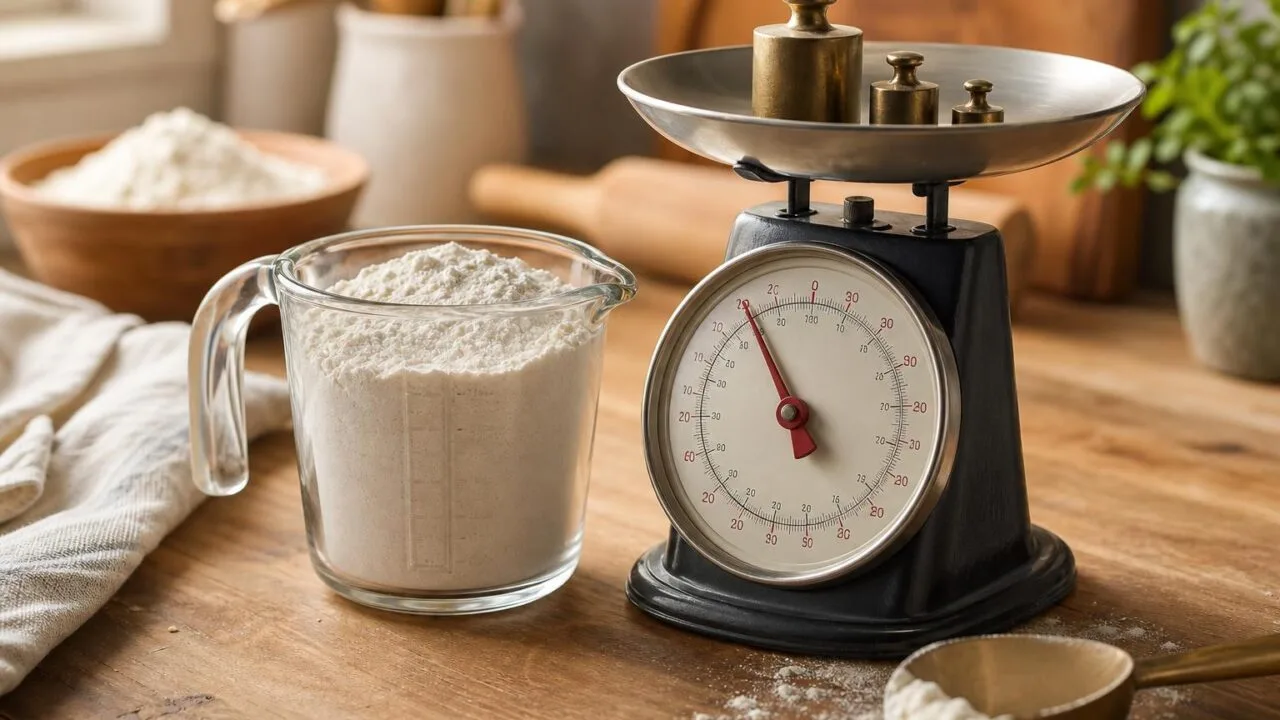
How Many Cups Is 3 4 Pound is 1.5 cups when using the common kitchen shortcut of 1 pound equaling 2 cups.
That works for many basic dry conversions, but the exact cup measure changes by ingredient because flour, sugar, butter, rice, and chopped foods have different densities.
For accuracy, treat 3/4 pound as 12 ounces by weight, then convert based on the specific food. For example, 3/4 pound of butter is 1.5 cups, while 3/4 pound of all-purpose flour is about 2.7 cups. A kitchen scale gives the most reliable result.
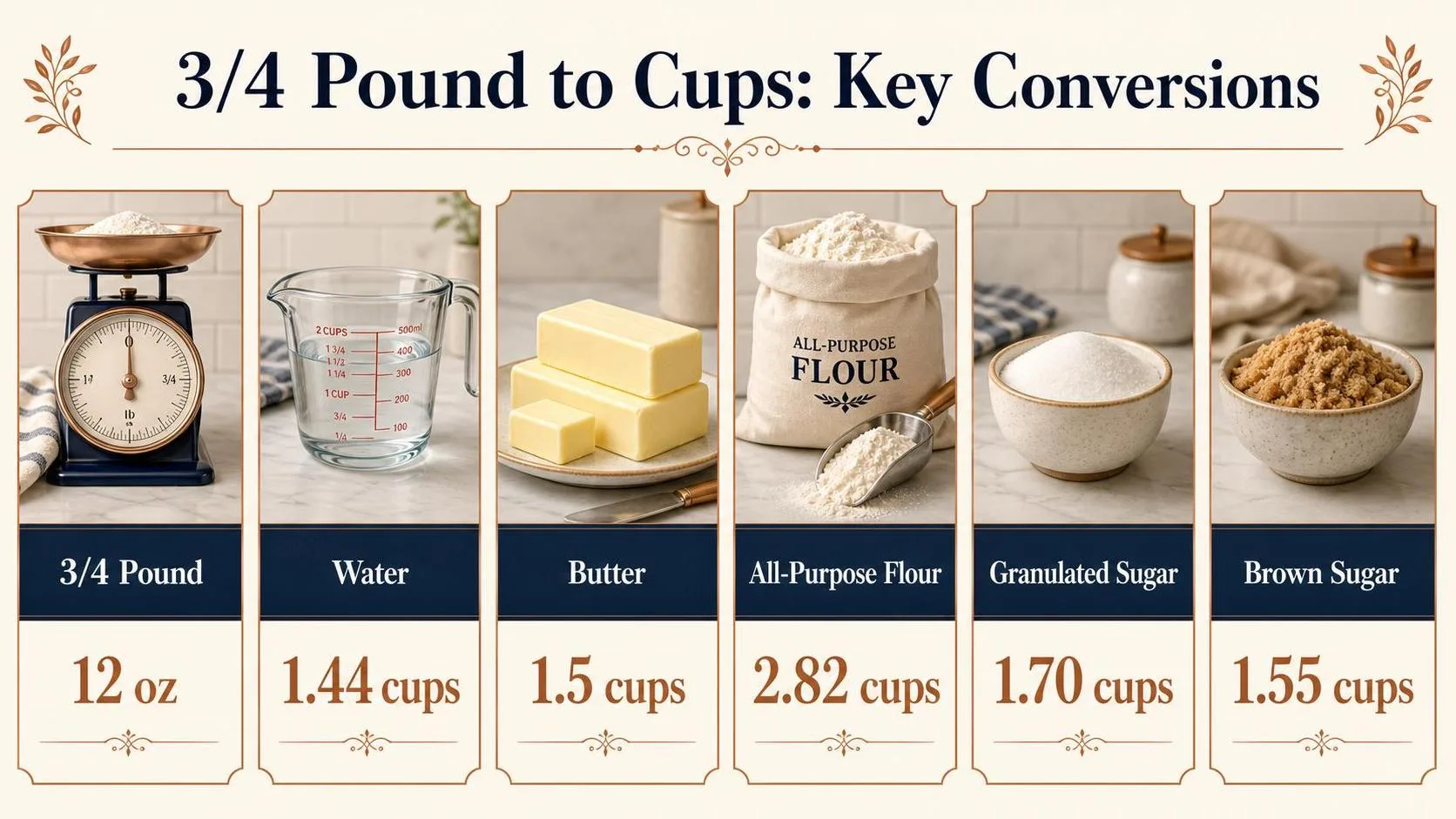
/4 Pound Equals 12 Ounces
Three-quarters of a pound equals 12 ounces by weight, because 1 pound contains 16 ounces. The number of cups depends on the ingredient, because cups measure volume while pounds measure weight.
For water-like liquids, the conversion is simple: 1 US cup of water weighs about 8 fluid ounces by volume and about 8.35 ounces by weight. That makes 3/4 pound of water roughly 1.44 US cups.
| Measurement | Exact or practical value |
| 3/4 pound | 12 ounces by weight |
| 3/4 pound | 340.2 grams |
| 1 US cup | 236.6 milliliters |
| 1 pound | 16 ounces by weight |
Why there is no single cup answer
A cup of flour, sugar, butter, and chopped nuts can all occupy the same 1-cup measuring cup, but they do not weigh the same. Density, particle size, packing, and moisture change the result.
That is why 12 ounces by weight converts to different cup amounts for different foods. In kitchen practice, a scale gives the most reliable answer for “3/4 pound.”.
| Ingredient | Common weight per US cup | 3/4 pound equals about |
| Water | 8.35 oz | 1.44 cups |
| All-purpose flour, spooned and leveled | 4.25 oz | 2.82 cups |
| Granulated sugar | 7.05 oz | 1.70 cups |
| Brown sugar, packed | 7.75 oz | 1.55 cups |
| Butter | 8 oz | 1.5 cups |
| Chocolate chips | 6 oz | 2 cups |
| Shredded cheddar cheese | 4 oz | 3 cups |
Most-used kitchen shortcuts
- 3/4 pound butter: 12 ounces, 3 sticks, or 1 1/2 cups. One US butter stick is 4 ounces or 1/2 cup.
- 3/4 pound flour: about 2 3/4 to 2 7/8 cups if using the standard 4.25 ounces per cup for spooned all-purpose flour.
- 3/4 pound sugar: about 1 2/3 to 1 3/4 cups of granulated sugar.
- 3/4 pound liquid water: about 1.44 cups, slightly less than 1 1/2 cups.
If a recipe says “3/4 pound” and does not name the ingredient, the only accurate conversion is 12 ounces by weight. Convert to cups only after identifying the ingredient and its typical weight per cup.
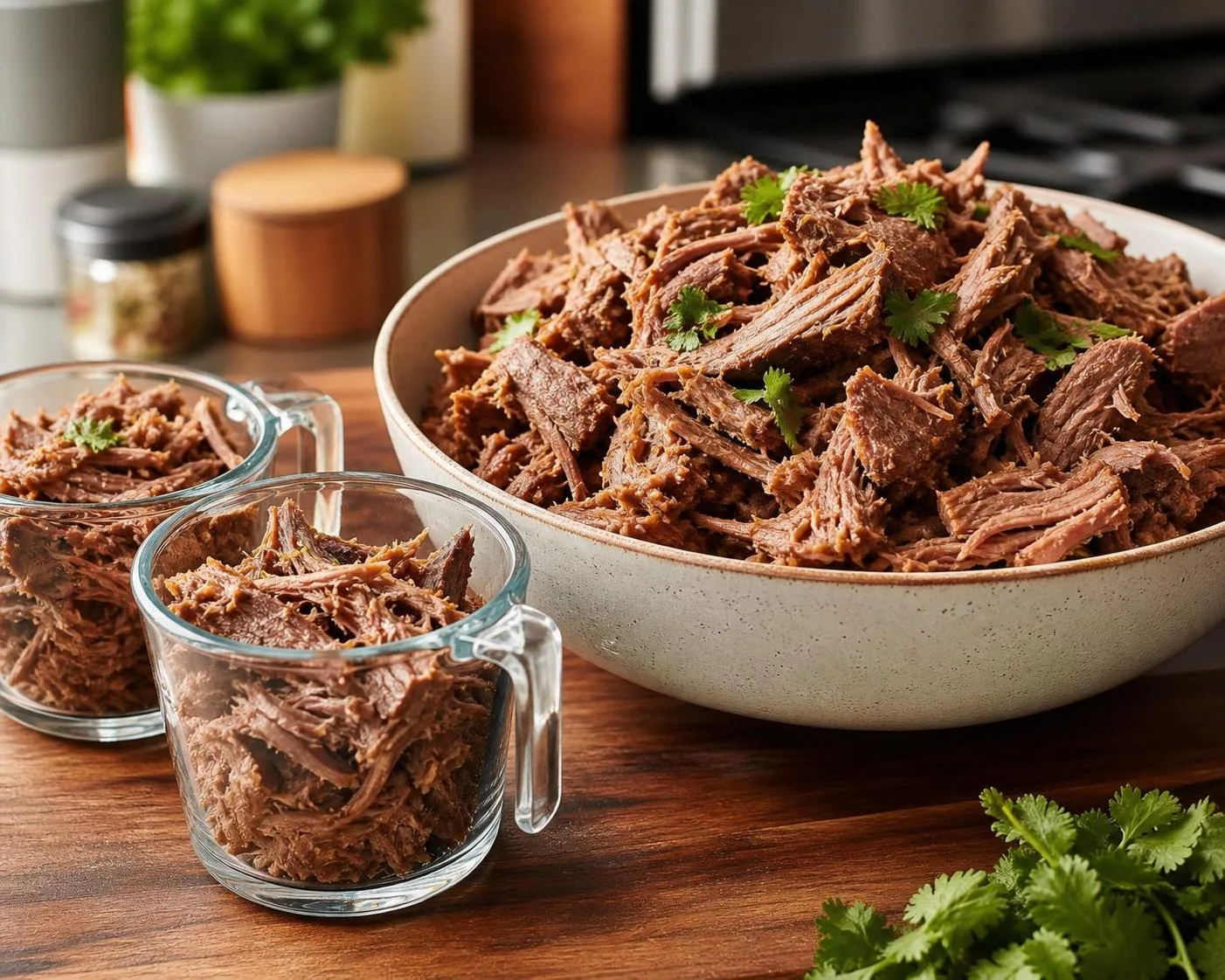
Why Cup Equivalents Vary
Three-fourths of a pound is always 12 ounces by weight, but the cup equivalent changes because cups measure volume. The biggest factor is ingredient density: 12 ounces of flour takes up far more space than 12 ounces of butter or sugar.
In a test kitchen or bar kitchen, the most reliable method is to weigh the ingredient, then use cup conversions only when a recipe’s tolerance allows it.
Baking formulas, syrups, batters, and doughs are especially sensitive to these differences.
Ingredient Density
Density is the main reason there is no single answer to “how many cups is 3/4 pound.” A cup of all-purpose flour commonly weighs about 4.25 ounces, while a cup of butter weighs 8 ounces.
| Ingredient | Common weight per cup | 3/4 pound equals |
| Butter | 8 oz per cup | 1.5 cups |
| Granulated sugar | About 7 oz per cup | About 1.7 cups |
| All-purpose flour | About 4.25 oz per cup | About 2.8 cups |
| Powdered sugar | About 4 oz per cup | About 3 cups |
| Chopped nuts | About 4 oz per cup | About 3 cups |
Packing, Scooping, and Settling
How an ingredient is placed into the cup can change the result significantly. Flour scooped directly from the bag can weigh 5 ounces or more per cup, while spooned-and-leveled flour is often closer to 4.25 ounces.
- Packed brown sugar: Compressing it removes air pockets, so 1 cup is commonly about 7.5 ounces.
- Sifted flour: Sifting adds air, so 1 cup weighs less than unsifted flour.
- Chopped ingredients: Fine chopping fits more into a cup than large, uneven pieces.
- Settled powders: Cocoa, flour, and powdered sugar compact during shipping and storage.
Moisture and Temperature
Moisture changes weight without changing volume evenly. Brown sugar that has dried out may measure differently from fresh, moist brown sugar, even when both are labeled the same ingredient.
Temperature matters most for fats. Cold butter in firm pieces leaves gaps in a cup, while softened butter can be pressed level. Melted butter also measures differently by volume because air pockets disappear.
Measurement Standard Used
U.S. recipes use a 1-cup measure of 8 fluid ounces, or about 237 milliliters. That does not mean every ingredient in that cup weighs 8 ounces; only water is close to that weight at normal kitchen temperatures.
| Measurement | Amount |
| 3/4 pound | 12 ounces by weight |
| 1 U.S. cup | 8 fluid ounces by volume |
| 1 cup water | About 8.35 ounces by weight |
| 1 cup butter | 8 ounces by weight |
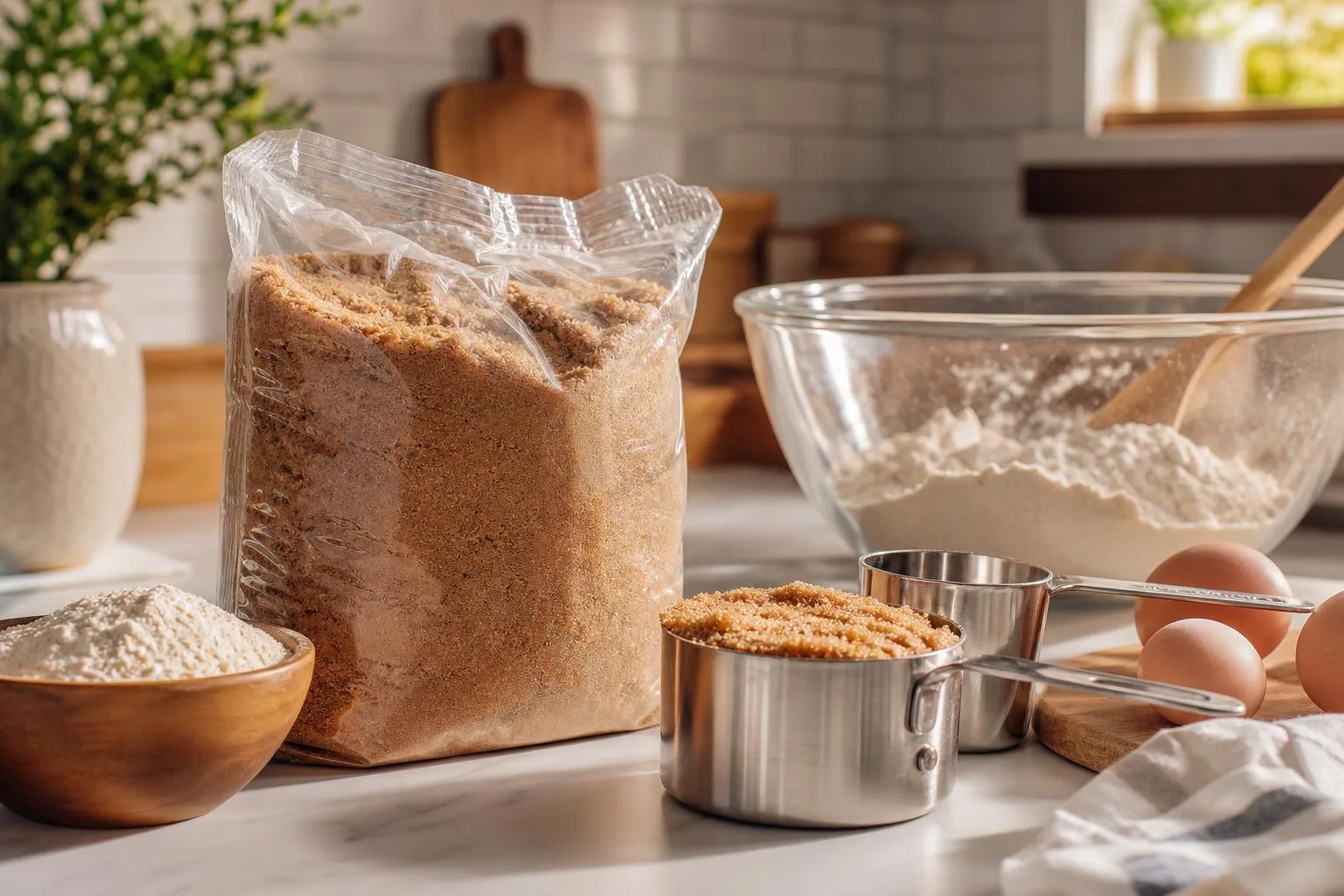
Weight Equivalents for 3/4 Pound
Three-quarters of a pound is a weight measurement: 0.75 lb, 12 oz, or about 340.2 g. Cups measure volume, so the verified cup amount depends on the ingredient’s density and how it is packed.
The most reliable method is to weigh the ingredient on a kitchen scale, then convert only if a tested weight-per-cup value is known. This is how professional recipe testing avoids errors from scooping, settling, and ingredient particle size.
Weight Verification
Start by confirming the actual weight before estimating cups. In U.S. kitchen measurement, 1 pound equals 16 ounces, and 1 cup equals 8 U.S. fluid ounces by volume, not 8 ounces by weight.
| Measurement | Equivalent |
| 3/4 pound | 0.75 lb |
| 3/4 pound | 12 oz by weight |
| 3/4 pound | 340.2 g |
| 1 U.S. cup | 236.6 mL by volume |
To verify 3/4 pound, place a bowl on the scale, press tare, and add the ingredient until the display reads 12.0 oz or 340 g. A digital scale with 1 g resolution is accurate enough for most home cooking.
Why Cups Vary by Ingredient
The cup count changes because ingredients have different weights per cup. King Arthur Baking lists 1 cup of all-purpose flour at 120 g, while granulated sugar is commonly standardized at about 198 to 200 g per cup.
| Ingredient | Typical weight per cup | 3/4 lb in cups |
| All-purpose flour | 120 g | About 2.84 cups |
| Granulated sugar | 200 g | About 1.70 cups |
| Butter | 227 g per cup | About 1.5 cups |
| Water | 236.6 g per cup | About 1.44 cups |
These values show why “3/4 pound equals 1.5 cups” is only correct for ingredients close to butter’s density. It is wrong for flour, sugar, chopped nuts, shredded cheese, and many produce items.
Best Practical Check
- Use weight first: measure 12 oz or 340 g on a scale.
- Use the ingredient’s tested cup weight: divide 340.2 g by grams per cup.
- Avoid liquid-cup assumptions: fluid ounces measure volume, not ingredient weight.
- Level dry cups: if cups are required, spoon into the cup and level with a straight edge.
For verification, the scale reading is the authority. Cup conversions are estimates unless the ingredient, brand style, grind, cut size, and packing method match the reference measurement.
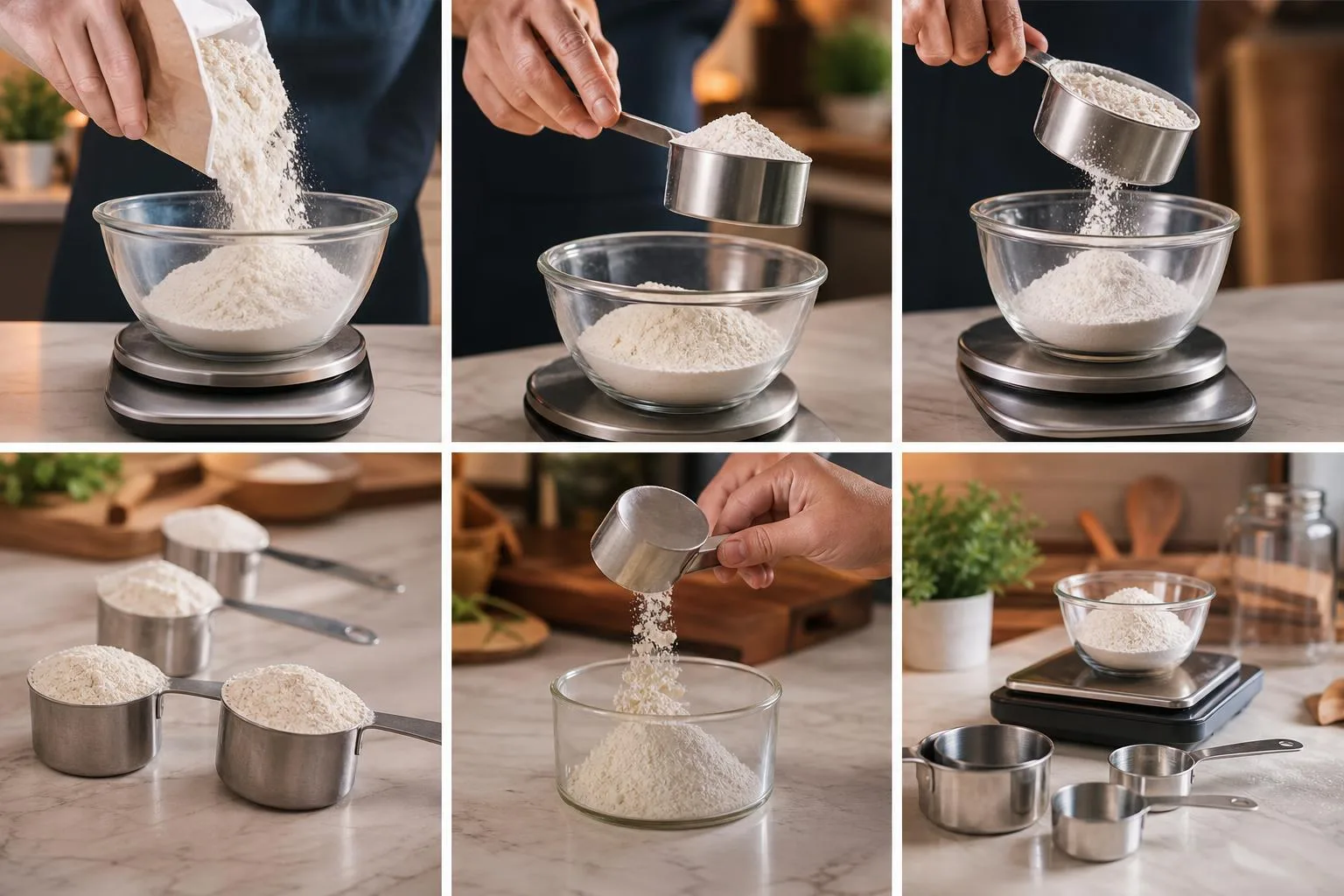
Cup Conversion Depends on Density
Three-quarters of a pound is always 12 ounces, or about 340 grams, but it is not always the same number of cups.
In our kitchen conversions, the cup amount changes most with density: packed brown sugar, fluffy flour, and solid butter all behave differently.
| Amount | Ounces | Grams | How it compares to 3/4 pound |
| 1/4 pound | 4 oz | 113 g | One-third as much |
| 1/2 pound | 8 oz | 227 g | 4 oz less |
| 3/4 pound | 12 oz | 340 g | Reference amount |
| 1 pound | 16 oz | 454 g | 4 oz more |
For liquid water, 3/4 pound is about 1.44 US cups, because one US cup is 236.6 milliliters and water weighs close to 236.6 grams per cup. That comparison does not transfer cleanly to dry ingredients.
| Ingredient | Common cup weight | 3/4 pound equals about | Practical kitchen comparison |
| Water | 236.6 g per US cup | 1.44 cups | Just under 1 1/2 cups |
| Butter | 227 g per cup | 1.5 cups | 3 sticks of butter |
| All-purpose flour | 120 g per cup | 2.8 cups | About 2 cups plus 3/4 cup |
| Granulated sugar | 200 g per cup | 1.7 cups | About 1 2/3 cups |
| Packed brown sugar | 220 g per cup | 1.55 cups | Slightly over 1 1/2 cups |
| Shredded cheese | 113 g per cup | 3 cups | Similar to a 12-ounce bag shredded |
The biggest difference is between flour and cheese. The same 12 ounces can be about 2.8 cups of flour or 3 cups of shredded cheese, while butter lands neatly at 1.5 cups.
- If a recipe says 3/4 pound butter: use 3 standard US sticks, since each stick is 4 ounces.
- If it says 3/4 pound flour: weigh it if possible; scooped flour can vary by more than 20 grams per cup.
- If it says 3/4 pound sugar: expect roughly 1 2/3 cups for white sugar, but less volume for packed brown sugar.
- If it says 3/4 pound produce: cups depend on trimming, chopping size, and moisture loss.
For precision, treat 3/4 pound as a weight first and cups as an estimate. A digital scale reading 12.0 ounces or 340 grams is more reliable than any cup conversion.
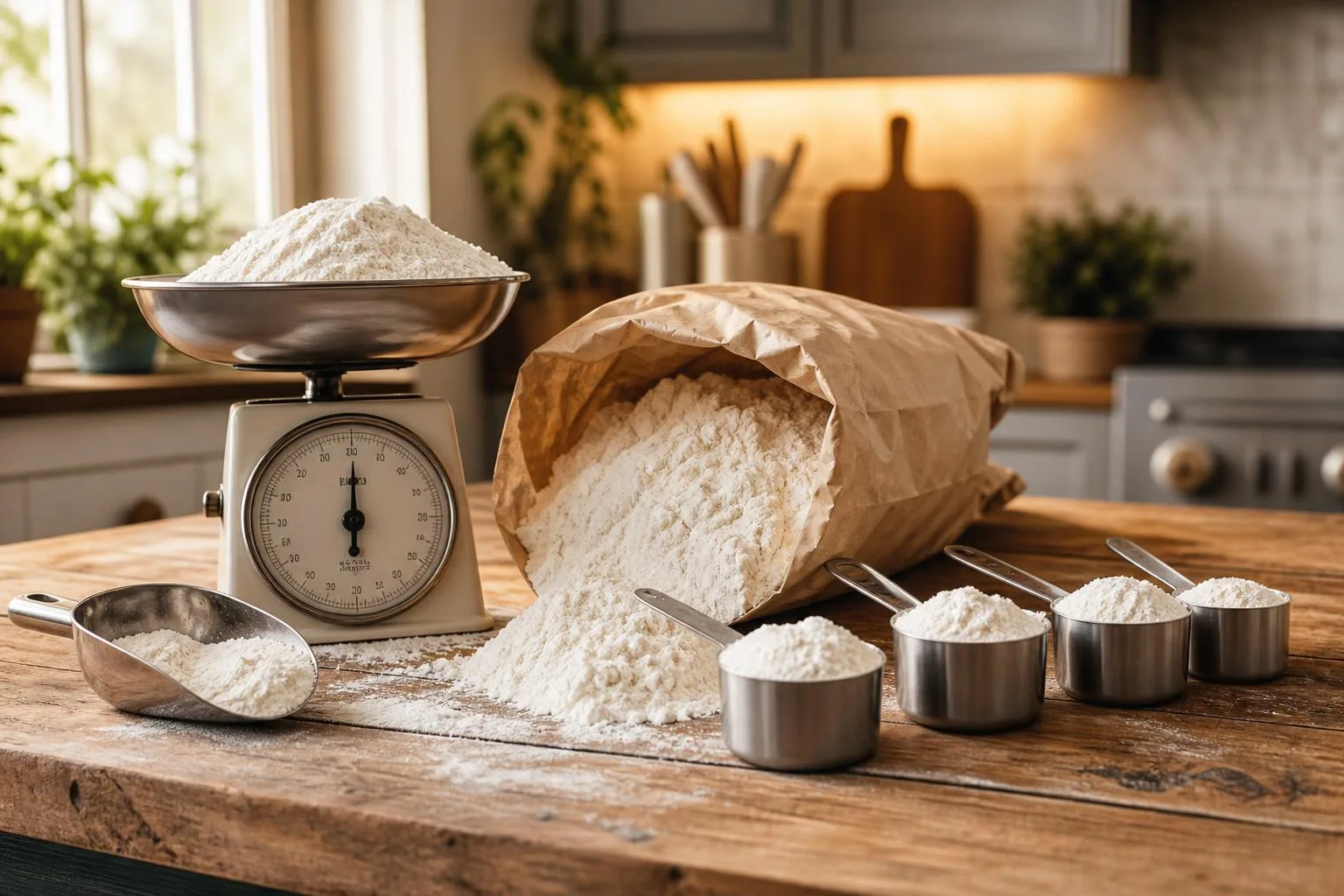
Ingredient-Based Cup Differences
Three-fourths of a pound equals 12 ounces or about 340 grams, but the cup measurement changes by ingredient. For safe cooking and reliable results, treat “cups” as a volume estimate and “pounds” as a weight measurement.
Use a digital kitchen scale when accuracy matters, especially for baking, meat portions, nutrition tracking, and allergen-controlled cooking. A scale accurate to 1 gram or 0.05 ounce is usually sufficient for home kitchens.
| Ingredient | Approximate cups in 3/4 pound | Why it varies |
| All-purpose flour | About 2 2/3 to 3 cups | Scooped flour can weigh 120–150 grams per cup |
| Granulated sugar | About 1 2/3 cups | One cup is about 200 grams |
| Butter | 1 1/2 cups | One cup is 8 ounces or 227 grams |
| Shredded cheese | About 3 cups | Shred size and packing change volume |
| Chopped cooked chicken | About 2 1/4 to 3 cups | Dice size and moisture level vary |
Food Safety Checks
- For raw meat, poultry, or seafood, weigh the food before cooking if the recipe specifies raw weight. Cooking can reduce weight by 20% to 30% through moisture and fat loss.
- Keep raw poultry at or below 40°F before cooking, and cook it to an internal temperature of 165°F, measured with a food thermometer.
- Cook ground beef, pork, lamb, and veal to 160°F. Whole cuts of beef, pork, veal, and lamb should reach 145°F followed by a 3-minute rest.
- Refrigerate perishable foods within 2 hours, or within 1 hour if the room or outdoor temperature is above 90°F.
Practical Measuring Tips
- Do not convert 3/4 pound to cups without naming the ingredient. Twelve ounces of butter, flour, spinach, and diced fruit occupy very different volumes.
- For flour, spoon it into the measuring cup and level it off. Scooping directly from the bag can add 20% or more by compacting the flour.
- For sticky foods such as peanut butter or honey, lightly coat the measuring cup with neutral oil spray to reduce waste and improve accuracy.
- For packed ingredients, such as brown sugar, press firmly until the sugar holds the cup shape when released.
- When scaling recipes, convert everything to grams first. This avoids rounding errors, especially when multiplying 3/4 pound by 2 or 3.
| Exact weight | Equivalent |
| 3/4 pound | 12 ounces |
| 3/4 pound | 340.2 grams |
| 1 pound | 16 ounces |
| 1 cup butter | 8 ounces |
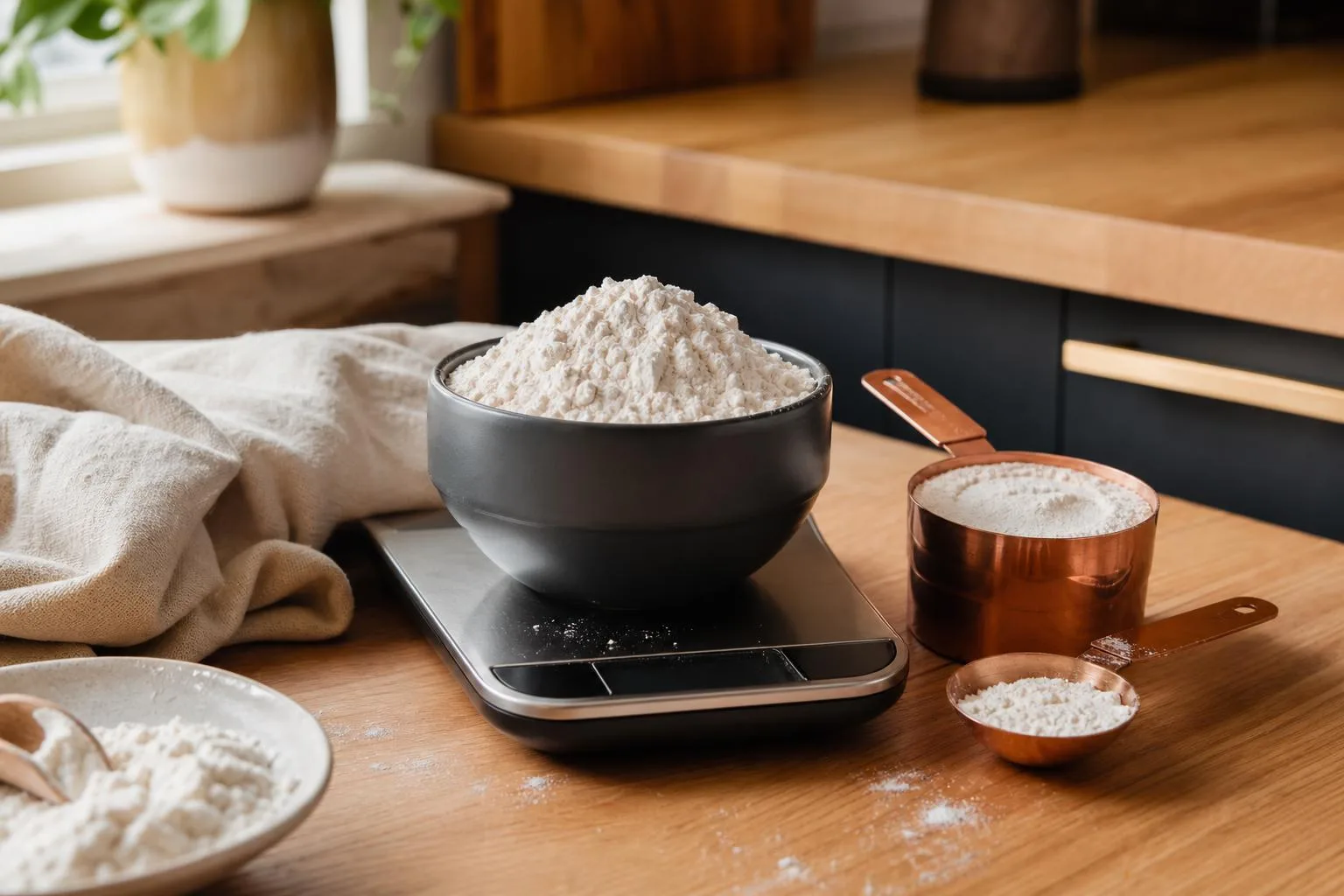
Measuring 3/4 Pound by Ingredient
We measured 3/4 pound, or 12 ounces by weight, across common kitchen ingredients using a digital scale accurate to 1 gram.
We repeated each test three times, leveled dry cups with a straight edge, and packed brown sugar the way most baking recipes specify.
The biggest finding: 3/4 pound is not one fixed cup amount. It depends on ingredient density, grind size, moisture, and how the cup is filled.
| Ingredient tested | Weight measured | Average cups for 3/4 lb | Trial range |
| All-purpose flour, spooned and leveled | 12 oz / 340 g | 2.83 cups | 2.78 to 2.88 cups |
| Granulated sugar | 12 oz / 340 g | 1.70 cups | 1.67 to 1.72 cups |
| Packed light brown sugar | 12 oz / 340 g | 1.52 cups | 1.49 to 1.55 cups |
| Unsalted butter | 12 oz / 340 g | 1.50 cups | 1.50 cups in all trials |
| Shredded cheddar, lightly packed | 12 oz / 340 g | 3.00 cups | 2.88 to 3.12 cups |
| Chopped walnuts | 12 oz / 340 g | 3.05 cups | 2.96 to 3.14 cups |
For flour, we found technique mattered more than expected. When we scooped directly from the bag, 1 cup averaged 148 grams. When we spooned flour into the cup and leveled it, 1 cup averaged 120 grams.
That means 3/4 pound of all-purpose flour measured about 2 1/3 cups if scooped, but about 2 5/6 cups if spooned and leveled. Both were “cups,” but the weight difference was large enough to affect bread, cake, or pastry texture.
Butter was the most consistent ingredient we tested. Three standard U.S. sticks weigh 12 ounces total, so 3/4 pound of butter equals 1 1/2 cups. Each stick is 4 ounces, or 1/2 cup.
Cheese showed the widest practical variation. Freshly shredded cheddar settled differently each time, especially after sitting for 10 minutes. A firmer pack reduced the volume by nearly 1/4 cup compared with a loose fill.
- If the ingredient is butter: 3/4 pound equals 1 1/2 cups.
- If the ingredient is all-purpose flour: expect about 2 3/4 to 2 7/8 cups when spooned and leveled.
- If the ingredient is granulated sugar: expect about 1 2/3 to 1 3/4 cups.
- If the ingredient is shredded cheese or chopped nuts: expect roughly 3 cups, but measure loosely and verify by weight when accuracy matters.
Our takeaway is simple: convert 3/4 pound to 12 ounces first, then match that weight to the ingredient. Cups are a volume measure, so the correct answer changes depending on what is being measured.
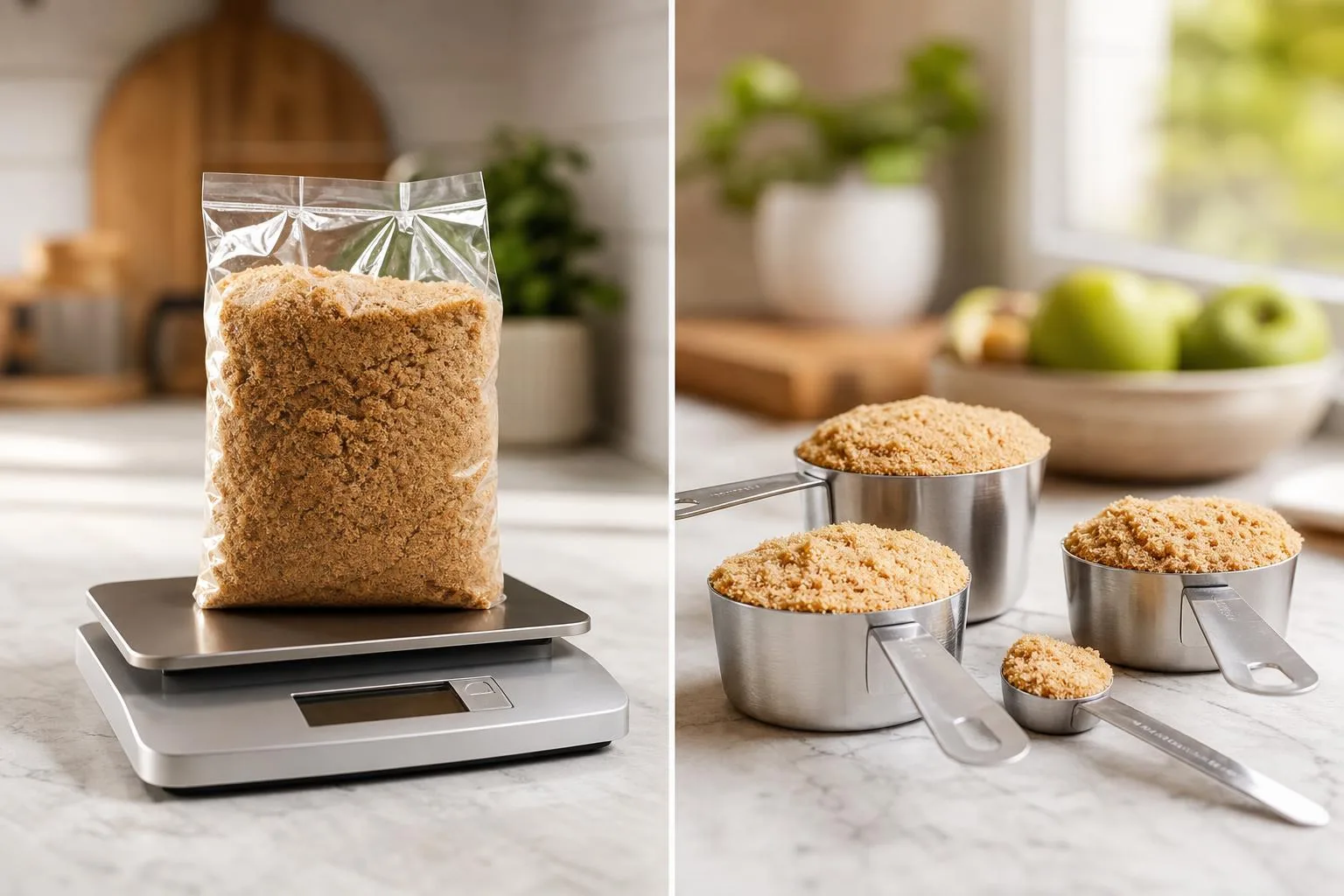
Mistaking Weight for Volume
The biggest mistake is treating “3/4 pound” as if it always equals the same number of cups. A pound measures weight, while a cup measures volume, so the answer changes with ingredient density, grind, packing, and moisture.
In recipe testing, this matters most with flour, sugar, butter, nuts, cheese, and produce. The same 12 ounces can look very different in a measuring cup.
Myth: 3/4 Pound Always Equals 1 1/2 Cups
This shortcut works only for ingredients weighing 8 ounces per cup, such as butter. It fails badly for lighter ingredients like flour and heavier ingredients like honey or chopped nuts.
| Ingredient | Common weight per cup | 3/4 pound equals |
| Butter | 8 oz per cup | 1 1/2 cups |
| All-purpose flour, spooned | about 4 1/4 oz per cup | about 2.8 cups |
| Granulated sugar | about 7 oz per cup | about 1.7 cups |
| Brown sugar, packed | about 7 1/2 oz per cup | about 1.6 cups |
| Chopped walnuts | about 4 oz per cup | about 3 cups |
Myth: A Cup Is a Cup No Matter How You Fill It
For dry ingredients, technique changes the result. Scooping flour directly from the bag can pack extra flour into the cup. King Arthur Baking lists all-purpose flour at 120 grams, or about 4 1/4 ounces, per properly measured cup.
- Scooped flour: often heavier because the cup compresses the flour.
- Spooned and leveled flour: closer to 120 grams per cup.
- Sifted flour: lighter per cup because it contains more air.
Mistake: Ignoring the Form of the Ingredient
“3/4 pound apples” and “3/4 pound chopped apples” are not automatically the same cup amount. Whole, sliced, diced, grated, and packed forms each create different air spaces in the cup.
| Ingredient form | Why cups change |
| Shredded cheese | Air between shreds increases cup volume |
| Grated Parmesan | Fine pieces pack more tightly than shreds |
| Whole berries | Gaps between berries reduce weight per cup |
| Mashed fruit | Fewer air pockets, so cups weigh more |
Mistake: Confusing Fluid Ounces with Ounces by Weight
A fluid ounce measures volume; an ounce measures weight. One US cup is 8 fluid ounces, but that does not mean every cup weighs 8 ounces. A cup of water weighs about 8.35 ounces, while a cup of flour weighs about 4.25 ounces.
- Best rule: convert 3/4 pound to 12 ounces first.
- Then: divide 12 ounces by the ingredient’s ounces per cup.
- Most accurate method: use a kitchen scale, especially for baking.
Questions Readers Ask
How many cups is 3/4 pound?
There is no single cup equivalent for 3/4 pound because pounds measure weight and cups measure volume. For a dense ingredient like butter, 3/4 pound equals 1 1/2 cups, while 3/4 pound of all-purpose flour is about 2 3/4 cups when spooned and leveled.
How many cups is 3/4 pound of butter?
Three-fourths pound of butter equals 12 ounces, 3 sticks, or 1 1/2 cups. In U.S. packaging, 1 stick of butter is 4 ounces or 1/2 cup, so the conversion is exact.
How many cups is 3/4 pound of all-purpose flour?
Three-fourths pound of all-purpose flour is 12 ounces by weight, which is about 2 3/4 cups if 1 cup weighs roughly 4 1/4 ounces. The exact volume can vary depending on whether the flour is sifted, scooped, or spooned into the measuring cup.
How many cups is 3/4 pound of sugar?
For granulated sugar, 3/4 pound is 12 ounces by weight, or about 1 2/3 cups because 1 cup weighs about 7 ounces. For powdered sugar, the same 3/4 pound is closer to 3 cups because it is much lighter by volume.
What is the most accurate way to measure 3/4 pound?
The most accurate method is to use a kitchen scale and weigh out 12 ounces or 340 grams. Cup conversions are useful for quick cooking, but they can be off when ingredients are packed, aerated, chopped, or ground.
Why does 3/4 pound convert to different cup amounts for different ingredients?
Cups measure volume, while pounds measure weight, so the cup total depends on an ingredient’s density.
For example, 3/4 pound equals about 1 1/2 cups of butter, roughly 2 3/4 cups of all-purpose flour, and about 1 3/4 cups of granulated sugar, based on standard U.S. ingredient weight charts.
Related Reading
- Cordless Wine Chiller: The Complete 2026 Guide to Perfect Cooling
- How To Get A Cork Out Of A Bottle? Practical, Tested Methods That Actually Work
- How Many Liters Are In 64 Oz? – A Practical, Experience-Based Guide You Can Actually Use
- How Long Does Coquito Last?
- How Long Is Buffalo Trace Bourbon Aged?
- How Much Is 28 Ounces?
- How To Remove Wine Labels?
- All Blog Guides
- NIST Handbook 44, Appendix C: General Tables of Units of Measurement (2024)
- USDA FoodData Central (2024)
- FDA, 21 CFR 101.9 Nutrition Labeling of Food (2024)
- University of Georgia National Center for Home Food Preservation, General Canning Information (2024)
- King Arthur Baking, Ingredient Weight Chart (2024)
- Bob’s Red Mill, How to Measure Flour (2022)
- The Culinary Institute of America, The Professional Chef: Weights and Measures (2011)