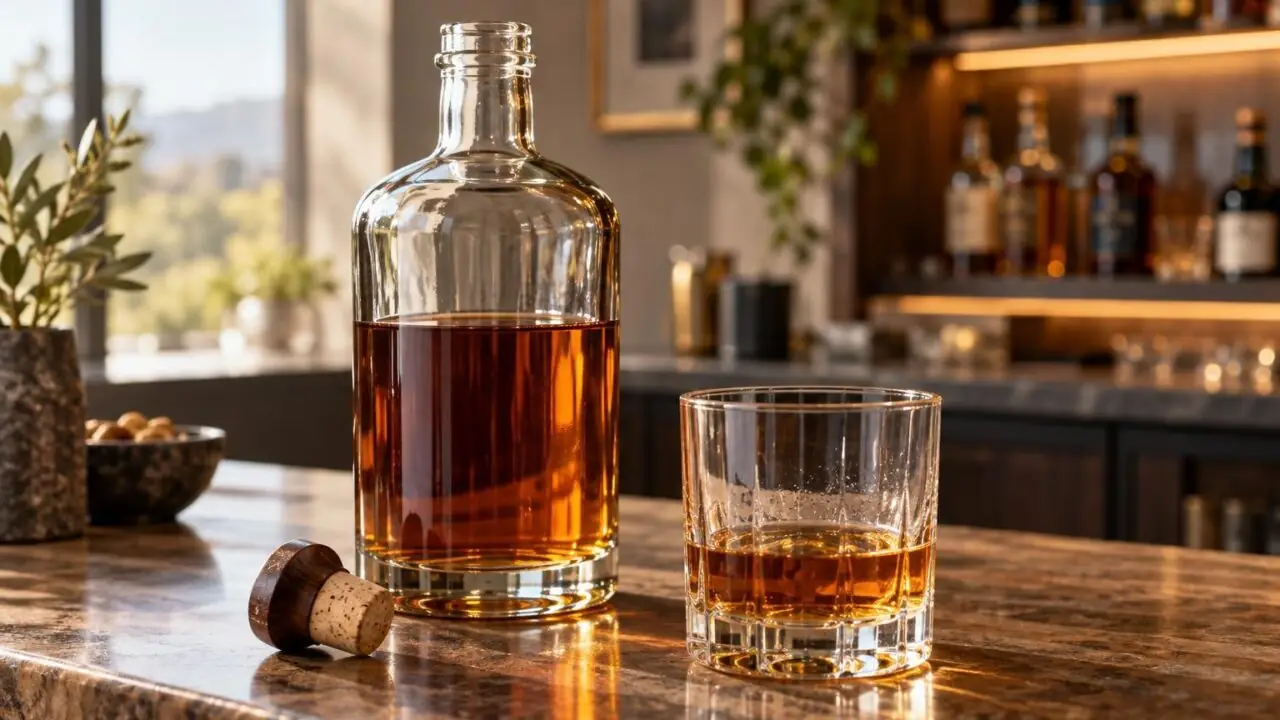
How Long Does Whiskey Last After Opening? is usually 1–2 years for best flavor when the bottle is stored upright, tightly sealed, and away from heat and sunlight.
Whiskey does not spoil like dairy; oxidation slowly dulls aroma, finish, and texture after air enters the bottle.
A nearly full bottle changes slowly because little oxygen is trapped inside. A bottle below one-third full fades faster, often within months, especially in warm rooms or direct light.
Storage conditions, fill level, cork condition, and whiskey proof decide whether an opened bottle still tastes vibrant or flat.
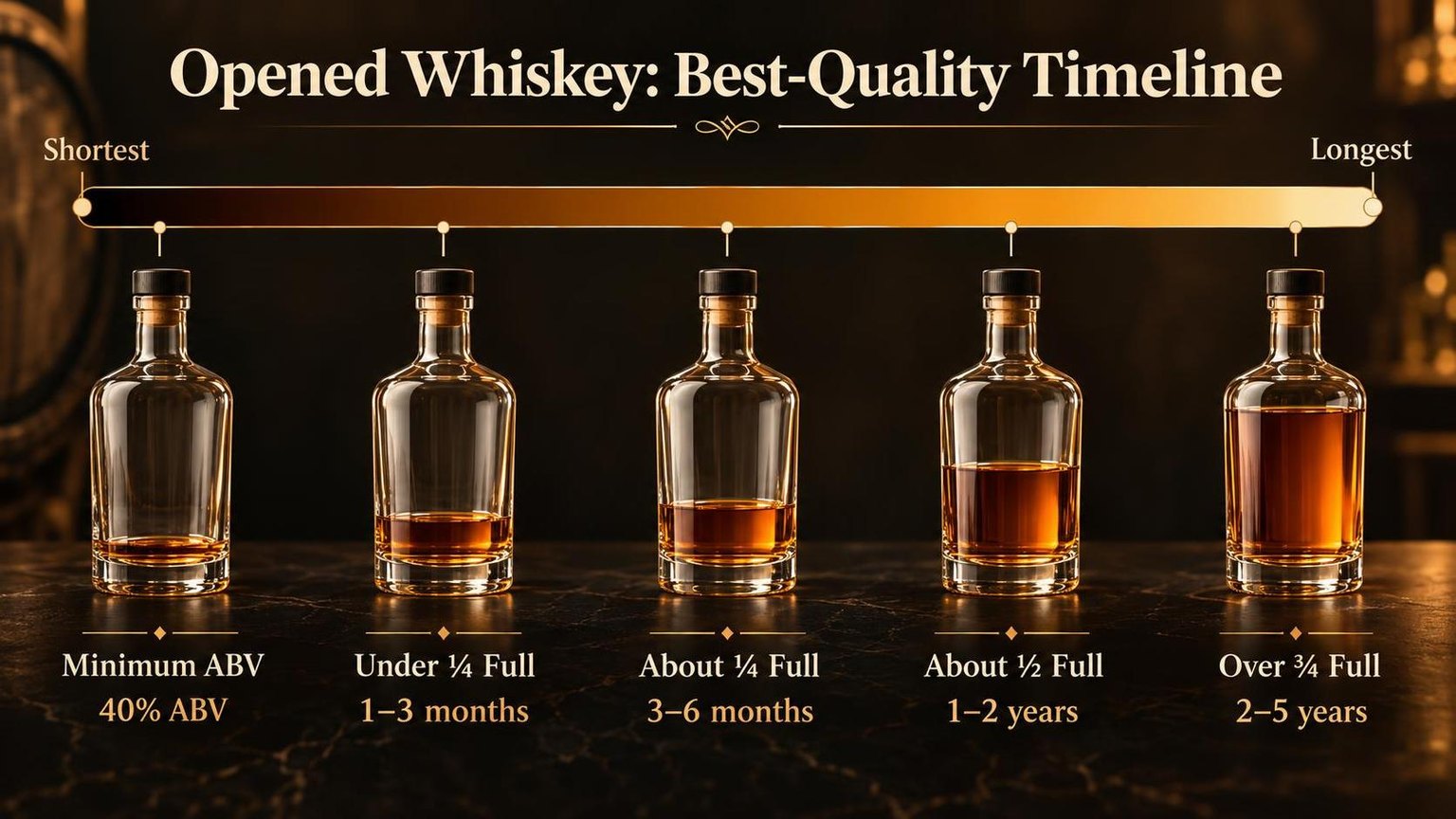
How Long Opened Whiskey Stays Good
Opened whiskey can remain safe to drink for many years when sealed and stored correctly. Flavor declines sooner because oxygen, evaporation, heat, and light gradually alter its aroma, alcohol balance, and color.
Whiskey does not continue aging in the bottle. Barrel maturation stops after bottling, so extra storage cannot improve it. Opening introduces oxygen, but the more important factor is the growing airspace created as whiskey is poured.
| Amount remaining | Best-quality window after opening | Expected change |
| More than three-quarters | Approximately 2–5 years | Usually little noticeable change with proper storage |
| About one-half | Approximately 1–2 years | Gradual loss of fresh, fruity, smoky, or floral aromas |
| About one-quarter | Approximately 3–6 months | Faster oxidation because the bottle contains substantially more air |
| Less than one-quarter | Approximately 1–3 months | Higher risk of muted flavor, reduced alcohol intensity, and imbalance |
These are practical quality ranges, not expiration dates. A nearly full bottle may taste stable beyond five years, while a small remainder exposed to repeated temperature swings can become dull within months.
Commercial whiskey’s alcohol content makes growth of common foodborne microorganisms unlikely.
U.S. labeling rules generally require whiskey to be bottled at no less than 40% alcohol by volume, while Scotch Whisky Regulations also set a 40% minimum bottling strength.
That alcohol level does not prevent oxidation or evaporation. A loose cork allows volatile aroma compounds, ethanol, and water to escape.
Depending on humidity, unequal evaporation can raise or lower the remaining whiskey’s proof while changing its texture and aroma.
Store opened bottles upright. Unlike wine, high-proof spirits can degrade cork when continuously stored on their side. Briefly wetting a natural cork before long storage may help keep it pliable, but prolonged liquid contact is undesirable.
- Close the bottle firmly after every pour and replace a damaged cork or cap.
- Keep it in a dark cabinet away from windows and ultraviolet light.
- Avoid radiators, ovens, vehicle trunks, and locations with repeated temperature changes.
- Transfer a small remainder into a clean, food-safe glass bottle with minimal headspace.
- Do not add decorative pour spouts for storage; they permit faster evaporation.
Cloudiness alone is not always spoilage. Non-chill-filtered whiskey can become hazy when cool or diluted with water because fatty-acid esters precipitate. Sediment may also come from cork fragments or barrel char.
Discard whiskey if it contains mold, has obvious foreign contamination, or smells sharply sour, musty, or otherwise unlike the original spirit. Otherwise, taste a small amount.
Flat aroma, papery notes, weakened finish, or lost smoke indicate quality decline rather than a typical safety hazard.
Why Air Changes Whiskey Flavor
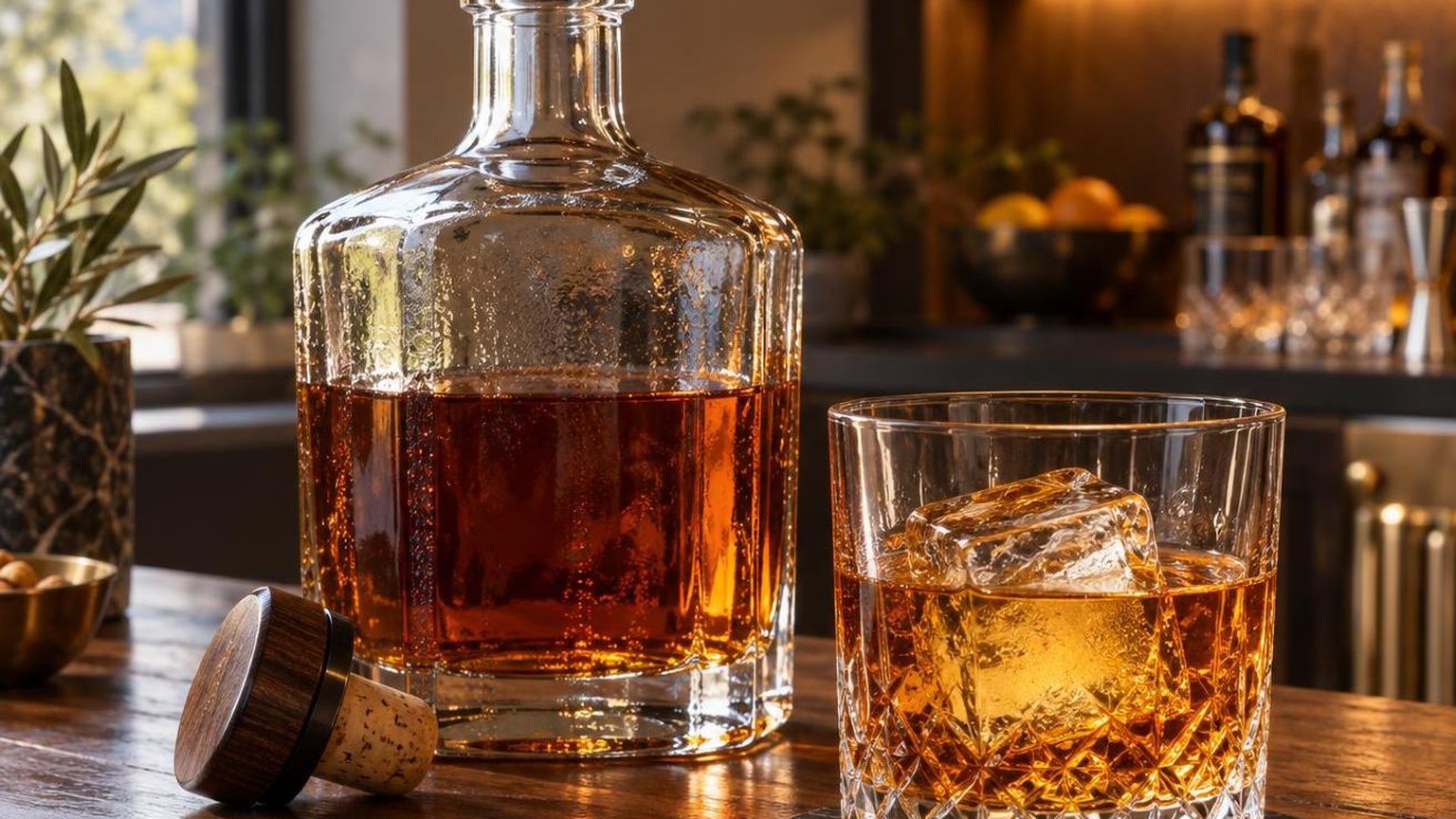
Opening a whiskey bottle replaces part of its sealed atmosphere with fresh air. Oxygen then promotes slow chemical reactions, while the enlarged headspace allows ethanol and aroma compounds to move between liquid and vapor.
Oxidation alters aroma molecules
Dry air contains approximately 20.95% oxygen by volume. Some oxygen dissolves in the whiskey after opening, especially when the bottle is poured, shaken, or transported.
Dissolved oxygen can react with alcohols, aldehydes, phenols, sulfur compounds, and other flavor-active congeners.
Oxidation is not universally harmful. Limited exposure may soften sulfurous, solvent-like, or sharply alcoholic notes.
Longer exposure can reduce fresh fruit, floral, smoke, and cereal aromas while emphasizing flatter, woody, nutty, or acidic impressions.
Ethanol can oxidize first to acetaldehyde and then to acetic acid, although reactions proceed slowly under normal bottle storage. Trace metal ions, light, and elevated temperature may accelerate oxidative pathways.
The bottle therefore changes gradually rather than becoming unsafe or suddenly spoiled.
Headspace controls oxygen exposure
Every pour increases the air-to-whiskey ratio. A nearly full bottle contains little headspace, but a nearly empty bottle may contain several times more air than liquid. Fresh oxygen also enters whenever the closure is removed.
| Whiskey remaining in a 750 mL bottle | Approximate headspace | Exposure implication |
| 700 mL | 50 mL | Low air-to-liquid ratio; flavor change is usually slow |
| 375 mL | 375 mL | Equal liquid and headspace volumes; change becomes more noticeable |
| 100 mL | 650 mL | High air-to-liquid ratio; delicate aromas may fade faster |
The oxygen initially trapped in a closed bottle is finite. Once it has reacted or reached equilibrium with the liquid, oxidation slows. Repeated opening, however, replaces depleted headspace with oxygen-rich room air and restarts the cycle.
Volatility changes what reaches the nose
Whiskey aroma depends heavily on volatile compounds, including esters, aldehydes, alcohols, and sulfur molecules. These compounds partition between the spirit and its headspace.
Opening the bottle releases headspace vapor, and a new equilibrium develops after resealing.
Highly volatile compounds can escape during repeated openings. Ethanol and water also evaporate, but a sound closure makes the loss small.
A loose cork, damaged screw cap, or poorly sealed decanter permits continuous vapor exchange and produces substantially faster sensory change.
Bottle oxidation is not barrel aging
Whiskey does not continue maturing in glass as it did in oak. Barrel aging combines oxygen exposure with extraction of lignin-derived vanillin, oak lactones, tannins, and color compounds, plus evaporation through porous wood.
A glass bottle supplies none of those wood-driven reactions.
Protect opened whiskey by keeping it upright, tightly sealed, and away from sunlight or heating cycles. When less than roughly one-third remains, transferring it to a smaller clean glass bottle reduces headspace and slows further aroma loss.
Shelf Life By Bottle Fill Level
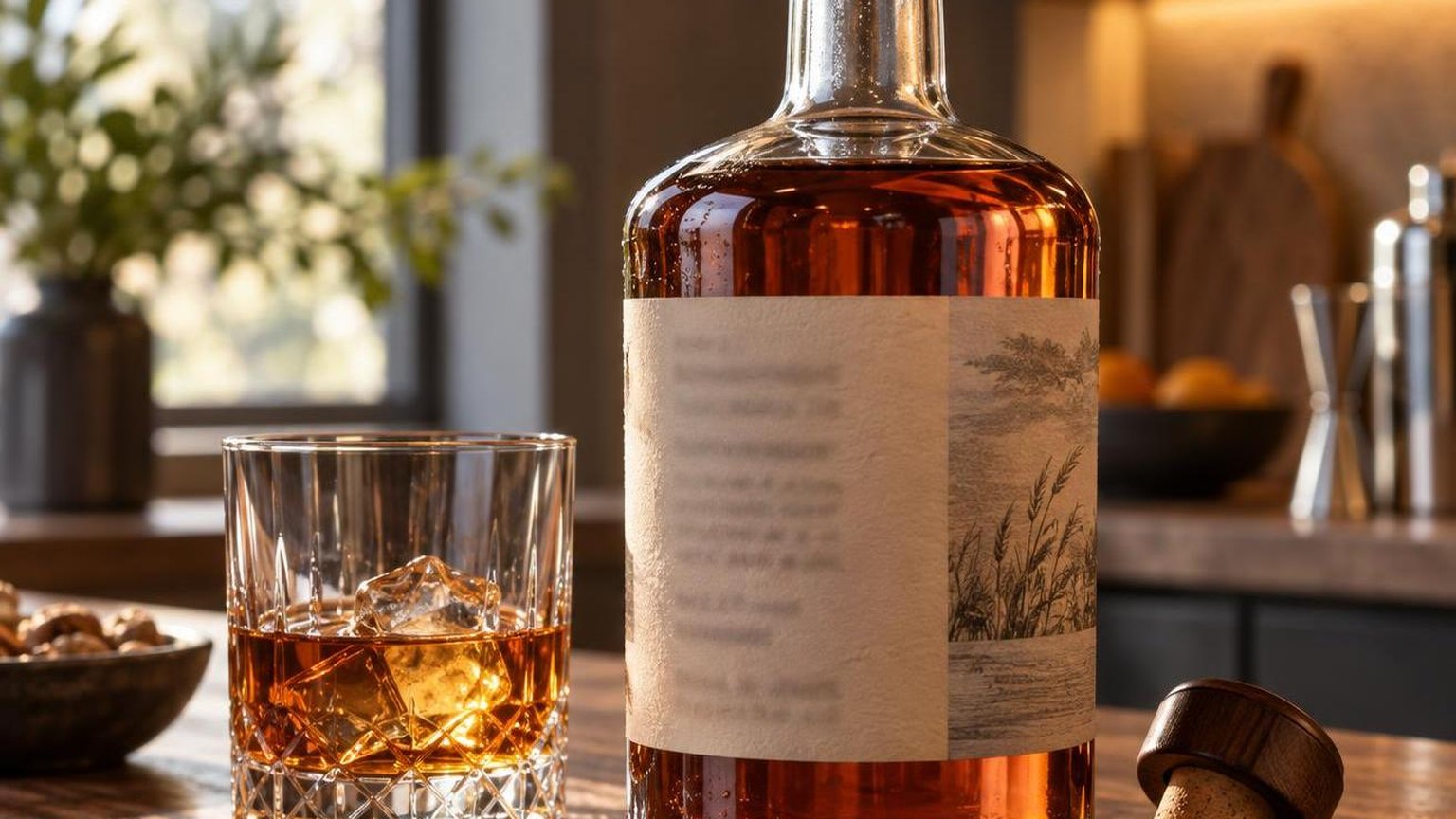
An opened whiskey bottle rarely becomes unsafe, but its flavor changes as the liquid-to-air ratio increases. A nearly full bottle can remain stable for years; the final quarter may lose aroma and balance within months.
| Whiskey remaining | Practical quality window | Expected change |
| More than 75% | Approximately 2–5 years | Usually minimal when sealed tightly and stored correctly |
| 50%–75% | Approximately 1–2 years | Gradual softening of delicate fruit, floral, and grain aromas |
| 25%–50% | Approximately 6–12 months | Noticeable oxidation and reduced aromatic intensity |
| Less than 25% | Approximately 3–6 months | Faster flattening, muted finish, and possible alcohol imbalance |
These are quality estimates, not fixed expiration dates. Bottle seal, storage temperature, sunlight exposure, spirit strength, and opening frequency can shorten or extend each window.
Why Fill Level Matters
Every pour replaces whiskey with air. The empty space, called headspace, contains oxygen and volatile alcohol compounds.
More headspace gives oxygen greater opportunity to react with aroma molecules while allowing desirable esters and other volatile compounds to migrate out of the liquid.
The Scotch Whisky Association states that bottled Scotch does not continue maturing as it does in a cask. Once opened, however, oxygen exposure and evaporation can alter flavor. These changes concern sensory quality rather than microbial spoilage.
Standard whiskey is commonly bottled at sufficiently high alcohol strength to inhibit most harmful microorganisms.
A clean, uncontaminated bottle therefore remains drinkable long after its peak aroma has passed, although unusually cloudy liquid, foreign material, or an abnormal odor warrants disposal.
How to Protect a Partly Empty Bottle
- Keep it upright. High-proof spirit can degrade cork when continuous contact replaces brief wetting. Upright storage also reduces the surface exposed near the closure.
- Use a tight closure. Replace damaged corks and loose synthetic stoppers. A poor seal accelerates evaporation and may lower alcohol strength.
- Avoid heat and light. Store the bottle in a dark cabinet with a stable, moderate temperature. Sunlight and repeated temperature swings accelerate chemical change.
- Reduce headspace. Transfer the final portion into a clean, odor-free glass bottle with a reliable cap. Choose a container nearly filled by the remaining whiskey.
- Limit repeated opening. Frequent pours continually exchange saturated headspace for fresh air, increasing both oxidation and volatile loss.
Do not use a wine vacuum pump. Reduced pressure can draw volatile aroma compounds from whiskey. Inert-gas preservation may help, but transferring the whiskey to a smaller glass bottle is simpler and easier to verify.
Mark the opening date and taste periodically in the same glassware. If the bottle falls below one-quarter full, plan to finish it, share it, or transfer it rather than preserving a large volume of air above the whiskey.
Signs Opened Whiskey Has Declined
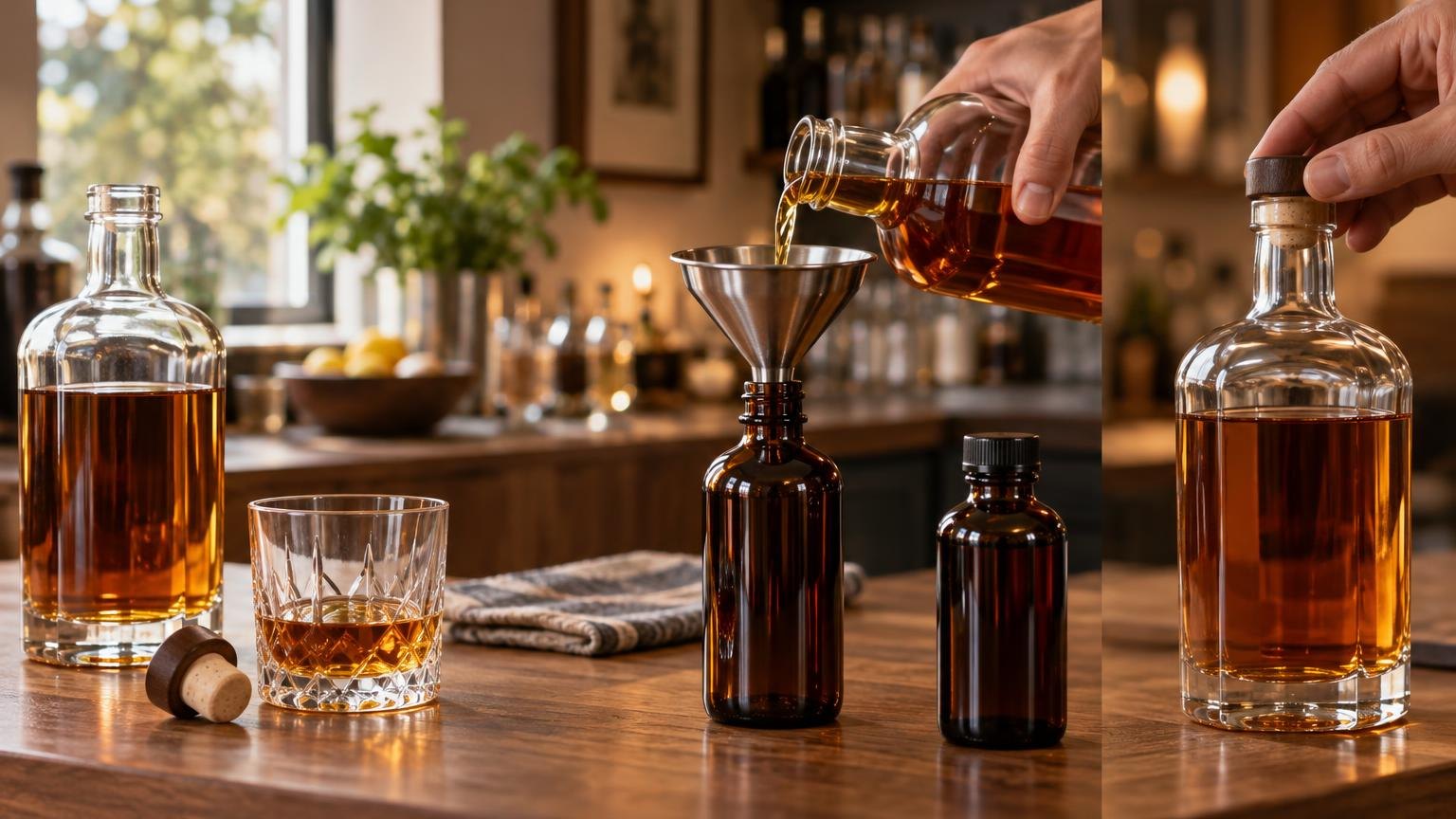
Opened whiskey rarely becomes dangerous because its alcohol level inhibits most microbial growth. Decline usually means oxidation, evaporation, heat damage, or light exposure has reduced aroma and flavor rather than made the spirit poisonous.
Evaluate the whiskey by smell, appearance, and taste. A single mild change does not prove spoilage, but several changes together indicate that quality has fallen.
What to Check
| Sign | What it suggests | Recommended action |
| Muted vanilla, oak, fruit, or spice aromas | Oxidation has flattened volatile aroma compounds, especially in a bottle with substantial headspace. | Taste a small amount. Use it in a cocktail if the finish remains clean. |
| Sharp cardboard, stale nuts, or dull caramel notes | Extended oxygen exposure has changed the whiskey’s aromatic profile. | Compare it with a fresh pour from another bottle if available. |
| Harsh solvent, sour, rancid, or sulfur-like odor | Possible severe quality deterioration, contamination, or a defective closure. | Do not drink it. Discard the contents. |
| Cloudiness, floating particles, or unexpected sediment | Foreign material, cork breakdown, or temperature-related changes may be present. Some non-chill-filtered whiskeys can develop harmless haze. | Inspect the closure and strain only if the whiskey otherwise appears normal; discard anything with mold or unexplained contamination. |
| Leaking, sticky, or visibly damaged closure | Evaporation and air ingress can accelerate flavor loss. Cork fragments can also enter the bottle. | Check the aroma and pour through a clean filter. Discard if the smell or taste is abnormal. |
How Time and Fill Level Affect Flavor
| Condition | Practical expectation |
| Full or nearly full bottle, tightly sealed, stored in darkness | Often retains good quality for several years, although subtle aroma changes remain possible. |
| Half-full bottle with a large air space | Oxidation becomes more noticeable over months to a few years, depending on storage conditions. |
| Less than one-quarter full | Greater headspace exposes more whiskey to oxygen; quality may decline faster. |
| Stored above approximately 70°F or in direct sunlight | Heat increases evaporation, while ultraviolet light can damage color and some flavor compounds. |
Color alone is an unreliable freshness test. Whiskey may darken slightly from concentration or appear lighter after sediment settles, while caramel coloring in some products can mask gradual visual change.
A clean but flatter whiskey is usually a quality issue, not a safety issue. A whiskey that smells musty, rotten, strongly sour, or chemically abnormal should not be rescued by mixing, dilution, or cooking.
Pour a teaspoon into a clean glass, let it rest for several minutes, then smell and taste it. Replace the cap firmly, store the bottle upright at stable room temperature, and record the opening date to track future changes.
Best Storage For Opened Whiskey
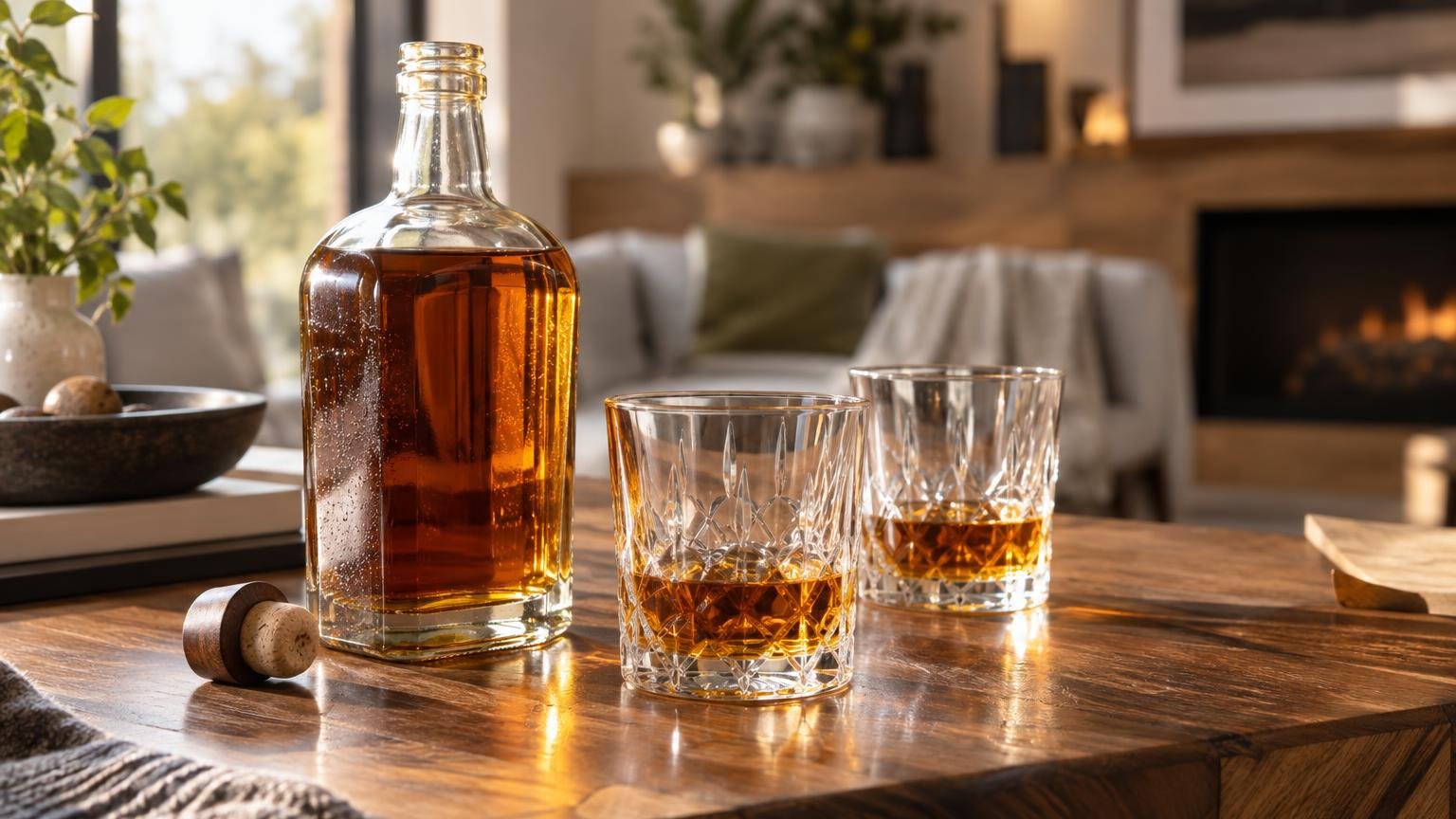
Store opened whiskey upright, tightly sealed, cool, and away from light.
The main threats are oxygen exposure, alcohol evaporation, heat, and ultraviolet light—not microbial spoilage, because whiskey’s high alcohol concentration makes pathogen growth unlikely.
Keep The Bottle Upright
Unlike wine, whiskey should not rest on its side. Prolonged contact with high-proof spirit can soften natural cork, extract unwanted flavors, and weaken the closure. Upright storage limits contact while still allowing the cork to seal the neck.
Briefly invert a cork-sealed bottle every few months if the cork appears unusually dry. Do not leave it inverted. Synthetic corks and screw caps do not need this treatment.
Control Light And Temperature
Use a closed cabinet, cellar shelf, or opaque box. The Scotch Whisky Association identifies sunlight as a storage concern because light can alter color and contribute to flavor deterioration.
Display shelves beside windows are therefore poor long-term locations.
| Storage factor | Preferred condition | Avoid |
| Temperature | Approximately 15–20°C, or 59–68°F | Repeated heating and cooling |
| Light | Dark cabinet or original carton | Direct sunlight and strong display lighting |
| Position | Upright | Horizontal storage |
| Closure | Clean, tight, undamaged seal | Loose caps and crumbling corks |
Exact room temperature matters less than stability. A kitchen cabinet above an oven, attic, garage, or radiator shelf subjects the bottle to temperature cycles that accelerate expansion, contraction, and vapor loss.
Reduce Headspace In Partly Empty Bottles
Every pour replaces liquid with air. Once a bottle is mostly empty, its large oxygen-filled headspace can gradually flatten aromas and change the balance of delicate flavors. This matters more than the bottle’s opening date.
| Whiskey remaining | Practical action |
| More than two-thirds | Reseal promptly and keep under normal stable storage |
| Between one-third and two-thirds | Monitor aroma and finish; avoid unnecessary opening |
| Less than one-third | Finish sooner or transfer into a smaller glass bottle |
For transfer, choose a clean glass bottle with a reliable screw cap or sound cork.
Fill it near the shoulder without overflowing, label the whiskey and transfer date, and avoid plastic containers, which may transmit odors or provide a weaker vapor barrier.
Protect The Closure
- Wipe whiskey from the bottle threads and rim before resealing.
- Replace a damaged cork with a clean, correctly sized closure.
- Do not repeatedly open bottles merely to inspect them.
- Avoid wine vacuum pumps; they can remove volatile aroma compounds and are unnecessary for high-proof spirits.
- Use inert-gas sprays cautiously because effectiveness depends on application and seal quality.
A properly stored opened whiskey can remain enjoyable for years, but no universal expiration date applies.
Check for fading aroma, reduced intensity, cork debris, leakage, or unusual odors before serving; cloudiness alone may result from chill filtration choices or added water rather than spoilage.
Common Questions
How long does whiskey last after opening?
An opened bottle of whiskey can remain safe to drink indefinitely when stored properly, but its flavor is usually best within 1 to 2 years. Oxidation gradually changes aroma and taste, especially when the bottle is less than one-quarter full.
Does whiskey expire or become unsafe to drink?
Whiskey does not spoil like milk because its high alcohol content prevents most microbial growth.
It can become unpleasant from oxidation, evaporation, or contamination, so discard it if it develops mold, an unusual sour odor, or visible particles that were not present before.
How should an opened whiskey bottle be stored?
Store the bottle upright, tightly sealed, and away from direct sunlight, heat, and large temperature changes. A cool cabinet is better than a kitchen counter, while refrigeration is unnecessary and can mute the whiskey’s aromas.
Does the amount left in the bottle affect whiskey’s shelf life?
Yes. A nearly full bottle contains less air and generally preserves its original flavor longer than a bottle with a large empty space above the whiskey.
When only one-quarter remains, transferring it to a smaller, clean glass bottle can reduce oxidation.
Can whiskey go bad if the bottle has a pour spout?
A pour spout exposes whiskey to more air and may allow alcohol and aroma compounds to evaporate faster than a fitted cap or cork. Replace the spout with the original closure or an airtight stopper for storage longer than a few weeks.
How long does flavored whiskey last after opening?
Flavored whiskey often keeps its best quality for about 6 to 12 months after opening because added sugars and flavor compounds can change more quickly than those in straight whiskey.
Follow the manufacturer’s label when it provides a specific recommendation, and inspect the bottle for cloudiness, sediment, or off odors.
Does whiskey age after it is bottled and opened?
No. Whiskey gains age and complexity only while it rests in an aging barrel, where wood, oxygen, and alcohol interact under controlled conditions.
After bottling, an opened whiskey may change through oxidation, but it does not continue aging in the barrel-aged sense.
Related Reading
- What Is Sour Mash Whiskey?
- Who Taught Jack Daniel’S To Make Whiskey?
- Best Whiskey Bar in Denver – Where is the Best Whiskey Bar Denver?
- What does Crown Royal Taste Like? Answer From Expert
- What Does Bourbon Neat Mean?
- What Do You Mix With Baileys Irish Cream?
- How Long Does It Take To Make Whiskey?
- All Alcohol Guides
- U.S. Department of Agriculture, FoodKeeper App (2019)
- National Center for Biotechnology Information, PubChem: Ethanol (2025)
- National Institute of Standards and Technology, Chemistry WebBook: Ethanol (2023)
- Alcohol and Tobacco Tax and Trade Bureau, Distilled Spirits Beverage Alcohol Manual (2024)
- Electronic Code of Federal Regulations, 27 CFR Part 5—Labeling and Advertising of Distilled Spirits (2025)
- Scotch Whisky Association, How to Store Scotch Whisky (2024)
- The Macallan, How to Store Whisky (2024)
- Whisky.com, How to Store Whisky (2024)
- Liquor.com, Does Liquor Expire? (2023)