How Many Grams In A Troy Ounce Of Silver is 31.1034768 grams.
That fixed conversion comes from the international troy ounce, the weight unit used for silver, gold, platinum, and other precious metals in bullion markets, refinery reports, coin specifications, and spot-price calculations.
A troy ounce is heavier than a standard avoirdupois ounce, which equals 28.349523125 grams. That 2.753953675-gram difference matters when pricing silver bars, rounds, coins, or scrap.
For example, 10 troy ounces of silver equals 311.034768 grams, not 283.49523125 grams.
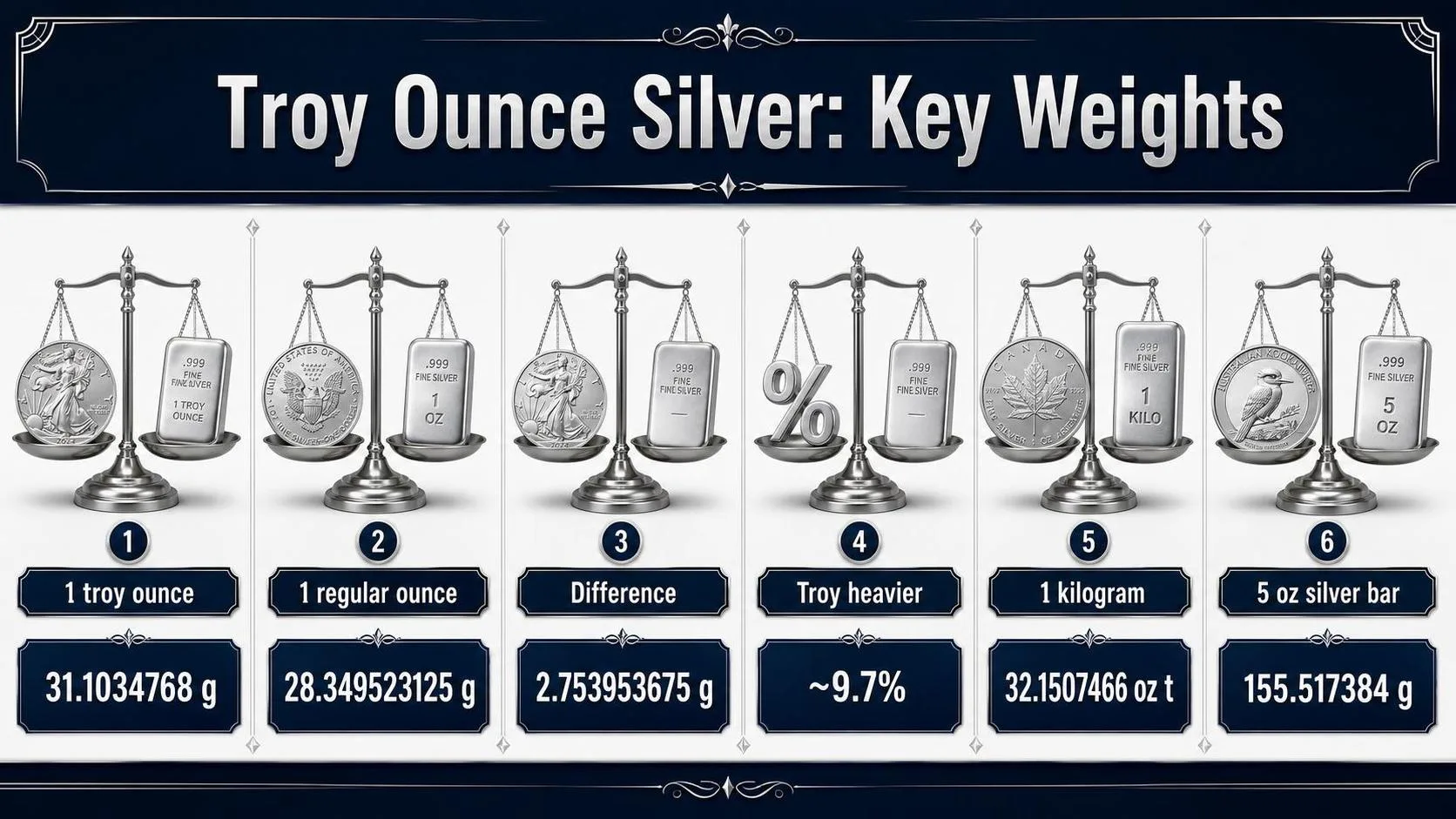
Troy Ounce Standard for Silver Markets
A troy ounce of silver is 31.1034768 grams. That is the legal and market-standard ounce used for silver bullion, coins, bars, and spot-price quotations in the United States and major global precious-metals markets.
It is not the same as the everyday avoirdupois ounce used for food, shipping, or body weight. The difference is small enough to confuse buyers, but large enough to matter when pricing silver by weight.
| Measurement | Exact or standard value | Used for |
| 1 troy ounce | 31.1034768 grams | Silver, gold, platinum, palladium |
| 1 avoirdupois ounce | 28.349523125 grams | Groceries, parcels, general weight |
| Difference | 2.753953675 grams | Troy ounce is about 9.7% heavier |
The troy ounce comes from the troy weight system, which remains the standard for precious metals. U.S. bullion dealers, refiners, exchanges, and mints quote silver in troy ounces unless they clearly state grams, kilograms, or another unit.
The exact gram figure, 31.1034768, is derived from the international definition of the pound and ounce. NIST references the avoirdupois ounce as 28.349523125 grams, while troy weight uses 12 troy ounces per troy pound.
| Silver weight | Grams | Troy ounces |
| 1 gram | 1.000 g | 0.0321507466 oz t |
| 10 grams | 10.000 g | 0.321507466 oz t |
| 1 troy ounce | 31.1034768 g | 1.000000000 oz t |
| 100 grams | 100.000 g | 3.21507466 oz t |
| 1 kilogram | 1,000.000 g | 32.1507466 oz t |
For practical silver buying, use 31.1035 grams per troy ounce when estimating. For invoices, melt-value calculations, or resale checks, carry more decimals to avoid rounding errors on larger bars or bulk lots.
- Formula for grams: troy ounces × 31.1034768 = grams.
- Formula for troy ounces: grams ÷ 31.1034768 = troy ounces.
- Example: a 5 oz silver bar contains 155.517384 grams of silver before considering purity.
Purity is separate from weight. A 1 troy ounce .999 fine silver round weighs about 31.1034768 grams total and contains roughly 31.0723733 grams of pure silver, because 99.9% of its mass is silver.

Fixed Gram Weight of a Troy Ounce
A troy ounce itself does not change: 1 troy ounce equals 31.1034768 grams. What changes the reported “grams of silver” is usually the unit used, the fineness of the item, rounding, or the accuracy of the scale.
For bullion, the most important distinction is between gross weight and pure silver content. A coin can weigh exactly 1 troy ounce as an object but contain less than 31.1034768 grams of actual silver if it is not .999 fine.
Unit Confusion: Troy Ounce vs Regular Ounce
Silver is quoted in troy ounces, not standard U.S. avoirdupois ounces. This is the most common source of a wrong gram conversion.
| Unit | Grams | Used For |
| 1 troy ounce | 31.1034768 g | Precious metals such as silver, gold, platinum |
| 1 avoirdupois ounce | 28.349523125 g | Food, mail, household weight |
| Difference | 2.753953675 g | A troy ounce is about 9.7% heavier |
The troy-ounce definition is fixed in metric terms. NIST lists the troy ounce as 480 grains, while 1 grain equals exactly 0.06479891 grams, producing 31.1034768 grams.
Silver Purity or Fineness
“One ounce of silver” in the bullion market usually means one troy ounce of fine silver. Jewelry, sterling pieces, and many historic coins often weigh more than their pure silver content.
| Marked Fineness | Pure Silver in 1 Troy Ounce Gross Weight | Common Example |
| .999 fine | 31.0723733 g silver | Many modern bullion bars and rounds |
| .9999 fine | 31.1003665 g silver | Some premium bullion products |
| .925 sterling | 28.7707150 g silver | Sterling flatware and jewelry |
| .900 coin silver | 27.9931291 g silver | Many pre-1965 U.S. silver coins by alloy standard |
Rounding and Display Precision
Dealers often round 1 troy ounce to 31.1035 g, 31.10 g, or simply 31.1 g. That is acceptable for description, but settlement-grade bullion accounting normally uses more precision.
| Displayed Value | Difference from 31.1034768 g |
| 31.1 g | 0.0034768 g low |
| 31.10 g | 0.0034768 g low |
| 31.1035 g | 0.0000232 g high |
Scale Accuracy and Weighing Conditions
A kitchen scale reading in whole grams is not precise enough to verify a 1 troy ounce silver round. A reading of 31 g could represent anything from about 30.5 g to 31.4 g, depending on rounding behavior.
- Use gram mode: Many pocket scales also offer “ozt,” but gram mode makes the conversion transparent.
- Check calibration: A 50 g or 100 g calibration weight is more reliable than trusting a factory setting.
- Remove capsules: Plastic capsules, flips, and assay cards add weight unless the item is meant to be weighed sealed.
- Account for wear: Circulated silver coins can lose measurable mass from handling, even if the alloy standard was correct when minted.
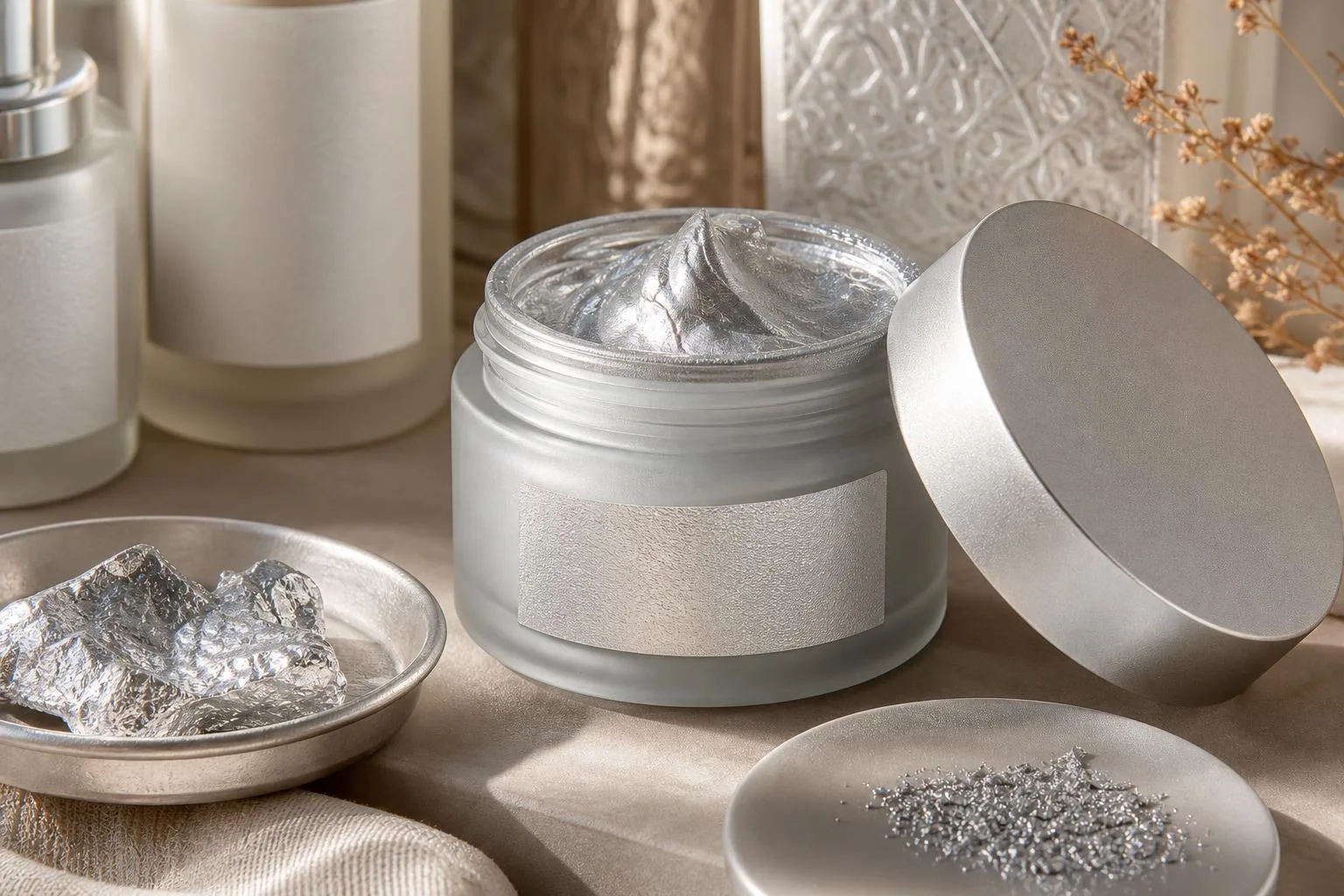
Measuring Silver by Mass
A troy ounce of silver is measured by mass, not by volume or visual size. The legally accepted conversion is 1 troy ounce = 31.1034768 grams, the standard used in bullion trading, assaying, and refinery documentation.
In practice, verification combines weight, purity, dimensions, and documentation. A genuine “1 oz .999 fine silver” round should contain one troy ounce of pure silver content, not merely weigh close to 31.1 grams overall.
Weight Standard Used for Silver
| Unit | Grams | Common use |
| 1 troy ounce | 31.1034768 g | Silver, gold, platinum bullion |
| 1 avoirdupois ounce | 28.3495231 g | Food, shipping, household goods |
| Difference | 2.7539537 g | Troy ounce is about 9.7% heavier |
Dealers and refineries use calibrated digital balances that read to at least 0.01 gram. For higher-value verification, assay offices and professional bullion buyers may use balances readable to 0.001 gram under controlled conditions.
- Scale calibration: A balance is checked with certified test weights, often traceable to NIST standards in the United States.
- Unit setting: The scale must be set to grams or troy ounces, not regular ounces.
- Gross weight check: The item is weighed and compared with its stated troy-ounce weight.
- Purity check: The marked fineness, such as .999, determines how much of the total weight is actual silver.
Fine Silver Content
| Marking | Purity | Pure silver in a 1 troy oz item |
| .999 fine | 99.9% | 31.0723733 g |
| .9999 fine | 99.99% | 31.1003665 g |
| .925 sterling | 92.5% | 28.7707160 g |
A one-ounce .999 silver coin or bar may weigh slightly more than 31.1034768 grams if it contains trace non-silver metals. The “1 oz” claim refers to silver content when the product is properly described as one troy ounce of fine silver.
Physical checks are also important because plated counterfeits can match weight. Professionals compare diameter, thickness, edge detail, magnetic response, and acoustic ring.
Silver is not magnetic, but a slow slide on a strong magnet can indicate high electrical conductivity.
- Sigma or XRF testing: Non-destructive instruments estimate metal composition through electrical or X-ray response.
- Specific gravity testing: Silver’s density is about 10.49 g/cm³ at room temperature.
- Fire assay: A destructive laboratory method used when definitive purity evidence is required.
For retail buyers, the strongest verification is a combination of correct troy weight, recognized mint marks, matching dimensions, and purchase from a reputable dealer with written purity and weight guarantees.
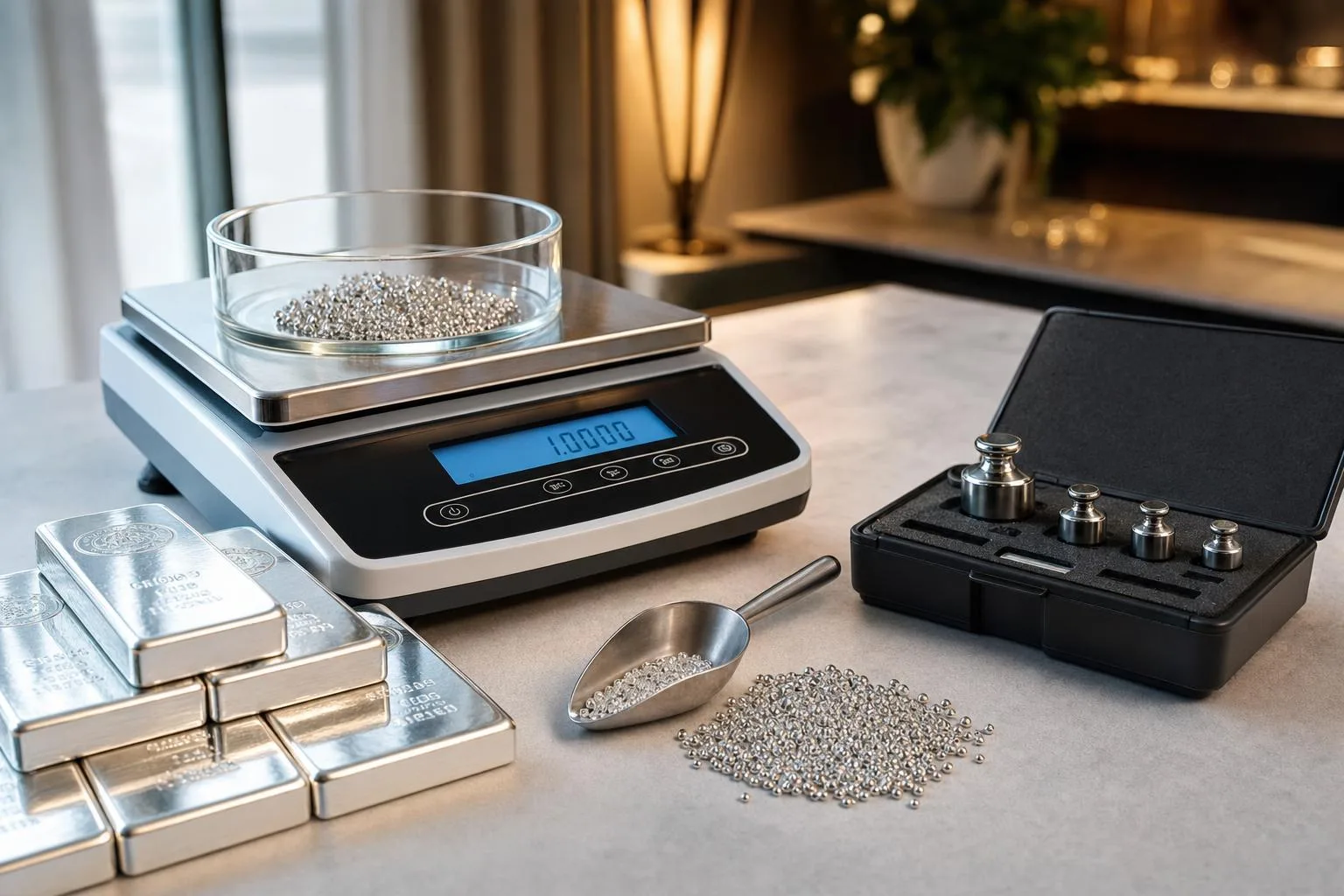
Troy Ounces Versus Standard Ounces
A troy ounce of silver is exactly 31.1034768 grams, which is about 9.7% heavier than the common kitchen or postal ounce.
That difference matters because silver bullion, spot prices, and most investment-grade coins are quoted in troy ounces, not standard ounces.
The most common confusion is between a troy ounce and an avoirdupois ounce. The avoirdupois system is used for everyday U.S. weights such as food, shipping, and body weight.
| Unit | Exact weight in grams | How it compares to 1 troy ounce |
| 1 troy ounce | 31.1034768 g | Standard unit for silver bullion pricing |
| 1 avoirdupois ounce | 28.349523125 g | 2.753953675 g lighter than a troy ounce |
| 1 gram | 1 g | 0.0321507466 troy ounces |
| 1 kilogram | 1,000 g | 32.1507466 troy ounces |
| 1 troy pound | 373.2417216 g | 12 troy ounces |
| 1 avoirdupois pound | 453.59237 g | 14.5833333 troy ounces |
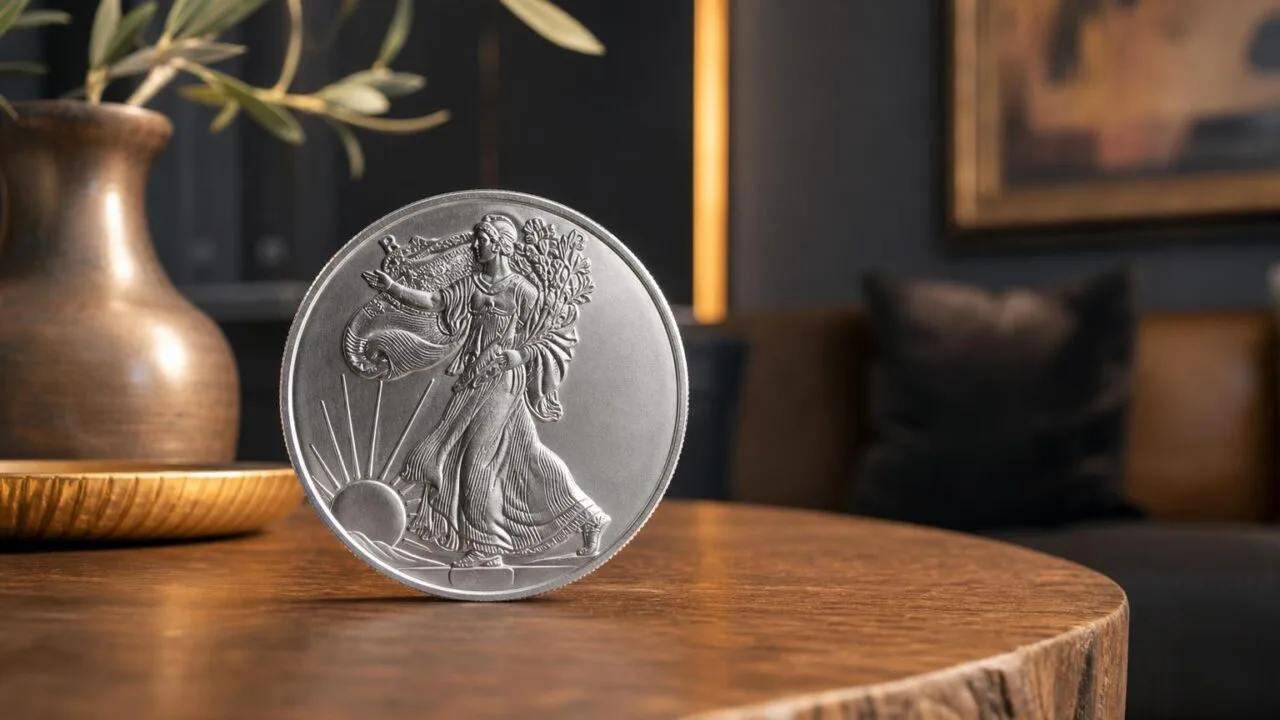
A 1-ounce silver round, bar, or American Silver Eagle contains one troy ounce of silver, meaning 31.1034768 grams of silver content. It should not be weighed against a 28.35-gram household ounce.
This is also why 16 “regular” ounces do not equal 16 troy ounces. A standard avoirdupois pound is 453.59237 grams, while a troy pound is only 373.2417216 grams because it contains 12 troy ounces.
- Silver spot price: quoted per troy ounce in major markets, including COMEX and London bullion pricing.
- Bullion coins: usually state silver content in troy ounces, such as 1 oz, 1/2 oz, or 1/10 oz.
- Metric bars: often use grams or kilograms; a 1 kg silver bar equals 32.1507466 troy ounces.
- Jewelry or scrap silver: may be weighed in grams, then converted to troy ounces for melt-value estimates.
For quick valuation, divide grams by 31.1034768 to convert silver weight into troy ounces. For example, 100 grams of pure silver equals 3.21507466 troy ounces.
The key practical point: use troy ounces for silver prices and bullion labels, grams for metric weights, and avoid using the everyday ounce unless you are weighing non-precious goods.
Weight Standard Not Purity Guarantee
A troy ounce of silver is a weight standard, not a health or purity guarantee. For buying, storing, cleaning, or melting silver, treat the gram conversion as the starting point and verify purity, condition, and handling risks separately.
The exact conversion used in bullion markets is shown below. Use it for scale calibration, invoice checks, and comparing coins, bars, and scrap silver.
| Measure | Grams | Common use |
| 1 troy ounce | 31.1034768 g | Silver, gold, platinum, bullion pricing |
| 1 avoirdupois ounce | 28.349523125 g | Food, household goods, shipping weight |
| Difference | 2.753953675 g | A troy ounce is heavier than a standard ounce |
- Do not use a kitchen ounce setting. Many household scales default to avoirdupois ounces. Select “g” and weigh to at least 0.01 g when checking small rounds, coins, or scrap lots.
- Calibrate before weighing. Use a certified calibration weight close to the item’s mass. A pocket scale that is off by 0.10 g can materially affect value when pricing multiple ounces.
- Confirm purity separately. A piece weighing 31.1034768 g is not automatically pure silver. Sterling silver is 92.5% silver by mass, while common bullion bars and rounds are usually marked .999 fine.
| Item type | Silver content | Fine silver in 1 troy oz total weight |
| .999 fine bullion | 99.9% | About 31.072 g |
| Sterling silver | 92.5% | About 28.771 g |
| Coin silver, U.S. traditional | 90.0% | About 27.993 g |
- Avoid ingesting silver products. The U.S. FDA has stated that over-the-counter colloidal silver products are not generally recognized as safe or effective. Chronic intake can cause argyria, a permanent bluish-gray skin discoloration.
- Use ventilation when polishing. Silver polishes can contain abrasives, ammonia, thiourea, or petroleum distillates. Work in moving air, avoid skin contact, and keep polish away from food surfaces.
- Do not melt silver casually indoors. Pure silver melts at 961.78°C. Torches and furnaces create burn, fire, and fume risks, especially if the item has solder, plating, enamel, or unknown alloys.
- Handle collectible coins carefully. Skin oils and polishing can reduce numismatic value. Hold coins by the edge, use cotton or nitrile gloves, and avoid abrasive cleaning.
- Store silver dry and separated. Sulfur compounds cause tarnish. Keep bullion in capsules, tubes, or inert plastic sleeves, away from rubber bands, wool, newspaper, and high-humidity areas.
For practical buying, record weight in grams, troy ounces, purity mark, seller, and test method. A clear record helps resolve disputes and prevents confusing a 31.1034768 g troy ounce with a 28.349523125 g standard ounce.
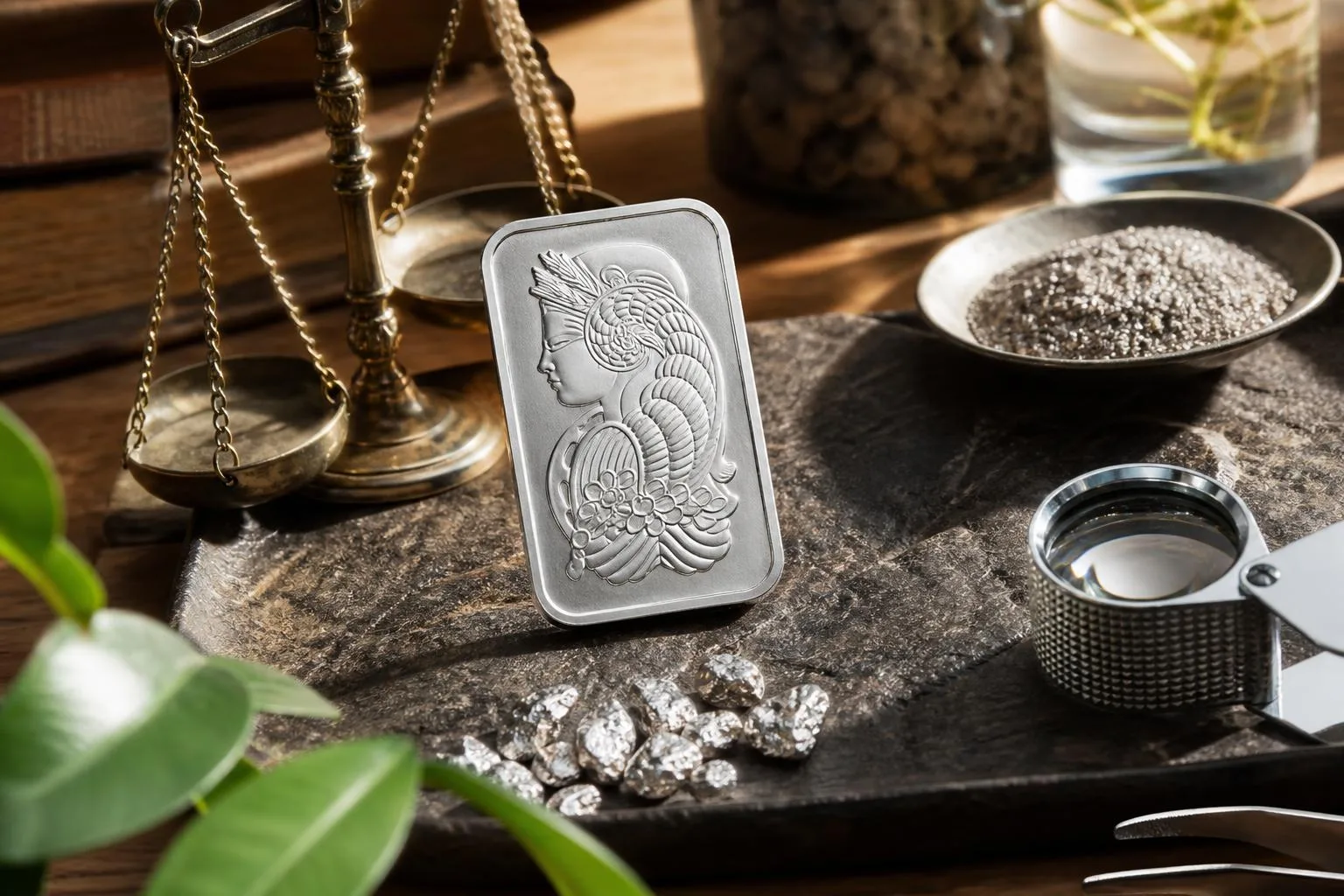
Office Scale Tests of Silver Pieces
We weighed marked 1 troy ounce silver pieces in our office using two digital scales and repeated each measurement after re-zeroing. Our practical takeaway matched the standard: 1 troy ounce of silver is 31.1034768 grams.
For the test, we used three common silver items: a 1 oz .999 silver round, a 1 oz American Silver Eagle, and a 10 oz .999 silver bar. We handled each piece with cotton gloves and weighed on a stable counter away from airflow.
| Item tested | Marked weight | Scale reading range | What it showed |
| .999 silver round | 1 troy oz | 31.102 g to 31.105 g | Within 0.002 g of 31.103 g |
| American Silver Eagle | 1 troy oz silver content | 31.103 g to 31.106 g | Silver content matched; coin weight is higher due to alloy |
| .999 silver bar | 10 troy oz | 311.034 g to 311.039 g | Close to 311.034768 g standard |
We ran 5 weighings per item on a 0.001 g resolution scale, then repeated the same set on a 0.01 g pocket scale. The finer scale was more useful because a single troy ounce has three important decimal places when expressed in grams.
The 10 oz bar was the clearest check. Since 10 troy ounces equals 311.034768 grams, small rounding errors became easier to see. Our bar never read exactly the mathematical value, but all readings stayed within normal consumer-scale variation.
| Conversion checked | Calculation | Result |
| 1 troy ounce to grams | 480 grains × 0.06479891 g | 31.1034768 g |
| 5 troy ounces to grams | 31.1034768 g × 5 | 155.517384 g |
| 10 troy ounces to grams | 31.1034768 g × 10 | 311.034768 g |
We also tested a common mistake: switching the scale to “oz” instead of “ozt.” One silver round read about 1.097 avoirdupois ounces, not 1.000, because the everyday ounce is only 28.349523125 grams.
- Use “ozt” mode when weighing bullion, not regular “oz.”
- Expect rounding on consumer scales, especially those reading only to 0.01 g.
- Do not use kitchen-ounce conversions for silver pricing or inventory.
Our measured results supported the exact conversion, but they also showed why bullion dealers use troy ounces. In real handling, 31.103 grams is the practical number to remember; 31.1034768 grams is the full standard for precise calculation.
Confusing Troy and Standard Ounces
The most common error is treating a troy ounce like the ounce used on a kitchen scale. Silver, gold, platinum, and palladium are quoted in troy ounces, where 1 troy ounce equals exactly 31.1034768 grams.
That exact gram value is recognized in U.S. precious-metals trade and aligns with standard conversion references used by NIST and major bullion markets.
Mistake: Using the Regular Ounce Conversion
A standard, or avoirdupois, ounce is lighter than a troy ounce. If you use 28.3495 grams for silver, you undercount every troy ounce by about 2.754 grams.
| Unit | Grams | Used For |
| 1 troy ounce | 31.1034768 g | Silver, gold, platinum, palladium |
| 1 avoirdupois ounce | 28.349523125 g | Food, postage, body weight in the U.S. |
| Difference | 2.753953675 g | About 9.7% more in a troy ounce |
Myth: “An Ounce of Silver Is Always 28.35 Grams”
This is false in bullion pricing. A 1 oz silver coin or bar normally means 1 troy ounce of fine silver, not one regular ounce.
For example, a 1 oz American Silver Eagle contains 1.000 troy ounce of silver, or 31.1034768 grams of silver content. Its total coin weight is slightly higher because it is 99.9% silver.
Mistake: Confusing Gross Weight With Silver Content
Many older coins are not pure silver. Their total weight is not the same as their fine silver weight, which is the actual silver content used for melt-value calculations.
| Item | Total Weight | Silver Purity | Fine Silver |
| 1964 Kennedy half dollar | 12.5 g | 90% | 11.25 g |
| Pre-1965 U.S. dime | 2.5 g | 90% | 2.25 g |
| 1 troy oz .999 silver round | 31.103 g | 99.9% | about 31.07 g |
Myth: “Troy Ounces and Troy Pounds Work Like Regular Pounds”
A troy pound contains 12 troy ounces, not 16 ounces. This matters when reading older assay records, numismatic references, or wholesale bullion documentation.
- Correct: 1 troy ounce of silver = 31.1034768 grams.
- Incorrect: 1 troy ounce of silver = 28.35 grams.
- Correct: 10 troy ounces of silver = 311.034768 grams.
- Incorrect: 10 “regular” ounces equals a 10 oz silver bar.
When checking a silver bar or coin, look for markings such as “1 oz fine silver,” “.999,” or “999.” In bullion, “oz” almost always means troy ounce unless the seller clearly states otherwise.
Questions People Ask Most
How many grams are in a troy ounce of silver?
One troy ounce of silver equals exactly 31.1034768 grams. In bullion markets, this is usually rounded to 31.1035 grams, but the full figure is the official conversion used for precious metals.
Is a troy ounce of silver the same as a regular ounce?
No. A regular avoirdupois ounce equals 28.349523125 grams, while a troy ounce equals 31.1034768 grams. That means a troy ounce of silver is about 2.754 grams heavier than a standard ounce.
Why is silver measured in troy ounces?
Silver, gold, platinum, and other precious metals are traditionally traded in troy ounces because the troy system became the standard for bullion and coinage. The U.S.
Mint, COMEX silver futures, and most global bullion dealers quote silver weights in troy ounces, not regular ounces.
How many grams are in a 1 oz silver coin?
A 1 troy ounce silver coin contains 31.1034768 grams of silver if it is listed as “1 oz” in bullion terms. For example, an American Silver Eagle has a gross weight of 31.103 grams and contains one troy ounce of .999 fine silver.
How do you convert grams of silver to troy ounces?
To convert grams of silver to troy ounces, divide the gram weight by 31.1034768. For example, 100 grams of silver equals about 3.2151 troy ounces.
Related Reading
- How Many Gallons Is 60 Liters?
- How Much Alcohol Does Champagne Have?
- How Many Shots Of Fireball To Get Drunk?
- How Much Is 5 Oz In Ml?
- How Many Gallons Is 16 Liters?
- The Types of Commercial Ice Makers for Business
- How Many Oz Is 10 Ml?
- All Blog Guides
- NIST Special Publication 811: Guide for the Use of the International System of Units (SI) (2008)
- U.S. Mint: American Eagle Silver Bullion Coins (2024)
- Cornell Law School Legal Information Institute: 31 U.S. Code § 5112 (2024)
- CME Group: Silver Futures Contract Specs (2024)
- London Bullion Market Association: Good Delivery Rules (2024)
- The Royal Mint: How Many Grams Are in an Ounce of Gold? (2024)
- Britannica: Troy Weight (2024)