How Many Shots of 40 Alcohol to Get Drunk? For many adults, 2–4 1.5-ounce shots of 40% alcohol can cause noticeable intoxication, but no fixed number predicts impairment.
Body weight, sex, drinking speed, food intake, tolerance, medications, and health conditions change the result. A standard shot contains about 0.6 fluid ounces of pure alcohol, equal to one U.S. standard drink.
Early effects can include warmth, lowered inhibitions, slower reaction time, and impaired judgment. More shots increase the risk of vomiting, blackouts, alcohol poisoning, falls, and dangerous decisions.
Stop drinking when impairment appears, avoid driving, and stay with a sober person. Call 911 for slow or irregular breathing, repeated vomiting, seizures, blue or pale skin, inability to wake, or loss of consciousness.
This guide explains alcohol strength, serving sizes, intoxication signs, and safer limits.
What One Shot of 40 Means
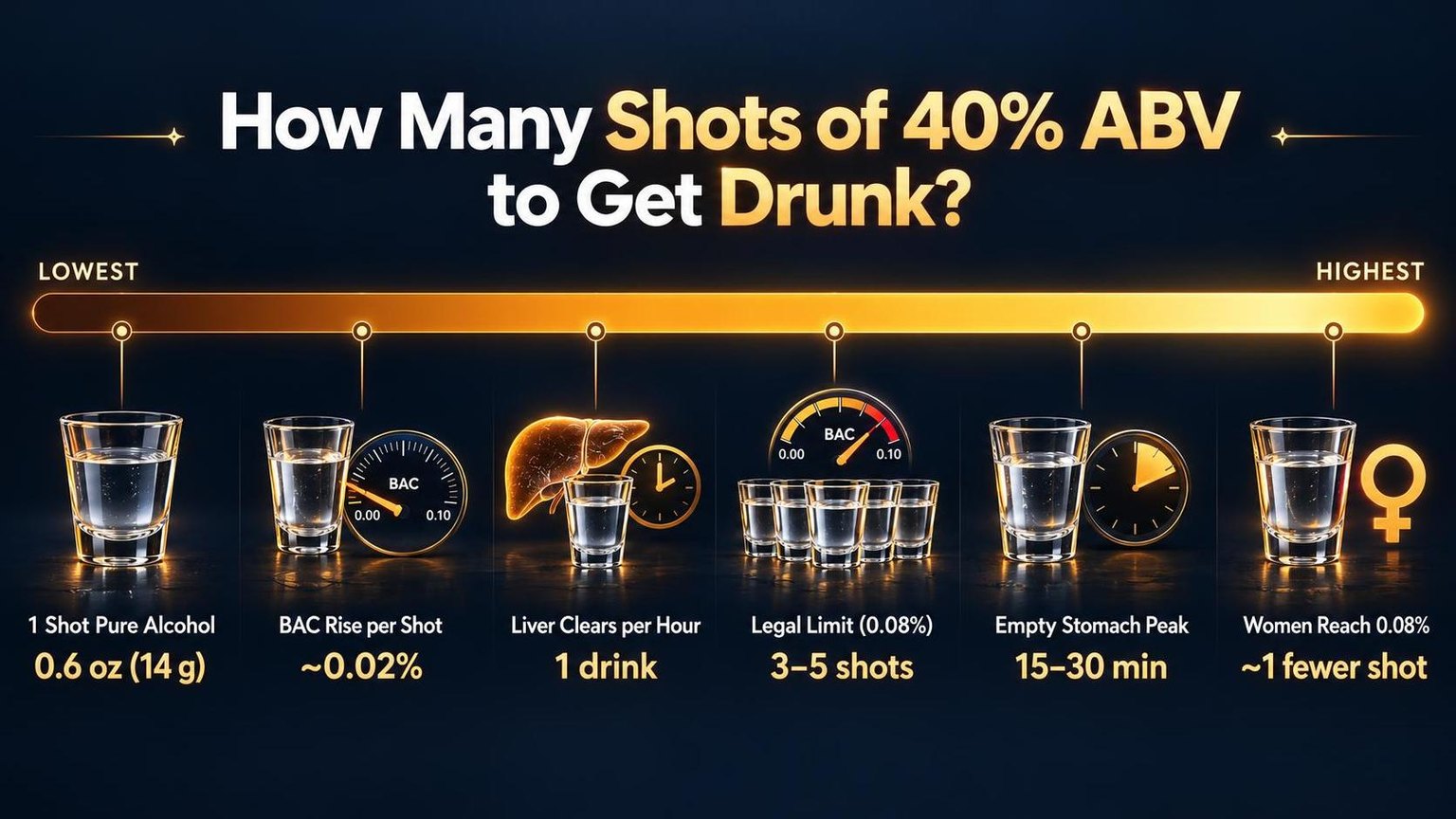
A single 1.5-oz shot of 40% ABV (80-proof) spirit delivers exactly 0.6 oz of pure ethanol. That standardized measure equals one “standard drink” as defined by the National Institute on Alcohol Abuse and Alcoholism (NIAAA).
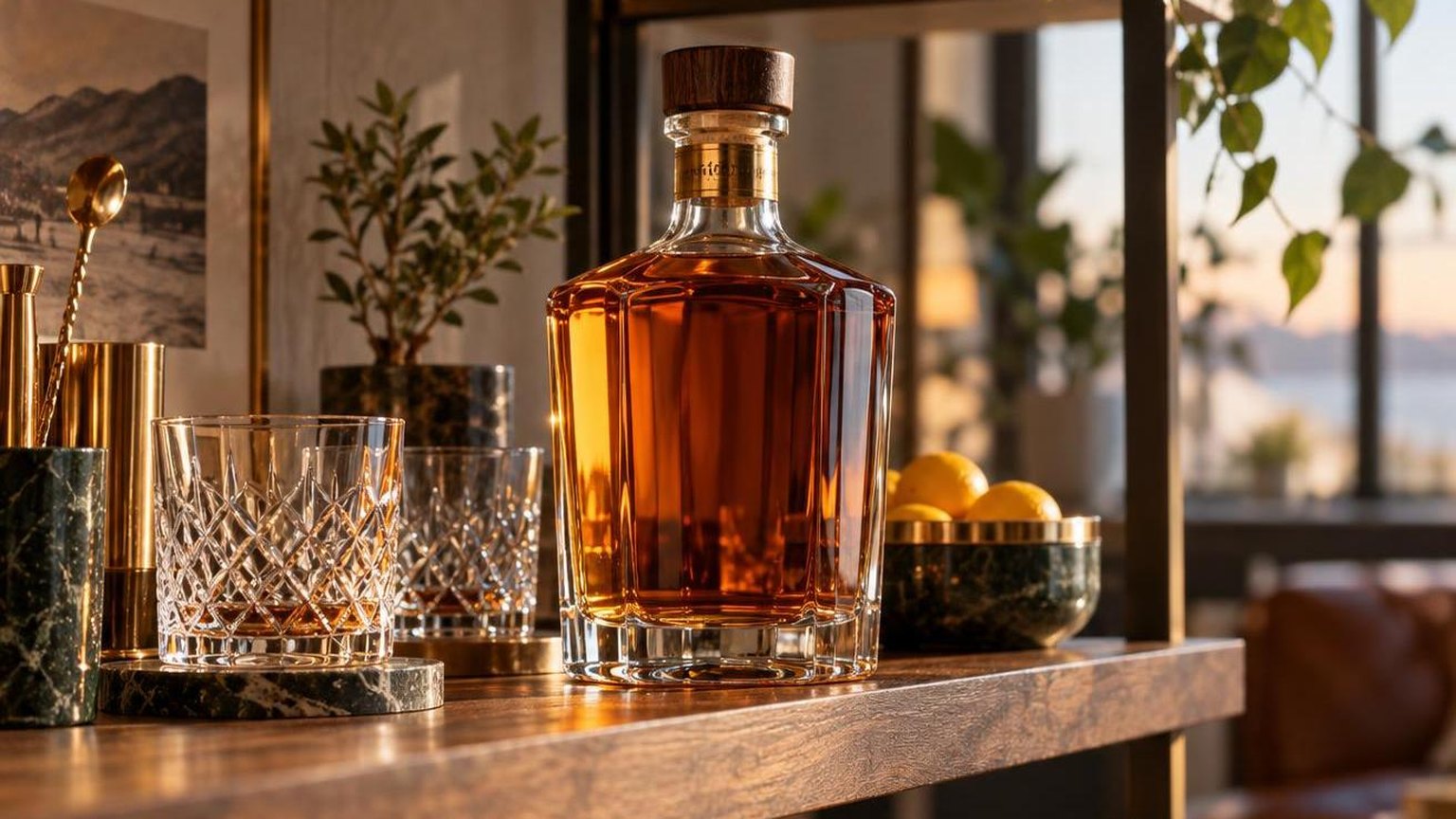
The “40” on the label refers to alcohol by volume. Multiply ABV by the serving size to find pure alcohol content.
Standard Drink Equivalents
| Beverage | Serving Size | ABV | Pure Alcohol |
| 80-proof spirit (vodka, whiskey, rum, gin) | 1.5 oz | 40% | 0.6 oz (14 g) |
| Regular beer | 12 oz | 5% | 0.6 oz (14 g) |
| Table wine | 5 oz | 12% | 0.6 oz (14 g) |
All three rows contain the same amount of ethanol — 14 grams. One shot of 40% spirit is no stronger than one beer or one glass of wine by NIAAA’s measure.
What Happens in Your Body After One Shot
A healthy liver metabolizes roughly one standard drink per hour. That rate translates to about 0.015–0.017% BAC reduction every 60 minutes.
- Absorption: Alcohol enters the bloodstream within 5–10 minutes on an empty stomach, peaking around 30–45 minutes.
- BAC impact: A single shot raises a 160-lb male’s BAC by approximately 0.02%. A 120-lb female reaches roughly 0.03% from the same shot.
- Duration: The body clears that one-shot dose in about 1–1.5 hours under normal conditions.
Body weight, biological sex, food intake, and liver enzyme activity all shift these numbers. Women generally produce less alcohol dehydrogenase, the primary enzyme that breaks down ethanol.
Why “40” Matters for Counting Drinks
Many cocktails contain 2–3 oz of spirit — effectively 1.3 to 2 standard drinks per glass. A double pour at a bar is 3 oz, equaling exactly 2 shots.
Counting by “drinks ordered” underestimates actual alcohol intake significantly.
Knowing that one measured 1.5-oz shot at 40% ABV equals precisely 14 grams of ethanol gives you a reliable baseline for tracking consumption throughout a session.
How Many Shots Cause Intoxication
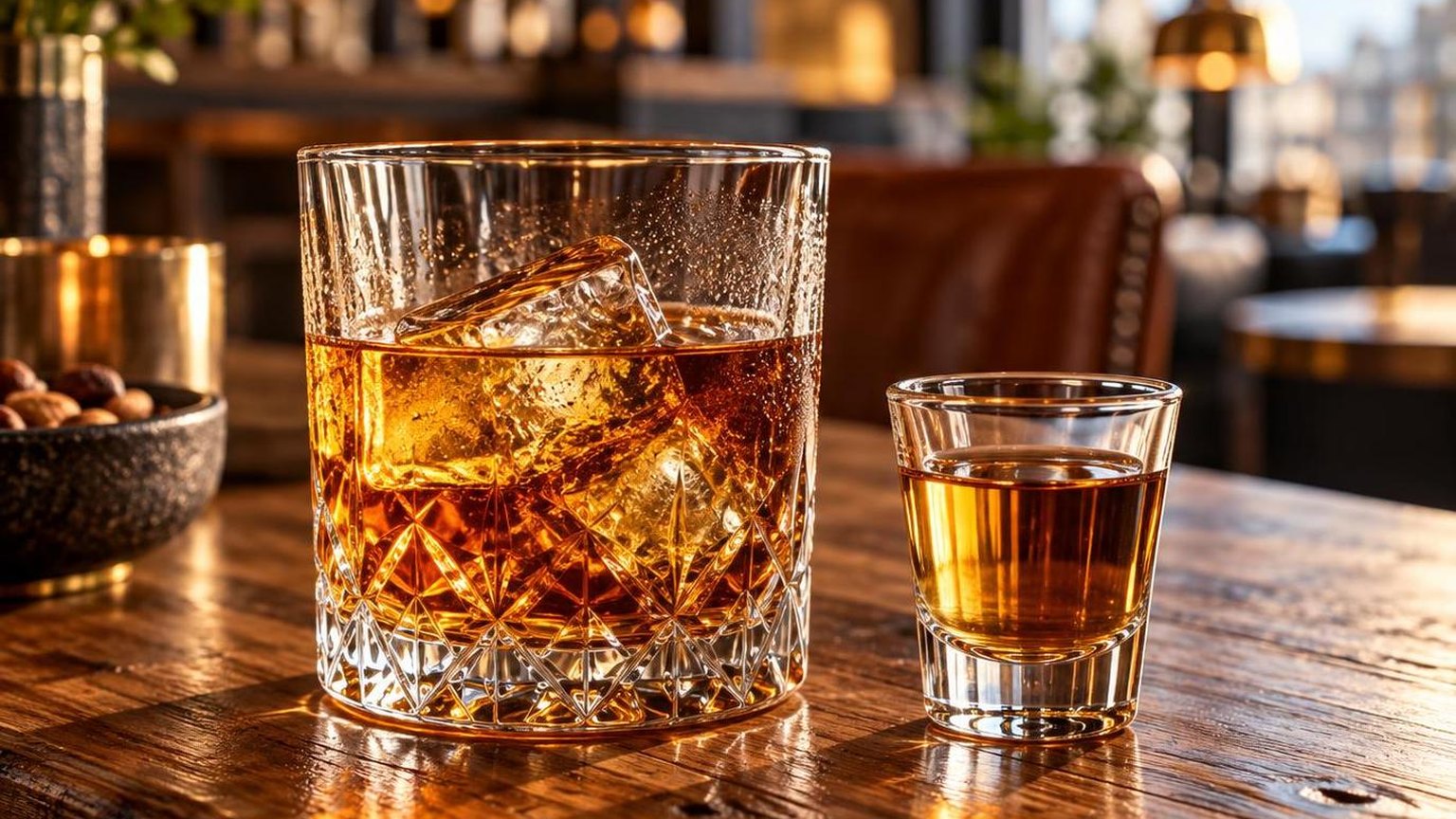
A standard shot of 40% ABV (80-proof) spirit contains 0.6 oz of pure alcohol.
Most adults reach legal intoxication (0.08% BAC) after 3–5 shots consumed within one hour, but individual thresholds vary significantly based on body weight, sex, and tolerance.
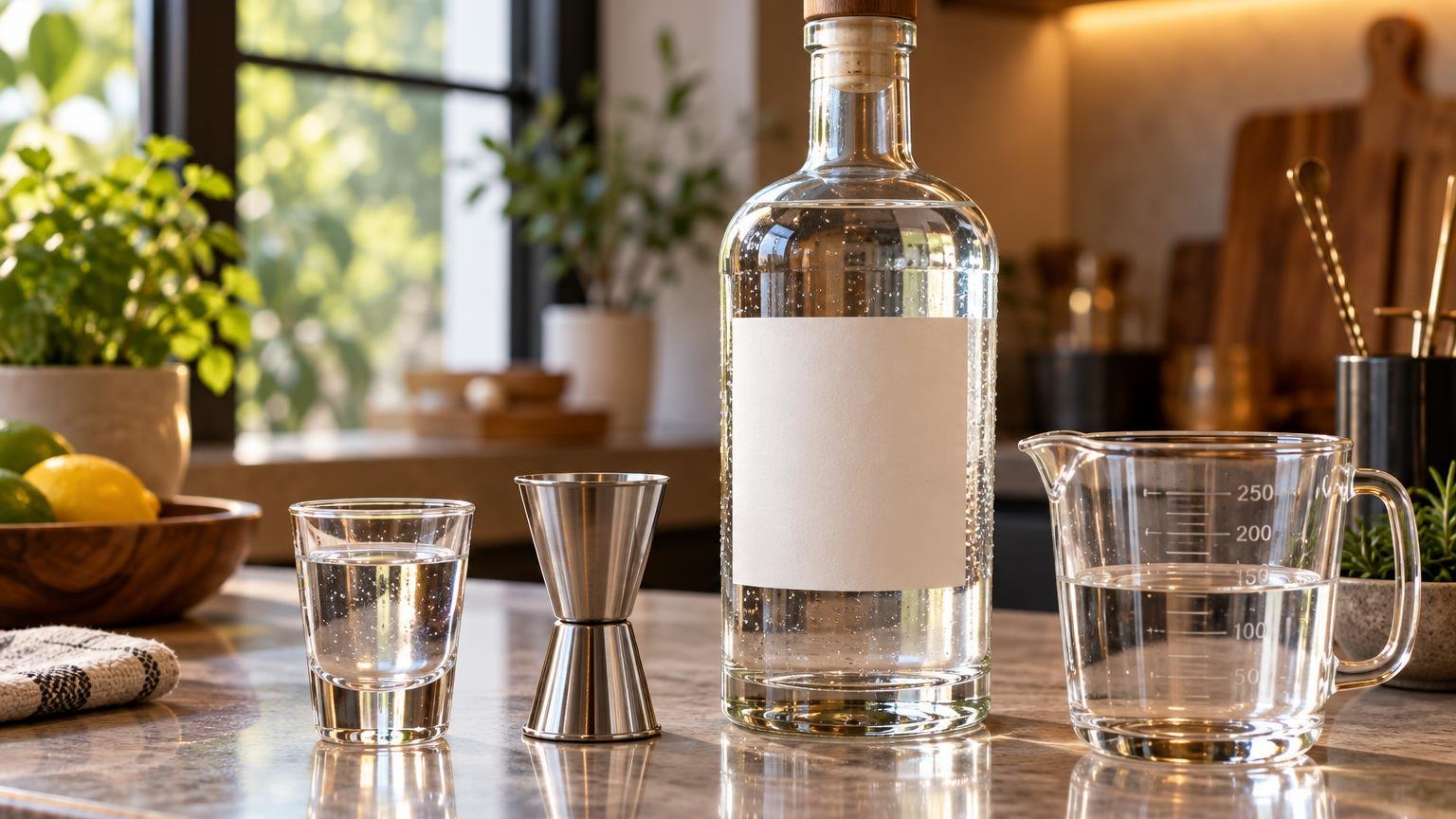
Body weight is the single largest variable. A 120-lb person reaches 0.08% BAC faster than a 220-lb person given identical intake. The following table shows estimated BAC levels after consuming shots of 40% ABV liquor within one hour.
| Body Weight | 2 Shots | 3 Shots | 4 Shots | 5 Shots |
| 120 lb (54 kg) | 0.06% | 0.09% | 0.12% | 0.15% |
| 140 lb (64 kg) | 0.05% | 0.08% | 0.11% | 0.13% |
| 160 lb (73 kg) | 0.05% | 0.07% | 0.09% | 0.12% |
| 180 lb (82 kg) | 0.04% | 0.06% | 0.08% | 0.10% |
| 200 lb (91 kg) | 0.04% | 0.05% | 0.07% | 0.09% |
| 220 lb (100 kg) | 0.03% | 0.05% | 0.06% | 0.08% |
These estimates assume male physiology. Women typically reach 0.08% BAC with approximately one fewer shot due to higher average body fat percentage and lower levels of alcohol dehydrogenase enzyme.
The liver metabolizes alcohol at a fixed rate of roughly 0.015–0.017% BAC per hour, equivalent to about one standard drink every 60–75 minutes. Drinking faster than this rate causes BAC to climb steadily.
Factors That Accelerate Intoxication
- Empty stomach: Alcohol absorbs up to 3× faster without food, peaking in BAC within 15–30 minutes versus 1–2 hours with a meal.
- Low tolerance: Infrequent drinkers feel impairment at BAC levels as low as 0.02–0.03%.
- Medications: Antihistamines, antidepressants, and benzodiazepines amplify alcohol’s sedative effects at lower doses.
- Fatigue and dehydration: Sleep deprivation and inadequate water intake magnify perceived intoxication even at moderate BAC levels.
A 160-lb male drinking on an empty stomach can feel noticeably impaired after just 2 shots in 30 minutes, reaching an estimated BAC near 0.05–0.06%. At 4 shots in one hour, that same individual crosses the 0.08% legal limit in most U.S. states.
Why Body Weight Changes Shot Effects
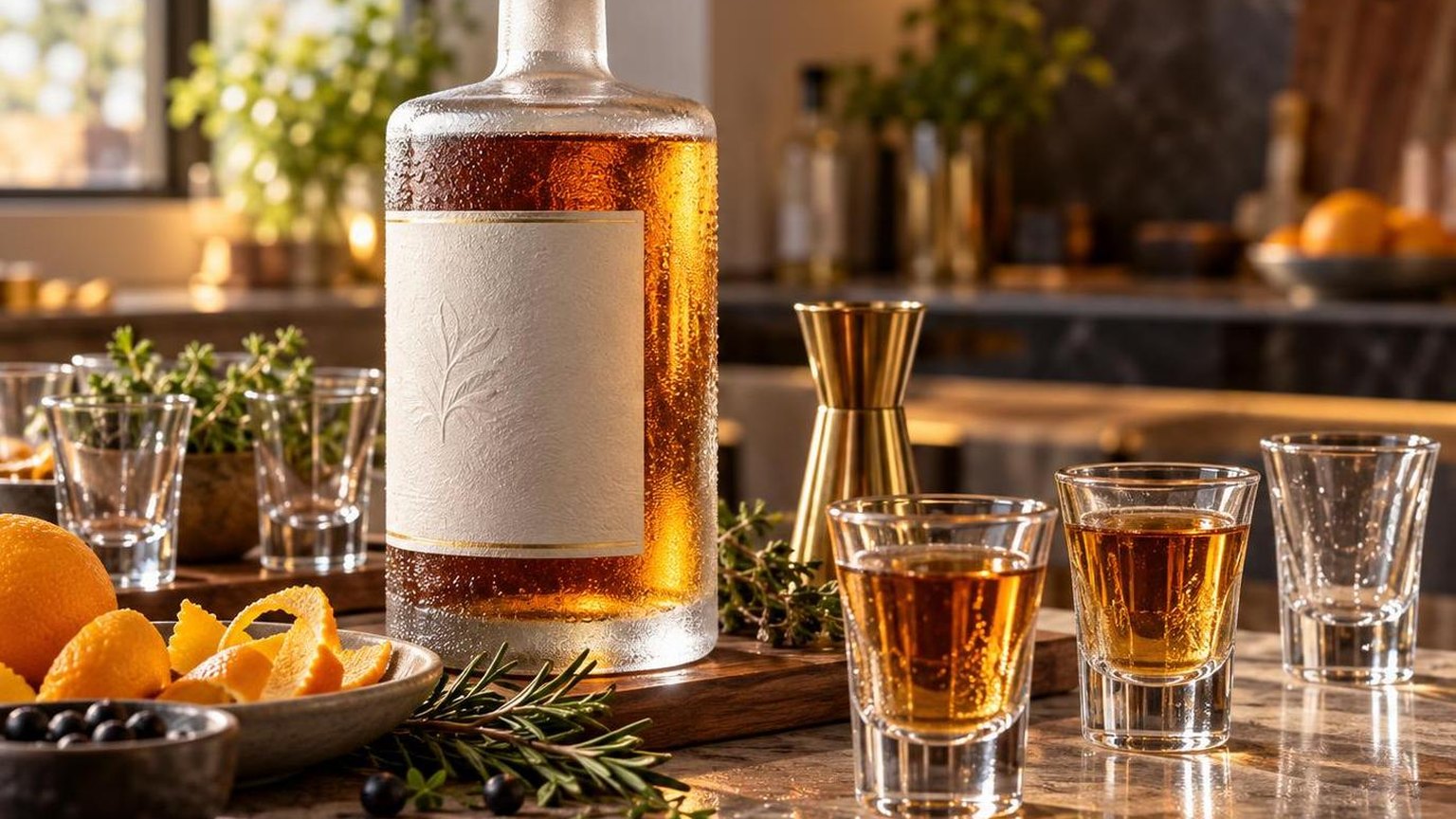
Body weight directly determines how alcohol distributes through your system.
A 140-pound person drinking two shots of 40% ABV liquor reaches a significantly higher blood alcohol concentration than a 220-pound person consuming the same amount, because alcohol disperses across less total body water.
The Widmark Formula in Practice
BAC is calculated using the Widmark formula: BAC = (alcohol consumed in grams ÷ (body weight in grams × r)) × 100, where “r” is the gender-specific body water constant—0.68 for men and 0.55 for women.
A standard 1.5-oz shot of 40% ABV spirit contains approximately 14 grams of pure ethanol. That fixed dose produces dramatically different BAC readings depending on weight.
| Body Weight | 2 Shots BAC (Male) | 2 Shots BAC (Female) | 4 Shots BAC (Male) | 4 Shots BAC (Female) |
| 120 lbs (54 kg) | 0.06% | 0.08% | 0.13% | 0.16% |
| 140 lbs (64 kg) | 0.05% | 0.07% | 0.11% | 0.14% |
| 160 lbs (73 kg) | 0.05% | 0.06% | 0.10% | 0.12% |
| 180 lbs (82 kg) | 0.04% | 0.05% | 0.09% | 0.10% |
| 200 lbs (91 kg) | 0.04% | 0.05% | 0.08% | 0.09% |
| 220 lbs (100 kg) | 0.03% | 0.04% | 0.07% | 0.08% |
These estimates assume consumption within one hour and do not account for metabolic elimination, which averages 0.015% BAC per hour.
Why Weight Matters Beyond Volume
Heavier individuals have more total body water. Alcohol is water-soluble, so it dilutes across a larger fluid volume, lowering peak BAC per drink consumed.
- Body composition matters: Muscle tissue holds roughly 75% water, while fat tissue holds only about 10%. Two people at 180 lbs with different body fat percentages will register different BACs from identical drinks.
- The 80-pound gap: A 120-lb person reaches the legal impairment threshold of 0.08% BAC after just 2 shots, while a 220-lb male needs approximately 4 shots to reach the same level.
- Gender amplifies the gap: Women carry a higher average body fat percentage (20–25%) than men (15–20%), resulting in less body water and consistently higher BAC readings at every weight bracket.
These physiological realities mean no universal “number of shots” applies. Weight is the single largest variable controlling how fast 40% ABV spirits push BAC toward impairment.
How Fast Shots Raise Blood Alcohol
A standard 1.5 oz shot of 40% ABV (80-proof) liquor contains roughly 14 grams of pure ethanol. Your liver metabolizes alcohol at a fixed rate of about 0.015–0.017 g/dL per hour, meaning one shot raises BAC faster than the body can clear it.
BAC depends on body weight, sex, food intake, and drinking speed. The Widmark formula estimates BAC using body weight and a sex-based distribution ratio (0.68 for men, 0.55 for women).
Estimated BAC After Shots on an Empty Stomach (One Hour)
| Shots | 140 lb Woman | 160 lb Man | 200 lb Man |
| 1 | 0.04 g/dL | 0.025 g/dL | 0.02 g/dL |
| 2 | 0.08 g/dL | 0.05 g/dL | 0.04 g/dL |
| 3 | 0.12 g/dL | 0.075 g/dL | 0.06 g/dL |
| 4 | 0.16 g/dL | 0.10 g/dL | 0.08 g/dL |
| 5 | 0.20 g/dL | 0.125 g/dL | 0.10 g/dL |
These estimates already subtract roughly 0.015 g/dL for one hour of metabolism. Actual results vary with individual enzyme activity and tolerance.
Key Absorption Factors
- Speed of drinking: Consuming 3 shots in 10 minutes produces a sharper BAC spike than spacing them over 90 minutes.
- Stomach contents: Food slows gastric emptying. A full meal can reduce peak BAC by up to 20–30% compared to drinking on an empty stomach.
- Carbonation: Mixing spirits with carbonated beverages can accelerate alcohol absorption through the stomach lining.
- Body composition: Higher body fat percentage increases BAC because fat tissue does not absorb alcohol the way lean tissue does.
Peak BAC typically occurs 30–90 minutes after the last drink. Shots consumed rapidly bypass the steady-state metabolism window, causing BAC to climb steeply.
At 0.08 g/dL—the US legal driving limit—most people experience impaired coordination and reaction time. A 160 lb man reaches that threshold after roughly 4 shots in one hour.
Signs Fourty Percent Alcohol Overwhelms You
A blood alcohol concentration (BAC) of 0.08% is the legal impairment threshold in all 50 US states.
Recognizing physical and cognitive warning signs before reaching dangerous BAC levels—0.15% and above—can prevent alcohol poisoning, which kills approximately 2,200 Americans annually according to the CDC.
BAC Levels and Corresponding Symptoms
| BAC Range | Approximate 40% ABV Shots (150 lb person) | Observable Signs |
| 0.02–0.04% | 1–2 | Mild warmth, slight relaxation, lowered inhibition |
| 0.05–0.07% | 2–3 | Impaired judgment, reduced coordination, exaggerated emotions |
| 0.08–0.12% | 4–5 | Slurred speech, poor balance, blurred vision, slowed reaction time by 15–25% |
| 0.13–0.19% | 6–8 | Severe motor impairment, vomiting, blackout risk increases sharply |
| 0.20–0.30% | 9–12 | Confusion, stupor, loss of consciousness, risk of aspiration |
| 0.30%+ | 12+ | Life-threatening alcohol poisoning, respiratory failure, coma |
Early Warning Signs You Should Stop
- Flushed skin and increased heart rate — heart rate rising above 100 bpm at rest signals cardiovascular stress from ethanol metabolism
- Difficulty focusing eyes — nystagmus (involuntary eye movement) begins around 0.08% BAC
- Repeating yourself or forgetting mid-sentence — indicates hippocampal disruption and approaching blackout territory
- Stumbling or needing to hold surfaces — cerebellar impairment measurable at 0.06% BAC and above
- Numbness in extremities — peripheral vasodilation from alcohol redirecting blood flow
Critical Danger Signals Requiring Emergency Help
Call 911 immediately if someone shows irregular breathing with fewer than 8 breaths per minute. Seizures, blue-tinged skin, and unconsciousness with no response to pinching also demand emergency intervention.
A 2015 study in Alcoholism: Clinical and Experimental Research found that 50% of alcohol poisoning deaths involved BAC levels between 0.30% and 0.45%. Most victims were men aged 35–64.
Tolerance masks symptoms but does not reduce organ damage. A habitual drinker may appear functional at 0.15% BAC while their liver processes ethanol at the same fixed rate of roughly one standard drink per hour.
When Drinking Becomes Alcohol Poisoning
Alcohol poisoning occurs when BAC reaches 0.30% or higher, a level that suppresses brainstem functions controlling breathing and heart rate.
For most people drinking 40% ABV spirits, this danger zone begins around 10–15 standard shots consumed within 2–3 hours.
The CDC reports approximately 2,200 alcohol poisoning deaths annually in the United States—an average of six deaths every day.
BAC Levels and Associated Risks
| BAC Level | Classification | Symptoms |
| 0.16%–0.24% | Severe impairment | Vomiting, blackouts, loss of motor control |
| 0.25%–0.30% | Critical impairment | Mental confusion, stupor, risk of aspiration |
| 0.31%–0.40% | Life-threatening | Loss of consciousness, slowed breathing, hypothermia |
| 0.40%+ | Potentially fatal | Respiratory arrest, coma, death |
A 160-pound male reaches roughly 0.30% BAC after consuming 12 standard shots (1.5 oz each at 40% ABV) in under two hours. A 130-pound female can reach the same level after approximately 8–9 shots.
Warning Signs Requiring Immediate 911 Call
- Slow or irregular breathing—fewer than 8 breaths per minute
- Seizures or uncontrollable shaking
- Blue-tinged or pale skin, especially fingertips and lips
- Unconsciousness with inability to be awakened
- Vomiting while unconscious or semi-conscious
The gag reflex can fail at high BAC levels. Choking on vomit is a leading cause of alcohol poisoning deaths, accounting for a significant portion of fatalities.
Never leave an unconscious person “to sleep it off.” BAC continues rising 30–40 minutes after the last drink as alcohol absorbs from the stomach into the bloodstream.
Critical Factors That Accelerate Poisoning
- Drinking on an empty stomach increases absorption rate by up to 3×
- Mixing alcohol with opioids or benzodiazepines compounds respiratory depression
- Binge drinking—defined as 5+ drinks in 2 hours for men, 4+ for women—is responsible for over 75% of alcohol poisoning deaths
If someone shows any poisoning symptoms, call 911 immediately. Position the person on their side (recovery position) to prevent aspiration while waiting for emergency services.
Safer Limits Before Taking Another Shot
The NIAAA defines low-risk drinking as no more than 4 drinks on any single day for men and 3 for women. Staying within these limits reduces—but does not eliminate—the risk of alcohol-related harm.
NIAAA Low-Risk Drinking Guidelines
| Category | Single-Day Limit | Weekly Limit |
| Men | 4 standard drinks | 14 standard drinks |
| Women | 3 standard drinks | 7 standard drinks |
One standard drink equals 1.5 oz of 40% ABV (80-proof) spirit—exactly one typical shot. Each standard drink contains approximately 14 grams of pure ethanol.
Pacing Strategies That Actually Work
- One shot per hour. The average adult liver metabolizes roughly 0.015–0.017 g/dL of blood alcohol per hour, equivalent to about one standard drink every 60–75 minutes.
- Alternate with water. Drink at least 8 oz of water between each shot to slow gastric emptying and reduce peak BAC.
- Eat before and during. A meal containing fat and protein can reduce peak BAC by up to 20–30% compared to drinking on an empty stomach, according to research published in the Journal of Forensic Sciences.
- Set a hard cap. Decide your maximum number of shots before the session starts. For most adults, staying at or below 2–3 shots over 2–3 hours keeps BAC under 0.05 g/dL.
- Track your count. Alcohol impairs self-monitoring. Use a phone note or app like DrinkControl to log each drink in real time.
When Zero Is the Only Safe Number
No amount of alcohol is considered safe if you are pregnant, taking medications that interact with ethanol (including acetaminophen, benzodiazepines, or SSRIs), or planning to drive.
The CDC reports that excessive alcohol use causes approximately 178,000 deaths per year in the United States. About 40% of those deaths involve acute events like crashes tied to binge drinking episodes.
Knowing your personal limit matters more than following general charts. Body weight, genetics, liver health, and tolerance all shift where impairment begins. When in doubt, stop one shot earlier than you think you need to.
Common Questions
How many shots of 40% alcohol does it take for an average person to feel drunk?
For a 160-lb (73-kg) person with no tolerance, 3–4 standard shots (1.5 oz each) of 40% ABV spirit consumed within one hour typically produces a blood alcohol concentration (BAC) of 0.06–0.08%, the legal impairment threshold in the US.
Factors like body composition, food intake, and liver enzyme activity shift this number by 1–2 shots in either direction.
Does body weight change how many 40% ABV shots it takes to get drunk?
Body weight is one of the strongest predictors of BAC. A 120-lb person reaches approximately 0.08% BAC after just 2–3 shots in an hour, while a 220-lb person may need 5–6 shots in the same timeframe to hit the same level.
This is because alcohol distributes through total body water, which scales with mass.
How does drinking on an empty stomach affect intoxication from 40-proof shots?
Drinking on an empty stomach accelerates alcohol absorption by up to 3× compared to drinking after a full meal, because food—especially fat and protein—slows gastric emptying.
A person who might feel moderately buzzed after 3 shots with a meal could experience strong intoxication from the same amount on an empty stomach, reaching peak BAC 30–60 minutes faster.
Is there a difference between men and women in how many shots cause drunkenness?
Women generally reach higher BAC levels than men at the same number of shots, even at equal body weight.
This occurs because women carry roughly 10% less body water and produce less gastric alcohol dehydrogenase, meaning 2 shots for a 140-lb woman can produce a BAC comparable to 3 shots for a 140-lb man.
How long does the body take to metabolize one shot of 40% alcohol?
The liver metabolizes alcohol at a nearly fixed rate of about 0.015–0.017% BAC per hour, which corresponds to roughly one standard 1.5-oz shot of 40% ABV spirit every 60–75 minutes.
Drinking faster than this rate causes alcohol to accumulate in the bloodstream, which is why rapid consumption of 3–4 shots in 30 minutes produces far stronger effects than spacing them over 3 hours.
What BAC level do different numbers of 40% shots produce?
For a 160-lb male drinking within one hour: 1 shot ≈ 0.02% BAC, 2 shots ≈ 0.04%, 3 shots ≈ 0.06%, 4 shots ≈ 0.08% (legally impaired), and 6+ shots ≈ 0.12% or higher (significant impairment, slurred speech, poor coordination).
These estimates assume standard 1.5-oz pours and no food intake; actual values vary with individual metabolism.
Can alcohol tolerance change how many 40% ABV shots it takes to feel drunk?
Chronic drinkers develop functional tolerance, meaning their brain adapts to alcohol’s sedative effects, and they may subjectively feel less impaired after 4–5 shots even though their BAC is objectively high.
This tolerance does not reduce BAC or organ damage—it only masks the sensation of drunkenness.
The CDC notes that tolerance increases the risk of alcohol poisoning precisely because individuals consume dangerous quantities without perceiving impairment.
Keep Exploring
- How Much Ounces In A Liter? A Complete, Practical Guide With Real-World Experience (2026 Edition)
- The Types of Commercial Ice Makers for Business
- Buffalo Trace Single Barrel Select – What You Need to Know
- What Type Of Beer Is Bud Light?
- How Many Ounces In 2.1 Quarts? The Complete, Practical Guide You Can Trust
- The Ultimate Guide To Cigar Body, Strength and Flavour
- How Many Oz Is 1 Pint?
- How Much Alcohol Is In A Margarita? Answer By Expert
- How Much Does A Case Of Beer Weigh?
- All Blog Guides
- National Institute on Alcohol Abuse and Alcoholism – Understanding Blood Alcohol Concentration (2024)
- Centers for Disease Control and Prevention – Dietary Guidelines for Alcohol (2024)
- National Library of Medicine/PubMed – Alcohol Pharmacokinetics and BAC Estimation (2020)
- Stanford University Office of Alcohol Policy – BAC and Intoxication Factors (2024)
- Bowling Green State University – Blood Alcohol Content Calculator and Charts (2024)
- National Institute on Alcohol Abuse and Alcoholism – Alcohol Metabolism: An Update (2012)
- PubMed Central – Sex Differences in Alcohol Pharmacokinetics (2009)
- U.S. Dietary Guidelines for Americans 2020–2025, Alcohol Section (2020)
- Cleveland Clinic – How Long Does Alcohol Stay in Your System? (2024)
- Harvard T.H. Chan School of Public Health – Alcohol: Balancing Risks and Benefits (2024)