beers from the 80’s are the mainstream American lagers, early light beers, imported standouts, and first-wave craft labels that defined U.S. drinking before the 1990s microbrew boom.
Budweiser, Miller Lite, Coors, Michelob, Heineken, Corona, Samuel Adams Boston Lager, and Sierra Nevada Pale Ale shaped tap lists, store shelves, and advertising.
The decade matters because beer split in two directions: national brands grew through television and distribution, while small brewers revived fuller-flavored ales.
This article identifies the beers people actually drank, the brands that changed habits, and the surviving bottles that still explain 1980s beer culture.
Iconic 1980s American Beer Brands
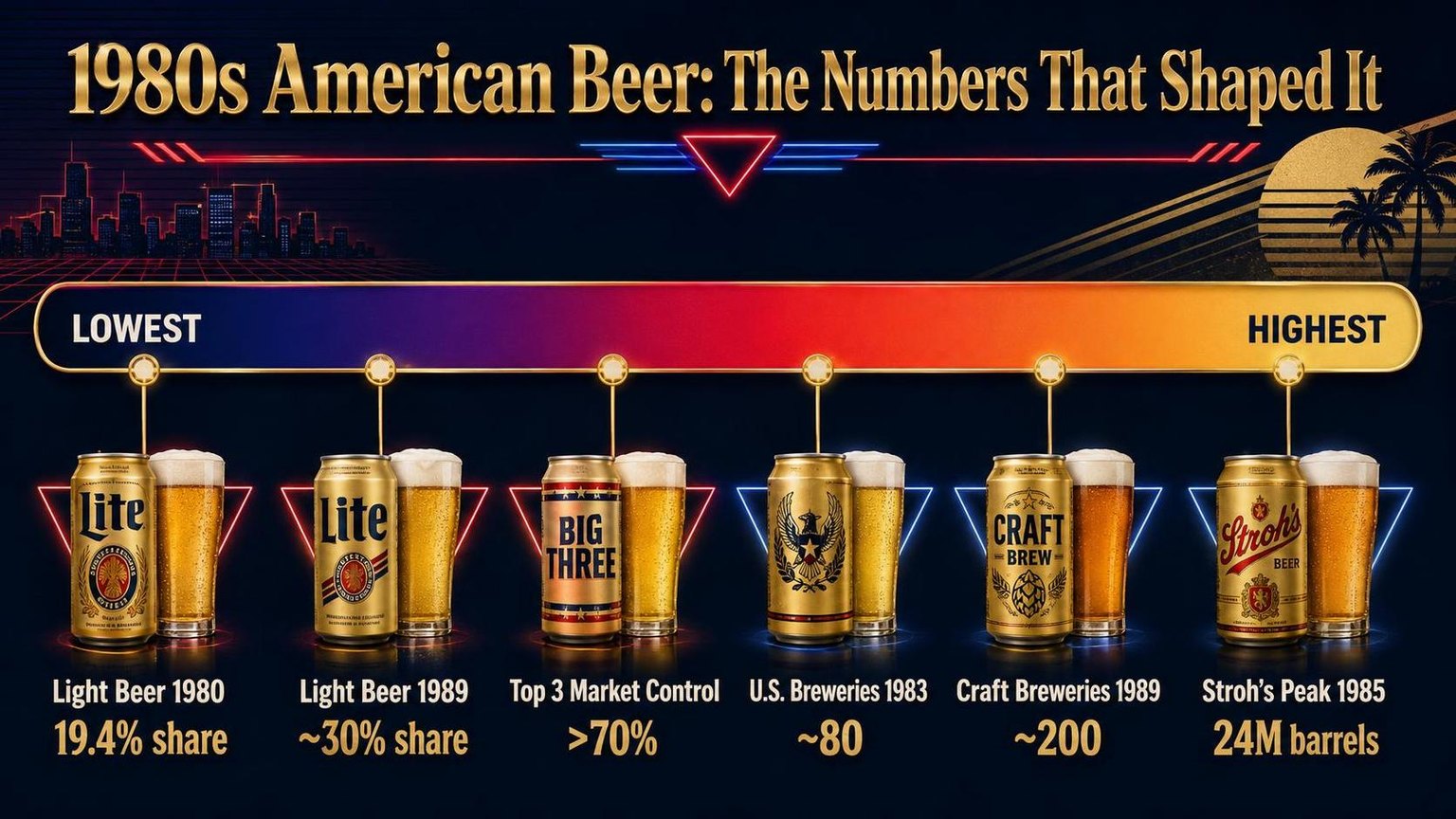
The 1980s marked peak consolidation in American brewing. The number of U.S. breweries dropped to a historic low of roughly 80 by 1983, while the top three producers controlled over 70% of domestic volume.
The Big Three Dominated
Anheuser-Busch, Miller Brewing, and Coors defined mainstream American beer throughout the decade. Their flagship lagers saturated television, sports arenas, and supermarket shelves nationwide.
| Brand | Parent Company | 1980s Market Share (approx.) | Notable 1980s Milestone |
| Budweiser | Anheuser-Busch | ~25% | Became world’s best-selling beer by 1988 |
| Miller Lite | Miller Brewing | ~10% | Pioneered mass-market light beer category |
| Coors Light | Adolph Coors Co. | ~5% | Launched nationally in 1981; “Silver Bullet” campaign debuted 1983 |
| Bud Light | Anheuser-Busch | ~8% by 1989 | Introduced 1982; surpassed Miller Lite by decade’s end |
| Old Milwaukee | Stroh Brewery | ~3% | “It doesn’t get any better than this” campaign launched 1981 |
The Light Beer Wars
Light beer exploded from 19.4% of U.S. beer sales in 1980 to nearly 30% by 1989. Miller Lite arrived first in 1975, but Bud Light overtook it in volume during the late 1980s.
Miller Lite’s “Tastes Great, Less Filling” campaign ran from 1973 through 1991, featuring retired athletes debating the slogan. It remains one of the most recognized beer campaigns in advertising history.
Regional Brands Still Standing
- Pabst Blue Ribbon — Sold 15 million barrels annually in the early 1980s before declining sharply mid-decade.
- Yuengling — America’s oldest brewery (est. 1829) survived on regional loyalty in Pennsylvania.
- Stroh’s — Detroit-based Stroh Brewery peaked at 24 million barrels in 1985, ranking third nationally before overexpansion led to its 1999 sale.
- Schlitz — Once America’s top seller, Schlitz collapsed after a disastrous 1970s reformulation and was acquired by Stroh in 1982.
Seeds of the Craft Revolution
Sierra Nevada Pale Ale launched in 1980. Boston Beer Company introduced Samuel Adams Boston Lager in 1984. By 1989, roughly 200 craft breweries operated in the U.S., up from fewer than a dozen in 1980.
These pioneers proved American drinkers wanted flavor beyond mainstream adjunct lagers — setting the stage for the craft boom of the 1990s and beyond.
Light Beer’s 1980s Market Takeover
Light beer moved from a specialist product to a core American beer category during the 1980s.
Aggressive national advertising, wider distribution and launches from Anheuser-Busch, Miller and Coors made calorie-conscious beer familiar rather than unusual.
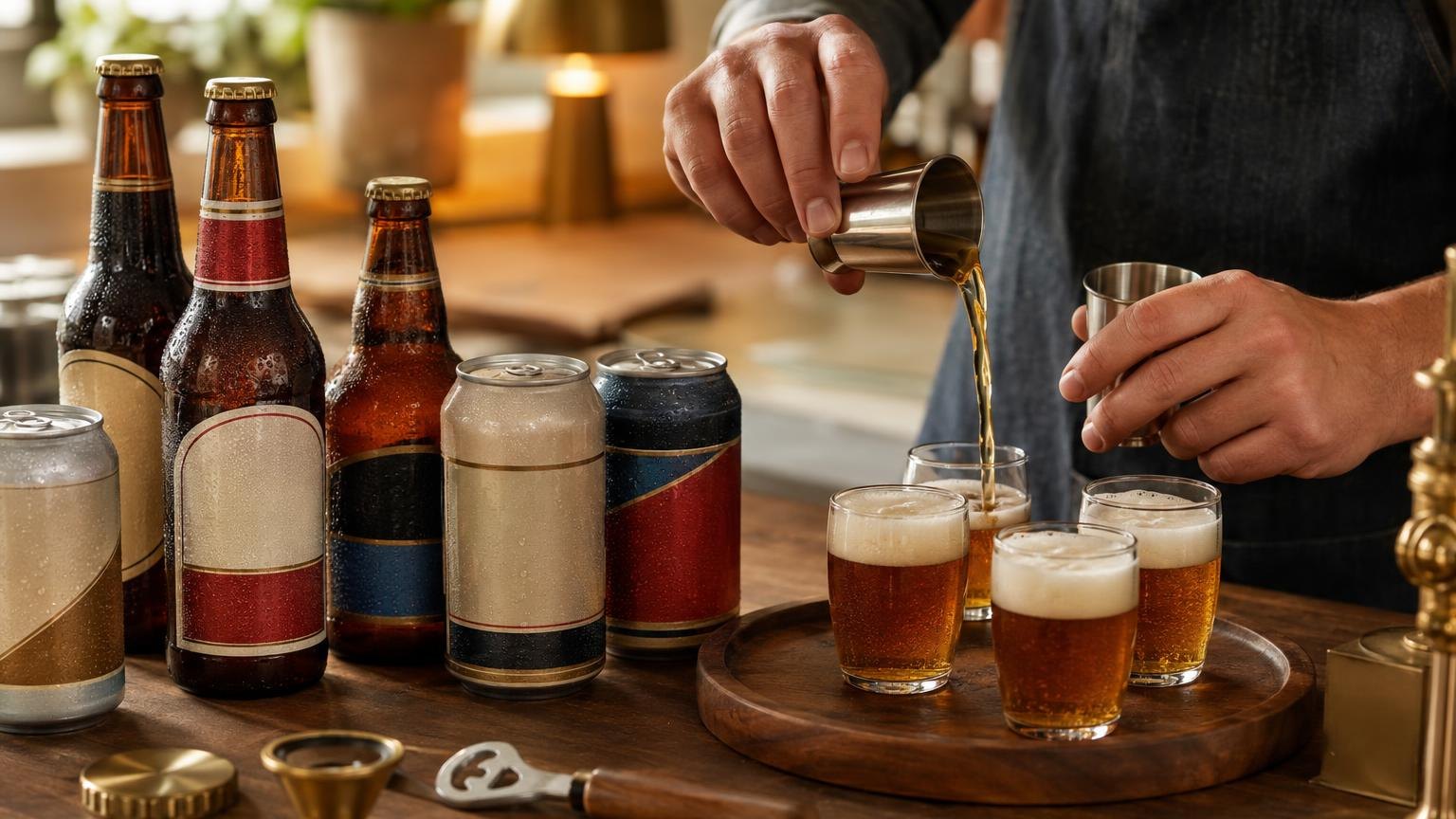
Miller created the commercial blueprint before the decade began. After acquiring Meister Bräu’s light-beer formula, Miller reformulated it and used sports personalities to sell Lite as flavorful beer, not a restrictive diet product.
| Year | Brand event | Market significance |
| 1973 | Miller began regional testing of Lite. | The brewer tested whether mainstream drinkers would accept lower-calorie beer. |
| 1975 | Miller Lite received national distribution. | “Tastes Great! Less Filling!” connected moderation with sports-bar culture. |
| 1977 | Anheuser-Busch introduced Natural Light. | The category expanded beyond a single nationally prominent brand. |
| 1978 | Coors Light and Michelob Light debuted. | Premium brewers treated light beer as a permanent segment. |
| 1982 | Budweiser Light launched nationally and soon became Bud Light. | Anheuser-Busch attached light beer to its strongest franchise. |
| 1989 | Coors introduced Keystone Light. | Light positioning entered the price-value tier. |
The category’s defining contest became Miller Lite versus Bud Light.
Miller had the first-mover advantage, while Anheuser-Busch possessed the country’s largest brewery network, extensive wholesaler relationships and Budweiser’s brand recognition.
Bud Light advertising adopted humor and repeatable slogans, including “Bring Out Your Best” and Spuds MacKenzie. Miller continued using retired athletes and entertainers.
Both approaches sold sociability and masculinity while keeping calories and fullness as practical product benefits.
| Measure | Approximate share of U.S. beer consumption | Source context |
| Beginning of the 1980s | About 13 percent | Historical industry estimates summarized by Beer Marketer’s Insights and contemporary trade reporting. |
| End of the 1980s | About 30 percent | Industry histories show the segment more than doubling its share during the decade. |
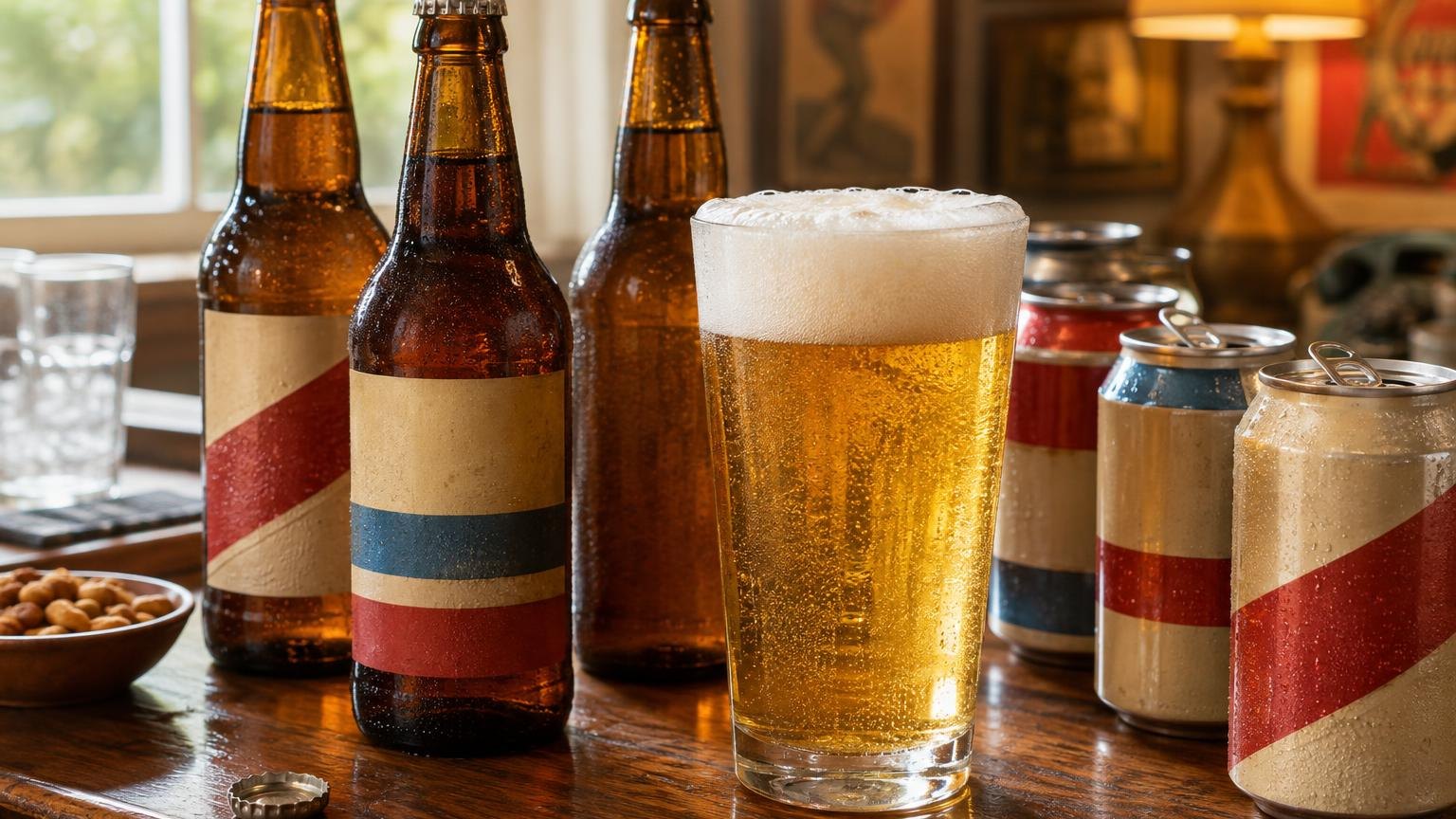
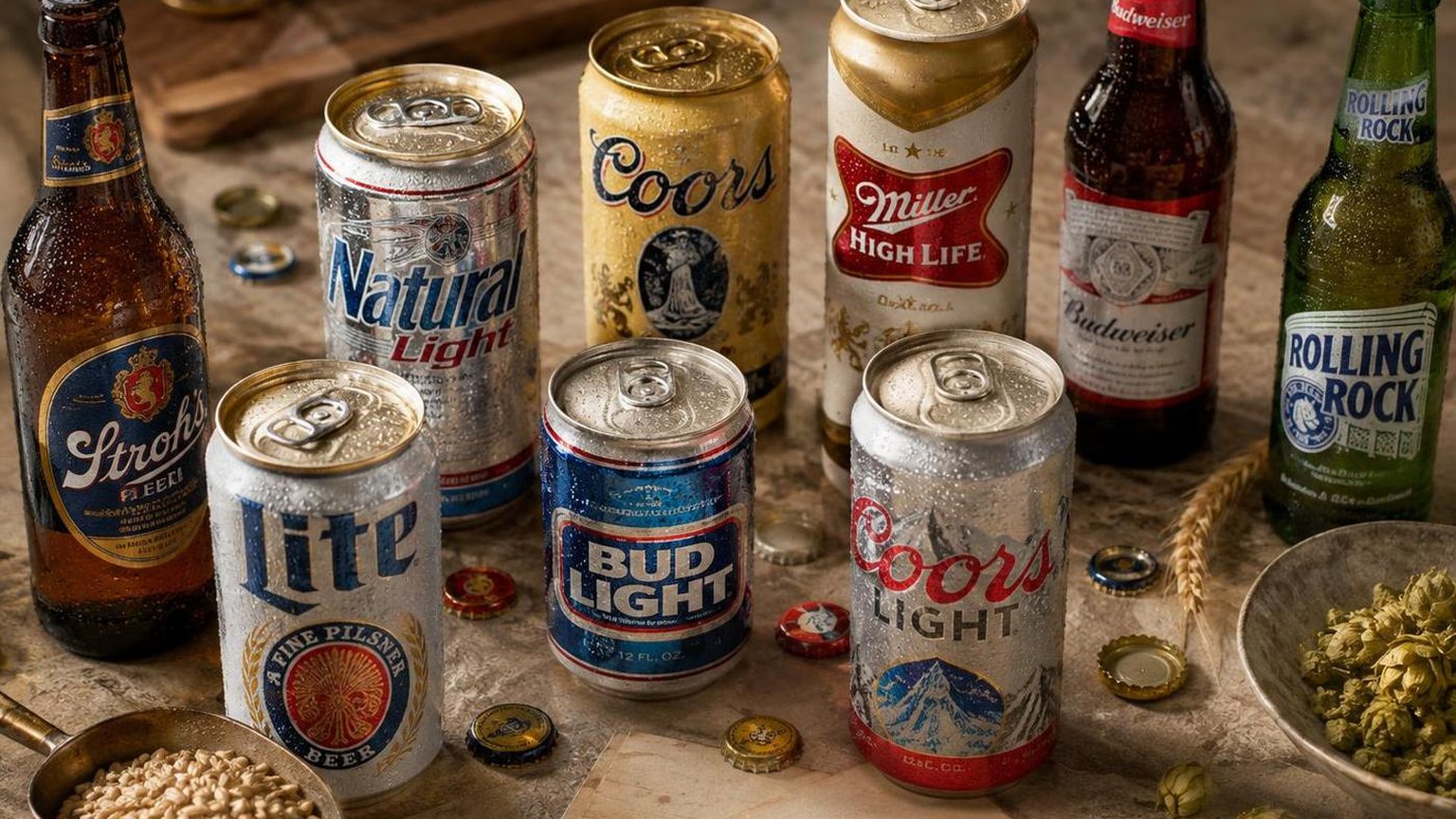
Packaging reinforced the change. Period cans and advertisements prominently displayed “light” or “lite,” pale colors and calorie-oriented language, allowing shoppers to identify the category immediately in crowded coolers.
The takeover also changed brewery strategy. A successful flagship lager was no longer enough; major producers needed a light counterpart across premium and value price levels. The result was lasting category expansion, not a temporary diet trend.
- Miller Lite: established the advertising formula and early leadership.
- Bud Light: converted distribution strength into rapid national growth.
- Coors Light: added Rocky Mountain imagery and a “Silver Bullet” identity.
- Natural Light and Keystone Light: extended light beer into lower-priced segments.
Craft Brewing’s Early 80s Breakthrough
The United States had fewer than 50 breweries in 1983—the lowest count since Prohibition. By 1989, that number surpassed 200, driven by homebrewers turning professional and a growing consumer appetite for flavor over mass-market uniformity.
The Regulatory Spark
President Jimmy Carter signed H.R. 1337 in October 1978, legalizing homebrewing of up to 200 gallons per household annually. The law took effect February 1, 1979, unleashing a generation of amateur brewers who would define the decade.
Pioneering Breweries of the Early 80s
| Brewery | Founded | Location | Notable First |
| Sierra Nevada Brewing Co. | 1980 | Chico, CA | Pale Ale became the craft benchmark |
| Boulder Beer Company | 1979 | Boulder, CO | First microbrewery in Colorado |
| Yakima Brewing (Grant’s) | 1982 | Yakima, WA | First post-Prohibition brewpub |
| Mendocino Brewing | 1983 | Hopland, CA | First post-Prohibition brewpub in California |
| Boston Beer Company | 1984 | Boston, MA | Contract-brewed Samuel Adams Boston Lager |
What Set Them Apart
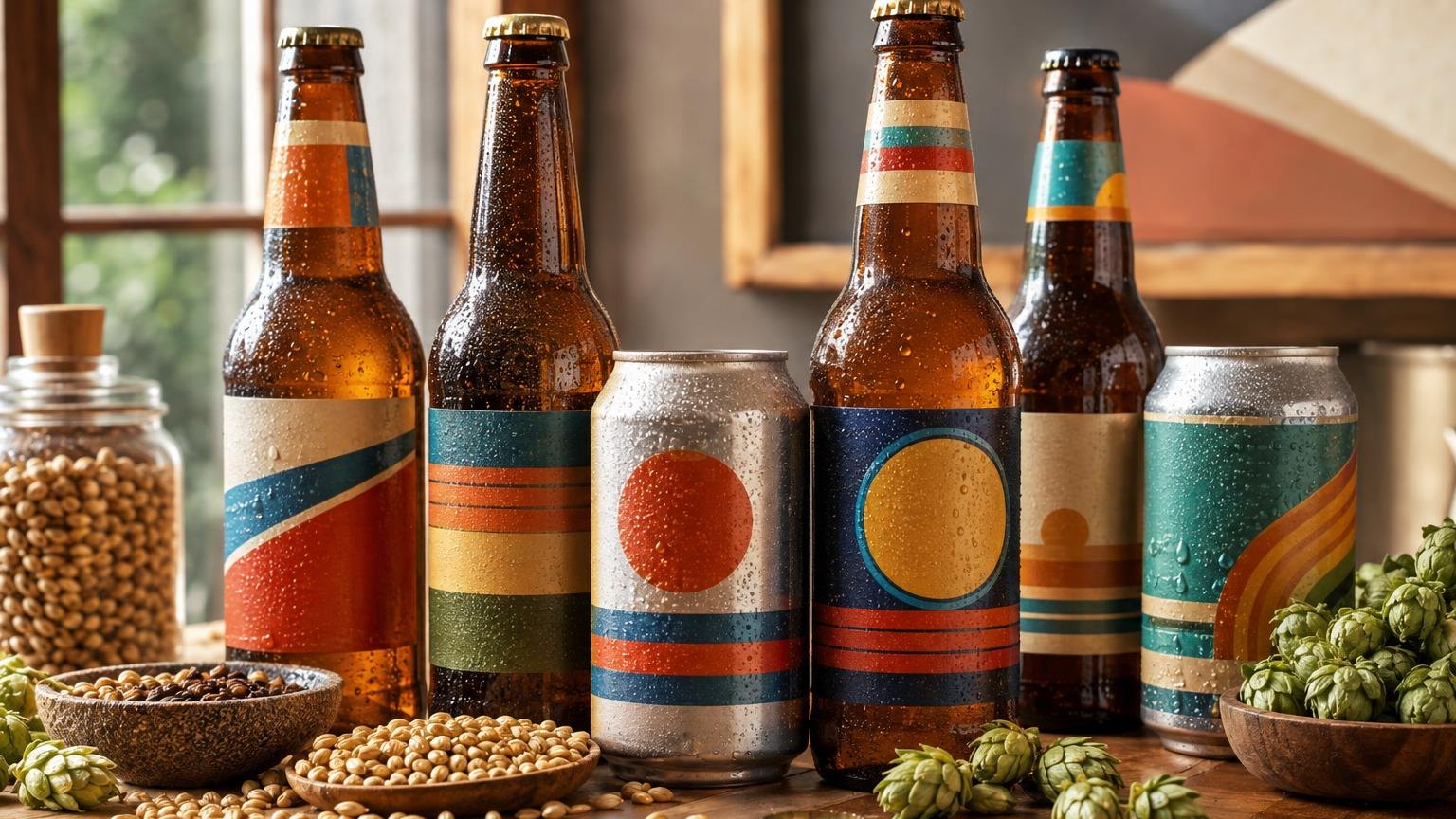
These brewers rejected adjunct-heavy recipes that dominated the macro landscape. Cascade hops, roasted malts, and traditional ale yeast strains replaced the rice and corn fillers used by Anheuser-Busch and Miller.
- Sierra Nevada Pale Ale used whole-cone Cascade hops—a variety developed by the USDA in 1972 but largely ignored by big brewers
- Bert Grant’s Scottish Ale at Yakima Brewing introduced Americans to malt-forward imports-style brewing
- Jim Koch launched Samuel Adams Boston Lager using a family recipe from the 1870s, initially selling door-to-door to Boston bars
Growth by the Numbers
The American Homebrewers Association, founded by Charlie Papazian in 1978, counted roughly 1.5 million homebrewers by the mid-1980s. This talent pipeline fed the nascent microbrewing movement directly.
Microbrewery production remained tiny by industry standards. In 1985, Sierra Nevada produced approximately 12,000 barrels—compared to Anheuser-Busch’s 68 million barrels that same year.
Despite the size gap, consumer interest was undeniable. The Great American Beer Festival, first held in 1982 in Boulder with 22 breweries and 800 attendees, grew to 44 breweries by 1985.
The early 80s planted every seed the craft explosion of the 1990s would harvest.
Imported Beers That Defined the Decade
The 1980s transformed American beer drinking through a wave of imports that introduced consumers to styles beyond domestic lagers.
Between 1980 and 1989, imported beer volume in the U.S. surged from roughly 30 million barrels to over 60 million, doubling market share.
The Import Leaders
Heineken held the top import position entering the decade, having dominated since the 1950s.
By 1986, Corona Extra from Mexico’s Grupo Modelo overtook Heineken as America’s best-selling import — a seismic shift driven by clever lime-wedge marketing.
| Brand | Country | U.S. Import Rank (1989) | Key Fact |
| Corona Extra | Mexico | #1 | Grew from obscurity to 23 million cases annually by 1988 |
| Heineken | Netherlands | #2 | Held #1 import spot for over 30 years before Corona |
| Molson | Canada | #3 | Golden brand became a campus staple across northern U.S. states |
| Beck’s | Germany | #4 | Positioned as a premium German pilsner with upscale advertising |
| Foster’s Lager | Australia | #5 | Launched in U.S. in 1972, peaked with Crocodile Dundee tie-ins (1986) |
Cultural Drivers Behind the Surge
Several factors accelerated import growth throughout the decade. International travel increased, exposing Americans to European and Latin American beer cultures for the first time at scale.
- Corona’s rise: Barton Beers began distributing Corona in 1979; by 1987 it was selling in all 50 states with a 170% year-over-year volume spike in key markets.
- Foster’s and pop culture: The 1986 film Crocodile Dundee grossed $328 million worldwide, giving Foster’s Lager enormous free brand exposure in the U.S.
- Heineken’s premium positioning: Priced 30–40% above domestic brands, Heineken cultivated an aspirational image among yuppie consumers.
- Japanese entries: Kirin and Sapporo entered U.S. markets alongside the sushi boom, with Kirin shipping over 1 million cases annually by mid-decade.
Mexican imports collectively grew fastest, rising from 3.8% of the import segment in 1980 to over 20% by 1989. This reshaped distribution networks across the American Southwest permanently.
The import boom also pressured domestic brewers. Anheuser-Busch responded by launching LA (Low Alcohol) beer in 1984 and acquiring import distribution rights to capture shifting consumer preferences.
Forgotten 80s Beers Worth Remembering
The 1980s saw hundreds of beer brands vanish as mega-mergers consolidated the American brewing industry.
Between 1980 and 1990, the number of independent U.S. breweries dropped from roughly 100 to fewer than 80, erasing regional names that once dominated local markets.
Regional Giants That Disappeared
Several beloved regional breweries either closed or were absorbed during this decade. Their flagship brands quietly vanished from shelves, leaving only memories and vintage cans.
| Beer/Brand | Brewery | Location | Fate |
| Rheingold Extra Dry | Rheingold Brewing | Brooklyn, NY | Closed 1976; revival attempts failed in the 80s |
| Olympia Beer | Olympia Brewing Co. | Tumwater, WA | Acquired by Pabst in 1983 |
| Hamm’s | Theo. Hamm Brewing | St. Paul, MN | Sold to Pabst; St. Paul plant closed 1997 |
| Schaefer Beer | F&M Schaefer Brewing | Allentown, PA | Acquired by Stroh’s in 1981 |
| Lucky Lager | Lucky Lager Brewing | Vancouver, WA | Plant closed 1985; brand sold to General Brewing |
| Piels | Piels Bros. Brewing | Brooklyn, NY | Acquired by Stroh’s; discontinued by late 80s |
Why They Vanished
Anheuser-Busch’s market share climbed from 28% in 1980 to over 40% by 1990. Miller held roughly 22%.
Together, these two giants squeezed regional players out through aggressive pricing and national advertising budgets exceeding $600 million annually.
- Price wars: National brands undercut local brewers by $1–2 per case, making competition unsustainable for smaller operations.
- Distribution lock-out: Exclusive distributor agreements with AB and Miller limited shelf access for regional brands.
- Stroh’s acquisition spree: Stroh Brewing purchased Schaefer (1981) and Schlitz (1982), then struggled financially, dragging multiple brands down simultaneously.
Collector Value Today
Vintage 80s beer cans now command surprising prices. Flat-top Rheingold cans fetch $50–$150 at auction. Complete Hamm’s bear-mascot point-of-sale displays from the early 80s sell for $200–$400 among breweriana collectors.
These brands remind us that market dominance isn’t permanent. The craft brewing revolution that began in the late 80s ultimately proved that drinkers craved the regional character these forgotten beers once provided.
How 80s Beer Advertising Sold Lifestyle
Beer advertising in the 1980s sold an identity before it sold flavor.
Television spots connected particular brands with athletic camaraderie, blue-collar pride, nightlife, humor, and escape, usually showing the bottle or can as a social accessory rather than explaining ingredients.
Campaigns Turned Brands Into Social Characters
| Brand | Campaign or character | Key date | Lifestyle message |
| Budweiser | “This Bud’s for You” | Introduced in 1979; prominent throughout the 1980s | Reward for hardworking Americans |
| Miller Lite | “Tastes Great! Less Filling!” | Campaign began in 1974 and remained influential during the 1980s | Sports, jokes, and masculine group belonging |
| Michelob | “The Night Belongs to Michelob” | Launched in 1986 | Urban nightlife and upward mobility |
| Bud Light | Spuds MacKenzie | Debuted nationally in 1987 | Parties, popularity, and carefree fun |
Budweiser’s worker-centered commercials presented beer as an earned conclusion to a shift.
The Museum of Broadcast Communications identifies “This Bud’s for You” as a long-running appeal to working people, with welders, drivers, farmers, and construction crews supplying visual evidence of authenticity.
Miller Lite used retired athletes and celebrities, including Billy Martin, George Steinbrenner, Bubba Smith, and Dick Butkus. The recurring “Tastes Great!
Less Filling!” argument made product positioning entertaining while inviting viewers to join an ongoing, mock-masculine debate.
Michelob pursued a more aspirational customer. “The Night Belongs to Michelob” commercials paired polished city scenes with music-driven editing; Eric Clapton’s “After Midnight” appeared in the campaign.
The beer became shorthand for professional success followed by sophisticated leisure.
Bud Light’s Spuds MacKenzie pushed lifestyle branding furthest.
The bull terrier appeared at pool parties and beach gatherings as the fictional “original party animal.” Although portrayed as male, the dog used in the advertisements was a female named Honey Tree Evil Eye.
Why the Formula Worked
- Television supplied repetition: Sports broadcasts delivered large adult audiences already gathered around leisure and competition.
- Characters improved recall: Athletes, musicians, and mascots gave otherwise similar light lagers recognizable personalities.
- Settings replaced tasting notes: Beaches, bars, stadiums, and worksites communicated who should drink the beer and when.
The strategy also attracted scrutiny. Spuds MacKenzie merchandise appealed to children, prompting criticism from consumer and public-health groups.
Anheuser-Busch ended the campaign in 1989, demonstrating the central tension of 1980s beer advertising: lifestyle imagery could broaden cultural reach beyond the legal-drinking-age audience.
Collecting Vintage 1980s Beer Cans
Vintage 1980s beer cans have become serious collectibles, with rare examples fetching hundreds or even thousands of dollars at auction.
The Brewery Collectibles Club of America (BCCA), founded in 1970, remains the primary organization connecting over 4,000 active members who trade and catalog these artifacts.
The 1980s marked a pivotal transition in beer packaging. Aluminum cans fully replaced steel cans during this decade, with the last major U.S. steel beer can produced around 1985. This shift makes late steel-can examples particularly desirable.
What Drives Value
- Material: Steel pull-tab cans from early 1980s breweries command higher prices than aluminum stay-on-tab versions
- Brewery closure: Cans from breweries that shut down during the 1980s consolidation wave carry scarcity premiums
- Condition: Collectors grade cans on a 1–5 scale; only Grade 1 (no rust, intact label, bright colors) fetches top dollar
- Regional exclusivity: Limited-distribution brands from small regional breweries outperform national brands
Notable 1980s Cans and Approximate Market Values
| Can / Brand | Details | Approx. Value (USD) |
| Billy Beer (1977–78 production, widely sold into early ’80s) | Steel pull-tab, novelty item linked to Billy Carter | $1–$5 (extremely common) |
| Schlitz Tall Boy (early 1980s steel) | 16 oz steel can, pre-closure production | $10–$30 |
| Iron City Pittsburgh Steelers commemorative (1980) | Limited Super Bowl XIV edition | $25–$75 |
| Falstaff (mid-1980s, final runs) | Last cans before Falstaff ceased independent brewing in 1990 | $15–$50 |
| Rare regional flat-tops found as 1980s warehouse stock | Older cans discovered in sealed cases | $500–$3,000+ |
Billy Beer is the most misunderstood collectible. Roughly 2 billion cans were produced, making it nearly worthless despite widespread belief otherwise.
Preservation Tips
Store cans at stable temperatures between 60–70°F and below 50% relative humidity. Rust is the primary enemy of steel cans from this era.
Never attempt to polish or repaint vintage cans. Collectors strongly prefer original patina, and restoration decreases value by 50% or more according to BCCA guidelines.
Online platforms like eBay and specialized forums such as BreweryCollectibles.com provide active marketplaces.
The BCCA’s annual CANvention, held every September, draws roughly 1,000 attendees and remains the largest in-person trading event for beer can collectors in North America.
Questions People Ask Most
What were the top-selling beer brands in the United States during the 1980s?
Budweiser held the number-one spot throughout the decade, selling roughly 50 million barrels annually by 1988. Miller Lite, launched in 1975, hit its stride in the ’80s and became the best-selling light beer by 1983.
Coors Light, introduced in 1978, climbed to third place among light beers by the end of the decade.
Why did light beer dominate the 1980s market?
Light beer’s share of the U.S. market surged from about 10% in 1980 to nearly 30% by 1990, driven by health-conscious consumers cutting calories and aggressive TV advertising.
Miller Lite’s iconic “Tastes Great, Less Filling” campaign, which ran from 1973 to 1991, set the template for every competitor.
Bud Light launched in 1982 and overtook Miller Lite in sales by the early 1990s largely on the strength of that momentum.
Which 1980s beers no longer exist or are hard to find today?
Meister Bräu, once a major Chicago brand that originated the “Lite” recipe Miller later acquired, was discontinued after Meister Bräu Inc. went bankrupt in 1972 and the label faded through the ’80s.
Schaefer Beer, Billy Beer (tied to President Carter’s brother and produced 1977–1978 with remaining stock circulating into the early ’80s), and Olympia Beer as an independent brand all effectively vanished from shelves.
Schmidt’s of Philadelphia ceased brewing in 1987 when its Norristown, PA plant closed.
How did the craft beer movement begin during the 1980s?
The number of U.S. breweries dropped to a post-Prohibition low of 80 in 1983, but by 1989 that figure had climbed back above 200 thanks to early craft pioneers.
Sierra Nevada Brewing (founded 1980, Chico, CA) and Boston Beer Company’s Samuel Adams Boston Lager (launched 1984) proved small-batch, full-flavored beer could compete commercially.
The legalization of homebrewing at the federal level in 1978 created the talent pipeline that fed this expansion throughout the decade.
What role did advertising play in 1980s beer culture?
Beer companies spent an estimated $750 million on TV advertising in 1985 alone, making beer the most advertised beverage category on American television.
Spuds MacKenzie, the Bull Terrier mascot for Bud Light, debuted during the 1987 Super Bowl and became one of the decade’s most recognizable pop-culture icons.
The “Swedish Bikini Team” ads for Old Milwaukee and the “Why ask why?” Bud Dry campaign exemplified the era’s reliance on humor and lifestyle imagery over product differentiation.
How did imported beers gain popularity in the 1980s?
Import volume in the U.S. nearly tripled during the decade, rising from about 3% of the market in 1980 to roughly 5% by 1990.
Heineken was the leading import at the start of the decade, but Corona Extra, introduced to the U.S. market in 1981, overtook it by 1997 after explosive growth fueled by its beach-lifestyle branding and distinctive clear bottle.
Beck’s, Foster’s, and Molson also expanded their American distribution significantly during this period.
What did a six-pack of beer cost in the 1980s?
A six-pack of a domestic brand like Budweiser or Miller cost approximately $2.50–$3.00 in 1980, rising to around $3.50–$4.50 by 1989, roughly tracking the decade’s cumulative inflation of about 64%.
Imports such as Heineken carried a premium, typically priced at $4.50–$6.00 per six-pack.
Adjusted for inflation, 1980s beer was notably cheaper than today’s equivalents, with that early-decade $2.75 six-pack equaling roughly $10 in 2024 dollars.
Keep Exploring
- How To Open A Wine Bottle Without A Corkscrew? – 11 Proven, Real-Life Methods That Actually Work
- How Many 32 Oz In A Gallon? – 2026
- How Many Ounces Are In 750 ml? – 2026
- How Do Cigar Humidors Work? — The Ultimate 2026 Expert Guide
- How Many Ml Is 8 Ounces?
- How Much Is 2 Liters Of Water In Oz?
- How Many Ml Is 18 Oz? (2026 Expert Guide) – Accurate Conversion, Real-World Uses & Practical Insights
- How Many Gallons Is 6 Liters?
- What Is Buchanan’S Scotch Whisky?
- All Blog Guides
- Brewers Association – Historical U.S. Brewery Count (2023)
- TTB (Alcohol and Tobacco Tax and Trade Bureau, U.S. Treasury) – Beer Statistics (2023)
- USDA ERS – Food Availability (Per Capita) Data System: Beverages (2023)
- National Institute on Alcohol Abuse and Alcoholism (NIAAA/NIH) – Alcohol Epidemiologic Data Directory: Per Capita Consumption (2023)
- CDC – Alcohol and Public Health Fact Sheets (2023)
- Congressional Research Service – Federal Excise Tax on Beer: History and Analysis (2023)
- Smithsonian National Museum of American History – American Brewing History Collection (2023)
- Oxford Companion to Beer (Garrett Oliver, ed.) – Oxford University Press (2011)
- PubMed (NCBI/NLM/NIH) – Alcohol Consumption Trends in the United States, 1977–1990 (Midanik & Clark, 1994)