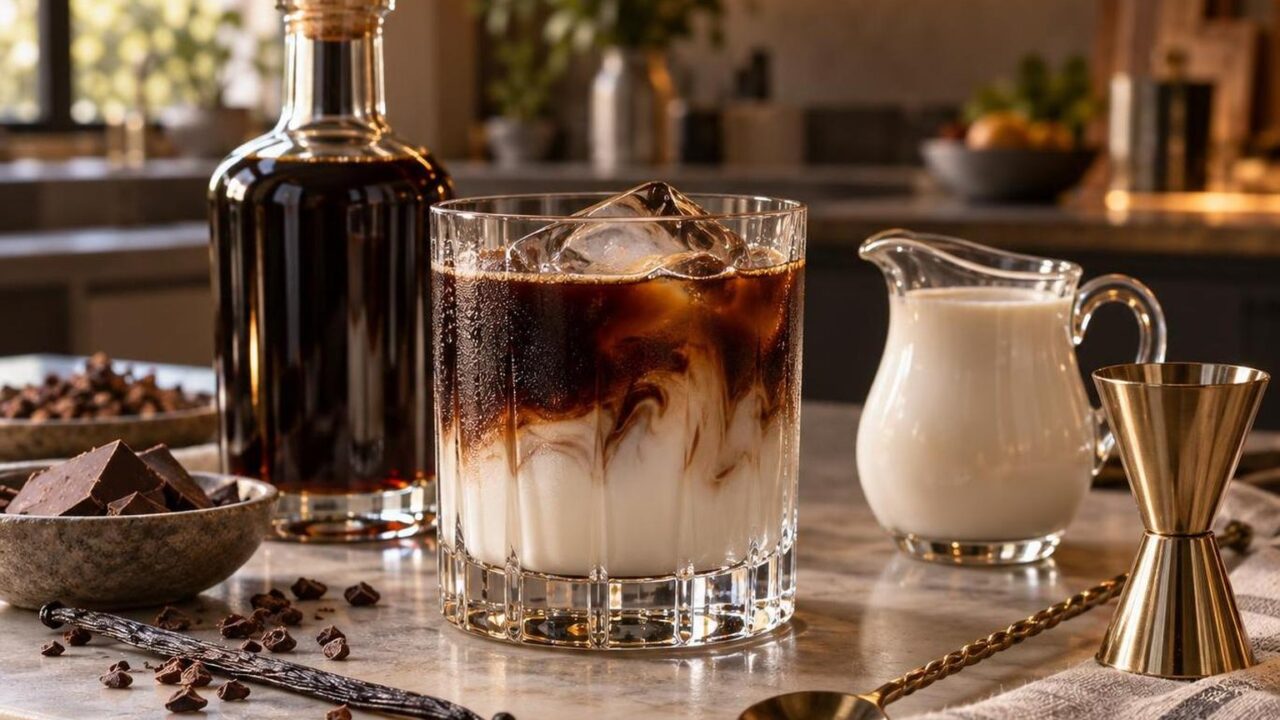
black n white drink is a two-tone layered cocktail built to show sharp contrast between a dark base and a pale cream or liqueur layer. The appeal is visual first, then texture: dense, sweet ingredients sit below lighter dairy or clear spirits.
Most versions use careful pouring over the back of a spoon so the layers stay distinct.
Ingredient density matters more than shaking skill; heavier syrups, chocolate liqueurs, or dark spirits sink, while cream-based ingredients float when poured slowly.
This guide explains common black-and-white builds, how layering works, glassware choices, flavor balance, and serving tips. It also covers simple mistakes that turn a striped drink cloudy, flat, or overly sweet.

What Black N White Drink Means
“Black N White” refers to a classic Hong Kong–style drink combining black coffee and white milk tea, though the term also applies to cocktails mixing dark and light spirits or layered beverages with contrasting visual halves.
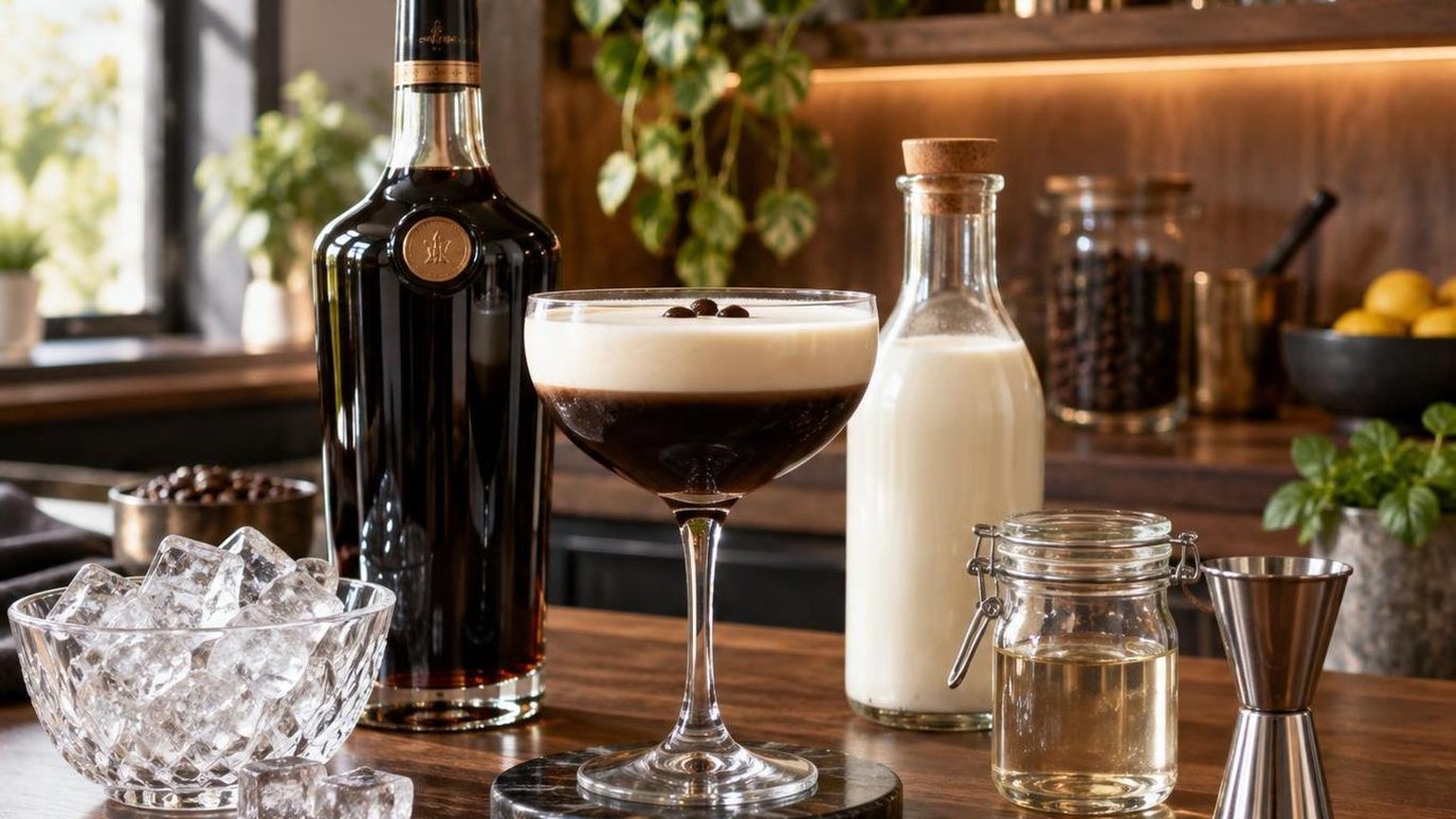
The original version traces to Hong Kong’s cha chaan teng (tea restaurants), where it emerged in the 1950s as yuanyang (鴛鴦).
The “black” component is strong drip coffee; the “white” is Hong Kong milk tea made with evaporated milk and Ceylon tea leaves.
Core Composition of the Classic Version
| Component | “Black” Layer | “White” Layer |
| Base liquid | Brewed black coffee | Hong Kong milk tea |
| Typical ratio | 30–40% of total volume | 60–70% of total volume |
| Caffeine per 240 ml serving | ~95 mg (coffee portion) | ~47 mg (tea portion) |
| Calories (unsweetened) | ~2 kcal | ~40 kcal (evaporated milk) |
| Serving temperature | Hot (70–80 °C) or iced | Hot (70–80 °C) or iced |
A standard 350 ml serving of yuanyang-style Black N White delivers roughly 110–142 mg total caffeine — more than a single espresso shot (63 mg) but less than a 350 ml drip coffee (175 mg).
Other Drinks Using the Name
- Black and White Russian: A cocktail pairing Kahlúa (dark coffee liqueur, 20% ABV) with cream or milk, created around 1949.
- Black and White milkshake: Chocolate syrup blended with vanilla ice cream, a New York diner staple since the 1920s.
- Layered stout-and-cream cocktails: Guinness (dark, 4.2% ABV) floated over Baileys (light, 17% ABV), often called a “Black and White” or “Half and Half.”
The unifying concept across all versions is visual contrast — a dark layer against a light one — served either blended or stratified. Density differences between ingredients determine whether layers stay separated.
In Hong Kong alone, cha chaan tengs serve an estimated 2.5 million cups of yuanyang daily across roughly 1,600 establishments. The drink holds Intangible Cultural Heritage status in Hong Kong since 2014, cementing its place beyond a casual menu item.
Classic Black And White Cocktail Builds
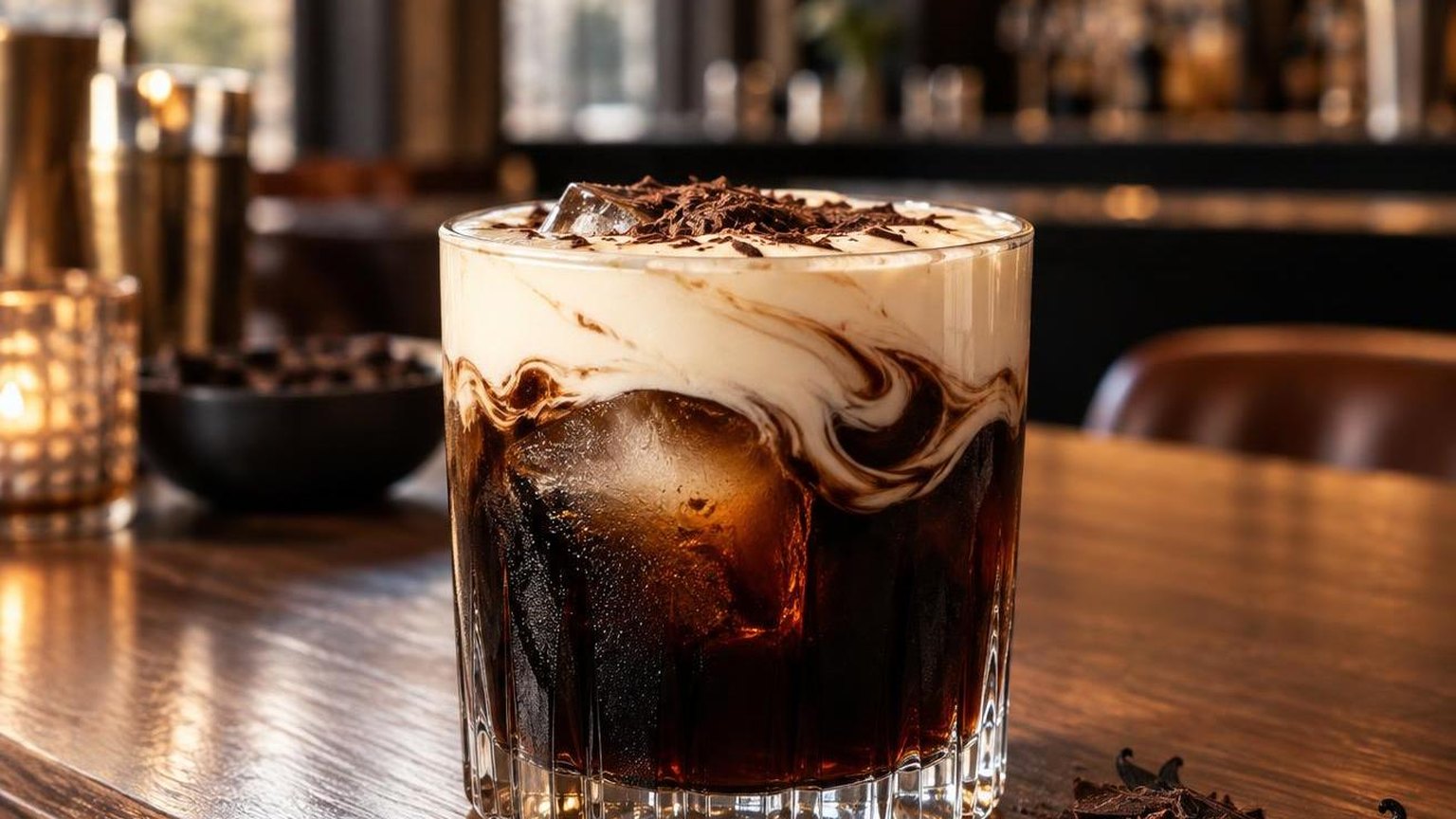
Black and white drinks exploit the visual contrast between dark spirits or liqueurs and light dairy, cream, or clear bases. Three cocktails dominate this category, each with a distinct flavor architecture and ratio structure.
Black Russian and White Russian
The Black Russian dates to 1949, created by bartender Gustave Tops at the Hotel Metropole in Brussels. It uses two ingredients in a strict 2:1 ratio.
| Cocktail | Vodka | Coffee Liqueur | Heavy Cream | ABV (approx.) |
| Black Russian | 50 ml (1.7 oz) | 25 ml (0.85 oz) | None | 28–32% |
| White Russian | 50 ml (1.7 oz) | 25 ml (0.85 oz) | 25 ml (0.85 oz) | 20–24% |
The White Russian adds heavy cream or whole milk floated on top, reducing perceived alcohol burn by roughly 25%. Both are built directly in an Old Fashioned glass over ice — no shaking required.
Black and White Martini
This variation combines crème de cacao (dark) with vanilla vodka at a 1:2 ratio. Standard spec calls for 30 ml dark crème de cacao, 60 ml vanilla vodka, and 15 ml half-and-half, shaken with ice and strained into a chilled coupe.
Black and Tan (Non-Alcoholic Adaptation)
A zero-proof version layers cold brew coffee concentrate over steamed milk in a 1:1 ratio, typically 120 ml each. The density difference between coffee (1.005 g/ml) and frothed milk (roughly 0.55 g/ml) creates a visible two-tone separation.
Build Technique Tips
- Pour the lighter liquid first when layering — cream or milk goes in before the denser coffee liqueur is floated for an inverted build
- Use the back of a bar spoon held 5 mm above the surface to slow the pour and maintain separation
- Chill glassware to 2–4 °C for at least 10 minutes to slow ingredient diffusion
- Opt for cream with 35% fat content or higher for the sharpest visual contrast
Each build prioritizes visual drama alongside balanced flavor, making them reliable choices for home entertaining and professional bar programs alike.
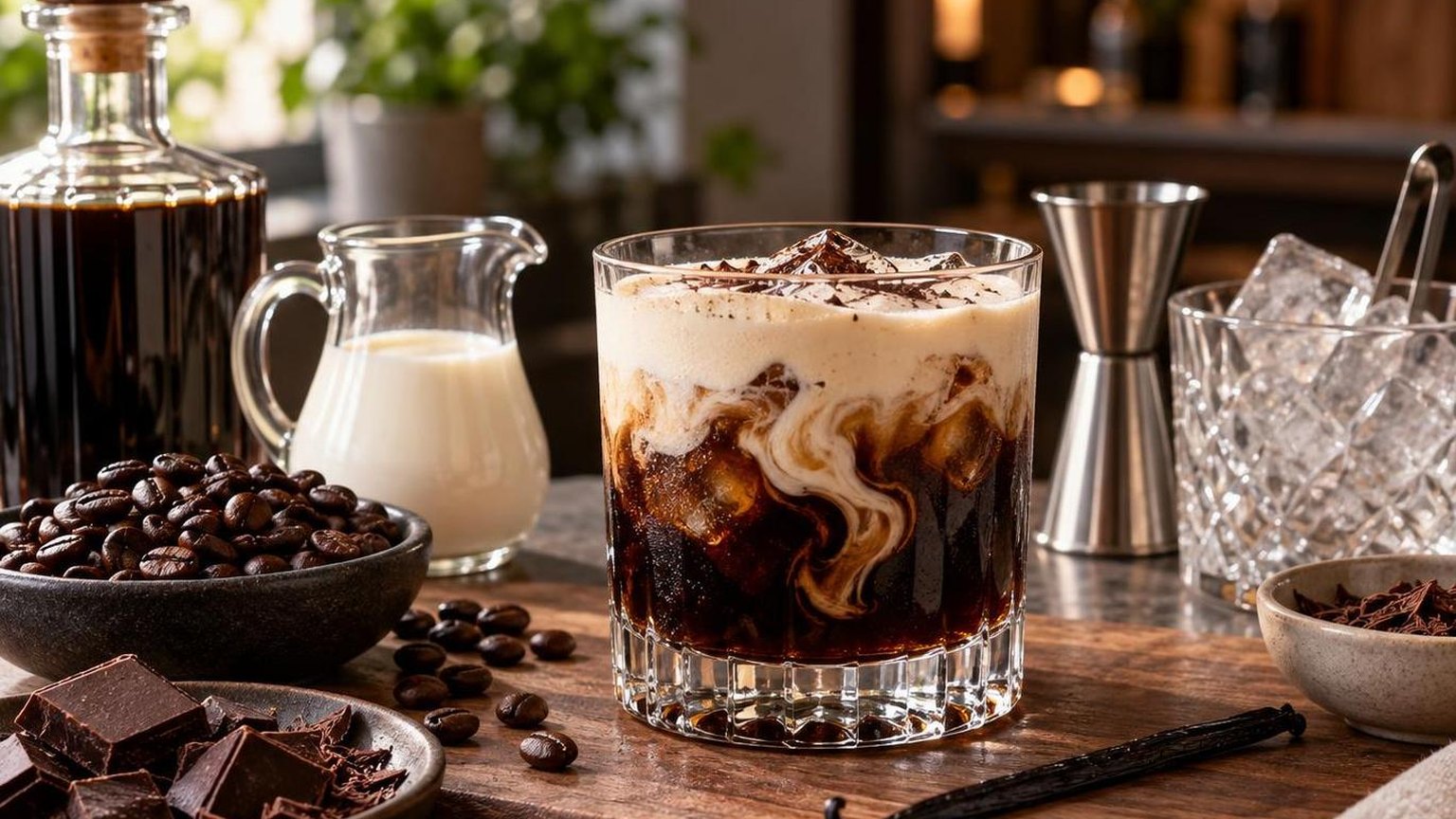
Layered Black N White Shot
The Black N White shot relies on density differences between liqueurs to create a visually striking two-tone layer in a 1.5 oz shot glass. Executed properly, the dark layer sits beneath a clean white float with zero mixing at the boundary.
Standard Recipe Specifications
The bottom layer uses Kahlúa (coffee liqueur) at a specific gravity of approximately 1.17. The top layer uses Baileys Irish Cream at roughly 1.05 specific gravity.
| Layer | Ingredient | Amount | ABV | Specific Gravity |
| Bottom (dark) | Kahlúa | 0.75 oz | 20% | ~1.17 |
| Top (white) | Baileys Irish Cream | 0.75 oz | 17% | ~1.05 |
The heavier Kahlúa sinks and stays below because its higher sugar content—approximately 49 g per 100 mL—gives it greater density than Baileys.
Layering Technique
- Pour Kahlúa directly into the shot glass first.
- Position a bar spoon inverted, with the back touching the inside glass wall just above the Kahlúa surface.
- Pour Baileys over the spoon at a rate of roughly 5 mL per second—slow enough to prevent turbulence.
- Hold the pour bottle no more than 1 inch above the spoon to minimize kinetic energy on impact.
Temperature matters. Chilling both liqueurs to 4°C (39°F) increases viscosity and slows diffusion at the boundary, keeping the layers distinct for 3–5 minutes longer than room-temperature pours.
Common Variations
Some bars substitute Tia Maria (26.5% ABV, specific gravity ~1.15) for Kahlúa to achieve a slightly less sweet bottom layer with a more bitter espresso character.
A “Reverse Black N White” pours Baileys first, then sinks Kahlúa through it using a straw or syringe. This produces an identical visual result but requires more precision.
The finished shot delivers approximately 78 calories and 2.8 g of alcohol per serving.
Consumed in one tilt, the drinker tastes the cream first, followed by a rich coffee finish—a deliberate sensory sequence that makes this shot a staple on dessert-cocktail menus worldwide.
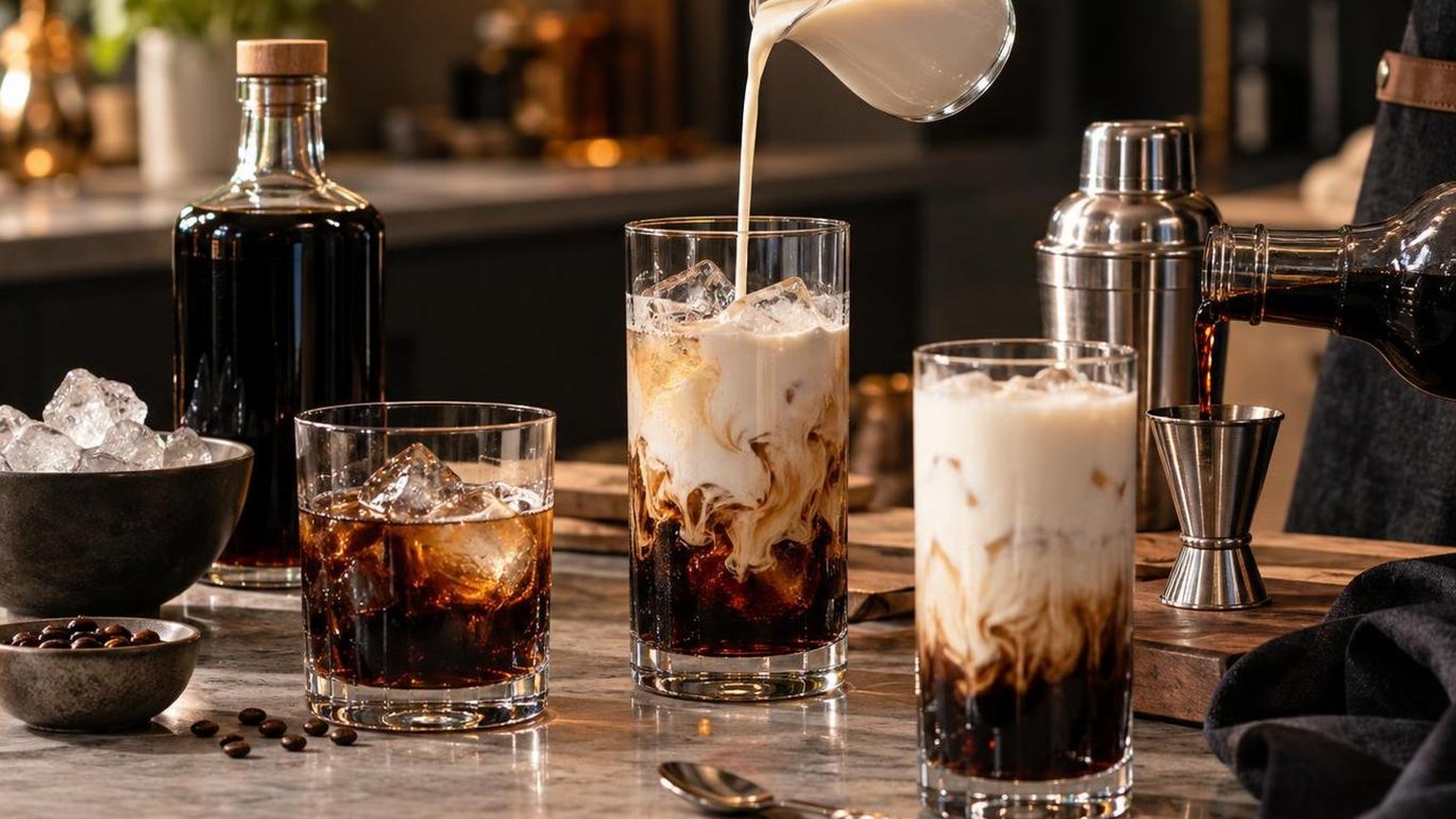
Black N White Russian Variation
The Black and White Russian pairing represents one of cocktail culture’s most elegant contrasts.
Both drinks share a vodka-coffee liqueur base, but the addition of heavy cream transforms the Black Russian into its White counterpart, creating a fundamentally different drinking experience.
Origins and Core Recipes
Belgian bartender Gustave Tops created the Black Russian in 1949 at the Hotel Metropole in Brussels. He mixed vodka with Kahlúa for a visiting American ambassador during the early Cold War era.
The White Russian emerged roughly a decade later, appearing in print by the early 1960s. Its cultural status exploded after Jeff Bridges ordered it repeatedly as “The Dude” in the 1998 film The Big Lebowski.
Side-by-Side Comparison
| Attribute | Black Russian | White Russian |
| Vodka | 50 ml (2 oz) | 50 ml (2 oz) |
| Coffee Liqueur | 25 ml (1 oz) | 25 ml (1 oz) |
| Heavy Cream | None | 25 ml (1 oz) |
| Approx. Calories | 150–160 | 270–300 |
| ABV (estimated) | 28–30% | 20–22% |
| Glassware | Old Fashioned | Old Fashioned |
| IBA Official | Yes | Yes |
The “Black N White” Layered Serve
Many cocktail bars serve both versions together as a split-glass or layered presentation. The technique involves pouring the Black Russian base first, then floating cream over the back of a bar spoon to create a visible two-tone effect.
- Use cream chilled to 4°C (39°F) for optimal float separation
- Pour cream slowly at a rate of roughly 5 ml per second over an inverted spoon
- Kahlúa’s density (1.17 g/ml) anchors the dark layer beneath the lighter cream (1.01 g/ml)
- Stir before drinking to blend, or sip through layers for a gradual flavor transition
Substitution Notes
Tía Maria (26.5% ABV) can replace Kahlúa (20% ABV), producing a slightly drier, more intensely roasted profile. For dairy-free versions, oat milk barista blends at 1.04 g/ml density float nearly as cleanly as heavy cream.
Guinness And Champagne Black Velvet
The Black Velvet cocktail combines Guinness Draught stout with Champagne in equal parts, creating a striking two-tone drink that marries Irish brewing tradition with French winemaking prestige.
Otto von Bismarck reportedly enjoyed a similar combination in the 19th century.
London’s Brooks’s Club claims credit for the drink’s origin in 1861. Bartenders allegedly mixed stout and Champagne to mourn Prince Albert’s death, the black stout symbolizing the dark armbands worn by grieving Londoners.
Standard Black Velvet Recipe
- 110 ml (roughly 4 oz) chilled Guinness Draught
- 110 ml (roughly 4 oz) chilled Brut Champagne
- Pour Champagne first into a flute or pilsner glass
- Float Guinness slowly over an inverted spoon to create distinct layers
The layering technique matters. Guinness Draught has a lower carbonation level (approximately 1.2 volumes CO₂) compared to Champagne’s 5–6 atmospheres of pressure, which helps the stout sit atop the sparkling wine.
Flavor and Composition Breakdown
| Component | Guinness Draught | Brut Champagne |
| ABV | 4.2% | 12–12.5% |
| Calories per 110 ml | ~42 kcal | ~88 kcal |
| Dominant flavors | Roasted barley, coffee, dark chocolate | Citrus, brioche, green apple |
| Sugar (g per 110 ml) | ~0.5 g | ~1.3 g (Brut) |
The finished cocktail lands around 8% ABV and approximately 130 calories per 220 ml serving. Bitterness from roasted barley balances the Champagne’s acidity and yeasty autolytic notes.
Variations Worth Knowing
A “Poor Man’s Black Velvet” substitutes sparkling cider for Champagne—a version sometimes called a Black Velveteen. Using Prosecco instead of Champagne reduces cost by roughly 60–70% per glass.
Temperature is critical. Both components should be chilled to 3–5°C (37–41°F) before mixing. Warm Guinness foams excessively, destroying the layered visual contrast that defines the drink’s dramatic black-and-gold appearance.
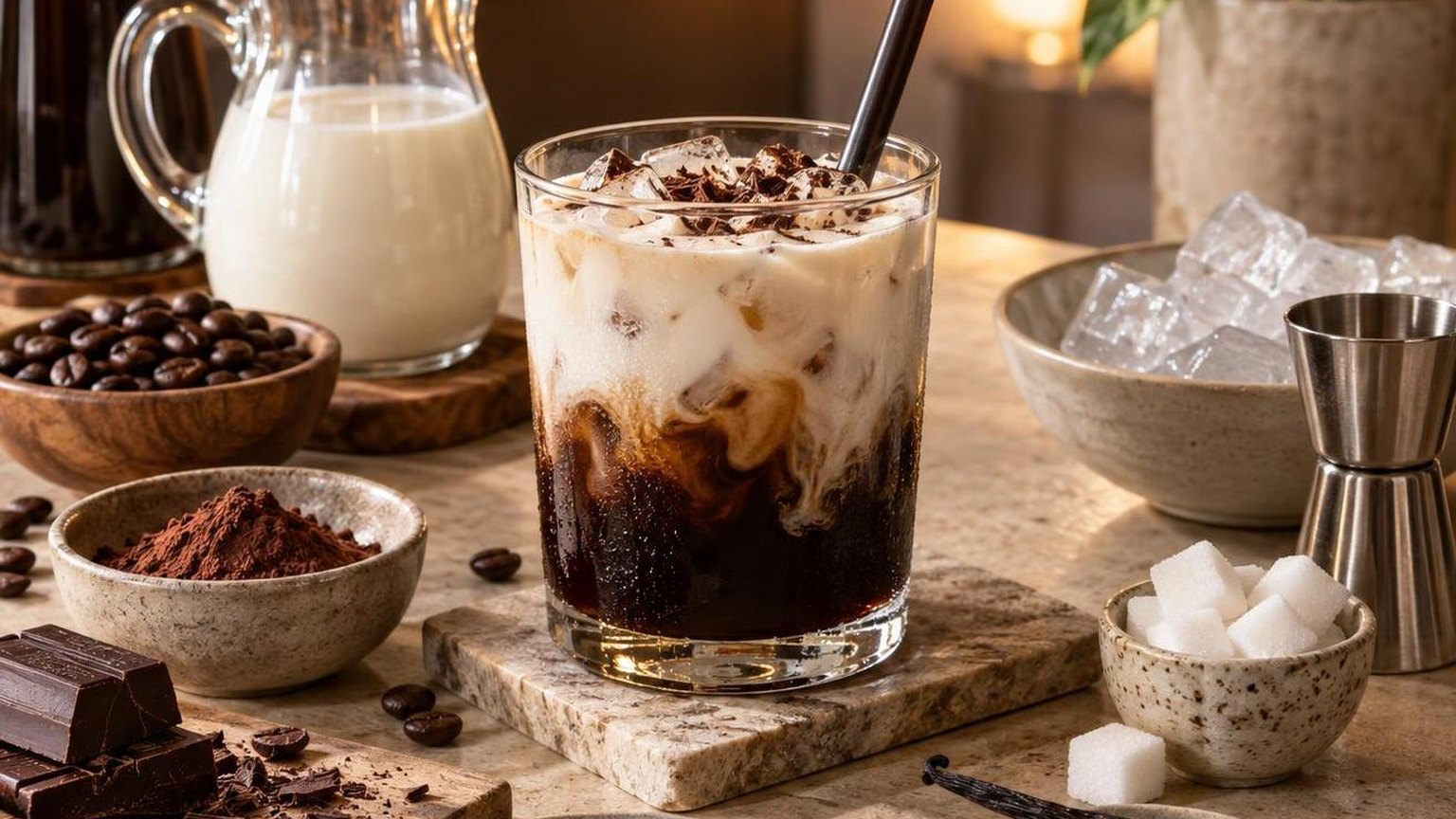
Ingredients That Create Two Tone Contrast
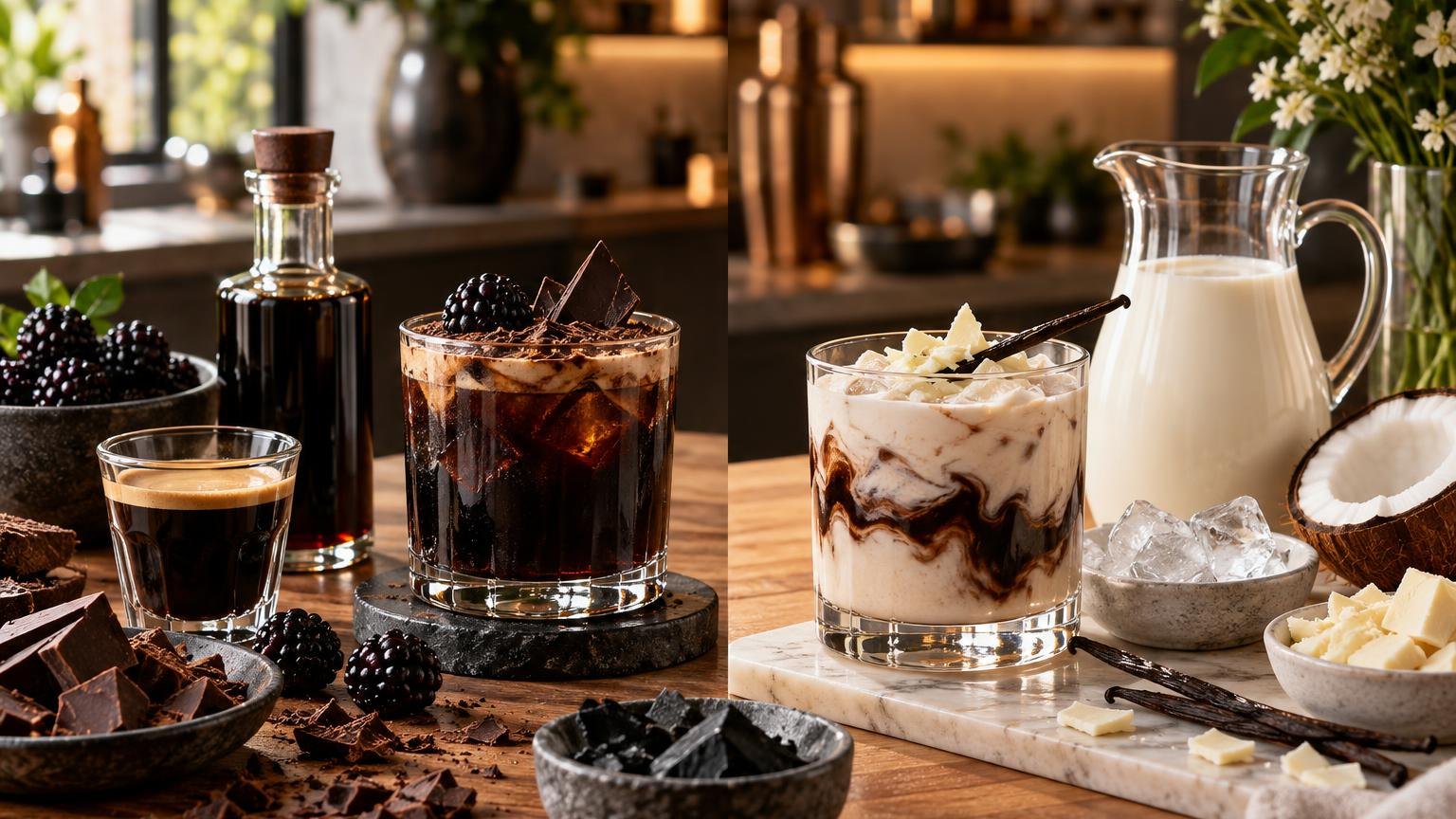
Two-tone black and white drinks rely on density differences between layers. Liquids with higher sugar content sink below lighter ones, creating visible separation that holds for 10–15 minutes in a properly built drink.
Dark Layer Components
The black layer typically uses ingredients with high specific gravity. Coffee concentrate, activated charcoal, dark rum, or blackcurrant syrup all serve this purpose effectively.
| Ingredient | Specific Gravity | Sugar Content (g/100 mL) |
| Coffee syrup | 1.30–1.33 | 65–67 |
| Blackcurrant cordial | 1.18–1.22 | 45–55 |
| Kahlúa (20% ABV) | 1.13 | 46.5 |
| Activated charcoal water | 1.00–1.01 | 0 |
| Squid ink (culinary grade) | 1.02–1.04 | 0 |
Activated charcoal produces deep black color at just 1–2 grams per 250 mL serving. It carries almost no flavor, making it purely a visual agent.
White Layer Components
The white layer needs opacity and lower density than the dark base. Dairy and coconut products deliver both qualities reliably.
- Whole milk — specific gravity of 1.028–1.035, provides clean white opacity
- Coconut cream — fat content around 20–25%, floats above denser syrups
- Heavy cream — 36–40% fat, lowest density at approximately 0.99–1.01
- Oat milk — specific gravity of 1.03, slightly translucent but vegan-friendly
Heavy cream with its high fat percentage floats most reliably. Fat is less dense than water, giving cream a natural advantage for top-layer positioning.
Layering Technique
Pour the densest liquid first. Then rest a bar spoon upside down against the glass interior, letting the lighter liquid flow gently over the back of the spoon onto the surface.
Temperature matters: cold liquids hold layers longer. A 4°C (39°F) serving temperature maintains separation roughly twice as long as room-temperature pours at 22°C (72°F).
A density gap of at least 0.05 g/mL between layers produces the sharpest visible contrast. Smaller gaps result in rapid blending within 2–3 minutes.
Serving Black N White Drinks Cleanly
A black n white drink relies on density separation between dark and light layers. Achieving crisp visual contrast demands precise pouring technique, correct ingredient temperatures, and proper glassware.
Even a 2°C temperature mismatch can cause premature mixing.
Understanding Density Layering
Layered drinks hold their form because denser liquids sink. Sugar content drives density more than color does. Milk with added sweetener registers around 1.035 g/mL, while unsweetened black coffee sits near 1.001 g/mL.
| Layer | Typical Density (g/mL) | Position |
| Sweetened condensed milk | 1.28–1.33 | Bottom |
| Whole milk (chilled) | 1.028–1.035 | Middle |
| Espresso or black coffee | 1.001–1.006 | Top |
| Cold brew concentrate | 1.002–1.010 | Top |
Pouring Technique
Pour the densest ingredient first. Let it settle for 5–10 seconds. Then pour the lighter liquid over the back of a bar spoon held 1 cm above the lower layer’s surface. Maintain a flow rate under 30 mL per second to prevent turbulence.
- Tilt the glass at a 45° angle during the pour to reduce impact force
- Use a spoon with a flat, disc-shaped bowl—round spoons deflect liquid unevenly
- Pour espresso at 20–25°C rather than 90°C to minimize convection currents that break layers
Glassware Selection
Tall, narrow glasses with a capacity of 240–360 mL preserve layers best. Wide-mouth glasses expose more surface area, accelerating diffusion by up to 40% compared to a glass half the diameter.
Clear, smooth-walled borosilicate or tempered soda-lime glass shows the black-white contrast most sharply. Textured or frosted glass obscures the separation line.
Maintaining the Layers
Serve within 90 seconds of assembly. Brownian diffusion begins immediately, and visible blurring appears after roughly 3–4 minutes at room temperature.
Colder drinks (4–7°C) hold layers approximately twice as long because lower temperatures slow molecular movement.
Insert straws gently along the glass wall rather than through the center. A straw plunged directly downward displaces liquid and collapses the visual divide instantly.
Questions Readers Ask
What is a Black and White drink?
A Black and White is a classic American soda fountain drink made by combining chocolate syrup with vanilla ice cream and milk, then blending or shaking until smooth.
It originated in New York City drugstore counters in the early 1900s and remains a staple at old-school diners across the Northeast. The name refers to the visual contrast between the dark chocolate and white vanilla components.
How does a Black and White differ from a regular chocolate milkshake?
A standard chocolate milkshake uses chocolate ice cream as its base, producing a uniformly chocolate flavor throughout.
The Black and White specifically pairs chocolate syrup (typically 2–3 tablespoons of Hershey’s or Fox’s U-Bet) with vanilla ice cream.
Creating a layered flavor where the vanilla sweetness and chocolate bitterness remain distinct rather than fully blended.
What is the difference between a Black and White and a Black Cow?
A Black Cow is a float made by pouring root beer over vanilla ice cream, while a Black and White is a blended milkshake combining chocolate syrup with vanilla ice cream and milk.
The Black Cow contains carbonation and no chocolate, whereas the Black and White has no carbonation and relies on the chocolate-vanilla contrast for its identity.
Can you make a Black and White drink with alcohol?
Yes — a boozy Black and White typically adds 45–60 ml of a dark spirit such as Kahlúa, crème de cacao, or vanilla vodka to the classic chocolate-syrup-and-vanilla-ice-cream base.
Some wine bars and cocktail lounges serve an upscale version using chocolate liqueur with a white Russian foundation (vodka, Kahlúa, and cream). Blending with crushed ice turns it into a frozen dessert cocktail at roughly 12–14% ABV.
What is the proper ratio of ingredients for a classic Black and White?
The traditional soda-fountain recipe calls for 2–3 large scoops (about 180 g) of vanilla ice cream, 2 tablespoons of chocolate syrup, and ¼ cup (60 ml) of whole milk.
These proportions yield a thick, spoonable consistency; adding milk to ½ cup thins it to a drinkable shake. The chocolate syrup should be added last and only partially mixed to preserve visible dark-and-light swirling.
Where did the Black and White drink originate?
The drink traces back to early 20th-century soda fountains in New York City, particularly in Manhattan and Brooklyn, where “Black and White” appeared on menus alongside egg creams and malteds by the 1920s.
Lexington Candy Luncheonette, operating at 1226 Lexington Avenue since 1925, is one of the last original counters still serving the classic version. The term spread regionally but remains most recognized in the New York tri-state area.
Both share a New York City origin and the same flavor principle — pairing chocolate and vanilla on equal footing — but they developed independently.
The Black and White cookie (half vanilla fondant icing, half chocolate fondant icing on a cakey base) became a bakery icon by the 1900s, while the drink emerged from the soda fountain tradition.
Glaser’s Bake Shop, which operated in Manhattan’s Upper East Side from 1902 to 2018, was famous for both items, reinforcing the cultural link between them.
Related Guides
- Can You Be Allergic To Tequila? The Truth You Didn't Know
- How To Remove Wine Labels?
- Does Ginger Ale Have Caffeine? In-depth Answer
- Why Do Wine Glasses Have Stems? Get Answer Now
- What Is The Most Sober Country?
- How Many Mls In 8 Ounces?
- How Many Cups In A Pound? – 2026
- How Many Ounces In 2.1 Quarts? The Complete, Practical Guide You Can Trust
- What Does an Aerator Do for Wine? – The Complete Expert Guide to Understanding Wine Aeration
- All Blog Guides
- National Institute on Alcohol Abuse and Alcoholism – "What Is a Standard Drink?" (2023)
- Centers for Disease Control and Prevention – "Dietary Guidelines for Alcohol" (2022)
- U.S. Department of Agriculture FoodData Central – Distilled Spirits Nutrient Data (2024)
- National Center for Biotechnology Information / PubMed – "Alcohol Metabolism: An Update" (2007)
- Harvard T.H. Chan School of Public Health – "Alcohol: Balancing Risks and Benefits" (2023)
- Dietary Guidelines for Americans, USDA & HHS (2020-2025)
- Scotch Whisky Association – "What Is Scotch Whisky?" (2024)
- Difford's Guide – Black and White Cocktail Recipe & History (2024)