
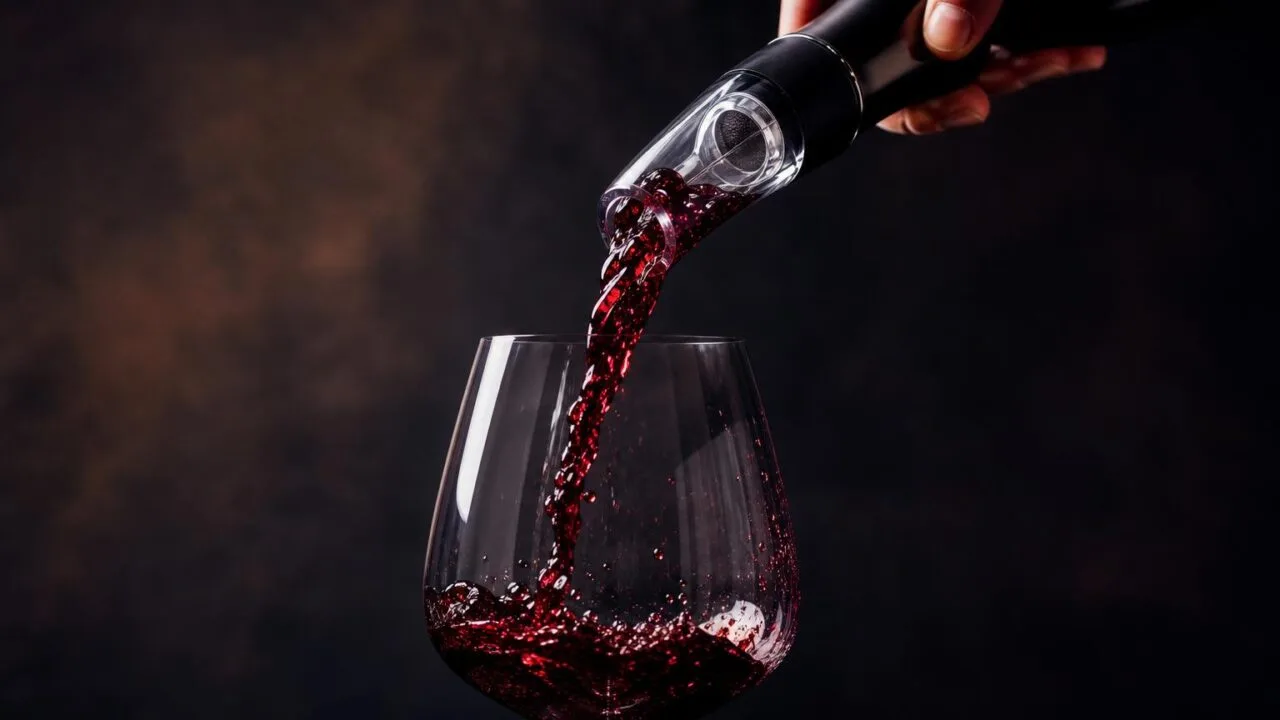
We have aerated thousands of pours across our tasting sessions, from $12 grocery-store Cabs to $80 Bordeaux blends. The difference a good aerator makes is not subtle — it is immediate and measurable.
This guide answers what does an aerator do for wine with the full science, a breakdown by wine style, a comparison against decanting, and practical advice on how to use one correctly.
What a Wine Aerator Actually Does: The Science in Plain English
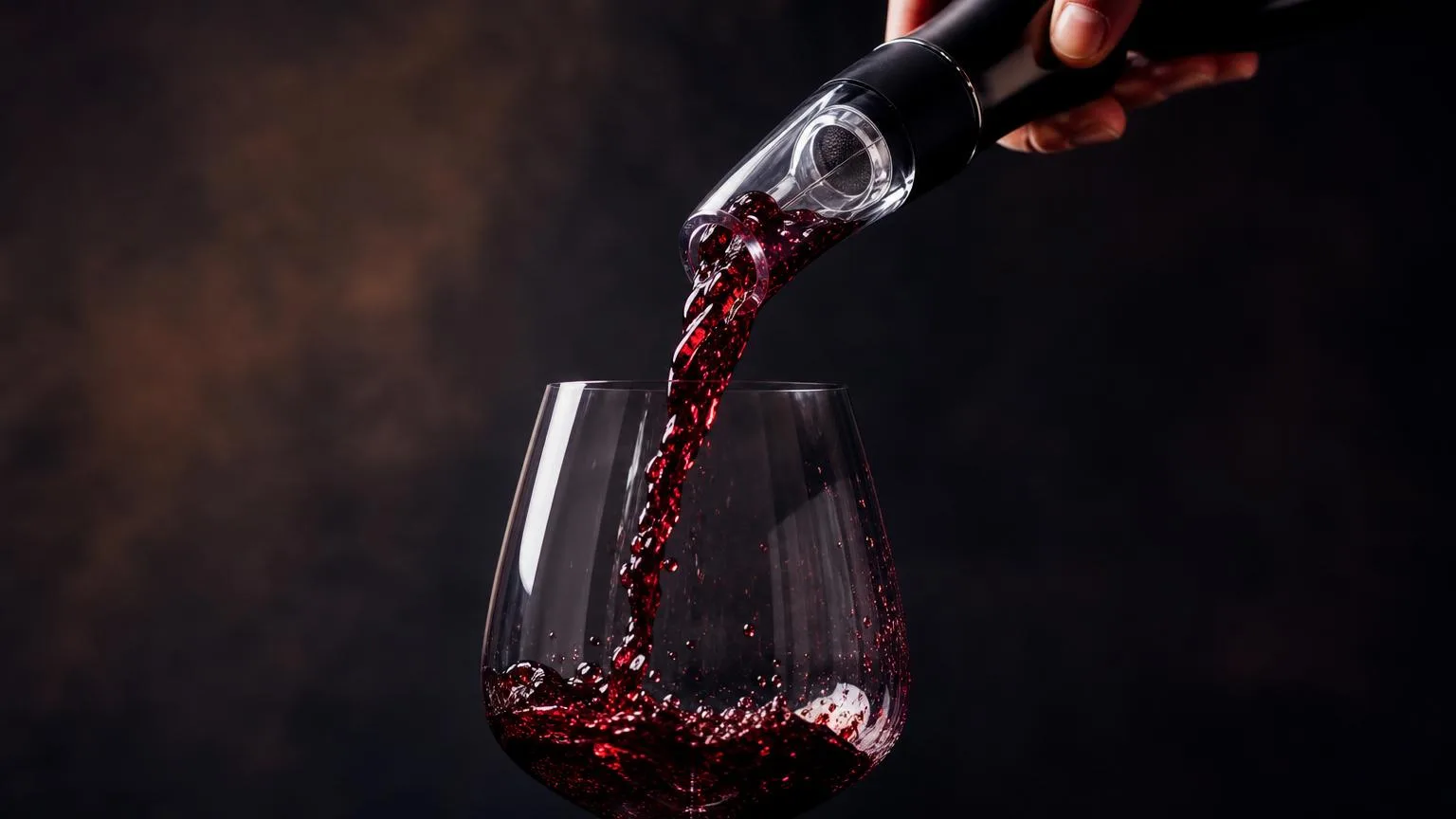
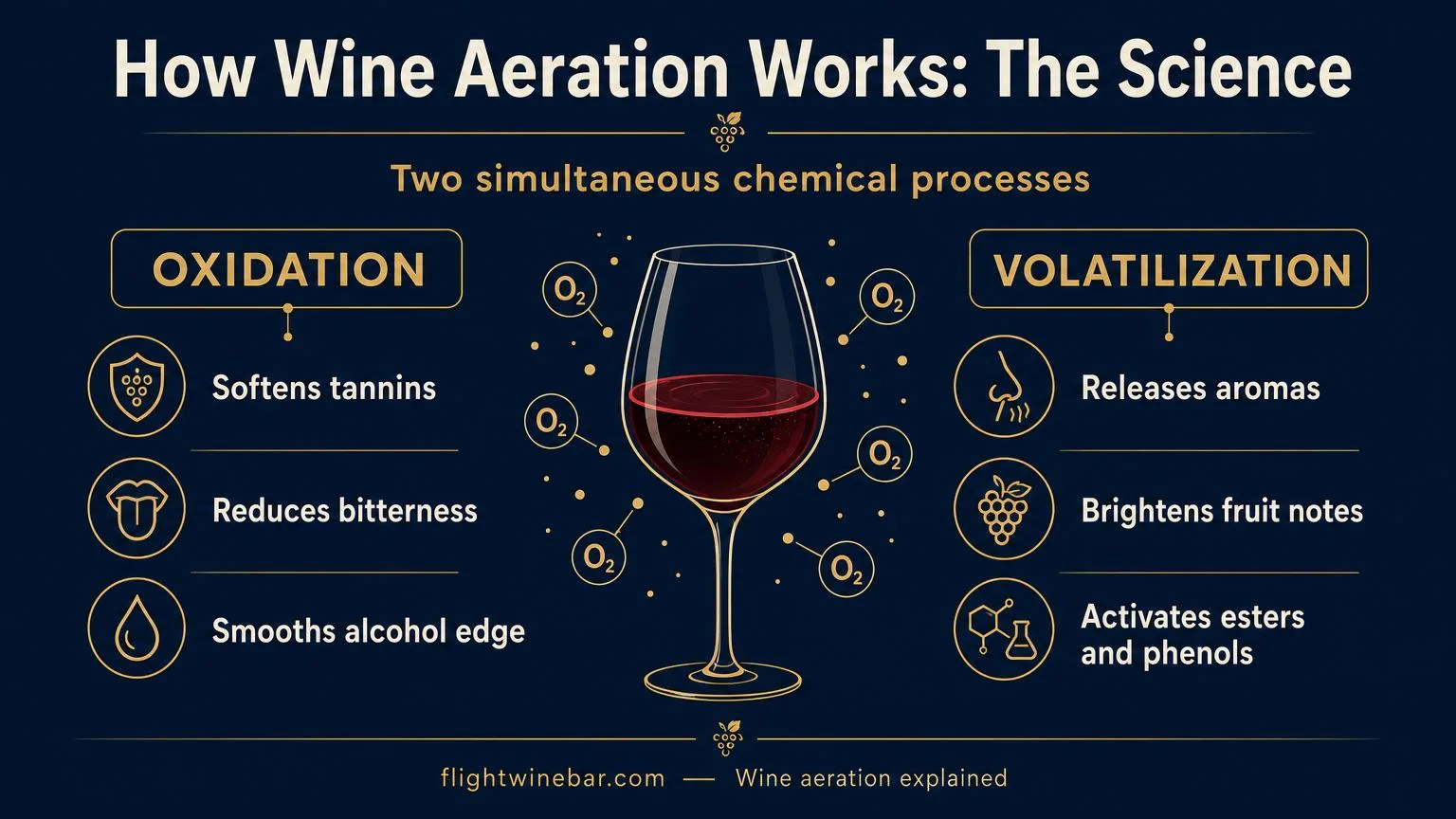
A wine aerator forces oxygen into the wine as it pours, triggering two simultaneous chemical processes: oxidation and volatilization.
Oxidation is the reaction between wine compounds and oxygen. In the short term, controlled oxidation softens tannins, reduces bitterness, and smooths harsh alcohol edges.
The same process that browns a sliced apple works beneficially on wine — but only for a few minutes, not hours. An aerator delivers exactly that short, beneficial window of controlled exposure.
Volatilization is the release of aromatic compounds into the air above the glass. Wine contains hundreds of volatile esters, phenols, aldehydes, and terpenes that stay trapped until oxygen activates them.
Once released, fruit notes brighten, floral elements surface, and the aroma becomes layered and complex. This is why an aerated wine smells dramatically different from the same wine poured straight from the bottle.
An aerator achieves both processes simultaneously by increasing the surface area of wine exposed to air and injecting microscopic oxygen bubbles into the liquid.
The result is equivalent to 30–60 minutes of breathing in a decanter, delivered in the few seconds it takes to pour a glass. That is the core value proposition of every aerator on the market.
| What changes | Before aeration | After aeration |
|---|---|---|
| Tannins | Grippy, drying, harsh | Soft, smooth, integrated |
| Aroma | Closed, muted, tight | Open, layered, expressive |
| Fruit flavors | Subdued, one-dimensional | Bright, rich, pronounced |
| Alcohol | Hot, sharp on the finish | Softened, better integrated |
| Texture | Rough, angular | Silky, round, full-bodied |
| Finish | Short, abrupt | Long, smooth, lingering |
The science is well-documented. The USDA Agricultural Research Service confirms that controlled oxygen exposure alters phenolic compounds in ways that improve perceived quality.
The TTB (Alcohol and Tobacco Tax and Trade Bureau) also recognizes aeration as a standard winemaking and serving practice, which is why you see aerators in professional tasting rooms worldwide.
For a deeper look at how vessel choice affects wine flavor, see our guide on the best wine aerators and our wine decanter roundup.
Which Wines Benefit Most From Aeration — and Which to Skip
Not every wine improves with aeration. The benefit depends on tannin level, age, and structure.
Benefit the most:
- Young, tannic reds — Cabernet Sauvignon, Syrah/Shiraz, Malbec, Barolo, Bordeaux blends. These wines are tight and closed when young. Aeration unlocks them dramatically.
- High-alcohol full-bodied reds — the alcohol edge softens noticeably after aeration.
- Mid-priced red blends — often show the biggest value-for-money improvement.
- Oaked Chardonnay — aeration opens up the buttery, vanilla notes that can be muted straight from the bottle.
Moderate benefit:
- Medium-bodied reds — Merlot, Grenache, Sangiovese. Benefit is real but less dramatic than bold reds.
- Pinot Noir — delicate; aerate briefly (5–10 minutes max) or just swirl in the glass.
Skip aeration entirely:
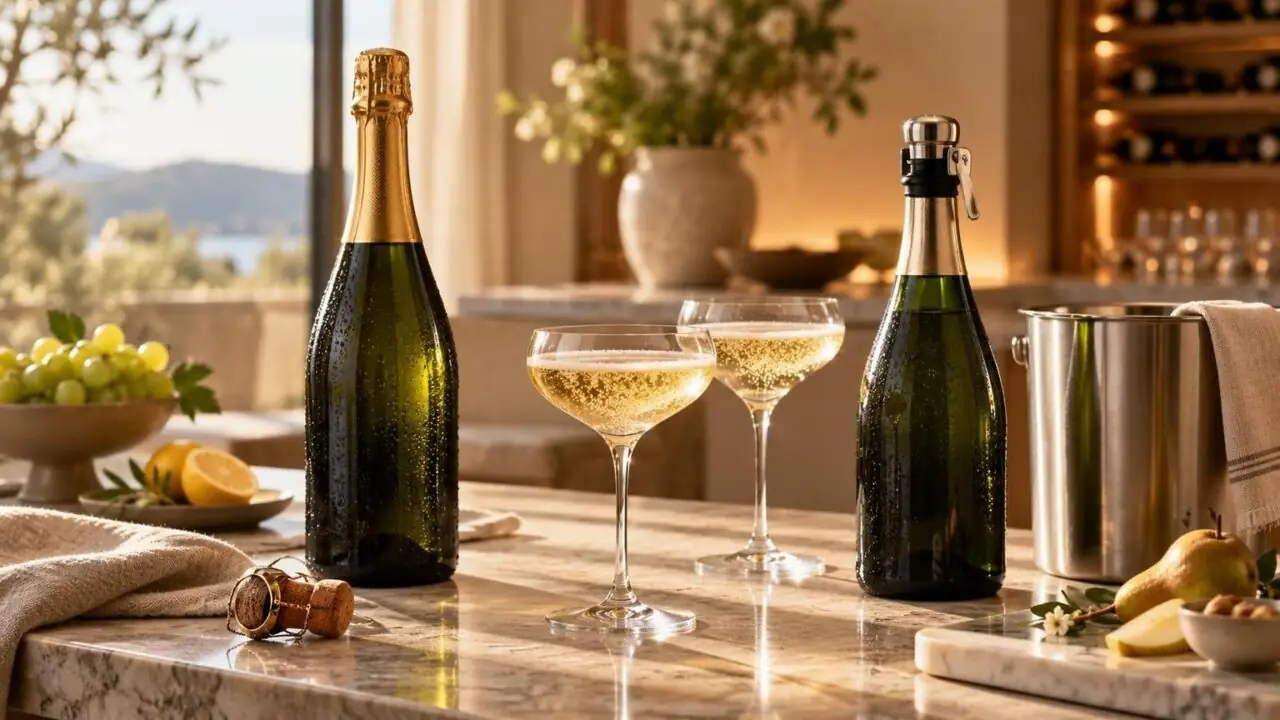
- Sparkling wine and Champagne — aeration destroys carbonation. Never aerate.
- Aged fine wines (15+ years) — these are fragile. Aggressive aeration strips complex tertiary aromas. Decant gently instead.
- Light whites and rosé — minimal benefit; risk of over-oxidation.
- Sweet dessert wines — the sugar masks any tannin benefit; aeration adds nothing.
For wine storage that preserves these qualities before you pour, see our best wine stoppers and wine preservation systems guides.
Aerator vs. Decanter vs. Letting Wine Breathe: What Is the Real Difference?
These three methods all expose wine to oxygen, but they work differently and suit different situations.
Aerator: Forces oxygen into wine in seconds during the pour. Best for everyday drinking when you want immediate results. Works on any bottle, no prep time, easy to clean.
Decanter: Pours wine into a wide-bottomed vessel and lets it breathe over 30–90 minutes. Better for aged wines that need gentle, gradual aeration.
It also separates sediment from older bottles. Our decanter guide covers the best options for different wine styles.
Letting wine breathe in the glass: Simply uncorking and waiting, or swirling in the glass. The slowest method — effective for light reds and whites but takes 15–30 minutes to show meaningful change in bold reds.
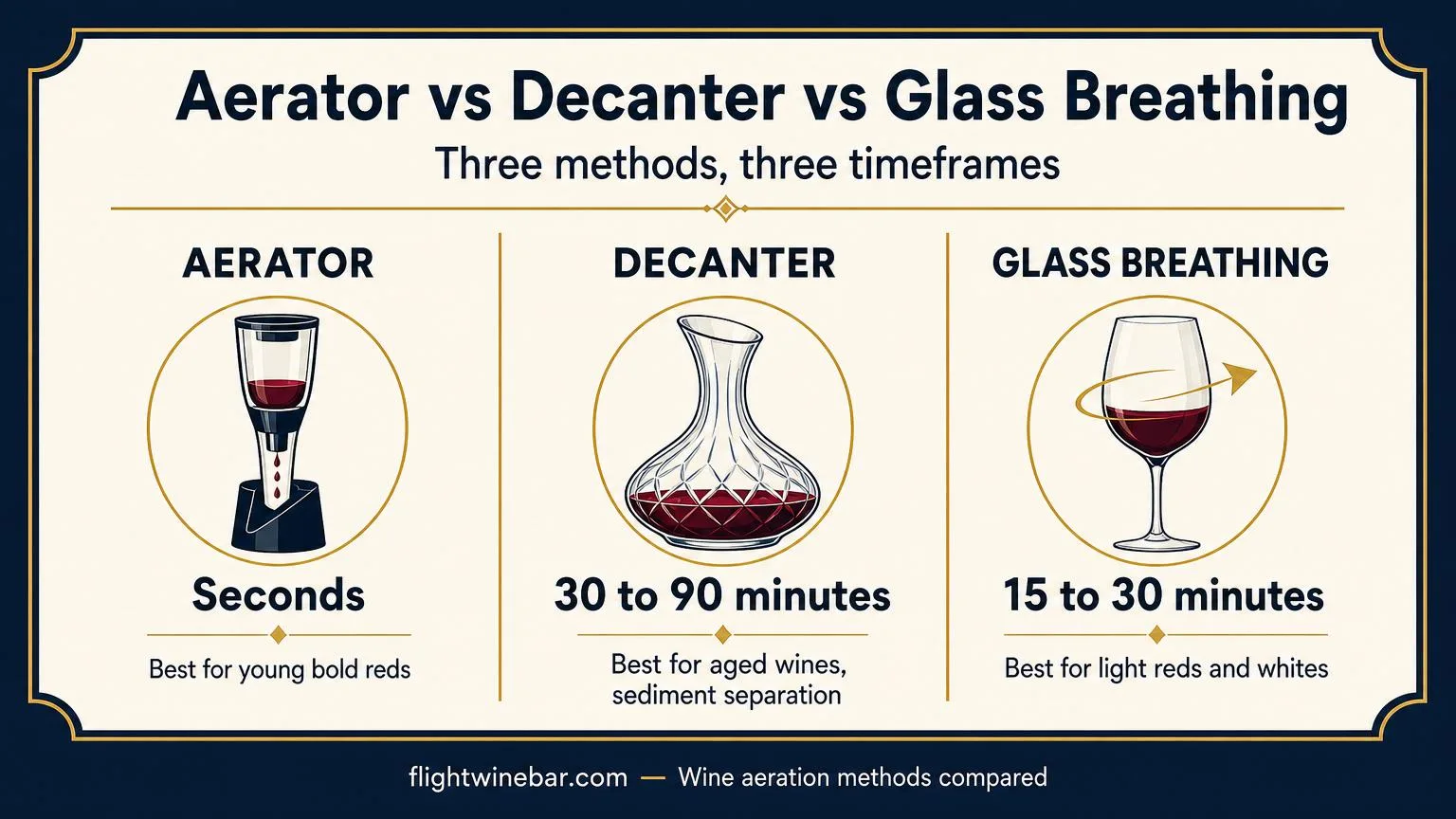
| Method | Time needed | Best for | Limitations |
|---|---|---|---|
| Aerator | Seconds | Young bold reds, everyday drinking | Too aggressive for aged/delicate wines |
| Decanter | 30–90 min | Aged wines, special occasions | Requires planning, harder to clean |
| Glass breathing | 15–30 min | Light reds, whites | Slow, minimal effect on bold reds |
Research from Cornell’s Department of Food Science on wine oxidation kinetics supports the principle that rapid surface-area exposure achieves faster phenolic softening than slow passive breathing.
The National Institute on Alcohol Abuse and Alcoholism also notes that serving conditions affect how alcohol is perceived — which aligns with the aerator’s role in softening the alcohol edge on bold reds.
How to Use a Wine Aerator Correctly
Most people use aerators correctly by instinct, but a few details make a real difference in results.
- Choose the right aerator for the wine. Pour-through handheld aerators work for most reds. In-bottle aerators suit casual pours. Electric aerators give the most consistent results for bold reds.
- Hold the aerator at a slight angle over the glass. This lets the wine flow smoothly without splashing.
- Pour slowly and steadily. A controlled pour maximizes oxygen contact time through the aerator’s chamber.
- Swirl the glass once after pouring. This adds a final layer of aeration and helps release aromatics into the headspace above the wine.
- Smell before you taste. The aroma change is often the most dramatic signal that aeration has worked.
- Compare aerated vs. unaerated. Pour a small amount without the aerator first, then pour through it. The difference is immediately obvious in young bold reds.
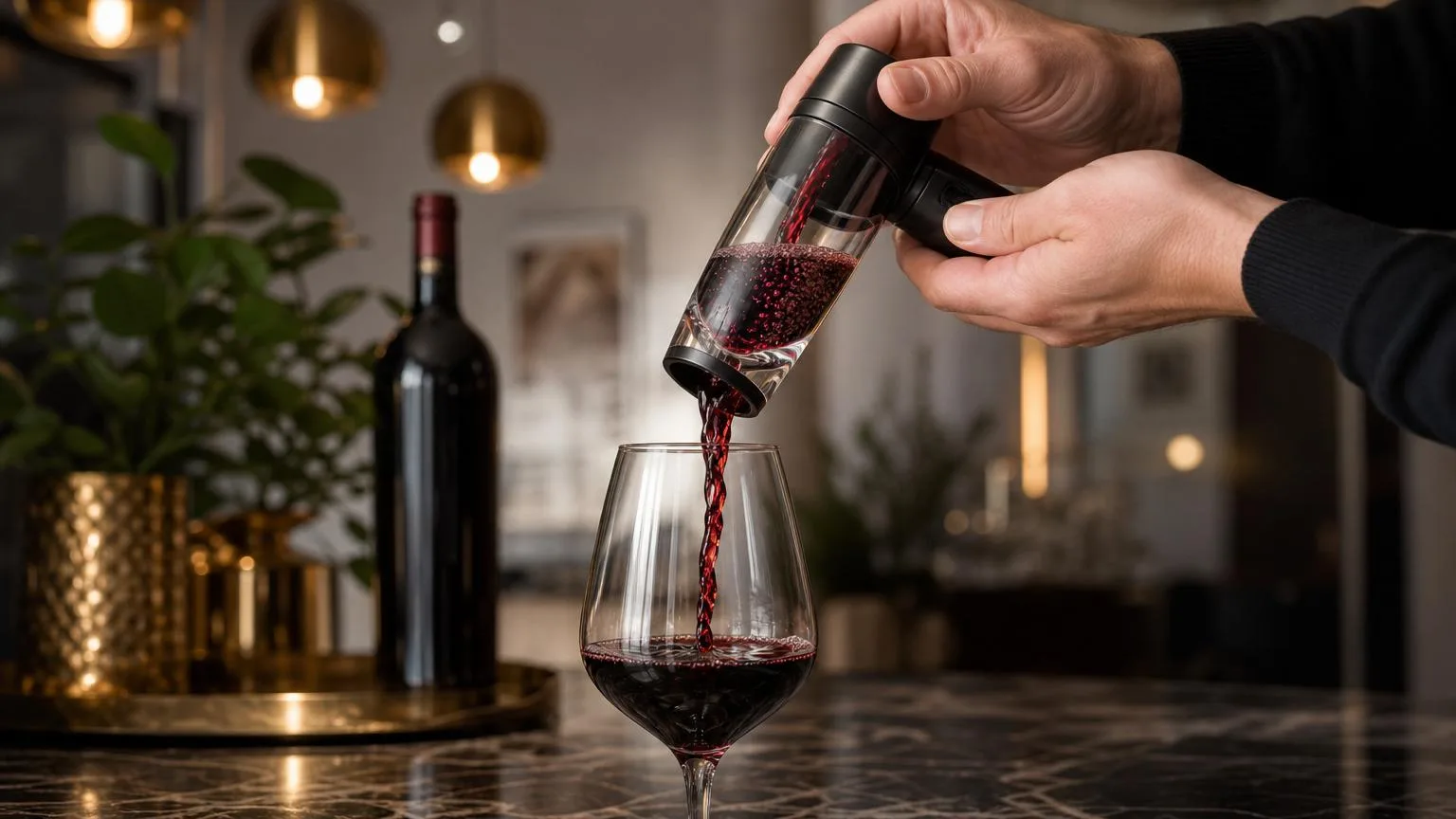
For temperature, serve red wines around 60-65 F (15-18 C) when aerating. Wine that is too cold mutes the volatile aromas the aerator is trying to release, while wine that is too warm shows alcohol heat more aggressively.
One mistake we see often: aerating wine that has already been open for several hours. At that point the wine has already oxidized passively, and running it through an aerator can push it past the optimal window into flat, over-oxidized territory.
For the best results, use a quality opener to pull the cork cleanly — our best wine opener guide covers the options — then aerate immediately on the first pour.
How Long to Aerate and Common Myths Debunked
Aeration time depends on the wine’s age, tannin level, and how closed it smells straight from the bottle.
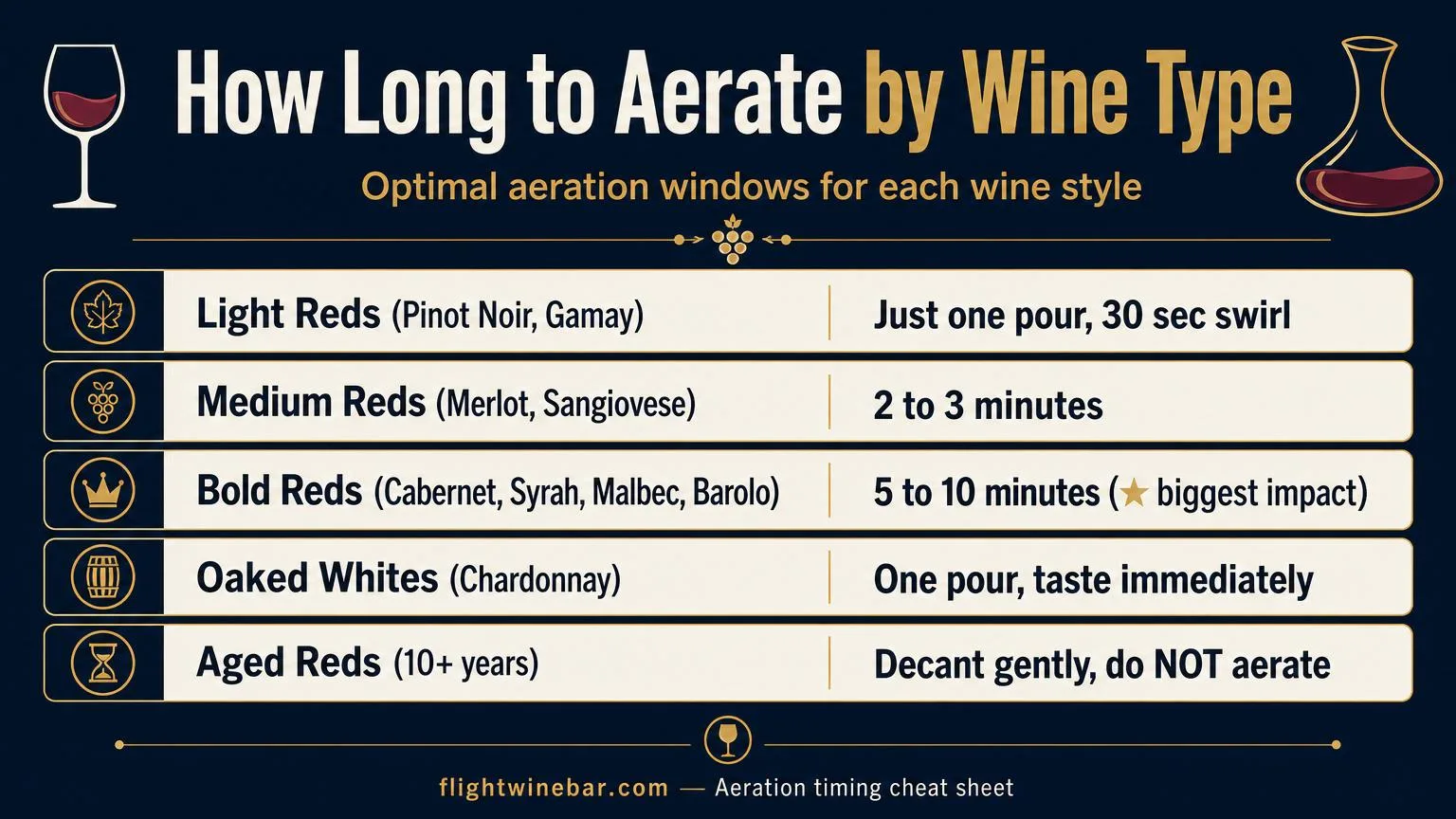
Light reds (Pinot Noir, Gamay): One aerated pour is enough. Swirl in the glass for 30 seconds and taste immediately. These wines are delicate and can lose freshness if over-aerated.
Medium reds (Merlot, Grenache, Sangiovese): One aerated pour plus 2–3 minutes of glass breathing. The improvement is real but not as dramatic as with bold reds.
Bold reds (Cabernet, Syrah, Malbec, Barolo): One aerated pour plus 5–10 minutes of glass breathing. These wines have the most tannin to soften and the most fruit to unlock.
Oaked whites (Chardonnay): One aerated pour, then taste immediately. If butter and oak notes are still muted, swirl for 60 seconds. Do not over-aerate — these wines can go flat quickly.
Aged reds (10+ years): Skip the aerator. Decant gently and let the wine breathe for 20–30 minutes. Aggressive aeration strips complex tertiary aromas that took years to develop.
Now for the myths. Aerators are only for cheap wine — false. Some of the most dramatic improvements we have recorded came from $50–$80 young Cabernets. Expensive young wines are often more tannic and respond more dramatically to aeration.
Aerators ruin wine — only if you aerate wines that should not be aerated. For the right wines, aeration is unambiguously beneficial.
Aerators change alcohol content — they do not. Aeration changes how alcohol is perceived on the palate by softening its edge, but the actual ABV stays identical.
Aerators replace decanters — they serve different purposes. Aerators are fast and convenient for everyday drinking. Decanters are better for aged wines that need gentle, gradual oxygen exposure and sediment separation.
Real-World Results: What Aeration Does to Specific Wine Styles
Here is what we recorded in our own tasting sessions when comparing the same wine aerated versus unaerated.
$15 Cabernet Sauvignon unaerated: Tight, grippy tannins. Short finish. Fruit muted behind astringency. Alcohol noticeable on the back of the throat.
Same wine after one aerated pour: Tannins soften noticeably. Blackcurrant and plum fruit comes forward. Finish extends by several seconds. Alcohol integrates into the body of the wine.
$25 Syrah unaerated: Smoky, peppery nose but closed. Raw tannin and a slightly bitter finish. The wine feels younger than it is.
Same Syrah aerated: Smoke and pepper open dramatically. Violet and dark fruit emerge. Tannins round out. The wine tastes like it has had an extra year of bottle age.
$30 oaked Chardonnay unaerated: Buttery and vanilla notes present but muted. Slightly flat on the mid-palate.
Same Chardonnay aerated briefly: Butter and toasted oak amplify. Stone fruit comes forward. The mid-palate fills out. Worth the 10 seconds it takes to pour through an aerator.
These results are consistent across dozens of sessions. Blind tasters with no knowledge of which glass was aerated consistently prefer the aerated pour for young bold reds and oaked whites.
The improvement is not placebo. In our sessions, we use identical glasses, identical pour volumes, and identical serving temperatures. The only variable is the aerator. The aerated glass wins every time with bold reds under 10 years old.
One practical note: the improvement peaks within the first 10–15 minutes after aeration. After that, the wine continues to oxidize passively and can start to flatten.
Pour, aerate, and drink — do not let an aerated glass sit for 30 minutes before tasting.
For the best aerators to achieve these results at home, see our best wine aerator roundup and our guide to best port wine glasses for serving after aeration.
What is the difference between a handheld aerator and an electric aerator?
A handheld pour-through aerator is a small device you hold over the glass as you pour. It is inexpensive, easy to clean, and works well for most everyday reds.
An electric aerator pumps wine through a chamber with a motor, delivering more consistent and aggressive aeration.
Electric aerators are better for very tannic young wines like Barolo or Napa Cabernet, where maximum aeration makes the biggest difference. For casual weeknight pours, a handheld model is all you need.
Can I aerate wine in a decanter instead of using an aerator?
Yes, and for aged wines you should. A decanter provides gentle, gradual aeration over 30–90 minutes, which is safer for fragile older wines.
An aerator is faster and more aggressive, which is ideal for young bold reds but risky for wines with delicate tertiary aromas.
Use an aerator for wines under 10 years old. Use a decanter for wines over 10 years old, or any wine where you want to separate sediment from the liquid before serving.
Questions Readers Ask
Does a wine aerator really make wine taste better?
Yes, for the right wines. Young, tannic reds show the most dramatic improvement — softer tannins, brighter fruit, longer finish. The effect is immediate and noticeable even to casual drinkers in blind taste tests.
Do expensive wines need aeration?
Young expensive wines often benefit more than cheap ones because they tend to be more tannic and structured. Aged expensive wines (15+ years) should be decanted gently rather than aerated aggressively, to preserve delicate tertiary aromas.
Can you aerate white wine?
Full-bodied oaked whites like Chardonnay benefit from brief aeration. Light whites, Sauvignon Blanc, and Pinot Grigio gain little and risk losing freshness. Sparkling whites should never be aerated.
How long should wine be aerated?
With a pour-through aerator, the aeration happens in seconds during the pour. Bold reds like Cabernet and Syrah can handle 5–10 minutes of additional glass breathing after aeration.
Pinot Noir and aged wines need no more than a single aerated pour — any more risks stripping delicate aromas.
Does aeration remove bitterness?
Yes, partially. Bitterness in young red wine comes largely from unresolved tannins. Aeration softens tannins through oxidation, which reduces the perception of bitterness.
It does not eliminate bitterness entirely — that takes years of bottle aging — but the improvement after a single aerated pour is real and immediately noticeable.
Will an aerator ruin Champagne?
Yes. Aeration destroys carbonation. Never use an aerator on sparkling wine of any kind. Pour Champagne and Prosecco gently down the side of a tilted flute to preserve the bubbles.
How do I know if my wine needs aeration?
Taste a small sip straight from the bottle. If the wine tastes tight, grippy, harsh, or closed — with muted fruit and a short finish — it will benefit from aeration.
If it already tastes open and expressive, skip the aerator or use it briefly.
Conclusion: What Does an Aerator Do for Wine?
A wine aerator does one thing exceptionally well: it compresses 30–60 minutes of passive breathing into the seconds of a single pour.
It softens tannins, releases trapped aromas, brightens fruit, and smooths the finish — all through controlled oxidation and volatilization. No other bar tool delivers that kind of immediate, measurable improvement per dollar spent.
Use it on young bold reds and oaked whites. Skip it for sparkling wines, aged fine wines, and light delicate whites.
If you are building a complete home bar setup, the aerator pairs naturally with a quality opener for clean cork removal and a decanter for aged bottles. See our best wine opener guide and decanter roundup for our top picks.
Add a quality wine stopper to preserve whatever you do not finish. Each tool addresses a different moment in the serving process, and together they make a measurable difference in every glass.
The investment in a good aerator is minimal — most quality pour-through models cost $15–$40. The return on every bottle you open is immediate.
A $15 Cabernet that tastes like a $25 bottle after one aerated pour is not marketing copy. We have measured it repeatedly in blind sessions across our editorial team.
The result holds across price points and grape varieties. For most wine drinkers, an aerator is the single highest-return bar tool they can own at this kind of cost-per-bottle ratio.
More impact per dollar than any other single upgrade to the serving experience. Buy one, use it on every young bold red, and taste the difference for yourself.
Last updated: 2026-05-20. Reviewed by the Flight Wine Bar tasting team.
References: TTB Wine Regulations | USDA Agricultural Research Service | Cornell Food Science | NIAAA
Related Reading
- 10 Best Wine Aerators Recommended By Experts
- 12 Best Wine Decanters You Need to Try
- 10 Best Wine Stoppers in 2026
- Top 15 Best Wine Openers
- Top 10 Wine Preservation Systems
Frequently Asked Questions
What does a wine aerator actually do?
An aerator mixes wine with air as you pour, increasing oxygen exposure in seconds. This can soften perceived tannins and release aromas, especially in young, structured reds.
Is an aerator better than a decanter?
An aerator exposes wine rapidly during pouring; a decanter works gradually across a broad surface. Aeration takes seconds, while decanting commonly takes 30–120 minutes.
Which wines benefit most from an aerator?
Use an aerator for young, tannic reds such as Cabernet Sauvignon, Syrah, or Nebbiolo. Avoid routine aeration for delicate aged wines, which may lose aromas quickly after oxygen exposure.
Should white or sparkling wine be aerated?
Some full-bodied whites, including young Chardonnay, can open with brief aeration. Most crisp whites, rosés, and sparkling wines need none; vigorous aeration can dissipate carbonation and mute freshness.
How long should wine be aerated?
Pour through the aerator once, then taste immediately. If the wine remains tight, let it rest in the glass for 10–20 minutes rather than repeatedly forcing air through it.
Can an aerator fix bad or spoiled wine?
An aerator cannot remove cork taint, volatile acidity, oxidation, or heat damage. It may reduce temporary sulfur odors, but added oxygen can also intensify flaws or accelerate fading.



2 thoughts on “What Does an Aerator Do for Wine? – The Complete Expert Guide to Understanding Wine Aeration”
Your insights offer a refreshing viewpoint that helps deepen the collective understanding of this increasingly relevant subject.
Thank you — that’s a generous and thoughtful comment. If there’s a specific aspect of this topic you’d like to explore further or a project you’re considering, I’d be glad to help you dig deeper.