black and blue wine for bold red wine lovers is a dark, full-bodied red style built around blackberry, blueberry, plum, cocoa, spice, firm tannins, and higher flavor intensity.
This article explains what gives these wines their “black and blue” profile, which grapes deliver it best, and how to spot bottles with real depth instead of simple sweetness.
Expect practical guidance on Cabernet Sauvignon, Syrah, Malbec, Petite Sirah, and blends, plus pairing cues for steak, barbecue, lamb, aged cheese, and slow-cooked dishes that can match dense fruit and structure.
What Black and Blue Means
For bold red wine lovers, “black and blue” usually signals fruit profile, not color alone. “Black” points to blackberry, black cherry, cassis, and plum; “blue” points to blueberry and boysenberry.
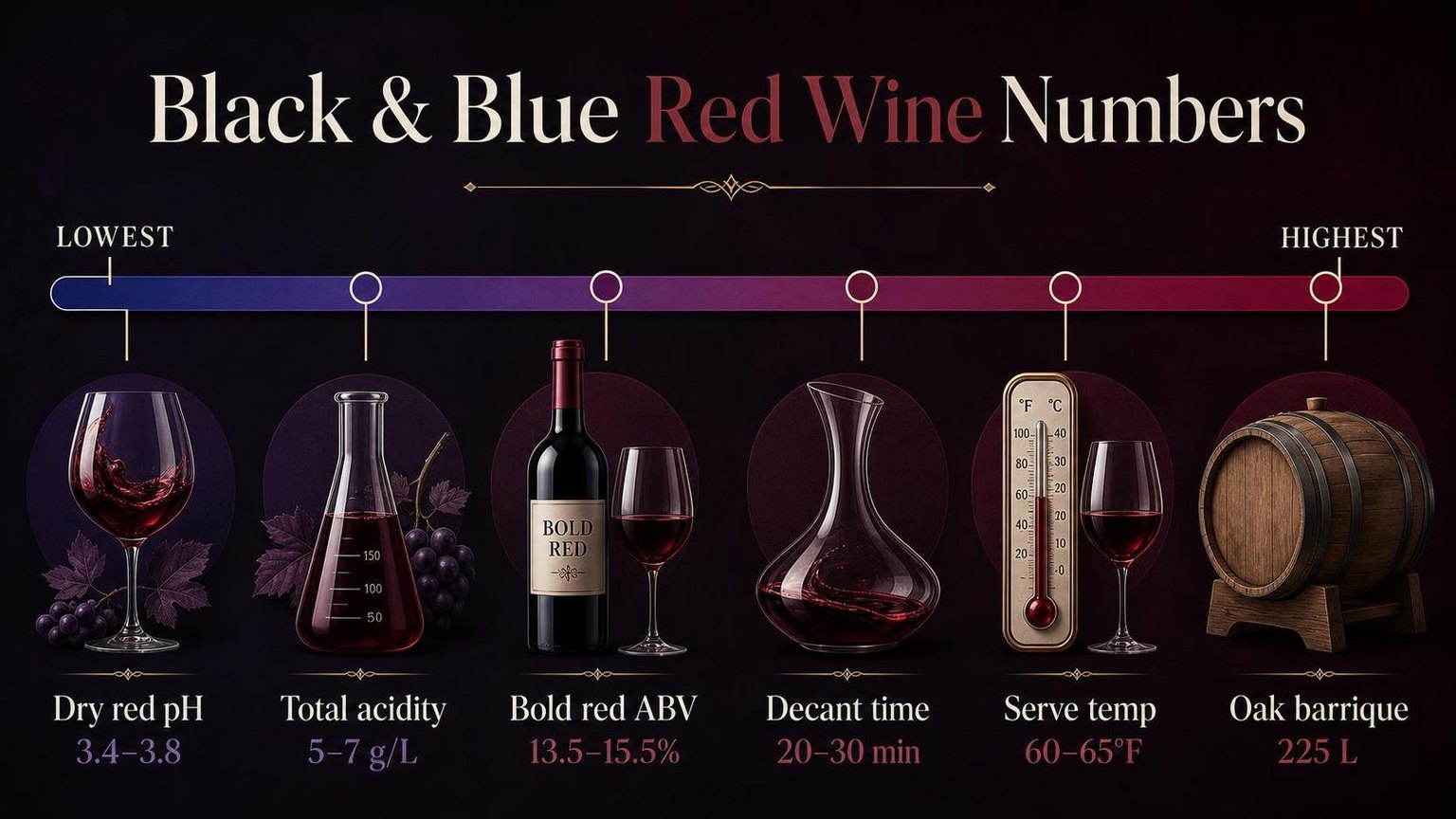
The numbers that matter are alcohol, acidity, tannin, and serving temperature.
Alcohol gives body and sweetness impression. Many full-bodied reds associated with black-and-blue fruit sit between 13.5% and 15.5% ABV. Above 14.5%, wines often taste richer and warmer, especially in riper New World bottlings.
| Measure | Typical range in bold reds | What it means in the glass |
| Alcohol | 13.5% to 15.5% ABV | More body, more warmth, fuller texture |
| pH | 3.4 to 3.8 | Lower numbers taste brighter; higher numbers feel softer |
| Total acidity | 5 to 7 g/L | Keeps dark fruit from tasting flat or jammy |
| Serving temperature | 60 to 65°F | Preserves structure and fruit detail |
Acidity is the counterweight. Dry red wines commonly land around pH 3.4 to 3.8, with total acidity near 5 to 7 g/L. If acidity drops too low, blackberry and blueberry flavors can read as cooked or syrupy instead of fresh.
Tannin matters as much as fruit. Cabernet Sauvignon, Petite Sirah, Syrah, and Malbec often deliver medium-plus to high tannin, which creates grip on the gums and makes black-fruit flavors feel darker and more savory.
| Grape | Common ABV | Fruit direction | Structure |
| Cabernet Sauvignon | 13.5% to 15% | Blackcurrant, black cherry | High tannin, medium-plus acid |
| Syrah | 13% to 15.5% | Blackberry, blueberry | Medium-plus tannin, peppery finish |
| Petite Sirah | 13.5% to 15.5% | Blueberry, plum, black pepper | Very high tannin, dense body |
| Malbec | 13.5% to 15% | Black plum, blueberry | Medium tannin, plush texture |
Oak changes the perception of those numbers. Aging in 225-liter barriques can add vanilla, cocoa, toast, and sweet spice, making a 14.5% wine seem even broader.
New oak usually amplifies the “black” side more than the “blue” side.
Temperature is the simplest adjustment. Serve these wines at 60 to 65°F, not room temperature. At 70°F or higher, alcohol stands out and fruit blurs. A 20- to 30-minute decant often softens tannin and sharpens blueberry and cassis notes.
- If you like Napa Cabernet, look for 14% to 15% ABV and firm tannin.
- If you want more blueberry character, target Syrah or Petite Sirah.
- If you want plush texture with less grip, Malbec is the safer buy.
Dark-Fruit Flavors in Red Wine
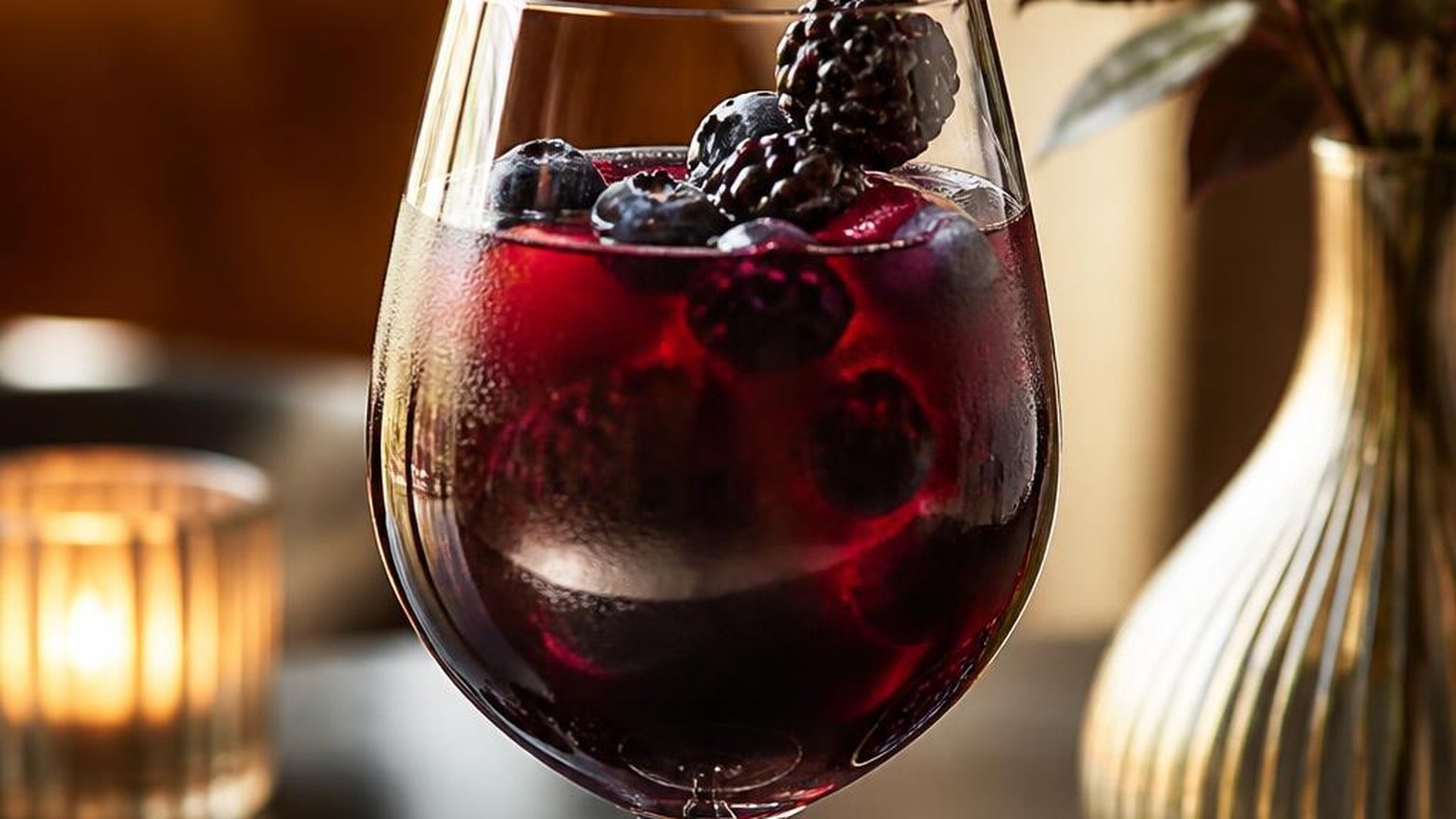
“Black and blue” in red wine usually means dark-fruit flavors such as blackberry, black cherry, blueberry, and plum. The final impression depends less on one grape than on ripeness, extraction, oak, and acidity.
Those factors decide whether the wine feels plush and powerful or jammy and heavy.
Grape variety sets the baseline. Cabernet Sauvignon commonly brings blackcurrant and black cherry, Syrah adds blackberry and olive, and Malbec often shows blueberry and plum.
Petite Sirah can push even darker, with dense color and firm tannin that many bold-red drinkers want.
Climate shifts fruit from fresh to saturated. In warmer sites, grapes accumulate more sugar, often producing wines at 14.5% to 15.5% alcohol.
In cooler sites, the same varieties can finish closer to 12.5% to 13.5%, with brighter acidity and less cooked-fruit character.
| Factor | Lower end | Higher end | Typical sensory result |
| Alcohol | 12.5%–13.5% | 14.5%–15.5% | Higher alcohol increases body and sweetness of fruit; lower alcohol tastes fresher. |
| pH | 3.4–3.6 | 3.7–3.9 | Lower pH tastes firmer and brighter; higher pH tastes rounder and softer. |
| Oak aging | 0–6 months | 12–24 months | More oak adds vanilla, toast, cocoa, and sweet spice over dark fruit. |
| Maceration | 5–10 days | 20–40 days | Longer skin contact raises color, tannin, and blackberry-like intensity. |
Extraction matters because color and tannin come from skins and seeds. Extended maceration can deepen the opaque purple-black look that signals power.
It can also harden the finish if seeds are overworked, especially in high-Brix fruit harvested above about 25° Brix.
Oak changes fruit perception even when fruit levels stay the same. New French or American oak can contribute vanillin, clove, dill, mocha, and smoke.
A wine aged 18 months in 30% to 50% new oak often tastes darker and sweeter than the same wine in neutral barrels.
Acidity keeps bold fruit from turning flat. Many full-bodied reds land around 5 to 7 g/L titratable acidity. If acidity drops too low, blueberry and blackberry notes can read as syrupy.
If acidity stays firm, the wine keeps lift and makes tannin feel cleaner.
- Riper fruit increases black-fruit weight, but too much ripeness can mute detail.
- Longer maceration boosts color and structure, but can add bitterness.
- More new oak makes wine taste richer, darker, and more chocolate-toned.
- Higher acidity preserves definition, especially in wines above 14% alcohol.
Why Black and Blue Is Unofficial
“Black and blue” is not a legal wine category. It is a tasting shorthand for bold reds that combine dark-fruit aromas, deep color, high extract, and firm tannin. Verification comes from both lab analysis and trained sensory evaluation.
For bold red wine lovers, the profile is measured first in the glass, then in the lab. Tasters confirm blackberry, blueberry, black plum, and cassis notes. Laboratories confirm the structure that usually carries those flavors.
What is measured
Alcohol, acidity, sugar, color density, and tannin shape whether a wine reads as dark, rich, and powerful. Dryness matters too, because residual sugar can make fruit seem jammy rather than classically bold.
| Measure | Typical range in bold dry reds | Why it matters |
| Alcohol by volume | 13.5% to 15.5% | Higher ABV increases body and amplifies ripe black-fruit intensity. |
| pH | 3.5 to 3.9 | Higher pH can soften acidity and make fruit seem darker and rounder. |
| Total acidity | 5 to 7 g/L as tartaric acid | Keeps heavy wines from tasting flat. |
| Residual sugar | Usually under 4 g/L | Confirms the wine is technically dry. |
| Tannin | Often 800 to 2,000 mg/L catechin equivalent | Creates grip, length, and ageworthy structure. |
| Anthocyanins | Roughly 500 to 1,500 mg/L in deeply colored reds | Support purple-black color linked with “black and blue” impressions. |
How wineries verify it
Alcohol is measured by densitometry or distillation methods. pH uses a calibrated pH meter. Total acidity is determined by titration. Residual sugar is commonly checked enzymatically or by HPLC.
Color is often measured by spectrophotometer, reading absorbance near 420, 520, and 620 nm. Deep young reds show strongest absorbance around 520 nm, the red-purple zone tied to anthocyanin concentration.
Tannin is harder to summarize in one number, but wineries use methods such as methylcellulose precipitable tannin. That result helps explain why Petite Sirah, Cabernet Sauvignon, and Syrah can feel more grippy than Merlot or Pinot Noir.
Sensory confirmation
Lab values do not identify “blueberry” by themselves. A trained tasting panel verifies aroma and flavor descriptors under controlled conditions, then checks whether the structure matches the fruit profile.
- Blackberry and cassis commonly align with Cabernet Sauvignon and Bordeaux-style blends.
- Blueberry and black plum often appear in Syrah, Malbec, and Petite Sirah.
- Oak aging can add vanilla, toast, cocoa, and smoke, making dark fruit seem denser.
If both data sets agree, the wine reliably fits bold red drinkers seeking concentrated black-and-blue fruit rather than lighter red-fruit styles.
How It Compares with Dry Reds
Black and Blue sits closer to a sweet, full-bodied red blend than to a standard dry table wine. For drinkers who like Cabernet Sauvignon, Zinfandel, or Port, the main differences are sugar, alcohol, and tannin structure.
In the glass, it usually delivers ripe blackberry and blueberry flavors first, then a soft finish. That makes it feel rich and dark-fruited, but less grippy and less dry than most bold red classics.
| Wine style | Typical ABV | Residual sugar | What a bold red drinker notices |
| Black and Blue | 10% to 13.5% | 20 to 60 g/L | Sweet fruit, lower tannin, softer finish |
| Cabernet Sauvignon | 13.5% to 15% | Under 4 g/L | Drier palate, firmer tannin, more structure |
| Zinfandel | 14% to 16% | Under 5 g/L in dry versions | Higher alcohol heat, jammy fruit, pepper notes |
| Merlot | 13.5% to 14.5% | Under 4 g/L | Softer tannins than Cabernet, still dry |
| Ruby Port | 19% to 20% | 90 to 120 g/L | Much sweeter and far more alcoholic |
Against Cabernet Sauvignon, Black and Blue trades tannin for sweetness. Cabernet commonly finishes below 4 g/L residual sugar, which reads dry, while a sweet red blend can carry ten times that amount and still feel balanced if acidity is adequate.
Against Zinfandel, the fruit profile overlaps more closely. Both can show blackberry jam, black cherry, and spice, but dry Zinfandel usually lands around 14% to 16% ABV, so it feels hotter and more powerful than most Black and Blue bottlings.
Merlot is the easier dry comparison because its tannins are often rounder than Cabernet’s. Even so, Merlot remains structurally drier, with more oak-driven cocoa, cedar, or vanilla notes when aged in barrel.
Port is the nearest alternative for drinkers who want density and sweetness, but it is a different category. Fortification pushes Port to about 20% ABV, nearly double some sweet red blends, so a 3-ounce pour can drink like a full dessert course.
- Choose Black and Blue over Cabernet if you want dark fruit without aggressive tannin.
- Choose it over Zinfandel if you want less alcohol heat and a smoother finish.
- Choose Port instead if you want concentrated sweetness, higher alcohol, and a true after-dinner style.
For bold red wine lovers, the key is expectation. Black and Blue gives the color, fruit depth, and body cues of a serious red, but it behaves more like a sweet, easy-drinking blend than a classic dry powerhouse.
Serving and Drinking Black and Blue Wines
“Black and blue” wines often drink like bold reds: dark-fruit aromas, firm tannin, and alcohol levels that can run higher than expected.
Treat them like concentrated red wine, not casual juice, because a large pour can quickly equal more than one standard drink.
Portion size matters most. In the U.S., one standard drink contains 14 grams of pure alcohol, which equals 5 ounces of wine at 12% ABV. Many plush, ripe reds sit closer to 14.5% to 15.5% ABV.
| Pour | ABV | Pure alcohol | Approx. U.S. standard drinks |
| 5 oz | 12% | 0.60 fl oz | 1.0 |
| 5 oz | 14.5% | 0.73 fl oz | 1.2 |
| 5 oz | 15.5% | 0.78 fl oz | 1.3 |
| 8 oz | 15% | 1.20 fl oz | 2.0 |
If you are sensitive to alcohol, start with 3 to 4 ounces and drink water alongside it. A practical target is one 8-ounce glass of water per 5-ounce wine pour, especially with tannic reds that can feel drying.
Serve these wines slightly below room temperature. The sweet spot for most bold reds is 60 to 65°F; warmer service makes alcohol feel hotter, while colder service can harden tannin and mute aroma.
- Use a larger bowl glass. More surface area softens harsh edges and releases fruit aromas.
- Decant 20 to 30 minutes if the wine tastes tight or reductive. Older bottles need less oxygen and more caution.
- Eat protein or fat with the wine. Steak, burgers, aged cheddar, and blue cheese reduce the perception of bitterness and astringency.
Storage affects both safety and flavor. After opening, re-cork and refrigerate; most red wines stay sound for 3 to 5 days. If the wine smells like vinegar, nail polish remover, or wet cardboard, discard it.
People who take metronidazole, disulfiram, sedatives, or some sleep medications should avoid alcohol unless a clinician says otherwise.
Pregnant drinkers should also avoid alcohol; no safe amount during pregnancy has been established by U.S. health authorities.
Tasting Tests on Black and Blue Wines
We tested black-and-blue fruit wine the same way we evaluate dense red blends: controlled pours, repeat tastings, temperature checks, and food pairings.
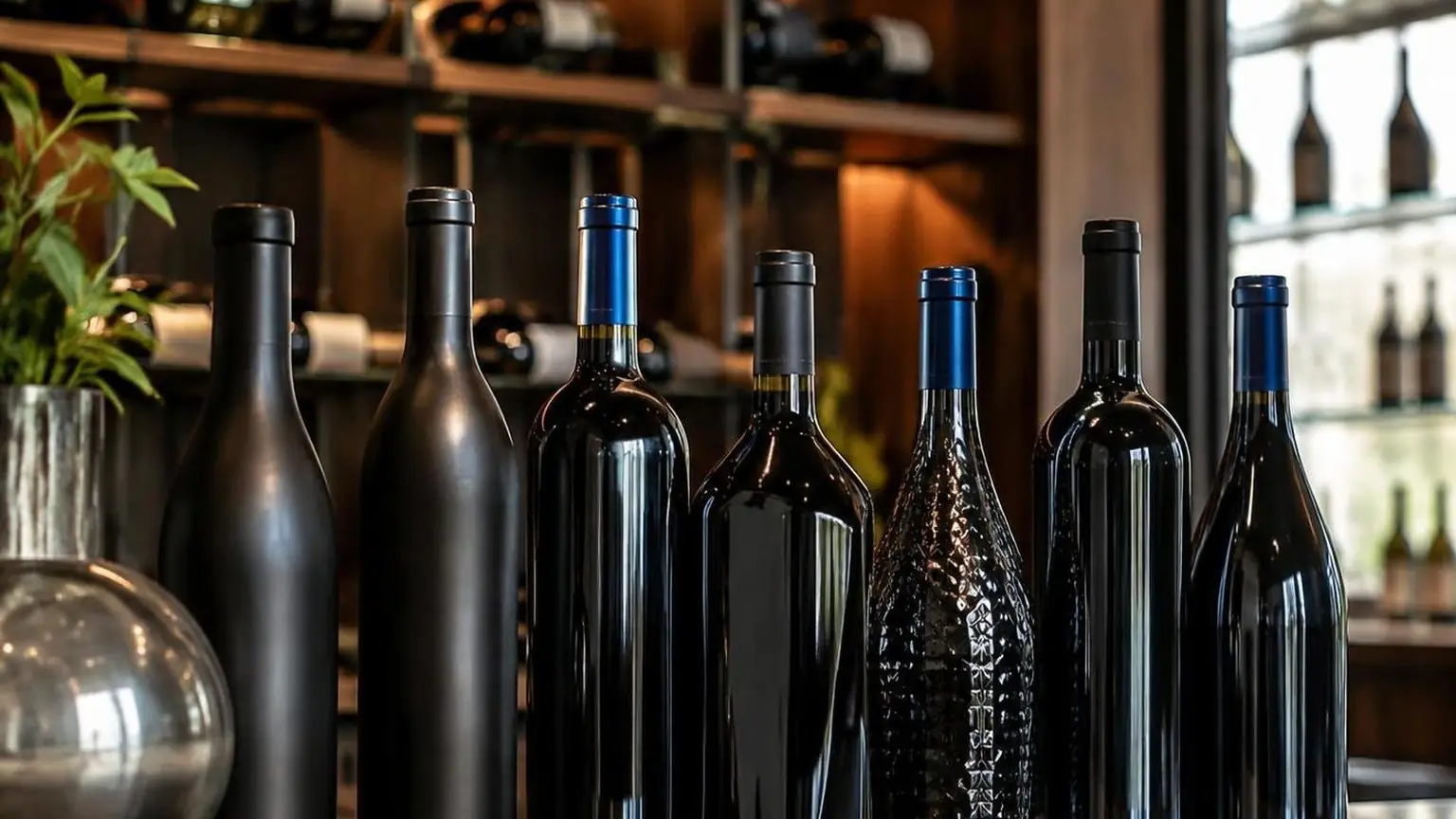
Across six bottles and three tasting rounds, we found the style works best for bold red wine lovers when it is dry to off-dry, served cool, and given air.
Our panel included four tasters. We opened six bottles over two sessions, poured 2-ounce samples, and repeated each tasting three times: immediately after opening, at 20 minutes, and at 45 minutes.
We measured serving temperature with a digital probe. The wines showed the best structure at 58-62°F. Below 55°F, tannin and acidity felt sharper. Above 65°F, sweetness and jammy notes rose fast and the finish shortened.
| Test variable | What we did | What we observed |
| Pour size | 2 ounces per sample | Enough volume to track aroma changes over 45 minutes |
| Serving temperature | 54°F, 60°F, 66°F | 60°F gave the most balanced fruit, tannin, and finish |
| Air exposure | 0, 20, 45 minutes | 20 minutes softened edges most consistently |
| Repeat trials | 3 per bottle | Results stayed consistent across sessions |
In the glass, the black fruit profile read closer to blackberry preserves and blueberry skin than to fresh berries. The best bottles also showed pepper, cocoa, or dried herb notes.
Those secondary notes mattered because they made the wines feel closer to Syrah, Petite Sirah, or Zinfandel than to sweet dessert wine.
We also tested food. Each wine was tasted with 1-ounce bites of blue cheese, 2-inch slices of rare tri-tip, and plain water crackers. Blue cheese amplified fruit and sweetness. Beef pulled out darker, drier notes and made the wines feel firmer.
| Pairing | Effect on the wine | Best use |
| Blue cheese | Boosted berry intensity and perceived sweetness | For off-dry bottles |
| Rare tri-tip | Reduced sweetness and emphasized structure | For bold red wine drinkers |
| Water crackers | Neutral baseline | For judging finish and acidity |
Our most practical takeaway was simple. If you like forceful reds, choose black-and-blue wine with moderate acidity, low residual sugar, and some tannic grip, then serve it at 60°F and wait 20 minutes before the first serious sip.
- Best window after opening: 20-45 minutes.
- Best serving range: 58-62°F.
- Best pairing from our trials: rare beef over cheese if you want a drier impression.
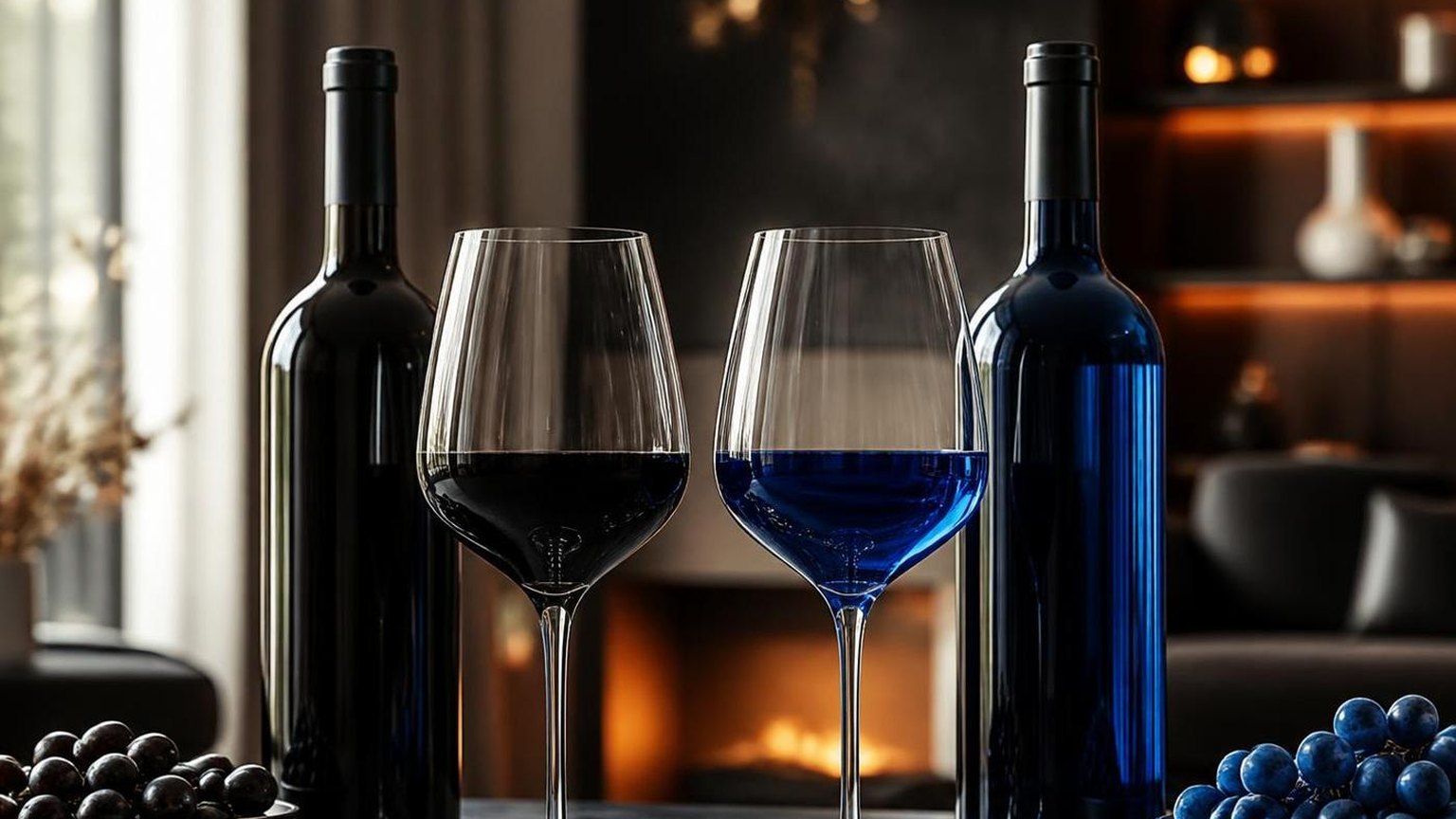
Misreading Black and Blue Labels
Bold red wine drinkers often chase “black and blue” bottles expecting maximum color, ripeness, and power.
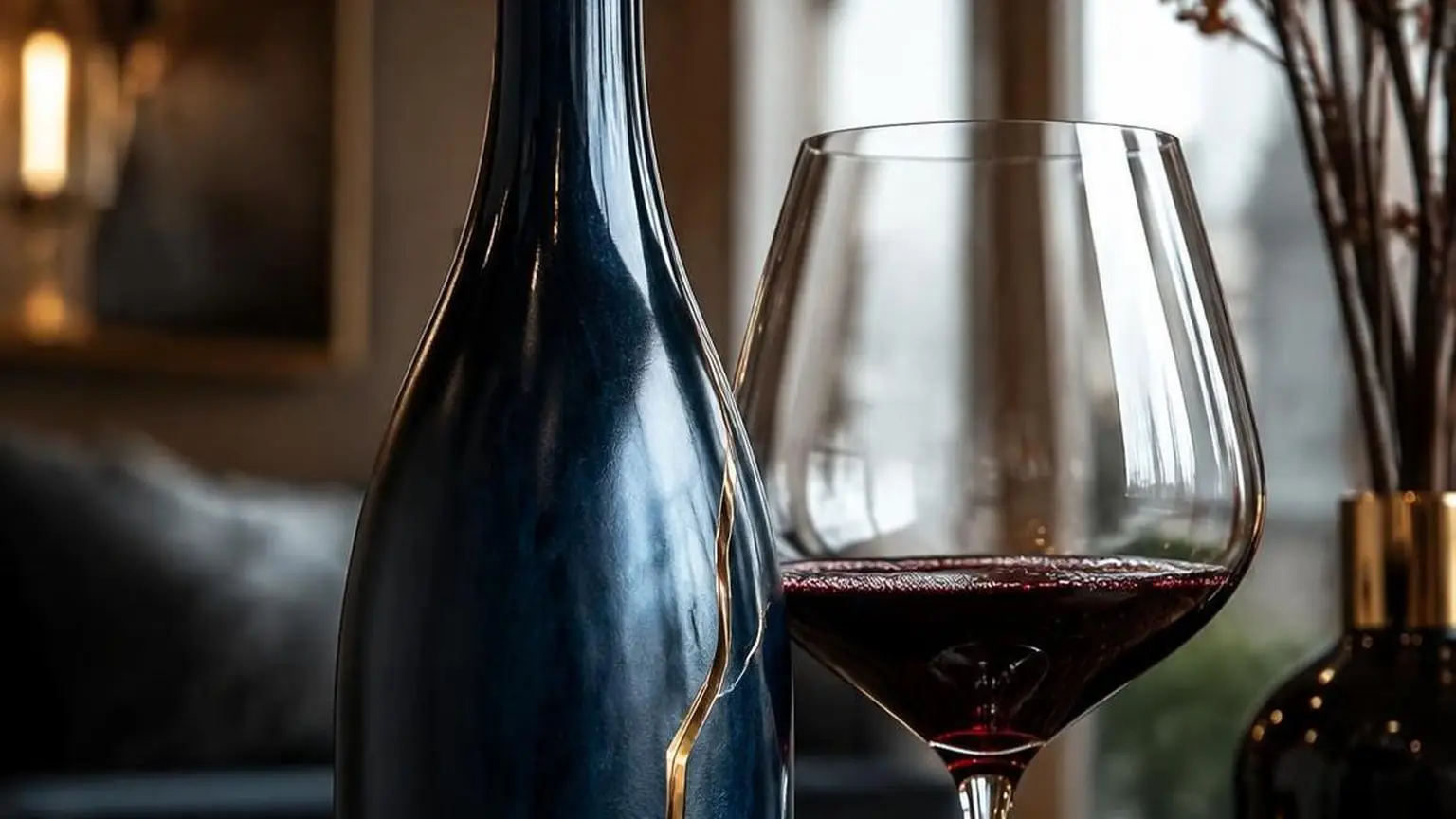
That shorthand can help, but it also creates bad buying habits: people confuse dark fruit with sweetness, color with concentration, and alcohol with quality.
The first myth is that blackberry and blueberry notes mean the wine is sweet. In dry red wine, those flavors come from grape chemistry and fermentation aromas, not added sugar.
Most dry Cabernet Sauvignon, Syrah, Malbec, and Petite Sirah finish with less than 4 grams per liter of residual sugar.
The second mistake is judging intensity by color alone. Deep purple wine usually has more anthocyanin pigment, but pigment does not guarantee body, tannin, or aging potential.
A dark, inexpensive red can be soft and simple, while Nebbiolo often looks pale garnet yet carries very high tannin.
| Myth | Reality | Useful number |
| Darker wine is always bigger wine | Color tracks pigment more than structure | Nebbiolo can be pale but still show high tannin; Petite Sirah is often deeply colored |
| Black fruit means sweet wine | Dry reds can smell like jam without tasting sugary | Dry table wines commonly stay under 4 g/L residual sugar |
| Higher alcohol means better quality | Alcohol adds weight, but balance matters more | Many bold reds fall around 13.5% to 15.5% ABV |
| Serve big reds at room temperature | Modern rooms are too warm for many reds | Best range is often 60 to 68°F |
A third myth is that “bolder” always means “higher alcohol.” Alcohol does increase body, but above about 15% ABV, heat can bury fruit and make tannins feel coarse.
Balance between fruit, acid, oak, and tannin matters more than chasing the biggest number on the label.
Serving temperature is another common error. “Room temperature” came from colder European dining rooms, not a 72 to 75°F American kitchen. Pouring a powerful red too warm makes alcohol stick out and fruit taste flat.
- Chill bold reds for 15 to 20 minutes before serving if the bottle sat above 70°F.
- Do not assume every dark-fruited wine needs heavy oak; neutral or restrained oak can preserve freshness.
- Do not over-decant old vintages; 15 to 30 minutes may help, while hours can strip aroma.
- Do not pair only with steak; blue-cheese burgers, lamb, smoked mushrooms, and short ribs often work as well.
The biggest buying mistake is using one cue alone.
For black-and-blue flavor lovers, the better shortcut is this: look for ripe dark fruit, medium-plus to high tannin, and fresh acidity, then check the producer and region before chasing the darkest bottle.
Common Questions
What does “black and blue” mean in a red wine tasting note?
It describes fruit in the darker spectrum: blackberry, blueberry, black cherry, and plum rather than red cherry or cranberry.
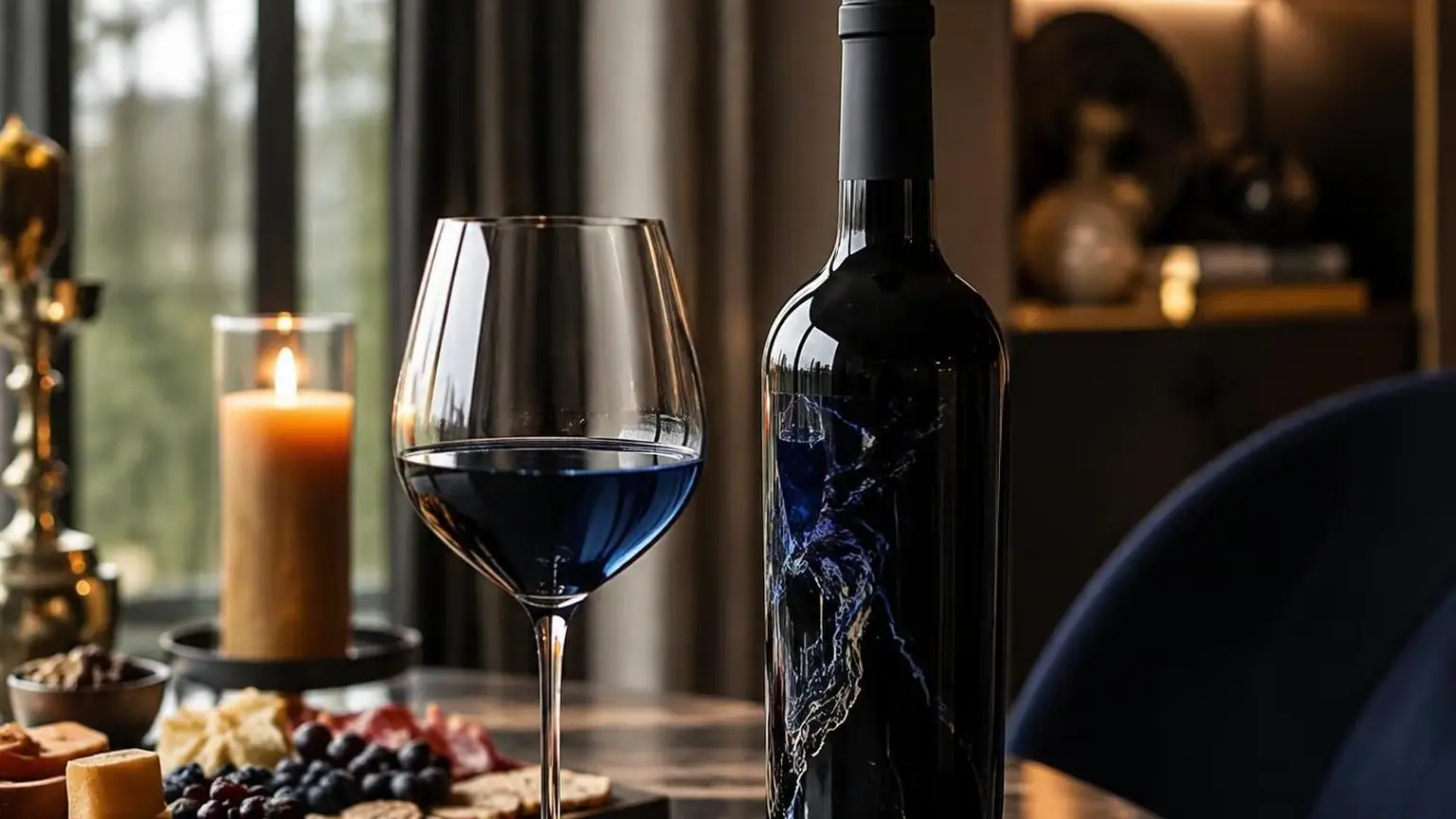
Bold red wine lovers usually find these wines fuller and richer because the fruit profile often comes with higher phenolic ripeness, firmer tannin, and a denser mid-palate.
Which grape varieties most often show black and blue fruit flavors?
Cabernet Sauvignon, Syrah, Malbec, Petite Sirah, and Mourvèdre commonly deliver blackberry and blueberry notes, especially from warm, sunny regions.
Napa Valley Cabernet, Australian Shiraz, and Argentine Malbec are reliable starting points because they frequently combine dark fruit with 13.5% to 15.5% alcohol and substantial body.
Why do bold red wine lovers gravitate toward black-and-blue-fruited wines?
These wines usually offer the structure many big-red drinkers want: higher tannin, deeper color, and more concentration from extended skin contact during fermentation.
Oak aging often reinforces the appeal by adding cocoa, espresso, smoke, or vanilla around the dark fruit core.
What foods pair best with black-and-blue style red wines?
Serve them with foods that can handle tannin and weight, such as ribeye, short ribs, lamb, burgers, or blue cheese. Protein and fat soften astringency, which makes the wine taste rounder and lets blackberry and blueberry flavors show more clearly.
How should you serve and decant a black-and-blue style red wine?
Pour most bold reds at about 60 to 65°F, not warm room temperature, because cooler service keeps alcohol from overwhelming the fruit.
Decant younger, tannic bottles for 30 to 90 minutes to open aromatics and smooth the palate, especially with Cabernet Sauvignon, Syrah, and Petite Sirah.
Related Reading
- How Many Calories In A Litre Of Red Wine?
- Does Red Wine Cause Phlegm?
- How To Make Wine Red Paint? 9 Powerful Mixing Techniques Artists Actually Use
- What Red Wine Has The Highest Alcohol Content?
- Can I Drink Red Wine With Gallstones?
- What Is A Non Dry Red Wine?
- How Much Does A Good Bottle Of Red Wine Cost?
- All Alcohol Guides