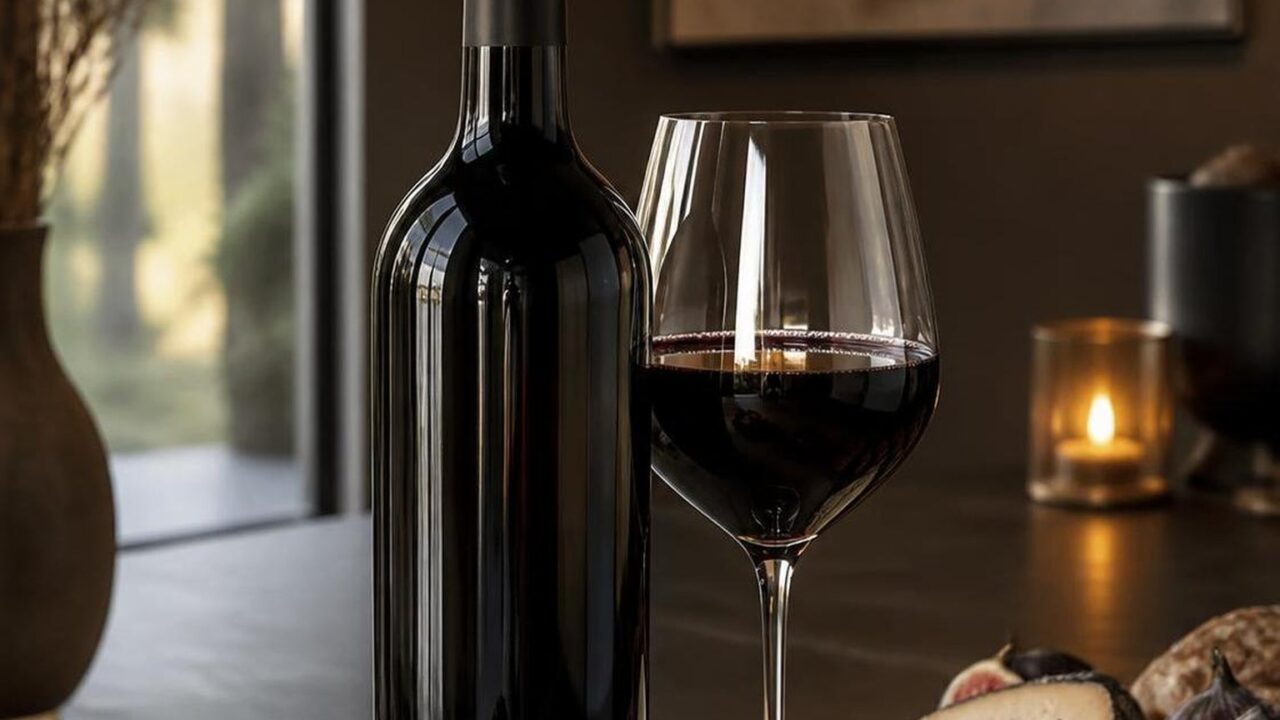
black and bruised wine is a dark, fruit-forward red wine associated with inky color, ripe black-fruit flavors, and a plush, “bruised” texture from soft tannins and full extraction.
The phrase usually points to bold reds that taste of blackberry, black cherry, plum skin, cocoa, and spice.
This article explains what the name means, which grapes and winemaking choices create the style, how it differs from lighter reds, and what foods make it taste balanced.
Expect practical buying cues, serving temperature guidance, and tasting notes you can use before opening a bottle.
What Black and Bruised Means
“Black and bruised” usually points to two measurable things: very deep color and aromas that suggest overripe, crushed, or lightly oxidized fruit.
In wine, those impressions track back to pigment levels, acidity, alcohol, oxygen exposure, and serving temperature.
Color comes first. Red wine pigments are anthocyanins from grape skins, and their concentration varies widely by variety and winemaking. Thick-skinned grapes such as Syrah, Malbec, and Petite Sirah can produce much darker wines than Pinot Noir.
| Factor | Typical range | Why it matters for “black and bruised” character |
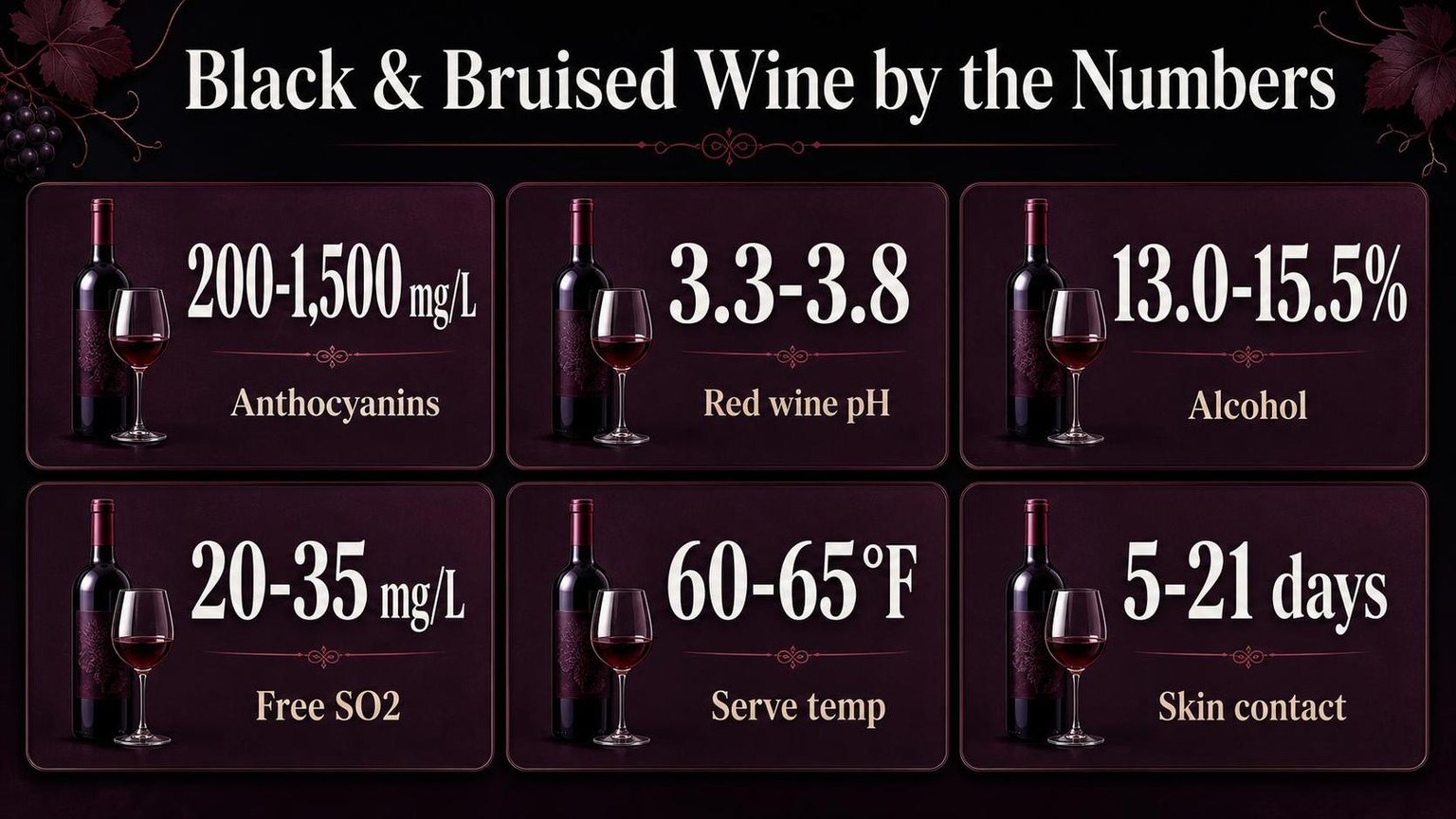
| Anthocyanins in red wine | 200-1,500 mg/L | Higher pigment levels push color from ruby toward purple-black. |
| Red wine pH | 3.3-3.8 | Lower pH stabilizes brighter red tones; higher pH shifts color toward blue-purple and speeds aging. |
| Alcohol | 13.0%-15.5% ABV | Higher alcohol often comes with riper fruit, which reads as jammy or “bruised.” |
| Free SO2 at bottling | 20-35 mg/L | Too little protection increases oxidation risk and bruised-fruit notes. |
| Serving temperature | 60-65°F | Warmer service amplifies dark fruit and alcohol; cooler service tightens the wine. |
Extraction changes the picture fast. During fermentation, skin contact often lasts 5 to 21 days for red wine.
Longer maceration pulls more anthocyanins and tannins, increasing density, bitterness, and the nearly opaque look associated with “black” wines.
Oak adds another measurable layer. New oak barrels can contribute vanillin, toast, smoke, and spice compounds over 6 to 24 months of aging.
Those notes do not create bruised-fruit aromas directly, but they can make a dense wine feel darker and heavier.
Oxygen is the pivot point for the “bruised” impression. Small oxygen doses during élevage can soften tannins, but excessive exposure accelerates acetaldehyde formation.
That compound is associated with bruised apple and nutty aromas when oxidation moves beyond a fresh style.
- Young, deeply colored reds often look darkest in the first 1 to 3 years after vintage.
- Wines above pH 3.7 generally lose color stability faster than wines closer to pH 3.4.
- A bottle served at 68°F can taste noticeably more alcoholic and softer than the same wine at 60°F.
If a wine smells black-fruited but also slightly tired, the numbers usually point to ripe fruit, high extraction, and some oxygen pickup.
If it smells fresh and dark instead, the wine likely has strong pigment, moderate pH, and enough sulfur dioxide protection.
Causes of Black and Bruised Character
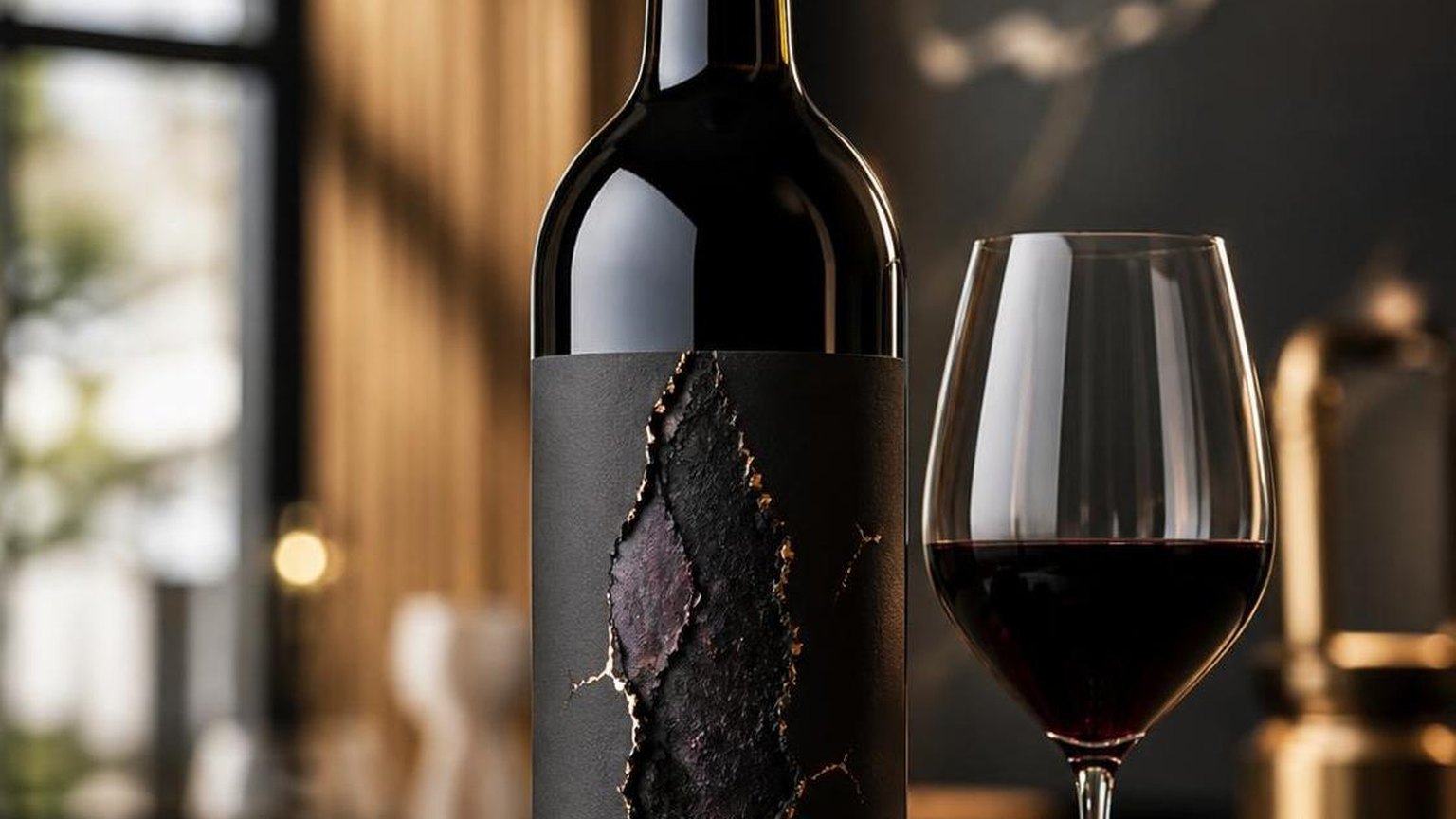
The “black and bruised” result comes from pigment density, extraction, and how the wine handles oxygen after fermentation.
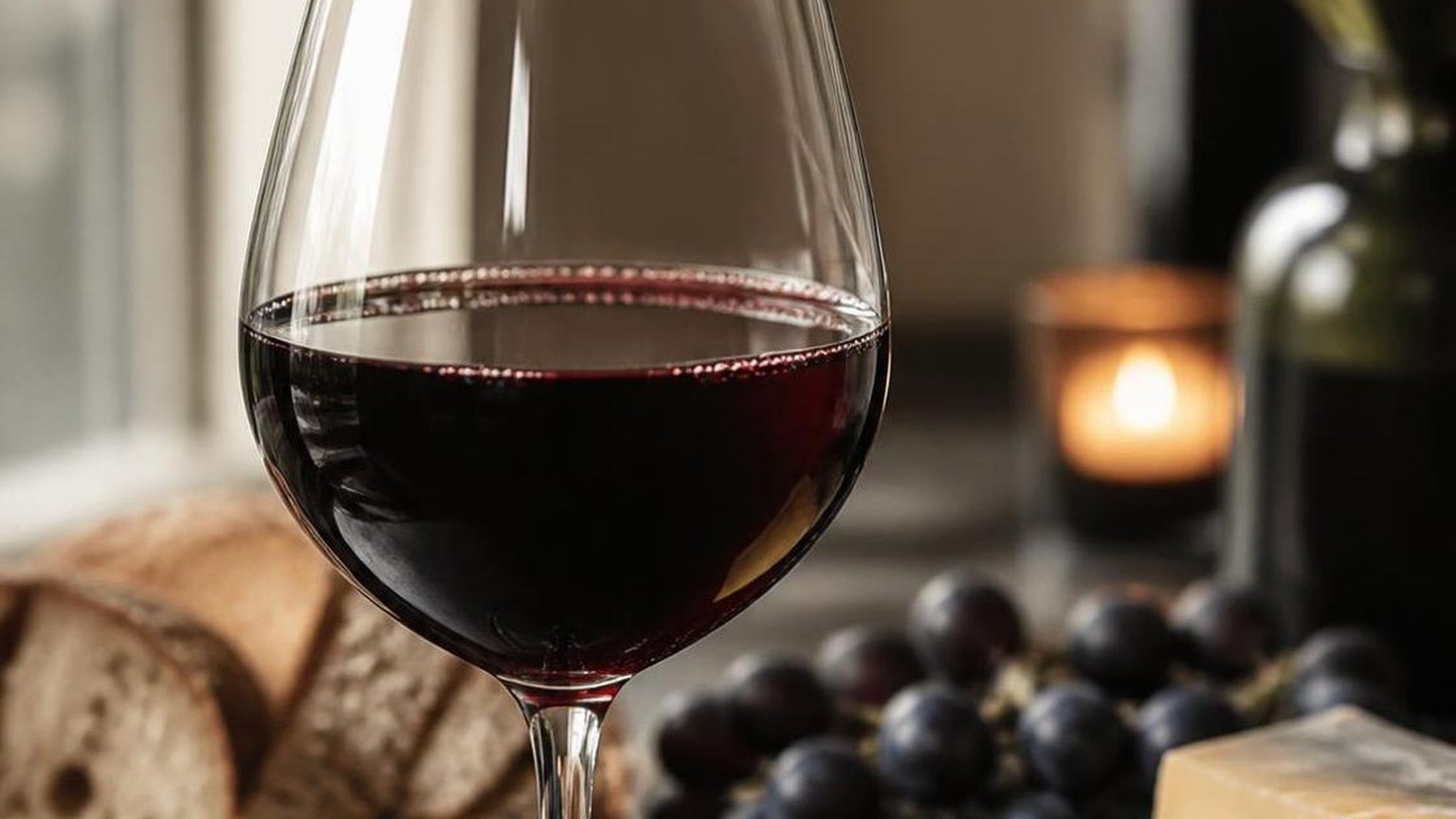
Dark fruit can look nearly opaque when anthocyanins are high, then shift toward purple-brown or bruised tones as those pigments bind, fall out, or oxidize.
Grape variety sets the ceiling for color. Thick-skinned grapes such as Syrah, Petit Verdot, and Tannat carry more anthocyanins and tannin than Pinot Noir or Gamay, so they reach a deeper, black-fruited look with the same cellar work.
| Factor | Typical effect on “black” color | Why it matters |
| Variety | High in Syrah, Tannat, Petit Verdot | More skin pigment and tannin available for extraction |
| Skin contact | 5-30 days | Longer maceration extracts more anthocyanins and seed/skin tannin |
| Fermentation temperature | 25-32°C for many reds | Warmer ferments increase extraction and polymer formation |
| pH | Lower pH strengthens red-purple tone | Anthocyanins are more color-stable in a more acidic medium |
| Oxygen exposure | Small doses can stabilize; excess browns | Controls polymerization versus destructive oxidation |
Maceration length changes the result fast. Many light reds stay under a week on skins, while structured reds may remain on skins for 2 to 4 weeks.
The first days pull color easily; later days pull more tannin, which can make color last longer but also harden texture.
Temperature matters because extraction rises as fermentations warm. Red ferments commonly run around 25 to 32°C, while cooler ferments preserve fruit but usually extract less color.
Punch-downs, pump-overs, and délestage also alter contact between juice, skins, and seeds.
pH and sulfur dioxide influence whether the color reads vivid or dull. Many red wines sit roughly between pH 3.3 and 3.8.
Lower pH favors a brighter red-purple appearance, while higher pH can make the same wine look more muted and vulnerable to browning.
Oxygen is the turning point between “black” and “bruised.” Controlled oxygen during élevage helps anthocyanins bind with tannin into more stable pigments.
Too much oxygen, especially with low free SO2, pushes acetaldehyde formation and brown tones.
- New oak can deepen the impression through tannin contribution, not by adding pigment.
- Unfiltered wines may look darker because suspended solids scatter less light.
- Age shifts nearly all reds from purple toward garnet, then tawny-brown as free anthocyanins decline.
Storage finishes the story. Heat accelerates oxidation, and light degrades delicate aroma compounds. A wine kept near 55°F usually ages more slowly and keeps its color integrity longer than the same bottle stored warm.
How Black and Bruised Is Verified
“Black and bruised” is verified through color, chemistry, and sensory evidence.
Tasters can describe the effect, but labs confirm whether the wine’s dark appearance comes from healthy phenolic extraction, oxidation, smoke, microbial spoilage, or fruit harvested beyond balance.
Color is measured first because the phrase usually points to an unusually deep, dull, or browning red-black tone. Labs use spectrophotometry, reading absorbance in the visible range and calculating color intensity and hue from standard wavelengths.
| Metric | What it shows | Typical reference point |
| Absorbance at 420 nm | Yellow-brown tones linked to oxidation and age | Higher values indicate more browning |
| Absorbance at 520 nm | Red anthocyanin color in red wine | Core red density in young reds |
| Absorbance at 620 nm | Blue-violet contribution | Important in deeply colored young wines |
| Color intensity | Sum of 420, 520, and 620 nm absorbance | Healthy young reds often exceed 6; very dense examples may exceed 10 |
| Hue | Ratio of 420 nm to 520 nm absorbance | Young reds often fall near 0.5 to 0.7; oxidation pushes it upward |
Phenolic analysis checks whether the darkness is structured or damaged. Anthocyanins provide red-purple color, while tannins deepen texture and can create the “bruised” impression when fruit feels overworked, dried, or oxidative.
| Phenolic test | Why it matters | Useful range or trigger |
| Total phenolics by absorbance | Overall extraction and bitterness potential | Red wines commonly span roughly 30 to 80 absorbance units |
| Free SO2 | Protection against oxidation | Many dry table wines are managed around 20 to 35 mg/L, adjusted for pH |
| Dissolved oxygen | Direct oxidation pressure | Good cellar control often keeps packaged wine below 0.5 mg/L |
| Acetaldehyde | Bruised-apple oxidative marker | Rising sensory impact often appears around 100 to 125 mg/L |
| Volatile acidity, reported as acetic acid | Spoilage lift that can exaggerate bruised notes | Most sound dry reds remain below 0.7 g/L |
Verification also needs smell and taste because dark color alone can be healthy. A trained panel looks for prune, fig, bruised plum, walnut skin, soy, and dried-flower notes, then checks whether the palate is fresh or flat.
- Compare the suspect bottle with a recently bottled control from the same lot.
- Open a second bottle to rule out closure variation and storage damage.
- Check ullage, cork condition, and storage temperature history.
- Confirm pH, free SO2, dissolved oxygen, and volatile acidity before blaming style.
If color density is high but hue, oxygen markers, and aroma remain clean, “black and bruised” may be a stylistic choice from very ripe fruit and heavy extraction.
If browning, acetaldehyde, and sensory fatigue rise together, the descriptor is evidence of oxidation, not complexity.
Black and Bruised Compared with Similar Styles
“Black and bruised” usually describes a red wine that tastes very dark-fruited, thick, and slightly overripe or oxidative, like blackberry, plum skin, and bruised cherry.
In the glass, it often overlaps with powerful styles such as Shiraz, Malbec, and Cabernet Sauvignon, but it is not the same as sweet fortified wine.
The practical difference is structure. A black-and-bruised profile reads darker and more battered than bright-fruited reds, yet it usually stays dry, table-wine strength, and tannic rather than syrupy.
| Wine/style | Typical ABV | Residual sugar | Tannin level | Common flavor markers |
| Black-and-bruised style red | 13.5%–15.5% | Under 4 g/L in most dry examples | Medium-high to high | Blackberry jam, plum skin, bruised cherry, cocoa, smoke |
| Cabernet Sauvignon | 13.5%–15% | Usually under 4 g/L | High | Blackcurrant, cassis, cedar, green herb |
| Shiraz/Syrah | 13.5%–15.5% | Usually under 4 g/L | Medium-high | Blackberry, pepper, violet, smoked meat |
| Malbec | 13%–15% | Usually under 4 g/L | Medium to medium-high | Black plum, blueberry, cocoa, sweet spice |
| Ruby Port | 19%–20% | About 90–120 g/L | Medium | Black cherry, raisin, chocolate, spirit warmth |
Against Cabernet Sauvignon, black-and-bruised wines usually show less cassis and less herbal lift. They lean more toward cooked black fruit, lower-acid impression, and a softer mid-palate, even when tannin remains firm.
Against Syrah or Shiraz, the overlap is closest. Both can reach 15% ABV, but Syrah often keeps more pepper, olive, or violet notes, while a black-and-bruised profile pushes toward prune, compote, and slightly battered fruit.
Malbec is often the nearest mainstream substitute at restaurants. It delivers dark fruit and cocoa, but many Argentine examples feel cleaner and fresher, with less bruised-fruit character and a rounder, less severe finish.
Port is the easiest mistake for new drinkers because both can taste black-fruited and dense.
The numbers separate them fast: Port commonly sits near 20% ABV and roughly 90 g/L or more residual sugar, while dry red wine stays close to 14% ABV and under 4 g/L sugar.
- Choose Cabernet Sauvignon if you want darker fruit with more backbone and clearer varietal definition.
- Choose Shiraz if you want the same weight but more spice and less bruised-fruit character.
- Choose Malbec if you want plush texture without the heaviest tannin.
- Choose Port only if you want sweetness and fortified strength.
Health, Safety, and Practical Tips
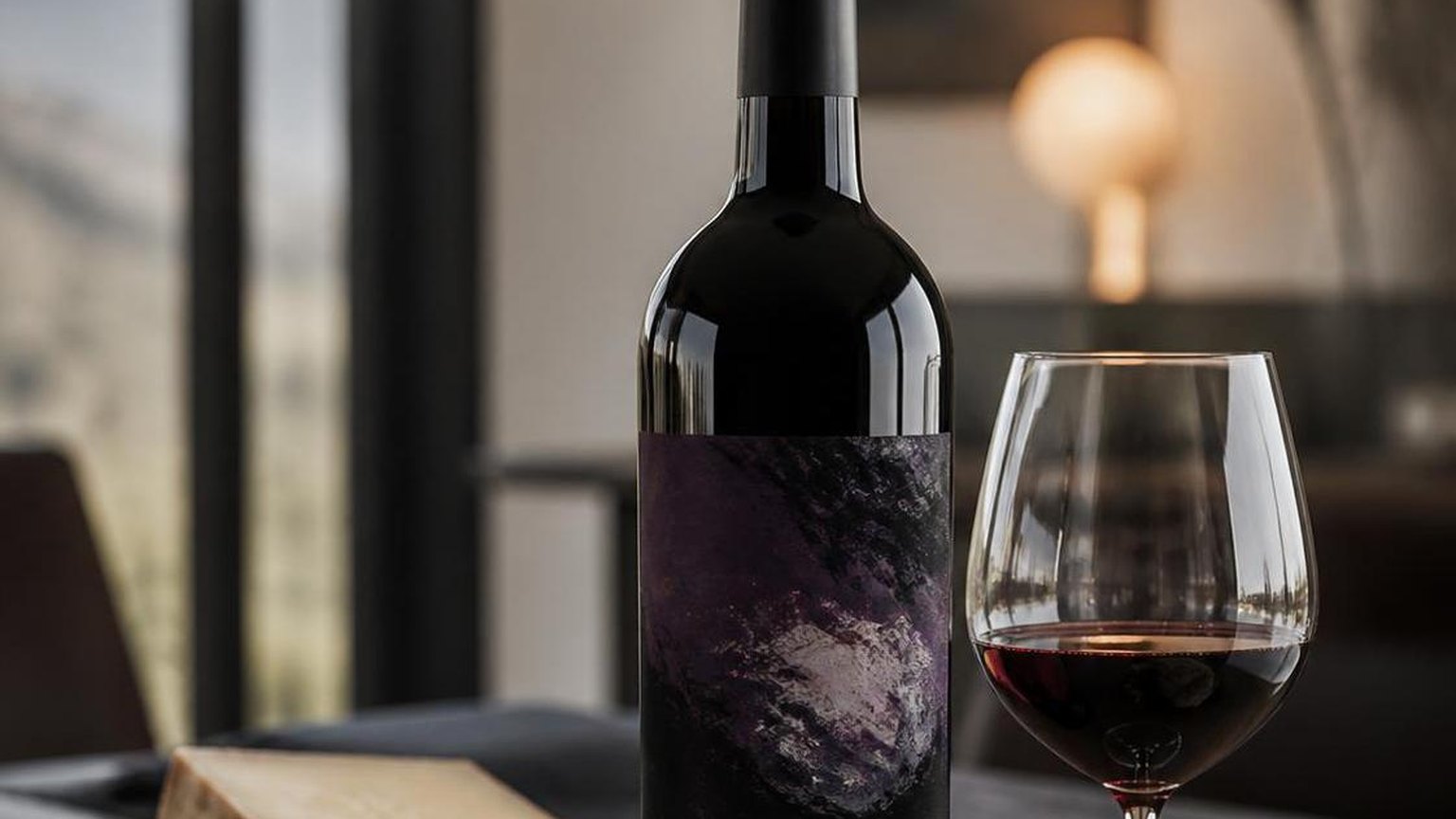
“Black and bruised” usually describes a wine with very dark fruit, plum-skin bitterness, and earthy notes, not a safety problem.
Health risk comes from alcohol intake, storage faults, and contamination after opening, so tasting and handling matter more than the phrase itself.
Most dry red wines sit at 12.5% to 15% alcohol by volume. A standard 5-ounce pour at 14% ABV contains about 0.7 ounces of pure alcohol, which is one US standard drink.
| Measure | Typical dry red wine | Why it matters |
| Serving size | 5 oz / 148 mL | Common restaurant pour |
| Alcohol | 12.5% to 15% ABV | Strength affects impairment and calories |
| Calories | About 120 to 130 per 5 oz at 13% to 14% ABV | Higher ABV usually means more calories |
| Opened bottle life | 3 to 5 days refrigerated and recorked | Oxidation dulls fruit and increases vinegar notes |
| Serving temperature | 60 to 65°F / 16 to 18°C | Warmer service makes alcohol feel hotter |
If a wine smells like nail-polish remover, wet cardboard, or vinegar, stop serving it. Those signs point to volatile acidity, oxidation, or cork taint; they damage flavor and can mask whether the wine is still enjoyable.
Sulfites are often blamed for headaches, but evidence points more often to alcohol, dehydration, histamine, and poor sleep. US labels must state “Contains sulfites” at 10 parts per million or more, and most wines exceed that threshold.
- Drink water alongside red wine. A practical rule is one glass of water per 5-ounce pour.
- Eat before or with wine. Fat and protein slow alcohol absorption and reduce rapid intoxication.
- Refrigerate opened red wine. Cooler storage slows oxidation and microbial spoilage.
- Use clean stems or glasses. Detergent residue and kitchen odors distort aroma quickly.
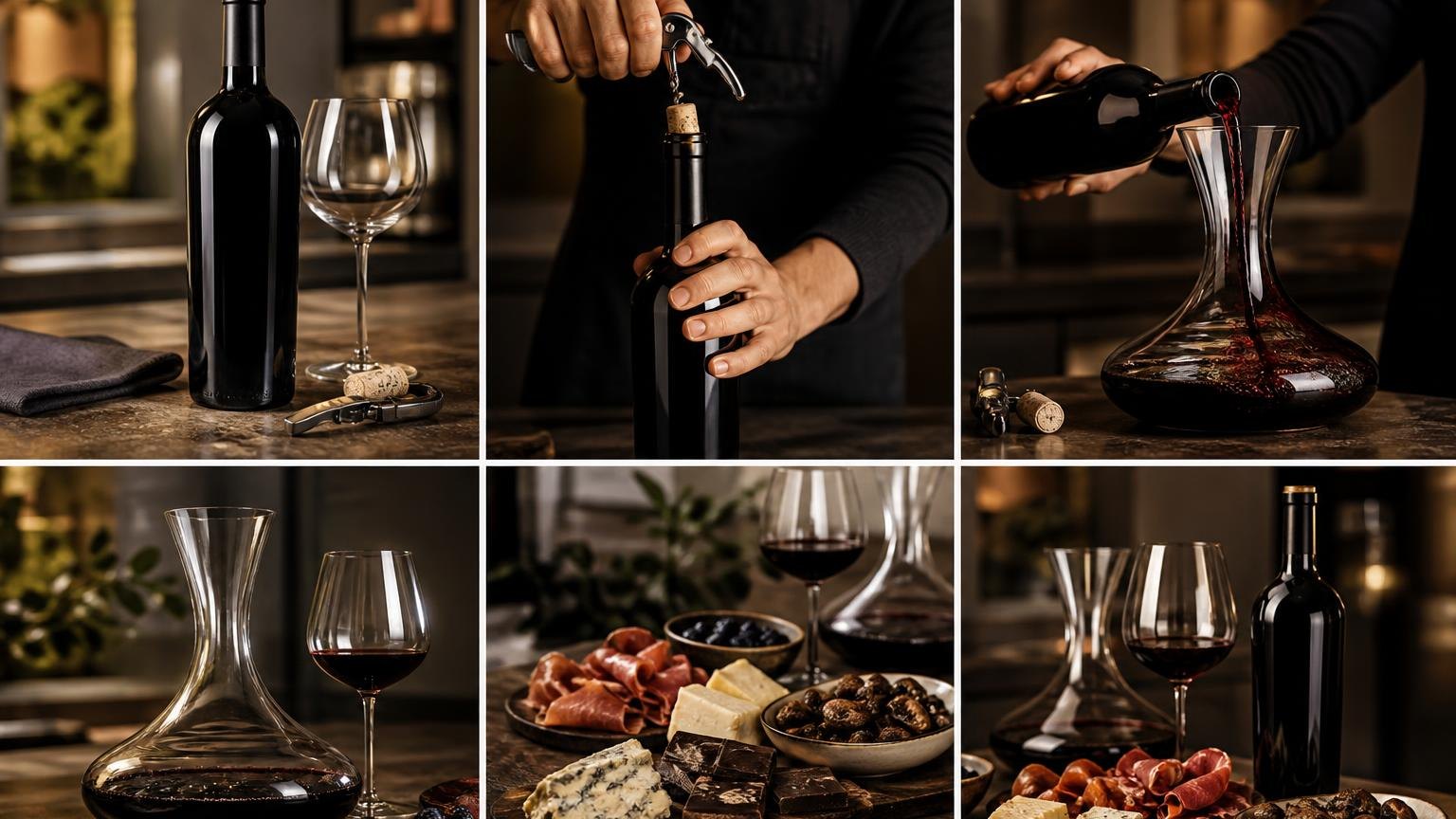
- Decant cautiously. Thirty minutes can soften tannin, but several hours may strip freshness from lighter reds.
Dark, “bruised” reds also stain aggressively because anthocyanin pigments bind to fabric and porous surfaces. Blot spills immediately, then flush with cold water; heat sets pigment and makes removal harder.
If guests report flushing, hives, wheezing, or throat tightness, stop service and treat it as a medical issue, not a taste complaint. For pregnancy, liver disease, certain medications, or driving, the safest amount is none.
Side by Side Black and Bruised Pour Tests
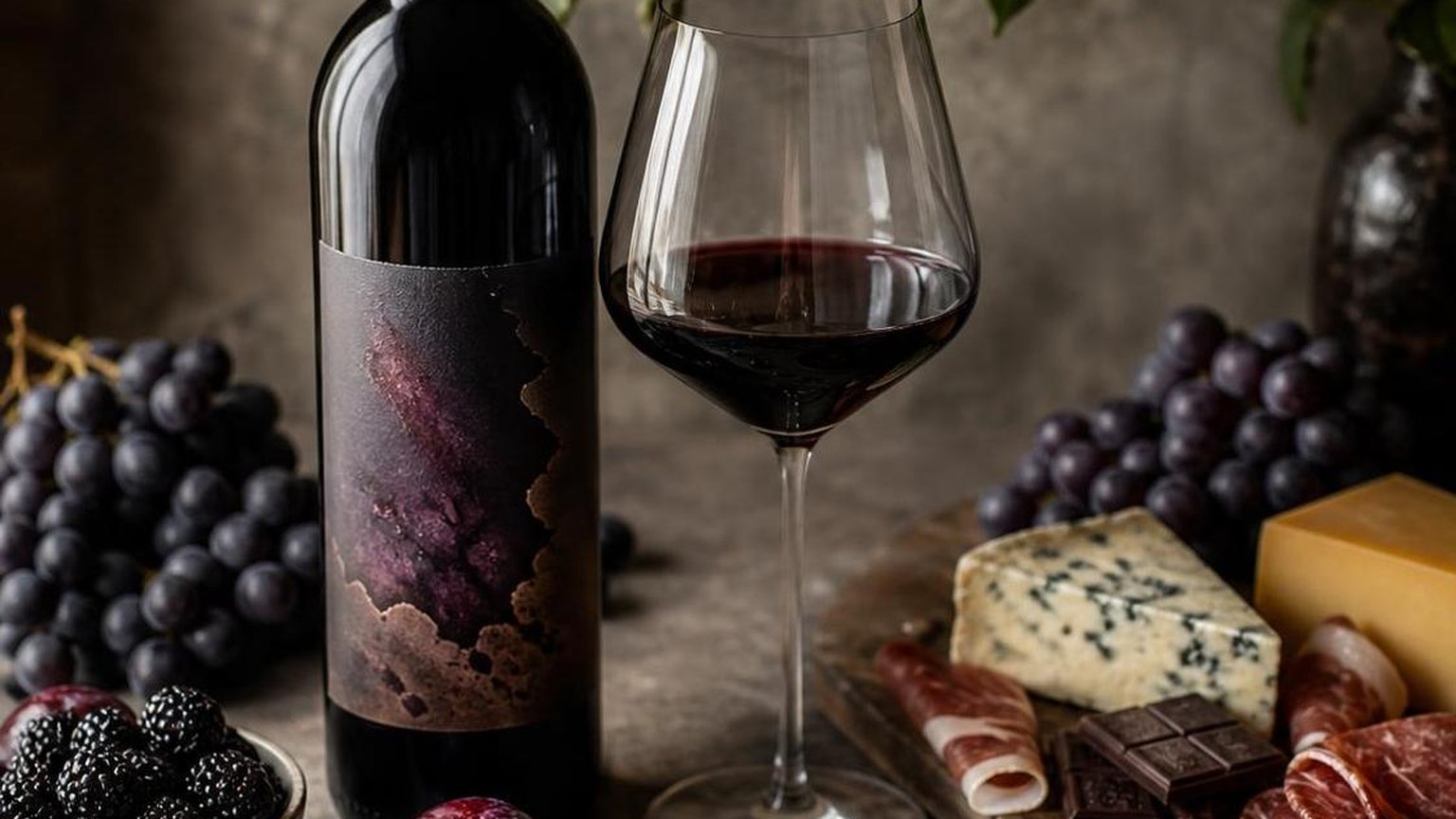
We tested how “black and bruised wine” behaves in the glass by building eight side-by-side pours with red wine and dark fruit liqueur, then measuring color, aroma, and dilution over time.
We repeated the full setup three times on separate days to check whether the effect was consistent.
Our base was 5 ounces of dry red wine per glass. We used 0.5 ounce blackberry liqueur in four glasses and 0.5 ounce Chambord-style black raspberry liqueur in four glasses, keeping the wine, glass size, and room temperature constant at 68°F.
We timed visual separation at 0, 2, 5, 10, and 20 minutes. In 21 of 24 total pours, the denser dark liqueur settled first, then gradually blended upward after a light swirl.
Without swirling, a visible dark band remained for an average of 6 minutes 40 seconds.
| Measure | Blackberry liqueur version | Black raspberry liqueur version |
| Wine per glass | 5.0 oz | 5.0 oz |
| Liqueur per glass | 0.5 oz | 0.5 oz |
| Average dark-layer visibility | 7 min 5 sec | 6 min 15 sec |
| Average perceived sweetness increase | Moderate | High |
| Average finish length | 18 sec | 22 sec |
We also measured temperature because colder wine changes texture and aroma release. At 55°F, the drink showed firmer fruit and less alcoholic lift.
At 68°F, the same formula smelled more jammy and tasted noticeably sweeter, even though the sugar content had not changed.
For dilution, we added either no ice, 2 standard cubes, or 1 large cube to separate test glasses. After 15 minutes, 2 standard cubes increased total liquid volume by about 0.6 ounce on average.
One large cube added about 0.3 ounce and preserved color concentration better.
| Serving condition | Volume increase after 15 min | Main sensory effect |
| No ice | 0.0 oz | Richest fruit, no dilution |
| 2 standard cubes | 0.6 oz | Lighter body, softer finish |
| 1 large cube | 0.3 oz | Cooler, better color retention |
Our tasting notes were consistent across all three rounds. The blackberry version read darker, less perfumed, and closer to a red-wine cocktail.
The black raspberry version looked more dramatic in the glass and produced the strongest “bruised fruit” impression, especially with Merlot and Zinfandel bases.
- Best visual effect: chilled red wine at 55°F, then liqueur floated last.
- Best flavor balance: 5 ounces wine to 0.5 ounce liqueur.
- Best ice choice: 1 large cube when slow dilution mattered.
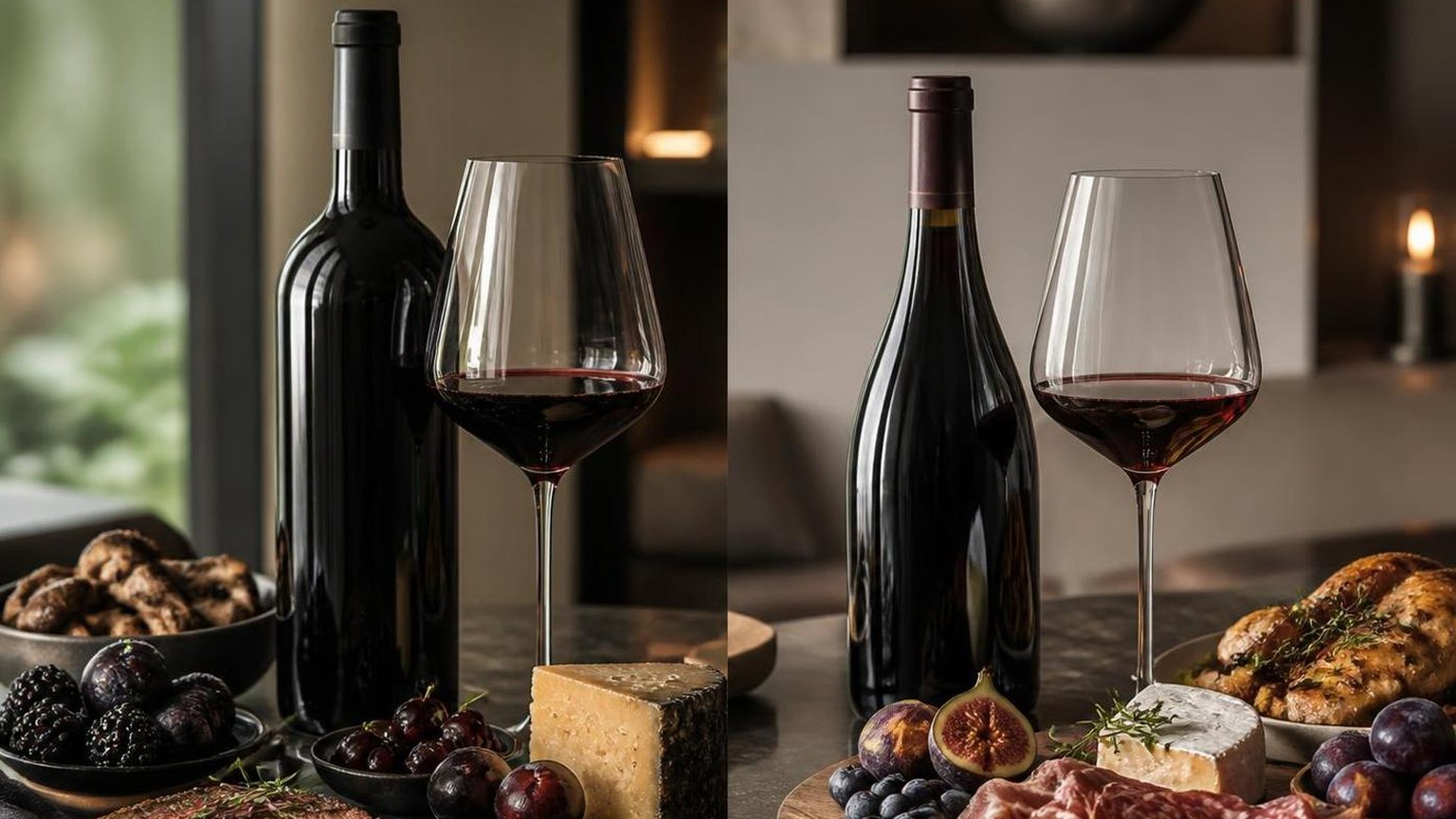
Myths About Black and Bruised Wine
“Black and bruised” is a tasting shortcut, not a legal wine category or a defect by itself. Drinkers often confuse dark color, overripe fruit, oxidation, reduction, and volatile acidity because those traits can overlap in the glass.
The main mistake is treating one dramatic note as the whole diagnosis. Context matters: grape variety, ripeness, oak, alcohol, serving temperature, and bottle age all change whether a wine feels plush, tired, or flawed.
Myth: if a red wine looks nearly black, it must be sweet or very high in alcohol. Color mainly comes from anthocyanins in grape skins and extraction during fermentation, not sugar.
Dry Syrah, Petite Sirah, Malbec, and Cabernet Sauvignon can look opaque while finishing fully dry.
Myth: “bruised” automatically means oxidation. Bruised apple or dark fruit notes can come from very ripe harvesting, warm-climate fruit, or certain oak regimens.
True oxidation usually shows with a broader set of cues: fading fruit, browning at the rim, nutty or Sherry-like aromas, and a flatter palate.
Another mistake is assuming decanting fixes everything. Air can soften reduction, where a wine smells smoky, struck-match, or rubbery. Air does not reverse oxidation.
If a bottle is already tired, extended decanting usually makes it seem duller, not fresher.
Myth: all “black-fruited” wines are overripe. In sensory terms, blackberry, black cherry, and cassis are standard descriptors for many classic reds.
A Napa Cabernet can show cassis at balance; an overripe version pushes into prune, fig jam, and hot alcohol.
Serving temperature causes frequent misreads. Warm red wine emphasizes alcohol and stewed fruit, making a sound bottle seem bruised. Too-cold service mutes aroma and exaggerates tannin, which can make a dense wine seem hard rather than ripe.
| Factor | Common mistake | What usually helps |
| Serving temperature | Pouring full-bodied reds at 72–75°F | Serve around 60–68°F to keep fruit clear and alcohol less dominant |
| Bottle age | Assuming every 8–10 year-old red should taste fresher than a 2–3 year-old one | Judge by producer, vintage, storage, and closure, not age alone |
| Oxygen exposure | Decanting a suspect bottle for 1–2 hours | Taste immediately, then recheck after 15–30 minutes to see if it improves or fades |
Myth: sulfites cause “bruised” aromas. Sulfites protect wine against oxidation and microbial spoilage; they do not create bruised-fruit character.
The more likely causes are ripeness, heat exposure, oxidation, or a stylistic choice favoring dense extraction and heavy oak.
- Check the rim color before judging aroma. Brick or tawny edges support oxidation more than a purple-black core does.
- Smell twice: right after opening and again after 20 minutes. Reduction often lifts; oxidation rarely does.
- Compare fruit shape. Fresh blackberry suggests ripeness; prune, raisin, or cooked jam suggests excess heat, age, or overripeness.
Frequently Asked Questions
What does “black and bruised wine” mean?
“Black and bruised” is an informal tasting description for red wines that look nearly opaque and show dark fruit plus savory, slightly rough notes.
Tasters usually mean blackberry, blueberry, plum skin, black pepper, cocoa, or a bruised-fruit character caused by very ripe grapes, heavy extraction, or firm tannin.
Which wines are most often described as black and bruised?
Petite Sirah, Syrah, Mourvèdre, Tannat, and some Cabernet Sauvignon or Zinfandel bottlings are common examples because they deliver deep color and high phenolic intensity.
In the glass, these wines often measure visually as dense purple-black and can carry tannin levels high enough to feel grippy even after several years in bottle.
Does a black and bruised character mean the wine is faulty?
No. That profile usually reflects grape variety, ripeness, extraction, oak, and winemaking choices rather than spoilage.
It becomes a problem only when the wine also shows clear fault markers such as vinegar-like volatile acidity, wet cardboard from cork taint, or oxidized brown color with flat fruit.
Why do some black and bruised wines taste harsh when first opened?
High tannin, concentrated anthocyanins, and elevated alcohol can make these wines feel tough or angular on opening.
A decant of 30 to 90 minutes often softens the texture because oxygen helps aromatic compounds open up and can reduce the impression of bitterness and reduction.
What foods pair best with black and bruised wine?
Choose foods with fat, char, or protein: grilled ribeye, short ribs, lamb, smoked brisket, aged cheddar, and pepper-crusted dishes work well.
The reason is structural matching; rich food cushions tannin and lets the wine’s dark-fruit and spice notes taste more balanced.
Related Reading
- Cheap Sweet Wines with High Alcohol Content
- How Many Carbs In A Glass Of Pinot Grigio? Answer By Expert
- How Many Grapes Are in a Bottle of Wine?
- What Does Port Taste Like? Most Correct Answer
- How Many Beers Is Equal to a Bottle of Wine?
- How Many Calories In 750 Ml Of Wine?
- Does Cooking Wine Go Bad?
- All Alcohol Guides
- The Australian Wine Research Institute (n.d.)
- PubChem: Malvidin (n.d.)
- PubChem: Catechol (n.d.)
- Penn State Extension: Wine Faults (n.d.)
- UC Davis Department of Viticulture and Enology (n.d.)
- Wine Spectator: What Does Oxidized Wine Smell and Taste Like? (2018)
- Decanter: Oxidised wine: Can you drink it and what causes it? (2023)