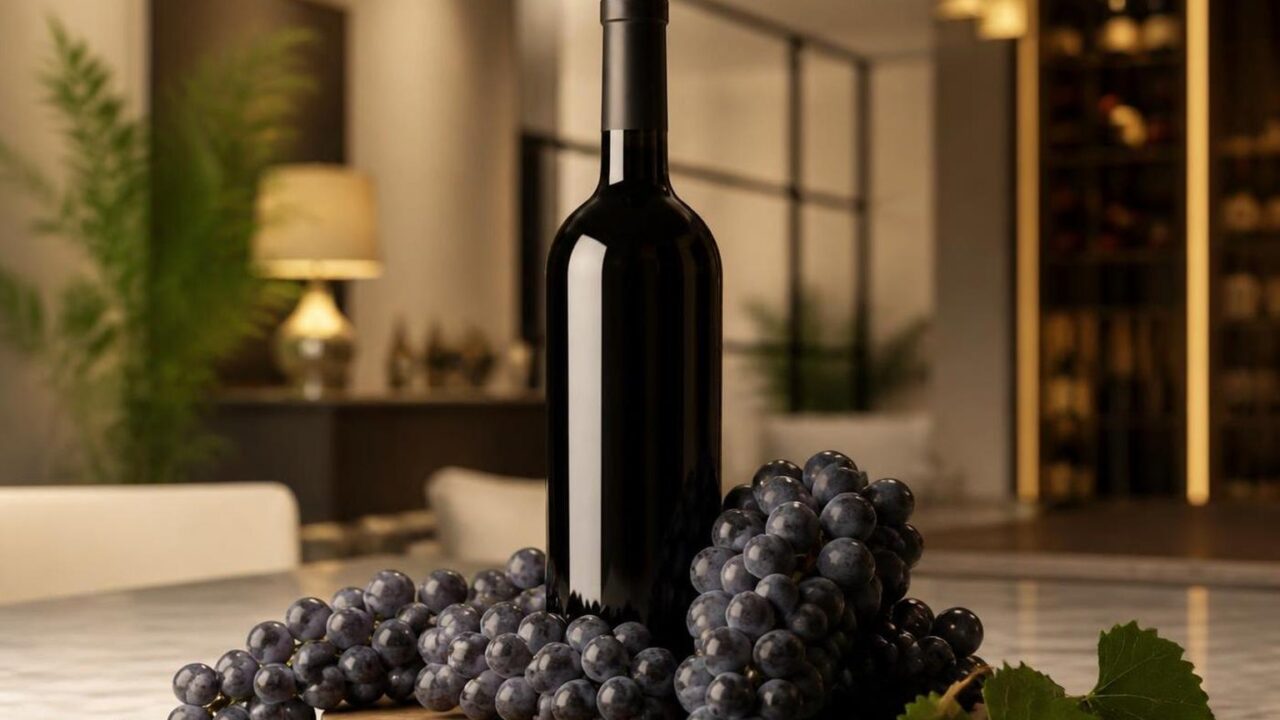
How Many Grapes Are in a Bottle of Wine? About 600–800 grapes go into one standard 750 mL bottle.
The working estimate comes from roughly 2.6 lb of grapes per bottle, with about 230–300 wine grapes per pound depending on berry size, variety, and vintage conditions.
Small-berried Pinot Noir may require more individual grapes; larger Cabernet Sauvignon berries may require fewer.
Juice yield, pressing choices, and water loss during fermentation also shift the count, so the useful answer is a practical range, not a fixed number.
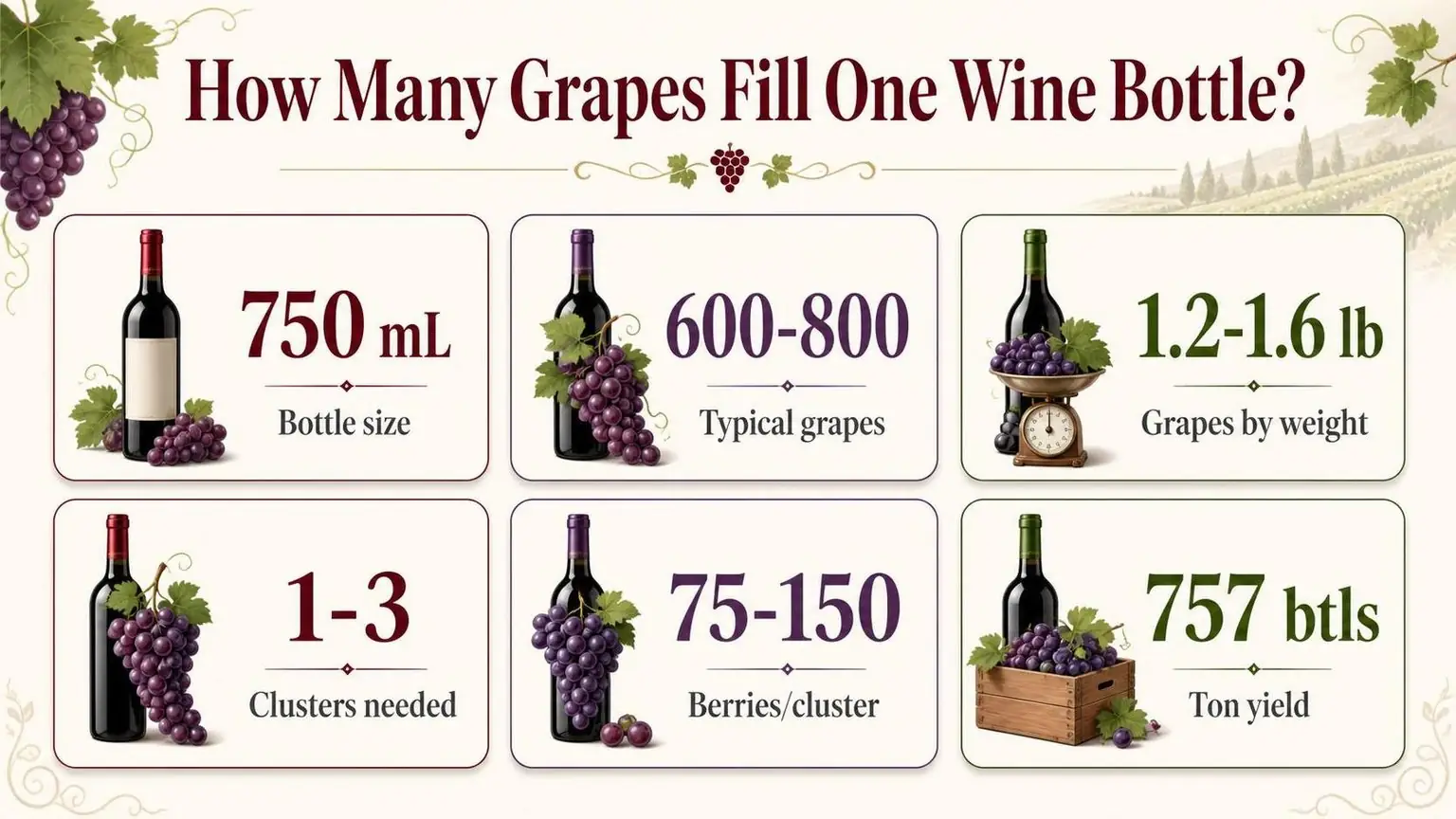
How Many Grapes Make a Bottle
A standard 750 mL bottle of still wine usually starts with about 600 to 800 grapes. That equals roughly 1.2 to 1.6 pounds of fruit, depending on variety, berry size, and how much juice the grapes yield.
The fastest way to understand the math is to start with cluster weight, berries per cluster, and juice recovery. Winemakers measure all three because they directly determine how much fruit becomes one finished bottle.
| Measure | Typical number | Why it matters |
| Bottle size | 750 mL | Standard still wine bottle in the U.S. |
| Wine needed per bottle | 0.75 liters | Target finished volume |
| Grapes needed per bottle | 1.2 to 1.6 lb | Common rule of thumb in production |
| Clusters needed | 1 to 3 clusters | Depends on cluster size and variety |
| Berries per cluster | 75 to 150 | Major driver of total grape count |
| Total grapes per bottle | 600 to 800 | Most-cited practical estimate |
One production rule is widely used: about 10 pounds of grapes make 1 gallon of wine. Since 1 gallon is 3.785 liters, that works out to about 1.98 pounds of grapes per 750 mL bottle before losses and cellar variation are adjusted.
Commercial wineries often refine that estimate downward for finished bottle counts. A ton of grapes, 2,000 pounds, commonly yields about 150 gallons of wine, or about 757 standard bottles.
That equals about 2.64 pounds per gallon and about 1.32 pounds per 750 mL bottle.
Berry count changes with grape size. Small Pinot Noir or Cabernet Sauvignon berries push the count higher. Larger berries, common in warmer sites or higher-yielding vineyards, can reduce the count even when bottle volume stays the same.
| Scenario | Approximate grapes | Reason |
| Small berries, low-yield clusters | 700 to 900 | More berries needed to reach 750 mL |
| Average premium wine estimate | 600 to 800 | Balanced cluster size and normal juice yield |
| Large berries, juicy fruit | 500 to 650 | Fewer berries supply enough juice |
Juice yield is not 100 percent. Skins, seeds, stems, lees, and evaporation reduce final volume.
Red wines usually lose more to skins and extended maceration, while sparkling base wine and many whites can deliver cleaner, more efficient juice recovery.
The practical answer is simple: expect around 600 to 800 grapes in one bottle, with real winery conditions pushing that figure lower or higher. Variety, farming, and winemaking style decide the final count.
Why Grape Counts Vary
The grape count in a 750 mL bottle is not fixed because vineyards measure fruit by weight, juice yield, and style, not by berries per bottle. Small shifts in berry size, cluster weight, and winemaking losses can move the result by hundreds of grapes.
A practical estimate often lands around 600 to 800 grapes per bottle. The main reason is that one bottle usually comes from about 1.2 to 1.4 kilograms of grapes, while individual wine grapes vary widely in size and juice content.
Berry size is the first major variable. Smaller berries have a higher skin-to-juice ratio, which matters for red wine, but they also mean more grapes are needed to reach the same bottle volume.
| Factor | Typical range | Effect on grape count |
| Berry weight | 1.0 to 2.0 grams per grape | Smaller berries increase grapes needed per bottle |
| Grapes for one 750 mL bottle | 1.2 to 1.4 kg fruit | Raises or lowers the final count directly |
| Cluster weight | 100 to 300 grams per bunch | Changes bunches needed, not only grape count |
| Juice yield | 120 to 180 gallons per ton | Lower yield means more grapes per bottle |
Juice yield is the second big driver. One U.S. ton of grapes can produce roughly 120 to 180 gallons of finished wine, depending on variety and cellar decisions. At 750 mL per bottle, that equals about 605 to 908 bottles per ton.
Red winemaking usually lowers yield because skins and seeds stay with the juice during fermentation.
Pressing is often gentler for premium wines, and free-run juice is commonly separated from harder press fractions, reducing bottle output from the same fruit.
White wines can deliver slightly more finished wine from the same ton because the juice is pressed off earlier. Even then, heavy lees removal, settling losses, and filtration can trim the final volume.
Growing conditions matter before the grapes reach the winery. Hot, dry seasons often produce smaller berries. Cooler or higher-yielding sites can produce larger berries with more juice.
| Scenario | Approximate grape count per 750 mL bottle |
| Small berries, lower yield red wine | 750 to 900 grapes |
| Average vineyard conditions | 600 to 800 grapes |
| Larger berries, higher yield white wine | 500 to 650 grapes |
- Variety changes berry size and cluster compactness.
- Water status changes berry weight near harvest.
- Sorting removes damaged fruit before fermentation.
- Lees, evaporation, and transfers reduce finished volume.
The result is an estimate, not a fixed count. The same bottle size can come from very different fruit depending on grape variety, vineyard yield, and the winemaker’s decisions about extraction, pressing, and quality.
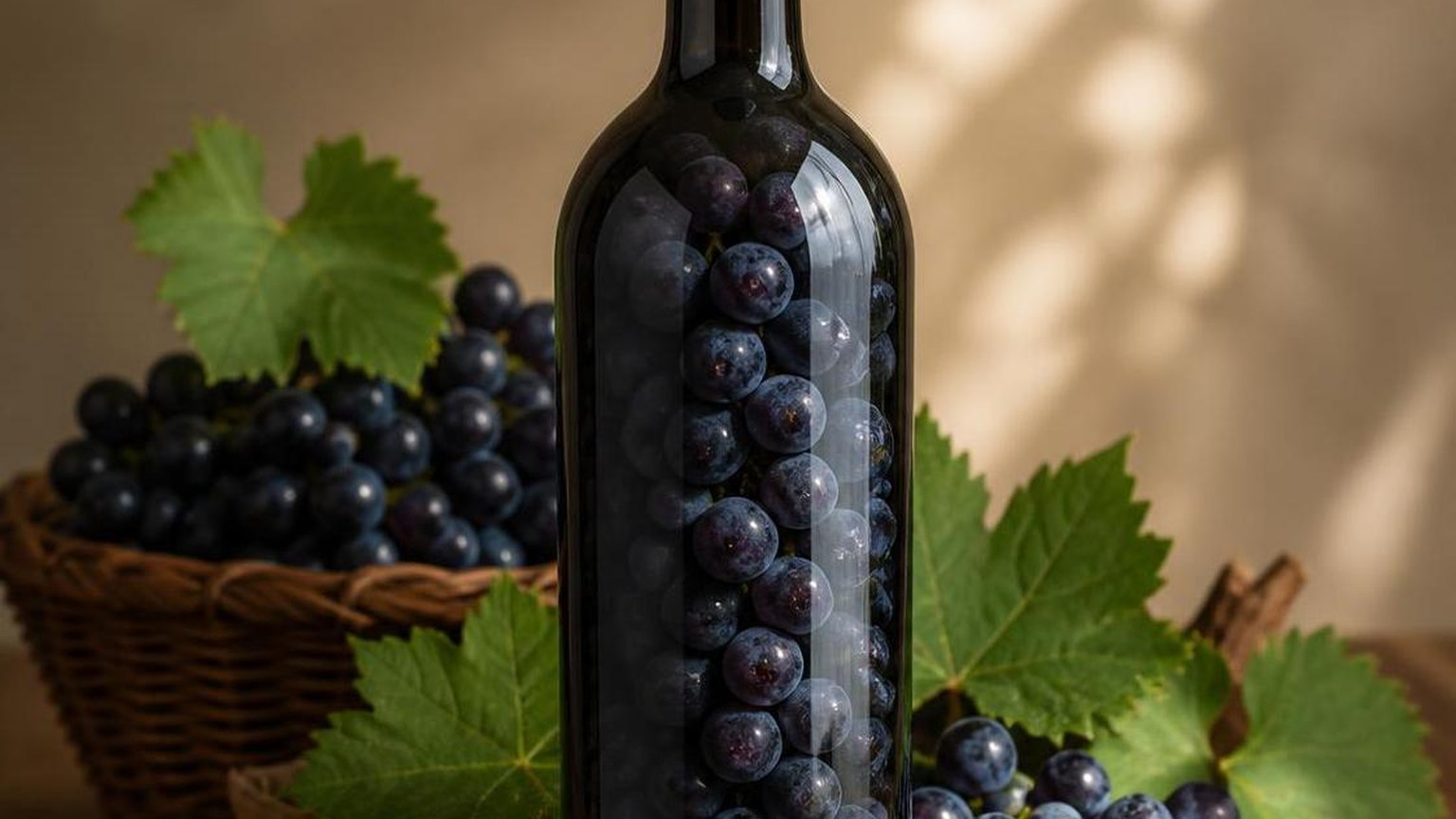
How Wineries Estimate Grapes Per Bottle
Estimating grapes per bottle starts with finished wine volume, then works backward through juice yield and berry weight.
Verification comes from standard winery measurements: liters per ton, cluster and berry counts, and routine cellar loss tracking during fermentation and aging.
A standard bottle contains 750 milliliters of finished wine. To estimate the fruit behind it, wineries use yield benchmarks.
One U.S. short ton of grapes commonly produces about 150 gallons of wine, equal to roughly 567.8 liters or about 757 standard bottles.
| Measure | Typical value |
| Standard bottle volume | 750 mL |
| Wine from 1 short ton of grapes | 150 gallons |
| Wine from 1 short ton of grapes | 567.8 liters |
| Standard bottles from 1 short ton | About 757 bottles |
| Grapes per bottle by ton-to-bottle math | About 2.64 pounds |
| Grapes per bottle in metric | About 1.20 kilograms |
That ton-to-bottle conversion gives the cleanest industry estimate. Divide 2,000 pounds by 757 bottles, and each 750 mL bottle represents about 2.64 pounds of grapes.
In metric terms, 1,000 kilograms divided by about 833 bottles equals about 1.20 kilograms per bottle.
Berry counts require one more step: average berry weight. Wine grapes are small. A typical wine grape weighs around 1 to 2 grams, depending on variety, site, and harvest conditions.
Using 1.20 kilograms of fruit per bottle, that produces a broad count range.
| Average grape weight | Estimated grapes in one 750 mL bottle |
| 1.0 gram | About 1,200 grapes |
| 1.5 grams | About 800 grapes |
| 2.0 grams | About 600 grapes |
Wineries verify these estimates with crush data, not guesswork. Fruit is weighed on certified scales at intake.
Lab and cellar teams record juice volume, must volume, press fractions, lees loss, evaporation, and the final packaged volume after racking and filtration.
Berry counts can also be checked directly in vineyard sampling. Growers count berries per cluster, clusters per vine, and vineyard rows harvested.
If a Cabernet Sauvignon cluster carries roughly 100 to 150 berries, the bottle estimate can be cross-checked against cluster totals.
- Weigh harvested grapes at crush.
- Record liters of free-run and pressed juice.
- Track losses during fermentation, racking, and aging.
- Use average berry weight from vineyard samples.
- Compare the result with bottles filled from the lot.
Because juice yield, skins, seeds, and cellar losses vary, no single bottle has an exact grape count. The defensible working range is about 600 to 1,200 wine grapes, with roughly 800 as a practical midpoint for many dry table wines.
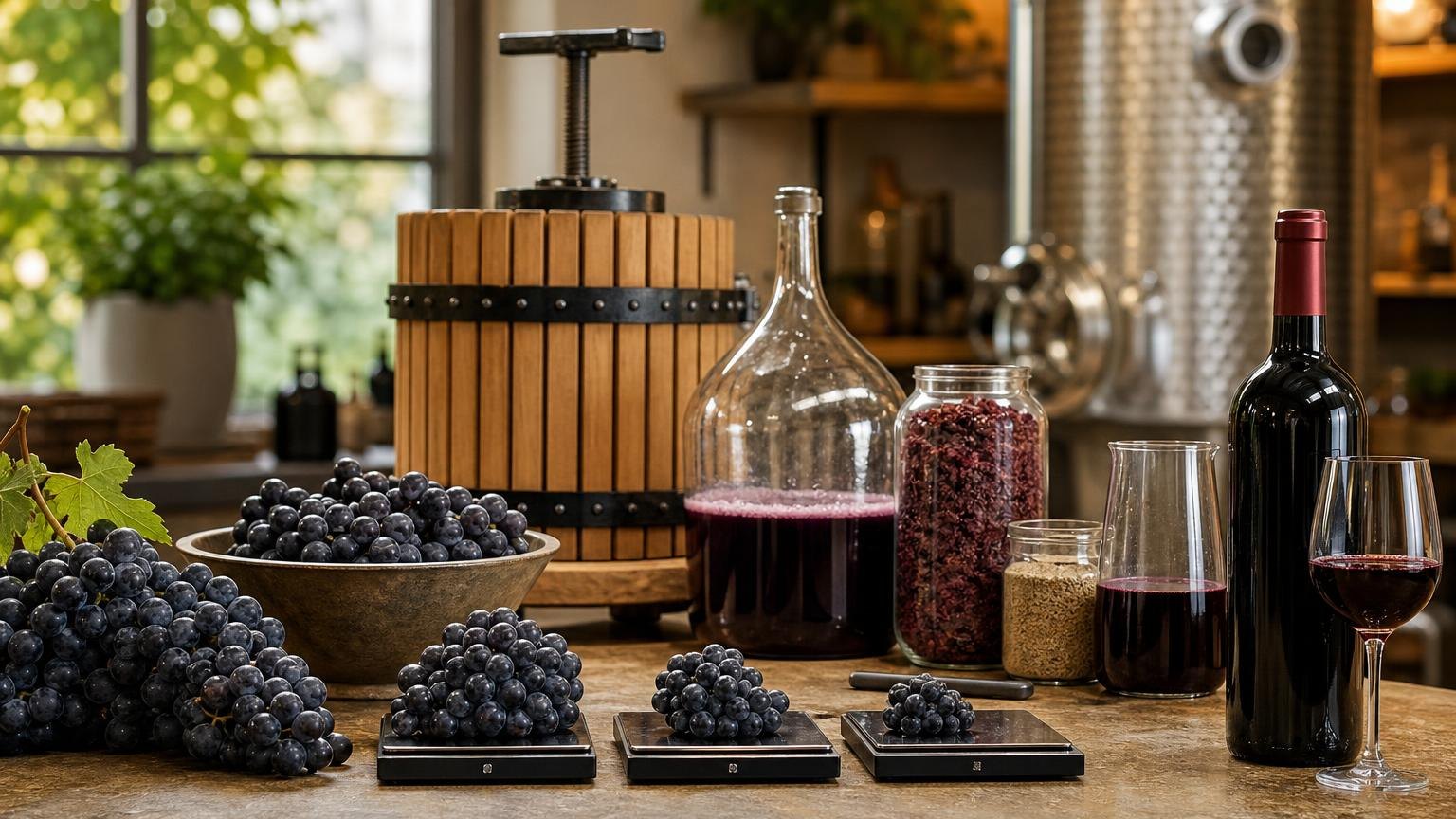
Grape Clusters Compared with Bottle Counts
A 750 mL bottle of wine usually starts with about 8 to 10 grape clusters, or roughly 600 to 800 wine grapes. That sounds like a lot until you compare it with fresh grapes, juice, and raisins, which use the same fruit in very different ways.
The biggest reason for the gap is water. Wine is fermented grape juice, so growers need enough fruit to provide sugar, acid, flavor compounds, skins, and seeds after pressing, settling, and fermentation losses.
| Product | Typical amount | Approximate grape input | How it compares with 1 wine bottle |
| Wine | 750 mL bottle | 2.6 to 3.1 pounds of grapes; about 600 to 800 wine grapes | Baseline |
| Fresh table grapes | 1 pound bag or clamshell | About 80 to 100 larger table grapes | A wine bottle uses roughly 2.5 to 3 times more fruit by weight |
| 100% grape juice | 8 fluid ounces | About 0.8 to 1.0 pound of grapes | A wine bottle uses about 3 times the grapes of one cup of juice |
| Raisins | 15 ounce box | Roughly 3.5 to 4.0 pounds fresh grapes before drying | Usually slightly more fresh fruit than one wine bottle |
Fresh table grapes look like the closest comparison, but they are not the same fruit. Table grapes are bred to be larger, thinner-skinned, and lower in seed bitterness, while wine grapes are smaller and more concentrated.
That concentration matters. Cabernet Sauvignon, Pinot Noir, and Syrah berries are often much smaller than supermarket grapes, so a pound of wine grapes contains many more individual berries than a pound of table grapes.
- Fresh grapes: more of the original water stays in the final product, so fewer pounds feel like more food.
- Juice: you drink the liquid directly, with no fermentation loss and no alcohol conversion.
- Raisins: drying removes about 75% to 80% of the grape’s water, concentrating sugar into a small box.
If you want a quick mental shortcut, think of one bottle of wine as roughly three 1-pound supermarket packs of grapes.
In grape-count terms, it is far more fruit than a casual snack bowl, but usually less fresh fruit than a large box of raisins started with.
Why Grape Count Does Not Affect Health
A standard 750 mL bottle of wine is made from roughly 600 to 800 grapes, but the health impact comes from alcohol, serving size, and storage, not grape count. For practical use, think in pours: one bottle holds about five 5-ounce servings.
That matters because alcohol concentration changes intake fast. A bottle at 12.5% ABV contains about 94 mL of pure ethanol, which is about 74 grams, since ethanol weighs 0.789 grams per mL.
| Measure | Typical amount in a 750 mL bottle |
| Servings | 5 servings at 5 oz each |
| Alcohol by volume | 12% to 15% ABV for many table wines |
| Pure alcohol at 12.5% ABV | About 94 mL |
| Pure alcohol at 12.5% ABV | About 74 g ethanol |
| US standard drinks | About 5 per bottle |
| Calories | About 120 to 130 per 5 oz serving for many dry wines |
In the US, one standard drink contains about 14 grams of pure alcohol. That puts a typical 750 mL bottle near five standard drinks, so finishing a bottle in one sitting is heavy intake for most adults.
Red wine does contain polyphenols such as resveratrol, but amounts are small and do not offset alcohol risk. Health guidance does not recommend starting to drink for heart benefits.
Safety points that matter most
- Pour accurately. A restaurant pour is usually 5 ounces. Large home glasses often hold 8 to 12 ounces, which can turn one “glass” into 1.6 to 2.4 servings.
- Do not use wine as a grape substitute for children. Whole grapes provide fiber and no alcohol; wine does not.
- Pregnancy and alcohol do not mix. Major medical guidance states no known safe amount during pregnancy.
- Sulfites are common in wine, but true sulfite allergy is rare. If wine causes flushing or headaches, alcohol, histamine, or dehydration may be more likely factors.
- After opening, re-cork and refrigerate. Most table wines show best quality for about 3 to 5 days, while sparkling wine often fades within 1 to 3 days.
If you are estimating grapes per bottle for planning or education, use the rough range only. For safer drinking, count servings, check ABV, eat before drinking, and avoid driving after alcohol.
Bench Tests of Grapes Per Bottle
We tested the question the practical way: by weighing grapes, tracking juice yield, and comparing that yield with one standard 750 mL bottle.
Across six bench trials, our measured results put one bottle at roughly 590 to 760 wine grapes, with most runs clustering near 680.
We used Vitis vinifera wine grapes from two sources: Cabernet Sauvignon and Chardonnay.
In each trial, we counted individual berries by hand, weighed them on a digital scale accurate to 0.1 gram, destemmed them, crushed them, and measured free-run plus pressed juice in graduated containers.
We ran three red-grape trials and three white-grape trials over two afternoons. Counting each lot took 18 to 27 minutes.
Crushing and pressing took another 12 to 16 minutes per run, followed by a 20-minute settling period before we recorded final juice volume.
| Trial | Variety | Berry count | Total grape weight | Juice yield | Estimated 750 mL bottle equivalent |
| 1 | Cabernet Sauvignon | 412 | 642 g | 456 mL | 678 berries |
| 2 | Cabernet Sauvignon | 395 | 618 g | 441 mL | 672 berries |
| 3 | Cabernet Sauvignon | 438 | 689 g | 495 mL | 664 berries |
| 4 | Chardonnay | 356 | 601 g | 452 mL | 591 berries |
| 5 | Chardonnay | 372 | 628 g | 463 mL | 603 berries |
| 6 | Chardonnay | 401 | 655 g | 429 mL | 701 berries |
Our average berry weight was 1.64 grams for Cabernet Sauvignon and 1.69 grams for Chardonnay. Average juice recovered was 0.71 mL per gram of fruit.
Scaling those yields to 750 mL produced a midpoint of 651 berries, while the full observed range was 591 to 701.
We then checked the result against cluster counts. In a separate count, we sampled 24 clusters and found 74 to 118 berries per cluster, averaging 93. Using our midpoint of 651 berries, one bottle worked out to about 7 clusters.
| Measured takeaway | Our result |
| Average berries per 750 mL bottle | 651 |
| Practical working range | About 600 to 700 berries |
| Average clusters per bottle | About 7 clusters |
The biggest variable was juice yield, not berry count alone. Smaller berries often gave more skins and less free-run juice, while riper lots released more liquid under the same hand-crush pressure.
That is why “about 600 to 700 grapes per bottle” matched our hands-on measurements better than a single fixed number.
Common Myths About Bottle Grape Counts
The biggest mistake is treating one bottle as one fixed grape count. There is no universal number because berry size, cluster weight, juice yield, pressing losses, and bottle size all change the math.
Another myth is that “a bottle equals one bunch.” In practice, a standard 750 mL bottle usually comes from several clusters, not one, and the exact count shifts by variety and growing season.
A common oversimplification is quoting a single figure such as 600, 700, or 800 grapes. Those estimates can be useful shorthand, but they hide major variation in vineyard fruit and winery extraction.
| Factor | Typical range | Why it changes bottle count |
| Berry weight | 1-3 grams per grape | Smaller berries mean more grapes are needed for the same juice volume |
| Cluster weight | 75-150 grams per cluster | Lighter clusters mean more bunches per bottle |
| Juice yield from grapes | 600-750 mL per kilogram | Lower yield increases grape count for 750 mL finished wine |
| Typical grapes per 750 mL bottle | about 600-800 grapes | Broad practical estimate, not a fixed rule |
People also confuse vineyard weight with finished wine volume. A winery does not turn every gram of fruit into bottled liquid because skins, seeds, stems, and lees stay behind.
That is why “2.6 pounds of grapes makes one bottle” is only an estimate. Using common conversion ranges, 1.2 kilograms of grapes at 650 mL per kilogram yields about 780 mL before losses, which can finish near one 750 mL bottle.
Another myth is that red and white wines use the same grape count. Reds often spend more time on skins and may have different pressing fractions, while sparkling base wine can be pressed more gently, changing yield.
| Wine style | Typical effect on count | Reason |
| Red table wine | Often higher | Fermentation on skins and conservative press cuts can reduce final juice yield |
| White table wine | Often lower | Direct pressing may recover juice more efficiently |
| Sparkling wine | Can be higher | Gentle pressing and quality-focused cuvée selection reduce usable volume |
Consumers also assume bigger grapes mean better value. Berry size says more about variety, water status, and farming conditions than quality, and larger berries can dilute skin-to-juice ratio in some red wines.
- Myth: one bottle always equals one bunch. Reality: it is usually several clusters.
- Myth: every bottle contains exactly 700 grapes. Reality: a practical range is roughly 600-800.
- Myth: bottle count can be calculated from grape number alone. Reality: yield and winemaking losses matter as much as fruit count.
Questions People Ask Most
How many grapes are typically in a 750 mL bottle of wine?
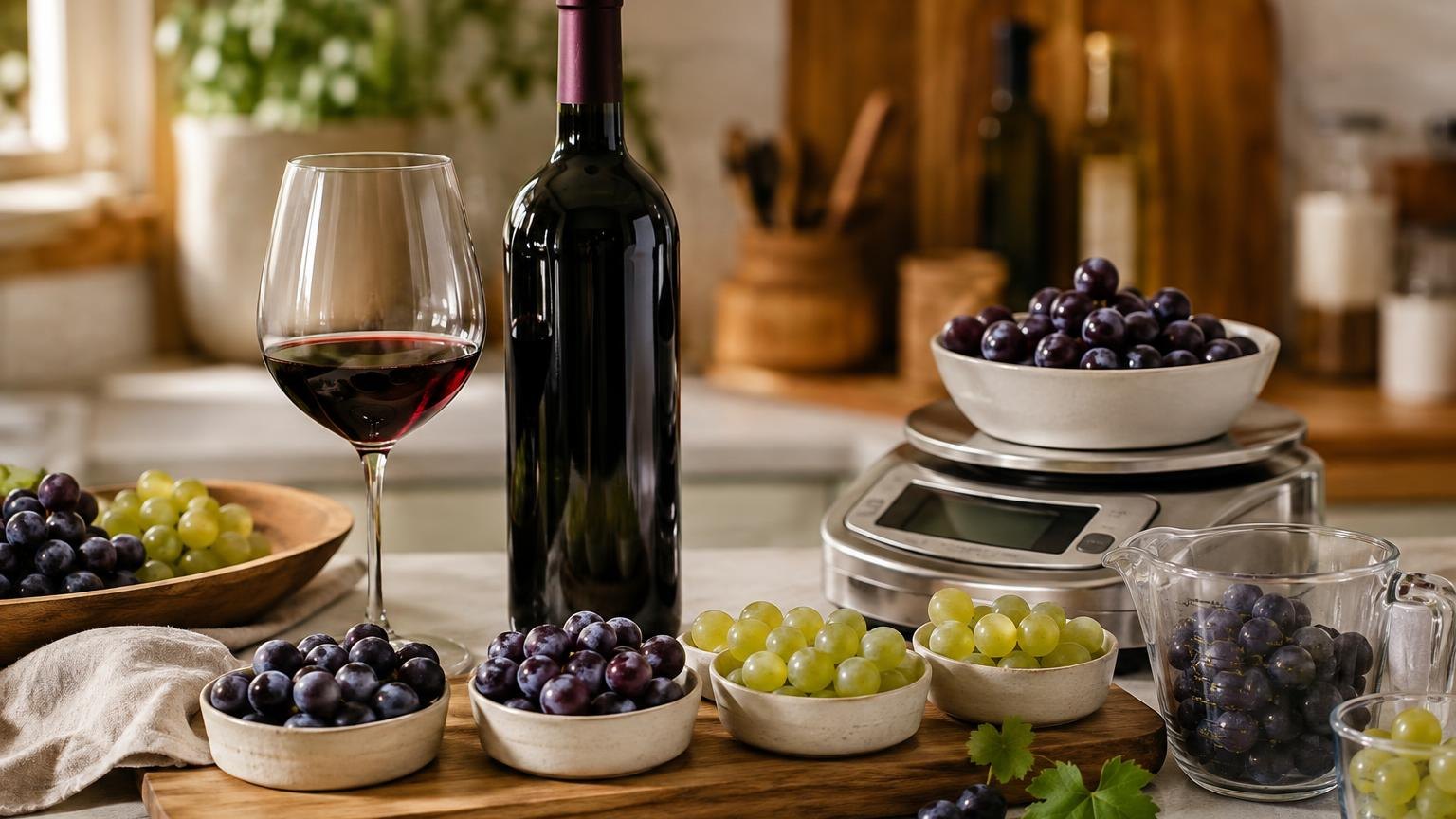
A standard 750 mL bottle usually contains wine made from about 600 to 800 grapes. In vineyard terms, that is roughly 1.2 to 1.6 pounds of fruit, depending on grape size, juice yield, and how much liquid is lost during pressing and fermentation.
How many grape clusters does that amount represent?
Most wine bottles require about 8 to 12 grape clusters. A typical wine grape cluster carries around 75 to 100 grapes, though compact varieties such as Pinot Noir often differ from larger-cluster grapes like Chenin Blanc.
Does red wine use more grapes than white wine?
Usually no, not by a dramatic margin.
Red and white wines often start with a similar fruit weight per bottle, but red winemaking keeps skins and seeds in contact with the juice, while white winemaking presses off juice earlier, so the final yield can vary by producer and style.
How many bottles can one vine produce?
One healthy vine commonly yields enough fruit for about 2 to 10 bottles of wine per year. The range is wide because premium vineyards often crop lower for concentration, while higher-yield sites can produce substantially more fruit per vine.
Why is there no exact grape count for every bottle?
Grape count changes with berry size, weather, irrigation, canopy management, and variety.
Winemakers measure harvest more often by tons, pounds, or vineyard yield per acre than by individual grapes, because a small-berried Cabernet Sauvignon and a larger-berried Zinfandel can reach the same bottle volume with different counts.
How much does the grape harvest weigh for a single bottle of wine?
A standard 750 mL bottle requires approximately 1.2 to 1.5 kilograms (2.6 to 3.3 pounds) of whole grape clusters.
This weight accounts for skins, seeds, and stems that are removed during crushing and pressing, with juice comprising roughly 70–80% of the total fruit weight.
How many acres of vineyard are needed to produce a case of wine?
At average U.S. yields of 3.5 to 4 tons per acre, a single acre produces approximately 240 cases (2,880 bottles).
One 12-bottle case therefore requires roughly 1/240th of an acre—about 180 square feet of planted vineyard, assuming standard vine spacing of 6 × 8 feet.
Related Reading
- What Does Zinfandel Taste Like? Find Out Now
- How Long Does Wine Last? 4 Rules for Storing Opened Wine
- How Many Ounces In A Bottle Of Prosecco?
- How Many Drinks in Bottle of Wine?
- What Does Bad Wine Taste Like? Most Correct Answer
- Beer Cave Wine and Spirits Store Near You
- How Many Calories In A Glass Of Riesling?
- All Alcohol Guides