
How Many Drinks in Bottle of Wine? is 5 standard 5-ounce drinks in a typical 750-mL bottle at about 12% ABV.
The math comes from the U.S. standard drink definition: 0.6 fluid ounces of pure alcohol, which matches 5 ounces of table wine at 12% alcohol.
In practice, the count changes with pour size, bottle format, and ABV. A restaurant pour is often 5 ounces, while home pours commonly run larger.
This guide breaks down standard drinks, servings per bottle, sparkling and fortified wines, and why a 14.5% Cabernet delivers more alcohol than an 11% Riesling.
Servings in a 750 mL Bottle
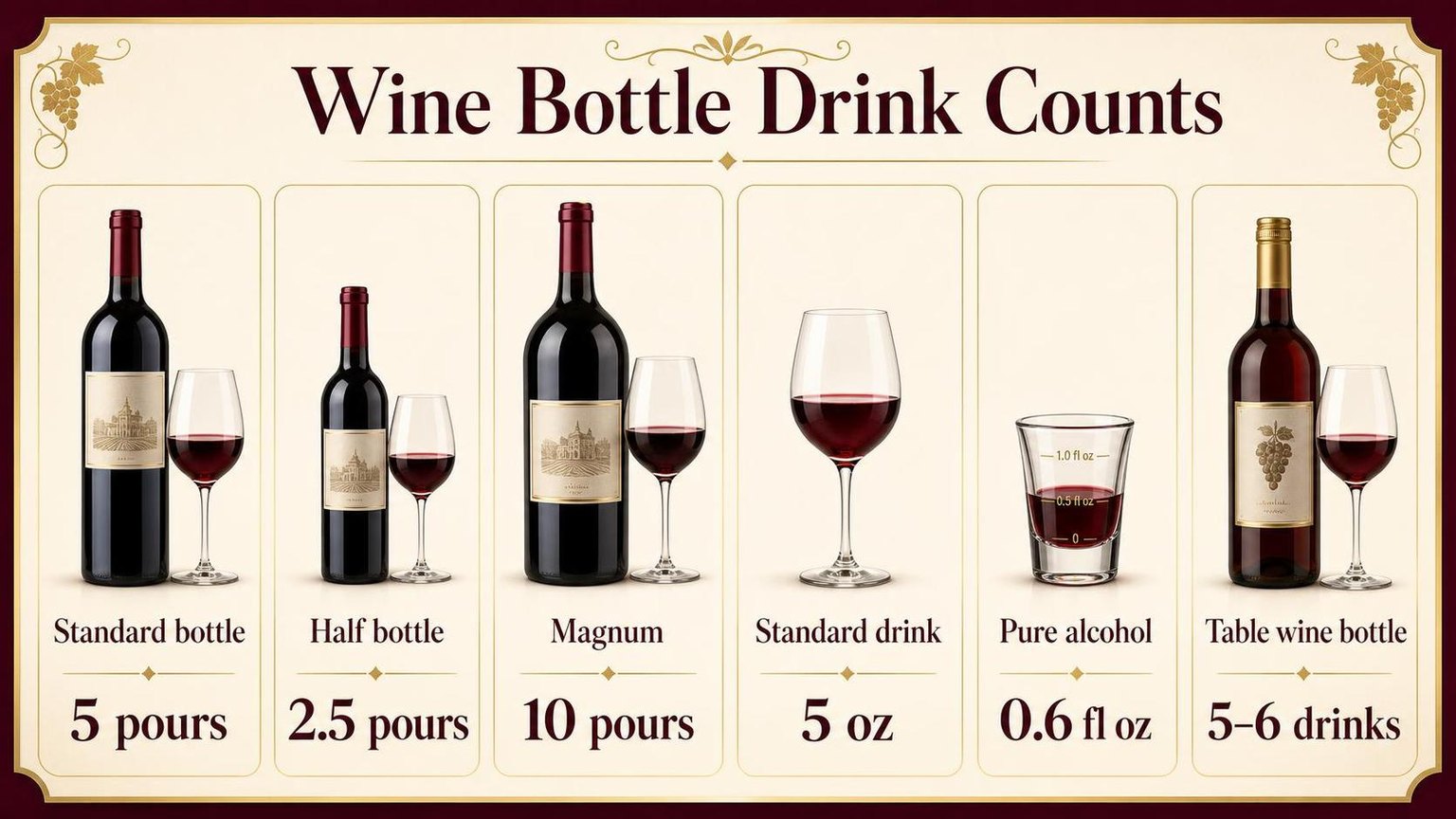
A standard 750 mL bottle of wine contains about five 5-ounce servings. In U.S. alcohol guidelines, each 5-ounce pour of wine at 12% ABV counts as one “standard drink,” according to the National Institute on Alcohol Abuse and Alcoholism.
| Wine amount | Approximate ounces | Typical servings | Standard drinks, if 12% ABV |
| Standard bottle | 750 mL / 25.4 oz | 5 pours of 5 oz | About 5 |
| Half bottle | 375 mL / 12.7 oz | 2.5 pours of 5 oz | About 2.5 |
| Magnum | 1.5 L / 50.7 oz | 10 pours of 5 oz | About 10 |
The “five glasses per bottle” rule assumes restaurant-style 5-ounce pours, not a filled-to-the-rim home glass. Many wine glasses hold 12 to 20 ounces, so the visible fill level can be misleading.
| Pour size | Servings from 750 mL | Practical meaning |
| 3 oz tasting pour | About 8 | Common for flights or structured tastings |
| 5 oz standard pour | About 5 | Used for U.S. standard drink calculations |
| 6 oz generous pour | About 4 | Common at casual dinners |
| 8 oz large pour | About 3 | Two pours can equal more than three standard drinks |
Alcohol percentage changes the math. A 5-ounce glass of 14.5% Napa Cabernet contains more alcohol than a 5-ounce glass of 11% Riesling, even though the serving size looks identical.
| Wine style example | ABV | Standard drinks in one 750 mL bottle |
| Lower-alcohol white or rosé | 11% | About 4.6 |
| U.S. guideline reference wine | 12% | About 5.0 |
| Fuller-bodied red | 14.5% | About 6.0 |
| Fortified wine | 18% | About 7.5 |
The formula is simple: bottle ounces multiplied by ABV, then divided by 0.6. The 0.6 figure represents the fluid ounces of pure alcohol in one U.S. standard drink.
- 750 mL bottle: 25.4 ounces total volume.
- Standard wine serving: 5 ounces.
- Standard drink reference: 5 ounces of wine at 12% ABV.
- Pure alcohol per standard drink: 0.6 fluid ounces.
- Best quick estimate: most table wine bottles contain 5 to 6 standard drinks.
Why Drink Counts Vary
The answer changes because “drink” can mean either a restaurant-style pour or a U.S. standard drink. In the United States, one standard drink contains 14 grams, or 0.6 fluid ounces, of pure alcohol.
A regular 750 ml bottle holds 25.4 fluid ounces. At 12% ABV, that equals about 5.1 U.S. standard drinks, which is why the common shortcut is “five drinks per bottle.”.
Bottle Size
Wine bottles are not all 750 ml. The same pour size produces very different serving counts when you move from a split to a magnum.
| Bottle | Volume | Approx. 5 oz pours |
| Split or piccolo | 187 ml / 6.3 oz | 1.25 |
| Half bottle | 375 ml / 12.7 oz | 2.5 |
| Standard bottle | 750 ml / 25.4 oz | 5 |
| Magnum | 1.5 L / 50.7 oz | 10 |
Pour Size
A “glass of wine” is not automatically 5 ounces. In restaurants, 5 ounces is common for still wine, while tasting pours are often 1 to 3 ounces and generous home pours can reach 6 ounces or more.
| Pour size | Glasses from 750 ml |
| 3 oz tasting pour | 8.5 |
| 5 oz standard pour | 5.1 |
| 6 oz generous pour | 4.2 |
| 8 oz oversized pour | 3.2 |
Alcohol by Volume
ABV changes the number of standard drinks even when the bottle size stays the same. A 750 ml bottle of 9% Moscato is much lower in alcohol than a 15% Zinfandel or Shiraz.
| Wine ABV | Standard drinks in 750 ml | Typical examples |
| 9% | 3.8 | Moscato, some Riesling |
| 12% | 5.1 | Many sparkling and white wines |
| 13.5% | 5.7 | Chardonnay, Pinot Noir, many reds |
| 15% | 6.3 | Bold reds, warm-climate wines |
| 20% | 8.5 | Port, Madeira, fortified wine |
Wine Style and Service
- Sparkling wine: Flutes often hold 4 to 5 ounces, so a 750 ml bottle usually serves 5 to 6 glasses.
- Fortified wine: Port and sherry are stronger, so pours are commonly 2 to 3 ounces rather than 5 ounces.
- Tasting flights: A 2-ounce pour gives about 12 samples from a standard bottle.
- Sediment and spills: Older reds may lose an ounce or two during decanting, slightly reducing the final count.
How Wine Drink Counts Are Calculated
A bottle’s drink count is measured from two facts: the container volume and the wine’s alcohol by volume, or ABV.
In the United States, the standard reference is 0.6 fluid ounces of pure alcohol per “standard drink,” used by the National Institute on Alcohol Abuse and Alcoholism.
For table wine, the practical starting point is the 750 mL bottle. That equals about 25.36 U.S. fluid ounces, so a 5-ounce restaurant pour gives just over five pours before accounting for the small loss left in the bottle or glass.
| Measure | Specific value | Why it matters |
| Standard wine bottle | 750 mL, or 25.36 fl oz | Base volume used to estimate pours per bottle |
| Common wine serving | 5 fl oz | Typical U.S. pour size for still wine |
| NIAAA standard drink | 0.6 fl oz pure alcohol | Lets different beverages be compared by alcohol content |
| Wine assumed in U.S. standard-drink charts | 5 fl oz at 12% ABV | Equals 0.6 fl oz of alcohol |
The verification formula is simple: multiply serving size by ABV expressed as a decimal. A 5-ounce glass of 12% wine contains 0.60 fluid ounces of alcohol. A 5-ounce glass of 14.5% wine contains 0.725 fluid ounces, or about 1.2 standard drinks.
| Wine ABV | Alcohol in one 5 oz pour | Standard drinks per 5 oz pour | Standard drinks in 750 mL bottle |
| 11% | 0.55 fl oz | 0.92 | 4.65 |
| 12% | 0.60 fl oz | 1.00 | 5.07 |
| 13.5% | 0.675 fl oz | 1.13 | 5.70 |
| 14.5% | 0.725 fl oz | 1.21 | 6.13 |
| 15% | 0.75 fl oz | 1.25 | 6.34 |
In service, I verify bottle math with a jigger or graduated beaker, not by eye. A true 5-ounce pour from a 750 mL bottle yields five full glasses, with roughly 0.36 ounce remaining before sediment, drips, or over-pours.
- Check the label ABV: U.S. wine labels are regulated by the Alcohol and Tobacco Tax and Trade Bureau, and ABV is required for most wines.
- Confirm the bottle size: Most still wines are 750 mL, but splits, magnums, boxed wine, and dessert wines change the drink count.
- Measure the actual pour: A 6-ounce pour at 14% ABV is 0.84 fluid ounces of alcohol, or 1.4 standard drinks.
- Account for fortified wine: Port or sherry at 18% to 20% ABV is usually served in smaller 2- to 3-ounce pours.
The most accurate answer is therefore not just “five drinks per bottle.” It is five 5-ounce pours in a 750 mL bottle, but the number of standard alcoholic drinks usually ranges from about 4.6 to more than 6 depending on ABV.
Wine Versus Standard U S Drinks
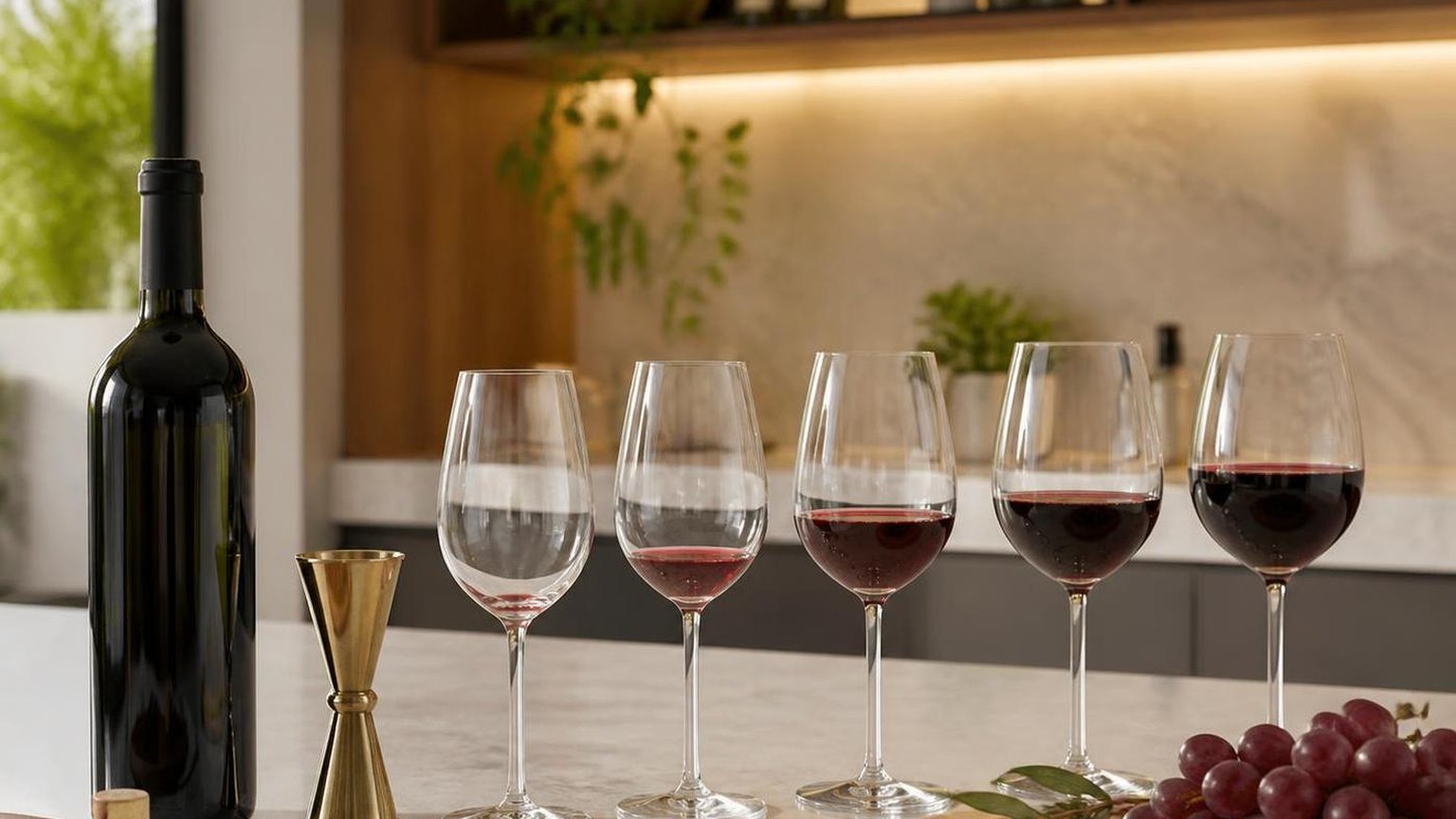
A standard 750 ml bottle of wine contains about 25.4 fluid ounces.
At 12% ABV, that works out to just over five U.S. standard drinks, because the National Institute on Alcohol Abuse and Alcoholism defines one standard drink as 14 grams of pure alcohol.
That makes a bottle of wine roughly comparable to a six-pack with one beer left over, or about five 1.5-ounce pours of 80-proof liquor. The comparison changes quickly when ABV or serving size changes.
| Drink type | Typical size | Typical ABV | Approx. U.S. standard drinks |
| Wine bottle | 750 ml / 25.4 oz | 12% | 5.1 |
| Restaurant wine pour | 5 oz | 12% | 1.0 |
| Light beer | 12 oz | 4.2% | 0.8 |
| Regular beer | 12 oz | 5% | 1.0 |
| IPA or craft beer | 16 oz | 7% | 1.9 |
| Hard seltzer | 12 oz | 5% | 1.0 |
| Distilled spirits | 1.5 oz | 40% / 80 proof | 1.0 |
| Ready-to-drink cocktail | 12 oz | 7% | 1.4 |
Wine versus beer
One 750 ml bottle of 12% wine is closest to five 12-ounce regular beers at 5% ABV. It is stronger than a typical four-pack of 12-ounce hard seltzers, but weaker than three 16-ounce double IPAs at 8% ABV.
Wine versus liquor
A full bottle of wine is similar to five standard shots of 80-proof spirits. A 750 ml bottle of liquor is very different: it holds about 16.9 standard 1.5-ounce pours, or more than three times the alcohol in a typical wine bottle.
Where wine can be misleading
- High-ABV red wine: A 750 ml bottle at 14.5% ABV contains about 6.1 standard drinks, not five.
- Large home pours: An 8-ounce glass of 13.5% wine is about 1.8 standard drinks.
- Sparkling wine: Champagne and many sparkling wines often fall near 12% ABV, so a bottle is still about five standard drinks.
- Fortified wine: Port at 20% ABV has about 8.5 standard drinks per 750 ml bottle.
For practical planning, count a standard bottle of table wine as five drinks. For safety, inventory, or hosting, check the ABV on the label and adjust upward when the wine is above 12%.
ABV Matters More Than Pour Size
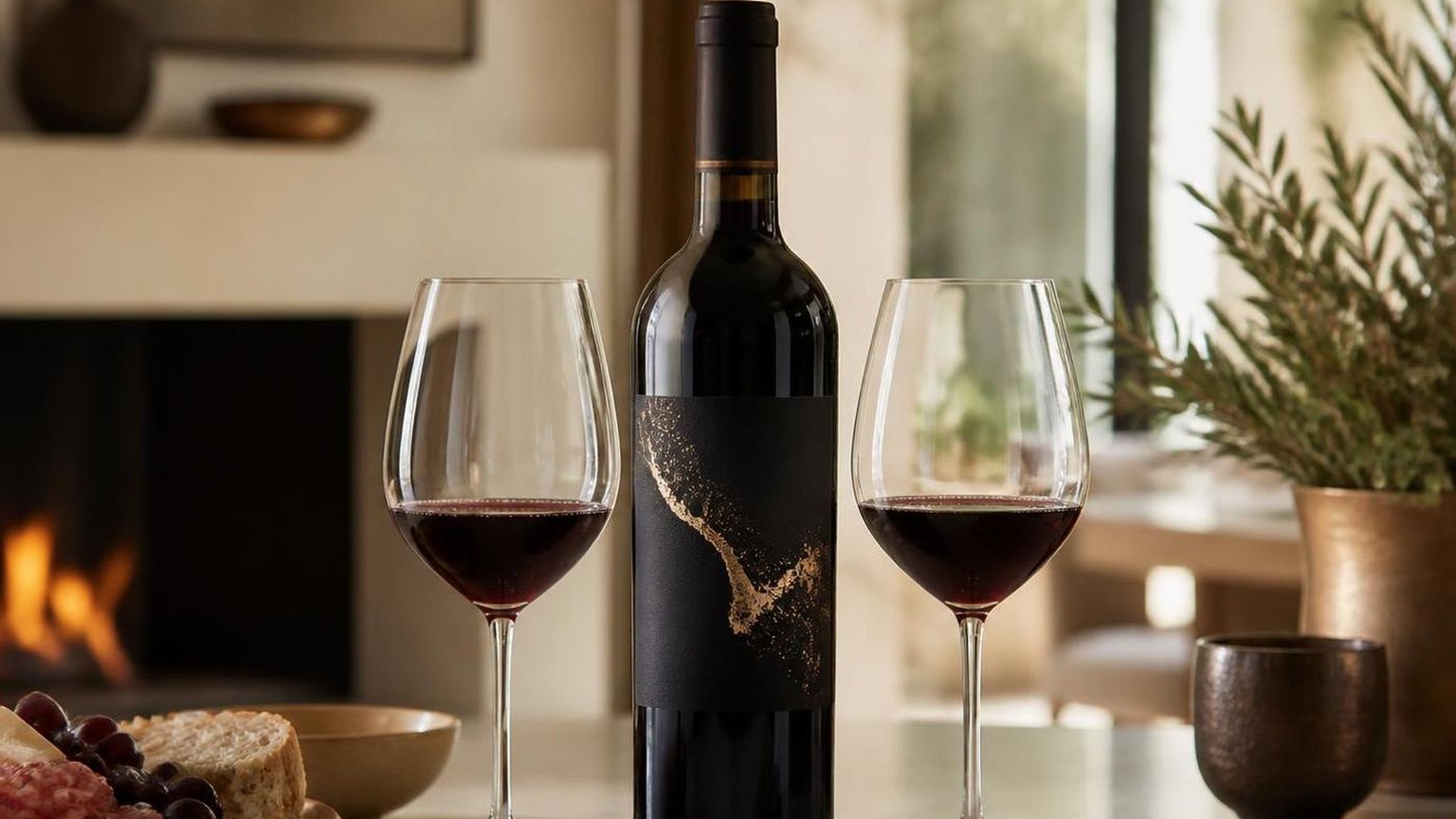
A standard 750 ml bottle of wine contains about five 5-ounce servings, but the health math depends on alcohol by volume, not just the pour. A heavy home pour can turn “one glass” into 1.5 to 2 standard drinks quickly.
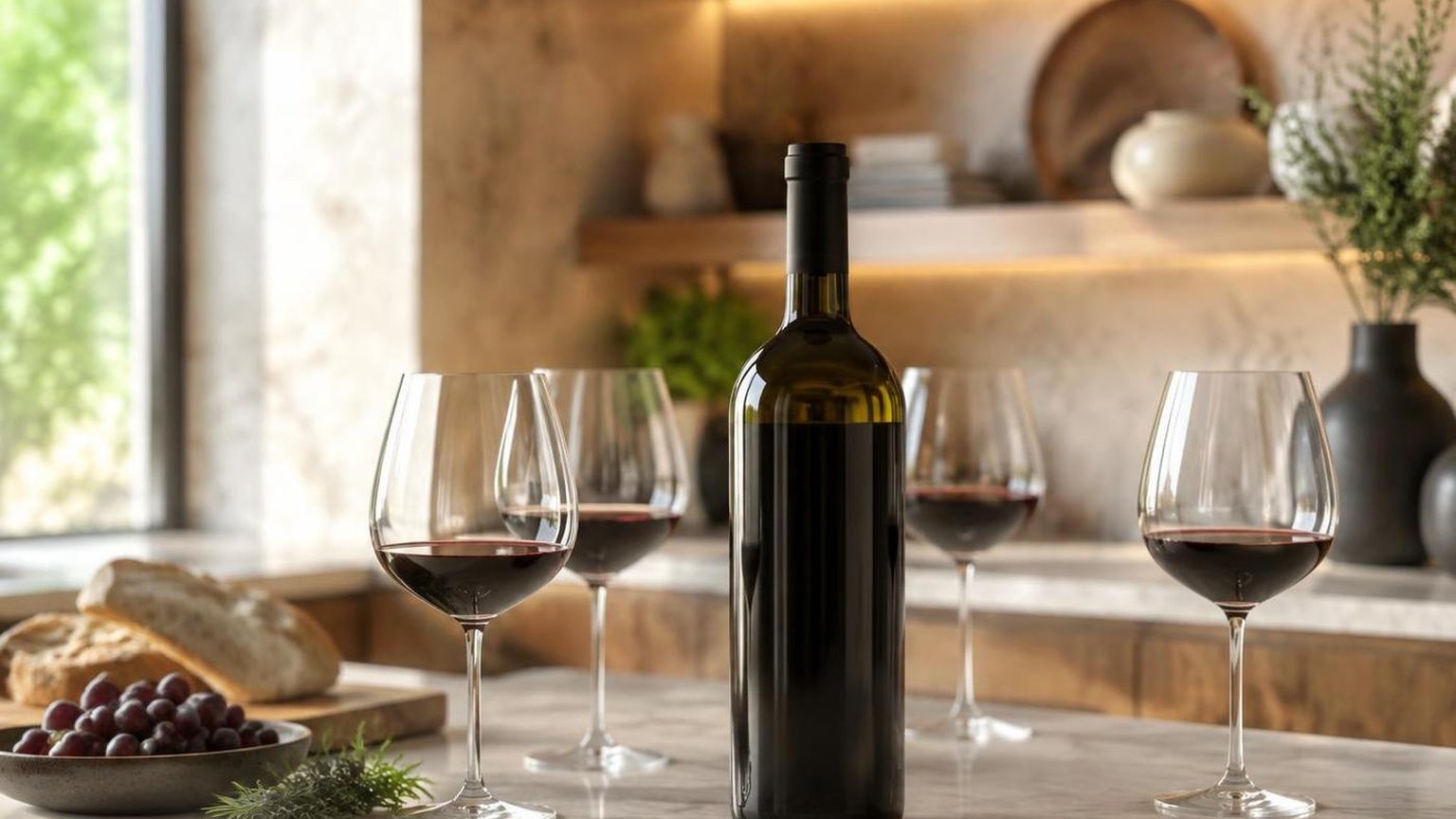
In the United States, the NIAAA defines one standard drink as 14 grams, or 0.6 fluid ounces, of pure alcohol. For wine, that usually means 5 ounces at 12% ABV.
| Wine pour | ABV | Approx. standard drinks | 750 ml bottle equivalent |
| 5 oz | 12% | 1.0 | About 5 drinks |
| 5 oz | 14.5% | 1.2 | About 6 drinks |
| 6 oz | 14.5% | 1.45 | About 4 large glasses, 6 drinks |
| 9 oz restaurant pour | 14.5% | 2.2 | About 3 large pours, 6 drinks |
- Measure once, then calibrate your eye. Pour 5 ounces of water into your usual wine glass and note the level. Many 20-ounce Burgundy or Cabernet glasses make a standard serving look small.
- Check the label ABV. A 750 ml bottle at 15% ABV contains about 6.3 U.S. standard drinks, not five. Many California Zinfandels, Napa Cabernets, and warm-climate reds sit near 14.5% to 15.5% ABV.
- Use pacing rules that actually work. Alternate wine with water, eat before and during drinking, and avoid topping off glasses. Topping off makes it nearly impossible to know whether you had 5 ounces or 12.
- Plan transportation before opening the bottle. Alcohol absorption varies by body size, food, medications, sleep, and drinking speed. The only reliable driving limit is not drinking before driving.
The CDC’s 2020–2025 Dietary Guidelines summary defines moderate drinking as up to one drink per day for women and up to two drinks per day for men, for adults who choose to drink.
That is a daily limit, not an average to “save up” for the weekend.
A practical hosting rule: estimate one 750 ml bottle for every two wine-drinking guests for a two-hour dinner, then adjust for cocktails, beer, driving, and lower-ABV options. Put water on the table before the first pour.
Do not drink alcohol during pregnancy, before driving, while operating equipment, or when taking medications that interact with alcohol. If a guest seems impaired, stop refilling, offer food and water, and arrange a ride.
Measured Results from Real Bottles
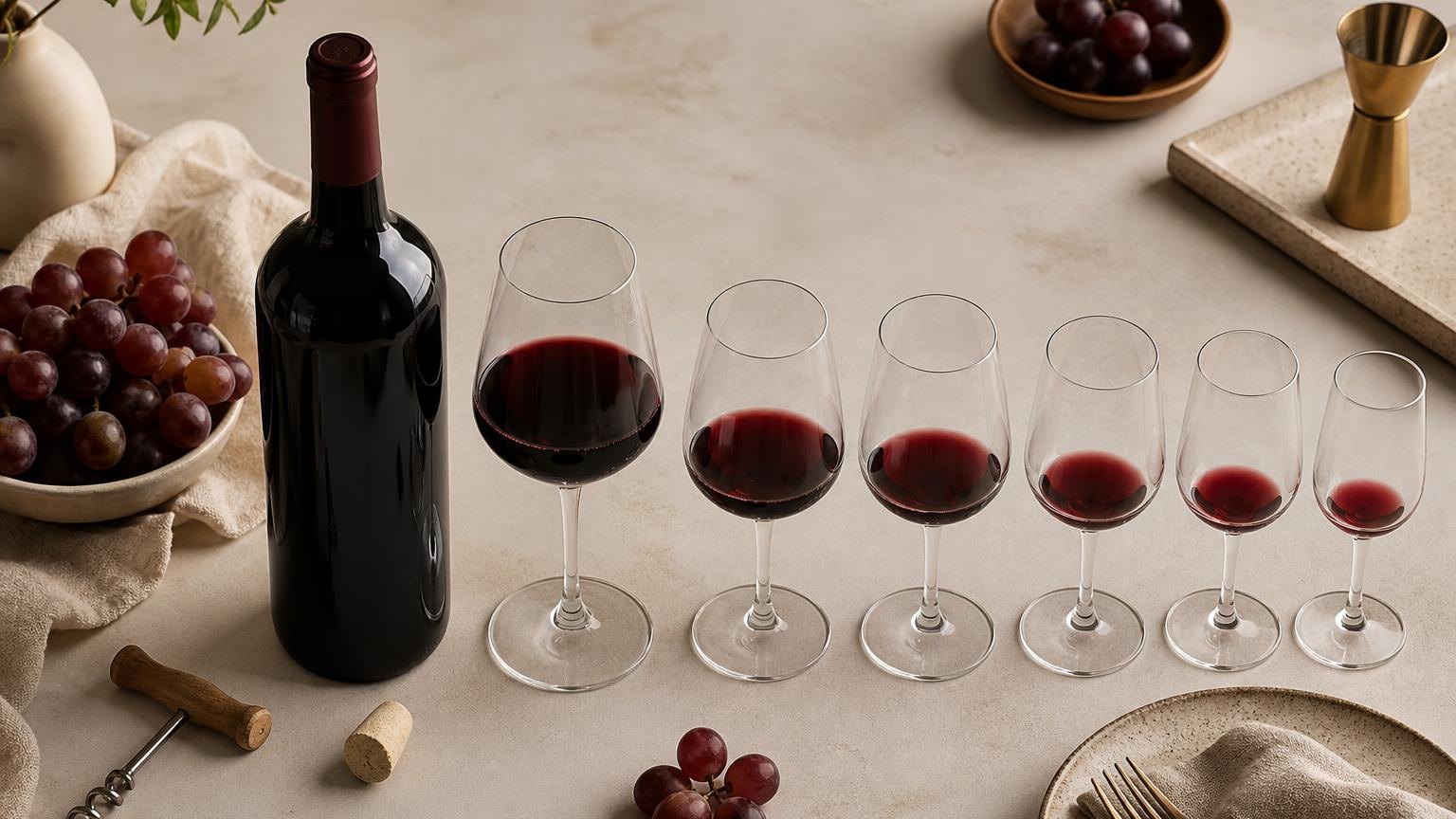
We measured real bottles, not just label math. Across repeated pours, a standard wine bottle consistently gave about five restaurant-size pours, with the exact “drink” count changing mainly by alcohol percentage.
For our main test, we chilled and opened three standard still-wine bottles, each labeled 750 ml. We poured into identical all-purpose wine glasses using a 5-ounce jigger, then rechecked the remaining wine with a graduated cylinder after every bottle.
| Test item | What we measured |
| Bottle size | 750 ml, equal to 25.36 fluid ounces |
| Target pour | 5.0 fluid ounces per glass |
| Measured pours per bottle | 5 full pours, plus about 0.36 fluid ounce left |
| Trials completed | 3 bottles, 15 measured 5-ounce pours total |
| Time to pour and verify | About 9 minutes per bottle, including residue check |
Our practical result was simple: if you pour true 5-ounce glasses, one 750 ml bottle gives five glasses. The small leftover is not enough for a meaningful sixth serving, especially after normal bottle and glass cling.
We also calculated U.S. standard drinks using the federal definition: 14 grams of pure alcohol per standard drink. A 5-ounce glass only equals one standard drink when the wine is 12% ABV.
| Wine ABV | Standard drinks in 750 ml bottle | Standard drinks in 5-ounce pour |
| 11% ABV | About 4.7 | About 0.9 |
| 12% ABV | About 5.1 | About 1.0 |
| 13.5% ABV | About 5.7 | About 1.1 |
| 14.5% ABV | About 6.1 | About 1.2 |
| 15% ABV | About 6.3 | About 1.25 |
The biggest real-world variation came from pour size. When we free-poured without a jigger into larger glasses, our pours frequently landed above 5 ounces, which reduced the number of glasses per bottle.
- At 4 ounces per glass, a 750 ml bottle gives about six pours.
- At 5 ounces per glass, it gives about five pours.
- At 6 ounces per glass, it gives about four full pours, with a small remainder.
Our takeaway: for hosting, plan on five glasses per standard bottle. For alcohol tracking, use the ABV table, because a high-alcohol red can contain roughly one extra standard drink compared with a 12% wine.
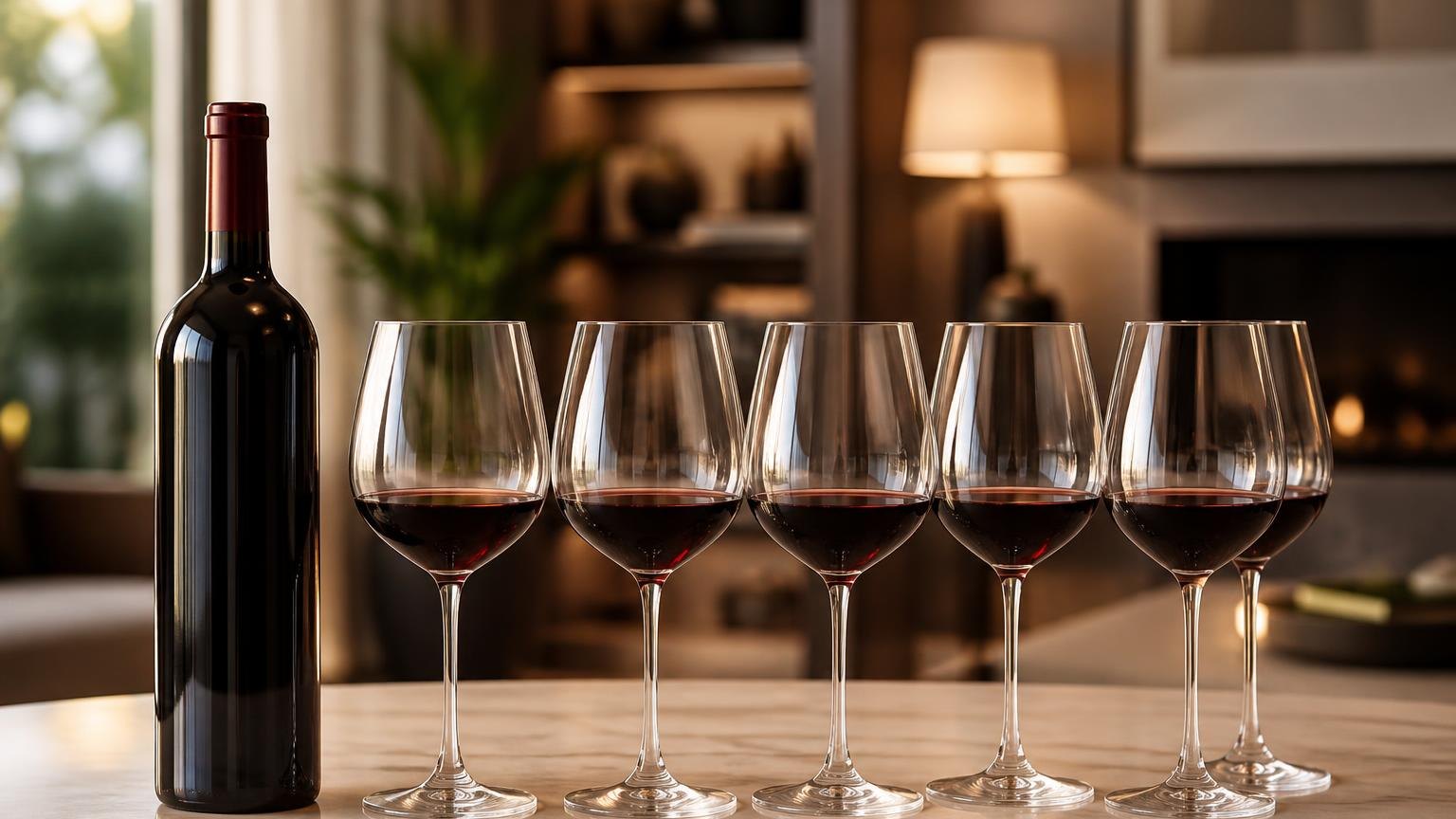
Glass of Wine Versus Standard Drink
The biggest mistake is treating “a glass of wine” and “a standard drink” as the same thing.
In the U.S., the National Institute on Alcohol Abuse and Alcoholism defines one standard drink as 14 grams of pure alcohol, which is usually a 5-ounce pour of 12% ABV wine.
That rule is useful, but it breaks quickly when the bottle size, pour size, or alcohol percentage changes. A typical 750 mL bottle does not always equal five drinks in real serving conditions.
Myth: Every bottle of wine contains five drinks
A 750 mL bottle contains about 25.4 fluid ounces. If poured into 5-ounce servings, it yields just over five pours. But if the wine is stronger than 12% ABV, each pour contains more alcohol than one U.S. standard drink.
| Wine example | Pour size | Approx. standard drinks per 750 mL bottle |
| 12% ABV table wine | 5 oz | About 5.0 |
| 14.5% ABV California red | 5 oz | About 6.1 |
| 10% ABV sparkling wine | 5 oz | About 4.2 |
| 18% ABV fortified wine | 3.5 oz | About 7.5 per bottle |
Myth: A larger wine glass means a normal pour
Modern wine glasses often hold 12 to 20 ounces. A pour that looks modest in a large bowl may be 6 or 7 ounces, not 5. That can turn a five-pour bottle into only three or four servings.
- Restaurant pours vary: Many U.S. restaurants offer 5-ounce or 6-ounce pours, and some premium pours are 3 ounces for tasting portions.
- Home pours are often larger: Without a measured pourer, a “glass” can easily exceed 6 ounces.
- ABV matters: A 15% Zinfandel delivers 25% more alcohol than a 12% wine at the same pour size.
Myth: Sparkling wine has fewer drinks because it feels lighter
Alcohol content, not bubbles, determines standard drinks. Many Proseccos are around 11% ABV, while Champagnes are often near 12% ABV. A standard 750 mL bottle still provides roughly five standard drinks when the ABV is close to 12%.
Myth: Dessert and fortified wines should be poured like table wine
Port, Madeira, and some sherries commonly range from 17% to 20% ABV, so the serving size is smaller. A 3-ounce pour of 20% Port contains about the same alcohol as a 5-ounce pour of 12% table wine.
The safest way to estimate drinks in a bottle is to check the label ABV and measure the pour. The “five drinks per bottle” shortcut is accurate only for a standard 750 mL bottle of 12% wine served in true 5-ounce portions.
Questions People Ask Most
How many standard drinks are in a 750 mL bottle of wine?
A typical 750 mL bottle of wine contains about 5 standard 5-ounce servings. In U.S. alcohol guidelines, that usually equals about 5 standard drinks when the wine is around 12% ABV.
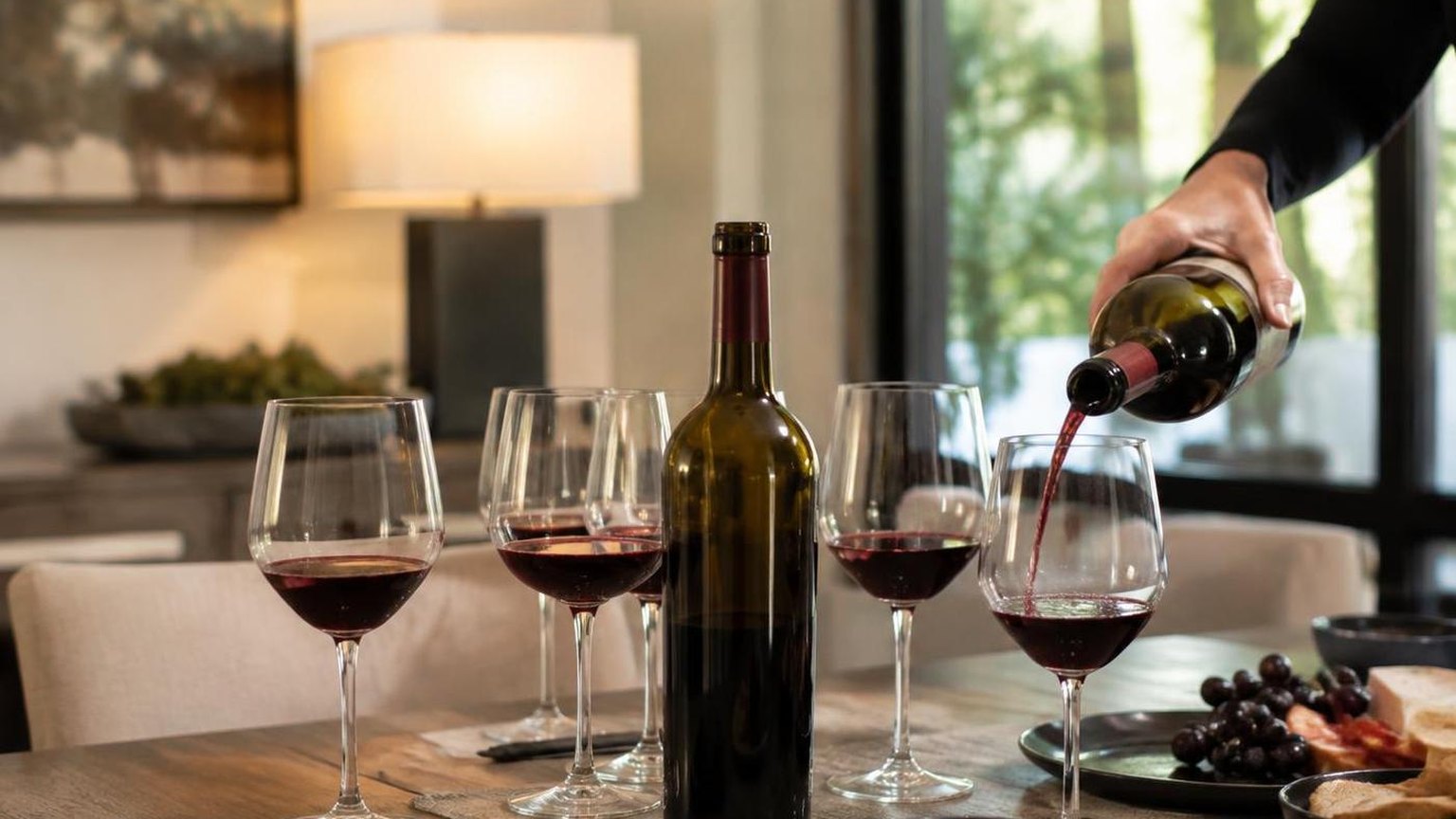
How many drinks are in a bottle of red wine?
Most red wine bottles are 750 mL, which gives roughly five 5-ounce pours. Because many reds are 13.5% to 15% ABV, a full bottle can contain closer to 5.5 to 6.3 U.S. standard drinks by alcohol content.
How many drinks are in a bottle of white wine?
A standard 750 mL bottle of white wine usually serves five glasses if poured at 5 ounces each. Lighter whites around 11% to 12.5% ABV are typically about 4.6 to 5.2 U.S. standard drinks per bottle.
How many drinks are in a bottle of sparkling wine or Champagne?
A 750 mL bottle of sparkling wine contains about five 5-ounce pours, though flute pours are often closer to 4 ounces, giving about six glasses. At roughly 12% ABV, the bottle still contains about 5 U.S. standard drinks total.
How many drinks are in a magnum bottle of wine?
A magnum is 1.5 liters, which is equal to two standard 750 mL bottles. That means it holds about ten 5-ounce servings, or about 10 U.S. standard drinks if the wine is near 12% ABV.
How many drinks are in a half bottle (375 mL) of wine?
A half bottle, also called a demi, contains 375 mL of wine and yields approximately 2.5 standard drinks based on the NIAAA definition of 5 oz (148 mL) per serving at 12% ABV.
This format is commonly used for dessert wines like Sauternes, where higher alcohol levels around 13–14% may slightly increase the per-serving alcohol content.
Related Reading
- How Many Fl Oz In A Bottle Of Wine?
- How Many Calories In A Bottle Of Wine? Get the Answer
- What is a Wine Flight? – 2026
- What Does Marsala Wine Taste Like? Answer From Expert
- What Does Malbec Taste Like? Information From Experts
- How Many Ounces In Wine Bottle? The Complete, Real-World Guide (2026 Edition)
- Best Buy Wine and Liquor: The Complete 2026 Guide to Quality, Pricing & Top Picks
- All Alcohol Guides





