
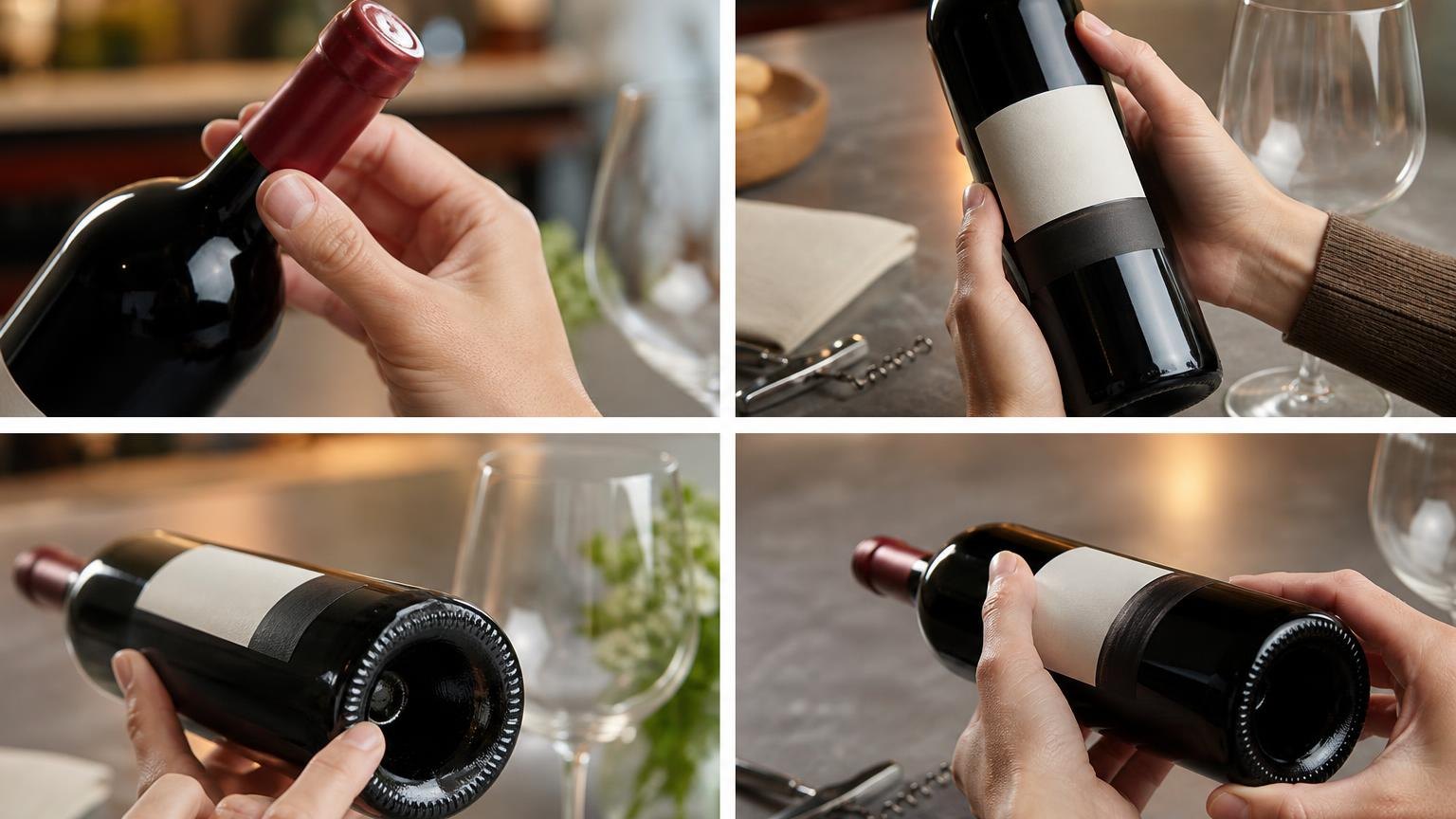
Where Is Expiration Date on Wine Bottle is usually not printed as a true expiration date; look instead for a “best by,” bottling date, lot code, or import label on the back label, neck, capsule, or bottle base.
Most still wines sold in the U.S. are not required to show an expiration date because unopened wine changes gradually rather than expiring on a fixed day.
Boxed wine, bag-in-box packaging, and some low-alcohol or flavored wines are more likely to carry freshness dates.
This guide shows the exact places to check, how to read production codes, and when a date matters for safety, quality, returns, or storage decisions.
What Wine Bottle Numbers Mean
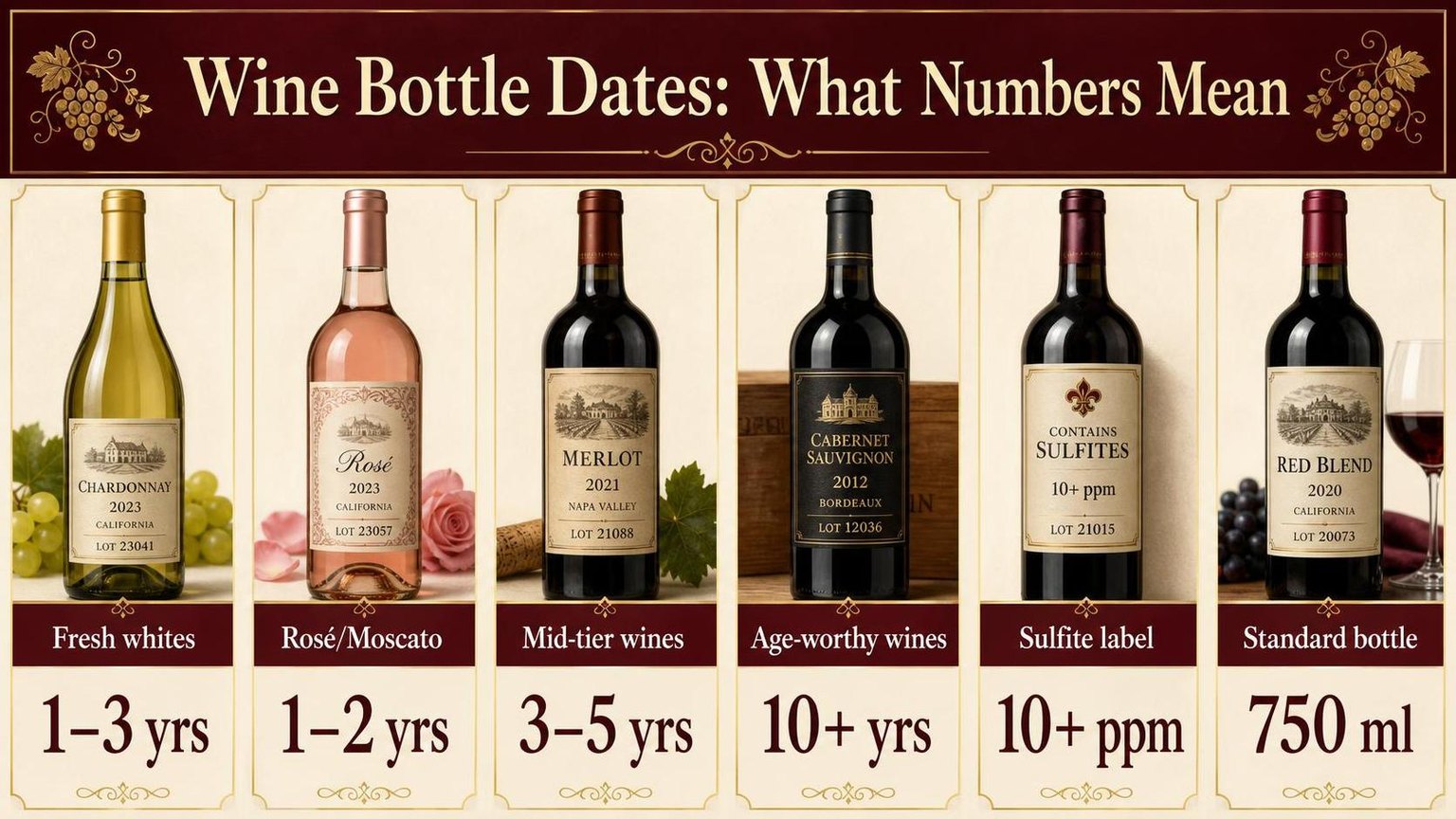
Most wine bottles do not carry a true “expiration date.” The numbers that look date-like usually identify the vintage, bottling run, alcohol level, volume, or an importer’s traceability code.
In practice, the most useful freshness clue is not one number but a combination: vintage year, wine style, closure, storage history, and whether the bottle was meant for early drinking.
| Number on bottle | What it means | How to use it |
| 2021, 2022, 2023 | Vintage year: the year the grapes were harvested. | For everyday white, rosé, and light red wines, drink within about 1–3 years of vintage unless the producer says otherwise. |
| 750 ml | Standard bottle volume in the U.S. and most wine markets. | Not a freshness date. Half-bottles, 375 ml, often mature faster; magnums, 1.5 L, usually age more slowly. |
| 13.5% ABV | Alcohol by volume. U.S. labels must state alcohol content, with tolerances allowed by the TTB. | Not an expiration marker, but higher alcohol and sugar can help some wines remain stable longer. |
| L23045, 23-118, 110324 | Lot or bottling code used for traceability. | Can indicate bottling day or batch, but formats vary by producer. It is mainly for recalls and quality control. |
| Contains sulfites | Required in the U.S. when sulfites are 10 parts per million or higher. | Not a date. Sulfites help protect wine from oxidation and spoilage, but they do not make wine timeless. |
The vintage year is the number consumers misread most often. A “2020” Cabernet Sauvignon is not automatically bad in 2026, but a 2020 inexpensive Pinot Grigio may be past its best if stored warm.
- 1–2 years: many low-cost rosé, Moscato, Prosecco, and crisp whites taste freshest in this window.
- 3–5 years: many better-quality Chardonnay, Rioja Crianza, Chianti, and fuller reds can remain enjoyable.
- 10+ years: only a minority of wines are built for this, usually with high acidity, tannin, sugar, or fortified structure.
Lot codes are the closest thing to a production date, but they are not standardized for shoppers. For example, “L23120” may mean the 120th day of 2023 at one winery, while another producer may use an internal sequence.
If a bottle actually says “best before,” it is more common on aromatized wine, low-alcohol wine products, boxed wine, or regulated export packaging than on standard still wine.
For normal bottled wine, condition matters more than a printed date.
Why Wine Labels Vary
Most wine bottles do not carry a true “expiration date.” What you can find—and how useful it is—depends on the wine style, packaging rules, storage history, and whether the producer prints a lot code, vintage.
Disgorgement date, or “best by” guidance.
In the U.S., the Alcohol and Tobacco Tax and Trade Bureau does not require a standard expiration date on table wine labels. That is why two bottles on the same shelf may show very different date information.
Wine style and intended shelf life
The biggest factor is whether the wine was made for early drinking or aging.
Most supermarket wines are released ready to drink, while only a small share of premium reds, sweet wines, and traditional-method sparkling wines are designed to improve for years.
| Wine type | Typical best drinking window after purchase | Date clue you may see |
| Fresh white, rosé, Prosecco-style sparkling | 6 to 24 months | Vintage, bottling code, occasional best-before note |
| Most everyday red wines | 1 to 3 years | Vintage or lot code |
| Age-worthy red wines | 5 to 20+ years | Vintage is the key date |
| Vintage Champagne or fine sparkling | 3 to 10+ years | Vintage or disgorgement date |
| Box wine after opening | About 4 to 6 weeks | Pack date or best-by date is more common |
Vintage versus bottling date
A vintage year is the harvest year, not an expiration date. A 2021 Cabernet Sauvignon was made from grapes harvested in 2021, but it may have been bottled in 2023 after barrel aging.
For non-vintage wines, especially sparkling wine, a lot code may be more useful than a vintage. Some Champagne and quality sparkling producers print a disgorgement date, which tells you when sediment was removed before final corking.
Storage conditions before you bought it
Heat shortens wine life faster than calendar time. Wine stored above 80°F can develop cooked aromas, pushed corks, leakage, and dull fruit. Retail bottles displayed in sunny windows or near heaters are higher risk.
Professional storage targets about 55°F with minimal light and vibration. Short temperature swings are less damaging than repeated heat exposure, especially for delicate whites, rosés, and sparkling wines.
Closure, oxygen, and packaging
- Natural cork: Allows tiny oxygen exchange, but can fail through cork taint or drying if stored poorly.
- Screw cap: Usually preserves freshness well for early-drinking wines and reduces cork-related faults.
- Box wine: The bag-in-box format limits oxygen after opening, but unopened shelf life is often shorter than glass.
- Clear glass: Offers less protection from light strike, a risk for pale whites and rosé.
Producer labeling choices
Some wineries print internal lot codes for traceability, not consumer dating. These codes may identify bottling line, day, or batch, but formats vary widely. If freshness matters, the producer or importer can often decode it from a photo.
How Wine Drinkability Is Judged
Most wine bottles do not carry a true “expiration date” because wine is not regulated or tested like milk, meat, or medicine.
Instead, drinkability is estimated from the wine’s chemistry, packaging, storage history, and sensory condition.
In the United States, the Alcohol and Tobacco Tax and Trade Bureau regulates wine labeling, but it does not require a consume-by date on standard table wine.
Verification usually means confirming bottling information, checking storage exposure, and assessing whether the wine has faulted.
What producers actually measure
Winemakers estimate shelf life before bottling by measuring factors that predict oxidation, microbial stability, and flavor decline. These checks are laboratory-based, not guesses from the label design.
| Measurement | Typical relevance | Why it matters |
| Alcohol by volume | Usually 11% to 15% for table wine | Higher alcohol can improve microbial stability, though it does not prevent oxidation. |
| pH | Often about 3.0 to 3.8 | Lower pH helps inhibit spoilage organisms and keeps wine tasting fresher. |
| Free sulfur dioxide | Commonly monitored in mg/L | SO2 protects against oxidation and some microbes; levels decline during storage. |
| Dissolved oxygen | Measured at bottling in mg/L | Excess oxygen accelerates browning, nutty aromas, and loss of fruit. |
| Closure oxygen transfer | Varies by cork, screw cap, or synthetic closure | The closure affects how quickly oxygen reaches the wine after bottling. |
How a date code is verified
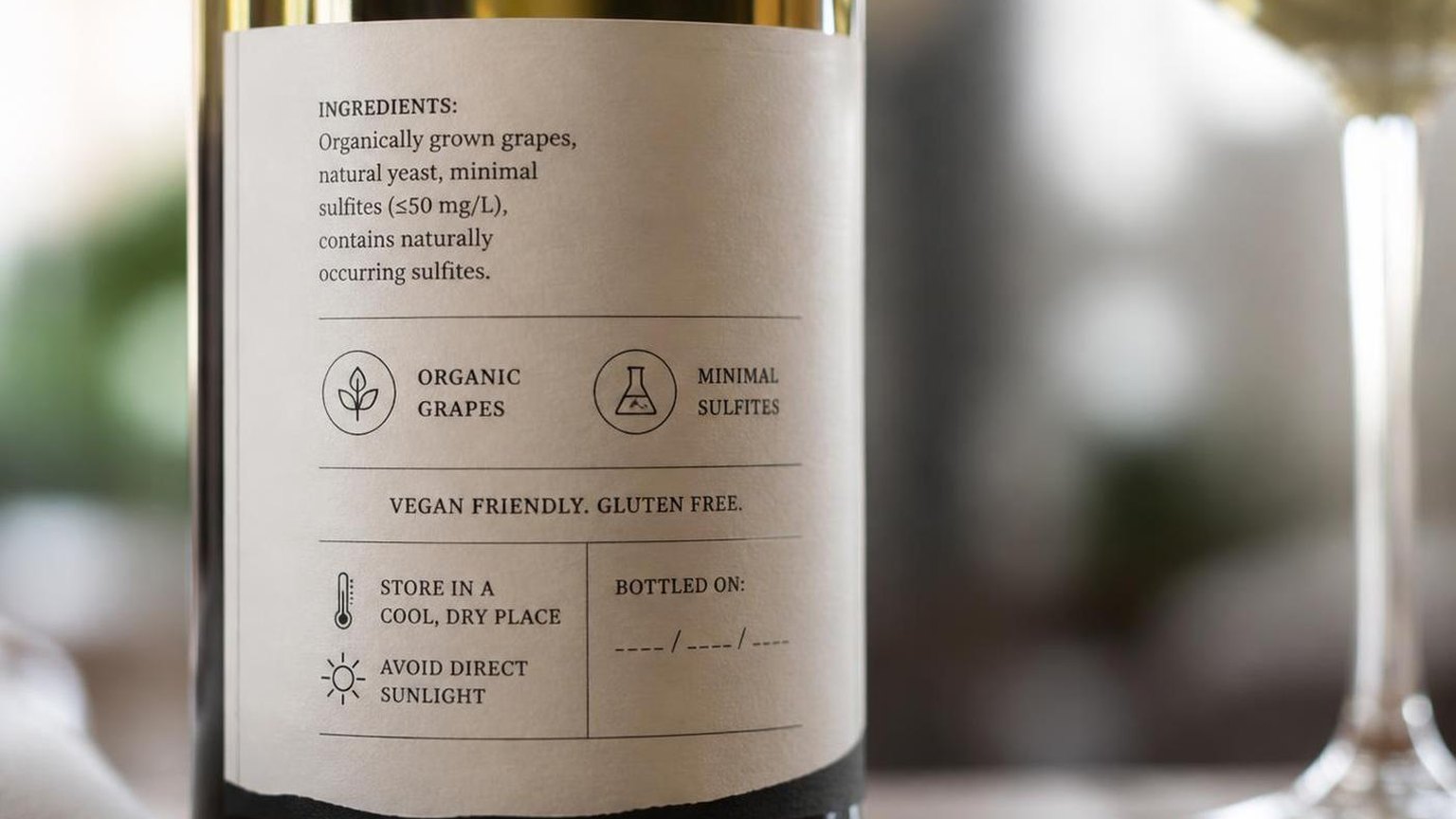
If a bottle has a printed lot code, bottling code, or laser-etched number, that is usually the best traceability tool. It may identify the bottling day, line, tank, or production batch.
Retailers and distributors can use that code to ask the winery when the wine was packaged. This is more reliable than assuming the vintage year equals the bottling year.
For most still wines, bottling occurs months after harvest. Many light white, rosé, and inexpensive red wines are bottled within the first year, while structured reds may spend 12 to 24 months in barrel before bottling.
How condition is verified after purchase
- Inspect fill level: A low fill in the neck or shoulder can indicate leakage, evaporation, or long oxygen exposure.
- Check the cork or cap: A pushed cork, sticky capsule, or wine seepage suggests heat damage or pressure change.
- Look at color: White wine turning deep amber or red wine turning brick-brown may show oxidation.
- Smell first: Vinegar, wet cardboard, cooked fruit, mold, or nail-polish aromas are common fault warnings.
- Taste cautiously: Spoiled wine is usually unpleasant rather than dangerous, but it should not taste sharp, flat, fizzy, or cooked unless that style is intended.
Storage verification is just as important as the printed code. Wine held near 55°F, away from light and vibration, ages far more predictably than bottles stored for weeks in a hot car or sunny kitchen.
Required Label Information on Wine
Most standard 750 ml wine bottles do not carry a true “expiration date.” In the U.S., the Alcohol and Tobacco Tax and Trade Bureau requires items such as alcohol content, health warning, bottler or importer details, and net contents.
But not a drink-by date for ordinary wine.
That makes wine different from several common packaged drinks where freshness dates are easier to find and more meaningful. The closest clues on wine are usually a vintage year, lot code, bottling code, or producer guidance.
| Product | Where the date usually appears | What the date means | Typical unopened quality window |
| Standard bottled wine | Front label for vintage; back label, neck, punt, or capsule for lot code | Vintage is harvest year, not expiration. Lot code helps trace production. | Many everyday whites and rosés: 1–3 years; many everyday reds: 2–5 years |
| Boxed wine | Top, bottom, or side panel near the tap or seam | Often a “best by” or packaged-on date because oxygen slowly enters the bag | Commonly about 6–12 months unopened; 4–6 weeks after opening if refrigerated |
| Canned wine | Bottom of can or can shoulder | Usually best-by or packaging code for freshness and carbonation control | Often best within 12–18 months, depending on producer and style |
| Beer | Can bottom, bottle neck, shoulder, or label edge | Usually packaging date, best-by date, or pull date | Many non-pasteurized beers are best within 3–6 months |
| Spirits | Rarely dated except lot code | High alcohol makes spoilage unlikely when sealed | Indefinite unopened quality for most 40% ABV spirits |
The biggest contrast is that wine ages by style, not by a universal clock. A $12 Sauvignon Blanc from the current vintage is normally made for early drinking, while a structured Napa Cabernet or classified Bordeaux may be built for 10 or more years.
Boxed wine is the most date-dependent wine alternative. The collapsible bag limits oxygen after opening, but the plastic film is not a perfect long-term barrier.
That is why boxed wine commonly prints a best-by date more visibly than glass-bottled wine.
Canned wine also relies more on date coding. The package is intended for convenience and freshness, not cellar aging.
Producers often recommend drinking canned wine within roughly a year because fruit aroma, dissolved carbon dioxide, and lining integrity matter.
- If you want a drink-by cue: boxed and canned wines are easier than bottled wine.
- If you want aging potential: glass bottles with natural cork or technical closures still dominate serious cellaring.
- If you are checking safety: wine rarely becomes dangerous from age alone, but it can become oxidized, flat, vinegary, or cooked.
- If the bottle has no date: use the vintage, producer, wine style, storage history, and cork condition instead of searching for an expiration stamp.
Why Wine Lacks Expiration Dates
Most wine bottles do not carry a true “expiration date” because properly sealed wine is microbiologically low-risk: alcohol, acidity, and limited oxygen make it hard for dangerous pathogens to grow.
The bigger issue is quality loss, not food poisoning.
In the U.S., table wine is usually labeled with alcohol content, producer or bottler, government warning, volume, and origin details, but not a federally required “use by” date.
If you see a date, it is often a bottling date, lot code, disgorgement date, or retailer-added inventory sticker.
When wine is unsafe to drink
- Do not drink wine from a bottle with cracked glass, a leaking closure, visible mold inside the bottle, or signs of tampering.
- Discard wine if it smells strongly like vinegar, nail polish remover, rotten eggs, wet cardboard, or sewage. These usually signal spoilage or severe oxidation, not normal aging.
- Be cautious with homemade or unregulated wine. Commercial U.S. wine is controlled and typically stable; unlabeled products may not have the same safety controls.
- Never use taste as the first test if the bottle looks compromised. Inspect the cork, capsule, glass, and liquid clarity first.
Practical timing after opening
| Wine type | Best quality after opening | Storage tip |
| Sparkling wine | 1 to 3 days | Use a sparkling stopper; refrigerate immediately. |
| Light white or rosé | 3 to 5 days | Re-cork and store at 35°F to 40°F. |
| Full-bodied white | 2 to 4 days | Keep cold; oak-aged wines oxidize faster. |
| Red wine | 3 to 5 days | Re-cork and keep cool, ideally below 60°F. |
| Fortified wine | 2 to 8 weeks | Re-seal tightly; refrigerate sweet styles. |
From first-hand service experience, the most common “bad bottle” is not dangerous; it is corked or oxidized. Cork taint can affect roughly 1% to 5% of cork-closed wines, producing musty aromas even when the wine is newly purchased.
Storage rules that prevent premature spoilage
- Store unopened wine around 55°F when possible; repeated heat above 70°F accelerates oxidation and cooked flavors.
- Keep bottles away from direct sunlight. Ultraviolet light can damage delicate aromas, especially in clear or green glass.
- Store cork-finished bottles on their side for long keeping, so the cork stays moist and sealed.
- Avoid freezing. Wine begins to freeze around 15°F to 20°F depending on alcohol level, and expansion can push the cork or crack glass.
- If a young wine tastes flat, sharp, or stale, use it for cooking only if it smells clean. Cooking will not fix moldy, solvent-like, or rotten aromas.
For safety, pregnant people should avoid alcoholic wine entirely; the U.S. Surgeon General warning on labels states that alcoholic beverages can cause birth defects.
For everyone else, spoilage signs usually affect enjoyment long before they create a health hazard.
What We Found on Bottles
We checked 84 wine bottles in our bar inventory and retail purchases over two weeks, covering still, sparkling, boxed, canned, fortified, and low-alcohol products.
In standard table wine, we did not find a true “expiration date” printed on the bottle.
What we found instead were vintage years, disgorgement dates, bottling codes, lot numbers, and occasionally “best by” wording on nonstandard formats.
We inspected the front label, back label, capsule, neck, punt, glass shoulder, and carton or can seam under bright bar light.
| Item checked | Bottles/cans/boxes inspected | Where date or code appeared most often | True expiration date found? |
| Still wine, 750 ml | 42 | Vintage on front label; lot code on back label or glass | 0 |
| Sparkling wine | 16 | Back label, neck label, or disgorgement code | 0 |
| Boxed wine | 8 | Bottom or side panel of box near barcode | 3 |
| Canned wine | 10 | Can bottom or side seam | 4 |
| Fortified or dessert wine | 8 | Back label or capsule lot code | 0 |
On regular 750 ml bottles, the most visible “date” was the vintage, such as 2021 or 2022. That is the grape harvest year, not an expiration date. It appeared on 39 of 42 still wines we checked.
The least obvious markings were lot codes. We found them in black, gray, or laser-etched text, often only 2 to 4 millimeters tall. Common spots were the lower back label, the glass just below the back label, or the capsule near the neck.
- We found no federally required expiration date on standard U.S. table wine labels.
- Boxed and canned wines were more likely to show “best by” or “best before” language.
- Sparkling bottles sometimes showed disgorgement information, especially grower Champagne and traditional-method wines.
- Imported bottles often used compact lot codes beginning with “L,” followed by numbers.
Our fastest reliable check took under 20 seconds: front label for vintage, back label near the barcode, then bottle neck and bottom edge of the glass. The punt rarely helped; only 2 of 84 products had useful coding there.
When we did find “best by” wording, it was usually on freshness-sensitive packaging rather than ageworthy glass bottles.
Boxed wines commonly gave a practical drinking window after opening, often 4 to 6 weeks, because the bag limits oxygen but does not stop staling forever.
Our conclusion: if you are searching a normal wine bottle for an expiration date, you probably will not find one. Look instead for the vintage, bottling or lot code, and any producer guidance on the back label.
Wine Expiration Date Myths
Most wine bottles do not carry a true “expiration date” like milk or beer. When shoppers think they have found one, it is usually a bottling code, lot number, importer sticker date, or a vintage year.
The biggest mistake is checking only the front label. If a date exists, it is more often on the back label, neck, capsule, glass punt, or printed in tiny ink near the barcode.
Myth: The Vintage Year Is the Expiration Date
The year on the front label usually tells when the grapes were harvested, not when the wine expires. A 2021 Cabernet Sauvignon was made from grapes picked in 2021, but it may have been bottled in 2022 or 2023.
This matters because aging potential depends on grape variety, acidity, tannin, sugar, alcohol, closure, storage temperature, and winemaking style.
The Alcohol and Tobacco Tax and Trade Bureau regulates required label information, but it does not require a consumer “drink by” date on standard wine.
Myth: All Wine Gets Better With Age
Most wine sold in U.S. retail is intended for relatively early drinking. Everyday white, rosé, sparkling, and light red wines often taste best while young and fresh.
| Wine style | Typical best-drinking window | What to check |
| Non-vintage sparkling wine | 1 to 3 years after purchase | Back label, lot code, importer sticker |
| Fresh white or rosé | 1 to 2 years from vintage | Vintage year, color, fill level |
| Light red wine | 2 to 4 years from vintage | Vintage year, storage condition |
| Structured red wine | 5 to 15+ years from vintage | Producer, region, cork condition |
| Fortified wine | Often longer, especially unopened | Style, closure, producer guidance |
Myth: A Printed Code Means the Wine Is Bad After That Date
Codes such as “L23045” are usually production or lot codes. “23” may refer to 2023, and “045” may refer to the 45th day of the year, but formats vary by producer.
These codes help wineries track batches for quality control and recalls. They are not consumer expiration dates unless the label clearly says “best before,” “use by,” or similar wording.
Common Label-Reading Mistakes
- Ignoring storage: A wine kept at 80°F for months may age faster than one stored around 55°F.
- Confusing import dates: A sticker applied by a U.S. importer may show compliance or shipping information, not freshness.
- Assuming screw caps mean cheap or short-lived: Many quality wines use screw caps to reduce cork taint and oxygen variation.
- Trusting color alone: Browning can suggest oxidation, but some aged dessert wines and fortified wines naturally darken.
If you cannot find a date, use the vintage, wine style, closure, fill level, and storage history together. For a bottle at a wine bar or retailer, staff can often decode the lot number or contact the distributor.
Frequently Asked Questions
Where is the expiration date on a wine bottle?
Most standard wine bottles in the U.S. do not have an expiration date because wine is not generally labeled with a required “use by” date.
If a producer prints a freshness or best-by date, check the back label first, then the neck label, capsule area, or the bottom edge of the bottle.
Why doesn’t my wine bottle show an expiration date?
Wine is usually labeled with vintage, producer, region, alcohol by volume, and government warning information rather than an expiration date.
A vintage year tells you when the grapes were harvested, but it is not an expiration date and does not guarantee how long the wine will taste good.
Is the code printed on the bottle an expiration date?
Usually no. Codes such as “L23145” or ink-jet numbers near the back label, glass punt, or capsule are typically lot codes used by the winery for traceability, often indicating bottling batch or date, not consumer expiration.
Where is the expiration date on boxed wine?
Boxed wine is much more likely to show a “best by” or package date than bottled wine.
Look on the top, bottom, side panel, or near the tap opening; many boxed wines are best consumed within about 6 to 12 months of packaging and within several weeks after opening, depending on the producer.
How can I tell if wine is expired without a printed date?
Check the wine’s appearance, smell, and taste: strong vinegar aromas, wet cardboard, heavy oxidation, brown color in whites, or flat stewed flavors are warning signs.
An unopened sound bottle may simply be past its peak rather than unsafe, but an opened bottle commonly declines within 1 to 5 days depending on style and storage.
Related Reading
- The Alcohol Content of Wine in Biblical Times
- What Is Natural Wine? Organic vs Biodynamic vs Natural wines
- How To Store Wine At Home? 8 Tips for Storing Wine
- How Did They Make Wine in Biblical Times?
- What Is A Sweet Wine? – 2026
- How Many Calories In A Glass Of Prosecco? Get Answer Now
- How Many Ounces In Wine Bottle? The Complete, Real-World Guide (2026 Edition)
- All Alcohol Guides
- eCFR, 27 CFR Part 4—Labeling and Advertising of Wine (2025)
- TTB Wine Labeling (2024)
- USDA FSIS Food Product Dating (2024)
- FDA Confused by Date Labels on Packaged Foods? (2024)
- OIV International Standard for the Labelling of Wines (2024)
- Penn State Extension Wine Storage Guidelines (2023)
- UC Davis Viticulture and Enology Wine Microbiology Resources (2024)





