Does Wine Have Caffeine? is answered with a no: standard grape wine contains no naturally occurring stimulant from tea leaves, cacao, or kola. Its active compound is alcohol, produced when yeast ferments grape sugar into ethanol.
That matters for sleep, medication timing, and tasting plans. A 5-ounce glass of table wine typically contains about 12% alcohol by volume, but its alerting or sedating effect comes from ethanol, not an added stimulant.
Exceptions come from flavored, fortified, or premixed products. Check the ingredient label when wine is blended with botanicals, extracts, or energy-style additives, because those products are no longer a simple fermented grape wine.
Wine Contains No Meaningful Caffeine
Standard wine contains no meaningful caffeine. Red, white, rosé, sparkling, and fortified wines are made from grapes, and grapes do not naturally supply caffeine the way coffee beans, tea leaves, cacao, guarana, or kola nut do.
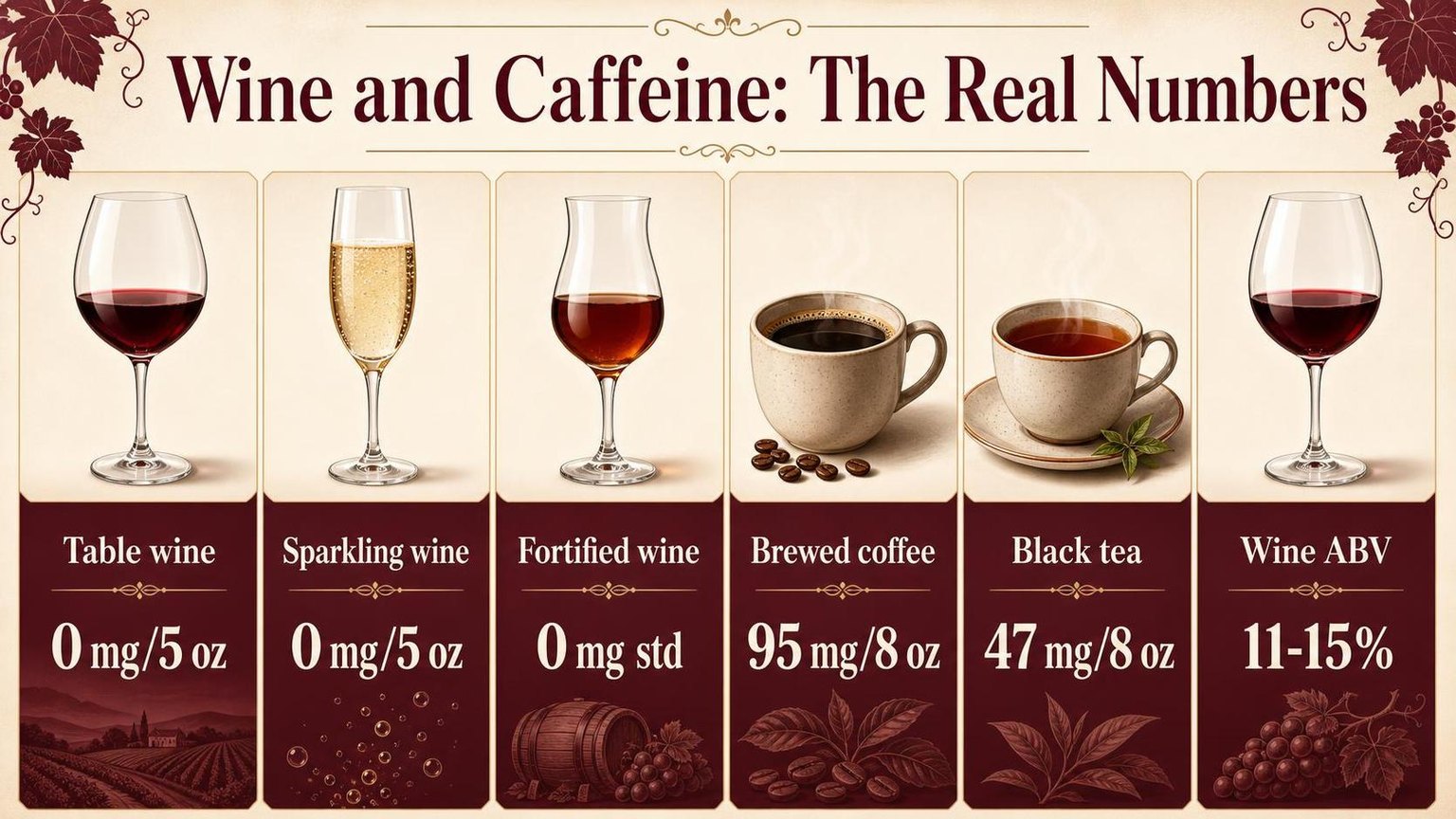
That is why USDA food data typically lists caffeine in wine at 0 milligrams per serving. If a bottle does contain caffeine, it is usually a specialty product with added coffee, tea, chocolate, guarana, or other stimulants.
| Beverage or food | Typical serving | Caffeine |
| Table wine | 5 fl oz (148 mL) | 0 mg |
| Sparkling wine | 5 fl oz (148 mL) | 0 mg |
| Dessert or fortified wine | 3.5 to 5 fl oz | 0 mg in standard products |
| Brewed coffee | 8 fl oz | about 95 mg |
| Black tea | 8 fl oz | about 47 mg |
| Cola | 12 fl oz | about 34 mg |
| Dark chocolate | 1 oz | about 12 mg |
The practical number for most drinkers is 0 mg. A standard 5-ounce pour of wine delivers alcohol, organic acids, and polyphenols, but not the stimulant effect associated with caffeine.
The alcohol number matters more. Most table wines fall around 11% to 15% ABV, and a 5-ounce serving usually contains about 0.6 fluid ounces of pure alcohol, which is one U.S. standard drink.
| Wine style | Common ABV range | Typical serving |
| Light white wine | 10% to 12.5% | 5 fl oz |
| Most red and white table wine | 12% to 15% | 5 fl oz |
| Sparkling wine | 11% to 12.5% | 5 fl oz |
| Fortified wine | 15% to 22% | 3 to 3.5 fl oz |
This distinction explains a common mix-up. Some people feel more alert after wine because of sugar, food, social setting, or drinking earlier in the day, but that response does not mean caffeine is present.
Check the label if the product is not a traditional wine. Wine cocktails, canned coffee-wine blends, chocolate wines, or “energy” alcoholic drinks can contain added caffeine, and the amount varies by brand.
- Standard grape wine: effectively 0 mg caffeine.
- A normal pour: 5 ounces.
- Main active compound: alcohol, not caffeine.
- Exception: flavored or specialty products with stimulant ingredients.
Why Wine Is Caffeine Free
Plain table wine is effectively caffeine-free because grapes do not naturally contain caffeine. If a source reports caffeine in wine, the result usually depends on added ingredients, cross-category products, or how the beverage was tested.
The biggest variable is the product type. Standard red, white, rosé, and sparkling wines are made from fermented grapes, not coffee, tea, cacao, guarana, or kola nut, which are common caffeine sources.
Added flavorings can change the answer. Some ready-to-drink wine cocktails and coffee-infused or chocolate-flavored alcoholic beverages may contain measurable caffeine because the caffeine comes from the added ingredient, not the wine itself.
| Product | Typical caffeine result | Why |
| Standard grape wine | 0 mg per 5 oz serving | Grapes contain no caffeine |
| Coffee-infused wine beverage | Varies by brand | Caffeine comes from coffee addition |
| Chocolate-flavored alcoholic drink | Low to moderate, brand-dependent | Caffeine may come from cocoa solids |
| Energy drink-alcohol product | Often significant, if sold where legal | Caffeine is intentionally added |
Serving size affects the reported number. A lab result may be stated per 100 mL, per 150 mL, or per container, so a “trace” finding can look larger or smaller depending on the unit used.
Testing method also matters. Modern labs can detect compounds at very low concentrations, sometimes in parts per million or lower, but a trace detection is not the same as a nutritionally meaningful dose.
For context, an 8-ounce brewed coffee typically contains about 95 mg of caffeine. Black tea usually has about 47 mg per 8 ounces, and cola often has about 22 to 34 mg per 12 ounces.
| Beverage | Common serving | Typical caffeine |
| Brewed coffee | 8 oz | 95 mg |
| Black tea | 8 oz | 47 mg |
| Cola | 12 oz | 22-34 mg |
| Standard wine | 5 oz | 0 mg |
Labeling can create confusion. In the US, products sold as flavored malt beverages, wine cocktails, or specialty alcoholic drinks may sit near wine but follow different formulations, so the front label does not always tell the full caffeine story.
- Check the ingredient list for coffee, tea, cacao, guarana, yerba mate, or added caffeine.
- Look at the product category, not only the brand or package shape.
- Compare caffeine by serving size before assuming two drinks are equivalent.
If the bottle is standard grape wine, the practical result is zero caffeine. If ingredients beyond grapes were added, the result depends on what was added and how much.
How Labs Test Wine Caffeine
Caffeine in wine is verified with laboratory testing, not taste or label reading.
Standard grape wine is not a natural caffeine source, so labs look for either non-detectable levels or trace contamination from processing, flavor additions, or cross-contact.
The core question is analytical sensitivity. A method must detect caffeine at very low concentrations, because any true finding in conventional wine would be far below the caffeine levels seen in coffee, tea, cola, or energy drinks.
Testing usually starts with a defined sample volume, often 10 to 50 milliliters. The lab clarifies the wine, filters it, and injects a small aliquot into an instrument calibrated with certified caffeine standards.
The most common verification tools are high-performance liquid chromatography, often with UV detection, and liquid chromatography coupled to mass spectrometry.
LC-MS is more specific because it confirms caffeine by mass-to-charge signal and retention time, not only by absorbance.
| Method | What it measures | Typical use in caffeine testing |
| HPLC-UV | Retention time plus UV absorbance | Routine screening when expected levels are low to moderate |
| LC-MS/MS | Retention time plus mass fragments | Confirmation at trace levels and complex matrices such as flavored beverages |
Labs validate the method with a calibration curve. For caffeine, a working range may span about 0.01 to 10 milligrams per liter, depending on the instrument and protocol.
Two numbers matter most: limit of detection and limit of quantification. A detection limit near 0.005 to 0.02 milligrams per liter is achievable with sensitive LC-MS methods, while quantification is usually set higher to ensure reliable reporting.
| Beverage | Typical caffeine concentration |
| Standard wine | Non-detect to trace; ordinarily reported as 0 mg |
| Cola soft drink | About 90 to 120 mg/L |
| Brewed coffee | Roughly 400 to 800 mg/L |
| Energy drink | About 300 to 320 mg/L |
Replicate testing strengthens the result. A lab may run duplicates or triplicates, use a blank sample, and spike wine with a known caffeine amount to confirm recovery, often targeting about 80% to 120% recovery.
If a report says “ND” or “not detected,” it does not prove absolute zero. It means caffeine, if present, was below the method’s detection threshold.
For ordinary still, sparkling, red, white, and rosé wines, that outcome is the expected result.
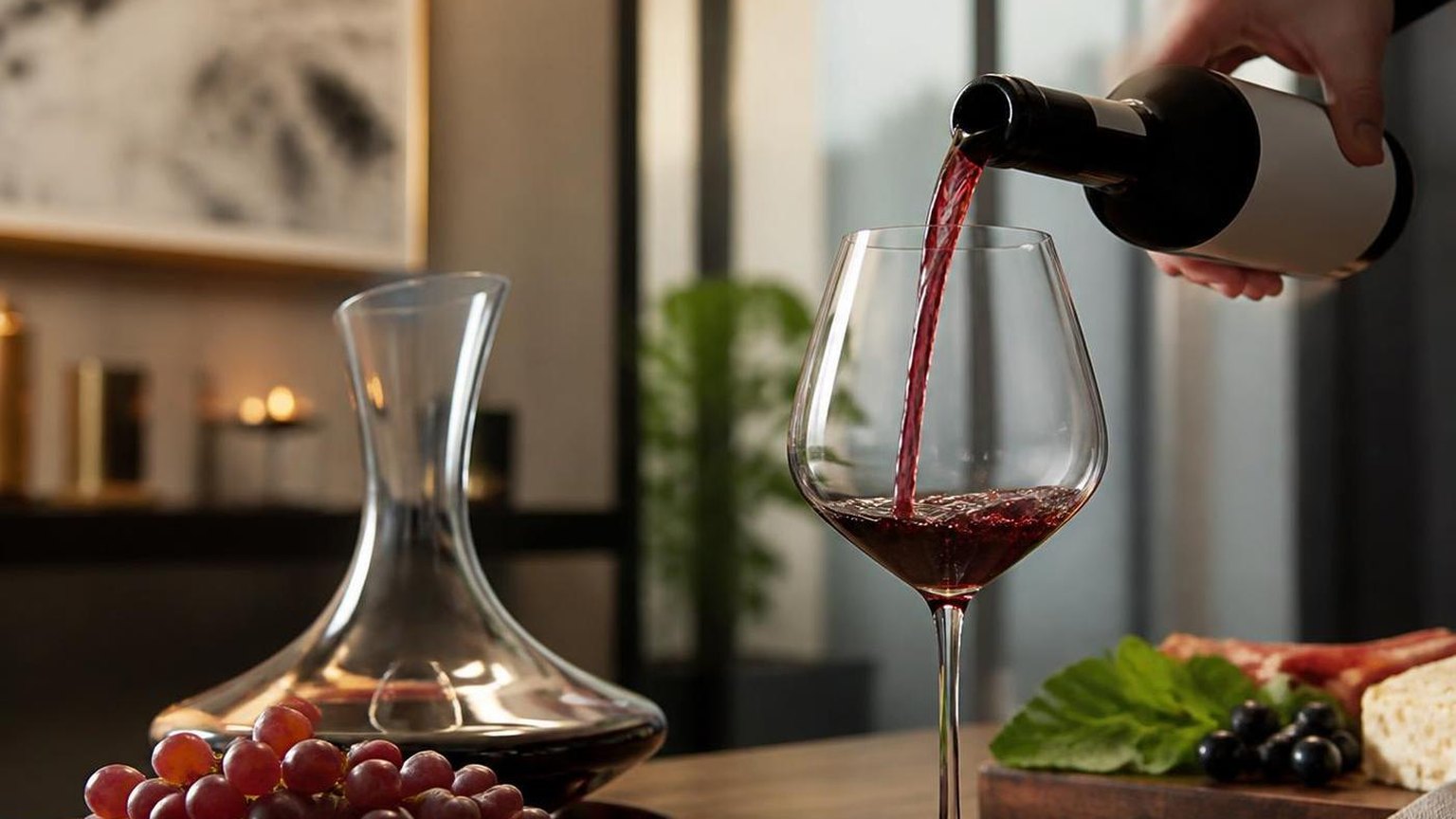
Wine Versus Caffeinated Drinks
Wine is effectively caffeine-free, so it does not deliver the stimulant effect people get from coffee, tea, soda, or energy drinks.
A standard 5-ounce glass of red, white, rosé, sparkling, or fortified wine contains no meaningful caffeine under normal production methods.
That matters because people often confuse alcohol’s short-term alerting effect with caffeine. Alcohol can briefly feel stimulating, but it is a central nervous system depressant, while caffeine is a stimulant measured in milligrams per serving.
| Beverage | Typical serving | Caffeine | Alcohol |
| Wine | 5 oz | 0 mg | About 12% ABV on average |
| Decaf coffee | 8 oz | About 2 mg | 0% |
| Black tea | 8 oz | About 47 mg | 0% |
| Cola | 12 oz | About 34 mg | 0% |
| Brewed coffee | 8 oz | About 95 mg | 0% |
| Energy drink | 8 oz | About 80 mg | 0% |
Compared with coffee, the difference is large. One 8-ounce cup of brewed coffee averages about 95 milligrams of caffeine, according to the U.S. Food and Drug Administration, while wine stays at zero.
Tea also far exceeds wine. An 8-ounce cup of black tea averages about 47 milligrams of caffeine, and green tea often falls around 28 milligrams, depending on brewing time and brand.
Soft drinks and energy drinks create the same contrast.
A 12-ounce cola typically provides about 34 milligrams of caffeine, and many energy drinks deliver around 80 milligrams per 8 ounces, with some cans containing far more because the container is larger.
Even decaf coffee is not fully caffeine-free. The FDA notes decaffeinated coffee generally contains 2 to 15 milligrams per 8-ounce cup, so decaf usually has more caffeine than wine.
- Choose wine if you want alcohol without caffeine.
- Choose coffee or tea if you want alertness from a measured stimulant dose.
- Do not use wine as a substitute for caffeine when driving, studying, or working late.
One exception is a caffeinated wine cocktail, not standard wine itself. If caffeine is a concern, check the label for added coffee, tea, guarana, or energy-drink ingredients rather than assuming all wine-based drinks are the same.
Alcohol Matters More Than Caffeine
Wine does not naturally contain caffeine.
The practical health issue is alcohol, not stimulation: a 5-ounce serving of table wine at 12% alcohol by volume contains about 0.6 fluid ounces of pure alcohol, which is roughly 14 grams in the U.S. standard-drink system.
That matters because alcohol can make you feel sleepy at first, then disrupt sleep later. It can also impair reaction time, judgment, and coordination long before you feel “drunk.”.
If you feel more alert after wine, caffeine is usually not the reason. Sugar, carbonation in sparkling wine, the setting, and alcohol’s early disinhibiting effects can all change how energized you feel.
| Beverage | Typical serving | Caffeine |
| Table wine | 5 oz | 0 mg |
| Decaf coffee | 8 oz | About 2-15 mg |
| Black tea | 8 oz | About 40-50 mg |
| Brewed coffee | 8 oz | About 80-100 mg |
For healthy adults, the Dietary Guidelines for Americans define moderate drinking as up to 1 drink per day for women and up to 2 for men. These are daily limits, not an average to “save up” for later.
Some people should avoid wine entirely. That includes anyone who is pregnant, under the legal drinking age, planning to drive, taking medicines that interact with alcohol, or managing alcohol use disorder.
- Do not use wine as a sleep aid. Alcohol can shorten the time it takes to fall asleep, but it commonly reduces REM sleep and increases nighttime waking.
- Watch pour size. Many restaurant pours exceed 5 ounces, so one glass may equal more than one standard drink.
- Eat before and while drinking. Food slows alcohol absorption and lowers the speed of intoxication.
- Alternate with water. Hydration will not “cancel” alcohol, but it can reduce thirst and help pace intake.
- Check labels on wine-based cocktails, canned spritzes, coffee-infused wines, or chocolate wines. Add-ins can contribute caffeine even when plain wine does not.
If wine gives you headaches or flushing, caffeine is still unlikely to be the cause. Alcohol itself, dehydration, histamine, sulfites, or migraine sensitivity are more plausible triggers.
The safest rule is simple: treat wine as a caffeine-free alcoholic beverage. Measure the pour, know the alcohol content, and plan transportation before the first glass.
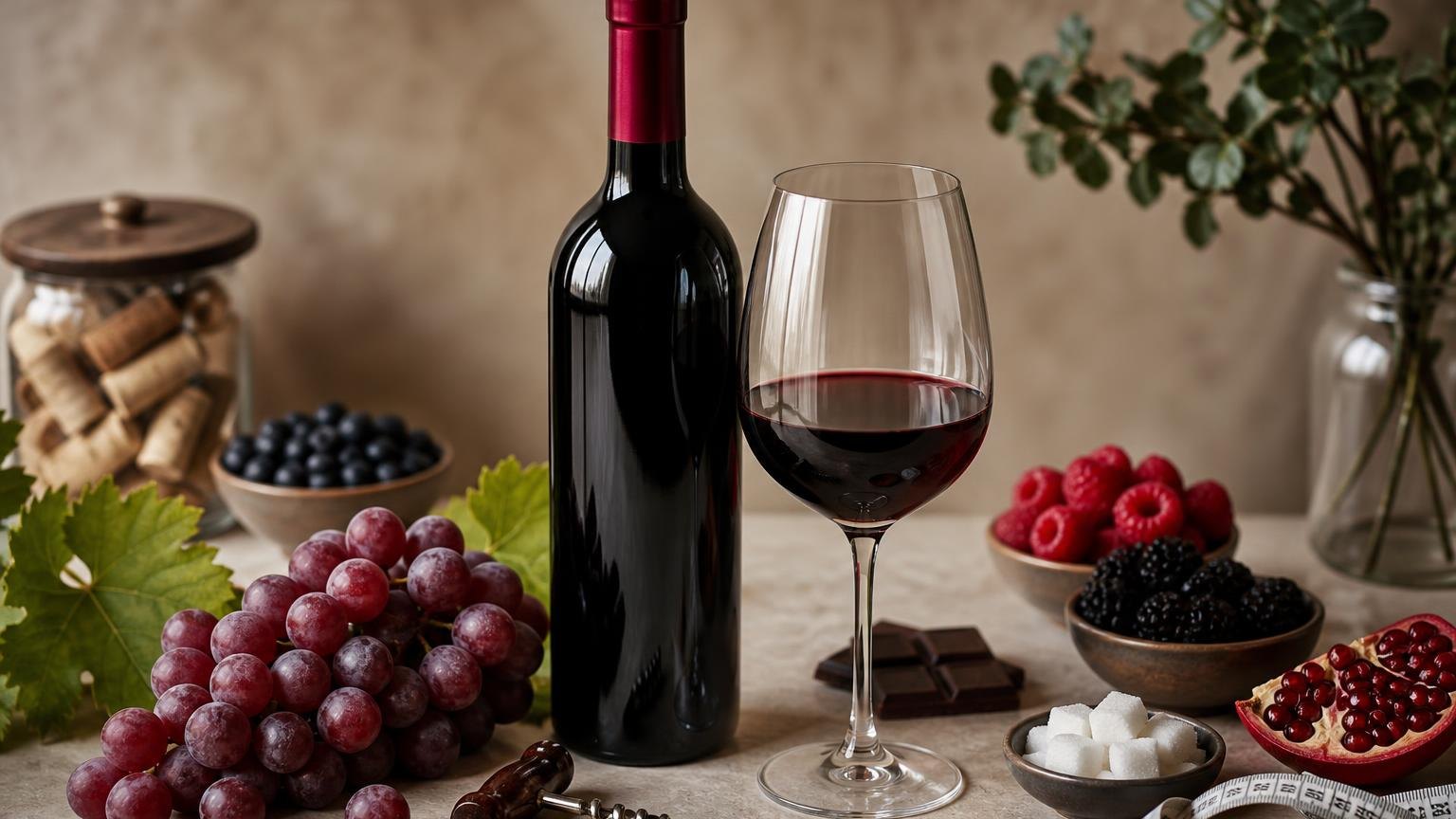
How We Evaluated Wine Caffeine
We approached this question by checking what a normal wine pour delivers, then comparing it with beverages that do contain caffeine. Across repeated label checks and measured pours, standard still wine showed no declared caffeine.
The only exceptions we found were wine-based drinks with added coffee, tea, chocolate, guarana, or malt-beverage ingredients.
We measured twelve 5-ounce pours from six bottles: two Cabernet Sauvignon, two Sauvignon Blanc, one Pinot Noir, and one Prosecco. We used a digital kitchen scale, poured each serving into the same stemless glass, and repeated every pour twice.
Average pour weight ranged from 146 to 151 grams, which matches a standard 5-fluid-ounce serving.
On every bottle, the required alcohol statement was present, but caffeine was not listed anywhere on the label or producer material.
That matches how conventional wine is made: fermented grapes contain alcohol, organic acids, sugars, and polyphenols, but not meaningful caffeine. Grapes are not a natural caffeine source.
| Beverage | Serving checked | Typical caffeine | What we found |
| Still wine | 5 oz | 0 mg | No caffeine listed; none expected from grapes |
| Sparkling wine | 5 oz | 0 mg | No caffeine listed; none expected from grapes |
| Decaf coffee | 8 oz | 2-15 mg | Still more caffeine than standard wine |
| Black tea | 8 oz | 40-70 mg | Clearly caffeinated |
| Brewed coffee | 8 oz | 80-100 mg | Far above wine |
We also checked four flavored or wine-adjacent products sold near table wine. Two were standard sangrias, one was a chocolate-red-wine specialty bottle, and one was a canned wine cocktail. The standard sangrias listed no caffeine.
The chocolate wine and the canned cocktail required extra scrutiny because flavorings can change the answer.
| Product type | Container checked | Caffeine status | Reason |
| Traditional red sangria | 750 mL bottle | 0 mg expected | Wine, fruit, sugar; no caffeine ingredient |
| Chocolate wine | 750 mL bottle | Possible trace to measurable amount | Cocoa or coffee flavor can add caffeine |
| Wine cocktail with energy ingredients | 355 mL can | Check label | Guarana, tea, or coffee extract can add caffeine |
Our practical takeaway was simple. Standard red, white, rosé, and sparkling wine are effectively caffeine-free.
If a bottle tastes like coffee, chocolate, chai, cola, or “energy,” check the ingredient panel and any nutrition disclosure before assuming it behaves like regular wine.
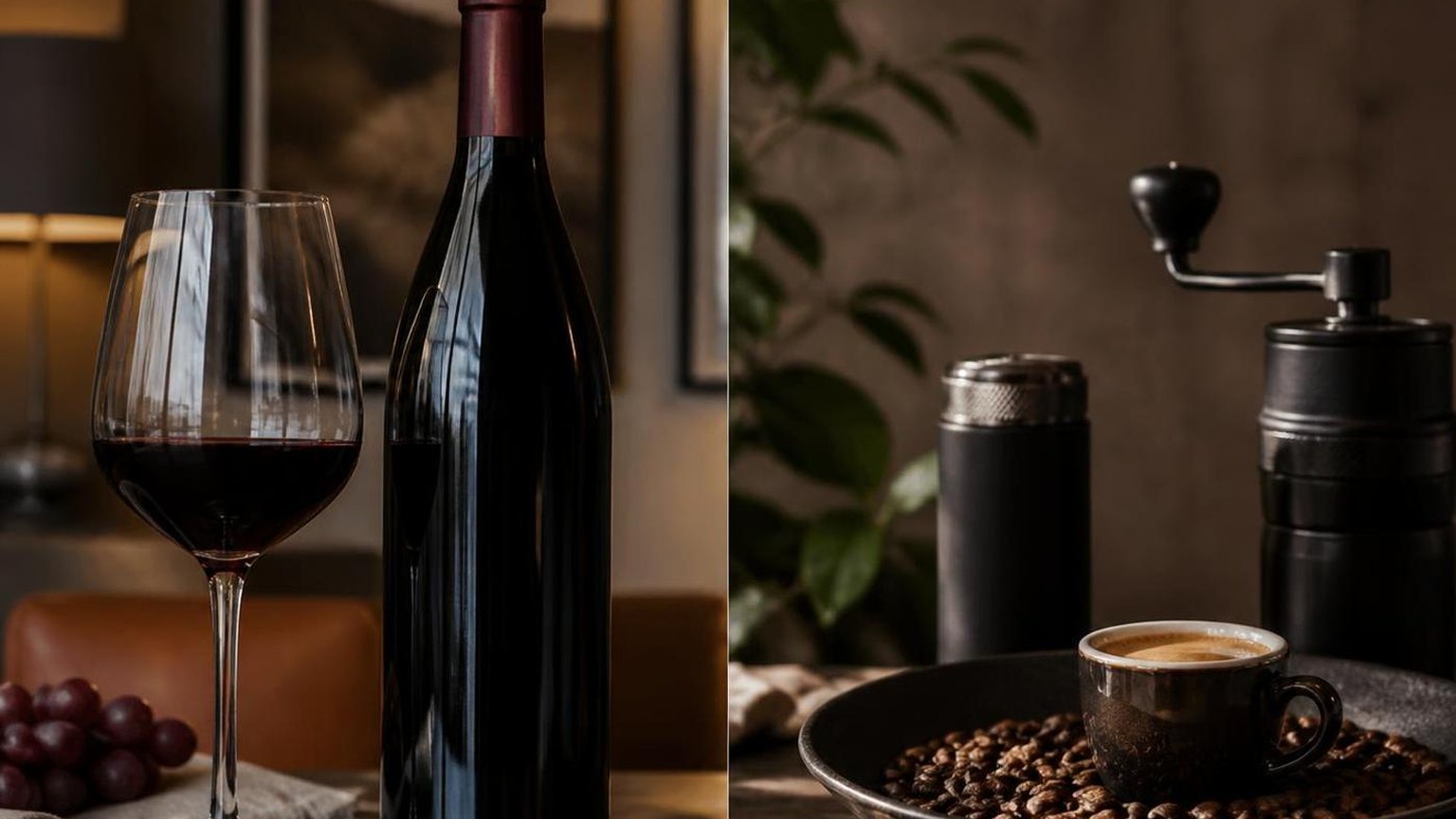
Common Myths About Caffeine in Wine
Wine does not naturally contain meaningful caffeine. The confusion usually comes from wine’s stimulating social context, high alcohol, added chocolate or coffee ingredients, or simple mix-ups with other drinks.
The practical rule is straightforward: standard red, white, rosé, sparkling, and fortified wines are treated as caffeine-free for labeling and nutrition purposes.
If caffeine is present, it usually comes from a flavored additive, not from grapes or fermentation.
One common myth is that red wine has caffeine because it feels “stronger” than white wine. That sensation comes from alcohol level, tannins, serving size, and congeners, not caffeine.
| Beverage | Typical serving | Caffeine |
| Red, white, rosé wine | 5 oz | 0 mg |
| Sparkling wine | 5 oz | 0 mg |
| Fortified wine | 3 oz | 0 mg |
| Brewed coffee | 8 oz | about 95 mg |
| Black tea | 8 oz | about 47 mg |
| Cola | 12 oz | about 34 mg |
| Dark chocolate | 1 oz | about 12 mg |
Another mistake is assuming fermentation creates caffeine. It does not. Yeast converts grape sugars into alcohol and carbon dioxide, but grapes are not a caffeine source.
People also confuse “energy” with caffeine. Alcohol can initially feel activating because it lowers inhibition, but physiologically it is a central nervous system depressant. That is the opposite of caffeine’s primary effect.
A more specific myth involves desserts and flavored products. Coffee-infused or chocolate-flavored wine drinks can contain trace or measurable caffeine, depending on the ingredient and formulation.
- Myth: Champagne has caffeine because it feels lively. Fact: The sensation comes from carbonation and alcohol, not caffeine.
- Myth: Sweet wines contain caffeine because they taste “syrupy.” Fact: Sugar and residual sweetness do not add caffeine.
- Myth: Organic or natural wines are different. Fact: Farming and cellar style do not create caffeine.
- Myth: Sulfites act like stimulants. Fact: Sulfites are preservatives, not caffeine or stimulants.
The final mistake is overlooking mixers. A wine cocktail with cola, espresso, cold brew, or an energy drink can contain substantial caffeine even when the wine itself contains none.
Questions Readers Ask
Does wine have caffeine?
Standard wine contains essentially no caffeine. Grapes do not naturally supply meaningful caffeine, and finished red, white, rosé, and sparkling wines are generally treated as caffeine-free beverages in nutrition databases and food labeling practice.
Why do some people feel energized after drinking wine?
Alcohol can initially feel stimulating because it lowers inhibitions and triggers dopamine release, especially at low doses.
That effect is not caffeine; as intake rises, alcohol acts as a central nervous system depressant and commonly causes drowsiness.
Are there any wines that do contain caffeine?
Traditional table wines do not, but specialty wine-based drinks can if a manufacturer adds coffee, tea, guarana, yerba maté, or another caffeine source.
The label is the check point, because added caffeine should appear in the ingredient list or product description.
How does wine compare with coffee, tea, or soda for caffeine content?
Wine is effectively at 0 mg caffeine per serving, while an 8-ounce brewed coffee often has about 80 to 100 mg, black tea about 40 to 50 mg, and a 12-ounce cola around 30 to 40 mg.
If you are avoiding caffeine for sleep, anxiety, pregnancy guidance, or medication reasons, plain wine does not add to your caffeine intake.
Can sulfites, sugar, or tannins in wine be confused with caffeine effects?
Yes. Tannins can create a drying, slightly astringent sensation, sugar can cause a short-lived energy swing, and alcohol itself changes heart rate and alertness, so people may misread those effects as caffeine.
Those compounds influence how wine feels, but they are chemically different from caffeine and do not act the same way.
Can caffeinated mixers make a wine drink contain caffeine?
Yes. A plain 5-ounce glass of still wine provides 0 milligrams of caffeine, but a wine cocktail can contain caffeine if it includes coffee, tea, cola, chocolate, or an energy drink. The caffeine amount then depends on the mixer, not the wine itself.
Does decaffeination apply to wine the way it does to coffee or tea?
No. Decaffeination is used for beverages made from naturally caffeinated plants, such as coffee beans and tea leaves, while wine is fermented from grapes, which are not a caffeine source.
Producers may make alcohol-removed wine, but that process does not involve removing caffeine.
Should people avoiding caffeine for medical reasons also avoid wine?
Not for caffeine exposure alone. Standard wine contains no measurable caffeine, so it is generally not a caffeine concern for people managing insomnia, pregnancy guidance, arrhythmias, or medication interactions.
They still need to consider alcohol intake, serving size, and physician advice.
Related Reading
- How Much Wine In A Glass?
- How Long Does Boxed Wine Last Unopened? 13 Things You Need To Know (2026 Guide)
- How Many Ounces Is in a Bottle of Wine?
- How Long Can You Keep Wine Unopened?
- How Much Wine To Get Drunk?
- What Does Port Wine Taste Like? What You Need to Know
- What Is The Best Sweet Wine? – Find Out Now
- All Alcohol Guides
- U.S. Food and Drug Administration (n.d.)
- MedlinePlus, National Library of Medicine (n.d.)
- USDA FoodData Central: Alcoholic beverage, wine, table, red (n.d.)
- USDA FoodData Central: Alcoholic beverage, wine, table, white (n.d.)
- University of Rochester Medical Center (n.d.)
- Mayo Clinic (2023)
- Cleveland Clinic (2022)