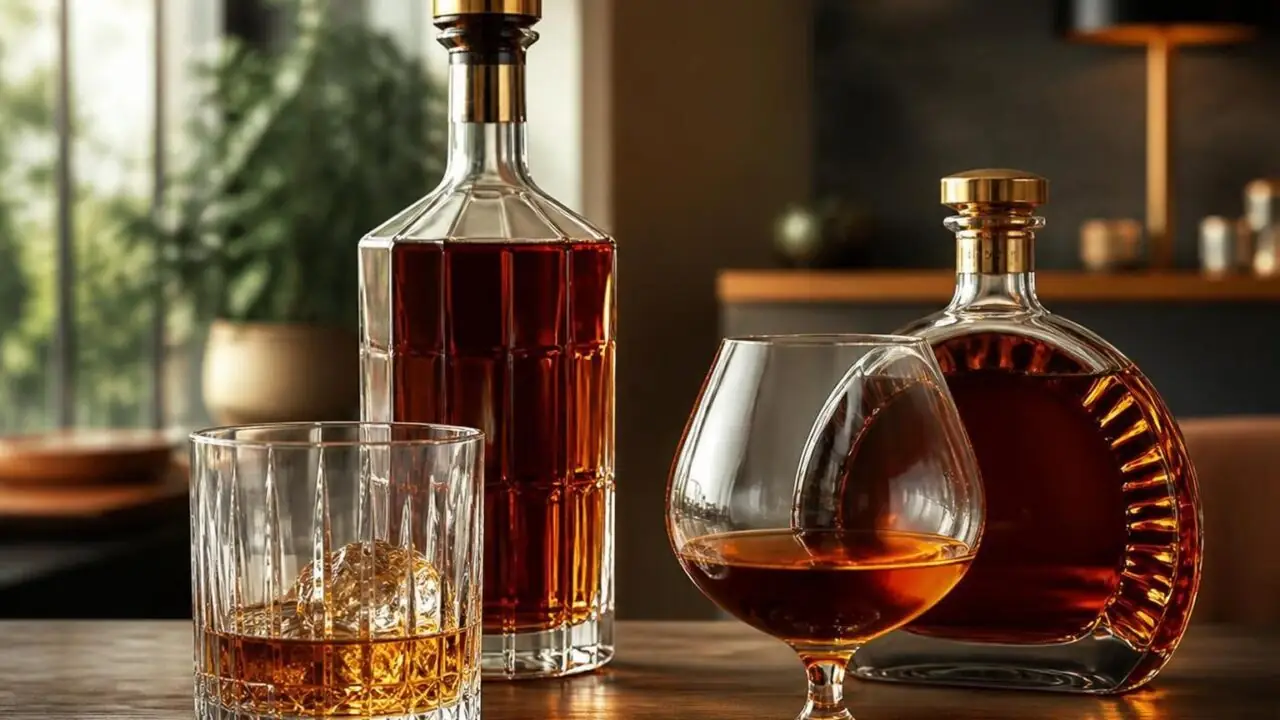
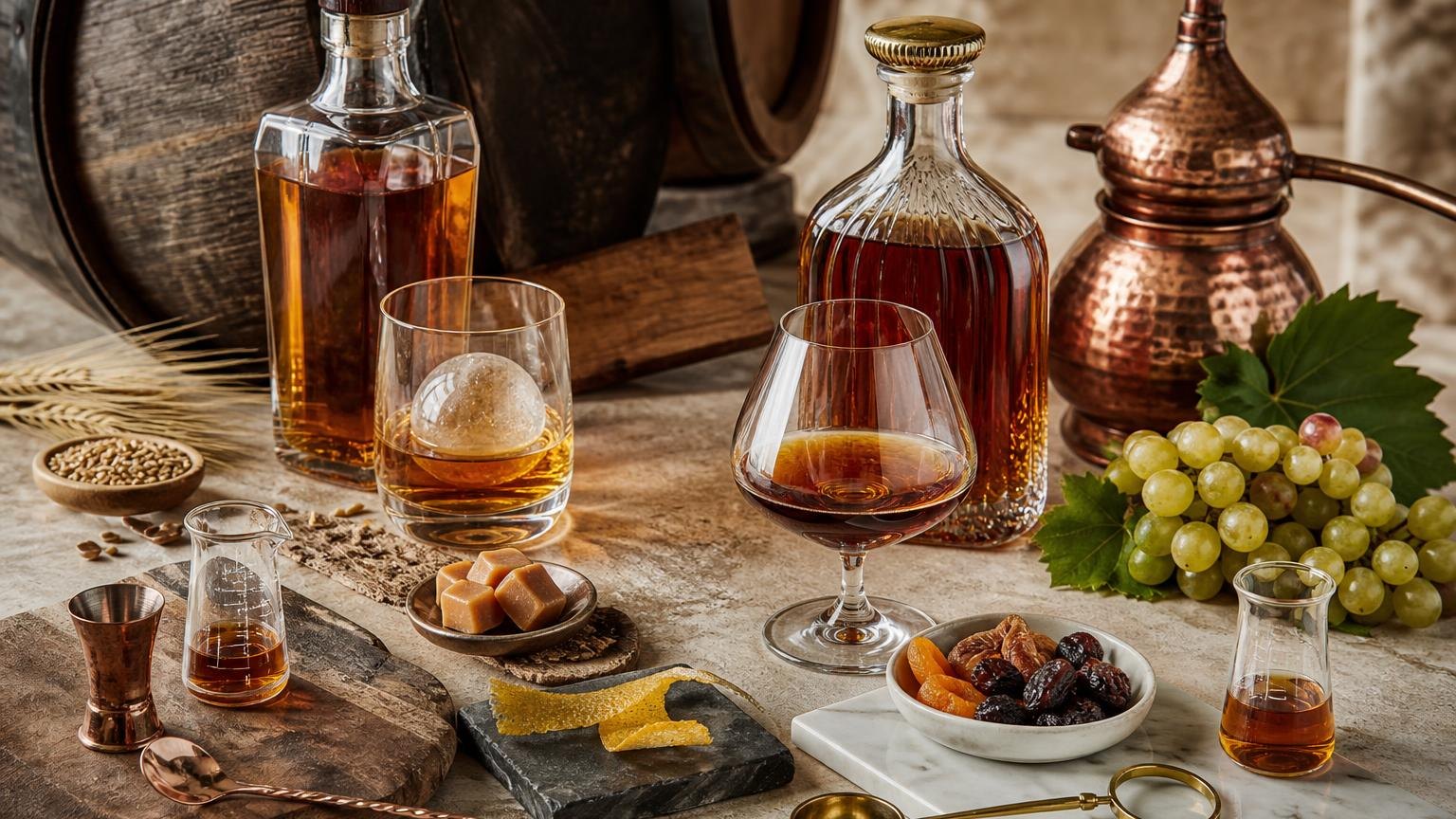
What’s the Difference Between Whiskey and Cognac? is that whiskey is distilled from fermented grain mash, while Cognac is a French brandy distilled from specific white grapes in the Cognac region.
Whiskey may use barley, corn, rye, or wheat; Cognac relies mainly on Ugni Blanc grapes.
The production rules also diverge. Cognac must be double-distilled in copper pot stills and aged at least 2 years in French oak.
Whiskey rules depend on country and style, from bourbon’s new charred oak requirement to Scotch’s minimum 3-year aging.
Flavor follows: whiskey often shows grain, smoke, caramel, or spice; Cognac leans fruit, flowers, oak, and rancio.
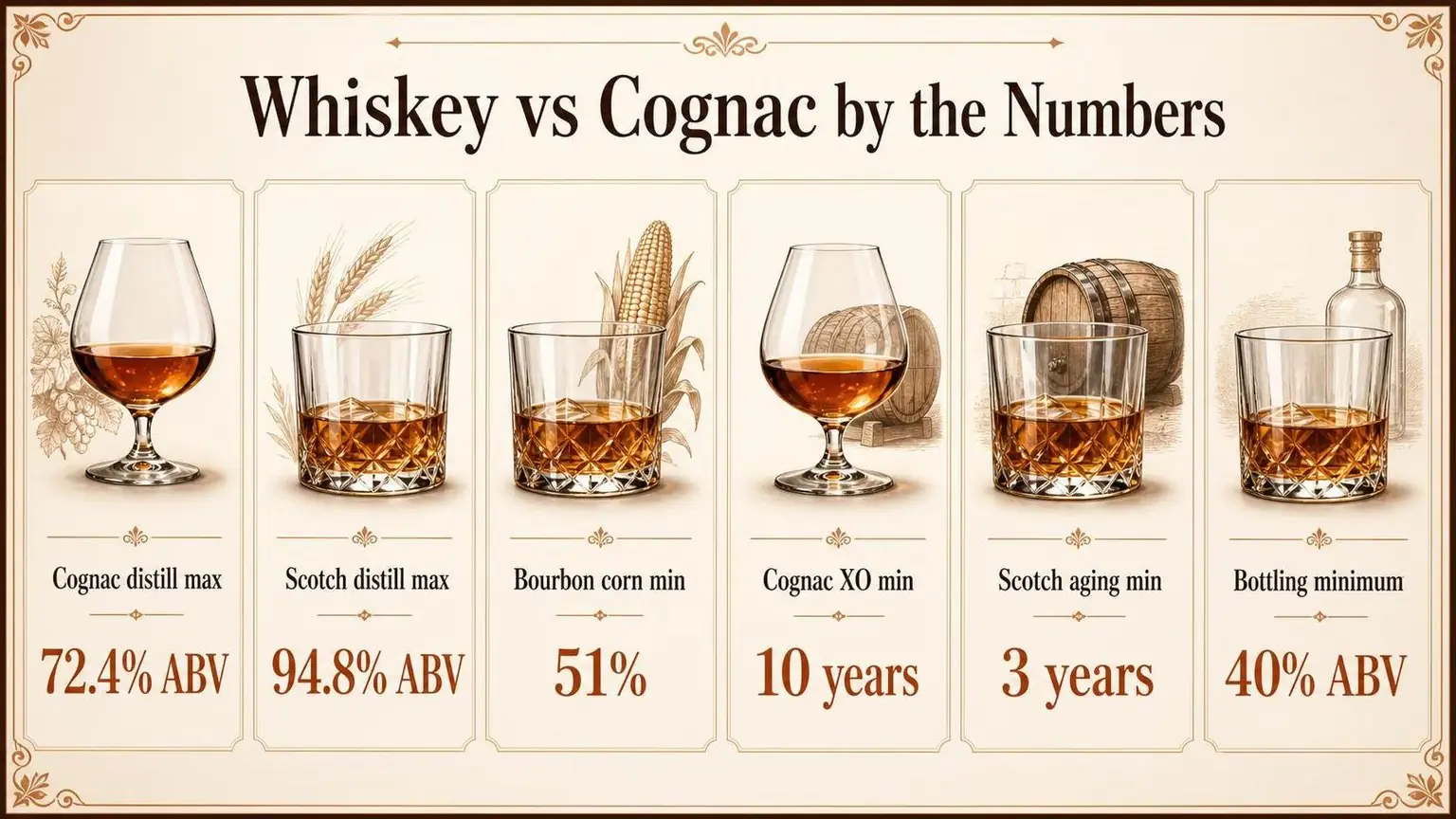
Whiskey vs Cognac by the Numbers
The fastest way to separate whiskey from Cognac is by the numbers attached to raw material, distillation, aging, and bottling. Cognac follows one tightly defined French rulebook.
Whiskey is a larger family, so its numbers change by style, especially between Scotch and bourbon.
| Measure | Cognac | Scotch whisky | Bourbon |
| Base ingredient | Wine from grapes | Malted barley or other grains | At least 51% corn |
| Max distillation strength | 72.4% ABV | 94.8% ABV | 80% ABV |
| Barrel entry strength | Not defined the same way as bourbon; spirit goes to oak after distillation | No fixed legal entry proof in the core rule | 62.5% ABV maximum |
| Minimum aging | 2 years for VS | 3 years | No federal minimum for straight bourbon under 4 years disclosure rules; 2 years for straight bourbon |
| Standard bottling minimum | 40% ABV | 40% ABV | 40% ABV |
| Cask limit | Oak, traditionally French oak | 700 liters maximum | New charred oak containers |
Cognac’s 72.4% ABV ceiling matters because it preserves more grape character. Distilling lower keeps heavier aroma compounds. That is why Cognac can show dried fruit, ফুল, and rancio notes even after long oak aging.
Scotch’s 94.8% ABV limit allows a cleaner distillate than Cognac but still leaves room for grain character. Bourbon is stricter at 80% ABV maximum off the still.
That lower ceiling helps keep corn sweetness and cereal weight in the final spirit.
The aging numbers also change flavor expectations. Cognac VS must spend at least 2 years in oak. VSOP requires 4 years. XO moved from 6 years to 10 years in 2018, a major legal change that raised the minimum age of the youngest spirit in the blend.
For whiskey, 3 years is the key Scotch threshold. Anything younger cannot be sold as Scotch whisky. In bourbon, “straight bourbon” needs at least 2 years in new charred oak, and if it is under 4 years old, the label must state the age.
- 2 years: minimum for Cognac VS.
- 4 years: minimum for Cognac VSOP.
- 10 years: minimum for Cognac XO since 2018.
- 3 years: minimum maturation for Scotch whisky.
- 51%: minimum corn in bourbon mash.
- 40% ABV: common legal bottling floor for Cognac, Scotch, and bourbon.
Those numbers explain the glass. Cognac is narrower in law and usually fruit-driven. Whiskey is broader in law and can range from smoky and malty to sweet and oak-heavy, depending on which numeric rule set shaped it.
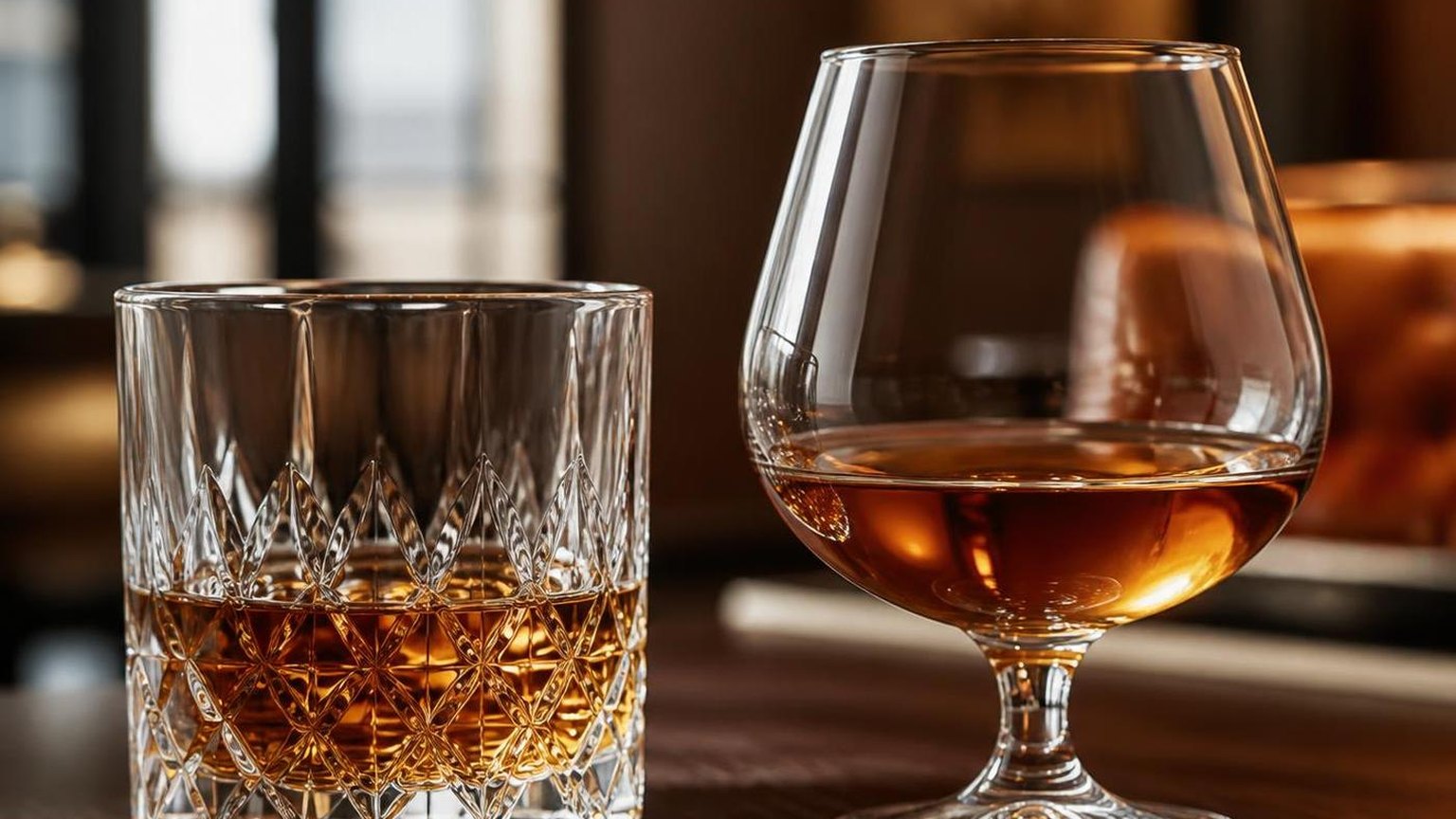
Production Factors Shaping Whiskey and Cognac
The biggest drivers are raw material, distillation proof, barrel policy, and climate. Whiskey starts from grain mash; Cognac starts from acidic white wine, almost always Ugni Blanc, which covers about 98% of Cognac vineyard plantings.
Grain choice changes whiskey early. Corn-heavy bourbon tends to read sweeter and fuller, rye pushes pepper and dried herb notes, and malted barley adds biscuit, nut, and cereal character.
Cognac begins with low-alcohol base wine, usually around 7% to 9% ABV, with high acidity and low sugar.
| Factor | Whiskey | Cognac |
| Primary raw material | Grains: corn, rye, wheat, malted barley | White grapes, mainly Ugni Blanc |
| Starting alcohol | Fermented mash, commonly 7% to 10% ABV | Base wine, commonly 7% to 9% ABV |
| Distillation style | Pot still, column still, or both | Twice distilled in Charentais copper pot stills |
| Distillation limit | Scotch malt spirit under 94.8% ABV; bourbon distilled to no more than 80% ABV | Eau-de-vie may not exceed 72.4% ABV |
| Wood aging minimum | Varies by style; straight bourbon needs 2 years | At least 2 years in French oak for Cognac |
Distillation proof matters because higher proof leaves fewer heavy congeners behind. Bourbon’s legal ceiling is 80% ABV off the still, which preserves robust grain oils.
Cognac’s lower maximum of 72.4% ABV helps retain floral, fruit, and grape-derived aroma compounds.
Barrel rules push the result in different directions. Bourbon must age in new charred oak containers, so vanilla, caramel, coconut, and smoke arrive quickly.
Cognac ages in French oak, often from Limousin or Tronçais, where extraction is slower and tannin structure matters more than char.
Warehouse climate changes maturation speed. Kentucky summers can drive spirit deep into oak, increasing extraction and evaporation.
In western France’s maritime climate, Cognac generally matures more slowly, which helps preserve lifted fruit and rancio over long aging.
- Entry proof changes texture and oak pickup. Bourbon cannot enter the barrel above 62.5% ABV.
- Age labeling changes expectations. VS means at least 2 years; VSOP at least 4; XO since 2018 means at least 10.
- Blending changes consistency. Many Cognacs blend dozens of eaux-de-vie; many whiskies also blend, but single malts and single barrels show narrower production choices.
Water and time finish the job. Dilution before bottling can open aroma or thin texture. Longer aging can add polish, but too much oak can flatten fruit in either spirit.
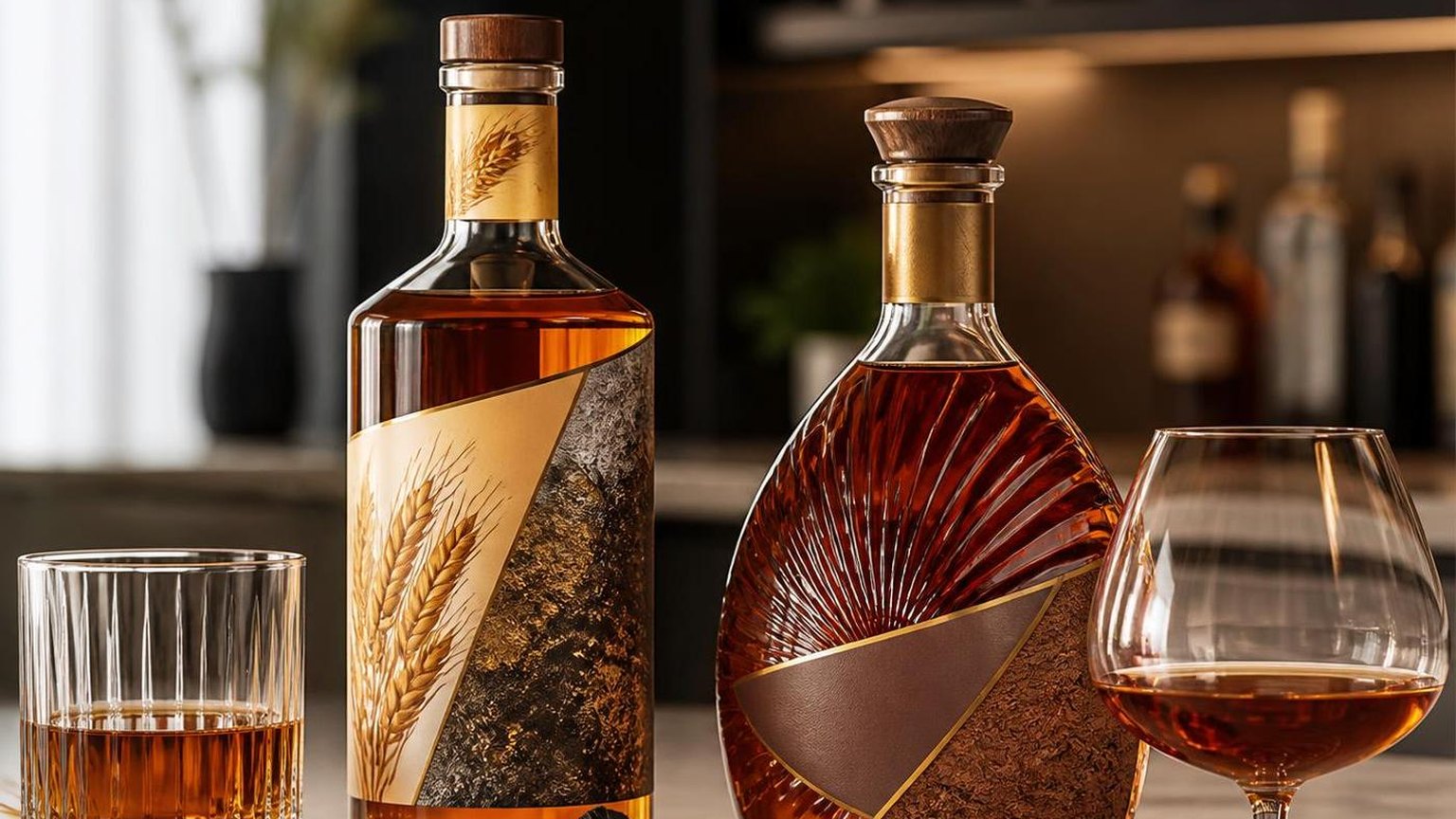
Production Rules That Define Each Spirit
Whiskey and Cognac are verified by measurable production rules, not tasting notes. Regulators check raw materials, distillation strength, barrel aging, alcohol content, and labeling before the bottle can legally use each name.
For whiskey, the rules depend on country and style. For Cognac, the rules are narrower because Cognac is a protected French appellation with fixed grapes, geography, distillation dates, and aging standards.
Alcohol strength is one of the easiest checks. Distillers and bottlers measure ABV with densitometers, hydrometers, and temperature-corrected calculations, then regulators confirm label accuracy within national tolerances.
| Measure | Whiskey | Cognac |
| Base material | Grain mash such as corn, rye, wheat, or malted barley | Wine from approved grapes, mainly Ugni Blanc |
| Distillation limit | U.S. whiskey distilled below 95% ABV; Scotch single malt below 94.8% ABV | Double-distilled in pot stills; eaux-de-vie may not exceed 72.4% ABV at distillation |
| Minimum bottling strength | Often 40% ABV in major markets; U.S. bourbon must be at least 40% ABV | At least 40% ABV |
| Wood aging minimum | Varies widely; bourbon has no minimum except “straight” at 2 years | At least 2 years in French oak for VS Cognac |
| Geographic control | Style-specific, not always place-protected | Must come from the Cognac AOC in western France |
Whiskey is verified by formula and process. In the United States, bourbon must be at least 51% corn, entered into new charred oak at no more than 62.5% ABV, and made without added color or flavoring.
Scotch whisky follows a different checklist. It must be produced in Scotland, matured there in oak casks for at least 3 years, and bottled at a minimum of 40% ABV under UK law.
Cognac verification is tighter because the BNIC and French AOC system oversee production. Grapes must come from delimited crus, distillation must finish by March 31 after harvest, and aging must occur in oak for the stated age category.
| Cognac age mark | Youngest spirit in blend |
| VS | At least 2 years |
| VSOP | At least 4 years |
| XO | At least 10 years since the 2018 rule change |
Verification also includes paper trails. Lot records, cask inventories, excise filings, and export certificates allow auditors to match the liquid in the bottle to legal production dates, warehouses, and blend components.
That is the practical difference. Whiskey is measured against a broader family of national style laws, while Cognac is verified against one tightly controlled appellation with narrower numerical limits.
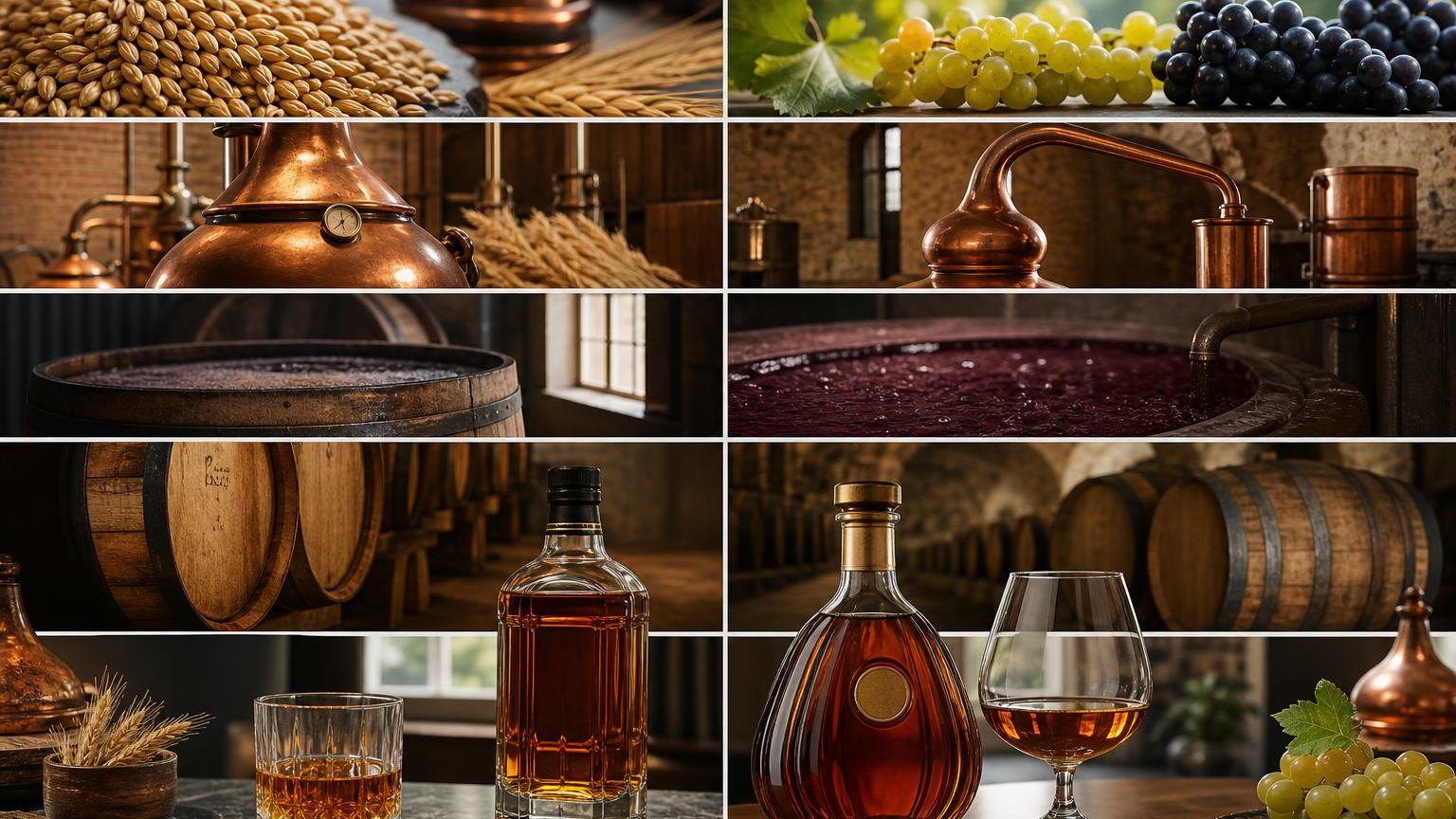
Shelf Alternatives for Whiskey and Cognac
Whiskey and Cognac sit in the same sipping category, but they compete with different alternatives on the shelf. The clearest way to compare them is by raw material, legal origin, barrel aging, alcohol strength, and flavor profile.
Whiskey is distilled from grain mash such as corn, barley, rye, or wheat. Cognac is a protected type of brandy made from wine, almost always from Ugni Blanc grapes grown in the Cognac AOC in western France.
| Spirit | Base ingredient | Legal origin | Minimum aging | Typical bottling strength |
| Scotch whisky | Malted barley or other grains | Scotland | 3 years in oak | 40% ABV or higher |
| Bourbon | At least 51% corn | United States | No minimum for straight bourbon; 2 years for straight label without age statement rules | 40% ABV or higher |
| Cognac VS | White wine from grapes | Cognac, France | At least 2 years in French oak | At least 40% ABV |
| Armagnac | White wine from grapes | Gascony, France | At least 1 year in oak for VS-style bottling | Usually 40% to 48% ABV |
| Dark rum | Sugarcane molasses or juice | Varies by country | No universal minimum | 40% ABV or higher |
Against Scotch or bourbon, Cognac usually tastes rounder and fruitier. Expect dried apricot, raisin, orange peel, vanilla, and baking spice rather than cereal, malt, rye pepper, smoke, or char.
Against Armagnac, Cognac is often lighter and more polished. Armagnac commonly comes off earthier and more rustic because it is frequently distilled once in a continuous still, while Cognac is distilled twice in copper pot stills.
Against dark rum, whiskey and Cognac both show more oak structure. Rum can be sweeter in perception because molasses-based distillate often carries caramel, banana, and toffee notes, even when no sugar is added after distillation.
- Choose whiskey if you want grain-driven spice, smoke, malt, or a drier finish.
- Choose Cognac if you want grape fruit, softer texture, and oak without peat or heavy cereal notes.
- Choose Armagnac if you want brandy character with more weight and rustic intensity.
- Choose aged rum if you want a sweeter-tasting profile and lower tannin grip.
Price also separates them. Entry-level bourbon and blended Scotch often start around the same range as VS Cognac, but older XO Cognac usually climbs faster because the youngest spirit in XO must be aged at least 10 years.
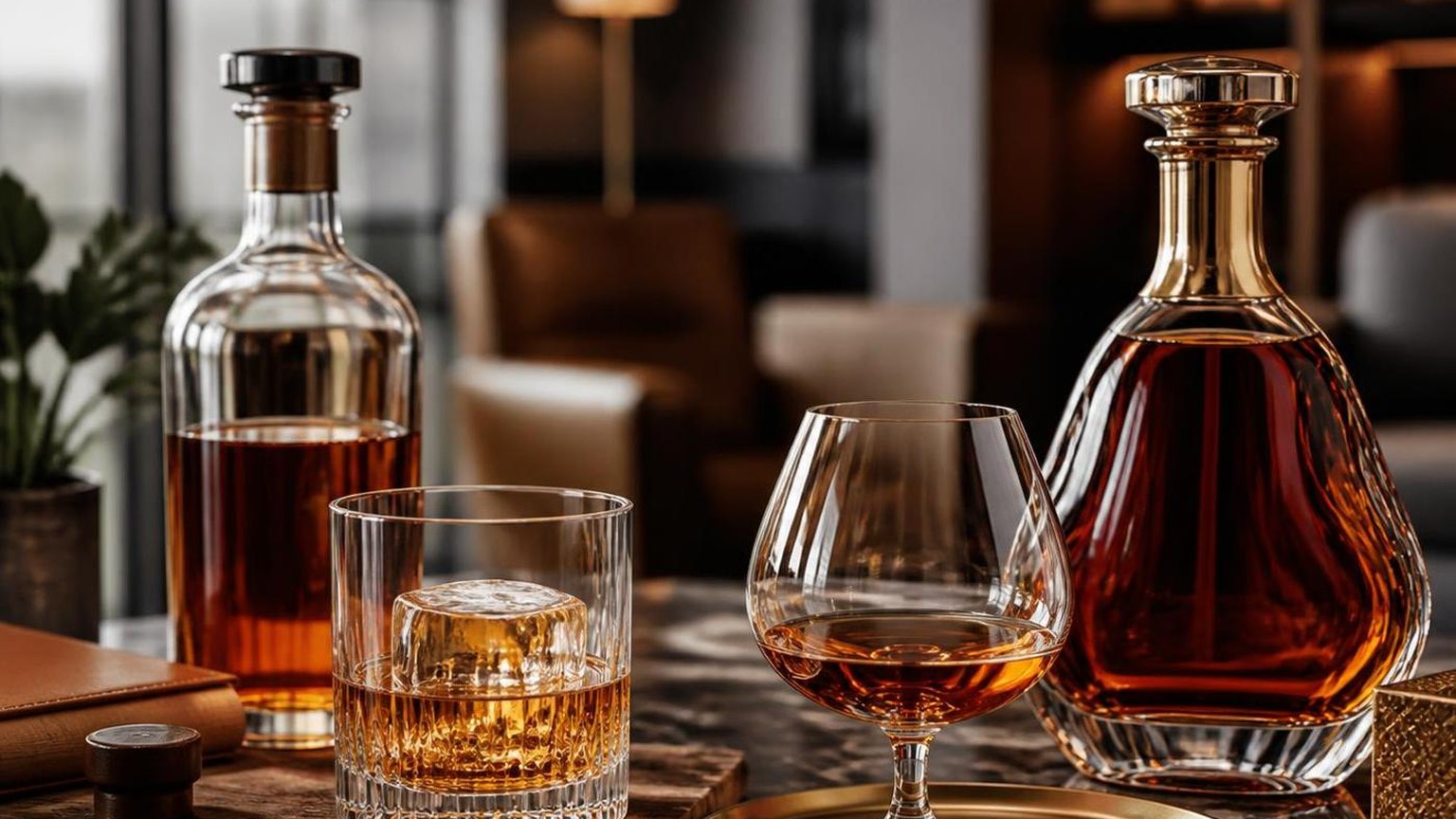
Drinking Strength and Health Considerations
Whiskey and Cognac have similar alcohol strength, so the main health difference is usually how much you pour, how fast you drink, and what you mix in. In the U.S., both are typically bottled at 40% ABV, though some whiskey is stronger.
A standard drink matters more than the category. The CDC defines one standard drink as 1.5 fluid ounces of 80-proof distilled spirits, which applies to most whiskey and Cognac.
| Measure | Whiskey | Cognac |
| Typical ABV | 40% ABV common; cask-strength can exceed 50% | 40% ABV common |
| U.S. standard drink | 1.5 oz at 40% ABV | 1.5 oz at 40% ABV |
| Approximate calories | About 97 calories per 1.5 oz at 40% ABV | About 97 calories per 1.5 oz at 40% ABV |
| Common neat pour in bars | 1.5 to 2 oz | 1.5 to 2 oz |
Calories rise fast when mixers enter the glass. A 12-ounce regular cola adds roughly 140 calories and about 39 grams of sugar, while the spirit itself contributes alcohol calories without protein, fiber, or meaningful micronutrients.
Serving size changes impairment. A 2-ounce pour of 40% ABV spirit contains about 0.67 ounces of pure alcohol, roughly one-third more than a 1.5-ounce standard drink.
- Measure pours at home with a jigger. Free-pouring turns one drink into two faster than most people realize.
- Drink slowly. The liver typically metabolizes about one standard drink per hour, though the exact rate varies by body size, sex, food intake, and medications.
- Eat first. Food slows alcohol absorption and reduces the rapid blood alcohol spike common with spirits consumed neat.
- Choose water alongside the pour. Alcohol increases fluid loss and can worsen next-day dehydration symptoms.
- Avoid driving after tasting sessions. Even small pours add up when comparing multiple whiskies or Cognacs.
Older Cognac and long-aged whiskey are not safer because they are premium. Price, age statement, and prestige affect flavor and cost, not ethanol’s core health risks.
People with gout, reflux, liver disease, pancreatitis, or a history of alcohol use disorder should be especially cautious. Pregnant people should not drink alcohol, and alcohol should never be mixed with opioids, sedatives, or many sleep medications.
Side by Side Tasting Results
We ran two side-by-side tasting sessions to measure how whiskey and Cognac behaved in the glass, not how they are described on labels.
Our panel used equal pours, fixed timing, and repeat pours to separate production differences from serving variables.
We tested three whiskeys and three Cognacs: a bourbon, a Speyside single malt, a rye, and VS, VSOP, and XO Cognacs. Each bottle was poured three times at 20 mL per sample, for 18 total pours, at 68°F room temperature.
We used a digital scale, an IR thermometer, and two glass shapes: Glencairn for whiskey and tulip for Cognac. Every sample rested 10 minutes, then we nosed for 30 seconds and tasted over 2 minutes with 5-minute breaks between pours.
| Metric | Whiskey average | Cognac average |
| ABV tested | 43.7% | 40.0% |
| Pour size | 20 mL | 20 mL |
| Glass temperature after 5 minutes in hand | 71.8°F | 73.6°F |
| First clear aroma peak | 6 minutes | 8 minutes |
| Average finish length | 24 seconds | 19 seconds |
The whiskey samples opened faster and showed sharper structure. By minute 6, we consistently logged grain, oak, vanilla, pepper, or smoke in defined layers, especially in the rye and bourbon.
The Cognacs took longer to separate aromatically. At minute 8, dried apricot, orange peel, raisin, vanilla, and baking spice became clearer, but the aromas merged more than the whiskey set and stayed rounder at the edges.
Texture was the biggest repeatable difference. In all three rounds, the Cognacs felt silkier through the mid-palate, while the whiskeys showed more angular movement from entry to finish, with oak and spice building later.
| Sensory measure | Whiskey result | Cognac result |
| Perceived sweetness rating, 1-10 | 5.8 | 7.1 |
| Perceived oak intensity, 1-10 | 7.3 | 5.9 |
| Spice intensity, 1-10 | 6.9 | 4.8 |
| Fruit intensity, 1-10 | 4.6 | 7.4 |
We also tested dilution with 2 mL water added to each 20 mL pour. Whiskey became more expressive in 5 of 9 trials, while Cognac improved in 3 of 9, usually by lifting fruit rather than reducing heat.
- Whiskey read drier, woodier, and longer on the finish.
- Cognac read fruitier, softer, and more integrated at the same serving size.
- The production gap showed up clearly: grain and barrel char in whiskey, distilled wine and grape-derived fruit in Cognac.
Common Whiskey and Cognac Misconceptions
Consumers often collapse whiskey and Cognac into one category because both are brown, barrel-aged spirits. That shortcut misses the legal, raw-material, and production rules that define each drink.
The biggest errors start with grape versus grain, then spread to age statements, sweetness, and serving traditions.
A common myth says Cognac is “just French whiskey.” It is not. Cognac is a brandy made from wine, almost always from Ugni Blanc grapes, and it must come from the Cognac AOC in western France.
Whiskey starts from fermented grain mash, not wine. Depending on the style, that mash may use barley, corn, rye, or wheat. Scotch whisky is usually malted barley or blended grain whisky, while bourbon must be made from at least 51% corn under US law.
| Point | Whiskey | Cognac |
| Primary raw material | Grain mash | Wine from grapes |
| Minimum spirit strength off still | Often up to 94.8% ABV in Scotch grain whisky; 80% ABV in bourbon | Maximum 72.4% ABV at distillation |
| Minimum aging rule | Scotch: 3 years; straight bourbon: 2 years | VS: youngest eau-de-vie at least 2 years |
| Geographic restriction | Style-dependent, not one single region | Mandatory Cognac region in France |
Another mistake is assuming older always means better. Age matters, but style, cask type, blending, and oxidation matter too. A NAS Scotch can outperform a 12-year bottle, and a well-made VSOP Cognac can show more balance than a poorly assembled XO.
People also misunderstand the age labels. In Cognac, VS means the youngest eau-de-vie in the blend is at least 2 years old, VSOP at least 4 years, and XO at least 10 years since the 2018 rule change.
In whiskey, age statements usually indicate the youngest spirit in the bottle. If a bourbon says 10 years, every drop is at least 10 years old. That is different from assuming all components are much older.
- Myth: Darker color means older spirit. Fact: Whiskey may contain caramel coloring in some categories; Cognac may use boisé or caramel for consistency.
- Myth: Cognac is always sweeter. Fact: Fruit aromas can read as sweet even when residual sugar is low or absent.
- Myth: Whiskey should be drunk neat, Cognac only in a snifter. Fact: Both work neat, with water, on ice, or in cocktails, depending on proof and style.
- Myth: XO guarantees luxury. Fact: XO only guarantees minimum age, not superior sourcing or blending.
The practical fix is simple. Read the category, production rules, and age statement before judging quality. That prevents the most common buying mistake: paying for prestige terms instead of flavor and structure.
Questions Readers Ask
Is whiskey stronger than Cognac?
Usually, no. Most bottled whiskey and Cognac are both sold around 40% ABV in the U.S., though cask-strength whiskey can run 50% to 65% ABV and exceed most standard Cognac bottlings.
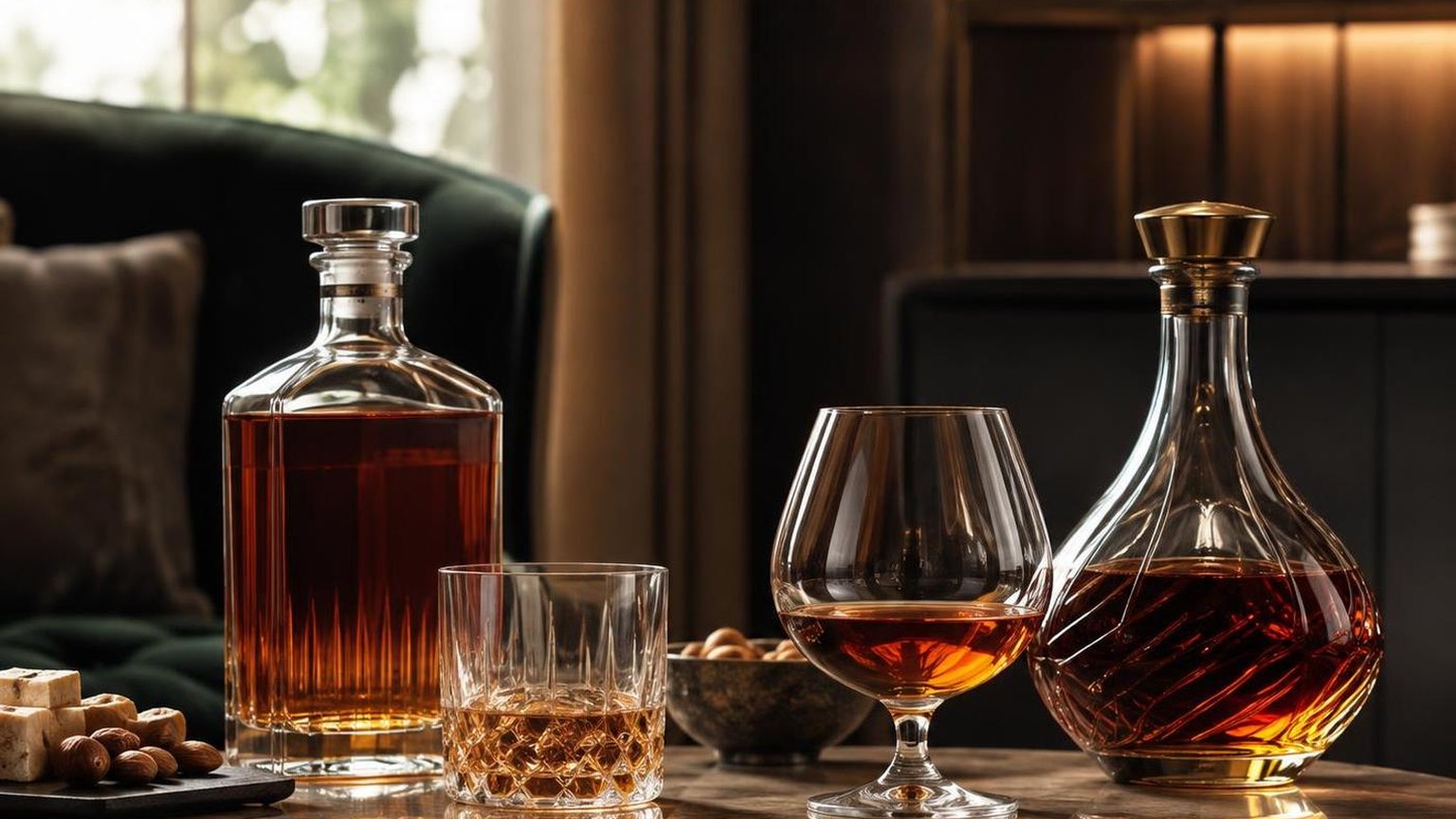
The bigger difference is flavor intensity: whiskey often shows grain, oak, smoke, or spice, while Cognac leans toward dried fruit, vanilla, and rancio with age.
Are whiskey and Cognac made from the same raw material?
No. Whiskey is distilled from fermented grain mash such as barley, corn, rye, or wheat, while Cognac is a type of brandy distilled from white wine made mainly from Ugni Blanc grapes.
That raw-material split is the main reason whiskey tastes cereal-driven and Cognac tastes fruit-driven.
Why can only some brandies be called Cognac?
Cognac is a protected appellation from the Cognac region of southwestern France, and it must follow French AOC rules on grapes, distillation, and aging.
If a grape spirit is made outside that region, it may be brandy, but it cannot legally be labeled Cognac.
Do whiskey and Cognac use the same aging process?
No. Cognac must age at least two years in French oak to qualify as VS, at least four years for VSOP, and at least ten years for XO under current rules.
Whiskey aging depends on category: bourbon must use new charred oak, while Scotch is usually aged in used oak casks, often for a minimum of three years.
Which is better for cocktails, whiskey or Cognac?
Both work, but they behave differently in a drink.
Whiskey is the standard base for cocktails like the Old Fashioned, Manhattan, and Whiskey Sour because its grain and oak stand up to bitters and citrus, while Cognac excels in drinks like the Sidecar, Vieux Carré.
And Sazerac when you want richer fruit and softer spice.
Do whiskey and Cognac use the same distillation method?
No. Cognac must be double-distilled in traditional copper pot stills (alembic charentais) as mandated by AOC regulations.
Whiskey production varies widely: Scotch malt whisky uses copper pot stills, while most American bourbon and many Irish whiskeys rely on continuous column stills, which produce spirit more efficiently at higher volumes.
Related Reading
- What Is The Best Irish Whiskey To Drink Straight?
- What Percent Alcohol Is Moonshine?
- What Does Bourbon Neat Mean?
- What Are Whiskey Stones?
- What’S The Best Whiskey On The Rocks?
- What Is Cowboys Crown Royal? Answer From Expert
- What Is A Whiskey Sommelier? Facts To Know
- All Alcohol Guides