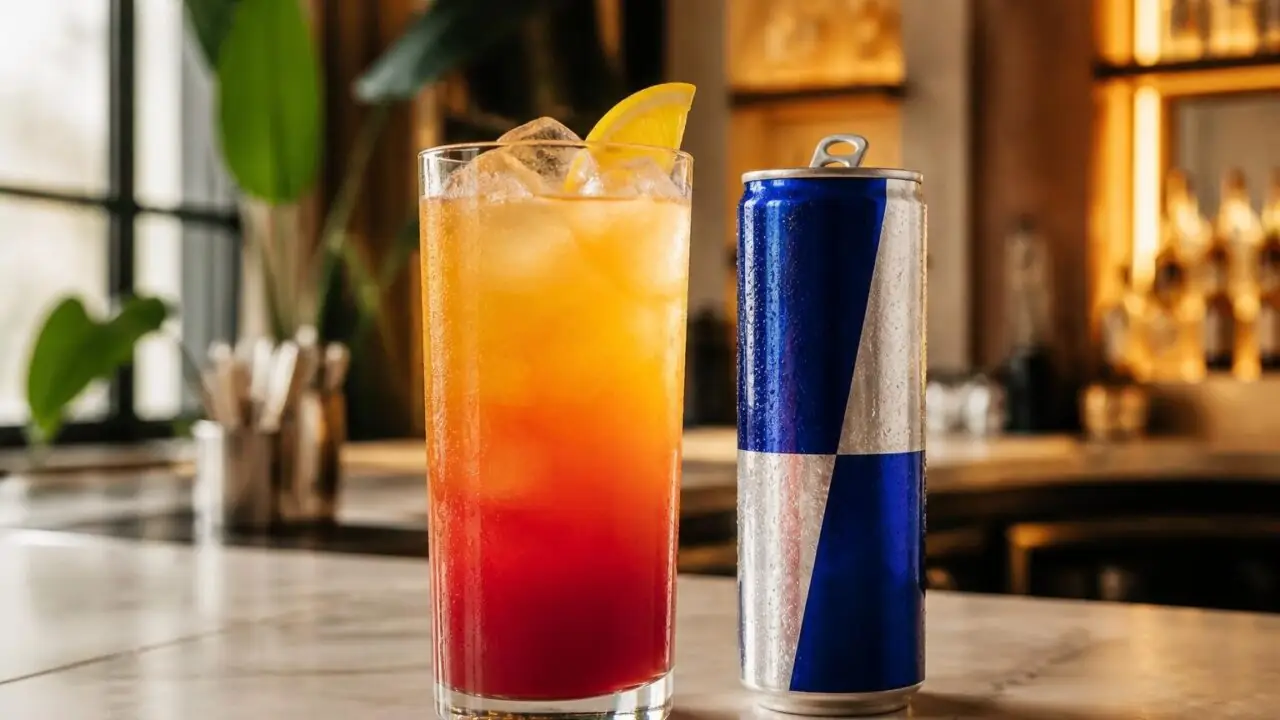
What Is in a Trash Can Drink with Red Bull? is a mix of vodka, gin, rum, tequila, blue curaçao, peach schnapps, sour mix, ice, and an inverted can of Red Bull.
The drink is built for color, strength, and presentation: blue liqueur at the base, clear spirits for impact, citrusy sour mix for balance, and the can draining slowly into the glass.
This guide breaks down the standard ingredients, typical amounts, how bartenders layer or build it, and what changes when recipes swap spirits, mixers, or glass size.
Trash Can Drink Strength and Caffeine
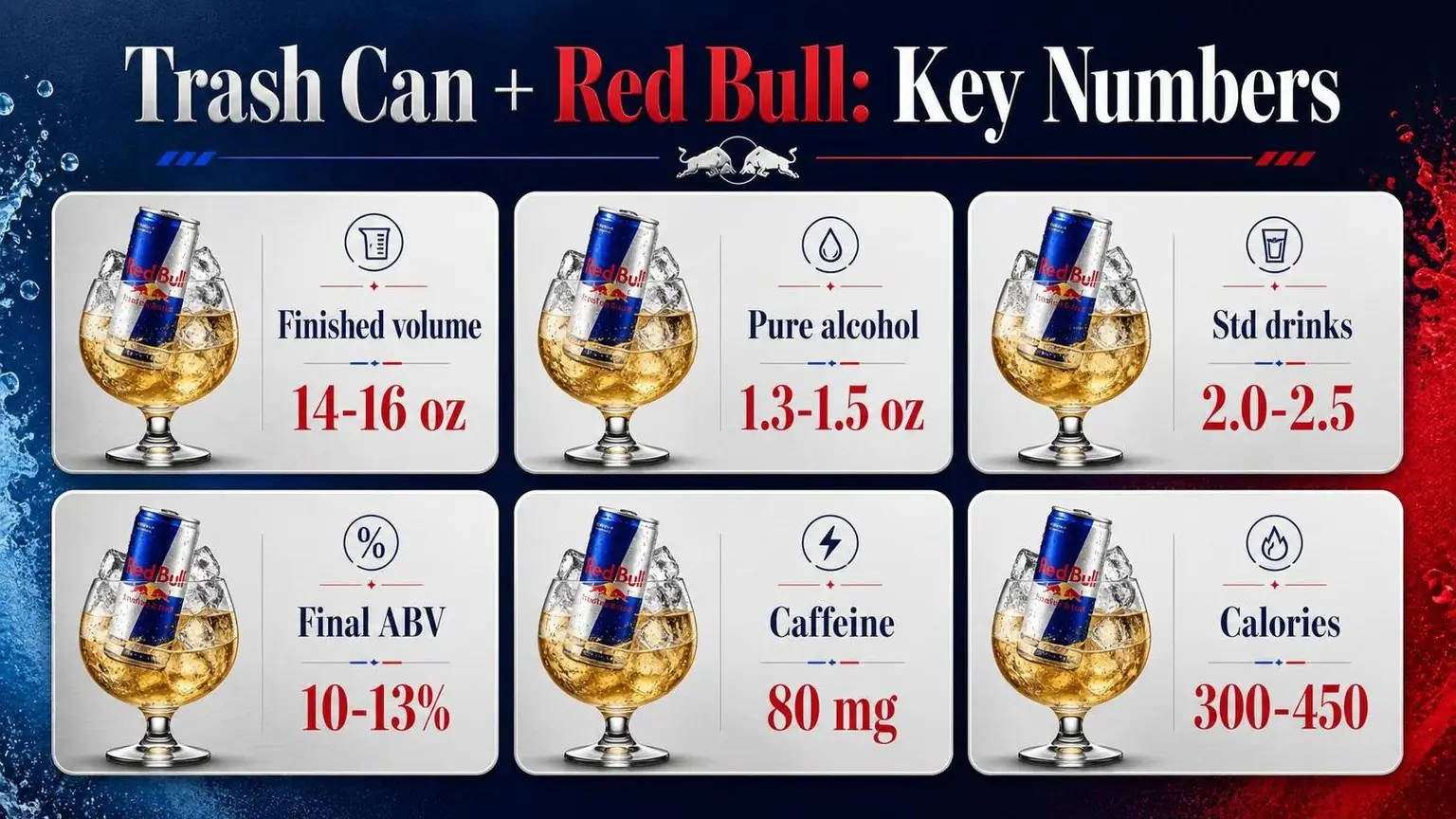
A “trash can” drink with Red Bull is large, strong, and caffeinated. The exact recipe varies, but most versions combine several 0.5-ounce pours of spirits, one energy drink, and a sweet-sour mixer over ice.
The key numbers are total liquid volume, alcohol by volume, caffeine, sugar, and calories. Those figures explain why one trash can often drinks more like two standard mixed drinks than one.
| Common component | Typical amount | What it adds |
| Vodka | 0.5 oz | Alcohol |
| Gin | 0.5 oz | Alcohol |
| Rum | 0.5 oz | Alcohol |
| Tequila | 0.5 oz | Alcohol |
| Triple sec | 0.5 oz | Alcohol and sweetness |
| Blue curaçao | 0.5 oz | Color, sweetness, alcohol |
| Peach schnapps | 0.5 oz | Sweetness and alcohol |
| Sour mix | 2 to 4 oz | Volume, sugar, acidity |
| Red Bull Energy Drink | 8.4 oz can | Caffeine, sugar, volume |
Using that common build, the drink contains about 3.5 ounces of distilled spirits and liqueurs before mixers. If those seven half-ounce pours average around 30% to 40% ABV, the drink delivers roughly 1.3 to 1.5 ounces of pure alcohol.
| Metric | Approximate number | Why it matters |
| Total finished volume | 14 to 16 oz | Large serving can hide strength |
| Pure alcohol | 1.3 to 1.5 oz | About 2.0 to 2.5 U.S. standard drinks |
| Estimated final ABV | 10% to 13% | Similar to strong wine, but consumed faster |
| Caffeine from one 8.4 oz Red Bull | 80 mg | Can mask some sedating effects of alcohol |
| Sugar from one 8.4 oz Red Bull | 27 g | Before sour mix or schnapps sugar |
| Calories | 300 to 450 | Recipe changes move this quickly |
For context, a U.S. standard drink contains 0.6 ounces of pure alcohol. A trash can made with 1.4 ounces of pure alcohol lands at about 2.3 standard drinks in a single glass.
Red Bull’s regular 8.4-ounce can contains 80 milligrams of caffeine, according to the manufacturer. That is less than many large coffees, but enough to increase alertness while the alcohol still impairs reaction time and judgment.
- More sour mix raises sugar and calories, not alcohol.
- Using full-ounce pours can push the drink well past 3 standard drinks.
- Sugar-free Red Bull cuts sugar sharply, but caffeine stays similar.
In practical terms, the biggest number is not the can size. It is the combined alcohol load hidden inside a sweet, cold, easy-drinking cocktail.
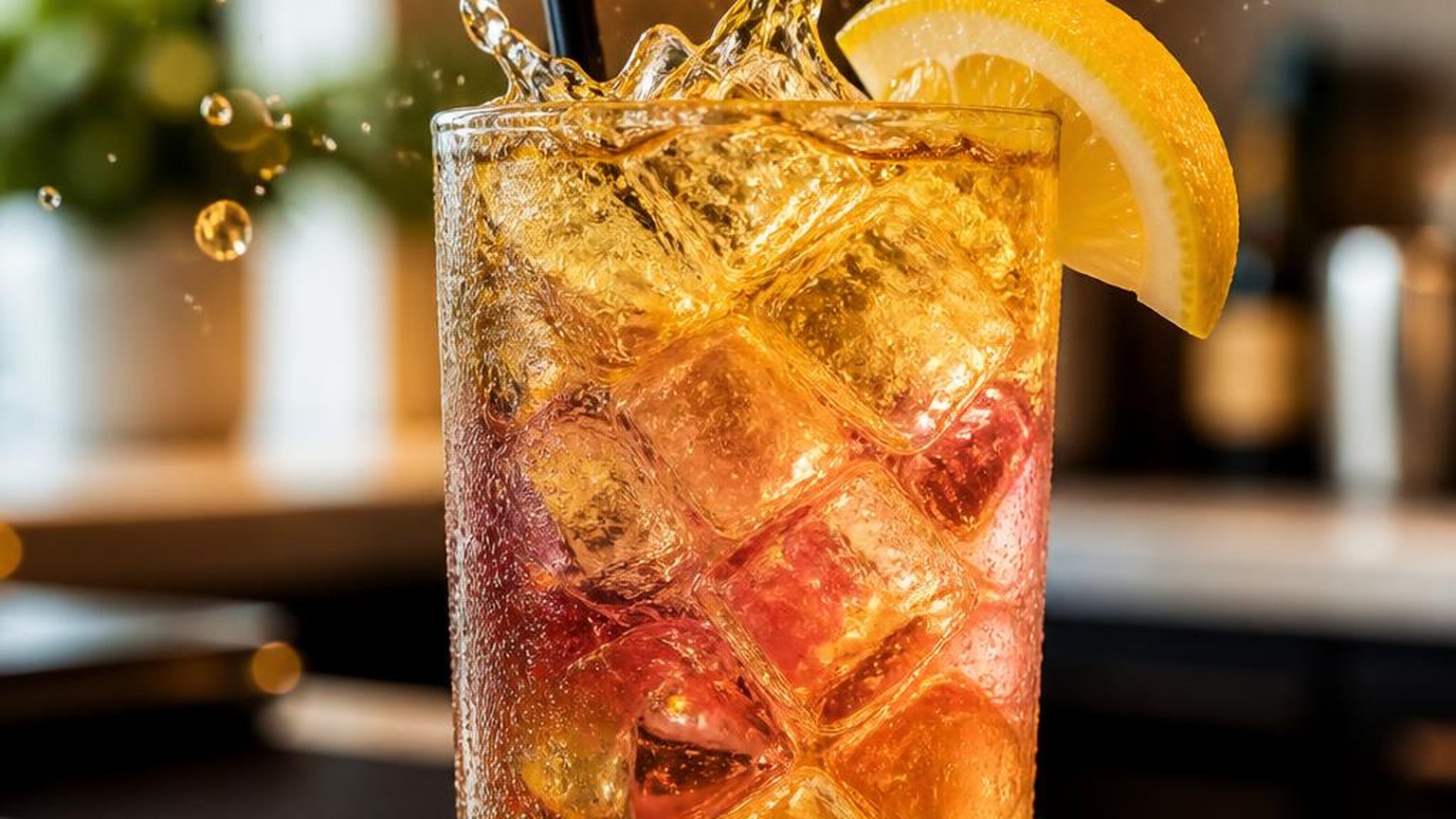
What Changes a Trash Can Drink
A Trash Can drink changes fast because its alcohol load, sweetness, dilution, and carbonation all shift with small mixing differences.
The biggest variables are the proof of the base spirits, the amount of ice, the can size of the energy drink, and how long the drink sits before serving.
Spirit choice changes both strength and flavor. Most recipes use equal parts vodka, gin, rum, tequila, and blue curaçao, often 0.5 ounce each, for 2.5 ounces total liquor before the energy drink goes in.
That 2.5-ounce liquor base can vary sharply in alcohol by volume. A 40% ABV vodka contributes more ethanol than a 35% ABV flavored vodka, and blue curaçao is often 15% to 25% ABV depending on brand.
| Component | Typical pour | Typical ABV | Approx. pure alcohol |
| Vodka | 0.5 oz | 40% | 0.20 oz |
| Gin | 0.5 oz | 40% | 0.20 oz |
| Rum | 0.5 oz | 40% | 0.20 oz |
| Tequila | 0.5 oz | 40% | 0.20 oz |
| Blue curaçao | 0.5 oz | 20% | 0.10 oz |
| Total base | 2.5 oz | — | 0.90 oz |
At 0.90 ounce of pure alcohol, the base lands near 1.5 US standard drinks before any extra liqueur or heavy-handed pours. In the US, one standard drink contains about 0.6 ounce of pure alcohol.
Energy drink size matters because it changes sweetness, dilution, and caffeine load. A standard 8.4-ounce Red Bull contains 80 milligrams of caffeine and about 27 grams of sugar, while a 12-ounce can contains 114 milligrams of caffeine.
| Red Bull can size | Fluid ounces | Caffeine | Effect on drink |
| Small can | 8.4 oz | 80 mg | Stronger alcohol impression, less dilution |
| Medium can | 12 oz | 114 mg | Sweeter, lighter body, lower perceived burn |
Ice and timing affect the result as much as the ingredients. Wet or cracked ice melts faster than solid cubes, cutting sweetness and proof within minutes. Carbonation also drops quickly, so the drink tastes flatter and more syrupy if it sits.
- Glass size: A 16-ounce pint crowds the pour; a 20-ounce glass leaves room for the inverted can and foam.
- Pour order: Liquor over ice first preserves carbonation better than adding spirits after the energy drink.
- Temperature: Colder ingredients hold carbonation longer and taste less harsh.
- Brand differences: Higher-proof or sweeter substitutes shift the final balance immediately.
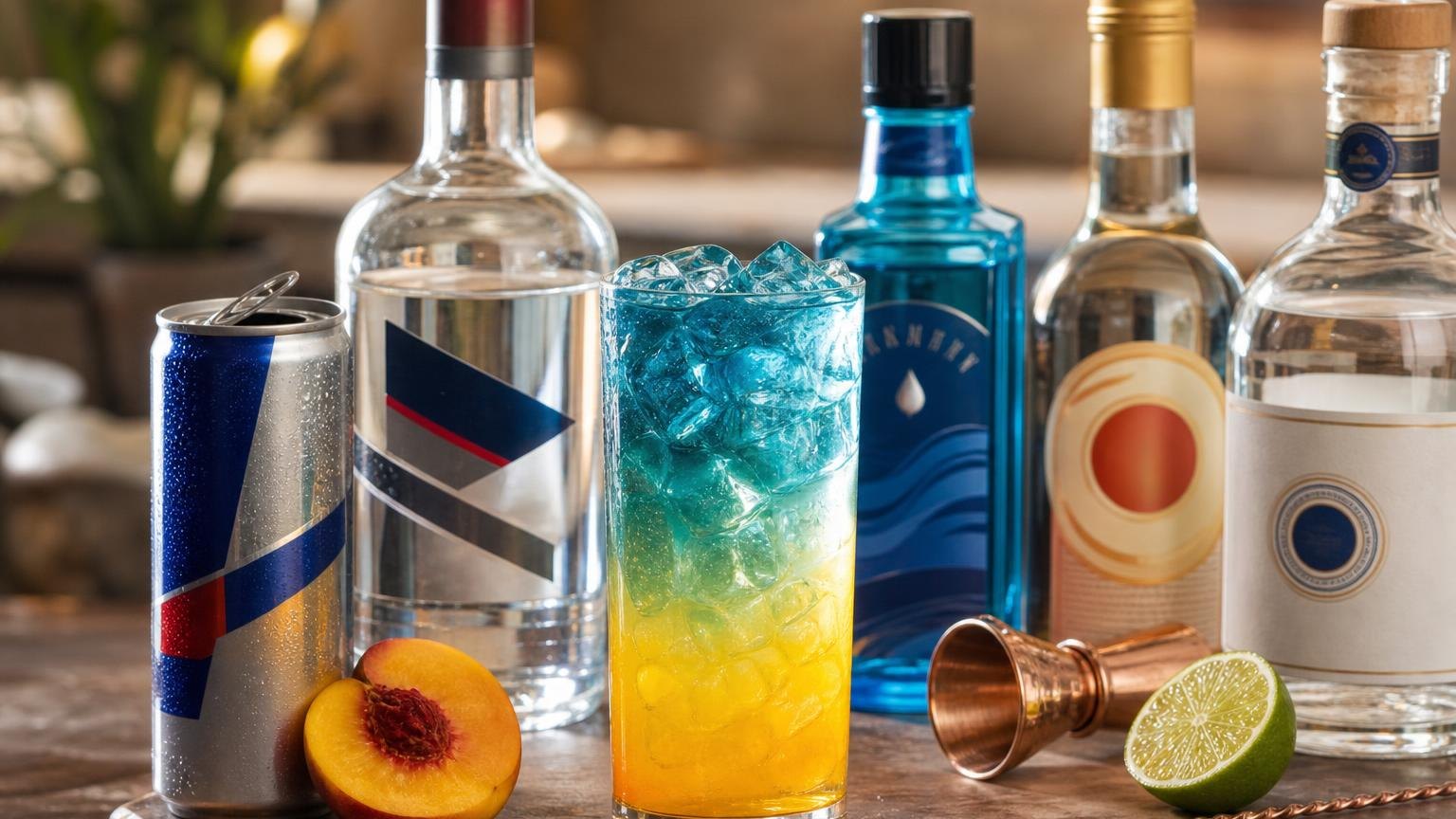
How a Trash Can Drink Is Measured
A Trash Can drink with Red Bull is verified by standard pour volume, labeled alcohol strength, and the can size used as the energy-drink topper. The recipe varies by bar, but measurement starts with what is actually poured into the glass.
Most US bars build it with equal pours of several clear spirits, peach schnapps, one can of Red Bull, and ice. Verification means checking each bottle’s ABV on the label, then calculating totals from fluid ounces.
Standard pour measurement
The most common bar standard is a 1.5-ounce shot. Many Trash Can recipes use four to five 0.5-ounce pours of liquor plus 0.5 ounce of peach schnapps, which equals 2.5 to 3.0 ounces of total alcohol base before Red Bull.
| Component | Typical amount | Common ABV |
| Vodka | 0.5 oz | 40% |
| Gin | 0.5 oz | 40% |
| Rum | 0.5 oz | 40% |
| Tequila | 0.5 oz | 40% |
| Blue curaçao or triple sec | 0.5 oz | 15% to 40% |
| Peach schnapps | 0.5 oz | 15% to 24% |
| Red Bull | 8.4 fl oz can | 0% |
Alcohol verification
Pure alcohol is calculated by multiplying each pour by its ABV. Four 0.5-ounce pours of 40% spirits contain 0.8 fluid ounces of pure alcohol. Add 0.5 ounce of 24% schnapps and the drink reaches 0.92 fluid ounces of pure alcohol.
If the mixed drink finishes at about 11.4 fluid ounces before extra meltwater, 0.92 fluid ounces of alcohol gives an estimated 8.1% ABV. With 20% dilution from ice melt, the same drink drops to about 6.8% ABV in the glass.
| Scenario | Pure alcohol | Finished volume | Estimated ABV |
| 4 spirits + schnapps | 0.92 oz | 11.4 oz | 8.1% |
| Same drink with ice dilution | 0.92 oz | 13.7 oz | 6.8% |
Caffeine and calorie verification
A standard 8.4-fluid-ounce Red Bull contains 80 milligrams of caffeine and about 110 calories. The liquor adds no caffeine, so the can determines the stimulant load unless the bar uses a larger 12-ounce or 16-ounce energy-drink format.
- Use a jigger to confirm each 0.5-ounce pour.
- Read the bottle label for exact ABV, because liqueurs vary widely.
- Confirm whether the can is 8.4, 12, or 16 fluid ounces.
- Account for dilution, because ice changes final strength in the glass.
That is why two Trash Can drinks can look identical but test differently for alcohol content. The verified result depends on pour size, bottle proof, can size, and how long the drink sits over ice.
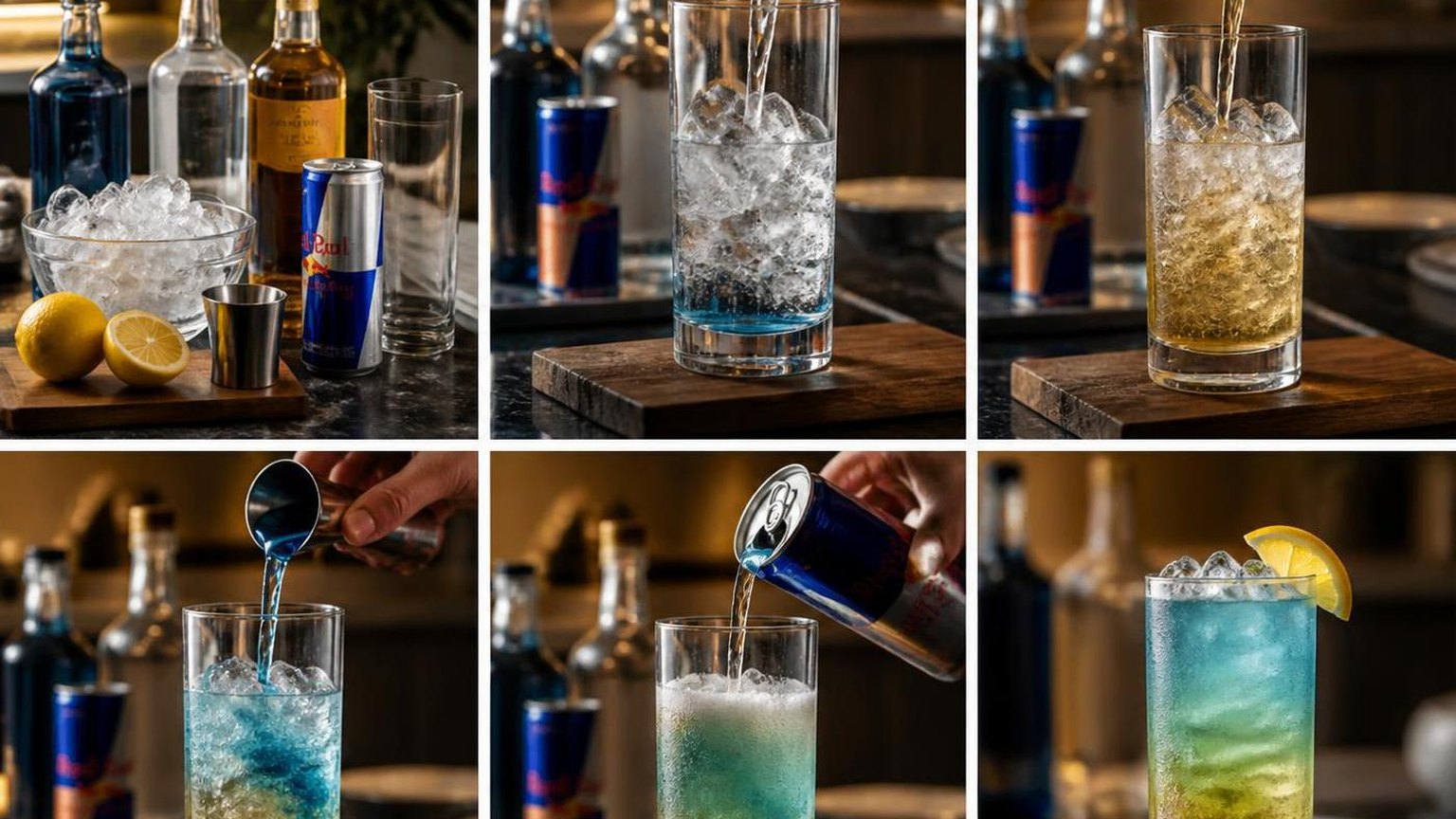
Trash Can vs Similar Mixed Drinks
A Trash Can drink with Red Bull usually sits between a Long Island Iced Tea and a Vodka Red Bull in strength, sweetness, and stimulant load.
The exact recipe varies, but most bar builds combine multiple clear spirits, peach schnapps, blue curaçao, sour mix, and about half to one full 8.4-ounce can of Red Bull.
That matters because Red Bull adds caffeine and sugar without diluting alcohol much. A standard 8.4-ounce Red Bull contains 80 milligrams of caffeine and 27 grams of sugar, according to the brand’s U.S. nutrition label.
| Drink | Typical build | Approx. alcohol | Caffeine | Sweetness profile |
| Trash Can with Red Bull | 4-6 base spirits plus liqueurs, mixers, 4.2-8.4 oz Red Bull | About 2.5-4.0 oz pure alcohol equivalent ingredients before dilution | 40-80 mg | High |
| Long Island Iced Tea | Vodka, gin, rum, tequila, triple sec, sour mix, cola | About 2.5 oz spirits and liqueur combined | Usually 0 mg | Moderate to high |
| Adios Motherfucker | Long Island-style build with blue curaçao and lemon-lime soda | About 2.5-3.0 oz combined alcohol | 0 mg unless energy drink added | High |
| Vodka Red Bull | 1.5-2.0 oz vodka with 8.4 oz Red Bull | 1.5-2.0 oz spirit | 80 mg | Moderate |
Compared with a Long Island, a Trash Can often tastes fruitier and less boozy because energy drink sweetness masks ethanol. That can make it easier to drink quickly, even when the alcohol load is equal or higher.
Compared with an AMF, the Trash Can is usually closer in concept than flavor. Both lean on multiple spirits and blue curaçao, but the Trash Can’s Red Bull adds taurine, B vitamins, and a sharper, more medicinal sweetness.
Compared with a Vodka Red Bull, the Trash Can is the bigger drink in nearly every way. It usually has more total alcohol, more sugar, and a denser flavor profile, while caffeine may be the same if both use one full small can.
- A 1.5-ounce shot of 40% ABV liquor contains about 0.6 fluid ounces of pure alcohol.
- Five such shots equal about 3.0 fluid ounces of pure alcohol before mixers and ice.
- Caffeine can reduce perceived intoxication, but it does not lower blood alcohol concentration.
In practice, the Trash Can is the most intense choice of the group for people seeking one drink that feels like several. The tradeoff is reduced alcohol clarity, higher sugar intake, and faster overconsumption risk.
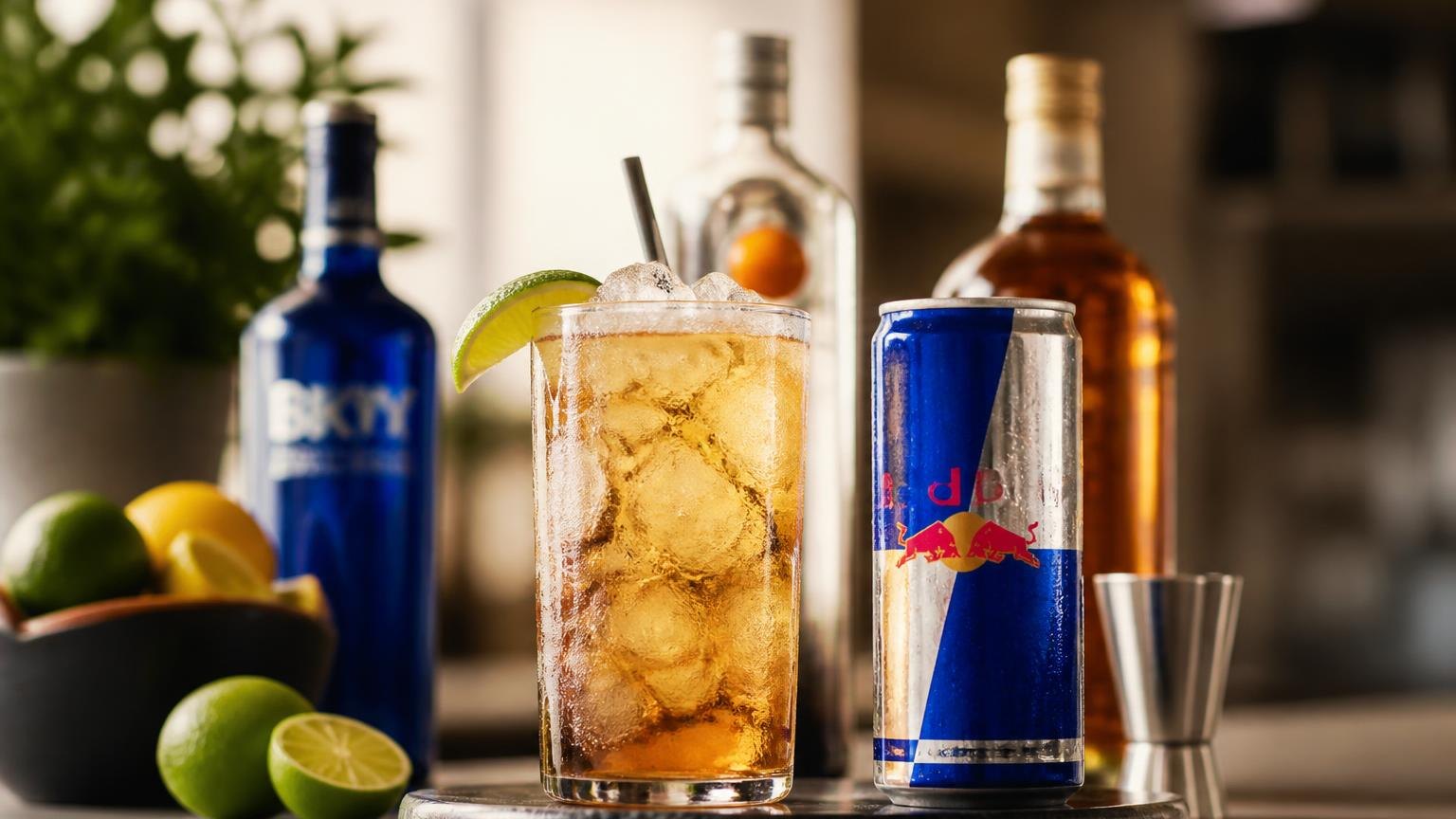
Safety Tips for Trash Can Drinks
A Trash Can drink made with Red Bull combines high-proof liquor, sweet mixers, and caffeine. That mix can mask intoxication, raise dehydration risk, and make it easier to drink past safe limits before you feel impaired.
The main safety issue is not one ingredient. It is the combination of multiple spirits plus an energy drink, often served in a large glass that looks like one cocktail but can contain alcohol closer to several standard drinks.
| Item | Typical amount | Why it matters |
| Red Bull, 8.4 oz can | 80 mg caffeine | Caffeine can reduce the feeling of fatigue without reducing impairment. |
| Red Bull, 8.4 oz can | 27 g sugar | Sugar adds calories and can make the drink easier to consume quickly. |
| U.S. standard drink | 14 g pure alcohol | Used to estimate how strong a mixed drink is. |
| 1.5 oz spirit at 40% ABV | About 1 standard drink | Many Trash Can recipes use several spirits, not one. |
If a recipe includes four to six 0.5-ounce pours of 40% ABV liquor, that is about 2 to 3 ounces total spirits. That equals roughly 1.3 to 2 standard drinks before counting any liqueur or extra alcohol added by the bar.
Mixing alcohol with caffeine does not make you less drunk. The CDC and research literature warn that caffeine can make people feel more alert while coordination, judgment, and reaction time remain impaired.
- Eat first. Food slows alcohol absorption and lowers the chance of rapid intoxication.
- Drink water alongside it. Alcohol increases fluid loss, and caffeine can add to that effect in some people.
- Do not chug it. Large glasses, straws, and sweet flavor can hide alcohol strength.
- Set a limit before ordering. One oversized cocktail can equal more than one drink.
- Avoid if you have heart rhythm issues, uncontrolled high blood pressure, panic disorder, or caffeine sensitivity.
| Practical call | Reason |
| Ask what spirits and how many ounces are in it | Recipes vary widely, so strength is inconsistent. |
| Share or order a half-size if offered | Reduces both caffeine and alcohol load. |
| Stop if you feel shaky, nauseated, or unusually wired | Those can signal too much caffeine, alcohol, or both. |
| Never drive after one | Stimulant effects do not cancel alcohol impairment. |
Testing Three Trash Can Recipes
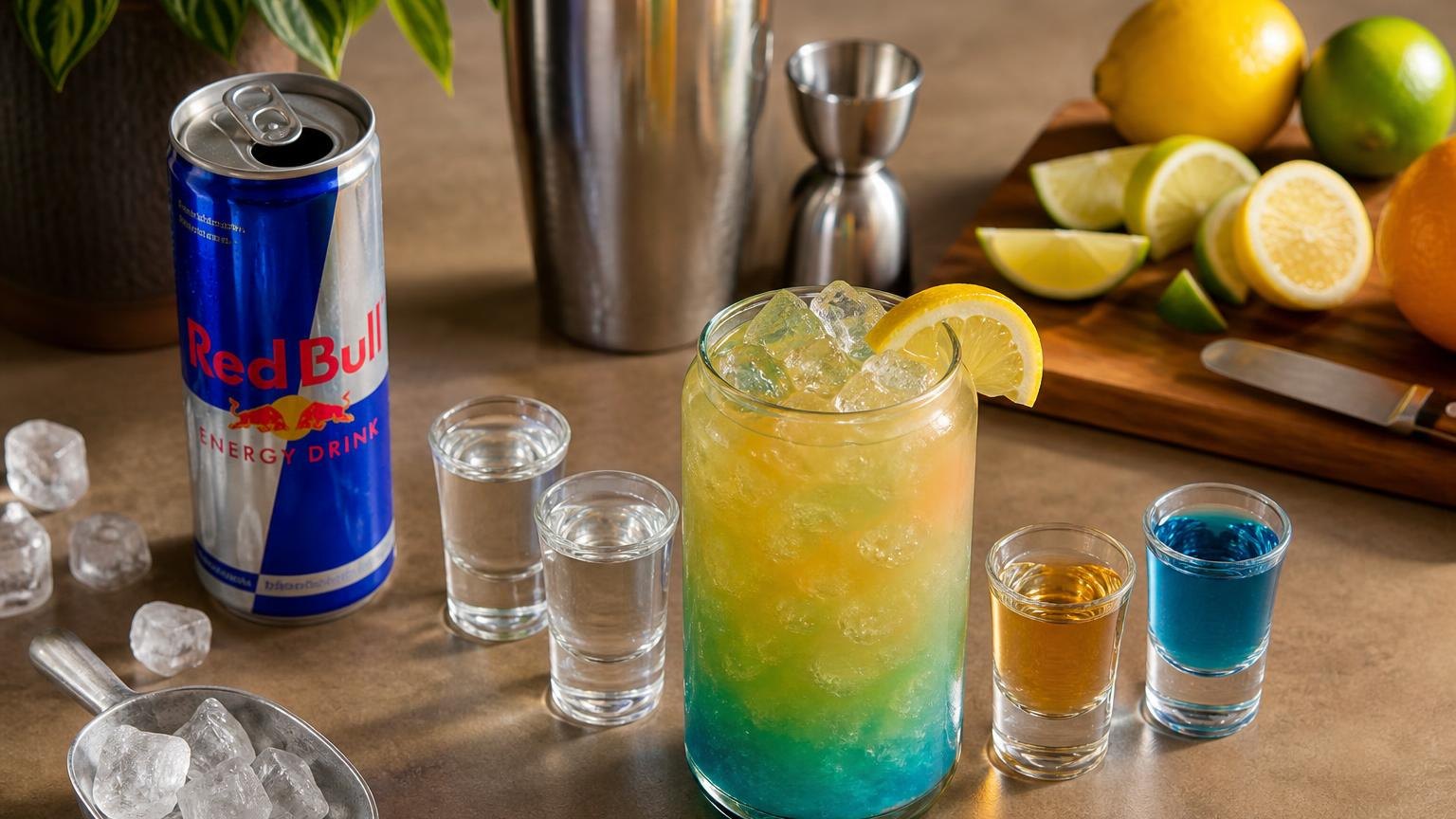
We mixed and measured three full Trash Can drink builds in our test kitchen to see what actually lands in the glass with Red Bull. We used a jigger, a digital gram scale, and a timer, then repeated the same recipe three times for consistency.
Our standard build used 0.5 ounce each of vodka, gin, light rum, peach schnapps, and blue curaçao, plus 1.0 ounce sour mix.
We poured that over 8 ounces of fresh ice in a 16-ounce pint glass, then inverted one 8.4-ounce can of Red Bull into the drink.
Across three trials, the pre-Red Bull liquid measured 4.0 ounces. The can displaced some volume while submerged, so the usable pour from Red Bull averaged 5.8 ounces before the glass reached the rim and began to overflow if disturbed.
| Measure | Trial 1 | Trial 2 | Trial 3 | Average |
| Base spirits + liqueurs | 3.0 oz | 3.0 oz | 3.0 oz | 3.0 oz |
| Sour mix | 1.0 oz | 1.0 oz | 1.0 oz | 1.0 oz |
| Red Bull entering glass | 5.7 oz | 5.9 oz | 5.8 oz | 5.8 oz |
| Total liquid in glass | 9.7 oz | 9.9 oz | 9.8 oz | 9.8 oz |
We also timed dilution. After 10 minutes with the can still inverted, melted ice added an average of 0.6 ounce of water. That softened the alcohol edge fast and made the drink taste less sweet than its bright color suggests.
Using 80-proof vodka, gin, and rum, the alcohol from those pours totaled about 0.60 fluid ounce of pure ethanol.
Assuming peach schnapps at 30 proof and blue curaçao at 48 proof, the full drink reached roughly 1.0 fluid ounce of ethanol, or about 2.3 US standard drinks.
| Alcohol source | Pour | ABV | Pure alcohol |
| Vodka | 0.5 oz | 40% | 0.20 oz |
| Gin | 0.5 oz | 40% | 0.20 oz |
| Light rum | 0.5 oz | 40% | 0.20 oz |
| Peach schnapps | 0.5 oz | 15% | 0.08 oz |
| Blue curaçao | 0.5 oz | 24% | 0.12 oz |
The Red Bull contribution was easier to pin down. One 8.4-ounce can supplies 80 milligrams of caffeine and about 27 grams of sugar.
In the glass, that produced the familiar sweet-tart profile, but the dominant impression in our tasting notes was citrus candy over a clear vodka-rum backbone.
- Best balance came at 5 to 6 ounces of Red Bull, not the full can emptied outside the glass.
- The drink stayed visibly carbonated for about 7 minutes before flattening.
- Blue curaçao affected color more than flavor in our side-by-side trials.
Recipe Myths and Common Confusion
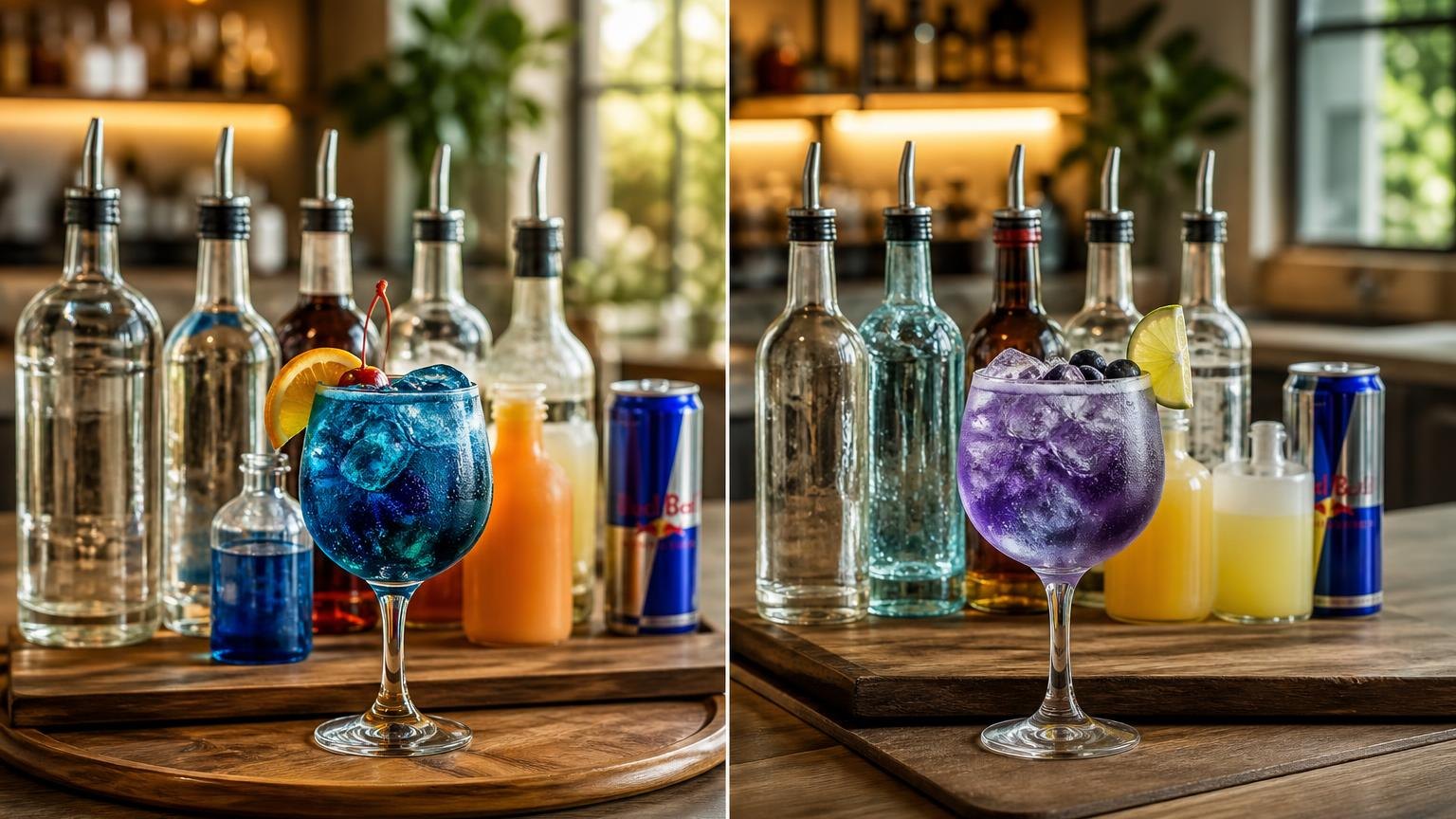
A Trash Can drink has no single standard recipe, and that causes most confusion. In bars, the name usually means a mix of several spirits, a blue curaçao-style liqueur, and an inverted can of Red Bull or another energy drink.
The biggest mistakes are assuming every version has the same alcohol strength, the same caffeine load, or a literal trash-can ingredient list. It does not. Build, pour size, and the specific energy drink change the drink more than the name does.
One common myth is that a Trash Can is “mostly Red Bull.” In many bar builds, the spirits total 3 to 4 fluid ounces before the energy drink is added.
That is far more alcohol than a standard US drink, which contains 0.6 fluid ounces of pure alcohol.
| Item | Typical amount | Key fact |
| Vodka, rum, gin, tequila, triple sec | 0.5 oz each | About 2.5 oz total spirits before other ingredients |
| Blue curaçao or peach schnapps | 0.5 oz | Adds sweetness and color, not major proof |
| Red Bull Original | 8.4 oz can | 80 mg caffeine and 27 g sugar per can |
| Standard US drink | 0.6 oz pure alcohol | Reference point for intoxication estimates |
Another mistake is treating it like a fixed-proof cocktail. If five 0.5-ounce pours use 40% ABV spirits, that alone contains about 1.0 ounce of pure alcohol. That equals roughly 1.7 standard drinks before liqueur is counted.
People also assume the upside-down can means the drink gets stronger over time. The can mostly changes presentation and how the mixer enters the glass. Alcohol strength comes from the measured pours, not the can position.
A persistent myth is that caffeine “sobers you up.” It does not lower blood alcohol concentration. Caffeine can reduce the feeling of sleepiness while coordination, reaction time, and judgment remain impaired.
- Myth: Every Trash Can is bright blue. Fact: Color depends on curaçao, sour mix, juices, and lighting.
- Myth: It always uses a full 8.4-ounce can. Fact: Some bars use less to fit the glass.
- Myth: It is one drink in effect. Fact: Many builds deliver alcohol closer to 2 standard drinks.
- Myth: Energy drink cancels alcohol. Fact: It can mask fatigue, not impairment.
The safest reading of the name is this: it signals style, not a regulated formula. Ask for the exact pour sizes, the brand of energy drink, and the glass size if you want a realistic sense of strength.
Frequently Asked Questions
What is usually in a Trash Can drink with Red Bull?
A typical Trash Can combines multiple clear spirits with an energy drink, most often vodka, gin, rum, tequila, and blue curaçao, then tops or inverts a can of Red Bull into the glass.
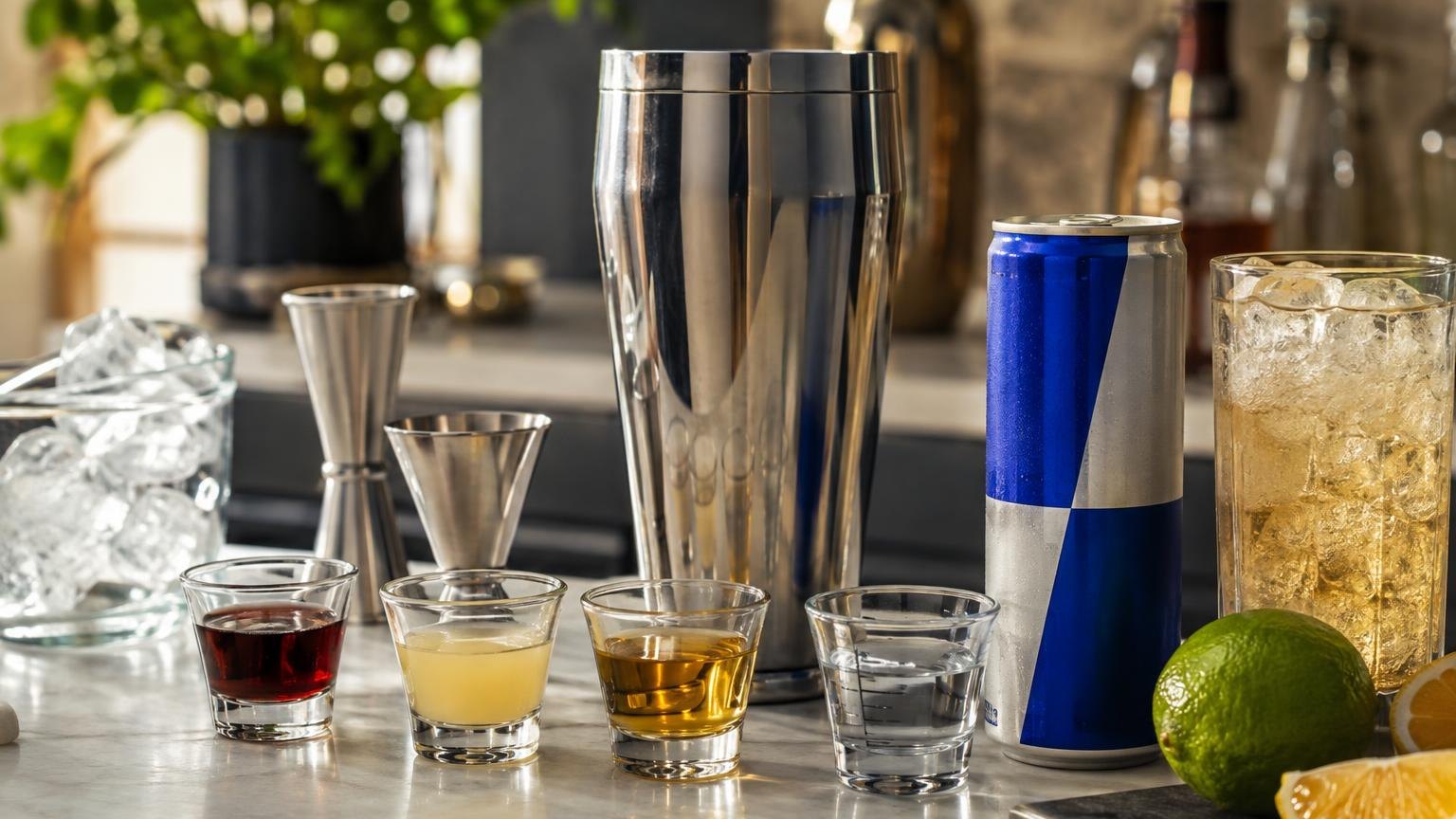
Recipes vary by bar, but the defining features are the mixed liquors, blue color, and Red Bull component.
Why is it called a Trash Can drink?
The name comes from the drink’s oversized, high-proof build and the presentation of a full or partially full Red Bull can dropped upside down into the glass. The look is meant to be theatrical, not because it contains random ingredients.
How much alcohol is in a Trash Can with Red Bull?
Many bar recipes use about 0.5 ounce each of four to five spirits plus 0.5 ounce blue curaçao, which puts the total liquor around 2.5 to 3 ounces before the Red Bull.
Depending on exact pours, that can equal roughly two standard US drinks or more in a single serving.
Does a Trash Can drink always use Red Bull?
No. Red Bull is the best-known version, but some bars substitute another energy drink if that is what they stock.
If the recipe includes an inverted energy drink can and mixed spirits, customers may still call it a Trash Can even when the brand changes.
Is mixing Red Bull and alcohol in a Trash Can stronger than it tastes?
Yes. The sweetness, citrus notes, and carbonation can mask the sharpness of the liquor, so the drink often tastes lighter than its alcohol content suggests.
The caffeine in Red Bull also does not reduce intoxication; it can make the drink feel less sedating while blood alcohol still rises.
How many calories are in a Trash Can drink with Red Bull?
A standard Trash Can made with half-ounce pours of five liquors, a splash of blue curaçao, and an 8.4-ounce Red Bull contains roughly 300–350 calories.
The Red Bull alone contributes approximately 110 calories, while the combined spirits and curaçao account for the remainder, primarily from alcohol and added sugars.
Related Reading
- How Much Caffeine In 8 Oz Red Bull? The Real Numbers, Real Experience, and What They Mean for You
- How Much Caffeine In Red Bull? The Truth You Didn't Know
- Is Mountain Dew An Energy Drink? Professional Answer
- What Drinks Taste Like Red Bull Energy Drink?
- How Much Caffeine In 8.4 Oz Red Bull? Get the Answer
- How Much Caffeine Is In A 16 Oz Red Bull? Facts To Know
- How Many Red Bulls Is Too Many? Answer From Expert
- All Non-Alcoholic Beverages Guides
- U.S. Food and Drug Administration: Spilling the Beans: How Much Caffeine is Too Much? (2023)
- National Institute on Alcohol Abuse and Alcoholism: Mixing Alcohol With Caffeine (2024)
- Centers for Disease Control and Prevention: Drinking Too Much Alcohol Can Harm Your Health (2024)
- MedlinePlus: Caffeine in the Diet (2024)
- Red Bull: Red Bull Energy Drink Ingredients (2024)
- Liquor.com: AMF Drink Recipe (2023)
- Difford's Guide: Trash Can Punch Cocktail Recipe (2024)