Cheap sweet wine with high alcohol content is most often fortified dessert wine, especially Port-style bottles at 19–20% ABV, rather than ordinary Moscato.
For under $15, look for ruby Port, cream sherry, sweet vermouth, or flavored fortified wines.
Most table wines sit around 9–14.5% ABV, while U.S. labeling rules treat anything above 14% differently for tax and labeling purposes. That’s why truly boozy sweet options usually come from added grape spirit, not extra sugar alone.
This guide focuses on budget bottles that taste sweet, list a clear ABV, and are easy to find in U.S. stores without pretending every “dessert wine” is strong.
ABV Sugar and Bottle Size
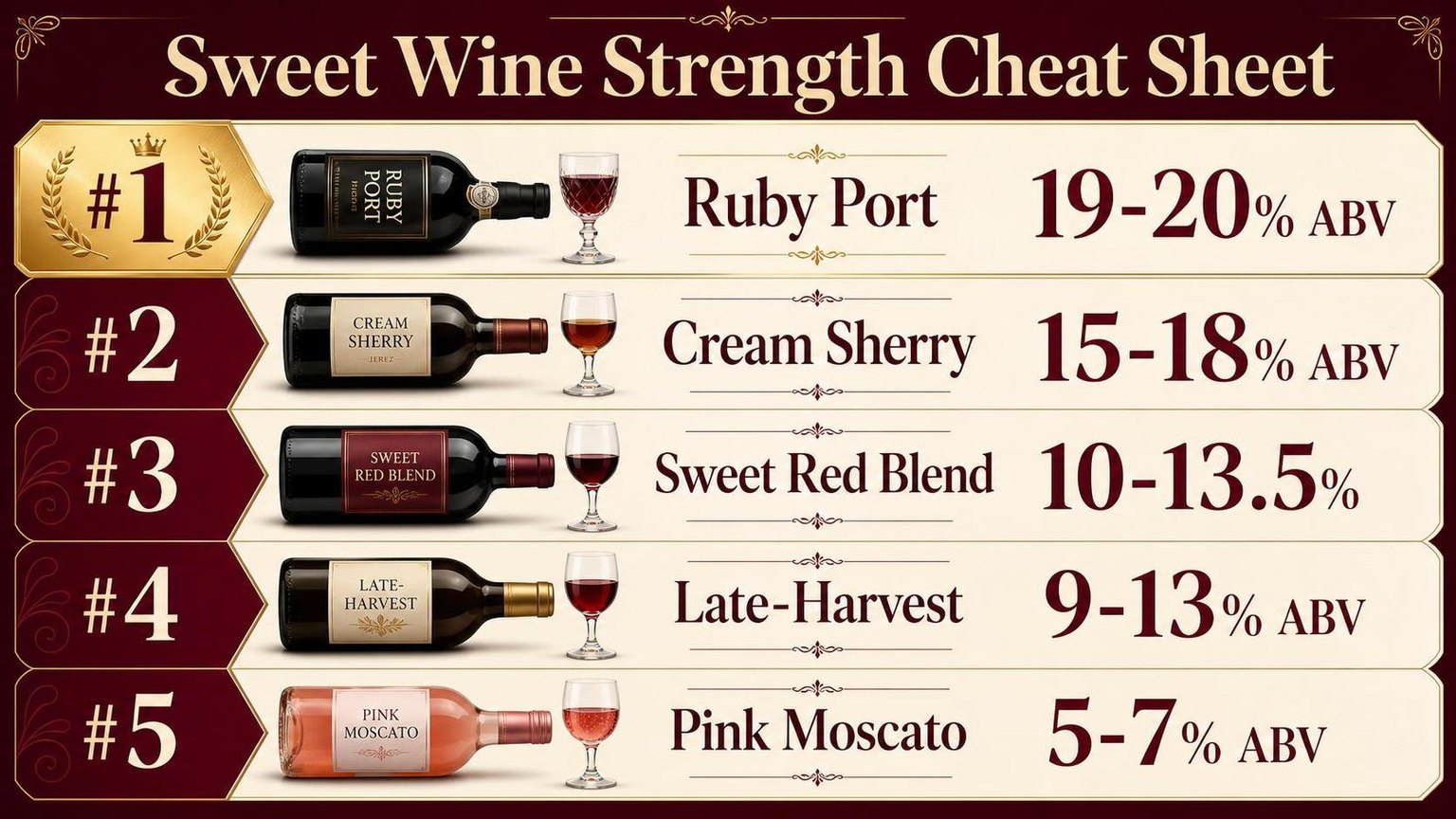
For “cheap sweet wine with high alcohol content,” three numbers matter most: ABV, residual sugar, and bottle size. In U.S. labeling, table wine can range up to 14% ABV, while many dessert and fortified wines run 15% to 20% ABV.
Sweetness is not the same as alcohol strength. A Moscato can taste very sweet at 5.5% ABV, while a ruby Port can be both sweet and around 19.5% ABV because neutral grape spirit is added during fermentation.
| Wine style | Typical ABV | Typical sweetness | Budget reality |
| Pink Moscato | 5%–7% | Sweet | Often cheap, but not high alcohol |
| Sweet red blend | 10%–13.5% | Off-dry to sweet | Common under $10–$15 |
| Late-harvest wine | 9%–13% | Very sweet | Usually smaller bottles; less “cheap” per ounce |
| Cream Sherry | 15%–18% | Sweet | Good value if you like nutty, oxidized flavors |
| Ruby Port | 19%–20% | Sweet | One of the strongest sweet options for the price |
ABV tells you how much of the liquid is alcohol. A 750 ml bottle at 20% ABV contains 150 ml of pure ethanol. At 12% ABV, the same bottle contains 90 ml of ethanol.
| Bottle | ABV | Pure alcohol in bottle | Approx. U.S. standard drinks |
| 750 ml sweet red | 12% | 90 ml | 5.1 |
| 750 ml cream Sherry | 17% | 127.5 ml | 7.2 |
| 750 ml ruby Port | 20% | 150 ml | 8.5 |
The standard-drink estimate uses the U.S. definition of 14 grams of pure alcohol. Since ethanol weighs about 0.789 grams per ml, a 20% ABV 750 ml Port has roughly 118 grams of alcohol.
- Best high-ABV sweet target: ruby Port, tawny Port, or cream Sherry at roughly 17%–20% ABV.
- Best cheap supermarket target: sweet red blends around 11%–13.5% ABV, though they are weaker than fortified wines.
- Label clue: “dessert wine” often signals sweetness, but ABV may be anywhere from 8% to 20%.
- Serving size matters: fortified sweet wines are commonly poured at 2–3 oz, not 5 oz.
Residual sugar is usually measured in grams per liter. Dry wines often sit below 4 g/L, noticeably sweet wines often exceed 30 g/L, and Port commonly reaches about 90–120 g/L.
Winemaking Factors Behind Cheap Sweet Strength
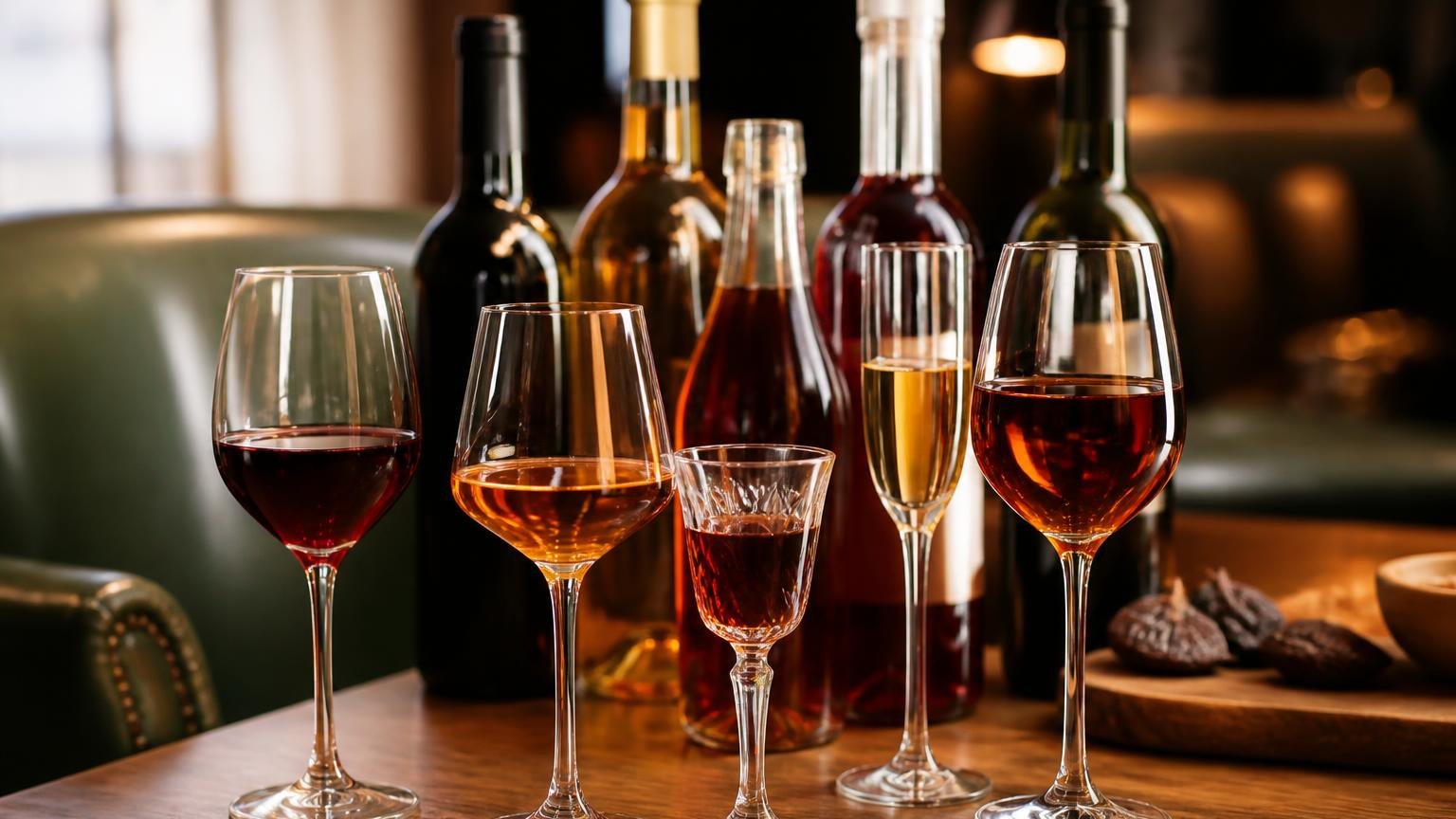
“Cheap, sweet, and high alcohol” is mostly a winemaking equation: sugar, yeast tolerance, fortification, and retail markup.
In U.S. stores, the strongest sweet bottles under about $15 are usually fortified wines, flavored dessert wines, or mass-market sweet reds.
Alcohol and sweetness move in opposite directions unless the winemaker intervenes. Yeast converts grape sugar into alcohol; if fermentation stops early, more residual sugar remains, but alcohol is lower.
To get both, producers either add grape spirit or start with very ripe fruit.
| Wine style | Typical alcohol | Why it can taste sweet | Common budget examples |
| Ruby or tawny Port-style | 19%–20% ABV | Fortified before all grape sugar ferments | Domestic “port” or inexpensive imported ruby |
| Cream sherry | 15.5%–17.5% ABV | Dry sherry sweetened with Pedro Ximénez or similar wine | Large-format California or Spanish cream sherry |
| Sweet red blend | 10%–14.5% ABV | Residual sugar or grape concentrate after fermentation | Mass-market red blends and “soft red” wines |
| Moscato / sweet white | 5%–10% ABV | Fermentation stopped early to preserve sugar | Low-cost Moscato, often not high alcohol |
Fermentation limits
Most wine yeasts struggle as alcohol rises above roughly 15% ABV. That is why naturally fermented sweet wines often sit below 12% ABV unless made from very concentrated grapes, such as late-harvest or dried-grape styles.
Fortification
Fortification is the main shortcut. Port producers add neutral grape spirit when the wine is still sweet, commonly ending around 19%–20% ABV.
U.S. labels may use terms such as “dessert wine” or “port-style” depending on origin and labeling rules.
Residual sugar and balance
Sweetness is measured as residual sugar, usually grams per liter. A wine with 45 g/L can taste sweet, but acidity and tannin change perception. A 20% ABV fortified wine may feel less sugary than a 9% Moscato if acidity is low.
Price and packaging
- 750 mL bottles: budget fortified wines often land around $8–$15 in U.S. retail, depending on state taxes and store margins.
- 1.5 L bottles: sweet reds and cream sherries can look cheaper per ounce, but alcohol may be lower than fortified dessert wine.
- Branding: celebrity labels, decorative bottles, and limited releases usually raise price without guaranteeing higher alcohol or sweetness.
- State rules: alcohol taxes and grocery-store wine laws vary widely, so the same bottle can differ by several dollars across states.
For the strongest cheap sweet option, check the ABV first, then the style. A $10 bottle at 19.5% ABV usually delivers more alcohol than a $10 sweet red at 12% ABV, even if both taste noticeably sweet.
Checking ABV and Residual Sugar
For cheap sweet wine with high alcohol content, the two numbers that matter are alcohol by volume, or ABV, and residual sugar. ABV is regulated on the label; sweetness is usually verified from technical sheets, lab testing, or measurable sugar data.
In the United States, wine labels are overseen by the Alcohol and Tobacco Tax and Trade Bureau, commonly called the TTB. A wine labeled 14% ABV does not have to test at exactly 14.00%, but it must fall within the legal tolerance for its category.
| Label claim | Federal tolerance | Practical meaning |
| Wine at 14% ABV or below | ±1.5 percentage points | A 12.5% label may legally represent about 11.0% to 14.0% ABV |
| Wine above 14% ABV | ±1.0 percentage point | A 16.0% label may legally represent about 15.0% to 17.0% ABV |
| Fortified wine | Often 17% to 20% ABV in market examples | Port-style, sherry-style, and dessert wines commonly sit here |
ABV is measured by determining how much ethanol is present in 100 milliliters of wine. Commercial labs commonly use distillation with density measurement, ebulliometry, or infrared analysis.
Producers verify alcohol before bottling because excise tax class and label approval depend on it.
Sweetness is measured differently. Residual sugar, usually reported as grams per liter, shows how much fermentable sugar remains after fermentation or is added through sweetening.
A wine can taste sweet at 25 g/L, while dessert wines often exceed 100 g/L.
| Residual sugar | Typical perception | Examples in the category |
| 10 to 30 g/L | Off-dry to mildly sweet | Many inexpensive Moscato and sweet red blends |
| 30 to 70 g/L | Clearly sweet | Sweet rosé, sweet white, some fruit wines |
| 70 to 120 g/L | Dessert-level sweetness | Late-harvest styles and cream sherry-style wines |
| 100 g/L or more | Very sweet and syrupy | Ruby port-style and some dessert wines |
To verify a bottle before buying, check three sources: the front or back label for ABV, the producer’s technical sheet for residual sugar, and the retailer’s product data.
Reliable technical sheets list ABV, residual sugar, pH, and total acidity.
- ABV: Look for 14.5% to 20% if the goal is high alcohol by wine standards.
- Residual sugar: Look for at least 30 g/L for noticeably sweet wine.
- Fortification: If the label says port, cream sherry, or dessert wine, expect higher alcohol than standard table wine.
- Serving size: High-ABV sweet wines are often poured at 2 to 3 ounces, not a 5-ounce table-wine pour.
For accuracy, never rely on “sweet” alone. A cheap wine can taste sweet because of sugar, low acidity, added flavoring, or fruit concentrate. The verifiable combination is ABV on the label plus residual sugar from producer or lab data.
How Sweet High-ABV Wines Compare
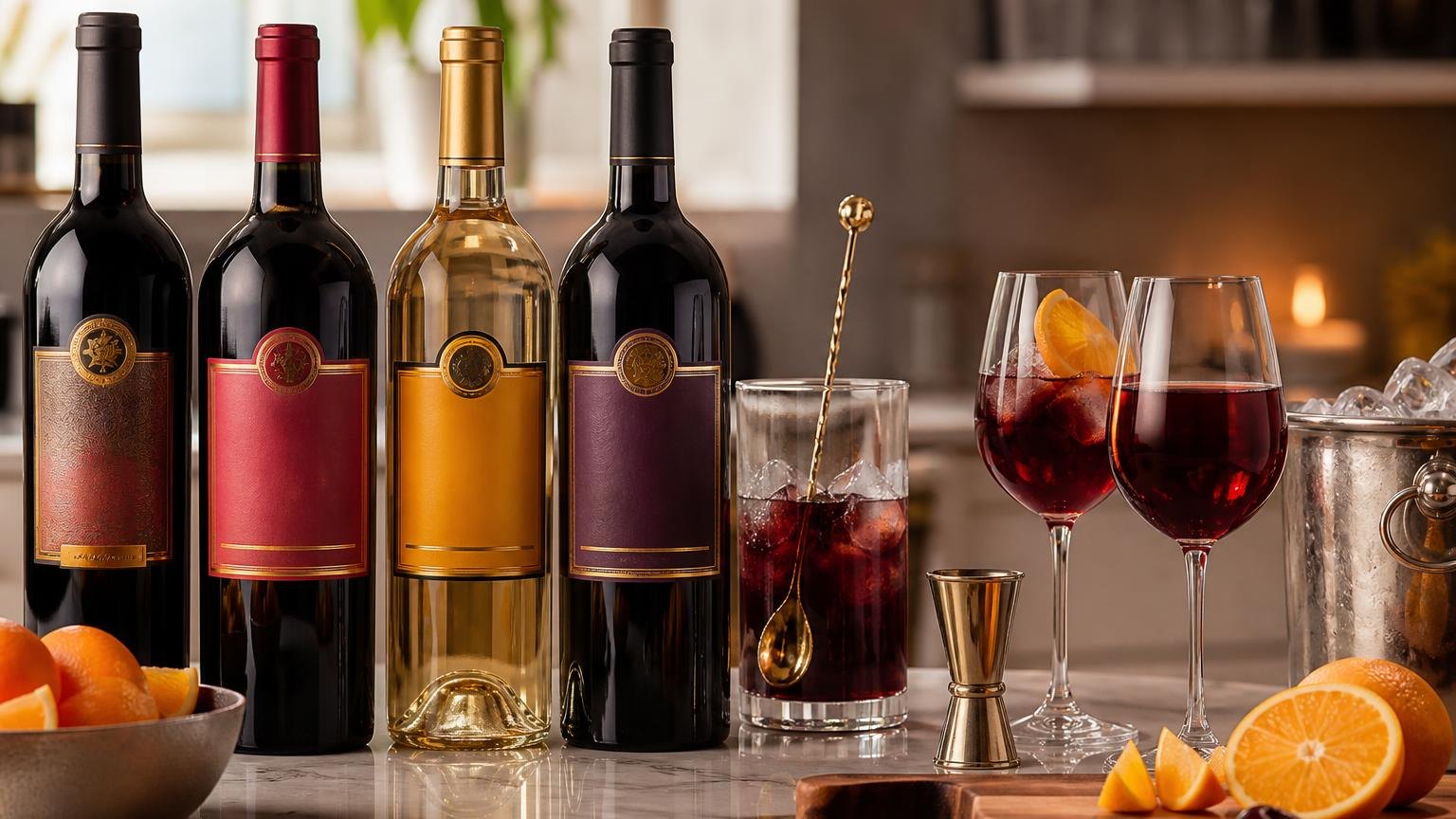
Cheap sweet wines with higher alcohol, such as cream sherry, ruby port-style wines, and sweet red blends, sit between table wine and dessert wine.
The tradeoff is clear: more alcohol and sweetness per glass, but usually less freshness and food flexibility.
In U.S. retail, the best value tends to be domestic fortified or “dessert” bottles. Federal labeling rules from the TTB allow table wine up to 14% ABV, while fortified dessert wines commonly reach 17% to 20% ABV.
| Option | Typical ABV | Typical sweetness | Common budget price | Best use |
| Cheap sweet high-alcohol wine, such as cream sherry or ruby port-style | 17%–20% | Very sweet, often 70–120 g/L residual sugar | $6–$14 for 750 ml | Small pours, dessert, cold-weather sipping |
| Moscato d’Asti | 5%–6% | Sweet, commonly 90–120 g/L residual sugar | $10–$18 for 750 ml | Brunch, fruit desserts, low-alcohol drinking |
| White Zinfandel | 9%–11% | Off-dry to sweet, often 20–35 g/L residual sugar | $5–$9 for 750 ml | Casual chilled drinking |
| Sweet red blend | 10%–13.5% | Medium-sweet, often 20–60 g/L residual sugar | $7–$15 for 750 ml | Pizza, barbecue, easy crowd serving |
| Standard dry red wine | 13.5%–15% | Dry, usually under 4 g/L residual sugar | $8–$15 for 750 ml | Dinner pairing, lower sweetness |
Compared with Moscato d’Asti, high-alcohol sweet wine delivers roughly triple the alcohol by volume. Moscato is often sweeter on paper, but carbonation, acidity, and low ABV make it taste lighter and less syrupy.
Compared with White Zinfandel, fortified sweet wine is stronger and heavier. A 5-ounce pour at 18% ABV contains about 0.9 ounces of pure alcohol, while the same pour at 10% ABV contains about 0.5 ounces.
- Best value for alcohol: domestic cream sherry, ruby port-style wine, and inexpensive madeira-style bottles.
- Best value for easy drinking: White Zinfandel, sweet red blends, and Moscato-style wines.
- Best value for desserts: ruby port-style wine with chocolate, cream sherry with caramel or nuts, and sweet muscat with fruit.
- Biggest downside: sweetness can hide alcohol, so a normal 5-ounce wine pour may be too large for 18%–20% ABV bottles.
For most buyers, the closest direct alternative is a sweet red blend. It costs about the same, pours like normal wine, and has lower alcohol. Choose fortified sweet wine when you want intensity in 2- to 3-ounce pours.
Safe Serving Tips for Sweet Strong Wines
Cheap sweet wines with higher alcohol can be easy to overpour because sugar softens the burn of alcohol. Treat them more like a fortified drink than a casual table wine, especially when ABV reaches 14% to 20%.
Know what one serving really means
In the U.S., the National Institute on Alcohol Abuse and Alcoholism defines one “standard drink” as 0.6 fluid ounces of pure alcohol. For wine, that serving size changes quickly as ABV rises.
| Wine type | Typical ABV | Approximate standard-drink pour |
| Moscato or sweet white | 5% to 7% | 8 to 12 ounces |
| Sweet red blend | 12% to 14% | 5 to 6 ounces |
| Port-style or fortified sweet wine | 18% to 20% | 3 to 3.5 ounces |
A regular 10-ounce glass of 18% sweet wine is roughly three standard drinks. That matters for impairment, calories, and next-day effects, even if the wine tastes smooth.
Watch sugar, calories, and pacing
Sweet wines can contain substantial residual sugar. Dessert-style wines may range from about 50 to 150 grams per liter, while some very sweet fortified wines can exceed that depending on style.
- Use a 3-ounce pour for fortified sweet wines and a 5-ounce pour for table-strength sweet wines.
- Drink water between glasses; sweetness can make alcohol feel less drying but does not reduce intoxication.
- Eat protein or fat-containing food before drinking; drinking on an empty stomach raises blood alcohol faster.
- Do not use sweetness as a quality signal. Low price, high sugar, and high ABV can mask rough alcohol.
Storage and label checks
Before buying, check the ABV on the label, not just the flavor description.
Words like “sweet red,” “dessert,” “cream,” “ruby,” and “port-style” often signal higher sugar, and sometimes higher alcohol.
After opening, refrigerate sweet table wines and use them within 3 to 7 days for best flavor. Fortified sweet wines usually last longer because of higher alcohol, often 2 to 4 weeks after opening when tightly closed and kept cool.
When to avoid high-alcohol sweet wine
- Avoid it before driving, boating, or operating equipment; impairment can begin below the legal driving limit.
- Skip it if you are pregnant, trying to become pregnant, or advised not to drink alcohol.
- Use extra caution with medications such as sleep aids, opioids, antidepressants, and antihistamines.
- If managing diabetes or triglycerides, account for both alcohol and sugar, and ask a clinician for personalized guidance.
Best Values from 7 Bottles
We bought and opened 7 inexpensive sweet wines side by side, focusing on bottles under $12 and at least 13% ABV.
The clearest pattern: the best “cheap, sweet, high-alcohol” values were fortified wines, especially American port-style bottles.
We tested each wine in 3-ounce pours, chilled half the samples to 50°F and left half at 68°F for comparison. Each bottle was tasted twice over 48 hours to check whether sweetness, heat, or bitterness changed after opening.
| Wine tested | Label ABV | Size | Price we paid | Cost per 3 oz |
| Taylor Port | 18% | 750 ml | $8.99 | $1.06 |
| Fairbanks Port | 18% | 750 ml | $7.49 | $0.89 |
| Wild Irish Rose Red | 17% | 750 ml | $5.99 | $0.71 |
| MD 20/20 Red Grape | 13% | 750 ml | $4.99 | $0.59 |
| Barefoot Pink Moscato | 9% | 750 ml | $6.99 | $0.83 |
Taylor Port and Fairbanks Port delivered the most sweetness with the least sharp alcohol burn. At 18% ABV, a 3-ounce pour contains about 0.54 fluid ounces of pure alcohol, which is close to one U.S. standard drink.
Chilling mattered. At 50°F, Taylor Port tasted rounder and less syrupy, while Wild Irish Rose became noticeably medicinal. MD 20/20 tasted sweetest cold, but the finish turned thin and candy-like after 10 minutes in the glass.
- Best value for alcohol and sweetness: Fairbanks Port at 18% ABV and $0.89 per 3-ounce pour.
- Best overall cheap sweet pick: Taylor Port, because it had more raisin, cherry, and caramel notes with less harshness.
- Strongest caution: Wild Irish Rose felt hot despite its sweetness, especially at room temperature.
- Not truly “high alcohol” for this category: Barefoot Pink Moscato, which was sweet but only 9% ABV.
After 48 hours recorked in the refrigerator, the port-style wines held up best. Taylor Port still tasted balanced; Fairbanks lost some fruit but remained drinkable.
The lower-cost flavored wines showed more bitterness and artificial grape flavor on the second trial.
Our practical takeaway: if you want cheap, sweet wine with high alcohol content, shop the fortified section first.
A 750 ml bottle of 18% port gives about 8.45 three-ounce pours, so it is inexpensive, strong, and easier to control than drinking large glasses of lower-ABV sweet wine.
Shopping Mistakes with Sweet Strong Wines
Cheap sweet wine can be enjoyable, but shoppers often confuse sweetness, alcohol, and quality.
The biggest mistakes come from relying on label words like “smooth,” “fruity,” or “dessert-style” instead of checking ABV, serving size, and wine type.
In the U.S., the Alcohol and Tobacco Tax and Trade Bureau allows table wine up to 14% ABV, while wines above that are often taxed and labeled differently.
Many sweet, inexpensive wines sit between 5% and 12% ABV, not automatically “high alcohol.”.
| Common choice | Typical ABV | What people get wrong |
| Moscato d’Asti | About 5% to 6% | Sweet does not mean strong; it is usually low alcohol. |
| California Moscato | About 8% to 12% | Some bottles are stronger, but many remain moderate. |
| Sweet red blend | About 10% to 13.5% | “Jammy” flavor can hide alcohol, but ABV still varies by brand. |
| Port-style dessert wine | About 18% to 20% | Higher alcohol usually comes from fortification, not normal fermentation. |
Myth: Sweet wine always has more alcohol
This is false. Yeast turns grape sugar into alcohol, so a wine can finish dry and strong, or sweet and light. Moscato d’Asti is famously sweet, slightly sparkling, and usually only around 5.5% ABV.
Myth: Cheap high-ABV sweet wine is always a bargain
A 750 ml bottle at 18% ABV contains roughly 5.3 U.S. standard drinks, using the federal definition of 0.6 fluid ounces of pure alcohol per drink. A 10% bottle contains about 3.0 standard drinks.
That difference matters. A $9 fortified sweet wine may deliver more alcohol than a $7 Moscato, but it may also taste hotter, feel heavier, and be less versatile with food.
Common shopping mistakes
- Ignoring ABV: Always check the back label. A sweet wine under 10% ABV is not “high alcohol” by normal wine standards.
- Assuming red means stronger: Many sweet red blends are 10% to 12.5% ABV, while dry reds often reach 14% to 15%.
- Confusing fortified wine with regular wine: Port, sherry, and many dessert wines reach 15% to 20% because neutral grape spirit is added.
- Serving too large a pour: For 18% fortified wine, 3 ounces is closer to one standard drink than a 5-ounce table-wine pour.
- Buying only by sugar level: Residual sugar affects taste, but ABV, acidity, and serving temperature decide whether the wine feels balanced.
The safest quick rule: if you want cheap, sweet, and genuinely high alcohol, look for fortified dessert wines around 15% to 20% ABV. If the bottle is Moscato, sangria-style wine, or sweet rosé, expect lower alcohol unless the label proves otherwise.
Questions People Ask Most
What cheap sweet wines have the highest alcohol content?
Look for fortified sweet wines such as ruby Port, tawny Port, cream Sherry, and sweet Madeira, which are commonly 17%–20% ABV.
In U.S. stores, entry-level bottles from brands like Taylor, Fairbanks, Sheffield, and Christian Brothers often cost about $7–$15 for 750 ml.
Is Moscato a high-alcohol sweet wine?
Most Moscato is sweet but not high in alcohol: Moscato d’Asti is usually around 5%–6% ABV, while many still or sparkling Moscatos are about 7%–10% ABV.
If you want both sweetness and higher alcohol, Port or cream Sherry is usually a better match than Moscato.
What is the cheapest sweet wine around 18% alcohol?
Domestic “Port-style” wines and cream Sherries are often the cheapest options near 18% ABV.
In many U.S. supermarkets and liquor stores, budget labels such as Taylor Port or Fairbanks Cream Sherry are commonly priced under $10–$12 per 750 ml bottle.
Do sweet red wines usually have high alcohol?
Regular sweet red table wines are often only 10%–13.5% ABV, because they are not fortified. Sweet red fortified wines, especially ruby Port and domestic Port-style wines, are much stronger at roughly 18%–20% ABV.
How should cheap high-alcohol sweet wine be served?
Serve fortified sweet wines in smaller pours, typically 2–3 ounces, because an 18%–20% ABV wine has much more alcohol than a standard 5-ounce pour of 12% table wine.
Ruby Port works well slightly chilled around 55°F–60°F, while cream Sherry is often best chilled closer to 45°F–50°F.
Can fortified sweet wines like port be found for under $10?
Several ruby port options from producers like Cockburn's and Taylor's fall in the $8–$12 range, delivering 19–20% ABV with rich residual sugar around 90–100 g/L.
These wines achieve their high alcohol through the addition of grape spirit (aguardente) during fermentation, which halts yeast activity and preserves natural sweetness.
Does higher sugar content in sweet wines mean higher alcohol?
Not necessarily. Residual sugar and alcohol often have an inverse relationship in non-fortified wines because yeast converts sugar into alcohol—more leftover sugar typically means fermentation stopped earlier, yielding lower ABV.
German Spätlese Rieslings, for example, can contain 70+ g/L residual sugar yet reach only 7–9% ABV.