Should Red Wine Vinegar Be Refrigerated? is answered by its high-acid makeup: no, pantry storage is safe after opening when the bottle is tightly capped.
Its acetic acid and low pH make it inhospitable to most spoilage microbes, which is why quality loss—not food safety—is the main concern.
Refrigeration can slow flavor fading and sediment changes, especially for artisan or unfiltered vinegar, but it is optional.
Store red wine vinegar in a cool, dark cabinet away from heat, sunlight, and oxygen exposure; discard it only if mold, off odors, or unusual contamination appears.
Why Red Wine Vinegar Usually Stays Unrefrigerated
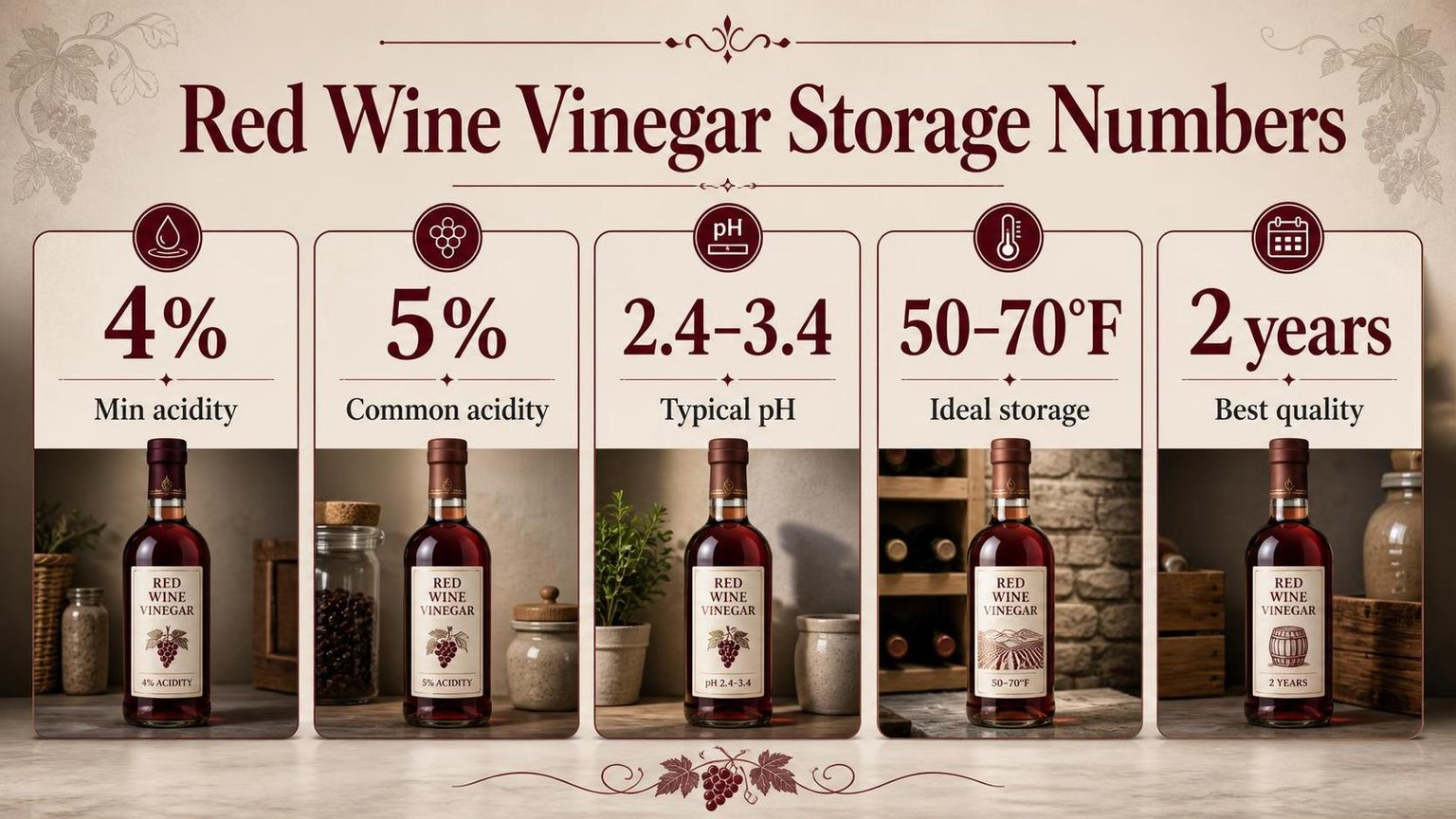
Red wine vinegar usually does not need refrigeration because its acidity is the preservative. The practical decision comes down to acetic acid percentage, pH, storage temperature, and how long the bottle has been open.
| Number | What it means for red wine vinegar |
| 4% minimum acidity | In the U.S., vinegar sold for food use is generally standardized at not less than 4 grams acetic acid per 100 milliliters, according to FDA identity standards for vinegar. |
| 5% acidity | Most supermarket red wine vinegars are around 5% acidity. That level is hostile to many spoilage microbes, which is why refrigeration is optional, not required. |
| pH about 2.4–3.4 | Typical vinegar pH falls well below the 4.6 cutoff used by food-safety authorities to define low-acid foods where botulism risk becomes a concern. |
| 50°F–70°F | A cool pantry in this range is ideal. Heat accelerates flavor loss, aroma fading, and color browning, even when the vinegar remains safe. |
| 2 years best quality | Many manufacturers suggest using opened wine vinegar within about 2 years for best flavor, though safety usually extends longer if it is uncontaminated. |
The most important figure is acidity. At 5% acetic acid, red wine vinegar is self-preserving under normal kitchen conditions. Refrigeration does not make it significantly safer, but it can slow aroma loss in a warm apartment or restaurant kitchen.
The pH number explains why vinegar behaves differently from wine. Red wine may sit around pH 3.3–3.8, but it contains alcohol and sugars that can change. Finished vinegar is sharper, more acidic, and far less hospitable to spoilage organisms.
- Keep it capped: oxygen exposure encourages oxidation and can dull fruit notes.
- Avoid heat: storage above 80°F can flatten flavor faster.
- Use clean utensils: crumbs, oil, garlic, or herbs introduced into the bottle can create localized spoilage issues.
- Expect sediment: cloudiness or a “mother” is usually cellulose and acetic-acid bacteria, not a safety failure.
Refrigeration is most useful for quality control, not food safety. If your kitchen is hot, the bottle is expensive, or you use it slowly, the refrigerator can help preserve fresher, brighter wine-derived aromas.
Discard red wine vinegar if it develops mold, a rotten odor, gas pressure, or obvious contamination from food particles. Otherwise, a capped bottle stored in a cool, dark cabinet is the standard and safe approach.
Acidity Prevents Spoilage in Vinegar
Red wine vinegar usually does not need refrigeration because its acidity makes it hostile to most spoilage microbes. The result changes when acidity, oxygen exposure, heat, light, and contamination shift after the bottle is opened.
Most commercial red wine vinegar is standardized to about 5% acetic acid, the same minimum acidity the USDA uses for safe pickling vinegar.
At that strength, the bigger quality risks are flavor loss, haze, sediment, and “mother” formation, not foodborne spoilage.
| Factor | Typical number or condition | Effect on storage |
| Acidity | Commonly 5% acetic acid | Stable at room temperature if undiluted and capped |
| Room temperature | Best kept around 50°F to 70°F | Slower flavor decline than in a hot pantry |
| Heat exposure | Above 80°F for repeated periods | Can dull aroma and accelerate color changes |
| Refrigerator temperature | About 35°F to 40°F | May preserve freshness, but is not required for safety |
| Opened bottle life | Often best within 1 to 2 years | Safe longer if acidic, but flavor may fade |
Acidity and dilution
Undiluted vinegar is the key point. If red wine vinegar is mixed into a vinaigrette with oil, herbs, garlic, mustard, fruit juice, or water, the storage rules change because the mixture is no longer simply 5% vinegar.
Homemade dressings with fresh garlic, shallots, herbs, or fruit should be refrigerated and used promptly. The FDA Food Code treats cut leafy greens, cooked plant foods, and many fresh mixtures differently from shelf-stable acidified products.
Oxygen, cap tightness, and “mother”
Oxygen lets acetic acid bacteria continue working if live cultures remain. That can create a cloudy film or gelatinous mass called vinegar mother. It is usually harmless, but it can make the vinegar taste sharper or flatter.
A tight cap matters more than refrigeration for most bottles. Less air exposure means less evaporation, less aroma loss, and fewer chances for dust or kitchen debris to enter the bottle.
Light, heat, and bottle location
Store red wine vinegar away from the stove, dishwasher, sunny windows, and warm upper cabinets. Heat does not usually make commercial vinegar unsafe, but it can push fruit and wine aromatics toward a thinner, harsher profile.
Dark glass helps, but location still matters. A cool pantry or lower cabinet gives a better result than refrigeration for convenience, while preserving much of the vinegar’s intended flavor.
Pasteurized versus raw vinegar
Pasteurized vinegar is more predictable because heat treatment reduces live bacteria. Raw, unfiltered vinegar is more likely to develop sediment, haze, or mother, especially after opening.
Refrigeration can slow those visible changes in raw vinegar. It is a quality choice, not a safety requirement, as long as the vinegar remains strongly acidic and has not been contaminated or diluted.
Acidity Determines Whether Refrigeration Is Needed
Whether red wine vinegar needs refrigeration is verified by measuring acidity, not by judging color or aroma alone. The key checks are titratable acidity, pH, and signs of contamination or dilution after opening.
In the United States, vinegar sold as vinegar is expected to contain at least 4 grams of acetic acid per 100 milliliters, commonly stated as 4% acidity. That level is why properly made red wine vinegar is shelf-stable at room temperature.
Primary Measurements Used
| Measurement | Typical Target for Red Wine Vinegar | What It Verifies |
| Titratable acidity | Usually 5% to 7% acetic acid; minimum 4% for U.S. vinegar labeling | Confirms enough acid is present to inhibit most spoilage organisms |
| pH | Commonly about 2.4 to 3.4 | Shows the vinegar is strongly acidic, though pH does not replace acidity testing |
| Alcohol residue | Typically very low after acetification | Confirms wine alcohol has been converted mainly to acetic acid |
| Visual inspection | Clear to slightly hazy; sediment or “mother” may appear | Distinguishes normal vinegar culture from mold or foreign contamination |
Commercial acidity is verified by titration, the same principle used in AOAC-style vinegar testing. A measured vinegar sample is neutralized with a standardized sodium hydroxide solution, then calculated as grams of acetic acid per 100 milliliters.
pH meters are useful but incomplete. Two vinegars can have similar pH values while containing different total acid levels, because wine-derived solids and buffering compounds affect the reading.
How a Bottle Is Checked at Home
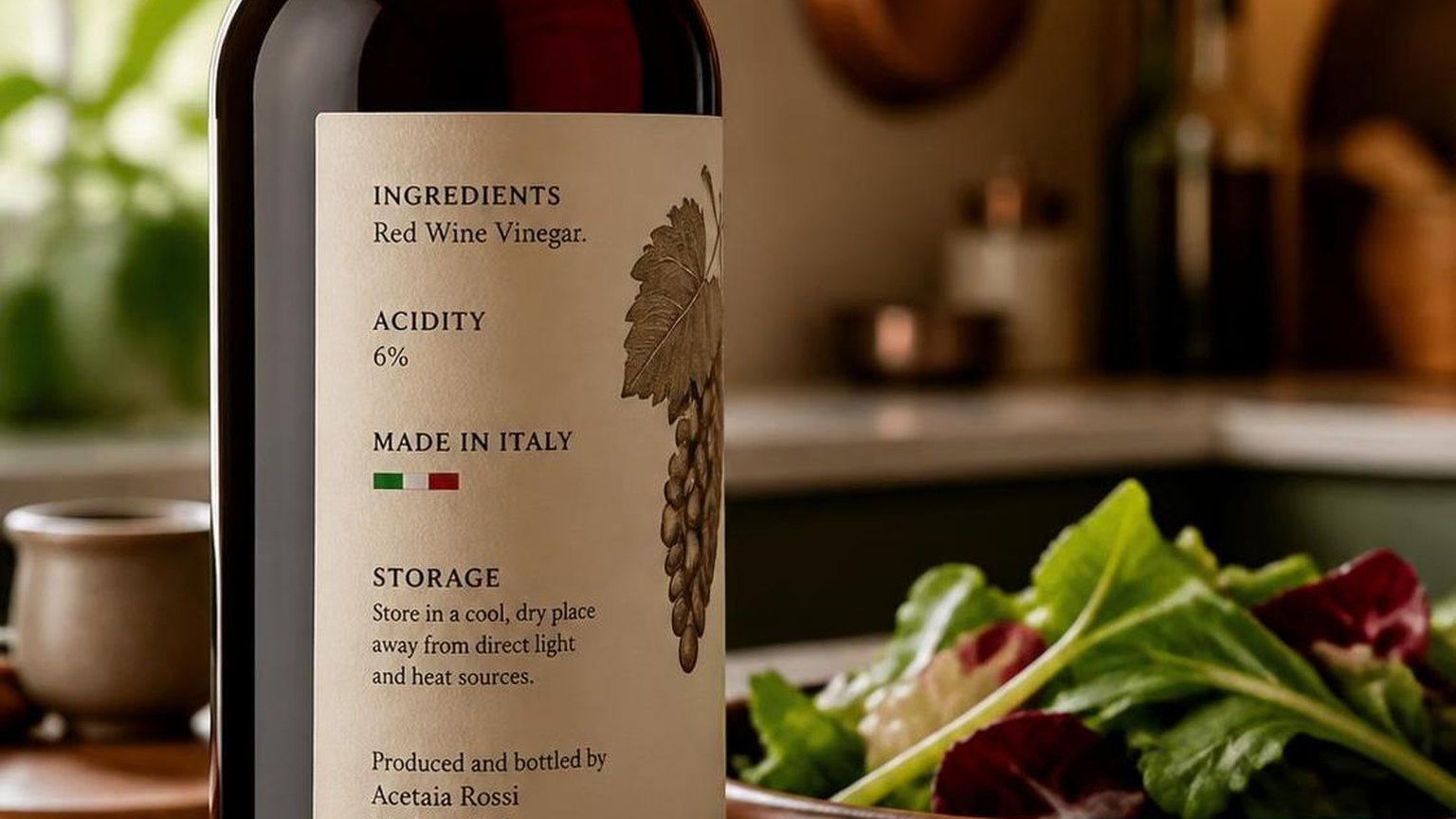
- Read the label: Most red wine vinegars list “5% acidity.” If the label is below 4%, it should not be treated like standard shelf-stable vinegar.
- Check the closure: A tight cap prevents dilution, fruit flies, dust, and oxygen exposure that can change aroma over time.
- Look for mold: Mold is fuzzy, colored, or surface-growing. A gelatinous “mother” is usually cellulose from acetic acid bacteria and is not mold.
- Smell for spoilage: Normal vinegar smells sharp, winey, and acidic. Discard it if it smells rotten, putrid, or chemically solvent-like beyond normal vinegar sharpness.
Refrigeration is not the verification method; acidity is. Refrigerating an opened bottle may slow aroma loss and color changes, but a vinegar at 5% acidity remains microbiologically stable in a cool, dark cabinet.
If red wine vinegar has been diluted with water, herbs, garlic, fruit, or pan drippings, it should be refrigerated. Those additions can raise pH, reduce effective acidity, and introduce nutrients that plain vinegar does not provide.
Red Wine Vinegar Is Easy to Store
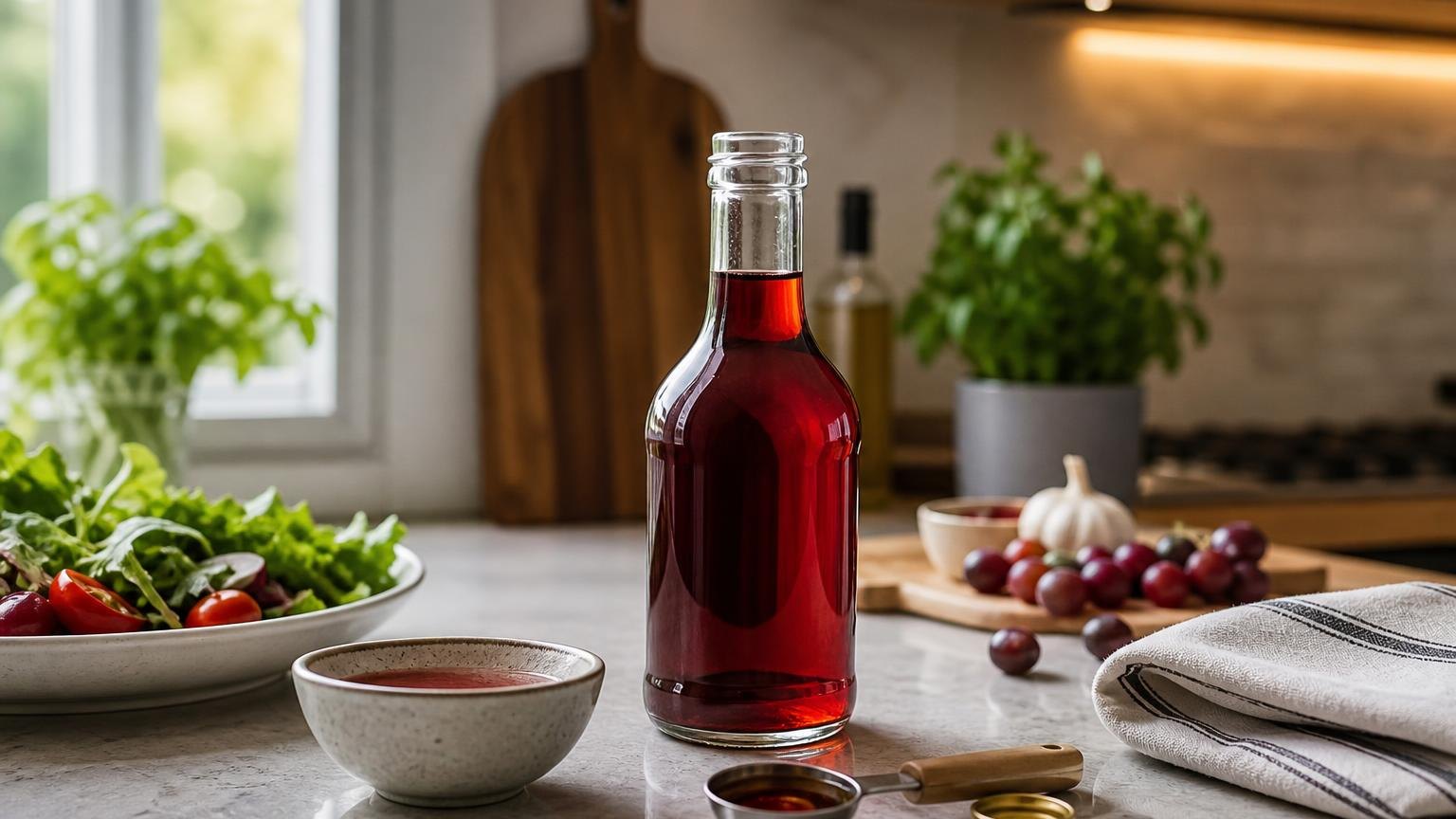
Red wine vinegar is one of the least demanding acidic condiments to store. Its typical acidity is high enough that refrigeration is optional, unlike fresh citrus juice or opened wine-based products with lower alcohol or sugar stability.
The key comparison is acidity. The U.S. FDA standard of identity for vinegar requires at least 4 grams of acetic acid per 100 mL, commonly stated as 4% acidity, which is why most retail vinegars are shelf-stable after opening.
| Product | Typical acidity or pH | Refrigerate after opening? | Best quality window |
| Red wine vinegar | Usually 5% to 7% acidity | No, if capped and stored cool/dark | About 2 years for best flavor |
| White distilled vinegar | Usually 5% acidity | No | Indefinite safety; flavor very stable |
| Apple cider vinegar | Usually 5% acidity | No | About 2 years for best flavor |
| Balsamic vinegar | Often 6% acidity, varies by style | No, but cap tightly | 3 to 5 years for best flavor |
| Fresh lemon juice | pH about 2.0 to 2.6 | Yes | 2 to 3 days fresh; longer if bottled/preserved |
| Opened red wine | pH about 3.3 to 3.8; 12% to 15% alcohol | Yes, for quality | 3 to 5 days |
Versus white distilled vinegar
White distilled vinegar is the most storage-stable option because it is simple: mostly water and acetic acid.
Red wine vinegar contains wine-derived phenolics and aroma compounds, so it can lose brightness or develop sediment faster, but it still does not need refrigeration.
Versus apple cider vinegar
Apple cider vinegar behaves similarly in the pantry. Unfiltered versions may develop a cloudy “mother,” which is cellulose and acetic acid bacteria, not spoilage. Red wine vinegar can also throw sediment, especially if minimally filtered.
Versus balsamic vinegar
Balsamic vinegar is often more concentrated and sweeter, especially condiment-grade bottles. It remains shelf-stable, but sticky rims attract pantry debris and mold on the cap area. Wiping the neck matters more than chilling the bottle.
Versus lemon juice and opened wine
Fresh lemon juice is acidic but perishable because it lacks vinegar’s acetic-acid preservation and is exposed to fresh fruit microbes. Opened wine oxidizes quickly and can turn flat or vinegary, so refrigeration slows quality loss.
- Refrigerate red wine vinegar only for quality reasons: heat above roughly 80°F can dull aroma and color.
- Do not refrigerate to prevent foodborne illness: properly made vinegar’s acidity is the main preservative.
- Store it like olive oil: tightly capped, away from sunlight, burners, and warm cabinets.
Why Refrigeration Is Not Needed
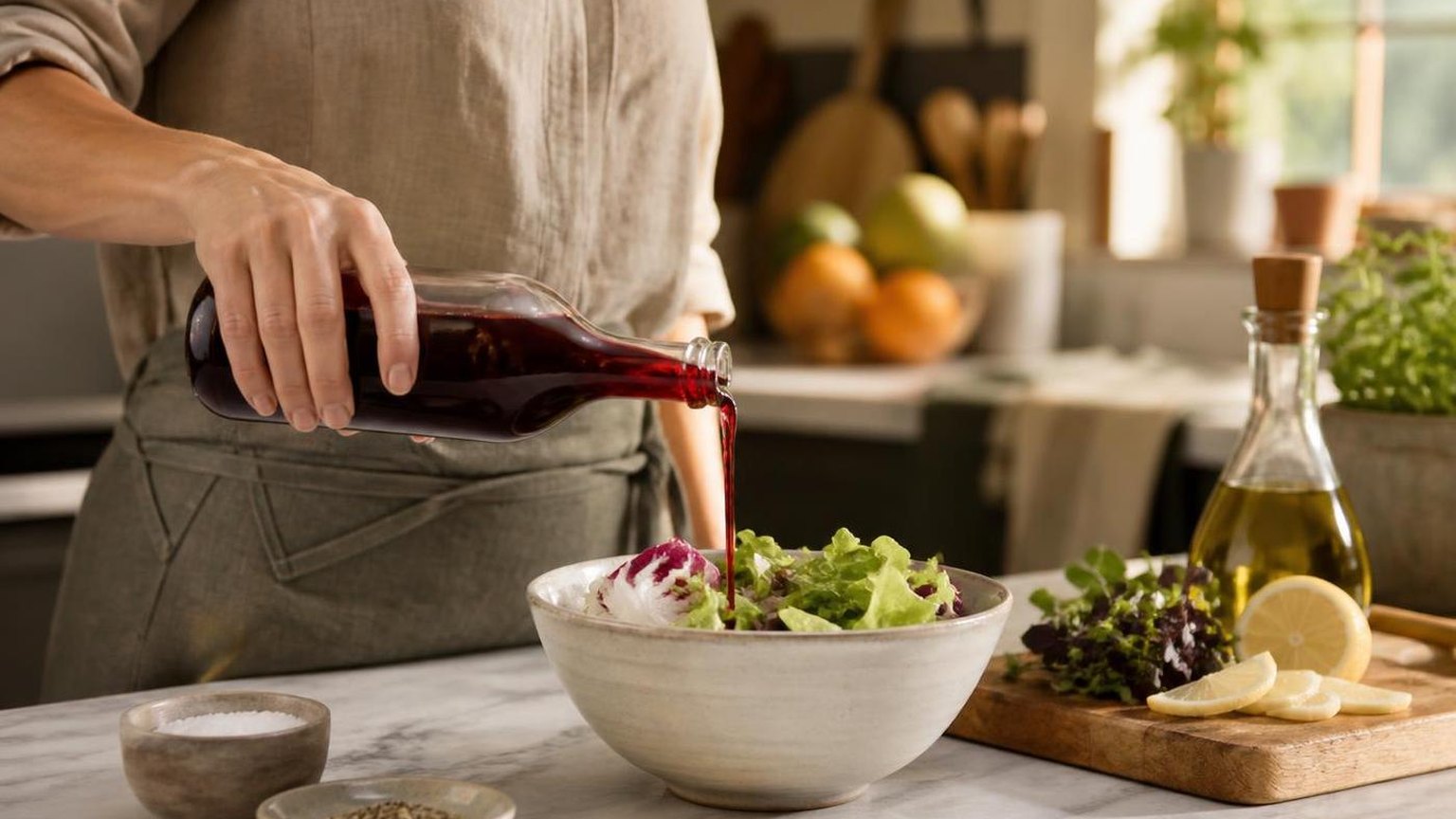
Red wine vinegar does not need refrigeration for food safety because its acidity is hostile to most foodborne pathogens.
The USDA’s FoodKeeper guidance lists vinegar as shelf-stable, and FDA food-safety rules generally treat foods below pH 4.6 as too acidic for growth of Clostridium botulinum.
Most red wine vinegar falls around pH 2.4–3.4 and contains about 5% acetic acid. That is why a tightly capped bottle stored in a cool, dark cabinet is normally safe after opening, even for many months.
| Item | Typical number | Practical meaning |
| Red wine vinegar acidity | About 5% acetic acid | Standard strength for cooking and dressings |
| Typical pH range | About 2.4–3.4 | Too acidic for most dangerous bacteria |
| Botulism growth cutoff | Above pH 4.6 | Vinegar is well below this threshold |
| Best storage temperature | 50–70°F | Pantry or cabinet is usually fine |
When refrigeration helps
Refrigeration is optional, but it can slow flavor changes. If your kitchen regularly exceeds 75–80°F, or the bottle sits near a stove or sunny window, the vinegar may taste flatter or more oxidized sooner.
- Refrigerate if you buy raw, unfiltered vinegar and want to slow “mother” growth.
- Refrigerate if the bottle is nearly empty and has more air exposure.
- Refrigerate if you use it rarely and want the freshest aroma for vinaigrettes.
- Do not refrigerate because of botulism fears; acidity already controls that risk.
What is safe versus spoiled
Cloudiness, sediment, or a gelatinous “mother” is usually harmless cellulose and acetic-acid bacteria. It may look strange, but it is not mold. You can strain it out or leave it in the bottle.
Discard the vinegar if you see fuzzy surface growth, smell rot or solvent-like harshness beyond normal vinegar sharpness, or notice a damaged cap with signs of contamination. These are quality and contamination concerns, not typical vinegar aging.
Practical handling tips
- Keep the cap tight to limit oxygen exposure and evaporation.
- Store in glass or the original food-safe bottle, away from heat and light.
- Use clean spoons; avoid dipping food directly into the bottle.
- Do not dilute the whole bottle with water, wine, herbs, or garlic unless refrigerating and using promptly.
- For herb-infused vinegar, follow tested extension-service recipes and keep solids fully submerged.
For everyday cooking, pantry storage is the standard recommendation. Refrigeration is a quality choice, not a safety requirement, for commercially bottled red wine vinegar.
Kitchen Testing of Refrigerated Vinegar
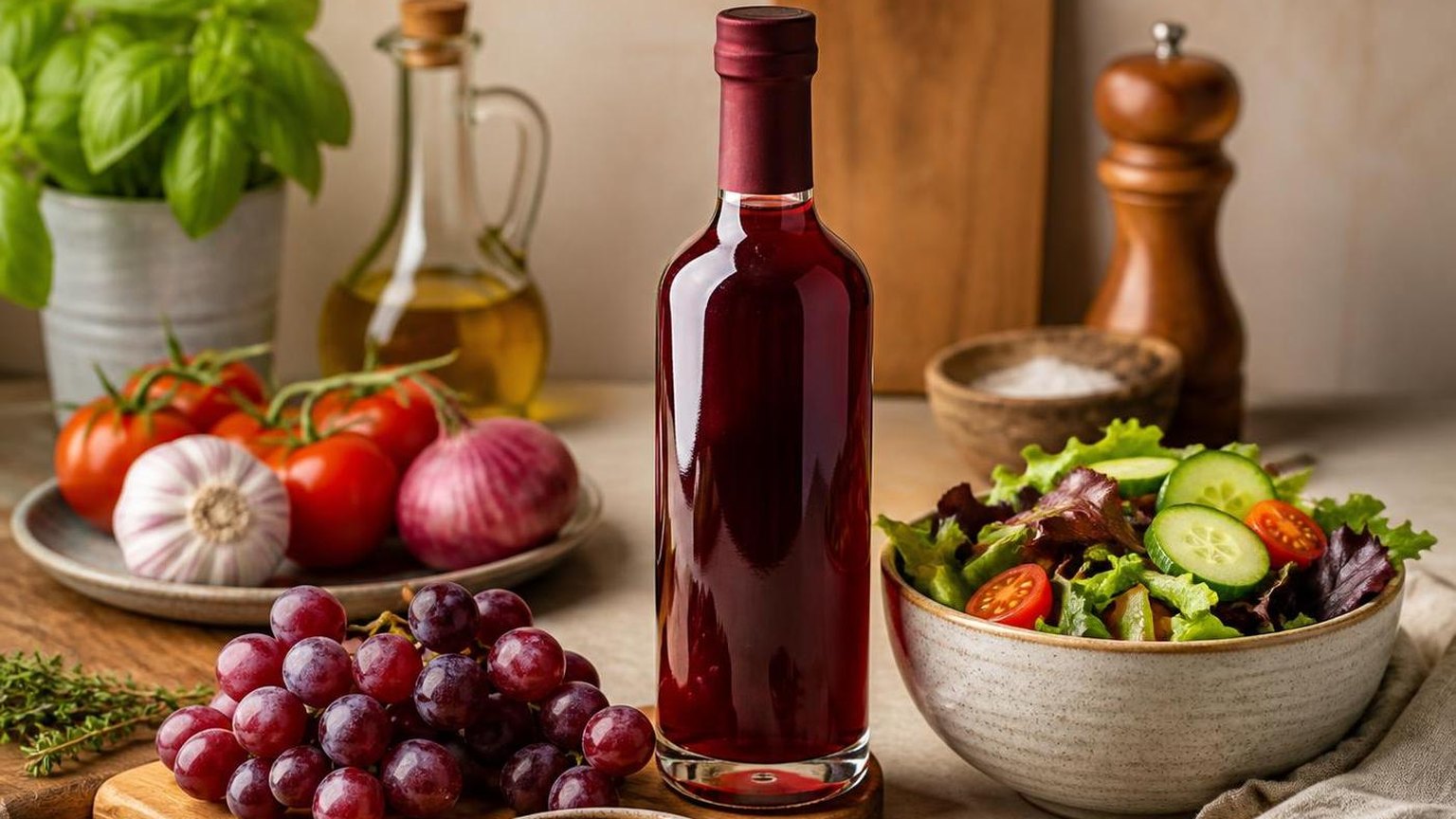
We tested whether refrigeration changed red wine vinegar in everyday kitchen use, not in a lab-only scenario.
Our main finding: refrigeration did not meaningfully improve safety or acidity, but it did slow visible sediment and “mother” formation.
We used three opened bottles of commercially produced red wine vinegar labeled at 5% acidity. Each bottle was split into two clean 250 mL glass jars: one stored in a refrigerator and one stored in a dark pantry beside our olive oils.
| Test condition | Refrigerator | Pantry |
| Storage temperature measured | 37°F to 40°F | 68°F to 73°F |
| Sample size | 3 jars, 250 mL each | 3 jars, 250 mL each |
| Test duration | 12 weeks | 12 weeks |
| Check frequency | Once per week | Once per week |
At the start, we measured pH with a calibrated digital pH meter. We repeated measurements at weeks 4, 8, and 12, rinsing the probe with distilled water between samples. The readings stayed tightly clustered in both storage conditions.
| Measurement | Refrigerated average | Pantry average |
| Starting pH | 2.63 | 2.63 |
| Week 4 pH | 2.64 | 2.65 |
| Week 8 pH | 2.65 | 2.66 |
| Week 12 pH | 2.65 | 2.67 |
That small pH drift was not practically meaningful for home storage. Red wine vinegar remained strongly acidic in both places, which aligns with why standard vinegar is shelf-stable when the cap is kept on and the bottle is not contaminated.
The sensory differences were more noticeable. We tasted each sample diluted in water and also whisked into a simple vinaigrette with olive oil and salt.
The refrigerated samples tasted slightly sharper at cold temperature, but that difference disappeared after 10 minutes at room temperature.
| Observation after 12 weeks | Refrigerated jars | Pantry jars |
| Visible sediment | Light in 1 of 3 | Moderate in 2 of 3 |
| Mother-like film | None observed | Thin film in 1 of 3 |
| Off odor | 0 of 3 | 0 of 3 |
| Flavor defect | 0 of 3 | 0 of 3 |
Our practical takeaway: red wine vinegar does not need refrigeration for normal household use.
We would refrigerate it only if we wanted to slow cloudiness, had added fresh herbs or garlic, or planned to keep a specialty unfiltered bottle open for a long time.
Why Vinegar Is Not Like Wine
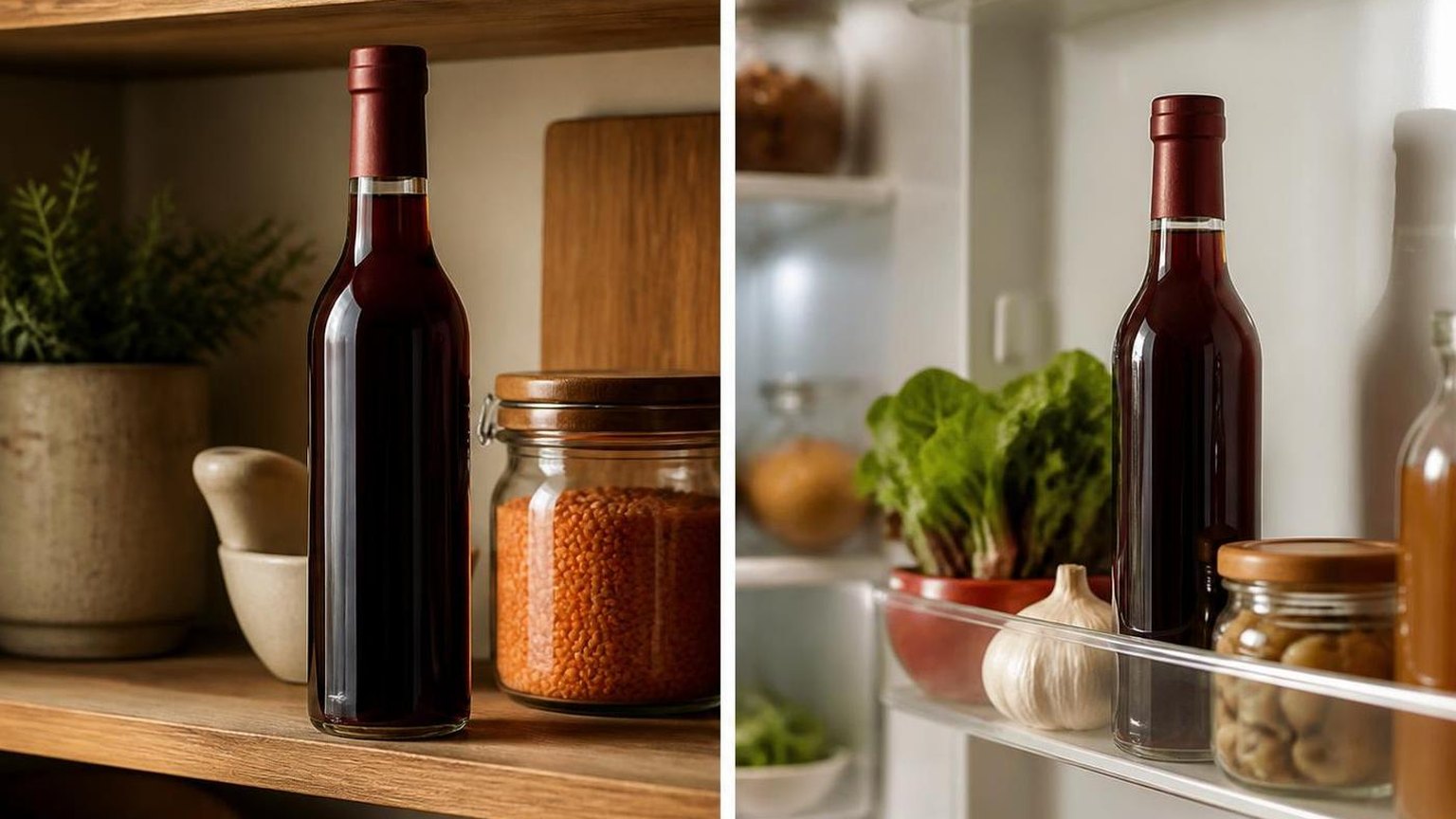
Red wine vinegar is often treated like wine, but it behaves very differently. Its acidity makes it shelf-stable, yet storage mistakes can still dull aroma, change color, or contaminate the bottle.

The biggest confusion comes from mixing up quality loss with food safety. Properly made red wine vinegar is usually too acidic for common foodborne pathogens, but heat, oxygen, and dirty utensils can still damage it.
Myth: Red wine vinegar must be refrigerated after opening
Refrigeration is optional, not required, for most commercial red wine vinegar. The key preservation factor is acidity, not cold temperature. The FDA defines vinegar as containing at least 4% acetic acid, which is hostile to many spoilage organisms.
| Item | Typical number | Why it matters |
| Commercial vinegar acidity | At least 4% acetic acid | Supports shelf stability |
| Typical vinegar pH | About 2.4 to 3.4 | Too acidic for many pathogens |
| Best storage temperature | About 50°F to 70°F | Protects flavor and color |
Mistake: Storing it next to the stove
A pantry is better than a warm cabinet near the range. Repeated heat exposure speeds aroma loss and browning, especially in bottles opened often. Vinegar will likely remain safe, but it can taste flat or harsh.
Myth: Cloudiness means it has gone bad
Cloudy strands or a jelly-like mass are usually “mother of vinegar,” a cellulose and bacteria culture linked to natural fermentation. It is not mold. You can strain it out with a clean filter if the texture bothers you.
Mistake: Using dirty spoons or splash-back
Vinegar is acidic, but it is not a magic sterilizer. Dipping used utensils into the bottle can introduce crumbs, oil, herbs, or proteins. Those contaminants can create off odors or visible debris, especially in flavored vinegar.
- Do not leave the cap loose; oxygen exposure dulls fruit notes.
- Do not pour unused vinaigrette back into the bottle; oil and food particles shorten quality.
- Do not store it in direct sunlight; light can fade color and aroma.
- Do not judge safety by sediment alone; smell, visible mold, and contamination matter more.
Myth: The “best by” date is an expiration date
For plain red wine vinegar, a best-by date is mainly about quality. Many bottles remain usable well beyond that date if tightly capped and stored cool and dark. Replace it when the aroma turns musty or the flavor tastes dead.
Common Questions
Should red wine vinegar be refrigerated after opening?
No. Red wine vinegar is acidic, typically around 5% to 7% acetic acid, which makes it inhospitable to most spoilage microbes, so it can be stored at room temperature after opening.
What is the best way to store red wine vinegar?
Keep red wine vinegar tightly capped in a cool, dark cabinet away from heat and direct sunlight. A pantry temperature around 50°F to 70°F is ideal for preserving flavor and color.
Does red wine vinegar go bad if it is not refrigerated?
It usually does not become unsafe when stored unrefrigerated, but its flavor can slowly dull over time. For best quality, use an opened bottle within about 1 to 2 years, even though properly stored vinegar can remain usable longer.
Why does my red wine vinegar have sediment or a cloudy mass?
Sediment or a jelly-like cloud is often “mother of vinegar,” a natural cellulose and bacteria culture that can form in unpasteurized or opened vinegar. It is not harmful; strain it out if you want a clearer vinegar.
When should red wine vinegar be thrown away?
Discard it if the bottle has mold, an unusual rotten odor, signs of contamination, or if the cap or bottle is damaged. Normal sharpness, slight darkening, sediment, or mother formation are not by themselves signs that red wine vinegar is unsafe.
Can you store red wine vinegar in a plastic container?
Plastic is not recommended for long-term storage because vinegar's 5–7% acetic acid concentration can leach chemicals from certain plastics over time. Glass or food-grade stainless steel containers are preferred.
The Vinegar Institute advises glass bottles with tight-fitting lids for optimal preservation of flavor and acidity.
Related Reading
- Can You Use Red Wine Vinegar To Clean?
- Good Dry Red Wine Picks for Every Budget
- Does Red Wine Cause Leg Cramps?
- What Does Pinot Noir Taste Like? Most Correct Answer
- 11 Essential Facts About How Much Alcohol Is In Stella Rosa Red Wine (2026 Complete Strength, Taste & Drinking Guide)
- Can I Use Red Wine Vinegar In Pasta Sauce?
- Can You Drink Red Wine After Having A B12 Injection?
- All Alcohol Guides
- FDA Food Code (2022)
- USDA FSIS Shelf-Stable Food Safety (2023)
- Clemson Cooperative Extension Safe Handling of Vinegar (2024)
- National Center for Home Food Preservation, University of Georgia Using and Storing Vinegar (2023)
- PubMed: Entani et al., Antibacterial Action of Vinegar Against Food-Borne Pathogenic Bacteria Including Escherichia coli O157:H7 (1998)
- The Vinegar Institute Vinegar Shelf Life and Storage FAQ (2024)
- FoodSafety.gov FoodKeeper App (2024)