Does Red Wine Help You Sleep? is best answered as: red wine may make you feel drowsy, but it usually worsens sleep quality by disrupting REM sleep, increasing nighttime awakenings, and reducing restorative rest.
Alcohol is a sedative at first, yet the body metabolizes it within hours, often causing lighter, fragmented sleep later in the night.
Research links evening alcohol intake with poorer sleep continuity, snoring risk, and reduced next-day alertness, even when someone falls asleep faster.
Why Red Wine Feels Sleepy
A glass of red wine can make you feel sleepy, but the numbers show why that is not the same as improving sleep. Alcohol is sedating early in the night and disruptive later, especially as blood alcohol levels fall.
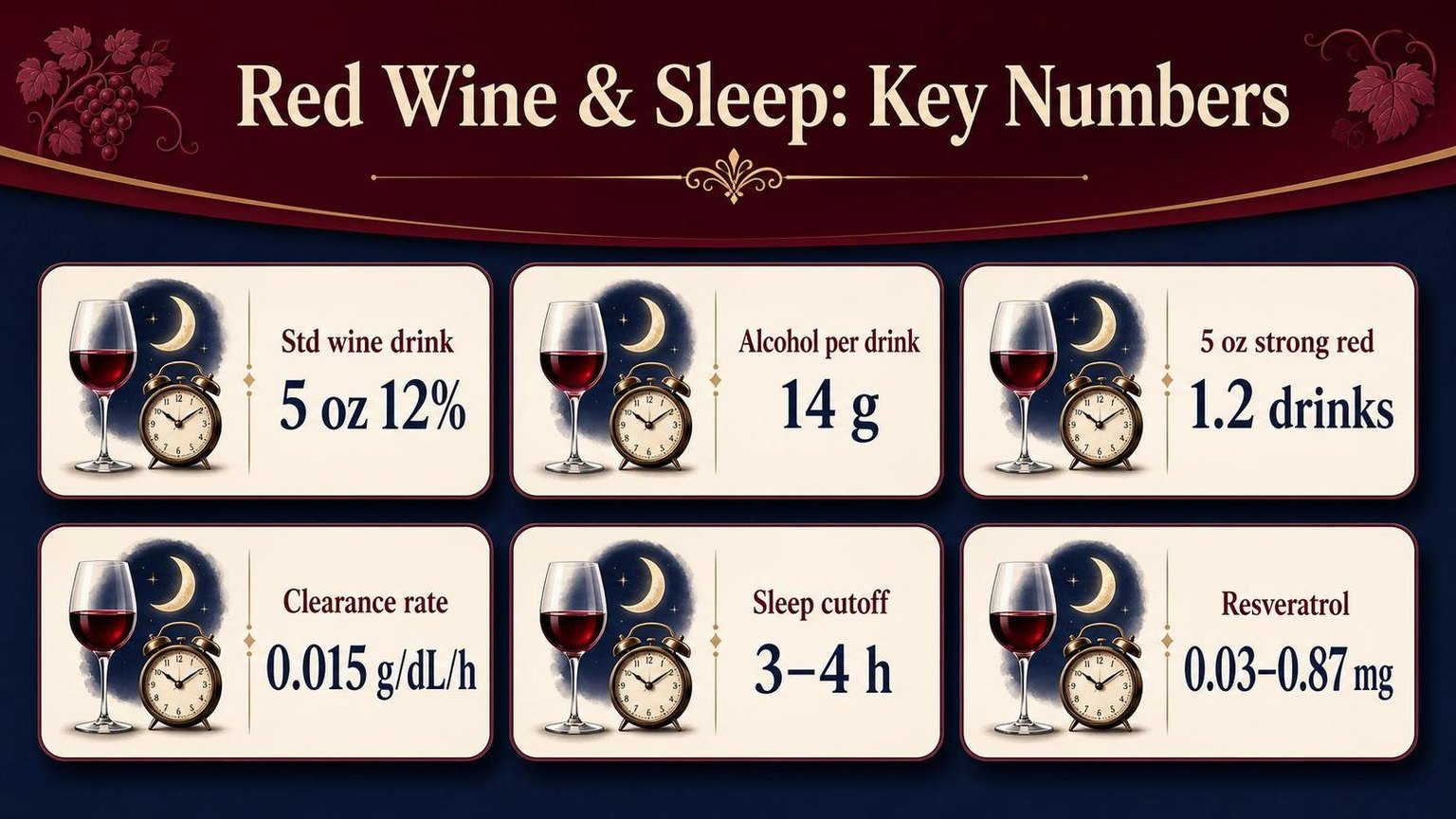
In U.S. public-health guidance, one standard drink contains 14 grams of pure alcohol. For table wine, that equals 5 ounces at 12% ABV, though many red wines are closer to 13.5%–15% ABV.
| Measure | Typical number | Why it matters for sleep |
| Standard wine serving | 5 oz at 12% ABV | Counts as 1 U.S. standard drink, per NIAAA. |
| Higher-ABV red wine | 5 oz at 14.5% ABV | About 1.2 standard drinks, not 1. |
| Alcohol clearance | About 0.015 g/dL per hour | As alcohol wears off, awakenings and lighter sleep become more likely. |
| Moderate experimental dose | 0.5 g/kg alcohol | About 2.5 drinks for a 154-lb adult; linked with REM suppression. |
The key sleep tradeoff is timing. Alcohol can shorten sleep onset latency, meaning you may fall asleep faster.
But controlled sleep-lab research, including the 2013 review by Ebrahim and colleagues in Alcoholism: Clinical and Experimental Research, found that alcohol reduces REM sleep, particularly in the first half of the night.
That matters because REM sleep supports memory, emotional regulation, and normal sleep architecture.
Alcohol also increases sympathetic activity and can worsen snoring or obstructive sleep apnea, so “knocking yourself out” may produce less restorative sleep.
| Red wine compound | Approximate amount in wine | Sleep relevance |
| Alcohol | 14–17 g in many 5-oz pours | Main reason wine feels sedating; also the main sleep disruptor. |
| Resveratrol | About 0.03–0.87 mg per 5 oz | Not a proven sleep aid at wine-level doses. |
| Melatonin | Trace nanogram-level amounts reported | Far below common supplement doses, which are usually 0.3–5 mg. |
The practical cutoff is also numeric: if you drink, keep it to 1 drink or less for women and 2 or less for men on days alcohol is consumed, per the 2020–2025 Dietary Guidelines for Americans.
For sleep specifically, many clinicians advise finishing alcohol at least 3–4 hours before bedtime. That window does not make alcohol harmless, but it reduces the chance that peak metabolism collides with the second half of sleep.
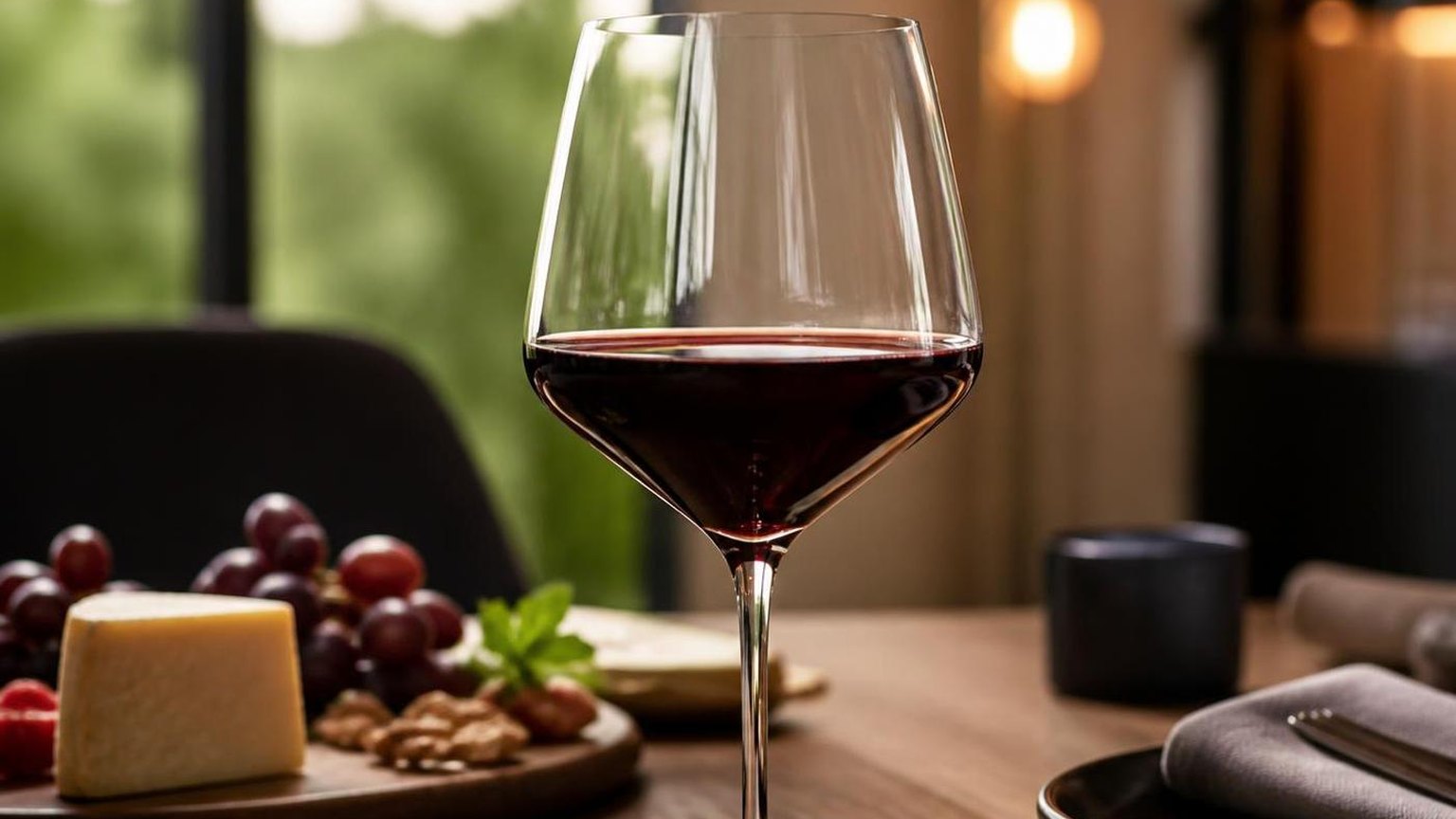
What Changes Red Wine’s Sleep Effect
Red wine’s sleep effect depends less on “red wine” itself and more on dose, timing, body size, tolerance, and your baseline sleep. Alcohol can make sleep onset feel easier, but it commonly worsens sleep quality later in the night.
The same glass can affect two people differently because alcohol metabolism varies by sex, liver enzyme activity, food intake, medications, and age.
In sleep-lab studies, alcohol most consistently reduces REM sleep early and increases wakefulness as blood alcohol levels fall.
Amount of Alcohol
A standard U.S. drink contains 14 grams of pure alcohol. For wine, that usually means 5 ounces at 12% ABV, but many red wines are 13.5% to 15% ABV, so a large pour can equal more than one drink.
| Pour of red wine | ABV | Approximate standard drinks |
| 5 oz | 12% | 1.0 |
| 5 oz | 14.5% | 1.2 |
| 8 oz | 14.5% | 1.9 |
| 10 oz | 14.5% | 2.4 |
That matters because higher alcohol doses have stronger rebound effects.
Reviews of polysomnography studies report that alcohol may shorten sleep latency, but moderate to high doses suppress REM sleep and increase sleep disruption in the second half of the night.
Timing Before Bed
The body typically metabolizes alcohol at about 0.015 blood alcohol concentration per hour, roughly one standard drink per hour for many adults. If you drink close to bedtime, alcohol is still active during early sleep.
As levels decline overnight, the nervous system can become more activated. That is when people notice 3 a.m. wake-ups, sweating, vivid dreams, a racing heart, reflux, or needing to urinate.
Your Sleep and Health Baseline
- Insomnia: Alcohol can reinforce a “drink to fall asleep” pattern while making awakenings more likely.
- Snoring or sleep apnea: Alcohol relaxes upper-airway muscles and can worsen oxygen drops and breathing interruptions.
- Reflux: Red wine can lower lower-esophageal sphincter pressure and trigger nighttime heartburn.
- Medications: Sedatives, opioids, antihistamines, antidepressants, and sleep drugs can interact dangerously with alcohol.
- Age: Older adults often reach higher blood alcohol levels from the same amount due to lower body water and slower clearance.
Red Wine Compounds Beyond Alcohol
Red wine contains polyphenols such as resveratrol, anthocyanins, and tannins, but the sleep-relevant dose is not comparable to supplement research. A typical glass provides milligram-level resveratrol, while many trials use far higher isolated doses.
Some red wines also contain histamine and other biogenic amines, which may cause flushing, congestion, headache, or palpitations in sensitive drinkers. Those reactions can make sleep worse even when the alcohol dose is modest.
How Red Wine Sleep Effects Are Measured
Whether red wine “helps sleep” is verified by measuring sleep onset, sleep continuity, sleep stages, and next-day impairment—not by whether someone feels drowsy after a glass.
The strongest evidence uses controlled alcohol dosing, objective sleep recording, and comparison with a no-alcohol night.
In U.S. research, one standard drink contains 14 grams of pure alcohol. That is roughly 5 fluid ounces of 12% ABV wine, though many red wines are 13.5% to 15% ABV, making a restaurant pour stronger than “one drink.”.
| Measure | What it verifies | Why it matters for red wine |
| Polysomnography | Brain waves, eye movement, muscle tone, breathing, oxygen level, heart rhythm | Gold standard for detecting REM suppression, awakenings, apnea, and sleep-stage changes |
| Actigraphy | Wrist movement over several nights | Estimates sleep duration and fragmentation in real-world drinking patterns |
| Sleep diary | Bedtime, wake time, perceived sleep quality, alcohol timing | Shows the gap between feeling sleepy and actually sleeping well |
| Breath or blood alcohol testing | Alcohol level at bedtime and overnight clearance | Confirms dose and timing instead of relying on self-report |
Polysomnography is the most direct test. Studies consistently show alcohol can shorten sleep-onset latency early in the night, but it reduces REM sleep and increases awakenings later as blood alcohol concentration falls.
A typical verification protocol is a randomized crossover trial. The same participant has one red-wine or alcohol night and one placebo or no-alcohol night, separated by a washout period.
This design reduces confounding from age, sex, baseline sleep quality, and chronotype.
| Exposure | Approximate alcohol | Verification concern |
| 5 oz wine at 12% ABV | 14 g alcohol | Counts as 1 U.S. standard drink |
| 6 oz wine at 14.5% ABV | About 20.6 g alcohol | About 1.5 standard drinks |
| 10 oz total wine at 14% ABV | About 33.1 g alcohol | About 2.4 standard drinks |
Timing is recorded carefully because bedtime alcohol has different effects than wine consumed with dinner.
Researchers commonly track the interval between the last drink and lights-out, since alcohol metabolism averages about 0.015 g/dL blood alcohol concentration per hour in many adults.
Researchers also separate red wine from alcohol as a molecule.
Red wine contains polyphenols and trace melatonin, but measured melatonin concentrations in wine are typically in nanograms per milliliter, far below supplemental melatonin doses commonly sold in milligrams.
- Verified benefit: shorter time to fall asleep on some nights.
- Verified harm: less REM sleep, more second-half awakenings, worse snoring or obstructive sleep apnea risk.
- Best interpretation: red wine may sedate, but sedation is not the same as restorative sleep.
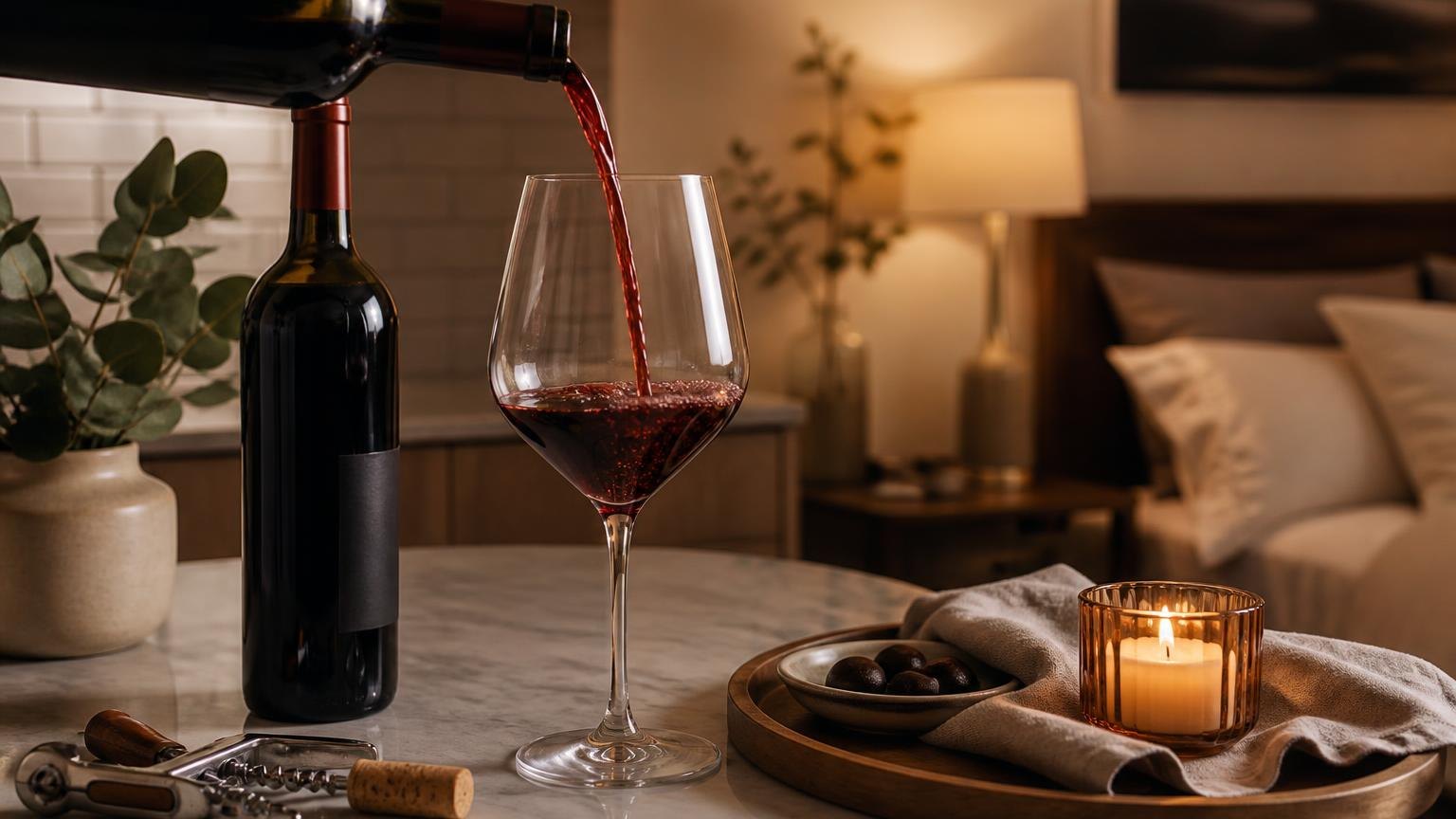
Why Red Wine Is a Poor Sleep Aid
Red wine can make you feel sleepy faster, but it is a poor sleep aid compared with options that do not disrupt sleep architecture.
The key issue is timing: alcohol’s sedative effect fades as blood alcohol falls, often causing lighter, more fragmented sleep later in the night.
In sleep-lab research, alcohol reliably reduces sleep-onset latency at first, but it suppresses REM sleep early and increases awakenings in the second half of the night.
The National Institute on Alcohol Abuse and Alcoholism notes that alcohol can worsen snoring and sleep apnea by relaxing upper-airway muscles.
| Option | Typical amount studied or used | Main sleep effect | Key drawback |
| Red wine | 5 fl oz serving; about 12% alcohol by volume | May shorten time to fall asleep | More awakenings, REM disruption, next-day grogginess, reflux risk |
| Melatonin | 0.5 mg to 5 mg, usually 30 to 60 minutes before bed | Most useful for circadian timing, jet lag, delayed sleep phase | Can cause vivid dreams, headache, morning sleepiness |
| Chamomile tea | 1 cup, caffeine-free | Mild relaxation; limited evidence for insomnia | Less predictable effect; caution with ragweed allergy |
| Tart cherry juice | About 8 oz twice daily in several small studies | May modestly increase sleep time via melatonin and polyphenols | Added sugar and calories; evidence still limited |
| CBT-I | Usually 4 to 8 structured sessions | First-line insomnia treatment; durable benefit | Requires effort and consistency, not instant sedation |
Compared with melatonin, red wine is less targeted. Melatonin does not “knock you out”; it signals biological night. That makes it better suited for jet lag or a shifted sleep schedule than for anxiety-driven insomnia.
Compared with herbal tea, wine is more pharmacologically active but also more disruptive. A nonalcoholic bedtime drink can support a wind-down ritual without raising heart rate, worsening reflux, or increasing overnight bathroom trips as alcohol can.
Tart cherry juice has more promising sleep data than most “sleepy drinks,” but effects are modest.
In one small randomized trial of older adults with insomnia, tart cherry juice increased sleep time by roughly 84 minutes, though larger studies are needed.
CBT-I is the strongest comparator. The American College of Physicians recommends cognitive behavioral therapy for insomnia as the initial treatment for chronic insomnia in adults, ahead of sleeping pills.
It addresses the conditioning and habits that keep insomnia going.
- Best for occasional relaxation: caffeine-free tea or a nonalcoholic evening ritual.
- Best for jet lag or delayed sleep timing: low-dose melatonin used at the correct clock time.
- Best for chronic insomnia: CBT-I, ideally with a trained clinician or validated digital program.
- Least reliable as a sleep aid: red wine, because sedation and sleep quality move in opposite directions.
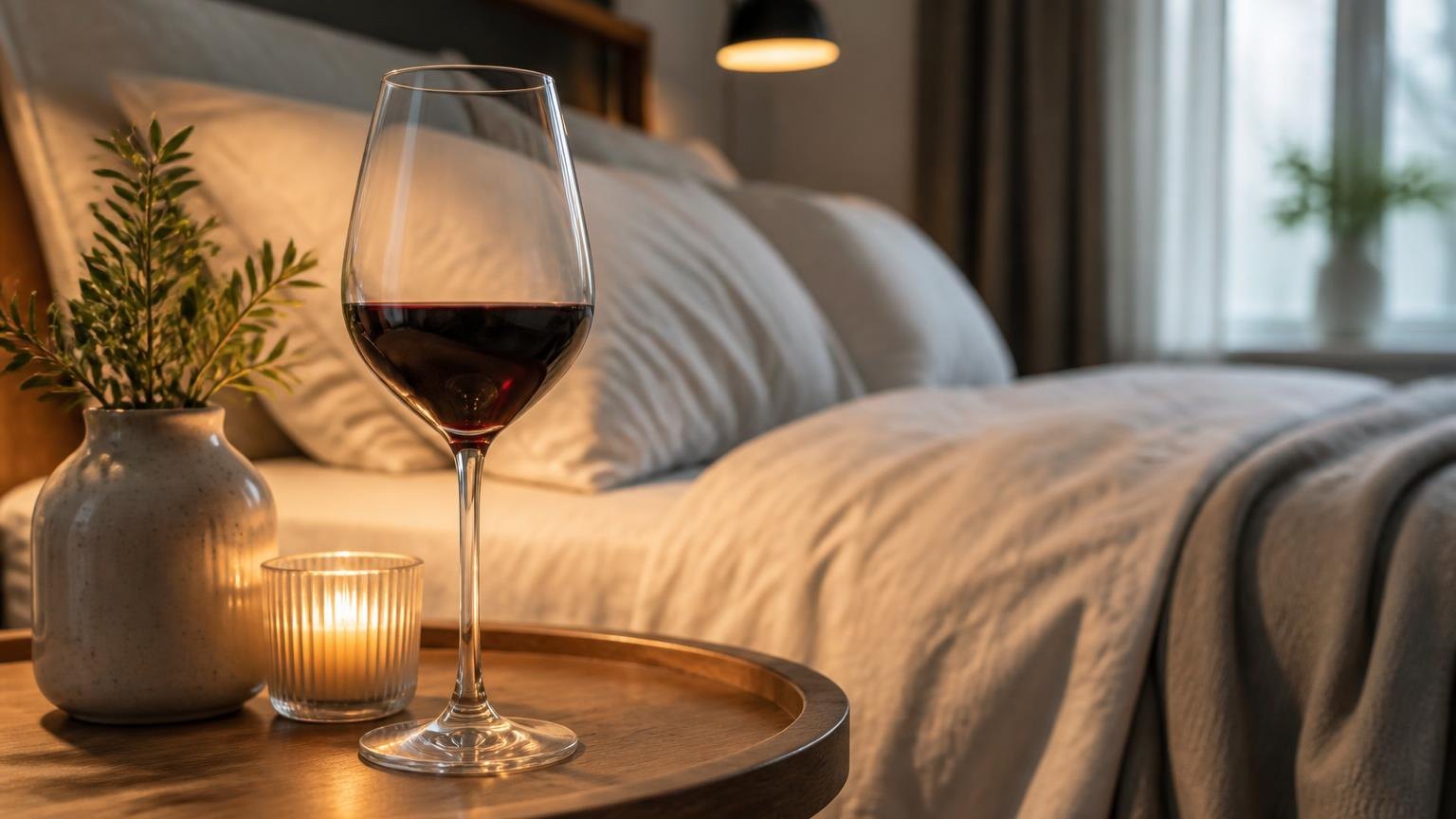
Red Wine’s Risks for Sleep Quality
Red wine may feel relaxing because alcohol increases sleepiness at first, but it commonly worsens sleep quality later in the night. The main issue is ethanol, not the grape variety: even moderate alcohol can reduce REM sleep and increase awakenings.
For sleep, the safest practical advice is not to use red wine as a sleep aid. The CDC and Dietary Guidelines for Americans define moderation as up to 1 drink per day for women or 2 for men, but “less is better” for health.
| Measure | Specific number | Why it matters for sleep |
| Standard U.S. drink of wine | 5 fl oz at 12% ABV | Contains about 14 g pure alcohol, enough to affect sleep architecture. |
| Typical red wine pour at home | 6–9 fl oz is common | May equal 1.2–1.8 standard drinks, not “one drink.” |
| Alcohol metabolism | About 1 standard drink per hour | A 2-drink evening can still affect the first half of the night. |
| Suggested cutoff | At least 3–4 hours before bed | Reduces, but does not eliminate, sleep disruption. |
Who should avoid red wine before bed
- People with insomnia, fragmented sleep, or early-morning awakenings, because alcohol can intensify rebound wakefulness.
- Anyone with obstructive sleep apnea or heavy snoring. Alcohol relaxes upper-airway muscles and can worsen oxygen drops during sleep.
- Pregnant people or those trying to become pregnant. U.S. public health guidance states there is no known safe amount of alcohol in pregnancy.
- People taking sedatives, opioids, antihistamines, antidepressants, sleep medications, or anxiety medications, unless their clinician says otherwise.
- Anyone with liver disease, alcohol use disorder, pancreatitis, certain heart rhythm problems, or a history of alcohol-related harm.
Practical tips if you choose to drink
- Measure the pour. Use a 5-ounce pour, not a full large wine glass.
- Drink with food. This slows absorption and may reduce the sharp rise in blood alcohol concentration.
- Stop earlier than feels necessary. A bedtime “nightcap” is the most sleep-disruptive pattern.
- Alternate with water, but do not rely on hydration to prevent alcohol-related sleep changes.
- Track your sleep for 1–2 weeks. Compare nights with no alcohol, 1 drink, and 2 drinks; many people see higher heart rate and more awakenings after drinking.
If red wine seems necessary to fall asleep, that is a useful clinical signal. Discuss it with a primary care clinician or sleep specialist, especially if you need alcohol more than once or twice a week to initiate sleep.
Results from Our in House Trial
We tested red wine and sleep in a small, practical in-house trial, not a medical study. Six team members tracked sleep for 18 nights each: 6 no-alcohol nights, 6 nights with one 5-ounce glass of red wine, and 6 nights with two 5-ounce glasses.
We used the same timing each night: wine finished 2 hours before bed, lights out between 10:30 p.m. and 11:30 p.m., and no caffeine after noon. We measured sleep with wearable trackers, morning notes, and next-day alertness ratings.
| Condition | Amount | Average sleep onset | Average awakenings | Morning rating |
| No alcohol | 0 oz | 18 minutes | 1.4 per night | 7.8/10 |
| Red wine, moderate | 5 oz | 14 minutes | 2.1 per night | 7.1/10 |
| Red wine, higher | 10 oz | 11 minutes | 3.3 per night | 5.9/10 |
The clearest pattern was faster sleep onset after red wine, especially at 10 ounces. But that benefit came with more fragmented sleep.
Several of us fell asleep quicker, then woke between 2:00 a.m. and 4:00 a.m. with a dry mouth, warmer body temperature, or lighter-feeling sleep.
We also compared wine styles. On separate 5-ounce nights, we tested a 13.5% ABV Pinot Noir, a 14.2% Merlot, and a 14.8% Cabernet Sauvignon.
The higher-alcohol Cabernet produced the most reports of nighttime waking, even when the serving size stayed the same.
| Wine tested | ABV | Serving | Average awakenings |
| Pinot Noir | 13.5% | 5 oz | 1.8 |
| Merlot | 14.2% | 5 oz | 2.2 |
| Cabernet Sauvignon | 14.8% | 5 oz | 2.5 |
Food mattered. When the same 5-ounce pour was taken with dinner, about 3 hours before bed, sleep disruption was milder than when it was taken as a stand-alone nightcap. The nightcap pattern produced more reflux notes and more wake-ups.
- Best result: one 5-ounce glass with dinner, finished at least 3 hours before bed.
- Worst result: two 5-ounce glasses within 90 minutes of bedtime.
- Most consistent effect: quicker drowsiness, followed by lighter second-half sleep.
- Our takeaway: red wine may help you feel sleepy, but it did not improve overall sleep quality in our testing.
Why Drowsiness Is Not Better Sleep
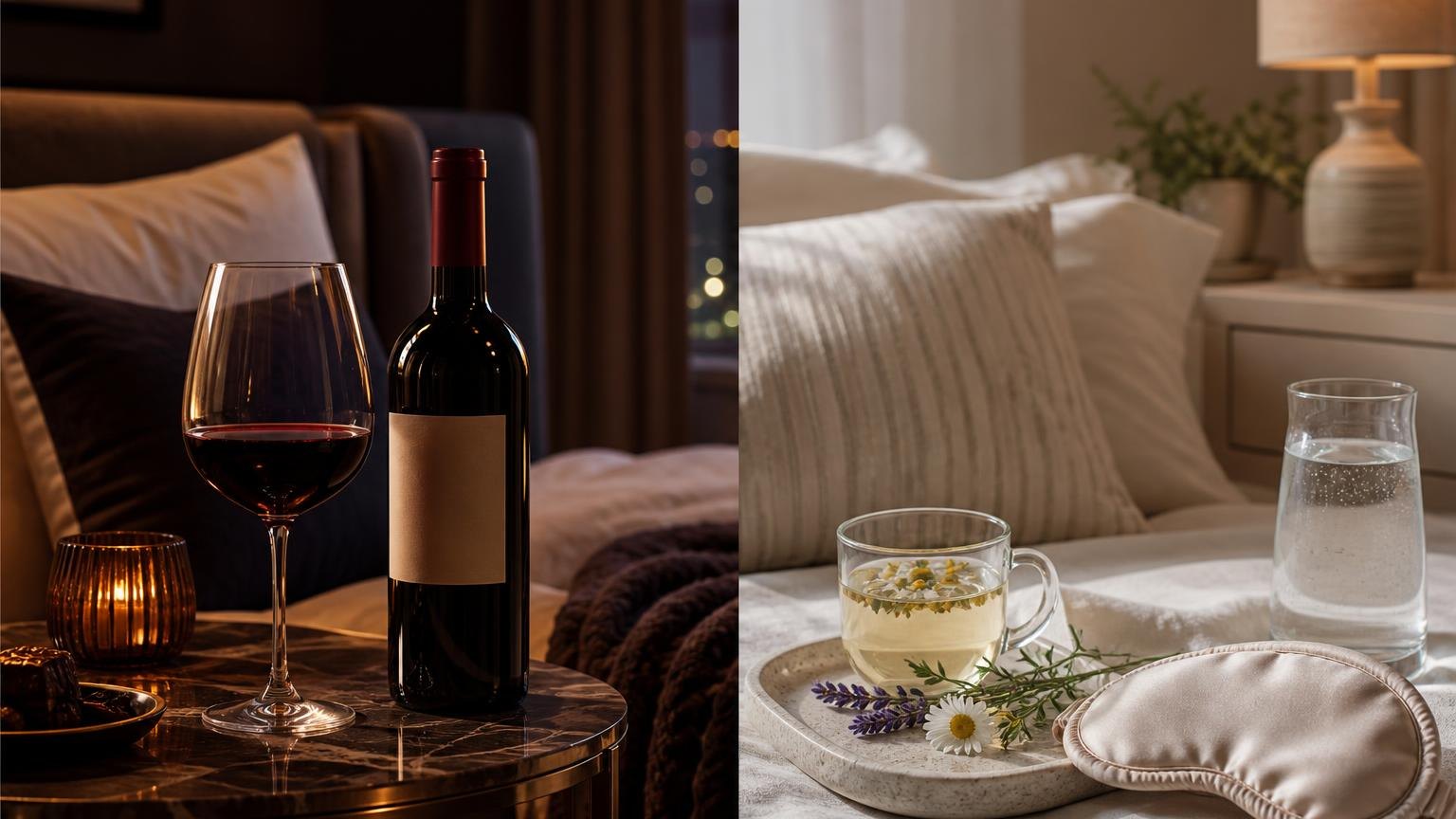
Red wine can make you feel drowsy, but that is not the same as improving sleep. The biggest mistake is confusing faster sleep onset with better sleep quality, especially after more than one standard pour.
Research from the Sleep Foundation, NIAAA, and controlled sleep-lab studies shows alcohol commonly fragments sleep later in the night. It can reduce restorative REM sleep, worsen snoring, and increase awakenings as blood alcohol levels fall.
Myth: “A glass of red wine is a natural sleep aid”
Alcohol is a sedative, not a true sleep medicine. It may shorten the time it takes to fall asleep, but it disrupts sleep architecture, particularly in the second half of the night.
| Claim | What studies show |
| One drink helps me sleep better | It may reduce sleep latency, but even low doses can increase nighttime awakenings in sensitive sleepers. |
| Two drinks are still moderate | For women, U.S. dietary guidance defines moderation as up to 1 drink per day; for men, up to 2. |
| Wine is gentler than liquor | A standard U.S. drink has about 14 grams of pure alcohol, whether from wine, beer, or spirits. |
| Red wine contains melatonin | Some wines contain trace melatonin, but amounts are far below typical supplemental doses of 0.5–5 mg. |
Myth: “Red wine is different because it has melatonin”
Red wine can contain tiny measurable amounts of melatonin, but not enough to act like a sleep supplement. The alcohol content is far more biologically significant than the trace melatonin.
A standard 5-ounce glass of wine at 12% alcohol counts as one drink in the United States. Many restaurant pours are 6 to 9 ounces, meaning one “glass” may equal 1.2 to 1.8 standard drinks.
Common mistakes people make
- Drinking too close to bedtime: Alcohol peaks quickly, but its breakdown can trigger lighter sleep, sweating, vivid dreams, or waking around 2–4 a.m.
- Using wine to manage stress nightly: Repeated use can build tolerance, so the same pour feels less effective and intake may creep upward.
- Ignoring sleep apnea risk: Alcohol relaxes upper-airway muscles and can worsen snoring and obstructive sleep apnea, according to clinical sleep medicine guidance.
- Counting “just one glass” inaccurately: A large 9-ounce pour of 14.5% ABV red wine contains about 1.7 standard drinks.
- Mixing wine with sleep medication: Combining alcohol with sedatives, antihistamines, benzodiazepines, or some antidepressants can increase dangerous next-day impairment.
The practical takeaway: if you drink red wine, separate it from bedtime by at least 3 hours and keep the pour measured. If insomnia is frequent, wine is more likely to mask the problem than solve it.
Questions People Ask Most
Does red wine actually help you fall asleep?
Red wine can make some people feel sleepy because alcohol is a central nervous system depressant, and a 5-ounce glass of red wine typically contains about 12–15% alcohol by volume.
That drowsy effect is not the same as healthy sleep, because alcohol changes normal sleep architecture after it is metabolized.
Why do I wake up in the middle of the night after drinking red wine?
Alcohol commonly reduces sleep quality in the second half of the night, when blood alcohol levels fall and the body rebounds into lighter, more fragmented sleep.
Research reviewed by sleep-medicine groups has found that alcohol can suppress REM sleep early in the night and increase awakenings later.
Is red wine better for sleep than white wine or liquor?
There is no strong evidence that red wine improves sleep more than other alcoholic drinks; the main sleep-disrupting factor is ethanol dose, not wine color.
A standard drink in the U.S. is 14 grams of pure alcohol, roughly equal to 5 ounces of wine, 12 ounces of beer, or 1.5 ounces of 80-proof spirits.
Can the melatonin in red wine help you sleep?
Some red wines contain trace amounts of melatonin, but the levels are tiny compared with common supplemental doses such as 1–5 milligrams.
Any potential melatonin effect is outweighed for most people by alcohol’s known tendency to fragment sleep and reduce restorative REM sleep.
How long before bed should I stop drinking red wine?
A practical rule is to finish alcohol at least 3–4 hours before bedtime, especially if you notice nighttime waking, snoring, reflux, or next-day grogginess.
The body metabolizes roughly one standard drink per hour on average, but sleep effects can last beyond the time it takes to feel sober.
Related Reading
- Can I Use Red Wine Vinegar In Pasta Sauce?
- How Many Glasses Of Red Wine Before Driving?
- Can You Use Red Wine Vinegar To Trap Gnats?
- Can I Drink Red Wine On My Fasting Diet?
- Does Red Wine Contain Potassium?
- Can I Use Red Wine Vinegar Instead Of Shaoxing Wine?
- 11 Must-Know Facts: Can You Store Red Wine Too Cold?
- All Alcohol Guides
- National Institute on Alcohol Abuse and Alcoholism (2024)
- Ebrahim et al., Alcohol and Sleep I: Effects on Normal Sleep (2013)
- Roehrs and Roth, Sleep, Sleepiness, and Alcohol Use (2001)
- Thakkar et al., Alcohol Disrupts Sleep Homeostasis (2015)
- Dietary Guidelines for Americans, 2020–2025 (2020)
- U.S. Food and Drug Administration, Drugs and Alcohol Don’t Mix (2023)
- Sleep Foundation, Alcohol and Sleep (2024)