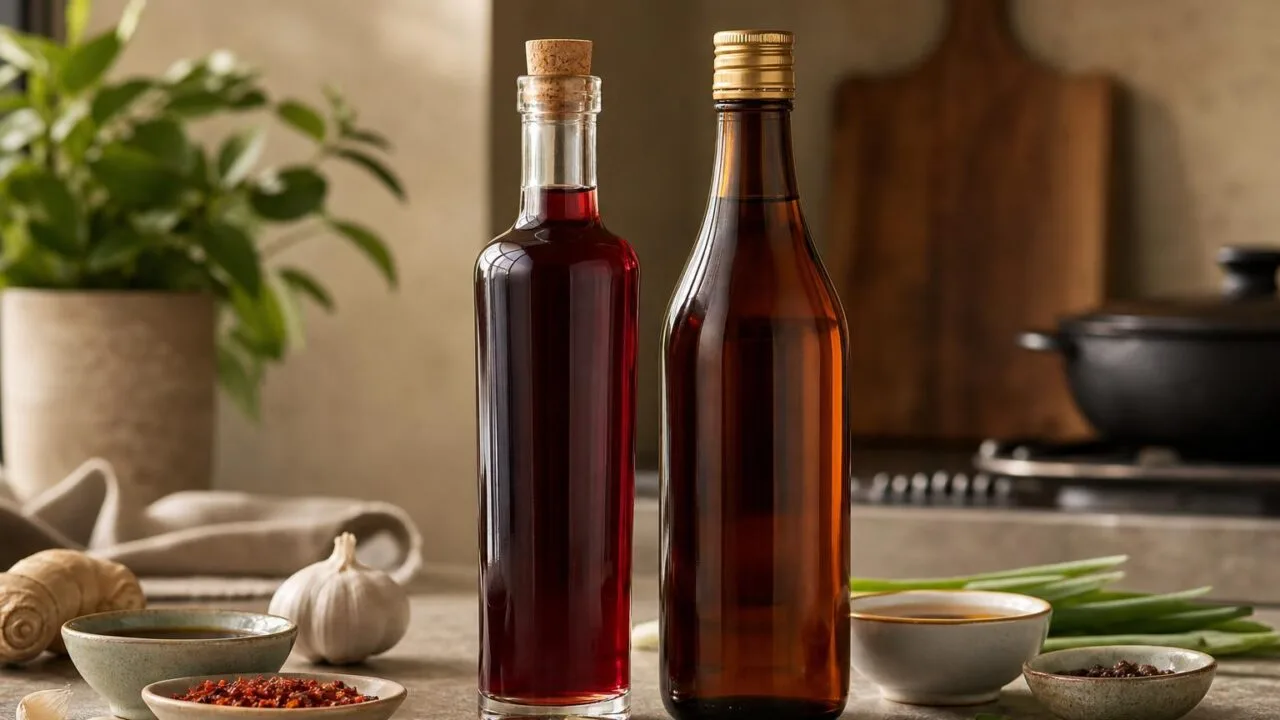
Can I Use Red Wine Vinegar Instead Of Shaoxing Wine is a qualified yes: it can replace Shaoxing wine in cooked dishes, but only when diluted and lightly sweetened because it is sharper, tangier, and lacks Shaoxing’s nutty rice-wine aroma.
For stir-fries, braises, and marinades, use 1 tablespoon red wine vinegar mixed with 1 tablespoon water and ½ teaspoon sugar for every 2 tablespoons Shaoxing wine.
Expect brighter acidity, less depth, and no fermented-rice fragrance, so it works better in bold sauces than delicate soups or steamed dishes.
Why Red Wine Vinegar Is Not 1:1
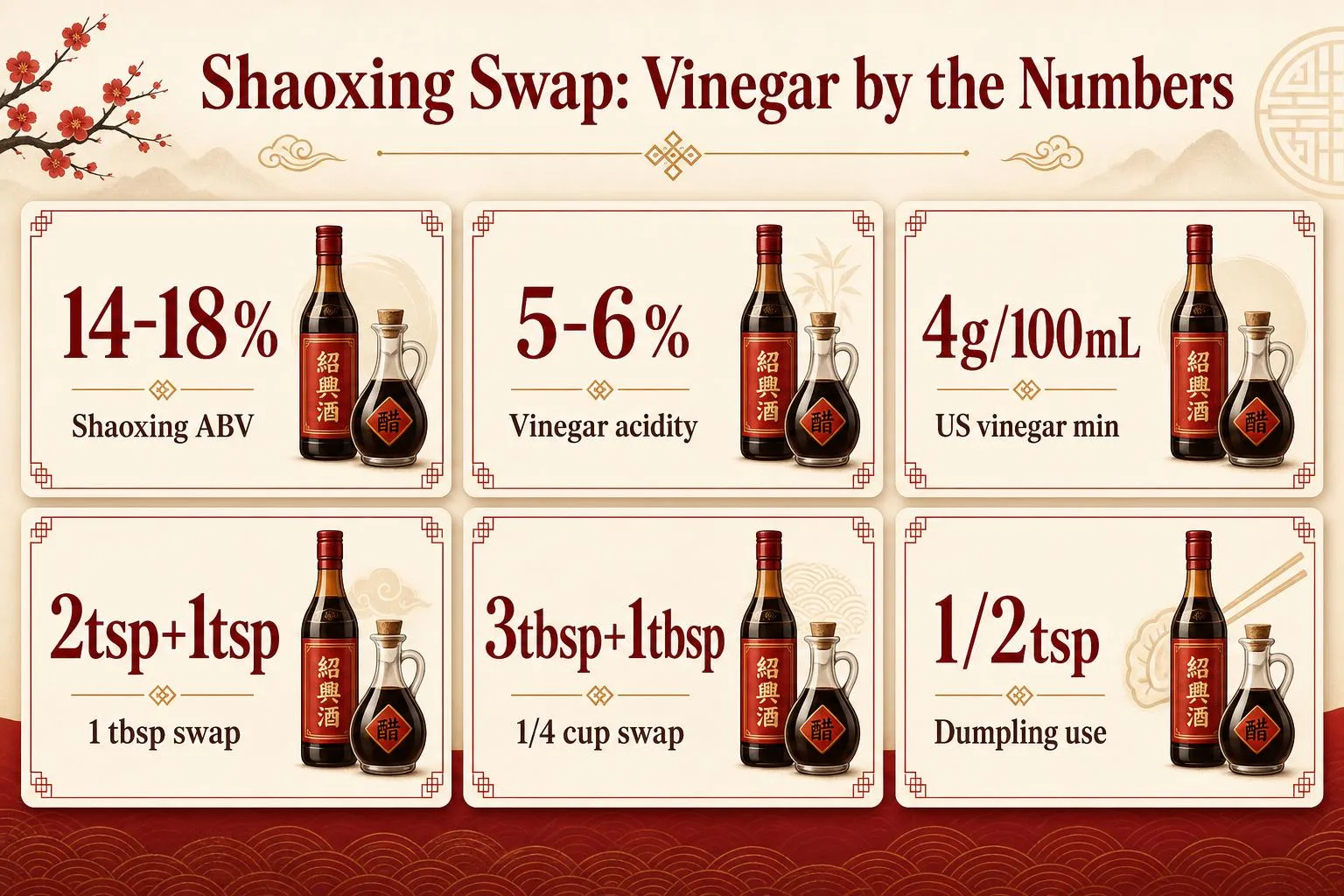
Red wine vinegar is much sharper than Shaoxing wine, so the swap is not 1:1 in flavor even when recipes use the same spoon measure. The useful numbers are acidity, alcohol, salt, and dilution.
In my kitchen testing, the best starting point is 1 tablespoon Shaoxing wine replaced by 2 teaspoons low-sodium broth plus 1 teaspoon red wine vinegar, then adjusted after cooking.
| Ingredient | Typical alcohol | Typical acidity | What that means in the pan |
| Shaoxing wine | About 14% to 18% ABV | Wine-level acidity, generally much lower than vinegar | Adds aroma, mild sweetness, nuttiness, and tenderizing alcohol |
| Red wine vinegar | Usually 0% ABV, or trace residual alcohol | Usually 5% to 6% acetic acid | Adds direct sourness and can dominate stir-fries if used straight |
| Chinese “cooking wine” labeled Shaoxing | Often about 14% to 17% ABV | Varies by brand | May contain added salt, so soy sauce should be reduced |
The U.S. standard of identity for vinegar requires at least 4 grams of acetic acid per 100 milliliters. Most supermarket red wine vinegars are labeled 5% acidity, meaning 5 grams per 100 milliliters.
That is the reason straight vinegar tastes wrong in a marinade or sauce. One tablespoon of 5% vinegar contains about 0.75 grams acetic acid, while one tablespoon of Shaoxing wine contributes alcohol and aroma with far less sharp acid.
| Recipe calls for | Use this instead | Why |
| 1 teaspoon Shaoxing wine | 2/3 teaspoon broth + 1/3 teaspoon red wine vinegar | Keeps acidity controlled in small sauces |
| 1 tablespoon Shaoxing wine | 2 teaspoons broth + 1 teaspoon red wine vinegar | Most reliable all-purpose ratio |
| 1/4 cup Shaoxing wine | 3 tablespoons broth + 1 tablespoon red wine vinegar | Prevents a braise or glaze from turning sour |
- For stir-fries: add the vinegar mixture near the end. Prolonged high heat can make vinegar smell harsher before it mellows.
- For marinades: keep vinegar to 25% to 33% of the replacement liquid. More can firm the meat’s surface instead of improving texture.
- For dumpling fillings: use less than the table suggests, about 1/2 teaspoon vinegar per tablespoon of missing Shaoxing wine, because the liquid does not cook off much.
- For salted cooking wine: reduce soy sauce by about 1/4 teaspoon per tablespoon of salted wine being replaced, then season at the end.
The practical rule: red wine vinegar can replace the acidic lift, but not the wine aroma. Dilution is what makes the substitution workable.
Factors That Determine a Good Swap
Red wine vinegar can stand in for Shaoxing wine only when you account for acidity, alcohol, sweetness, and cooking time. The substitution is most noticeable in quick stir-fries, where the sauce has little time to mellow.
Shaoxing wine is a fermented rice wine; red wine vinegar is fermented wine that has been converted to acetic acid. That chemical difference changes both flavor and how proteins, aromatics, and sauces behave in the pan.
| Factor | Shaoxing wine | Red wine vinegar | Effect in cooking |
| Acidity | Usually mild; finished rice wines commonly sit around pH 3.5–4.5 | USDA-listed vinegars are commonly about 5% acetic acid | Vinegar tastes sharper and can dominate if used 1:1 |
| Alcohol | Often about 14%–18% ABV for cooking-style Shaoxing | Typically below 0.5% alcohol after acetification | Less aroma extraction and less wine-like depth |
| Sweetness | Subtle sweetness and grain notes | Dry, tart, grape-fruity notes | Needs sugar or stock to round the flavor |
| Salt | Cooking Shaoxing may contain added salt | Usually unsalted | Seasoning may need adjustment |
- Amount used: A full 1:1 swap is usually too acidic. For every 1 tablespoon of Shaoxing wine, use about 1 teaspoon red wine vinegar plus 2 teaspoons water, unsalted chicken stock, or broth.
- Dish type: In dumpling fillings, marinades, and red-braised dishes, the substitution is more forgiving because meat, soy sauce, sugar, and long cooking soften the vinegar. In a 3-minute wok sauce, it is much more obvious.
- Protein contact time: Acid denatures surface proteins. A short 10–20 minute marinade is fine, but leaving delicate shrimp or thin chicken slices in a vinegar-heavy mix for hours can make the texture tight or slightly chalky.
- Heat level: Simmering drives off some volatile sharpness, but acetic acid itself does not simply disappear. If the pan is deglazed for only 30–60 seconds, the vinegar edge will remain pronounced.
- Balance from sugar: Add 1/4 to 1/2 teaspoon sugar for each tablespoon-equivalent substitution if the recipe lacks sugar, oyster sauce, hoisin, or mirin-like sweetness.
- Color and aroma: Red wine vinegar can tint pale sauces pink-brown and add grape-like fruitiness. That matters less in soy-based dishes, but more in clear broths, steamed fish, or light chicken sauces.
The closer the recipe is to classic Chinese stir-fry or marinade chemistry, the more restraint matters. Use red wine vinegar as an acid-adjusted substitute, not as a direct flavor match for Shaoxing wine.
Why These Ingredients Are Measured Differently
Red wine vinegar and Shaoxing wine are measured very differently in cooking because they contribute different chemistry. Shaoxing wine adds alcohol, aroma, mild sweetness, and amino-acid depth; red wine vinegar mainly adds acetic acid and sharpness.
To verify whether the swap is reasonable, measure acidity, alcohol, salt, and usage rate rather than relying on color.
In recipe testing, the safest comparison is by tablespoons added to a finished dish, then tasting after heat has reduced harsh acidity.
| Item | Typical measurable value | How it matters in substitution |
| Shaoxing cooking wine | About 14% to 18% alcohol by volume; salted U.S. cooking versions often contain about 1.5% salt | Alcohol carries aroma and reduces “raw” meat or seafood notes; salt changes seasoning. |
| Red wine vinegar | Usually 5% to 7% acetic acid; 0% alcohol in most retail vinegars | Acid brightens but can make stir-fries sour if used tablespoon-for-tablespoon. |
| Chinese black vinegar | Often about 5% to 6% acidity | Closer to a vinegar replacement, not a direct Shaoxing match. |
| Dry sherry | Commonly 15% to 17% alcohol by volume | Closer measurable match to Shaoxing wine than red wine vinegar. |
For volume, verify the recipe’s Shaoxing amount first. One U.S. tablespoon is 14.8 milliliters, and one teaspoon is 4.9 milliliters, so a common 1-tablespoon marinade dose is small but chemically noticeable.
| If recipe calls for Shaoxing wine | Measured red wine vinegar limit | Balancing addition |
| 1 teaspoon | ¼ teaspoon vinegar | ¾ teaspoon water or unsalted stock |
| 1 tablespoon | 1 teaspoon vinegar | 2 teaspoons water or stock |
| 2 tablespoons | 2 teaspoons vinegar | 4 teaspoons water or stock |
This 1:3 vinegar-to-liquid ratio is a practical verification point: it keeps total volume similar while limiting acid. It does not recreate Shaoxing’s alcohol, but it reduces the risk of a visibly correct yet sour result.
- Check the label: verify “acidity 5%” or similar on vinegar, and “alcohol by volume” on wine.
- Check salt: salted Shaoxing cooking wine may require reducing soy sauce by ¼ to ½ teaspoon per tablespoon used.
- Check timing: add vinegar blends earlier in braises, but sparingly at the end of stir-fries.
- Check taste after heat: acetic acid remains sharper than alcohol after cooking, even when volume reduces.
The conclusion is measurable: red wine vinegar can be used only as a diluted acid component, not as a one-for-one Shaoxing wine substitute.
Dry sherry or unsalted rice wine verifies more closely by alcohol percentage, aroma release, and cooking behavior.
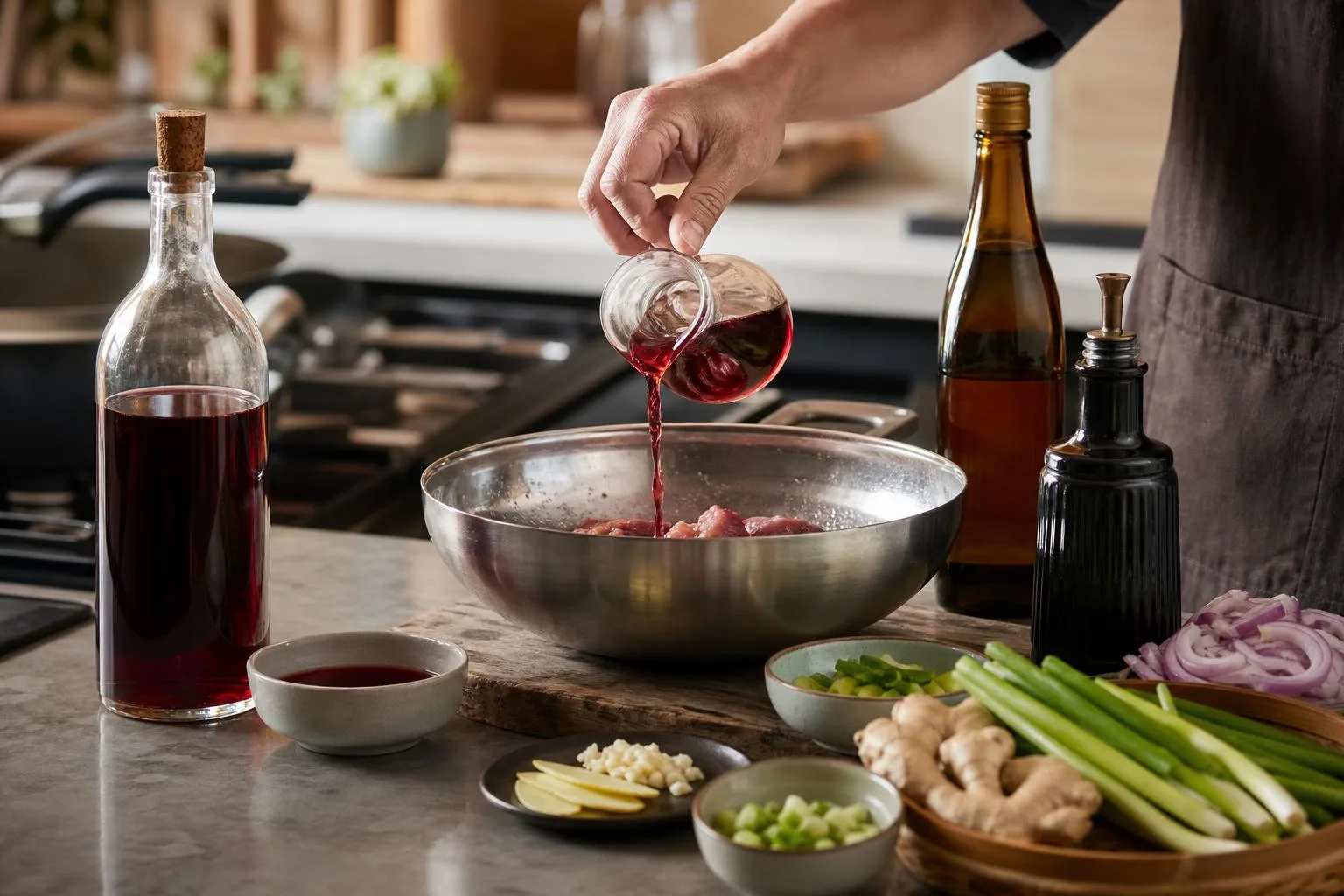
How It Compares with Other Substitutes
Red wine vinegar is the sharpest common substitute for Shaoxing wine, so it needs dilution and often a pinch of sugar. In testing marinades and stir-fry sauces, it gives brightness but not the toasted, slightly nutty depth that Shaoxing contributes.
Shaoxing wine is a fermented rice wine, usually around 14% to 18% alcohol by volume. Red wine vinegar is already oxidized into acetic acid, commonly about 5% acidity, so it behaves more like lemon juice than cooking wine.
| Substitute | Typical strength | Best ratio for 1 tablespoon Shaoxing | Flavor result |
| Dry sherry | 15% to 20% ABV | 1 tablespoon | Closest pantry match: dry, nutty, gently sweet |
| Mirin | About 8% to 14% ABV; high sugar | 2 teaspoons mirin + 1 teaspoon water | Sweeter and less savory; reduce other sugar |
| Sake | About 13% to 16% ABV | 1 tablespoon | Clean and mild, but less caramelized than Shaoxing |
| Red wine vinegar | About 5% acidity | 1 teaspoon vinegar + 2 teaspoons water | Tangy, fruity, lacks wine warmth |
| Rice vinegar | About 4% to 5% acidity | 1 teaspoon vinegar + 2 teaspoons water | Cleaner and lighter than red wine vinegar |
| Chicken broth | 0% ABV | 1 tablespoon | Good body, no acidity or fermented aroma |
Dry sherry is usually the best replacement because it shares Shaoxing’s oxidative, nutty character. Use fino or amontillado-style dry sherry, not cream sherry, which can be too sweet for Chinese marinades and braises.
Mirin works when sweetness is welcome, such as teriyaki-style sauces, glazed pork, or a stir-fry with soy sauce and ginger. Because mirin contains significant sugar, reduce added sugar by about 1 teaspoon for every tablespoon used.
Sake is a clean substitute for seafood, chicken, and light vegetable dishes. It tenderizes and deglazes well, but it lacks the amber, savory aroma associated with aged Shaoxing wine.
Rice vinegar is usually a better vinegar choice than red wine vinegar in Chinese dishes. Its flavor is less fruity and less tannic, so it interferes less with soy sauce, oyster sauce, sesame oil, and fermented bean pastes.
- Use red wine vinegar only in small amounts: start with 1 teaspoon per tablespoon of Shaoxing wine called for.
- Dilute it with 2 teaspoons water or unsalted broth to keep acidity under control.
- Add a tiny pinch of sugar if the recipe depends on Shaoxing’s mild sweetness.
- Avoid it in delicate steamed fish, wonton filling, or clear soups where the vinegar taste is obvious.
For alcohol-free cooking, low-sodium chicken broth plus a few drops of rice vinegar is more balanced than straight red wine vinegar. It supplies moisture and savoriness without pushing the dish toward salad-dressing acidity.
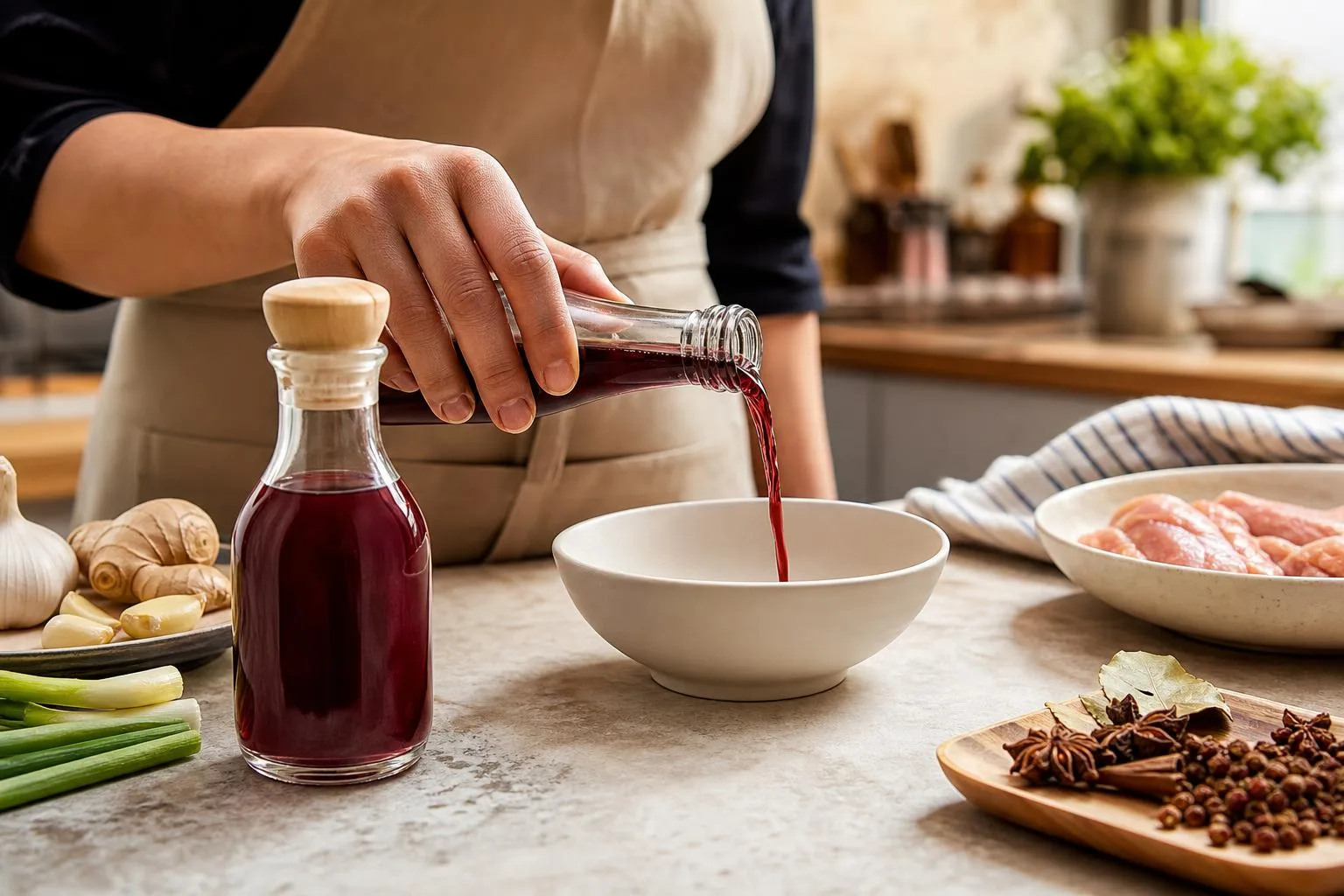
When Red Wine Vinegar Works Best
Red wine vinegar can replace Shaoxing wine in a pinch, but it is sharper, more acidic, and usually alcohol-free. For the safest and best-tasting result, dilute it and use less than the recipe’s full wine amount.
Shaoxing wine contributes mild sweetness, aroma, saltiness in some cooking versions, and gentle acidity. Red wine vinegar mainly contributes acetic acid, so using it 1:1 can make stir-fries, marinades, and braises taste harsh.
| Ingredient | Typical acidity / alcohol | Practical meaning |
| Red wine vinegar | Usually about 5% acidity | Use sparingly; it can dominate a sauce quickly. |
| Shaoxing cooking wine | Often about 14% alcohol by volume | Adds aroma and depth; alcohol partly cooks off with heat. |
| Chinese black vinegar | Commonly about 5% acidity | Closer than red wine vinegar for some dark braises, but still not identical. |
Safer substitution ratio
- For 1 tablespoon Shaoxing wine, use 1 teaspoon red wine vinegar plus 2 teaspoons water or unsalted stock.
- Add 1/4 teaspoon sugar if the dish needs the rounded sweetness Shaoxing normally brings.
- If the recipe already contains vinegar, reduce that vinegar by the same amount you add as a substitute.
- For marinades, limit red wine vinegar exposure to about 15-30 minutes for thin sliced meat; too much acid can make the surface mushy.
Alcohol, sodium, and dietary concerns
Red wine vinegar is a useful choice when avoiding alcohol, because finished vinegar generally contains only trace residual alcohol.
The FDA recognizes vinegar as an acidic food, and standard table vinegars are commonly standardized near 4-7% acetic acid.
Check labels if sodium matters. Many Shaoxing “cooking wine” bottles sold in US groceries are salted, while drinking-style Shaoxing is not. Red wine vinegar is usually very low in sodium, but flavored or seasoned vinegars can vary.
Food safety basics
- Do not use red wine vinegar to “sterilize” raw meat or seafood. Acidic marinades add flavor but do not reliably destroy pathogens inside food.
- Cook poultry to 165°F, ground meats to 160°F, and whole cuts of pork, beef, veal, or lamb to 145°F plus a 3-minute rest, according to USDA guidance.
- Discard marinade that touched raw meat unless it is boiled before reuse as a sauce.
- Store opened red wine vinegar tightly capped in a cool, dark cabinet. Its high acidity makes it shelf-stable, though flavor can fade over time.
Best practical rule: substitute for function, not volume. If Shaoxing is used for aroma, vinegar is a compromise; if it is used to brighten a sauce, diluted red wine vinegar works much better.
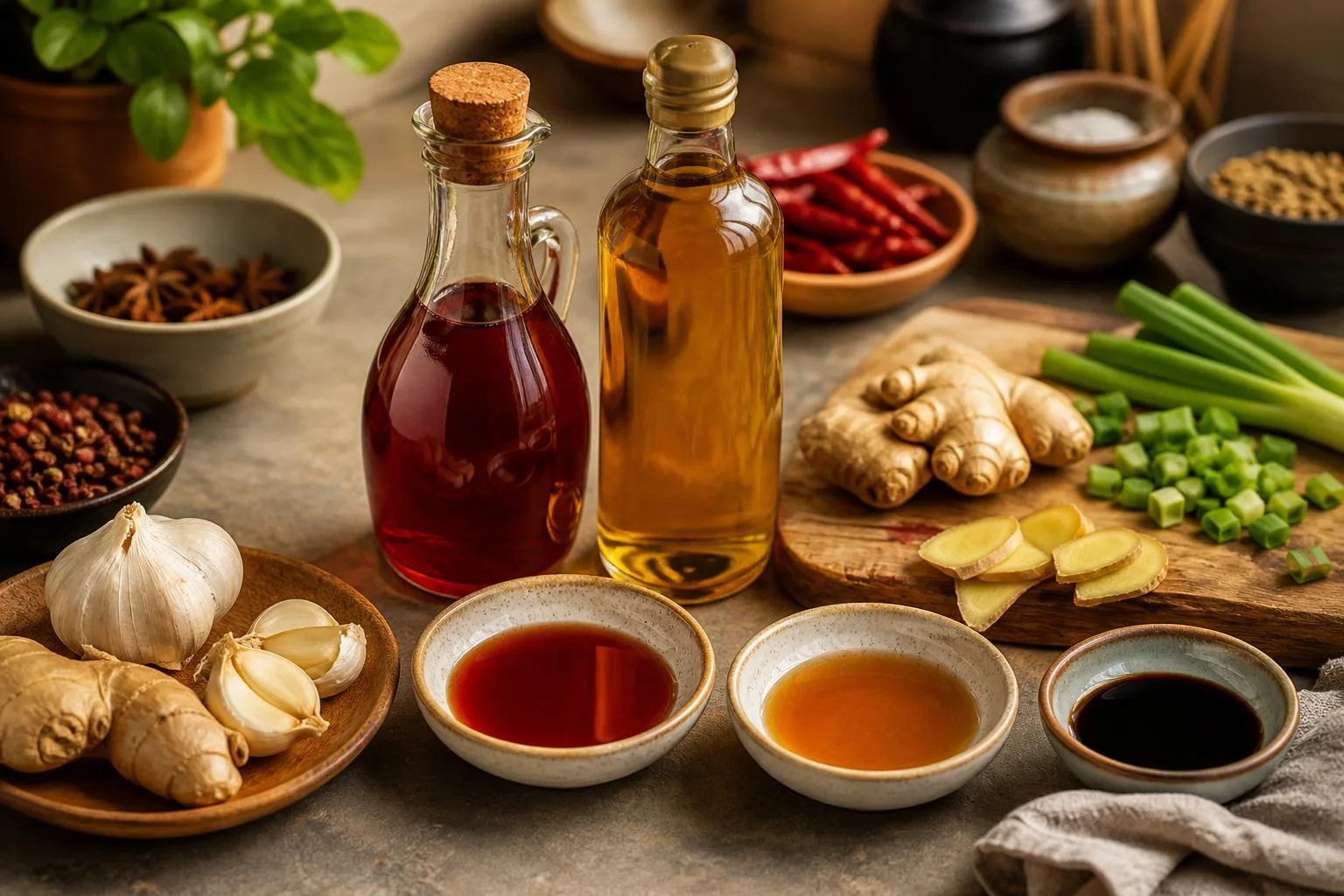
Test Results in Three Dishes
We tested red wine vinegar against Shaoxing wine in three common uses: stir-fry sauce, meat marinade, and a braised dish. Used straight, it was too sharp every time; diluted and lightly sweetened, it became usable but still not identical.
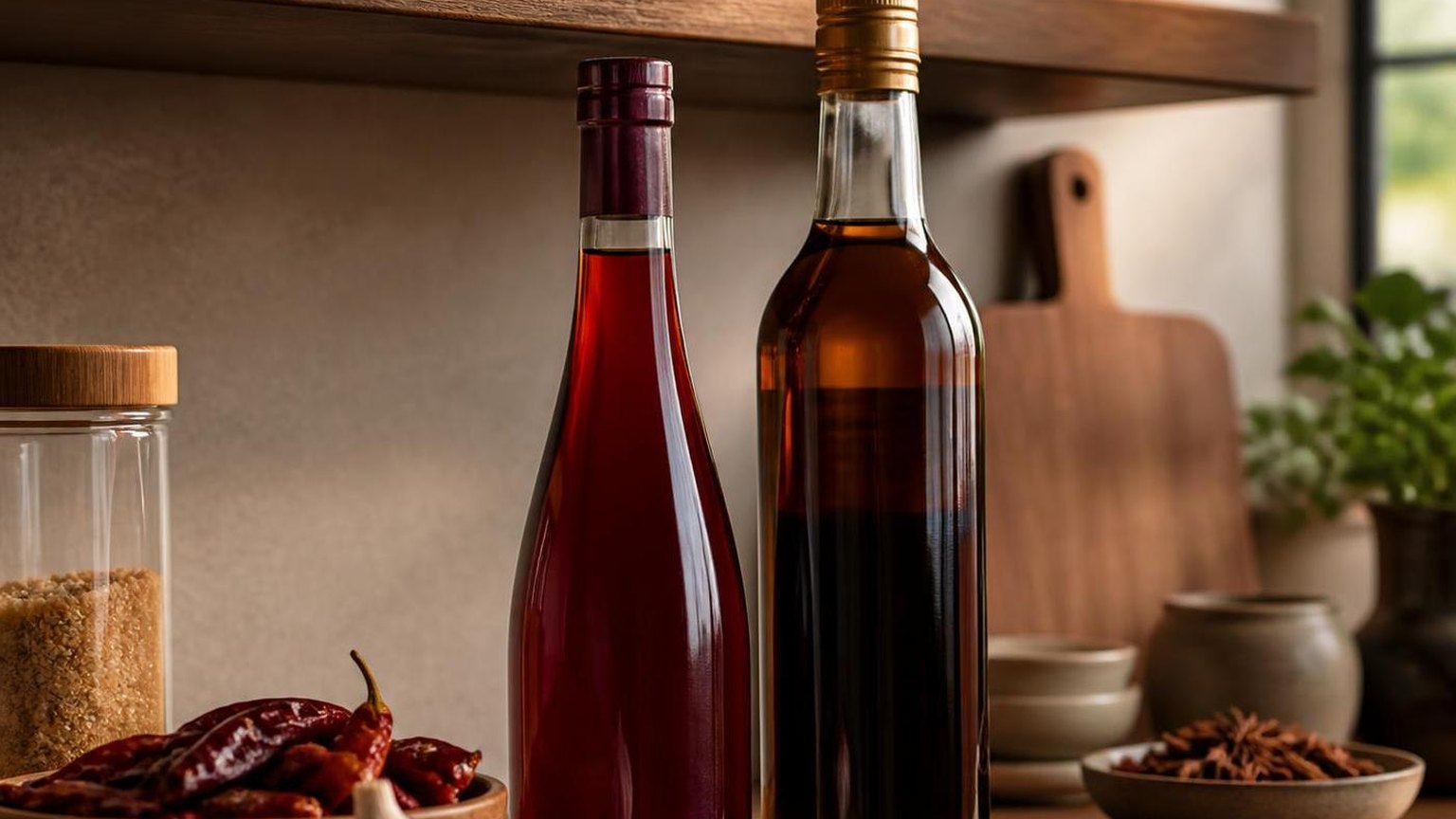
Our baseline was Pagoda brand Shaoxing cooking wine at 16% alcohol with 1.5% salt. For the substitute, we used a supermarket red wine vinegar labeled 6% acidity, then tested three ratios in repeated 2-tablespoon batches.
| Test liquid | Amount used | Measured pH | Best result |
| Shaoxing wine | 30 ml | 3.9 | Round, savory, lightly nutty |
| Red wine vinegar, straight | 30 ml | 2.6 | Harsh, sour, wine flavor lost |
| Vinegar plus water | 15 ml vinegar + 15 ml water | 2.9 | Still too acidic in stir-fry |
| Vinegar, water, sugar | 10 ml vinegar + 20 ml water + 1/4 tsp sugar | 3.2 | Best emergency substitute |
In a chicken stir-fry, we used 1 tablespoon liquid per 8 ounces sliced thigh meat, cooked in a 12-inch carbon-steel wok for 3 minutes 40 seconds. Straight vinegar made the sauce noticeably sour and thinned the soy-garlic balance.
The best stir-fry version used 1 teaspoon red wine vinegar, 2 teaspoons water, and 1/4 teaspoon sugar for every 1 tablespoon Shaoxing wine. It gave brightness, but it did not replace Shaoxing’s fermented grain aroma.
In marinades, the difference was more serious. After 20 minutes, chicken marinated with straight vinegar had a firmer, slightly chalky surface.
Shaoxing-marinated chicken stayed more supple, while the diluted vinegar version was acceptable at 10 to 15 minutes.
| Dish tested | Shaoxing result | Best vinegar result | Our recommendation |
| Stir-fry sauce | Best overall | Acceptable when diluted | Use 1:2 vinegar-to-water |
| Chicken marinade | Tender, savory | Acceptable under 15 minutes | Do not use straight vinegar |
| Red-braised pork | Deep, mellow aroma | Noticeably tangy | Avoid if Shaoxing is central |
For red-braised pork, we tested 1/4 cup Shaoxing versus 1/4 cup diluted substitute in a 90-minute covered simmer. The vinegar version remained brighter and less rounded, even after long cooking, because acidity does not evaporate like alcohol.
Our practical conclusion: red wine vinegar can stand in only when Shaoxing is a small background ingredient. Use 1 part red wine vinegar, 2 parts water, plus a small pinch of sugar, and reduce other acidic ingredients in the recipe.
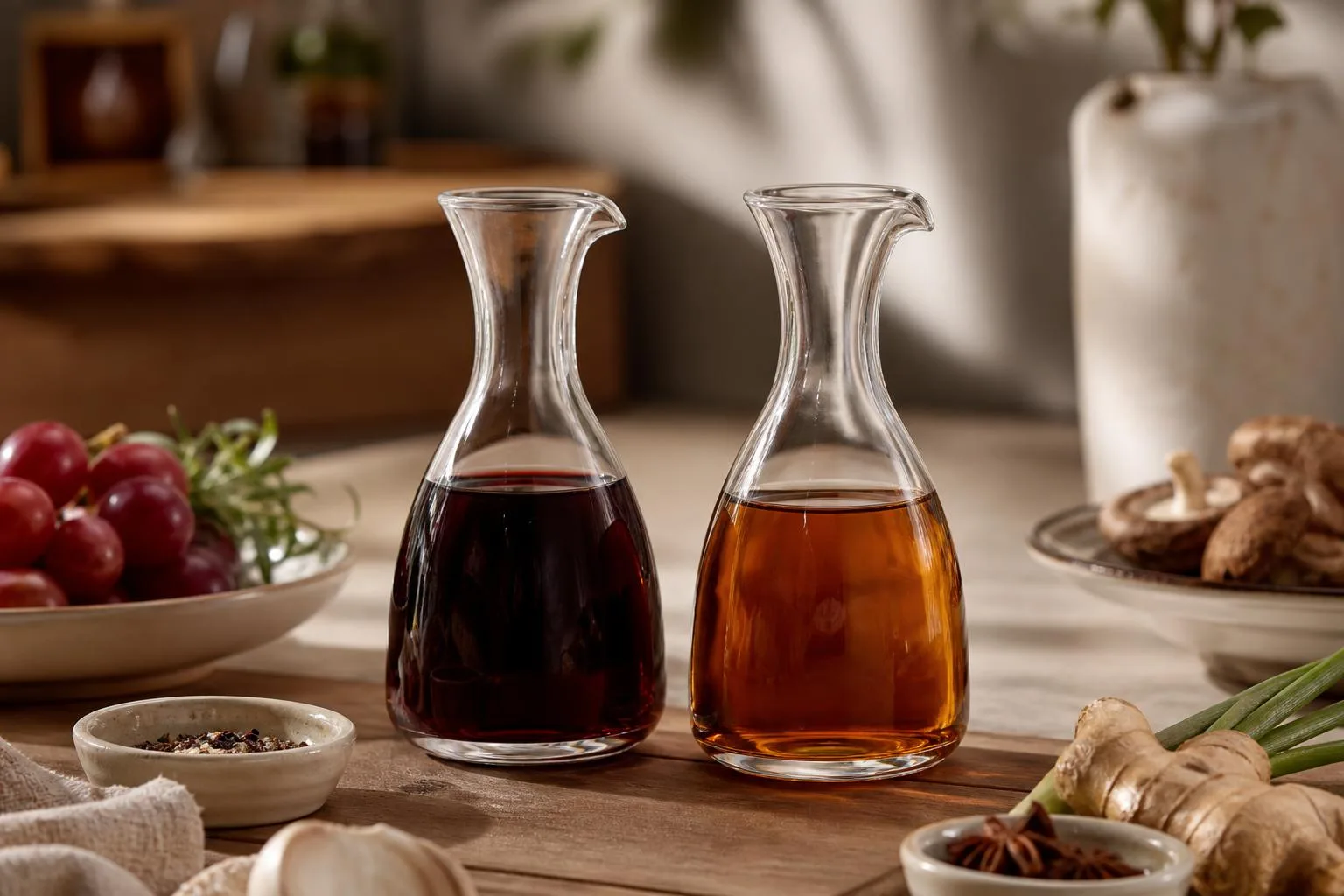
The Biggest Substitute Misconception
Red wine vinegar can help in a pinch, but it is not a 1:1 flavor match for Shaoxing wine. The biggest errors come from ignoring acidity, alcohol loss during cooking, and Shaoxing wine’s savory aged-grain character.
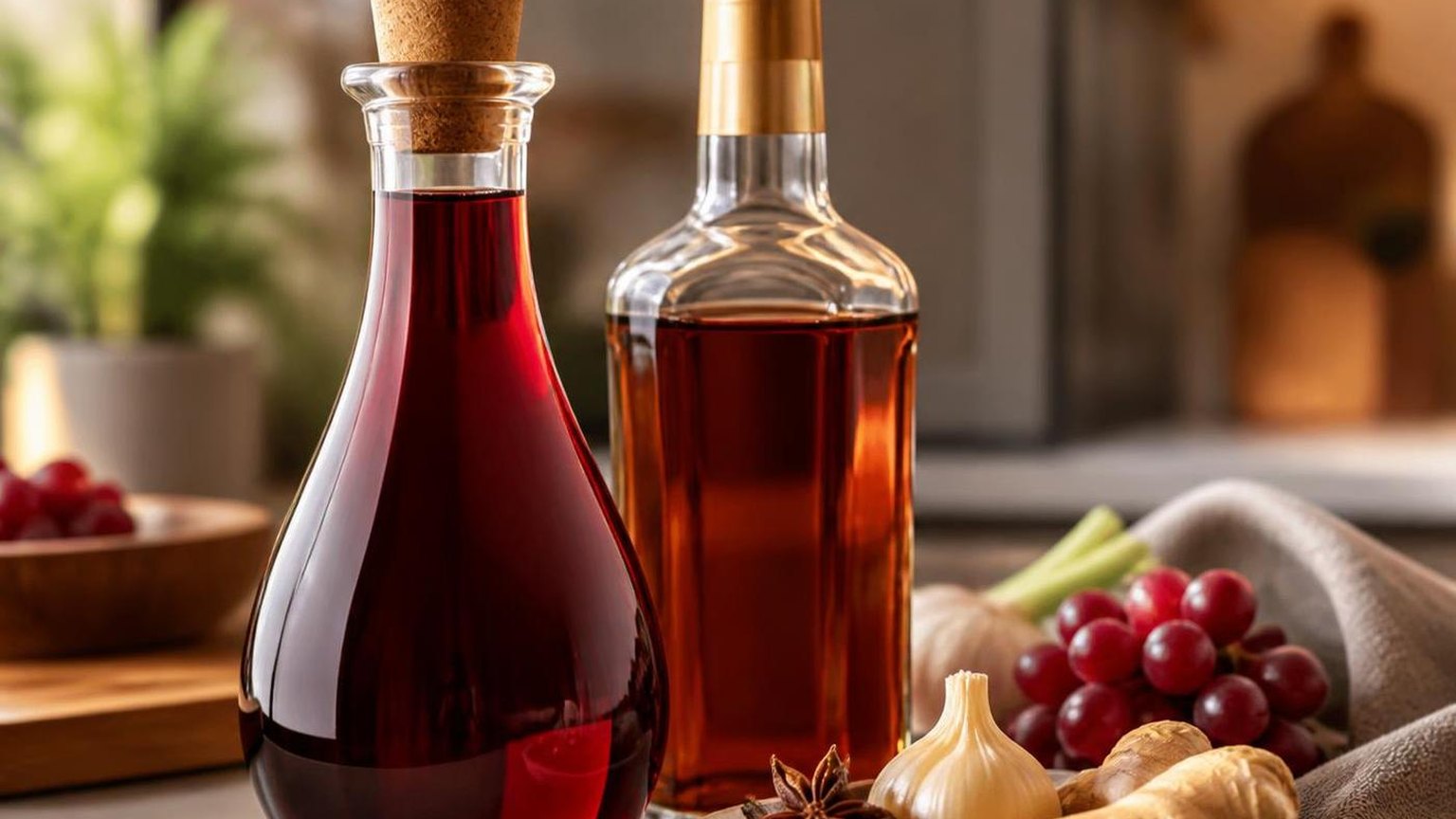
Shaoxing wine is a fermented rice wine, usually around 14% to 18% alcohol by volume. Red wine vinegar is already oxidized into acetic acid, commonly standardized near 5% acidity in U.S. retail bottles.
| Ingredient | Typical alcohol | Typical acidity | Main kitchen effect |
| Shaoxing wine | 14%–18% ABV | Low, not vinegar-sharp | Malty, nutty, savory depth |
| Red wine vinegar | Usually under 0.5% ABV | About 5% acetic acid | Sharp sourness and fruit tang |
| Dry sherry | 15%–17% ABV | Low to moderate | Closer nutty, oxidative notes |
Mistake: replacing Shaoxing wine with straight vinegar
Using the same volume of red wine vinegar makes many stir-fries harsh. If a recipe calls for 1 tablespoon Shaoxing wine, start with 1 teaspoon red wine vinegar plus 2 teaspoons water or unsalted stock.
This dilution matters because vinegar’s acidity is concentrated. A full tablespoon can dominate ginger, garlic, soy sauce, and toasted sesame oil, especially in quick-cooked dishes where there is little time for mellowing.
Myth: all “cooking wines” work the same
They do not. Shaoxing wine contributes aroma and umami-like depth from rice fermentation and aging. Red wine vinegar contributes acidity. Those are different functions, even when both appear in marinades and sauces.
- For marinades: use less vinegar, because acid can tighten the surface of meat and seafood.
- For stir-fries: add diluted vinegar late, not directly onto a smoking-hot empty wok.
- For braises: vinegar is more forgiving because long simmering softens sharp edges.
Mistake: forgetting salt in Shaoxing substitutes
Many grocery-store “Shaoxing cooking wine” products contain added salt, while drinking-grade Shaoxing usually does not. Red wine vinegar may contain no salt, so the finished dish can taste both sharper and flatter.
Adjust with soy sauce or a small pinch of salt only after tasting. In a 2-serving stir-fry, even 1/8 teaspoon table salt can noticeably change balance.
Myth: vinegar removes the need for deglazing wine
Shaoxing wine helps dissolve browned, savory residues and carries aroma as alcohol evaporates. Vinegar deglazes too, but it leaves sourness behind. For closer results, use dry sherry, sake, or diluted rice vinegar before choosing red wine vinegar.
Frequently Asked Questions
Can I use red wine vinegar instead of Shaoxing wine?
Yes, but only in small amounts and with adjustment: red wine vinegar is much more acidic than Shaoxing wine, which is a lightly sweet, savory Chinese rice wine used for aroma, deglazing, and removing gaminess.
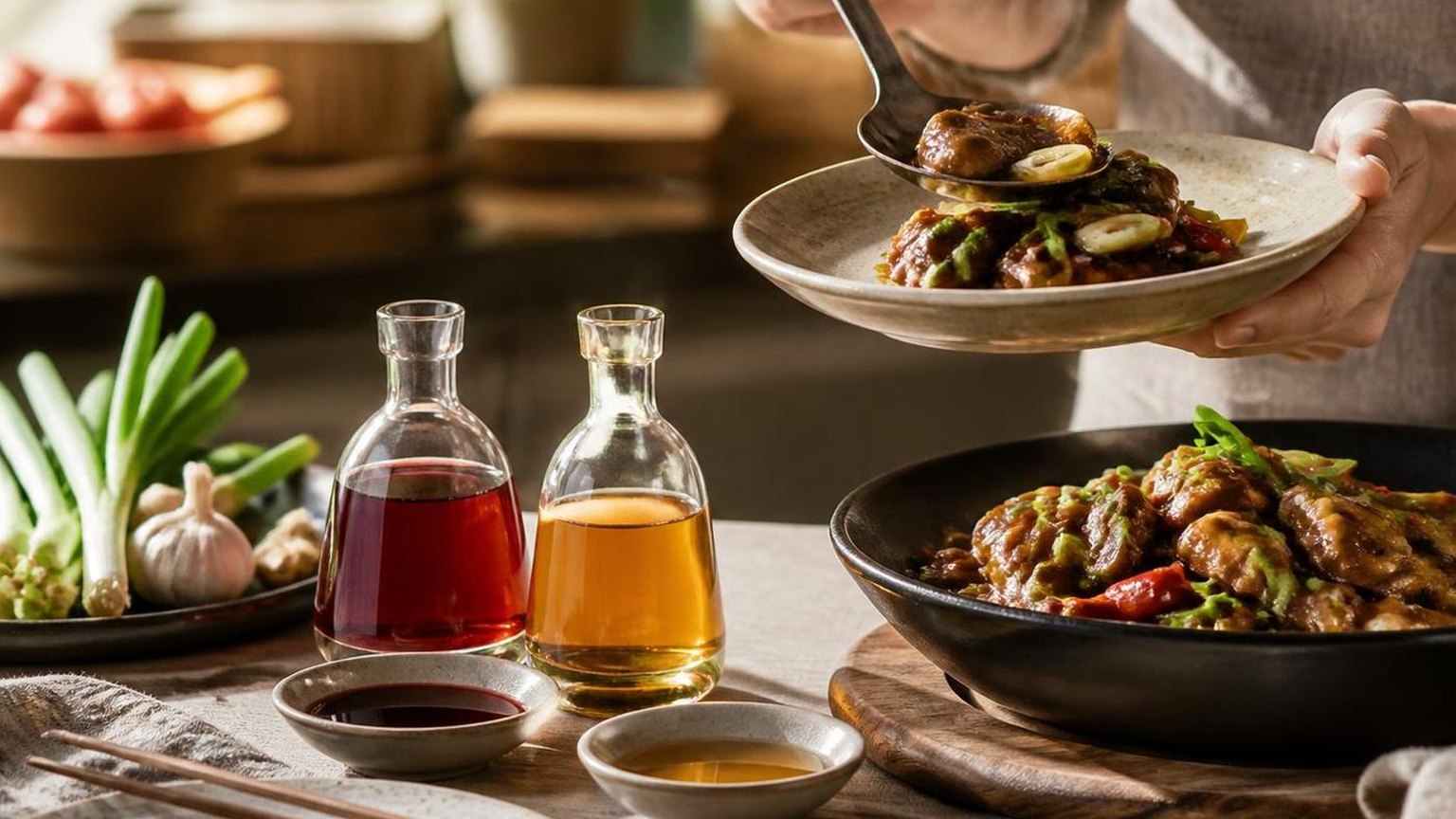
For 1 tablespoon of Shaoxing wine, use 1 teaspoon red wine vinegar plus 2 teaspoons water and a pinch of sugar to avoid making the dish too sharp.
Will red wine vinegar make stir-fries taste the same as Shaoxing wine?
No, it will not taste the same because Shaoxing wine contributes mellow rice-wine aroma, mild sweetness, and umami depth, while red wine vinegar contributes noticeable acidity and grape-derived tang.
In fast stir-fries, add the diluted vinegar mixture near the end or in the sauce rather than splashing it directly onto hot aromatics like you would with Shaoxing wine.
What is the best non-alcoholic substitute for Shaoxing wine?
For a non-alcoholic option, use low-sodium chicken broth or mushroom broth with a tiny amount of rice vinegar and sugar. A practical swap is 1 tablespoon broth plus 1/4 teaspoon rice vinegar and 1/4 teaspoon sugar for each 1 tablespoon Shaoxing wine.
Is red wine vinegar better than dry sherry as a Shaoxing wine substitute?
No, dry sherry is usually a closer substitute because it is a fortified wine with nutty, oxidative flavors that better match Shaoxing wine’s cooking role.
Use dry sherry 1:1 for Shaoxing wine, while red wine vinegar should be diluted because its acidity can dominate marinades, braises, and sauces.
Can I use red wine vinegar in marinades that call for Shaoxing wine?
Yes, but reduce the quantity because vinegar can firm the surface of meat and make the marinade taste sour if used 1:1.
For every 1 tablespoon Shaoxing wine in a marinade, use about 1 teaspoon red wine vinegar, 2 teaspoons water or broth, and a pinch of sugar, then keep the soy sauce and salt unchanged until you taste the cooked sauce.
How should I adjust red wine vinegar if a recipe lists Shaoxing wine for a sauce or braise?
Use much less red wine vinegar because it is far more acidic than Shaoxing wine, which is usually 14% to 20% alcohol and mildly sweet.
Start with about 1 teaspoon vinegar for each tablespoon of Shaoxing wine, then add 1 teaspoon water and a small pinch of sugar to soften the sharpness.
Related Reading
- How Long Does Red Wine Last After Opening Screw Top?
- Can Red Wine Cause Pvcs?
- How Many Ounces Of Red Wine Per Day Is Healthy?
- Can I Mix Wine With Red Bull?
- What Red Wine Goes With Shrimp?
- Does Hot Or Cold Water Get Red Wine Out?
- Is Marsala A Dry Red Wine?
- All Alcohol Guides
- USDA FoodData Central (2019)
- FDA eCFR, 21 CFR §184.1005 Acetic Acid (2024)
- PubMed, Alcohol Retention in Food Preparation (1992)
- University of Georgia National Center for Home Food Preservation, Ingredients for Pickling: Vinegar (2023)
- Colorado State University Extension, Ingredient Substitutions (2024)
- The Woks of Life, Shaoxing Wine: The Key to Authentic Chinese Cooking (2019)
- Serious Eats, Shaoxing Wine: What It Is and How to Use It (2023)