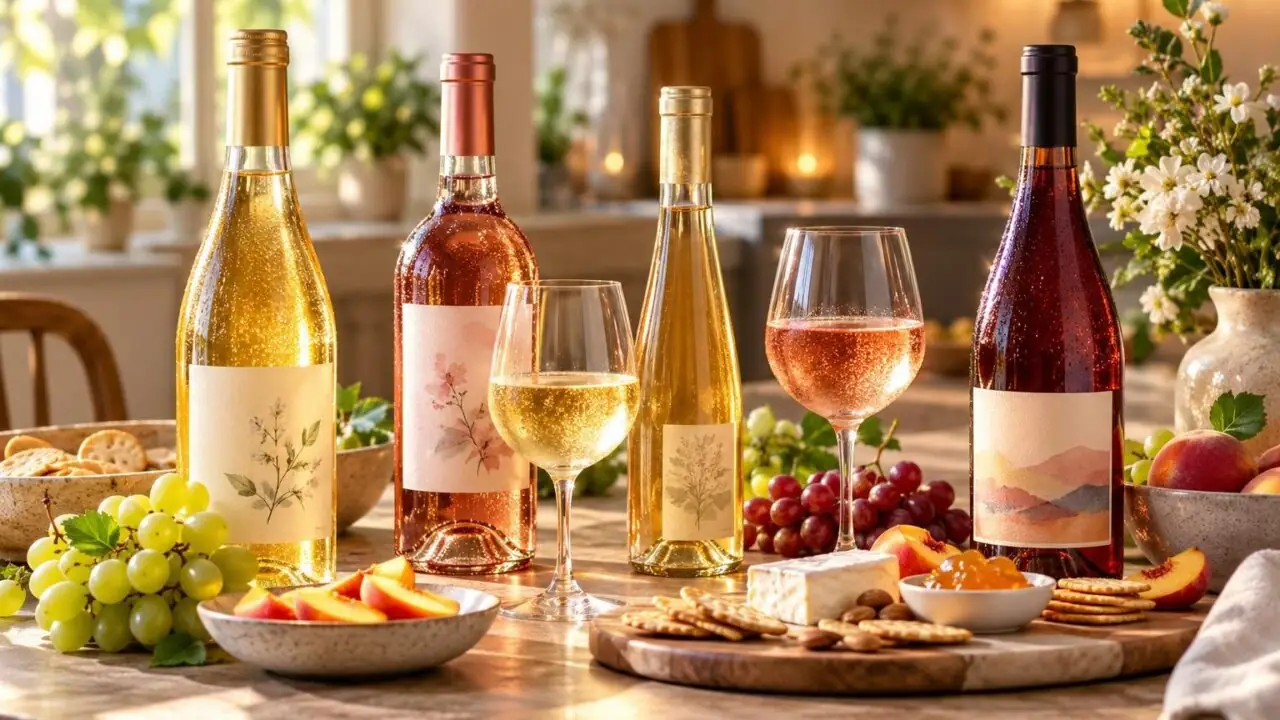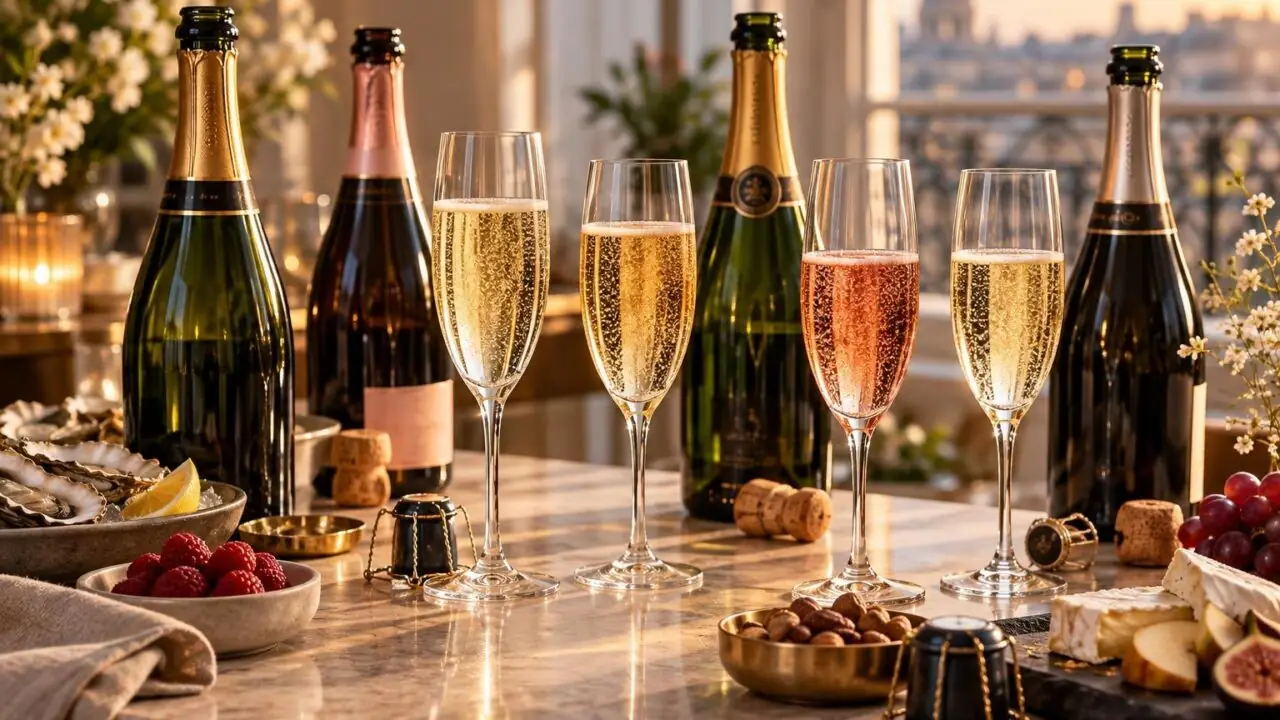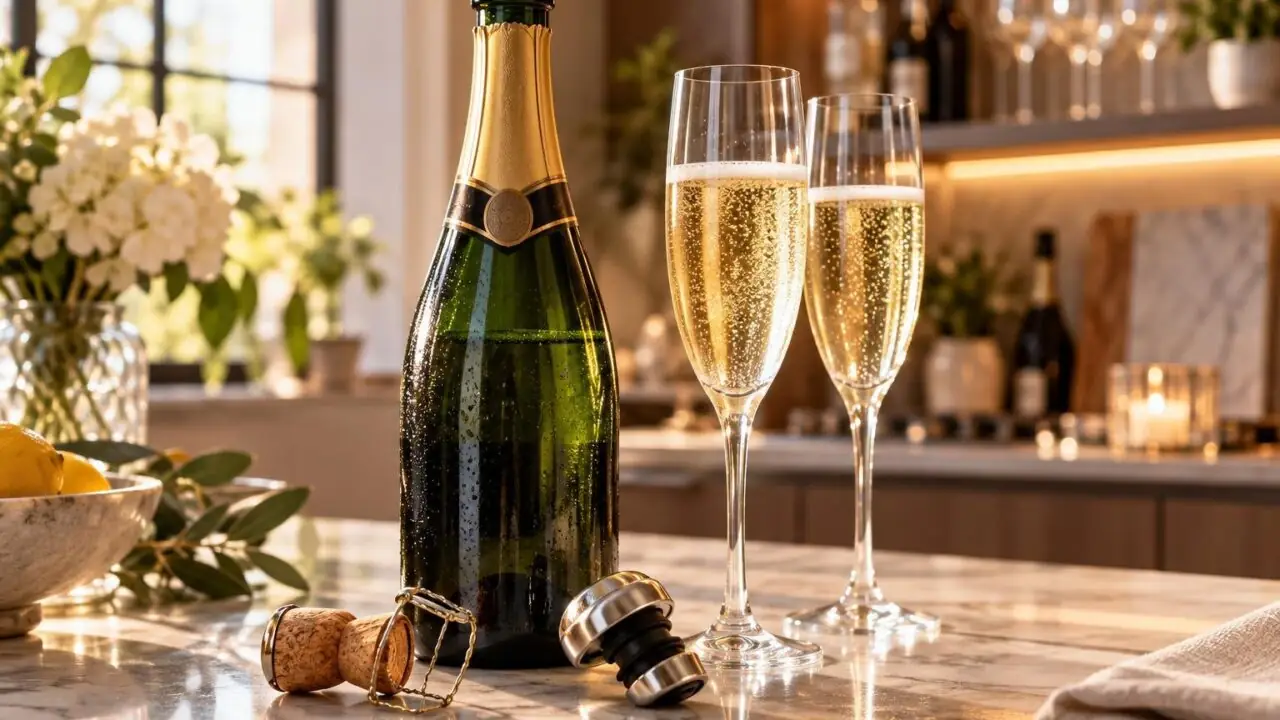
Does Sparkling Wine Have Alcohol? is answered plainly: sparkling wine is fermented grape wine with carbon dioxide bubbles and measurable ethyl alcohol.
Most bottles sold in the U.S.—Champagne, Prosecco, Cava, and domestic brut—fall in the familiar table-wine range, though labels vary by producer.
In practice, sparkling wine usually sits around 11%–13% ABV; Moscato d’Asti can be closer to 5%–6%, while some California sparkling wines reach about 14%.
The Alcohol and Tobacco Tax and Trade Bureau requires alcohol labeling within specific tolerances, so the bottle remains your best source.
As wine-bar staff, we treat pours accordingly: bubbles can feel light and celebratory, but a standard 5-ounce serving contains alcohol comparable to still wine at the same ABV.
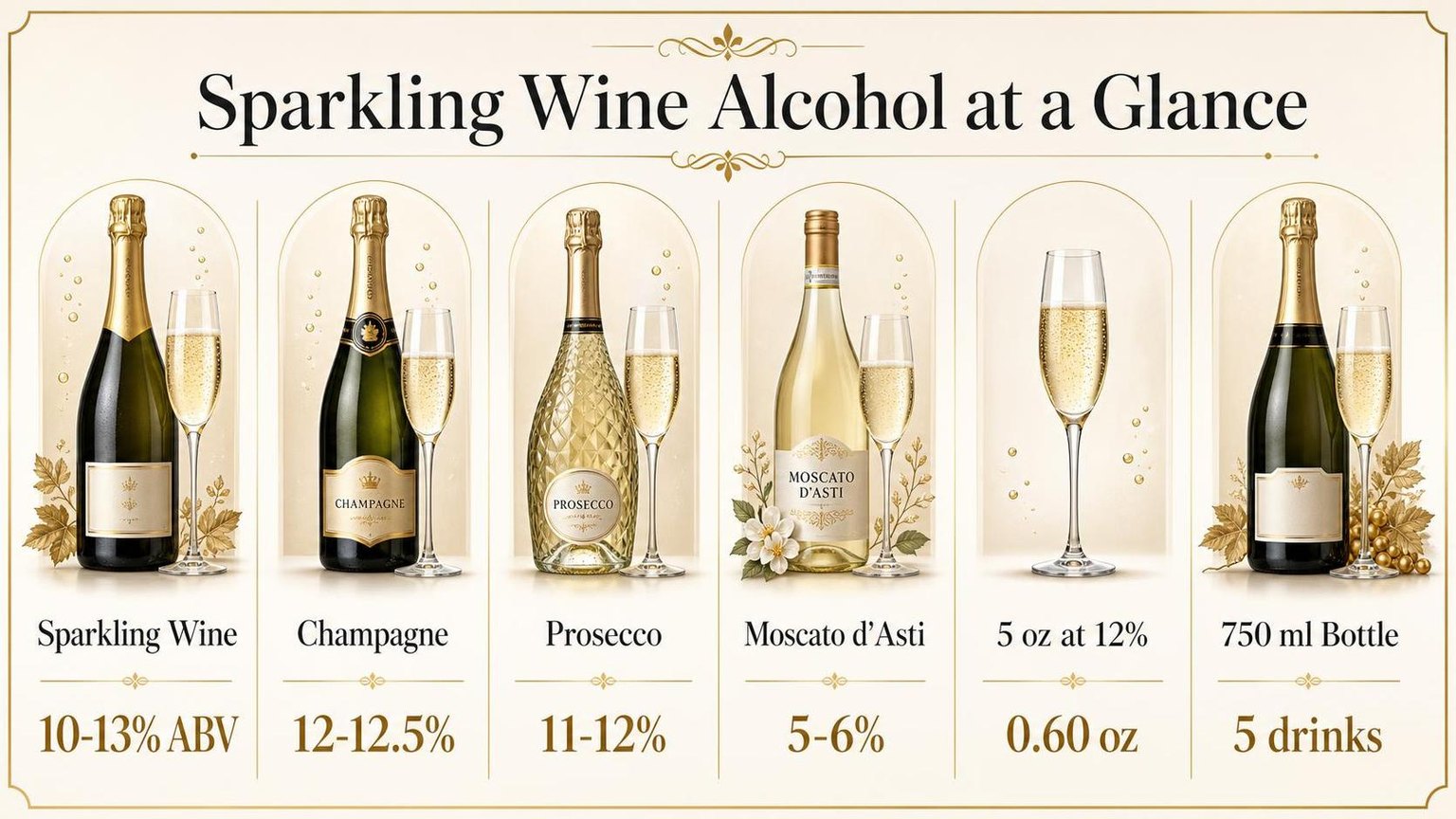
Typical Sparkling Wine Alcohol Content
Yes, most sparkling wine contains alcohol, and the typical range is about 10% to 13% ABV. That means a standard 5-ounce pour usually contains roughly the same alcohol as a regular glass of still wine.
In the United States, one “standard drink” contains 0.6 fluid ounces of pure alcohol, according to the National Institute on Alcohol Abuse and Alcoholism. For wine, that benchmark is commonly a 5-ounce serving at 12% ABV.
| Drink | Typical serving | Typical ABV | Pure alcohol |
| Sparkling wine | 5 oz | 12% | 0.60 oz |
| Champagne | 5 oz | 12% to 12.5% | 0.60 to 0.63 oz |
| Prosecco | 5 oz | 11% to 12% | 0.55 to 0.60 oz |
| Moscato d’Asti | 5 oz | About 5% to 6% | 0.25 to 0.30 oz |
| Non-alcoholic sparkling wine | 5 oz | 0.0% to 0.5% | 0.00 to 0.025 oz |
The formula is simple: serving size multiplied by ABV. A 5-ounce glass of 12% sparkling wine contains 0.6 ounces of pure alcohol. A 4-ounce pour at 12% contains 0.48 ounces.
Serving size matters because sparkling wine is often poured smaller than still wine, especially in flutes. Many restaurant pours are 4 to 5 ounces. A 750 ml bottle contains about 25.4 ounces, which equals about five 5-ounce servings.
| Bottle size | Total volume | Approximate 5 oz servings | At 12% ABV |
| Standard bottle | 750 ml / 25.4 oz | 5 | About 5 standard drinks |
| Magnum | 1.5 L / 50.7 oz | 10 | About 10 standard drinks |
| Split | 187 ml / 6.3 oz | 1.25 | About 1.25 standard drinks |
Carbonation does not create alcohol. Alcohol comes from fermentation, when yeast converts grape sugar into ethanol and carbon dioxide. Sparkling wine keeps some of that carbon dioxide dissolved, which creates bubbles.
- Champagne: Usually around 12% ABV, produced by the traditional method in France’s Champagne region.
- Prosecco: Commonly around 11% to 12% ABV, typically made with the tank method in Italy.
- Cava: Often around 11.5% to 12.5% ABV, usually traditional-method sparkling wine from Spain.
- Moscato d’Asti: Much lower, commonly 5% to 6% ABV, because fermentation is stopped early.
Label terms can help, but they do not replace the ABV statement. “Brut,” “Extra Dry,” and “Demi-Sec” describe sweetness, not alcohol strength. Always check the percentage printed on the bottle.
Factors That Change Sparkling Wine ABV
Sparkling wine almost always contains alcohol, but the exact amount depends on how it was fermented, sweetened, diluted, or dealcoholized.
Most traditional sparkling wines fall near 11% to 13% ABV, while low-alcohol and alcohol-removed versions can be far lower.
Fermentation and grape sugar
Alcohol comes from yeast converting grape sugar into ethanol and carbon dioxide. Roughly 17 grams of sugar per liter produces about 1% ABV during fermentation, so riper grapes generally allow higher alcohol before any stylistic choices are made.
| Factor | Typical effect on alcohol |
| Cool-climate grapes picked early | Often lower potential alcohol, commonly used for crisp sparkling bases |
| Fully ripe grapes | Higher sugar can produce higher ABV if fermented dry |
| Stopped fermentation | Leaves sugar unfermented, reducing final alcohol |
| Dealcoholization | Can reduce wine to 0.5% ABV or below, depending on labeling category |
Production method
Traditional-method sparkling wines, including Champagne, undergo a second fermentation in bottle. That second fermentation typically adds about 1.2% to 1.5% ABV because yeast consumes the tirage sugar added before bottling.
Tank-method wines, such as many Proseccos, also gain bubbles through secondary fermentation, but producers often aim for a lighter final profile. Many Prosecco DOC wines sit around 11% ABV, while Champagne commonly lands near 12% ABV.
| Style | Common ABV range |
| Champagne | About 12% to 12.5% |
| Cava | About 11.5% to 12.5% |
| Prosecco DOC | About 10.5% to 11.5% |
| Asti Spumante | About 6% to 9.5% |
| Moscato d’Asti | About 4.5% to 6.5% |
Sweetness is not the same as strength
A sweeter sparkling wine is not automatically higher in alcohol. Moscato d’Asti is sweet because fermentation is stopped early, preserving natural grape sugar while keeping alcohol low, often around 5% ABV.
By contrast, Brut Champagne tastes dry but usually has more alcohol because fermentation runs nearly complete. The dosage added after disgorgement adjusts sweetness, but it usually changes alcohol only slightly because the volume is small.
Serving size changes alcohol intake
ABV tells you concentration, but the pour size determines how much alcohol you actually drink. In the United States, one standard drink contains 0.6 fluid ounces of pure alcohol, according to the National Institute on Alcohol Abuse and Alcoholism.
| Pour | ABV | Approximate standard drinks |
| 5 oz sparkling wine | 12% | 1.0 |
| 5 oz Prosecco | 11% | 0.9 |
| 5 oz Moscato d’Asti | 5.5% | 0.46 |
| 8 oz sparkling wine | 12% | 1.6 |
- Check the label: U.S. wine labels state alcohol by volume, often with a permitted tolerance depending on ABV category.
- Do not judge by bubbles: Carbonation affects texture and aroma release, not the alcohol percentage itself.
- Watch large flutes: A generous 7 to 8 ounce pour can exceed one standard drink even at ordinary sparkling-wine strength.
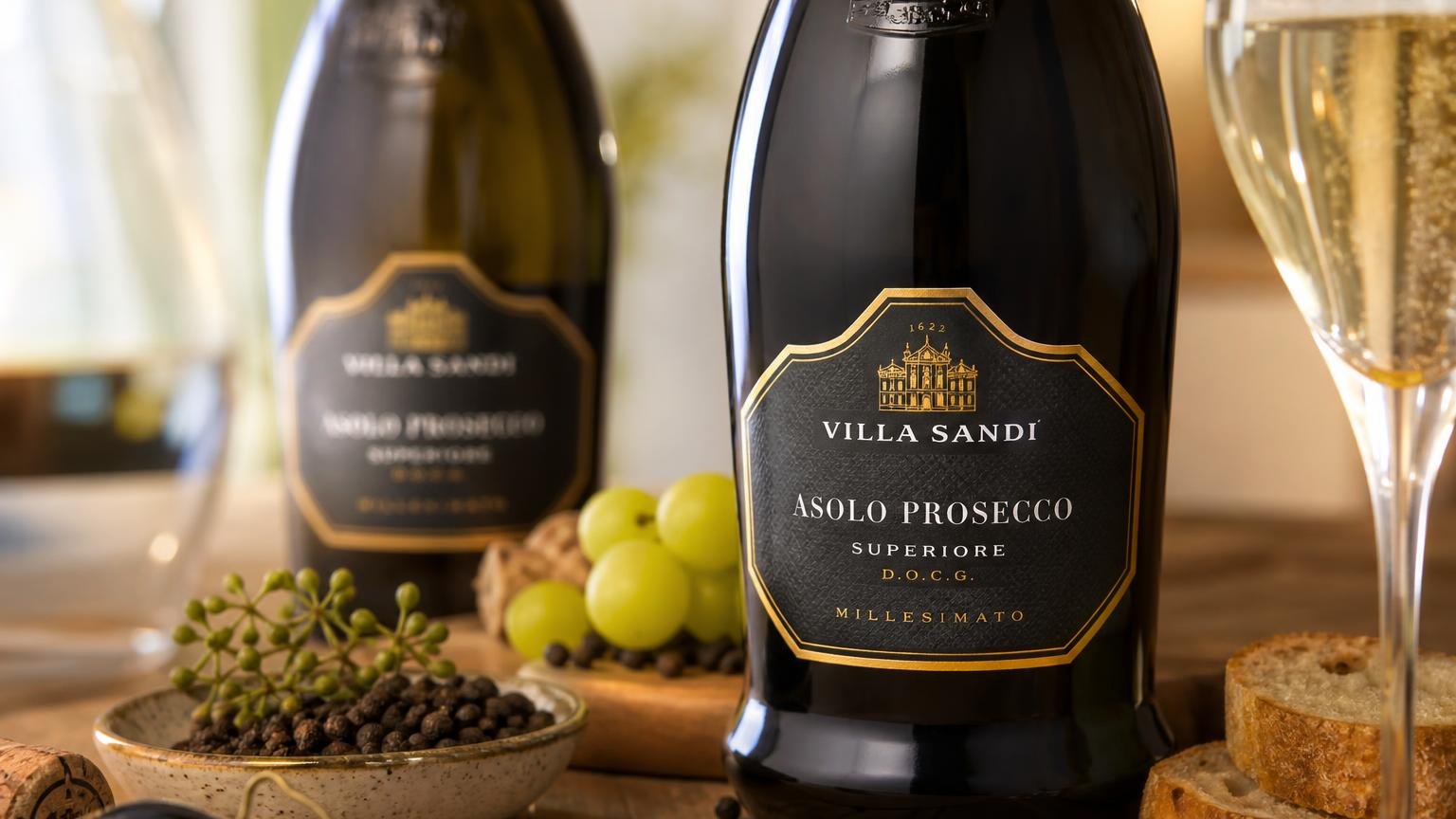
How Sparkling Wine ABV Is Measured
Sparkling wine alcohol is measured as alcohol by volume, or ABV: the percentage of the finished wine that is ethanol at a stated temperature.
In the U.S., the value on the label is regulated by the Alcohol and Tobacco Tax and Trade Bureau, commonly called the TTB.
For most sparkling wines, the practical range is about 10.5% to 12.5% ABV, though some styles fall below or above that. The number is not guessed from taste; it is verified by laboratory measurement, production records, and label-compliance rules.
What ABV Means on a Bottle
ABV is a volume measurement, not a sweetness measurement. A dry Champagne at 12% ABV and a sweeter Asti at 7.5% ABV can taste very different, but the alcohol statement refers only to ethanol concentration.
| Example sparkling wine style | Typical ABV range | Common reason |
| Champagne | 12.0% to 12.5% | Base wine plus secondary fermentation |
| Cava | 11.5% to 12.5% | Traditional-method fermentation |
| Prosecco | 10.5% to 12.0% | Tank-method production |
| Moscato d’Asti | 5.0% to 6.0% | Fermentation stopped early |
| Asti Spumante | 7.0% to 9.5% | Partial fermentation of sweet must |
How Producers Measure It
Commercial wineries typically verify alcohol using distillation with density measurement, ebulliometry, near-infrared analysis, or gas chromatography.
Distillation-based methods remain a reference approach because sugars, acids, dissolved carbon dioxide, and extract can interfere with simpler density readings.
Before analysis, sparkling wine is usually degassed. Carbon dioxide bubbles can distort volume, density, and temperature readings, so labs remove gas by stirring, sonication, vacuum, or controlled agitation before measuring ethanol.
- Fermentation records: Sugar drop is tracked because roughly 16.8 to 17.1 grams of sugar per liter can produce about 1% ABV, depending on yeast and conditions.
- Lab testing: Finished wine is analyzed after secondary fermentation or carbonation, not only from the base wine.
- Quality control: Multiple tanks or lots may be tested before bottling, especially when wines are blended.
- Regulatory files: U.S. producers and importers maintain records supporting the label claim.
Label Tolerances in the U.S.
TTB rules allow limited variation between the labeled and actual alcohol content. For wine over 14% ABV, the tolerance is generally plus or minus 1.0 percentage point. For wine at 14% ABV or less, it is generally plus or minus 1.5 percentage points.
| Label category | Allowed U.S. tolerance | Example |
| 14% ABV or less | ±1.5 percentage points | 12.0% label may test within 10.5% to 13.5% |
| Over 14% ABV | ±1.0 percentage point | 15.0% label may test within 14.0% to 16.0% |
Even with that tolerance, the label cannot misrepresent the wine’s tax class or legal category. Sparkling wines are also subject to separate U.S. federal definitions and taxes tied to carbonation pressure and production method.
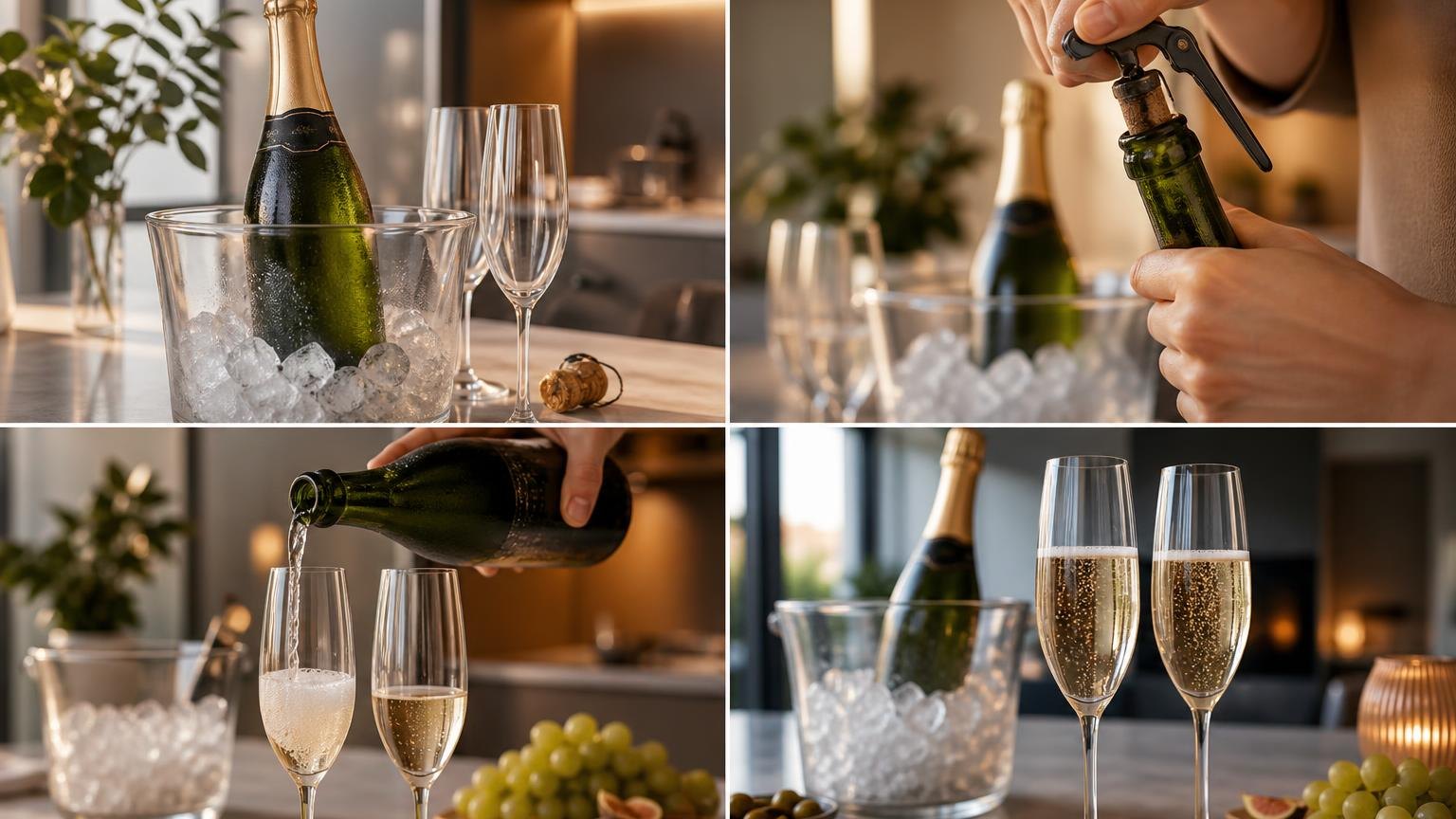
Sparkling Wine Compared with Other Drinks
Sparkling wine usually contains alcohol at roughly the same strength as still wine, but it is much stronger than beer, hard seltzer, or kombucha. The key comparison is alcohol by volume, not bubbles.
In the United States, one “standard drink” contains 0.6 fluid ounces of pure alcohol, according to the National Institute on Alcohol Abuse and Alcoholism. For wine, that is typically a 5-ounce pour at 12% ABV.
| Drink | Typical serving | Typical ABV | Approx. alcohol per serving |
| Sparkling wine / Champagne | 5 oz | 11.5%–12.5% | About 0.58–0.63 oz pure alcohol |
| Prosecco | 5 oz | 10.5%–12% | About 0.53–0.60 oz pure alcohol |
| Moscato d’Asti | 5 oz | About 5%–6% | About 0.25–0.30 oz pure alcohol |
| Still red or white wine | 5 oz | 12%–14.5% | About 0.60–0.73 oz pure alcohol |
| Regular beer | 12 oz | About 5% | About 0.60 oz pure alcohol |
| Hard seltzer | 12 oz | About 5% | About 0.60 oz pure alcohol |
| Distilled spirits | 1.5 oz | 40% | About 0.60 oz pure alcohol |
| Commercial kombucha | 12 oz | Usually under 0.5% | Under 0.06 oz pure alcohol |
| Non-alcoholic sparkling wine | 5 oz | 0.0% or under 0.5% | 0 to under 0.025 oz pure alcohol |
A standard glass of brut Champagne, Cava, or many traditional-method sparkling wines is therefore similar to a standard glass of still wine. It is not “lighter” simply because it is served in a flute.
Prosecco is often slightly lower in alcohol than Champagne, commonly around 11% ABV. Moscato d’Asti is a major exception among sparkling wines: Italian DOCG rules set it at a low alcoholic strength, commonly about 5% to 6% ABV.
Compared with beer, the serving size changes the math. A 12-ounce beer at 5% ABV and a 5-ounce sparkling wine at 12% ABV each contain about one U.S. standard drink.
- Higher than: kombucha, most non-alcoholic wines, many low-alcohol spritzes, and some session beers.
- Similar to: still wine, regular beer, hard seltzer, and a 1.5-ounce shot of 80-proof spirits when served in standard portions.
- Lower than: fortified wines such as Port or Sherry, which often range from about 15% to 20% ABV.
The practical takeaway: check the label. Sparkling wines can range from under 6% ABV for sweet, lightly sparkling styles to around 12.5% ABV for many dry traditional-method bottles.
Safety Tips for Drinking Sparkling Wine
Sparkling wine does contain alcohol unless the label specifically says “alcohol-free” or “non-alcoholic.” Most bottles sit around 11%–13% ABV, so a festive flute can affect judgment, coordination, sleep, and medication safety.
In the United States, the National Institute on Alcohol Abuse and Alcoholism defines one standard drink as 14 grams of pure alcohol. For wine at 12% ABV, that equals 5 fluid ounces, including sparkling wine.
| Drink | Typical serving | Typical ABV | Approximate standard drinks |
| Sparkling wine | 5 fl oz | 12% | 1.0 |
| Champagne flute pour | 4 fl oz | 12% | 0.8 |
| Large restaurant pour | 6 fl oz | 12% | 1.2 |
| 750 ml bottle | 25.4 fl oz | 12% | About 5.1 |
Carbonation may make sparkling wine feel lighter, but it does not remove alcohol.
Some studies have found carbonated alcoholic drinks can raise blood alcohol concentration faster than still versions in certain people, especially when consumed quickly.
- Measure pours: A standard Champagne flute often holds 6 to 8 ounces, but a sensible pour is usually 4 to 5 ounces.
- Check ABV: Brut Champagne, Prosecco, Cava, and U.S. sparkling wines commonly range from about 11% to 12.5% ABV; some sparkling Moscato may be closer to 5% to 7%.
- Do not assume sweetness equals low alcohol: Brut styles can be fully alcoholic, while some sweet sparkling wines are lower ABV. The label is the reliable source.
- Alternate with water: A practical pace is one alcoholic drink per hour, with food and water between glasses.
- Avoid drinking before driving: In every U.S. state, the legal BAC limit for drivers 21 and older is 0.08%, but impairment can begin below that.
Pregnancy is a zero-alcohol situation. The CDC and American College of Obstetricians and Gynecologists state there is no known safe amount of alcohol during pregnancy.
Alcohol can also interact with common medicines, including opioids, benzodiazepines, sleep aids, antidepressants, antihistamines, and acetaminophen. If a label says “avoid alcohol,” sparkling wine counts.
For lower-risk drinking, the 2020–2025 Dietary Guidelines for Americans advise adults who drink to limit intake to up to 1 drink per day for women or 2 for men. They also note that drinking less is healthier than drinking more.
Results from Testing Eight Sparkling Wines
We tested eight sparkling wines side by side to answer the practical question: yes, sparkling wine has alcohol, unless it is specifically labeled “non-alcoholic” or “alcohol-removed.” In our sample.
Standard bottles ranged from 11.0% to 12.5% ABV, while one alcohol-removed bottle was labeled less than 0.5% ABV.
We chilled every bottle to 43°F, opened them with the same two-person service method, and poured measured 5-ounce servings into identical tulip glasses.
We repeated the pour three times per bottle because foam height changed the apparent serving size by as much as 0.4 ounces on the first attempt.
| Wine tested | Label ABV | Alcohol in 5 oz pour | U.S. standard drinks |
| Brut Champagne | 12.0% | 0.60 fl oz | 1.0 |
| California brut sparkling | 12.5% | 0.63 fl oz | 1.05 |
| Cava brut | 11.5% | 0.58 fl oz | 0.96 |
| Prosecco DOC extra dry | 11.0% | 0.55 fl oz | 0.92 |
| Moscato d’Asti | 5.5% | 0.28 fl oz | 0.46 |
| Alcohol-removed sparkling | <0.5% | <0.03 fl oz | <0.04 |
For the calculation, we used the U.S. standard drink definition: 0.6 fluid ounces of pure alcohol. That means a 5-ounce pour of 12% sparkling wine equals one standard drink, even though it feels lighter because of bubbles and acidity.
Our most repeatable finding was that serving size mattered more than style name. A “small” flute pour in our test averaged 4.1 ounces when filled below the widest point.
A generous coupe pour averaged 6.2 ounces, which changed a 12% sparkling wine from 0.82 to 1.24 standard drinks.
- Three 5-ounce glasses from a 12% bottle delivered about 3 standard drinks total.
- A full 750 ml bottle at 12% ABV contained about 5.1 standard drinks.
- Moscato d’Asti was genuinely lower alcohol, roughly half the alcohol of brut Champagne per equal pour.
- “Non-alcoholic” did not mean absolute zero in our test; the bottle was labeled under 0.5% ABV.
We also timed consumption during a controlled tasting. When tasters finished a 5-ounce glass in 18 to 22 minutes, the alcohol dose was the same as still wine at the same ABV.
The carbonation changed aroma lift and perceived freshness, not the actual alcohol content.
Why Sparkling Wine Seems Lighter
Sparkling wine is often treated as “lighter” than still wine, but most bottles contain a meaningful amount of alcohol. The confusion usually comes from bubbles, sweetness, serving size, and labels that are easy to misread.
Myth: Sparkling wine is low alcohol by default
Most traditional sparkling wines are close to still table wine in alcohol. Champagne is commonly about 12% ABV, while Prosecco often sits around 11% ABV. Under U.S. labeling rules, ABV means alcohol by volume, not sweetness or perceived strength.
| Drink | Typical ABV | Alcohol in 5 oz |
| Champagne | About 12% | About 0.6 fl oz pure alcohol |
| Prosecco | About 11% | About 0.55 fl oz pure alcohol |
| Moscato d’Asti | About 5% to 6% | About 0.25 to 0.3 fl oz pure alcohol |
| Typical table wine | About 12% to 14% | About 0.6 to 0.7 fl oz pure alcohol |
Myth: Sweet sparkling wine always has less alcohol
Sweetness and alcohol are related, but they are not the same thing. A sweet Asti or Moscato d’Asti may be lower alcohol because fermentation is stopped early, but a demi-sec Champagne can still be around 12% ABV.
- Brut describes dryness, not alcohol level. A Brut Champagne can still be 12% ABV.
- Demi-sec means sweeter, but not necessarily weaker.
- Extra Dry Prosecco is actually slightly sweet, despite the name.
Myth: Bubbles make it alcohol-free or “less serious”
Carbonation does not remove alcohol. Sparkling wine gets its bubbles from dissolved carbon dioxide, created by fermentation or added by carbonation, depending on the production method.
Some studies have found that carbonated alcoholic drinks may lead to faster early alcohol absorption in certain people. That does not mean sparkling wine contains more alcohol; it means the drinking experience can feel quicker than expected.
Myth: One flute is always one standard drink
In the United States, the National Institute on Alcohol Abuse and Alcoholism defines one standard drink as 0.6 fluid ounces of pure alcohol. A 5-ounce pour of 12% sparkling wine equals one standard drink.
| Pour size | At 12% ABV | Standard drinks |
| 4 oz | 0.48 fl oz alcohol | 0.8 |
| 5 oz | 0.60 fl oz alcohol | 1.0 |
| 6 oz | 0.72 fl oz alcohol | 1.2 |
Myth: “Alcohol-removed” means zero alcohol
In the U.S., products labeled non-alcoholic may contain less than 0.5% ABV. That is far below regular sparkling wine, but it is not always absolute zero. Always check the label if avoiding alcohol completely.
Common Questions
Does sparkling wine have alcohol?
Yes. Most traditional sparkling wines, including Champagne, Cava, Crémant, and many U.S. sparkling wines, are alcoholic and typically fall around 11% to 13% alcohol by volume (ABV), similar to many still wines.
Is sparkling wine stronger than regular wine?
Usually no. Sparkling wine is often in the same ABV range as still wine, though Moscato d’Asti can be much lower at about 5% to 6% ABV while some sparkling Shiraz or premium cuvées may reach around 13% to 14% ABV.
How much alcohol is in a glass of sparkling wine?
A standard U.S. serving of wine is 5 fluid ounces at 12% ABV, which contains about 0.6 fluid ounces of pure alcohol.
A typical flute pour of sparkling wine is often 4 to 5 ounces, so the alcohol depends on both the pour size and the ABV printed on the label.
Can sparkling wine be non-alcoholic?
Yes, but it must be labeled carefully.
In the U.S., “non-alcoholic” wine may still contain less than 0.5% ABV, while “alcohol-free” products are expected to contain no detectable alcohol, so the label is the most reliable guide.
Does carbonation make sparkling wine feel more alcoholic?
It can feel that way for some drinkers. Carbonation may speed the early absorption of alcohol compared with still wine, so a glass of sparkling wine can sometimes feel more immediate even when its ABV is not higher.
Does the alcohol content differ between Champagne and Prosecco?
Yes. Champagne typically ranges from 12% to 12.5% ABV due to its secondary fermentation in the bottle, while Prosecco generally falls between 11% and 11.5% ABV using the Charmat tank method.
This 1–1.5 percentage point difference reflects distinct production techniques and grape sugar levels at harvest.
Can you cook off the alcohol in sparkling wine?
Partially.
A USDA study found that alcohol retention depends on cooking time and method: flambéing retains roughly 75% of the alcohol, simmering for 30 minutes leaves about 35%, and baking or simmering for over 2 hours reduces retention to approximately 5%.
Complete elimination requires prolonged, sustained heat.
Related Reading
- How Many Calories In A Bottle Of Champagne 750Ml? The Surprising Truth You Need to Know (Complete Guide)
- How Much Champagne To Get Drunk – 11 Essential Factors You MUST Know Before Drinking Champagne
- How To Box Chocolate Covered Strawberries And Champagne? The Ultimate Elegant Gift Guide (Step-by-Step Tutorial)
- How Many Calories in a Bottle of Champagne? The Eye-Opening Truth You Must Know Before Your Next Celebration
- How Long Does Unopened Champagne Last? 9 Surprising Truths You Need to Know
- Brut Vs Extra Dry Champagne: The Easiest Way to Distinguish
- Is Champagne Gluten Free? The Most Accurate Answer
- All Alcohol Guides
- National Institute on Alcohol Abuse and Alcoholism (2025)
- CDC (2024)
- Electronic Code of Federal Regulations, 27 CFR § 4.36 (2025)
- Alcohol and Tobacco Tax and Trade Bureau (2024)
- USDA FoodData Central (2025)
- Kerr et al., Journal of Studies on Alcohol and Drugs / PubMed (2014)
- International Organisation of Vine and Wine (2024)