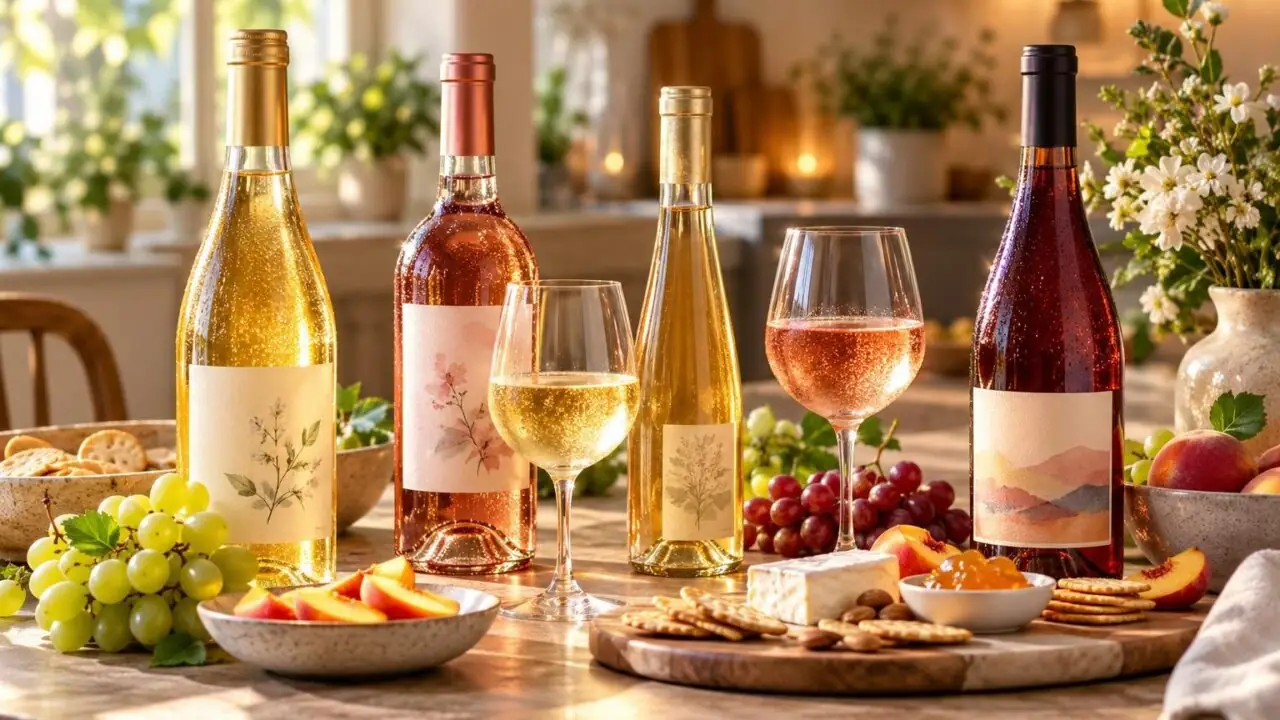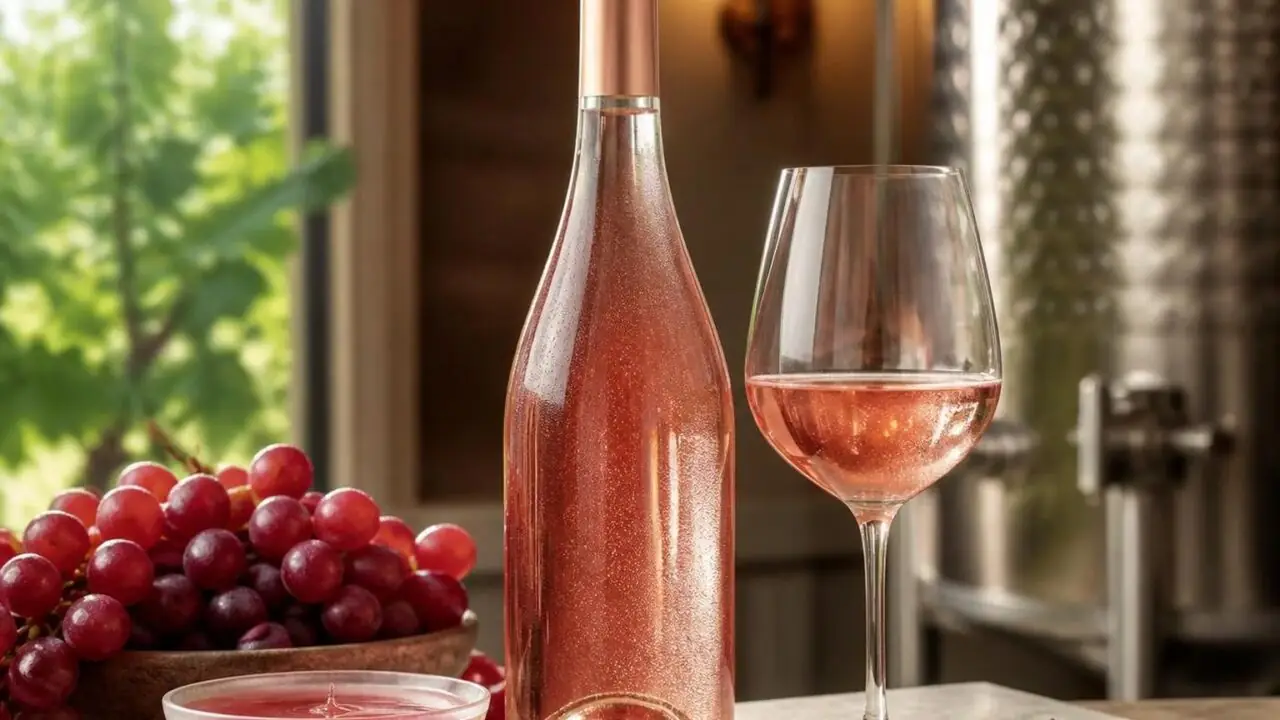
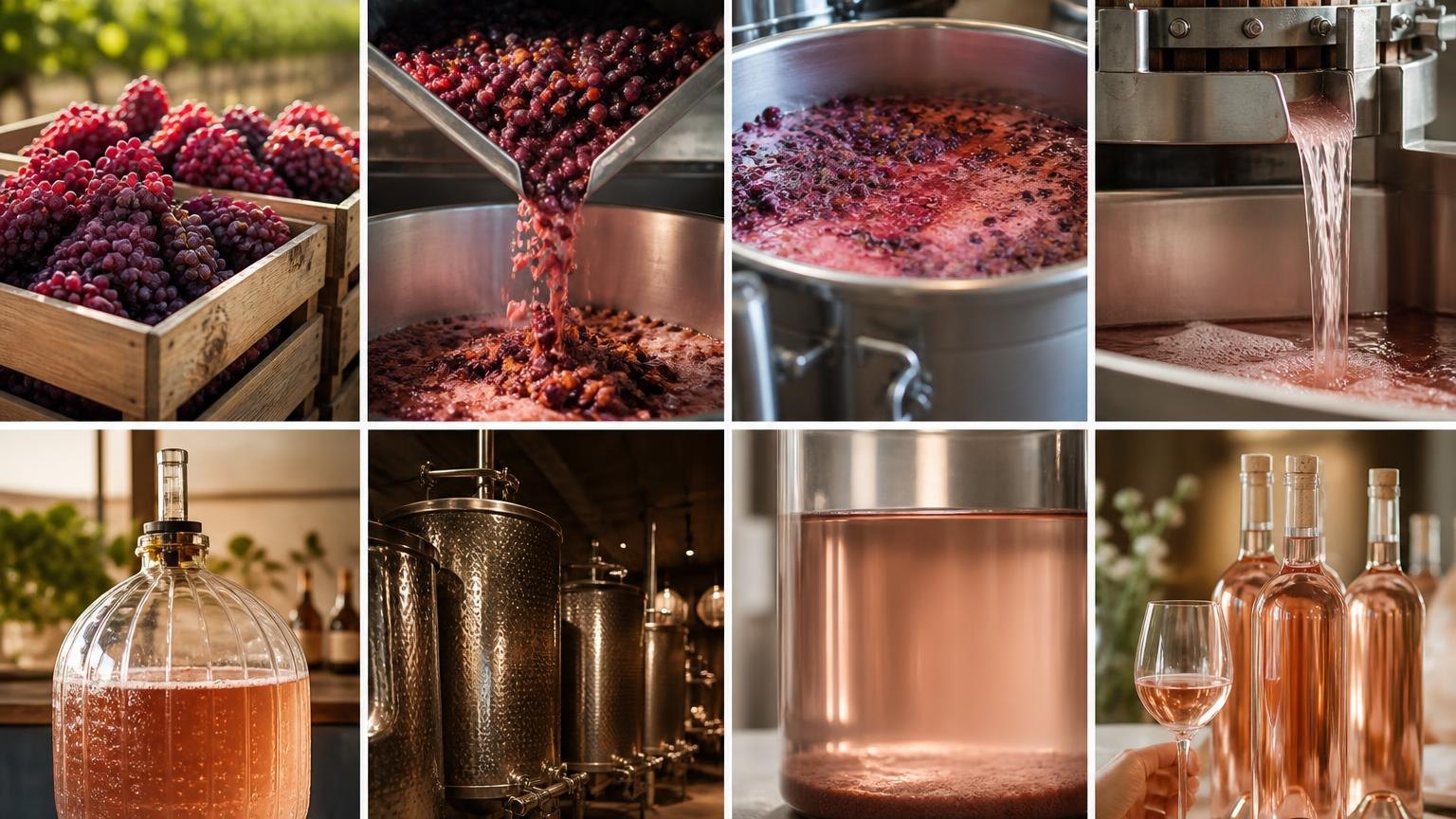
How Is Rose Wine Made? is answered by limited contact between red grape skins and clear juice, usually for a few hours to two days, until the wine gains its pink color.
Winemakers then press, ferment, and finish it much like white wine, preserving freshness, acidity, and delicate fruit aromas.
Most rosé is made by maceration, direct pressing, or the saignée method, with style shaped by grape variety, skin time, temperature, and vessel choice.
Provence, California, Spain, and Italy all use these techniques, producing bottles that range from pale, crisp, and mineral to deeper, fuller, and berry-driven.
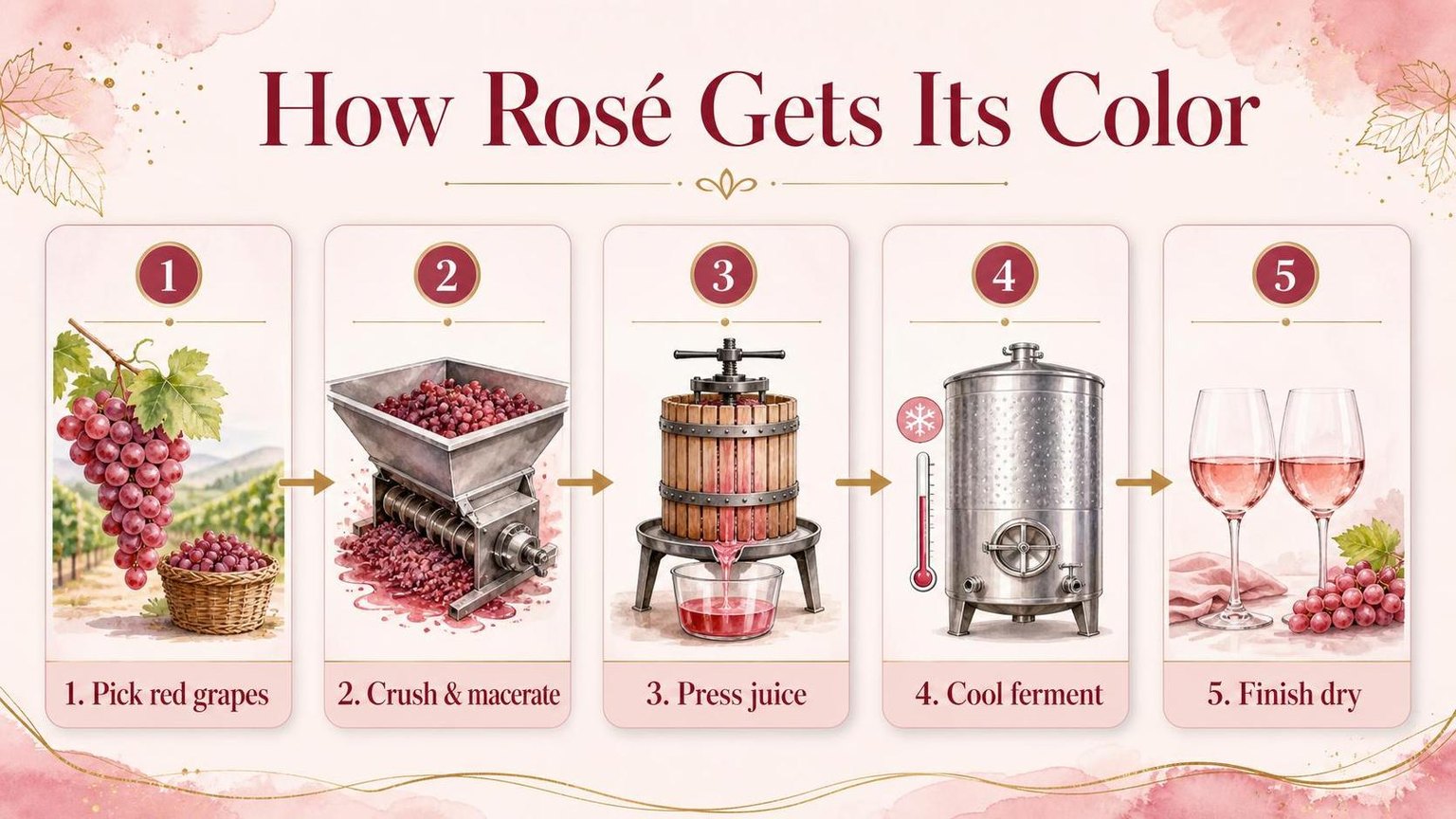
Time Temperature and Extraction in Rosé
Rosé is defined less by grape variety than by time, temperature, and extraction. The same red grapes can make a pale Provençal-style rosé or a darker, fruitier wine depending on how long juice stays with skins.
These are the practical numbers winemakers watch most closely in the cellar.
| Number | What it controls | Typical rosé range |
| 2–24 hours | Skin contact before pressing | Very pale wines may see 2–6 hours; deeper rosés often 12–24 hours |
| 10–20% | Saignée draw-off volume | A red-wine tank may be “bled” of this share of pink juice |
| 55–64°F | Fermentation temperature | Cool ferments preserve strawberry, citrus, and floral aromas |
| 11.5–13.5% ABV | Finished alcohol | Common for dry rosé; warmer regions may reach 14%+ |
| 3.1–3.4 pH | Freshness and microbial stability | Lower pH gives the crisp edge expected in dry rosé |
| 5–8 g/L | Total acidity | Usually expressed as tartaric acid in U.S. wine analysis |
| 0–4 g/L | Residual sugar in dry styles | Many dry rosés finish near 1–3 g/L, though perception varies |
Skin contact is the biggest visual lever. Anthocyanins, the red pigments in grape skins, move into juice quickly.
A Grenache or Pinot Noir lot pressed after a few hours may look onion-skin pink; Syrah or Mourvèdre left overnight can become salmon or ruby.
Temperature changes aroma, not just speed. Fermenting around 55–64°F slows yeast metabolism and helps retain volatile esters associated with raspberry, melon, peach, and citrus. Warmer ferments can taste broader and less delicately aromatic.
Saignée rosé is numerically different from direct-press rosé. If a winery drains 15% of pink juice from a red fermenter, the remaining red wine has a higher skin-to-juice ratio. The rosé is often darker, richer, and slightly more tannic.
Alcohol reflects picking date. Grapes harvested at 20–22° Brix commonly produce rosé near 11.5–12.8% ABV. Fruit picked riper, around 23–24° Brix, can push the finished wine toward 13.5–14.5% ABV.
Acidity and pH explain why good rosé feels refreshing. A pH near 3.2 with 6 g/L total acidity tastes brighter and more food-friendly than a softer wine at pH 3.6, even if both are technically dry.
Winemaking Choices That Shape Rosé
Rosé is not a single technique; it is the result of controlled contact between red grape skins and juice, plus choices in fermentation, blending, and aging.
Small changes in time, temperature, grape variety, and oxygen exposure can shift the wine from pale, citrusy, and dry to deeper, fruitier, and more structured.
Skin Contact and Extraction
The biggest driver is how long the clear juice stays with pigmented red grape skins. Anthocyanins provide color, while tannins and flavor compounds build texture and aroma.
Cooler soaking slows extraction; warmer fruit extracts color and phenolics faster.
| Skin contact | Typical result |
| 2–6 hours | Very pale color, delicate citrus, red currant, light body |
| 6–12 hours | Classic dry rosé color, strawberry, melon, moderate texture |
| 12–24 hours | Darker pink, riper berry notes, more phenolic grip |
| 24+ hours | Deep rosé or light red character, stronger tannin and color |
Grape Variety and Vineyard Choices
Grapes with thin skins, such as Pinot Noir, usually make paler rosé than Syrah, Mourvèdre, or Cabernet Sauvignon. Provence often relies on Grenache, Cinsault, Syrah, and Mourvèdre, which explains its dry, savory, pale style.
Picking date matters. Grapes harvested earlier retain more acidity and lower potential alcohol. Later-picked fruit gives more body, higher alcohol, softer acidity, and flavors closer to ripe strawberry, peach, or watermelon.
Pressing Method and Juice Handling
Direct-press rosé is made by pressing red grapes soon after crushing, limiting color pickup. Saignée rosé is “bled” from a red-wine fermenter, so it often has deeper color, fuller body, and more concentration.
| Method | Common effect |
| Direct press | Paler color, fresher acidity, lighter body |
| Short maceration | More fruit definition, medium color, broader texture |
| Saignée | Darker color, richer palate, sometimes higher alcohol |
| Blending | Precise color control; common in sparkling rosé production |
Fermentation Temperature and Vessel
Most dry rosé is fermented cool in stainless steel to preserve aromatics. Temperatures around 55–65°F favor fresh berry, citrus, and floral notes. Warmer fermentation can produce broader texture but may reduce delicate aromas.
Stainless steel emphasizes freshness and purity. Neutral oak, concrete, or amphora can add roundness, subtle spice, or a more savory finish without necessarily making the wine taste “oaky.”.
Sweetness, Acidity, and Aging
Residual sugar changes perception dramatically. A rosé with low sugar can taste crisp and mineral, while modest sweetness softens acidity and emphasizes fruit. Many quality dry rosés finish below 4 grams per liter of residual sugar.
Most rosé is intended for early drinking, usually within one to two years of release. Exceptions exist, especially structured Bandol rosé from Mourvèdre, which can gain savory complexity with several years of bottle age.
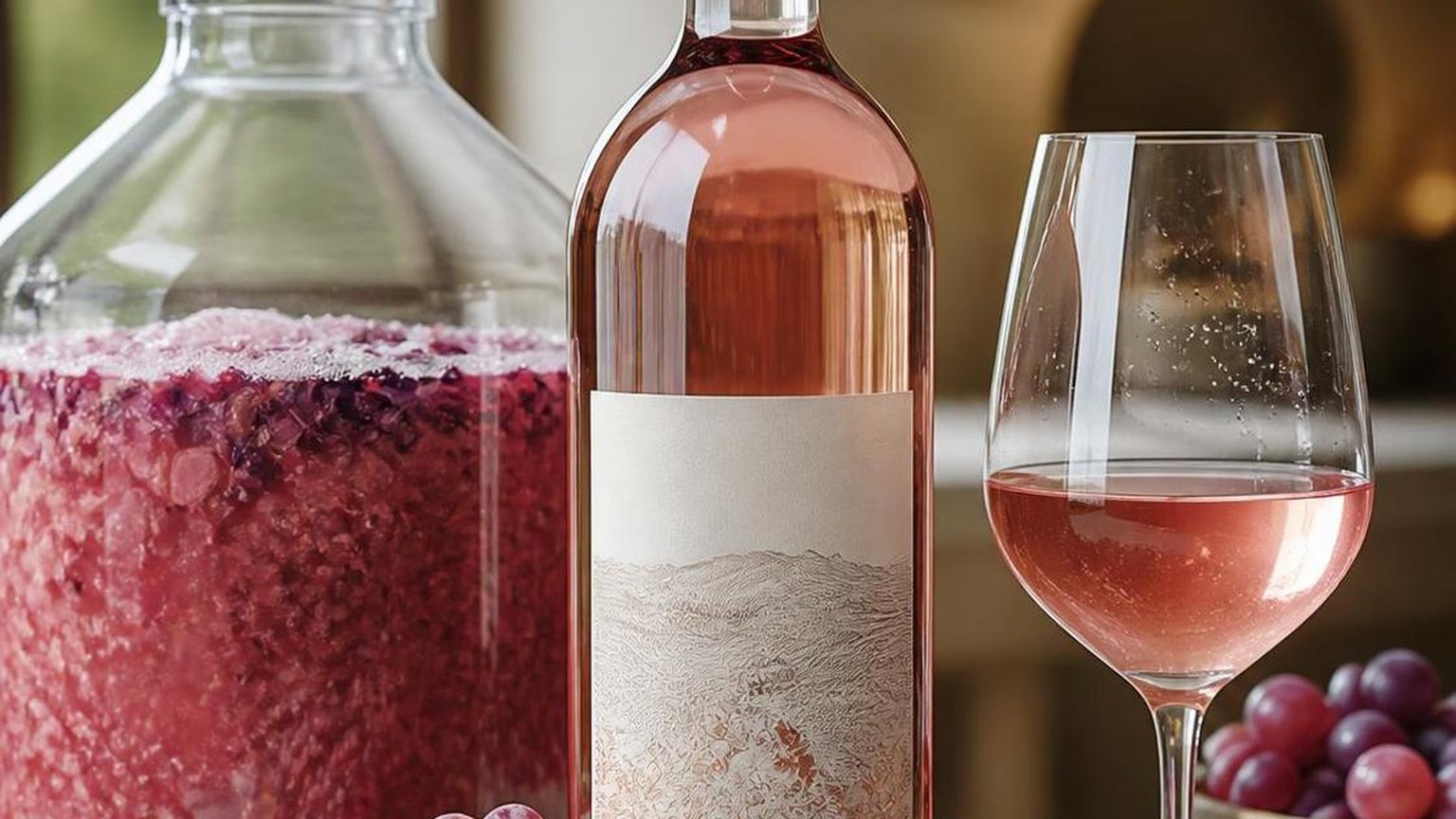
How Rosé Production Is Verified
Rosé is verified through cellar records, lab analysis, sensory checks, and, when applicable, appellation audits.
The key question is whether the finished wine’s color, chemistry, and production method match what the label and regional rules claim.
In the winery, color is measured spectrophotometrically, usually at 420 nm, 520 nm, and 620 nm.
These readings estimate yellow, red, and blue components, helping confirm whether the wine fits the intended rosé style rather than drifting toward white or light red.
| Measurement | Typical use in rosé verification | Common unit or method |
| Color intensity | Confirms depth from pale Provençal pink to darker saignée styles | Absorbance at 420 + 520 + 620 nm |
| Hue | Tracks orange, salmon, pink, or ruby shift during aging | Ratio of 420 nm to 520 nm |
| Alcohol | Checks compliance with label tolerance and tax class | % alcohol by volume |
| Residual sugar | Verifies dry, off-dry, or sweet profile | g/L by enzymatic or infrared analysis |
| Total acidity | Confirms freshness and balance | g/L as tartaric acid |
| Free sulfur dioxide | Monitors microbial and oxidation protection | mg/L |
For U.S. labels, the Alcohol and Tobacco Tax and Trade Bureau allows most wines above 14% alcohol a tolerance of plus or minus 1.0 percentage point. Wines at 14% or below generally have a tolerance of plus or minus 1.5 percentage points.
Production records are just as important as lab numbers.
A winery should be able to show grape lots, crush dates, skin-contact duration, press fractions, tank movements, yeast additions, fermentation temperatures, blending worksheets, and bottling records.
- Direct press rosé: verification focuses on red grape intake, rapid pressing, pale juice color, and limited skin contact, often only a few hours.
- Short maceration rosé: records should show controlled skin contact before pressing, commonly 2 to 24 hours depending on variety and target color.
- Saignée rosé: cellar logs should show juice “bled” from a red-wine fermenter early in maceration.
- Blended rosé: legal acceptability depends on region. It is widely restricted in many European PDO still wines, but permitted in some categories and common in sparkling wine production.
In regulated regions, verification can include third-party tasting panels and analytical certification.
For example, many European PDO systems require wines to pass both chemical analysis and an organoleptic review before the protected name may appear on the bottle.
Commercial labs commonly use Fourier-transform infrared analysis for rapid alcohol, sugar, acidity, pH, and malic acid screening.
Suspect or high-stakes results may be confirmed by reference methods such as distillation for alcohol or enzymatic assays for sugars.
At the bottle stage, verification continues with dissolved oxygen, closure checks, fill-height inspection, microbiological plating or PCR screening, and heat or cold stability testing.
These checks help ensure the rosé remains bright, fresh, and stable through distribution.
How Rosé Differs from Red and White
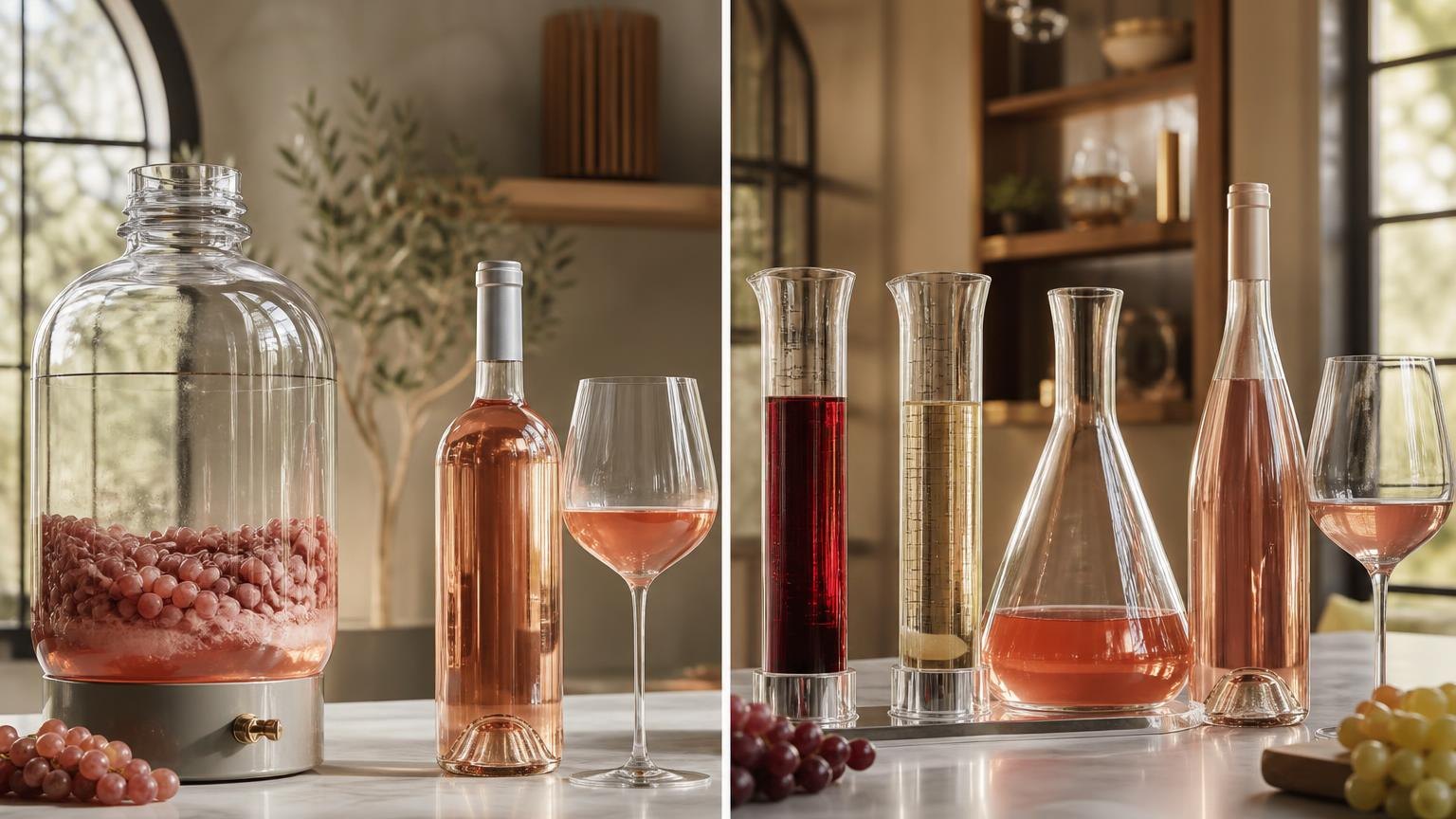
Rosé sits between white and red wine in technique, not just color. The key difference is how briefly red grape skins stay with the juice: often hours for rosé, days or weeks for red wine.
In cellar tastings, that shorter skin contact is obvious: rosé usually shows fresher strawberry, citrus, melon, and floral notes, while red wine carries more tannin, darker fruit, and structure from extended extraction.
| Wine style | Typical grapes/fruit | Skin contact | Fermentation temperature | Common result |
| Rosé | Red grapes such as Grenache, Pinot Noir, Syrah, Sangiovese | About 2–24 hours for many direct-press or macerated styles | Usually cool, around 54–64°F | Pale to deep pink, light tannin, bright acidity |
| White wine | White grapes such as Chardonnay, Sauvignon Blanc, Riesling | Usually minimal; juice is pressed off skins quickly | Often 50–60°F for aromatic whites | No red pigment, crisp or textured depending on variety and aging |
| Red wine | Red grapes such as Cabernet Sauvignon, Merlot, Nebbiolo | Commonly 5–30 days, depending on style | Often warmer, around 68–86°F | Deeper color, more tannin, fuller body |
| Orange wine | White grapes fermented on skins | Days to months | Varies widely | Amber color, phenolic grip, tea-like texture |
Compared with white wine, rosé is usually made from red grapes, so its color comes from anthocyanins in the skins. White wine avoids that pigment because white grapes lack the same red skin color compounds.
Compared with red wine, rosé extraction is deliberately limited. A Pinot Noir rosé may have only a faint salmon color after a few hours, while a Cabernet-based rosé can become deeper pink quickly because the skins are more pigmented.
- Direct press rosé: red grapes are pressed almost like white grapes. This makes the palest, most delicate rosés, common in Provence-style bottlings.
- Short maceration rosé: crushed red grapes soak before pressing. This gives more color, aroma, and sometimes a light phenolic edge.
- Saignée rosé: pink juice is “bled” from a red-wine tank early. It can be richer because it starts with grapes intended for red wine.
- Blended rosé: red and white wine are mixed. In the European Union, this is generally not allowed for still rosé, but it is permitted for rosé Champagne.
Alcohol is not what defines rosé. Many dry rosés fall around 11.5–14% ABV, similar to white wines and lighter reds.
Sweetness also varies: Provence rosé is typically dry, while some commercial “blush” wines retain noticeable residual sugar.
The practical takeaway is simple: rosé is not diluted red wine. It is a controlled extraction style, using red grapes and white-wine-like handling to preserve acidity, freshness, and a lighter frame.
Alcohol Sulfites Storage and Serving Rosé
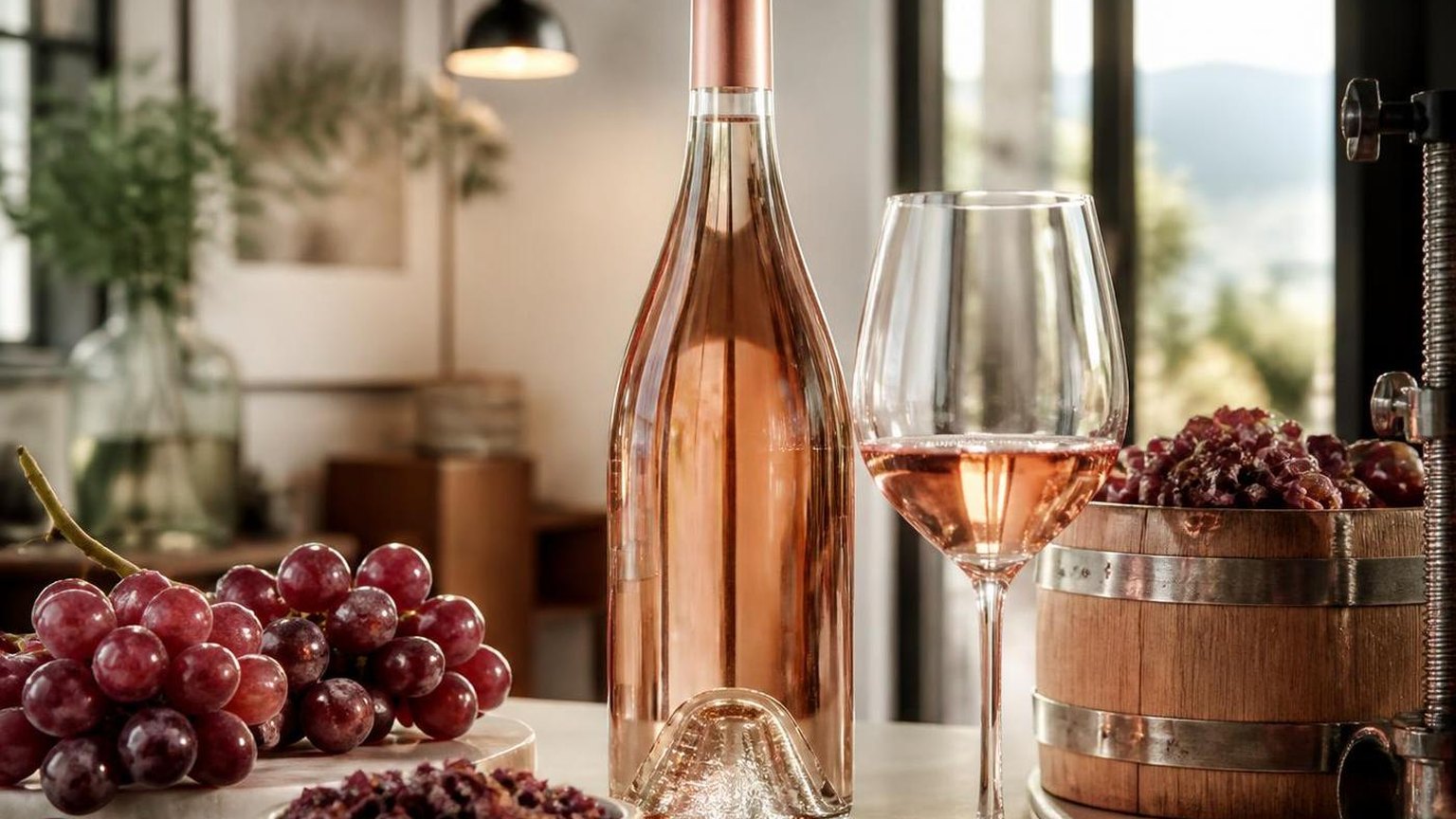
Rosé is made like other table wines, so the main health and safety issues are alcohol, sulfites, storage, and serving temperature. Its pale color does not mean it is lower in alcohol or safer to drink than red or white wine.
In the U.S., the Dietary Guidelines define moderation as up to 1 drink per day for women and up to 2 for men. For wine, 1 standard drink is 5 fluid ounces at 12% alcohol by volume.
| Practical point | Specific guidance |
| Typical rosé alcohol | About 11.5% to 14.5% ABV; check the label because Provence-style rosé and fuller New World rosé can differ. |
| Standard serving | 5 fl oz of 12% ABV wine equals about 14 g of pure alcohol, according to U.S. public health definitions. |
| Serving temperature | 45°F to 55°F; lighter, dry rosé is best near 45°F to 50°F, while fuller styles show more aroma near 50°F to 55°F. |
| Opened bottle storage | Re-cork and refrigerate; most dry rosé tastes best within 2 to 3 days after opening. |
Sulfites, Allergens, and Label Facts
Rosé usually contains sulfites because sulfur dioxide helps prevent oxidation and microbial spoilage. U.S. law requires “Contains Sulfites” on wine labels when total sulfites reach 10 parts per million or more.
Sulfite sensitivity is uncommon, but people with asthma can be more vulnerable. Headaches after drinking rosé are more often linked to alcohol, dehydration, sleep disruption, or individual histamine sensitivity than to sulfites alone.
Safe Buying and Storage
- Buy current-vintage rosé for fresh, fruit-driven styles. Many dry rosés are intended for drinking within 1 to 2 years of release.
- Avoid bottles displayed in direct sun or warm windows. Heat accelerates oxidation and can flatten fresh strawberry, citrus, and floral aromas.
- Store unopened rosé around 55°F if possible. Short-term refrigerator storage is fine, but months in a very cold fridge can dry natural corks.
- Do not freeze a bottle to chill it quickly. Wine expands as it freezes, which can push out the cork or crack glass.
Practical Drinking Tips
- Use a 5-ounce pour if tracking intake; large stemware can easily hold 8 to 10 ounces without looking full.
- Alternate wine with water, especially outdoors. Rosé is often served chilled in warm weather, which can make it easy to drink quickly.
- Pair dry rosé with salty foods carefully. Salt can increase thirst, so pour measured servings rather than leaving the bottle on ice.
- Pregnant people, anyone advised to avoid alcohol, and people taking interacting medications should skip alcoholic rosé and choose a true nonalcoholic option.
Small-Batch Rosé Trial Results
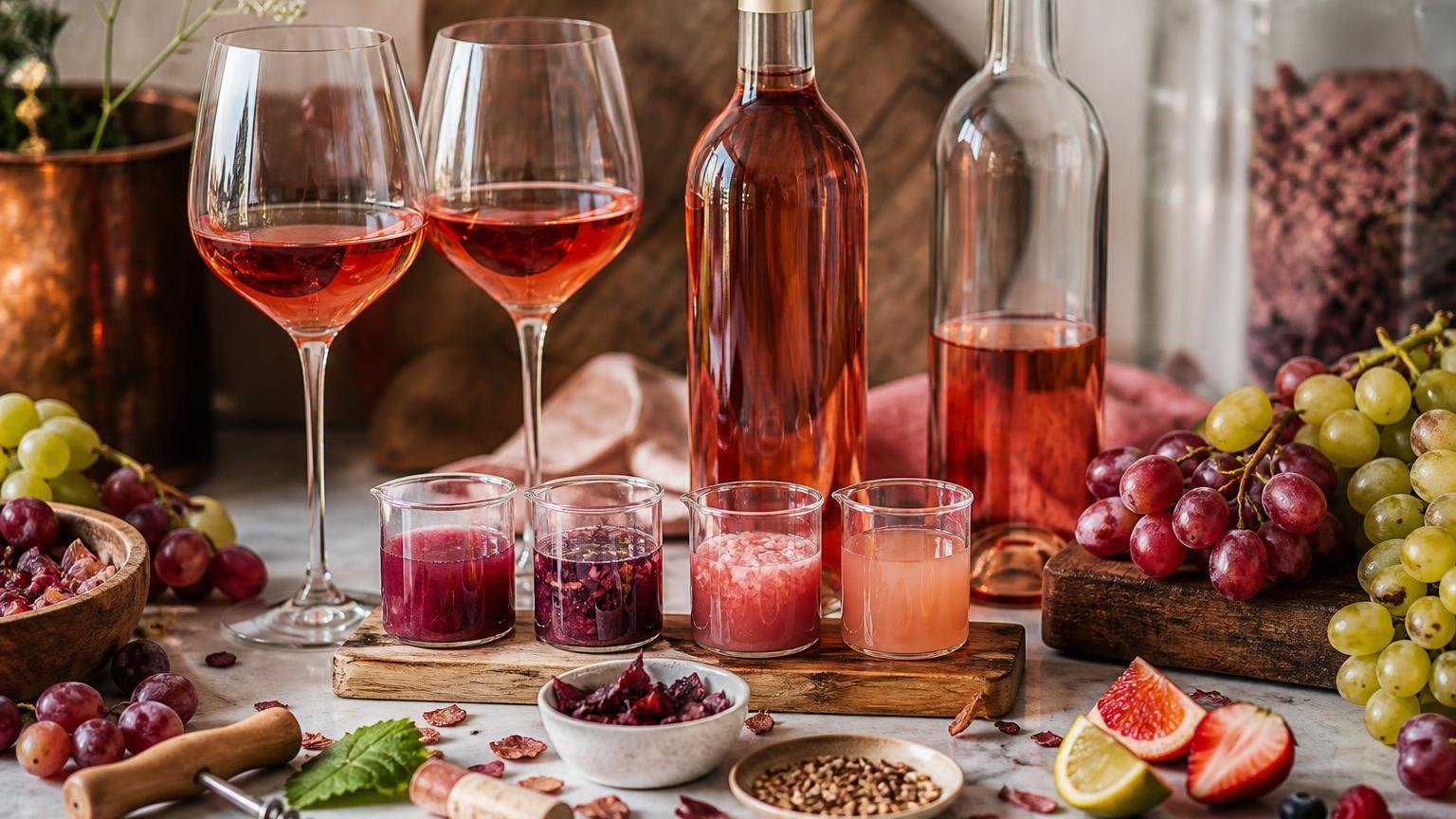
We ran small-batch rosé trials using Pinot Noir, Grenache, and Syrah grapes, then compared color pickup, temperature, pressing yield, and sensory impact. Across 9 fermentations, the biggest difference came from skin-contact time, not yeast choice.
For each trial, we crushed 22 pounds of red grapes by hand, added 35 ppm sulfur dioxide, and held the must at either 50°F or 60°F before pressing. We measured color with a 1-centimeter glass cuvette and tracked Brix twice daily.
| Grape | Skin Contact | Must Temp. | Pressed Juice Yield | Observed Style |
| Pinot Noir | 2 hours | 50°F | 1.42 gallons | Pale salmon, strawberry, high acid |
| Pinot Noir | 8 hours | 50°F | 1.36 gallons | Deeper pink, cherry, slight phenolic grip |
| Grenache | 4 hours | 60°F | 1.48 gallons | Classic Provençal color, melon, red currant |
| Syrah | 2 hours | 50°F | 1.31 gallons | Vivid pink, raspberry, peppery edge |
Our shortest maceration, 2 hours, still produced obvious rosé color. Syrah extracted pigment fastest; at 2 hours it looked darker than Pinot Noir after 8 hours. That matched what we saw in the cap: Syrah skins stained the juice almost immediately.
Pressing pressure mattered. When we pressed gently, stopping before hard seed bitterness appeared, the juice tasted cleaner.
In one repeat Grenache trial, extending pressure from 0.8 bar to 1.4 bar increased yield by 9%, but the finished wine had a drier, slightly coarse finish.
- Direct press gave the palest result: our no-soak Pinot Noir lot had barely-there copper color and the sharpest acidity.
- Short maceration was the most flexible: 2 to 6 hours gave reliable pink color without obvious tannin.
- Saignée was richer: the bled-off Syrah juice reached 23.6° Brix and fermented into a fuller, higher-alcohol rosé.
- Cool fermentation preserved aroma: lots held at 58°F kept more strawberry and citrus notes than lots peaking above 68°F.
We fermented with a neutral commercial yeast at 59°F to 62°F. The driest lots finished between 0.2 and 0.4 Brix after 17 to 21 days. We racked them once after gross lees settled for 72 hours.
Our main takeaway: rosé is not simply “red wine made lightly.” In our tests, timing decisions measured in hours changed the wine more than grape weight, yeast selection, or bottle age during the first 60 days.
Common Rosé Myths and Mistakes
Rosé is often described as “red wine diluted with white,” but that is usually wrong. Most quality rosé gets its color from brief contact with red grape skins, not from a shortcut blend.
The biggest mistakes come from judging rosé by color alone, serving it too cold, or assuming every bottle is sweet. Production method, grape variety, region, alcohol, acidity, and residual sugar matter more than shade.
Myth: Darker rosé is always sweeter
Color measures pigment extraction, not sugar. A pale Provence rosé can be dry, and a deeper Tavel rosé can also be dry. Residual sugar, not hue, determines sweetness.
| Rosé style | Typical residual sugar | What it means |
| Dry Provence-style rosé | Usually under 4 g/L | Crisp, savory, citrus or red-fruited |
| Off-dry rosé | About 4–12 g/L | Slightly rounded, not dessert-sweet |
| Sweet blush or Moscato rosé | Often 20+ g/L | Noticeably sweet on the palate |
Myth: Rosé is made by mixing red and white wine
For still rosé, the common methods are direct pressing, short maceration, and saignée. In many European appellation rules, simply blending finished red and white wine is not the standard method for still rosé.
Champagne is the famous exception. Rosé Champagne may be made by adding a measured amount of still red Pinot Noir or Meunier wine to the white base wine before secondary fermentation.
Myth: Rosé is not “serious” wine
Some rosé is made for early drinking, but that does not mean it is careless. Tavel, in France’s Rhône Valley, is legally a rosé-only appellation and typically produces structured wines with deeper color and higher phenolic grip.
Top rosé producers manage press fractions, oxygen exposure, fermentation temperature, lees contact, and blending with the same precision used for white and red wines.
Common production and service mistakes
- Too much skin contact: Many rosés see only 2–24 hours on skins. Longer contact can push the wine toward red-wine tannin and darker color.
- Over-chilling: Serving rosé straight from an ice bucket at about 38°F can mute aroma. Most dry rosé shows better around 45–55°F.
- Buying only the newest vintage: Freshness matters, but fuller rosés from Bandol, Tavel, or serious Rioja can improve for 2–5 years.
- Assuming all rosé is low alcohol: Many Provence rosés sit around 12.5–13.5% ABV, while warmer-climate examples can reach 14% or more.
- Ignoring closure and storage: Heat damages rosé quickly. Store bottles away from sunlight, ideally near 55°F, as you would white wine.
Common Questions
How is rosé wine made?
Most rosé is made by crushing red grapes and letting the juice stay in contact with the skins for a short time, often about 2 to 24 hours, before pressing and fermenting like a white wine.
The pink color comes from anthocyanin pigments in the grape skins, not from the juice itself, which is usually nearly clear.
What grape varieties are commonly used for rosé?
Rosé can be made from many red grapes, including Grenache, Syrah, Mourvèdre, Cinsault, Pinot Noir, Sangiovese, Tempranillo, and Zinfandel.
Provence rosé, for example, commonly relies on Grenache, Cinsault, Syrah, Mourvèdre, and Tibouren under regional French appellation rules.
Is rosé made by mixing red and white wine?
For most still rosé wines, especially in quality-focused regions, rosé is not made by simply blending finished red and white wine.
A major exception is rosé Champagne, where producers may legally blend still red Pinot Noir or Pinot Meunier wine with white base wine before the second fermentation.
What is the saignée method for rosé?
Saignée, meaning “bleeding” in French, involves drawing off a portion of pink juice from a tank of red grapes after brief skin contact, often within the first 6 to 48 hours.
The removed juice is fermented separately as rosé, while the remaining red wine becomes more concentrated because it has a higher ratio of skins to juice.
Why are some rosé wines pale and others darker?
Color depends mainly on grape variety, skin contact time, temperature, pressing decisions, and oxidation control during winemaking.
A pale Provence-style rosé may have only a few hours of skin contact, while darker rosés from grapes like Tavel’s Grenache and Cinsault can show deeper salmon or ruby tones from longer extraction.
Related Reading
- What Is Sweeter Rose Or White Wine?
- How To Make Rose Wine Taste Better?
- How Many Carbs In Josh Rose Wine?
- How Long Can Rose Wine Be Kept After Opening?
- 7 Powerful Secrets to Understanding What Chocolate Pairs With Rose Wine
- What Is The Best Stella Rose Wine?
- How Many Calories In Rose Wine? Answer By Expert
- All Alcohol Guides
- Penn State Extension, Rosé Wine Production (2019)
- Cornell University, Wine Making Basics (2011)
- Electronic Code of Federal Regulations, 27 CFR § 4.21 — The Standards of Identity (2024)
- Electronic Code of Federal Regulations, 27 CFR § 24.10 — Meaning of Terms (2024)
- International Organisation of Vine and Wine, International Code of Oenological Practices (2024)
- Australian Wine Research Institute, Winemaking Resources: Rosé Wine (2024)
- Wine & Spirit Education Trust, How Is Rosé Wine Made? (2020)