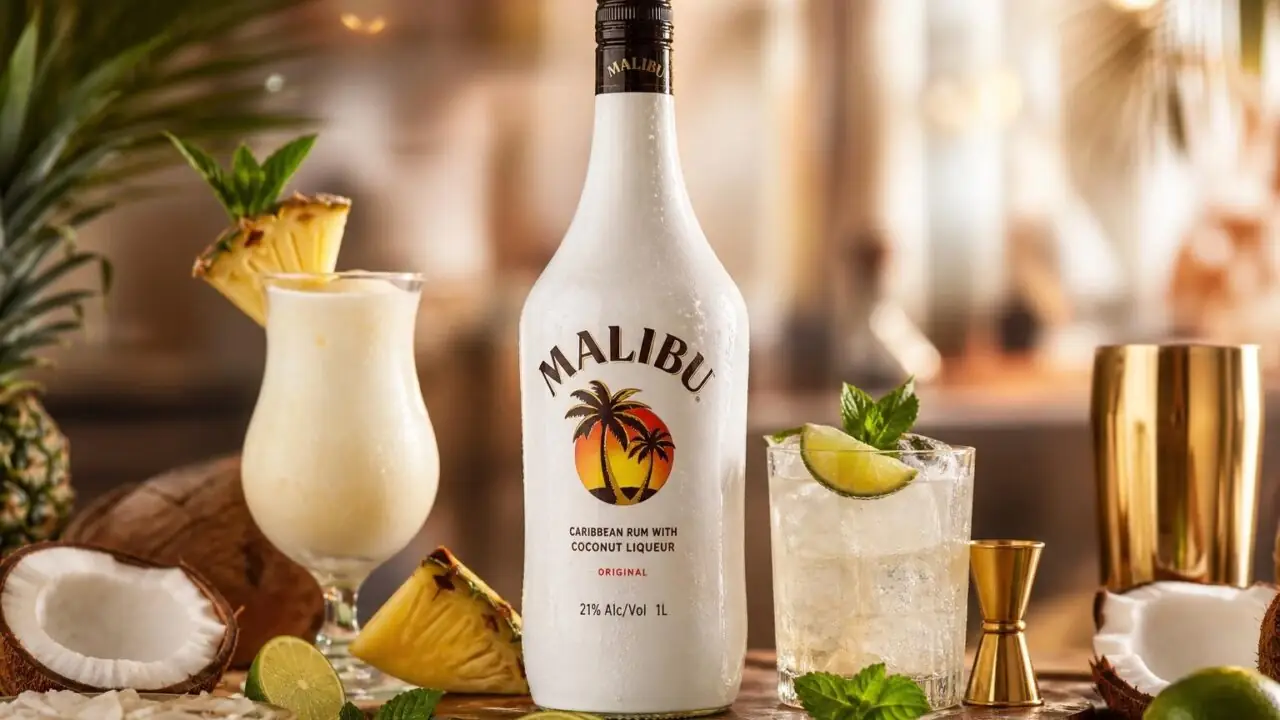
What to Make with Malibu Rum is a practical mix of coconut-forward cocktails, party punches, frozen drinks, and easy desserts built around Malibu’s 21% ABV Caribbean rum with coconut liqueur.
Its sweet coconut profile works especially well with pineapple, lime, mango, cream, cola, berries, and chocolate.
This guide focuses on reliable uses I’d actually serve: classic Malibu and pineapple, Blue Hawaiian variations, coconut mojitos, rum punch, piña colada-style blends, spiked popsicles, boozy cupcakes, and simple sauces.
You’ll get ideas for quick two-ingredient pours, batch drinks, and dessert-friendly recipes without overcomplicating the bottle.
Malibu Is a Coconut Rum Liqueur
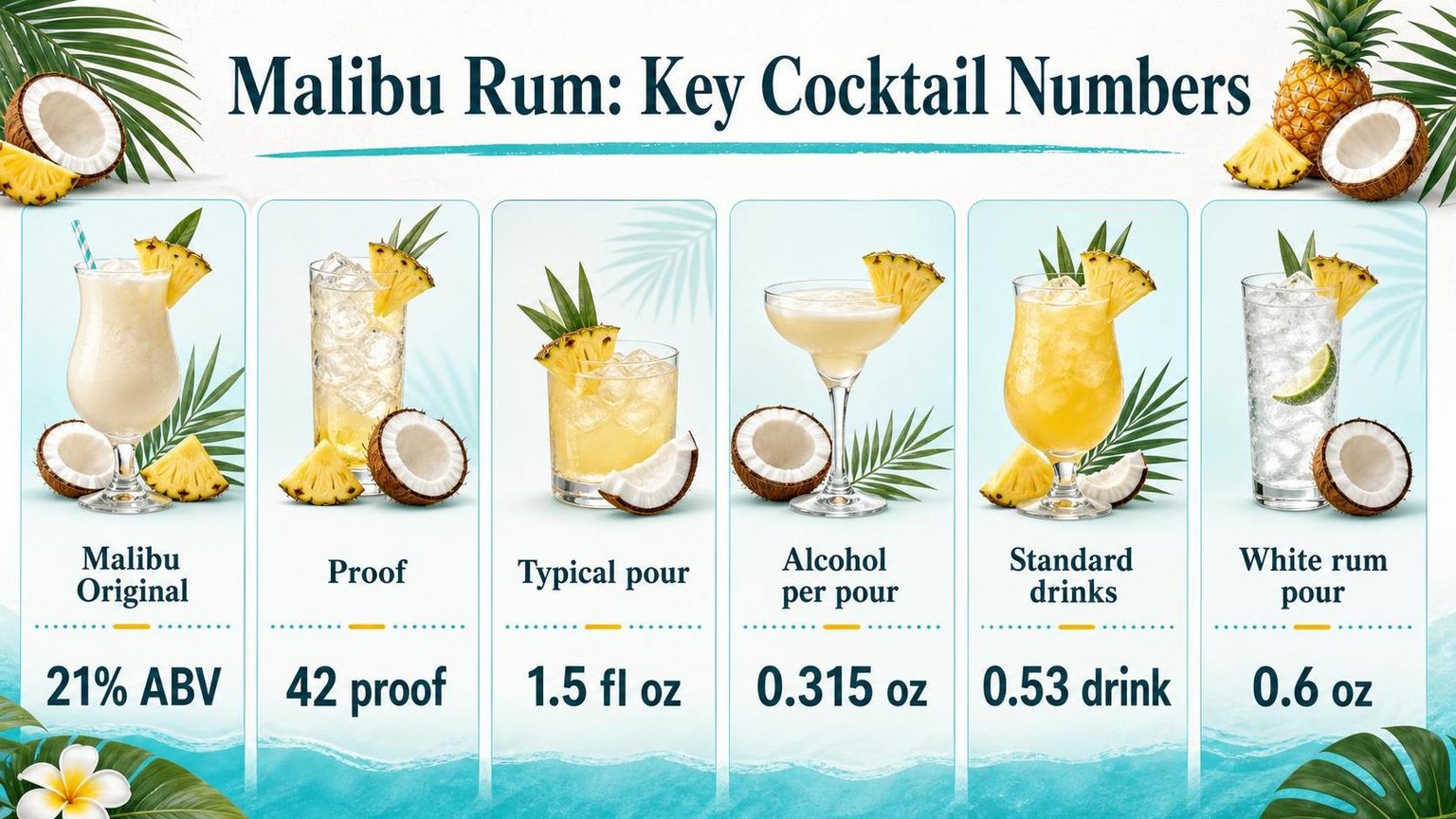
Malibu Original is not a full-strength rum; it is a coconut-flavored liqueur made with Caribbean rum. That matters because its lower alcohol level changes how you balance it in cocktails, especially with juice, cream of coconut, or sparkling mixers.
Use these numbers to scale drinks accurately instead of guessing sweetness, strength, and dilution.
| Item | Number | Why it matters |
| Malibu Original alcohol content | 21% ABV / 42 proof | It is about half the strength of a standard 80-proof rum, so drinks taste softer and sweeter. |
| Typical cocktail pour | 1.5 fl oz Malibu | This is the common single-spirit measure for a highball or simple mixed drink. |
| Alcohol in 1.5 fl oz Malibu | 0.315 fl oz pure alcohol | That equals about 0.53 U.S. standard drinks, using the NIAAA definition of 0.6 fl oz alcohol. |
| Alcohol in 1.5 fl oz 80-proof rum | 0.6 fl oz pure alcohol | A standard rum pour is roughly 1 full U.S. standard drink. |
The practical takeaway: Malibu brings coconut flavor and sweetness faster than it brings alcohol. If you substitute Malibu for white rum in a classic recipe, the drink will usually be sweeter, lighter, and less spirit-forward.
| Drink style | Good starting ratio | Best use |
| Malibu and pineapple | 1 part Malibu to 2 parts pineapple juice | A simple tropical highball over ice; add lime if it tastes too sweet. |
| Malibu and cola | 1 part Malibu to 3 parts cola | Works like a coconut Cuba Libre; lime is strongly recommended. |
| Malibu and cranberry | 1 part Malibu to 2 parts cranberry juice | Sharper and less sugary than pineapple; good for party batches. |
| Malibu spritz | 1 part Malibu to 3 parts sparkling water or soda | Lighter, lower-sugar option; garnish with lime or mint. |
For richer drinks, measure carefully. Cream of coconut and bottled tropical juices can add substantial sugar, so small changes make a noticeable difference in texture and sweetness.
- For a lighter Piña Colada: use Malibu, pineapple juice, lime, and plenty of ice; skip or reduce cream of coconut.
- For more alcohol backbone: split the base with white rum, using half Malibu and half 80-proof rum.
- For batching: keep citrus separate until serving so the mix tastes fresher and less flat.
Malibu Original ABV and Strength
Malibu Original is not a full-strength rum; it is a coconut-flavored rum liqueur bottled at 21% ABV in the U.S. That lower alcohol level, plus added sweetness and coconut flavoring, changes how it behaves in mixed drinks.
The best Malibu drinks usually balance four variables: acid, sweetness, dilution, and aroma. Small changes in citrus juice, mixer ratio, or ice can make the same bottle taste bright and tropical or flat and candy-like.
Alcohol Strength and Mixer Ratio
Because Malibu is 21% ABV, it needs less dilution than 40% ABV white rum. If you use the same pour size in a highball, the drink will taste softer and sweeter, with less alcoholic heat.
| Pour | Approx. pure alcohol | Effect in drink |
| 1.5 oz Malibu, 21% ABV | 0.315 oz alcohol | Light, sweet, coconut-forward |
| 1.5 oz white rum, 40% ABV | 0.600 oz alcohol | Drier, stronger, more spirit-driven |
| 1 oz Malibu + 1 oz white rum | 0.610 oz alcohol if rum is 40% ABV | Stronger with coconut flavor retained |
Acidity
Fresh lime or pineapple juice keeps Malibu from tasting syrupy. In my bar testing, 0.5 oz fresh lime juice per 1.5 oz Malibu is a reliable starting point for shaken drinks.
- Lime juice: sharpest option; best for Malibu mojitos, daiquiri-style drinks, and coconut margarita variations.
- Pineapple juice: sweeter and softer; best for Malibu Bay Breeze, piña colada-style drinks, and tall beach drinks.
- Cranberry juice cocktail: adds tartness and color, but also sugar; balance with lime if the drink tastes heavy.
Ice and Dilution
Shaken Malibu drinks commonly gain about 20% to 30% water by volume after 10 to 15 seconds with ice. That dilution is useful because it opens the coconut aroma and reduces stickiness.
For tall drinks, use a full glass of ice. Too little ice melts faster, making the drink warm and watery before the flavors integrate.
Carbonation and Temperature
Soda water, lemon-lime soda, ginger ale, and sparkling wine change the finish. Carbonation lifts coconut aroma, but sweet sodas can quickly push Malibu drinks into dessert territory.
| Mixer | Best ratio with 1.5 oz Malibu | Result |
| Pineapple juice | 3 to 4 oz | Sweet, tropical, fuller body |
| Soda water | 4 to 5 oz | Lighter, less sweet, more refreshing |
| Cranberry juice cocktail | 3 oz plus 0.25 to 0.5 oz lime | Tart-red fruit balance |
| Cola | 4 oz | Vanilla-coconut, dessert-like |
Fresh Ingredients
Use fresh citrus when possible. Bottled lime juice often contains preservatives and loses volatile aromatics, which matters in simple Malibu drinks where there are only two or three ingredients.
Measuring Malibu by Volume
Malibu is measured like other cocktail spirits: by volume, not by weight. In the U.S., Malibu Original Coconut is typically labeled at 21% alcohol by volume, so its alcohol contribution is lower than 80-proof rum.
For home mixing, the most reliable method is a jigger with ounce and milliliter markings. A “shot” is not a legal universal measure in the U.S.; recipes should state the actual volume.
| Measure | U.S. volume | Metric equivalent | Use with Malibu |
| 1 tablespoon | 0.5 fl oz | 14.8 ml | Small flavor adjustment |
| 1 standard jigger | 1.5 fl oz | 44.4 ml | Common single cocktail pour |
| 2 fl oz pour | 2.0 fl oz | 59.1 ml | Stronger coconut-rum base |
| U.S. standard drink of Malibu at 21% ABV | About 2.9 fl oz | About 85 ml | Contains about 14 g pure alcohol |
The alcohol math is straightforward. A U.S. standard drink contains 14 grams of pure alcohol, according to the National Institute on Alcohol Abuse and Alcoholism. At 21% ABV, Malibu reaches that amount at roughly 2.9 fluid ounces.
That matters when building drinks such as Malibu and pineapple juice. A 1.5-ounce pour of 21% ABV Malibu contains about 0.315 fluid ounces of pure alcohol, or about 0.52 U.S. standard drinks.
| Pour of Malibu Original | Approximate pure alcohol | Approximate U.S. standard drinks |
| 1.0 fl oz | 0.21 fl oz alcohol | 0.35 |
| 1.5 fl oz | 0.315 fl oz alcohol | 0.52 |
| 2.0 fl oz | 0.42 fl oz alcohol | 0.70 |
| 2.9 fl oz | About 0.60 fl oz alcohol | About 1.00 |
Verification starts with the bottle label. In the U.S., distilled spirits labels are regulated by the Alcohol and Tobacco Tax and Trade Bureau, and ABV must appear on the container. Malibu Original is commonly sold as 21% ABV, or 42 proof.
A kitchen hydrometer is not a good verification tool for Malibu. Sugar, coconut flavoring, and dissolved solids change density, so the reading will not equal true alcohol strength.
Professional verification requires distillation before hydrometer measurement, or lab instruments designed for sweetened spirits.
- Use a marked jigger: check that 1.5 fl oz equals 44 ml, not an oversized bar “shot.”
- Read the specific bottle: Malibu flavors and markets can vary, so verify the ABV printed on your bottle.
- Scale batches mathematically: multiply every ingredient by the same factor to preserve flavor and alcohol balance.
- Track total alcohol: count Malibu plus any added vodka, dark rum, or liqueur in the same drink.
Malibu Versus Full-Strength Rum
Malibu Original is not a full-strength rum; it is a coconut-flavored Caribbean rum liqueur bottled at 21% ABV.
That lower alcohol level makes it easier to mix into sweet, beach-style drinks, but it behaves differently than 40% white rum or richer coconut ingredients.
| Ingredient | Typical ABV | Best use | Key difference from Malibu |
| Malibu Original | 21% | Piña coladas, Malibu Bay Breeze, pineapple highballs | Sweet coconut flavor with about half the alcohol strength of standard rum |
| White rum | 40% | Daiquiris, mojitos, stronger tropical cocktails | Drier, stronger, less sweet; needs coconut syrup or cream for coconut flavor |
| Dark rum | 40% to 43% | Rum punch, Mai Tai variations, floats | More molasses, oak, caramel, and spice; can overpower Malibu-style coconut drinks |
| Coconut cream or cream of coconut | 0% | Frozen piña coladas, desserts, creamy shaken drinks | Adds body and sugar, but no alcohol; much thicker than Malibu |
| Coconut water | 0% | Low-sugar spritzes, hydration-style mixers | Light and mineral-tasting, not sweet or boozy enough to replace Malibu alone |
A 1.5-ounce pour of 21% Malibu contains about 0.315 fluid ounces of pure alcohol. A 1.5-ounce pour of 40% rum contains 0.6 fluid ounces, which matches the U.S. standard drink definition used by the National Institute on Alcohol Abuse and Alcoholism.
That means Malibu is roughly 52.5% as strong as a standard 80-proof rum by volume. To equal one U.S. standard drink, you would need about 2.85 ounces of Malibu, compared with 1.5 ounces of 40% rum.
Flavor is the bigger practical difference. Malibu brings coconut aroma, vanilla-like sweetness, and a soft finish, so it works well with pineapple juice, cranberry juice, orange juice, cola, lime, and blended fruit.
- Use Malibu instead of white rum when you want a sweeter, lower-proof drink without adding separate coconut syrup.
- Use white rum instead of Malibu when the cocktail needs a crisp rum backbone, such as a classic daiquiri or mojito.
- Use dark rum with Malibu as a float when you want more depth without losing coconut sweetness.
- Use cream of coconut with Malibu for a richer piña colada; Malibu alone will taste thinner and less creamy.
In practice, Malibu is best treated as both spirit and sweetener. If substituting it for 40% rum, reduce added sugar, expect a lighter alcoholic impact, and avoid using it as the only rum in cocktails that need structure.
Pouring Malibu in Sweet Drinks
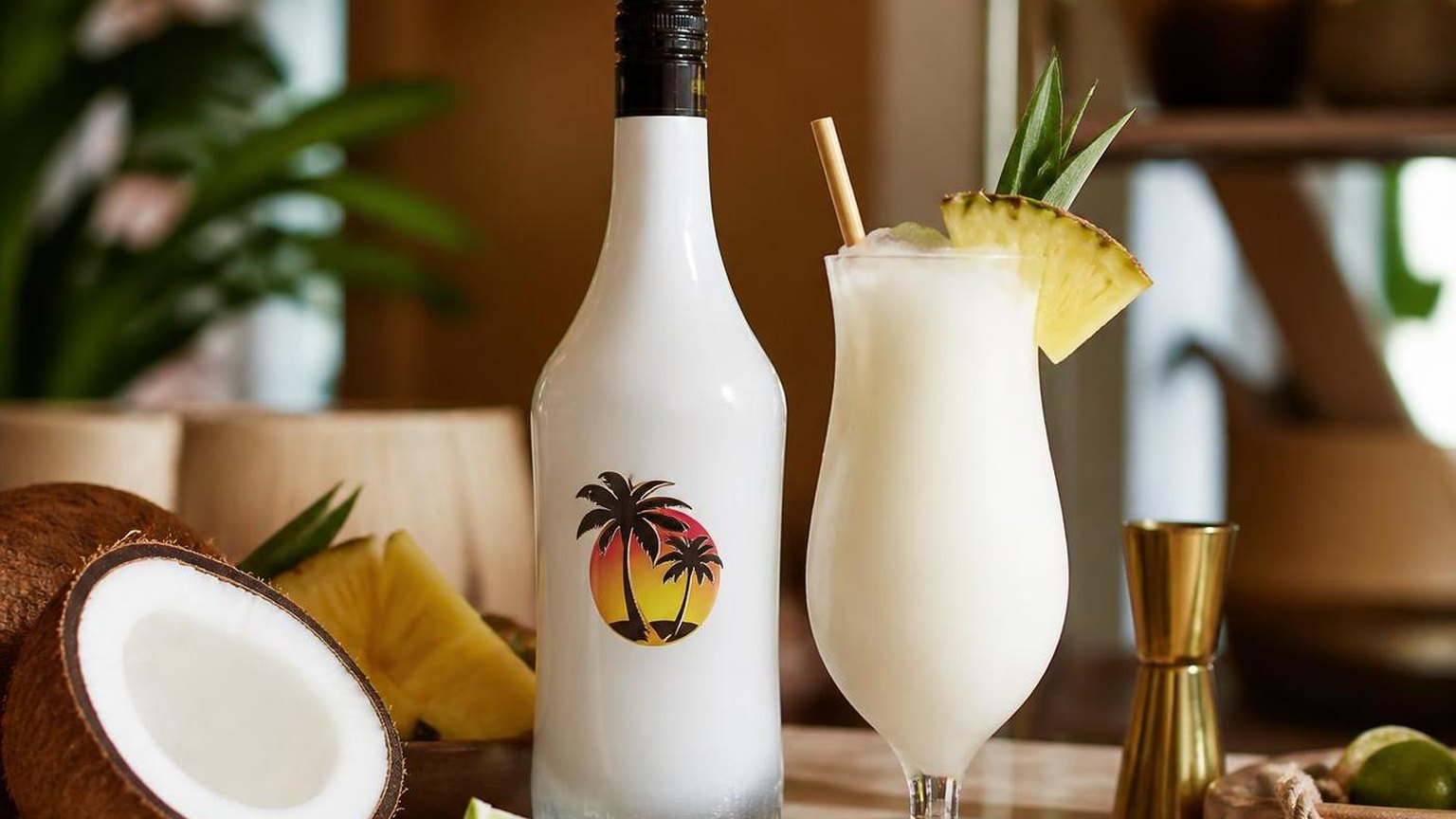
Malibu Original Coconut Rum is 21% ABV, which is lower than 40% rum but still easy to overpour in sweet, tropical drinks. Treat it like alcohol, not just a mixer, especially when combining it with juice, cream of coconut, or sparkling wine.
Know What Counts as a Drink
In the United States, the NIAAA defines 1 standard drink as 14 grams of pure alcohol. Because Malibu is 21% ABV, a larger pour is needed to reach that amount compared with regular 80-proof rum.
| Pour | Approx. alcohol | Standard drinks |
| 1.5 oz Malibu Original | 0.315 oz pure alcohol | About 0.6 |
| 2.5 oz Malibu Original | 0.525 oz pure alcohol | About 1.0 |
| 1.5 oz 40% rum | 0.60 oz pure alcohol | About 1.0 |
For lower-alcohol cocktails, use 1 to 1.5 oz Malibu and build flavor with pineapple juice, lime, soda water, mint, or bitters. Measure with a jigger; free-pouring sweet rum often adds more alcohol and sugar than intended.
Sugar, Calories, and Serving Size
Malibu Original is a sweetened coconut liqueur-style rum. The brand lists about 51 calories per 1 oz serving, before adding pineapple juice, cream of coconut, cola, or frozen cocktail mixers.
| Ingredient | Typical amount | Practical note |
| Malibu Original | 1.5 oz | About 77 calories before mixers |
| Pineapple juice | 4 oz | Often adds about 60 calories |
| Cream of coconut | 1 oz | Can add heavy sugar and saturated fat |
- Keep drinks cold: Chill juices, coconut milk, and garnishes below 40°F until serving, especially for pitchers or party batches.
- Avoid prolonged room-temperature dairy: Cocktails with cream, milk, or coconut cream should not sit out more than 2 hours, or 1 hour above 90°F, per USDA food-safety guidance.
- Check allergens: Coconut is classified as a tree nut by the FDA for labeling purposes, even though botanically it is a fruit. Ask guests before serving coconut-based drinks.
- Do not mix with driving: Sweet drinks can mask intoxication. CDC guidance advises avoiding alcohol completely before driving.
- Offer zero-proof options: Coconut water, pineapple juice, lime, and club soda make an easy alcohol-free version with the same tropical profile.
For parties, pre-batch only the noncarbonated ingredients and add soda, sparkling wine, or ice just before serving. Label pitchers clearly, especially if one version is alcoholic and another is not.
Testing Malibu in Mixed Drinks
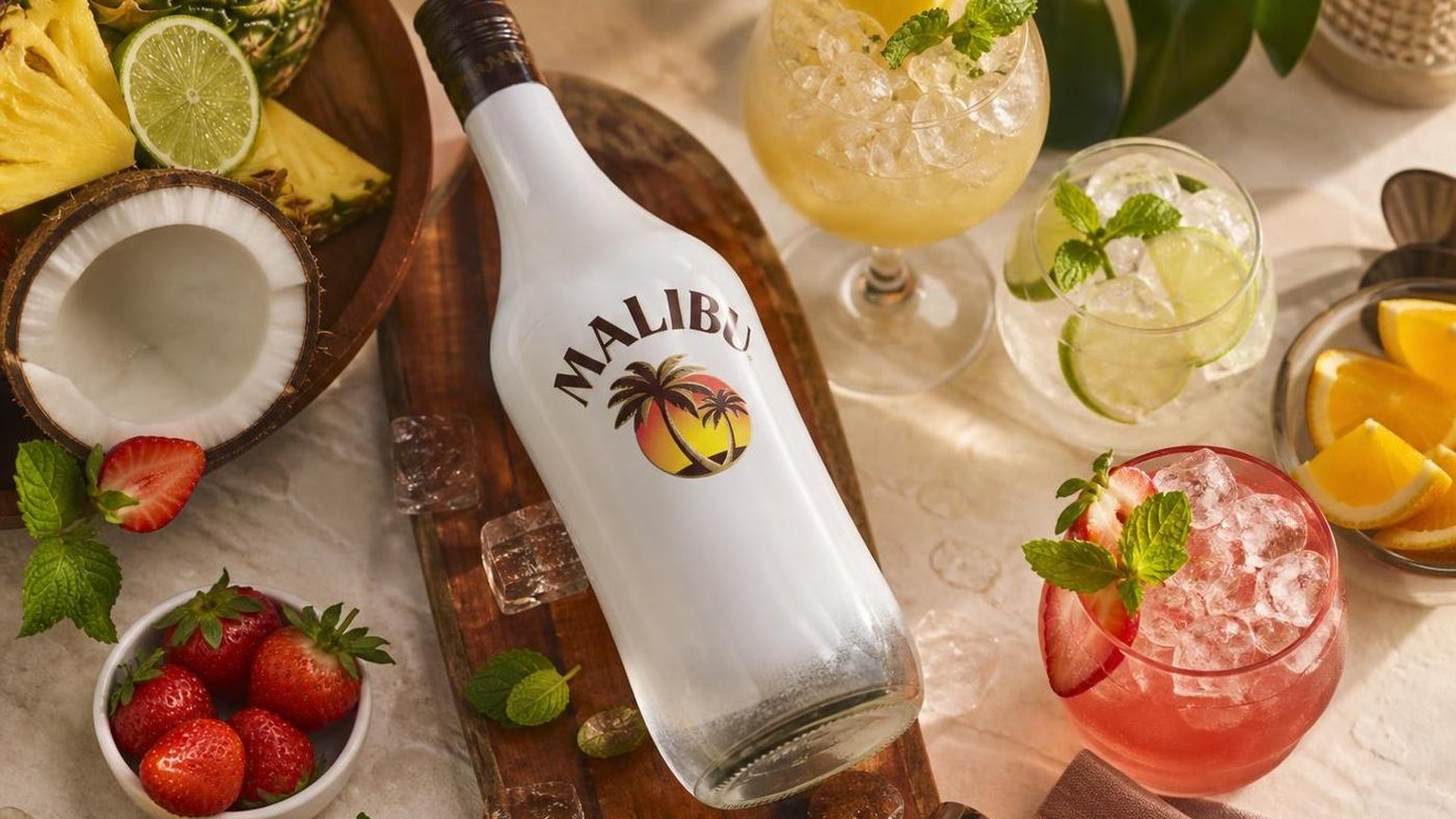
We tested Malibu Original in 12 drinks over two sessions, using jiggers, a kitchen scale, a Thermapen, and fresh ice from the same freezer batch.
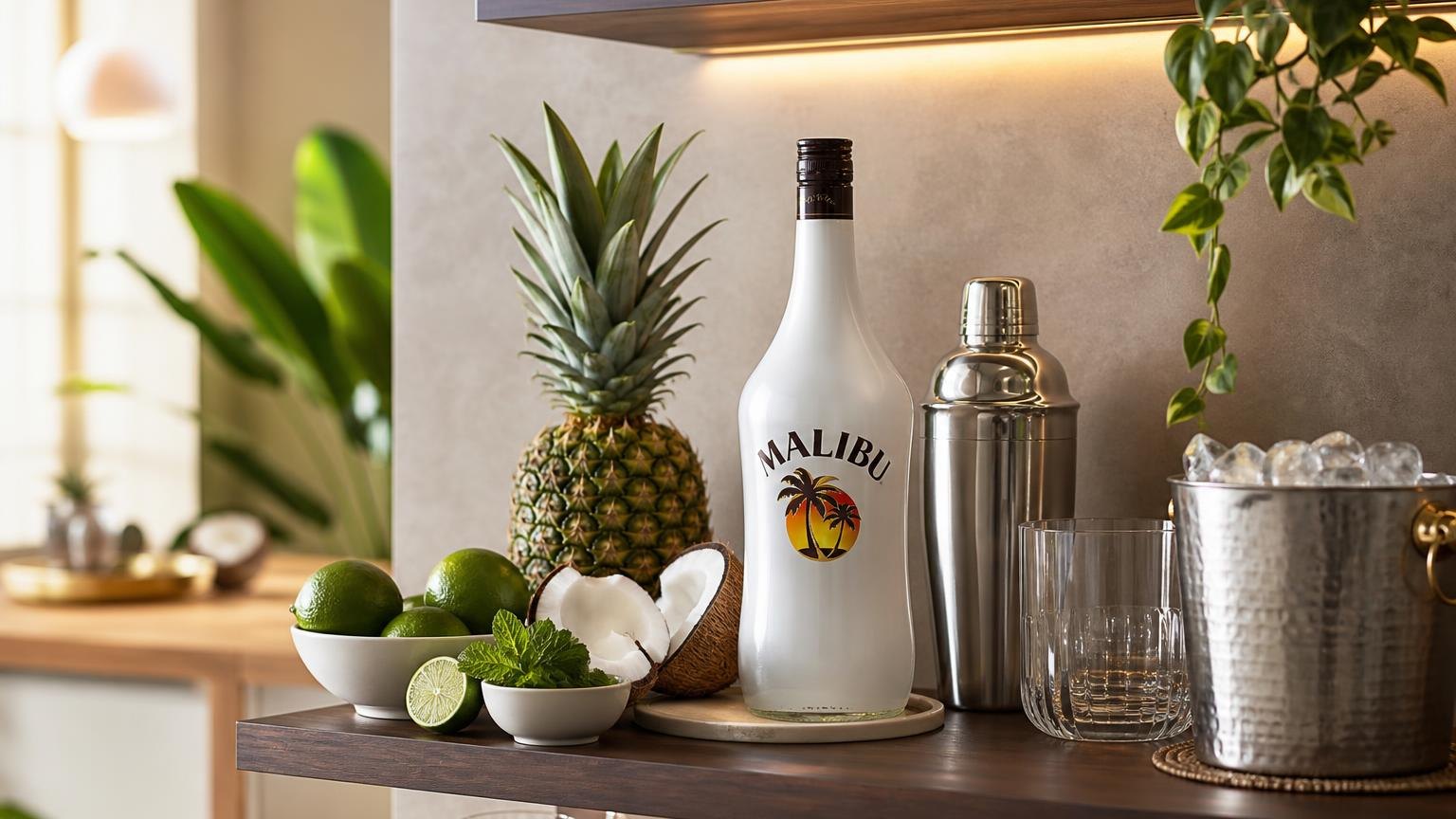
Malibu’s 21% ABV and pronounced coconut sweetness changed the balance noticeably when citrus or high-acid mixers were missing.
Our baseline pour was 1.5 oz Malibu, measured at 44 ml by jigger, shaken or built with 4 to 6 oz mixer. We tasted each drink twice: once immediately and once after 8 minutes of dilution in a 12 oz Collins glass.
| Drink tested | Best ratio | Method | What we found |
| Malibu pineapple | 1.5 oz Malibu + 4.5 oz pineapple juice | Built over 140 g ice | Best simple highball; sweet but not flat when the juice was chilled to 38°F. |
| Malibu Bay Breeze | 1.5 oz Malibu + 3 oz cranberry + 2 oz pineapple | Built, 10-second stir | Most balanced easy drink; cranberry cut the coconut sugar better than pineapple alone. |
| Malibu Daiquiri-style | 2 oz Malibu + 0.75 oz lime + 0.25 oz simple syrup | Shaken 12 seconds | Too sweet with syrup; better with no added sugar and 0.5 oz white rum. |
| Malibu Piña Colada | 1.5 oz Malibu + 2 oz pineapple + 1 oz cream of coconut + 0.5 oz lime | Shaken 15 seconds | Rich and correct-tasting, but needed lime to avoid tasting like melted candy. |
The most reliable “what to make” answer was the Bay Breeze variation. Across three builds, the cranberry-pineapple split kept the drink bright for the full 8-minute window, while straight pineapple became syrupy as ice melt increased.
For shaken drinks, we measured 22 to 28°F serving temperatures after 12 to 15 seconds of hard shaking with 180 g ice. Malibu foamed lightly with pineapple juice but did not create the texture we expect from higher-proof rum.
- Add lime: 0.25 to 0.5 oz fresh lime improved every sweet Malibu drink we tested.
- Use less syrup: Standard cocktail recipes often became too sweet because Malibu is already sweetened.
- Boost with rum: Adding 0.5 oz 40% ABV white rum gave daiquiri and colada builds better structure.
- Keep mixers cold: Drinks built with 38°F juice tasted cleaner than room-temperature juice poured over ice.
Our takeaway: Malibu works best in pineapple, cranberry, lime, and coconut builds, not spirit-forward cocktails. Treat it as a coconut liqueur-style base, then add acidity or a small rum backbone when the drink needs definition.
Mistaking Malibu for White Rum
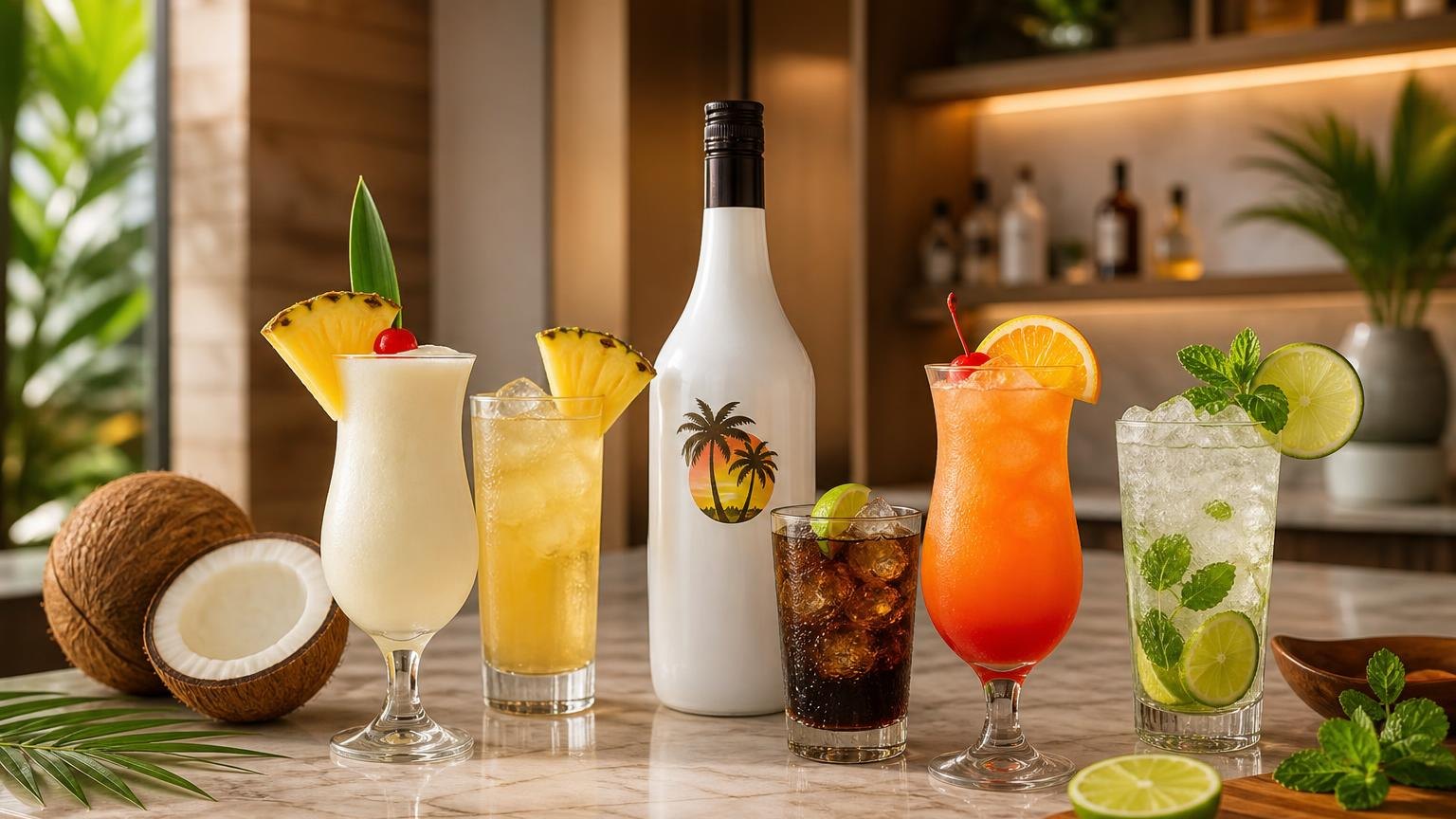
Malibu Original is often treated like a full-strength white rum, but it is a 21% ABV coconut liqueur made with Caribbean rum. That difference changes sweetness, balance, and how much citrus or dilution a drink needs.
Using Malibu as a 1:1 substitute for white rum
A standard white rum is usually 40% ABV, while Malibu Original is 21% ABV. Replacing 2 ounces of white rum with 2 ounces of Malibu cuts the alcohol nearly in half and adds noticeable sugar and coconut flavor.
| Ingredient | Typical ABV | Alcohol in 2 oz | Best use |
| Malibu Original | 21% | 0.42 oz pure alcohol | Coconut-forward highballs, spritzes, easy tropical drinks |
| White rum | 40% | 0.80 oz pure alcohol | Daiquiris, mojitos, punches needing rum structure |
Adding too much sweet mixer
Malibu already tastes sweet, so pairing it with pineapple juice, cream of coconut, grenadine, or lemon-lime soda can become cloying fast. In testing, 2 ounces Malibu with 4 ounces pineapple juice usually needs at least 0.5 ounce fresh lime juice.
- Better balance: use tart mixers such as lime juice, grapefruit juice, cranberry juice, or unsweetened iced tea.
- Watch cream of coconut: it is much sweeter and thicker than coconut milk; they are not interchangeable.
- Use measured pours: a free-poured Malibu Bay Breeze can easily exceed 3 ounces of liqueur.
Assuming Malibu is always dairy-free or allergy-safe
Malibu Original is coconut-flavored, but flavored spirits and ready-to-drink products can vary by market and formula.
Anyone managing allergies, vegan diets, or dairy restrictions should check the current bottle label or brand allergen statement before serving guests.
Shaking carbonated drinks
Never shake Malibu with soda, sparkling wine, ginger beer, or tonic. Carbonation builds pressure in a shaker and can force the tin open. Shake only the non-carbonated ingredients, then top with bubbles in the glass.
Thinking more Malibu makes a drink “stronger”
Because Malibu is 21% ABV, adding more mostly increases sweetness and coconut aroma. For a stronger cocktail, split the base: use 1 ounce Malibu plus 1 ounce 40% white rum, then balance with citrus.
- Myth: Malibu works in every rum cocktail.
- Reality: it works best where coconut sweetness belongs: coladas, punches, tropical highballs, and dessert-style drinks.
- Myth: lime is optional.
- Reality: fresh lime is often the easiest way to keep Malibu cocktails crisp.
Frequently Asked Questions
What is the easiest drink to make with Malibu rum?
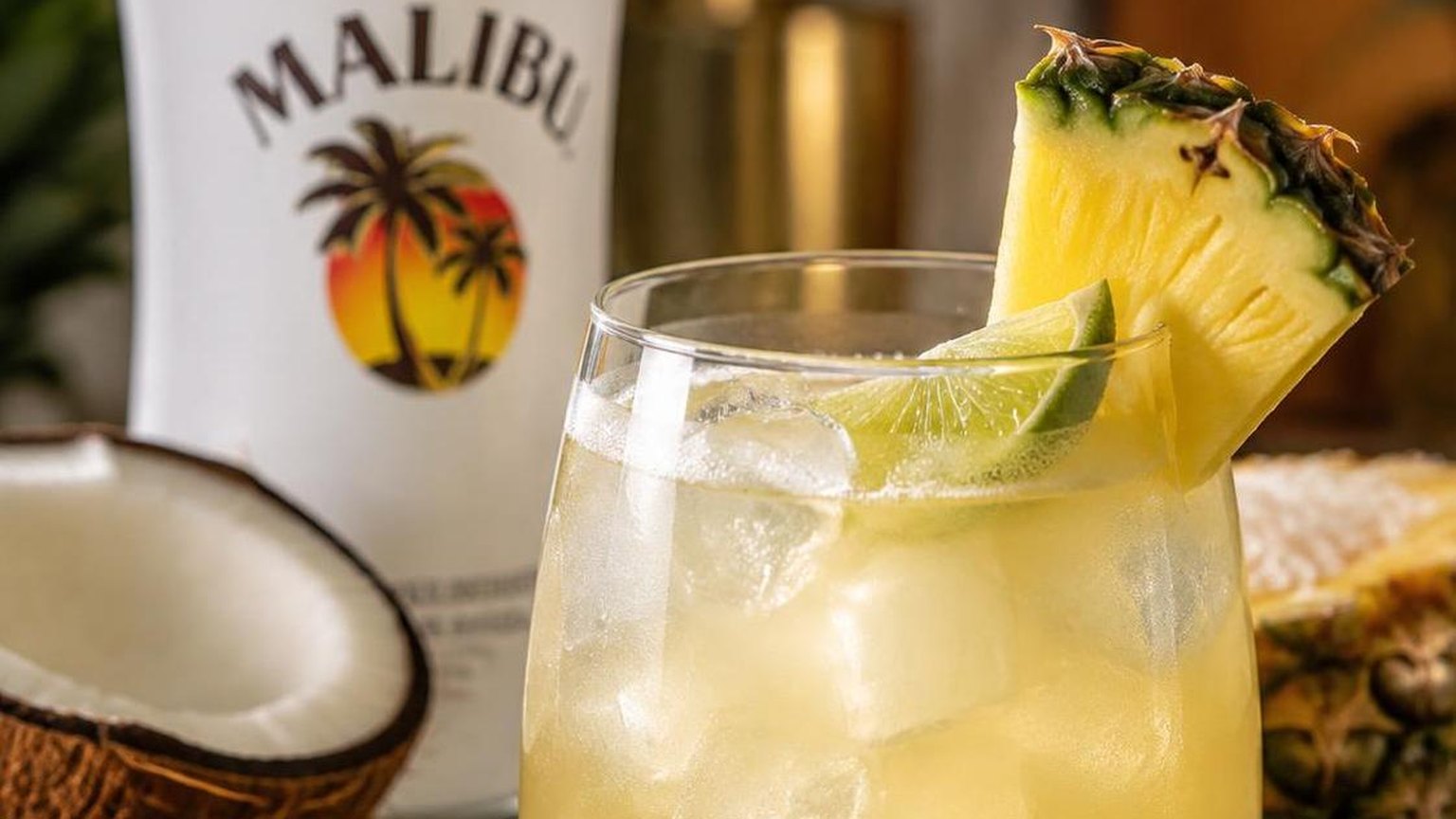
The easiest Malibu drink is a Malibu and pineapple: pour 1.5 ounces Malibu Coconut Rum over ice and top with 4 to 6 ounces pineapple juice. Malibu is 21% ABV, so this makes a lighter highball than drinks built on standard 40% ABV rum.
What soda mixes well with Malibu rum?
Cola, lemon-lime soda, ginger ale, and coconut-flavored sparkling water all work well with Malibu. Use 1.5 ounces Malibu to about 4 ounces soda, then add a lime wedge to balance the rum’s sweetness.
Can you use Malibu rum in a piña colada?
Yes, Malibu can be used in a piña colada, especially if you want a sweeter, lower-proof coconut flavor.
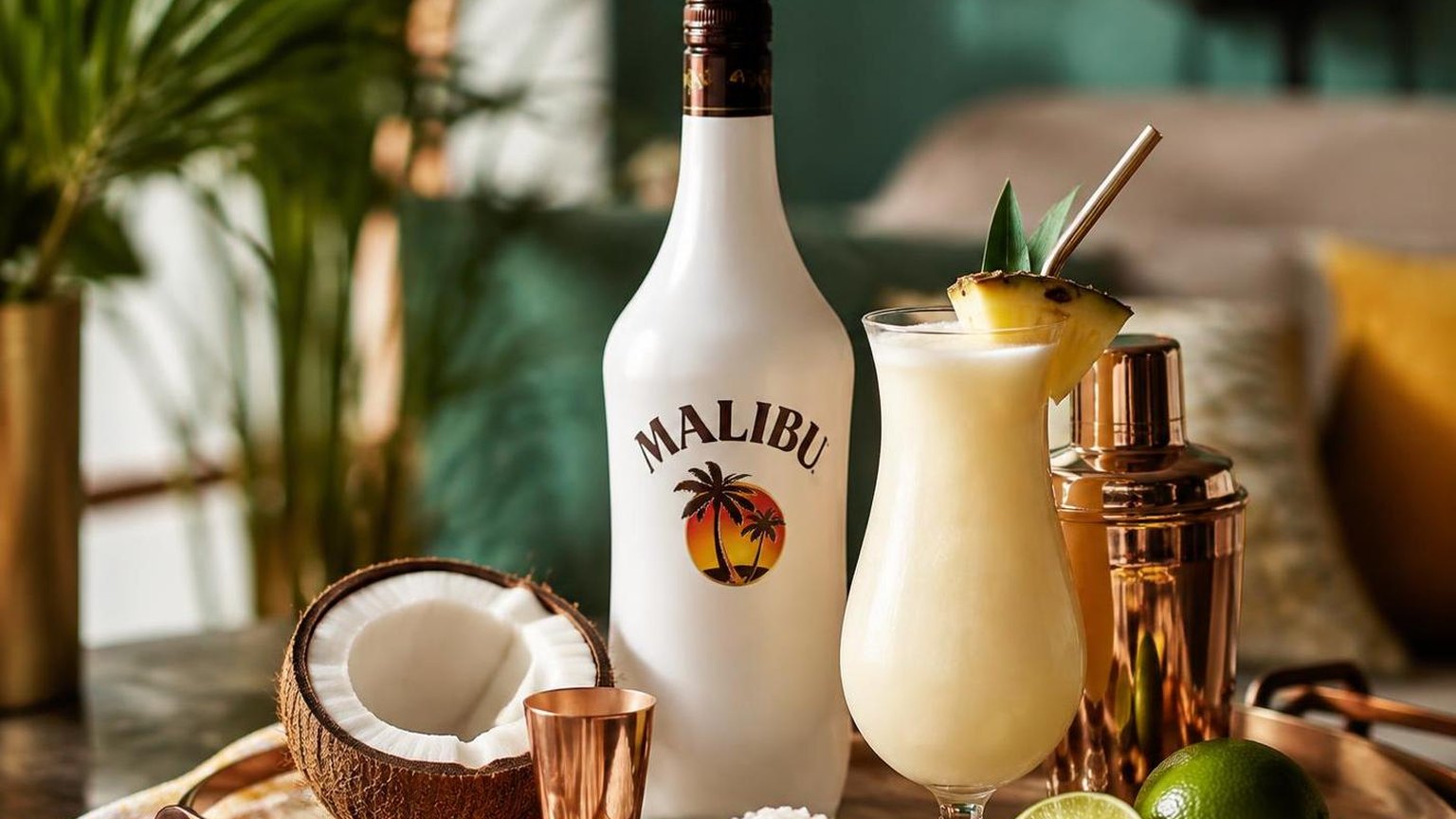
Blend 2 ounces Malibu, 2 ounces pineapple juice, 1 ounce cream of coconut, and about 1 cup ice; add 1 ounce white rum if you want a stronger, more traditional version.
What juice goes best with Malibu rum?
Pineapple juice is the classic choice because its acidity and tropical flavor match Malibu’s coconut profile. Orange, mango, cranberry, and passion fruit juice also work, but cranberry gives the sharpest contrast if the drink tastes too sweet.
Can Malibu rum be used in desserts?
Yes, Malibu works well in coconut cake glaze, pineapple upside-down cake syrup, rum whipped cream, and no-bake tropical trifles.
For a glaze, mix 1 tablespoon Malibu into 1 cup powdered sugar with a little lime juice or pineapple juice, adding liquid slowly until pourable.
Does Malibu rum need to be refrigerated after opening?
No. Malibu Original is 21% ABV, so it is shelf-stable after opening when stored tightly sealed in a cool, dark place away from heat and sunlight. Refrigeration is optional, but it helps keep the coconut flavor crisp and the bottle ready for chilled pours.
What foods pair well with Malibu rum cocktails?
Malibu’s coconut sweetness pairs best with tropical and salty foods, including grilled shrimp, jerk chicken, fish tacos, pineapple salsa, and coconut-based desserts.
The sweet-salty contrast keeps drinks from tasting flat, while citrus, spice, and charred flavors match the rum’s vanilla and coconut notes.
Related Reading
- How Expensive Is Malibu Rum?
- How To Soak Fruit In Rum?
- Where Was Rum First Made?
- What Is A Rum And Coke Urban Dictionary?
- Can I Mix Protein Shake With Vodka Or Rum?
- How Much Rum Will It Take To Get You Drunk? Find Out Now
- Do Poeple Drink Rum At Frat Parties?
- All Alcohol Guides
- CDC Alcohol and Public Health (2024)
- NIAAA What Is a Standard Drink? (2024)
- USDA FoodData Central: Alcoholic Beverage, Distilled, Rum, 80 Proof (2019)
- FDA Calories on the Menu (2023)
- International Bartenders Association: Piña Colada (2024)
- Malibu Rum Drinks: Malibu Piña Colada (2024)
- Liquor.com: Malibu Bay Breeze (2023)