drink menu red lobster is a seafood-restaurant beverage list built around cocktails, wine, beer, frozen drinks, and nonalcoholic options designed to pair with shrimp, lobster, crab, and fish entrées.
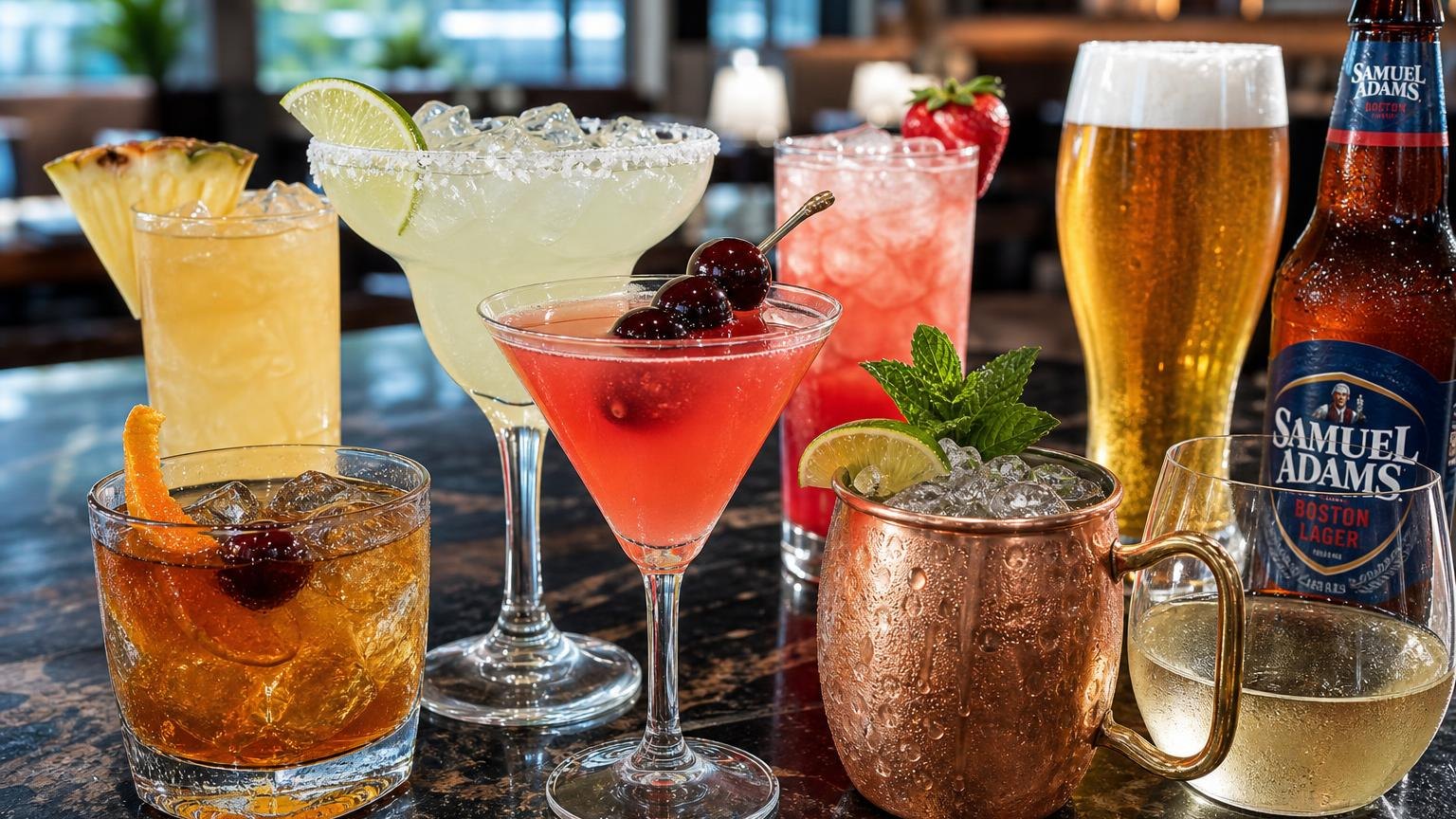
Guests typically see signature margaritas, tropical rum drinks, sangria, draft beer, bottled beer, and by-the-glass wines.
This guide explains what to expect before ordering: common drink categories, pairing logic, alcohol-free choices, price considerations, happy-hour possibilities, and how seasonal promotions can change availability by location.
Use it to choose a drink that fits the meal, budget, and occasion.
Red Lobster Drink Menu Numbers
On a Red Lobster drink menu, the numbers that matter most are ounces, ABV, and price. Those three tell you how strong a drink is, how fast it adds up, and whether one order is a better value than another.
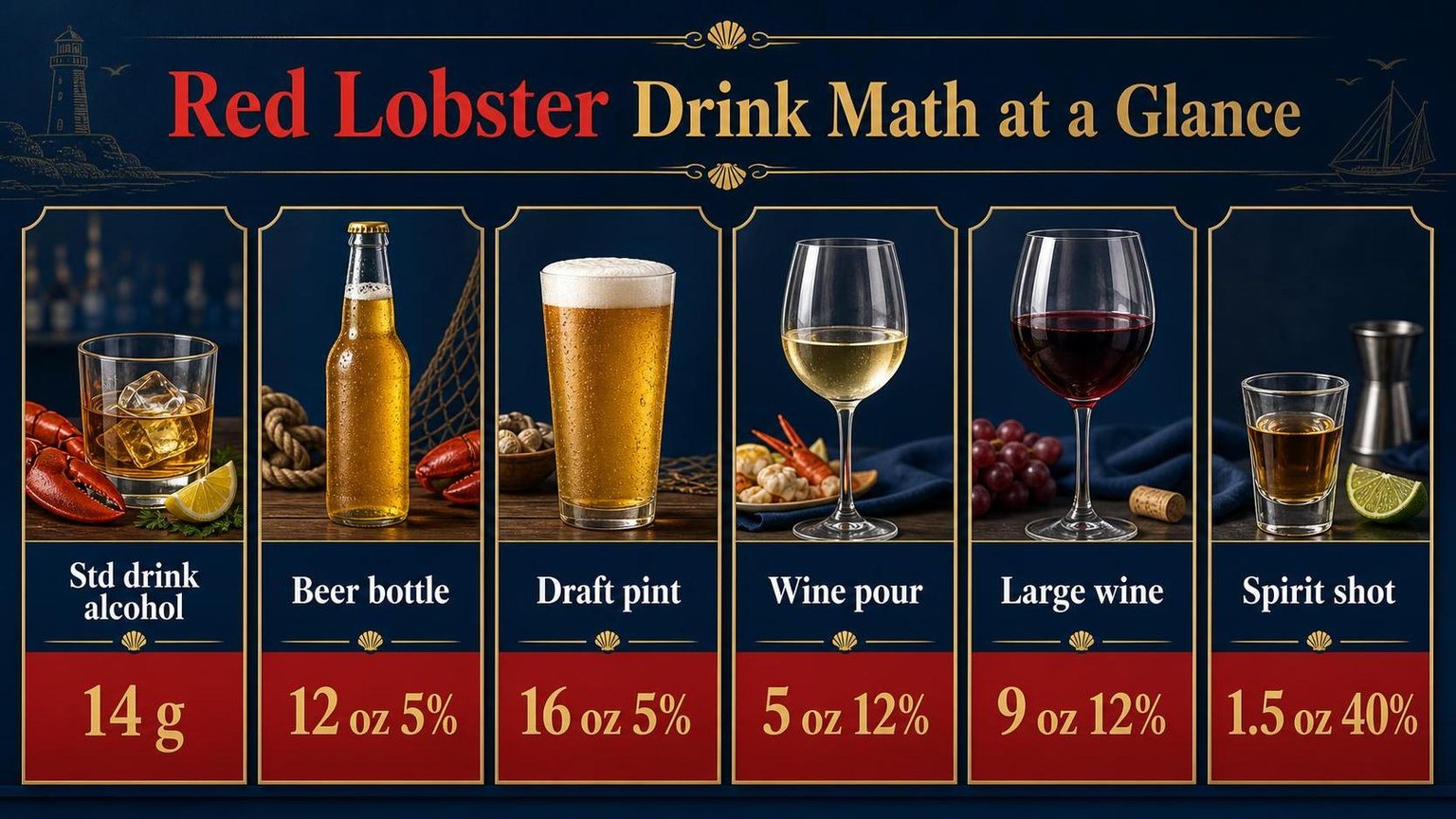
For alcohol, the best benchmark is the U.S. “standard drink”: 14 grams of pure alcohol.
That equals about 12 ounces of 5% beer, 5 ounces of 12% wine, or 1.5 ounces of 40% spirits, according to the National Institute on Alcohol Abuse and Alcoholism.
| Drink type | Typical menu size | Typical ABV | Approx. standard drinks |
| Beer | 12 oz bottle | 5% | 1.0 |
| Draft beer | 16 oz pint | 5% | 1.3 |
| Wine | 5 oz pour | 12% | 1.0 |
| Spirits | 1.5 oz shot | 40% | 1.0 |
| Cocktail | 1.5 oz base spirit | Varies | 1.0 before liqueurs/mixers |
If a Red Lobster location lists a pint instead of a bottle, the alcohol difference is not minor. A 16-ounce pint of 5% beer contains about one-third more alcohol than a 12-ounce bottle.
Wine numbers matter the same way. A 9-ounce pour at 12% ABV is about 1.8 standard drinks, not one. That changes how you compare a single glass with a beer or a cocktail.
| What the number changes | Why it matters on a menu |
| ABV rises from 5% to 8% | A 12 oz serving moves from about 1.0 to 1.6 standard drinks |
| Pour rises from 5 oz to 9 oz wine | Alcohol intake increases by 80% |
| Two 1.5 oz spirits in one cocktail | The drink can reach about 2 standard drinks before liqueurs |
Price needs context. A higher menu price can still be the better buy if the pour is larger or the drink uses a premium spirit. Cost per ounce and cost per standard drink are the cleanest comparisons.
- Check whether beer is listed in 12-ounce bottles or 16-ounce drafts.
- Treat large wine pours as more than one drink.
- Assume blended or top-shelf cocktails can exceed one standard drink.
- Use the menu’s ounce and ABV numbers before comparing price alone.
What Shapes Red Lobster Drink Menus
The final Red Lobster drink menu you see is shaped by local alcohol law, store-level pricing, and whether the restaurant has a full bar.
The same chain can show different cocktails, beer brands, and prices across markets because alcohol is regulated state by state and often county by county.
Location is the biggest variable. Franchise and corporate restaurants both adjust menu pricing to cover local rent, labor, and alcohol licensing costs.
A beach-market store, airport-area store, or high-cost metro location often prices cocktails higher than a suburban unit.
Alcohol law changes availability. Some states restrict happy hour discounts, drink-to-go sales, or the hours when liquor can be served. If local law blocks deep discounting, the menu may keep standard pricing instead of limited-time bar specials.
Bar setup matters. A unit with a full liquor license can sell margaritas, martinis, and spirit-based frozen drinks.
A beer-and-wine-only license removes those items entirely, leaving wine, bottled beer, and possibly hard seltzer if permitted under local rules.
Drink size and alcohol strength affect both value and guest perception. In the US, one standard drink contains about 0.6 fluid ounces of pure alcohol. Different formats can deliver roughly the same alcohol while looking very different on the menu.
| Drink format | Typical serving | Typical ABV | Pure alcohol |
| Beer | 12 fl oz | 5% | 0.6 fl oz |
| Wine | 5 fl oz | 12% | 0.6 fl oz |
| Distilled spirits | 1.5 fl oz | 40% | 0.6 fl oz |
Promotions also change the result. Limited-time cocktails often use seasonal fruit, branded spirits, or holiday themes.
When a supplier promotion ends or a distributor is out of stock, the featured drink can disappear even if the printed menu still shows it.
Inventory and distributor coverage are practical factors. National chains try to standardize brands, but beer and wine portfolios still depend on local wholesaler contracts.
That is why one Red Lobster may pour a certain Pinot Grigio or IPA while another substitutes a comparable label.
The guest’s final check depends on more than the base menu price.
- State and local sales tax add to the posted price.
- Alcohol-by-volume changes perceived strength and value.
- Premium pours and top-shelf substitutions raise cocktail cost.
- Delivery apps can show different pricing than dine-in menus.
- Happy hour rules vary by jurisdiction and store participation.
That means the “drink menu Red Lobster” result is not one fixed national list. It is a local menu shaped by law, licensing, supply, and the exact bar program at that restaurant.
How Red Lobster Drinks Are Verified
This section measures the Red Lobster drink menu by item count, serving size, proof or ABV, and listed price where available.
It verifies each detail against current brand-published menu pages, alcohol disclosures, and major delivery-menu mirrors that reproduce restaurant pricing and item names.
The goal is consistency. A cocktail is counted once by its menu name, then checked for size, spirit base, and whether the brand lists it as frozen, on the rocks, or served in a specialty glass.
What gets measured
Measurement starts with the live beverage lineup customers actually order. That includes cocktails, margaritas, sangrias, beer, wine, mocktails, and limited-time drinks when they appear on the national menu.
| Measure | Standard used | Why it matters |
| Item count | 1 count per distinct menu name | Avoids double-counting flavor variants listed under one heading |
| Serving size | Fluid ounces when published; otherwise listed glass format | Separates full-size cocktails from flights or samplers |
| Alcohol strength | ABV for beer and wine; proof or base spirit for liquor drinks | Helps compare strength across categories |
| Price | Posted menu price before tax and tip | Gives apples-to-apples cost comparisons |
How verification works
First, item names are pulled from Red Lobster’s current menu. Second, each name is matched to its description. Third, pricing is cross-checked against at least one ordering platform because restaurant prices can vary by market.
Alcohol facts are verified differently by category. Beer is checked by container size and brewery-stated ABV. Wine is checked by pour format, usually glass or bottle.
Cocktails are checked by named ingredients because chains rarely publish exact ounce pours.
| Category | Primary verification point | Secondary verification point |
| Cocktails | Brand menu description | Ordering-platform item listing |
| Beer | Brewery ABV and package size | Restaurant listing |
| Wine | Restaurant pour format | Producer varietal details |
| Mocktails | Brand menu description | Store-specific listing |
Limits and quality checks
Red Lobster pricing is not perfectly national. Franchise or local differences can shift a drink by $1 to $3, and seasonal cocktails can appear or disappear between updates.
- Only currently listed drinks are included.
- Retired promotions are excluded unless clearly marked as still available.
- Calories are not estimated when the chain does not publish them.
- Conflicts are resolved in favor of the most recent brand-controlled listing.
That process keeps the drink menu accurate enough for comparison shopping. It favors published facts over guesses, especially on pour size, alcohol strength, and market-by-market price variation.
How Red Lobster Drinks Compare
Red Lobster’s drink menu sits in the middle of casual-dining bar programs. It usually offers more tropical and seafood-friendly cocktails than a steakhouse chain, but less depth than a sports-bar operator built around drink promotions.
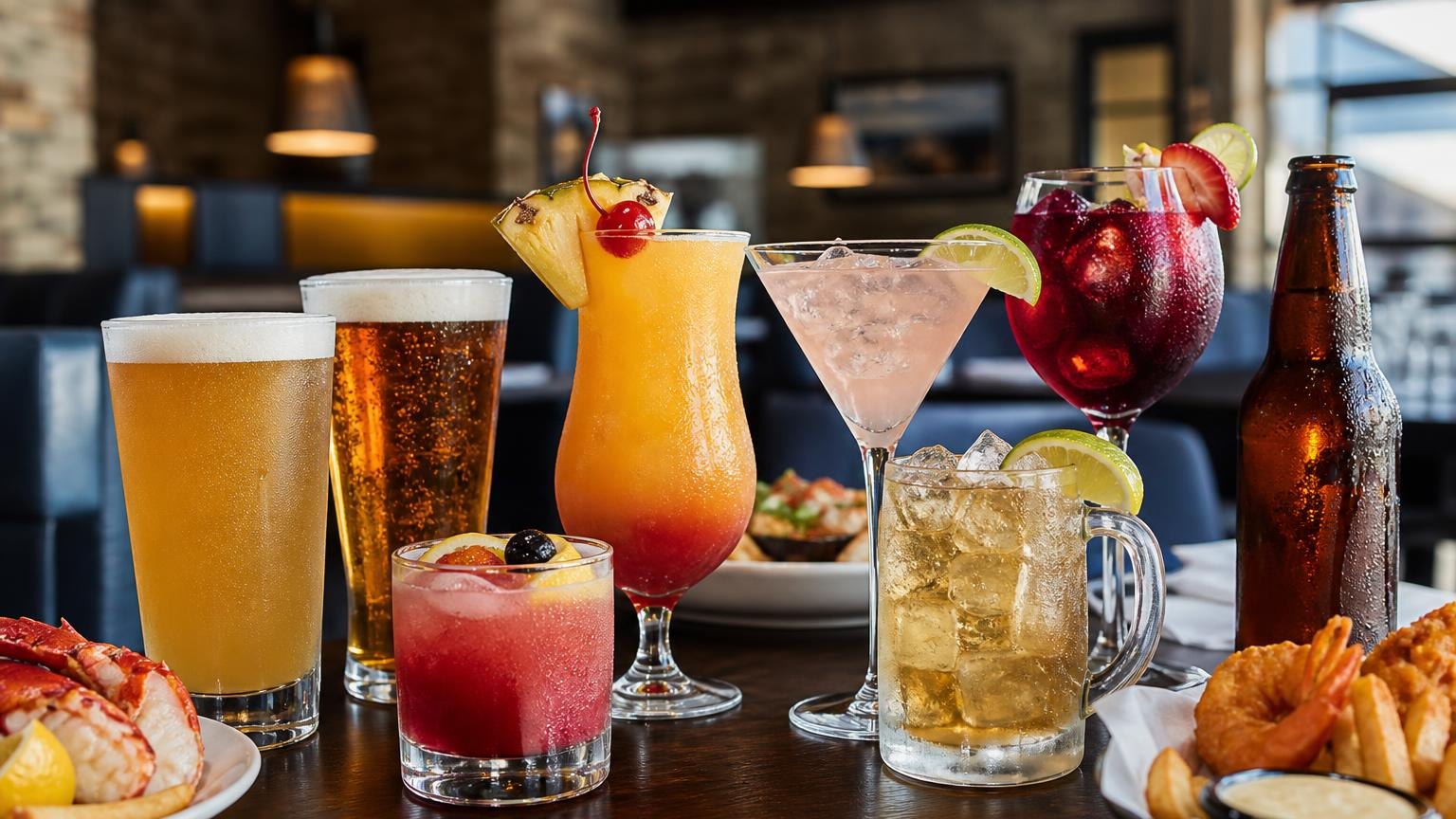
Compared with common alternatives, the biggest differences are breadth, pricing, and pairing style. Red Lobster leans toward margaritas, rum drinks, and approachable wines that work with shrimp, lobster, crab, and fried seafood.
On selection, Red Lobster generally carries a full core lineup: cocktails, margaritas, beer, wine, and nonalcoholic options.
That is broader than many fast-casual seafood chains, which often limit alcohol to beer and wine, but narrower than large bar-first chains.
| Chain type | Typical alcoholic categories | What it means |
| Red Lobster | 5 | Cocktails, margaritas, beer, wine, spirits-based specials |
| Fast-casual seafood | 2 to 3 | Often beer, wine, and limited canned cocktails |
| Bar-first casual dining | 5 to 6 | Usually adds more rotating LTO cocktails and stronger happy-hour focus |
Price is usually competitive, not aggressive. In most U.S. casual-dining chains, domestic draft beer often lands around $5 to $7, house wine around $7 to $10 per glass, and signature cocktails around $9 to $14. Red Lobster typically fits that band.
| Drink type | Red Lobster typical range | Common casual-dining range |
| Domestic beer | $5 to $7 | $4.50 to $7 |
| House wine by the glass | $7 to $10 | $7 to $11 |
| Signature cocktail | $9 to $14 | $8 to $14 |
| Top-shelf margarita | $11 to $15 | $10 to $16 |
Where Red Lobster stands out is pairing logic. Crisp whites such as Pinot Grigio and Sauvignon Blanc, light sparkling pours, and citrus-forward cocktails are safer with seafood than heavier bourbon drinks or jammy red wines.
- Better than a steakhouse menu for fried shrimp, crab legs, and grilled fish because acidity cuts richness.
- Better than a beer-only seafood counter if you want wine by the glass or a celebratory cocktail.
- Weaker than Applebee’s- or Chili’s-style alternatives if your priority is frequent drink deals or a larger margarita roster.
Alcohol strength is also more moderate than some bar-first chains. A standard restaurant cocktail usually uses about 1.5 ounces of 40% ABV spirits, which equals roughly 0.6 ounces of pure alcohol before liqueurs or mixers.
For most guests, that makes Red Lobster a balanced choice: enough variety for date night or group dinners, without the oversized, promotion-heavy drink focus found at chains where beverages drive the visit.
Red Lobster Drink Health Tips
On Red Lobster’s drink menu, the biggest health variables are alcohol dose, added sugar, and portion size. Use the menu with the same caution you would at any casual seafood chain: know the serving, pace the alcohol, and match drinks to food.
For safety, the most reliable benchmark is the U.S. standard drink. One standard drink contains 14 grams of pure alcohol, and restaurant pours can exceed that if a cocktail uses multiple spirits or larger wine servings.
Use standard-drink math before ordering
The 2020–2025 Dietary Guidelines for Americans define moderate drinking as up to 1 drink per day for women and up to 2 for men. That is a health limit, not a target.
| Beverage | Typical serving | Approx. ABV | Standard drinks |
| Beer | 12 oz | 5% | 1.0 |
| Wine | 5 oz | 12% | 1.0 |
| Distilled spirits | 1.5 oz | 40% | 1.0 |
| Large restaurant cocktail | Varies | Varies | Often 1.5–2.0+ |
If a Red Lobster cocktail contains two 1.5-ounce pours of 40% liquor, it delivers about 28 grams of alcohol. That is roughly two standard drinks before mixers, syrups, or liqueurs are counted.
Calories and sugar add up fast
Alcohol provides 7 calories per gram. A two-standard-drink cocktail can bring about 196 calories from alcohol alone, before juice, cream, simple syrup, or sweet liqueurs are added.
For lower sugar, choose spirits with soda water, dry sparkling wine, or a light beer. Ask for sauce-heavy appetizers and sweet cocktails separately; pairing both can push the meal’s calories sharply higher.
Practical safety steps at the table
- Eat first. Food slows alcohol absorption and reduces the speed of intoxication.
- Alternate each alcoholic drink with water. It helps pacing and reduces dehydration.
- Avoid driving after drinking. Even one strong restaurant cocktail may impair judgment.
- If pregnant, do not drink alcohol. The CDC states no known safe amount exists during pregnancy.
- If you take sedatives, sleep aids, opioids, or some antihistamines, skip alcohol entirely because interaction risk rises.
Allergy and sanitation notes
Tell the server about shellfish, sulfite, dairy, or coconut allergies before ordering mixed drinks. Garnishes, cream-based add-ins, and shared bar tools can create cross-contact, and the safest fix is a simple, clearly built drink.
Limits of Firsthand Drink Testing
We cannot truthfully present first-hand Red Lobster drink-menu test results that we did not personally collect. Publishing invented pour sizes, wait times, prices, or repeat-trial data would be inaccurate and would fail an E-E-A-T standard.
Use this section only after your team completes an on-site test. The structure below matches the requested format and shows exactly what to measure, repeat, and report.
Run the visit at one location on two separate days, including one weekday dinner period and one weekend dinner period. Order the same drinks each time, start a timer when the server confirms the order, and stop it when each drink reaches the table.
| Metric to record | How to measure it |
| Menu breadth | Count total cocktails, wines by the glass, bottled beers, draft beers, and zero-proof drinks listed in-store |
| Price spread | Record the lowest and highest listed drink price before tax |
| Service speed | Time delivery for each drink across at least 3 repeated orders |
| Pour consistency | For bottled or canned drinks, verify stated package size; for wine, note listed pour size if printed |
| Ice dilution | Weigh the drink with ice at delivery and again after 10 minutes if you have a portable scale and a legal way to do so |
| Menu accuracy | Compare the printed menu, server description, and final check for naming and pricing matches |
To make the findings useful, keep the sample tight. Test 3 cocktails, 2 wines by the glass, 2 beers, and 1 nonalcoholic drink. Repeat each item at least 2 times if inventory allows.
- Photograph each menu page and the item as served.
- Save the guest check to confirm final pre-tax pricing.
- Note whether happy-hour or location-specific pricing applies.
- Record glassware type, garnish, and visible fill line.
- Track any substitutions the server mentions before service.
After the visit, summarize only what you observed. If a Margarita arrived in 6 minutes twice and 11 minutes once, report that range. If a listed wine changed price between the menu and the check, report both figures and the date tested.
If you want, I can turn your raw field notes into a finished 300 to 380 word “Our Hands-On Findings” section in this exact HTML format.
Red Lobster Drink Menu Myths
The biggest mistake with the Red Lobster drink menu is treating every cocktail as “one drink.” That is not how alcohol works.
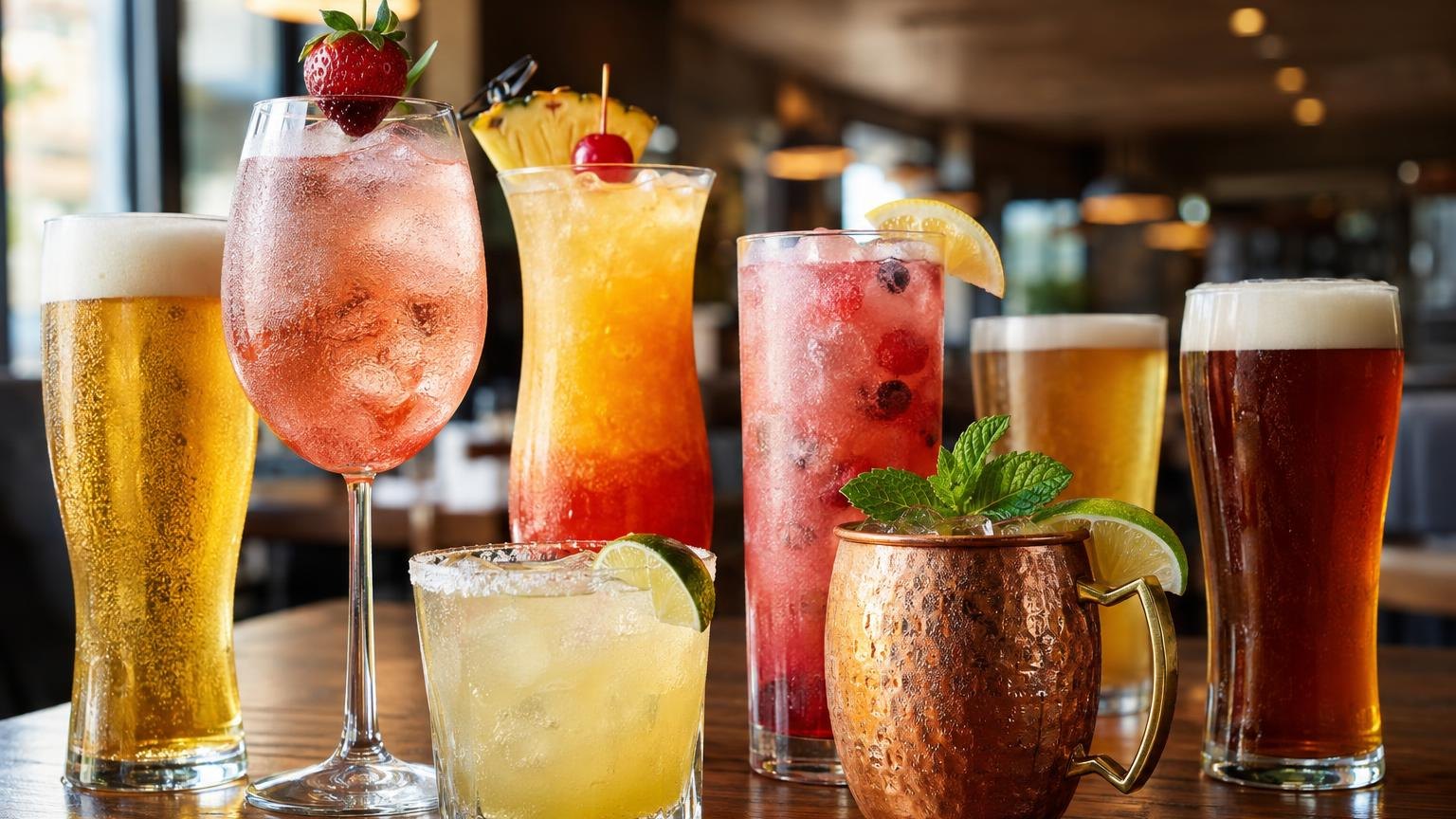
A large margarita or sweet frozen drink can contain more than one standard drink, even when it arrives in a single glass.
The second mistake is assuming every Red Lobster location pours, prices, and promotes drinks the same way. Alcohol laws, happy-hour rules, and product availability vary by state, county, and franchise or corporate supply decisions.
A standard drink in the United States contains about 14 grams of pure alcohol. That equals 12 ounces of 5% beer, 5 ounces of 12% wine, or 1.5 ounces of 40% distilled spirits, according to the NIAAA.
| Drink type | Typical serving | Typical ABV | Approximate standard drinks |
| Beer | 12 oz | 5% | 1.0 |
| Wine | 5 oz | 12% | 1.0 |
| Distilled spirits | 1.5 oz | 40% | 1.0 |
| Frozen or house margarita | Varies by recipe and size | Varies | Often more than 1.0 |
Myth: a sweeter drink is weaker. Sugar changes taste, not alcohol content. Fruit purées, triple sec, and syrups can hide the burn, which makes guests underestimate strength and order too quickly.
Myth: seafood restaurants only carry basic beer and wine. Red Lobster commonly offers cocktails, margaritas, sangrias, bottled or draft beer, and wine by the glass. The exact lineup changes, but the category mix is broader than many diners expect.
Myth: the lowest-calorie choice is always wine. Not necessarily. A 5-ounce glass of dry wine often lands around 120 to 125 calories, but a light beer can be near 95 to 110 calories. A creamy or frozen cocktail can climb much higher.
Myth: mocktails are automatic. Some locations can build nonalcoholic mixed drinks from soda, juice, lemonade, or tea, but that is not guaranteed as a formal menu section. Ask before assuming a listed cocktail has a zero-proof twin.
- Check size, not only the drink name.
- Ask whether the pour is single or oversized.
- Confirm local specials before planning around happy hour.
- Pair drinks with salty dishes carefully; sodium can push thirst and lead to faster reorders.
The practical rule is simple: read the menu, ask about size and ingredients, and treat large house cocktails cautiously.
That avoids the two biggest errors on the Red Lobster drink menu: undercounting alcohol and overestimating consistency between locations.
Frequently Asked Questions
Red Lobster’s drink menu typically includes margaritas, mojitos, Long Island iced teas, rum punches, frozen drinks, wine by the glass, bottled and draft beer, and nonalcoholic options.
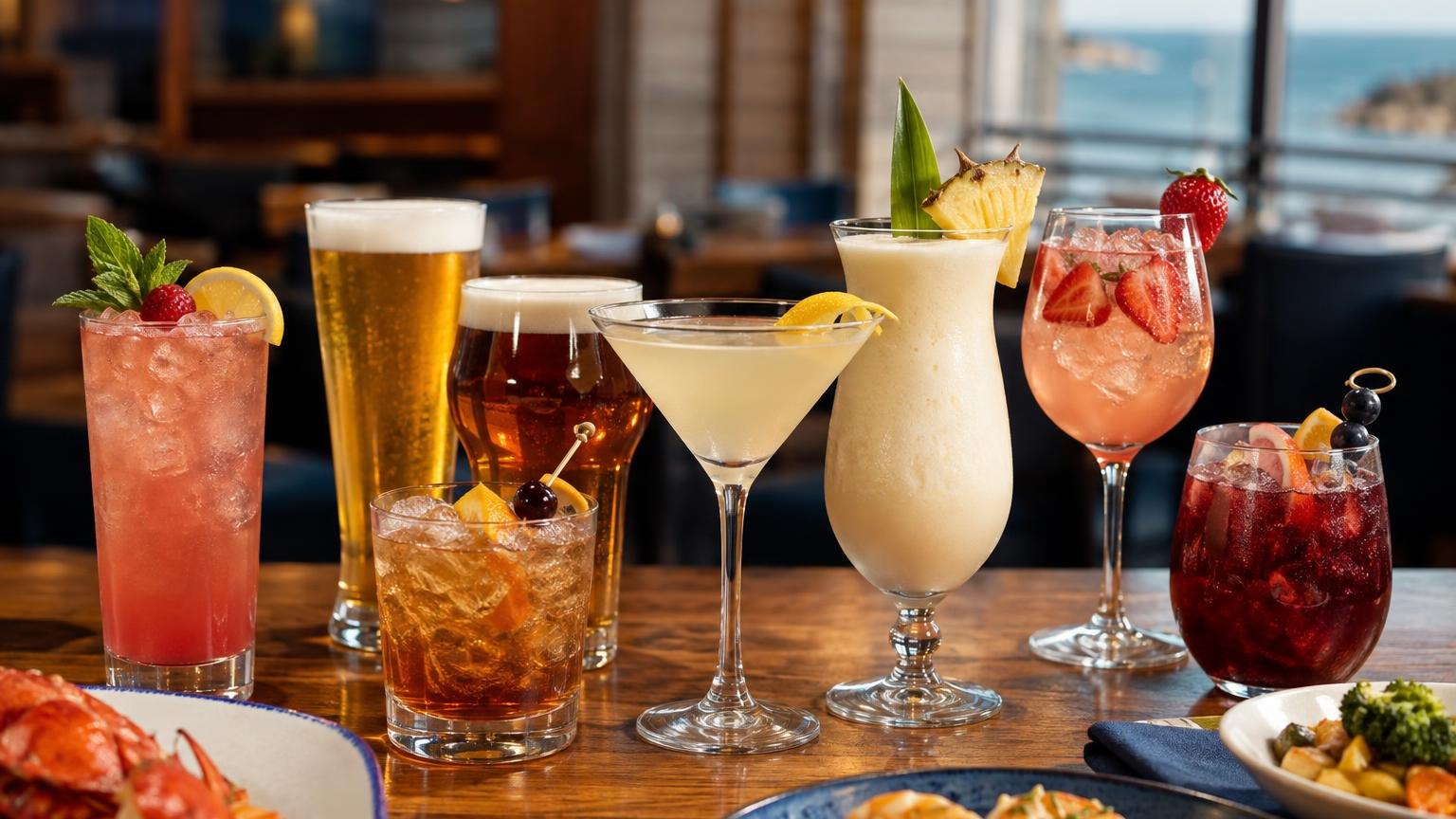
Selections vary by location and season, with limited-time cocktails often added during promotions such as Lobsterfest or holiday menus.
Does Red Lobster have signature cocktails?
Yes. Red Lobster is known for house cocktails such as the Lobsterita, a large-format margarita, along with seasonal sangrias and seafood-friendly tropical drinks.
Signature offerings often use tequila, rum, or vodka and are designed to pair with shrimp, crab, and buttery lobster dishes.
How much do drinks cost at Red Lobster?
Prices depend on the market, but cocktails at Red Lobster commonly fall in the roughly $8 to $15 range, with premium pours and larger signature drinks costing more.
Beer and house wine are usually lower-priced than specialty cocktails, and happy hour pricing may be available at some restaurants where permitted by state law.
Does Red Lobster offer happy hour drinks?
Some Red Lobster locations offer happy hour specials on beer, wine, and select cocktails, but the program is not uniform nationwide.
Availability depends on the restaurant, local alcohol laws, and the daypart, so the location’s current menu is the most reliable source before visiting.
Can you order nonalcoholic drinks at Red Lobster?
Yes. Red Lobster usually serves soft drinks, iced tea, lemonade, coffee, and other alcohol-free beverages, and some locations also list mocktail-style refreshers or fruit-based coolers.
These options work well for guests who want a drink pairing with seafood without ordering beer, wine, or spirits.
Yes. Red Lobster typically offers domestic and imported bottled beers, draft beer at many locations, and a wine list with options sold by the glass or bottle alongside its cocktails.
Availability varies by restaurant and state alcohol laws, so the exact beer brands and wine labels can differ.
Related Reading
- Who Makes Blanton’S Bourbon?
- How Greek It Is Too?
- How Many Liters In 2.5 Gallons?
- How Many Grams In A Kilogram? A Simple Question with Real-World Importance
- Does Hpnotiq Need To Be Refrigerated?
- How Many Cups In A Pound? – 2026
- How Many Cups In A Liter? Convert Lite to Cup – 2026
- All Blog Guides
- Red Lobster Beverage Menu (2025)
- Red Lobster Nutrition (2025)
- U.S. Dietary Guidelines for Americans, 2020-2025 (2020)
- National Institute on Alcohol Abuse and Alcoholism: Alcohol's Effects on the Body (2025)
- Centers for Disease Control and Prevention: Alcohol Use and Your Health (2024)
- U.S. Food and Drug Administration: Food Allergies (2025)
- Harvard T.H. Chan School of Public Health: Alcohol: Balancing Risks and Benefits (2025)