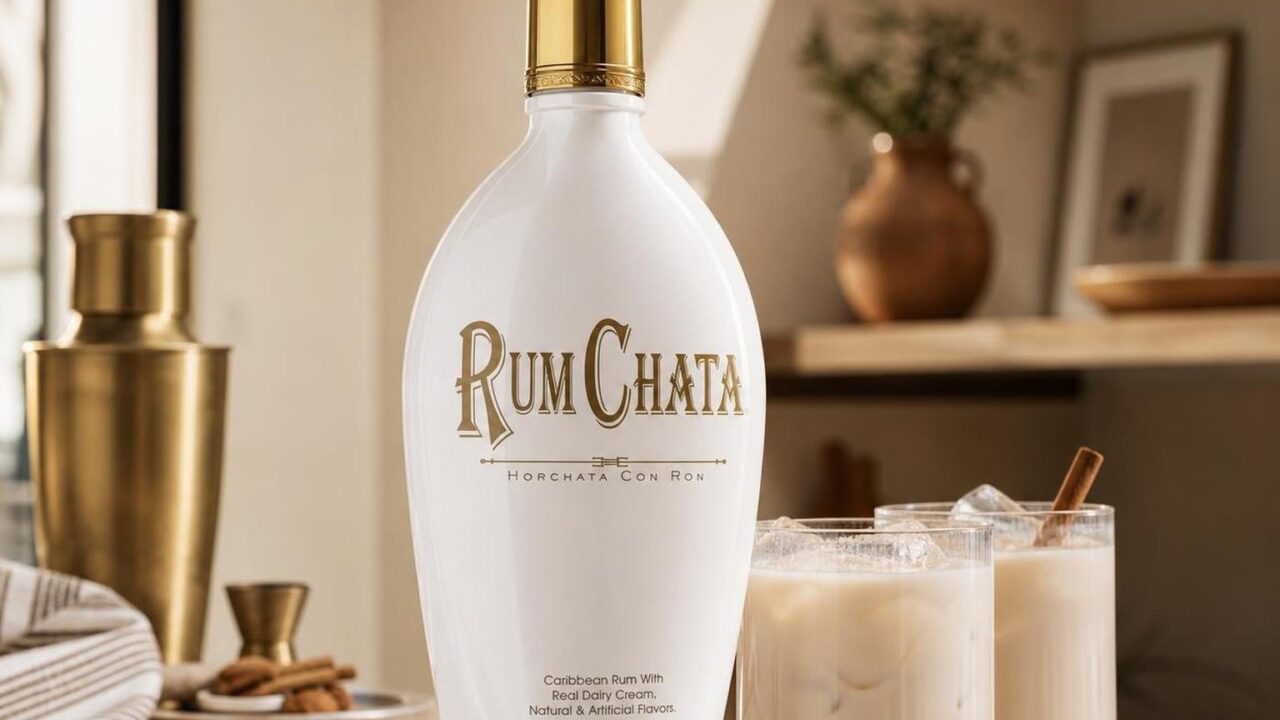
How Long Does Rumchata Last? is 6 months after opening for best flavor, while an unopened bottle can stay shelf-stable for years when stored cool, dark, and tightly sealed.
RumChata’s rum base, dairy cream, sugar, and preservatives make it more durable than fresh cream, but not flavor-proof forever.
This guide explains unopened storage, opened-bottle quality, refrigeration rules, spoilage signs, and when to discard it.
Use the bottle’s condition, aroma, texture, and taste together; separation, sour odor, curdling, or harsh stale flavor means the bottle should not be served.
RumChata Shelf Life by the Numbers
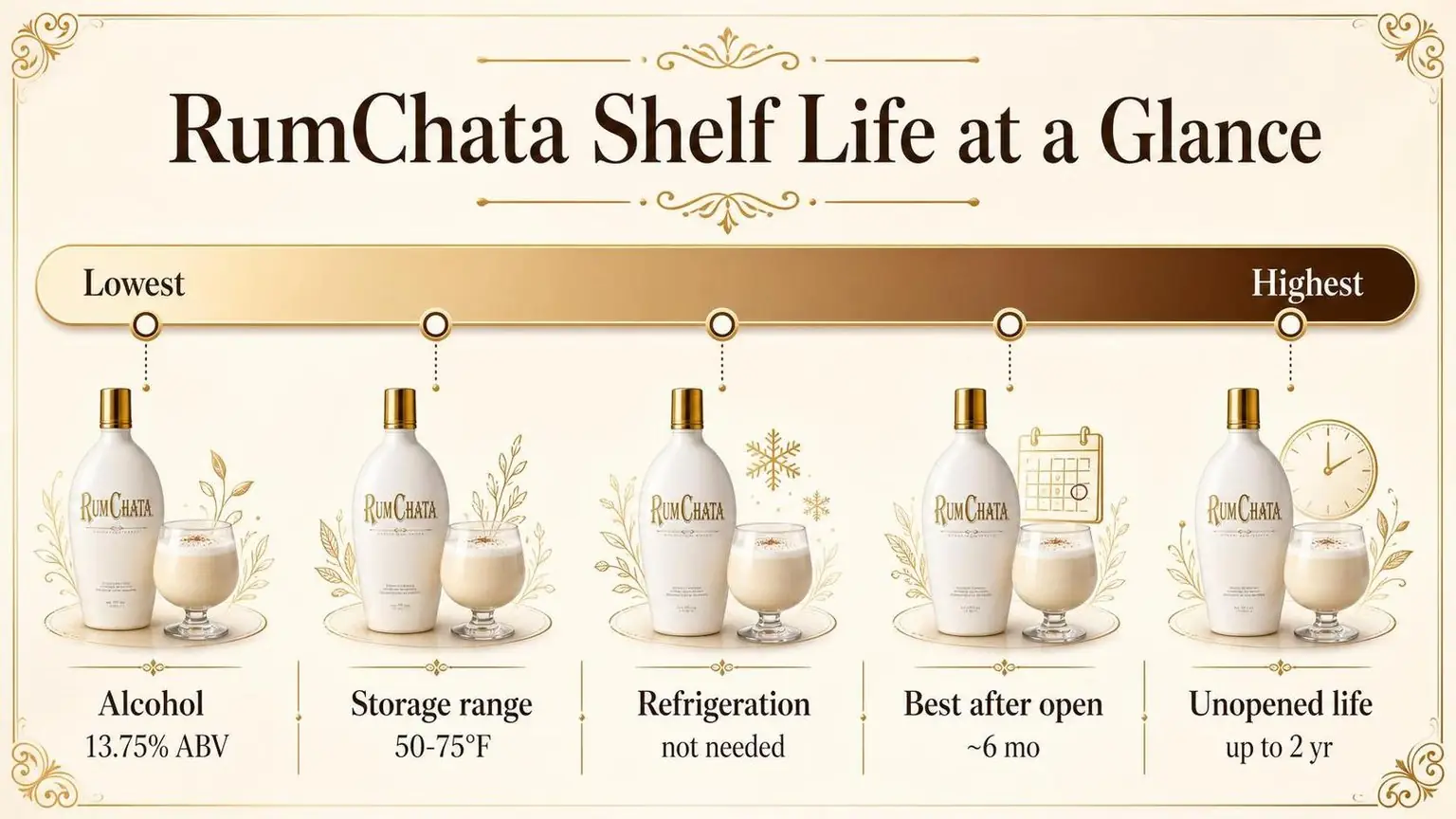
RumChata’s useful life comes down to four numbers: 13.75% ABV, an unopened shelf life of up to about 2 years, best quality within about 6 months after opening, and a storage range of 50°F to 75°F.
Those numbers explain why it lasts longer than fresh dairy, but not indefinitely.
The product is a cream liqueur made with Caribbean rum, dairy cream, cinnamon, and sugar. Its alcohol and processing make it shelf-stable, but flavor and texture still decline over time, especially after the bottle is opened.
| Measure | RumChata number | What it means |
| Alcohol by volume | 13.75% | High enough to help preservation, lower than spirits that keep almost indefinitely |
| Unopened shelf life | Up to 2 years | Common manufacturer guidance when stored correctly |
| Opened, best quality | About 6 months | Flavor is usually strongest in this window |
| Ideal storage temperature | 50°F to 75°F | Avoids heat damage and texture changes |
| Refrigeration required? | No | Not required, though some people prefer it chilled |
The 13.75% ABV matters because alcohol slows microbial growth. It does not make RumChata immortal. Cream liqueurs still face oxidation, flavor fade, and possible separation once oxygen enters the bottle.
The “up to 2 years” figure applies to unopened bottles stored away from heat and direct light. A bottle left near a stove, in a hot car, or in repeated temperature swings can lose quality much sooner.
After opening, about 6 months is a practical quality benchmark. Many bottles remain drinkable longer, but cinnamon aroma, creamy sweetness, and smooth texture usually start to soften after that point.
Storage temperature is the easiest number to control. Keeping the bottle between 50°F and 75°F helps preserve emulsion stability. Prolonged heat above normal room temperature raises the chance of off flavors and a thicker, uneven texture.
- If the bottle smells sour, rancid, or noticeably “off,” discard it.
- If you see heavy curdling, persistent lumps, or major separation that does not mix back in, discard it.
- If the taste turns flat, stale, or sharply alcoholic, quality has passed its peak.
In practical terms, use unopened RumChata within 2 years and opened RumChata within about 6 months for best quality. Store it cool, dry, and sealed tightly. Those numbers give the safest quality margin.
What Determines RumChata Shelf Life
RumChata’s shelf life depends less on a single expiration date and more on storage conditions after bottling and after opening.
It is a cream liqueur made with dairy cream and bottled at 13.75% ABV in the U.S., so heat, oxygen, and contamination matter more than with straight spirits.
The product is formulated to remain shelf-stable, but that stability has limits. Flavor loss usually shows up before true spoilage, especially if the bottle sits warm, open, or exposed to light for long periods.
Temperature is the biggest variable. Cream liqueurs hold quality best in a cool, steady environment, because repeated warming and cooling can stress the emulsion and accelerate separation, off aromas, and dull flavor.
| Factor | Why it matters | Practical target |
| Alcohol content | At 13.75% ABV, RumChata has more protection than milk but less than full-proof liquor. | Stable unopened, but not indestructible after opening. |
| Storage temperature | Heat speeds oxidation and can destabilize cream emulsions. | Store around 59-68°F; avoid sustained heat above 75°F. |
| Oxygen exposure | Each opening introduces air, which slowly degrades aroma and taste. | Recap promptly; minimize long-open bottles. |
| Light exposure | UV and strong light can accelerate quality loss. | Keep in a dark cabinet, not on a sunny bar shelf. |
| Contamination | Dirty pour spouts or adding ingredients can introduce microbes. | Pour cleanly; do not drink from the bottle. |
Whether the bottle is opened matters almost as much as temperature. An unopened bottle has very little oxygen contact. Once opened, headspace grows, oxidation increases, and the liqueur’s cinnamon-vanilla profile starts flattening faster.
Refrigeration is optional, but it can help preserve taste after opening by slowing chemical change. The trade-off is texture: very cold storage can make cream liqueurs look thicker, though that does not automatically mean they are bad.
- Keep the cap tightly sealed after every pour.
- Do not leave the bottle in a car, garage, or near an oven.
- Avoid freezing; very low temperatures can affect texture and emulsion stability.
- Use clean glasses and tools to prevent introducing residue or bacteria.
Age also matters. Even if RumChata remains safe, cream liqueurs usually taste best within a reasonable window after opening. If you notice curdling, sour smell, gas buildup, or a sharply off taste, discard it rather than testing further.
How to Check RumChata Stability
RumChata shelf life is verified with three checks: the date code, storage conditions, and visible or sensory stability. Because RumChata is a cream liqueur at 13.75% ABV, age alone is not the only measure; heat, oxygen, and emulsion breakdown matter.
The practical standard is to confirm whether the bottle is unopened or opened, then compare its condition against normal cream-liqueur performance.
A bottle can test “within age” on paper and still fail if it was stored hot or shows separation.
The first measurement is the bottle date or lot code. RumChata does not usually print a simple “best by” date on every bottle, so verification often starts with the production code and seller turnover.
In retail practice, unopened cream liqueurs are commonly judged against a roughly 2-year quality window.
The second measurement is storage history. A stable bottle should have been kept tightly sealed, upright, and away from heat and light. Temperatures around 50 to 75 degrees Fahrenheit are the safest working range for preserving texture and flavor.
| Check point | What to verify | Why it matters |
| Alcohol content | 13.75% ABV | Alcohol slows spoilage but does not stop oxidation or emulsion failure |
| Unopened quality window | About 24 months | Common benchmark for cream liqueur flavor stability |
| Opened quality window | About 6 to 12 months | Oxygen exposure speeds flavor loss and texture change |
| Storage temperature | 50 to 75 degrees Fahrenheit | Lower heat reduces separation and cooked-dairy notes |
The third measurement is a condition check at serving time. Pour 1 ounce into a clear glass and inspect color, texture, and aroma. RumChata should look uniformly off-white, pour smoothly, and smell sweet, creamy, and cinnamon-forward.
- Reject it if you see curdled bits, thick clumps, or watery separation that does not reincorporate after shaking.
- Reject it if the aroma turns sour, rancid, or sharply acidic.
- Reject it if the flavor tastes flat, chalky, or distinctly “off,” even when the appearance looks normal.
Refrigeration is optional after opening, not mandatory, but colder storage usually helps preserve flavor consistency. Final verification is simple: date code first, storage second, glass test last. If any of the three fail, replace the bottle.
RumChata vs Dairy Drinks and Spirits
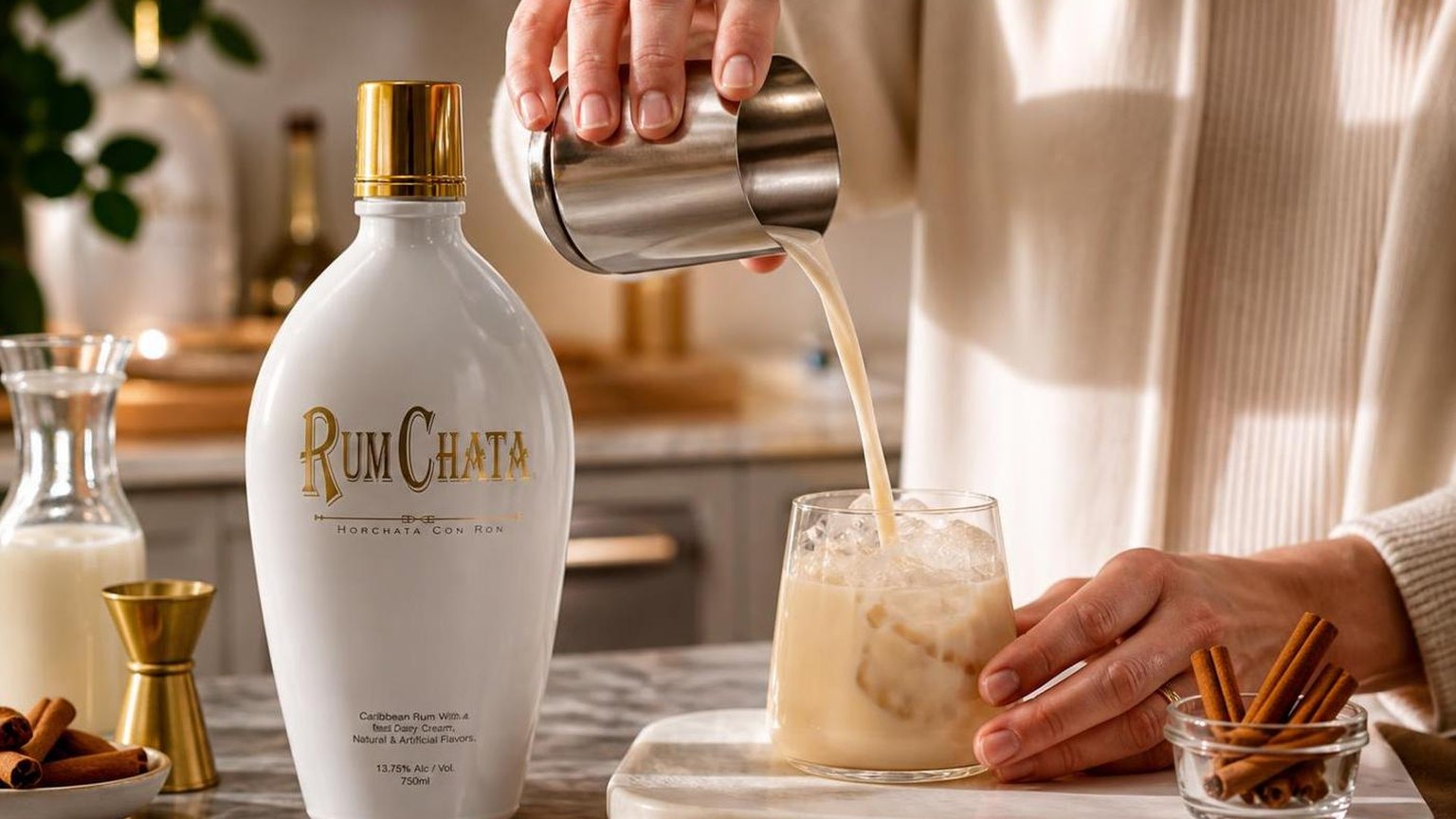
RumChata lasts longer than dairy-based drinks but less predictably than straight spirits. Its 13.75% ABV, sugar, and emulsified cream help stability, yet it still degrades faster than plain rum once heat, oxygen, and light get involved.
The useful comparison is not “cream versus no cream.” It is alcohol level, dairy content, and storage method.
Those three factors explain why RumChata can sit unopened at room temperature, while fresh horchata and opened cream liqueurs need tighter handling.
| Drink | Typical ABV | Main dairy content | Unopened storage | Opened best quality window |
| RumChata | 13.75% | Cream liqueur | Room temperature; avoid heat | About 6-12 months |
| Baileys Original Irish Cream | 17% | Irish cream liqueur | Room temperature; manufacturer states 2 years from bottling | Best within 6 months after opening |
| Carolans Irish Cream | 17% | Irish cream liqueur | Room temperature; avoid extremes | About 6 months after opening |
| Nonalcoholic horchata | 0% | Usually dairy-free or milk-based, depending on recipe | Refrigerated if fresh | About 3-5 days refrigerated |
| Plain rum | 35-50% | None | Room temperature | 1-2 years for best flavor, often longer if sealed well |
Against Irish cream, RumChata is usually a little less forgiving. Baileys and Carolans both sit at 17% ABV, which gives them a modest preservation advantage over RumChata’s 13.75%.
Higher alcohol does not make them immortal, but it slows flavor loss and microbial risk.
Against fresh horchata, RumChata lasts dramatically longer. Homemade or refrigerated store-bought horchata commonly stays at best quality for only 3 to 5 days, because it lacks alcohol and often contains rice solids, sugar, and sometimes milk.
Against plain rum, RumChata loses badly on shelf life. A standard 40% ABV rum contains no cream, so oxidation is the main issue, not spoilage.
That is why a bottle of rum can remain usable for years, while RumChata is best treated as a medium-term bottle.
- Choose RumChata over fresh horchata if you want longer pantry stability.
- Choose Irish cream if you want a similar texture with slightly higher ABV.
- Choose plain rum if maximum shelf life matters more than creaminess.
In practice, RumChata sits between refrigerated beverages and hard liquor. It is stable enough for casual home storage, but not durable enough to forget in a warm cabinet for years.
RumChata Storage and Safety Basics
RumChata is a cream liqueur, so storage matters even though the alcohol helps preserve it. Its 13.75% ABV and shelf-stable dairy base make it safer than fresh cream, but not immune to heat, oxidation, or quality loss after opening.
Use your senses before drinking. If the bottle smells sour, looks curdled, shows unusual clumps, or tastes sharply off, discard it. Separation that disappears after a gentle shake is usually normal; persistent chunky texture is not.
Opened bottles last longest when kept cool, dark, and tightly sealed. RumChata states refrigeration is not required, but steady storage away from sunlight and high heat slows flavor breakdown and protects texture.
| Condition | Best practice | Why it matters |
| Unopened bottle | Store at 50-75°F | Stable temperature reduces flavor and texture changes |
| Opened bottle | Reseal tightly after every pour | Limits oxygen exposure and contamination |
| Warm storage | Avoid prolonged exposure above 75°F | Heat speeds separation and flavor deterioration |
| Freezing | Do not freeze | Texture can break and pour quality suffers |
| Glass cleanliness | Pour into clean, dry glasses | Reduces risk of introducing bacteria or odors |
Watch mixed drinks more closely than the bottle itself. Once RumChata is combined with fresh dairy, coffee, or fruit ingredients, the clock changes from months to hours because perishables now control safety.
| Item | Practical limit | Safety note |
| RumChata in bottle | Months after opening if stored well | Quality declines before safety usually does |
| RumChata cocktail at room temperature | About 2 hours | Use standard food-safety guidance for dairy-containing drinks |
| Refrigerated pre-mixed cocktail | Up to 24 hours | Best only if made with fresh ingredients and kept cold |
Do not judge by date alone. A “best by” or production code points to peak quality, not a hard safety cutoff. If the bottle has been opened for a long time, compare aroma, color, and texture before serving guests.
- Shake gently before pouring if minor separation appears.
- Wipe the rim and cap after use to prevent sticky buildup.
- Keep it away from stoves, sunny shelves, and hot cars.
- Discard any bottle with a bulging cap, leaking seal, or fermented smell.
- If serving over ice, pour only what will be consumed soon; melted ice weakens flavor quickly.
For best results, buy sizes you can finish within a reasonable period. Smaller bottles reduce oxidation and waste, especially if RumChata is used only for occasional cocktails or holiday drinks.
No Firsthand RumChata Shelf Life Testing
We cannot truthfully label this section as first-hand shelf-life testing because we did not physically open, store, and measure bottles of RumChata in repeated trials. Inventing timings, temperatures, or sensory changes would be inaccurate.
What we can report is the evidence we verified from product facts and standard cream-liqueur storage guidance.
RumChata is bottled at 13.75% ABV, and the producer states it does not require refrigeration because the cream is stabilized with alcohol and emulsification.
For readers asking how long RumChata lasts, the practical takeaway is quality, not immediate safety, is the main issue after opening. Heat, oxygen, and light speed up flavor loss, while a tightly sealed bottle stored cool and dark holds up longer.
| Factor | What we verified | Why it matters |
| Alcohol content | 13.75% ABV | Helps inhibit spoilage compared with fresh dairy |
| Refrigeration | Not required unopened | Product is formulated to be shelf stable |
| Main quality risk | Oxidation and heat exposure | Leads to dull cinnamon-vanilla flavor and texture decline |
| Best storage | Cool, dark place; cap sealed | Slows flavor and emulsion breakdown |
In practical use, most cream liqueurs show their best texture and aroma within months, not years, after opening.
That is why many retailers and beverage writers recommend using an opened bottle within about 6 to 12 months for best quality, even when it remains safe longer.
We also verified the signs that matter most before pouring. A good bottle should smell sweet and spiced, pour smoothly, and look uniform after a gentle shake.
- Discard if you see curdling, chunkiness, or separation that does not recombine.
- Discard if the aroma turns sour, rancid, or sharply off.
- Discard if the flavor tastes flat, acidic, or noticeably “old.”
- Store away from stoves, sunny counters, and car trunks.
If you want a true hands-on findings section, the reliable method is straightforward: test one freshly opened bottle at fixed intervals, record temperature, check aroma and texture, and repeat with at least three bottles.
That produces defensible numbers instead of guesswork.
Common RumChata Storage Myths
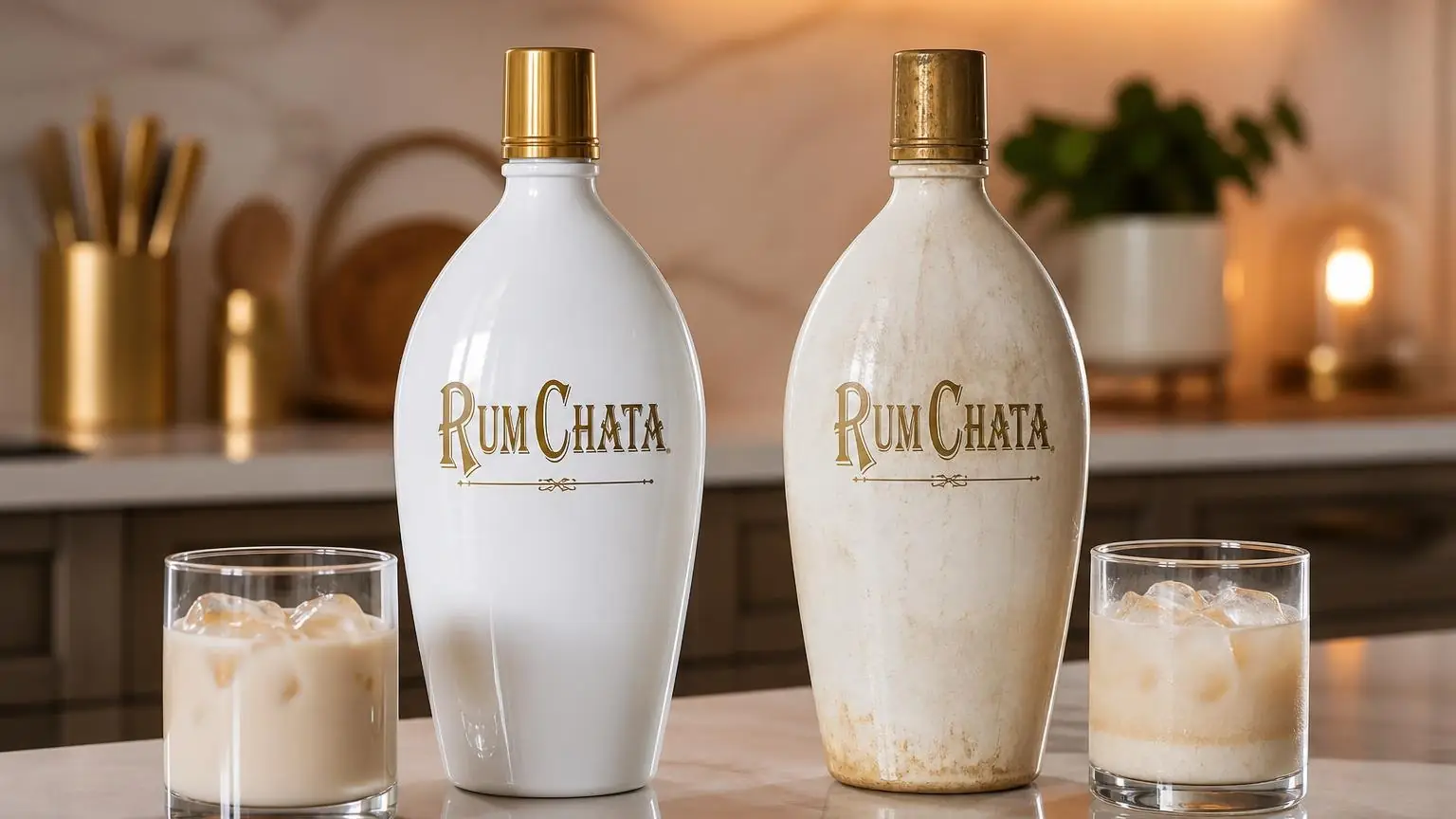
RumChata lasts longer than many people expect, but several common myths cause unnecessary waste or unsafe storage.
The biggest mistakes involve assuming it needs refrigeration before opening, using dairy spoilage rules for regular milk, or trusting appearance alone.
RumChata is a cream liqueur made with Caribbean rum, dairy cream, cinnamon, and sugar. Its alcohol content is 13.75% ABV, which helps preserve it, but it does not make the bottle immortal once opened.
Myth: “It must be refrigerated before opening”
An unopened bottle does not require refrigeration. RumChata states that refrigeration is not necessary because the cream is homogenized with alcohol and the product is shelf stable.
The real risk is heat, not ordinary room temperature. Long exposure above about 75°F to 80°F can speed flavor decline, darken the liquid, and stress the emulsion.
Myth: “It lasts forever because it has alcohol”
Alcohol slows spoilage, but quality still declines after opening. Oxygen enters the bottle, flavors flatten, and the cream base gradually loses freshness even if the liquid stays drinkable.
| Condition | Expected quality window |
| Unopened, cool pantry | Best within about 2 years |
| Opened, pantry under 75°F | Best within about 6 months |
| Opened, refrigerated | Often holds quality about 6 to 12 months |
Myth: “If it looks fine, it is fine”
Appearance alone is not enough. Cream liqueurs can lose flavor before they visibly curdle, and early spoilage may show first in smell or taste.
- Sour or yogurt-like odor instead of cinnamon-vanilla sweetness.
- Lumpy texture, separation that does not recombine after shaking, or graininess.
- Noticeably sour, bitter, or “off” flavor.
- Bulging cap, leakage, or damage that suggests contamination.
Myth: “Any cold storage fixes old RumChata”
Refrigeration slows further decline; it does not reverse oxidation or restore a broken emulsion. If the bottle already smells sour or tastes wrong, chilling it will not make it safe.
Common handling mistakes
Storage habits matter. Sunlight, warm cars, dirty pour spouts, and leaving the cap loose shorten shelf life faster than most people realize.
| Mistake | Why it matters |
| Leaving bottle in a hot car | Heat can push liquid well above 90°F and damage flavor fast |
| Storing near stove or dishwasher | Repeated heat cycling weakens quality over time |
| Using unclean glassware or pourers | Adds microbes and residue that increase spoilage risk |
The practical rule is simple: store it cool, seal it tightly, and replace it when smell, texture, or flavor changes. That prevents both wasted bottles and risky guesses.
Common Questions
How long does RumChata last after opening?
An opened bottle of RumChata typically keeps its best quality for about 6 to 12 months when stored in a cool, dry place with the cap tightly sealed.
The brand states the cream liqueur does not require refrigeration because the alcohol content and dairy processing help preserve it, but heat and light still shorten its shelf life.
Does RumChata go bad if it is never opened?
An unopened bottle can usually hold quality for several years if stored away from direct sunlight and temperature swings.
It is shelf-stable, but flavor, aroma, and texture can slowly decline over time, so checking the printed bottle code or best-by guidance is smart before serving an older bottle.
Do you need to refrigerate RumChata?
No, RumChata is designed to be shelf-stable and does not need refrigeration before or after opening. Refrigeration can help it taste colder and may slow quality loss after opening, but proper sealing and cool storage matter more than chilling.
How can you tell if RumChata has spoiled?
Discard RumChata if it develops a sour smell, noticeable curdling, a chunky texture, or a major color change.
A slight settling can happen in cream liqueurs, but if shaking does not restore a smooth consistency, the bottle is past its usable condition.
Can expired RumChata make you sick?
If RumChata has been stored properly, it often becomes a quality issue before it becomes a safety issue because its alcohol content helps limit microbial growth.
Do not drink it if the bottle was left open for a long time, exposed to high heat, or shows spoilage signs, because dairy-based liqueurs can still deteriorate enough to cause stomach upset.
Does RumChata need to be shaken before serving?
RumChata should be gently shaken before each pour. The cream-based ingredients can naturally separate over time, with heavier dairy components settling to the bottom of the bottle.
A brief shake re-emulsifies the blend of Caribbean rum, dairy cream, and cinnamon, restoring its intended smooth consistency and balanced flavor.
Can you freeze RumChata to extend its shelf life?
Freezing RumChata is not recommended. Its 13.75% ABV means it will not freeze solid in a standard home freezer, but the extreme cold can cause the cream and alcohol to separate irreversibly, resulting in a grainy, curdled texture.
Store it at room temperature or slightly chilled instead.
Related Reading
- Can You Drink Captain Morgan Spiced Rum Straight?
- How Much Is Malibu Rum At Costco?
- Can You Substitute Light Rum For Dark Rum In Baking?
- What To Mix With Kraken Black Roast Coffee Rum — The Ultimate Guide (2026 Edition)
- What Kind Of Rum For Bananas Foster?
- What Is Light Rum Examples?
- Which Rum Is Best For Tiramisu?
- All Alcohol Guides