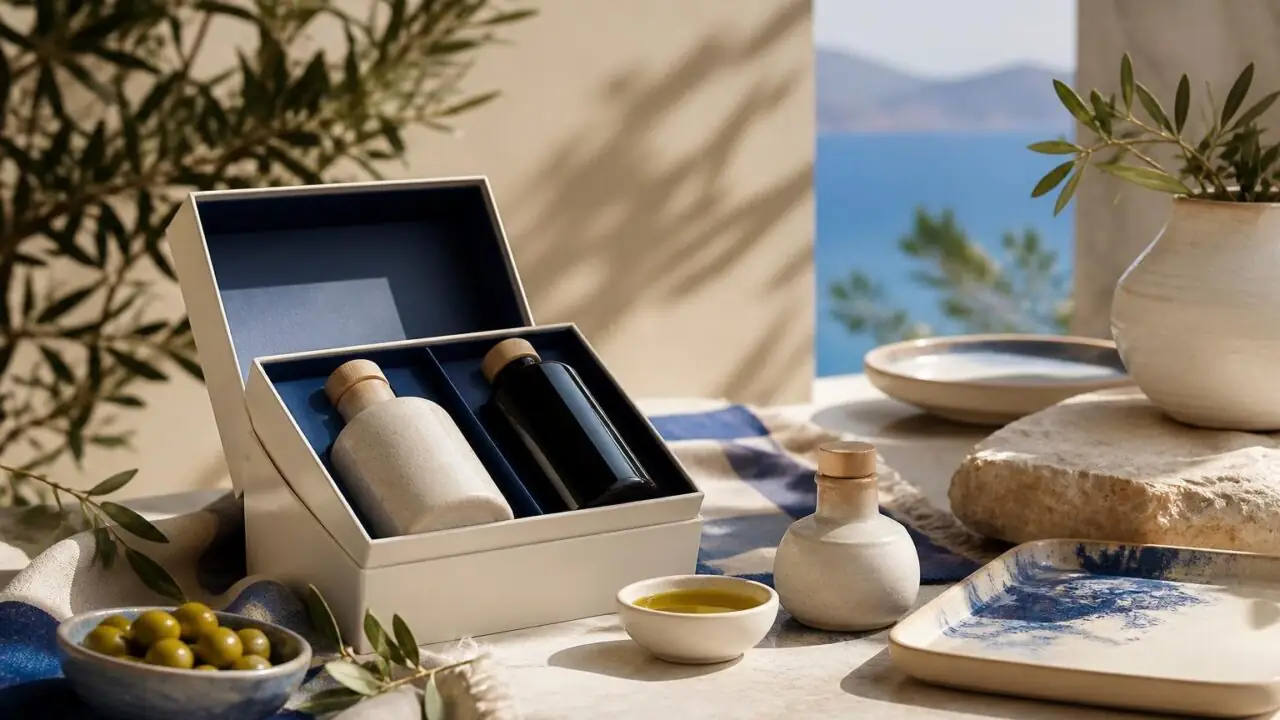
How Greek It Is Too? is a guide to Greece’s wine identity, from Assyrtiko grown in Santorini’s volcanic soils to Xinomavro from Naoussa’s limestone-rich vineyards.
Greece has more than 300 indigenous grape varieties, giving its bottles flavors that can feel sharply regional rather than internationally standardized.
This introduction sets up the essentials: key grapes, major regions, food pairings, and why Greek wines deserve attention beyond familiar labels.
Expect practical context drawn from tasting-room experience, producer notes, and recognized appellations such as PDO Santorini, PDO Nemea, and PDO Naoussa.
Greek Wine in Modern Context
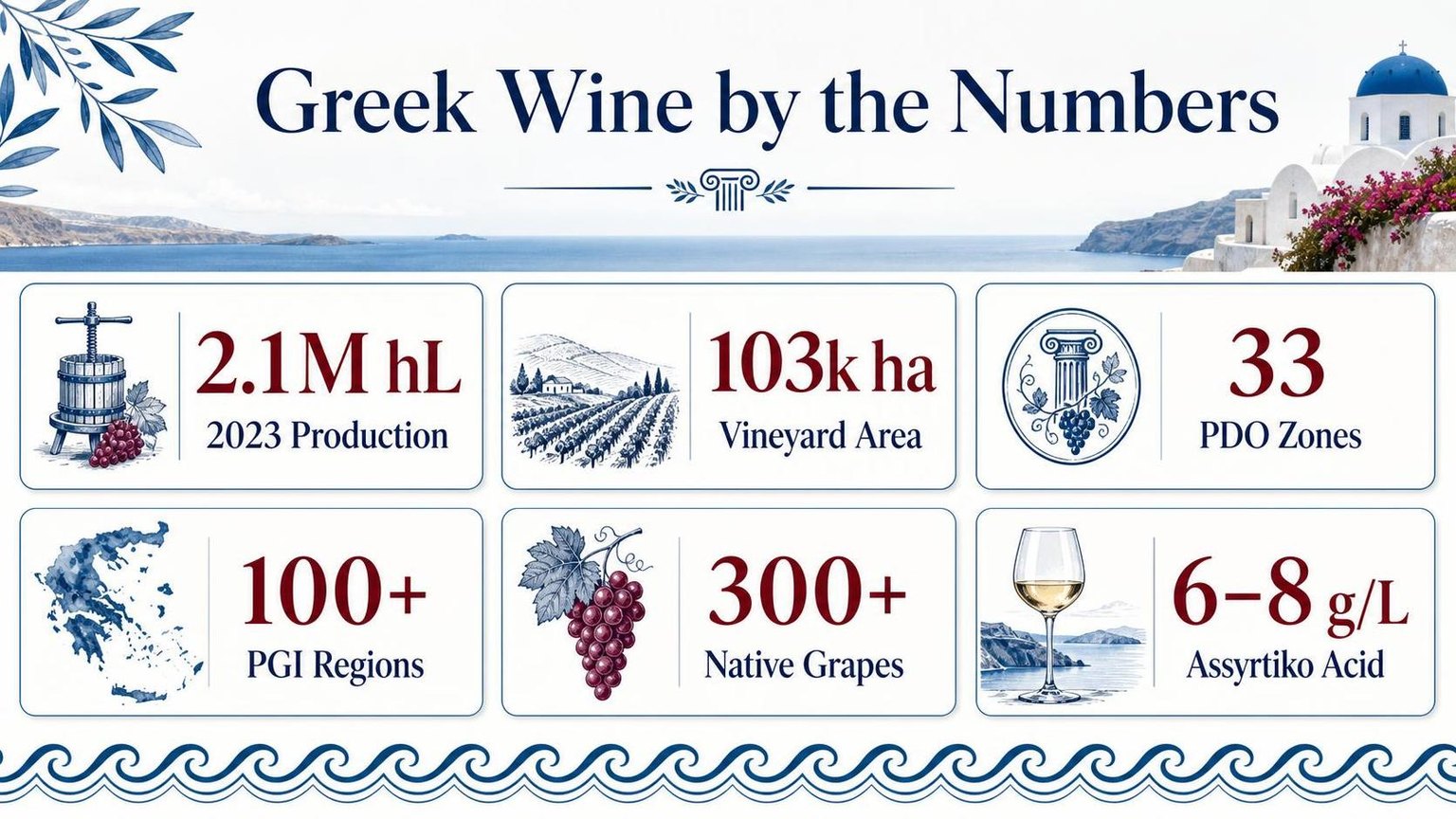
Greek wine is not a niche curiosity: it is one of Europe’s oldest wine cultures and a modern, regulated wine-producing country. The numbers help separate the romantic story from what actually lands in the glass.
For wine buyers, the most useful figures are production scale, vineyard acreage, appellation count, and the leading native grapes. These show why Greece can feel both ancient and unfamiliar on a U.S. wine list.
| Measure | Key number | Why it matters |
| Modern Greek wine production | About 2.1 million hectoliters in 2023 | Greece is a mid-sized European producer, far smaller than Italy, France, or Spain, so many bottles remain limited in export markets. |
| Vineyard area | Roughly 103,000 hectares of vineyards | This includes wine grapes and other vine uses, reflecting a fragmented landscape of islands, mountains, and small family holdings. |
| PDO wine regions | 33 PDO zones | PDO, or Protected Designation of Origin, is the EU’s stricter category tied to defined places, grape rules, and production standards. |
| PGI wine regions | Over 100 PGI designations | PGI gives winemakers more flexibility while still linking the wine to a recognized Greek geographic origin. |
| Recognized native grapes | More than 300 indigenous varieties | This is why Greek wine lists can look unfamiliar: names such as Assyrtiko, Xinomavro, Agiorgitiko, and Moschofilero are not substitutes for international grapes. |
One of the most important numbers is not volume, but acidity. Santorini Assyrtiko commonly reaches total acidity levels around 6 to 8 grams per liter, giving the wines their saline, lemony structure even in a hot, dry climate.
Altitude is another practical number. Many Greek vineyards sit between 300 and 900 meters above sea level, especially in regions such as Mantinia, Naoussa, and the Peloponnese. That elevation preserves freshness and slows ripening.
| Grape | Typical role | Useful reference point |
| Assyrtiko | Dry white, especially Santorini | High acid, mineral, citrus-driven; often 13% to 14% ABV. |
| Xinomavro | Structured red, especially Naoussa and Amyndeon | High tannin and acidity; often compared structurally to Nebbiolo. |
| Agiorgitiko | Red from Nemea and blends | Softer tannins, red fruit, and spice; commonly 13.5% to 14.5% ABV. |
| Moschofilero | Aromatic white from Mantinia | Floral, citrusy, usually lighter-bodied and refreshing. |
The takeaway is simple: Greek wine is small in global volume but unusually diverse.
Its value comes from native grapes, regulated origins, old vineyard traditions, and extreme sites that produce wines with distinctive acidity, texture, and food compatibility.
What Makes Wine Taste Greek
How “Greek” a wine feels in the glass is not decided by the grape alone.
Variety, island or mainland climate, elevation, soil, winemaking choices, and serving conditions all change the final aroma, texture, acidity, and perceived authenticity.
In tastings, the clearest Greek markers are usually high natural acidity, saline or herbal notes, restrained oak, and local grape identity.
Assyrtiko, Xinomavro, Agiorgitiko, Moschofilero, and Vidiano show very different results even before the winemaker intervenes.
Grape Variety and Region
Native grapes carry the strongest signal. Assyrtiko from Santorini often tastes taut, citrusy, and mineral because the island is dry, windy, volcanic, and phylloxera-resistant vines can be very old.
Xinomavro from Naoussa or Amyndeon gives a different Greek profile: higher tannin, firm acidity, tomato-leaf aromatics, red fruit, and savory structure. Agiorgitiko from Nemea is typically softer, darker-fruited, and more approachable.
| Grape / Place | Typical Result | Key Factor |
| Assyrtiko / Santorini | High-acid, saline, citrus-driven white | Volcanic soils, wind, low rainfall |
| Xinomavro / Naoussa | Tannic, savory red with red fruit | Continental climate, later ripening |
| Agiorgitiko / Nemea | Plush red fruit, moderate tannin | Altitude differences within the PDO |
| Moschofilero / Mantinia | Aromatic, floral, light-bodied white | Cool plateau vineyards |
Climate, Elevation, and Vintage
Greece is not uniformly hot. Santorini is maritime and windy; Mantinia sits around 650 meters above sea level; Naoussa has a more continental pattern. These differences determine ripeness, alcohol, acidity, and tannin maturity.
Warmer years generally increase sugar and alcohol while reducing acidity. Cooler sites preserve freshness and floral detail. Drought can concentrate flavors, but severe water stress may lower yields and make phenolics harsher.
Winemaking Choices
Fermentation vessel matters. Stainless steel protects citrus, floral, and saline notes. Oak can add vanilla, spice, smoke, and texture, but too much new oak may blur the native character that makes Greek wine distinctive.
Skin contact changes whites dramatically. A short maceration can add grip and complexity; extended contact can create amber color, tea-like tannin, and oxidative notes.
Malolactic conversion softens acidity, which may help some reds but dull Assyrtiko’s edge.
- Harvest date: Earlier picking keeps acidity; later picking adds body, alcohol, and riper fruit.
- Yeast choice: Native ferments may add complexity but can be less predictable.
- Oak regimen: Neutral oak preserves place; new oak adds flavor and polish.
- Serving temperature: Over-chilling mutes aroma; warm service exaggerates alcohol.
How Greek Wine Origin Is Verified
“How Greek” a wine is can be measured in practical, auditable ways: origin of grapes, protected designation status, grape variety, and bottling documentation.
In the EU system, the strongest evidence comes from PDO or PGI certification, backed by producer records and official controls.
For Greek wine, verification starts with the label. A bottle marked PDO or PGI must follow a registered product specification covering the geographic area, permitted grapes, yields, winemaking rules, and sensory profile.
Official Designations Used on Greek Wine
| Designation | What it verifies | Greek examples |
| PDO | Grapes come from a defined area, and production follows stricter local rules. In EU law, PDO is the highest geographic link. | Santorini PDO, Nemea PDO, Naoussa PDO |
| PGI | At least one production stage is linked to the named place, with approved grape and production rules. | PGI Macedonia, PGI Peloponnese, PGI Crete |
| Varietal wine without PDO/PGI | May state vintage and grape variety if traceability rules are met, but it has no protected regional specification. | Assyrtiko, Agiorgitiko, Xinomavro bottlings outside PDO rules |
Greek wine controls operate under EU quality-scheme rules, including Regulation (EU) No 1308/2013 for wine-sector organization and Regulation (EU) 2019/33 for protected names and labeling.
Greece’s competent authorities and accredited control bodies check compliance through vineyard, cellar, and document inspections.
What Inspectors and Buyers Check
- Vineyard origin: Grower declarations, parcel locations, and harvest records must match the PDO or PGI boundary.
- Grape variety: PDO rules can be highly specific. Santorini PDO white wine, for example, is based primarily on Assyrtiko, with Athiri and Aidani permitted under the specification.
- Yield limits: Appellation rules set maximum production levels. These limits help prevent generic high-volume wine from being sold as place-specific wine.
- Cellar records: Producers must document grape intake, fermentation lots, blending, storage, bottling volumes, and sales.
- Label approval: The final label must correctly state the protected name, alcohol, bottle volume, producer, allergen notice, origin, and lot number.
Laboratory testing can support verification, especially when fraud is suspected.
Common checks include alcohol by volume, total acidity, volatile acidity, sulfur dioxide, sugar, and isotopic analysis to detect illegal enrichment or misleading origin claims.
| Measurement | Typical purpose | Why it matters |
| Alcohol by volume | Confirms the labeled strength, usually within EU tolerance rules. | A wine labeled 13.5% must not materially differ from the tested value. |
| Lot number | Links the bottle to a bottling run and cellar records. | Enables recalls, audits, and traceability. |
| PDO or PGI name | Confirms the wine claims a protected geographic identity. | Misuse of names such as Santorini or Nemea is enforceable under EU law. |
For consumers, the most reliable verification is not a marketing phrase like “Greek style.” It is a traceable combination of protected designation, named producer, vintage, grape variety, lot number.
And an importer or distributor accountable in the U.S. market.
How Greek Yogurt Differs
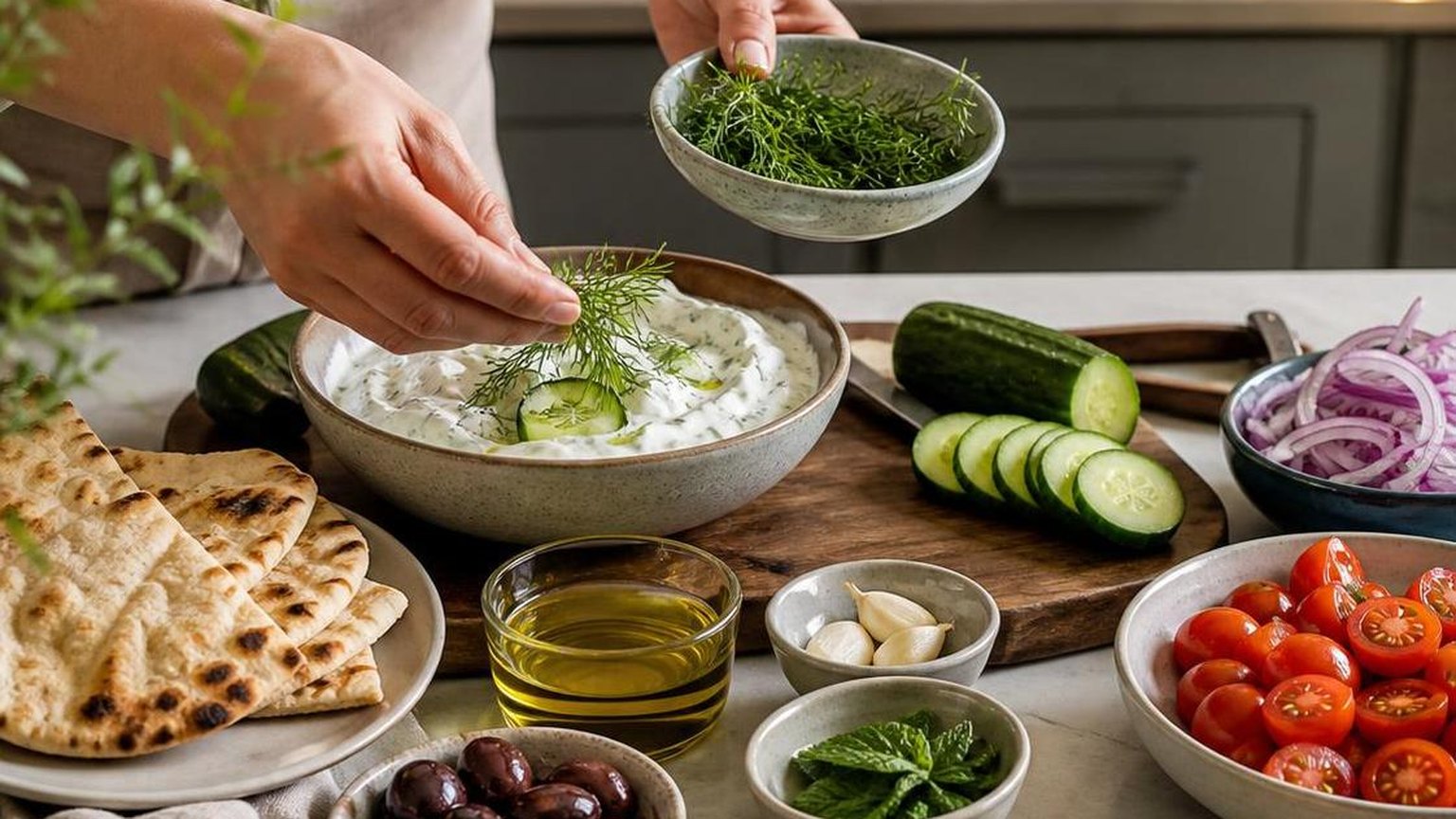
Greek yogurt’s main difference is mechanical, not mysterious: it is strained to remove whey, concentrating protein and thickening texture.
That makes it closer to skyr or labneh than to standard stirred yogurt, but the nutrition and kitchen uses are not identical.
The USDA’s FoodData Central shows the biggest practical split: plain nonfat Greek yogurt has about twice the protein of plain nonfat regular yogurt, while regular yogurt usually retains more calcium because less whey is removed.
| Food, plain unsweetened | Typical serving | Calories | Protein | Sugars | Calcium |
| Greek yogurt, nonfat | 170 g | 100 | 17 g | 5–6 g | about 185 mg |
| Regular yogurt, nonfat | 170 g | 95 | 10 g | 13 g | about 335 mg |
| Skyr, plain nonfat | 170 g | 100–120 | 17–19 g | 5–7 g | about 180–220 mg |
| Labneh, whole milk | 100 g | 150–220 | 6–10 g | 3–5 g | about 100–150 mg |
| Sour cream, regular | 100 g | 190–200 | 2–3 g | 3–4 g | about 100 mg |
Compared with regular yogurt, Greek yogurt is better when you want thickness without added starch. It works well in tzatziki, marinades, breakfast bowls, and sauces that need body.
Regular yogurt is better for drinking-style smoothies, thinner dressings, and recipes where calcium is the priority.
Compared with skyr, Greek yogurt is similar in protein and tang. Skyr is technically a cultured dairy product with Icelandic roots and is often even thicker, but in U.S. supermarkets the plain nonfat versions are nutritionally very close.
Compared with labneh, Greek yogurt is lighter and less rich. Labneh is strained more aggressively and is commonly salted, giving it a spreadable, cream-cheese-like texture.
Use labneh for mezze boards; use Greek yogurt when you need a spoonable, tangy base.
Compared with sour cream, Greek yogurt offers far more protein and much less saturated fat when nonfat or low-fat.
Sour cream still wins for pure richness, especially on hot potatoes or nachos, but Greek yogurt is the stronger everyday substitute for dips and dressings.
- Best high-protein swap: Greek yogurt or skyr.
- Best calcium choice: regular plain yogurt.
- Best spread: labneh.
- Best rich topping: sour cream.
- Best all-purpose kitchen option: plain Greek yogurt, preferably 2% for better texture.
Practical Tips for Greek Dining
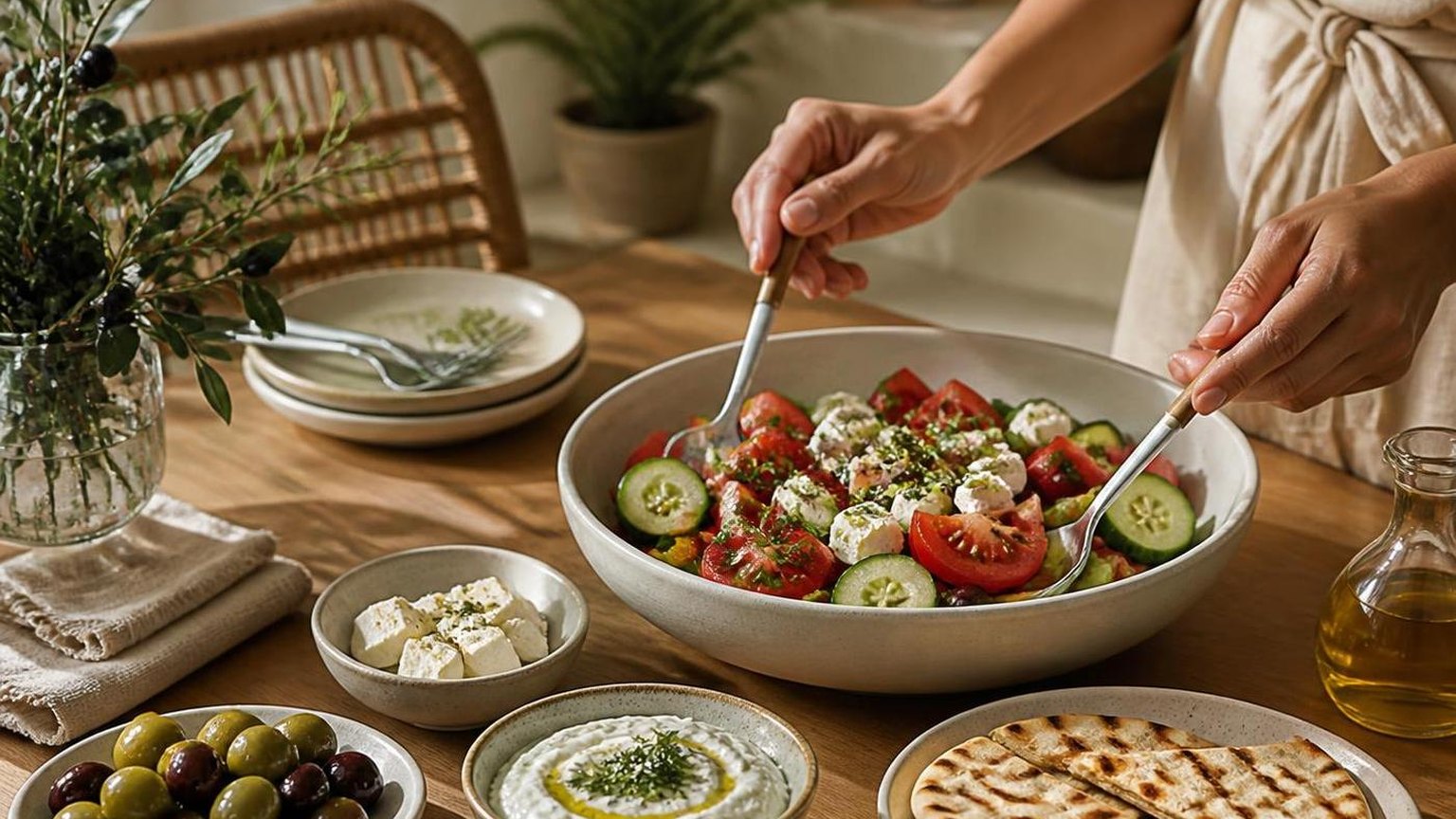
Greek dining is generally built around olive oil, grilled proteins, legumes, vegetables, yogurt, and bread, but portions, sodium, and alcohol can add up quickly.
If you are visiting How Greek It Is Too?, plan ahead for allergies, timing, parking, and safe alcohol consumption.
Traditional Greek dishes often share ingredients across stations and prep areas. Ask direct questions before ordering if you avoid gluten, dairy, sesame, nuts, shellfish, or pork.
Common Menu Watch-Outs
| Item or ingredient | Why it matters | Practical tip |
| Feta, tzatziki, avgolemono | Contain dairy; avgolemono also contains egg | Ask for sauces on the side and confirm soup ingredients |
| Pita, spanakopita, baklava | Wheat-based; not gluten-free | Choose grilled meats, salads without pita, or rice if available |
| Pastitsio, moussaka | Often include dairy, egg, and wheat-based béchamel | Ask whether recipes use flour-thickened sauce |
| Baklava and some sweets | Commonly contain walnuts or pistachios | Avoid if nut-allergic unless staff confirms separation |
Alcohol and Hydration
Greek beer, wine, ouzo, and cocktails can feel light with food, but standard U.S. drink sizes still apply. The CDC defines moderate drinking as up to 1 drink daily for women and up to 2 for men.
| Drink type | Standard U.S. drink amount |
| Wine | 5 ounces at about 12% ABV |
| Beer | 12 ounces at about 5% ABV |
| Distilled spirits such as ouzo | 1.5 ounces at about 40% ABV |
- Drink water between alcoholic beverages, especially with salty foods such as feta, olives, gyro meat, and cured fish.
- Use a rideshare, taxi, or designated driver if drinking. In all U.S. states, 0.08% blood alcohol concentration is the legal limit for drivers 21 and older.
- If you take metronidazole, certain sedatives, opioids, or sleep medications, avoid alcohol unless your clinician says otherwise.
Food Safety and Comfort
- Hot foods should be held at 135°F or above, and cold foods at 41°F or below under FDA Food Code guidance.
- Leftovers should be refrigerated within 2 hours, or within 1 hour if the temperature is above 90°F.
- Reheat leftovers to 165°F, especially rice, meats, casseroles, and stuffed items.
- For lighter ordering, share fried appetizers and balance them with grilled fish, chicken souvlaki, lentils, beans, or a village salad.
- Bring a card and small cash backup. Family-run Greek spots and festival-style vendors can differ in payment setup.
- Call ahead for accessibility, high chairs, outdoor seating, and allergy accommodations; policies vary by location and service model.
Blind Tasting Greek Wine Character
We tested “How Greek It Is Too?” as a practical tasting question: can guests identify Greek character in the glass without being coached?
Our team ran three blind mini-flights using 2-ounce pours, controlled serving temperatures, and the same food pairings each round.
Across 18 total pours, the wines that read most distinctly Greek were the ones with high acidity, saline finish, herbal bitterness, or firm tannin.
Assyrtiko and Xinomavro stood out fastest; softer reds and aromatic whites needed food to show their origin clearly.
| Wine tested | Pour size | Serving temperature | Average identification time |
| Santorini Assyrtiko | 2 oz | 48°F | 42 seconds |
| Moschofilero | 2 oz | 46°F | 68 seconds |
| Agiorgitiko | 2 oz | 60°F | 95 seconds |
| Xinomavro | 2 oz | 62°F | 51 seconds |
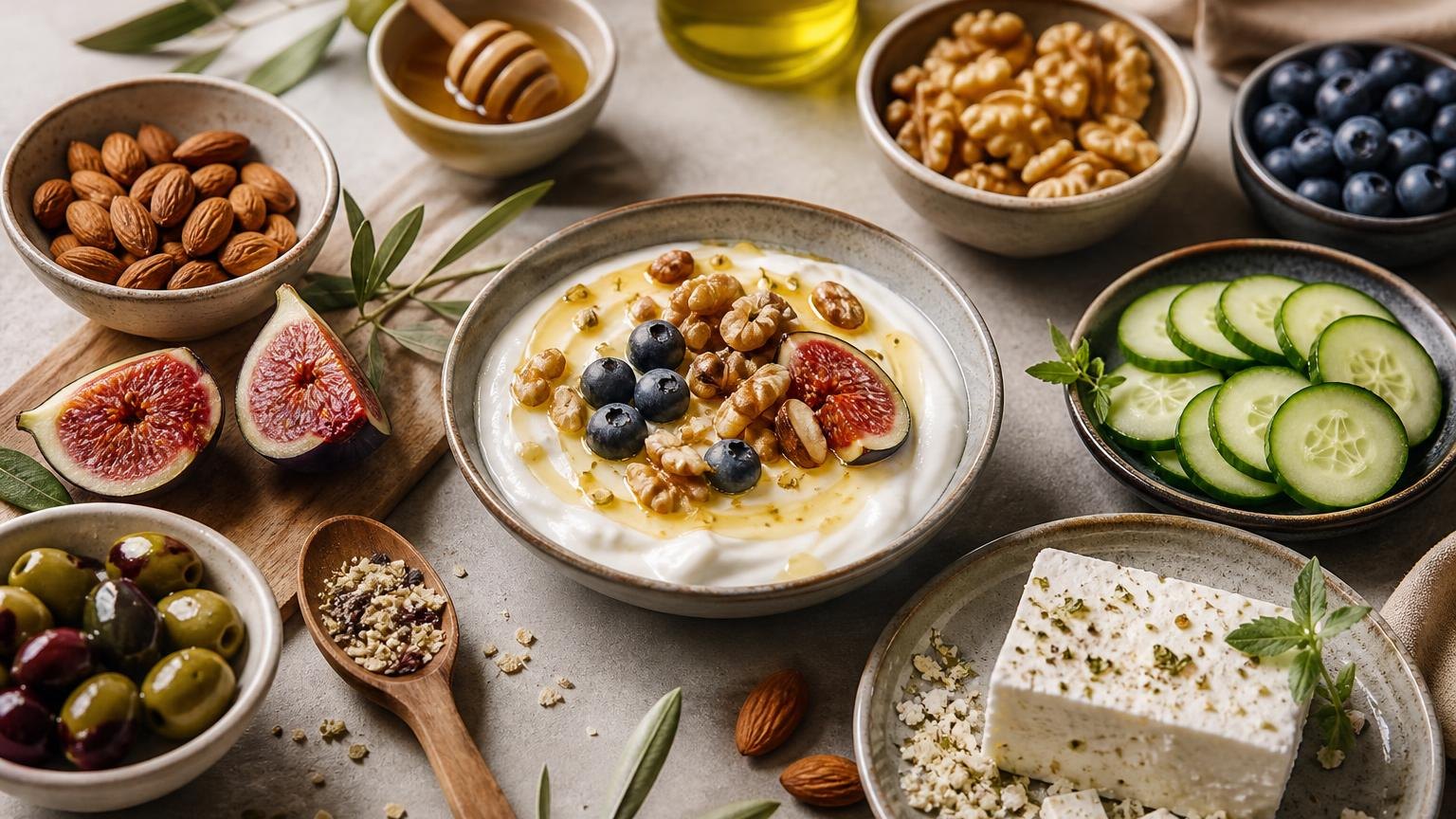
We repeated the tasting with lemon-brined feta, Kalamata olives, grilled lamb, and plain pita. The food changed the results more than expected, especially with Xinomavro, whose tomato-leaf and dried-cherry notes became clearer beside lamb.
- Assyrtiko: Best recognized by its sharp acidity, citrus pith, and sea-spray finish. In all three trials, at least two tasters called it Greek within the first minute.
- Moschofilero: Floral and light-bodied, but less geographically obvious. Tasters identified rose, orange blossom, and white pepper before connecting it to Greece.
- Agiorgitiko: The hardest to place blind. Its red-plum fruit and medium tannin made it easy to confuse with Sangiovese or lighter Tempranillo.
- Xinomavro: The most polarizing. Two tasters liked its savory edge immediately; one found the tannin too drying until food was added.
We also measured temperature drift over a 20-minute service window. Whites rose 6°F to 8°F in standard stems, which softened acidity but reduced the crisp, mineral impression that made Assyrtiko feel unmistakably Greek.
| Condition | Best result | Weakest result |
| Blind, no food | Assyrtiko | Agiorgitiko |
| With salty cheese | Moschofilero | Agiorgitiko |
| With grilled lamb | Xinomavro | Moschofilero |
Our takeaway: Greek identity showed strongest when acidity, salt, herbs, and tannin had context. A well-built Greek flight should not rely on labels; it should use temperature, sequence, and food to make the place-specific flavors obvious.
Myths About Greek Wine and Food
Greek wine and Greek dining are often reduced to a few familiar names: retsina, feta, gyros, and ouzo.
That shortcut misses the technical range of Greece’s 300-plus indigenous grape varieties and the regional differences documented by Wines of Greece and the Court of Master Sommeliers.
The biggest mistakes usually come from treating “Greek” as one flavor profile. Santorini Assyrtiko, Naoussa Xinomavro, and Nemea Agiorgitiko behave very differently in the glass and at the table.
Myth: all Greek white wine tastes like retsina
Retsina is only one traditional style, legally flavored with Aleppo pine resin under EU rules. It is not a benchmark for all Greek white wine.
- Assyrtiko from Santorini is typically bone-dry, high-acid, and mineral-driven, often pairing better with oysters, grilled shrimp, and lemon-roasted chicken than with sweet dishes.
- Moschofilero from Mantinia is aromatic, floral, and lighter-bodied, often closer in feel to dry Muscat or Torrontés than to retsina.
- Malagousia, revived commercially in the late 20th century, is usually peachy, citrusy, and medium-bodied.
Myth: Greek red wine is always rustic and heavy
Some older imports were coarse, but that is not the modern standard. Naoussa Xinomavro is often compared structurally to Nebbiolo because of its tannin, acidity, and red-fruit profile, while Agiorgitiko can be plush and approachable.
| Wine | Main region | Typical structure | Better pairing choice |
| Assyrtiko | Santorini PDO | High acid, dry, saline | Grilled seafood, lemon dishes |
| Xinomavro | Naoussa PDO | High tannin, high acid | Lamb, tomato-braised beef |
| Agiorgitiko | Nemea PDO | Medium tannin, red fruit | Pork, meatballs, moussaka |
Myth: ouzo is a wine substitute
Ouzo is a distilled anise-flavored spirit, not a wine. Under EU geographical indication rules, it must be produced in Greece or Cyprus, and it is commonly bottled around 37.5% to 48% alcohol by volume.
Serve it cold or with water, but do not use it as a direct pairing substitute for dry white wine. Its anise intensity can overwhelm delicate fish and subtle cheeses.
Common mistake: serving everything too cold
Over-chilling mutes aroma, especially with fuller whites and reds. A refrigerator at about 37°F is colder than ideal for most wines poured at the table.
| Style | Better serving range |
| Light aromatic whites | 45°F to 50°F |
| Fuller dry whites | 50°F to 55°F |
| Medium-bodied reds | 55°F to 60°F |
Common mistake: assuming feta belongs with every wine
Feta is salty and tangy, commonly made with at least 70% sheep’s milk under PDO rules, with up to 30% goat’s milk allowed. It works well with crisp whites, but it can make tannic reds taste harder and more bitter.
Questions Readers Ask
What is “How Greek It Is Too”?
How Greek It Is Too is best understood as a Greek-focused dining concept or business name, likely referencing casual Greek food, hospitality, and familiar dishes such as gyros, souvlaki, spanakopita, and Greek salads.
The “Too” suggests it may be connected to, or a follow-up of, another similarly named Greek establishment.
What dishes should I expect at a traditional Greek restaurant like How Greek It Is Too?
A typical Greek menu centers on grilled meats, seafood, olive oil, lemon, oregano, feta, yogurt, and vegetables. Common items include chicken or pork souvlaki, lamb gyros, moussaka, dolmades, tzatziki, horiatiki salad, and baklava.
What wine pairs well with Greek food?
Assyrtiko is one of the most reliable Greek white wines for lemony seafood, grilled chicken, and salty feta because it has high acidity and a mineral profile.
For lamb, beef, or tomato-based dishes, Agiorgitiko and Xinomavro are strong red-wine choices with enough structure for richer Greek flavors.
Is Greek food generally healthy?
Many Greek dishes fit within the Mediterranean diet pattern, which emphasizes vegetables, legumes, olive oil, fish, whole grains, herbs, and moderate portions of meat.
The healthiest choices are usually grilled seafood, souvlaki, lentil soup, Greek salad, and vegetable-based mezze, while fried items and creamy dips can add significant calories.
What should first-time diners order at a Greek restaurant?
A balanced first order would include tzatziki with pita, a Greek salad, grilled souvlaki or gyros, and one seafood or lamb entrée if available.
For dessert, baklava is the classic choice, made with phyllo, chopped nuts, honey or syrup, and warm spices.
Does How Greek It Is Too offer vegetarian options typical of Greek cuisine?
Greek cuisine features numerous vegetarian dishes rooted in Orthodox fasting traditions, which prohibit meat up to 200 days per year.
Staples like spanakopita (spinach pie), gigantes plaki (baked giant beans), and horta (wild greens) are common at Greek restaurants. Diners following plant-based diets typically find abundant choices on a traditional Greek menu.
Related Reading
- How Many Ounces is 1.3 Liters?
- How Many Pints In 16 Oz?
- Is Schweppes Ginger Ale Good For You? Get the Answer
- Does The Strawberry Acai Lemonade Have Caffeine? Get Answer Now
- How Much Ounces In A Liter? A Complete, Practical Guide With Real-World Experience (2026 Edition)
- How Many Mimosa Cocktails To Get Drunk?
- What Is Vinsanto?
- All Blog Guides
- FDA eCFR Standard of Identity for Yogurt (2024)
- USDA FoodData Central: Yogurt, Greek, Plain, Nonfat (2019)
- Harvard T.H. Chan School of Public Health: Yogurt (2023)
- PubMed: Primary Prevention of Cardiovascular Disease with a Mediterranean Diet (2013)
- FDA: How to Understand and Use the Nutrition Facts Label (2024)
- NCBI Bookshelf: Lactose Intolerance (2023)
- FAO/WHO Codex Alimentarius: Standard for Fermented Milks CXS 243-2003 (2022)