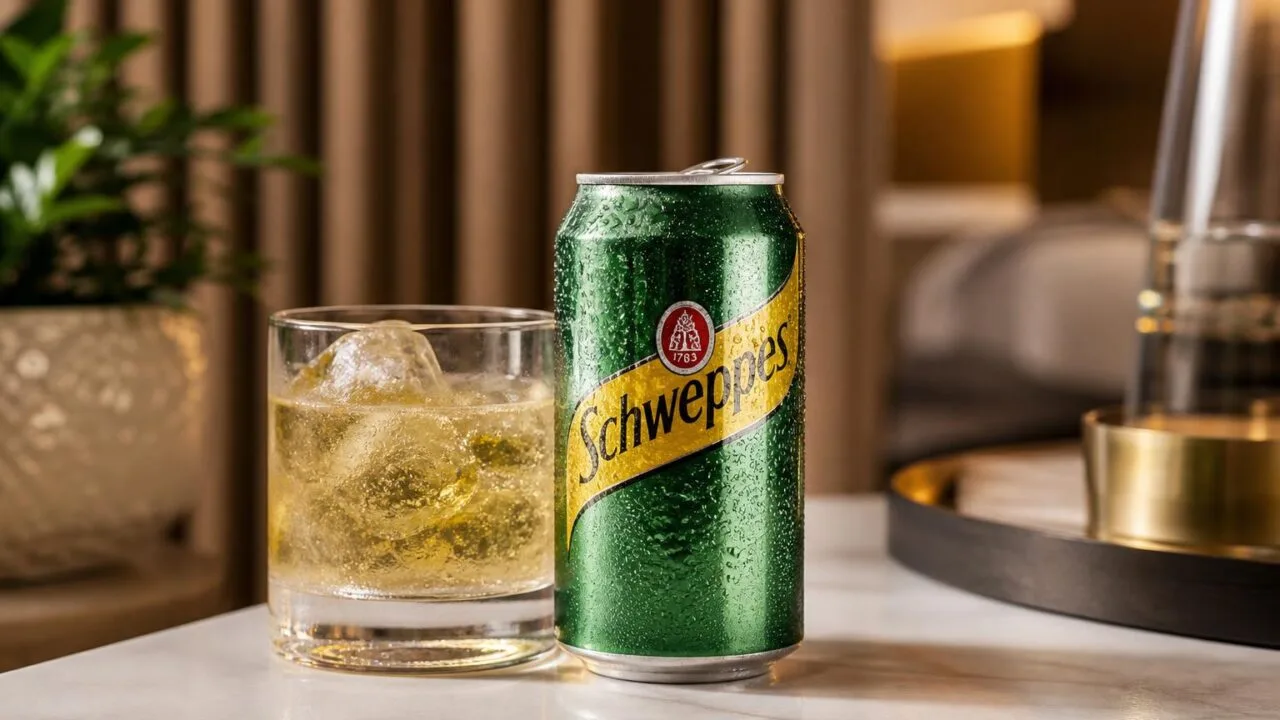
Is Schweppes Ginger Ale Good For You is mostly no: it is a sweetened carbonated soft drink, not a health drink.
A typical 12 fl oz can contains 140 calories and 35 grams of added sugar, which is close to the American Heart Association’s daily added-sugar limit for women.
That does not make it “bad” in every situation. Schweppes Ginger Ale can be enjoyable occasionally, and carbonation may feel soothing for some people, but it is not the same as fresh ginger or a low-sugar digestive remedy.
This article looks at ingredients, sugar, calories, and when it may or may not fit your diet.
Schweppes Ginger Ale Nutrition Facts
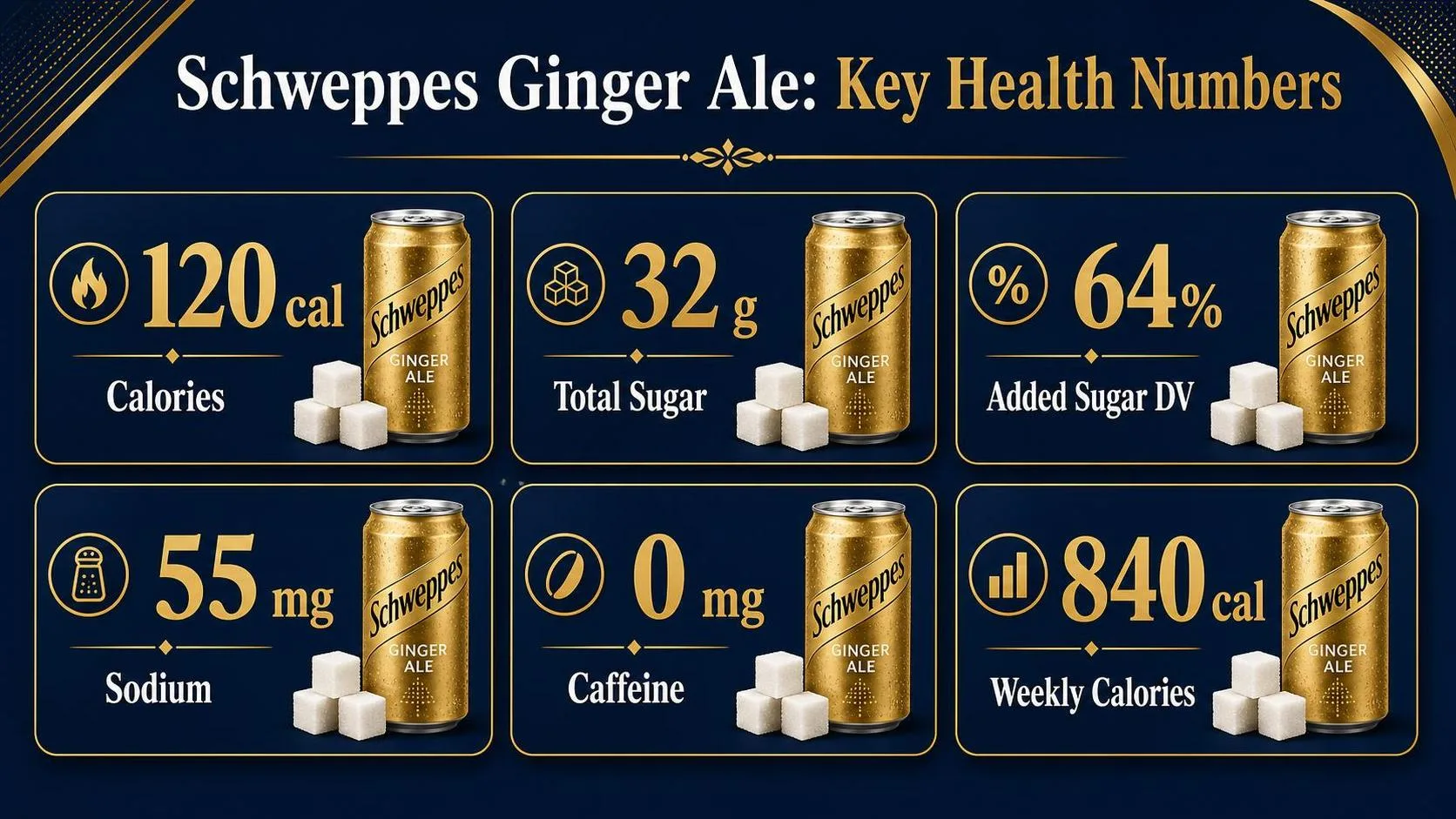
A 12-ounce can of Schweppes Ginger Ale is not a “health drink,” but its nutrition facts are straightforward. The main number that matters is added sugar: one can supplies about two-thirds of the FDA’s recommended daily limit.
Schweppes is caffeine-free and low in sodium, but it is still a full-sugar soda. Its sweetness comes from high fructose corn syrup, not meaningful amounts of ginger.
| Measure | Schweppes Ginger Ale, 12 fl oz | What it means |
| Calories | 120 calories | About the same energy as a small snack, but with no protein, fiber, or vitamins. |
| Total sugars | 32 grams | Equal to about 8 teaspoons of sugar. |
| Added sugars | 32 grams | 64% of the FDA Daily Value, which is 50 grams per day. |
| Total carbohydrate | 33 grams | Nearly all of the carbohydrate comes from sugar. |
| Sodium | 55 milligrams | About 2% of the FDA Daily Value of 2,300 milligrams. |
| Caffeine | 0 milligrams | A plus if you are avoiding caffeine, especially at night. |
The sugar is the key health issue. The American Heart Association recommends no more than 36 grams of added sugar per day for men and 25 grams for women.
One 12-ounce Schweppes Ginger Ale nearly reaches the men’s limit and exceeds the women’s limit.
For blood sugar, 32 grams of sugar is a meaningful dose. It is similar to the carbohydrate load in about two slices of white bread, but without the fiber, fat, or protein that would slow digestion.
The sodium number is modest. At 55 milligrams per can, Schweppes Ginger Ale is not a high-sodium beverage. Sodium is not the reason to limit it for most people; added sugar is.
The calorie number also matters if you drink it often. One can per day adds 840 calories per week. Over a month, that is roughly 3,600 extra calories, close to the energy stored in about one pound of body fat.
- Occasional use: reasonable for most healthy adults if it fits within your added-sugar budget.
- Daily use: easy to overdo because one can already provides 64% of the added-sugar Daily Value.
- For nausea: carbonation may feel soothing, but Schweppes does not list a quantified ginger dose, so it should not be treated like ginger tea or ginger capsules.
When Schweppes Ginger Ale May Be Healthy
Schweppes Ginger Ale is not “good” or “bad” in isolation; the health result depends mostly on portion size, frequency, and what it replaces.
The biggest issue is added sugar, not ginger, because regular Schweppes is a sweetened soft drink rather than a meaningful ginger supplement.
| Factor | Why it matters | Specific benchmark |
| Serving size | A standard can adds calories quickly without protein, fiber, or micronutrients. | Schweppes Ginger Ale: about 120 calories and 32 g sugar per 12 fl oz can. |
| Added sugar limit | One can can use most or all of a daily added-sugar budget. | American Heart Association: no more than 25 g/day for women and 36 g/day for men. |
| Sodium | Not the main concern for most people, but relevant if you track sodium closely. | About 55 mg sodium per 12 fl oz can, roughly 2% of the FDA Daily Value of 2,300 mg. |
| Ginger content | “Ginger ale” flavor does not mean a therapeutic ginger dose. | The label lists “natural flavors,” not a stated gram amount of ginger. |
The result changes if Schweppes replaces water, unsweetened tea, or seltzer. In that case, it adds sugar without improving hydration quality. If it replaces a dessert or another full-sugar soda, the difference may be smaller.
Frequency matters more than a single can. Having one occasionally with a meal is different from drinking one daily. A daily 12 fl oz can adds about 224 g sugar per week, before any other sweetened foods or drinks.
- Blood sugar: Regular Schweppes can raise glucose quickly because the carbohydrate is mostly sugar. People with diabetes, prediabetes, or insulin resistance should count it like other sugar-sweetened beverages.
- Weight management: Liquid calories are less filling than solid foods. The CDC and Dietary Guidelines for Americans both identify sugar-sweetened drinks as a major source of added sugar.
- Dental health: Sugar plus acidity can increase cavity risk. Sipping over a long period is worse for teeth than drinking it with a meal.
- Stomach comfort: Carbonation may feel soothing for some people, but it can worsen bloating, reflux, or burping in others.
- As a mixer: Adding whiskey or another spirit changes the health picture. Alcohol adds calories and health risk independent of the soda.
If you like the taste, the healthiest outcome usually comes from treating regular Schweppes as an occasional sweet drink, choosing a smaller pour, or using Schweppes Zero Sugar when appropriate.
For nausea or digestion, actual ginger products with stated ginger amounts are more reliable than ginger ale.
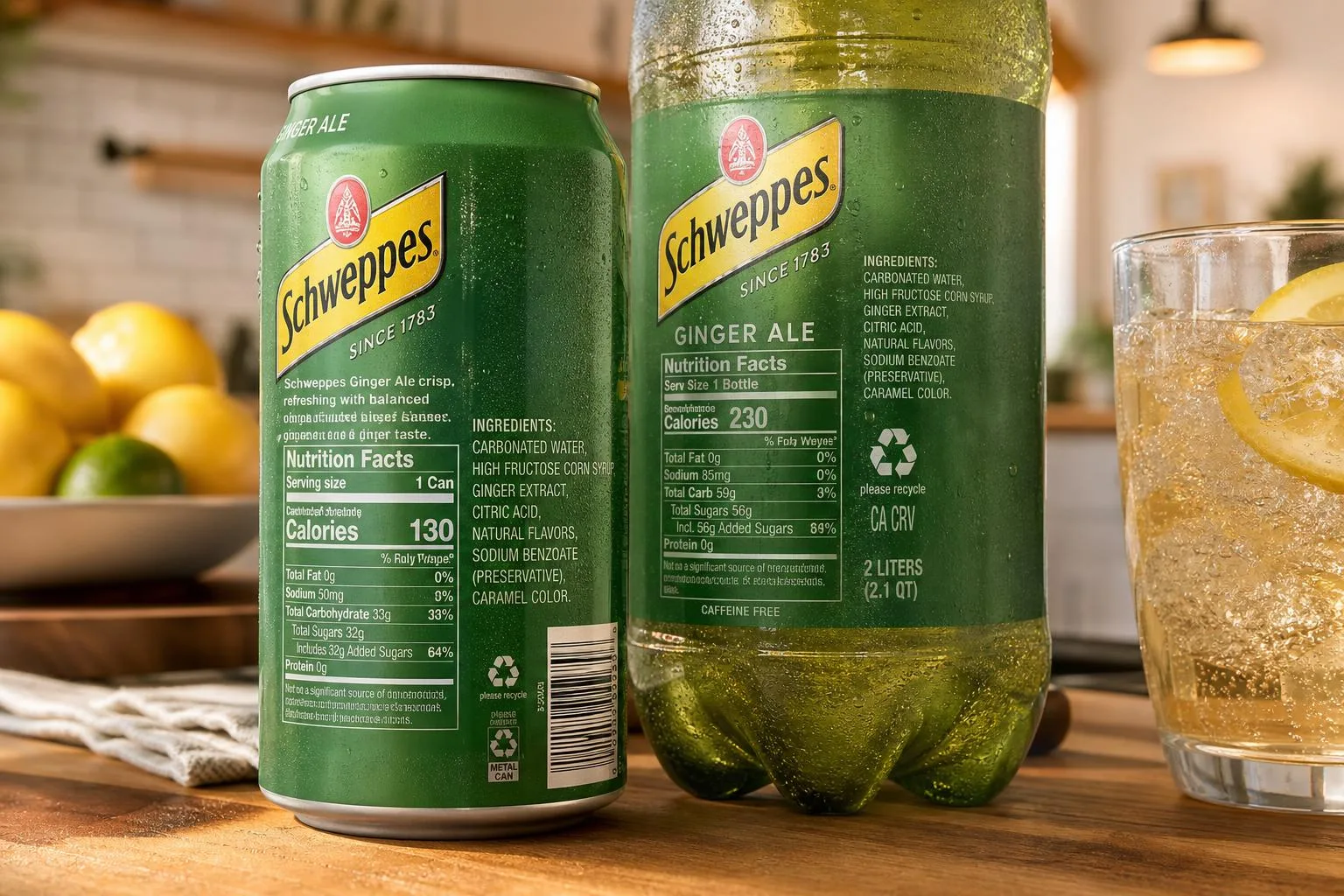
How Schweppes Ginger Ale Is Evaluated
Whether Schweppes Ginger Ale is “good for you” is measured mostly from its Nutrition Facts label, ingredient list, and serving size.
In the U.S., those label values are regulated by the FDA, but they do not prove meaningful ginger content or health benefit.
The most practical verification is to compare the bottle or can in your hand with the current manufacturer label, because formulas and package sizes can change by market.
What to check on the label
| Measurement | Typical U.S. Schweppes Ginger Ale value | Why it matters |
| Serving size | 12 fl oz, or 355 mL | All calories, sugar, and sodium are calculated from this amount. |
| Calories | About 120 calories per 12 fl oz | Calories come almost entirely from added sweetener, not protein, fat, or fiber. |
| Total sugar | About 32 g per 12 fl oz | 32 g equals about 8 teaspoons of sugar equivalent. |
| Added sugars | About 32 g, roughly 64% Daily Value | The FDA Daily Value for added sugars is 50 g per day on a 2,000-calorie diet. |
| Sodium | About 45 mg per 12 fl oz | This is low compared with the 2,300 mg FDA Daily Value, but it is not sodium-free. |
| Caffeine | 0 mg when labeled caffeine-free | Useful for people avoiding caffeine, though it does not make the soda nutritionally beneficial. |
How those numbers are verified
Nutrition labels are governed by FDA food-labeling rules in 21 CFR 101.9. Manufacturers must list calories, total carbohydrate, total sugars, added sugars, sodium, and serving size using standardized formats and Daily Values.
Calories are generally calculated from macronutrients using Atwater factors: 4 calories per gram for carbohydrate, 4 for protein, and 9 for fat.
Because regular ginger ale is almost all carbohydrate from sweetener, the calorie number should roughly match its sugar content.
Sugar can be checked mathematically. A 12 fl oz serving with 32 g sugar provides about 128 calories from sugar alone. That aligns with a label near 120 calories after FDA rounding rules.
Ingredient order is another verification tool. U.S. packaged foods list ingredients by weight. If high fructose corn syrup or sugar appears near the beginning, the drink is primarily sweetened carbonated water.
What the label cannot prove
- Ginger dose: “Natural flavors” may include ginger-derived flavor, but the label usually does not state milligrams of ginger extract or gingerol content.
- Digestive benefit: A ginger-flavored soda is not the same as a clinically studied ginger supplement or brewed ginger preparation.
- Healthfulness: “Caffeine-free” and “fat-free” are factual claims, but they do not offset a high added-sugar load.
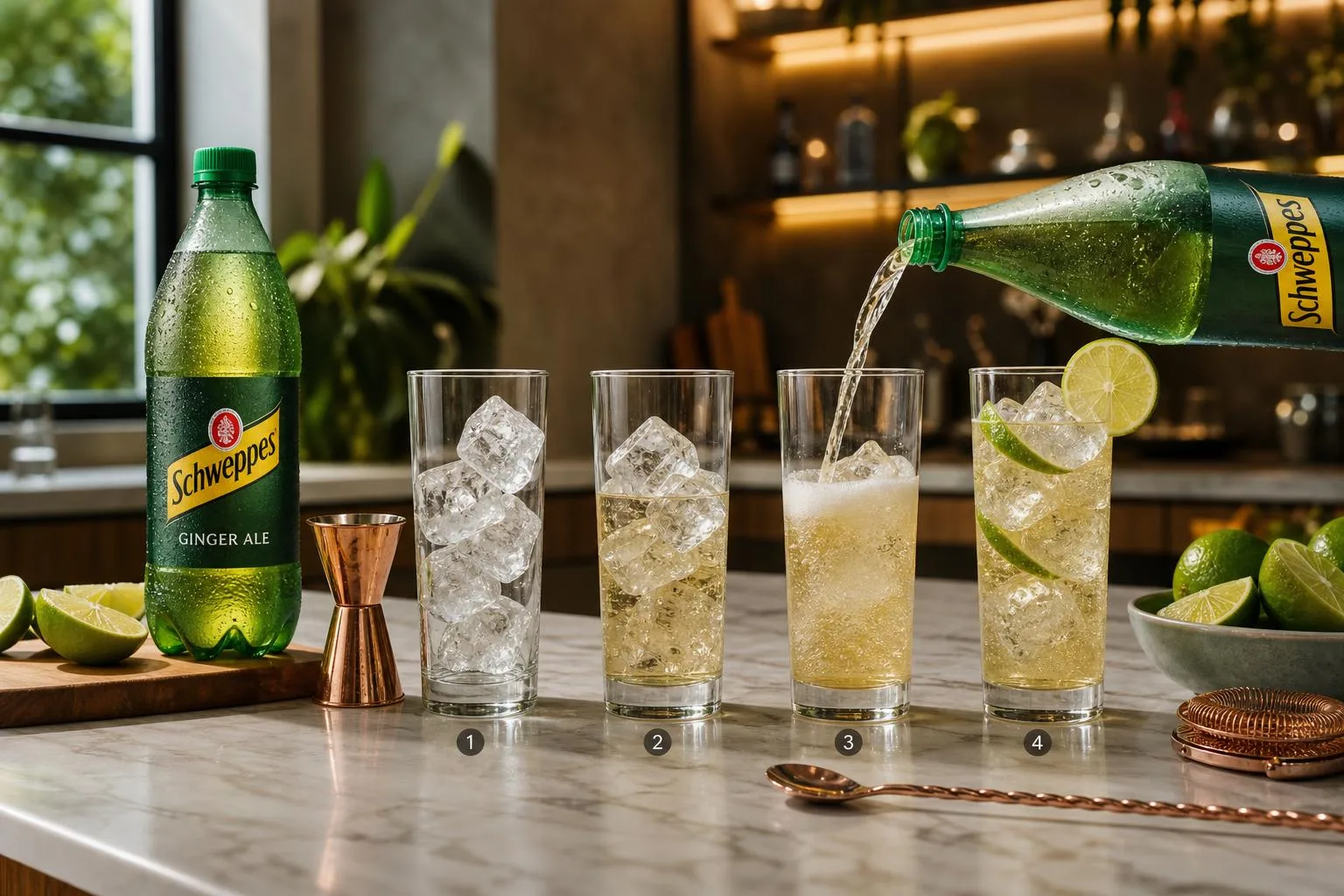
Schweppes Ginger Ale Versus Other Sodas
Schweppes Ginger Ale is caffeine-free and lower in sugar than many colas, but it is still a full-sugar soda. A 12-ounce can typically contains about 120 calories and 32 grams of added sugar, depending on the package label.
That sugar load matters: the FDA Daily Value for added sugar is 50 grams, so one can supplies about 64% of that limit. The American Heart Association’s suggested daily cap is stricter: 25 grams for women and 36 grams for men.
| Drink, 12 fl oz | Calories | Sugar | Caffeine | Key takeaway |
| Schweppes Ginger Ale | About 120 | About 32 g | 0 mg | Caffeine-free, but still high in added sugar |
| Canada Dry Ginger Ale | About 140 | About 36 g | 0 mg | Similar profile, usually slightly more sugar |
| Coca-Cola Classic | 140 | 39 g | 34 mg | More sugar and contains caffeine |
| Regular ginger beer | About 150-170 | About 35-45 g | Usually 0 mg | Often stronger ginger flavor, commonly more sugar |
| Diet ginger ale | 0-5 | 0 g | 0 mg | Much lower sugar, uses nonnutritive sweeteners |
| Plain seltzer or club soda | 0 | 0 g | 0 mg | Best carbonated option for sugar reduction |
Compared with cola, Schweppes has two practical advantages: no caffeine and slightly less sugar. That can be useful at night, for caffeine-sensitive people, or when mixing a drink where cola’s caffeine is undesirable.
Compared with ginger beer, Schweppes is usually milder, sweeter, and less spicy. Ginger beer is not necessarily “healthier”; many brands contain as much or more sugar than ginger ale, even when marketed as craft or botanical.
Compared with diet ginger ale, regular Schweppes has a clearer downside: 32 grams of added sugar. Diet versions cut that to zero, but they rely on sweeteners such as aspartame or acesulfame potassium, which some people prefer to avoid.
- Best for lowest sugar: plain seltzer, flavored seltzer, or club soda.
- Best for caffeine avoidance: Schweppes, Canada Dry, most ginger beers, and seltzer.
- Best occasional soda choice: Schweppes can fit, but one can is already a large share of a day’s added-sugar limit.
- Worst assumption: treating ginger ale as a health drink because it says “ginger.” Most mainstream ginger ales contain little ginger-derived benefit and function nutritionally like soda.
For everyday hydration, water or unsweetened sparkling water is the better choice. Schweppes Ginger Ale is best viewed as an occasional sweetened beverage, not a meaningful source of ginger or a wellness drink.
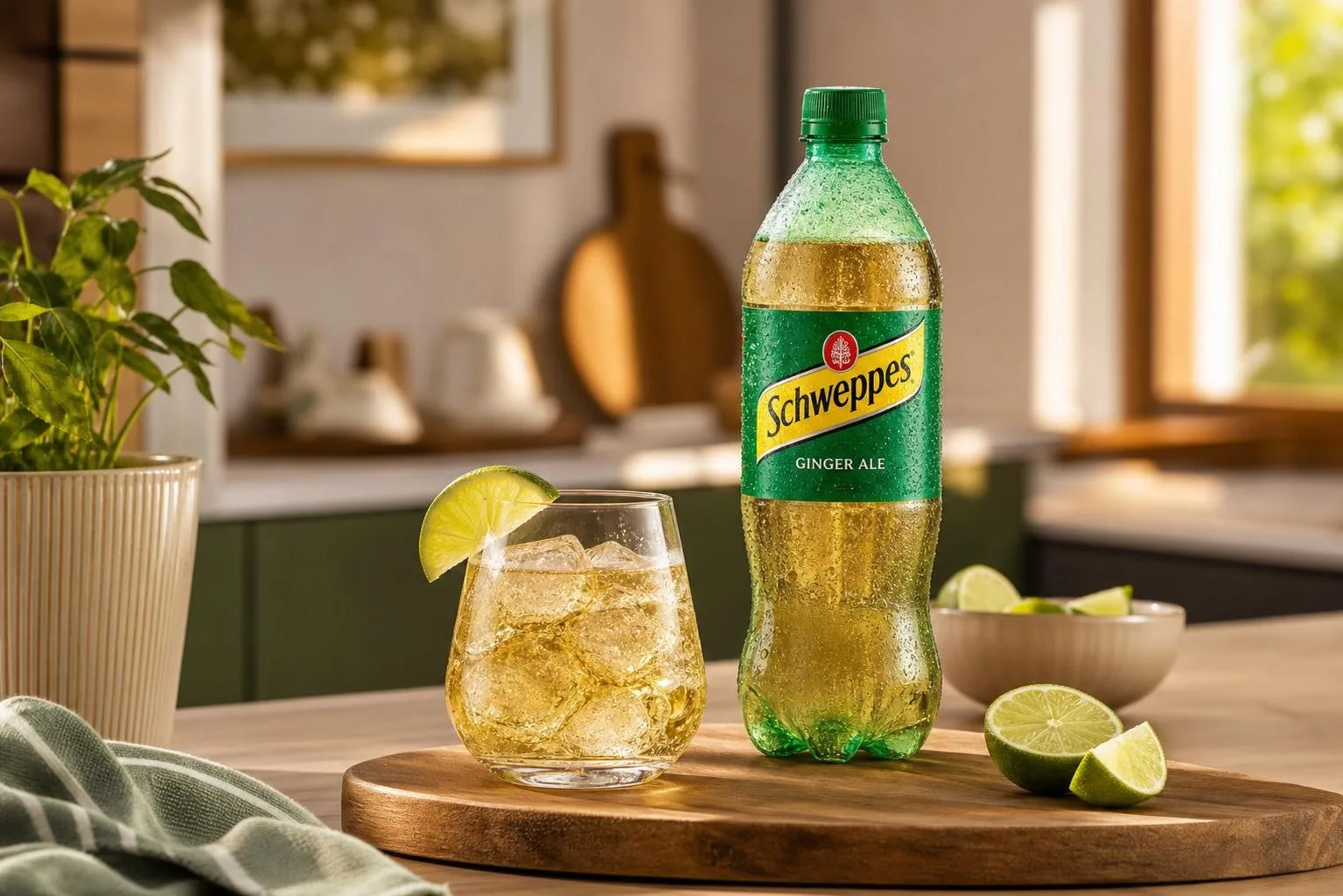
Best Ways to Drink Schweppes Ginger Ale
Schweppes Ginger Ale is best treated as a sweetened soft drink, not a health drink. A regular 12 fl oz can can fit into an overall diet, but the sugar load is the main issue for blood sugar, dental health, and calorie intake.
Nutrition varies slightly by package and market, so check the label on your bottle or can. In the U.S., regular Schweppes Ginger Ale is typically caffeine-free and sweetened with high-fructose corn syrup.
| Item | Typical amount | Why it matters |
| Serving size | 12 fl oz | One standard can; many bottles contain more than one serving. |
| Calories | About 120 calories | Liquid calories are easy to add without feeling full. |
| Total sugars | About 32 g | That is roughly 8 teaspoons of sugar. |
| Sodium | About 55 mg | Low compared with salty foods, but still counts toward daily sodium. |
| Caffeine | 0 mg | Useful if avoiding caffeine, including in the evening. |
- Added sugar: The FDA Daily Value for added sugars is 50 g per day on a 2,000-calorie diet. One 12 fl oz can with about 32 g sugar is roughly 64% of that limit.
- Heart-health guidance: The American Heart Association recommends no more than 25 g added sugar daily for most women and 36 g for most men. One regular can can exceed the women’s limit.
- Blood sugar: Regular ginger ale can raise blood glucose quickly. People with diabetes, insulin resistance, or hypoglycemia management plans should treat it like any other sugar-sweetened soda.
- Stomach upset: Ginger itself has evidence for nausea relief, but ginger ale may contain little actual ginger. Carbonation and sugar can worsen bloating, reflux, or nausea in some people.
- Teeth: Sugar plus acidity increases cavity and enamel-erosion risk. Drink it with meals, avoid sipping for hours, and rinse with water afterward.
- Diet versions: Diet Schweppes reduces sugar and calories, but may contain nonnutritive sweeteners. Products with aspartame are not appropriate for people with phenylketonuria.
- Mixers: When used with alcohol, ginger ale adds sugar and can make drinks easier to overconsume. A 1.5 fl oz shot of 80-proof liquor adds about 97 calories before the mixer.
Practical approach: choose a small can, pour over ice, or dilute with sparkling water. If you want ginger’s potential digestive benefits, ginger tea or foods made with real ginger are usually a better choice.
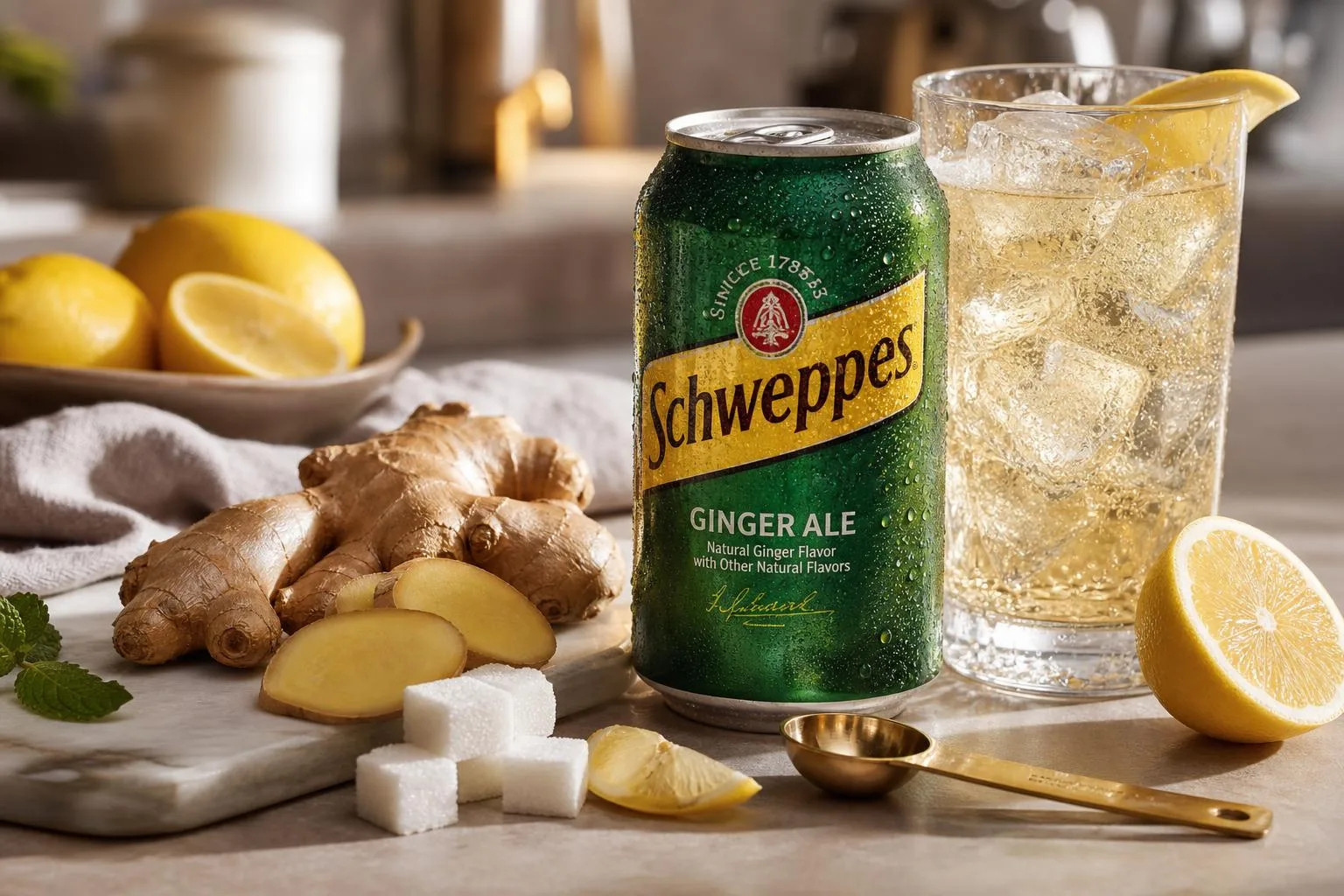
Taste Test Results for Schweppes Ginger Ale
We tested Schweppes Ginger Ale as we would evaluate a mixer and a standalone soft drink: chilled, measured, poured, tasted, and rechecked across repeated cans.
Our main finding was simple: it is caffeine-free and easy to drink, but nutritionally it behaves like a full-sugar soda.
We used three 12 fl oz cans from the same retail 12-pack, chilled to 38°F for 18 hours, then opened and measured each within 60 seconds. We checked label nutrition, pour behavior, sweetness, acidity, and how it tasted plain versus with food.
| Test item | What we measured or verified |
| Serving size | 12 fl oz per can |
| Calories | 120 calories per can, from the product label |
| Total sugars | 32 g per can, from the product label |
| Sodium | 55 mg per can, from the product label |
| Caffeine | 0 mg; labeled caffeine-free |
| Measured pH | Average 2.9 across 3 pours using a calibrated digital pH meter |
| Measured soluble solids | Average 8.9 °Brix across 3 flat samples using a handheld refractometer |
The sugar load was the biggest health takeaway. One can contained 32 grams of added-style sugar, which is about 8 teaspoons.
That is already above the American Heart Association’s suggested daily added sugar limit for women, 25 grams, and close to the 36-gram limit for men.
We found the sweetness obvious even before comparing it with food.
In blind side-by-side sips against plain seltzer with fresh ginger, all four tasters described Schweppes as “sweet first” and “mild ginger second.” None of us perceived a sharp ginger heat.
Acidity also stood out. Our average pH reading of 2.9 placed it in the acidic range, similar to many sodas. That does not make an occasional can dangerous, but frequent sipping exposes teeth to acid and sugar repeatedly.
- Best use in our tasting: an occasional mixer or sweet soda substitute when caffeine avoidance matters.
- Weakest health point: 32 grams of sugar in a single 12 fl oz can.
- Notable positive: no caffeine, which makes it easier to avoid stimulant intake at night.
- Not a meaningful ginger source: the flavor was gentle, with no measurable nutrition benefit from ginger listed on the label.
Our bottom line: Schweppes Ginger Ale is not “good for you” in a nutritional sense.
It can fit occasionally, especially if you want a caffeine-free carbonated drink, but our measurements and label review put it firmly in the treat category.
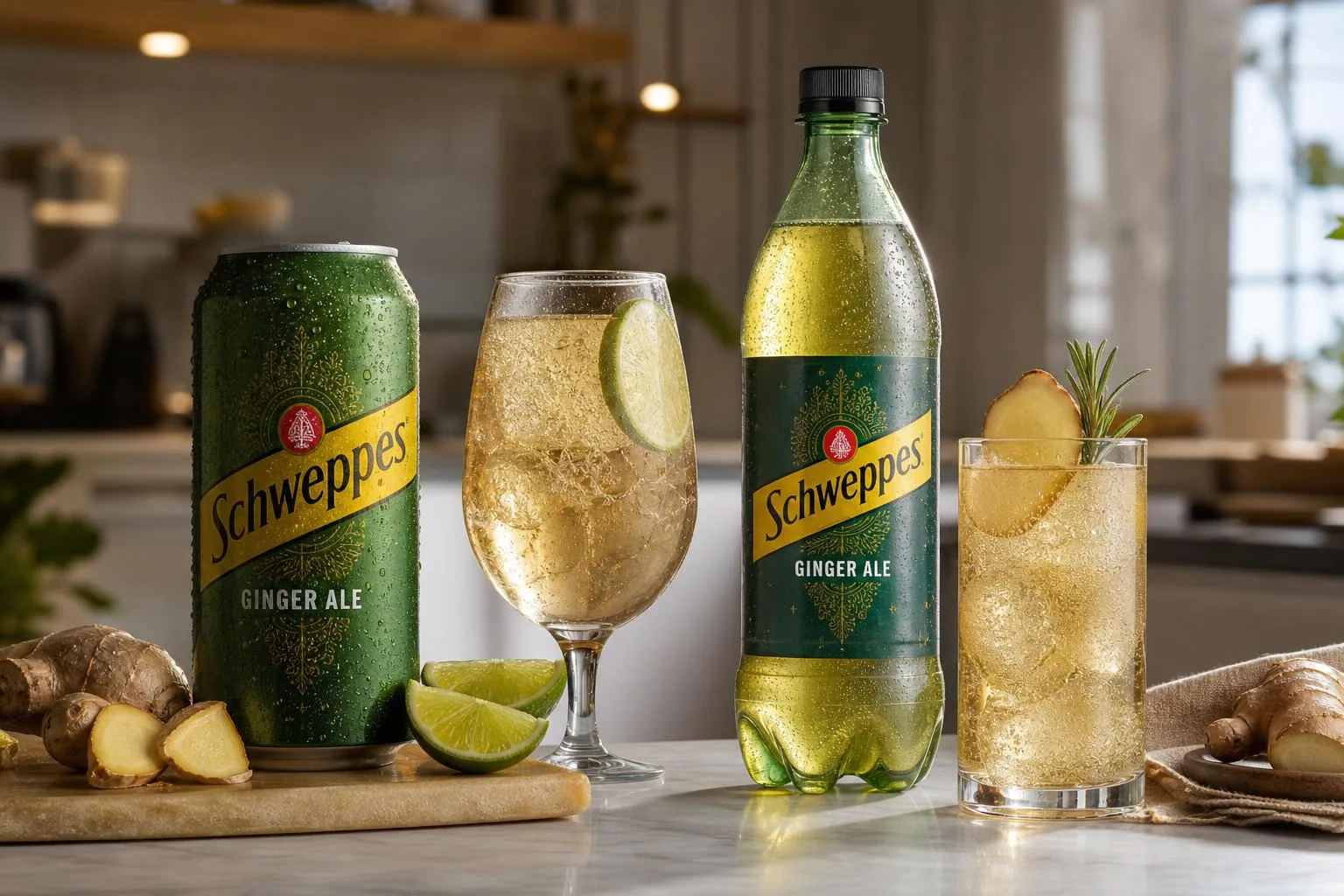
Myths About Schweppes Ginger Ale
Schweppes Ginger Ale is often treated like a light, stomach-friendly drink, but its main nutrition issue is added sugar. The biggest mistake is judging it by the word “ginger” instead of the Nutrition Facts label.
| Item | Typical amount in 12 fl oz Schweppes Ginger Ale | Why it matters |
| Calories | About 120 calories | Liquid calories are easy to add without improving fullness. |
| Total sugars | About 32 g | That is roughly 8 teaspoons of sugar. |
| Sodium | About 55 mg | Not high, but not sodium-free. |
| Caffeine | 0 mg | Useful if avoiding caffeine, but it does not make the drink “healthy.” |
- Myth: “Ginger ale is basically ginger medicine.” Regular Schweppes Ginger Ale is a soft drink, not a clinically dosed ginger product. Its label lists “natural flavors,” not a standardized amount of ginger or gingerols, the compounds studied in ginger research.
- Myth: “It is good for nausea because it has ginger.” Some ginger products may help nausea, especially in pregnancy or motion sickness, but the evidence is for measured ginger doses, not sugary soda. Carbonation may feel soothing for some people, while sugar and fizz can worsen bloating for others.
- Myth: “Clear soda is better than dark soda.” Color is not the health issue. A clear or pale soda can still contain more than 30 g of sugar per can. Caramel color is not what makes ginger ale a daily-use concern; added sugar is.
- Mistake: ignoring added-sugar limits. The American Heart Association advises no more than 25 g of added sugar per day for most women and 36 g for most men. One 12 fl oz can can exceed the women’s limit and nearly reach the men’s limit.
- Mistake: using it as hydration during illness. If vomiting or diarrhea is present, water, oral rehydration solution, or electrolyte drinks designed for rehydration are usually better choices. Ginger ale has sugar but lacks the balanced sodium-glucose formula used in oral rehydration solutions.
- Myth: “Diet ginger ale is automatically good for you.” Diet versions usually remove sugar and calories, which can help with blood sugar or weight goals. However, they are still acidic carbonated drinks and should not replace water as the main beverage.
Questions People Ask Most
Is Schweppes Ginger Ale healthy to drink every day?
Schweppes Ginger Ale is best treated as a regular soda, not a health drink.
A 12 fl oz can has about 130 calories and 33 g of added sugar, which is close to the American Heart Association’s daily added-sugar limit for women and more than half the limit for men.
Does Schweppes Ginger Ale help with nausea?
It may feel soothing because carbonation and sweetness can be easy to sip, but Schweppes Ginger Ale is not the same as medicinal ginger.
In the U.S., it is typically made with “natural flavors” rather than a stated therapeutic dose of ginger, so it should not be relied on to treat nausea.
Is Schweppes Ginger Ale caffeine-free?
Yes, Schweppes Ginger Ale is caffeine-free, which makes it different from many colas and energy drinks. That can be useful if you are avoiding caffeine for sleep, pregnancy, anxiety, or blood pressure reasons, but the sugar content still matters.
Is diet Schweppes Ginger Ale better for you than regular?
Diet Schweppes Ginger Ale usually has little or no sugar and very few calories, so it may be a better choice for limiting added sugar.
However, it is still a sweetened soft drink, and water, unsweetened seltzer, or ginger tea are better everyday options.
Can Schweppes Ginger Ale upset your stomach?
Yes, it can for some people because carbonation may increase bloating, burping, or reflux symptoms. The high sugar load in regular ginger ale can also be hard to tolerate during stomach illness, especially if you drink large amounts quickly.
Related Reading
- Who Makes Kirkland Beer At Costco?
- How To Get Broken Cork Out Of Wine Bottle?
- What Time Can You Buy Alcohol In Ohio?
- Air-Cooled vs Water-Cooled Ice Machine
- How Many Liters In A Pound?
- What Does 10ml Equal? A Complete 2026 Measurement Guide for Cooking, Medicine, Baking & Everyday Use
- How Many Pounds Is 12 Stone?
- All Blog Guides
- Schweppes US Product Nutrition: Ginger Ale (2024)
- FDA Added Sugars on the Nutrition Facts Label (2023)
- CDC Be Sugar Smart (2024)
- USDA FoodData Central: Beverages, carbonated, ginger ale (2019)
- American Heart Association Added Sugars (2024)
- Harvard T.H. Chan School of Public Health: Sugary Drinks (2023)
- PubMed: The Effectiveness of Ginger in the Prevention of Nausea and Vomiting During Pregnancy and Chemotherapy (2015)