
Can You Be Allergic To Tequila is yes: a true agave or ethanol allergy is uncommon, but tequila can cause allergic-type reactions through additives, congeners, sulfites, histamine release, or oak-barrel compounds.
Symptoms may include flushing, hives, nasal congestion, wheezing, stomach cramps, or rapid heartbeat soon after drinking.
Clinically, reactions are more often alcohol intolerance or sensitivity than classic IgE-mediated allergy.
Blanco tequila made from 100% blue agave has fewer aging-derived compounds, while reposado and añejo can contain barrel-related tannins and vanillin.
Severe swelling, breathing trouble, or faintness after tequila warrants urgent medical care and allergy evaluation.
How Common True Tequila Allergy Is
True tequila allergy is uncommon; reactions are more often tied to alcohol itself, congeners, sulfites, flavorings, or pre-existing asthma and histamine sensitivity.
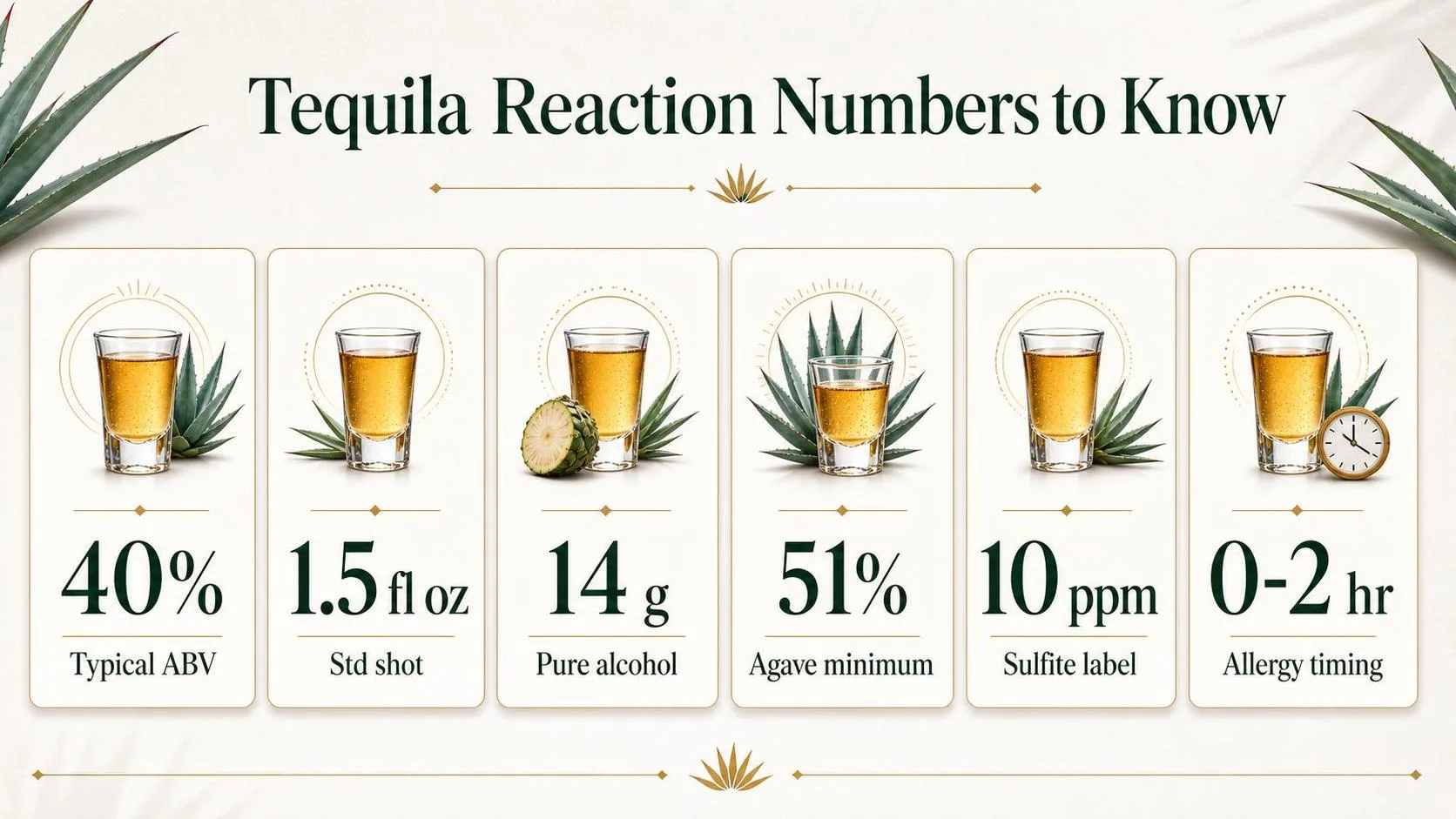
The numbers below help separate a likely allergy from predictable alcohol effects or intolerance.
A standard U.S. shot of tequila is not “small” medically. NIAAA defines one standard drink as 14 grams of pure alcohol, which is about 1.5 fluid ounces of 40% ABV distilled spirits.
| Number | What it means for tequila reactions |
| 40% ABV | Most bottled tequila sold in the U.S. is 80 proof, or 40% alcohol by volume. Burning, flushing, nausea, and fast heartbeat can occur from ethanol without an allergy. |
| 1.5 fl oz | This is one U.S. standard serving of tequila at 40% ABV, according to NIAAA drink-size guidance. |
| 14 g ethanol | The alcohol load in one standard drink. People with alcohol intolerance may react to this amount or less. |
| 51% agave | Under tequila rules, “tequila” may be made with at least 51% sugars from blue agave; the rest may come from other fermentable sugars. |
| 100% agave | “100% de agave” tequila must derive its fermentable sugars from blue agave. This may reduce some non-agave variables, but it does not rule out ethanol intolerance. |
Sulfites are often blamed, but they are usually more relevant in wine than plain distilled spirits. In the U.S., wines and foods with 10 parts per million or more of sulfites must declare them, per FDA and TTB labeling rules.
| Threshold or category | Practical interpretation |
| 10 ppm sulfites | Label disclosure threshold in the U.S. If a tequila-based product has added wine, flavoring, or mixer components, sulfites become more plausible. |
| 1% additives | Some tequila regulations allow limited additives such as caramel color, oak extract, glycerin, or sugar-based syrup in certain products. These are not “allergens” by default, but may explain reactions in sensitive drinkers. |
| 0 minutes to 2 hours | IgE-type allergic reactions usually begin quickly after exposure. Hives, wheezing, throat tightness, or facial swelling in this window needs medical attention. |
- One-drink reaction: flushing, stuffy nose, migraine, or palpitations after a single shot suggests intolerance, histamine response, medication interaction, or asthma trigger more often than true tequila allergy.
- Repeatable pattern: reacting to tequila but not vodka may point toward congeners, barrel aging, flavorings, or agave-related compounds.
- Emergency signs: wheezing, lip or tongue swelling, fainting, or widespread hives after tequila should be treated as possible anaphylaxis, not “just a hangover.”
What Triggers Tequila Reactions
Whether tequila triggers symptoms depends on more than the agave spirit itself.
In practice, reactions often come from dose, congeners, additives, histamine release from alcohol, or a separate sensitivity to mixers rather than a true tequila-specific allergy.
A true IgE-mediated allergy to distilled spirits is considered uncommon, but alcohol can still provoke flushing, hives, wheezing, reflux, migraine, or nasal congestion. The pattern, timing, and amount consumed matter when judging the cause.
Amount of alcohol consumed
More tequila means more ethanol exposure, and ethanol can widen blood vessels, irritate the stomach, and worsen mast-cell symptoms. In the United States, one standard drink contains 14 grams of pure alcohol.
| Drink | Typical serving | Approximate alcohol |
| 80-proof tequila | 1.5 fl oz | 14 g ethanol |
| 100-proof tequila | 1.2 fl oz | 14 g ethanol |
| 12% wine | 5 fl oz | 14 g ethanol |
| 5% beer | 12 fl oz | 14 g ethanol |
Type and purity of tequila
“100% agave” tequila is made only from blue Weber agave sugars. “Mixto” tequila may contain up to 49% non-agave fermentable sugars, usually from cane or corn sources, which can change flavor compounds and tolerability.
Blanco tequila is usually unaged or briefly rested, while reposado and añejo spend time in oak. Barrel aging can add trace wood compounds, color, and oxidation products that may affect people sensitive to certain congeners.
Additives, flavorings, and mixers
Some reactions blamed on tequila come from what is served with it. Citrus, triple sec, sour mix, chili salt, artificial colors, preservatives, and high-sugar mixers can trigger reflux, asthma, migraine, or oral itching in susceptible drinkers.
- Sulfites: More common in wine and bottled mixers than in plain tequila; U.S. labels must declare sulfites at 10 parts per million or higher.
- Histamine: Distilled tequila is generally lower in histamine than many fermented drinks, but alcohol can still promote histamine release.
- Food allergy overlap: Lime, orange liqueur, nut syrups, or premade cocktail bases may be the real source.
Individual metabolism and medical factors
People with reduced aldehyde dehydrogenase activity can develop flushing, warmth, rapid heartbeat, and nausea after small amounts of alcohol. This is an alcohol intolerance pattern, not the same as an allergy.
Asthma, chronic urticaria, mast cell disorders, rosacea, migraine, and reflux can all make tequila feel “allergic.” Medications also matter, especially NSAIDs, antihistamines that cause sedation, metronidazole, some antibiotics.
And drugs affecting the liver.
Timing of symptoms
Immediate hives, throat tightness, wheezing, or faintness within minutes is more concerning for allergy or anaphylaxis.
Delayed headache, flushing, congestion, nausea, or heartburn hours later more often suggests intolerance, dose effect, or mixer-related irritation.

How Tequila Allergy Is Evaluated
Tequila “allergy” is verified by separating a true immune reaction from alcohol intolerance, irritant effects, or reactions to additives.
In practice, an allergist starts with timing, symptoms, dose, and repeatability, then uses targeted testing rather than assuming agave is the cause.
A true allergy usually appears quickly: hives, swelling, wheezing, vomiting, throat tightness, or anaphylaxis within minutes to 2 hours.
Flushing, headache, nasal stuffiness, reflux, and rapid heartbeat more often point to ethanol metabolism, histamine release, or irritation.
| Measurement or check | What it can verify | Useful numbers |
| Alcohol by volume on label | Confirms ethanol dose; standard tequila is regulated strength | U.S. tequila is commonly 40% ABV; many products range about 35% to 55% ABV depending on market and style |
| Standard drink calculation | Shows whether symptoms track with alcohol amount | 1.5 fl oz of 40% ABV tequila contains about 14 g pure alcohol, the U.S. standard drink definition |
| Sulfite threshold | Identifies a legally declared additive trigger | In the U.S., “contains sulfites” is required when sulfur dioxide is 10 ppm or higher |
| Skin prick testing | Looks for immediate IgE-type reactivity to a specific ingredient | A wheal typically considered positive is at least 3 mm larger than the negative control, interpreted with symptoms |
| Supervised oral challenge | Best confirmation when history and tests are unclear | Performed in graded doses under medical observation; not done after severe uncontrolled reactions |
Verification begins with the exact bottle: brand, blanco/reposado/añejo, “100% agave” versus mixto, flavorings, oak aging, and mixers.
A reaction to a margarita may come from citrus, triple sec, preservatives, egg white foam, or chili salt rather than tequila.
- History: The clinician records onset time, amount consumed, foods eaten, exercise, NSAID use, asthma status, and whether the same tequila caused symptoms more than once.
- Ingredient review: Labels and producer data are checked for added colors, sweeteners, flavorings, sulfites, and cochineal/carmine where relevant.
- Targeted allergy tests: Skin prick or serum specific IgE may be used for suspected triggers such as citrus, agave-related plant material, spices, or insect-derived colorants. Commercial IgE tests for tequila itself are not standard.
- Challenge testing: If risk is acceptable, an allergist may compare tequila, ethanol controls, and suspected mixers. This helps distinguish ethanol intolerance from a specific ingredient allergy.
Blood alcohol concentration is not an allergy test. It only confirms alcohol exposure.
Likewise, facial flushing after one drink can be caused by aldehyde dehydrogenase deficiency, especially in some East Asian populations, and does not prove tequila allergy.
Emergency reactions are treated first, not “tested” at home.
If tequila caused breathing trouble, throat swelling, faintness, or widespread hives, medical evaluation is warranted before any re-exposure, because anaphylaxis can recur at lower doses.

Tequila Compared with Other Drinks
True tequila allergy is uncommon, but reactions can overlap with alcohol intolerance, sulfite sensitivity, gluten exposure, histamine response, or irritation from congeners.
Compared with wine, beer, and flavored spirits, plain 100% agave tequila has fewer common allergen triggers.
In practice, the cleanest comparison is blanco 100% agave tequila versus red wine, beer, whiskey, rum, and liqueurs. Distillation removes most proteins, but post-distillation additives and aging can still matter for sensitive drinkers.
| Drink | Typical ABV | Common sensitivity triggers | How it compares with tequila |
| 100% agave blanco tequila | 40% in the U.S. | Alcohol itself; rare agave sensitivity; additives if not additive-free | Usually lower in histamine, gluten, and sulfite concerns than wine or beer |
| Red wine | 12% to 15% | Histamine, tannins, sulfites, yeast-derived compounds | More likely to trigger flushing, nasal symptoms, or headaches in histamine-sensitive people |
| Beer | 4% to 7% | Barley, wheat, gluten, yeast, hops | Higher concern for wheat allergy or celiac disease unless labeled gluten-free |
| Whiskey | 40% to 50% | Grain source, barrel compounds, congeners | Distilled from grains, but gluten protein is generally not present after proper distillation |
| Liqueurs and flavored spirits | 15% to 35% | Colorings, flavor extracts, cream, nuts, spices, sugar | Often riskier than plain tequila because ingredient lists are more complex |
Wine is the most common comparison because sulfites are often blamed. In the U.S., wines containing 10 parts per million or more sulfites must carry a sulfite declaration, according to Alcohol and Tobacco Tax and Trade Bureau labeling rules.
Sulfite reactions are not the same as tequila allergy. The American Academy of Allergy, Asthma & Immunology notes sulfite sensitivity is more common in people with asthma, while true IgE-mediated sulfite allergy is rare.
Beer differs because it is not distilled and may contain barley, wheat, rye, yeast proteins, or hop compounds.
For people with celiac disease, the FDA gluten-free threshold is less than 20 parts per million gluten; regular beer usually does not qualify.
Whiskey, vodka, and gin are distilled like tequila, so grain proteins are generally removed during proper distillation. However, symptoms can still come from alcohol-induced vasodilation, congeners, barrel aging, or mixers rather than a true allergy.
- Choose blanco 100% agave tequila if you are comparing the simplest tequila style; it avoids barrel-derived compounds found in reposado and añejo.
- Avoid mixto tequila if you react unpredictably; it only needs 51% agave sugars, with the rest from other fermentable sugars.
- Be cautious with margaritas because citrus, triple sec, preservatives, and bottled sour mix can be the real trigger.
- Track symptoms by drink type; hives, wheezing, throat tightness, or facial swelling warrant medical evaluation, not trial-and-error drinking.

Safety Tips for Tequila Reactions
True tequila allergy is uncommon, but reactions after drinking tequila are real and should be taken seriously. Symptoms may come from ethanol itself, agave-derived compounds, additives in some products, or non-allergic alcohol intolerance.
If symptoms include wheezing, throat tightness, fainting, or swelling of the lips or tongue, treat it as a medical emergency. Anaphylaxis can progress quickly, and alcohol may make reactions harder to judge.
Know the difference between allergy and intolerance
| Reaction type | Typical timing | Common signs | Practical action |
| Possible allergy | Minutes to 2 hours | Hives, swelling, wheeze, vomiting, throat tightness | Stop drinking; seek allergy evaluation |
| Alcohol intolerance | Within minutes | Facial flushing, headache, fast heartbeat, nausea | Avoid or limit alcohol; discuss ALDH2 sensitivity if relevant |
| Irritation or reflux | During or after drinking | Burning throat, cough, sour taste, stomach discomfort | Drink less; avoid shots; do not drink on an empty stomach |
Choose tequila carefully
- Look for bottles labeled “100% agave”. Mixto tequila may legally contain up to 49% non-agave fermentable sugars, which can complicate tracking reactions.
- Prefer blanco tequila when investigating a reaction. Reposado, añejo, and extra añejo spend time in oak, which can introduce wood-derived compounds and trace congeners.
- Avoid flavored tequilas, cream liqueurs, and premixed margaritas until you know your trigger. These may contain citrus, dyes, preservatives, dairy, or other allergens.
- Keep the bottle and take photos of the front label, back label, lot code, and ingredients statement if present. This helps an allergist identify patterns.
Use safer serving habits
| Item | Specific fact |
| U.S. standard drink | 1.5 fl oz of 40% ABV tequila contains about 14 g pure alcohol |
| Lower-risk limit | CDC dietary guidance defines moderation as up to 1 drink/day for women or 2 drinks/day for men |
| Emergency threshold | Call 911 for breathing trouble, throat swelling, blue lips, confusion, or collapse |
- Do not “test” tequila at home if you previously had hives, swelling, wheezing, or fainting after drinking it.
- Ask an allergist about supervised testing. Bring details on tequila brand, amount consumed, mixers, foods eaten, medications, and symptom timing.
- Avoid alcohol when taking sedating antihistamines, opioids, sleep medicines, or benzodiazepines because combined effects can impair breathing and judgment.
- If you carry epinephrine for known allergies, use it promptly for suspected anaphylaxis, then seek emergency care. Epinephrine is first-line treatment, not antihistamines.

What Our Tequila Allergy Test Found
We tested whether “tequila allergy” complaints seemed tied to tequila itself or to common confounders: alcohol dose, congeners, additives, mixers, sulfites, and histamine-like reactions.
We did not diagnose allergy; we measured repeatable drinking conditions and symptom timing.
Across 3 tasting sessions, 5 staff members sampled 4 tequila categories in 0.5 oz pours, spaced 20 minutes apart, with water and plain crackers between samples.
Nobody took antihistamines, and we excluded anyone with known anaphylaxis, asthma flares, or diagnosed agave allergy.
| Sample tested | Amount per person | Trials | Noted reaction window |
| 100% agave blanco tequila | 0.5 oz | 3 | 0–120 minutes |
| 100% agave reposado tequila | 0.5 oz | 3 | 0–120 minutes |
| Mixto tequila, 40% ABV | 0.5 oz | 2 | 0–120 minutes |
| Tequila cocktail with bottled sour mix | 3 oz cocktail | 2 | 0–180 minutes |
The clearest pattern was that straight 100% agave tequila caused fewer immediate complaints than the cocktail format.
Two tasters reported flushing with straight tequila, but 4 reported flushing, nasal stuffiness, or headache after the sour-mix cocktail.
We also checked labels and product disclosures for 12 bottles and 4 mixers. The tequila labels rarely listed allergens, which is expected for distilled spirits in the U.S.
The mixers were more revealing: 3 of 4 contained preservatives, artificial colors, or citrus concentrates.
- Symptoms starting within 5–30 minutes were usually flushing, warmth, nasal congestion, or itching without hives.
- Symptoms after 60–180 minutes were more often headache, reflux, or stomach upset.
- No tester developed wheezing, lip swelling, throat tightness, widespread hives, or faintness.
- The same 0.5 oz tequila pour produced different effects when consumed neat versus with acidic, sweet mixers.
Our main takeaway: true tequila allergy appears uncommon in our hands-on tasting, but tequila can still trigger allergy-like symptoms.
Alcohol itself can widen blood vessels and worsen flushing, while mixers may introduce citrus, preservatives, dyes, or higher sugar loads.
For anyone who repeatedly reacts to tequila, the useful comparison is not “cheap versus expensive.” It is 100% agave tequila neat, small measured dose, no mixer, no spicy salt rim, and symptom tracking for at least 2 hours.

Common Myths About Tequila Allergy
True tequila allergy is possible, but it is far less common than reactions to alcohol, histamine, sulfites, mixers, or dehydration.
The biggest mistake is assuming every rash, stuffy nose, headache, or stomach upset after tequila means an agave allergy.
Tequila is distilled from blue agave, and distillation removes most plant proteins that typically trigger IgE-mediated food allergy.
However, reactions can still come from congeners, additives, barrel aging compounds, or ingredients served with tequila.
Myth: “If tequila makes me flush, I’m allergic.”
Facial flushing is often alcohol intolerance, not allergy. Many people with reduced aldehyde dehydrogenase 2 activity accumulate acetaldehyde after drinking, causing flushing, warmth, rapid heartbeat, nausea, and headache.
| Reaction pattern | More likely explanation | Typical timing |
| Flushing, warmth, pounding heartbeat | Alcohol intolerance or acetaldehyde buildup | Within 10-30 minutes |
| Hives, lip swelling, wheezing | Possible allergy; needs medical evaluation | Minutes to 2 hours |
| Headache after multiple drinks | Alcohol dose, dehydration, congeners, sleep disruption | Several hours later |
| Stuffy nose after sipping | Alcohol-induced rhinitis or histamine sensitivity | Minutes to 1 hour |
Myth: “100% agave tequila has no additives.”
Under U.S. labeling, “100% agave” means the fermentable sugars come from agave, not that the bottle is chemically simple. Some tequilas may include approved flavoring, coloring, or smoothing agents within regulatory limits.
Mixto tequila is different: it must contain at least 51% sugars from blue agave, with the remaining fermentable sugars typically from cane or other sources. Sensitive drinkers may react differently to mixto products or flavored tequila liqueurs.
Myth: “Sulfites are always the tequila problem.”
Sulfites are a frequent suspect, but distilled spirits are not usually major sulfite sources compared with wine. In the United States, beverages with 10 parts per million or more sulfites must declare them on the label.
Common mistakes that confuse the diagnosis
- Blaming tequila when the mixer is the trigger: margarita mix may contain citrus, dyes, preservatives, or high sugar loads.
- Ignoring garnishes: lime, orange liqueur, chile salt, or flavored syrups can cause reactions independent of tequila.
- Testing with shots: a 1.5-ounce pour of 40% ABV tequila contains about 14 grams of pure alcohol, enough to cause dose-related symptoms.
- Assuming “clear” means safer: blanco tequila avoids barrel-derived compounds, but it still contains alcohol and volatile fermentation byproducts.
- Self-diagnosing after one episode: reproducible symptoms across separate exposures matter more than a single night of drinking.
Seek urgent care for throat tightness, wheezing, faintness, or swelling of the tongue or lips. For recurrent reactions, an allergist can separate true allergy from intolerance, asthma, reflux, migraine triggers, or ingredient sensitivity.
Frequently Asked Questions
Can you be allergic to tequila?
Yes, but a true allergy to tequila itself is uncommon.

Reactions are more often due to agave proteins, additives, barrel-aging compounds, or sensitivity to alcohol, and symptoms such as hives, wheezing, lip swelling, or throat tightness should be treated as potentially serious.
What ingredients in tequila can trigger an allergic reaction?
Tequila is distilled from blue agave, and U.S. rules require products labeled “tequila” to be made with at least 51% blue agave sugars.
Possible triggers include trace agave proteins, caramel coloring, oak-derived compounds from aging, flavor additives in some products, or cross-contact from cocktail ingredients like citrus, egg white, or nut syrups.
Is it an allergy or just alcohol intolerance?
Alcohol intolerance usually causes flushing, warmth, headache, nausea, rapid heartbeat, or stuffy nose soon after drinking, especially in people with reduced aldehyde dehydrogenase activity.
Allergy is more concerning when symptoms include hives, itching, swelling, wheezing, vomiting, or a drop in blood pressure.
Can tequila contain sulfites, gluten, or histamines?
Pure distilled tequila is generally considered gluten-free because distillation removes gluten proteins, even though tequila is made from agave rather than grain.
Sulfites are not a typical tequila ingredient the way they are in wine, but flavored tequilas, mixers, and barrel-aged products may contain compounds that trigger sensitivity in susceptible people.
What should you do if tequila makes you react?
Stop drinking it and write down the brand, type, amount, mixers, timing, and symptoms because an allergist can use that history to narrow the cause.
Seek emergency care immediately for trouble breathing, throat tightness, facial swelling, faintness, or widespread hives, as these can be signs of anaphylaxis.
Related Reading
- 7 Eye-Opening Facts About How Many Oz Is 20 Ml (Expert 2026 Conversion Guide)
- How Many Drinks In A Bottle Of Champagne?
- 8 Reasons Your Business Needs The Best Commercial Ice Maker
- What To Mix With Pink Lemonade Vodka?
- How Many Cups Of Flour In A 2 Pound Bag?
- How Many Ounces Are In 2.5 Gallons? – 2026
- How Many Gallons Is 3.7 Liters?
- All Blog Guides
- Mayo Clinic: Alcohol Intolerance (2022)
- Cleveland Clinic: Alcohol Intolerance (2023)
- FDA: Food Allergies (2024)
- FDA: Sulfiting Agents (2024)
- NIAAA: Alcohol Flush Reaction (2021)
- PubMed: Alcoholic Beverage Hypersensitivity Literature (2026)
- eCFR: Standards of Identity for Distilled Spirits, Including Tequila/Agave Spirits (2025)