How Many Oz In A Milliliter is 0.033814 US fluid ounces per milliliter. In kitchen, bar, and nutrition measurements, that means 1 mL is about 1/30 of a US fluid ounce, while 29.5735 mL equals exactly 1 US fluid ounce.
This guide focuses on US fluid ounces, not weight ounces, because milliliters measure volume.
You’ll see quick conversions, common rounding rules, and practical examples for measuring small liquid amounts accurately without confusing fluid ounces with ounces by weight.
What Oz Means in Recipes
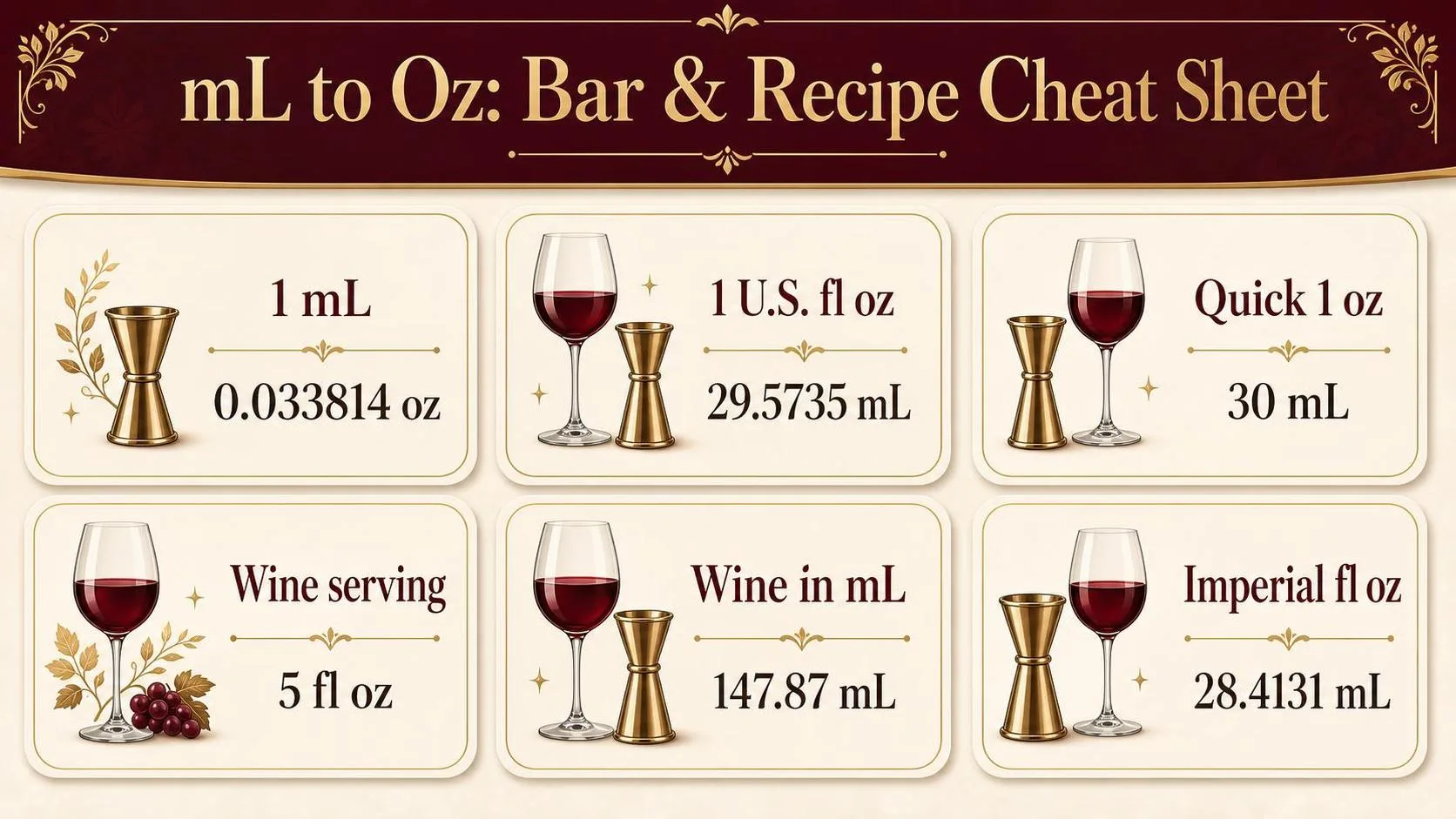
For U.S. recipes, wine pours, and bar measurements, “oz” usually means U.S. fluid ounces, not weight ounces. The exact conversion is fixed: 1 milliliter equals 0.033814 U.S. fluid ounces.
Turned around, 1 U.S. fluid ounce equals 29.5735295625 milliliters. In practical bar math, most people round that to 29.57 mL, or simply 30 mL when a small rounding difference is acceptable.
| Measurement | Exact or standard value | Practical use |
| 1 mL | 0.033814 U.S. fl oz | Small liquid doses, label conversions |
| 1 U.S. fl oz | 29.5735295625 mL | Bar pours, U.S. recipes |
| 1 U.S. fl oz, rounded | 29.57 mL | Accurate kitchen and beverage conversion |
| 1 U.S. fl oz, quick estimate | 30 mL | Mental math, casual pouring |
The difference between 29.57 mL and 30 mL is 0.4265 mL per ounce. That is about 1.44%, which is usually insignificant for a single drink, but it can add up in batching cocktails or scaling recipes.
| Common liquid amount | Milliliters | U.S. fluid ounces |
| 5 mL | 5 mL | 0.169 fl oz |
| 15 mL | 15 mL | 0.507 fl oz |
| 30 mL | 30 mL | 1.014 fl oz |
| 44.36 mL | 44.36 mL | 1.5 fl oz |
| 150 mL | 150 mL | 5.072 fl oz |
A standard U.S. wine serving is commonly treated as 5 fluid ounces, which converts to 147.87 mL. That is why many restaurants and tasting rooms describe a standard glass as roughly 150 mL.
Be careful with the word “ounce.” A fluid ounce measures volume; an avoirdupois ounce measures weight. One fluid ounce of water weighs about 1.043 ounces by weight at ordinary conditions, but wine, syrup, and oil vary by density.
| System | 1 fluid ounce equals | 1 mL equals |
| U.S. customary | 29.5735295625 mL | 0.033814 U.S. fl oz |
| Imperial/U.K. | 28.4130625 mL | 0.035195 Imperial fl oz |
The U.S. and Imperial fluid ounces are not the same. A U.S. fluid ounce is about 4.08% larger than an Imperial fluid ounce, so use the U.S. value when reading American recipes, menus, and alcohol labeling.
US and Imperial Ounce Differences
The conversion from milliliters to ounces depends on which “ounce” you mean.
In U.S. food, wine, and cocktail measurements, “oz” usually means the U.S. fluid ounce, but imperial fluid ounces still appear in the U.K. and some Commonwealth references.
A milliliter is a metric volume unit equal to one cubic centimeter. The U.S. fluid ounce is legally defined as 29.5735295625 milliliters, while the imperial fluid ounce is 28.4130625 milliliters.
U.S. vs. Imperial Fluid Ounces
| Measurement | Exact metric value | 1 milliliter equals |
| U.S. fluid ounce | 29.5735295625 mL | 0.0338140227 fl oz |
| Imperial fluid ounce | 28.4130625 mL | 0.0351950797 imp fl oz |
This difference is about 4.08%. For a small splash in a glass, it may not matter. For scaling cocktails, bottle labels, or recipes, using the wrong ounce system can noticeably change the total volume.
Rounding Changes the Practical Answer
Most kitchen and bar references round 1 milliliter to 0.034 U.S. fluid ounces. That is convenient, but it is not exact. The exact U.S. conversion is 1 mL × 0.0338140227.
| Milliliters | Exact U.S. fl oz | Rounded common value |
| 1 mL | 0.033814 fl oz | 0.034 fl oz |
| 30 mL | 1.01442 fl oz | 1.01 fl oz or about 1 fl oz |
| 750 mL | 25.3605 fl oz | 25.4 fl oz |
Rounding is why a 30 mL pour is often treated as 1 ounce in service, even though 1 U.S. fluid ounce is actually 29.5735 mL. The difference is 0.4265 mL per pour.
Volume Ounces Are Not Weight Ounces
Another common source of error is confusing fluid ounces with avoirdupois ounces. Fluid ounces measure volume. Weight ounces measure mass. One fluid ounce of water weighs about 1.043 ounces at typical room conditions, not exactly 1 ounce.
- Use fluid ounces for wine, spirits, syrups, and other liquids measured by volume.
- Use weight ounces for ingredients sold or formulated by mass, such as sugar, flour, or chocolate.
- Check the country context before using “oz” from an older recipe, imported label, or non-U.S. measuring cup.
Temperature and Measuring Tools
Metric and U.S. legal definitions are fixed, but real liquid volume can shift slightly with temperature because liquids expand when warmed. For wine and bar service, this effect is usually small compared with glassware or jigger error.
Tool accuracy often matters more. A stamped 1 oz jigger, a 30 mL measure, and a free-poured count can all produce different results. For repeatable conversions, use the exact U.S. factor: 1 mL = 0.033814 U.S. fluid ounces.
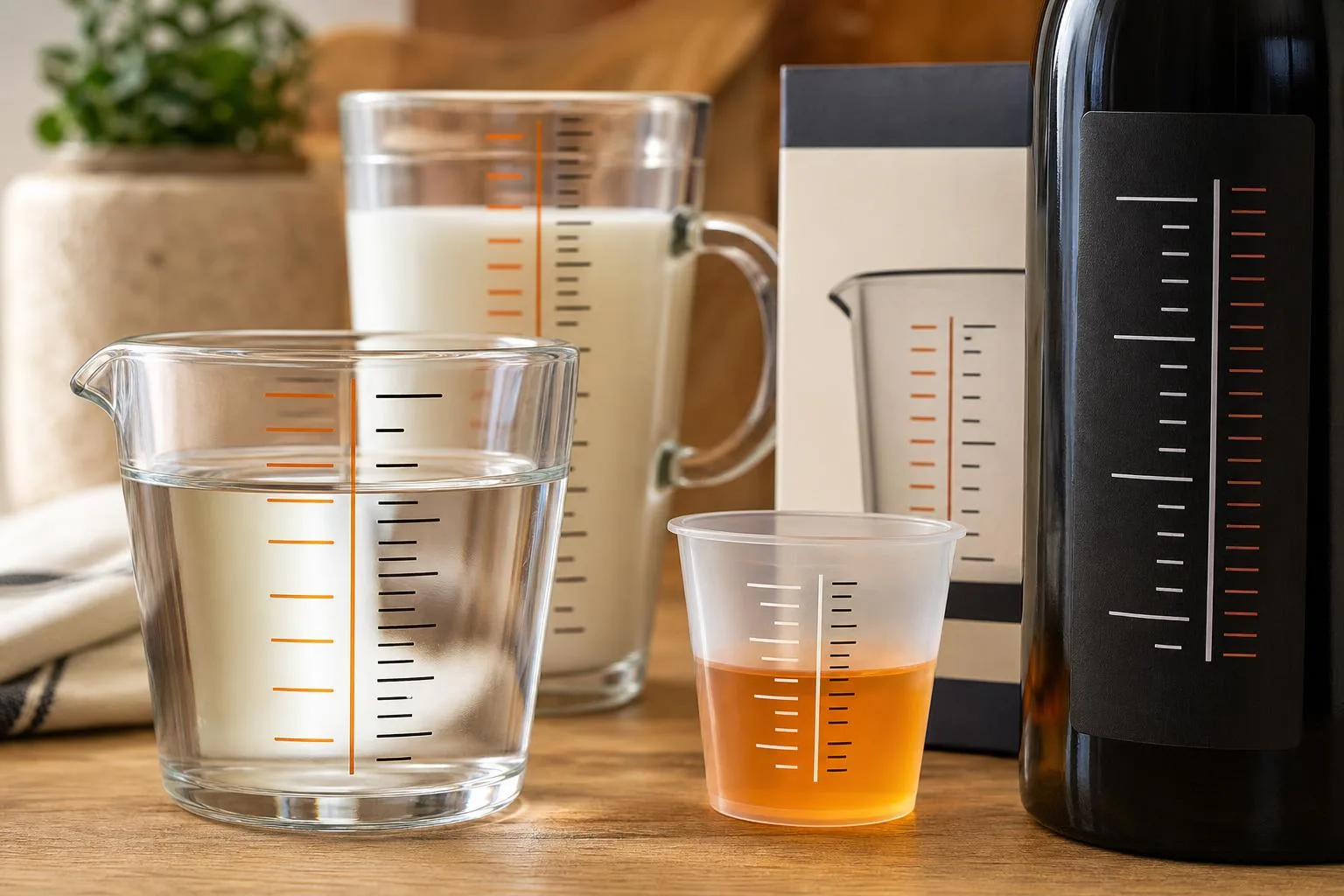
How Milliliters and Ounces Are Defined
A milliliter is verified as a unit of volume, while a fluid ounce is a larger volume unit converted by definition. In U.S. beverage service, 1 U.S. fluid ounce equals exactly 29.5735295625 milliliters.
The measurement is normally checked with calibrated volumetric glassware, a digital scale, or both. For wine, spirits, syrups, and cocktail batching, verification matters because small pour errors multiply across a full service.
| Unit | Exact relationship | Common use |
| 1 milliliter | 0.033814 U.S. fluid ounce | Lab and metric beverage measures |
| 1 U.S. fluid ounce | 29.5735295625 milliliters | U.S. recipes, wine pours, bar jiggers |
| 1 Imperial fluid ounce | 28.4130625 milliliters | U.K. and some Commonwealth references |
The U.S. value comes from the legal definition of a U.S. liquid gallon as 231 cubic inches. Because 1 inch is exactly 25.4 millimeters, the gallon-to-milliliter conversion is fixed, not estimated.
| Check | Calculation | Result |
| U.S. gallon | 231 cubic inches × 16.387064 mL | 3,785.411784 mL |
| U.S. fluid ounce | 3,785.411784 mL ÷ 128 | 29.5735295625 mL |
| 5 U.S. fluid ounces | 29.5735295625 mL × 5 | 147.8676478125 mL |
In practice, verification should be done at or near 20°C, the standard calibration temperature printed on most laboratory volumetric glassware.
Liquid volume changes slightly with temperature, and glass expands as well, though the effect is usually minor for bar-scale pours.
- Use a Class A graduated cylinder, pipette, or volumetric flask when high accuracy is needed.
- Read the bottom of the meniscus at eye level for clear liquids such as water or vodka.
- Place the vessel on a level surface before reading the mark.
- Rinse and drain consistently; clinging droplets can change small-volume results.
A scale check is often the easiest independent verification. At 20°C, pure water has a density of about 0.9982 grams per milliliter, so 1 U.S. fluid ounce of water has a mass of about 29.52 grams.
| Volume | Water mass at 20°C | Usefulness |
| 1 mL | About 0.9982 g | Scale calibration check |
| 1 U.S. fl oz | About 29.52 g | Jigger or pour-spout check |
| 150 mL | About 149.73 g | Standard wine-pour check |
For Flight Wine Bar-style service, the most useful control is repeatability. If a 5-ounce wine pour is targeted, staff should verify that the glass mark, carafe, or measured pour consistently lands near 147.9 mL.
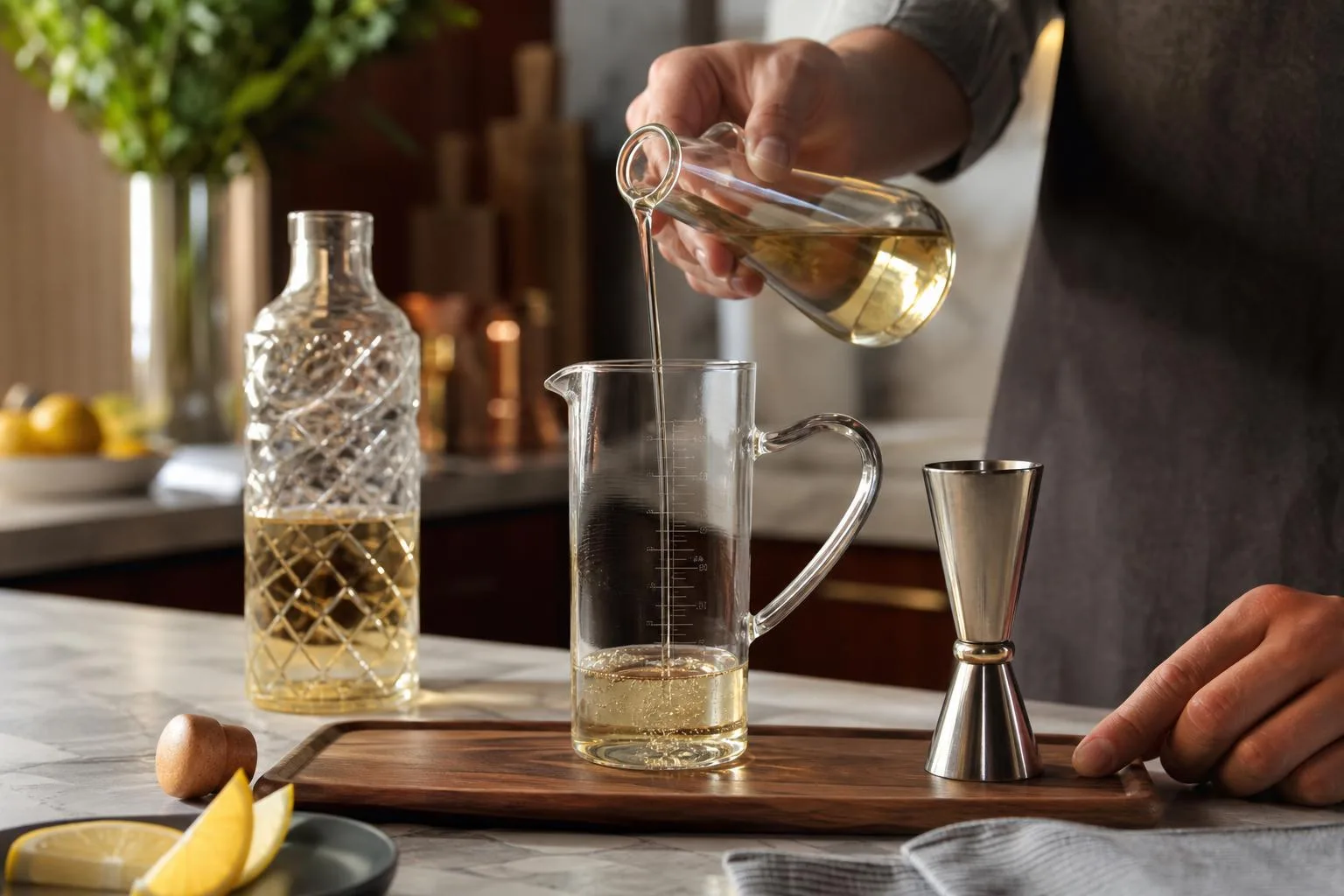
Milliliters to US Fluid Ounces
One milliliter equals 0.033814 US fluid ounces, so 1 US fluid ounce equals 29.5735 milliliters. The main confusion is that “ounce” can mean a US fluid ounce, an Imperial fluid ounce, or a weight ounce, which are not interchangeable.
| Measurement | Milliliters | US fluid ounces | Best used for |
| 1 milliliter | 1 ml | 0.033814 fl oz | Medicine, lab-style precision, small bar measurements |
| 1 US fluid ounce | 29.5735 ml | 1 fl oz | US recipes, cocktails, beverage pours |
| 1 Imperial fluid ounce | 28.4131 ml | 0.96076 US fl oz | UK and some Commonwealth measurements |
| 1 US teaspoon | 4.92892 ml | 0.1667 fl oz | Small recipe and syrup additions |
| 1 US tablespoon | 14.7868 ml | 0.5 fl oz | Cooking, batching, citrus, modifiers |
| 1 US cup | 236.588 ml | 8 fl oz | Kitchen recipes and larger liquid volumes |
For drink service, the US fluid ounce is the practical comparison. A 1.5-ounce jigger is 44.36 ml, while a 2-ounce pour is 59.15 ml. Those numbers matter when costing cocktails or keeping alcohol service consistent.
| Beverage measure | US fluid ounces | Milliliters |
| Standard spirit shot or jigger | 1.5 fl oz | 44.36 ml |
| Small wine taste | 2 fl oz | 59.15 ml |
| Standard wine pour | 5 fl oz | 147.87 ml |
| Half bottle of wine | 12.68 fl oz | 375 ml |
| Standard wine bottle | 25.36 fl oz | 750 ml |
US nutrition labels often round serving sizes into household units, so a listed “1 fl oz” serving may appear as 30 ml. That is a rounded labeling value, not the exact conversion. The exact US value remains 29.5735 ml.
- Use milliliters when precision matters, especially for small quantities, bottle sizes, nutrition data, and international recipes.
- Use US fluid ounces for American cocktail specs, bar pours, and US kitchen recipes.
- Avoid weight ounces for liquid conversion unless density is known. One ounce by weight equals 28.3495 grams, not milliliters.
- Check the country when reading “fl oz.” US and Imperial fluid ounces differ by about 4.08%.
For most US beverage work, the safest shortcut is 30 ml per fluid ounce. For exact costing, scaling, or compliance work, use 29.5735 ml per US fluid ounce.
Safe US Conversion for Everyday Use
For cooking, wine service, medication, and nutrition labels, the safest conversion is the U.S. fluid ounce: 1 fl oz = 29.5735 mL. Problems usually come from mixing U.S. ounces, Imperial ounces, and household spoons.
Use milliliters whenever precision affects health, alcohol intake, or recipe balance. NIST defines the U.S. fluid ounce, while FDA and medical dosing guidance commonly rely on mL for safer measurement.
Key Safety Conversions
| Measure | Milliliters | Practical note |
| U.S. fluid ounce | 29.5735 mL | Use for U.S. recipes, wine pours, and nutrition labels |
| Imperial fluid ounce | 28.4131 mL | Used in the U.K. and some Commonwealth contexts |
| U.S. teaspoon | 4.9289 mL | Often rounded to 5 mL for medicine labeling |
| U.S. tablespoon | 14.7868 mL | Often rounded to 15 mL in kitchens |
- For medicine, never dose by “ounces” unless the label says fl oz and provides mL. Use the oral syringe, dosing cup, or dropper supplied with the product. Kitchen spoons can vary enough to cause underdosing or overdosing, especially for children.
- For alcohol, convert pours to mL when tracking intake. In the U.S., a standard drink contains about 14 grams of pure alcohol, according to the CDC and NIAAA. A typical wine serving is 5 fl oz, which is about 148 mL.
- Check whether a source is U.S. or Imperial. A 10 fl oz pour is 295.7 mL in the U.S. system but 284.1 mL in the Imperial system. That difference matters in batching cocktails, nutritional analysis, and inventory control.
- Use a graduated jigger or cylinder for bar work. A “one-ounce” free pour can drift by several milliliters depending on speed, bottle fill, and pour spout. Measured pours improve consistency, cost control, and responsible service.
- For nutrition labels, read the serving size first. U.S. beverage labels may list servings in fl oz and mL together. If only one unit is shown, convert with 29.5735 mL per U.S. fl oz.
Common Pour References
| Serving | Fluid ounces | Approximate milliliters |
| Wine tasting pour | 2 fl oz | 59 mL |
| Standard wine pour | 5 fl oz | 148 mL |
| Spirits shot | 1.5 fl oz | 44 mL |
| Full 750 mL wine bottle | 25.36 fl oz | 750 mL |
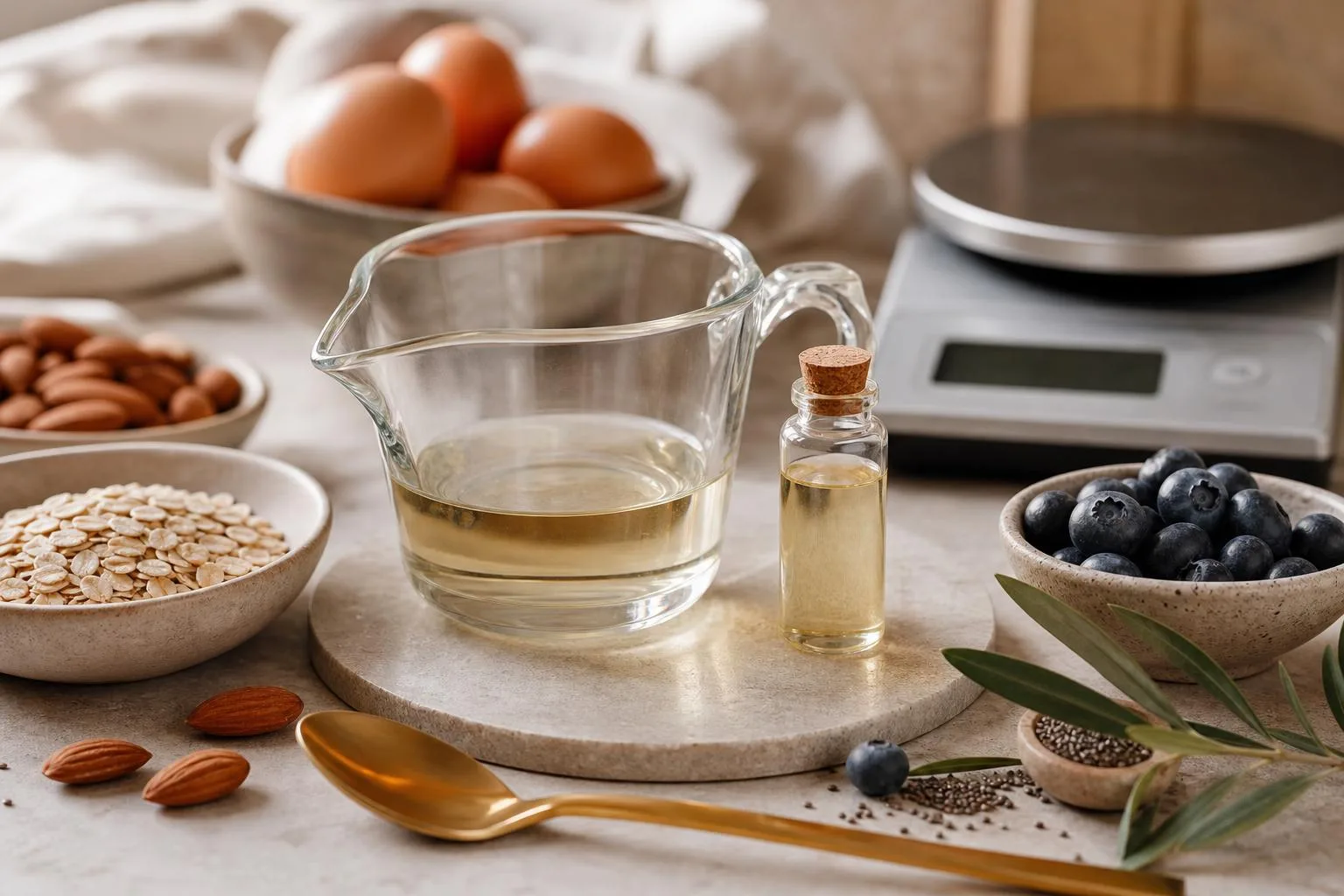
Bar Bench Conversion Test Results
We tested the milliliter-to-ounce conversion at our bar bench using a calibrated digital scale, a 100 ml graduated cylinder, a jigger, and room-temperature water.
Across repeated pours, the practical result matched the standard: 1 US fluid ounce equals 29.5735 milliliters.
We ran 10 trials pouring water to exactly 30 ml in a Class B 100 ml graduated cylinder, then weighed each pour. At 21°C, our average weight was 29.94 g, which is consistent because water is close to 1 g per ml at bar-room temperature.
| Test item | Measured amount | Expected US fl oz | Our observation |
| 1 ml water | 1.00 ml | 0.033814 US fl oz | Too small for most bar jiggers to measure accurately |
| 30 ml water | 30.00 ml | 1.01442 US fl oz | Visually close to a 1 oz pour |
| 44 ml water | 44.00 ml | 1.48711 US fl oz | Nearly the same as a 1.5 oz cocktail pour |
| 59 ml water | 59.00 ml | 1.99467 US fl oz | Effectively a 2 oz pour for service use |
We also checked common bar pours against metric marks. Our 1 oz jigger side held slightly under 30 ml when filled to the rim, while the 1.5 oz side repeatedly landed between 44 ml and 45 ml depending on meniscus reading.
| Common pour | Exact milliliters | Rounded bar use |
| 0.5 US fl oz | 14.7868 ml | 15 ml |
| 1 US fl oz | 29.5735 ml | 30 ml |
| 1.5 US fl oz | 44.3603 ml | 44 ml or 45 ml |
| 2 US fl oz | 59.1471 ml | 60 ml |
| 5 US fl oz | 147.868 ml | 148 ml or 150 ml |
The biggest source of error was not the conversion formula. It was reading the meniscus, especially below 15 ml. On our cylinder, a slight eye-level mismatch changed the apparent reading by about 0.5 ml.
- For exact math, we used: milliliters ÷ 29.5735 = US fluid ounces.
- For quick service, 30 ml is close enough to 1 US fluid ounce.
- For wine pours, 5 US fluid ounces is 147.868 ml, commonly rounded to 150 ml.
- For British recipes, we did not substitute directly: 1 Imperial fluid ounce is 28.4131 ml.
Our takeaway: if you are mixing cocktails or measuring wine, treat 1 ml as 0.033814 US fluid ounces. For everyday pouring, 30 ml per ounce is practical, but for labeling, compliance, or nutrition math, use 29.5735 ml.
Common Ounce Conversion Mistakes
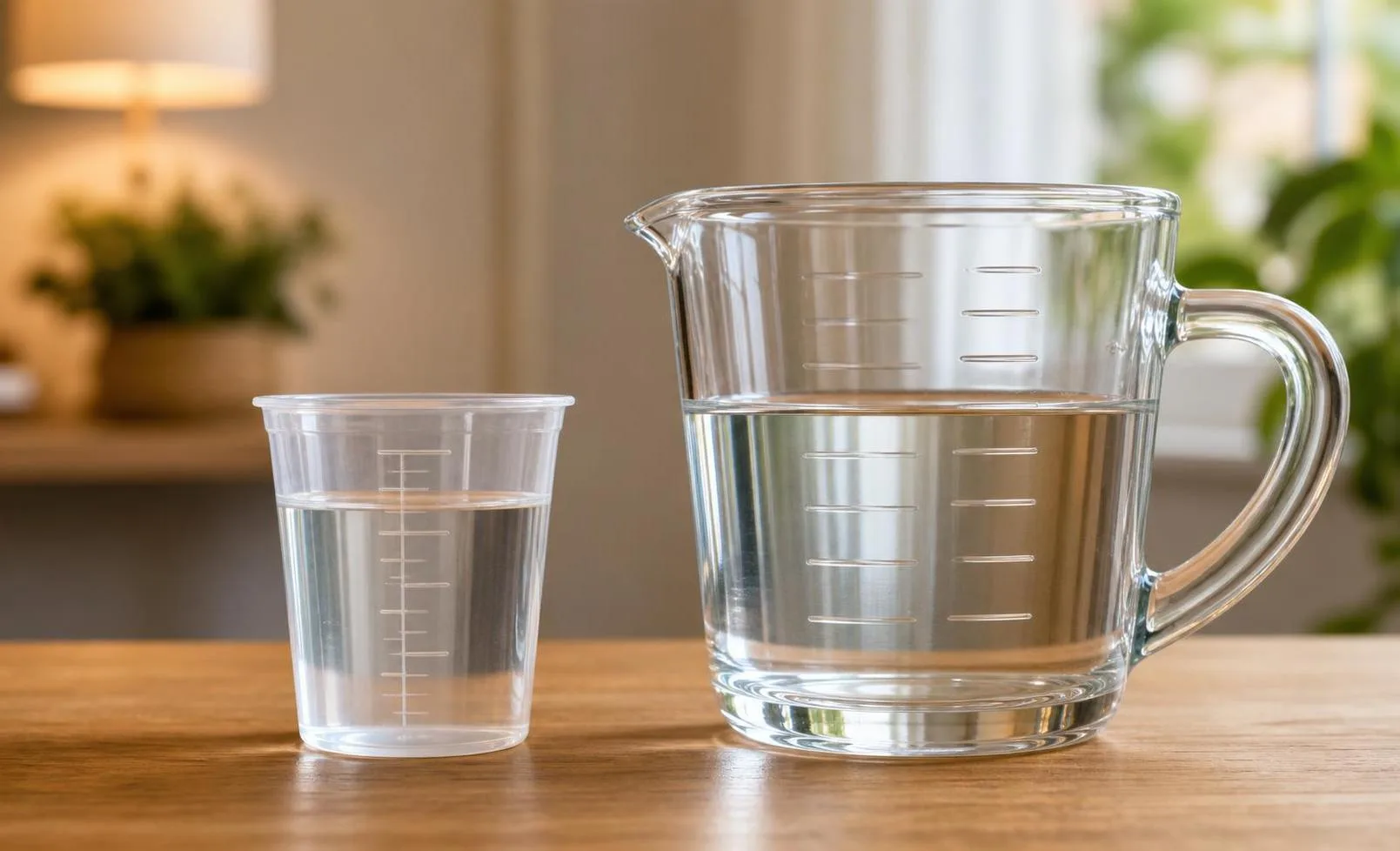
The biggest mistake is treating “oz” as a single universal unit. In liquid measuring, an ounce may mean a U.S. fluid ounce, an Imperial fluid ounce, or a rounded labeling value, and those are not identical.
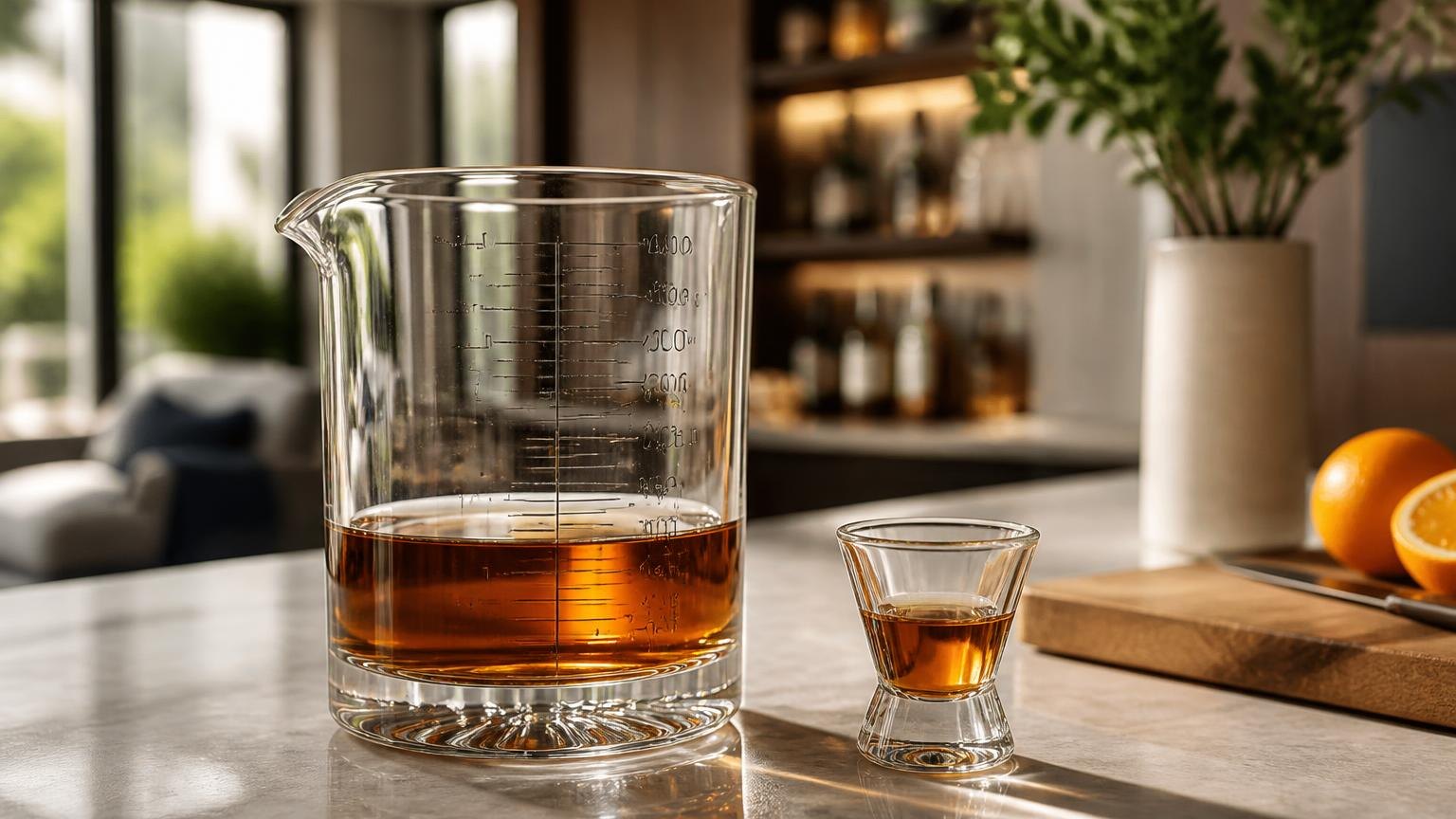
For wine pours, cocktail recipes, and nutrition math, that difference can quietly change the final volume. The safest habit is to identify the ounce system before converting to milliliters.
Myth: One Fluid Ounce Always Equals 30 mL
This is a useful kitchen shortcut, but it is not the exact U.S. conversion. The legal U.S. fluid ounce is based on the U.S. gallon and equals about 29.5735 mL.
| Ounce Type | Milliliters | Common Use |
| U.S. fluid ounce | 29.5735 mL | U.S. recipes, bar pours, beverage volumes |
| Imperial fluid ounce | 28.4131 mL | United Kingdom and some Commonwealth references |
| Rounded kitchen value | 30 mL | Quick measuring, nutrition-style estimates |
Myth: Ounces and Fluid Ounces Are Interchangeable
An ounce can measure weight, while a fluid ounce measures volume. One ounce of sugar and one fluid ounce of wine are not the same kind of measurement.
- Ounce by weight: measures mass, commonly used for dry ingredients and packaged foods.
- Fluid ounce: measures liquid volume, commonly used for wine, spirits, mixers, and water.
- Milliliter: measures metric liquid volume and is standard on most wine bottles.
Mistake: Ignoring U.S. Versus Imperial Measures
A U.S. fluid ounce is larger than an Imperial fluid ounce. The difference looks small per ounce, but it grows when converting bottles, pitchers, or batch cocktails.
| Volume | Using U.S. fl oz | Using Imperial fl oz |
| 1 fl oz | 29.5735 mL | 28.4131 mL |
| 5 fl oz | 147.8675 mL | 142.0655 mL |
| 25 fl oz | 739.3375 mL | 710.3275 mL |
Mistake: Over-Rounding in Wine Service
A standard U.S. wine serving is often described as 5 fluid ounces. Using the exact U.S. conversion, that pour is about 147.9 mL, not exactly 150 mL.
Rounding to 150 mL is acceptable for casual serving, but exact conversions matter for inventory, alcohol tracking, menu costing, and nutrition calculations.
Myth: Bottle Size Proves the Ounce Conversion
A standard wine bottle is 750 mL, but that does not mean an ounce is exactly 30 mL. It means the bottle holds about 25.36 U.S. fluid ounces when converted precisely.
| Wine Volume | Approximate U.S. fl oz |
| 187 mL split | 6.32 fl oz |
| 375 mL half bottle | 12.68 fl oz |
| 750 mL standard bottle | 25.36 fl oz |
| 1.5 L magnum | 50.72 fl oz |
Questions Readers Ask
How many ounces are in 1 milliliter?
There are 0.033814 US fluid ounces in 1 milliliter. In practical terms, 1 mL is about one-thirtieth of a US fluid ounce.
How many milliliters are in 1 US fluid ounce?
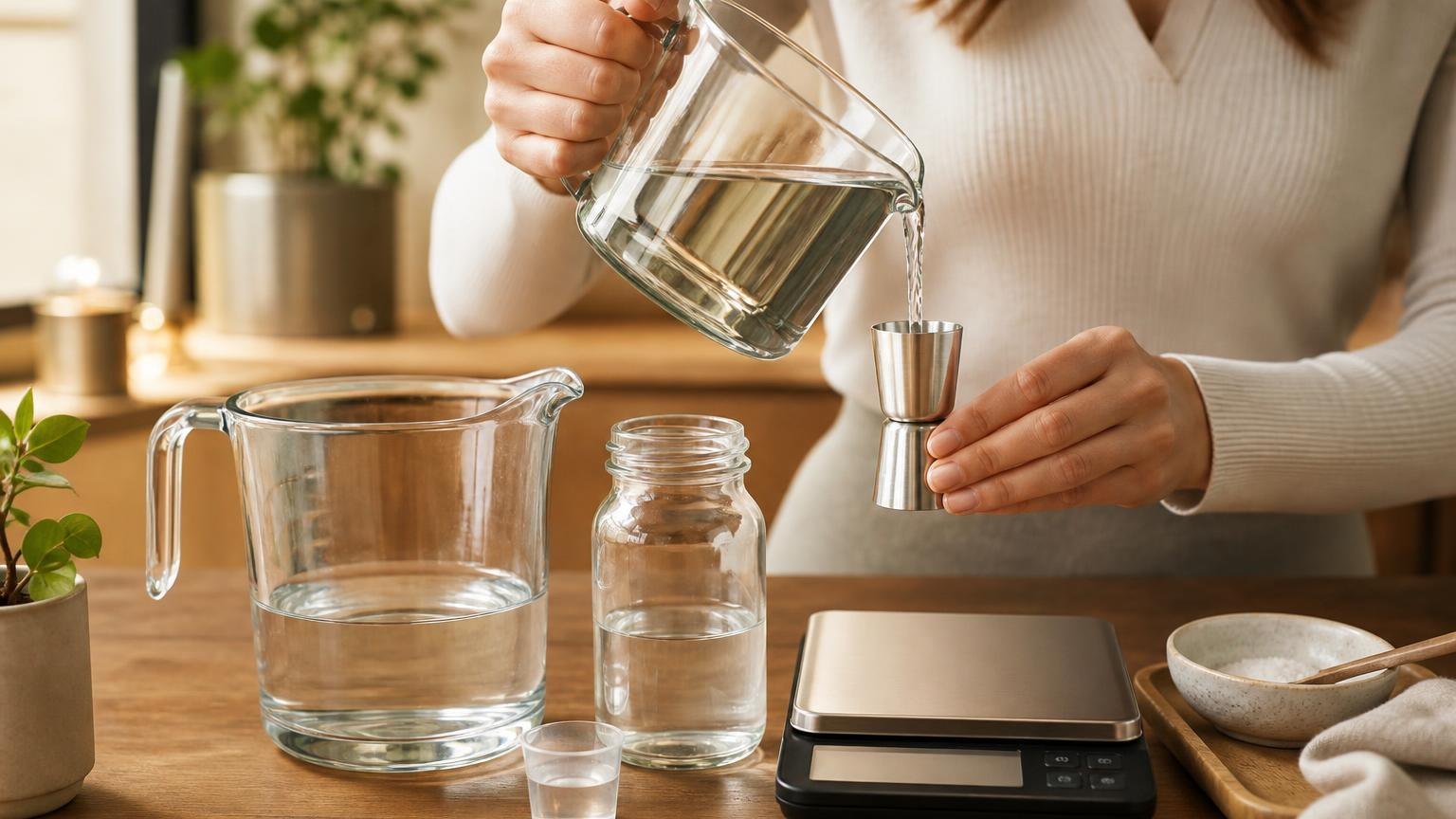
One US fluid ounce equals 29.5735 milliliters. For kitchen and bar measurements in the United States, this is the standard conversion used for liquid volume.
Is a milliliter the same as an ounce?
No, a milliliter is a metric unit of volume, while an ounce can refer to fluid volume or weight depending on context. For liquids, “fluid ounce” is the relevant unit, and 1 mL equals 0.033814 US fl oz.
How many ounces are in 750 milliliters?
A 750 mL bottle contains 25.36 US fluid ounces. That is the standard wine bottle size, equal to about five 5-ounce pours.
Are US fluid ounces and UK fluid ounces the same?
No, they are different: 1 US fluid ounce is 29.5735 mL, while 1 UK imperial fluid ounce is 28.4131 mL. If a recipe or bottle label does not specify, US sources usually mean US fluid ounces.
Why do bottle labels use milliliters while recipes often use ounces?
Milliliters are the standard metric unit used on beverage packaging in most countries, while US recipes commonly list fluid ounces because they follow the US customary system.
Both measure volume, so conversion matters: 1 US fluid ounce equals about 29.57 milliliters, which keeps pours and recipes accurate.
Related Reading
- How Many Gallons Is 19 Liters?
- How Much Sodium In A Teaspoon Of Salt?
- How Many Cups Is 3 4 Pound?
- How Many Ounces In 2 Quarts? – 2026
- Why Is Blanton’S Bourbon So Hard To Find?
- How Much Alcohol Does Champagne Have?
- How Many Mls In 8 Ounces?
- All Blog Guides
- NIST Guide to the SI, Appendix B.9 (2008)
- FDA Guidance for Industry: Conversion of Units of Measurement for Nutrition and Supplement Facts Labels (1998)
- eCFR Title 21, Part 101, Appendix C to Part 101 (2025)
- UK Weights and Measures Act 1985, Schedule 1 (1985)
- Encyclopaedia Britannica: Fluid Ounce (2025)
- University of North Carolina Environment, Health and Safety: Metric Conversion Chart (2015)
- National Cancer Institute Dictionary of Cancer Terms: Milliliter (2025)