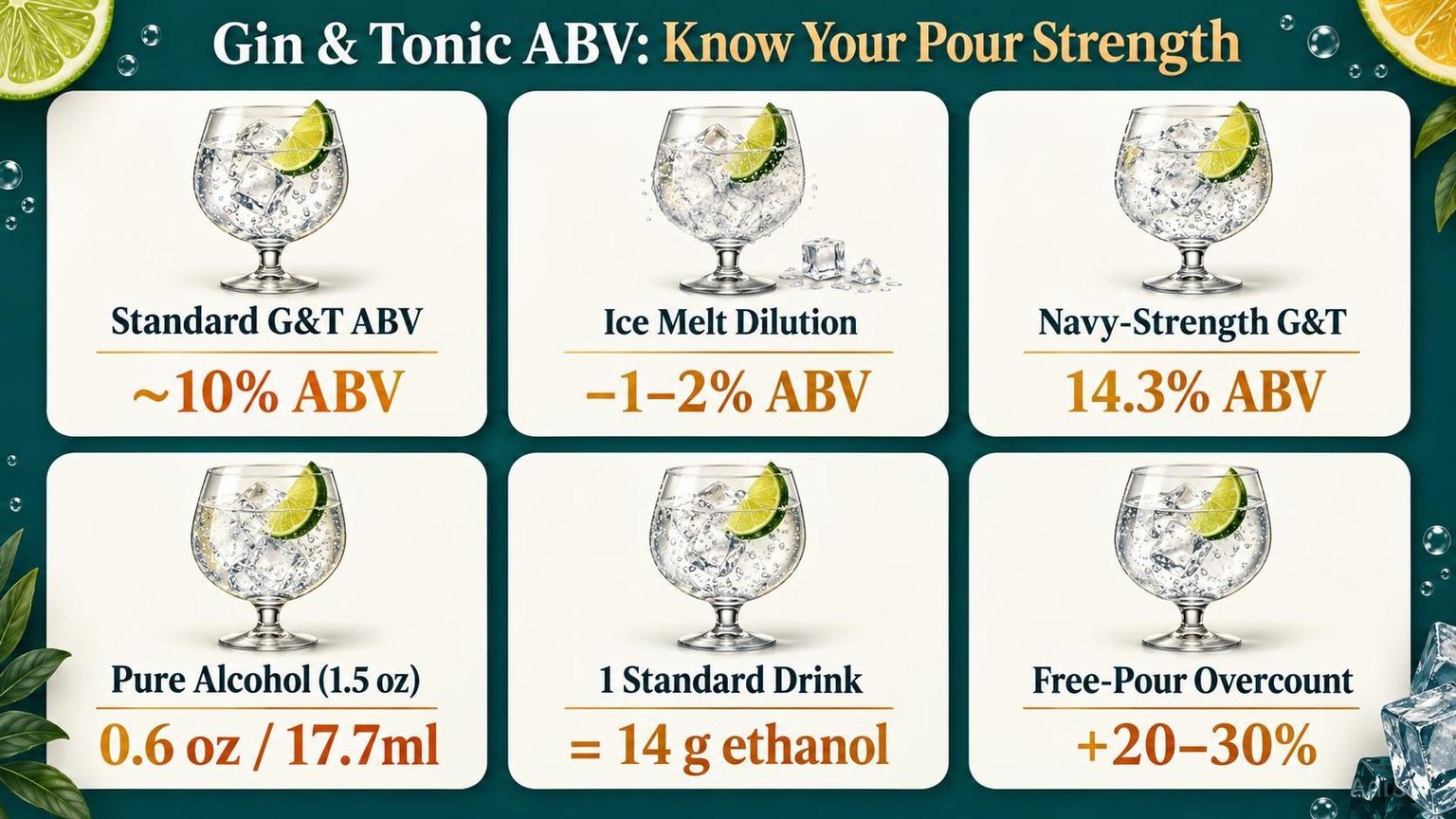
gin and tonic alcohol content is typically about 10% ABV when made with 2 oz of 40% ABV gin and 4 oz of tonic water over ice. The final strength changes fast with pour size, glass volume, tonic ratio, and dilution from melting ice.
A bar-strength gin and tonic can land closer to 12–14% ABV if the drink uses more gin or less mixer. A lighter highball may fall near 6–8% ABV.
This guide shows how to calculate it, compare common recipes, and estimate standard drinks accurately.
Gin and tonic ABV formula
Calculating your gin and tonic’s actual alcohol content requires one straightforward formula. The ABV of any mixed drink equals the total volume of pure alcohol divided by the total liquid volume, multiplied by 100.
The formula
Drink ABV (%) = (volume of spirit × spirit ABV) ÷ total drink volume × 100
A standard G&T uses 50 ml of gin at 40% ABV poured over 150 ml of tonic water. That yields 20 ml of pure ethanol in 200 ml of liquid—before ice melt.
20 ÷ 200 × 100 = 10% ABV. That figure drops once ice dilution is factored in.
ABV by gin-to-tonic ratio
Ratio choice shifts the final ABV significantly. The table below assumes 40% ABV gin and no ice dilution.
| Gin (ml) | Tonic (ml) | Ratio | Drink ABV |
| 25 | 150 | 1:6 | 5.7% |
| 35 | 150 | 1:4.3 | 7.6% |
| 50 | 150 | 1:3 | 10.0% |
| 50 | 200 | 1:4 | 8.0% |
| 60 | 150 | 1:2.5 | 11.4% |
Ice dilution adjustment
Ice typically adds 30–50 ml of melt water over a 10-minute drinking window. That extra volume lowers the effective ABV by roughly 1–2 percentage points.
Using the 50 ml gin / 150 ml tonic example with 40 ml of ice melt, the adjusted calculation becomes: 20 ÷ 240 × 100 = 8.3% ABV.
Variables that shift the number
- Gin proof: Navy-strength gins (57% ABV) push a standard 1:3 serve to 14.3% before dilution.
- Glassware size: A copa glass encourages more tonic, lowering ABV; a rocks glass concentrates it.
- Pre-batching: Bottled G&T products typically standardize at 5–7% ABV for consistent labeling.
Measuring your pour with a jigger is the single most reliable way to control the alcohol content of each drink you serve or consume.
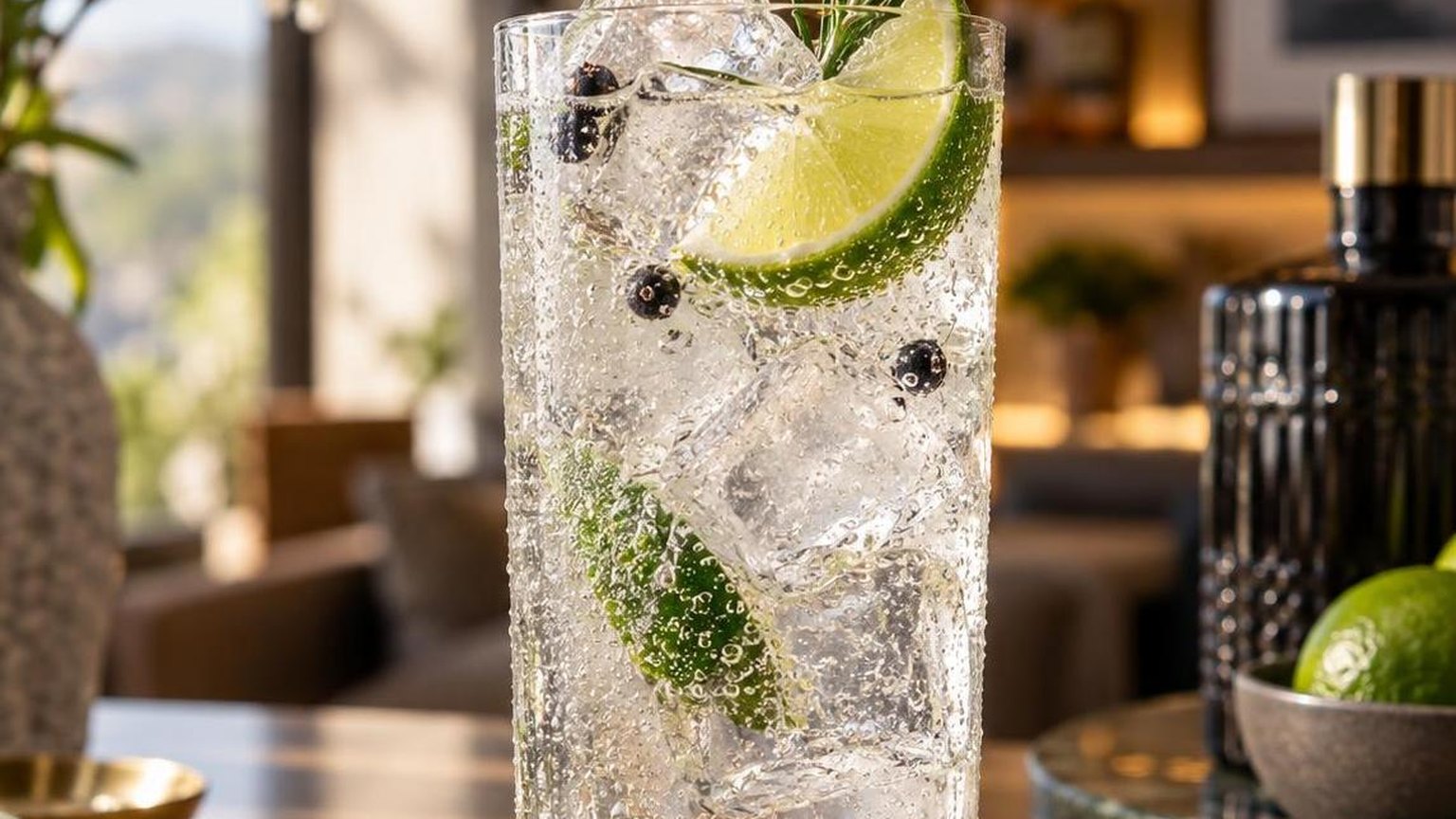
Standard gin and tonic alcohol content
A standard gin and tonic made with 1.5 oz (44 ml) of 40% ABV gin and 4–5 oz of tonic water contains roughly 10–12% ABV in the glass. That translates to approximately 0.6 standard drinks’ worth of pure alcohol per serving.
The alcohol content depends on three variables: the gin’s ABV, the pour size, and the volume of tonic water used as a mixer.
ABV by gin-to-tonic ratio
Changing the ratio shifts the drink’s strength significantly. These calculations assume a 40% ABV gin.
| Gin pour | Tonic water | Total volume | Approximate ABV |
| 1.0 oz (30 ml) | 5 oz (150 ml) | 6 oz (180 ml) | ~6.7% |
| 1.5 oz (44 ml) | 4 oz (120 ml) | 5.5 oz (164 ml) | ~10.7% |
| 2.0 oz (60 ml) | 4 oz (120 ml) | 6 oz (180 ml) | ~13.3% |
| 2.0 oz (60 ml) | 6 oz (180 ml) | 8 oz (240 ml) | ~10.0% |
Bar pours in the United States typically use 1.5 oz of spirit. In the UK, a standard single measure is 25 ml (roughly 0.85 oz), producing a weaker drink around 5–7% ABV.
Pure alcohol per serving
A 1.5 oz pour of 40% ABV gin delivers 0.6 oz (17.7 ml) of pure ethanol. The NIAAA defines one U.S. standard drink as 14 grams of pure alcohol—equivalent to 1.5 oz of 80-proof spirit.
One properly measured gin and tonic therefore equals exactly one standard drink. Heavier pours of 2 oz push the count to approximately 1.3 standard drinks.
Factors that increase alcohol content
- Navy-strength gin: Bottled at 57% ABV or higher, raising a standard pour to roughly 15% ABV in the glass.
- Less tonic: Using only 3 oz of tonic with a 1.5 oz pour yields about 13.3% ABV.
- Double pours: Many bars serve doubles (3 oz) without clearly stating it, doubling the ethanol to 1.2 oz per glass.
- Skipping ice: Ice melt adds 0.5–1 oz of water over several minutes, gradually diluting ABV by 1–2 percentage points.
Measuring your pour with a jigger is the most reliable way to control alcohol intake. Free-pouring overestimates the intended volume by 20–30% on average, according to a 2008 study published in Alcoholism: Clinical and Experimental Research.
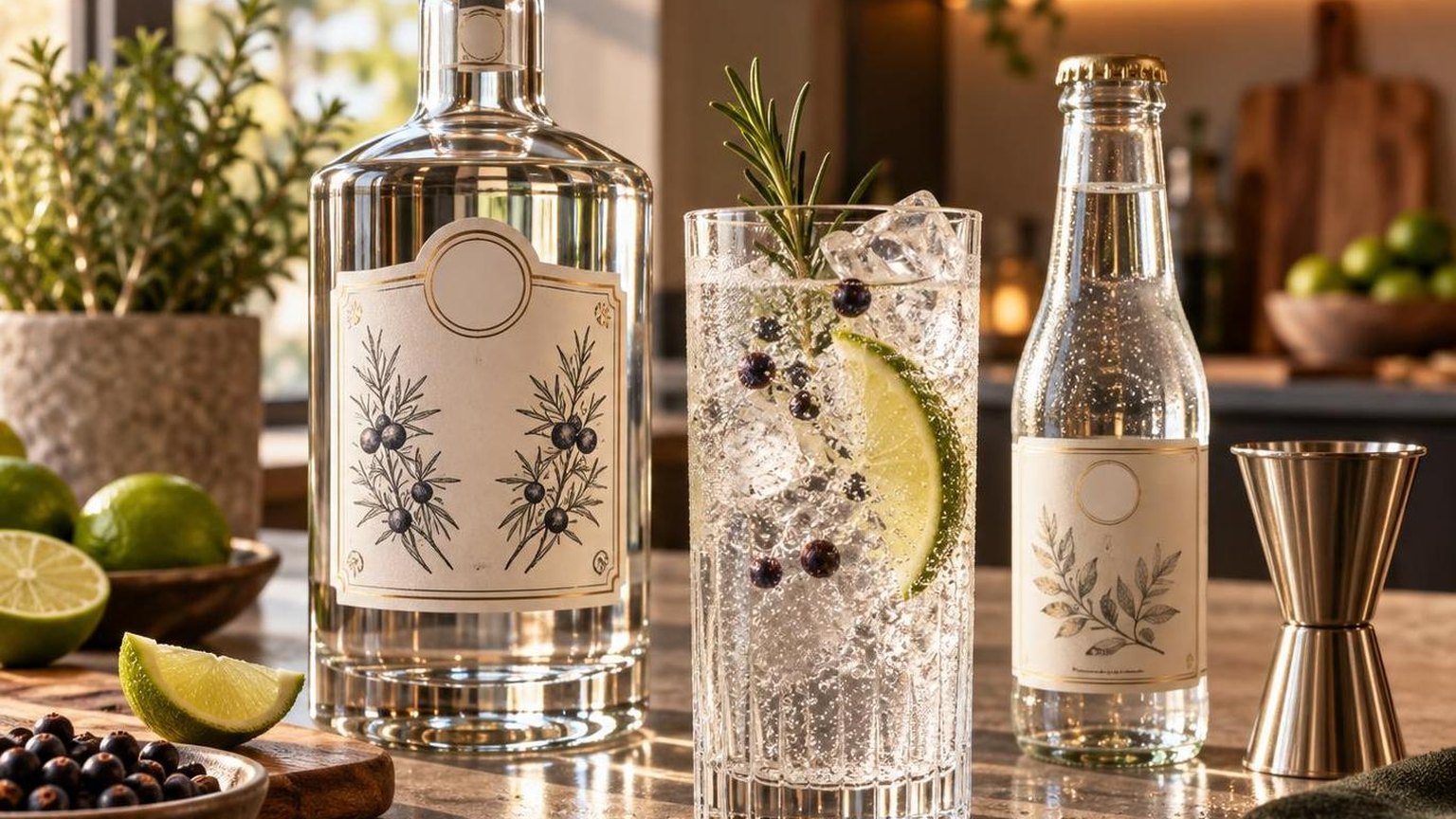
Alcohol units in gin and tonic
A standard gin and tonic contains between 1.0 and 2.5 alcohol units depending on the gin measure and its ABV. Understanding unit counts helps drinkers stay within the recommended limit of 14 units per week set by the UK Chief Medical Officers.
How alcohol units are calculated
The formula is straightforward: volume (ml) × ABV (%) ÷ 1,000 = units. Tonic water contributes zero alcohol, so only the gin portion matters in the calculation.
Units by serving size and ABV
Gin ABV typically ranges from 37.5% (the EU legal minimum) to 57% for navy-strength expressions. The table below shows exact unit counts for common pours.
| Gin Measure | ABV 37.5% | ABV 40% | ABV 43% | ABV 47% | ABV 57% |
| 25 ml (UK single) | 0.9 units | 1.0 units | 1.1 units | 1.2 units | 1.4 units |
| 35 ml (UK large single) | 1.3 units | 1.4 units | 1.5 units | 1.6 units | 2.0 units |
| 50 ml (UK double) | 1.9 units | 2.0 units | 2.2 units | 2.4 units | 2.9 units |
| 44 ml / 1.5 oz (US standard) | 1.7 units | 1.8 units | 1.9 units | 2.1 units | 2.5 units |
Practical benchmarks
- A single 25 ml serve of 40% gin with tonic equals exactly 1.0 unit—the simplest reference point.
- A UK double (50 ml) at 40% ABV delivers 2.0 units, meaning seven doubles reach the full weekly guideline.
- Navy-strength gin at 57% ABV packs roughly 43% more units per milliliter than a standard 40% bottle.
- Pre-mixed cans (typically 250 ml at 5–10% ABV) contain 1.3 to 2.5 units per can—always check the label.
Why home pours skew higher
Studies by Alcohol Research UK found that home-poured “singles” average 38 ml rather than the standard 25 ml. That inflates a supposed 1.0-unit drink to approximately 1.5 units at 40% ABV.
Using a jigger or measured pourer eliminates guesswork. Tracking actual unit intake per drink keeps consumption within evidence-based health guidelines.
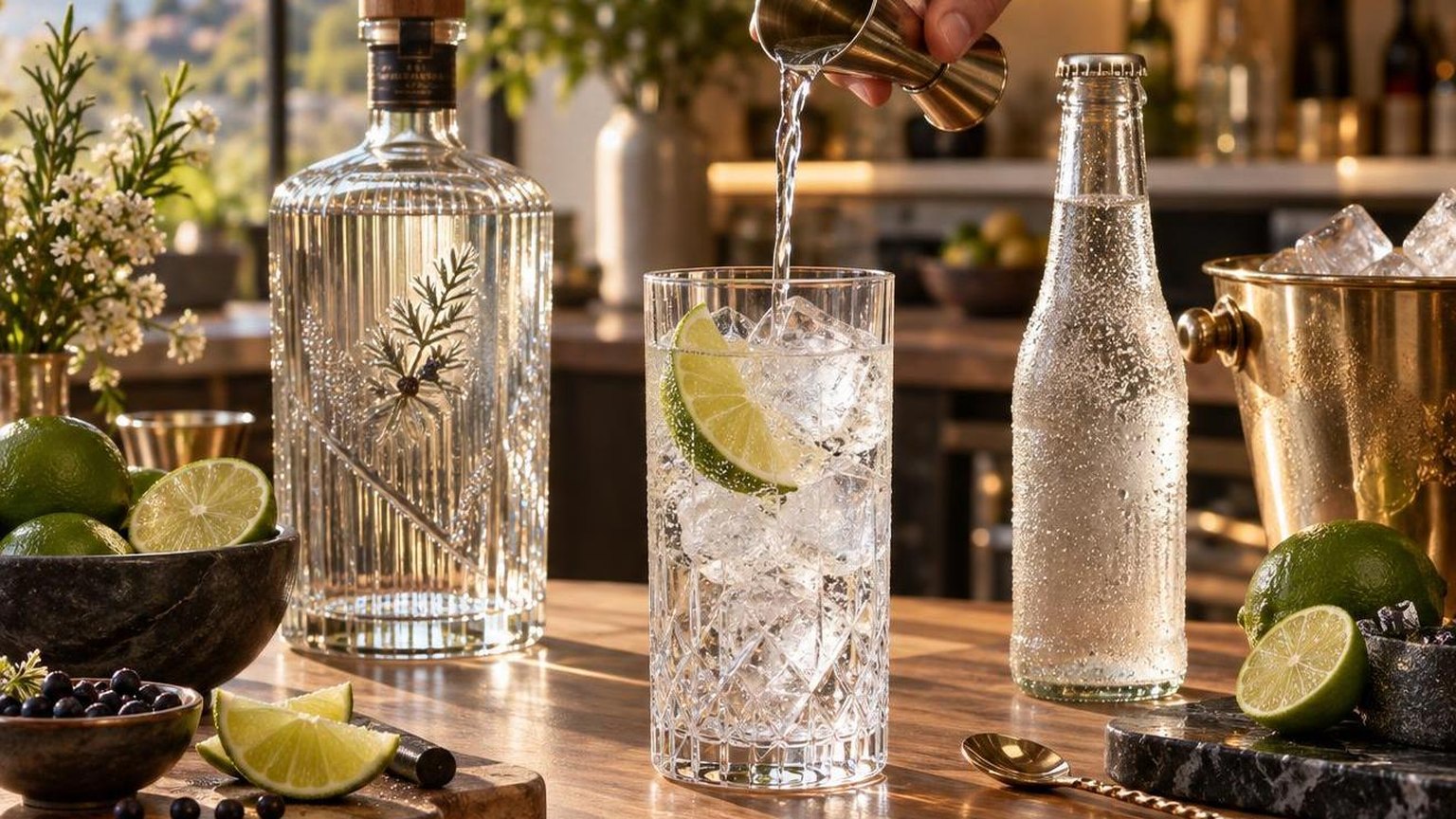
How gin proof changes strength
Gin’s proof directly determines how much alcohol ends up in your G&T. Swapping a 80-proof gin for a 114-proof Navy Strength gin increases the drink’s ABV by roughly 40%, even when the tonic ratio stays identical.
In the US, proof equals twice the ABV percentage. A gin labeled 94 proof contains 47% alcohol by volume.
| Gin Style | Typical Proof | ABV | G&T ABV (1:2 ratio) |
| Light/Low-ABV Gin | 60 | 30% | ~10% |
| Standard London Dry (e.g., Beefeater) | 80 | 40% | ~13.3% |
| Premium Strength (e.g., Tanqueray) | 94.6 | 47.3% | ~15.8% |
| Navy Strength (e.g., Plymouth Navy) | 114 | 57% | ~19% |
G&T ABV estimates above assume a 1:2 gin-to-tonic pour (60 ml gin, 120 ml tonic) with no ice dilution factored in.
Why proof matters at the glass level
A standard G&T made with 80-proof gin contains approximately 0.95 standard US drinks. The same build with 114-proof Navy Strength gin jumps to about 1.36 standard drinks—a 43% increase per glass.
The EU sets a legal minimum of 37.5% ABV (75 proof) for any spirit labeled “gin.” The US has no federal minimum ABV for gin specifically, though most domestic brands bottle at 40% ABV or above.
- Beefeater London Dry: 80 proof (40% ABV)
- Hendrick’s: 88 proof (44% ABV)
- Tanqueray: 94.6 proof (47.3% ABV)
- Sipsmith VJOP: 114 proof (57.7% ABV)
- Plymouth Navy Strength: 114 proof (57% ABV)
Navy Strength gin earned its name from the British Royal Navy’s requirement that spirits stored near gunpowder remain at least 100 British proof—equivalent to 57.15% ABV—so gunpowder would still ignite if soaked.
Choosing a lower-proof gin is the simplest way to reduce a G&T’s alcohol content without altering the drink’s botanical character or diluting it with extra tonic.
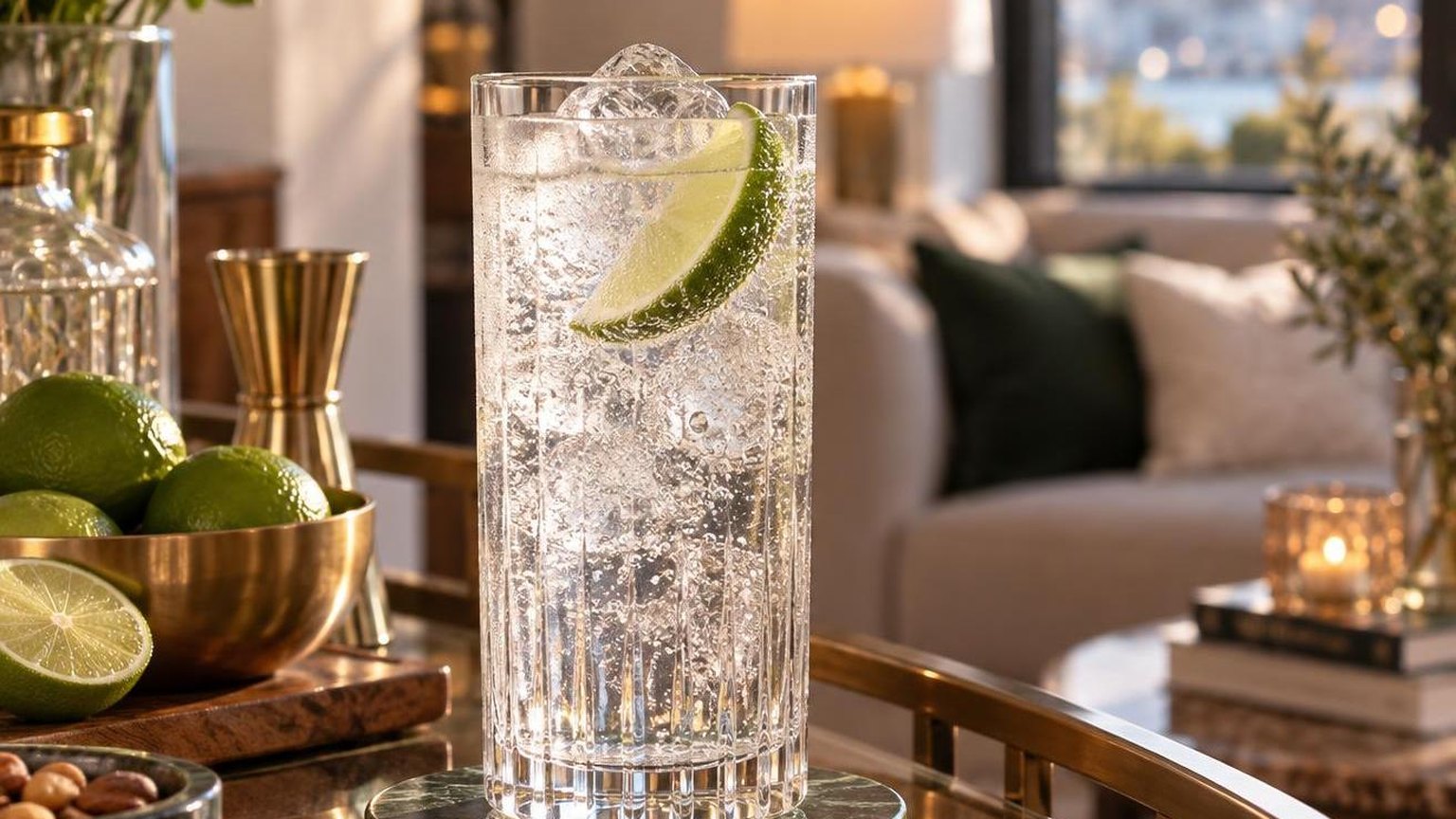
Tonic ratio and final ABV
The ratio of tonic water to gin determines the final alcohol by volume (ABV) of your drink. Since tonic water contains 0% alcohol, every additional ounce dilutes the gin’s strength proportionally.
A standard gin sits at 40% ABV (80 proof). The most common serving uses 1.5 oz (44 ml) of gin in a highball glass, topped with varying amounts of tonic.
| Gin (oz) | Tonic (oz) | Ratio (Gin:Tonic) | Total Volume (oz) | Approx. ABV |
| 1.5 | 3 | 1:2 | 4.5 | 13.3% |
| 1.5 | 4.5 | 1:3 | 6 | 10% |
| 1.5 | 6 | 1:4 | 7.5 | 8% |
| 2 | 4 | 1:2 | 6 | 13.3% |
| 2 | 6 | 1:3 | 8 | 10% |
| 2 | 8 | 1:4 | 10 | 8% |
These figures assume 40% ABV gin with no ice melt. Ice dilution typically reduces the final ABV by an additional 1–2 percentage points over 10–15 minutes of sipping.
How ratio affects the drinking experience
A 1:2 ratio produces a spirit-forward G&T at roughly 13.3% ABV — comparable to a glass of wine. Most UK bars default to a 1:3 ratio, landing around 10% ABV.
Spanish-style gin tonics served in copa glasses typically use a 1:3 or 1:4 ratio with 50 ml (1.7 oz) of gin, prioritizing aromatic garnishes over alcohol intensity.
- 1:2 ratio — Strong, botanical-forward. Best for navy-strength gins (57% ABV), which still reach 19% ABV at this ratio.
- 1:3 ratio — Balanced. The International Bartenders Association lists no official G&T spec, but 1:3 is the most widely cited standard.
- 1:4 ratio — Light and refreshing at 8% ABV. Ideal for session drinking or warm-weather pacing.
Navy-strength gins at 57% ABV shift every ratio upward. A 1:3 pour with navy-strength gin yields approximately 14.25% ABV — stronger than most 1:2 pours made with standard gin.
Measuring your pour rather than free-pouring is the single most reliable way to control your gin and tonic’s final alcohol content.
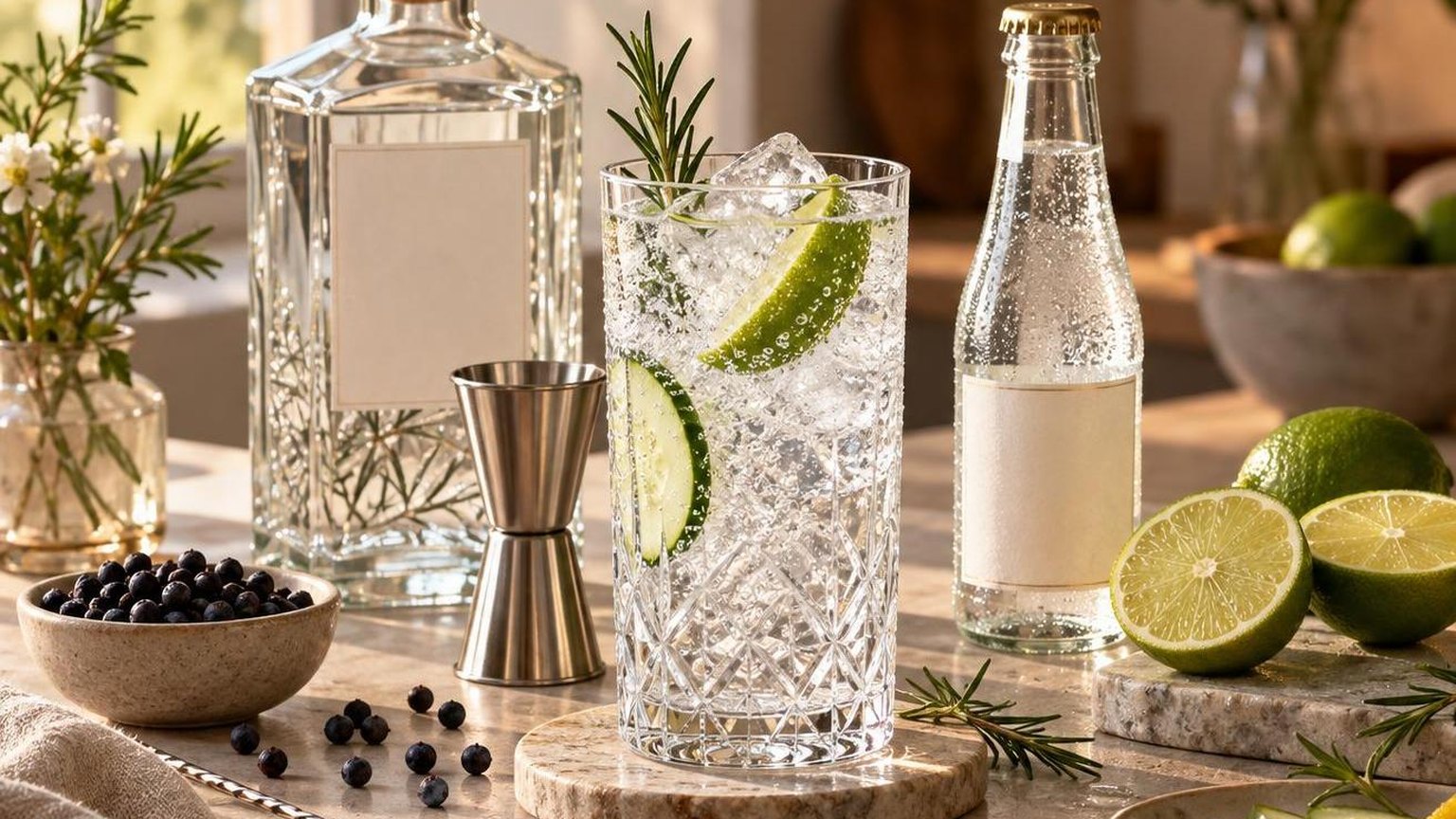
Single versus double gin pours
The difference between a single and double pour changes a gin and tonic’s ABV by roughly 2–4 percentage points. Understanding standard pour sizes prevents unintentional overconsumption and helps you track units accurately.
Standard pour sizes by market
Pour standards vary significantly between the UK, US, and continental Europe. The UK legally defines a single gin measure at 25 ml or 35 ml, while US bars typically free-pour 44 ml (1.5 oz).
| Pour type | UK (common) | US (standard) | Spain / Europe |
| Single | 25 ml | 44 ml (1.5 oz) | 50 ml |
| Double | 50 ml | 88 ml (3 oz) | Not standard |
Impact on drink ABV and alcohol units
A standard gin bottled at 40% ABV paired with 150 ml of tonic water produces measurably different alcohol concentrations depending on the pour size.
| Pour | Gin volume | Tonic volume | Total drink volume | Approximate ABV | UK units |
| UK single (25 ml) | 25 ml | 150 ml | 175 ml | 5.7% | 1.0 |
| UK single (35 ml) | 35 ml | 150 ml | 185 ml | 7.6% | 1.4 |
| US single (44 ml) | 44 ml | 150 ml | 194 ml | 9.1% | 1.76 |
| UK double (50 ml) | 50 ml | 150 ml | 200 ml | 10.0% | 2.0 |
| US double (88 ml) | 88 ml | 150 ml | 238 ml | 14.8% | 3.52 |
Practical considerations
- A UK double (50 ml) already contains 2.0 units—the NHS low-risk guideline caps weekly intake at 14 units total.
- A US double at 88 ml delivers 3.52 UK units per glass, equivalent to roughly 1.5 standard US drinks (one US standard drink = 14 g pure alcohol).
- Spanish-style copa serves often use 50 ml gin but add 200–250 ml tonic, diluting ABV to around 6.7–8.0%.
- Navy-strength gin (57% ABV) in a UK double reaches approximately 14.3% ABV—comparable to a glass of wine.
Always confirm whether a venue pours 25 ml or 35 ml singles. That 10 ml difference adds 0.4 units per drink, compounding across an evening.
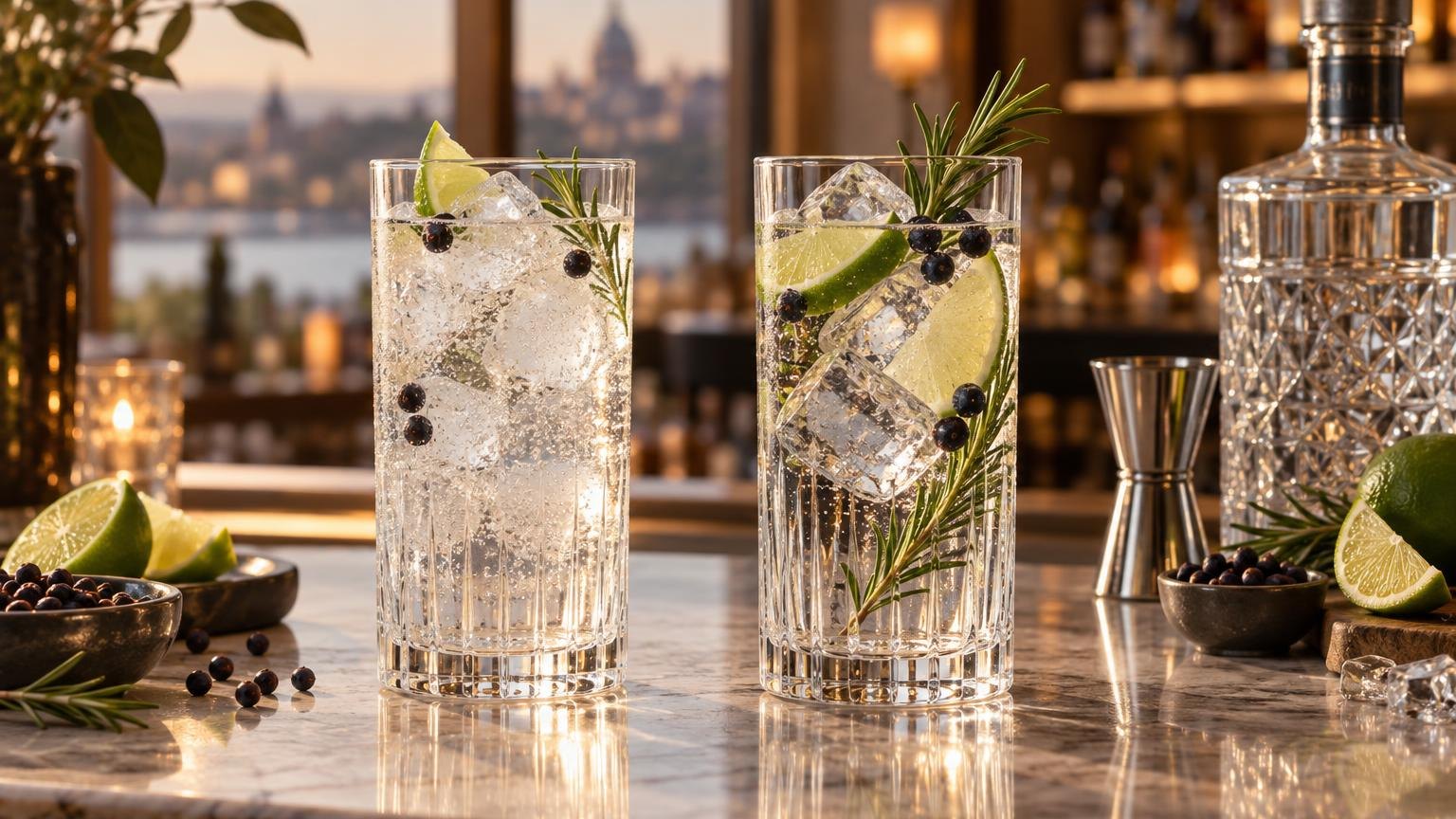
Lower alcohol gin and tonic options
Standard gin sits at 37.5–47% ABV, but a growing category of lower-alcohol and non-alcoholic gins now offers credible alternatives. These products let you build a G&T ranging from 0% to roughly 5% ABV per serving.
Low-ABV and alcohol-free gins compared
| Product | ABV | G&T ABV (50 ml spirit + 150 ml tonic) |
| Standard gin (e.g., Beefeater, 40%) | 40% | ~10% |
| Hayman’s Small Gin | 43% | ~5.4% (uses 25 ml serve) |
| Sipsmith Free Glider | 0.5% | ~0.06% |
| Seedlip Grove 42 | 0% | 0% |
| Lyre’s Dry London Spirit | 0% | 0% |
| CleanCo Clean G | 1.2% | ~0.15% |
Strategies to reduce alcohol content
- Use a smaller pour. Cutting your gin measure from 50 ml to 25 ml halves the drink’s ABV from ~10% to ~5%.
- Increase the tonic ratio. A 1:4 gin-to-tonic ratio instead of 1:3 drops a 40% gin G&T from ~10% to ~8% ABV.
- Choose a lower-proof gin. Gins bottled at 37.5% ABV—the EU legal minimum—yield a G&T roughly 6% weaker than a 47% Navy Strength pour.
- Alternate with alcohol-free rounds. Seedlip, launched in 2015, pioneered the non-alcoholic spirit category and now sells in over 25 countries.
Ready-to-drink cans
Pre-mixed G&T cans provide portion control and consistent ABV. They typically range from 4–7% ABV per 250 ml can.
| Brand | Can size | ABV | Calories (approx.) |
| Fever-Tree Gin & Tonic | 250 ml | 5% | ~106 kcal |
| Bombay Sapphire & Tonic | 250 ml | 5.9% | ~120 kcal |
| Tanqueray & Tonic | 250 ml | 6.5% | ~135 kcal |
Canned options eliminate over-pouring, the most common reason home-made cocktails exceed expected alcohol levels.
Whichever route you choose, measuring your gin with a jigger—rather than free-pouring—remains the single most effective way to control alcohol intake per drink.
Frequently Asked Questions
What is the typical alcohol content of a gin and tonic?
A standard gin and tonic made with 50 ml of 40% ABV gin and 150 ml of tonic water contains roughly 10% ABV in the glass—equivalent to about 1.6 UK units of alcohol.
The exact percentage shifts depending on the gin-to-tonic ratio: a 1:3 pour lands near 10% ABV, while a lighter 1:4 pour drops it to around 8% ABV.
How does the ABV of a gin and tonic compare to a glass of wine or a pint of beer?
A typical 200 ml gin and tonic at roughly 10% ABV delivers about 1.6 standard drinks, comparable to a 150 ml glass of 13% ABV wine (1.5 standard drinks).
A 355 ml (12 oz) beer at 5% ABV contains about 1.4 standard drinks, making a properly proportioned G&T slightly stronger per serving than a regular beer.
Does the type of gin significantly change the alcohol content of a G&T?
Yes. Most London Dry gins sit at 37.5–47% ABV, and that range materially alters the finished drink.
A G&T made with Navy Strength gin (57% ABV) at the same 1:3 ratio yields approximately 14.25% ABV in the glass—over 40% stronger than one made with a 40% ABV gin.
Low-alcohol gins like Seedlip (0% ABV) or lighter-proof brands at 20–25% ABV produce a significantly weaker cocktail.
How many calories does the alcohol in a gin and tonic contribute?
Alcohol contains 7 calories per gram, making it the primary calorie source in a G&T. A 50 ml pour of 40% ABV gin contains roughly 16 grams of pure ethanol, contributing about 110 calories from alcohol alone.
Standard tonic water adds another 70–90 calories per 150 ml from sugar, bringing the total to approximately 180–200 calories per drink.
Can you reduce the alcohol content of a gin and tonic without ruining the flavor?
Increasing the tonic-to-gin ratio from 1:3 to 1:5 drops the ABV from roughly 10% to about 6.7% while preserving the botanical character, especially if you use a strongly flavored tonic like Fever-Tree Indian Tonic.
Another effective approach is blending a full-strength gin 50/50 with a non-alcoholic spirit such as Lyre’s or Monday Zero Alcohol Gin, which halves the ethanol content while maintaining aromatic complexity in the glass.
- What Is Gin Made From? How Is Gin Made?
- Does Gin Go Bad?
- What Is The Main Flavor Of Gin? Get the Answer
- What Does Gin Taste Like? Understanding Gin Flavoring
- Why is Alcohol Called Spirits? – 2026
- All Alcohol Guides
- National Institute on Alcohol Abuse and Alcoholism – "What Is A Standard Drink?" (2024)
- Centers for Disease Control and Prevention – "Dietary Guidelines for Alcohol" (2024)
- USDA FoodData Central – Gin, 80 proof (2019)
- Dietary Guidelines for Americans 2020–2025, U.S. Departments of Agriculture and HHS (2020)
- Stanford University – "Standard Drink Sizes" (2023)
- National Library of Medicine / PubMed – "Alcohol content of beer, wine and spirits in the UK" (2021)
- Alcohol and Tobacco Tax and Trade Bureau (TTB), U.S. Department of the Treasury – Beverage Alcohol Manual (2023)
- DrinkAware UK – "What is an alcohol unit?" (2024)
- NHS UK – "Alcohol units" (2024)
- International Alliance for Responsible Drinking – "Drinking Guidelines" (2024)