Does Unopened Whiskey Go Bad? is answered by a clear no: sealed whiskey does not spoil like perishable food when the cork or cap stays intact and storage is stable.
Unopened whiskey can remain drinkable for decades because its high alcohol content, usually 40% ABV or higher, prevents microbial growth inside the sealed bottle.
Quality can still decline if heat, sunlight, evaporation, or a failing closure lets oxygen in. This guide explains what changes, what does not, and how to store unopened bottles properly.
Does Unopened Whiskey Ever Expire
Unopened whiskey does not expire in the way perishable foods do. Distilled spirits with 40% ABV or higher remain microbiologically stable indefinitely because alcohol at that concentration prevents bacterial growth.
Unlike wine or beer, whiskey stops aging once bottled. The oak-barrel maturation that develops flavor occurs only in the cask, not in glass.
Why Glass Bottles Preserve Whiskey
Glass is chemically inert. It does not react with ethanol or congeners, so a sealed bottle maintains its original flavor profile for decades under proper storage.
Three factors can degrade an unopened bottle over very long timeframes:
- UV light exposure — breaks down flavor compounds like vanillin and guaiacol, producing stale or “cardboard” off-notes within 1–2 years of direct sunlight
- Temperature fluctuations — repeated swings above 30°C (86°F) expand and contract the liquid, weakening the seal and allowing micro-oxidation
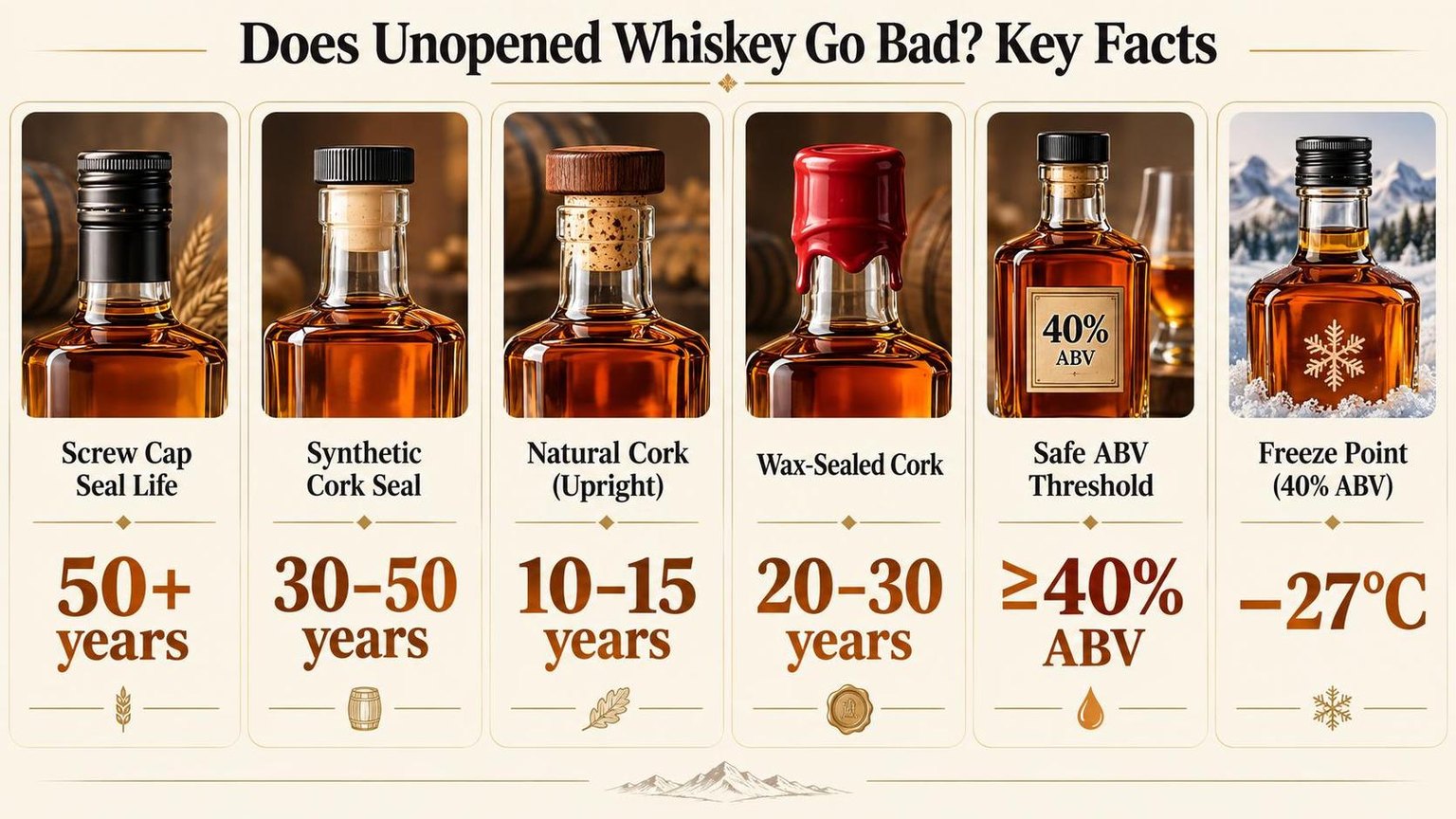
- Cork degradation — natural cork dries out after 10–15 years upright, potentially allowing air ingress; synthetic closures and screw caps avoid this entirely
Shelf Life by Closure Type
| Closure Type | Expected Seal Integrity | Risk of Degradation |
| Screw cap | 50+ years | Very low |
| Synthetic cork | 30–50 years | Low |
| Natural cork (upright) | 10–15 years before drying | Moderate |
| Wax-sealed natural cork | 20–30 years | Low to moderate |
Bottles from the 1940s and 1950s regularly sell at auction and remain drinkable. Collectors confirm flavor consistency when seals stayed intact and storage was cool and dark.
When to Be Cautious
Inspect the fill level. A noticeable drop below the original fill line signals evaporation through a compromised seal, meaning oxidation has likely altered the whiskey’s character.
Check for a crumbling or sunken cork. If the cork disintegrates on removal, the whiskey may have experienced prolonged air contact despite appearing sealed.
Whiskey bottled below 40% ABV — some flavored or blended products sit at 35% — carries marginally higher risk of subtle changes over multi-decade storage, though spoilage remains extremely unlikely.
Why Sealed Whiskey Stays Stable
Distilled spirits above 40% ABV create an inhospitable environment for bacteria, mold, and yeast. Combined with an airtight factory seal, unopened whiskey resists chemical degradation for decades—and potentially centuries.
The Role of Alcohol Content
Ethanol at concentrations above 20% ABV prevents microbial growth entirely. Standard whiskey bottled at 40–68% ABV far exceeds that threshold, eliminating any risk of spoilage from biological organisms.
High-proof spirits also resist freezing. A 40% ABV whiskey won’t freeze until approximately −27°C (−17°F), keeping the liquid chemically uniform during storage and transit.
What the Sealed Bottle Prevents
An intact cork or screw cap blocks three destabilizing forces. Remove any one, and the whiskey’s composition begins to shift measurably.
| Factor | Effect When Exposed | Sealed Bottle Protection |
| Oxygen | Oxidizes congeners, dulls flavor, reduces aromatic complexity | Headspace oxygen is minimal (~2–5 mL); no fresh supply enters |
| UV Light | Breaks down terpenes and phenolic compounds, causing “light-struck” off-flavors | Dark glass filters 90%+ of UV; sealed storage typically means boxed or shelved away from sunlight |
| Evaporation | Alcohol evaporates faster than water, lowering ABV over time | Factory seal prevents vapor loss entirely |
Real-World Evidence of Longevity
Bottles of whiskey from the 1800s have been opened and evaluated by experts. A Glenavon Special Liqueur Whisky from circa 1851–1858 was tasted in 2021 and confirmed as drinkable after roughly 170 years sealed.
Auction houses like Sotheby’s and Christie’s routinely sell sealed whiskey 50–100 years old. Fill level and seal integrity remain the primary quality indicators, not age since bottling.
Key Conditions for Stability
- Upright storage: Keeps high-proof liquid off the cork, preventing cork degradation and taint from prolonged ethanol contact.
- Stable temperature: Ideally 15–20°C (59–68°F). Repeated thermal cycling expands and contracts liquid, risking micro-leaks around the seal.
- Low light: Store in original packaging or a closed cabinet to block photochemical reactions.
Unlike wine, whiskey does not evolve in the bottle. The flavor profile locked in at bottling is the flavor profile you’ll find when you finally break that seal—whether that’s next year or next century.
Shelf Life of Unopened Whiskey
Unopened whiskey stored correctly lasts indefinitely. The sealed bottle prevents oxidation and evaporation—the two forces that degrade spirits.
Distillers confirm that a properly sealed bottle from 1950 tastes virtually identical to the day it was bottled.
Why Unopened Whiskey Doesn’t Expire
Whiskey’s alcohol content—typically 40–65% ABV—acts as a natural preservative. At these concentrations, bacteria and mold cannot survive or reproduce inside the sealed environment.
Unlike wine, whiskey does not mature further in glass. Oak barrel aging stops permanently the moment the liquid leaves the cask. A 12-year-old bourbon bottled in 2004 is still a 12-year-old bourbon in 2025.
Factors That Threaten Long-Term Storage
- UV light exposure: Breaks down flavor compounds called terpenes and esters, causing flat, cardboard-like notes within 1–2 years of continuous sunlight.
- Temperature swings: Repeated cycling between 10°C and 35°C can cause the cork or seal to expand and contract, allowing micro-oxidation.
- Cork degradation: Natural corks dry out after 20–30 years in an upright position, potentially allowing air ingress. Screw caps and synthetic closures eliminate this risk.
- Upright vs. horizontal storage: Always store whiskey upright. High-proof alcohol dissolves cork material, tainting the liquid and compromising the seal.
Unopened Shelf Life by Closure Type
| Closure Type | Expected Integrity | Primary Risk |
| Screw cap | Indefinite (50+ years documented) | Minimal; seal remains airtight |
| Natural cork | 20–30 years without inspection | Cork drying, crumbling, air ingress |
| Synthetic cork | 30–40+ years | Possible shrinkage over decades |
| Wax-dipped cork | 40–50+ years | Wax cracking in extreme heat |
Ideal Storage Conditions
Keep bottles at 15–20°C (59–68°F), away from direct sunlight, at stable humidity between 50–70%. A dark cabinet or closed shelf meets these requirements without specialized equipment.
Auction houses routinely sell sealed whiskeys from the 1960s and 1970s that remain perfectly drinkable—confirming decades of real-world shelf stability when basic storage guidelines are followed.
Storage Rules for Sealed Bottles
Sealed whiskey remains stable for decades when stored correctly. Three factors determine longevity: temperature, light exposure, and bottle orientation. Controlling these preserves the spirit’s character indefinitely.
Temperature Control
Store sealed whiskey between 15–20°C (59–68°F). Consistent temperature matters more than exact degree. Fluctuations cause the liquid to expand and contract, stressing the seal.
Temperatures above 25°C (77°F) accelerate oxidation even through a sealed cork. Below 10°C (50°F) poses no chemical risk but can cause cosmetic cloudiness in chill-filtered expressions.
| Condition | Ideal Range | Risk if Exceeded |
| Temperature | 15–20°C (59–68°F) | Seal degradation, flavor flattening |
| Humidity | 50–70% | Label damage, mold on cork exterior |
| Light exposure | 0 lux (total darkness) | UV-driven terpene breakdown |
Bottle Orientation
Always store whiskey upright. At 40% ABV or higher, prolonged contact with natural cork degrades the seal material. This differs fundamentally from wine storage practice.
Cork deterioration from high-proof spirit contact can begin within 2–3 months of horizontal storage. Degraded cork fragments may contaminate the liquid and compromise the airtight seal.
Light Protection
UV radiation breaks down organic compounds including terpenes and phenols that contribute to whiskey’s aroma.
A 2017 Scotch Whisky Research Institute study confirmed measurable flavor changes in bottles exposed to direct sunlight for just 10 days.
Amber glass filters some UV but not all. Store bottles in closed cabinets, original boxes, or dedicated dark storage areas for full protection.
Quick Storage Checklist
- Stand bottles upright — never on their sides
- Maintain 15–20°C with minimal fluctuation
- Keep humidity between 50–70% to preserve labels and cork integrity
- Eliminate direct sunlight and fluorescent lighting
- Avoid proximity to heat sources: radiators, ovens, south-facing windows
- Tighten screw caps to finger-tight; over-tightening can crack the seal liner
Properly stored sealed whiskey has been opened after 50+ years with no spoilage. The spirit won’t improve in the bottle, but correct storage ensures it won’t decline either.
When Unopened Whiskey Can Spoil
Unopened whiskey is remarkably stable, but “indefinite shelf life” has limits. Specific storage failures can degrade even a factory-sealed bottle, turning a premium spirit flat, off-flavored, or undrinkable within months.
Direct Sunlight Exposure
UV radiation breaks down congeners and tannins responsible for whiskey’s flavor profile. Studies on distilled spirits show measurable color fading and flavor degradation after just 10–15 days of continuous direct sun exposure.
Bottles stored on south-facing windowsills or in uncovered display cases are most vulnerable. Clear and green glass offers less UV protection than amber glass.
Temperature Extremes and Fluctuations
Sustained heat above 35°C (95°F) accelerates chemical reactions inside the bottle. Repeated cycling between hot and cold temperatures causes the liquid to expand and contract, potentially compromising the seal.
| Condition | Risk Level | Estimated Degradation Timeline |
| Stable 15–20°C, dark storage | Minimal | Decades with no significant change |
| Occasional heat spikes (30–35°C) | Low | 5–10 years before subtle flavor shift |
| Sustained heat above 35°C | Moderate | 1–3 years before noticeable deterioration |
| Direct sunlight daily | High | Weeks to months |
Cork and Seal Failure
Natural cork closures dry out when bottles stand upright for years, causing micro-gaps that allow slow oxidation and evaporation. Unlike wine, whiskey should be stored upright—but the cork still degrades over time.
High-proof whiskey (above 50% ABV) can chemically erode natural cork, introducing off-flavors described as musty or “corked.” Synthetic closures and screw caps eliminate this risk entirely.
Signs an Unopened Bottle Has Spoiled
- Visible sediment or cloudiness not present at bottling
- Lowered fill level indicating evaporation through a failed seal
- Crumbling or discolored cork visible through the glass
- Off-putting musty or chemical smell upon opening
Spoiled whiskey poses no serious health risk at 40% ABV, but the drinking experience will be significantly diminished. Prevention comes down to upright storage, stable cool temperatures, and darkness.
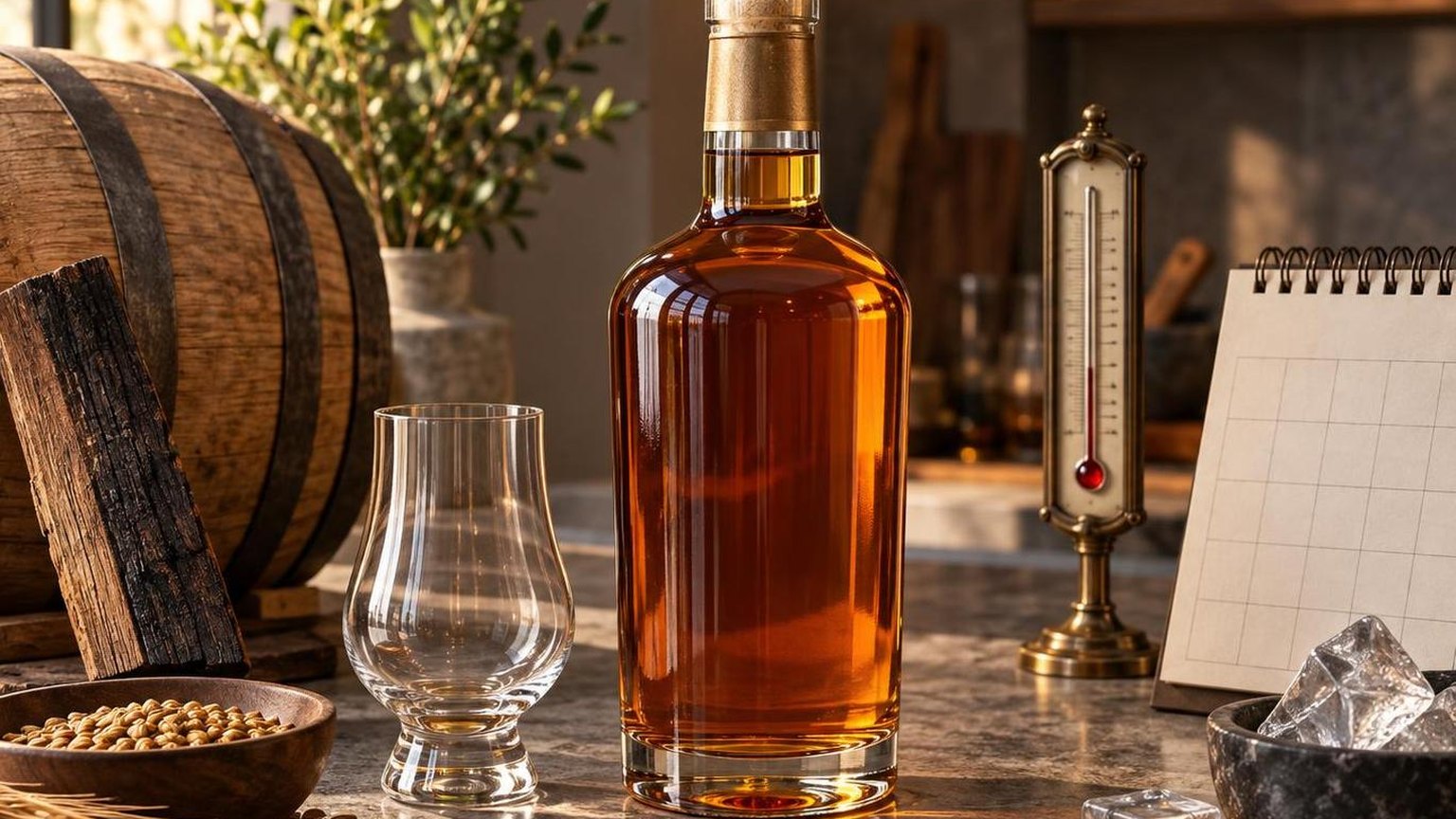
How To Inspect Old Whiskey
Before pouring a dram from a long-stored bottle, a systematic inspection can reveal whether the whiskey remains sound.
Three sensory checkpoints—visual, olfactory, and gustatory—catch degradation that chemical analysis would otherwise require.
Visual Inspection
Hold the bottle against a white background under strong light. Healthy whiskey ranges from pale gold to deep amber with full clarity.
| Sign | Likely Cause | Action |
| Floating particles or sediment | Cork disintegration or chill haze | Filter through cheesecloth; taste-test |
| Cloudy or hazy appearance | Oxidation or contamination | Smell before tasting; discard if off |
| Significant color lightening | UV exposure over months or years | Likely flavor loss; taste to confirm |
| Lowered fill level (below shoulder) | Evaporation from poor seal | High oxidation risk; inspect aroma first |
A fill level that has dropped 2–3 inches below the original point signals prolonged air exposure and accelerated oxidation.
Nose Check
Pour roughly 15–20 ml into a Glencairn or tulip glass. Let it rest 30 seconds, then nose it at a distance of about 2 inches.
- Acceptable: Caramel, vanilla, oak, dried fruit, mild ethanol heat
- Warning: Nail polish remover (ethyl acetate), wet cardboard, musty or moldy notes
- Discard indicator: Strong vinegar-like acidity or solvent-dominant aroma with no malt or grain character remaining
Whiskey at 40% ABV resists microbial spoilage. Off-aromas typically signal chemical degradation, not bacterial contamination.
Taste Test
Take a small sip—roughly 5 ml. Coat your palate and assess for balance between sweetness, bitterness, and spice.
- Flat, watery mouthfeel with no mid-palate warmth indicates severe oxidation
- Harsh, astringent bitterness beyond normal oak tannins suggests cork taint or degraded compounds
- A short, hollow finish where flavor disappears within 3–5 seconds points to significant quality loss
Degraded whiskey poses no food-safety risk at standard bottling strength of 40–46% ABV. The question is strictly palatability, not toxicity. If all three checkpoints show faults, the bottle has lost its drinking value.
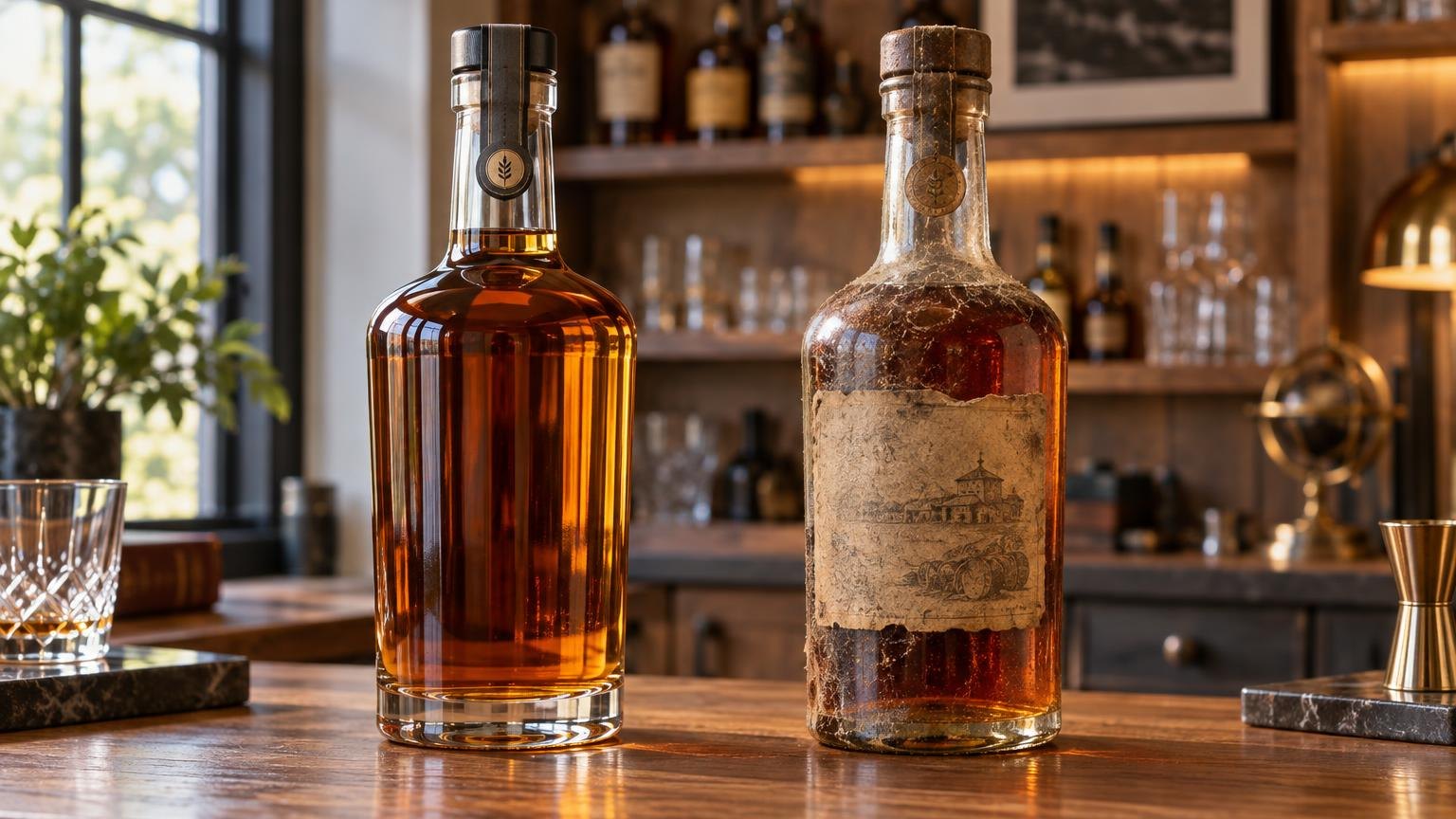
Opened Versus Unopened Whiskey Shelf Life
Unopened whiskey stored correctly lasts indefinitely. Opened whiskey degrades noticeably within 1–2 years due to oxidation. The difference comes down to one factor: air exposure after the seal breaks.
Whiskey’s 40–68% ABV acts as a preservative that prevents microbial growth entirely. Unlike wine or beer, whiskey will never spoil in a way that makes it unsafe to drink.
| Factor | Unopened Whiskey | Opened Whiskey |
| Shelf life | Indefinite (decades to 100+ years) | 1–2 years at full quality |
| Flavor stability | No measurable change | Noticeable dulling after 6–12 months |
| Oxidation risk | None (sealed environment) | Ongoing with each opening |
| Evaporation | Negligible if cork is intact | Up to 1–2% volume loss per year |
| Safe to drink | Yes | Yes, indefinitely |
Why Unopened Bottles Survive So Long
Distilled spirits stop aging once bottled. Unlike wine, whiskey does not mature in glass. A bottle of Macallan sealed in 1940 tastes essentially as it did the day it was bottled, assuming proper storage.
The cork or screw cap prevents oxygen ingress. Glass is chemically inert and does not interact with the liquid. These two facts explain whiskey’s extraordinary shelf stability.
What Happens After Opening
Every time you pour, air fills the headspace above the remaining whiskey. Oxygen reacts with volatile flavor compounds — esters, aldehydes, and phenols — flattening aroma and muting complexity.
The rate of degradation accelerates as the bottle empties. Key thresholds to know:
- Full to ¾ full: minimal change for 12+ months
- ½ full: noticeable flavor shift within 6–9 months
- ¼ full or less: significant quality loss within 2–3 months
Temperature swings and sunlight worsen oxidation. UV light breaks down tannins and congeners extracted during barrel aging, causing stale or cardboard-like off-flavors.
Practical Takeaway
Treat an unopened bottle as permanent inventory. Once opened, plan to finish it within 12 months for the best experience — or transfer the remaining whiskey into a smaller bottle to minimize headspace and slow oxidation.
Questions People Ask Most
Does unopened whiskey expire or go bad over time?
Unopened whiskey does not expire in the way perishable foods do. Distilled spirits at 40% ABV or higher are inhospitable to bacterial growth, so a sealed bottle stored properly remains safe to drink indefinitely.
The Distilled Spirits Council of the United States confirms that unopened distilled spirits have an indefinite shelf life.
Can sunlight or heat damage an unopened bottle of whiskey?
Direct sunlight and temperatures above 25°C (77°F) accelerate chemical reactions that degrade flavor compounds, particularly terpenes and esters responsible for aroma.
UV exposure can also break down congeners that give whiskey its color, causing it to fade noticeably within months. Store bottles upright in a cool, dark place—ideally between 15–20°C (59–68°F)—to prevent degradation.
Should unopened whiskey be stored upright or on its side?
Always store unopened whiskey upright.
Unlike wine corks, prolonged contact with 40%+ ABV spirit causes cork material to deteriorate, potentially introducing crumbling cork particles and off-flavors like TCA (2,4,6-trichloroanisole) into the liquid.
Horizontal storage is one of the most common causes of tainted whiskey in long-term collections.
Does the flavor of unopened whiskey change after 10, 20, or 50 years in the bottle?
Whiskey does not age or mature once bottled because it no longer interacts with charred oak.
However, micro-oxidation through imperfect seals can cause subtle flavor shifts over decades—typically a slight mellowing or loss of volatile top notes.
Auction houses and collectors note that pre-1970s bottles often taste perceptibly different from freshly bottled equivalents of the same expression, largely due to seal degradation and minor evaporation.
How can you tell if an old unopened bottle of whiskey has gone bad?
Check the fill level first: a bottle showing significant ullage (liquid loss below the shoulder) suggests a compromised seal and likely oxidation. Inspect the cork for visible crumbling, discoloration, or mold on the capsule exterior.
If the whiskey has turned noticeably pale compared to its original color or smells of wet cardboard or vinegar upon opening, oxidation or cork taint has compromised the spirit.
- What Does Barrel Proof Mean? What You Need to Know
- What Is A Whiskey Sommelier? Facts To Know
- Crown Royal 29 Year Price – How Much Does It Cost?
- What Bourbons Does Buffalo Trace Make?
- What Is Pink Whitney Bottle? Information From Experts
- What Is the Difference Between Vodka and Whiskey?
- How Many Calories In A Shot Of Whiskey? – Get Answered
- Cocktail Made with Tennessee Whiskey, Ironically
- All Alcohol Guides
- TTB – Alcohol and Tobacco Tax and Trade Bureau: Beverage Alcohol Manual (2024)
- FDA – CPG Sec 510.400 Dealcoholized Wine and Malt Beverages (2024)
- USDA FoodData Central – Whiskey Nutrient Data (2024)
- PubMed – Chemical Changes in Whisky During Maturation, Conner et al. (2001)
- PubMed – Effect of Light on the Composition of Whiskey, Masuda & Nishimura (1982)
- University of Edinburgh – Scotch Whisky Research Institute Partner Page (2024)
- Scotch Whisky Association – What Is Scotch Whisky? (2024)
- Whisky Advocate – How to Store Whiskey (2023)
- MasterClass – How to Store Whiskey: Tips for Proper Whiskey Storage (2023)
- The Whiskey Wash – Does Whiskey Go Bad? Shelf Life and Storage (2023)