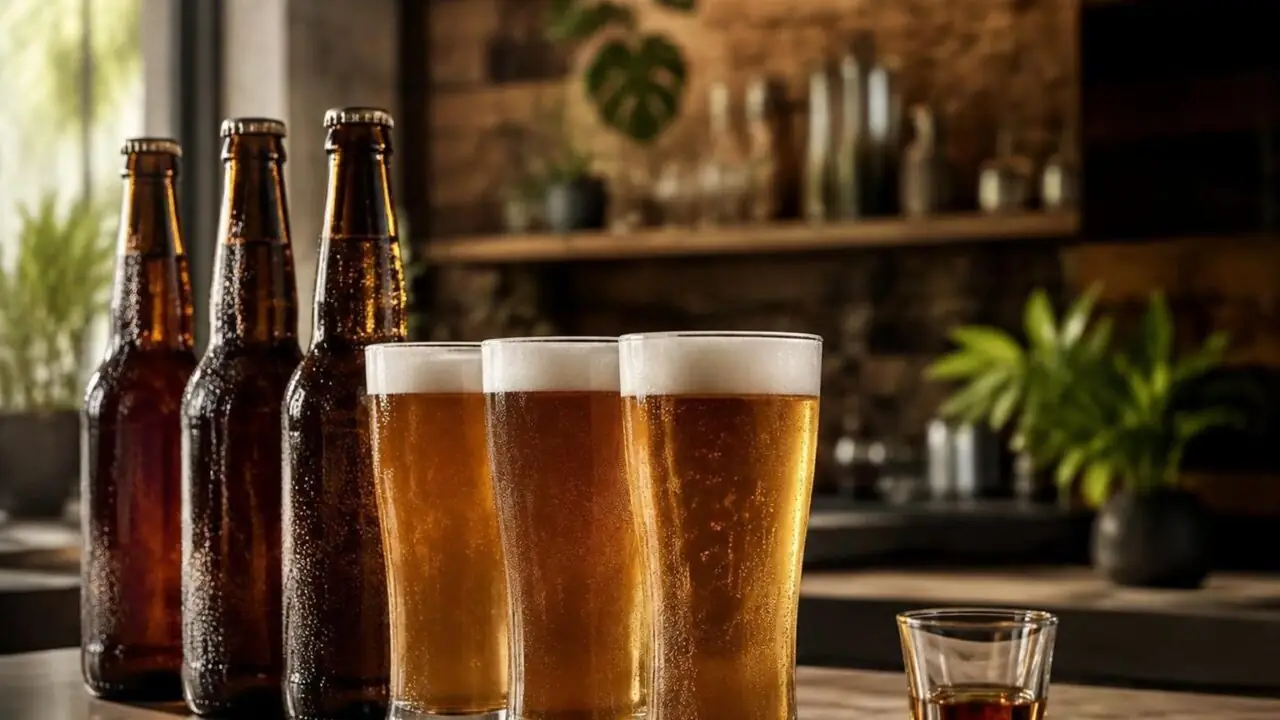
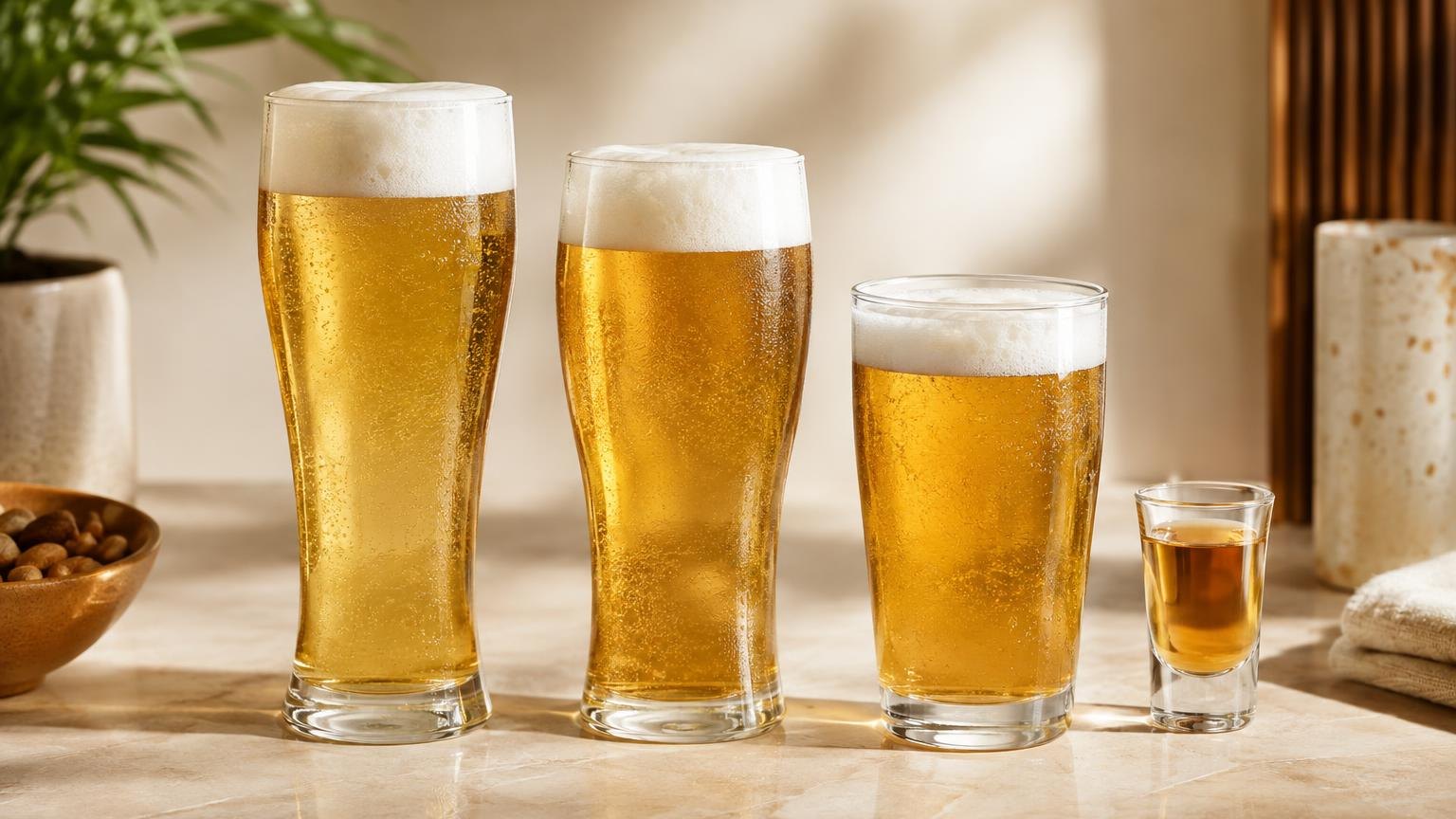
How Many Beers Is Equivalent to a Shot? is 1 12-ounce beer at 5% ABV for 1 1.5-ounce shot of 40% ABV liquor.
Each contains about 0.6 fluid ounces of pure alcohol, the U.S. standard drink amount used by the National Institute on Alcohol Abuse and Alcoholism.
The match changes fast with strength and pour size. A 16-ounce pint at 7% ABV carries about 1.9 standard drinks, while a 2-ounce heavy pour of 40% liquor equals about 1.3. Use alcohol volume, not glass size, to compare beer and shots accurately.
Beer to Shot Alcohol Equivalence
One standard 12-oz beer at 5% ABV contains 0.6 oz of pure alcohol — the same amount found in a single 1.5-oz shot of 80-proof (40% ABV) spirits.
This 1:1 ratio is the baseline the National Institute on Alcohol Abuse and Alcoholism (NIAAA) uses to define a “standard drink.”.
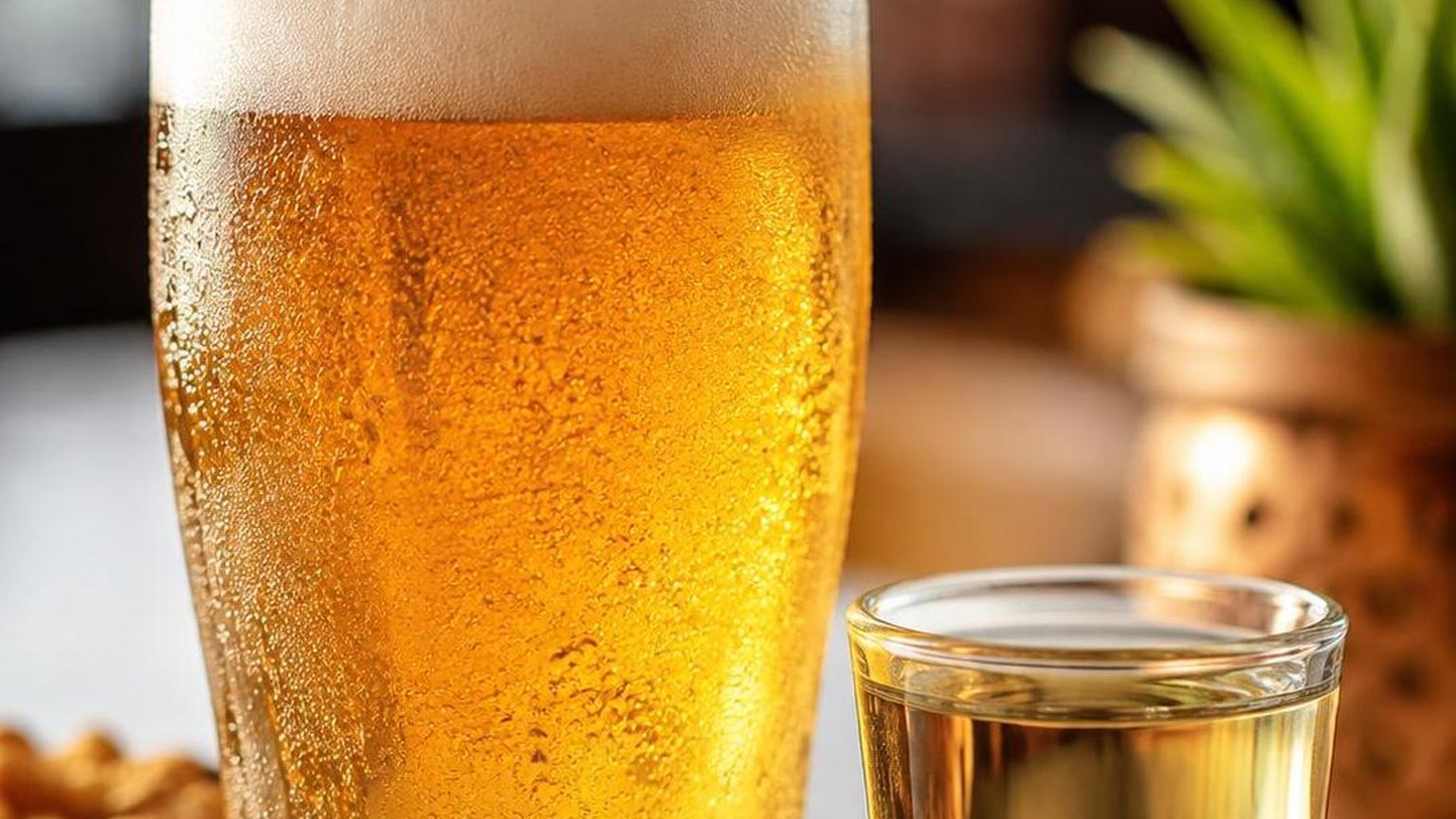
The math is straightforward: volume × ABV = pure alcohol content. A 12-oz beer at 5% yields 0.6 oz of ethanol. A 1.5-oz shot at 40% also yields 0.6 oz.
| Drink | Serving Size | ABV | Pure Alcohol (oz) | Shot Equivalence |
| Light beer | 12 oz | 4.2% | 0.50 | ~0.84 shots |
| Standard lager | 12 oz | 5.0% | 0.60 | 1.0 shot |
| IPA | 12 oz | 6.5% | 0.78 | ~1.3 shots |
| Double IPA | 12 oz | 8.5% | 1.02 | ~1.7 shots |
| Imperial stout | 12 oz | 10.5% | 1.26 | ~2.1 shots |
| Barleywine | 12 oz | 12.0% | 1.44 | ~2.4 shots |
Why the 1:1 Ratio Breaks Down in Practice
Most craft beers sold in the U.S. now average 5.9% ABV, according to the Brewers Association’s 2023 data. That pushes a single 12-oz pour to roughly 0.71 oz of pure alcohol — already 1.18 shots’ worth.
Pint glasses at bars hold 16 oz, not 12. A 16-oz pint of a 6.5% IPA delivers 1.04 oz of ethanol, equaling approximately 1.73 standard shots in one glass.
Key Variables That Shift the Ratio
- Serving vessel: A 16-oz pint adds 33% more alcohol than a 12-oz bottle of the same beer.
- Beer style: Belgian tripels (8–10% ABV) and imperial stouts (10–13% ABV) can pack 2+ shots per 12-oz serving.
- Shot proof: Overproof spirits like 100-proof bourbon (50% ABV) contain 0.75 oz of ethanol per 1.5-oz shot, changing the equivalence denominator.
- Tallboy cans: A 16-oz tallboy of standard 5% beer equals 1.33 standard drinks, or 1.33 shots.
The CDC confirms that roughly 17% of U.S. adults binge drink, often underestimating alcohol intake from beer because they count “beers” rather than actual ethanol volume.
Tracking pure alcohol content, not just drink count, gives a far more accurate picture.
Standard Drink Math for Beer
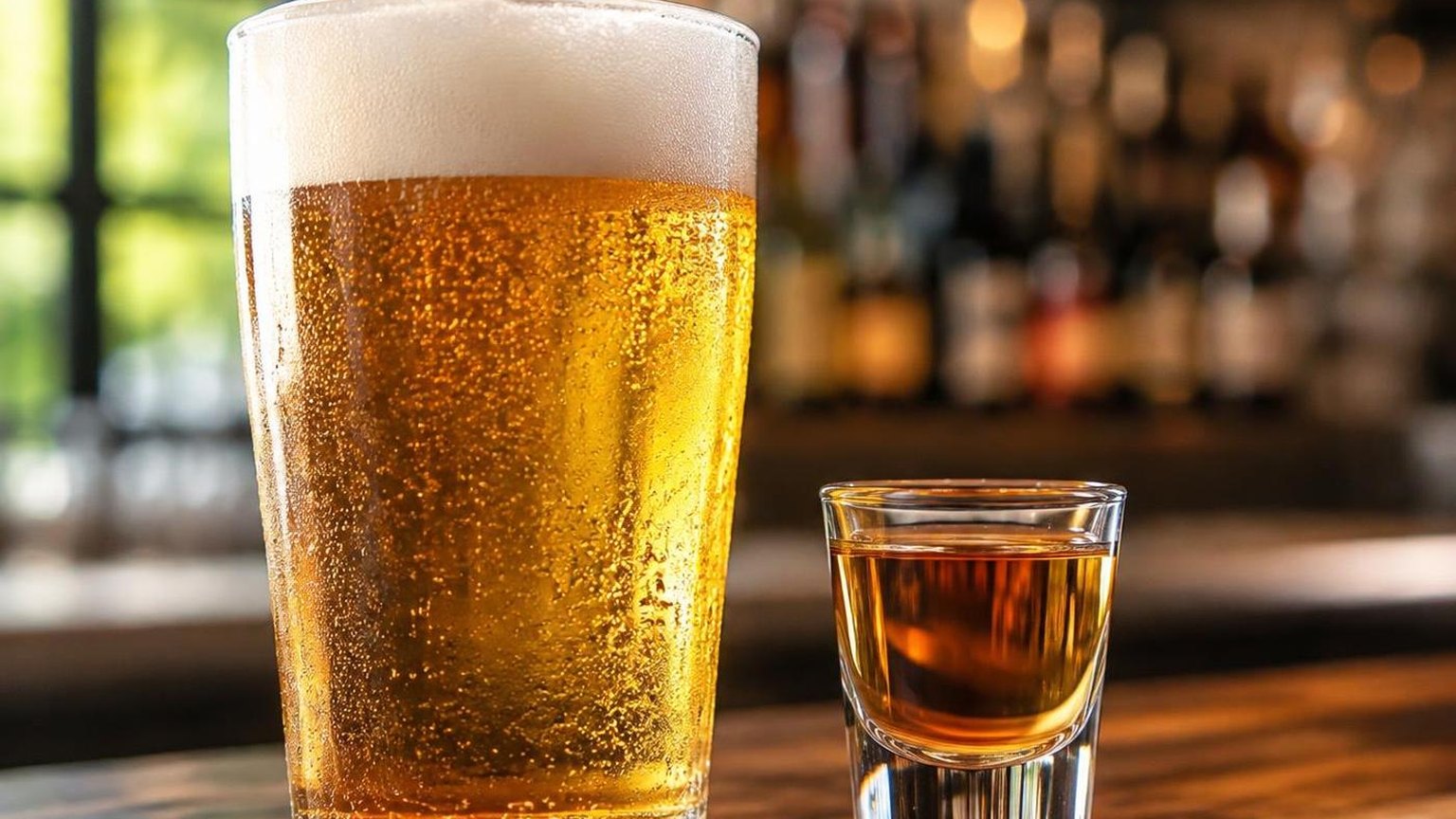
A “standard drink” measures pure alcohol, not container size. In the United States, the National Institute on Alcohol Abuse and Alcoholism defines one standard drink as approximately 0.6 fluid ounces, or 14 grams, of pure alcohol.
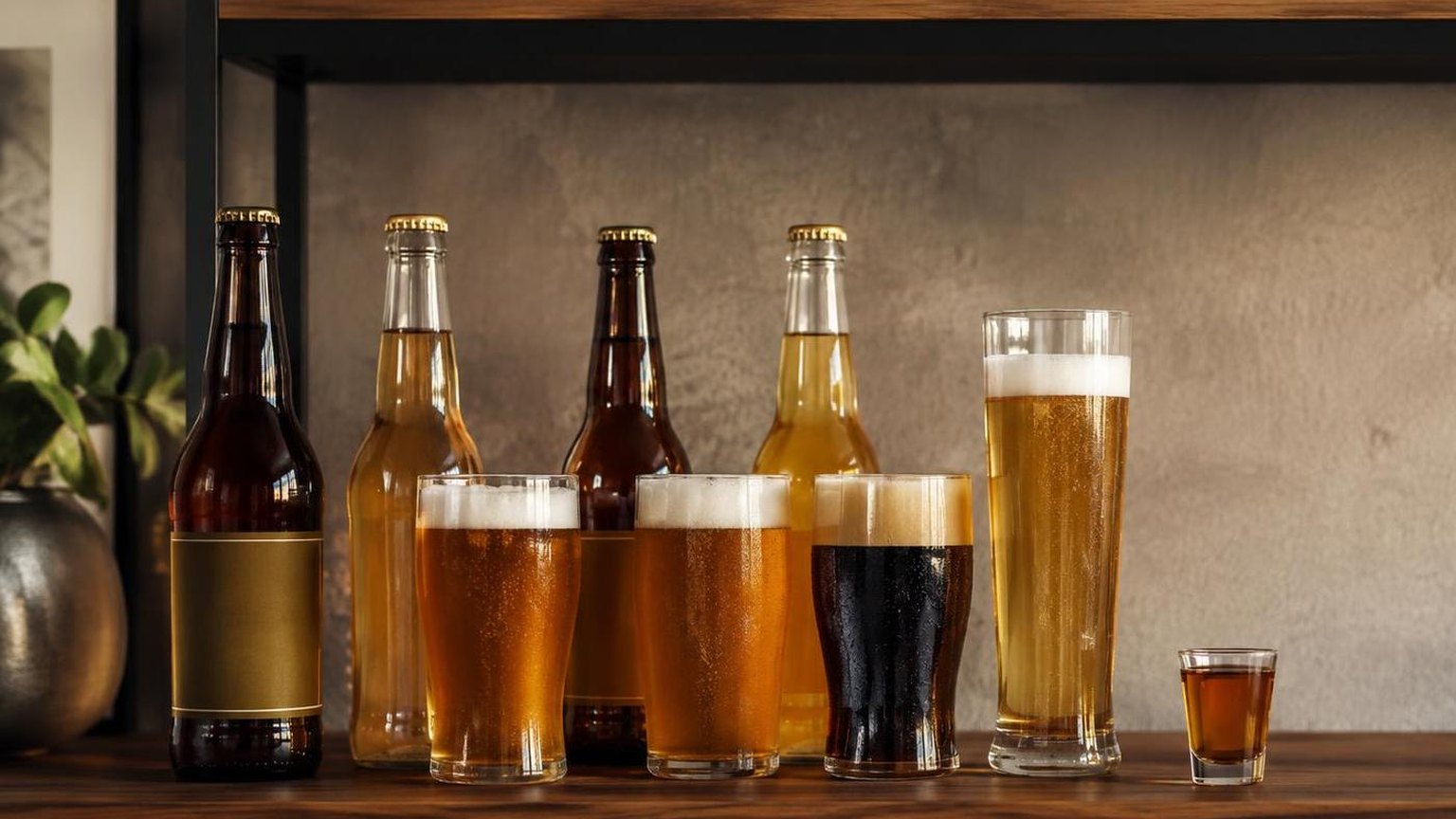
Beer and distilled spirits can therefore contain equivalent alcohol amounts despite their different serving volumes. Alcohol by volume, abbreviated ABV, determines the comparison.
| Beverage | Serving | ABV | Standard drinks |
| Regular beer | 12 fl oz | 5% | 1.0 |
| Distilled spirit shot | 1.5 fl oz | 40% or 80 proof | 1.0 |
| Table wine | 5 fl oz | 12% | 1.0 |
Thus, one 12-ounce beer at 5% ABV contains approximately the same pure alcohol as one 1.5-ounce shot of 80-proof liquor.
This equivalence concerns alcohol content only; absorption speed can differ with drinking pace, food, carbonation, and individual physiology.
Calculating Standard Drinks in Any Beer
Multiply the beer’s volume in fluid ounces by its ABV expressed as a decimal, then divide by 0.6. The result estimates the number of U.S. standard drinks in the container.
| Beer example | Pure alcohol calculation | Approximate standard drinks |
| 12 oz at 4% ABV | 12 × 0.04 = 0.48 fl oz | 0.8 |
| 12 oz at 5% ABV | 12 × 0.05 = 0.60 fl oz | 1.0 |
| 12 oz at 7% ABV | 12 × 0.07 = 0.84 fl oz | 1.4 |
| 16 oz at 6% ABV | 16 × 0.06 = 0.96 fl oz | 1.6 |
| 19.2 oz at 8% ABV | 19.2 × 0.08 = 1.54 fl oz | 2.6 |
| 22 oz at 9% ABV | 22 × 0.09 = 1.98 fl oz | 3.3 |
Container size alone is misleading. A tall can of strong IPA may contain more than twice the alcohol in a standard shot, even though it is sold as a single beer.
- Check the labeled ABV rather than relying on beer style or taste.
- Use the container’s full volume when drinking directly from a can or bottle.
- Count partial servings proportionally when sharing or leaving beer unfinished.
- Do not treat one container as one standard drink unless its volume and ABV support that conclusion.
The Centers for Disease Control and Prevention and NIAAA use standard-drink units to describe alcohol intake.
Their measure helps compare beverages consistently, but it does not predict a person’s exact blood alcohol concentration or level of impairment.
ABV Differences Change the Answer
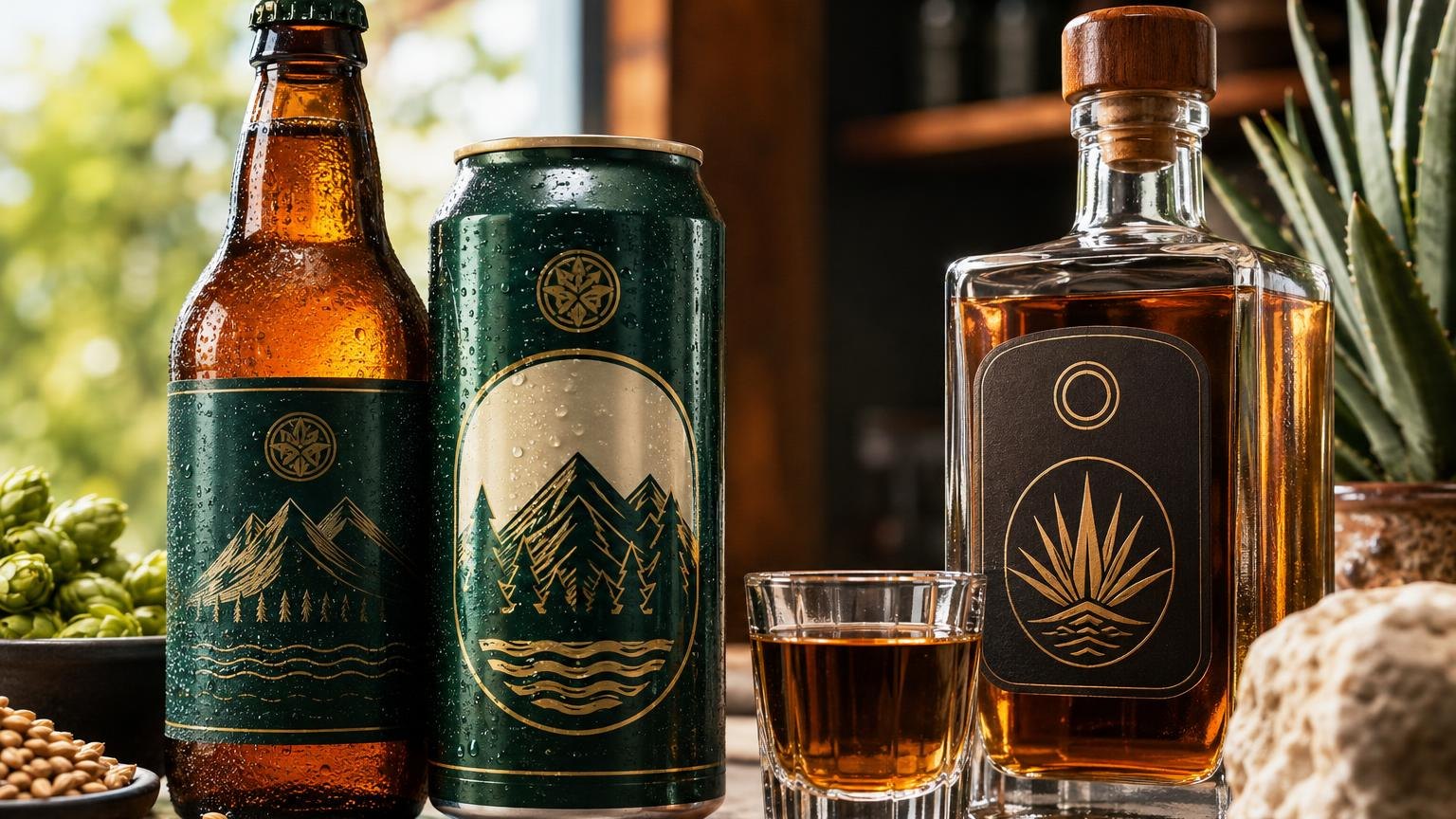
The “one beer equals one shot” rule assumes standard ABV values. Actual alcohol content varies dramatically across styles, making that simple equation unreliable for real-world drinking decisions.
A standard U.S. beer is defined at 5% ABV, and a standard shot uses 80-proof (40% ABV) spirits. At those benchmarks, one 12 oz beer and one 1.5 oz shot each contain roughly 0.6 oz of pure alcohol.
How ABV Shifts the Equivalence
Light lagers, IPAs, and imperial stouts deliver wildly different alcohol loads per glass. The table below shows pure alcohol content per typical serving.
| Drink | Serving Size | ABV | Pure Alcohol (oz) | Shot Equivalents |
| Light lager (Bud Light) | 12 oz | 4.2% | 0.50 | 0.84 |
| Standard lager (Budweiser) | 12 oz | 5.0% | 0.60 | 1.00 |
| Craft IPA (Lagunitas IPA) | 12 oz | 6.2% | 0.74 | 1.24 |
| Double IPA (Pliny the Elder) | 12 oz | 8.0% | 0.96 | 1.60 |
| Belgian tripel (Westmalle) | 12 oz | 9.5% | 1.14 | 1.90 |
| Imperial stout (Founders KBS) | 12 oz | 12.0% | 1.44 | 2.40 |
| 80-proof shot (vodka/whiskey) | 1.5 oz | 40% | 0.60 | 1.00 |
| 100-proof shot (Wild Turkey 101) | 1.5 oz | 50% | 0.75 | 1.25 |
| Overproof shot (Bacardi 151) | 1.5 oz | 75.5% | 1.13 | 1.89 |
One 12 oz imperial stout at 12% ABV delivers 2.4 times the alcohol of a standard shot. Treating it as “just one beer” seriously underestimates intake.
Key Takeaways on ABV Variation
- Below 5% ABV, a 12 oz beer contains less alcohol than a standard shot.
- At 7.5% ABV, a single 12 oz beer equals roughly 1.5 shots of 80-proof liquor.
- At 10% ABV, one beer matches two full shots — a critical threshold many craft drinkers overlook.
- Spirit proof matters equally: a 1.5 oz pour of 100-proof bourbon contains 25% more alcohol than the same pour at 80 proof.
Always check the label. The formula is straightforward: multiply serving size (oz) by ABV (as a decimal), then divide by 0.6 to find shot equivalents.
Craft beer’s rise means average ABVs at taprooms frequently land between 6% and 9%, according to Brewers Association data.
That range turns “one beer” into 1.2 to 1.8 standard shots — a difference that compounds quickly over multiple rounds.
Bottle Can Pint Versus Shot
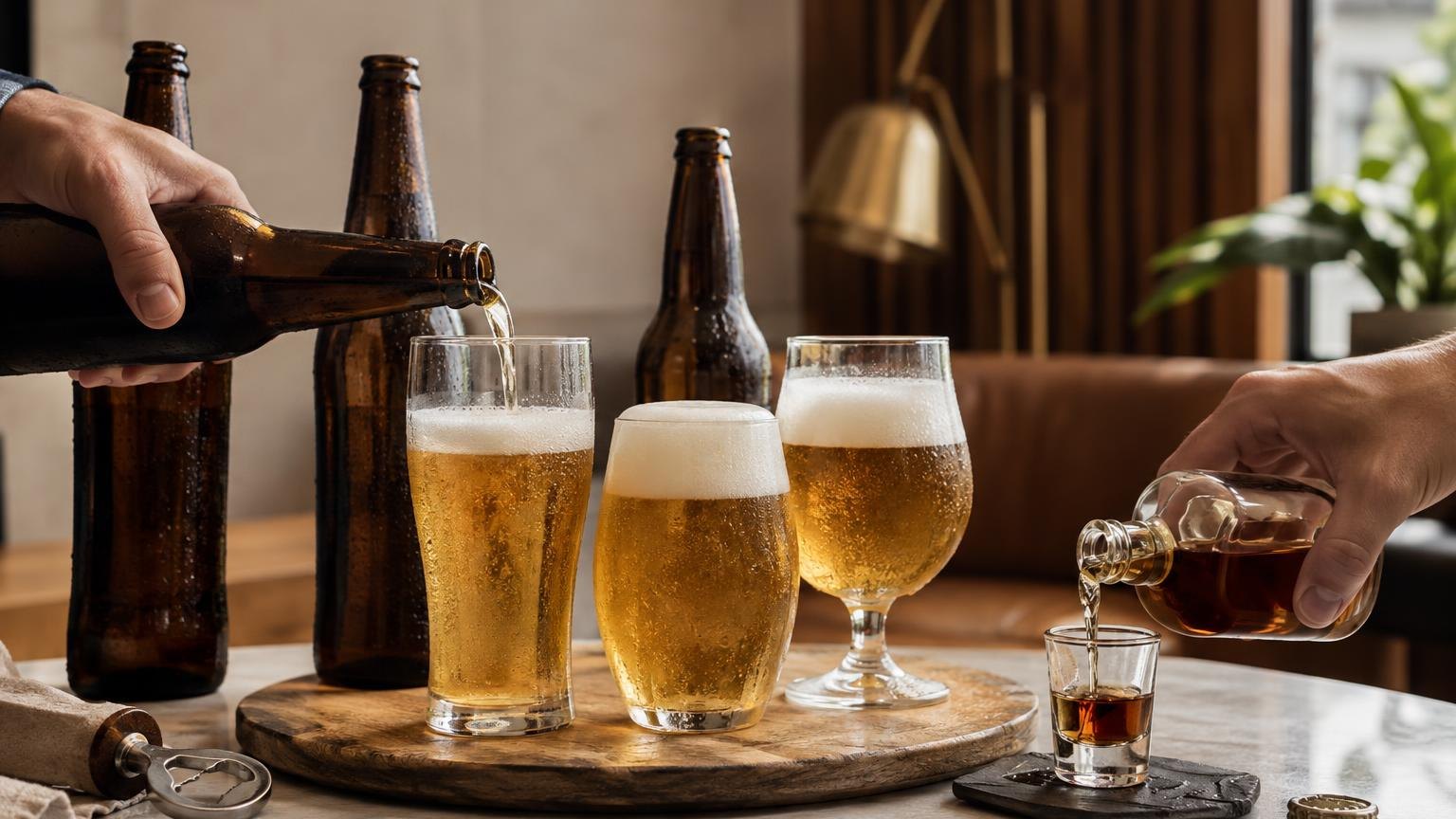
Not all beer servings carry the same alcohol load. A 12 oz bottle, a 16 oz tall can, and a 16 oz pint each deliver different total alcohol amounts when measured against a standard 1.5 oz shot of 40% ABV spirits.
A standard U.S. shot contains 0.6 oz of pure alcohol. Beer servings vary in volume and ABV, so their pure alcohol content shifts accordingly.
| Serving | Volume | Typical ABV | Pure Alcohol (oz) | Shot Equivalence |
| Standard bottle | 12 oz | 5% | 0.6 | 1.0 shot |
| Standard can | 12 oz | 5% | 0.6 | 1.0 shot |
| Tall can | 16 oz | 5% | 0.8 | 1.33 shots |
| U.S. pint (draft) | 16 oz | 5% | 0.8 | 1.33 shots |
| Craft IPA tall can | 16 oz | 7% | 1.12 | 1.87 shots |
| Imperial stout bottle | 12 oz | 10% | 1.2 | 2.0 shots |
| Standard shot (80-proof) | 1.5 oz | 40% | 0.6 | 1.0 shot |
Key Takeaways From the Numbers
A 12 oz bottle or can at 5% ABV matches one shot exactly at 0.6 oz of pure alcohol. The NIAAA defines this as one standard drink in the United States.
Moving to 16 oz—whether a pint glass or tall can—adds 33% more alcohol at the same ABV. That single pint equals roughly 1.33 shots of liquor.
ABV matters more than vessel size. A 12 oz imperial stout at 10% ABV delivers 1.2 oz of pure alcohol—double a standard shot and double a regular 5% beer.
Where People Miscalculate
- Pint pours at bars: Many U.S. bars serve “pints” in 14 oz shaker glasses, not true 16 oz pints, reducing actual alcohol to about 0.7 oz at 5% ABV.
- Craft beer ABV range: The Brewers Association reports the average craft beer ABV sits near 5.9%, pushing a 16 oz pour to 0.94 oz of pure alcohol—over 1.5 shots.
- Tall boy cans: Popular 24 oz cans at 5% ABV contain 1.2 oz of pure alcohol, equaling 2 full shots.
- Overcount with light beer: A 12 oz light beer at 4.2% ABV yields only 0.50 oz of pure alcohol—roughly 0.84 shots.
Always calculate pure alcohol content using the formula: volume (oz) × ABV (decimal) = pure alcohol in ounces. Divide the result by 0.6 to find shot equivalence.
Liquor Proof and Pour Size
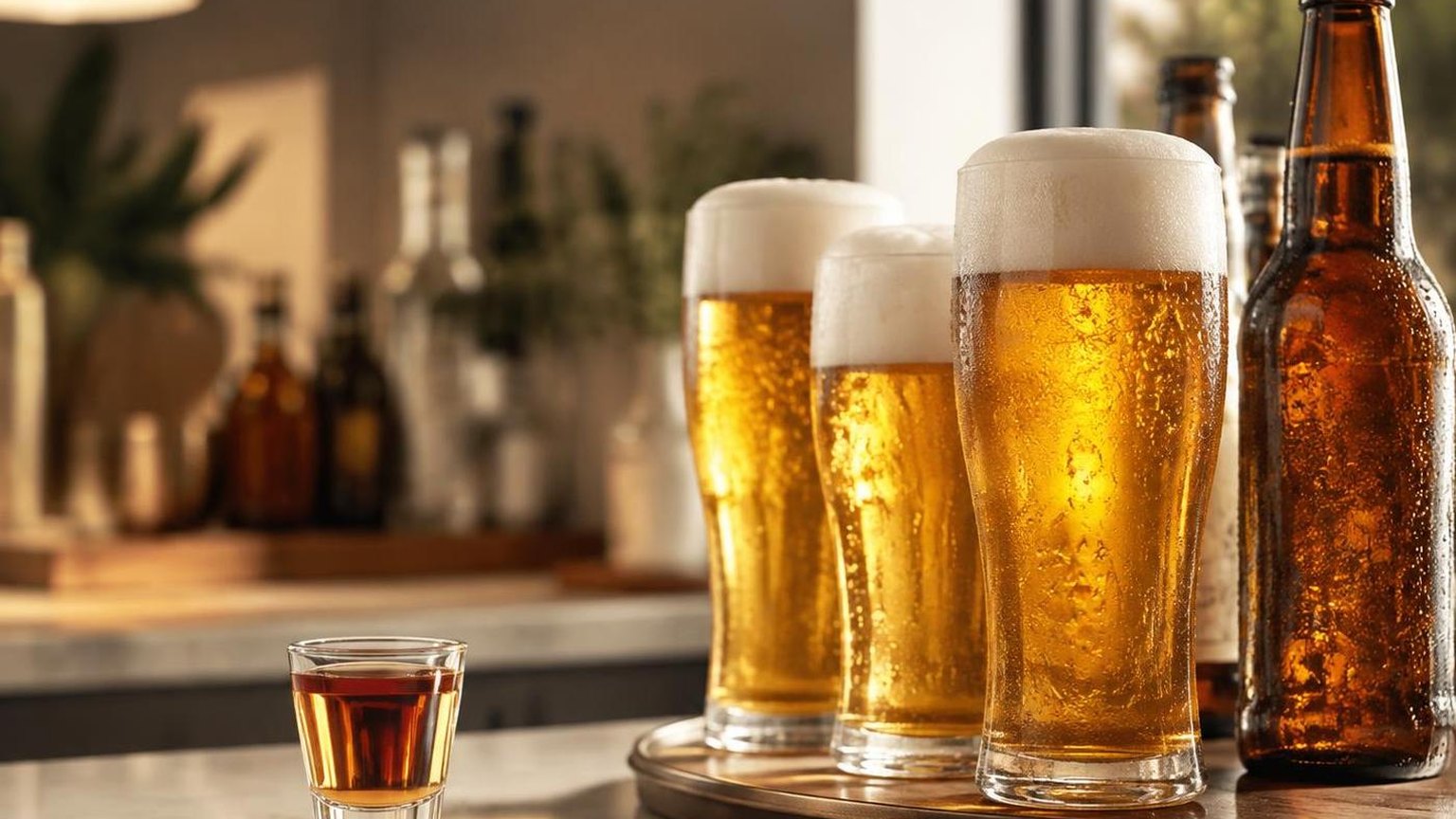
A standard shot in the United States measures 1.5 fluid ounces, but the alcohol content inside that shot varies dramatically by spirit and proof. Understanding proof directly determines how many beers any given shot actually equals.
“Proof” is simply double the alcohol by volume (ABV) percentage. An 80-proof bourbon contains 40% ABV; a 151-proof rum contains 75.5% ABV.
Standard Pure Alcohol Per Shot by Proof
The pure ethanol in a 1.5 oz shot changes significantly with proof. This table shows exact amounts:
| Spirit Proof | ABV (%) | Pure Alcohol in 1.5 oz Shot (fl oz) | Beer Equivalents (12 oz, 5% ABV) |
| 70 | 35% | 0.525 | 0.88 |
| 80 | 40% | 0.60 | 1.0 |
| 90 | 45% | 0.675 | 1.13 |
| 100 | 50% | 0.75 | 1.25 |
| 114 (Cask Strength Bourbon) | 57% | 0.855 | 1.43 |
| 151 (Bacardi 151, Everclear) | 75.5% | 1.133 | 1.89 |
| 190 (Everclear) | 95% | 1.425 | 2.38 |
A standard 12 oz beer at 5% ABV contains 0.6 fl oz of pure alcohol. That figure is the baseline for every comparison above.
Pour Size Matters as Much as Proof
Not every “shot” is 1.5 ounces. Common variations shift the math considerably:
- Pony shot: 1.0 fl oz — contains only 0.40 oz pure alcohol at 80 proof (two-thirds of a beer)
- Standard U.S. shot: 1.5 fl oz — 0.60 oz pure alcohol at 80 proof (one beer)
- Double shot: 3.0 fl oz — 1.20 oz pure alcohol at 80 proof (two beers)
- UK standard measure: 25 mL (0.85 fl oz) — only 0.34 oz pure alcohol at 80 proof (0.57 beers)
- Japanese single: 30 mL (1.01 fl oz) — 0.41 oz pure alcohol at 80 proof (0.68 beers)
Bars frequently free-pour, adding 0.25–0.5 oz beyond the standard measure. A generous bartender pouring 2 oz of 100-proof whiskey delivers 1.0 oz of pure ethanol — equivalent to 1.67 standard beers in a single glass.
Always calculate with actual proof and actual pour volume. Using the formula (pour oz × ABV) ÷ 0.6 = beer equivalents gives a precise answer for any spirit at any serving size.
Practical Examples for Safer Drinking
Understanding equivalences on paper means little without real-world application.
These scenarios translate standard-drink math into actionable pacing strategies that help you stay within the NIAAA’s low-risk guidelines: no more than 4 drinks per occasion for men and 3 for women.
Scenario 1: A Night Out With Friends
You arrive at a bar at 8 PM and plan to leave at midnight—a 4-hour window. Your liver metabolizes roughly one standard drink per hour.
| Hour | Drink Choice | Standard Drinks Consumed (Cumulative) | Estimated BAC (160 lb Male) |
| 8 PM | 12 oz beer (5% ABV) | 1 | ~0.02% |
| 9 PM | 12 oz beer (5% ABV) | 2 | ~0.03% |
| 10 PM | 1.5 oz whiskey shot (40% ABV) | 3 | ~0.05% |
| 11 PM | Water or non-alcoholic drink | 3 | ~0.03% |
Swapping the final hour’s drink for water keeps BAC well below the 0.08% legal driving limit in all 50 U.S. states.
Scenario 2: Craft Beer Trap
A 16 oz craft IPA at 7.5% ABV contains approximately 1.8 standard drinks. Two of those pints equal 3.6 standard drinks—nearly a woman’s entire daily low-risk limit consumed in under an hour.
| Drink | Serving Size | ABV | Standard Drink Equivalents |
| Light lager | 12 oz | 4.2% | 0.8 |
| Regular beer | 12 oz | 5% | 1.0 |
| Craft IPA | 16 oz | 7.5% | 1.8 |
| Imperial stout | 16 oz | 10% | 2.4 |
| Standard shot | 1.5 oz | 40% | 1.0 |
Key Pacing Strategies
- One-for-one rule: Alternate every alcoholic drink with a full glass of water (at least 8 oz).
- Set a drink cap before you start: Decide on 2–3 drinks maximum and track each one.
- Eat before and during: Food slows gastric emptying by up to 50%, reducing peak BAC according to research published in the Journal of Forensic Sciences.
- Time your finish: Stop drinking at least 1 hour before driving to allow metabolism to lower BAC by roughly 0.015% per hour.
- Check ABV labels: A single 12 oz serving of 8% double IPA equals 1.6 standard drinks, not one.
Counting standard drinks—not glasses—is the only reliable way to gauge actual alcohol intake across different beverage types.
Frequently Asked Questions
How many beers equal one shot of liquor?
One standard 12 oz beer at 5% ABV contains 0.6 oz of pure alcohol, which is the same amount found in one 1.5 oz shot of 80-proof (40% ABV) spirits. This means one standard beer and one standard shot are already equivalent in alcohol content.
The “one-to-one” rule holds only when both drinks are poured at their standard serving sizes and typical ABV.
Does the type of beer change the equivalence to a shot?
A craft IPA at 7–9% ABV packs 1.0–1.3 oz of pure alcohol per 12 oz serving, making a single pint equivalent to roughly 1.7–2.2 standard shots.
Conversely, a light beer at 4.2% ABV contains only about 0.5 oz of pure alcohol, falling slightly below one standard shot. Always check the label—ABV swings of even 2–3 percentage points significantly alter the math.
How do you calculate the pure alcohol in any drink?
Multiply the volume in ounces by the ABV expressed as a decimal: a 16 oz pint of 6% beer yields 16 × 0.06 = 0.96 oz of pure alcohol, equivalent to 1.6 standard shots.
For a 1.5 oz pour of 50% (100-proof) whiskey, the calculation is 1.5 × 0.50 = 0.75 oz, or 1.25 standard drinks. This formula works universally across beer, wine, and spirits.
Is a tall draft beer at a bar equal to more than one shot?
Most bars serve draft beer in 16 oz pint glasses rather than 12 oz portions, which raises the alcohol content to about 0.8 oz of pure alcohol for a 5% ABV beer—already 1.3 standard drinks.
A 20 oz “imperial pint” at 5% ABV reaches 1.0 oz of pure alcohol, matching roughly 1.7 shots. Larger glassware is one of the most common reasons people undercount their intake.
How does a shot of overproof liquor compare to beer?
A 1.5 oz shot of overproof rum at 75.5% ABV (151 proof) delivers 1.13 oz of pure alcohol, equivalent to nearly two standard 12 oz beers.
Cask-strength bourbon, often bottled between 55–65% ABV, lands a single shot at 1.2–1.5 oz of pure alcohol, or about 1.4–1.6 beers.
These pours can push blood alcohol concentration up faster because the high ethanol concentration accelerates gastric absorption.
Does your body process a beer and a shot at the same rate?
The liver metabolizes alcohol at a roughly fixed rate of about 0.015–0.017 g/dL of blood alcohol per hour regardless of drink type, which translates to approximately one standard drink every 60–90 minutes for most adults.
However, a shot delivers its 0.6 oz of pure alcohol in seconds, potentially spiking BAC faster than a beer sipped over 20–30 minutes. The speed of consumption, not the container, is the variable that most affects peak intoxication.
How many light beers would it take to equal a double shot?
A double shot is 3 oz of 40% ABV spirit, yielding 1.2 oz of pure alcohol. A 12 oz Bud Light at 4.2% ABV contains about 0.50 oz of pure alcohol, so you would need roughly 2.4 light beers to match one double shot.
In practical terms, drinking two and a half light beers delivers the same total ethanol as a single double pour of vodka or whiskey.
Why does the “one beer equals one shot” rule matter for legal BAC limits?
The U.S. legal driving limit is 0.08 g/dL in all 50 states, and a 160 lb person typically reaches approximately 0.02 g/dL per standard drink consumed within an hour.
Miscounting a 9% ABV craft beer as one drink instead of the ~1.8 standard drinks it actually represents can put a driver over the legal limit after just three pints.
Accurate drink-equivalence awareness is one of the most effective tools for staying below the 0.08 threshold.
Keep Exploring
- How To Get Red Wine Out Of Carpet?
- What’S The Best Tequila Under $50?
- How Long Are Jello Shots Good For? The Complete Shelf-Life Guide You Can Trust
- Who Makes Kirkland Prosecco?
- How Many Quarts In 64 Ounces?
- All Blog Guides
- National Institute on Alcohol Abuse and Alcoholism (2024)
- Centers for Disease Control and Prevention (2024)
- Dietary Guidelines for Americans 2020–2025, USDA & HHS (2020)
- National Library of Medicine / PubMed — "Blood Alcohol Concentration and Standard Drink Equivalence" (2019)
- Stanford University, Office of Alcohol Policy and Education (2024)
- Bowling Green State University — Alcohol and Standard Drinks (2024)
- University of Notre Dame, McDonald Center for Student Well-Being (2024)
- Substance Abuse and Mental Health Services Administration (2023)
- American Addiction Centers — Standard Drink Sizes (2024)
- Alcohol Research: Current Reviews — "Alcohol Content in Standard Servings of Beverage Alcohol" (2022)