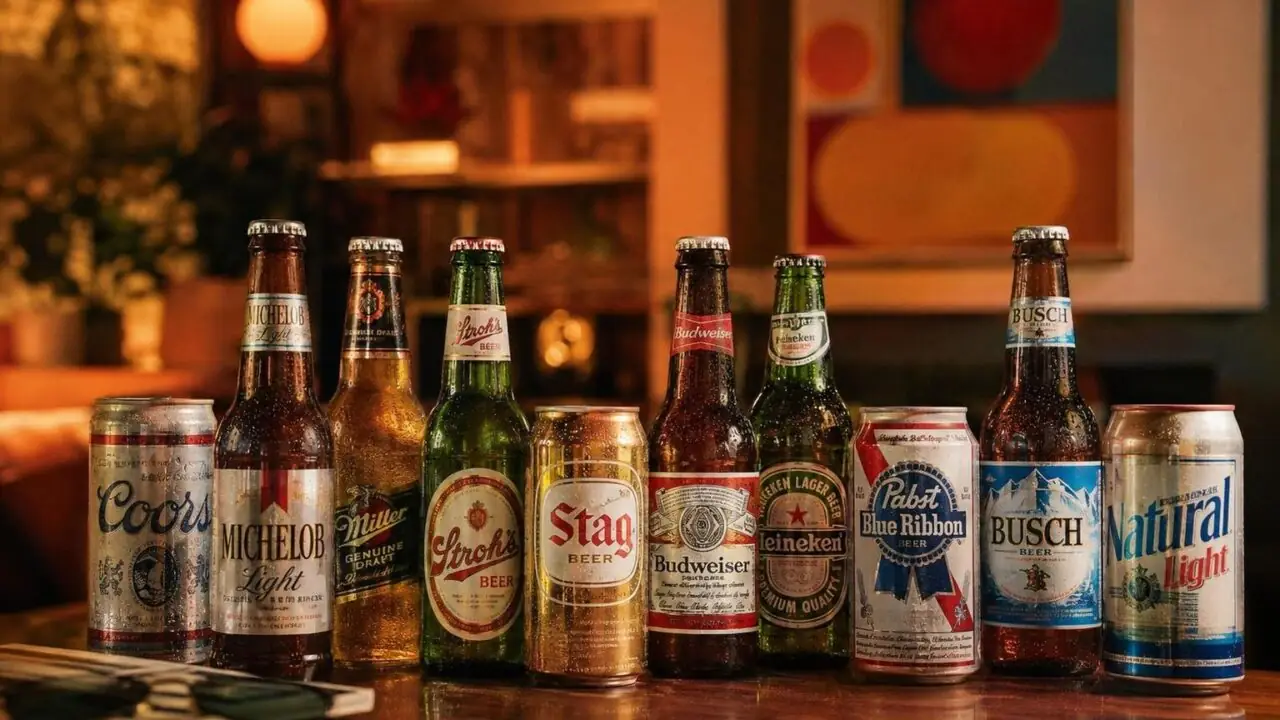
Beers of the 80’s are the iconic brews that defined a decade of bold marketing, light lager dominance, and craft brewing’s quiet birth in America.
Budweiser, Miller Lite, and Coors Light battled for supremacy while microbreweries like Sierra Nevada and Boston Beer Company planted revolutionary seeds.
The 1980s saw U.S. beer consumption peak at 23.8 gallons per capita in 1981, according to the Beer Institute. Light beers captured over 30% of the market by decade’s end.
This era permanently reshaped American drinking culture, splitting it between mass-produced convenience and artisanal ambition.
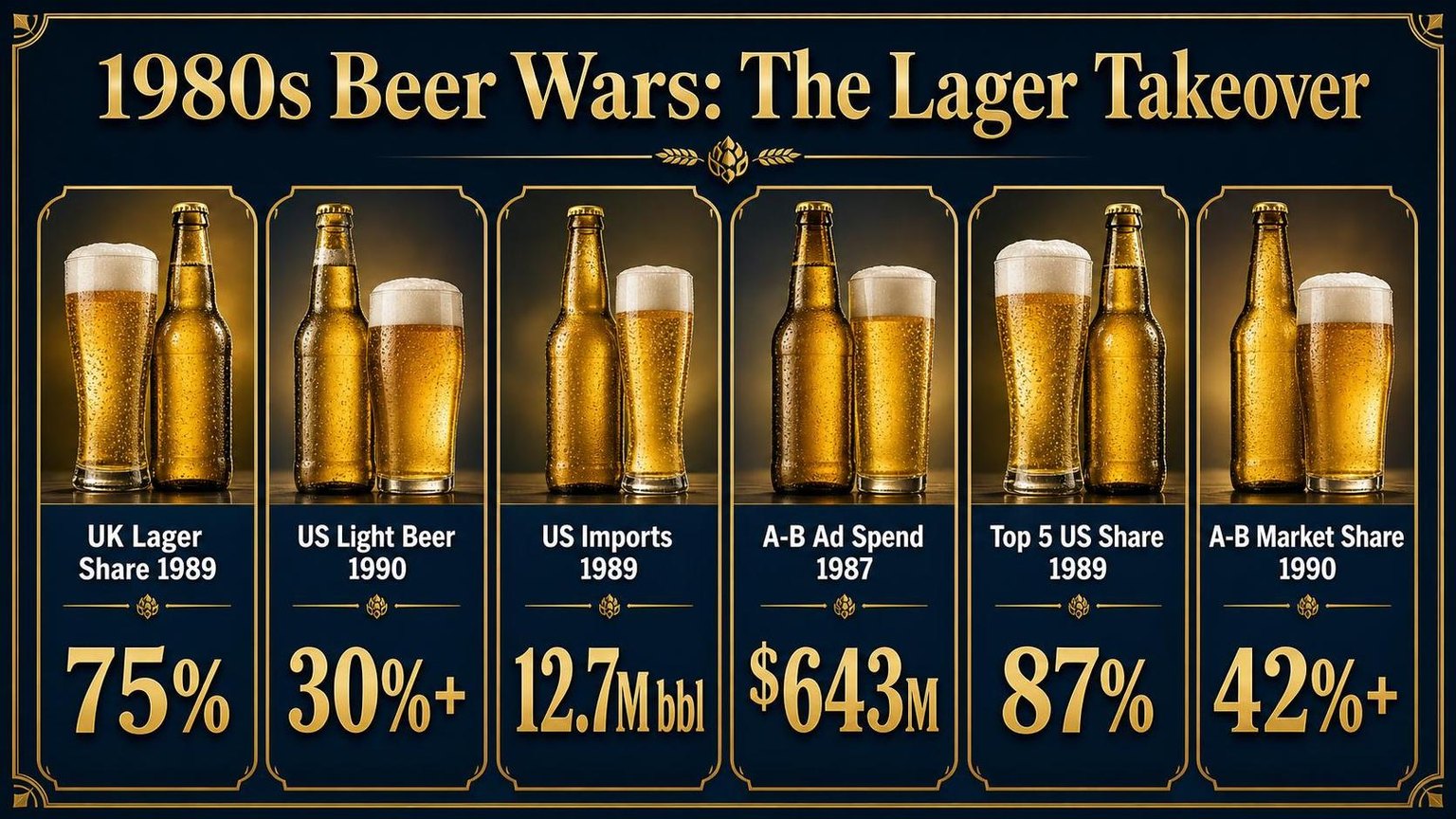
The Lager Revolution of the 1980s
Light lagers dominated the 1980s, reshaping global beer markets with unprecedented marketing budgets and shifting consumer tastes toward crisp, easy-drinking styles.
By 1989, lager accounted for roughly 75% of all beer sold in the United Kingdom alone—up from under 30% in 1970.
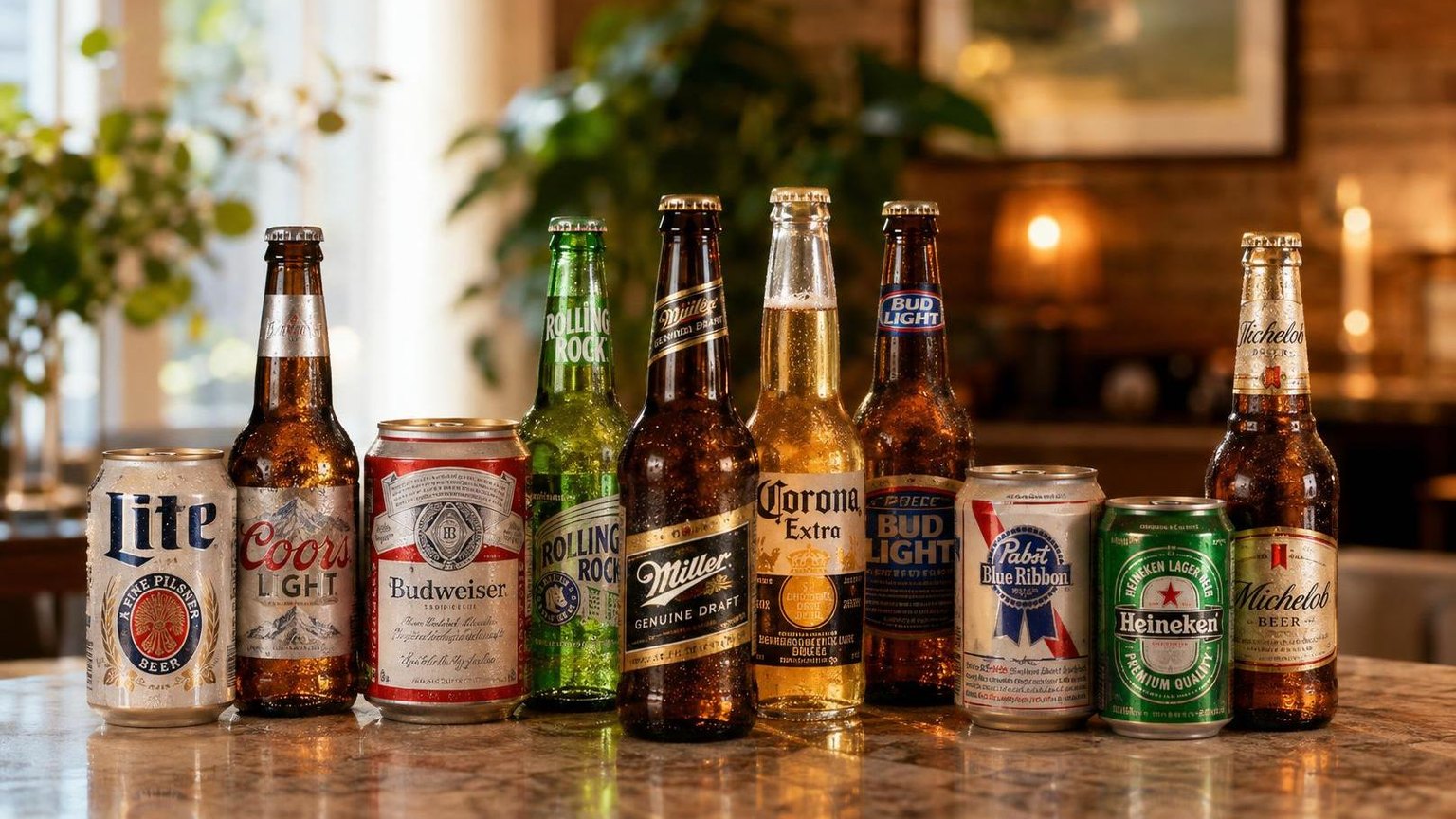
The American Light Beer Explosion
Miller Lite, launched nationally in 1975, triggered a revolution that peaked in the 1980s. Its “Tastes Great, Less Filling” campaign became one of advertising’s most iconic taglines, running from 1973 through 1991.
Bud Light debuted in 1982 and climbed relentlessly. By 1988, it had overtaken Miller Lite in annual sales volume. Coors Light followed a similar trajectory after its 1978 national launch, securing third place among light beers by decade’s end.
| Brand | Launch Year | 1980 U.S. Market Share | 1989 U.S. Market Share |
| Budweiser | 1876 | 19.3% | 14.5% |
| Miller Lite | 1975 | 9.5% | 10.2% |
| Bud Light | 1982 | — | 10.6% |
| Coors Light | 1978 | 2.1% | 5.8% |
Light beer’s total share of the U.S. market surged from approximately 19% in 1980 to over 30% by 1990, according to the Beer Institute’s annual statistical reports.
Imports and European Lagers
Imported lager volume in the U.S. nearly tripled during the 1980s. Heineken led the pack, but Corona Extra emerged as a phenomenon, rising from obscurity to become America’s second-best-selling import by 1987.
Beck’s, Foster’s, and Molson Golden also gained significant shelf space. Total U.S. beer imports reached 12.7 million barrels in 1989, up from 4.6 million barrels in 1980.
The UK Lager Takeover
British drinkers historically favored cask ales. The 1980s changed that dramatically. Carling Black Label, Tennent’s, and Castlemaine XXXX spent heavily on television advertising aimed at younger consumers.
- Carling Black Label became the UK’s top-selling lager by 1985, buoyed by humorous TV spots.
- Foster’s entered the UK market in 1981 and captured 8% of the lager segment within five years.
- Stella Artois positioned itself as a premium continental option, marketed with the slogan “Reassuringly Expensive.”
UK lager consumption rose from about 28 million barrels in 1980 to over 38 million barrels by 1989, while traditional ale volumes declined steadily throughout the decade.
Consolidation and Marketing Arms Race
Anheuser-Busch spent an estimated $643 million on advertising in 1987 alone.
Philip Morris’s acquisition of Miller Brewing in 1970 had already injected consumer-goods marketing tactics into the beer industry, and the 1980s saw those strategies reach full scale.
By 1989, the top five U.S. brewers controlled approximately 87% of domestic production—up from 75% at the start of the decade. This consolidation set the stage for the craft beer backlash that would follow in the 1990s.
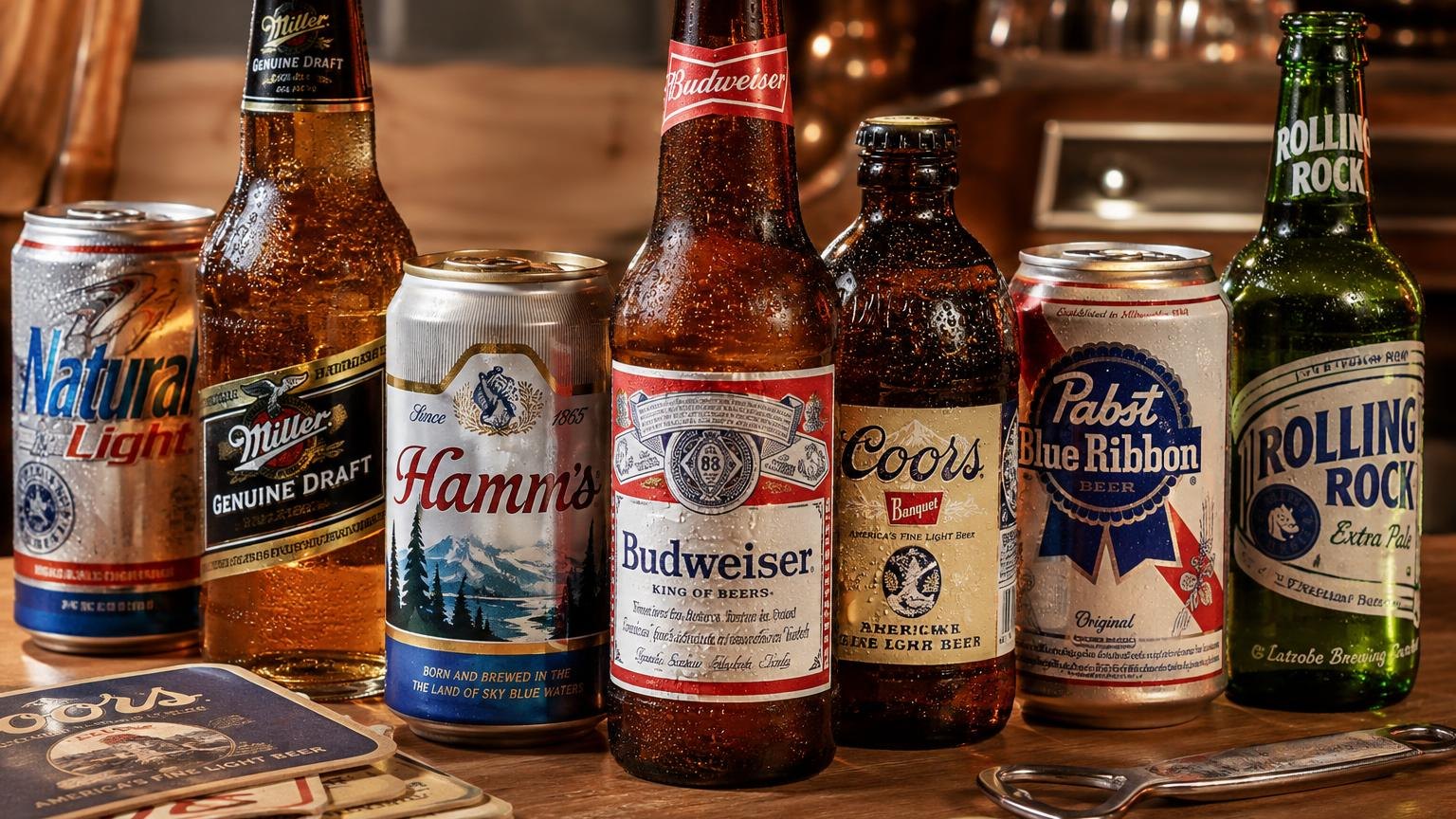
Iconic American Beer Brands That Dominated
The 1980s reshaped American brewing through unprecedented consolidation and marketing warfare.
By 1989, the top three brewers—Anheuser-Busch, Miller, and Coors—controlled roughly 77% of the U.S. beer market, up from about 65% at the decade’s start.
Anheuser-Busch: The Undisputed King
Anheuser-Busch expanded its market share from approximately 28% in 1980 to over 42% by 1990. Budweiser alone sold more than 50 million barrels annually by the late 1980s, making it the world’s best-selling beer.
Bud Light, introduced in 1982, became the catalyst for the light beer explosion. Within five years it overtook Miller Lite to become America’s top-selling light beer—a position it has never relinquished.
Miller Brewing Company
Miller Lite had dominated the light beer category since its 1975 launch. Its “Tastes Great, Less Filling” campaign, running throughout the 1980s, is still ranked among the most memorable advertising campaigns in American history.
Miller High Life declined sharply during the decade, dropping from roughly 23 million barrels in 1980 to under 10 million by 1990. Miller Genuine Draft, launched in 1986, partially offset those losses with cold-filtered positioning.
Coors and the Regional Giants
Coors completed its national expansion in 1991 but spent the entire 1980s pushing eastward from its Colorado base. Coors Light, introduced in 1978, climbed to third place among light beers by decade’s end.
Stroh’s acquired Schlitz in 1982 for $500 million, briefly becoming America’s third-largest brewer. Pabst, Heileman, and Olympia all lost significant ground during the consolidation wave.
| Brewer | 1980 Share | 1989 Share |
| Anheuser-Busch | ~28% | ~42% |
| Miller | ~21% | ~22% |
| Stroh’s/Schlitz | ~13% | ~8% |
| Coors | ~8% | ~10% |
| Heileman | ~7% | ~5% |
| Pabst | ~6% | ~4% |
The Light Beer Revolution
Light beer consumption grew from about 20% of total U.S. beer sales in 1980 to nearly 30% by 1989. This single category shift forced every major brewer to launch or expand a light variant.
- Bud Light (1982) — reached #1 light beer by 1987
- Miller Lite (1975) — held #1 until Bud Light overtook it
- Coors Light (1978) — steady climber, reached top three by 1989
- Michelob Light (1978) — positioned as the premium light option
Advertising Arms Race
Anheuser-Busch spent over $600 million on advertising in 1987 alone. The Budweiser Clydesdales, Spuds MacKenzie (debuting in 1987’s Super Bowl), and the Swedish Bikini Team for Old Milwaukee became pop-culture fixtures.
Total U.S. beer production peaked near 188 million barrels in 1990. The decade’s winners weren’t necessarily brewing better beer—they were outspending and out-distributing smaller regional competitors into extinction.
European Imports That Changed Drinking Culture
Between 1980 and 1989, European beer imports to the United States surged by over 80%, reshaping how Americans thought about flavor, quality, and brewing tradition.
Brands like Heineken, Beck’s, and Stella Artois moved from niche curiosity to mainstream bar staples.
The Import Boom by the Numbers
Heineken dominated the U.S. import market throughout the decade, holding roughly 40% of all imported beer sales by 1985. The Netherlands-based brewer had established distribution decades earlier, but the 1980s brought explosive volume growth.
| Brand | Country | U.S. Market Share (Imports, Mid-1980s) |
| Heineken | Netherlands | ~40% |
| Molson | Canada | ~10% |
| Beck’s | Germany | ~8% |
| Moosehead | Canada | ~5% |
| Foster’s | Australia | ~4% |
| St. Pauli Girl | Germany | ~3% |
Total U.S. beer imports reached approximately 11.5 million barrels by 1986, up from around 6 million barrels in 1980. European brands accounted for the majority of that growth.
Why Americans Reached for Imports
The 1980s yuppie culture prized visible markers of sophistication. A green Heineken bottle or a Beck’s label signaled cosmopolitan taste in a landscape dominated by light American lagers.
- Flavor differentiation: European lagers used all-malt recipes and adhered to traditions like Germany’s Reinheitsgebot (purity law of 1516), producing fuller-bodied beers than adjunct-heavy domestic brands.
- Marketing spend: Heineken alone invested over $30 million annually in U.S. advertising by the mid-1980s, targeting upscale urban consumers.
- On-premise visibility: Upscale restaurants and wine bars began stocking European bottles alongside their wine lists, legitimizing beer as a premium beverage.
- Corona’s disruption: By 1986–1987, Mexico’s Corona Extra surpassed Heineken briefly in key U.S. markets, proving import appeal extended beyond Europe and intensifying competition.
Lasting Impact on American Brewing
European imports cracked open a crucial mental shift: beer could be worth paying more for. Import six-packs often retailed at $5.99–$7.99, nearly double the price of domestic equivalents.
This willingness to pay a premium directly fueled the emerging American craft beer movement. Pioneers like Sierra Nevada, Boston Beer Company, and Anchor Brewing cited European styles as foundational inspiration.
Samuel Adams Boston Lager, launched in 1984 by Jim Koch, explicitly positioned itself against both bland domestics and costly imports. Koch’s pitch was simple: American-brewed beer with European-quality ingredients at import-level pricing.
By decade’s end, the U.S. had over 200 craft breweries, up from fewer than 50 in 1980. European imports didn’t just change what Americans drank—they permanently raised expectations for what beer should taste like.
Rise of Light Beer and Marketing Wars
Light beer transformed the American brewing landscape throughout the 1980s, growing from 19.4% of total beer volume in 1980 to nearly 30% by 1990.
The category’s explosive growth triggered the most expensive advertising battles in beverage history.
The Light Beer Explosion
Miller Lite, introduced nationally in 1975, had already proven the concept. By 1980, it sold 24 million barrels annually. Anheuser-Busch launched Bud Light in 1982 and pursued it with relentless distribution power.
Bud Light overtook Miller Lite by 1994, but the groundwork was laid entirely in the 1980s. Coors Light, introduced in 1978, became the third major player, reaching 10 million barrels by the late 1980s.
| Brand | 1980 Barrels (millions) | 1989 Barrels (millions) | Growth |
| Miller Lite | 24.2 | 19.4 | −19.8% |
| Bud Light | — | 16.0 | N/A (launched 1982) |
| Coors Light | 3.8 | 10.2 | +168% |
Miller Lite’s decline despite the category’s growth illustrates how fiercely Anheuser-Busch competed. A-B’s total market share climbed from 28.2% in 1980 to 42.1% by 1989.
The Advertising Arms Race
Miller’s iconic “Tastes Great, Less Filling” campaign, featuring retired athletes like Bob Uecker and Dick Butkus, dominated the early decade. It ran from 1973 to 1991 and became one of the longest-running campaigns in TV history.
Anheuser-Busch countered with spending power. By 1987, A-B’s annual advertising budget exceeded $630 million, making it the largest advertiser in the alcohol industry.
The Spuds MacKenzie campaign launched in 1987 for Bud Light during Super Bowl XXI.
- Spuds MacKenzie — bull terrier mascot that generated $20 million in licensed merchandise in its first year
- “Tastes Great, Less Filling” — Ad Age ranked it among the top 10 advertising campaigns of the 20th century
- Coors Light’s Silver Bullet — launched in 1985, emphasizing Rocky Mountain cold-filtered brewing
The three brewers collectively spent over $1 billion annually on advertising by the late 1980s, pricing smaller regional competitors out of national television entirely.
Impact on the Industry
Light beer’s rise accelerated consolidation. The number of major independent breweries in the U.S. dropped from 44 in 1980 to 30 by 1990. Regional brands like Schaefer, Rheingold, and Olympia either closed or were absorbed.
Consumers traded flavor complexity for lower calories—typically 95–110 calories per 12-ounce serving versus 140–155 for regular lagers.
This shift ironically fueled the craft beer countermovement that emerged simultaneously in the mid-1980s.
The marketing wars of the 1980s permanently established light beer as the dominant American beer category, a position it holds to this day with roughly 40% of total U.S. beer volume.
How 80s Beers Shaped Modern Craft Brewing
The 1980s transformed American brewing from a near-monopoly of light lagers into the most diverse beer market on Earth.
Just 80 breweries operated in the U.S. in 1983; by 1990, that number had surged past 280—laying the groundwork for today’s 9,500+ craft breweries.
The Pioneers Who Broke the Mold
Sierra Nevada Brewing Company, founded in 1980, released its Pale Ale using whole-cone Cascade hops—a radical departure from the mild adjunct lagers dominating 95% of the market.
That single beer essentially defined the American pale ale category.
Boston Beer Company launched Samuel Adams Boston Lager in 1984 with two-row barley and Hallertau Mittelfrueh noble hops. Founder Jim Koch sold it bar-to-bar in Boston, growing revenue to $20 million by 1989.
Anchor Brewing’s Fritz Maytag had started the revival in the 1970s, but his 1987 introduction of Anchor Liberty Ale—dry-hopped with Cascades—became a direct blueprint for the IPA explosion of the 2000s.
Key Milestones of 80s Brewing
| Year | Event | Impact |
| 1980 | Sierra Nevada opens in Chico, CA | Popularized American-grown hop varieties |
| 1982 | Mendocino Brewing opens first post-Prohibition brewpub in CA | Proved the brewpub model viable |
| 1984 | Samuel Adams Boston Lager debuts | Showed craft beer could scale nationally |
| 1984 | BridgePort Brewing founded in Portland, OR | Ignited the Pacific Northwest craft scene |
| 1988 | Rogue Ales founded in Ashland, OR | Pioneered bold, experimental styles |
Legislative Catalysts
President Carter’s signing of H.R. 1337 in 1978, legalizing homebrewing, created a pipeline of skilled brewers who went commercial throughout the 1980s. An estimated 1.5 million Americans were homebrewing by 1990.
State-level brewpub legalization accelerated growth. Oregon legalized brewpubs in 1985, Washington in 1982. By 1989, 36 states permitted on-site brewing and sales—up from fewer than 10 at the decade’s start.
What the 80s Gave Modern Craft Beer
- Hop-forward flavor profiles: Cascade, Centennial, and Chinook hops developed at Oregon State University became the signature of American craft brewing
- The brewpub business model: Over 100 brewpubs opened during the decade, proving direct-to-consumer sales could sustain small operations
- Style diversity: Porters, stouts, wheat beers, and amber ales returned to American taps after decades of light lager dominance
- Consumer education: Michael Jackson’s 1988 book The New World Guide to Beer gave American drinkers a vocabulary for flavor, driving demand for variety
The macro brewers noticed. By 1988, Anheuser-Busch controlled 41% of U.S. beer sales yet watched its growth slow as craft volumes climbed 40% annually. The competitive tension born in the 1980s still defines the industry today.
Common Questions
What were the best-selling beer brands in the United States during the 1980s?
Budweiser held the top spot throughout the decade, surpassing Schlitz in 1977 and maintaining dominance with over 50 million barrels shipped annually by 1988.
Miller Lite, launched nationally in 1975, became the second-best-selling beer by the mid-1980s, while Coors expanded from its 11-state western territory to nationwide distribution by 1986.
Old Milwaukee, Stroh’s, and Pabst Blue Ribbon rounded out the top sellers but saw steady market-share erosion as the decade progressed.
How did the light beer revolution reshape the 1980s beer market?
Light beer’s share of total U.S. beer sales surged from roughly 10% in 1980 to nearly 30% by 1989, driven primarily by the success of Miller Lite and Bud Light (introduced in 1982).
These brands marketed aggressively on television—Miller Lite’s “Tastes Great, Less Filling” campaign alone spent an estimated $50 million annually.
Coors Light, launched in 1978, climbed to third-place among light beers by 1987, further cementing the category’s dominance.
Which major regional breweries closed or were acquired during the 1980s?
The 1980s saw intense consolidation: Schlitz was acquired by Stroh’s in 1982 after quality-control scandals cratered its reputation, and Stroh’s itself purchased Schaefer and F&M Schaefer Brewing.
Heileman Brewing of La Crosse, Wisconsin, went on an aggressive acquisition spree—buying Rainier, Lone Star, and Blatz—before overleveraging and entering bankruptcy in 1991.
By 1989, the top six brewers controlled over 92% of U.S. production, up from about 82% at the start of the decade.
When did the craft beer movement begin in the 1980s, and which breweries led it?
Sierra Nevada Brewing Company started selling its Pale Ale in Chico, California, in 1981, and Boston Beer Company launched Samuel Adams Boston Lager in 1984—both now considered founding pillars of American craft brewing.
The number of U.S. breweries grew from 80 in 1983 to roughly 284 by 1990, reversing a century-long consolidation trend.
The 1984 Oregon Brewers Festival and the founding of the Association of Brewers in 1978 helped create a support network that fueled this growth throughout the decade.
What role did advertising and pop culture play in 1980s beer marketing?
Beer companies spent over $800 million on television advertising in 1985 alone, making the industry one of TV’s largest sponsors.
Spuds MacKenzie, Bud Light’s fictional bull terrier mascot introduced during the 1987 Super Bowl, became a cultural phenomenon and boosted Bud Light sales by 20% within a year.
Miller Lite’s roster of retired athletes debating “Tastes Great, Less Filling” ran from 1973 through the late 1980s and is consistently ranked among the most effective ad campaigns in American television history.
How did imported beers gain popularity in the 1980s U.S. market?
Import volume nearly doubled during the decade, rising from about 3% of U.S. consumption in 1980 to over 5% by 1989, led by Corona Extra, Heineken, and Molson.
Corona’s U.S. sales exploded from 1.8 million cases in 1984 to 13.5 million cases in 1986, making it the second-best-selling import behind Heineken by 1987.
The trend reflected consumers’ growing interest in premium and differentiated products, foreshadowing the craft beer boom of the 1990s.
Related Reading
- Does Hpnotiq Need To Be Refrigerated?
- How Do I Make A Strawberry Smoothie? Incredibly Simple
- What Does Blue Curacao Taste Like? Most Correct Answer
- How Many Cups Is 20 Ounces?
- How Many Milliliters Are In 12 Ounces?
- How Much Is A Gallon Of Water In Oz? – 2026
- What Is Top Shelf Tequila?
- How Much Does A Fluid Ounce Weigh?
- All Blog Guides
- Brewing Industry Research Program, Oregon State University (2023)
- Alcohol and Tobacco Tax and Trade Bureau – History of TTB and Its Predecessor Agencies (2024)
- National Institute on Alcohol Abuse and Alcoholism – Apparent Per Capita Alcohol Consumption: National, State, and Regional Trends, 1977–2020 (2023)
- Centers for Disease Control and Prevention – Alcohol and Public Health Fact Sheets (2024)
- Brewers Association – History of Craft Brewing (2024)
- Congressional Research Service – Federal Excise Tax on Beer: History and Current Law (2020)
- National Bureau of Economic Research – Alcohol Regulation and Violence on College Campuses, NBER Working Paper (2002)
- University of California, Davis – Department of Food Science & Technology, Brewing Science Program History (2024)