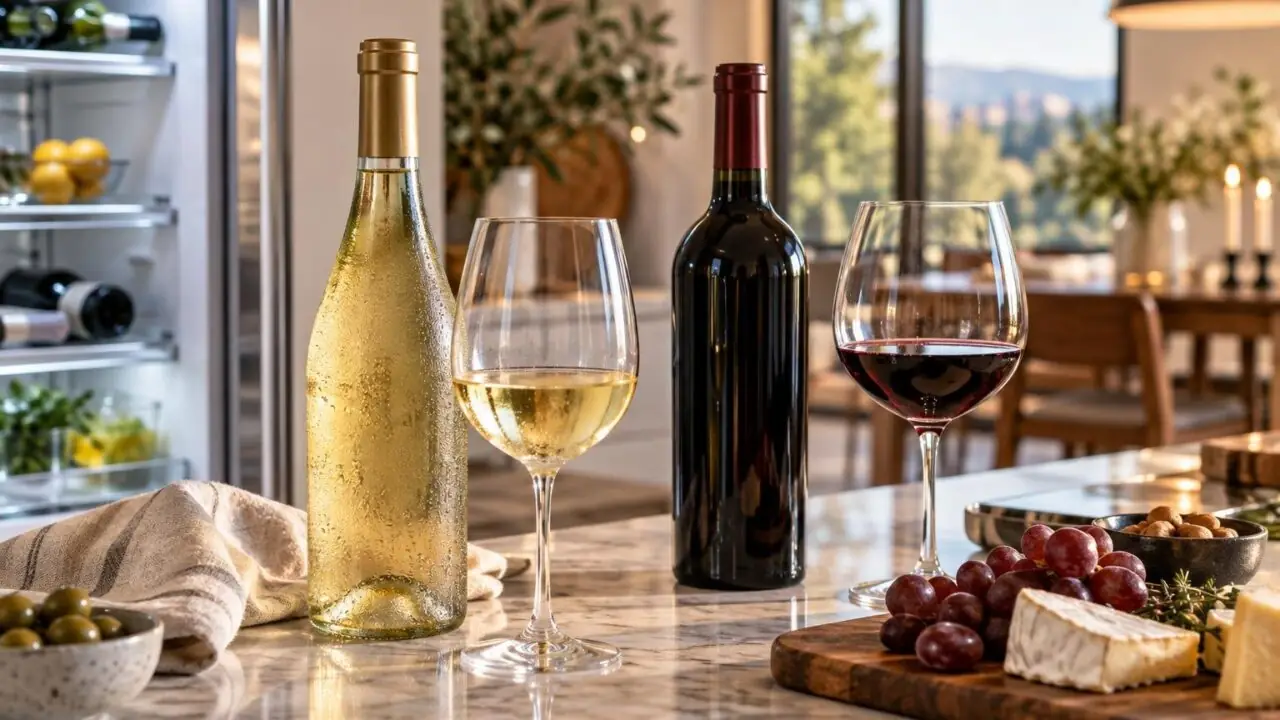
Are you supposed to refrigerate wine depends on the type: all whites and rosés need 45–55 °F storage, while most opened reds benefit from refrigeration to slow oxidation.
Unopened reds store best at 55–65 °F in a cool, dark space—not necessarily a fridge.
Temperature mismanagement ranks among the top reasons home drinkers experience flat aromas and muted flavors. The Wine Spectator notes that kitchen countertops often reach 75 °F, accelerating chemical breakdown.
Understanding which bottles need chilling—and when—protects every pour.
When to Refrigerate Opened Wine Bottles
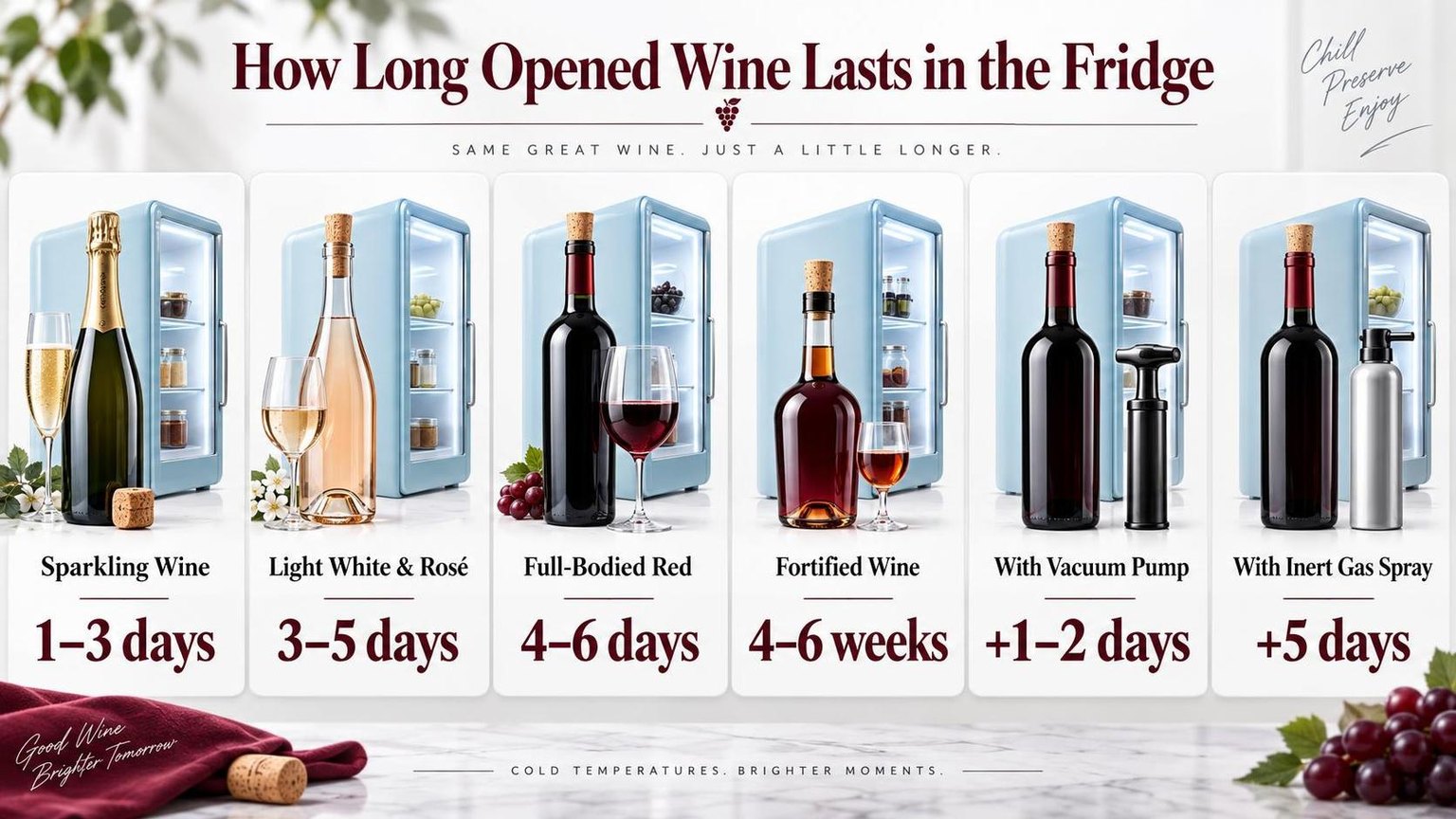
Every opened wine bottle belongs in the refrigerator, regardless of color. Cold temperatures between 35–45°F (2–7°C) slow oxidation and microbial activity, buying you days of drinkable wine instead of hours.
Oxygen begins degrading wine the moment the cork leaves the bottle. At room temperature (68–72°F), chemical reactions accelerate roughly twice as fast as they do under refrigeration. The fridge cuts that rate dramatically.
How Long Opened Wine Lasts Refrigerated
Survival time depends on wine style, remaining volume in the bottle, and whether you’ve resealed it properly. The table below reflects wines resealed with a cork or stopper.
| Wine Type | Refrigerated Shelf Life | Unrefrigerated Shelf Life |
| Sparkling (Champagne, Prosecco) | 1–3 days | 4–6 hours |
| Light White & Rosé | 3–5 days | 1 day |
| Full-Bodied White (Oaked Chardonnay) | 3–5 days | 1–2 days |
| Light Red (Pinot Noir, Gamay) | 3–5 days | 1–2 days |
| Full-Bodied Red (Cabernet, Syrah) | 4–6 days | 2–3 days |
| Fortified (Port, Sherry, Madeira) | 4–6 weeks | 1–2 weeks |
| Bag-in-Box Wine | 4–6 weeks | 2–3 weeks |
Why Red Wine Also Goes in the Fridge
A persistent myth claims opened red wine should stay on the counter. In reality, the same oxidation chemistry applies.
Refrigeration preserves fruit character and prevents volatile acidity from spiking above the detectable threshold of 0.7–1.1 g/L.
Pull the bottle out 30–45 minutes before serving to let it warm to the ideal red wine range of 60–68°F (15–20°C). A brief rest restores aromatics that cold temperatures temporarily suppress.
Techniques That Extend Refrigerated Life Further
- Vacuum pump (e.g., Vacu Vin): Removes approximately 70% of headspace oxygen, adding 1–2 extra days of freshness.
- Inert gas spray (e.g., Private Preserve): Blankets the surface with argon and nitrogen, virtually eliminating oxidation for up to 5 additional days.
- Half-bottle transfer: Decanting leftover wine into a 375 mL bottle minimizes the oxygen-to-wine ratio, one of the most effective free methods available.
- Coravin system: Accesses wine through the cork using a needle and replaces extracted volume with argon, keeping opened bottles viable for months to years.
Signs an Opened Bottle Has Turned
Brown-tinged edges on white wine or brick-orange shifts in reds indicate advanced oxidation. A sharp vinegar smell means acetic acid bacteria have taken hold—levels above 1.4 g/L render wine unpleasant.
Flat, cardboard-like aromas and a complete loss of fruit signal a bottle past saving. When in doubt, trust your nose before your calendar. Refrigeration delays these faults but cannot reverse them once they appear.
Ideal Storage Temperatures by Wine Type
Every wine style has a distinct temperature sweet spot that preserves its aromatics, structure, and aging potential. Storing wine even 5°F outside its ideal range accelerates chemical reactions that degrade flavor compounds and shorten shelf life.
| Wine Type | Ideal Storage Temp | Serving Temp |
| Full-bodied reds (Cabernet Sauvignon, Syrah) | 55–58°F (13–14°C) | 60–65°F (16–18°C) |
| Medium-bodied reds (Pinot Noir, Merlot) | 55°F (13°C) | 55–60°F (13–16°C) |
| Light-bodied reds (Beaujolais, Gamay) | 53–55°F (12–13°C) | 50–55°F (10–13°C) |
| Full-bodied whites (oaked Chardonnay, Viognier) | 50–55°F (10–13°C) | 48–52°F (9–11°C) |
| Light-bodied whites (Sauvignon Blanc, Pinot Grigio) | 45–50°F (7–10°C) | 42–48°F (6–9°C) |
| Rosé | 45–50°F (7–10°C) | 45–50°F (7–10°C) |
| Sparkling (Champagne, Cava, Prosecco) | 40–50°F (4–10°C) | 38–45°F (3–7°C) |
| Dessert wines (Sauternes, Port, late-harvest) | 50–55°F (10–13°C) | 43–55°F (6–13°C) |
| Fortified wines (Sherry, Madeira) | 55–58°F (13–14°C) | 55–65°F (13–18°C) |
Why 55°F Is the Universal Benchmark
The wine industry standard of 55°F (13°C) traces back to the average year-round temperature of limestone caves in Champagne and Burgundy where wines aged for centuries. At this temperature, chemical aging proceeds slowly and evenly.
Research from the University of Bordeaux’s Institut des Sciences de la Vigne et du Vin shows that wines stored at 73°F (23°C) age up to four times faster than those held at 55°F.
Flavor compounds like esters and terpenes break down rapidly above 68°F (20°C).
Temperature Consistency Matters More Than Precision
Fluctuations cause more damage than being a degree or two off target. Repeated swings force the cork to expand and contract, allowing oxygen ingress that triggers premature oxidation.
- Keep daily temperature variation under 3°F (1.5°C) for long-term storage.
- Seasonal drift should stay within a 5°F (3°C) range total.
- A stable 57°F environment outperforms one that cycles between 50°F and 60°F, even though the average is the same 55°F.
Too Cold Is Also a Problem
Storing wine below 40°F (4°C) for extended periods risks tartrate crystal precipitation and can dull aromatic development.
A standard kitchen refrigerator runs 35–38°F (2–3°C) — fine for short-term chilling, but too cold for weeks or months.
Wines with residual sugar and lower alcohol, such as Riesling Spätlese at 7–9% ABV, are especially sensitive to extreme cold. Extended refrigeration can mute the delicate floral and stone-fruit aromatics that define the style.
For any wine you plan to drink within one to two weeks, your refrigerator works adequately. Beyond that window, a dedicated wine fridge set between 45–55°F provides far better protection.
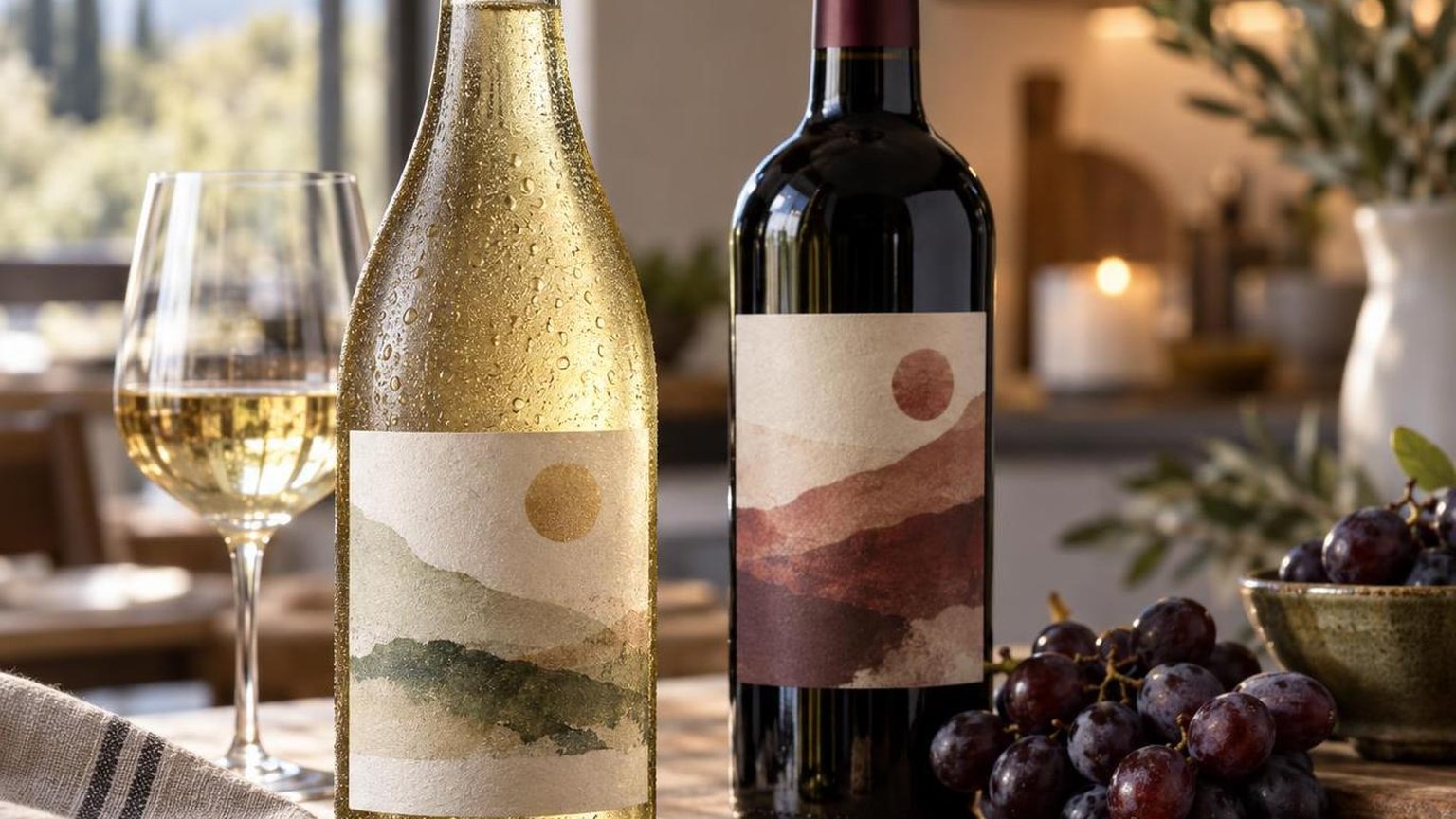
Wines That Belong at Room Temperature
“Room temperature” in wine terms means 60–68 °F (15–20 °C)—the ambient temperature of a European cellar, not a modern American living room set to 72–76 °F.
Serving full-bodied reds too warm mutes acidity and amplifies harsh alcohol.
Several red wine categories reach their aromatic and structural peak within this traditional range. Tannin structure, phenolic complexity, and volatile aroma compounds all respond directly to serving temperature.
Full-Bodied Reds: 63–68 °F (17–20 °C)
These wines contain higher tannin and alcohol levels—typically 13.5–15.5 % ABV. Serving them at the upper end of the range lets tannins soften perceptibly while preserving fruit concentration.
| Wine | Ideal Temp | Typical ABV | Key Reason |
| Cabernet Sauvignon (Napa) | 64–68 °F | 14.0–15.0 % | Allows complex tannin integration |
| Barolo (Nebbiolo) | 63–66 °F | 13.5–14.5 % | Opens tar and rose aromatics |
| Châteauneuf-du-Pape | 64–68 °F | 14.0–15.5 % | Balances high alcohol with spice |
| Malbec (Mendoza) | 63–66 °F | 13.5–14.5 % | Showcases dark-fruit density |
| Shiraz (Barossa) | 64–68 °F | 14.0–15.0 % | Controls pepper-forward volatility |
Medium-Bodied Reds: 60–65 °F (15–18 °C)
Wines like Sangiovese, Tempranillo, and Grenache sit slightly cooler. Their moderate tannin and higher natural acidity benefit from a temperature that preserves freshness without suppressing flavor.
- Chianti Classico: 60–64 °F—acidity stays lifted, cherry and herbal notes stay defined.
- Rioja Reserva: 62–65 °F—oak-derived vanillin aromas emerge cleanly without alcohol burn.
- Côtes du Rhône: 60–64 °F—keeps peppery Grenache-Syrah blends lively.
Why Modern Room Temperature Is Too Warm
A 2017 study in the Journal of Food Science confirmed that ethanol perception increases measurably above 68 °F. At 77 °F, tasters rated the same wine as significantly more alcoholic and less balanced.
American thermostats average 72 °F in summer. That means even reds intended for “room temperature” often need 15–20 minutes in the refrigerator before serving to drop 5–8 degrees.
Practical Tips
- Use an instant-read thermometer clipped to the glass—infrared models cost under $15 and read in two seconds.
- A standard 750 mL bottle loses roughly 2 °F every five minutes in a 38 °F refrigerator.
- Once poured, wine in a glass warms approximately 1 °F per minute at 72 °F ambient temperature.
- Decanting a cellar-cool red (55 °F) for 30 minutes typically brings it into the 62–65 °F sweet spot naturally.
No red wine benefits from being served at actual American room temperature. A brief chill before pouring consistently improves balance, restrains alcohol heat, and lets varietal character dominate the glass.
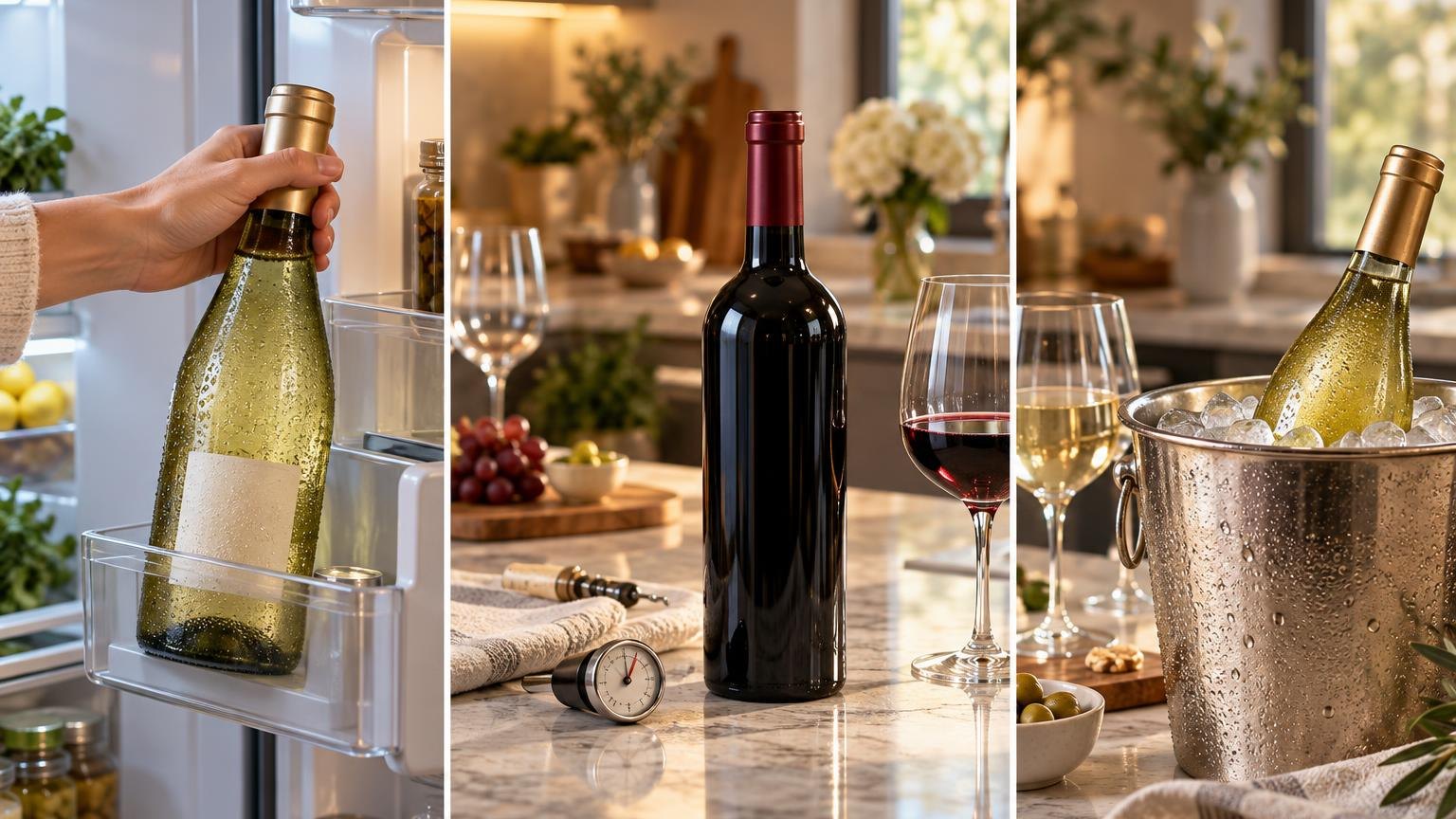
How Refrigeration Affects Flavor and Aroma
Temperature directly controls how volatile aroma compounds escape from wine into the air above the glass. Cold suppresses volatility; warmth amplifies it. Understanding the specific thresholds helps you serve every bottle at its expressive best.
The Science of Volatile Compounds
Wine contains over 200 identifiable aroma compounds, including esters, terpenes, and thiols. These molecules become airborne faster as temperature rises, roughly doubling in volatility for every 10°C (18°F) increase.
At standard refrigerator temperature—around 3–5°C (37–41°F)—most aromatic compounds remain locked in the liquid. The wine smells muted and tastes flat because your olfactory receptors receive fewer signals.
Tannin and Acidity Perception
Cold temperatures heighten the perception of acidity and tannin astringency. A full-bodied Cabernet Sauvignon served at 5°C will taste harsh and bitter compared to the same wine at 16–18°C (61–64°F).
Conversely, sweetness perception decreases as temperature drops. This is why dessert wines like Sauternes are served at 8–10°C—the chill balances residual sugar that would otherwise taste cloying.
Optimal Serving Temperatures by Style
| Wine Style | Ideal Serving Temp | Fridge Time Needed |
| Sparkling (Champagne, Cava) | 6–8°C (43–46°F) | 3–4 hours |
| Light white (Pinot Grigio, Sauvignon Blanc) | 7–10°C (45–50°F) | 2–3 hours |
| Full-bodied white (oaked Chardonnay) | 10–13°C (50–55°F) | 1–2 hours |
| Rosé | 8–12°C (46–54°F) | 2–3 hours |
| Light red (Pinot Noir, Gamay) | 12–14°C (54–57°F) | 30–45 minutes |
| Full-bodied red (Cabernet, Syrah) | 16–18°C (61–64°F) | Not recommended |
| Dessert wine (Sauternes, Port) | 8–12°C (46–54°F) | 2–3 hours |
The “20-Minute Rule”
A practical guideline: pull white wines from the refrigerator 20 minutes before serving. Place red wines in the refrigerator for 20 minutes before serving. This nudges both styles closer to their flavor-releasing sweet spot.
What Prolonged Cold Does to Aroma
- Tartrate crystals: Extended storage below 4°C can cause harmless potassium bitartrate crystals to form, altering mouthfeel slightly.
- Cork contraction: Temperatures below 5°C may cause corks to contract, allowing micro-oxidation that degrades delicate aromas over weeks.
- Fruit suppression: Research from the University of Bordeaux’s Institute of Vine and Wine Sciences (ISVV) confirms that fruity ester compounds become nearly imperceptible below 8°C.
Short-term refrigeration for a few hours before serving enhances freshness in whites and rosés. Long-term storage at kitchen-fridge temperatures, however, risks muting the very qualities that make a wine worth drinking.
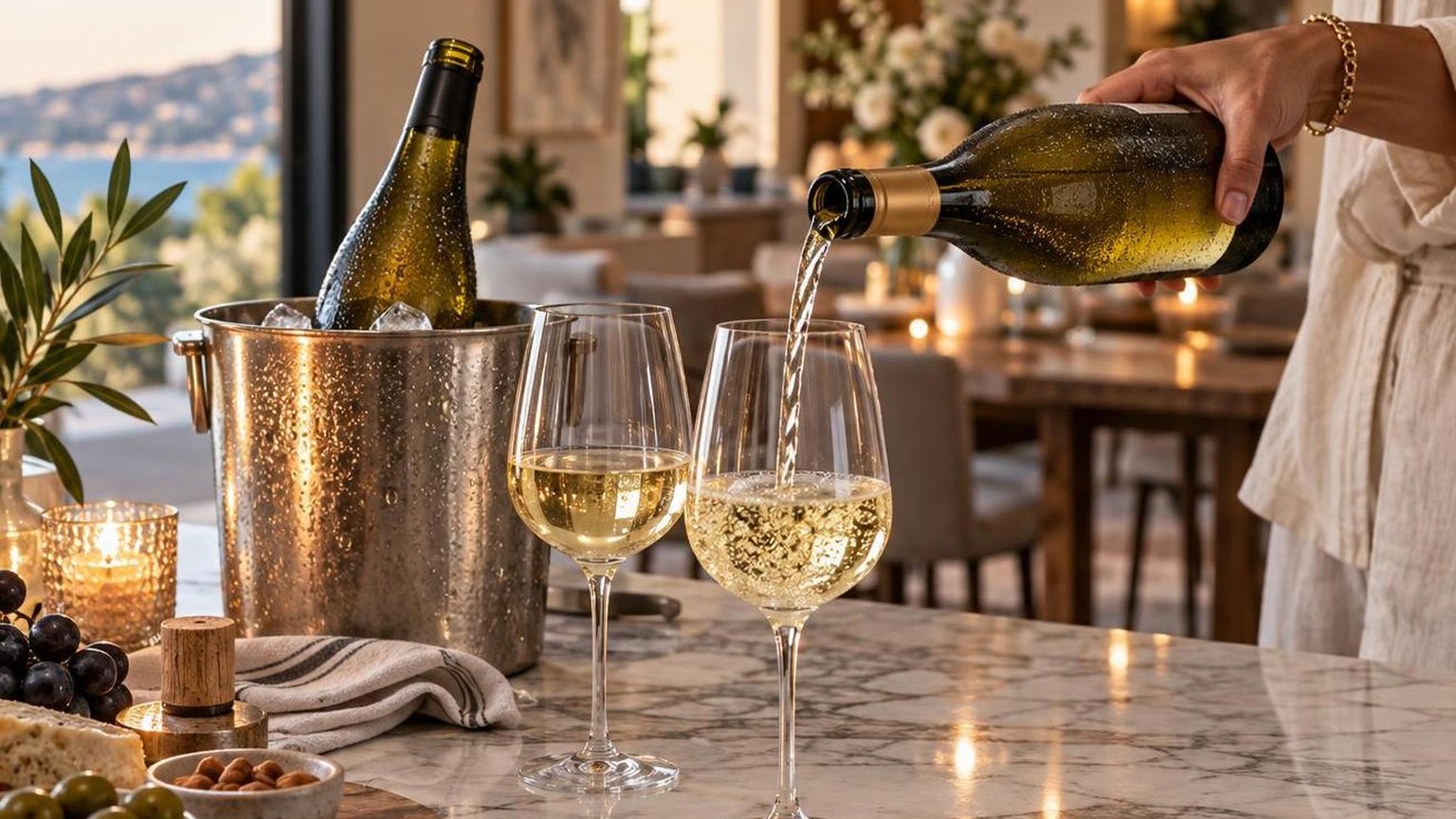
Long-Term Cellaring Versus Short-Term Chilling
Cellaring and chilling serve fundamentally different purposes. Cellaring ages wine over months or years at a stable temperature, while chilling brings a bottle to its ideal serving temperature in 20–45 minutes.
Confusing the two can damage wine or diminish its flavor.
Long-Term Cellaring Requirements
Wine intended for aging requires a constant temperature between 53°F and 57°F (12–14°C). The ideal target is 55°F (13°C), a figure endorsed by the Wine Storage Council and most professional sommeliers.
Humidity matters as much as temperature. Maintain 60–70% relative humidity to keep natural corks from drying out, which would allow oxygen ingress and premature oxidation.
Temperature fluctuations cause the most damage during cellaring. A swing of more than 5°F in a single day accelerates chemical reactions and can push wine past its peak years early.
| Factor | Long-Term Cellaring | Short-Term Chilling |
| Temperature range | 53–57°F (12–14°C) | 38–65°F (3–18°C), varies by style |
| Duration | Months to 20+ years | 20–45 minutes |
| Humidity | 60–70% required | Not critical |
| Bottle position | Horizontal (cork-sealed) | Any orientation |
| Light exposure | Near-total darkness | Brief exposure acceptable |
| Vibration | Must be minimized | Not a concern |
Short-Term Chilling Guidelines
Chilling targets the wine’s optimal serving temperature, not a storage temperature. Each style has a specific range that maximizes aroma expression and balances acidity, sweetness, and tannin perception.
| Wine Style | Serving Temperature | Fridge Time (from 70°F) |
| Sparkling wine | 38–45°F (3–7°C) | 2.5–3 hours |
| Light white / rosé | 44–50°F (7–10°C) | 1.5–2 hours |
| Full-bodied white | 50–55°F (10–13°C) | 1–1.5 hours |
| Light red (Pinot Noir) | 55–60°F (13–16°C) | 30–45 minutes |
| Full-bodied red | 60–65°F (16–18°C) | 20–30 minutes |
An ice-water bath chills wine roughly four times faster than a refrigerator. Submerging a bottle in ice water for 15 minutes achieves what takes about an hour in a standard fridge set to 37°F (3°C).
Why a Kitchen Refrigerator Fails for Cellaring
Standard refrigerators operate between 35°F and 38°F (2–3°C)—roughly 17–20 degrees colder than ideal cellaring temperature. This suppresses aromatic development and slows flavor evolution.
Refrigerator compressors generate constant vibration, which disturbs sediment in aging wines. The low humidity inside—typically around 30%—dries corks within weeks, risking oxidation.
- Store wine in a dedicated wine fridge or cellar set to 55°F for aging beyond 6 months.
- Use a kitchen refrigerator only for short-term chilling or storing open bottles for 3–5 days.
- Never freeze wine to speed chilling; expansion can crack the bottle or push the cork out at around 15°F (−9°C).
Treating cellaring and chilling as distinct practices protects your investment in age-worthy bottles while ensuring every wine reaches the glass at its peak temperature.
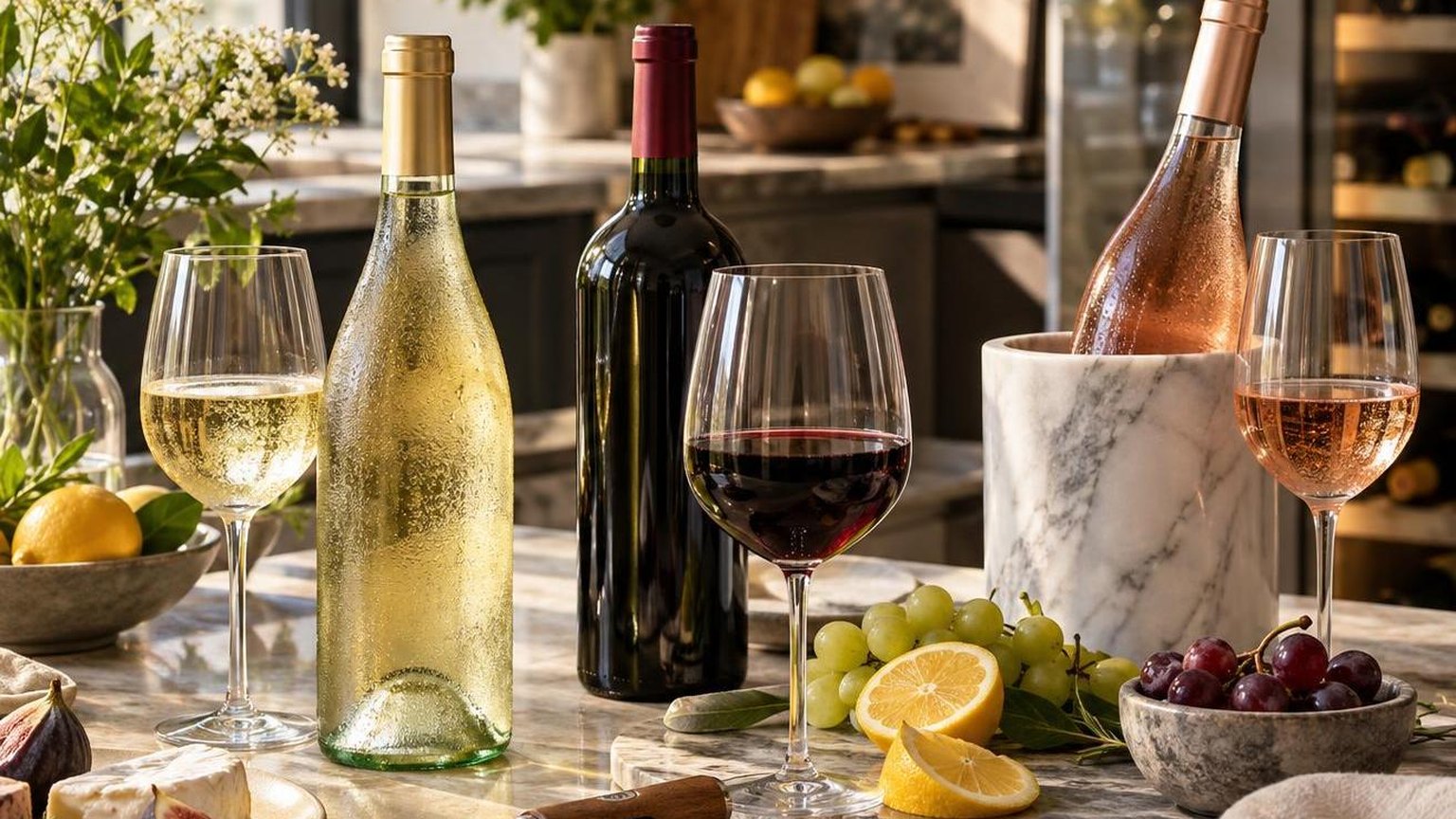
Questions People Ask Most
Are you supposed to refrigerate wine after opening?
Yes — every opened wine, red or white, should go into the refrigerator.
Re-corked and chilled, an opened red lasts 3–5 days and an opened white 5–7 days because cold slows oxidation by roughly 50% compared with a 21 °C countertop.
Without refrigeration, most wines become noticeably flat within 24–48 hours.
Should you refrigerate unopened red wine?
Standard kitchen refrigerators run at about 1–4 °C, which is too cold for long-term red wine storage. Unopened reds should be kept at 12–18 °C in a dark, vibration-free spot; a dedicated wine fridge set to 13 °C is ideal.
Prolonged exposure below 4 °C can dull aromatics and, in extreme cases, push the cork out as the liquid contracts.
How long before serving should you refrigerate white wine?
Place a room-temperature bottle of white wine in the refrigerator about 2–2.5 hours before serving to reach the recommended 7–10 °C.
For a faster chill, submerge the bottle in an ice-water bath with a tablespoon of salt — this method brings the wine to serving temperature in roughly 15–20 minutes.
Avoid the freezer; a forgotten bottle can freeze and crack at around −5 °C.
Does refrigerating red wine before serving improve it?
Light-bodied reds like Pinot Noir and Beaujolais benefit from 30–45 minutes in the refrigerator, bringing them to 13–16 °C, which lifts fruit aromatics and tightens structure.
Full-bodied reds such as Cabernet Sauvignon and Barolo taste best at 16–18 °C, so they typically need only 15 minutes of chilling if they have been stored in a warm room.
Serving any red above 20 °C amplifies alcohol perception and masks acidity.
Can refrigeration damage wine over time?
A standard kitchen fridge has humidity levels around 30–40%, well below the 60–70% recommended for cork preservation.
Over weeks or months, that dry environment can shrink a natural cork, letting air seep in and oxidize the wine prematurely.
For storage beyond two weeks, use a wine cooler that maintains both proper temperature (10–14 °C) and humidity above 50%.
Should sparkling wine always be refrigerated?
Sparkling wines like Champagne and Prosecco should be served at 6–8 °C, so refrigerating them for 3–4 hours before opening is standard practice.
Once opened, reseal with a hinged Champagne stopper — studies from the Centre Interprofessionnel des Vins de Champagne show this preserves up to 90% of carbonation for 24–48 hours in the fridge.
Storing non-vintage sparkling wine upright in a refrigerator for up to a month before an event is perfectly fine.
Do fortified wines like Port and Sherry need refrigeration?
Oxidative styles — Tawny Port, Oloroso Sherry, Madeira — are already heavily exposed to oxygen during production, so an opened bottle survives 4–8 weeks at cool room temperature (below 18 °C).
Ruby Port and Fino/Manzanilla Sherry are more fragile; refrigerate them after opening and consume within 1–2 weeks.
The higher alcohol (17–22% ABV) in fortified wines provides a natural preservative effect that table wines at 12–14% ABV lack.
Is it bad to move wine in and out of the refrigerator repeatedly?
Repeated temperature cycling — swinging 15 °C or more between fridge and counter — forces the liquid and air pocket inside the bottle to expand and contract, which can compromise the cork seal over time.
A single chill-and-return cycle for an unopened bottle is harmless, but doing it regularly accelerates premature aging. The safest approach is to refrigerate only the bottles you plan to drink within the next day or two.
- How Many Ounces in a Wine Pour?
- Does Wine Get You Drunk Fast?
- Aperol vs Campari
- Good Semi Sweet Wine Bottles for Easy Drinking
- Good Wine with Pizza for Every Type of Slice
- How Many Calories In A Glass Of Merlot?
- How Many Ounces Is A Wine Bottle?
- Cheap Sweet Wines with High Alcohol Content
- How Many Calories In A Bottle Of Merlot?
- All Alcohol Guides
- UC Davis Department of Viticulture & Enology – Wine Storage Conditions** (2023)
- USDA FoodData Central – Wine, table, all** (2024)
- National Institutes of Health / PubMed – Effect of Storage Temperature on Wine Quality** (2019)
- FDA – Are You Storing Food Safely?** (2023)
- Cornell University College of Agriculture – Wine Chemistry and Storage** (2022)
- The Wine Institute – Wine Storage & Serving Guidelines** (2023)
- Journal of Agricultural and Food Chemistry (ACS Publications) – Influence of Temperature on Phenolic Compounds and Antioxidant Capacity of Wines During Storage** (2020)