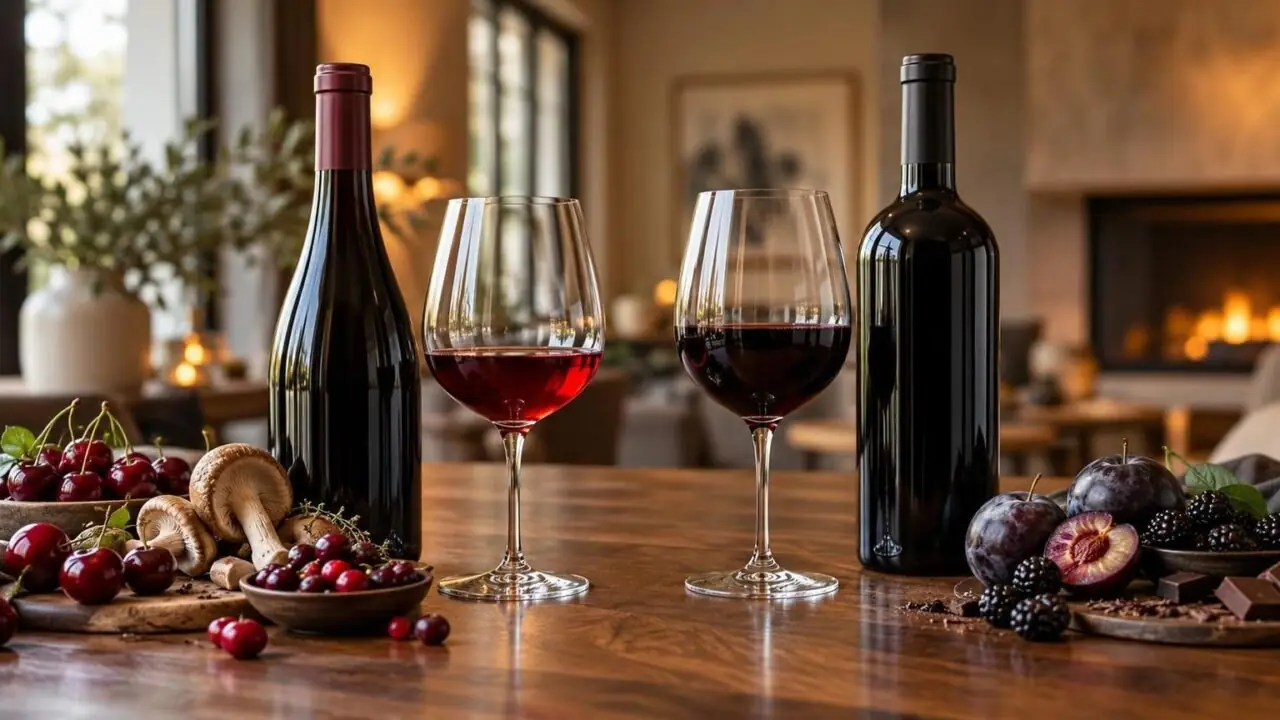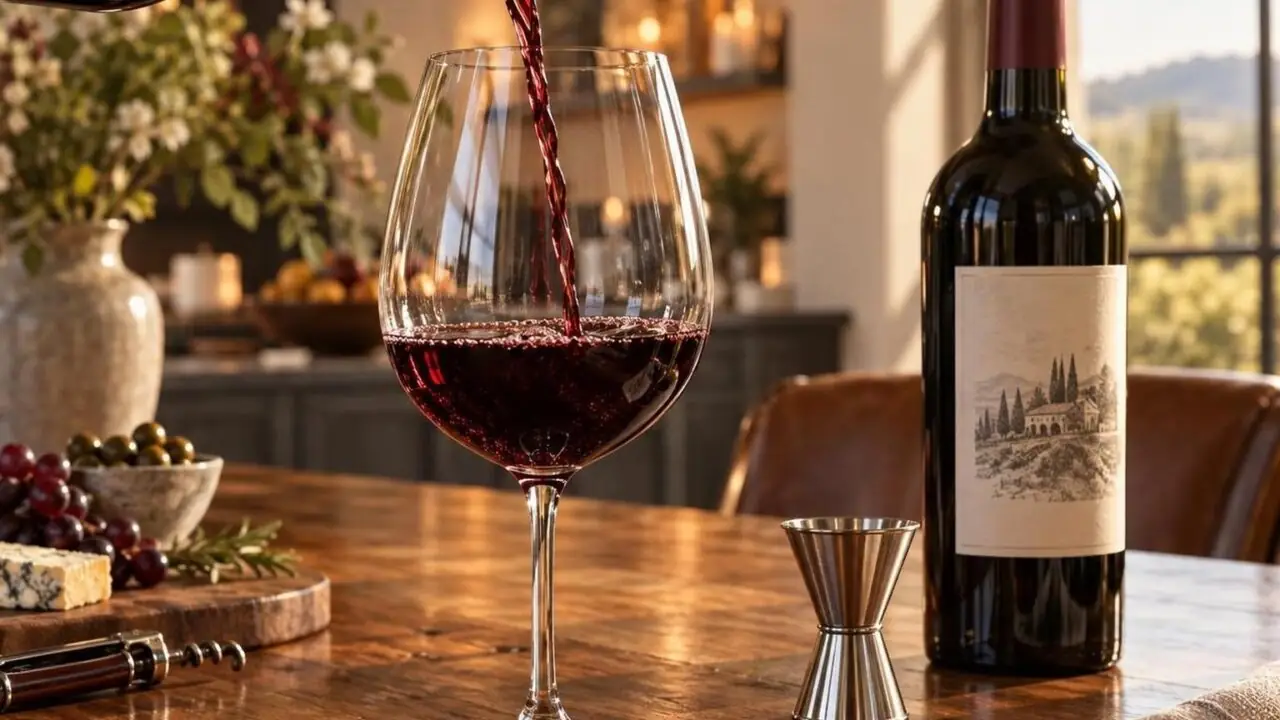
How Many Ounces in a Wine Pour? is 5 ounces for a standard U.S. restaurant serving. That benchmark matches the National Institute on Alcohol Abuse and Alcoholism definition of one standard drink for table wine at about 12% alcohol by volume.
Actual pours vary by setting. Tasting rooms often serve 1 to 2 ounces, wine flights commonly use 2-ounce pours, and generous restaurant pours may reach 6 ounces. Glass size can make a standard pour look smaller than it is.
Knowing the ounce count helps compare alcohol intake, bottle yield, menu pricing, and service consistency. A 750 mL bottle holds about 25.4 ounces, enough for five standard 5-ounce pours with a small remainder.
Standard Wine Pour in Ounces
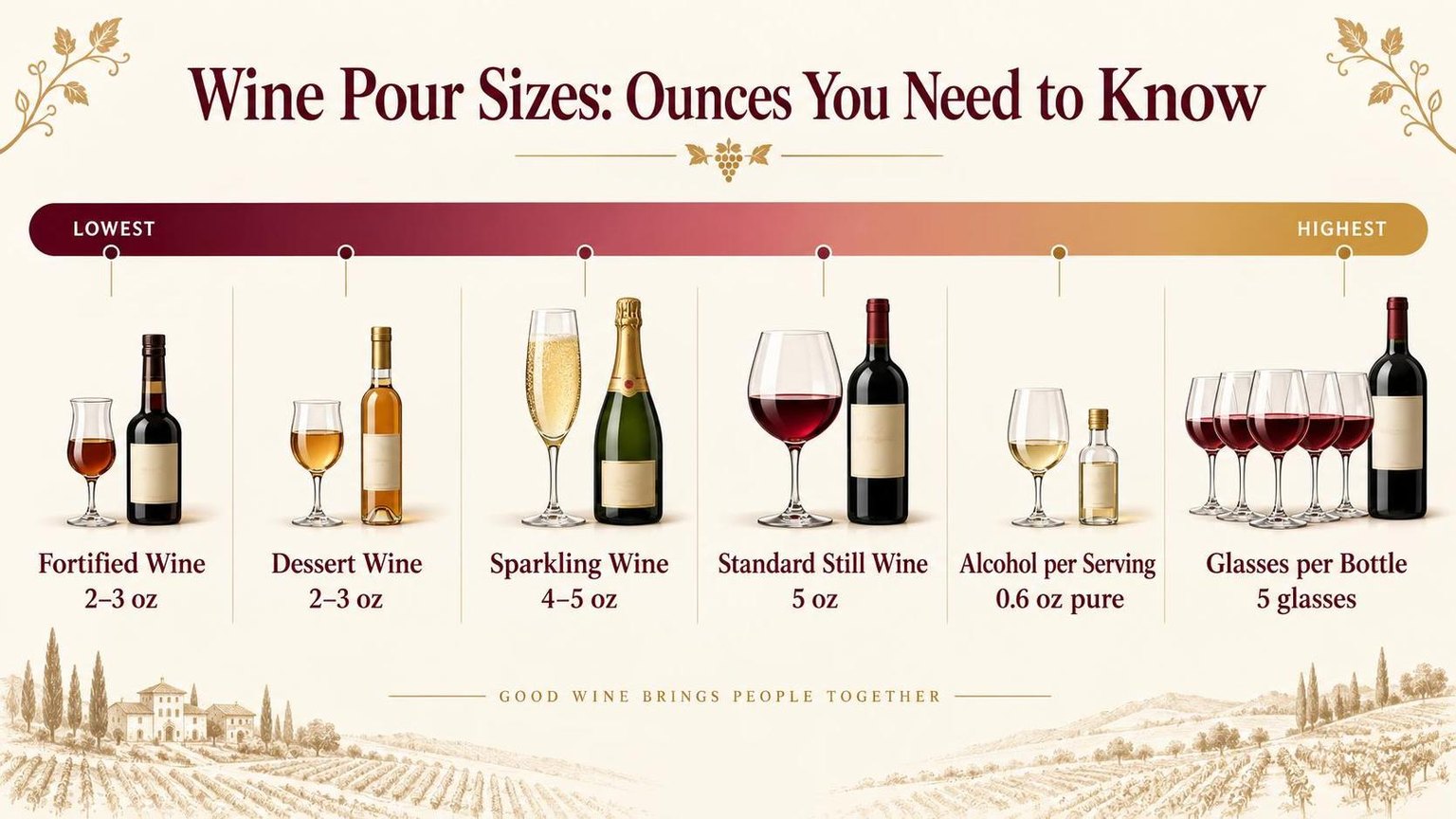
A standard wine pour is 5 ounces (148 ml). This measurement, established by the National Institute on Alcohol Abuse and Alcoholism (NIAAA), represents one serving of wine at approximately 12% ABV and contains roughly 0.6 ounces of pure alcohol.
The 5-ounce standard applies across most restaurants, bars, and tasting rooms in the United States. It fills a standard 750 ml bottle into exactly five glasses, making inventory and pricing straightforward for establishments.
Pour Sizes by Wine Type
Not every wine gets the same pour. Higher-alcohol and dessert wines receive smaller pours to keep alcohol content per serving consistent. Sparkling wines follow their own convention tied to flute capacity.
| Wine Type | Standard Pour (oz) | Typical ABV | Alcohol per Serving (oz) |
| Still red wine | 5 | 13–15% | 0.65–0.75 |
| Still white wine | 5 | 11–14% | 0.55–0.70 |
| Rosé | 5 | 11–13% | 0.55–0.65 |
| Sparkling wine | 4–5 | 11–12.5% | 0.44–0.63 |
| Fortified wine (Port, Sherry) | 2–3 | 17–22% | 0.34–0.66 |
| Dessert wine (Sauternes, Tokaji) | 2–3 | 13–15% | 0.26–0.45 |
Why 5 Ounces Matters
The USDA’s Dietary Guidelines for Americans define moderate drinking as up to one drink per day for women and two for men. Each “drink” equals 5 ounces of 12% ABV wine — making pour accuracy a public health benchmark.
Overpouring by just 1 ounce per glass pushes a single serving to 6 ounces. Over three glasses, that adds a full extra serving’s worth of alcohol — nearly 0.6 additional ounces of pure ethanol consumed unknowingly.
How Restaurants Measure Pours
Professional establishments use several methods to ensure consistency:
- Pour spouts with measured flow: Calibrated to deliver 5 ounces at a controlled rate, common in high-volume bars.
- Marked glassware: Some wine glasses feature a discreet 5-ounce line etched or printed on the interior.
- Free pouring with training: Experienced servers count to 4–5 seconds at a steady tilt, then verify periodically with a jigger.
- Digital wine dispensers: Systems like Enomatic pour exact volumes — typically 1 oz, 3 oz, or 5 oz — using nitrogen preservation and electronic metering.
Visual Reference for a 5-Ounce Pour
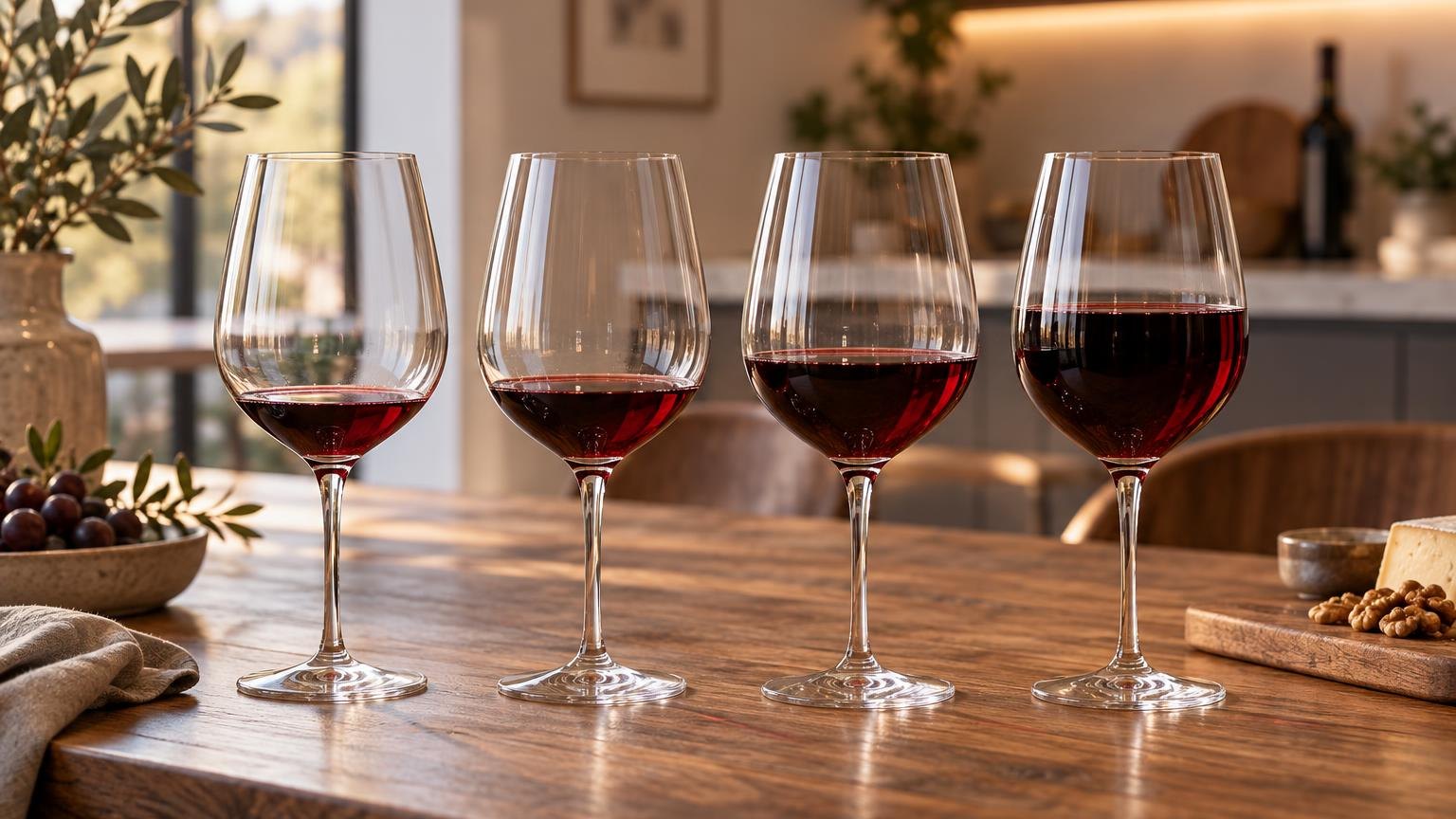
In a standard 20-ounce Bordeaux glass, 5 ounces fills roughly one-quarter of the bowl. In a smaller 12-ounce all-purpose glass, it reaches just below the widest point of the bowl.
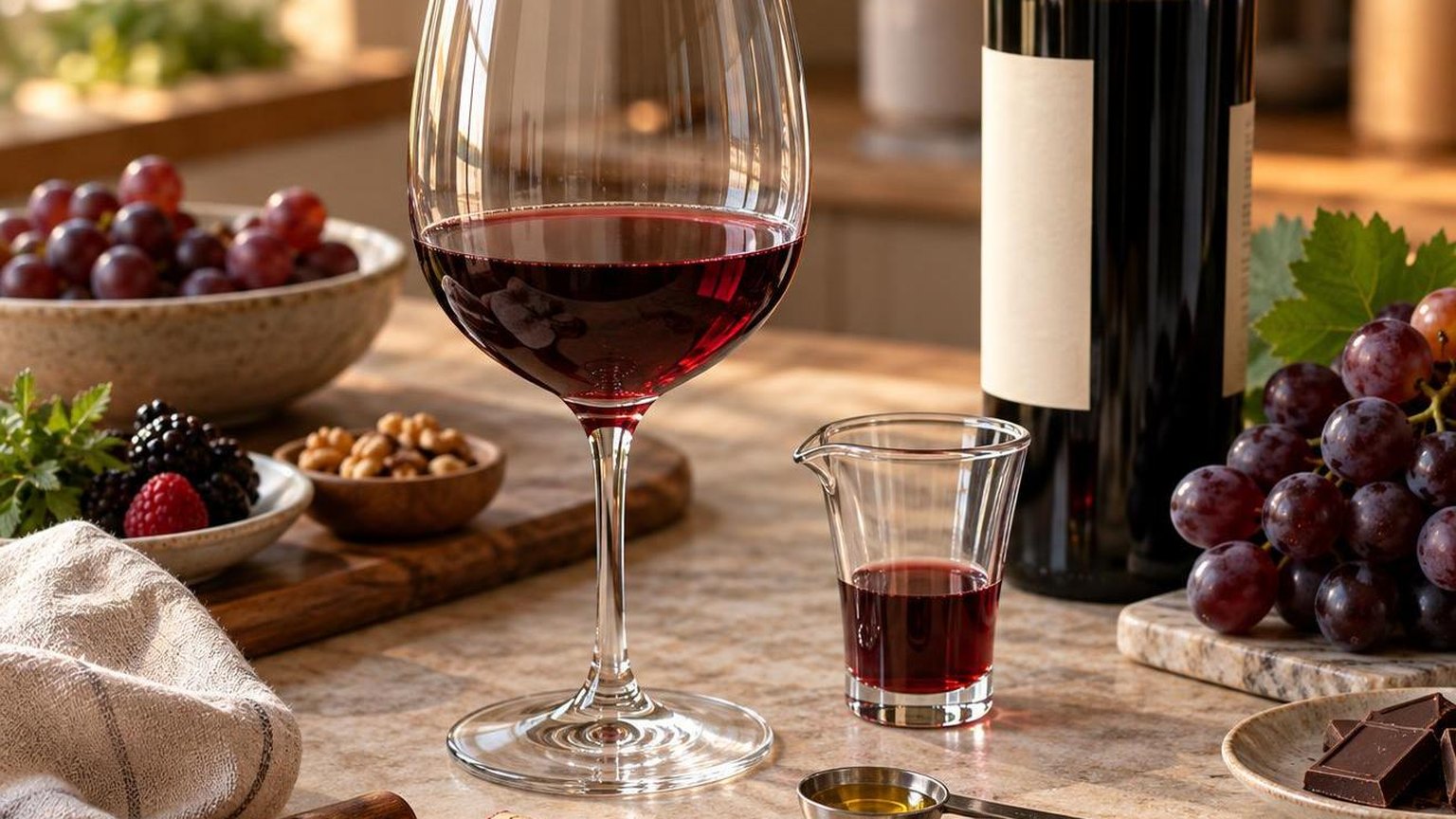
A useful at-home trick: 5 ounces equals approximately two-thirds of a standard measuring cup (which holds 8 ounces). Measuring once and noting the fill line on your preferred glass eliminates guesswork for future pours.
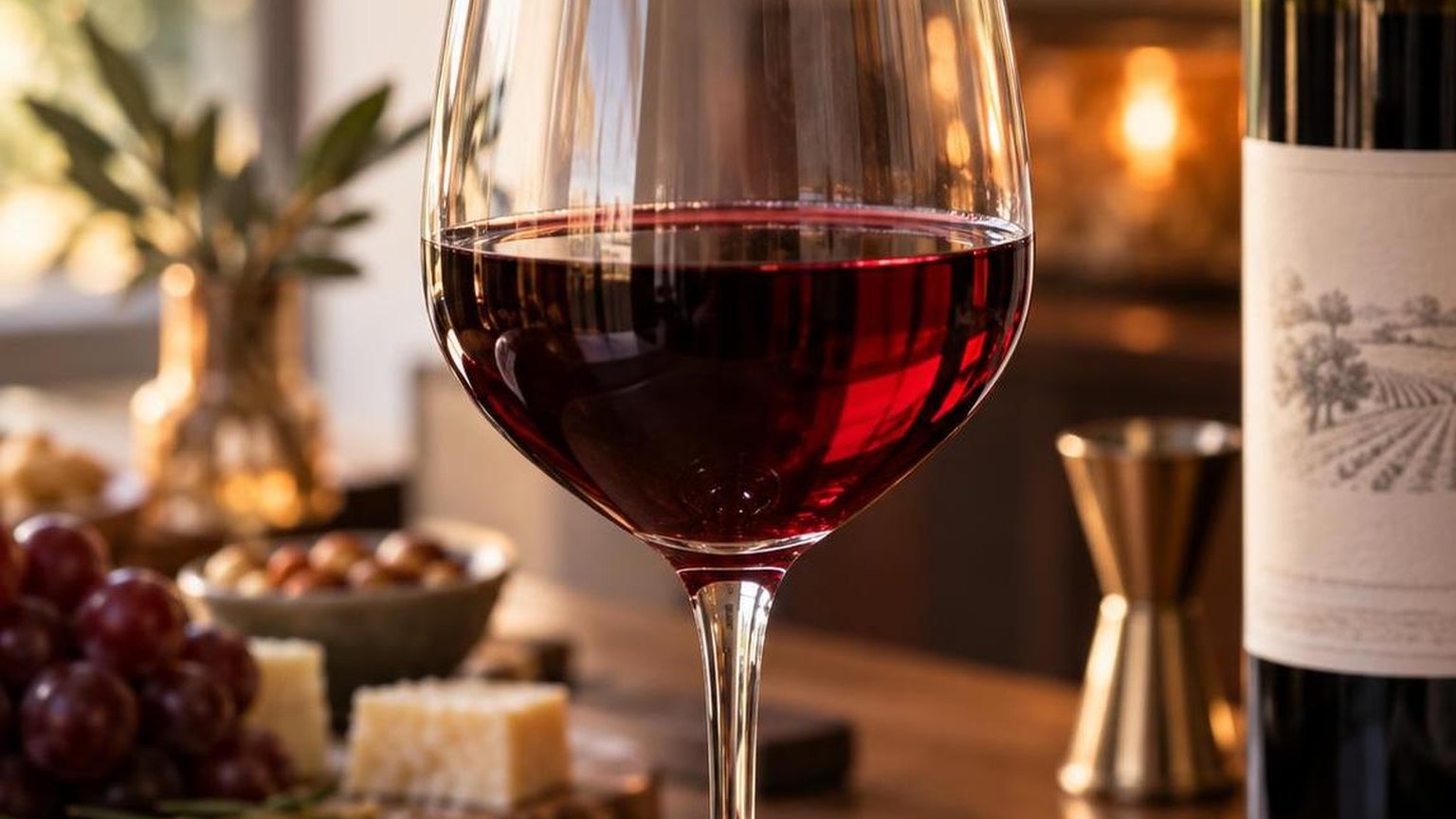
Restaurant Wine Pours by Glass Size
Restaurant wine pours follow established industry standards tied directly to glassware capacity. The glass size determines the pour volume, the visual appeal, and the aeration space needed for proper tasting.
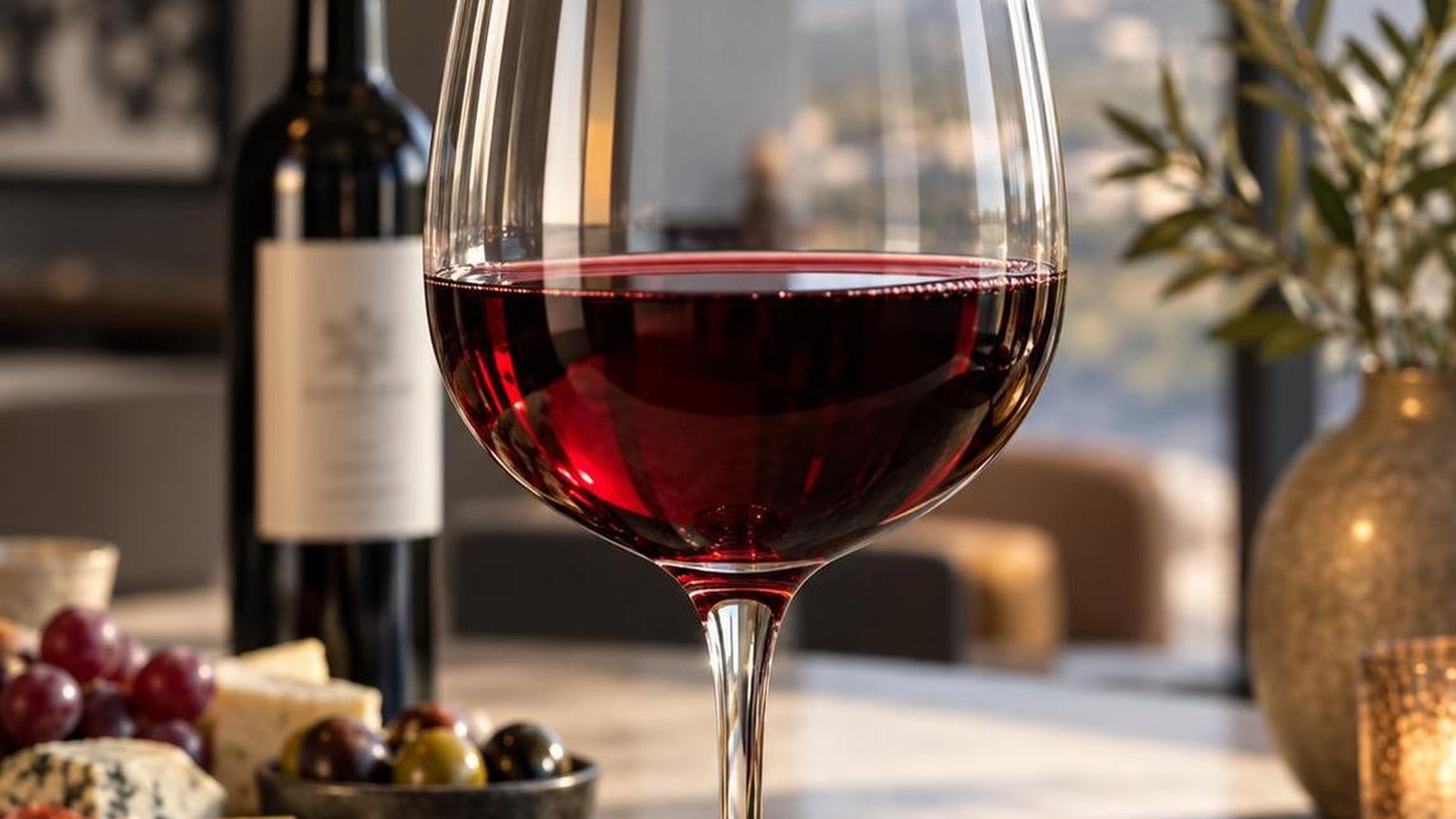
The standard restaurant wine pour is 5 ounces (148 ml), as defined by the USDA Dietary Guidelines and used by the TTB for alcohol labeling purposes.
Standard Pours by Glass Type
Different glass sizes accommodate different pour volumes while maintaining the ideal ratio of wine to empty space. Most sommeliers target filling a glass to roughly one-third capacity.
| Glass Size | Standard Pour | Fill Level | Typical Wine Style |
| 10–12 oz glass | 5 oz | ~45–50% | White wine, rosé |
| 14–16 oz glass | 5 oz | ~31–36% | Light to medium reds |
| 18–22 oz Bordeaux glass | 5–6 oz | ~23–33% | Full-bodied reds (Cabernet, Merlot) |
| 22–28 oz Burgundy glass | 5–6 oz | ~18–27% | Pinot Noir, Nebbiolo |
| 6–9 oz flute | 4–5 oz | ~55–70% | Champagne, Prosecco |
| 2–3 oz dessert glass | 2–3 oz | ~75–100% | Port, Sauternes, Sherry |
Why Glass Size Matters for Wine Service
Larger bowls give aromatic wines room to breathe. A 22-ounce Burgundy glass holding just 5 ounces of Pinot Noir leaves 77% of the bowl for swirling and aroma concentration.
Smaller glasses serve the opposite function. A narrow Champagne flute preserves carbonation by minimizing the wine’s surface area exposure to air, which is why flutes are filled higher than red wine glasses.
Restaurant Pricing and Pour Economics
A standard 750 ml bottle yields exactly five 5-ounce pours. Restaurants typically price each glass at 50–70% of the full bottle’s retail cost, making by-the-glass service their highest-margin wine offering.
- Cost-per-pour target: Most restaurants aim for a 20–30% beverage cost, meaning a glass priced at $15 uses wine costing $3–$4.50 per pour.
- Overpouring losses: Adding just 1 extra ounce per glass reduces a bottle from 5 servings to 4.2, increasing cost-per-pour by roughly 19%.
- Measured pours: Many establishments use pour spouts calibrated to 5 ounces or marked carafes to ensure consistency across staff.
Tasting Pours vs. Full Pours
Wine bars and tasting rooms commonly offer 2- to 3-ounce tasting pours, generating 8 to 12 servings per bottle. Flight formats typically serve three to four wines at 2 ounces each, totaling 6–8 ounces across the set.
Some upscale restaurants now use Coravin or wine preservation systems to offer premium bottles by the glass. These systems extract wine without removing the cork, extending bottle life from days to weeks.
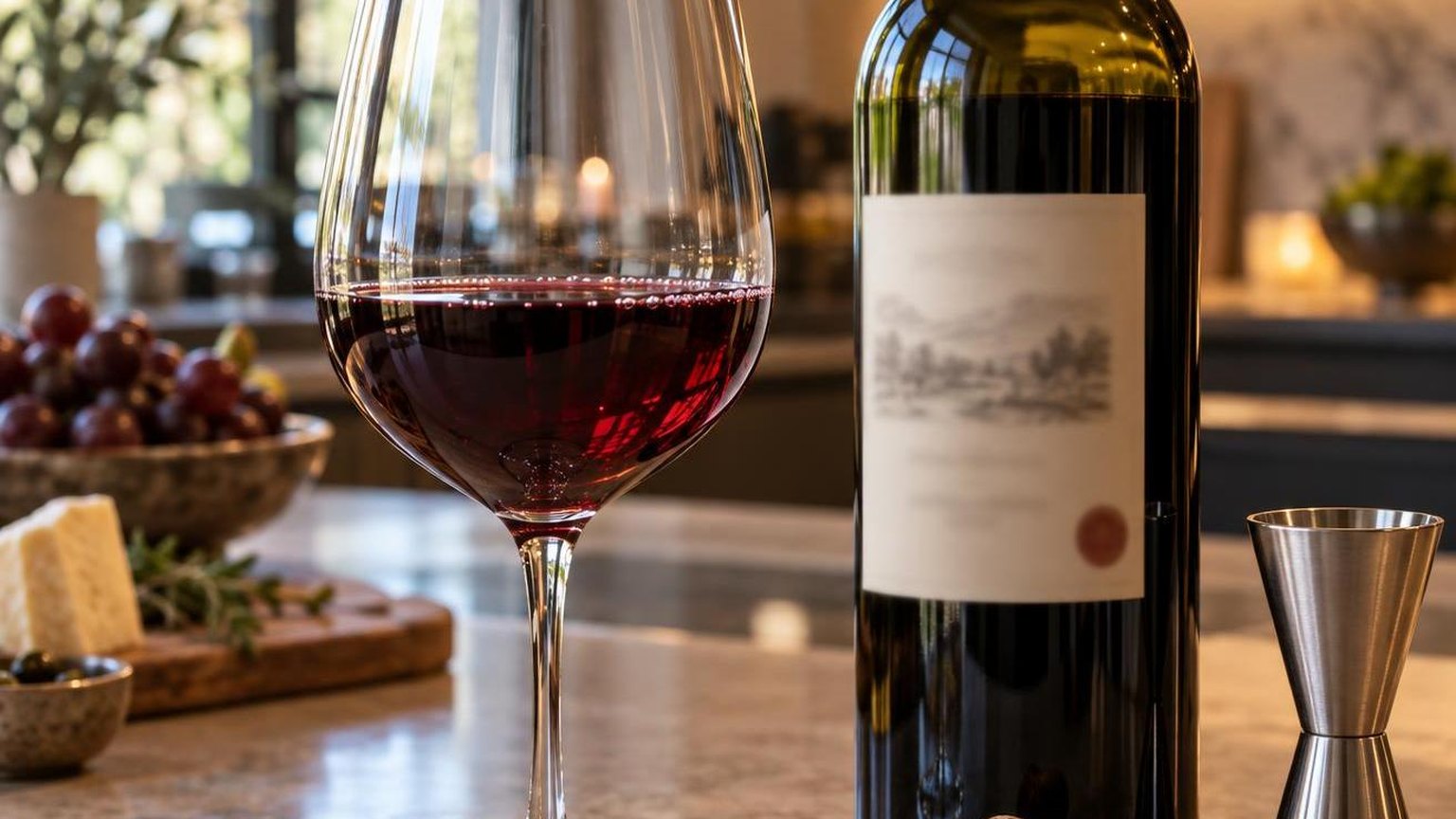
Tasting Pour Versus Full Pour
A tasting pour and a full pour serve fundamentally different purposes. The tasting pour exists for evaluation and comparison, while the full pour is designed for drinking pleasure alongside a meal.
Their volumes, glass fill levels, and cost structures differ significantly.
Standard Volume Comparison
| Pour Type | Volume (oz) | Volume (mL) | Servings per 750 mL Bottle |
| Tasting pour | 2–3 oz | 60–90 mL | 8–12 |
| Standard full pour | 5 oz | 148 mL | 5 |
| Generous full pour | 6 oz | 177 mL | 4 |
The 5-oz full pour is the benchmark recognized by the National Institute on Alcohol Abuse and Alcoholism as one standard drink of wine at 12% ABV.
When Tasting Pours Apply
- Wine bars and flights: Most wine bars serve flights of 3–4 wines at 2 oz each, totaling 6–8 oz across the set.
- Tasting rooms: Winery tasting rooms in Napa Valley and Sonoma typically pour 1.5–2 oz per wine across 5–6 selections, keeping total consumption around one full glass.
- Restaurant wine service: A server’s “taste” pour for the person who ordered the bottle is roughly 1 oz—just enough to check for faults like cork taint.
- Competitions and professional evaluation: Certified sommeliers and judges at events sanctioned by organizations like the Court of Master Sommeliers work with pours of 1.5–2 oz.
Glass Fill Levels
A 5-oz pour fills a standard 12-oz wine glass to roughly the widest point of the bowl—about 40% full. This leaves room for swirling and aroma concentration.
A 2-oz tasting pour fills that same glass to barely one-sixth capacity. The proportionally larger headspace actually intensifies aromatic perception during evaluation.
Cost Implications
| Pour Type | Typical Price Range | Cost per Ounce |
| Tasting pour (2 oz) | $4–$8 | $2.00–$4.00 |
| Full glass pour (5 oz) | $10–$18 | $2.00–$3.60 |
| Tasting flight (4 × 2 oz) | $15–$30 | $1.88–$3.75 |
Ounce-for-ounce, tasting pours often cost slightly more than full pours. Restaurants factor in additional labor, glassware, and open-bottle spoilage risk when pricing smaller servings.
Choosing Between Them
Order a tasting pour when exploring unfamiliar grapes, comparing vintages, or limiting intake. Choose a full 5-oz pour when you have identified a wine you want to enjoy through an entire course.
Many wine bars now offer both options for every bottle on their list, enabled by preservation systems like Coravin that keep opened bottles fresh for weeks.
This flexibility has made tasting pours far more accessible outside traditional winery settings.
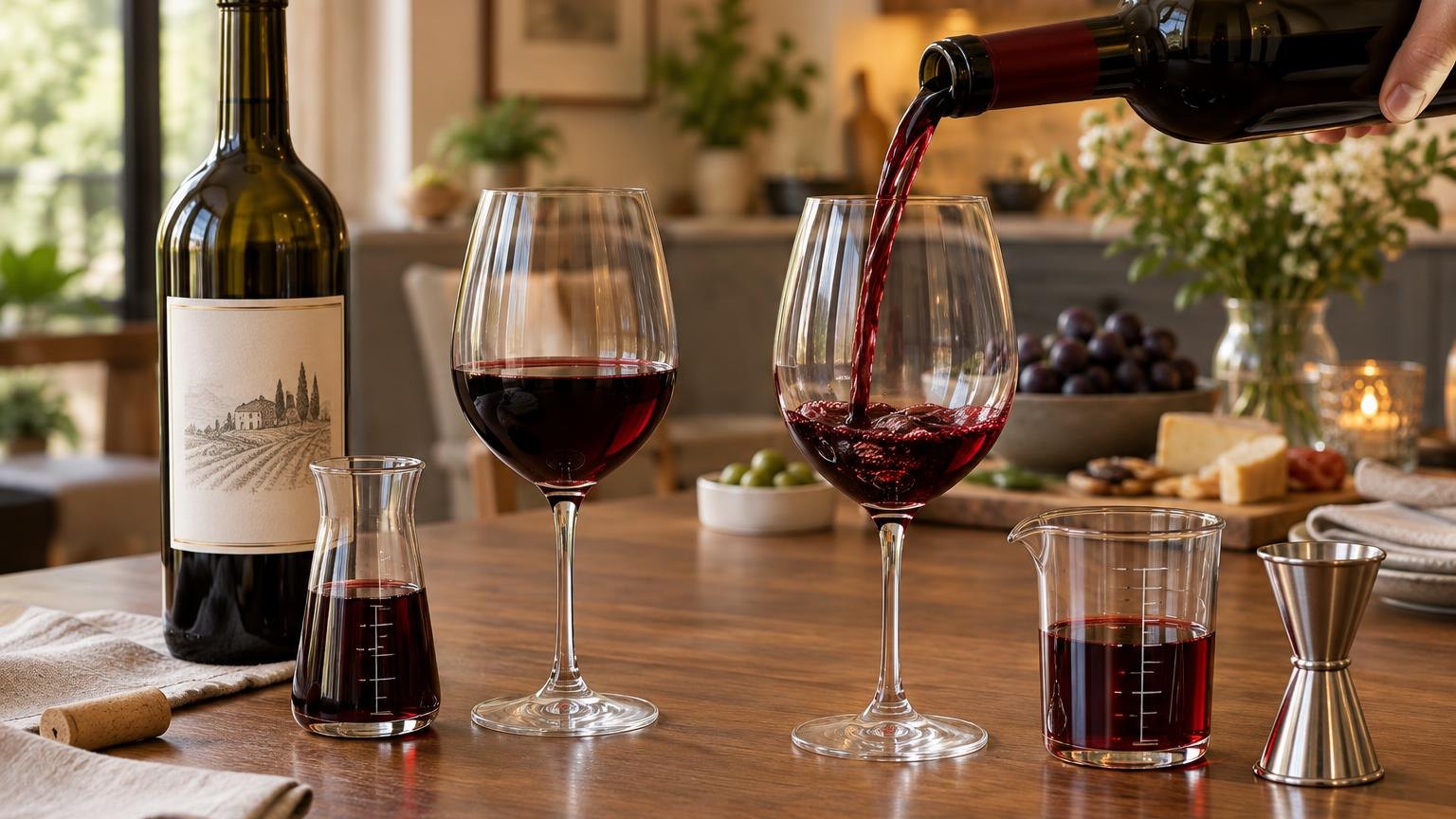
Bottle Servings From Common Pour Sizes
A standard 750 ml wine bottle holds 25.4 fluid ounces. The number of glasses you get depends entirely on your pour size, which varies by setting—restaurant, tasting room, or home dinner table.
| Pour Size | Ounces | Glasses per 750 ml Bottle | Typical Setting |
| Tasting pour | 2 oz | 12 | Wine tastings, flights |
| Small pour | 3 oz | 8 | Multi-course pairings |
| Standard restaurant pour | 5 oz | 5 | Restaurants, bars |
| Generous home pour | 6 oz | 4 | Casual home dining |
| Large pour | 8 oz | 3 | Oversized stemware at home |
The 5-Ounce Standard Explained
The 5-ounce pour is the U.S. industry benchmark. The USDA and the National Institute on Alcohol Abuse and Alcoholism (NIAAA) both define one standard drink of wine as 5 fluid ounces at 12% ABV.
At 5 ounces per glass, a 750 ml bottle yields exactly 5.08 servings. Restaurants round down to 5 full glasses, leaving roughly 0.4 ounces—less than a tablespoon—as acceptable loss.
Tasting Pours and Wine Flights
Tasting rooms and wine bars typically pour 2 to 2.5 ounces per sample. A single bottle covers 10 to 12 tastes, which is why four-wine flights priced at $15–$25 remain profitable for the house.
Sommelier-led pairing dinners often use 3-ounce pours across 5 to 8 courses. One bottle serves an entire multi-course sequence for two to three guests.
Home Pours Run Larger
Studies from Iowa State University and Cornell found that self-poured glasses average 6 to 7.7 ounces—well above the 5-ounce standard. Wider bowl glasses, red wine color, and holding the glass while pouring all increased volume.
At a 6-ounce home pour, a bottle delivers just 4 glasses. At 8 ounces—common with oversized Burgundy stems—you get only 3 glasses per bottle.
Planning Bottles for Events
For party planning with standard 5-ounce pours, use this formula: multiply the number of guests by expected glasses per person, then divide by 5.
- Dinner party (4 guests, 3 glasses each): 12 servings ÷ 5 = 2.4 bottles → buy 3
- Cocktail reception (20 guests, 2 glasses each): 40 servings ÷ 5 = 8 bottles
- Wedding (100 guests, 2.5 glasses each): 250 servings ÷ 5 = 50 bottles → roughly 4.2 cases
Always round up. Opened bottles lose freshness within 3 to 5 days even when re-corked and refrigerated, but running short mid-event is a worse outcome than having a few leftover bottles.
Magnum and Large-Format Math
A 1.5-liter magnum holds 50.7 ounces—double a standard bottle—yielding 10 standard pours. A 3-liter double magnum delivers 20 glasses. Large formats also age more gracefully due to a lower oxygen-to-wine ratio.
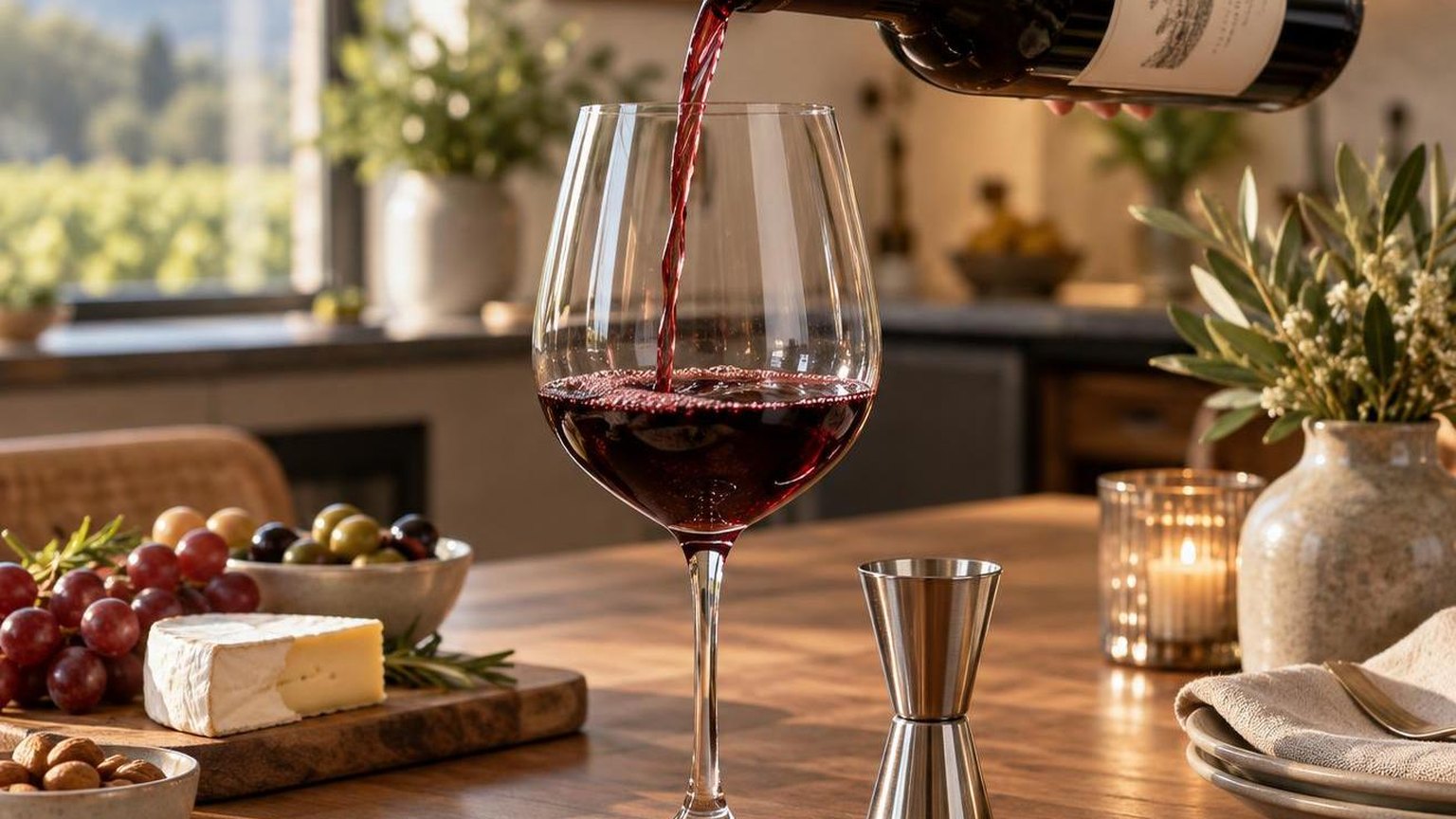
Measuring a Consistent Wine Pour
A consistent wine pour protects profit margins and ensures every guest receives the same experience. Restaurants that implement measured pouring systems reduce wine waste by 10–15%, according to beverage cost management studies.
Standard Pour Volumes by Glass Type
The standard wine pour in the United States is 5 ounces, as defined by the USDA Dietary Guidelines. However, actual pour sizes vary by wine type and service context.
| Wine Type | Standard Pour (oz) | Glass Size (oz) | Fill Level |
| Red wine | 5 | 12–22 | About one-third |
| White wine | 5 | 10–14 | About one-half |
| Sparkling wine | 4–5 | 6–10 | About three-quarters |
| Fortified wine (Port, Sherry) | 2–3 | 6–8 | About one-third |
| Dessert wine | 2–3 | 6–8 | About one-third |
| Wine tasting pour | 1.5–2 | Varies | Minimal |
Methods for Measuring Pours
Three primary tools help bartenders and servers deliver accurate pours every time. Each method balances speed, accuracy, and cost differently.
- Measured pour spouts: These spouts auto-stop at a preset volume—typically 1, 1.5, or 2 ounces. For wine, models calibrated to 5 ounces exist but are less common in fine dining.
- Free pouring with a count: Most trained bartenders use a 4-count method, where each count equals roughly 1.25 ounces. A 4-count delivers 5 ounces. Accuracy depends heavily on individual technique and regular calibration checks.
- Jiggers and measuring cups: A 5-ounce jigger provides the most precise measurement. This method is slower but eliminates guesswork entirely.
- Carafe or decanter service: Pre-measuring wine into a 5-ounce carafe tableside guarantees accuracy while adding a visual element to the presentation.
The Line Test
Some wine glasses feature a discreet 5-ounce pour line etched into the glass. These are increasingly common in restaurants and required by law in several countries, including the UK and Australia.
In the United States, pour lines are voluntary. However, establishments using lined glassware report 8–12% less overpouring compared to unmarked glasses.
Why Accuracy Matters Financially
A standard 750 mL bottle yields exactly five 5-ounce (148 mL) pours. Overpouring by just half an ounce per glass means losing an entire pour per bottle—effectively giving away 20% of revenue.
For a restaurant selling 40 bottles per week at $50 average retail, a half-ounce overpour costs roughly $400 weekly—over $20,000 annually in lost revenue.
Regular pour tests keep staff calibrated. The method is simple: pour into a marked glass or measuring cup after every shift change and compare against the 5-ounce target.
Managers who conduct weekly pour audits consistently maintain beverage costs within the industry-standard 20–25% range.
Common Questions
How many ounces is a standard wine pour?
A standard wine pour is 5 ounces (148 ml), the measure used by the USDA and TTB to define one serving of wine at roughly 12% ABV. This 5-oz pour yields approximately five glasses from a standard 750 ml (25.4 oz) bottle.
Most restaurants and wine bars calibrate their pours to this exact volume for consistent alcohol service and accurate cost control.
How many ounces is a wine tasting pour?
A tasting pour is typically 2 ounces (60 ml), though some wineries and tasting rooms serve 1.5 to 2.5 ounces depending on the number of wines in a flight.
This smaller volume allows guests to evaluate four to six wines without exceeding one or two standard drinks. At formal wine competitions, pours are often closer to 1.5 ounces to keep judges’ palates sharp across dozens of entries.
Is a pour of dessert or fortified wine the same size?
No. Dessert and fortified wines such as Port, Sherry, and Sauternes are poured at 2 to 3 ounces because their alcohol content ranges from 15% to 22% ABV—significantly higher than table wine.
A 3-oz pour of 20% ABV Port contains roughly the same amount of alcohol (0.6 oz of pure ethanol) as a 5-oz glass of 12% ABV Pinot Noir. Restaurants price these smaller pours accordingly, often using 2-oz or 3-oz lined glassware.
How do restaurants measure a wine pour accurately?
Most establishments use one of three methods: free-pouring with a trained four-count (each count ≈ 1.25 oz), measured pourers that stop automatically at 5 ounces, or pre-marked pour lines etched into the glass.
Free-pouring is fastest but introduces variance of up to ±0.5 oz per glass, which across 100 pours can cost a restaurant one to two bottles of lost revenue.
High-volume wine bars increasingly use metered dispensing systems like Coravin or Enomatic to guarantee exact pours and reduce waste.
How many ounces is a generous or “restaurant large” pour?
Many restaurants offer a large pour of 8 to 9 ounces, sometimes marketed as a “generous glass” or “250 ml pour.” At 9 ounces.
You’re consuming nearly two standard servings of alcohol in a single glass—equivalent to about 1.8 standard drinks at 12% ABV.
The EU standardized its large wine serve at 250 ml (8.45 oz), and several US restaurant groups have adopted similar sizing to give guests a clear half-bottle option.
How many calories are in a 5-ounce wine pour?
A 5-oz pour of dry table wine at 12–14% ABV contains approximately 120 to 130 calories, with alcohol itself contributing about 7 calories per gram.
Sweeter wines climb higher: a 5-oz glass of off-dry Riesling with 2% residual sugar reaches roughly 140–150 calories due to the added sugar content (about 10 g per glass).
Fortified wines pack even more—a 3-oz pour of Ruby Port at 20% ABV delivers around 140 calories despite the smaller serving size.
Keep Exploring
- What Makes Wine Expensive?
- How Many Calories In A Glass Of Cabernet? Answer By Expert
- Cheap Wine That Gets You Drunk
- Biggest Glass of Wine Meme
- How Many Calories In A Bottle Of Wine? Get the Answer
- All Alcohol Guides
- National Institute on Alcohol Abuse and Alcoholism (2025)
- Centers for Disease Control and Prevention (2024)
- Dietary Guidelines for Americans, 2020–2025 (2020)
- Harvard T.H. Chan School of Public Health (2023)
- Mayo Clinic (2023)
- National Health Service (2023)
- National Academies of Sciences, Engineering, and Medicine (2025)
- Alcohol and Tobacco Tax and Trade Bureau (2024)
- Wine & Spirit Education Trust (2022)