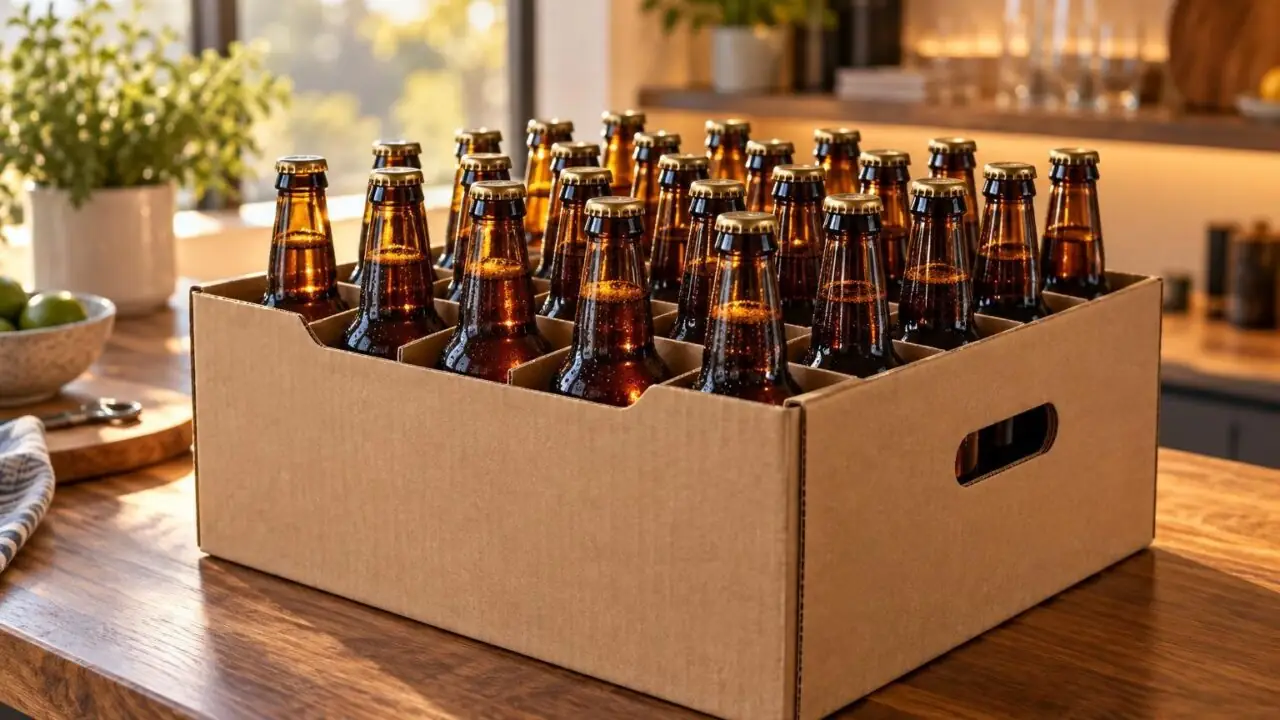
How Many Beers in a Case? is 24 beers. In the U.S., a standard beer case usually means twenty-four 12-ounce cans or bottles, though some breweries and retailers also sell 6-pack, 12-pack, 15-pack, 18-pack, and 30-pack formats labeled differently.
For buying, party planning, or stocking a cooler, count the container size first, then the package count. A standard 24-pack equals 288 fluid ounces, or 2.25 gallons of beer.
Craft beer, imports, and larger bottles may change the total volume even when the case count looks familiar.
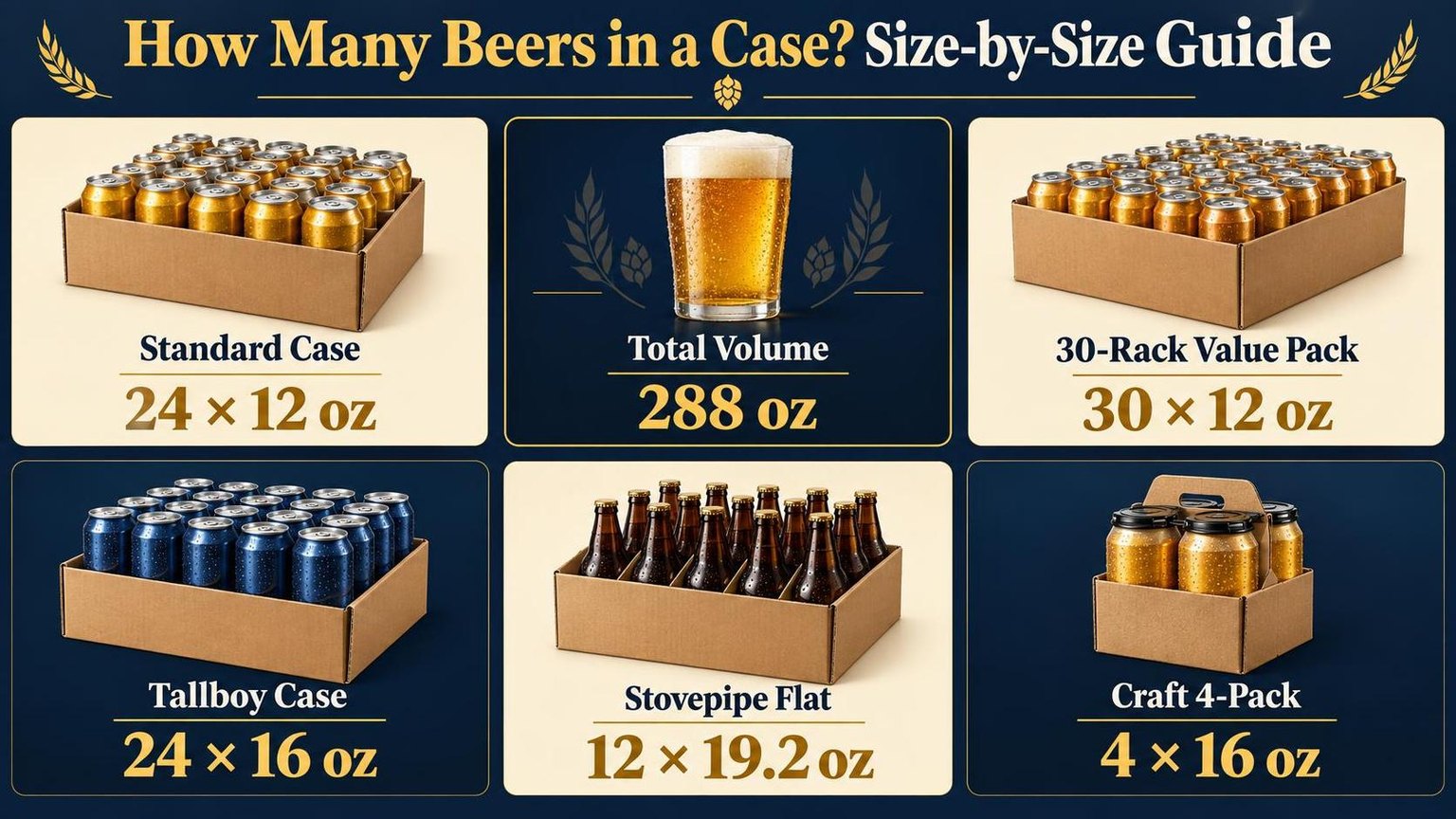
Standard Beers Per Case
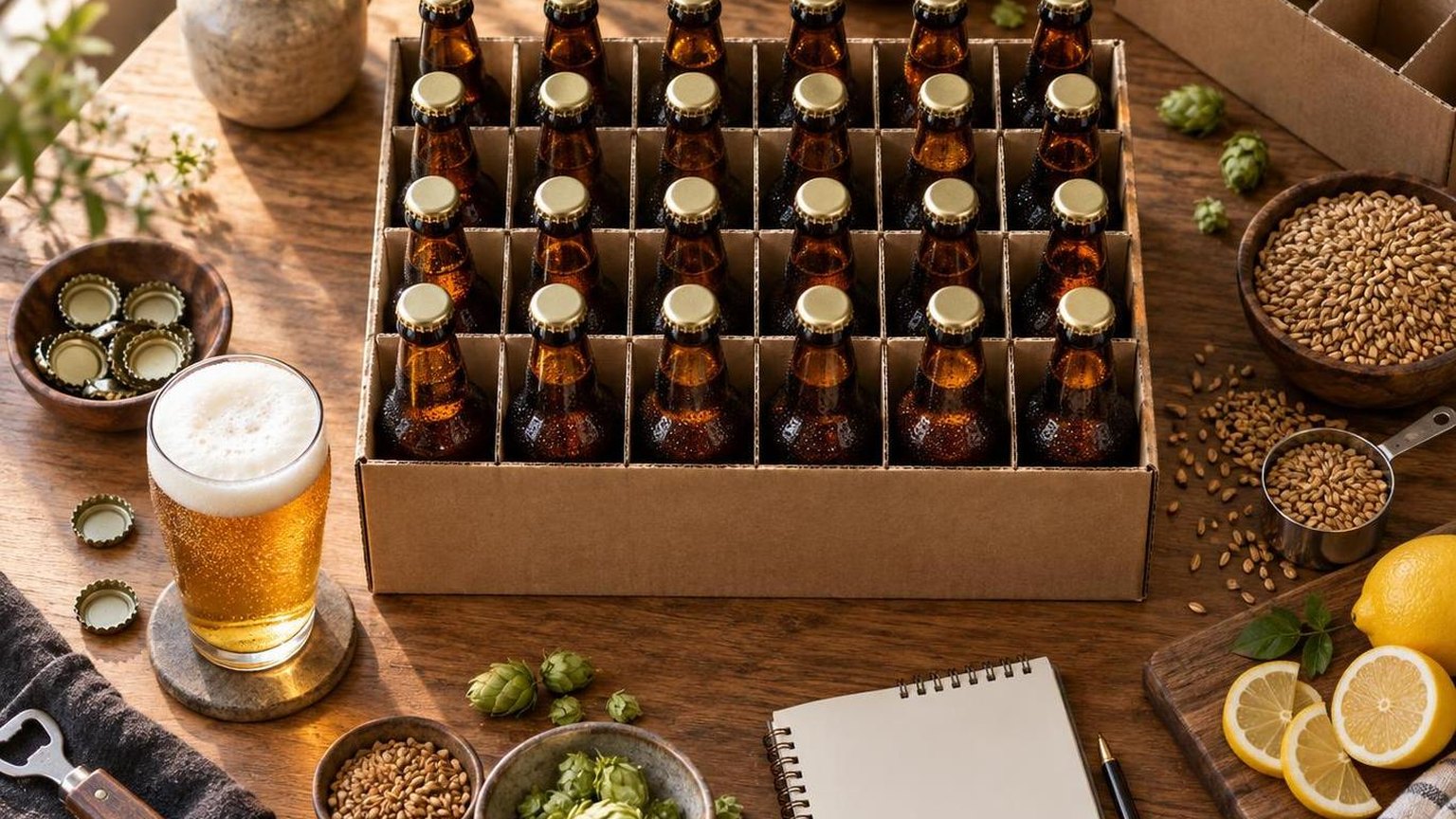
A standard case of beer in the United States contains 24 bottles or cans. This has been the industry norm since the post-Prohibition era, when breweries standardized packaging for efficient distribution and retail stacking on pallets.
However, “case” sizes vary by container format, brewery, and region. The 24-unit case is standard but far from the only option sold at retail.
Common Case and Pack Sizes
| Pack Format | Units | Typical Container | Total Volume (oz) |
| Standard case | 24 | 12 oz cans or bottles | 288 oz |
| Half case (suitcase) | 12 | 12 oz cans or bottles | 144 oz |
| Flat / rack | 24 | 12 oz cans (loose) | 288 oz |
| 30-rack | 30 | 12 oz cans | 360 oz |
| Craft 4-pack | 4 | 16 oz cans | 64 oz |
| Craft 6-pack | 6 | 12 oz cans or bottles | 72 oz |
| Tallboy case | 24 | 16 oz cans | 384 oz |
Major domestic brands like Bud Light, Coors Light, and Miller Lite commonly sell 24-packs and 30-racks. The 30-rack format is especially popular for value-oriented purchasing.
Why 24 Became the Standard
Brewery logistics drove the number. A case of 24 twelve-ounce bottles weighs roughly 36 pounds, manageable for warehouse workers. Cases of 24 also divide evenly onto standard 48 × 40-inch pallets, typically stacked 80 to 100 cases per pallet.
Before cans became widespread in the 1960s, bottles were packed in wooden crates of 24. That convention carried forward when cardboard cases replaced wood.
Craft Beer Exceptions
Craft breweries rarely sell full 24-unit cases at retail. The most common craft formats are:
- 4-packs of 16 oz cans — standard for IPAs and stouts from breweries like Tree House, Alchemist, and Other Half
- 6-packs of 12 oz cans or bottles — used by Sierra Nevada, Dogfish Head, and most mid-size craft producers
- 12-packs of 12 oz cans — increasingly adopted by brands like Athletic Brewing and Firestone Walker
Ordering a “case” from a craft brewery’s wholesale catalog typically means four 6-packs (24 total units) packed in a single shipper box, maintaining the 24-unit standard for distribution purposes.
When shopping, always check the unit count on the packaging. A “case” at a warehouse club like Costco may contain 36 cans, while a “case” from a specialty bottle shop might hold just 12.
Case Counts by Beer Size
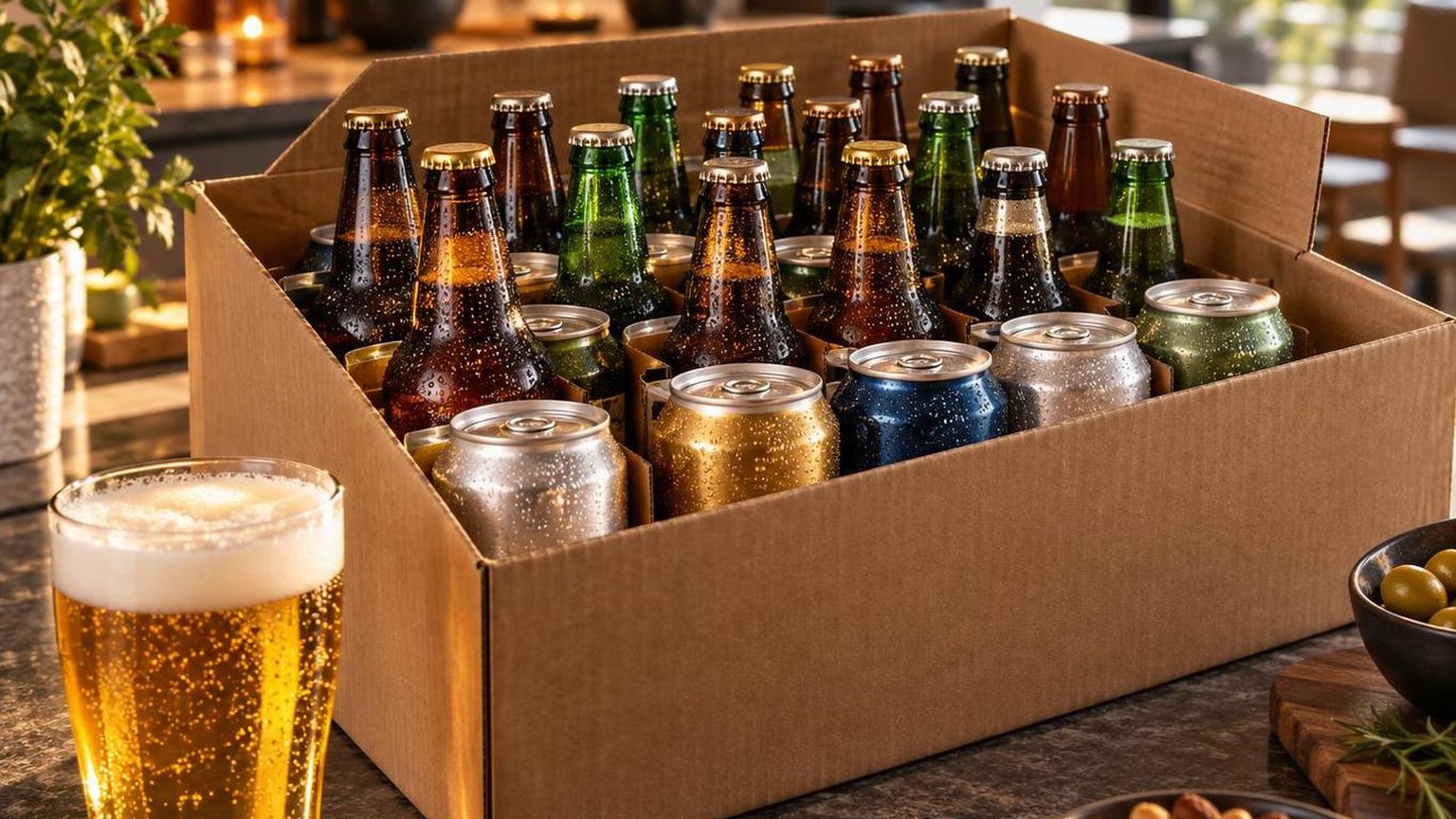
The number of beers in a case depends entirely on the container size. A standard American case holds 24 cans or bottles of 12 oz beer, but cases of larger formats contain fewer units to keep shipping weight manageable.
| Container Size | Units per Case | Total Volume per Case |
| 7 oz (Pony bottle) | 24 | 168 oz (1.31 gal) |
| 8 oz (Nip / Small can) | 24 | 192 oz (1.50 gal) |
| 12 oz (Standard can/bottle) | 24 | 288 oz (2.25 gal) |
| 16 oz (Tallboy can) | 24 | 384 oz (3.00 gal) |
| 19.2 oz (Stovepipe can) | 12 | 230.4 oz (1.80 gal) |
| 22 oz (Bomber bottle) | 12 | 264 oz (2.06 gal) |
| 24 oz (Tall can) | 12 | 288 oz (2.25 gal) |
| 32 oz (Crowler / Quart) | 12 | 384 oz (3.00 gal) |
| 40 oz (Malt liquor bottle) | 12 | 480 oz (3.75 gal) |
Standard 12 oz Cases
The 24-pack of 12 oz units is the industry baseline. Domestic brands like Bud Light, Coors Light, and Miller Lite all use this configuration for their primary case packaging.
Total liquid in a standard case equals 288 fluid ounces—exactly 2.25 gallons. That works out to roughly 18.9 standard 355 ml metric servings.
Tallboy and Stovepipe Formats
Tallboy 16 oz cans are typically sold in cases of 24, yielding 384 oz total. The increasingly popular 19.2 oz stovepipe can—favored by craft breweries—ships in flats of 12.
Stovepipe cases gained traction after 2018 when single-serve craft sales surged. Each 19.2 oz can holds exactly one pint plus 3.2 oz.
Large-Format Bottles
Bombers (22 oz) and 750 ml bottles (25.4 oz) are packed 12 per case. Belgian-style breweries often use 750 ml bottles, matching standard wine bottle dimensions for cellar storage.
- 12-pack vs. case: A 12-pack is a half-case. Retailers price full 24-unit cases 8–15% lower per unit than two separate 12-packs.
- 30-rack: Some domestic brands sell 30-packs of 12 oz cans—not technically a “case” but a common bulk format weighing approximately 22 lbs.
- Craft 4-packs: Four-packs of 16 oz cans are retail units, not cases. A full case contains six 4-packs (24 cans total).
When calculating event needs, use the 288 oz standard case as your baseline: one case serves roughly 16 people at two beers each.
Half Cases and Suitcase Packs
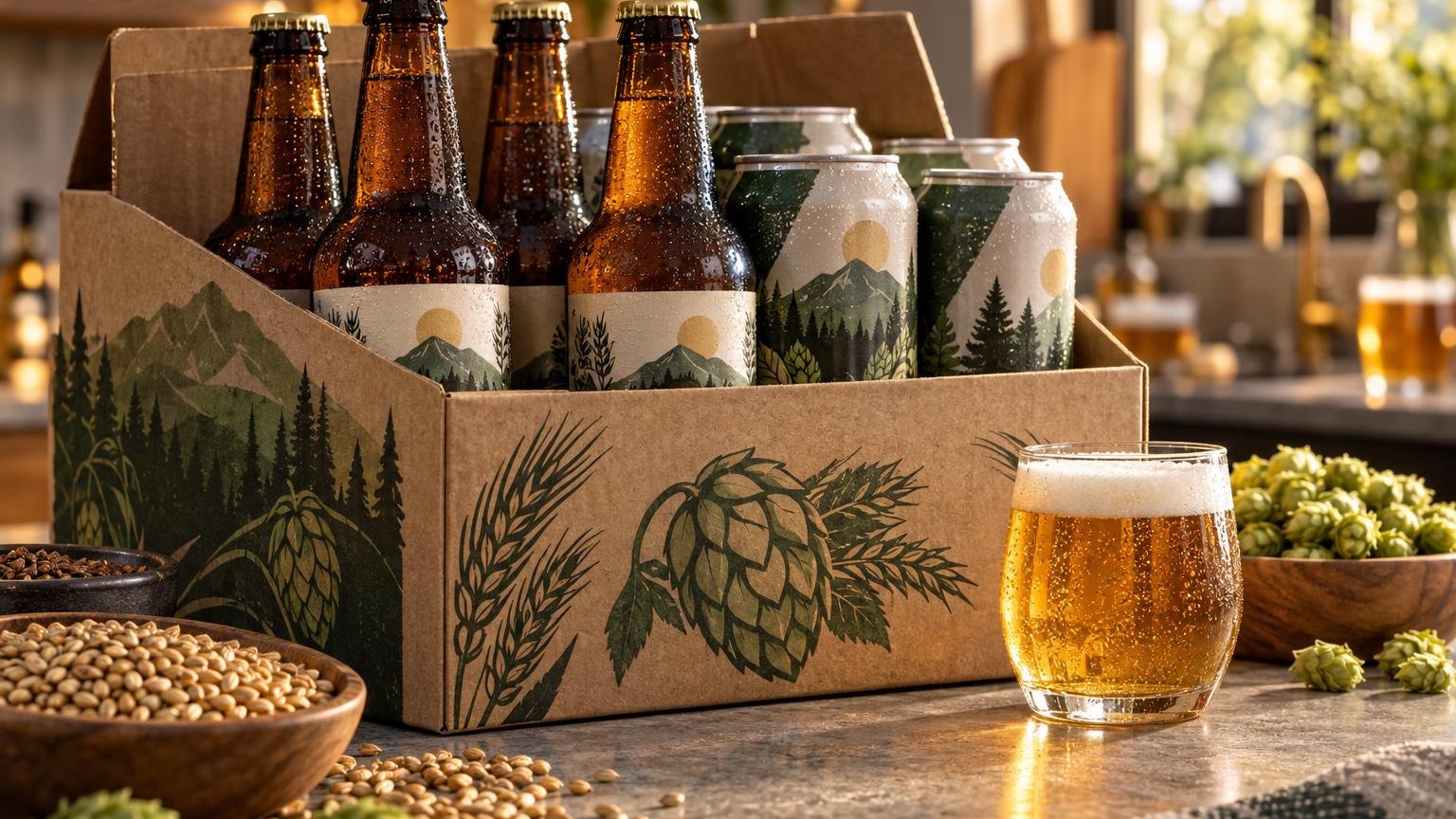
A standard case holds 24 beers, but breweries and retailers package beer in several other configurations. Two of the most common alternatives are the half case (12 pack) and the suitcase pack (24 or 30 cans in a flat, handled box).
Half Case: 12 Beers
A half case contains exactly 12 bottles or cans. It weighs roughly 10–12 pounds for 12-oz cans and around 18–20 pounds for 12-oz glass bottles, including packaging.
Half cases dominate craft beer retail. According to the Brewers Association, 12-packs account for a significant share of off-premise craft beer sales, often priced between $15 and $22 depending on brand and region.
- Standard configuration: 12 × 12-oz containers (144 total ounces)
- Common carriers: Cardboard box, molded paperboard tray with handle, or shrink-wrapped bundle
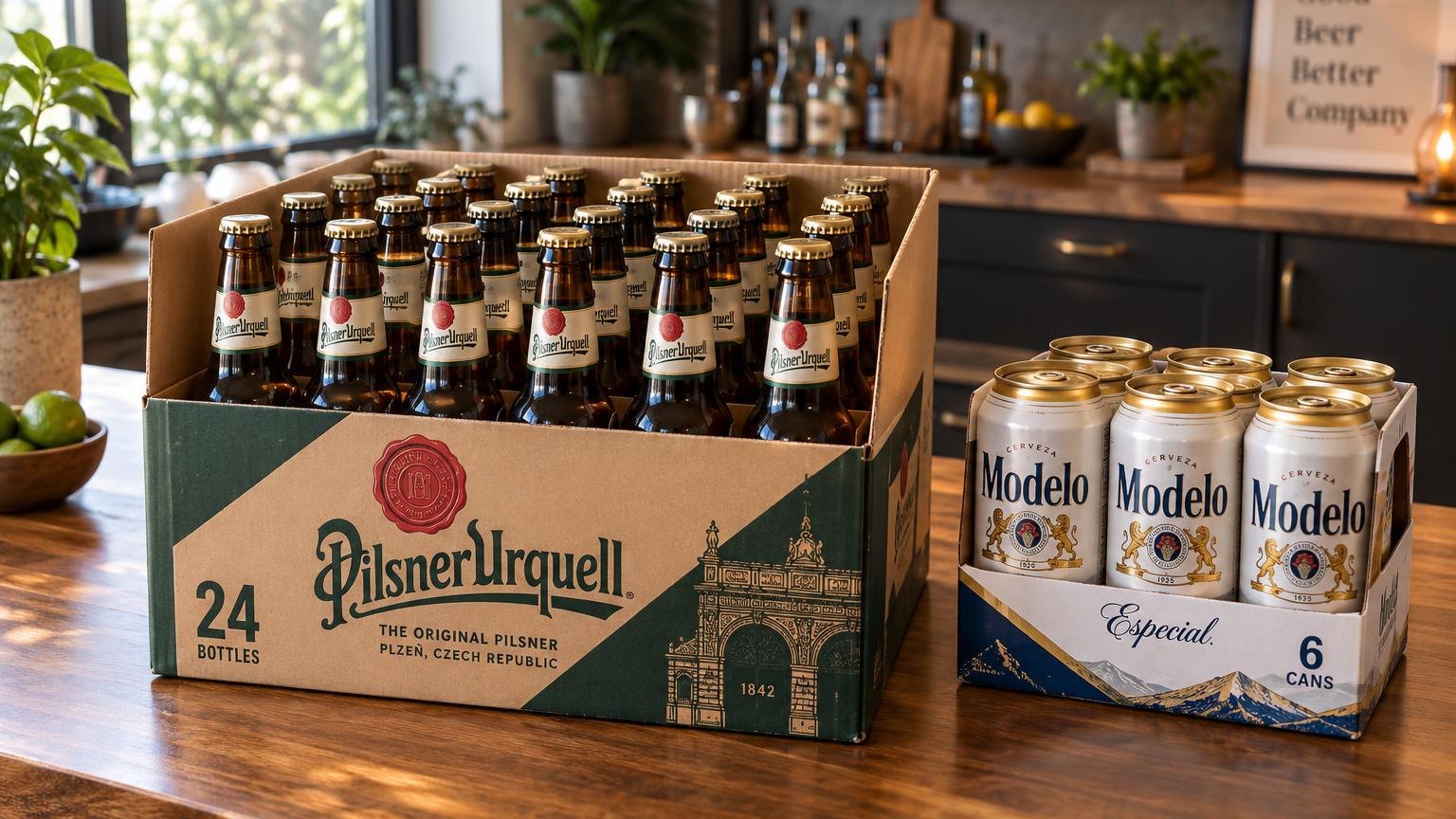
- Popular brands sold as 12-packs: Sierra Nevada Pale Ale, Sam Adams Boston Lager, Modelo Especial
Suitcase Pack: 24–30 Beers
The term “suitcase” refers to a flat, rectangular box with a built-in carry handle, typically holding 24 cans. Some major domestic brands package 30 cans in a similar flat-box format, often called a “30-rack.”.
Suitcase packs stack efficiently and fit in refrigerators more easily than traditional tall cases. They became standard for macro lagers in the 1980s and remain the preferred format for brands like Coors Light, Bud Light, and Miller Lite.
| Format | Count | Total Volume (oz) | Typical Price Range |
| Half case (12-pack) | 12 | 144 | $10–$22 |
| Suitcase (24-pack) | 24 | 288 | $18–$28 |
| 30-Rack | 30 | 360 | $22–$32 |
Cost Per Beer Comparison
Buying in larger formats lowers the per-unit cost. A 30-rack of Bud Light at approximately $25 works out to about $0.83 per can, while a 12-pack of the same brand at $12 costs $1.00 per can—a 17% difference.
- 12-pack: ~$0.83–$1.83 per beer
- 24-pack suitcase: ~$0.75–$1.17 per beer
- 30-rack: ~$0.73–$1.07 per beer
State taxes and local deposit laws (like Michigan’s $0.10 per container) shift these prices. Always check the unit price label on the shelf tag for the most accurate comparison at your retailer.
Case Volume in Ounces
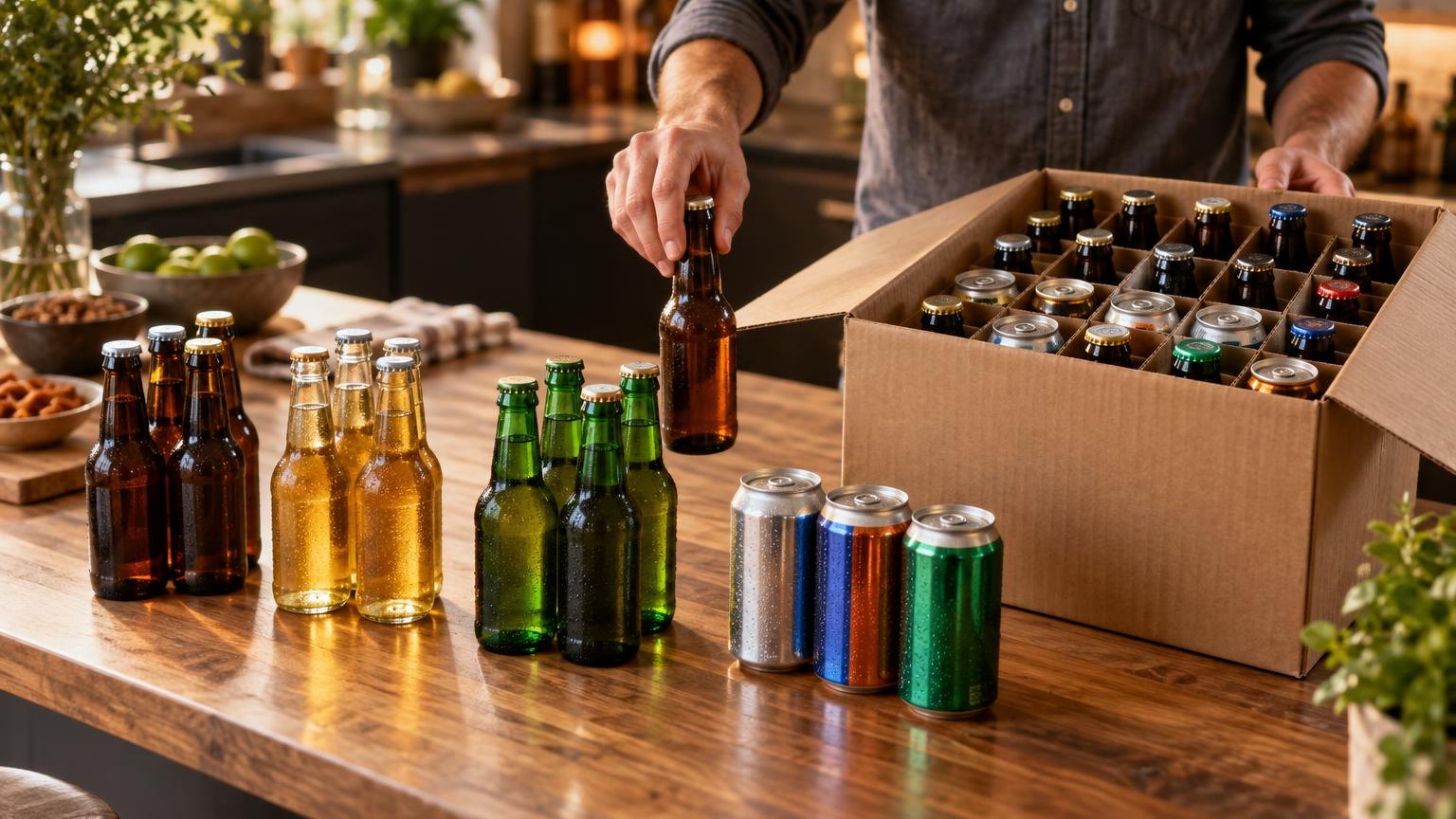
A standard case of 24 twelve-ounce beers contains 288 total fluid ounces of beer. That equals 2.25 gallons or roughly 8.5 liters—enough to fill a small cooler.
Different case formats yield different total volumes. The table below breaks down every common configuration by bottle or can size, pack count, and total ounces.
| Container Size | Units per Case | Total Fluid Ounces | Equivalent in Gallons |
| 12 oz can/bottle | 24 | 288 oz | 2.25 gal |
| 12 oz can/bottle | 30 (rack) | 360 oz | 2.81 gal |
| 12 oz can/bottle | 36 (case pack) | 432 oz | 3.38 gal |
| 16 oz tallboy can | 24 | 384 oz | 3.00 gal |
| 16 oz tallboy can | 15 | 240 oz | 1.88 gal |
| 22 oz bomber bottle | 12 | 264 oz | 2.06 gal |
| 19.2 oz stovepipe can | 12 | 230.4 oz | 1.80 gal |
| 25.4 oz (750 ml) bottle | 12 | 304.8 oz | 2.38 gal |
Why Total Ounces Matter
Knowing total ounces helps calculate cost per ounce—the most reliable way to compare value across pack sizes and container formats.
For example, a 24-pack of 12 oz cans at $23.99 works out to roughly $0.083 per ounce. A 15-pack of 16 oz tallboys at $18.99 costs about $0.079 per ounce—slightly cheaper despite the higher sticker price per can.
Comparing to a Keg
A full-size half-barrel keg holds 1,984 fluid ounces (15.5 gallons). That equals approximately 6.89 standard 24-packs of 12 oz beers, or about 165 individual 12-ounce pours.
- Sixth barrel (5.17 gal): 661 oz — equivalent to 2.3 standard cases
- Quarter barrel (7.75 gal): 992 oz — equivalent to 3.44 standard cases
- Half barrel (15.5 gal): 1,984 oz — equivalent to 6.89 standard cases
When planning for events, estimate 3 beers per guest for a two-hour gathering. A single 24-pack at 288 oz therefore covers approximately 8 guests at that consumption rate.
Always check state-specific container size regulations. States like Oregon restrict single-serve can sizes sold in convenience stores, which affects available case configurations in that market.
Beer Cases for Parties
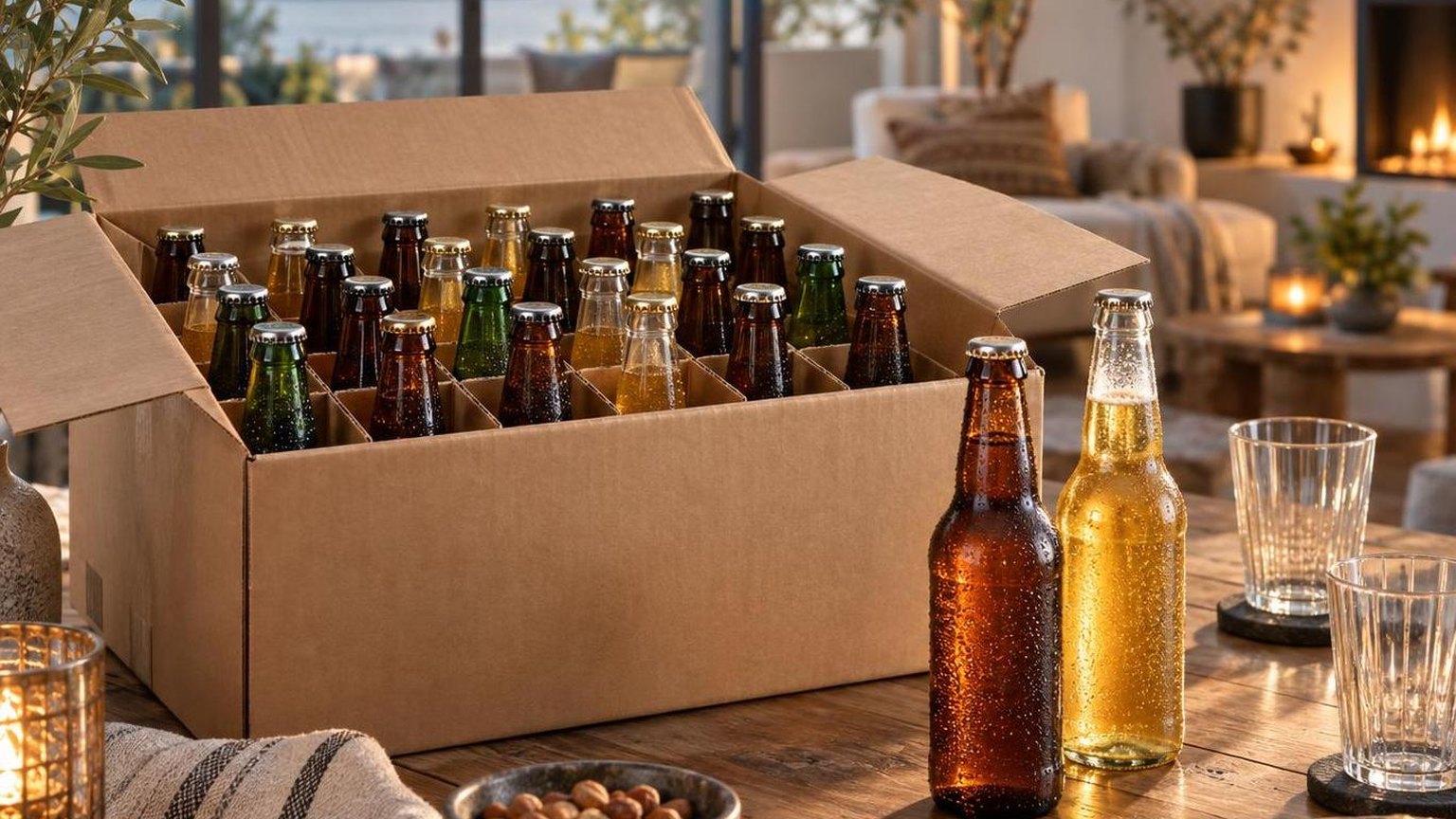
Planning beer quantities for a party requires knowing exactly how many servings each case format delivers. The standard rule among event planners is two to three beers per guest for the first two hours, then one beer per guest per hour after that.
Estimating Cases by Party Size
A standard case holds 24 twelve-ounce cans or bottles. Use that as your baseline unit when calculating for groups of various sizes over a typical 4-hour gathering.
| Number of Guests | Estimated Beers Needed (4 hrs) | Standard 24-Packs Required |
| 10 | 40–50 | 2 |
| 20 | 80–100 | 4 |
| 30 | 120–150 | 5–6 |
| 50 | 200–250 | 9–11 |
| 75 | 300–375 | 13–16 |
| 100 | 400–500 | 17–21 |
These figures assume all guests are drinking beer. If you also serve wine and cocktails, reduce beer quantities by roughly 40–50%.
Choosing the Right Case Format
Not every event calls for 24-packs. Selecting the right case size affects both cost efficiency and variety.
- 6-packs: Best for offering 3–4 different styles so guests have options without overcommitting to one brand.
- 12-packs: A practical middle ground — two different 12-packs cover a small gathering of 10 people.
- 24-packs (standard case): The most cost-effective per unit. A 24-pack of domestic beer averages $18–$24, bringing per-beer cost to $0.75–$1.00.
- 30-racks: Common for budget brands like Coors Light, Bud Light, and Miller Lite. Typically priced at $22–$28, dropping per-beer cost below $0.80.
Practical Party Tips
Buy 10–15% more than your estimate. Unopened cases store well, and running out mid-party is far worse than having leftovers.
Chill time matters. A standard 24-pack needs approximately 9–12 hours in a refrigerator to reach optimal 38°F serving temperature. Submerging cans in an ice-water bath cuts that to 15–20 minutes.
One 48-quart cooler holds roughly 48 twelve-ounce cans — exactly two standard cases — with enough room for ice. Budget one large cooler per two cases when planning cooler space for outdoor events.
Buying Cases by State
Beer case regulations vary significantly across U.S. states, affecting pack sizes, where you can purchase, and how much you pay. Understanding these differences matters whether you’re planning a party or stocking up during a road trip.
States with Unique Case Definitions
Pennsylvania historically required beer purchases by the case (24 units) from licensed beer distributors. Act 39, signed in 2016, finally allowed six-packs and 12-packs at grocery stores and gas stations with restaurant licenses.
In Indiana, cold beer sales were restricted to liquor stores until 2018. Convenience stores and groceries could only sell warm beer — a law that shaped buying habits statewide for decades.
Where You Can Buy Cases
| State | Grocery Stores | Liquor Stores | Gas Stations | Max ABV for Grocery/Gas |
| California | Yes | Yes | Yes | No limit |
| Colorado | Yes (since 2019) | Yes | Yes | No limit (full-strength since 2019) |
| Utah | Yes | State-run stores | Yes | 5.0% ABV (heavy beer at state stores) |
| Kansas | Yes (since 2019) | Yes | Yes | 6.0% ABV |
| Pennsylvania | Yes (licensed) | Yes | Yes (licensed) | No limit |
| Minnesota | 3.2% only | Yes | 3.2% only | 3.2% ABW (~4.0% ABV) |
State Tax Impact on Case Prices
Excise taxes per gallon of beer range dramatically. These taxes directly affect what you pay for a standard 24-pack case, which contains roughly 2.25 gallons.
| State | Excise Tax per Gallon | Approximate Tax per 24-Pack Case |
| Wyoming | $0.02 | $0.05 |
| Missouri | $0.06 | $0.14 |
| Texas | $0.20 | $0.45 |
| North Carolina | $0.62 | $1.40 |
| Alaska | $1.07 | $2.41 |
| Tennessee | $1.29 | $2.90 |
Quantity Limits and Sunday Sales
- Mississippi: Limits individual purchases to containers no larger than a quart in some counties, effectively blocking cases in certain jurisdictions.
- Sunday restrictions: States including Indiana, Oklahoma, and parts of Texas historically banned Sunday beer sales; most have since repealed those bans.
- Dry counties: Over 500 municipalities across the U.S. still prohibit all alcohol sales, making case purchases impossible locally.
Always check current local laws before buying in bulk. Regulations shift frequently — Colorado, Kansas, and Oklahoma all overhauled their beer laws within the past six years.
Questions People Ask Most
How many beers come in a standard case?
A standard case of beer in the United States contains 24 bottles or cans. This has been the industry norm since the post-Prohibition era when breweries standardized packaging for efficient distribution on standard-size pallets.
How many beers are in a half case?
A half case, commonly sold as a “12-pack,” contains exactly 12 beers. Twelve-packs became widely popular in the 1970s as breweries responded to consumer demand for a mid-size option between a six-pack and a full 24-unit case.
How much does a case of 24 beers weigh?
A case of 24 standard 12 oz (355 ml) cans weighs approximately 20 pounds (9 kg), while a case of 24 glass bottles weighs closer to 34–38 pounds (15–17 kg).
The significant difference comes from glass weighing roughly 7–8 oz per empty bottle compared to about 0.5 oz for an aluminum can.
Is a 30-rack considered a case of beer?
A 30-pack—often called a “30-rack” or “dirty thirty”—is technically not a standard case but a bulk packaging format introduced by major domestic brewers like Budweiser, Coors Light, and Miller Lite.
It is sold at a lower per-unit price than a 24-pack, typically saving the buyer $0.05–$0.10 per can compared to purchasing a standard case.
How many cases of beer fit on a standard pallet?
A standard 48 × 40-inch GMA pallet holds between 80 and 100 cases of 24-pack beer, depending on case dimensions and stacking configuration.
Most breweries stack five layers of 18–20 cases, yielding roughly 90 cases (2,160 individual units) per pallet for distribution.
How many beers are in a case of craft beer versus a domestic case?
Domestic macro brands almost always sell cases as 24-packs of 12 oz cans or bottles.
Craft breweries frequently package cases as 24-packs of 12 oz cans but also sell 4-pack cases of 16 oz tall-boy cans and cases of twelve 22 oz “bombers,” so total volume per case varies widely—from 64 oz in a 4-pack up to 288.
Oz in a standard 24-pack.
How much does a case of 24 beers cost on average in the US?
As of 2024, a 24-pack of domestic beer such as Bud Light or Coors Light typically costs $21–$28, while a 24-pack of craft beer ranges from $36–$54 depending on the brewery and style.
Prices vary by state due to differing excise taxes—for example, Wyoming charges $0.02 per gallon while Tennessee charges $1.29 per gallon, directly affecting shelf price.
- How Much is 64 Oz of Water in Liters?
- Cordless Wine Chiller: The Complete 2026 Guide to Perfect Cooling
- How Many Oz Is 50 Ml? A Complete, Experience-Based Guide You Can Actually Use
- Is Jameson Irish Whiskey Good?
- How Many 16 Ounce Bottles Make A Gallon?
- How Many Ounces in a Lb?
- All Blog Guides
- Alcohol and Tobacco Tax and Trade Bureau – Beer Statistics (2023)
- CDC – Frequently Asked Questions About Alcohol (2024)
- NIAAA – What Is a Standard Drink? (2023)
- USDA FoodData Central – Beer, Regular (2024)
- Cornell University Law – 27 CFR Part 25: Beer (2024)
- Brewers Association – National Beer Sales & Production Data (2023)
- Beer Institute – Annual Industry Report (2023)
- National Institute on Alcohol Abuse and Alcoholism – Alcohol Facts and Statistics (2024)