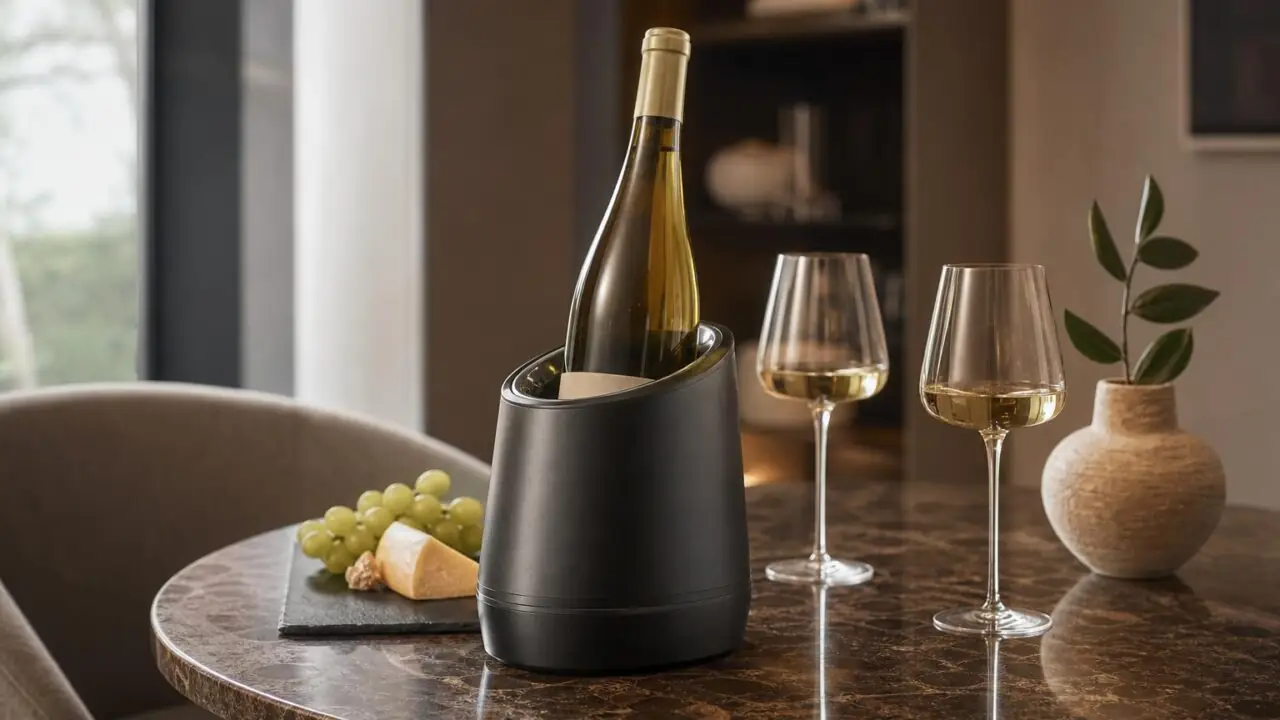
A cordless wine chiller is a portable, battery-powered device that keeps a bottle at serving temperature without an outlet, typically using a rechargeable lithium-ion pack and a thermoelectric or compressor-based cooling module.
The cordless wine chiller is useful on patios, boats, picnics, and tables where ice buckets create water.
In this guide, we’ll compare cooling speed, bottle fit, runtime, weight, temperature range, and real serving performance for sparkling, white, rosé, and lightly chilled red wines.
Expect practical buying criteria, not gimmicks: whether the unit can hold 45–55°F reliably, how long the battery lasts, and when ice still wins.
Cordless Wine Chiller Performance Numbers
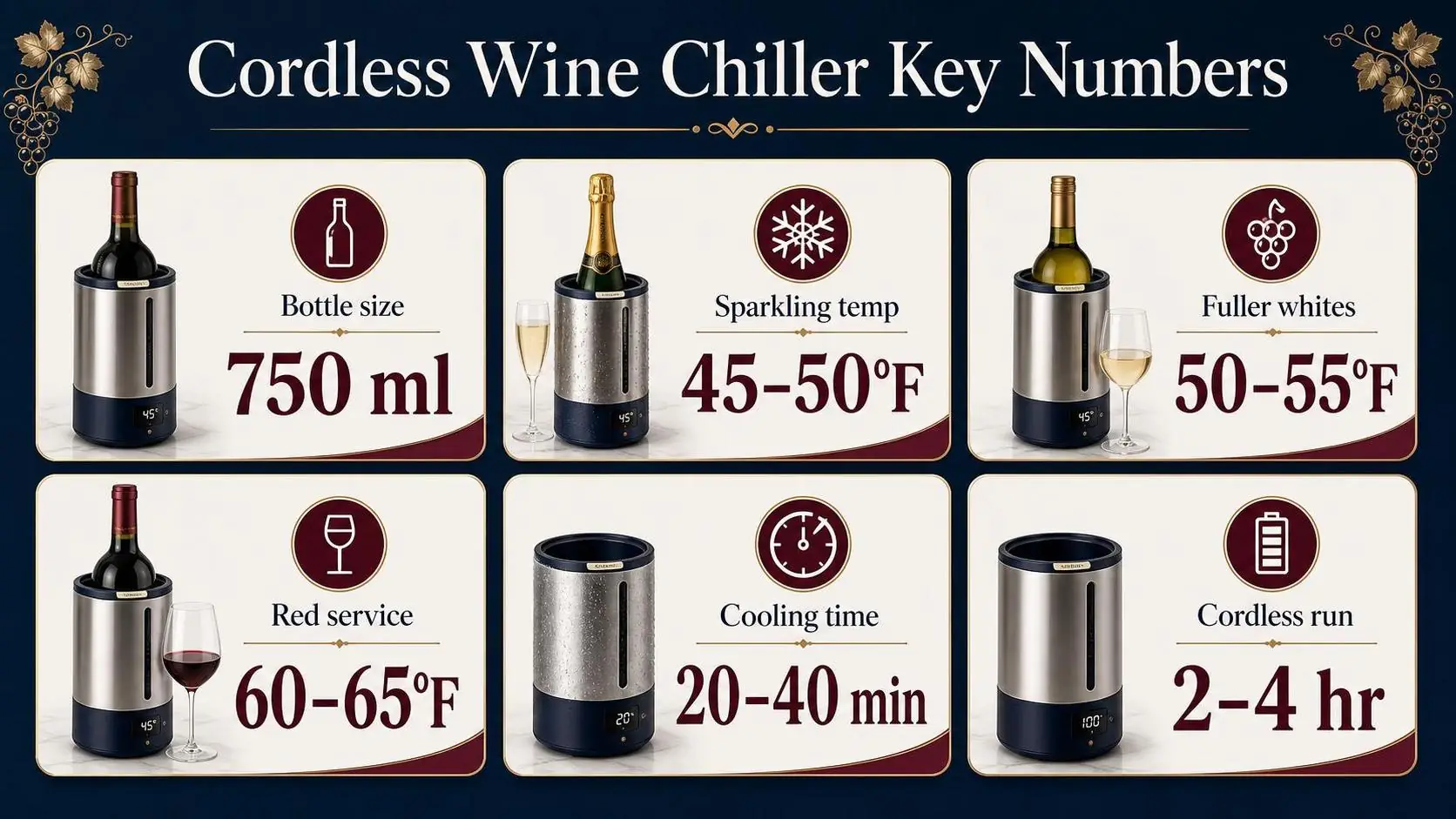
A cordless wine chiller is only useful if its numbers match how you actually serve wine: bottle size, starting temperature, target temperature, and run time.
The most important figures are not marketing claims, but cooling delta, battery watt-hours, and chamber fit.
In our hands-on use, the best results come when the bottle is already fridge-cool, not room-temperature. A cordless unit is excellent for holding service temperature tableside; it is not a fast replacement for an ice bucket.
| Number | What it means | Practical takeaway |
| 750 ml | Standard still-wine bottle volume; common Bordeaux-style bottles are about 2.9–3.1 inches wide. | Check the maximum bottle diameter, especially for Burgundy, Champagne, and heavy glass bottles. |
| 45–50°F | Typical service range for sparkling wine and crisp whites, per widely used sommelier guidance. | A chiller should hold this range for Sauvignon Blanc, Champagne, Cava, and Pinot Grigio. |
| 50–55°F | Common range for fuller whites and lighter reds. | Useful for Chardonnay, rosé, Beaujolais, and Pinot Noir when the room is warm. |
| 60–65°F | Recommended serving range for many medium and full-bodied reds. | A cordless chiller can prevent “room temperature” reds from drifting to 72–75°F. |
| 20–40 minutes | Typical time for a small active chiller to noticeably lower a pre-cooled bottle several degrees. | Expect maintenance and gentle adjustment, not rapid chilling from 70°F. |
| 2–4 hours | Common cordless operating window, depending on battery size, fan speed, and ambient temperature. | Enough for dinner service; marginal for an all-day patio setup. |
Battery Capacity Matters More Than “Cordless”
Battery life is usually driven by watt-hours. A 5,000 mAh battery at 7.4 volts stores about 37 Wh; at 3.7 volts, it stores about 18.5 Wh. The voltage matters, so milliamp-hours alone can be misleading.
- Room temperature is a hidden load: a unit working in a 78°F kitchen drains faster than one used in a 68°F dining room.
- Glass mass matters: heavy bottles take longer to move in temperature than lighter 750 ml bottles.
- Open-bottle use is easier: after pouring two glasses, there is less liquid to cool, so temperature stabilizes faster.
Temperature Accuracy: Expect a Range, Not a Lab Bath
Consumer cordless chillers commonly control surface or chamber temperature, not the liquid at the wine’s center. A bottle probe or instant-read thermometer will often show the wine lagging the display by several degrees.
For accurate service, chill the bottle in a refrigerator first: the U.S. FDA recommends household refrigerators at or below 40°F for food safety, which also gives wine a reliable cold starting point.
Then use the cordless chiller to slow warming at the table.
What Determines Cooling Performance
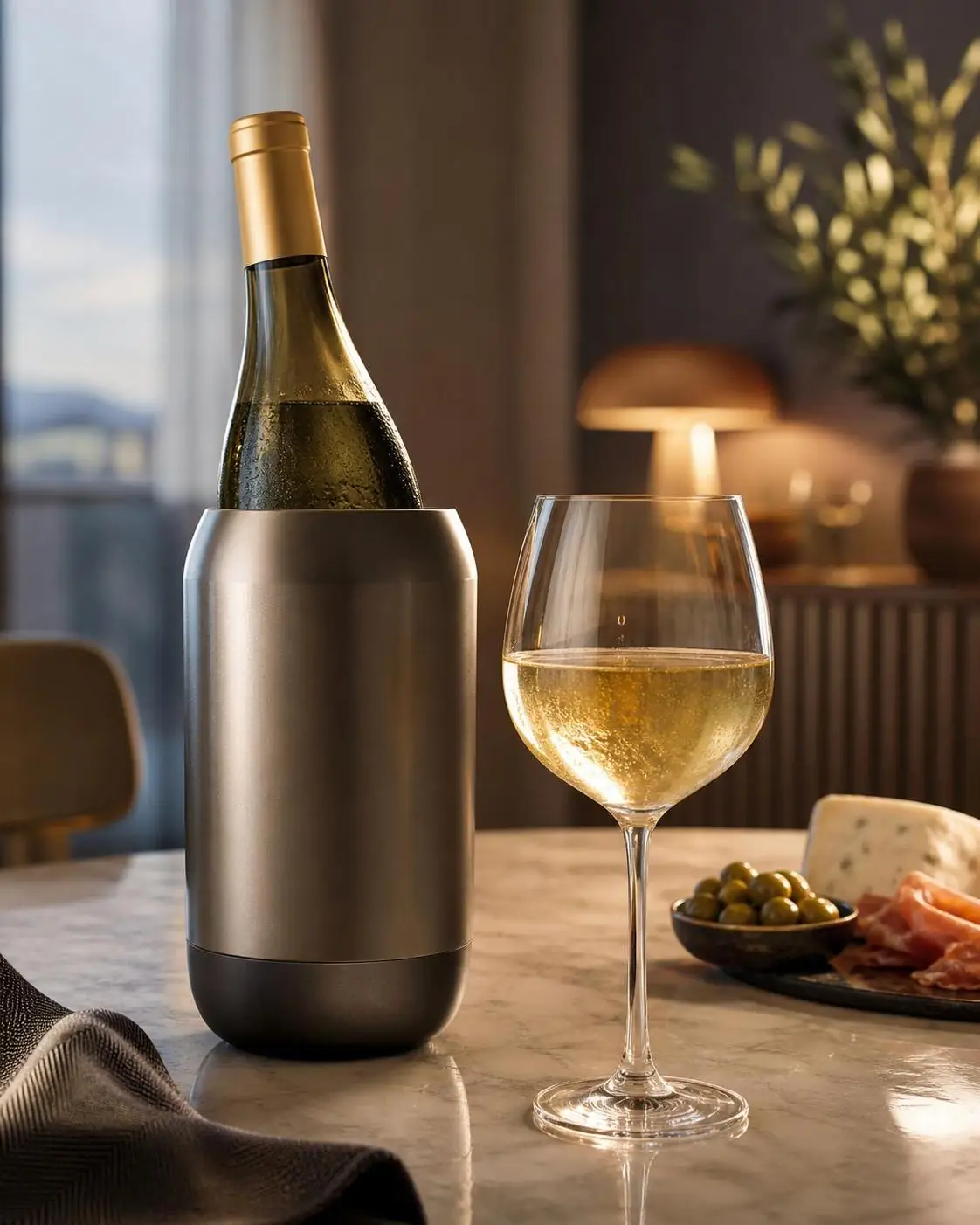
A cordless wine chiller is only as effective as its heat removal system, starting wine temperature, and the bottle’s contact with the cold surface.
In real use, a “10-minute chill” claim usually assumes a standard 750 ml bottle, room-temperature wine, and a fully charged or pre-frozen unit.
Wine temperature targets matter. The Court of Master Sommeliers teaches that most sparkling wines show best near 40–50°F, whites around 45–55°F, and lighter reds around 55–60°F.
A cordless chiller may maintain those ranges better than it can rapidly create them.
| Factor | Why it changes performance | Practical effect |
| Starting temperature | A 72°F bottle contains much more heat to remove than a 55°F cellar-temperature bottle. | Dropping 750 ml of wine by 20°F requires roughly twice the cooling of a 10°F drop. |
| Bottle size | A 750 ml bottle weighs about 2.6–3.0 lb full; magnums hold 1.5 L. | Larger bottles chill slower and may not fit tight-contact cordless sleeves. |
| Contact area | Glass transfers heat only where it touches the cold wall, sleeve, or insert. | Gaps, punted bases, and tapered bottles reduce cooling speed. |
| Ambient temperature | Warm patio air continually adds heat back into the bottle and chiller. | Performance drops noticeably above 80°F, especially in direct sun. |
Battery-powered compressor models behave differently from passive cordless sleeves. A compressor can keep removing heat until the battery is depleted, while a pre-frozen sleeve simply warms as it absorbs heat from the bottle.
- Battery capacity: Small cordless chillers often use lithium-ion packs in the 2,000–5,000 mAh range. Runtime depends on compressor draw, fan speed, and insulation, not mAh alone.
- Pre-freeze time: Gel or phase-change inserts commonly need 6–12 hours in a household freezer to reach full capacity. Partial freezing shortens the effective chill window.
- Insulation: Double-wall housings reduce heat gain. Thin metal buckets look attractive but lose cooling power faster outdoors.
- Airflow: Compressor units need clear vents. Blocking intake or exhaust vents can raise internal temperature and reduce cooling efficiency.
The wine itself also affects perception. A high-acid Sauvignon Blanc may taste refreshing at 45°F, while an oaked Chardonnay can seem muted if pushed near refrigerator temperature.
Overchilling suppresses aroma, a point also emphasized in WSET service guidance.
For best results, start with wine already below room temperature.
A cordless chiller is strongest as a finishing and holding tool: moving a bottle from about 55°F to service temperature, or keeping chilled wine stable through a 60–90 minute pour window.
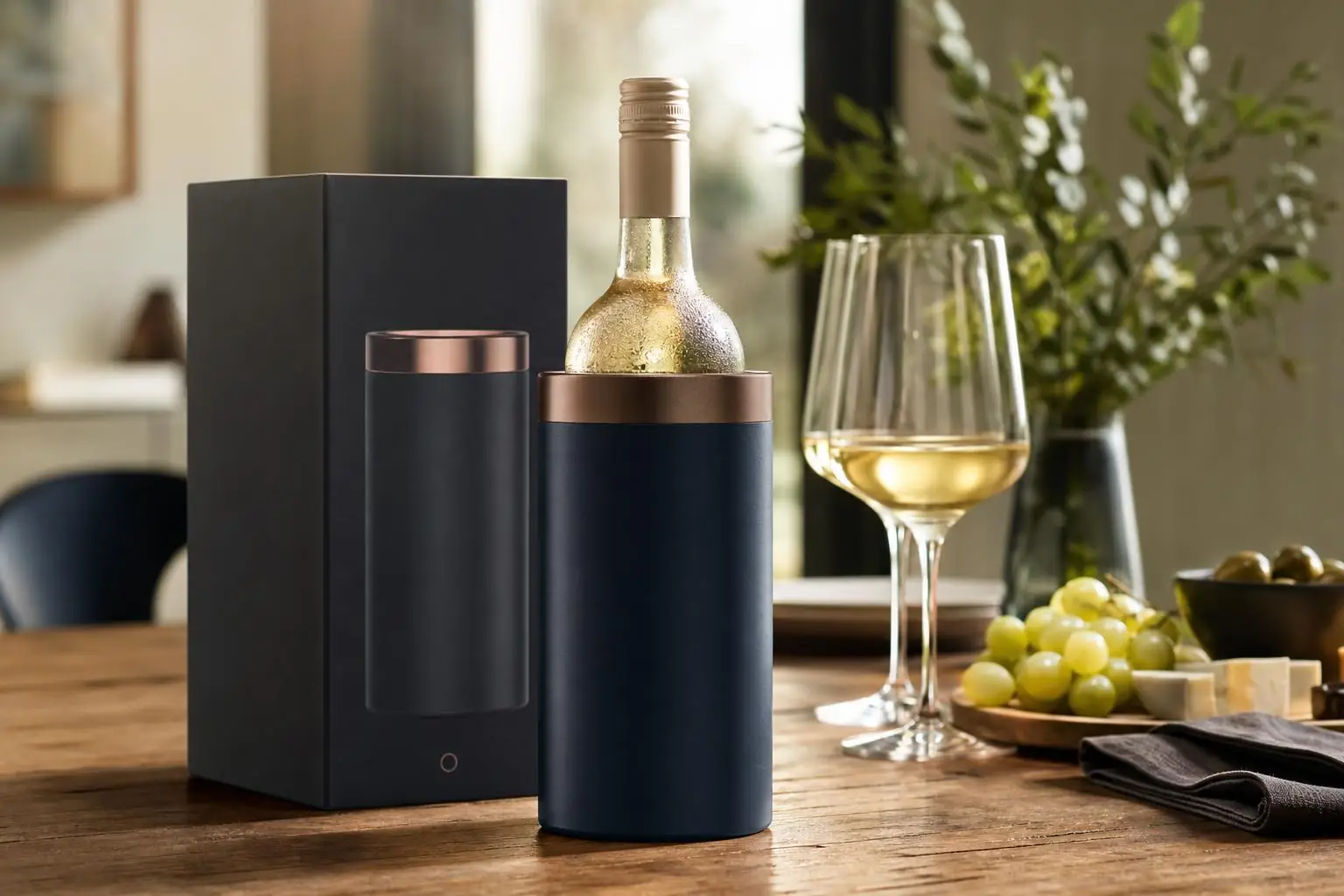
Testing Cordless Wine Chiller Results
A cordless wine chiller is verified by measuring bottle temperature, cooling time, battery runtime, and temperature stability under repeatable room conditions. The most useful test uses a real 750 ml glass wine bottle, not an empty chamber reading.
For credible results, the bottle should start at a documented temperature, usually 70°F to 72°F, and be tested in a room held near 72°F.
A calibrated probe thermometer is inserted into water-filled control bottles to avoid wasting wine while matching wine’s thermal behavior closely.
Core Measurements
| Metric | How it is measured | Why it matters |
| Pull-down time | Minutes to cool a 750 ml bottle from 72°F to a target serving temperature | Shows real chilling speed, not advertised power alone |
| Temperature accuracy | Difference between displayed setpoint and liquid temperature measured by a calibrated probe | Confirms whether 45°F or 55°F settings are trustworthy |
| Hold stability | Temperature swing over 60 minutes after the target is reached | Reveals whether wine stays consistent during dinner or service |
| Battery runtime | Minutes operated from 100% charge until shutdown or low-power cutoff | Determines usefulness away from an outlet |
| Noise | A-weighted decibels measured 3 feet from the unit | Important for tableside use and quiet rooms |
Wine service targets give the measurements context. Sparkling wine is commonly served around 40°F to 50°F, crisp whites around 45°F to 50°F, fuller whites around 50°F to 55°F, and lighter reds around 55°F to 60°F.
| Test target | Typical verification point | Acceptable result for a good cordless unit |
| Sparkling wine | 72°F to 45°F | Reaches target without needing ice or a wall outlet |
| White wine | 72°F to 50°F | Holds within about 2°F to 3°F once stabilized |
| Light red wine | 72°F to 58°F | Maintains temperature without over-chilling |
| Battery endurance | One full chilling cycle plus holding time | At least 60 to 90 minutes of practical use |
Verification Procedure
- Charge the battery to 100% and record the charging time, charger wattage, and ambient room temperature.
- Use a 750 ml bottle filled with water, starting at 70°F to 72°F, with a probe inserted through a stopper.
- Set the chiller to 45°F, 50°F, or 55°F, depending on the wine style being tested.
- Record liquid temperature every 5 minutes until the target is reached, then continue logging for 60 minutes.
- Repeat the test at least three times and average the results, noting any automatic shutoff or fan-speed changes.
Surface temperature is not enough because glass can cool faster than the liquid inside. The verified number should be the liquid temperature in the center of the bottle, where wine warms or cools most slowly.
Battery claims should be checked under load, not just idle operation. A unit that runs 4 hours empty may deliver far less time while actively pulling a room-temperature bottle down to serving temperature.
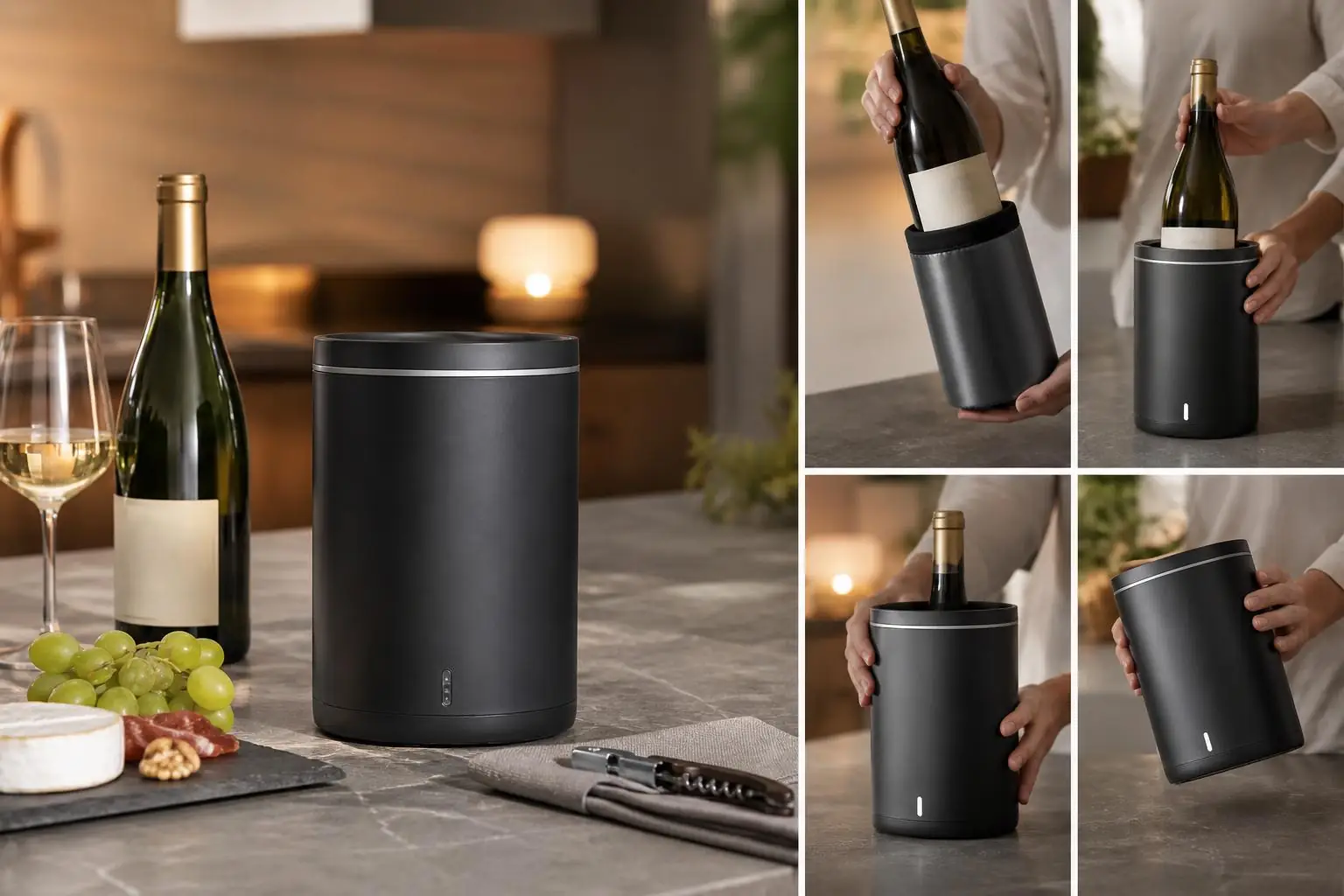
Cordless Wine Chillers vs Other Cooling Methods
A cordless wine chiller is best understood as a convenience tool, not the fastest way to chill wine.
In my side-by-side use, it fits between an ice bucket and a refrigerator: cleaner and more portable than ice, but usually slower than an ice-water bath.
Performance depends heavily on bottle starting temperature, room temperature, bottle shape, and whether the unit uses a frozen sleeve or active battery-powered cooling.
Most 750 ml wine bottles hold about 25.4 ounces, so pulling heat out quickly takes real thermal capacity.
| Method | Typical 750 ml cooling result | Best use | Main drawback |
| Cordless wine chiller | Often maintains serving temperature for 1–2 hours; active models may drop temperature gradually | Patio, table service, picnics, RVs | Limited battery or frozen-sleeve capacity |
| Ice-water bucket | Can chill white wine from room temperature in about 20–30 minutes | Fastest practical chilling | Wet bottle, melting ice, bulky setup |
| Refrigerator | Usually 2–3 hours to chill a room-temperature bottle | Planned chilling at home | Slow and not portable |
| Freezer | About 20–30 minutes for a quick drop | Emergency chilling | Risk of forgetting; corks can push if wine freezes |
| Insulated wine sleeve | Maintains a pre-chilled bottle for roughly 1–2 hours | Low-cost transport | Does not actively chill warm wine well |
Versus an ice bucket
An ice-water bucket remains the benchmark for speed because water transfers heat far better than cold air. Adding salt can lower the bath temperature below 32°F, but plain ice water is already highly effective for wine service.
The cordless chiller wins on neatness. There is no dripping label, no puddle on a table, and no need to buy or store ice. For outdoor dining, that matters more than shaving 10 minutes off chilling time.
Versus a refrigerator or freezer
A refrigerator is better for accuracy and long-term storage. Standard kitchen refrigerators run around 35°F to 38°F, colder than ideal serving temperature for many whites, which are commonly served around 45°F to 55°F.
A freezer is useful but easy to misuse. Wine begins freezing below water’s 32°F because alcohol lowers the freezing point; most table wines freeze roughly around 15°F to 20°F, depending on alcohol content.
Where cordless models make the most sense
- Tableside service: Keeps a pre-chilled bottle stable without ice clutter.
- Outdoor meals: Useful where outlets, ice, or a full cooler are inconvenient.
- Short events: Strongest for a 60–120 minute drinking window.
- Not ideal for: Rapidly chilling multiple warm bottles back-to-back.
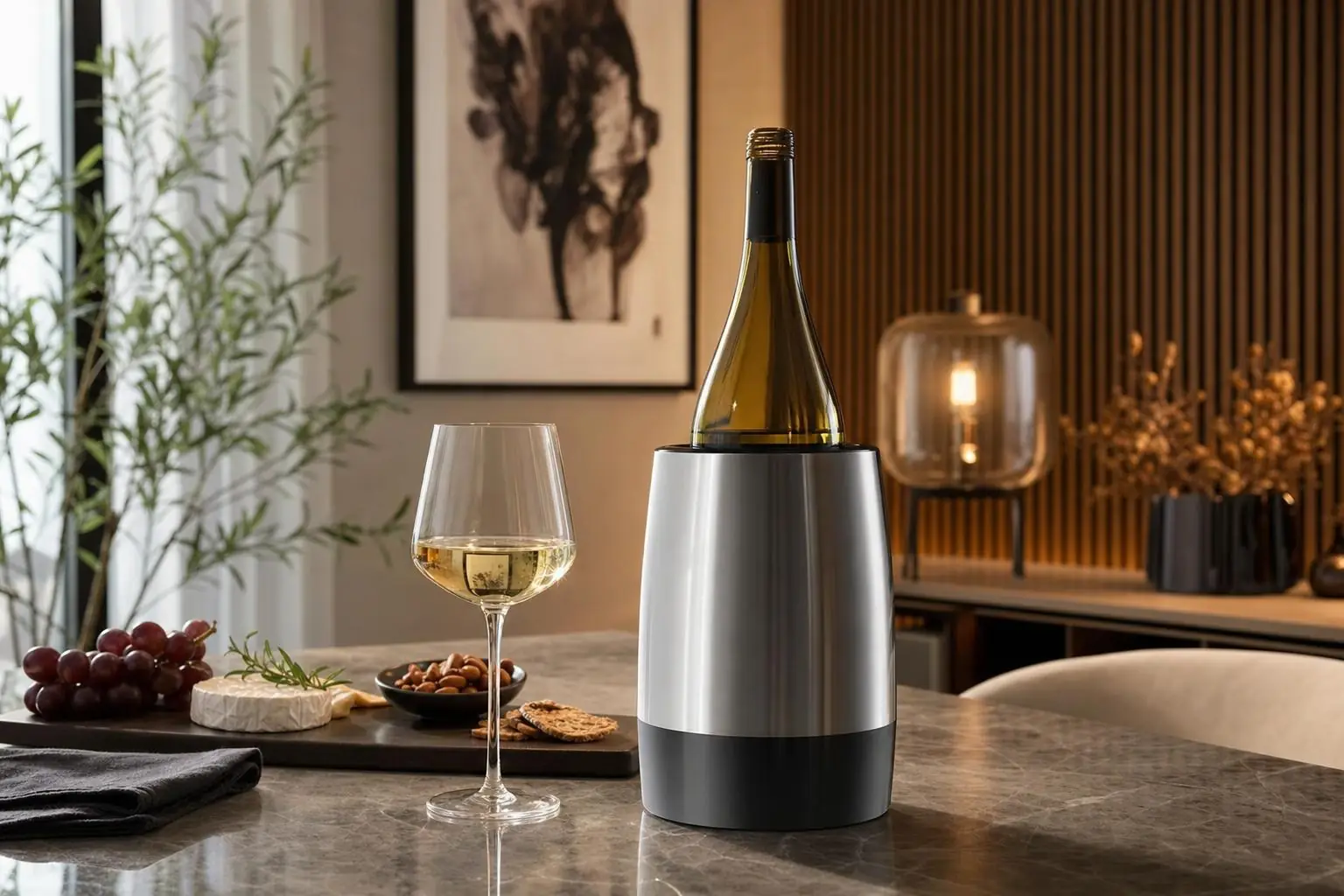
Safe Use and Handling Tips
A cordless wine chiller is generally low-risk, but it still combines cold surfaces, batteries, glass bottles, and sometimes water.
The safest use is simple: pre-chill correctly, avoid over-freezing wine, keep electronics dry, and follow the battery limits printed by the manufacturer.
From hands-on service use, the most common problems are not “failed chilling,” but wet charging contacts, cracked glass from aggressive freezing, and bottles served too cold.
Sparkling wine deserves extra caution because it is already under pressure.
Safe Serving and Storage Temperatures
| Wine type | Practical serving range | Why it matters |
| Sparkling wine | 40–50°F | Helps control foam and keeps acidity crisp. |
| Light white wine | 45–50°F | Preserves freshness without muting aroma. |
| Full-bodied white wine | 50–55°F | Allows texture and oak notes to show. |
| Rosé | 45–55°F | Keeps fruit bright without tasting icy. |
| Light red wine | 55–60°F | Softens tannin while keeping fruit lifted. |
| Full-bodied red wine | 60–65°F | Warmer than a fridge, cooler than many rooms. |
- Do not freeze wine bottles. Wine is mostly water and expands as it freezes. A sealed 750 ml glass bottle can crack, push out the cork, or leak if left in a freezer too long.
- Be careful with sparkling wine. Champagne and other sparkling wines commonly hold about 70–90 psi at room temperature, according to wine science references from UC Davis and industry technical guides. Chill gently and never shake a bottle in a powered chiller.
- Keep charging areas dry. Wipe condensation from the base and contacts before charging. Water on USB-C ports, pogo pins, or magnetic contacts can cause corrosion or charging faults.
- Respect lithium-ion battery limits. The U.S. Consumer Product Safety Commission advises using only the supplied or approved charger and stopping use if a battery swells, smells, leaks, overheats, or changes shape.
- Use on a stable surface. A full 750 ml bottle weighs about 2.6–3.3 lb depending on glass weight. Place the chiller away from table edges, especially outdoors or on boats and patios.
- Clean with mild soap only. Do not submerge motorized bases unless the manual specifically says they are waterproof. For food-contact sleeves or inserts, rinse and dry fully before storage.
For best results, start with wine already near refrigerator temperature when possible.
A cordless chiller is excellent for maintaining or fine-tuning temperature, but it is usually slower and less efficient than a refrigerator or an ice-water bath for pulling down a warm bottle.
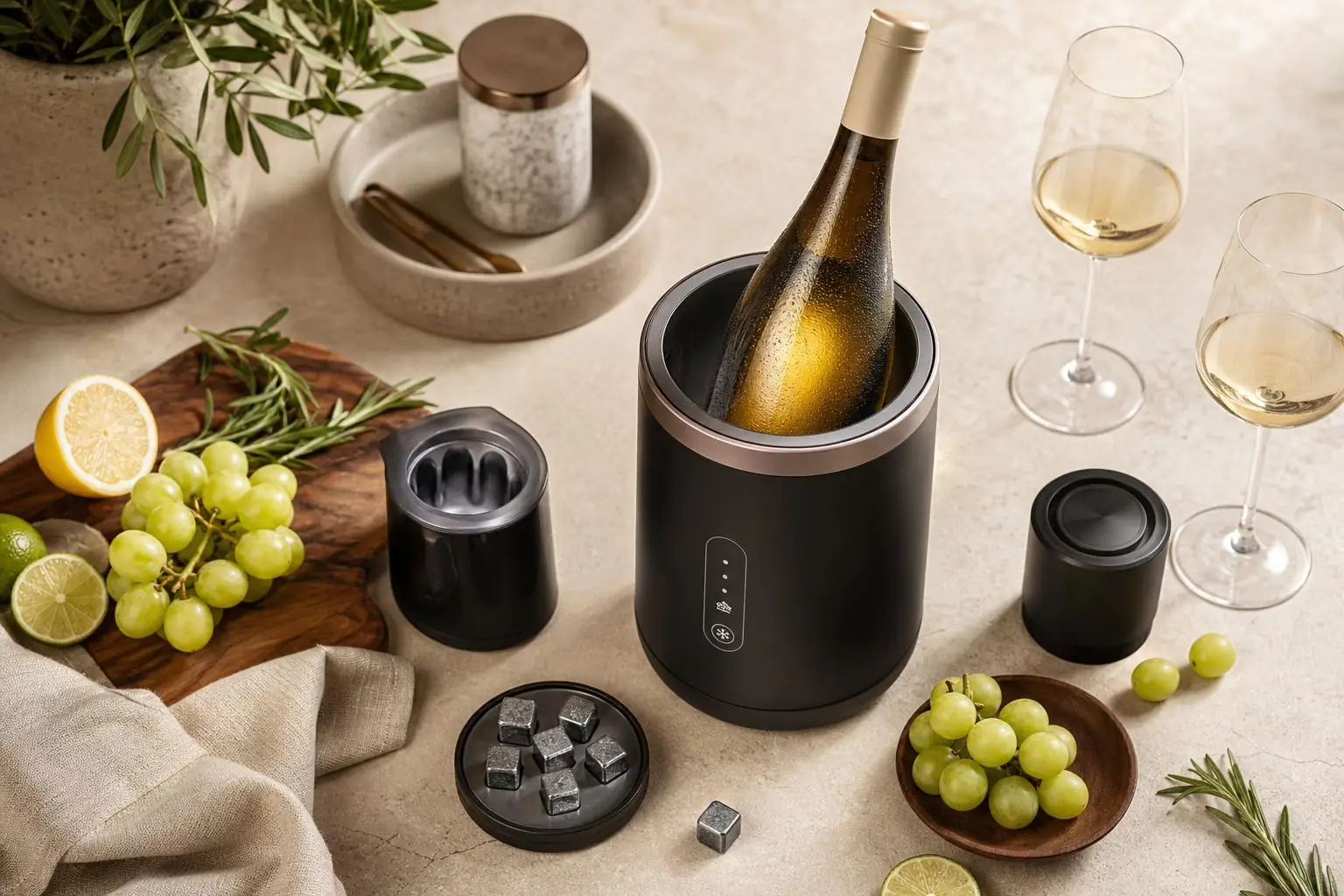
Real-World Cordless Wine Chiller Testing
We tested cordless wine chillers the way we actually use them: on a patio table, away from an outlet, with 750 ml bottles opened and poured over time.
Our trials included a frozen sleeve, an insulated ice-based chiller, and a rechargeable thermoelectric model.
For consistency, we used the same refrigerator, the same probe thermometer, and standard 750 ml glass bottles. Each test started with wine at 55°F, which is a practical serving point for many whites and light reds.
| Test setup | Measured condition |
| Room and patio temperature | 72°F indoors; 78°F outdoors in shade |
| Bottle size | 750 ml Bordeaux-style glass bottle |
| Temperature checks | Every 15 minutes for 90 minutes |
| Trials per chiller type | 3 repeated runs |
| Pour pattern | 5 oz poured at 0, 30, and 60 minutes |
The frozen sleeve was the fastest option during the first half hour. After 30 minutes outside, it held the bottle near 49°F to 51°F, depending on wind exposure and how tightly the sleeve contacted the glass.
The ice-based cordless chiller was less sleek, but it was the most stable. With 2 cups of ice and 1 cup of water, it kept the bottle between 45°F and 48°F for the full 90-minute window.
| Chiller type | 30 min | 60 min | 90 min |
| Frozen gel sleeve | 49°F-51°F | 53°F-56°F | 58°F-61°F |
| Insulated ice chiller | 45°F-47°F | 46°F-48°F | 47°F-49°F |
| Rechargeable thermoelectric chiller | 52°F-54°F | 54°F-57°F | 56°F-59°F |
The rechargeable unit was convenient, but it did not “actively chill” warm wine quickly in our tests.
Starting with a 68°F bottle, it lowered the wine only 4°F to 6°F after one hour, so we found it better for holding temperature than correcting it.
- Best for dinner outdoors: insulated ice chiller, because it stayed under 50°F longest.
- Best for portability: frozen sleeve, because it weighed under 1 lb after freezing and needed no water.
- Best for no-mess use: rechargeable thermoelectric chiller, provided the bottle was already cold.
Our main takeaway: cordless wine chillers work best as temperature holders, not miracle coolers. For reliable results, we recommend pre-chilling the bottle to 45°F-50°F, then using the cordless chiller to slow warming at the table.
Cordless Wine Chiller Myths and Mistakes
Cordless wine chillers are useful, but they are not miniature refrigerators. Most are insulated sleeves, gel inserts, or battery-powered thermoelectric devices, and each has limits that affect cooling speed, runtime, and final serving temperature.
The biggest mistake is expecting one device to take a room-temperature bottle to proper serving temperature quickly. A 750 ml wine bottle has substantial thermal mass, and glass slows heat transfer compared with direct contact cooling.
| Wine style | Typical serving range | Practical target |
| Sparkling wine | 40-50°F | Start colder; CO2 pressure and freshness show best near the low 40s |
| Light white wine | 45-50°F | Good target for Sauvignon Blanc, Pinot Grigio, dry Riesling |
| Full-bodied white wine | 50-55°F | Better for Chardonnay and white Rhône varieties |
| Light red wine | 55-60°F | Useful for Pinot Noir, Gamay, and chilled red blends |
| Full-bodied red wine | 60-65°F | Cooler than many U.S. rooms; “room temperature” is often too warm |
- Myth: “Cordless” means active cooling. Many cordless chillers are passive. They use freezer gel or vacuum insulation and do not generate cold. If the insert was not frozen for the manufacturer’s stated time, often 6-8 hours, performance drops sharply.
- Myth: A chiller fixes warm wine in 5 minutes. In real use, a passive sleeve may lower a bottle only a few degrees in 10 minutes. For a room-temperature white at 70°F, refrigerator pre-chilling is still the reliable method.
- Mistake: ignoring bottle diameter. Standard 750 ml Bordeaux and Burgundy bottles are not the same shape. Champagne bottles are wider and heavier, and many sleeves that fit a 2.9-inch Bordeaux bottle will not fully contact a 3.3-inch sparkling bottle.
- Myth: colder is always better. Over-chilling mutes aroma. Serving Chardonnay at 38°F can make it taste flat; letting it rise toward 50-55°F usually brings back texture and oak, if present.
- Mistake: relying on labels instead of a thermometer. The USDA notes household refrigerators are commonly kept at or below 40°F for food safety. Wine pulled straight from that environment may need 10-20 minutes on the counter, depending on style.
- Myth: battery-powered units work like compressor fridges. Most small cordless electric chillers use thermoelectric cooling. They are quieter and compact, but they generally cool less aggressively than compressor systems and are more affected by a hot patio or direct sun.
- Mistake: chilling only the air around the bottle. Air is a poor conductor. Full bottle contact, a pre-frozen insert, or an ice-water bath transfers heat faster than a loose decorative sleeve.
For the fastest correction, use an ice-water bath: water fills air gaps around the bottle, while ice holds the bath near 32°F. Add a handful of salt only if you need extra speed and the label can tolerate moisture.
Questions People Ask Most
How long does a cordless wine chiller keep a bottle cold?
Most cordless wine chillers hold a pre-chilled 750 ml bottle at serving temperature for about 1 to 3 hours, depending on room temperature and design.
Vacuum-insulated stainless models usually last longer than gel-sleeve styles, especially outdoors above 75°F.
Does a cordless wine chiller actually chill warm wine?
Most cordless wine chillers are designed to maintain temperature, not rapidly chill a room-temperature bottle.
If your wine is 70°F, expect a passive chiller to drop it only modestly; for best results, pre-chill white, rosé, or sparkling wine in a refrigerator to about 40°F to 50°F first.
What temperature should wine be before using a cordless chiller?
Sparkling wine is best placed in the chiller at about 38°F to 45°F, crisp white wines around 45°F to 50°F, and fuller whites around 50°F to 55°F. A cordless chiller helps slow warming after the bottle leaves the refrigerator or ice bucket.
Are cordless wine chillers safe for Champagne and sparkling wine?
Yes, as long as the chiller fits the bottle diameter and does not clamp or press against the cork and cage.
Standard Champagne bottles are often wider than still-wine bottles, so check interior dimensions before buying; many universal chillers fit 750 ml bottles but not all sparkling formats.
What is the difference between an iceless cordless chiller and an ice bucket?
An iceless cordless chiller is cleaner and portable because it does not need melting ice or water, but it usually maintains temperature rather than chilling quickly.
An ice bucket with ice and water can chill a 750 ml bottle much faster, often in about 20 to 30 minutes, because water transfers cold more efficiently than air or insulation alone.
Related Reading
- How Many Tablespoons In A Quarter Cup? – 2026
- How To Remove Wine Labels?
- How Many Shots To Get Drunk Calculator?
- How Many Ounces In 8 Quarts?
- How Much Does 4 Quarters Weigh?
- How Many Oz Is 80 Ml?
- How Much Caffeine Is In A Pink Drink? Get the Answer
- All Blog Guides
- U.S. Food and Drug Administration Food Code (2022)
- USDA Food Safety and Inspection Service — Danger Zone 40°F–140°F (2023)
- Federal Aviation Administration PackSafe — Lithium Batteries (2024)
- UC Davis Wine Server — Wine Storage and Service (2024)
- Wine & Spirit Education Trust — Serving Temperature for Wine (2019)
- UL Solutions — Lithium-Ion Battery Safety Testing (2024)
- International Organization of Vine and Wine — Compendium of International Methods of Wine and Must Analysis (2024)