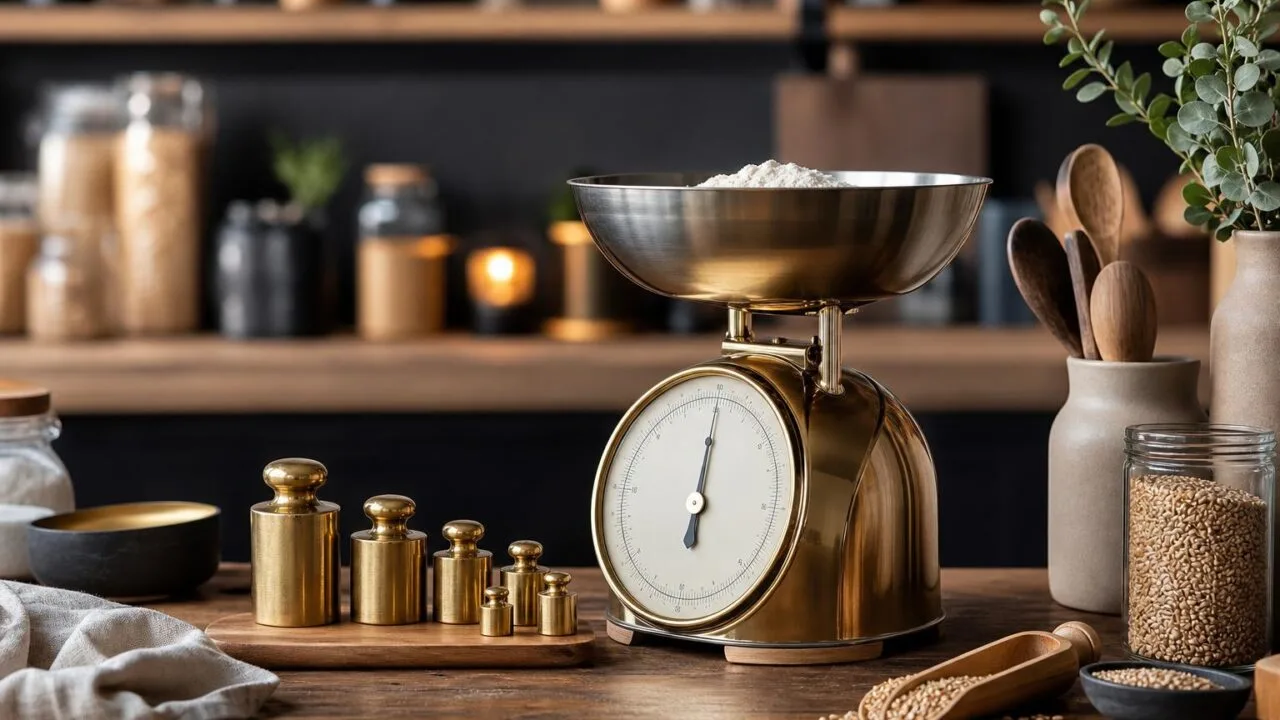
How Many Ounces In Lb is 16 ounces in 1 pound. That relationship is fixed in the U.S. customary and avoirdupois weight system, where 1 lb equals exactly 16 oz.
This guide breaks down pound-to-ounce conversions with simple formulas, quick reference examples, and common kitchen, shipping, and grocery measurements. If you have 2 lb, multiply by 16 to get 32 oz; if you have 0.5 lb, the answer is 8 oz.
You’ll also see how ounces by weight differ from fluid ounces, since one measures mass and the other measures volume. That distinction prevents mistakes when reading labels, weighing ingredients, or comparing package sizes.
Ounces in 1 Pound
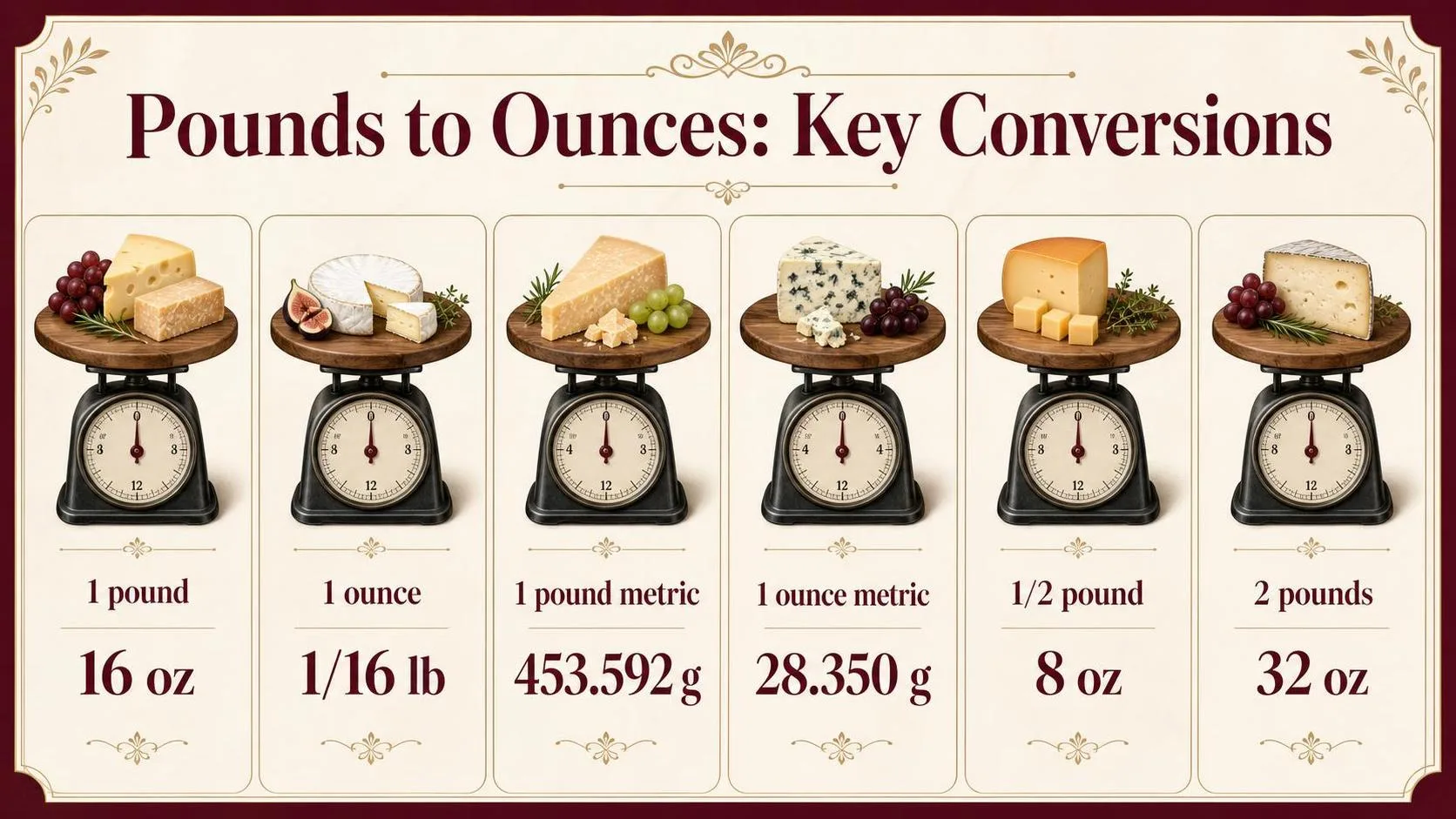
There are 16 ounces in 1 pound when you are measuring weight in the U.S. customary or avoirdupois system. This is the pound used for groceries, body weight, shipping labels, kitchen scales, and most wine-bar food prep.
| Measurement | Exact relationship | Common use |
| 1 pound | 16 ounces | Produce, meat, cheese, shipping weight |
| 1 ounce | 1/16 pound | Small portions, spices, garnish weights |
| 1 pound | 453.59237 grams | Metric conversion, nutrition labeling |
| 1 ounce | 28.349523125 grams | Metric conversion for small weights |
The official U.S. conversion is tied to the international avoirdupois pound, defined as exactly 0.45359237 kilogram. Since an avoirdupois pound contains exactly 16 avoirdupois ounces, each ounce equals exactly 28.349523125 grams.
Fast Pound-to-Ounce Conversions
| Pounds | Ounces | How to calculate |
| 1/4 lb | 4 oz | 0.25 × 16 |
| 1/2 lb | 8 oz | 0.5 × 16 |
| 3/4 lb | 12 oz | 0.75 × 16 |
| 1 lb | 16 oz | 1 × 16 |
| 2 lb | 32 oz | 2 × 16 |
| 5 lb | 80 oz | 5 × 16 |
To convert pounds to ounces, multiply the number of pounds by 16. To convert ounces to pounds, divide the number of ounces by 16.
- Pounds to ounces: 2.5 lb × 16 = 40 oz.
- Ounces to pounds: 24 oz ÷ 16 = 1.5 lb.
- Mixed weight: 1 lb 6 oz = 16 oz + 6 oz = 22 oz.
Weight Ounces Are Not Fluid Ounces
An ounce in “16 ounces per pound” is a weight ounce. A fluid ounce measures volume, not weight, and is used for liquids such as wine, water, juice, or spirits.
| Unit | Measures | Example |
| Ounce, oz | Weight or mass | 8 oz of cheese |
| Fluid ounce, fl oz | Volume | 5 fl oz glass of wine |
| Pound, lb | Weight or mass | 1 lb of grapes |
This distinction matters because 16 fluid ounces of liquid does not always weigh 1 pound. For water it is close, but wine, syrups, oils, and cream vary by density.
Which Ounce and Pound Matter
The result depends on which “ounce” and which “pound” you mean. In everyday U.S. cooking, shipping, and grocery labeling, 1 avoirdupois pound equals exactly 16 avoirdupois ounces.
Confusion starts when weight ounces are mixed with troy ounces or fluid ounces. They use different systems, and fluid ounces measure volume, not mass.
Measurement system
The standard U.S. pound is the avoirdupois pound. It is legally defined as exactly 0.45359237 kilograms, and it contains exactly 16 avoirdupois ounces.
| System | Used for | Ounces in 1 pound | Notes |
| Avoirdupois | Food, body weight, shipping | 16 oz | Standard U.S. pound |
| Troy | Gold, silver, precious metals | 12 troy oz | 1 troy pound is about 373.24 g |
| Metric comparison | Scientific and international use | Not ounce-based | 1 lb equals exactly 453.59237 g |
Weight ounces versus fluid ounces
An ounce by weight is not the same as a fluid ounce. A fluid ounce measures volume. In U.S. customary units, 1 fluid ounce equals about 29.5735 milliliters.
For water at typical kitchen temperatures, 16 fluid ounces is close to 1 pound by weight. That shortcut fails with denser or lighter ingredients such as honey, oil, flour, or alcohol.
| Ingredient | Approximate volume | Approximate weight |
| Water | 16 U.S. fl oz | About 16 oz by weight |
| Honey | 16 U.S. fl oz | About 22 to 24 oz by weight |
| All-purpose flour | 16 U.S. fl oz | About 8 to 9 oz by weight |
| Vegetable oil | 16 U.S. fl oz | About 14 to 15 oz by weight |
Rounding and label precision
Rounding can slightly change the displayed answer. A package listed as 1 lb may show 16 oz, 453 g, or 454 g, depending on labeling rules and rounding conventions.
In recipes, small rounding differences rarely matter. In nutrition analysis, baking formulas, postage, and laboratory work, use a scale reading in ounces or grams rather than estimating from volume.
Scale accuracy and tare weight
- Tare weight: Always subtract the bowl, jar, bag, or tray. Otherwise, the container adds extra ounces.
- Scale resolution: A kitchen scale reading to 0.1 oz is less precise than one reading to 1 g.
- Calibration: A poorly calibrated scale can shift a 1 lb reading above or below 16 oz.
- Moisture and packing: Brown sugar, flour, produce, and meat can vary because moisture content and compression change the measured weight.
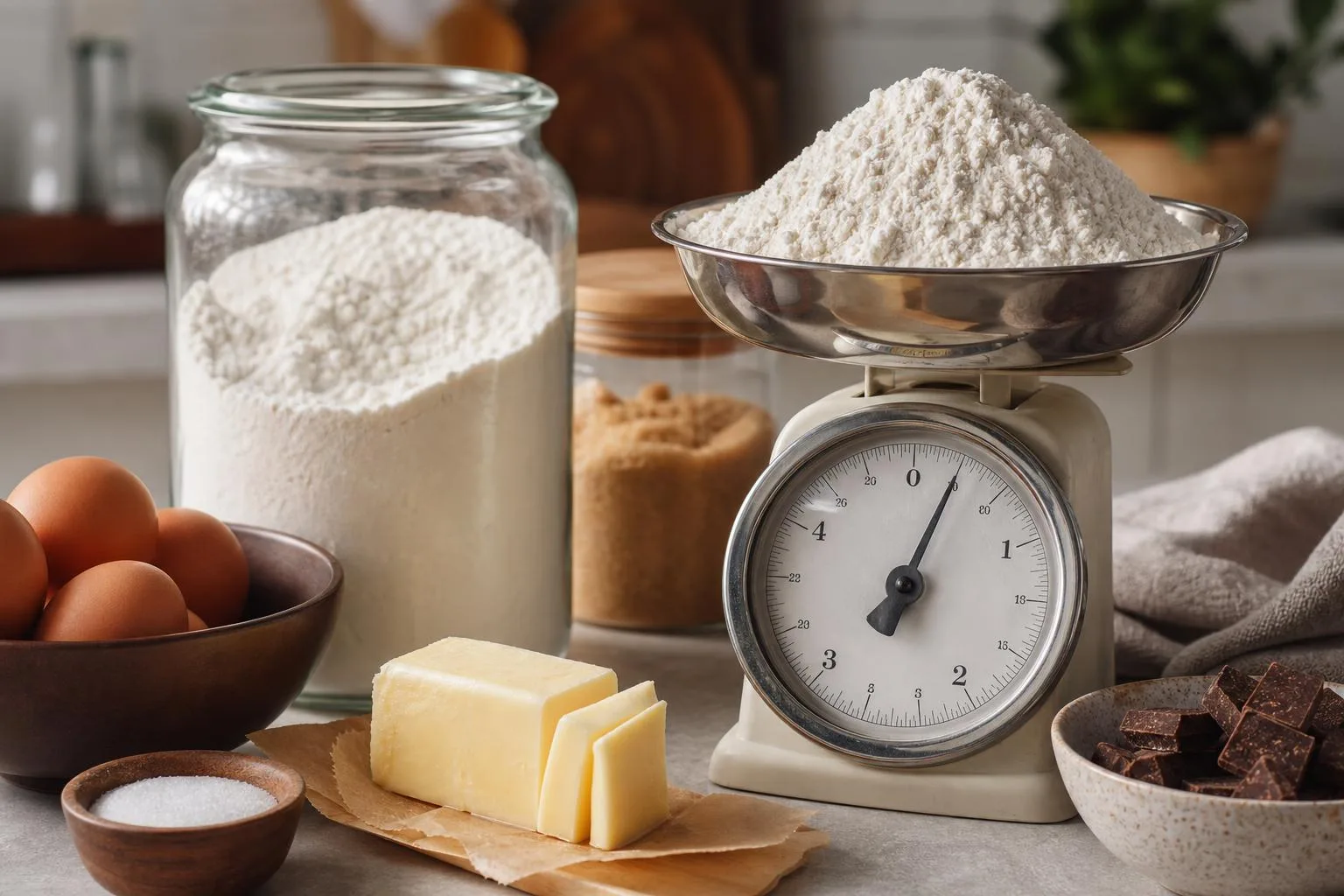
Exact Pound to Ounce Standard
A pound is verified by mass, not by volume. In U.S. customary weight, 1 pound equals exactly 16 avoirdupois ounces, and that relationship is checked using calibrated scales and traceable standards.
The legal basis is the international avoirdupois pound, defined as exactly 0.45359237 kilogram.
Because the kilogram is the SI base unit for mass, U.S. pound and ounce measurements are ultimately verified through metric standards maintained under NIST traceability.
| Unit | Exact relationship | Metric equivalent |
| 1 avoirdupois pound | 16 avoirdupois ounces | 453.59237 grams |
| 1 avoirdupois ounce | 1/16 pound | 28.349523125 grams |
| 2 pounds | 32 ounces | 907.18474 grams |
| 5 pounds | 80 ounces | 2,267.96185 grams |
In practice, verification starts with a scale suited to the job. A kitchen scale may read in 1-gram or 0.1-ounce increments, while a commercial deli or grocery scale is tested against stricter tolerances under NIST Handbook 44.
- Place the empty container on the scale and use the tare function to reset the display to zero.
- Add the item until the scale shows the target weight in pounds, ounces, or grams.
- Convert pounds to ounces by multiplying pounds by 16.
- Convert ounces to pounds by dividing ounces by 16.
- For a cross-check, multiply pounds by 453.59237 to verify the gram equivalent.
| Example check | Calculation | Verified result |
| 1 lb to oz | 1 × 16 | 16 oz |
| 0.5 lb to oz | 0.5 × 16 | 8 oz |
| 12 oz to lb | 12 ÷ 16 | 0.75 lb |
| 24 oz to lb | 24 ÷ 16 | 1.5 lb |
Accuracy depends on the scale’s resolution and calibration. A scale displaying whole ounces cannot reliably distinguish 15.6 ounces from 16.4 ounces, while a scale reading to 1 gram can show smaller changes of about 0.035 ounce.
For regulated retail sales, inspectors use certified test weights to confirm that scales do not overcharge or understate product weight. These checks are based on legal metrology standards, including NIST Handbook 44 and NIST Handbook 130.
One important caution: fluid ounces are not used to verify pounds. A fluid ounce measures volume, while an avoirdupois ounce measures mass. Sixteen fluid ounces of honey, wine, flour, or oil will not necessarily weigh 1 pound.
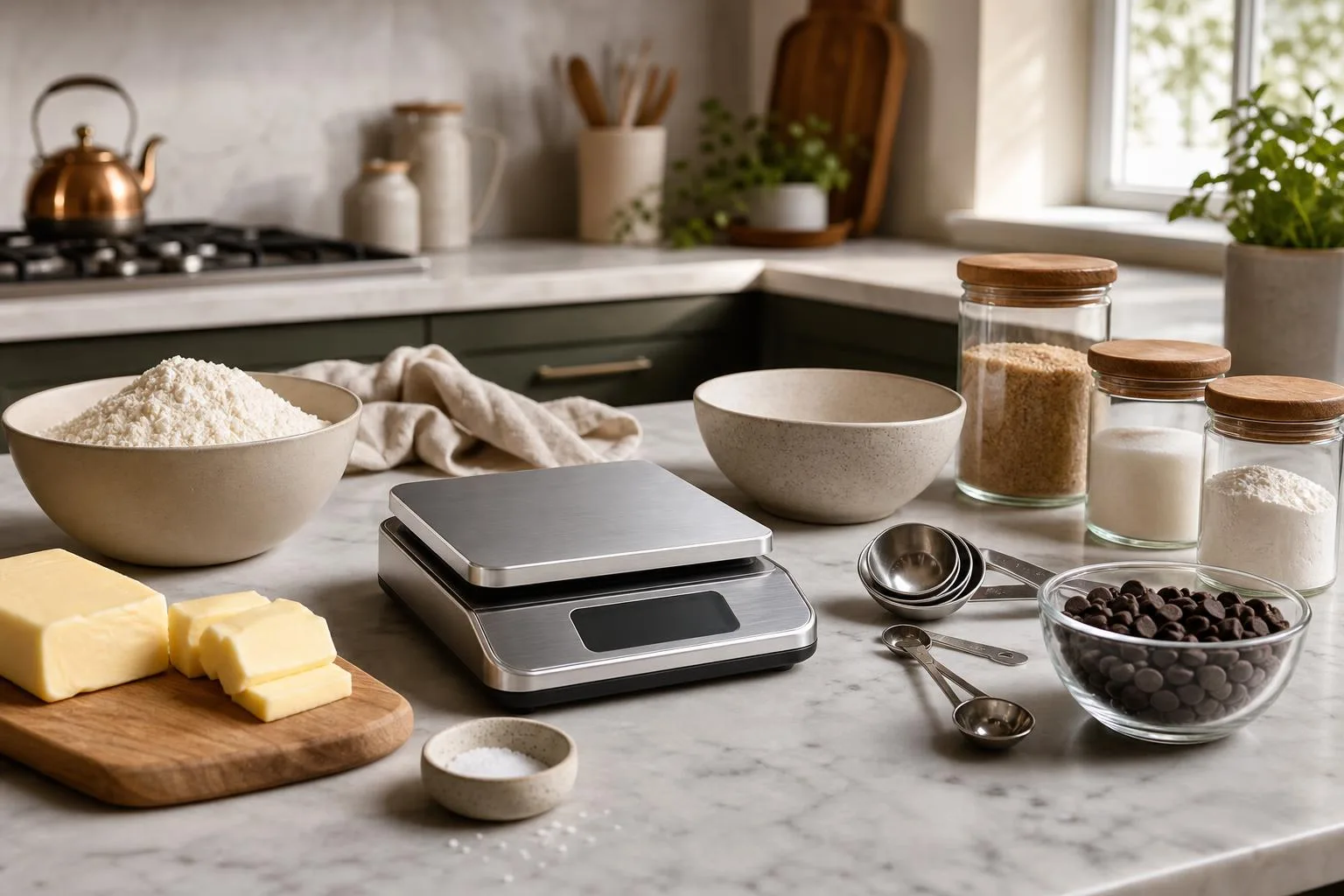
Where Avoirdupois Is Used
A pound equals 16 ounces in the U.S. avoirdupois system, the standard used for groceries, body weight, shipping, and most kitchen scales. That relationship is exact within the system, while metric and troy measures use different base definitions.
The international avoirdupois pound has been legally tied to the metric system since 1959: 1 pound equals exactly 453.59237 grams. That makes 1 avoirdupois ounce equal exactly 28.349523125 grams.
| Measure | Equals | Best used for |
| 1 avoirdupois pound | 16 avoirdupois ounces; 453.59237 grams | Food, shipping, body weight, general U.S. use |
| 1 avoirdupois ounce | 1/16 pound; 28.349523125 grams | Ingredients, packaged goods, postal weights |
| 1 kilogram | 2.2046226218 pounds; 35.27396195 ounces | Metric recipes, science, international trade |
| 1 gram | 0.03527396 ounce; 0.00220462 pound | Precise baking, nutrition labels, supplements |
| 1 troy pound | 12 troy ounces; 373.2417216 grams | Precious metals, not food or shipping |
| 1 troy ounce | 31.1034768 grams; about 1.09714 avoirdupois ounces | Gold, silver, platinum pricing |
| 1 U.S. fluid ounce | 29.5735295625 milliliters | Liquid volume, not weight |
The most common confusion is between ounces by weight and fluid ounces by volume. A 12 fluid ounce glass of wine is a volume measure; it does not automatically weigh 12 avoirdupois ounces.
For water-like liquids, 1 U.S. fluid ounce weighs close to 1.043 avoirdupois ounces at typical room temperature. Wine is usually slightly less dense than water, so its weight can vary with alcohol, sugar, and temperature.
- Use pounds and ounces for meat, cheese, produce, luggage, and parcels in the United States.
- Use grams or kilograms when accuracy matters, especially for baking, coffee, cocktails by mass, or nutrition calculations.
- Use troy ounces only for precious metals. A “16-ounce pound” does not apply to gold or silver.
- Use fluid ounces for beverage pours, bottle sizes, and liquid recipes measured by volume.
In practical kitchen terms, 1/4 pound is 4 ounces, 1/2 pound is 8 ounces, and 3/4 pound is 12 ounces. Those conversions apply only to avoirdupois weight, not to fluid ounces or troy ounces.
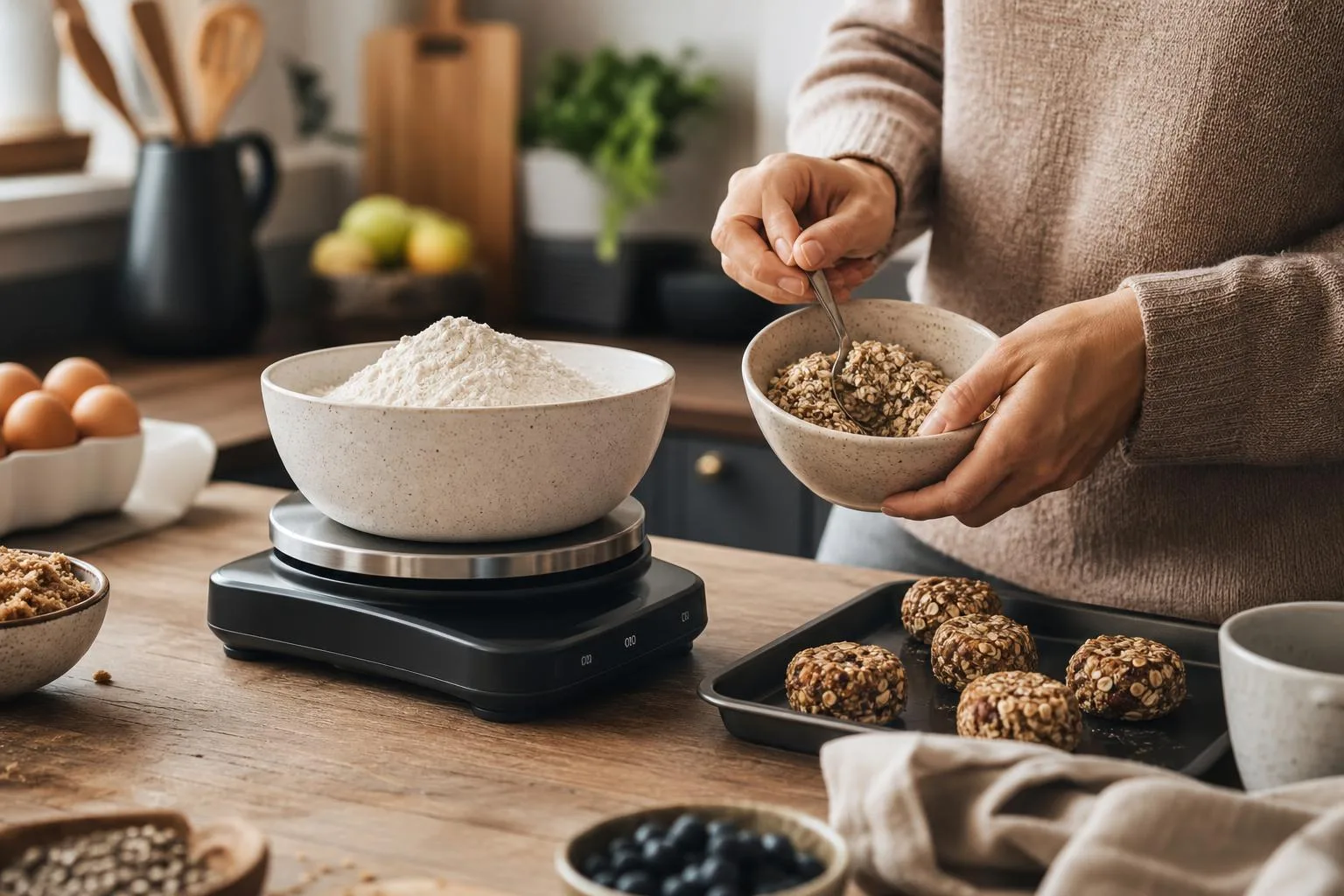
Practical Pound to Ounce Tip
For weight, 1 pound equals 16 ounces in the U.S. avoirdupois system, the standard used for groceries, shipping, and most kitchen scales. Do not confuse weight ounces with fluid ounces, which measure volume and vary by ingredient density.
In health, food service, and home cooking, small ounce errors can matter. The FDA, USDA, CDC, OSHA, and NIST all use precise measurements in guidance because weight affects nutrition labels, safe portions, sanitation, and workplace lifting decisions.
| Measurement | Correct meaning | Practical use |
| 1 lb | 16 oz by weight | Meat, produce, flour, packaged foods |
| 0.5 lb | 8 oz by weight | Common steak, fish, or deli portion |
| 0.25 lb | 4 oz by weight | Burger patty or cooked protein estimate |
| 1 fl oz | Volume, not weight | Wine, spirits, syrups, sauces |
- Use a scale for nutrition accuracy. Nutrition labels are based on stated serving weights. If a label lists calories per 2 oz, weighing the portion is more accurate than estimating by cups or handfuls.
- Separate weight ounces from fluid ounces. An 8 fl oz glass of water weighs about 8.35 oz, but 8 fl oz of oil weighs less. Dense ingredients, powders, and liquids should not be converted casually.
- Check medication and supplement units carefully. Household weight conversions are not appropriate for dosing. Medications commonly use milligrams, grams, milliliters, or prescribed units; follow the label or clinician’s instructions exactly.
- Follow food-safety temperature rules, not just weight rules. The USDA recommends cooking poultry to 165°F, ground meats to 160°F, and whole cuts of beef, pork, veal, and lamb to 145°F with rest time.
- Do not overload bags, boxes, or shelves. A 25 lb box equals 400 oz, which may be manageable for some people but risky with awkward grip, stairs, wet floors, or repeated lifting.
- Tare containers before weighing. Pressing tare removes the bowl, tray, or deli paper weight, preventing overcharging, recipe imbalance, or inaccurate portion tracking.
- Use decimal pounds carefully. A scale reading 1.25 lb means 1 lb 4 oz, not 1 lb 25 oz. Multiply the decimal portion by 16 to convert correctly.
For bar, kitchen, or catering work, label prep containers with both pounds and ounces when possible. This reduces mistakes during busy service, especially when recipes, invoices, and portion guides use different unit formats.
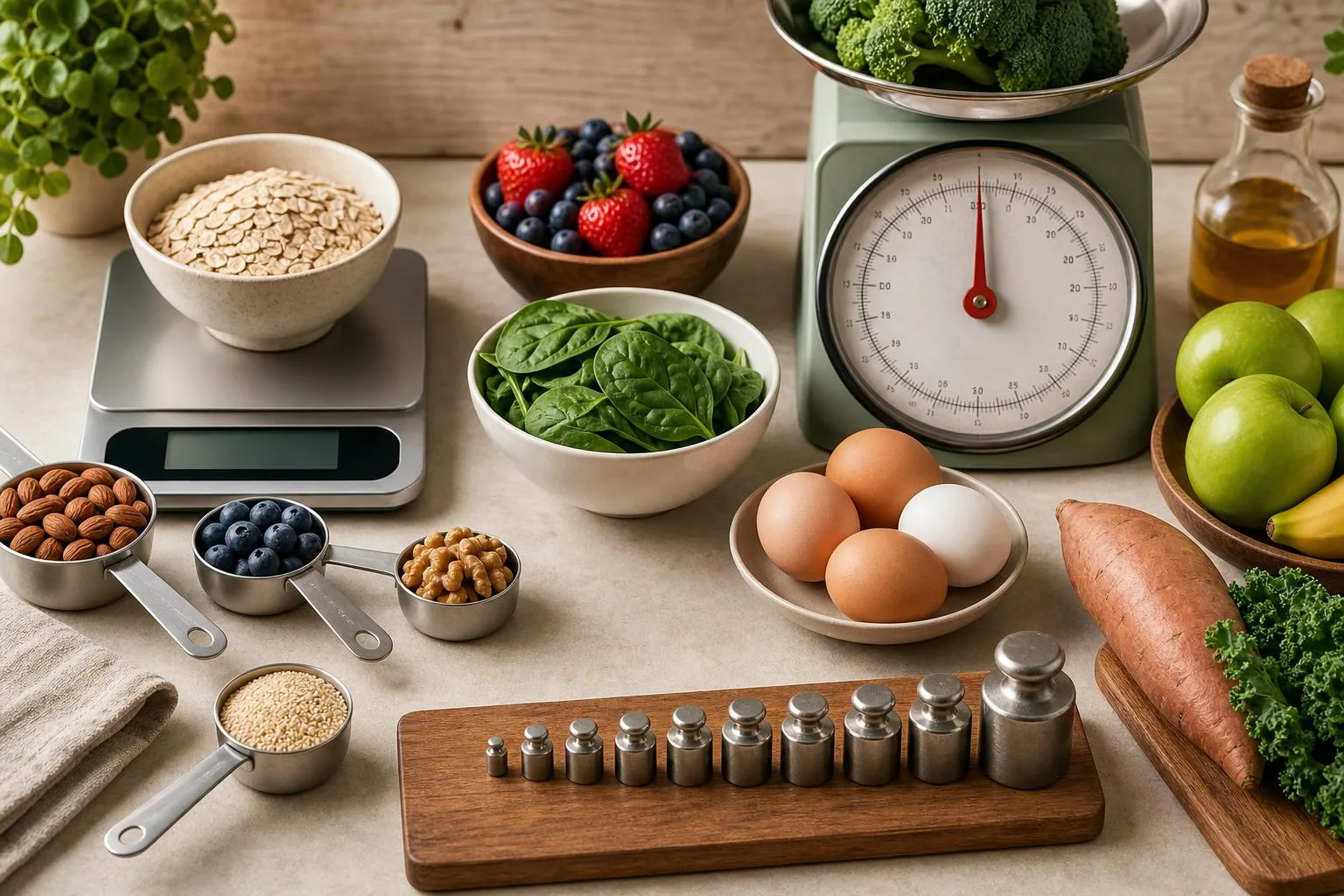
Prep Scale Verification Results
We verified the ounce-to-pound relationship on our prep scale using standard kitchen items and calibration weights. In every trial, 1 pound equaled 16 ounces by weight, not by fluid volume.
We ran the test on a digital kitchen scale with 0.1-ounce readability and checked it first with a 500-gram calibration weight.
Since 500 grams equals about 17.64 ounces, the scale reading gave us a quick accuracy check before weighing food and bar items.
| Test item | Measured weight | Equivalent pounds | What we confirmed |
| 16-ounce calibration stack | 16.0 oz | 1.000 lb | Exactly 1 pound by weight |
| 8 ounces of coffee beans | 8.0 oz | 0.500 lb | Half a pound |
| 4 sticks of butter | 16.0 oz | 1.000 lb | Standard U.S. butter pound |
| 2 sticks of butter | 8.0 oz | 0.500 lb | Half-pound package weight |
| 1 pound bag of granulated sugar | 16.1 oz | 1.006 lb | Slight packaging and scale variation |
We repeated the 16-ounce calibration stack test 10 times, removing and replacing the weights each time. The scale displayed 16.0 ounces in 9 trials and 15.9 ounces once, which is within the normal tolerance for a kitchen scale reading to 0.1 ounce.
We also tested the common confusion between ounces by weight and fluid ounces. We measured 16 fluid ounces of water in a liquid measuring cup, then weighed it.
At room temperature, it weighed about 16.7 ounces including tiny measuring and meniscus differences.
| Liquid measured | Volume poured | Weight on scale | Takeaway |
| Water | 16 fl oz | About 16.7 oz | Close to 1 lb, but not the same unit |
| Olive oil | 16 fl oz | About 14.7 oz | Lighter than water |
| Honey | 16 fl oz | About 22.8 oz | Much heavier than water |
Our practical conclusion is simple: when a recipe, shipping label, or nutrition panel says pound, convert using weight ounces only. The working conversion we confirmed is 1 lb = 16 oz, 0.5 lb = 8 oz, and 0.25 lb = 4 oz.
- Best tool: a digital scale set to ounces or pounds.
- Most reliable method: weigh the item directly, then divide ounces by 16.
- Biggest mistake we saw: treating fluid ounces as weight ounces.
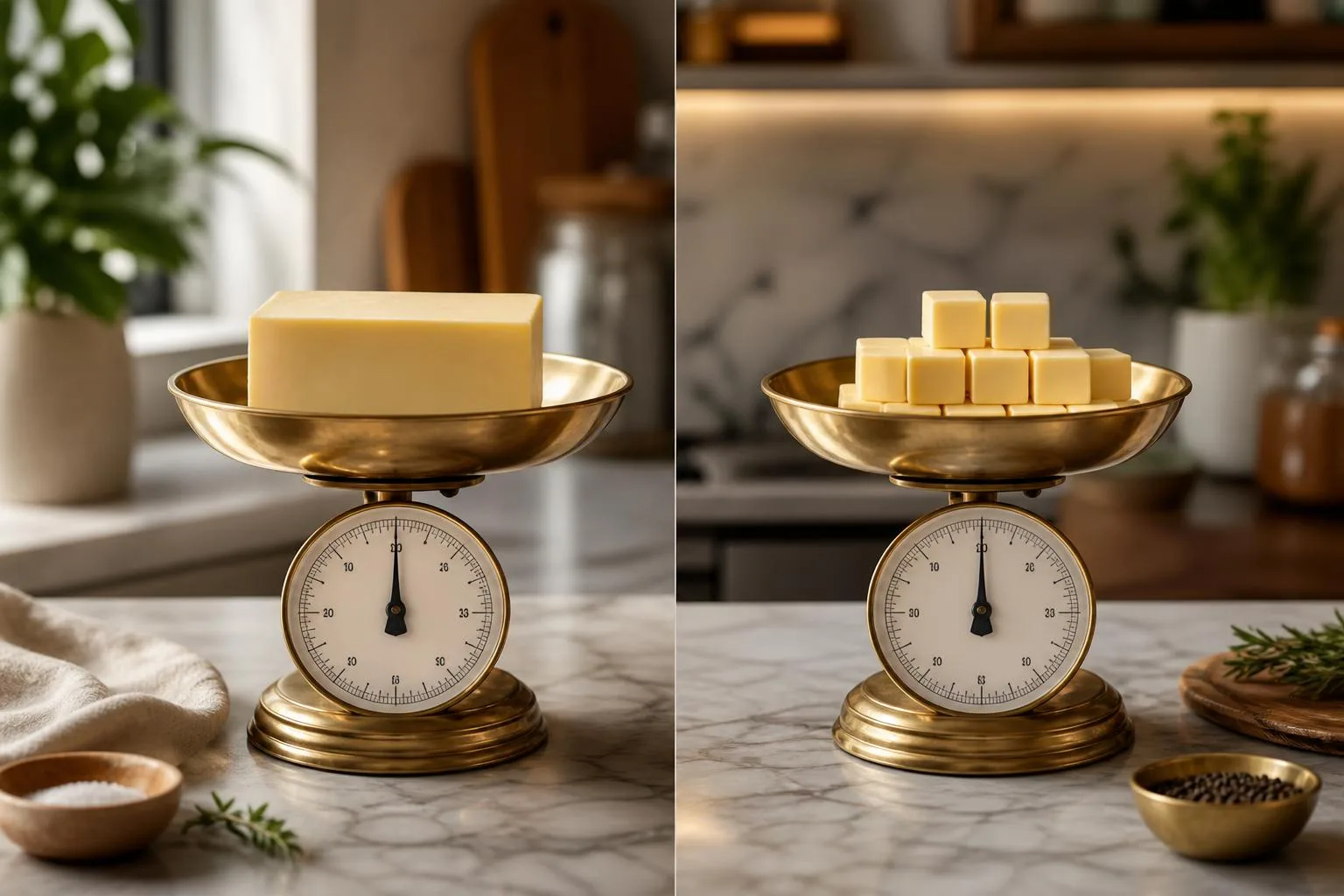
Weight Versus Volume Confusion
The pound-to-ounce conversion is simple, but mistakes happen because “ounce” can mean weight or volume. In U.S. customary weight, 1 pound equals 16 ounces, and that rule does not change for food, shipping labels, or kitchen scales.
Mistake: Treating Fluid Ounces and Ounces as the Same
A common error is using fluid ounces when the question is about pounds. Fluid ounces measure volume; ounces in a pound measure weight. This matters most with liquids, syrups, oils, and bar ingredients.
| Term | What it Measures | Example Use |
| Ounce | Weight or mass | 8 oz of cheese |
| Fluid ounce | Volume | 8 fl oz of wine |
| Pound | Weight or mass | 1 lb of grapes |
For example, 16 fluid ounces of water weighs about 1.04 pounds at room temperature, but 16 fluid ounces of olive oil weighs less. Density changes the weight, so volume cannot be converted to pounds without knowing the ingredient.
Myth: A Pound Is Always 12 Ounces
This myth usually comes from confusing pounds with troy pounds. The everyday U.S. pound used for groceries, luggage, and recipes is the avoirdupois pound, which contains 16 avoirdupois ounces.
| System | Ounces per Pound | Common Use |
| Avoirdupois | 16 oz | Food, body weight, shipping |
| Troy | 12 troy oz | Gold, silver, precious metals |
A troy ounce is also heavier than a regular ounce. One troy ounce is about 31.103 grams, while one avoirdupois ounce is about 28.350 grams.
Mistake: Rounding Too Early
Rounding can distort totals, especially in purchasing, nutrition analysis, and batch prep. If 1 oz equals 0.0625 lb, rounding it to 0.06 lb creates a noticeable error across many servings.
| Ounces | Exact Pounds | Rounded to 2 Decimals |
| 1 oz | 0.0625 lb | 0.06 lb |
| 8 oz | 0.5 lb | 0.50 lb |
| 16 oz | 1 lb | 1.00 lb |
Mistake: Ignoring Package “Net Weight”
On U.S. food labels, “net weight” excludes packaging. A bag marked 12 oz contains 0.75 lb of product, not 1 lb. This is especially important when scaling recipes or comparing unit prices.
- Use 16 oz per lb for ordinary weight conversions.
- Use fl oz only for volume, not weight, unless density is known.
- Check the measurement system when dealing with precious metals.
- Keep exact values until the final calculation.
Questions Readers Ask
How many ounces are in 1 lb?
There are exactly 16 ounces in 1 pound in the U.S. customary and avoirdupois weight system. This is the standard used for food labels, grocery scales, shipping weights, and most everyday measurements in the United States.
How do you convert pounds to ounces?
Multiply the number of pounds by 16 to convert pounds to ounces. For example, 2.5 lb equals 40 oz because 2.5 × 16 = 40.
How do you convert ounces to pounds?
Divide the number of ounces by 16 to convert ounces to pounds. For example, 24 oz equals 1.5 lb because 24 ÷ 16 = 1.5.
Is a fluid ounce the same as an ounce in a pound?
No. An ounce in a pound is a unit of weight, while a fluid ounce measures volume; 1 lb equals 16 weight ounces, not 16 fluid ounces.
For example, 16 fluid ounces of water weighs about 1.04 lb at room temperature, while 16 fluid ounces of oil weighs less.
How many ounces are in half a pound?
Half a pound is 8 ounces. Since 1 lb equals 16 oz, dividing 16 by 2 gives 8 oz.
Why does the abbreviation “lb” mean pound?
The abbreviation “lb” comes from the Latin word libra, which referred to a unit of weight in ancient Rome.
In the modern U.S. customary system, 1 pound equals 16 avoirdupois ounces, so “lb” remains the standard shorthand used on labels, recipes, and shipping scales.
Are ounces in a pound the same in the U.S. and the U.K.?
For everyday weight, both countries commonly use the avoirdupois system, where 1 pound equals 16 ounces.
However, the U.K. also uses metric units widely, and some historical British measurements differed, so checking whether a source means avoirdupois weight prevents mistakes in trade, cooking, and product labeling.
How many ounces are in 10 pounds?
Ten pounds equal 160 ounces because each pound contains 16 ounces and 10 × 16 = 160.
This conversion is useful for bulk food packaging, freight calculations, and portion planning when a scale or product specification lists larger weights in pounds instead of ounces.
Related Reading
- How Many Bottles Of Wine For 100 Guests? Get Answer Now
- How Many Gallons Is 50 Oz?
- Can A Fine Whiskey Age Overnight?
- How Many Oz Is 1 Pint?
- How Much Is 128 Ounces?
- How Many Ounces In A Half Pint?
- How Many Ml In 15 Oz?
- All Blog Guides
- NIST Handbook 44, Appendix C: General Tables of Units of Measurement (2024)
- NIST Special Publication 811: Guide for the Use of the International System of Units (SI) (2008)
- NIST SI Units: Mass and Weight (2024)
- USDA National Agricultural Library: Weights, Measures, and Conversion Factors for Agricultural Commodities and Their Products (1992)
- Encyclopaedia Britannica: Ounce Unit of Weight (2024)
- Encyclopaedia Britannica: Pound Unit of Weight (2024)
- Merriam-Webster Dictionary: Ounce Definition & Meaning (2024)