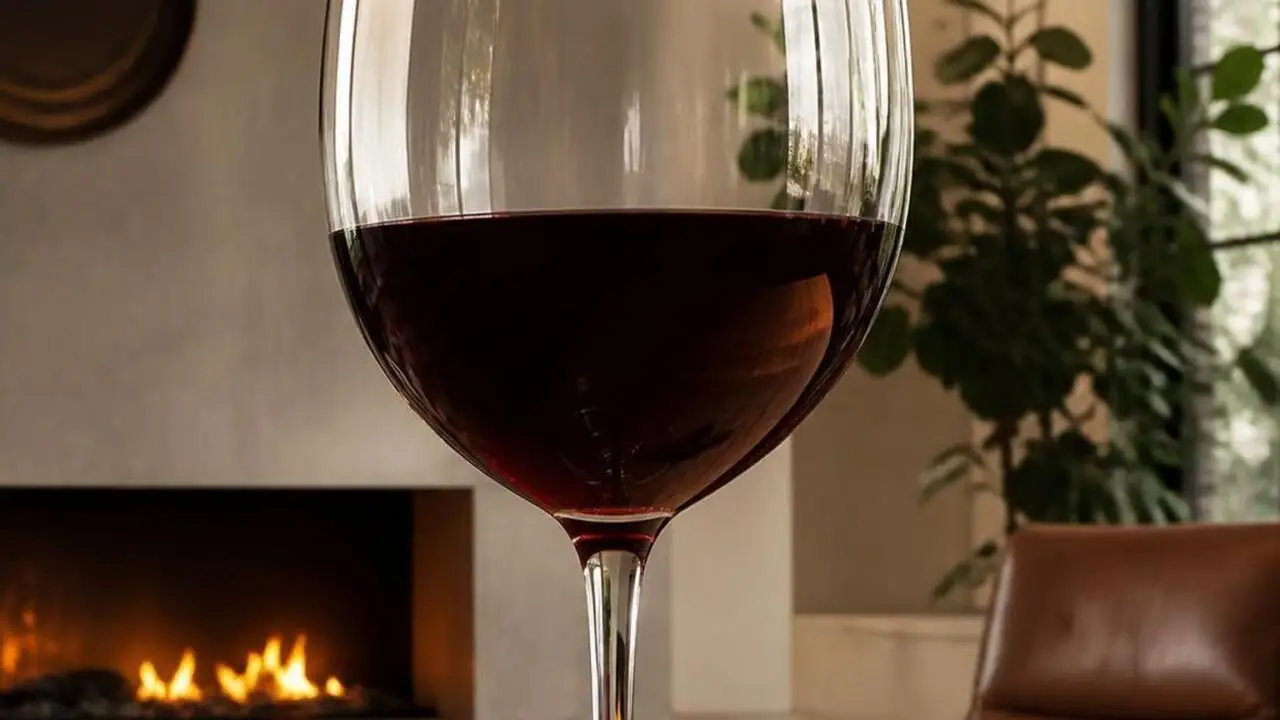
biggest glass of wine meme is a social-media joke built around comically oversized wine glasses used to signal stress, indulgence, celebration, or “one glass” denial.
The meme works because wine already has a standard pour: in the U.S., one serving is usually 5 ounces, while many novelty glasses hold 750 milliliters, the full bottle. That contrast makes the image instantly legible.
This article explains where the format appears, why the joke lands, how it connects to wine culture, and what to know before treating oversized glassware as more than a visual punchline.
Where the oversized wine glass meme started
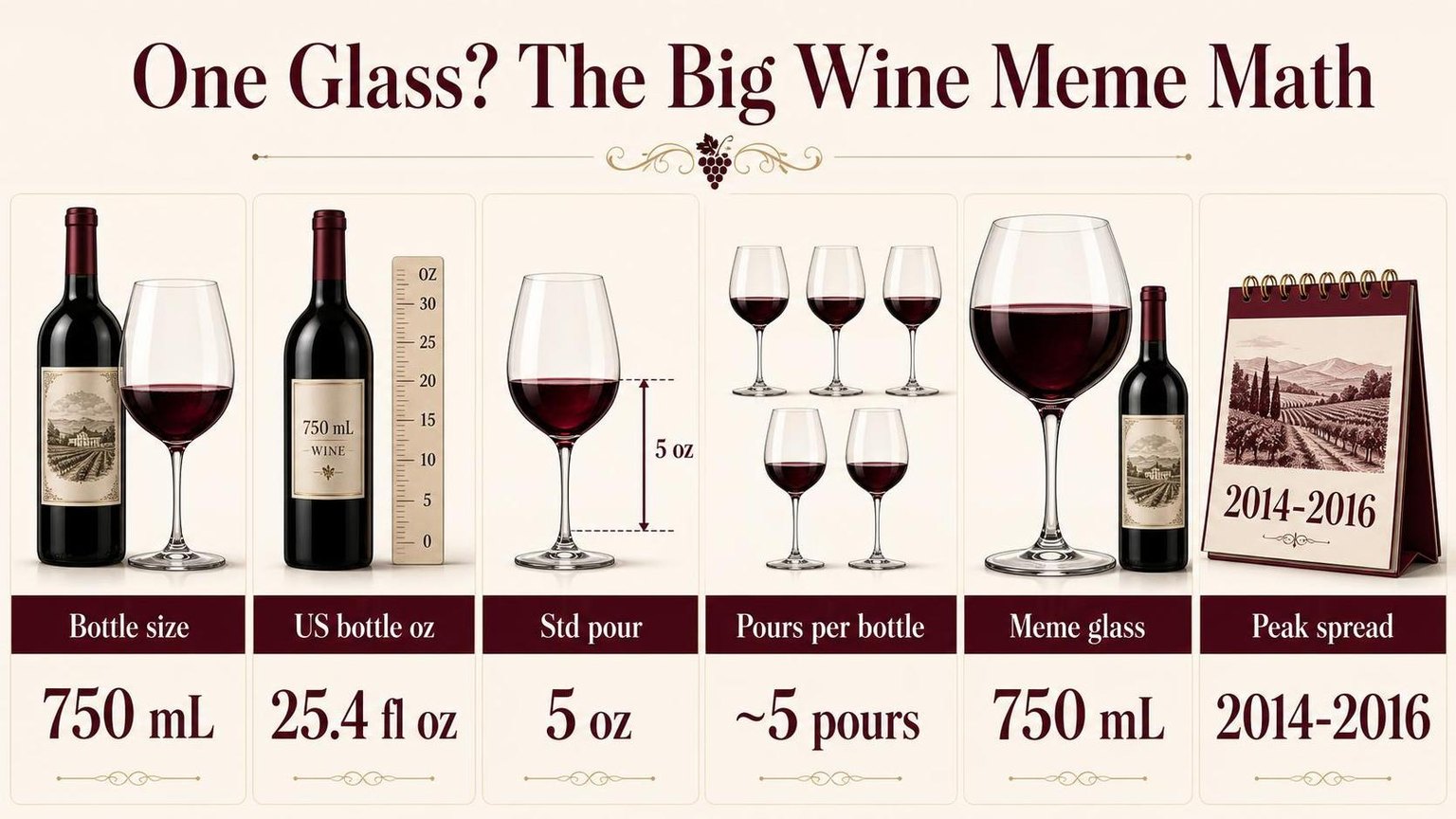
The oversized wine glass meme did not begin with one viral post. It grew out of a mid-2010s novelty product boom: extra-large stemware marketed with the joke that a person could still truthfully say they had “one glass” of wine.
The format stuck because the image was instantly readable. A huge bowl, a tiny sense of proportion, and a familiar punch line turned a retail gag into a reusable meme across Facebook, Pinterest, Instagram, and later TikTok.
The clearest origin point is the novelty “single glass” wine glass sold to hold an entire standard bottle. A standard wine bottle in the US is 750 milliliters, or about 25.4 fluid ounces.
Novelty glasses advertised as holding 750 milliliters appeared widely in online retail during the 2010s.
That product mattered more than any single caption. Once a glass was large enough to fit a whole bottle, the joke wrote itself: “I only had one glass.” The meme’s humor came from literal truth colliding with obvious excess.
| Element | Specific fact |
| Standard wine bottle | 750 mL, about 25.4 US fl oz |
| Typical restaurant pour | 5 oz in the US, or about 148 mL |
| Equivalent pours in one bottle | About 5 standard 5 oz pours |
| Novelty oversized glass | Often marketed to hold 750 mL, or 1 full bottle |
The timing also fits broader internet culture. By 2014 to 2016, “wine mom” humor, drinking memes, and giftable kitchen novelties were already strong sellers on Facebook-heavy ecommerce.
Giant glasses became visual shorthand for the same joke in mugs, shirts, and signs.
Pinterest and Facebook helped early spread because the image worked without context.
A photo of a person holding a comically large glass or a product shot labeled “one glass” could be reposted thousands of times without credit, which is why the meme has no single clean authorship trail.
Instagram amplified the joke further. Oversized stemware photographed well, especially with wide-angle phone shots that exaggerated scale.
The meme moved from product listing to reaction image: people used giant-glass photos to mean “long day,” “don’t ask,” or “pour generously.”.
The biggest reason it lasted is that it sits on a measurable exaggeration. People know a standard pour is 5 ounces. A glass that holds 25 ounces is funny because it represents roughly five pours while pretending to count as one.
- The joke relies on a real bottle size, not invented math.
- The image is understandable in a second, even with no caption.
- It fits multiple formats: product photo, meme text, party prop, and short video gag.
- It traveled easily because retailers, gift blogs, and social users all shared the same image style.
So the oversized wine glass meme started less as a single meme upload and more as a product-driven visual joke.
Novelty 750-milliliter glasses gave the internet a perfect prop, and social platforms turned that prop into a durable meme about “having one glass” that everyone understood.
Why the huge pour joke works
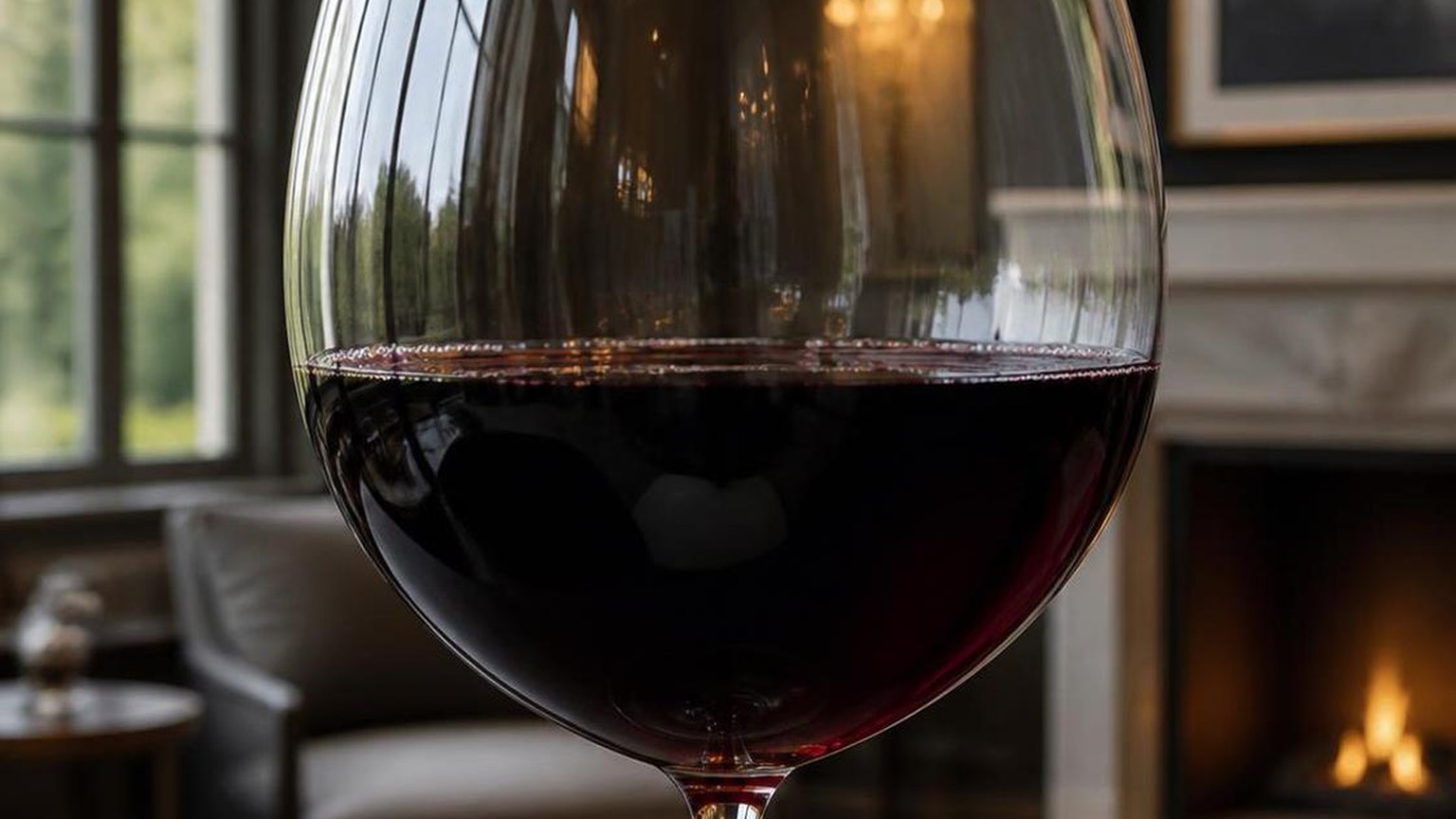
The joke lands because it turns a familiar rule into visible absurdity. Most U.S. drinkers know a normal restaurant pour is about 5 ounces, so a glass filled halfway or to the rim instantly reads as “too much” before anyone says a word.
It also compresses a real feeling into one image. People use the meme to signal stress, celebration, bad dates, long workweeks, or parental exhaustion without explaining the whole story.
Wine service gives the meme a measurable baseline, which makes the exaggeration cleaner. A standard 750 mL bottle holds about 25.4 fluid ounces. At a 5-ounce pour, that bottle yields roughly five glasses, with a little left over.
| Measure | Amount | Why it matters |
| Standard U.S. wine pour | 5 oz | The audience recognizes this as “normal” |
| Standard drink of wine | 5 oz at 12% ABV | Federal guidance uses this benchmark |
| Typical bottle size | 750 mL = 25.4 oz | Shows how fast a “huge pour” consumes a bottle |
| Pour filling a 20 oz goblet halfway | 10 oz | Already equals about 2 standard drinks |
| Pour filling that goblet to 15 oz | 15 oz | Equals about 3 standard drinks |
That math is the engine of the joke. A half-bottle-looking pour is funny because viewers subconsciously calculate it against the 5-ounce norm.
The visual gap between “proper serving” and “coping serving” creates the punch line.
Glassware helps too. Many red wine glasses sold for home use hold 16 to 22 ounces, and some oversized novelty goblets hold far more. When a meme uses a bowl that large, the wine level looks dramatic even before it reaches the widest point.
The format also works because it borrows from older visual comedy. Comedy often scales ordinary objects to absurd size: giant sandwich, giant coffee, giant stack of paperwork. Wine memes do the same with a drink associated with moderation and ritual.
There is a social truth underneath. Surveys and market data consistently show wine is tied to at-home unwinding, especially among adults over 30.
The meme exaggerates that routine, not a fantasy no one recognizes, so it feels relatable rather than random.
It spreads well because the caption can be tiny. “Today was a 15-ounce kind of day” works because the image already carries the setup, conflict, and exaggeration. Users do not need wine expertise to understand the mismatch.
- It uses a universally recognized serving norm.
- It makes stress legible in one glance.
- It turns invisible emotion into a measurable overpour.
- It stays flexible across work, parenting, dating, and holiday jokes.
The best versions keep one foot in reality. If the pour looks physically possible, but socially excessive, the image stays believable enough to sting. That balance between accuracy and exaggeration is why the huge-pour meme keeps getting reused.
Real giant wine glasses versus memes
“Biggest glass of wine” memes work because the image is partly true.
Oversized wine glasses exist in restaurants, novelty shops, and trade displays, but most are props, share vessels, or decorative stemware rather than practical single servings.
The key distinction is capacity versus pour. A giant bowl can hold several standard servings, yet professionals still judge wine by the amount poured, the glass shape, and the headspace left for aroma.
A standard U.S. drink of wine is 5 fluid ounces at about 12% alcohol. One 750 mL bottle holds roughly 25.4 fluid ounces, or about five standard 5-ounce pours.
That math explains why meme glasses look funny: one vessel can visually suggest “one glass” while containing half a bottle or more.
Many ordinary wine glasses are already larger than people assume. Modern all-purpose glasses often hold 12 to 18 ounces.
Large red-wine glasses commonly reach 20 to 28 ounces, with some premium models over 30 ounces, even though a normal pour remains 5 to 6 ounces.
| Item | Approximate capacity | Equivalent 5 oz pours |
| Standard serving | 5 oz / 148 mL | 1 |
| 750 mL wine bottle | 25.4 oz / 750 mL | 5.1 |
| Typical large red-wine glass | 22 oz / 650 mL | 4.4 if filled to rim |
| Oversized novelty glass | 30 oz / 887 mL | 6 if filled to rim |
| “Bottle glass” novelty item | 750 mL / 25.4 oz | 5.1 |
The meme version often uses a “bottle glass,” a novelty goblet marketed to hold an entire 750 mL bottle. Those products are real, but they are not standard barware. They are closer to gag gifts than tools for evaluating wine.
Restaurants and wineries also use giant glasses for effect. A large bowl gives more surface area and dramatic presentation, especially for bold reds.
The practical limit is handling: once a glass becomes too wide, too heavy, or too full, swirling and temperature control get worse, not better.
Professional tasting glasses are much smaller than meme glasses. ISO-style tasting stems are usually around 7 to 8.5 ounces total capacity, and they are poured lightly. The reason is consistency, not spectacle.
- Aromas need empty space above the wine, so filling any glass to the rim defeats the purpose.
- Alcohol service is measured by ounces or milliliters poured, not by the size of the bowl.
- Large bowls can improve aeration, but only when the pour stays modest.
- Novelty glasses exaggerate scale for humor, photos, and gifting.
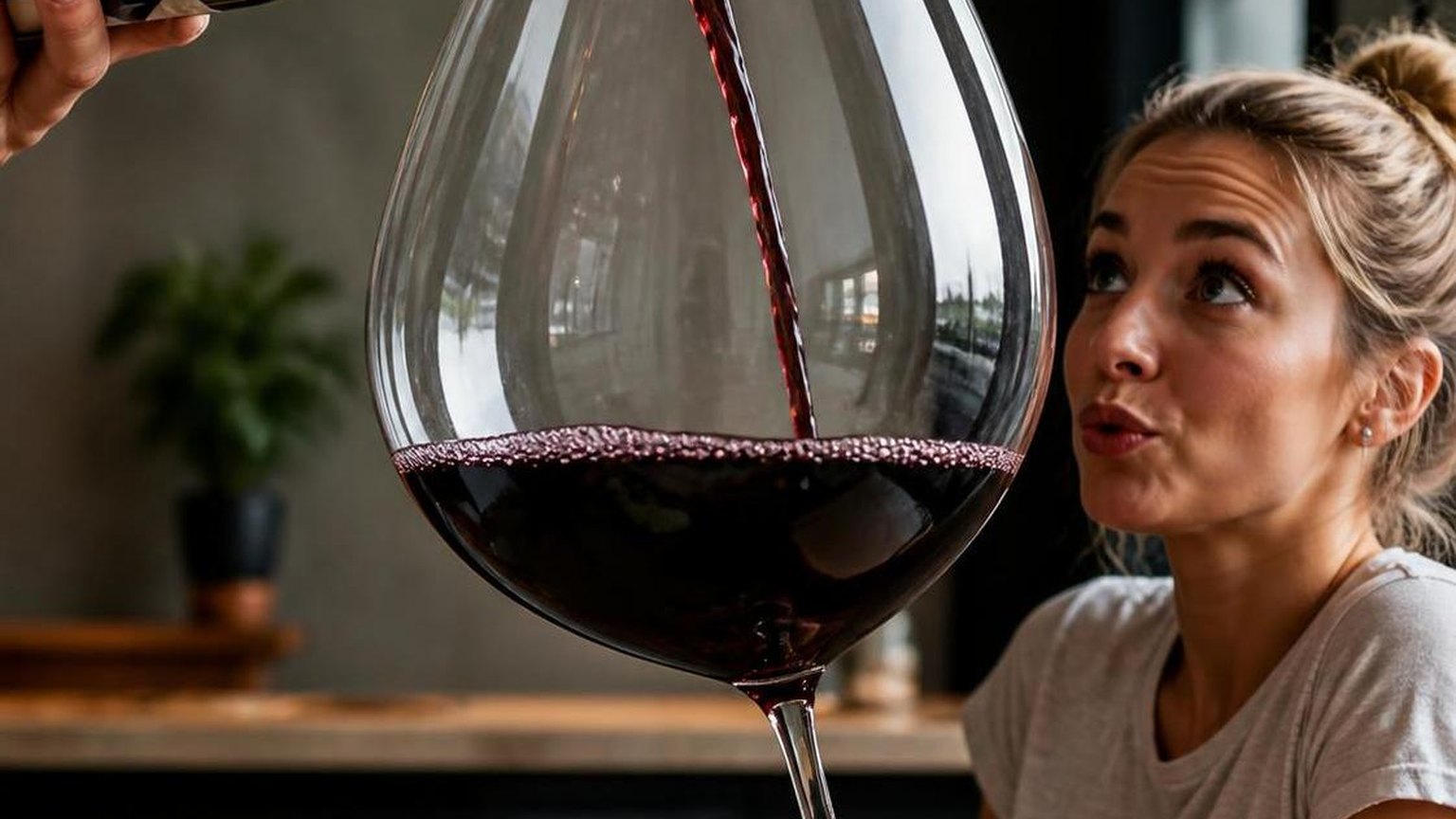
The biggest meme claim is usually visual, not literal. Camera angle, hand placement, and bowl width can make a 20-ounce glass look absurdly huge. Social posts also blur the difference between total capacity and actual wine inside.
So the joke lands because giant wine glasses are real, but the implication is false.
Most “huge wine glass” images show a vessel capable of holding many servings, while the practical, responsible pour inside is still measured like any other glass.
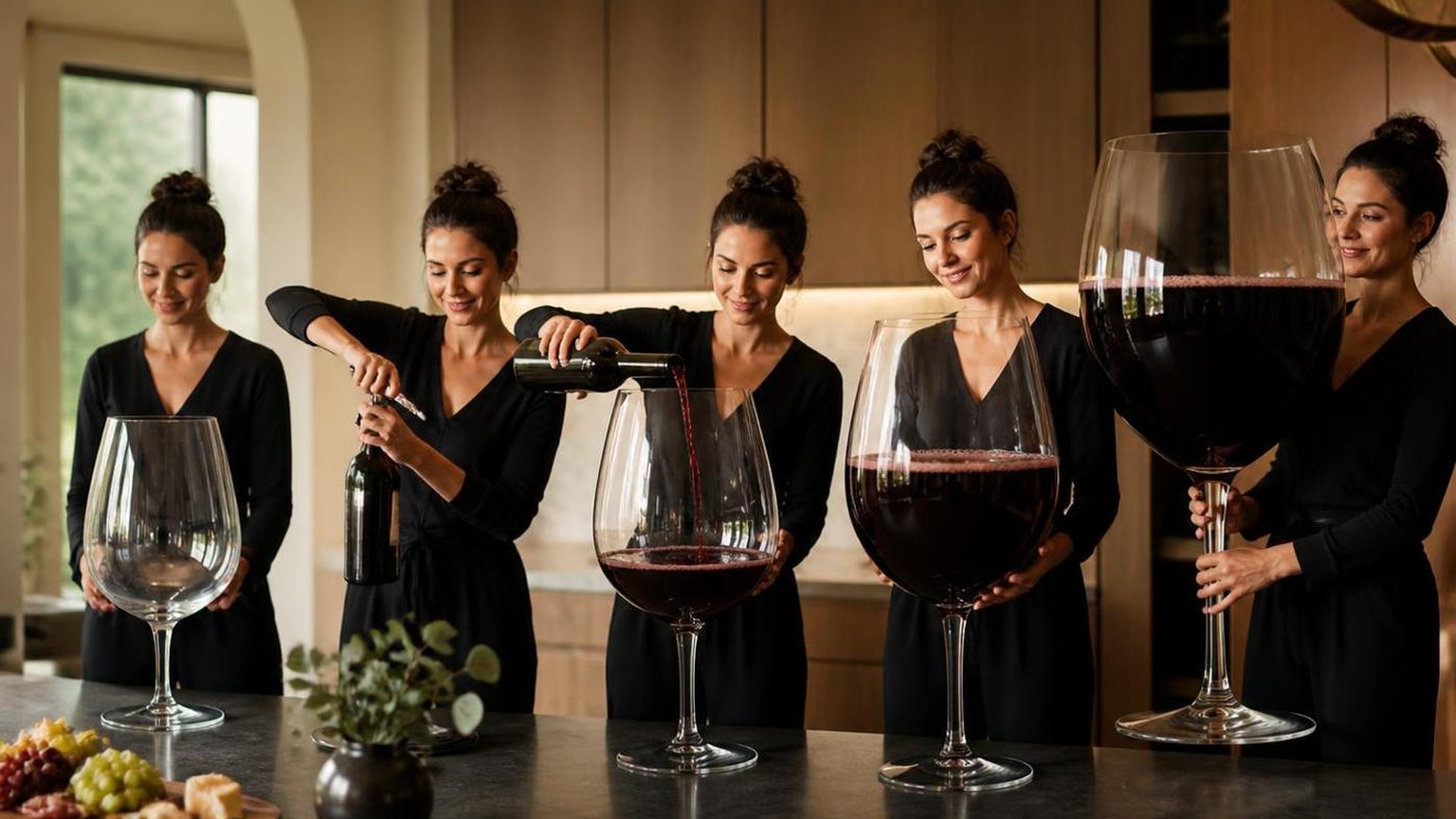
How wine culture fuels the punchline
The “biggest glass of wine” meme works because wine already carries a built-in contradiction: ritual on one side, indulgence on the other. The joke lands when a drink associated with restraint gets paired with cartoonish portion size.
That contrast is rooted in real wine habits. In the U.S., a standard serving of wine is 5 fluid ounces at about 12% alcohol by volume, according to federal dietary guidance and the National Institute on Alcohol Abuse and Alcoholism.
Why the size joke feels instantly believable
Wine culture teaches people to notice the glass before they notice the pour. Bowl shape, rim width, and stem length all signal that glassware matters, which makes exaggerated glass size an easy visual punchline.
At the same time, modern wine service often uses glasses far larger than the liquid actually served. A typical restaurant pour may still be 5 ounces, but the vessel can hold several times that amount.
| Item | Approximate capacity | How it relates to a 5 oz serving |
| U.S. standard wine serving | 5 oz | 1 serving |
| Typical restaurant all-purpose wine glass | 12 to 16 oz | About 2.4 to 3.2 times a serving |
| Large-bowl modern wine glass | 20 to 28 oz | About 4 to 5.6 times a serving |
| Standard wine bottle | 750 mL, about 25.4 oz | About 5 servings |
That scale gap matters. If a meme shows a “glass” that could plausibly fit half a bottle or more, viewers already know the visual language. The joke exaggerates something wine drinkers have seen in real life.
Social permission makes the joke stronger
Wine also occupies a softer cultural space than hard liquor. In American media and marketing, it is often framed as sophisticated, food-friendly, and routine rather than overtly risky.
That framing creates room for ironic excess. Saying “I need the biggest glass of wine” sounds less transgressive than asking for the biggest pour of whiskey, even when the alcohol math can be similar.
| Beverage | Standard drink size | Approximate ABV |
| Wine | 5 oz | 12% |
| Beer | 12 oz | 5% |
| Distilled spirits | 1.5 oz | 40% |
Those U.S. standard-drink definitions flatten beverage differences. The meme plays against that fact. It pretends the vessel changes everything, while the audience knows a larger pour changes alcohol intake fast.
Presentation culture helps spread it
Wine is unusually photogenic. Clear glass, deep color contrast, bottle labels, and table settings make oversized pours easy to stage and easy to share on social platforms.
- Large stemware photographs as luxury, even when used as self-mockery.
- “Mom wine” and “bad day” humor gave the meme a familiar emotional script in the 2010s.
- Wine language already includes playful exaggeration about “generous pours” and “needing a glass.”
The meme survives because it compresses several truths into one image: wine has rules, wine has status, and wine is often used as stress-relief shorthand. Make the glass absurdly big, and all three ideas collide at once.
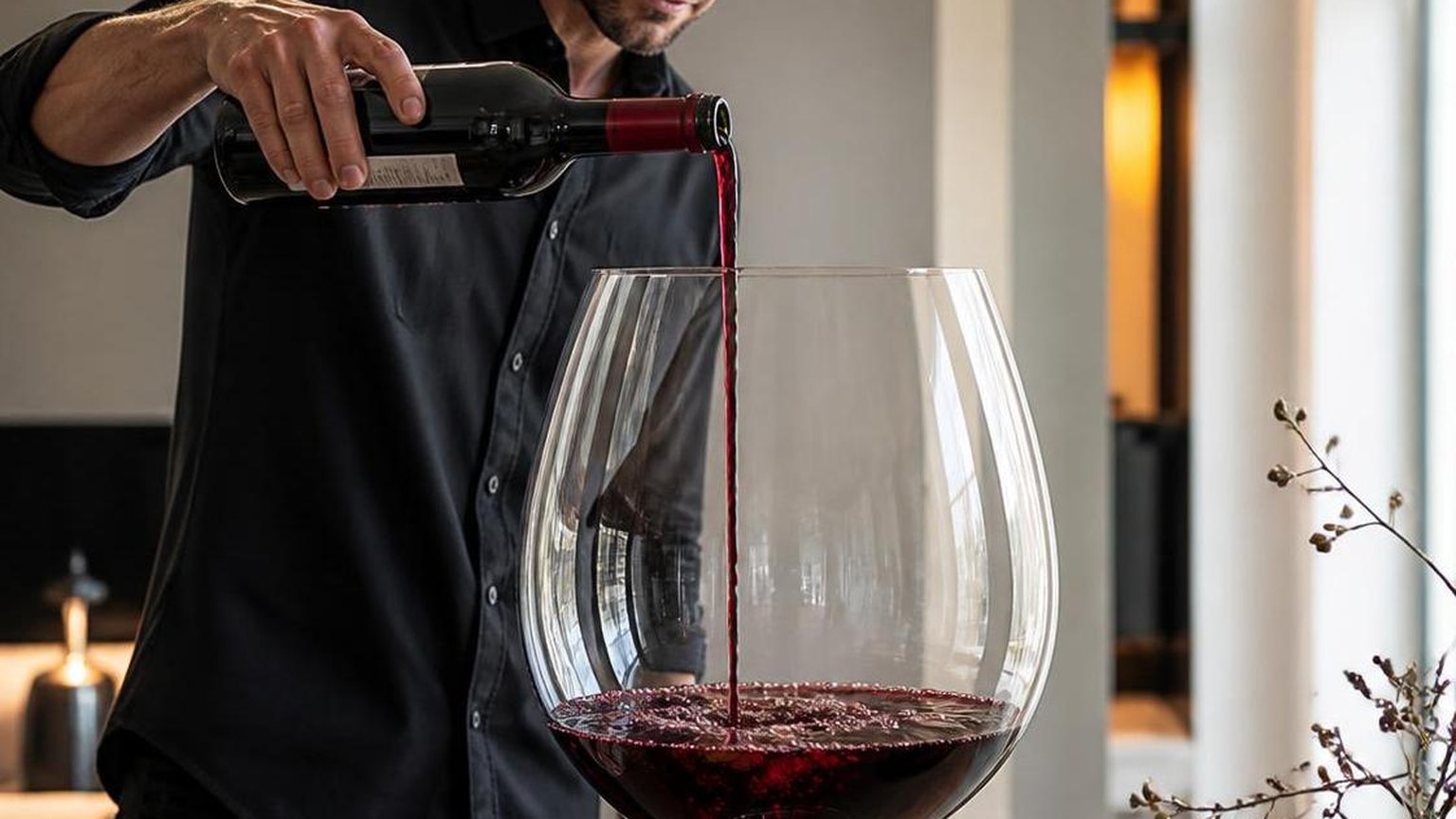
Using the meme without missing context
The “biggest glass of wine” meme works because it exaggerates a familiar truth: many wine glasses look harmless while holding far more than a standard serving.
The joke lands better when readers know the difference between glass size, pour size, and alcohol intake.
In U.S. service, a standard wine pour is typically 5 fluid ounces, or about 148 milliliters. That is the reference point behind most moderation guidance, menu pricing, and “one glass” language.
A standard 750 milliliter wine bottle holds about 25.4 fluid ounces. That equals roughly five 5-ounce servings, with a small remainder because of rounding between metric and U.S. fluid-ounce conversions.
The meme strips away that context. A giant bowl-shaped goblet can physically hold half a bottle, a full bottle, or more, while still being called “a glass.” That is funny online, but misleading if readers interpret it literally.
| Measure | Volume | Equivalent 5 oz servings |
| Standard pour | 5 oz / 148 mL | 1.0 |
| Large restaurant pour | 6 oz / 177 mL | 1.2 |
| Half bottle’s worth in one glass | 12.7 oz / 375 mL | 2.5 |
| Full 750 mL bottle in one glass | 25.4 oz / 750 mL | 5.1 |
The health context matters because “one drink” has a specific definition, not a vessel definition. In the United States, one standard drink is about 14 grams of pure alcohol, which for wine is roughly 5 ounces at 12% alcohol by volume.
That means a giant glass filled with 10 ounces of 12% ABV wine is about two standard drinks. A full-bottle novelty pour is about five standard drinks, enough to change the meaning of a joke into a binge-level amount for many adults.
Glass size also changes pouring behavior.
A widely cited 2016 Cambridge study found that increasing wine glass size in one bar and restaurant setting was associated with higher wine sales, suggesting larger glasses can encourage larger pours or faster drinking.
When you use the meme in an article, caption the exaggeration clearly. State whether the image shows a novelty glass, an oversized bowl, or a bottle emptied into one vessel. That preserves the joke while keeping the numbers honest.
- Use “biggest glass” as visual hyperbole, not as a serving benchmark.
- Translate the pictured volume into 5-ounce pours.
- Note the bottle size if the meme shows a full 750 mL fill.
- Separate glass capacity from the amount actually poured.
- Avoid calling a full-bottle glass “one drink.”
For wine readers, the best framing is simple: the meme is about scale, not etiquette or normal service. Once you attach real volume figures, the humor becomes sharper because the audience sees exactly how absurd the “glass” actually is.
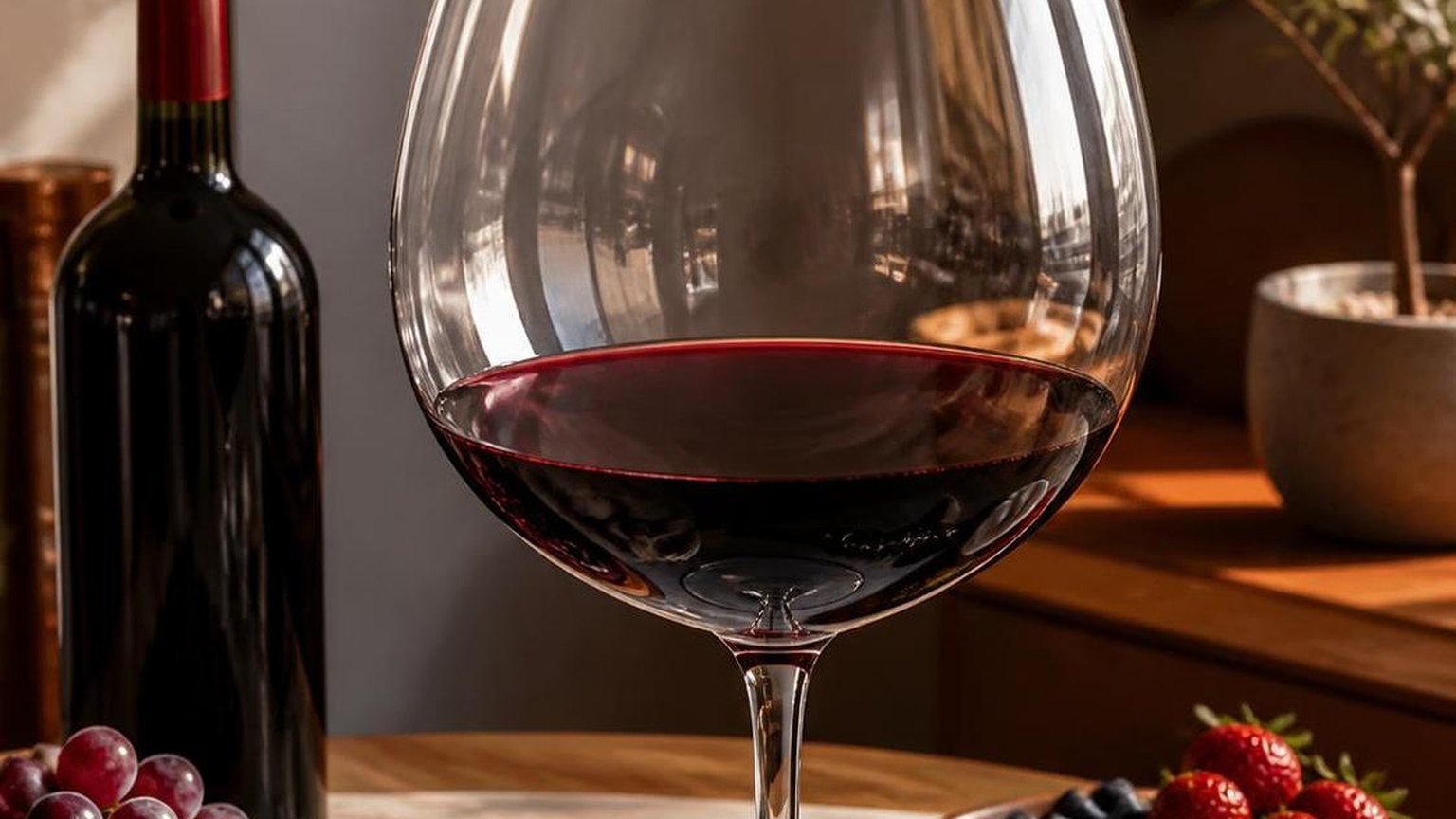
Questions Readers Ask
What does the “biggest glass of wine” meme mean?
The meme exaggerates stress drinking by showing an absurdly large wine glass or a glass filled far past a normal serving.
The joke works because a standard U.S. wine pour is 5 ounces, while the meme pretends one “glass” could mean half a bottle or more.
No single post owns the format in the way some memes do. It grew from years of image macros, novelty oversized wine glasses, and social posts pairing phrases like “I need the biggest glass of wine” with photos of comically large pours.
Why do oversized wine-glass memes spread so well online?
They use instant visual scale: people know what a normal wine glass looks like, so a giant one lands in a second.
The format also fits relatable captions about work, parenting, holidays, and bad dates, which makes it easy to remix across Instagram, TikTok, Facebook, and X.
Is the meme based on real wine serving sizes?
Only as a contrast. In wine service, a typical restaurant pour is about 5 ounces from a 750 mL bottle that holds roughly five servings, so the meme is funny because the “glass” shown often looks closer to 10, 15, or even 25 ounces.
Are novelty giant wine glasses actually used for drinking?
Some are sold as novelty gifts, but many are impractical for serious wine tasting because the bowl shape and large volume can throw off aroma concentration and temperature control.
In the meme, the oversized glass matters more as a prop than as a useful piece of stemware.
Related Reading
- How Many Calories In 750 Ml Of Wine?
- What Does Port Wine Taste Like? What You Need to Know
- How to Make Homemade Wine from Grapes? (Beginner-Friendly Method, Real Fermentation Experience & Proven Tips)
- How Many Calories Are in Taylor Port Wine?
- What Does Marsala Wine Taste Like? Answer From Expert
- Does Wine Get You Drunk Fast?
- Where Is The Expiration Date On Wine Bottles? Find Out Now
- All Alcohol Guides