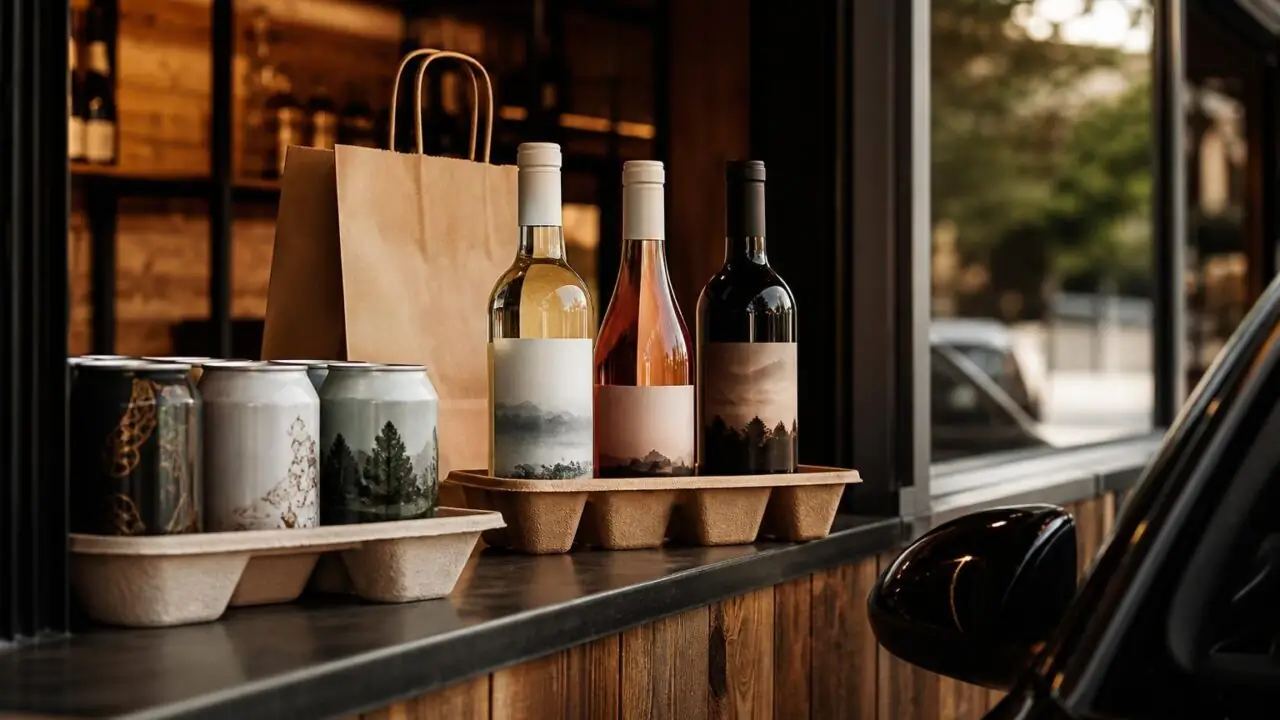
beer and wine drive thru is a retail lane where customers buy packaged beer, wine, and related products without leaving their vehicle.
It works like a convenience store checkout, but inventory, ID checks, payment, and pickup happen at the driver’s window.
Rules vary by state, county, and city because alcohol sales are locally regulated in the United States. Operators must verify age, follow open-container laws, observe sales-hour limits, and prevent sales to visibly intoxicated customers.
This article explains how beer and wine drive-thru stores work, where they are common, what customers should expect, and which legal details matter before using or opening one.
What Beer And Wine Drive Thrus Sell
Beer and wine drive-thrus sell off-premise alcohol meant to be taken home, not opened in the car. The core mix is cold beer, wine, flavored malt beverages, cider, and basic mixers.
Selection depends on state law, license class, and whether the store also operates as a convenience market.
Beer is the largest category in most locations because it moves fast and fits common package formats. Shoppers usually see domestic light lagers, Mexican imports, major craft brands, and local breweries in multiple pack sizes.
| Category | Common package sizes | Typical ABV range |
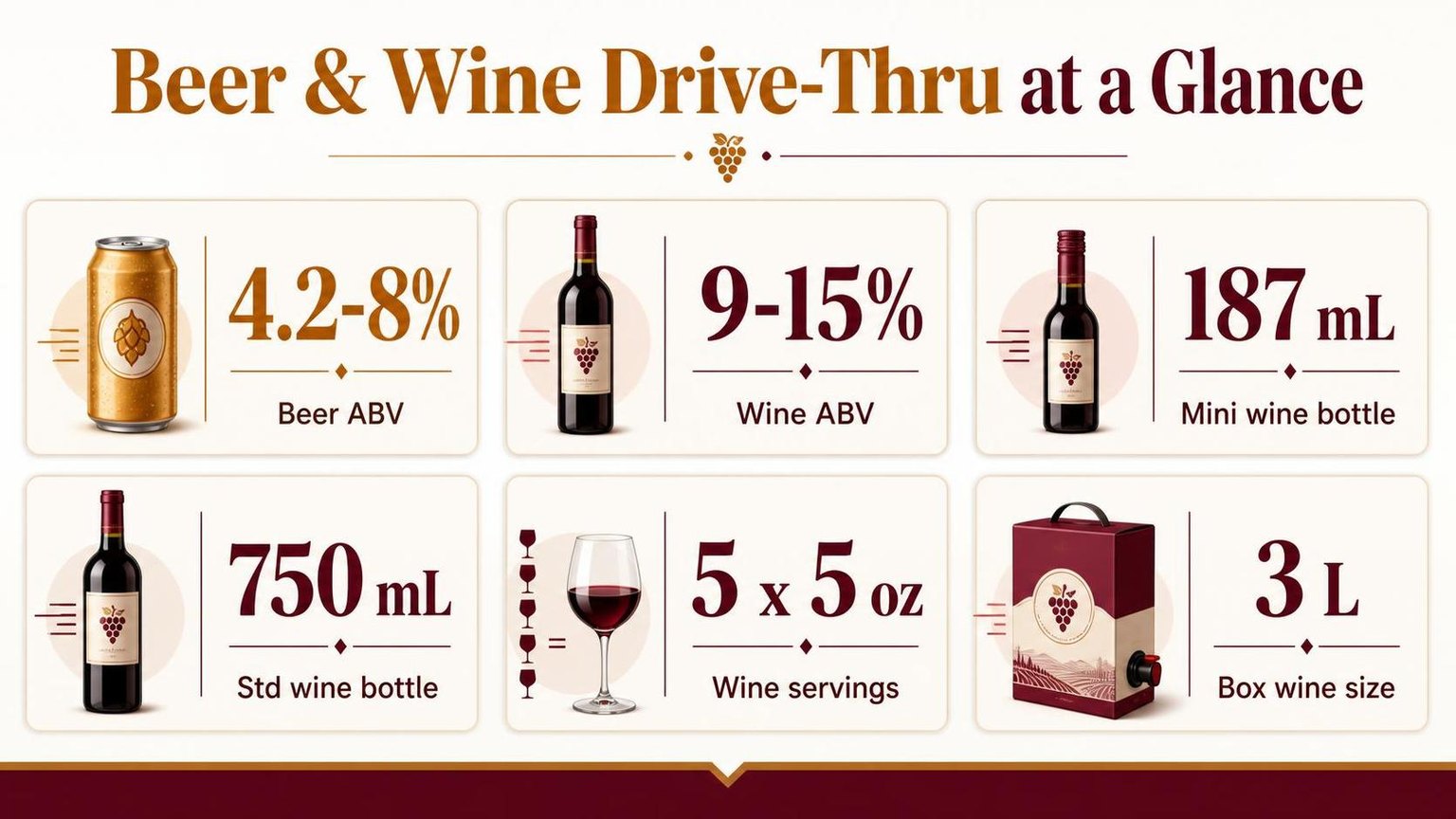
| Beer | 6-pack, 12-pack, 18-pack, 24-pack, 30-pack; 16 oz singles; 22 oz bombers | 4.2% to 8% for most mainstream products |
| Hard cider | 4-pack, 6-pack, 12-pack | 4.5% to 8% |
| Flavored malt beverages | 6-pack, 12-pack, 24 oz single cans | 5% to 8% |
| Wine | 187 mL, 375 mL, 750 mL, 1.5 L, 3 L box | 9% to 15% for table wine |
Wine selection is usually narrower than a full wine shop, but broad enough for routine purchases. Expect popular varietals like Cabernet Sauvignon, Chardonnay, Pinot Grigio, Moscato, Merlot, and Prosecco, with national brands dominating shelf space.
Single-serve wine matters in drive-thrus. Mini bottles at 187 mL equal about 6.3 fluid ounces, while a standard 750 mL bottle holds about 25.4 fluid ounces, or five 5-ounce servings.
Box wine also appears because 3 liters equals four standard bottles.
- Cold beer caves or reach-in coolers for immediate consumption later that day.
- Value packs such as 24-packs and 30-packs for domestic beer.
- Chilled white, rosé, sparkling wine, and room-temperature red wine.
- Ice, soda, tonic, juice, and bottled water as legal add-on sales.
- Party staples like cups, corkscrews, bottle openers, and snacks where permitted.
Some drive-thrus also sell spirits, but many do not. In control states and stricter licensing systems, a beer-and-wine permit may exclude vodka, whiskey, tequila, and ready-to-drink canned cocktails made with distilled spirits.
Inventory also reflects local demand.
Stores near stadiums push 12-packs, tailgate ice, and light lager; suburban locations often carry more 1.5-liter wine, variety packs, and nonalcoholic beer, which has grown as major brands expanded zero-proof lineups.
State Laws That Allow Drive Thrus
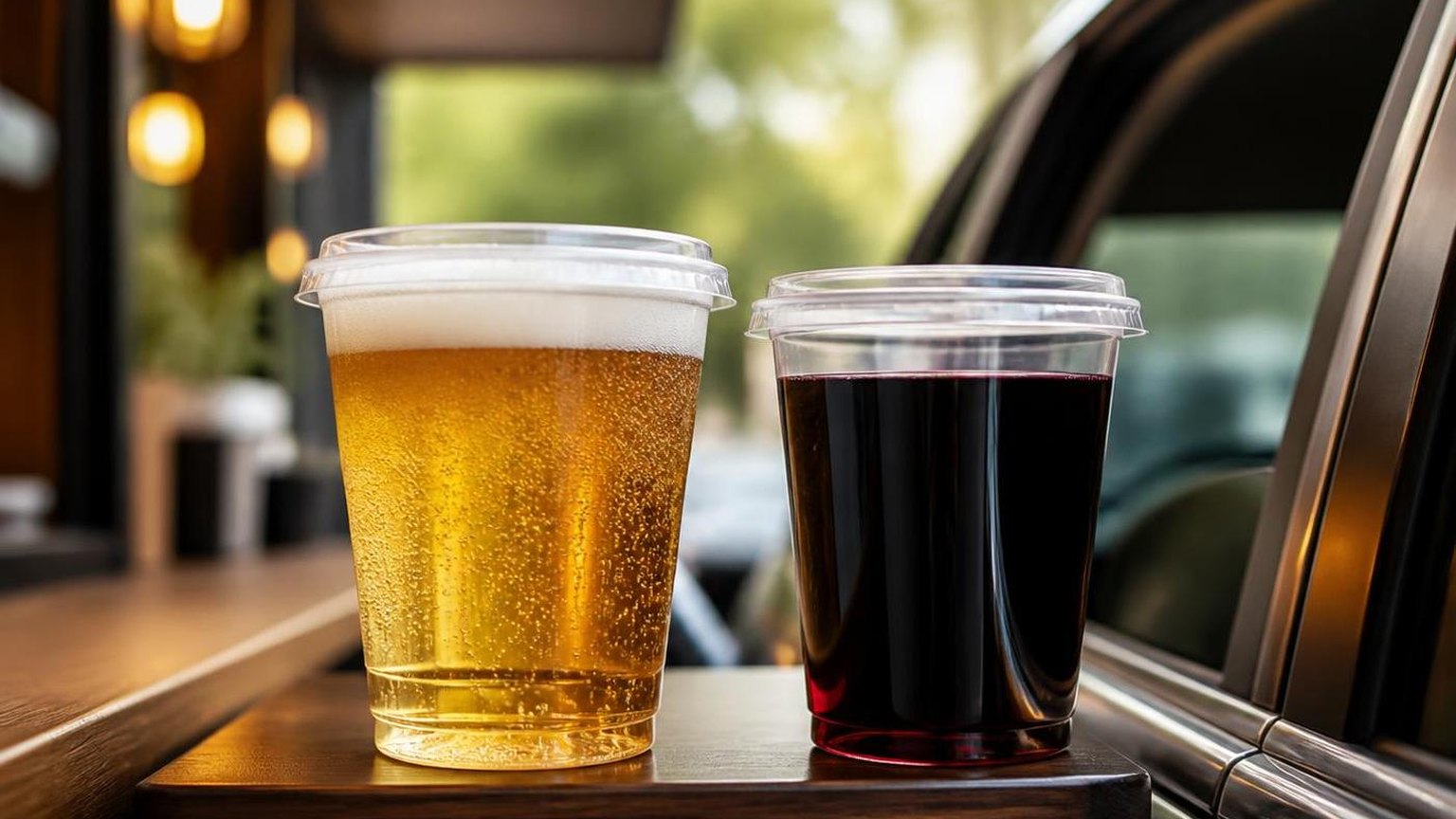
Drive-thru alcohol sales are legal in several states, but the rules differ sharply by beverage type, container status, and retailer license. Most states that allow them treat the transaction as an off-premise package sale, not on-site drinking.
The practical limit is usually not the window itself. It is whether state law allows sealed beer or wine for off-premise sale, and whether local ordinances or licensing agencies permit curbside or drive-thru service at that address.
| State | What drive-thru sales can include | Key legal condition |
| Texas | Beer and wine | Allowed for off-premise license holders; distilled spirits are sold only through package stores, and local wet/dry rules still apply |
| Louisiana | Beer, wine, and some mixed drinks | Containers must meet the state’s sealed-container rules; open-container restrictions still apply in vehicles |
| Ohio | Beer and wine | Common at carryouts and convenience stores with the proper permit; sales remain off-premise retail sales |
| Florida | Beer and wine | Drive-thru package sales are allowed if the retailer is licensed for off-premise sales and follows county zoning and state ID rules |
| Missouri | Beer and wine | Generally allowed through licensed package retailers, subject to municipal restrictions and age-verification rules |
Texas is one of the clearest examples. The state allows beer and wine sales for off-premise consumption from licensed grocery stores, convenience stores, and similar retailers.
Statewide alcohol law also lets cities and counties stay “dry” or partially “dry,” so legality can change within a few miles.
Louisiana is broader than most states. It has long allowed drive-thru daiquiri shops and other drive-up alcohol sales, but the drink must be in a legally sealed container.
A straw inserted through the lid can make the container “open,” creating a vehicle-law problem.
Ohio and Missouri both allow drive-thru package sales through licensed carryouts or liquor stores. The legal focus is license class, sealed product, and age verification.
The window format does not remove the seller’s duty to check ID and refuse sales to intoxicated customers.
Florida permits off-premise retailers to sell beer and wine through drive-thru lanes in many jurisdictions.
Spirits law is tighter because liquor generally requires a package store license and physical separation from other retail space under Florida’s licensing structure.
- Sealed container rules matter more than the lane format.
- Local wet/dry elections can override statewide assumptions.
- Beer and wine are usually easier to sell drive-thru than spirits.
- ID checks remain mandatory at the vehicle window.
Before assuming a drive-thru is legal, check three layers: state statute, license type, and local ordinance. That three-part test decides whether a beer-and-wine drive-thru can operate lawfully.
Open Container Rules At Pickup
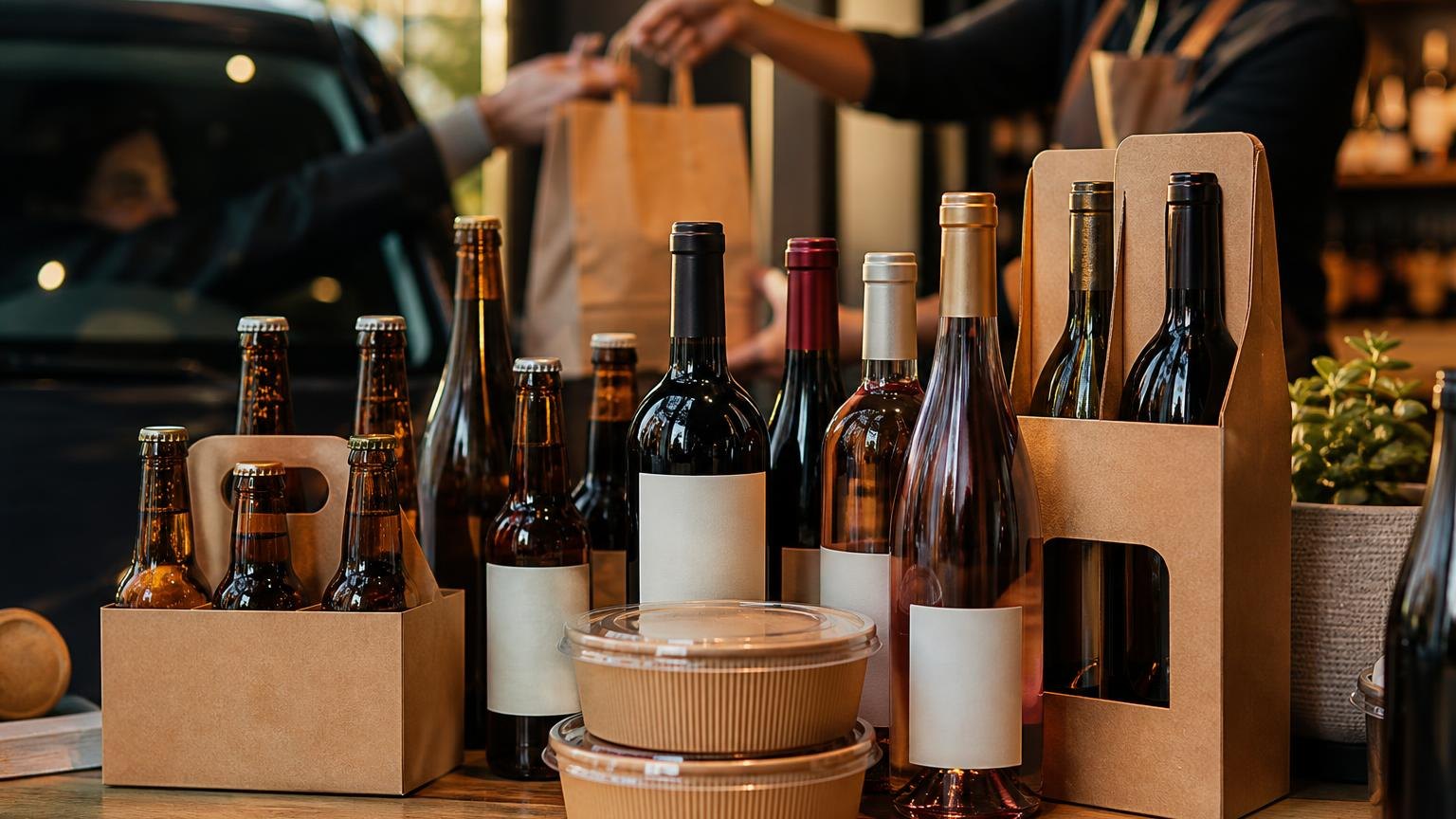
Drive-thru alcohol pickup is legal in some states, but the handoff must keep the product closed and inaccessible. The core rule is simple: once the seal is broken, the container can trigger open-container violations before the driver leaves the lot.
Most states treat an “open container” as a bottle, can, cup, or growler with a broken seal or partially removed contents.
At pickup, staff must place alcohol in its original sealed package or in a tamper-evident bag, then keep it out of the passenger area.
Federal transportation law pushed states to adopt open-container restrictions for motor vehicles on public highways.
Today, practical compliance at pickup turns on three facts: whether the alcohol is sealed, where it is stored, and whether state law recognizes tamper-evident packaging as closed.
| Rule point | Common legal standard |
| Seal status | Broken seal usually makes the container “open,” even if the beverage is mostly full. |
| Storage area | Best practice is the trunk; if no trunk exists, place it behind the last upright seat. |
| Driver access | If the driver can readily reach it, enforcement risk increases. |
| Tamper-evident bag | Accepted in some states for takeout alcohol, but not universally. |
Wine is usually straightforward. A factory-sealed 750 mL bottle stays closed until the cork, screw cap, or capsule is removed. Once opened, it should not ride in the cabin. Put it in the trunk or cargo area immediately.
Beer creates more mistakes because single cans and mixed six-packs are easy to handle. An unopened 12-ounce can is closed. A can with the tab lifted is open, even if untouched afterward. The same logic applies to crowlers and growlers.
Pickup orders with cocktails, frozen drinks, or wine slushies need extra caution. Some states allow off-premise sales only if the cup is sealed with tape, heat seal, or a lidded container inside a bag.
Others still treat the drink as open in a vehicle.
- Do not let staff place alcohol in the front seat.
- Keep receipts with the order in case an officer questions where and when it was purchased.
- If the vehicle has no trunk, use the rearmost cargo area.
- Never open the package in the parking lot before driving away.
State details vary. Texas, for example, generally prohibits possession of an open alcoholic beverage in a passenger area, while many takeout reforms after 2020 added sealing rules rather than removing vehicle restrictions.
Check the state alcohol code before using a beer and wine drive-thru.
ID Checks From The Driver Seat
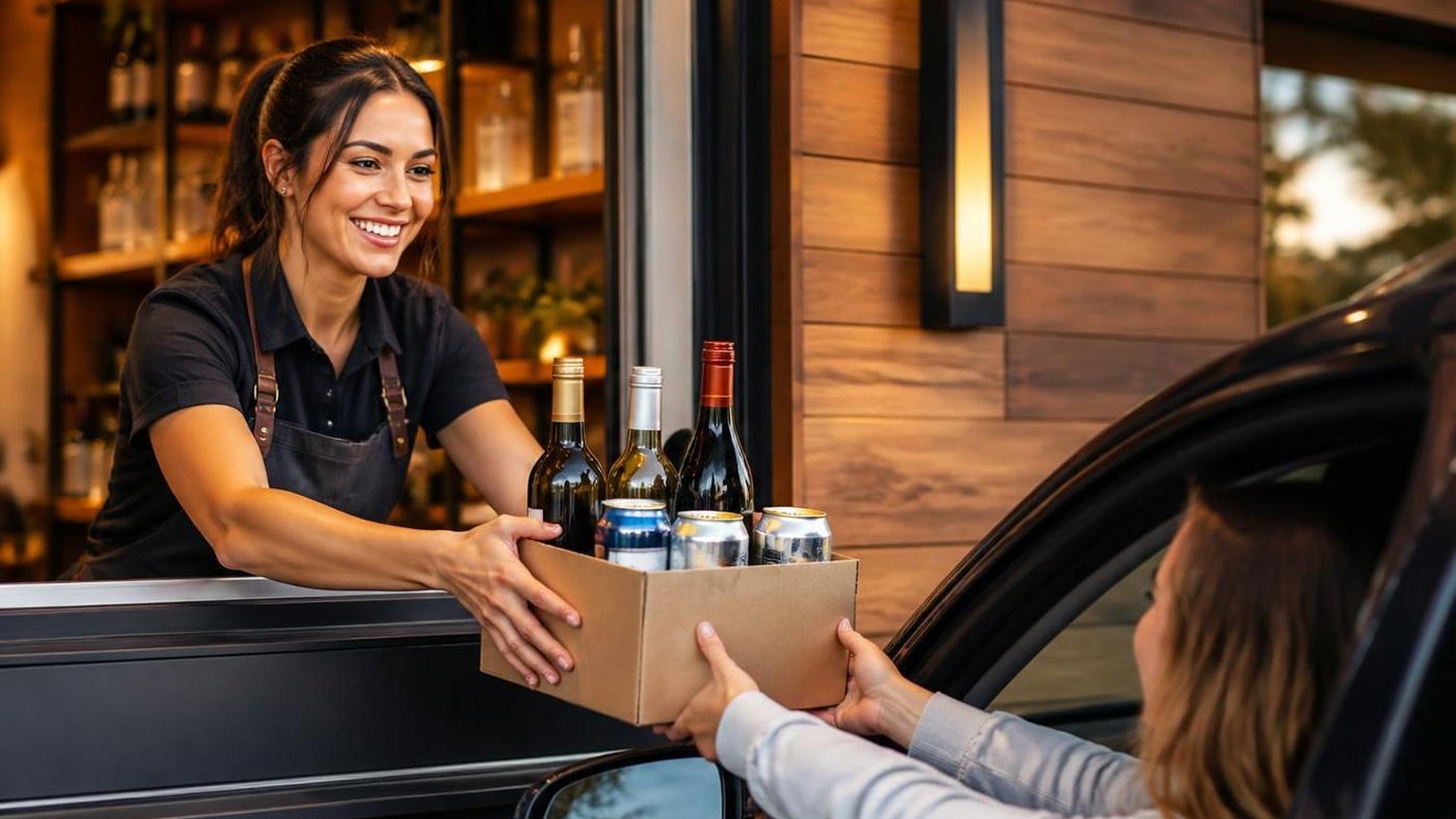
A drive-thru alcohol sale changes the angle, not the duty. The employee still has to confirm legal age, a valid ID, and a real match between the card and the person in the vehicle before any beer or wine changes hands.
The safest routine is simple: stop the sale, ask for the ID, hold it long enough to inspect, and compare the face, date, and card condition. If any part fails, end the transaction.
The legal baseline is the same as a walk-in counter sale. Federal law ties highway funding to a minimum drinking age of twenty-one, and every state sets that age for retail alcohol purchases. A driver-seat handoff does not create an exception.
| Checkpoint | Fact staff should verify |
| Minimum age | Customer must be 21 or older to buy alcohol in the United States. |
| License renewal cycle | Most driver licenses are renewed every 4 to 8 years, so photo age and expiration date both matter. |
| Passport validity for adults | A U.S. passport book is commonly valid for 10 years for adults, making expiration checks important. |
| BAC enforcement context | In every state, driving with a BAC of 0.08% or higher is illegal, which is why many retailers train staff to watch for visible impairment during pickup. |
From the car window, the hardest part is identity matching. Glare, tinted glass, hats, sunglasses, and low light make it easier to miss a bad photo match.
The practical fix is to ask the customer to remove anything covering the face and hold the ID where the employee can examine it directly.
Staff should check four things in the same order every time: date of birth, expiration date, photo match, and physical integrity.
Cracks, peeled laminate, blurred printing, uneven edges, and mismatched fonts are classic warning signs noted in retailer training and AAMVA guidance.
Drive-thru sales add one more risk: the buyer may be the driver, but the visible drinker may be a passenger. If the group appears to include underage occupants, or if the ID holder is clearly buying for someone else, the store should refuse the sale.
- Ask for the ID before selecting or bagging alcohol.
- Take the ID in hand, not through the windshield at a distance.
- Use an ID scanner if store policy allows, but still do a visual check.
- Refuse the sale if the ID is expired, altered, borrowed, or does not match.
- Document refusals when policy requires it, because repeat attempts matter.
The best driver-seat check is slow enough to be accurate and short enough to be consistent. Consistency protects the license, the employee, and everyone on the road.
How Curbside Differs From Drive Thru
Curbside and drive thru both let customers stay in the car, but they are not the same retail model. With alcohol, the difference matters because pickup flow, ID checks, and open-container risk all affect whether a sale fits state and local rules.
In curbside service, the customer usually orders and pays online or by phone, parks in a marked space, and an employee brings the beer or wine outside.
In a drive thru, the vehicle pulls to a service window or lane, and the transaction often happens at the car.
The biggest operational difference is where the handoff happens. Curbside uses a parking space, not a moving service lane.
That gives staff more time to verify the order, match the customer, and complete age checks before the alcohol enters the vehicle.
| Feature | Curbside alcohol pickup | Drive thru alcohol sale |
| Customer movement | Parks in a designated spot | Moves through a service lane or window |
| Order timing | Usually placed before arrival | Often placed at arrival or confirmed at window |
| Employee travel | Staff walks order outside | Customer stops at the business structure |
| Age requirement | Buyer must be 21+ in all 50 states | Buyer must be 21+ in all 50 states |
| ID check point | At the parked car before release | At the window or lane handoff |
| Open-container concern | Staff can direct sealed product to trunk | Higher risk if product is handed into passenger area |
That trunk point is important. Many retailers instruct staff to place sealed alcohol in the trunk or rear cargo area because open-container laws commonly restrict alcohol in the passenger compartment of a motor vehicle on public roads.
Curbside also differs from drive thru in staffing and compliance. A curbside order is often picked, staged, and checked indoors before the employee leaves the building.
A drive-thru lane has to keep cars moving, which can compress ID review and substitution decisions.
- Curbside is usually better for larger orders because products are picked before arrival.
- Drive thru is built for speed, but alcohol laws can make speed a compliance problem.
- Curbside commonly relies on order confirmation texts, app check-in, or a space number.
- Drive thru depends more on lane design, window staffing, and clear sightlines for ID checks.
For beer and wine, curbside is often the cleaner compliance model. The retailer controls the order earlier, verifies the buyer at pickup, and can load sealed product away from the passenger area, reducing legal and operational friction.
Risks For Retailers And Customers
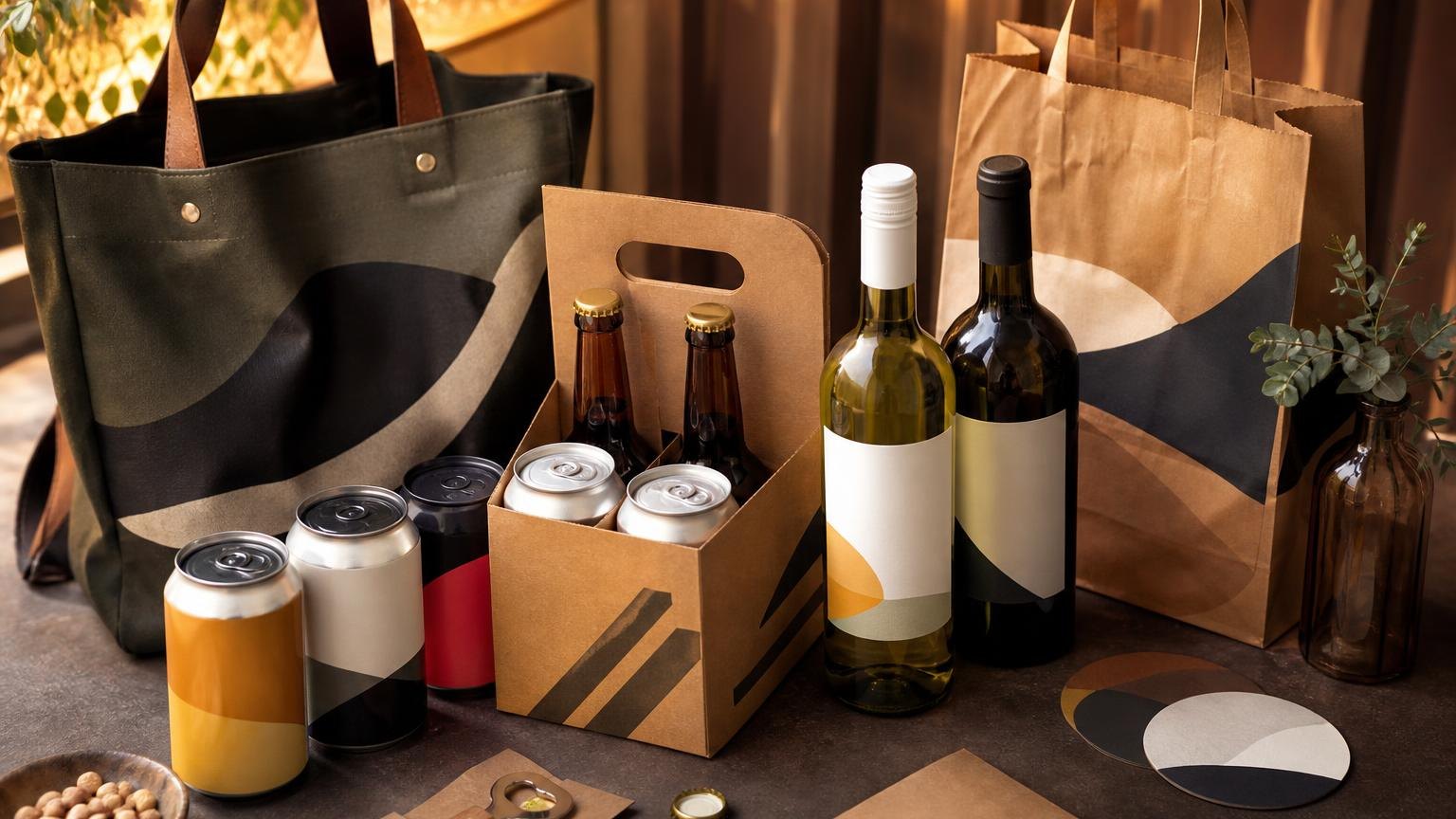
Beer and wine drive-thru sales compress the highest-risk parts of alcohol retail into a few minutes: age verification, intoxication screening, payment, loading, and immediate vehicle possession.
That speed is convenient, but it raises measurable legal, safety, and insurance exposure for retailers and customers.
For retailers, the first risk is illegal sale. Every state sets 21 as the minimum alcohol purchase age, and a failed ID check can trigger fines, license suspension, or license revocation.
Drive-thru windows reduce face-to-face time, make lighting worse at night, and limit chances to compare the customer with the ID.
| Risk area | Specific fact | Why it matters in a drive-thru |
| Underage sales | The US minimum legal drinking age is 21 in all 50 states. | Fast transactions increase the chance of missed or weak ID verification. |
| Impaired-driving harm | NHTSA recorded 13,524 alcohol-impaired driving fatalities in 2022, about 32% of all US traffic deaths. | Customers leave with alcohol already in the vehicle and may consume or drive impaired. |
| Open-container laws | Most states prohibit open alcoholic beverages in the passenger area of a motor vehicle on public roads. | Poor bagging, broken seals, or cup-style alcoholic drinks can create immediate legal exposure. |
| Dram shop liability | Many states allow civil claims when a retailer sells to an obviously intoxicated person who later causes harm. | Window service gives staff less time to detect slurred speech, confusion, or other visible signs. |
For customers, the biggest risk is not the purchase itself but what happens in the parking lot and on the road. Alcohol within reach can turn into an open-container citation quickly.
In states with stricter container or sealing rules, even a partially opened package can matter.
Retailers also face operational losses beyond fines. A single compliance failure can increase liability premiums, trigger insurer scrutiny, and damage renewal terms.
If regulators find repeated violations, the cost can move from one citation to a direct threat to the alcohol license that supports the business.
- Staff may miss signs of intoxication because the interaction is shorter and partly obstructed by the vehicle.
- Night transactions make holograms, birth dates, and photo matching harder to verify.
- Third-party pickups increase uncertainty about who will actually possess and transport the alcohol.
- Parking-lot handoffs can blur responsibility if minors or impaired passengers are present.
The practical takeaway is simple. Drive-thru alcohol sales shift convenience to the customer, but they shift compliance pressure to the retailer and legal risk to both sides the moment the order reaches the car.
Safer Ways To Transport Alcohol
The safest alcohol transport plan removes two risks at once: impaired driving and an open container in the passenger area.
Put alcohol where the driver cannot reach it, keep it sealed, and use a sober person or a delivery service when drinking is part of the trip.
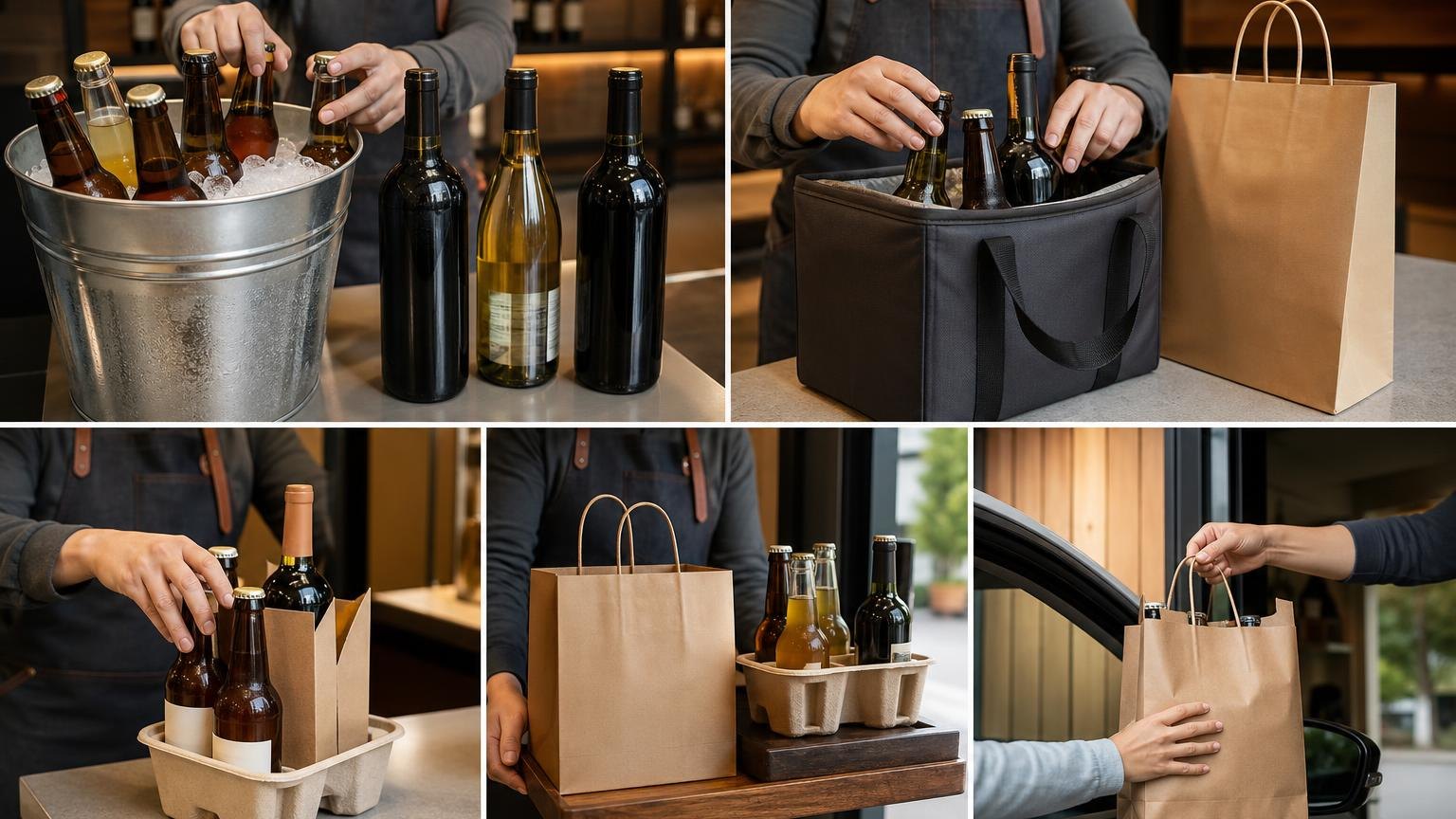
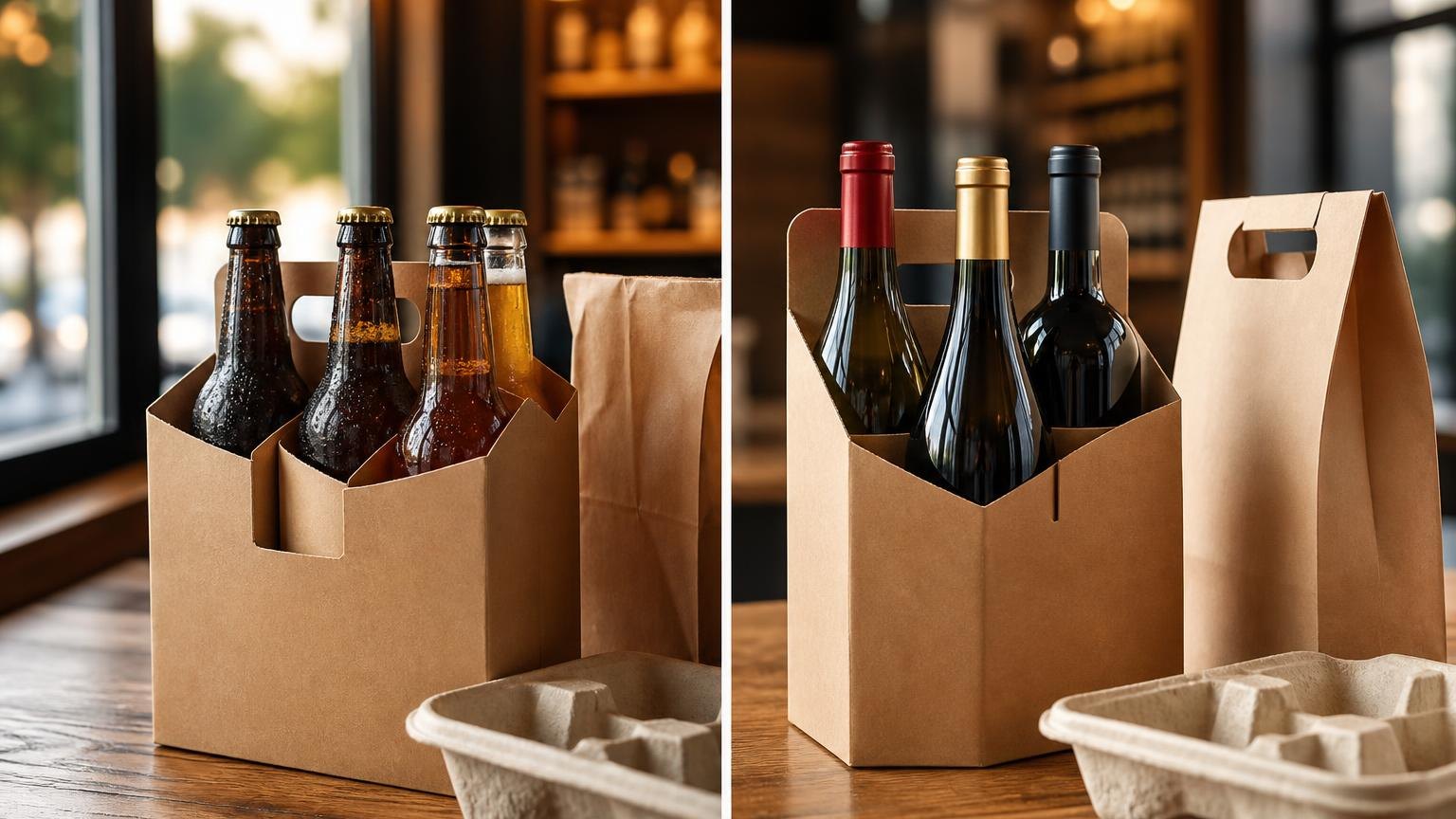
If you buy from a beer or wine drive thru, ask the staff to leave every package sealed and bagged. Then place it in the trunk, truck bed, or the rearmost area behind the last upright seat.
| Safer method | What to do | Key fact | Why it helps |
| Sealed package in trunk | Keep cans, bottles, and boxed wine unopened and out of reach | Federal highway policy recognizes open-container laws that restrict alcohol in the passenger area; 39 states and DC have qualifying laws | Reduces legal risk and removes easy access for the driver |
| Rideshare or taxi after drinking | Leave the car parked and take the alcohol home separately | A BAC of 0.08% is the illegal per se limit for drivers age 21+ in every state except Utah, where it is 0.05% | Prevents impaired driving entirely |
| Delivery service | Order alcohol to your home instead of carrying it in the car | Alcohol delivery requires age verification at handoff in many state-regulated systems | Removes transport from the trip |
| Sober designated driver | Use one driver who drinks 0 alcoholic beverages | NHTSA reports thousands of annual deaths in crashes involving alcohol-impaired drivers | Keeps judgment and reaction time unimpaired |
For partially consumed alcohol, reseal it only if state law allows transport. In many states, an opened bottle cannot ride in the passenger compartment, even if the cap is back on.
Use the original container whenever possible. A 12-ounce beer at 5% ABV and a 5-ounce glass of wine at 12% ABV each count as about 1 standard drink in the United States.
That matters because “one drink” is not the same as “safe to drive.” Alcohol absorption varies with body size, food, medications, and time, so counting servings does not reliably predict impairment.
- Store bottles upright to reduce leakage and protect corks from constant sloshing.
- Use a box or tote so glass does not roll under seats or break during hard braking.
- Keep alcohol away from heat. A closed car can heat quickly, raising pressure in cans and damaging wine.
- Save the receipt in the bag. It helps show the alcohol was recently purchased and remained sealed.
If your car has no trunk, put alcohol in the farthest rear cargo area. In a hatchback or SUV, that means behind the last seat, not beside the driver.
Frequently Asked Questions
Is a beer and wine drive thru legal in the United States?
It is legal only where state and local law allow off-premise alcohol sales through a drive-thru format.
Rules vary widely: some states permit packaged beer and wine pickup by car, while others ban drive-thru alcohol sales entirely or limit them by county, city, or license type.
What can a beer and wine drive thru usually sell?
Most locations are limited to sealed, off-premise products such as cans, bottles, boxed wine, and sometimes kegs or mixers if the license allows it.
They typically cannot hand over open containers for immediate drinking because that can trigger open-container and on-premise service violations.
Do you still have to show ID at a beer and wine drive thru?
Yes. Staff must verify age at the window, and every purchaser must meet the state minimum drinking age of 21 in the U.S.; some stores also scan IDs electronically as part of compliance checks.
Can you drink alcohol in the car after buying it from a drive thru?
No. In most jurisdictions, the alcohol must remain sealed and stored in compliance with state open-container laws, often in the trunk or an area not readily accessible to the driver.
Opening beer or wine in the vehicle can lead to citations even if the purchase itself was legal.
How is a beer and wine drive thru different from curbside pickup?
A drive thru is a licensed sales format where the customer completes the transaction from the vehicle window.
Curbside pickup usually involves ordering ahead and having staff bring sealed alcohol to the car, and in some states it follows different permit, ID-check, and delivery-style rules.
Related Reading
- Who Makes Kirkland Chardonnay Wine? Get the Answer
- How Long Does Wine Last In The Fridge Unopened?
- Beer Cave Wine and Spirits Store Near You
- How Many Ounces In A Bottle Of Prosecco?
- Does Port Wine Go Bad?
- What Is Ice Wine? Taste, Brands & Pairings (2026 Guide)
- Drinks at Red Lobster for Cocktails, Beer, and Wine
- All Alcohol Guides