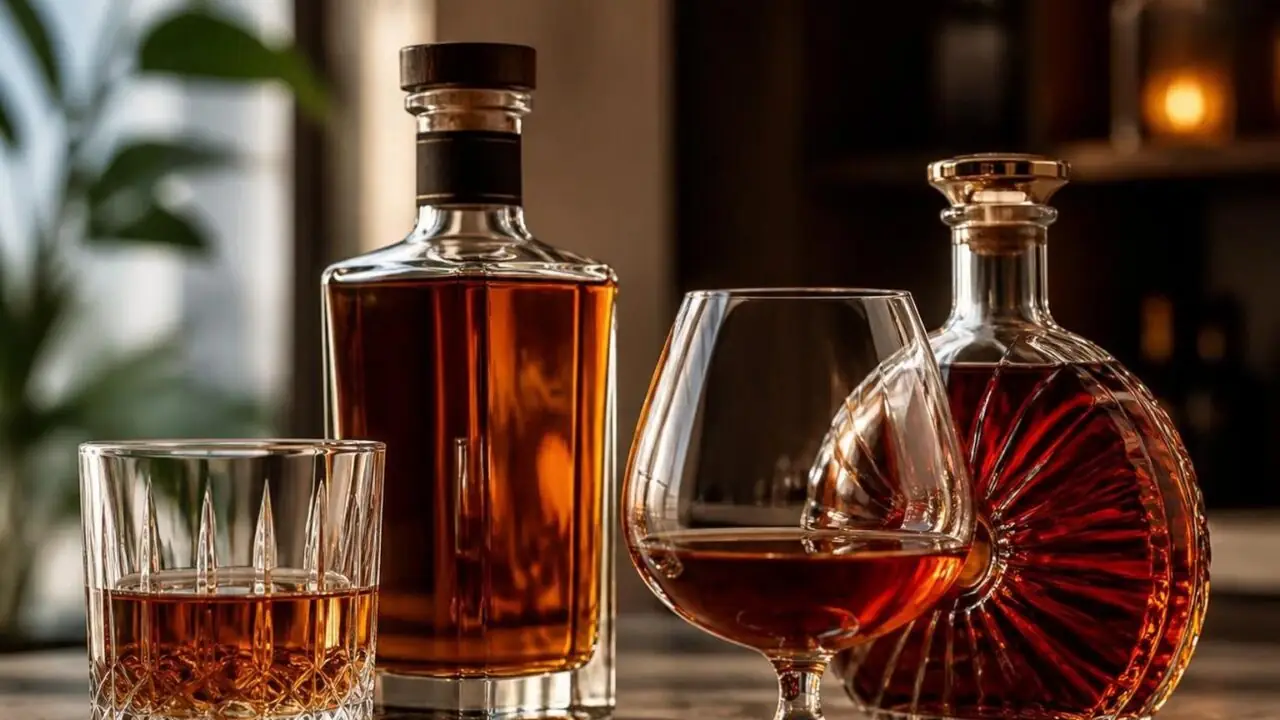
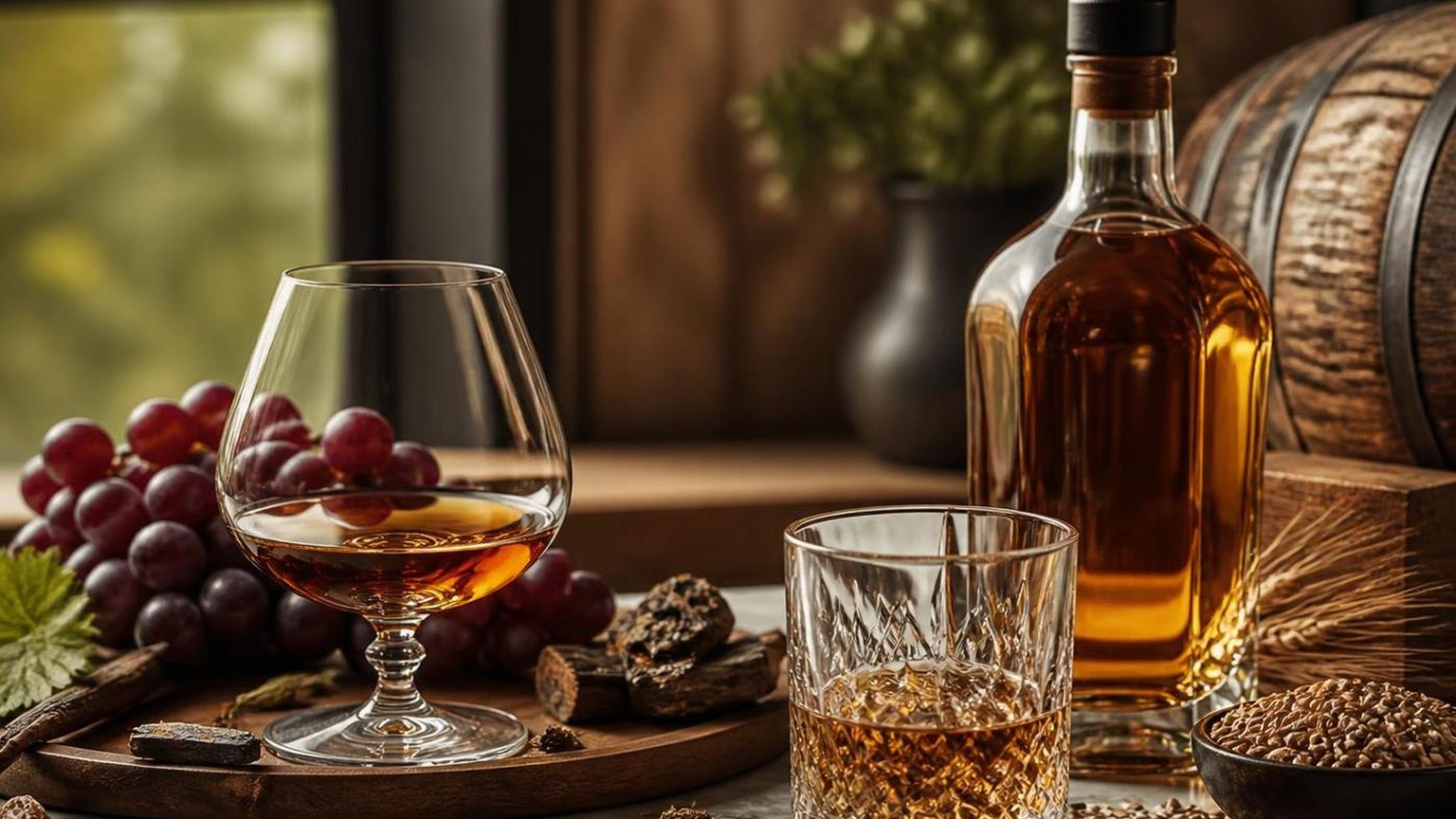
What’s the Difference Between Brandy and Whiskey? is that brandy is distilled from fermented fruit, most often grapes, while whiskey is distilled from fermented grain such as barley, corn, rye, or wheat.
That base ingredient drives the core differences in aroma, flavor, aging style, and traditional serving context.
Brandy tends toward dried fruit, floral, caramel, and oak notes; whiskey often shows cereal, spice, smoke, vanilla, or toasted wood.
This guide compares ingredients, production, aging, taste, alcohol strength, labeling terms, and cocktail uses so you can choose the right bottle with confidence.
Raw Ingredients Grapes Versus Grains
Brandy starts with fruit, most often grapes. Whiskey starts with cereal grains, usually corn, barley, rye, or wheat. That raw-material split changes the sugar source, fermentation chemistry, and the flavors distillers can build before aging begins.
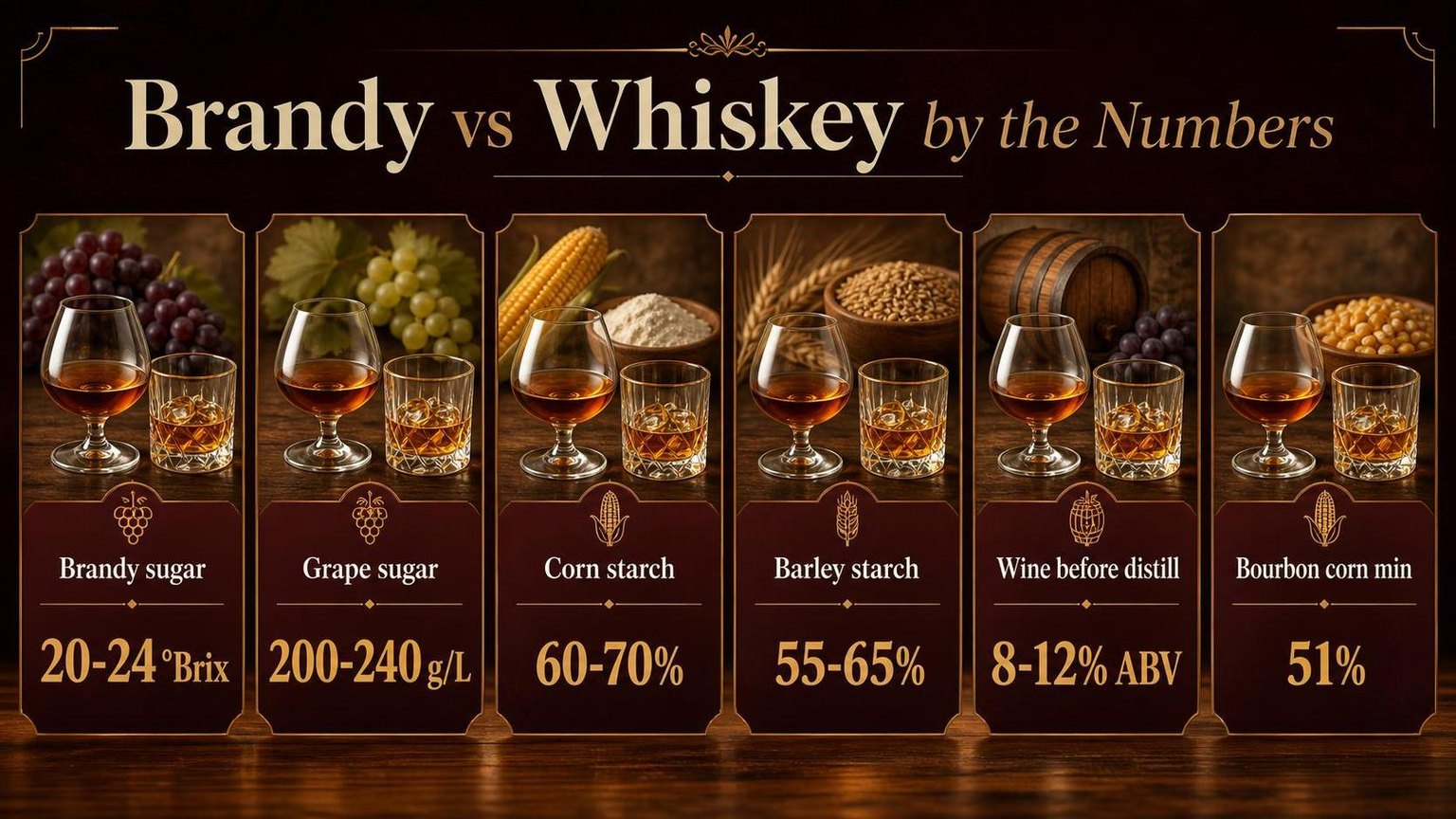
Grapes bring fermentable sugar to the cellar already dissolved in juice. In ripe wine grapes, sugar is commonly measured at about 20 to 24 °Brix, equal to roughly 200 to 240 grams of sugar per liter of must.
Because those sugars are naturally available, brandy production does not need a starch-conversion step.
The fruit is crushed, pressed, and fermented into wine, often around 8% to 12% alcohol by volume, before distillation concentrates aroma and alcohol.
Whiskey grains are different because their main carbohydrate is starch, not free sugar. Corn kernels are commonly about 60% to 70% starch by weight. Barley is often near 55% to 65%, while rye and wheat usually fall in similar broad ranges.
Starch cannot ferment until enzymes break it into simpler sugars. Distillers handle that by milling grain, cooking it with water, and mashing at controlled temperatures.
Malted barley supplies key enzymes, especially alpha-amylase and beta-amylase, that convert starch into fermentable sugars.
| Raw material | Main fermentable source | Typical starting composition | Required before fermentation |
| Grapes for brandy | Natural grape sugars | About 20-24 °Brix; roughly 200-240 g/L sugar | Crush/press; no starch conversion |
| Corn for whiskey | Starch converted to sugar | About 60%-70% starch by weight | Milling, cooking, enzymatic conversion |
| Malted barley for whiskey | Starch converted to sugar | About 55%-65% starch by weight | Mashing; enzymes activate conversion |
| Rye or wheat for whiskey | Starch converted to sugar | Commonly around 55%-65% starch by weight | Mashing and enzymatic conversion |
That ingredient difference helps explain texture and aroma. Grapes carry tartaric and malic acids, grape skins, and varietal compounds such as terpenes in Muscat-family fruit.
Those compounds can survive fermentation and distillation, giving brandy floral, dried-fruit, or raisin notes.
Grains contribute another set of precursors. Corn often leans sweet and round. Rye brings peppery, herbal notes. Malted barley can add biscuit, cereal, and nut tones. Wheat usually reads softer and less spicy than rye in the finished spirit.
Law also reflects the divide. In the United States, bourbon must be made from a mash containing at least 51% corn. Straight malt whiskey is made from at least 51% malted barley.
Brandy, by contrast, is distilled from fermented fruit juice, mash, or wine.
In practical terms, brandy begins with vineyard agriculture and ripeness decisions. Whiskey begins with grain selection and mash-bill design. One spirit starts from sugar in fruit; the other starts from starch in seed.
That is the clearest raw-ingredient difference between them.
How Fermentation Creates Different Bases
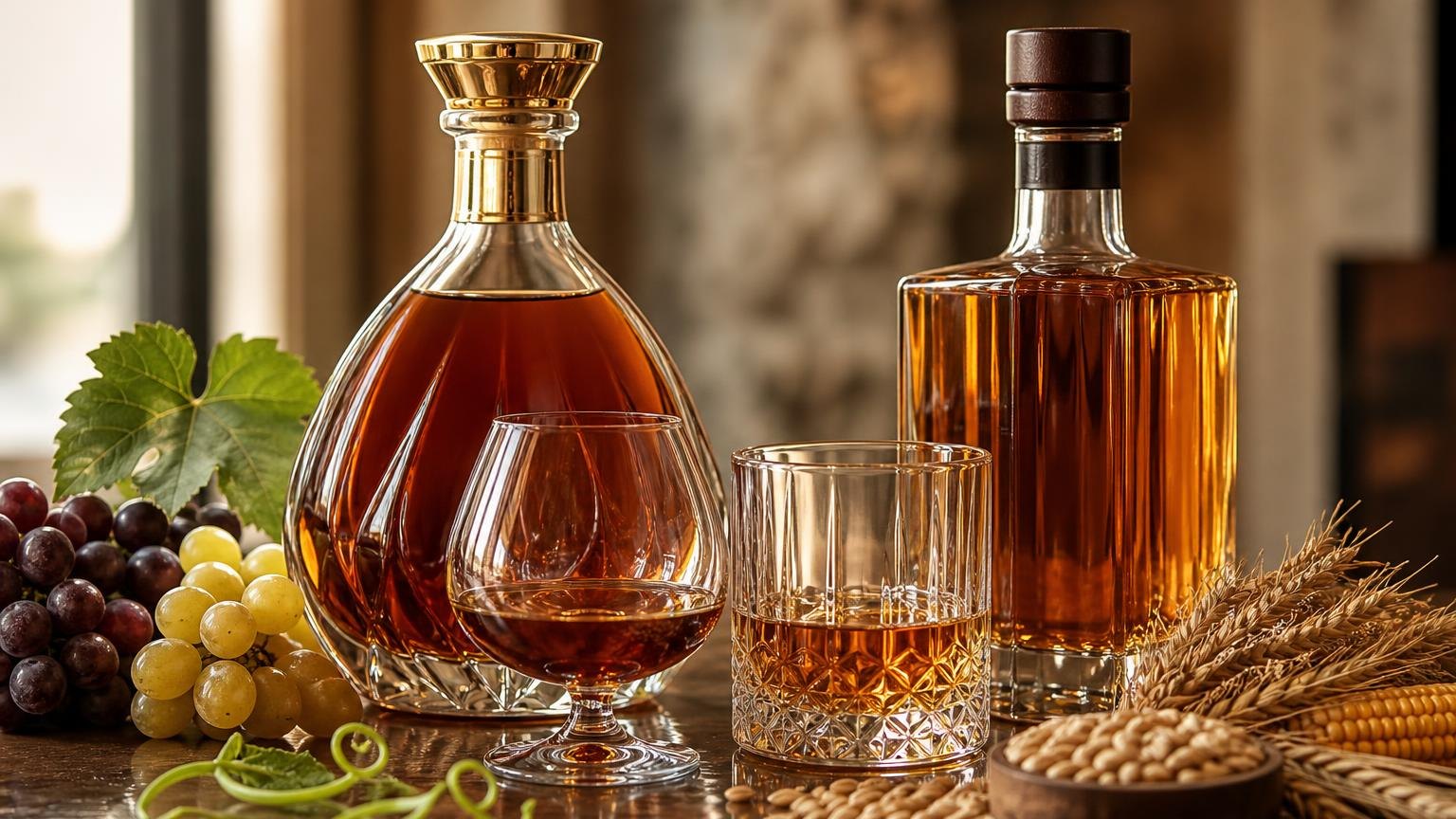
Fermentation sets brandy and whiskey on different paths before distillation begins. Brandy starts with fruit sugars, most often grapes, while whiskey starts with grain starch that must be converted into fermentable sugar first.
That difference changes chemistry, flavor precursors, alcohol yield, and even the texture of the finished spirit. The fermenter is where brandy builds fresh fruit and floral notes, and whiskey builds cereal, nut, bread, and malt character.
Brandy production usually begins with juice that already contains fermentable sugar. Grapes commonly enter fermentation at about 20 to 24 °Brix, equal to roughly 200 to 240 grams of sugar per liter, depending on variety and ripeness.
Yeast converts those sugars into ethanol, carbon dioxide, and hundreds of aroma compounds. A base wine for brandy often finishes around 8% to 12% alcohol by volume, with high acidity and low residual sugar because dry wine distills more cleanly.
Whiskey begins with grain, not free juice. Barley, corn, rye, and wheat store energy as starch, and starch cannot ferment until enzymes break it into simpler sugars during mashing.
Malted barley supplies alpha-amylase and beta-amylase, which work best across specific temperature bands. Distillers often mash in the roughly 145°F to 158°F range, or about 63°C to 70°C, to maximize fermentable extract and control body.
After conversion, the sugary liquid ferments into a beer-like wash. Most whiskey washes finish around 7% to 10% ABV, though some distilleries ferment a little lower or higher based on yeast strain, grain bill, and still design.
| Base for fermentation | Main sugar source | Typical pre-distillation strength | Key process step |
| Brandy | Fruit sugars such as glucose and fructose | About 8% to 12% ABV base wine | Press or crush fruit, then ferment juice |
| Whiskey | Sugars created from grain starch during mashing | About 7% to 10% ABV wash | Mash grain, convert starch with enzymes, then ferment |
The raw materials also drive different fermentation byproducts.
Grape ferments generate esters such as ethyl acetate and fruity compounds tied to varietal character, while grain ferments produce congeners associated with malt, toasted bread, spice, and sometimes lactic or nutty notes.
Fermentation time differs too. Brandy base wine may ferment in roughly 5 to 14 days, while whiskey wash often ferments for about 2 to 5 days, although longer fermentations can increase ester formation and complexity.
- Brandy fermentation preserves fruit identity because the sugar is native to the fruit.
- Whiskey fermentation depends on starch conversion, so mash efficiency affects flavor and yield.
- Acid, yeast strain, and fermentation temperature shape both spirits before oak has any role.
In short, brandy ferments agricultural sugar that is already available, and whiskey ferments sugar created by mashing. That single difference explains why brandy tastes rooted in fruit and why whiskey tastes rooted in grain.
Distillation Proof and Still Differences
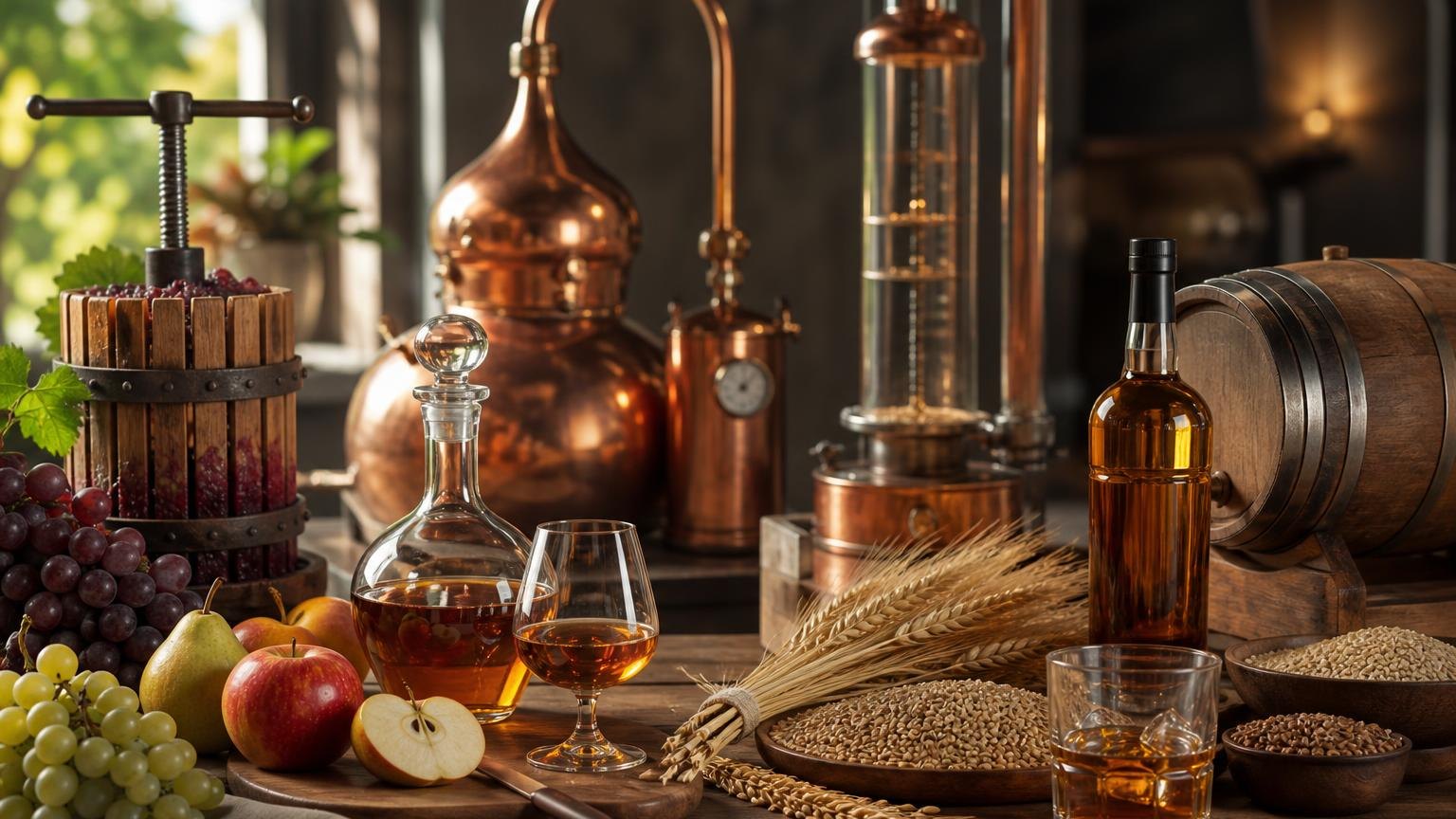
Brandy and whiskey diverge early in production: distillers run them to different strengths and often on different equipment. Those choices control how much fruit, grain, oak, and fermentation character survives into the final spirit.
Brandy starts from wine or other fermented fruit juice, usually around 7% to 12% alcohol by volume.
Whiskey starts from a grain mash or beer, often around 6% to 10% ABV, with solids management and mash composition shaping what kind of still works best.
In pot distillation, both spirits are commonly produced in batches, but the target cut points differ. Brandy makers usually preserve more aromatic esters and congeners from fruit.
Whiskey distillers balance grain character against heavier fusel oils and sulfur compounds.
| Production factor | Brandy | Whiskey |
| Typical distillation basis | Wine or fermented fruit juice, often 7% to 12% ABV | Grain wash, often 6% to 10% ABV |
| Common first distillation result | About 25% to 35% ABV in pot still systems | About 20% to 30% ABV in pot still systems |
| Common second distillation result | Often about 65% to 72% ABV for pot-distilled brandy | Often about 60% to 70% ABV for malt whiskey in pot stills |
| U.S. legal maximum off the still | Brandy: less than 95% ABV | Whisky: less than 95% ABV |
| Scotch malt whisky legal maximum | Not applicable | Less than 94.8% ABV |
| Bourbon legal maximum off the still | Not applicable | No more than 80% ABV |
Still choice follows raw material. Traditional Cognac uses copper pot stills, specifically the Charentais alembic, and must be distilled twice.
The second run, bonne chauffe, concentrates spirit while keeping floral and dried-fruit notes that would thin out at very high proof.
Many single malt whiskeys also use copper pot stills, often twice in Scotland and sometimes three times in Ireland.
Pot stills create less rectification than tall industrial columns, so more cereal oils, nuttiness, malt sweetness, and texture remain in the distillate.
Column stills change the equation. Continuous columns can strip spirit to much higher proof, often 85% to 94% ABV depending on design and legal limits.
That higher proof usually yields a lighter body because more congeners are removed during repeated vapor-condensation cycles.
That is why large-scale brandy can taste cleaner and lighter than pot-distilled Cognac, and why column-distilled grain whiskey can taste leaner than pot-distilled malt whiskey.
Lower distillation proof generally means more flavor compounds survive. Higher proof means more neutrality and less raw-material identity.
- Copper matters in both categories because it binds sulfur compounds and helps produce a cleaner spirit.
- Brandy distillers usually aim to protect fruit esters; whiskey distillers usually aim to preserve grain character without excessive heaviness.
- Legal proof limits shape style: bourbon’s 80% ABV cap preserves more grain character than highly rectified neutral spirit production.
Barrel Aging and Flavor Development
Barrel aging pushes brandy and whiskey in different directions because the base spirit starts from different raw materials. Brandy begins as wine or fermented fruit; whiskey begins as a fermented grain mash.
The barrel adds similar extraction compounds, but fruit- and grain-derived aromas react differently over time.
Most whiskey is aged in oak, and several major styles rely on new charred oak. Straight bourbon, for example, must be matured in new charred oak containers under US law. Brandy is more flexible.
Cognac and Armagnac use French oak, while many domestic brandies also age in used barrels.
Oak contributes vanillin, oak lactones, tannins, and caramelized wood sugars. Charring and toasting create additional compounds, including furfural and eugenol, which bring notes of caramel, spice, and smoke.
Oxidation through the barrel also slowly changes alcohols and acids into new aromatic esters.
| Factor | Brandy | Whiskey |
| Base spirit | Distilled wine or fruit | Distilled grain mash |
| Common oak source | French oak, sometimes used oak | American oak and other oak types |
| New oak requirement | Not universal | Required for straight bourbon |
| Typical flavor direction | Dried fruit, flowers, nuts, baking spice | Vanilla, caramel, toast, spice, smoke |
| Regulatory aging benchmarks | Cognac VS: at least 2 years in oak | Straight whiskey: at least 2 years |
Used barrels usually extract oak compounds more slowly than new barrels. That matters because brandy often aims to preserve grape or orchard-fruit character.
Cognac producers commonly age eaux-de-vie well beyond the legal minimum of 2 years, with VSOP requiring at least 4 years and XO at least 10 years.
Whiskey often shows stronger wood impact earlier, especially when new charred oak is mandatory. Bourbon can pick up deep vanilla, coconut, and caramel within 4 to 8 years in Kentucky’s climate.
In warmer warehouses, annual evaporation can approach 3% to 5%, concentrating flavor faster than in cooler regions.
Brandy develops differently because fruit-derived congeners stay central. During aging, fresh grape notes shift toward raisin, fig, prune, candied orange peel, and walnut.
Long-aged examples can add rancio, a prized set of aromas linked to nuts, dried mushrooms, leather, and savory depth.
Whiskey’s grain base gives the barrel a different canvas. Corn-heavy bourbons often emphasize toffee and sweet oak. Rye whiskey tends toward black pepper and clove.
Malt whiskey can show biscuit, malt sugar, and, if peat is involved, smoke layered under barrel-driven vanilla and toast.
- New charred oak usually makes whiskey taste woodier sooner.
- Used or lightly active barrels often let brandy keep more fruit clarity.
- Longer aging does not always mean better balance; over-oaking can mute both fruit and grain character.
The result is structural, not cosmetic. Brandy aging usually frames fruit with oak. Whiskey aging often makes oak a lead flavor.
That difference is why an aged Cognac reads supple and vinous, while an aged bourbon reads sweeter, toastier, and more char-driven.
Taste Profiles in the Glass
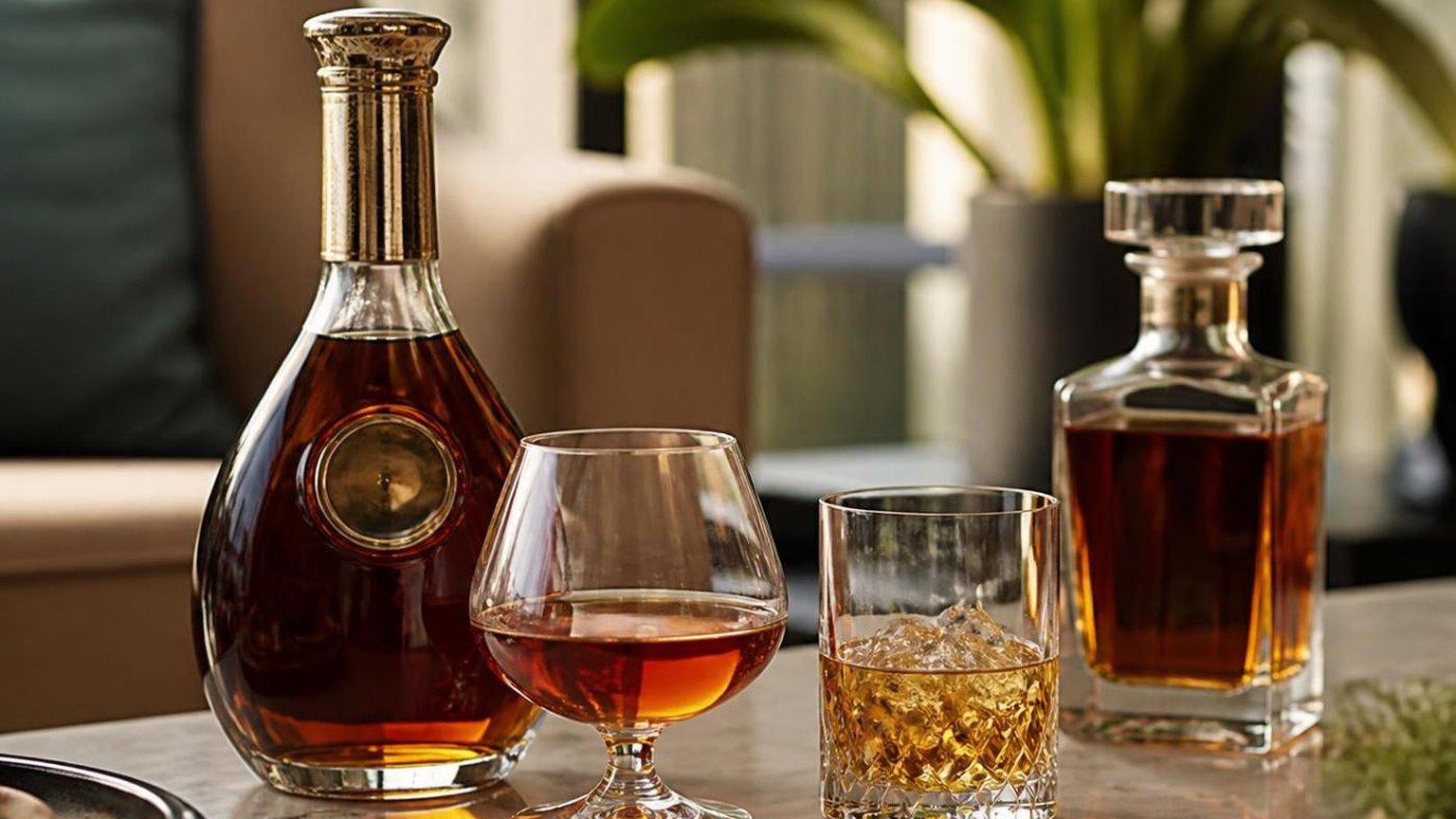
Brandy and whiskey can share caramel and oak, but they start from different raw materials, so they land differently on the palate. Brandy is distilled from wine or fermented fruit.
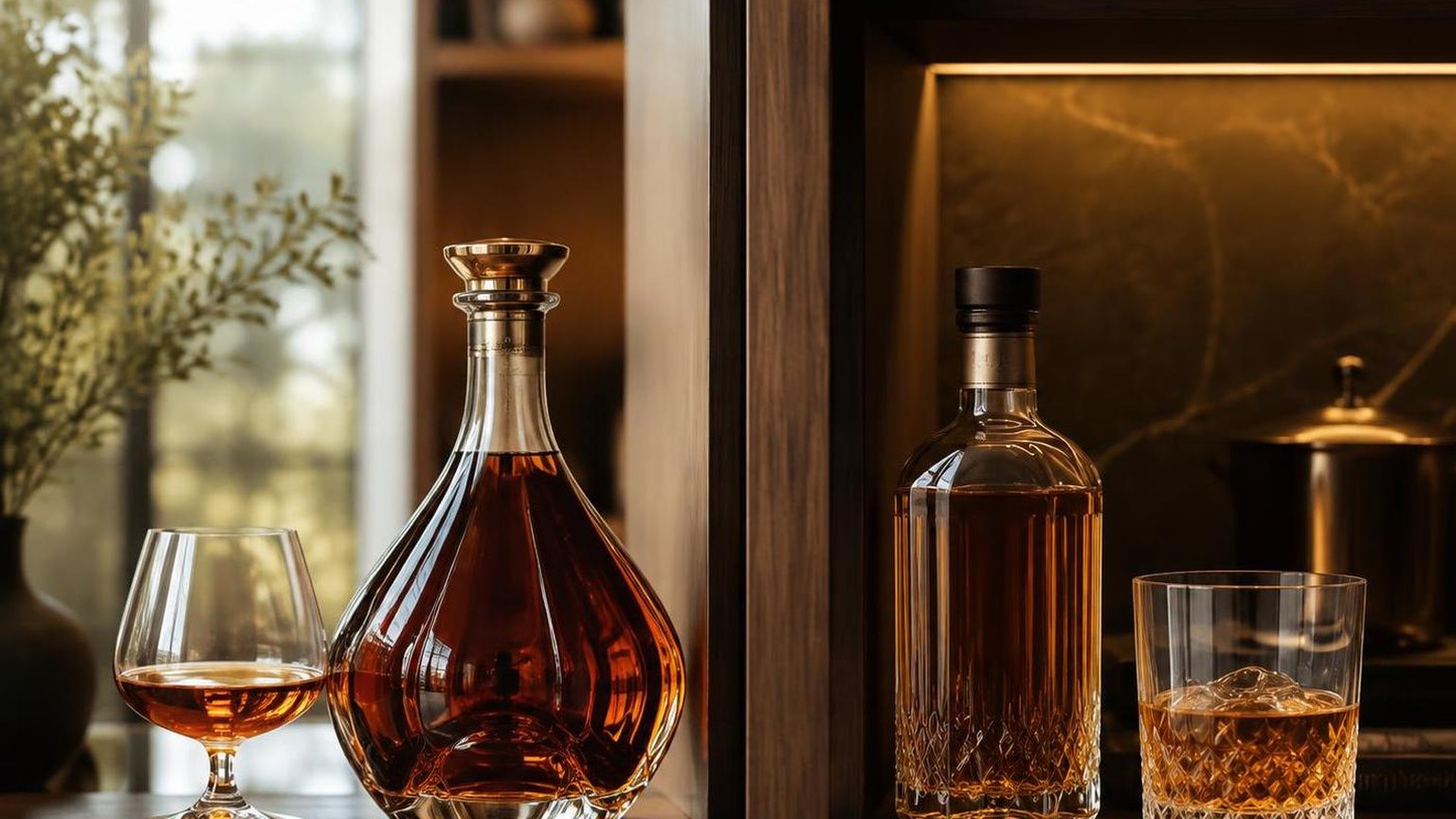
Whiskey is distilled from grain mash, usually bottled at 40% ABV or higher.
Brandy usually smells more overtly fruity because its base carries grape or orchard-fruit esters through distillation and aging. Common notes include raisin, baked apple, apricot, fig, orange peel, vanilla, and toasted almond.
In a glass, that often reads as rounder and sweeter, even when residual sugar is low.
Most brandies show less cereal character than whiskey. Cognac, for example, often emphasizes floral aromas such as violet and jasmine alongside dried fruit, rancio, and baking spice.
Older examples can develop walnut, mushroom, leather, and tobacco from oxidation and long cask aging.
Whiskey presents grain first, then oak. Bourbon often shows vanilla, caramel, corn sweetness, coconut, and char because U.S. law requires new charred oak barrels.
Scotch malt whiskey can add heather, biscuit, orchard fruit, or smoke, depending on malt type, fermentation, still shape, and cask regimen.
Texture also separates them. Brandy often feels silkier and more glyceric, partly because fruit-derived congeners can suggest softness.
Whiskey more often feels firmer, drier, and spicier, especially rye-forward styles, where black pepper, clove, and mint can sharpen the finish.
| Category | Typical aroma and palate markers | Why it tastes that way |
| Brandy | Dried grape, apricot, apple, fig, orange peel, vanilla, nut, rancio | Fruit base creates ester-driven aromas; oxidation and oak add spice, caramel, and savory aged notes |
| Bourbon | Vanilla, caramel, corn sweetness, toffee, coconut, char | At least 51% corn and mandatory new charred oak intensify sweetness and wood extractives |
| Rye whiskey | Pepper, clove, mint, dill, citrus peel | Rye grain contributes sharper spice and herbal lift |
| Scotch single malt | Malt biscuit, orchard fruit, honey, smoke, sea spray | Malted barley, pot still distillation, peat use, and varied cask types broaden flavor range |
Alcohol strength changes perception. Many standard bottlings sit at 40% to 46% ABV, while cask-strength whiskey can exceed 55% ABV. Higher proof amplifies heat, spice, and finish length.
Brandy at similar proof can still seem gentler because fruit notes read as sweetness.
- Choose brandy if you want fruit-led aroma, softer spice, and a smoother first sip.
- Choose whiskey if you want grain definition, stronger oak impact, and a drier, longer finish.
- Serve both near 60 to 65°F; excessive warmth can exaggerate alcohol and flatten detail.
In practice, brandy tends to open with fruit and end with nuts and spice. Whiskey usually opens with grain and oak, then finishes with char, pepper, or smoke. The glass makes the distinction obvious within the first nosing.
Cocktail and Food Pairing Differences
Brandy and whiskey behave differently in cocktails and at the table because their raw materials and aging profiles are different. Brandy brings fruit, floral notes, and a rounder sweetness.
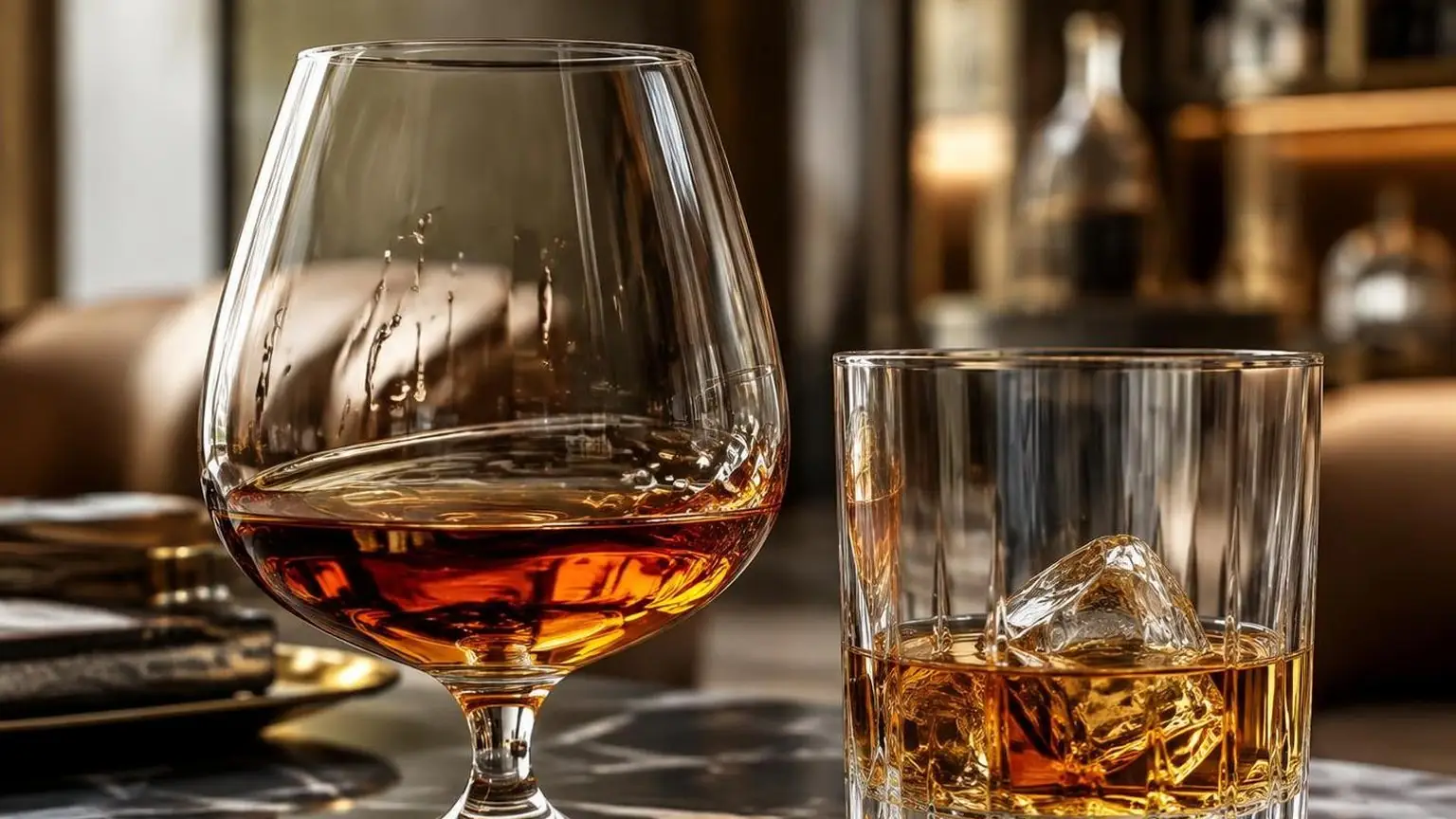
Whiskey usually adds grain, oak, spice, smoke, or vanilla, which changes both mixing choices and food matches.
In cocktails, brandy works best when a drink benefits from fruit weight and softer edges. Classic examples include the Sidecar, Brandy Alexander, and Brandy Crusta.
Whiskey fits drinks built around structure, bitterness, and spice, such as the Old Fashioned, Manhattan, Whiskey Sour, and Boulevardier.
| Spirit | Typical cocktail style | Common modifiers | Usual garnish |
| Brandy | Silky, aromatic, fruit-led | Orange liqueur, lemon juice, cream, vermouth | Orange twist, lemon twist, grated nutmeg |
| Whiskey | Spirit-forward, bitter, spice-led | Bitters, sweet vermouth, sugar, citrus | Orange peel, cherry, lemon peel |
A standard US spirit pour is 1.5 fluid ounces, about 44 milliliters. At 40% ABV, that serving contains roughly 0.6 fluid ounces of pure alcohol. That equal baseline makes flavor, not strength, the main reason bartenders choose one over the other.
Brandy’s fruit origin gives it an advantage with apple, pear, stone fruit, dried fig, raisin, cinnamon, and baking spices. Cognac and Armagnac also pair naturally with orange oils and lemon acidity.
That is why brandy often feels more seamless in split-base holiday punches and dessert-adjacent drinks.
Whiskey handles assertive ingredients better. Rye stands up to amaro, Angostura bitters, and sweet vermouth because its peppery profile stays visible.
Bourbon’s caramel and vanillin make it strong with maple, pecan, and charred citrus, while Scotch can carry smoke into a drink without losing balance.
| Pairing point | Brandy | Whiskey |
| Best with cheese | Triple-cream Brie, aged Gouda, blue cheese | Cheddar, Comté, smoked Gouda |
| Best with meat | Duck, pork loin, pâté | Brisket, lamb, grilled steak |
| Best with dessert | Apple tart, bread pudding, dark chocolate | Pecan pie, toffee pudding, 70%+ cacao chocolate |
| Best with nuts | Almonds, walnuts, hazelnuts | Pecans, roasted peanuts |
For food, brandy is usually the better match when the dish has sweetness, fruit reduction, cream, or liver richness. Calvados with pork is a classic French combination because apple notes echo the meat’s sweetness.
Cognac also works with foie gras, especially when the dish includes fig or apricot.
Whiskey is stronger with smoke, char, and umami. Bourbon suits barbecue because oak, caramel, and higher corn content mirror sweet sauces.
Rye is better with pastrami, sausages, and mustard-driven plates, and peated Scotch can match smoked salmon or blue cheese where brandy would fade.
- Choose brandy for citrus-forward sours, cream drinks, fruit desserts, duck, and pork.
- Choose whiskey for stirred bitter cocktails, grilled meats, barbecue, aged cheese, and smoked foods.
- If a dish is delicate and slightly sweet, brandy usually integrates better.
- If a dish is charred, spicy, or intensely savory, whiskey usually performs better.
Questions People Ask Most
Is brandy sweeter than whiskey?
Usually, yes.
Brandy starts from fermented fruit such as grapes, apples, or pears, so even when it is fully dry after distillation it often shows riper notes like raisin, baked apple, apricot, or caramelized fruit, while whiskey more often leans toward grain.
Spice, toast, smoke, or vanilla from oak.
Any sweetness in both is mostly perceived flavor rather than high residual sugar, unless the producer adds sweetening after distillation.
Are brandy and whiskey made from different base ingredients?
Yes. Brandy is distilled from wine or other fermented fruit juice, while whiskey is distilled from a fermented grain mash made from ingredients such as barley, corn, rye, or wheat.
That raw material difference is the main reason brandy tastes fruit-driven and whiskey tastes grain-driven.
Do brandy and whiskey have to be aged in oak?
No, but aging is common for both.
Many whiskeys are legally defined around oak maturation, such as bourbon, which must be aged in new charred oak containers, while brandy rules vary more by style and country, with some examples aged for years in oak and others sold younger and fresher.
Oak adds color, tannin, vanilla, spice, and texture to both spirits.
Which one is usually stronger, brandy or whiskey?
They are often bottled at similar strength. In the U.S., many standard brandies and whiskeys are sold around 40% ABV, though cask-strength whiskey can run well above 50% ABV and some brandies are also bottled higher.
The label ABV matters more than the category name if you want to compare alcohol strength.
Can you substitute brandy for whiskey in cocktails or cooking?
Sometimes, but the result changes noticeably.
In a sauce, deglaze, or dessert, brandy brings fruit and floral depth, while whiskey contributes grain, oak, spice, and sometimes smoke, so swapping one for the other works best when those flavor shifts fit the recipe.
In cocktails, an Old Fashioned with brandy tastes rounder and fruitier than one made with rye or bourbon.
Related Reading
- Does Whiskey Get Better With Age?
- Is Jim Beam Whiskey Or Bourbon?
- How Much Is A Dram Of Whiskey?
- How Much Alcohol Is In Pink Whitney? Find Out Now
- What Is A Whiskey Neat?
- How To Make Whiskey Taste Better?
- Does Whiskey Help A Sore Throat?
- All Alcohol Guides
- Electronic Code of Federal Regulations — 27 CFR § 5.149 Standards of identity for distilled spirits (2024)
- Alcohol and Tobacco Tax and Trade Bureau — Beverage Alcohol Manual, Chapter 4: Class and Type Designations for Distilled Spirits (2023)
- National Center for Biotechnology Information — Alcoholic Beverages (2019)
- Encyclopaedia Britannica — Brandy (2024)
- Encyclopaedia Britannica — Whiskey (2024)
- EUR-Lex — Regulation (EU) 2019/787 on the definition, description, presentation and labelling of spirit drinks (2019)
- Scotch Whisky Association — How is Scotch Whisky Made? (2024)