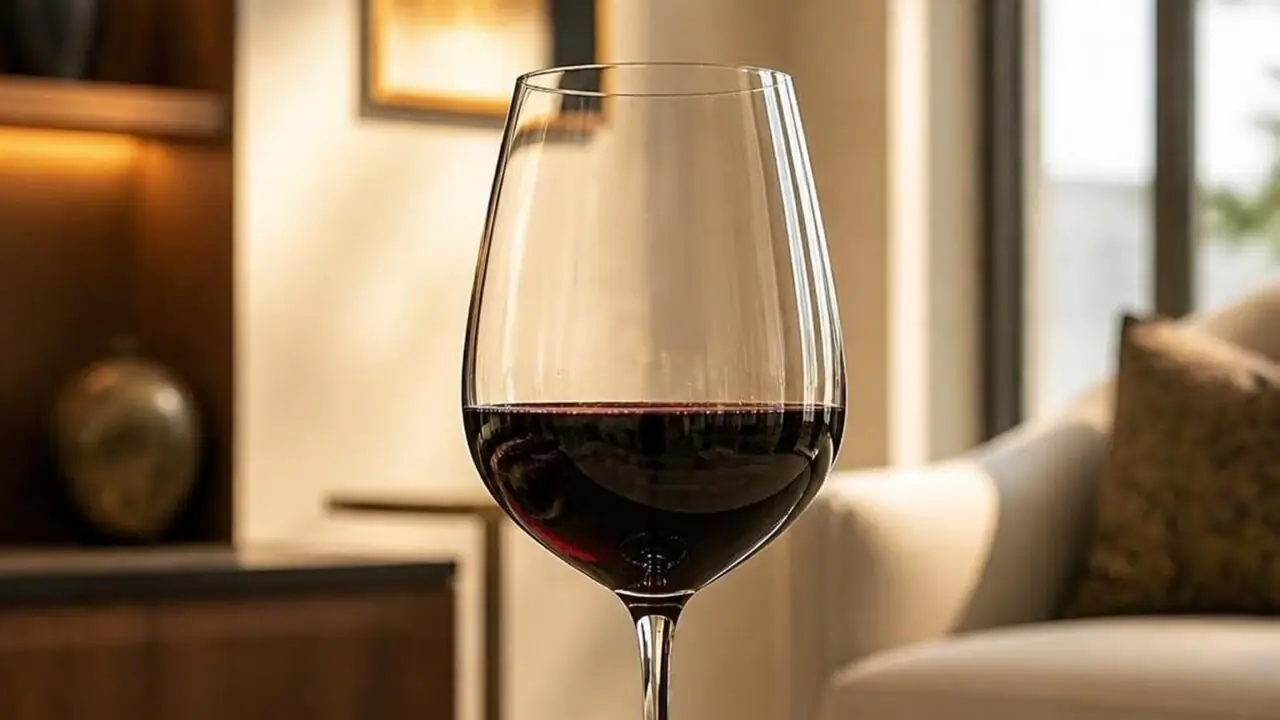
How Many Milliliters in a Glass of Wine? — 150 mL is the standard U.S. pour. That equals 5 fluid ounces, the serving size used by U.S. health agencies for table wine around 12% alcohol by volume.
Restaurants often pour 150–180 mL, tasting flights may use 60–90 mL, and home pours can drift higher without measuring. Bottle math helps: a 750 mL wine bottle provides five standard 150 mL glasses.
This guide explains practical pour sizes, glass capacity versus serving size, calorie and alcohol estimates, and how milliliters change for sparkling, dessert, and fortified wines.
Standard Wine Pour in Milliliters
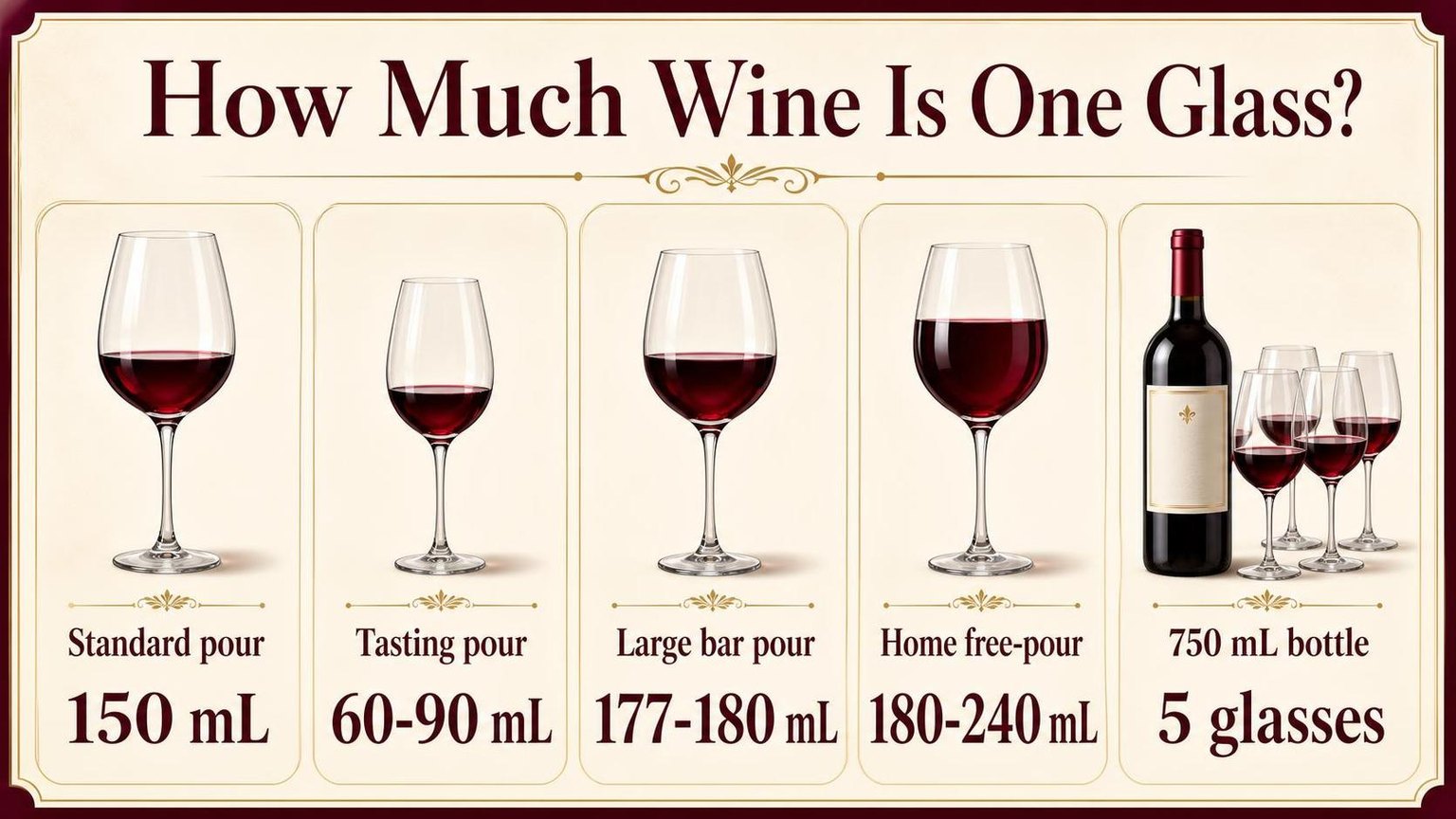
In the U.S., a standard glass of still wine is usually 5 fluid ounces, which equals about 148 milliliters.
Most restaurants, bars, and tasting rooms round that to 150 mL because it is easy to measure, easy to price, and aligns with standard serving guidance.
That 150 mL benchmark matters because it creates consistency across service, alcohol calculations, and bottle yields. It also explains why one 750 mL bottle typically pours into five standard glasses.
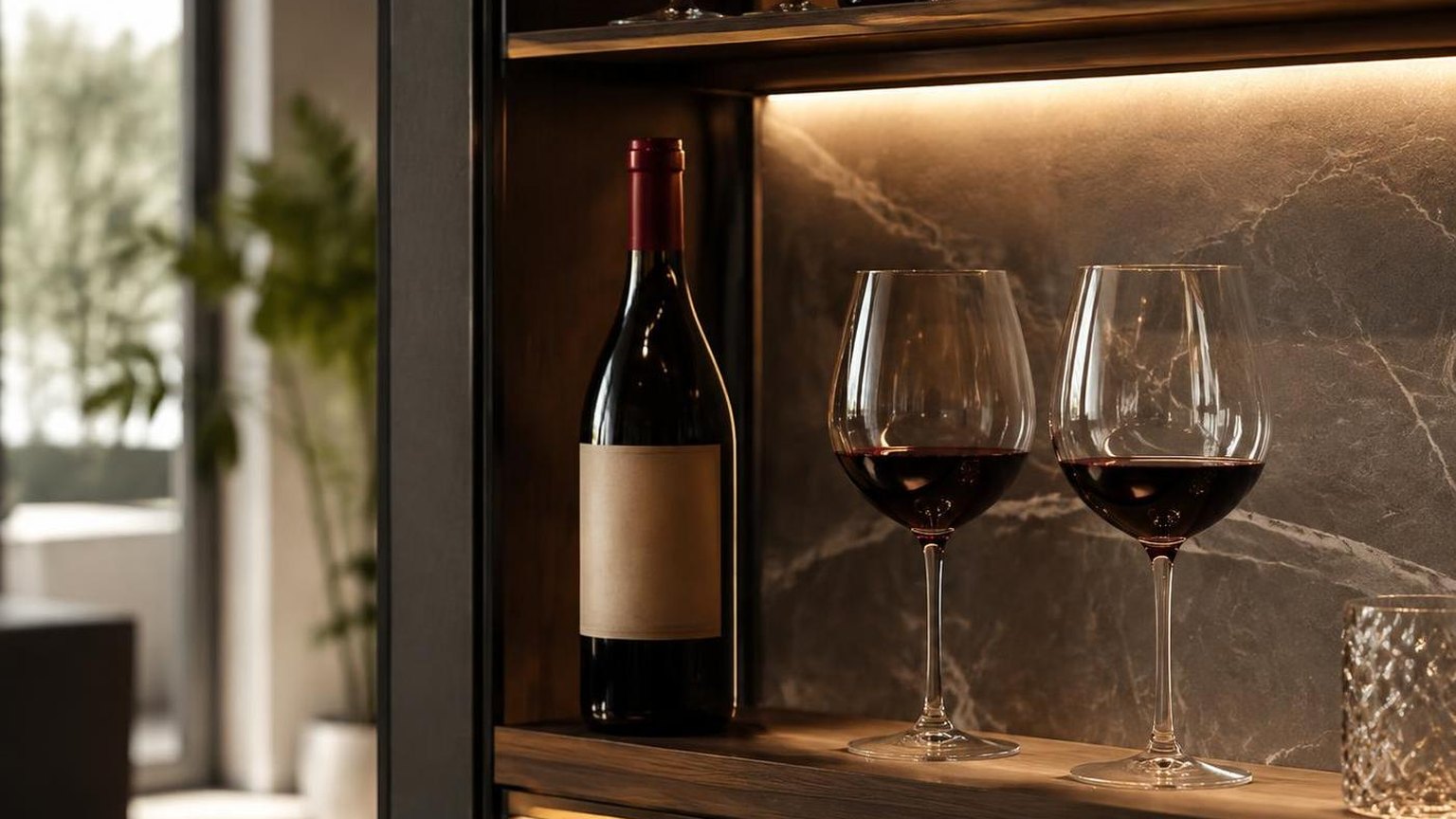
A standard pour is not the same as filling the glass. Wine glasses are intentionally larger than the serving size so the wine has room for swirling, aeration, and aroma release.
In practice, a 150 mL pour often looks modest in a large Bordeaux or universal glass.
| Pour type | Fluid ounces | Milliliters |
| Standard U.S. wine pour | 5 oz | 148 mL |
| Common rounded service measure | 5.1 oz | 150 mL |
| Half glass | 2.5 oz | 74 mL |
| Large restaurant pour | 6 oz | 177 mL |
| Generous home pour | 8 oz | 237 mL |
The 5-ounce standard is also used in U.S. dietary guidance and alcohol education. A standard drink of wine is defined as 5 ounces of wine at about 12% alcohol by volume, which equals roughly 14 grams of pure alcohol.
That does not mean every 150 mL glass contains the same alcohol. Alcohol content changes with ABV. A 150 mL pour at 12% ABV contains less alcohol than the same pour at 14.5% ABV, even though the volume in the glass is identical.
Pour size also varies by setting. Fine-dining restaurants may stay close to 150 mL for inventory control. Casual bars sometimes pour 177 mL, while home servings often exceed both, especially when using oversized stemware without a measuring tool.
| Serving setting | Typical pour in mL | Notes |
| Tasting pour | 60-90 mL | Used for flights and comparisons |
| Standard restaurant glass | 148-150 mL | Most common full serving |
| Larger by-the-glass pour | 175-180 mL | Common in some bars and promos |
| Home free-pour | 180-240 mL | Often larger than people estimate |
Bottle math shows why milliliters matter. A 750 mL bottle yields five 150 mL glasses, four 177 mL glasses with a small remainder, or three 240 mL home pours with wine left over but not enough for a full fourth glass.
For sparkling wine, dessert wine, and fortified wine, standard pours are usually smaller.
Sparkling wine is often served around 120 mL, dessert wine around 75 to 90 mL, and fortified wine around 60 to 90 mL because the style or alcohol level is more concentrated.
- Use 150 mL as the practical standard for one glass of still wine.
- Expect larger pours in casual settings unless the server measures.
- Remember that glass size does not indicate serving size.
- Count on five standard glasses from one 750 mL bottle.
Restaurant Glass Sizes by Pour
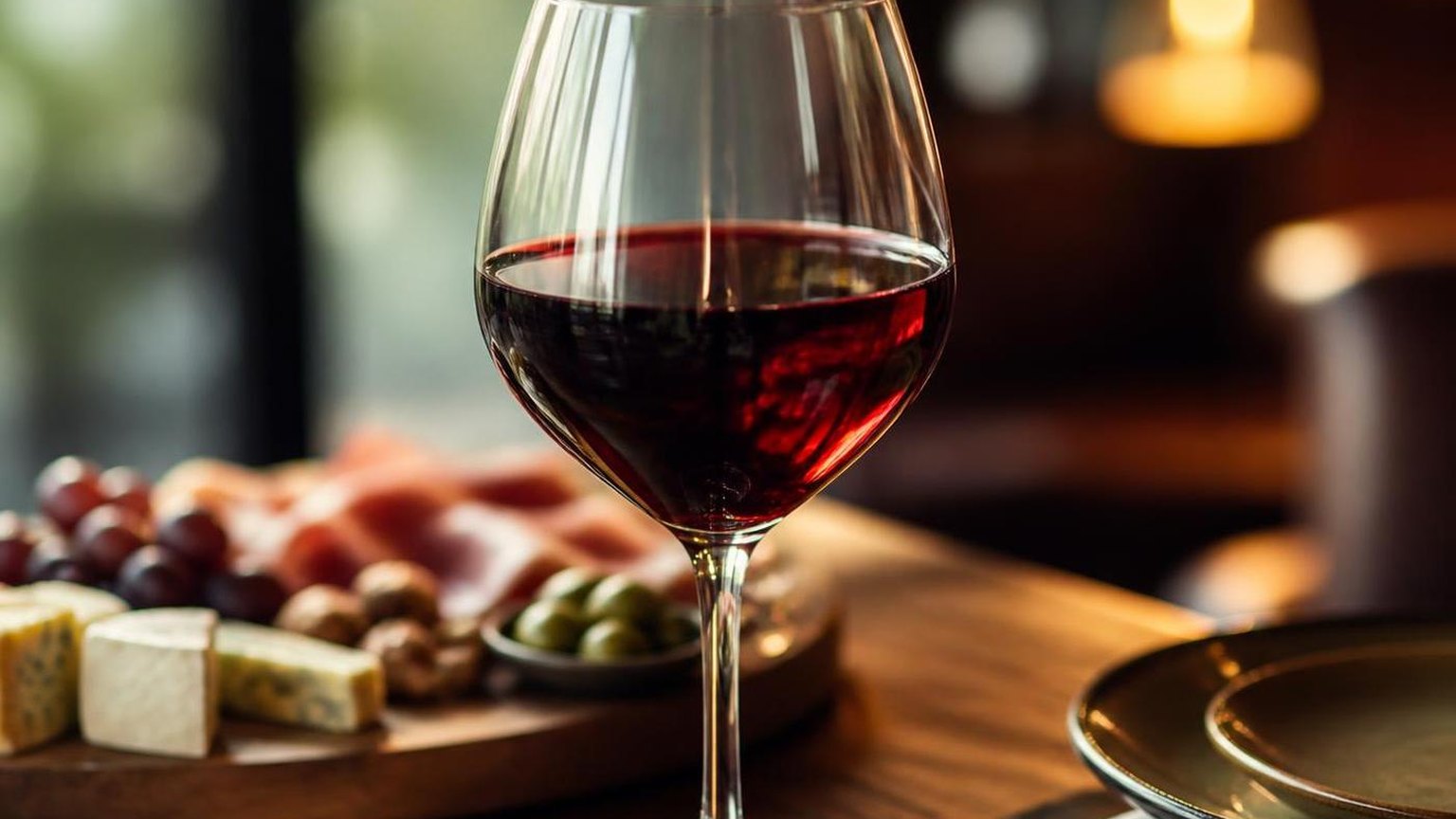
Restaurant wine pours are measured by volume, not by glass shape. In the U.S., the standard single pour is usually 5 ounces, which equals about 148 milliliters, but many programs also use 4-ounce, 6-ounce, and tasting pours.
The bowl can look large while the actual serving stays modest. Restaurants leave headspace on purpose to concentrate aroma, reduce spills, and give servers room to swirl the wine at the table.
| Pour type | Ounces | Milliliters | Typical use in restaurants |
| Tasting pour | 2 oz | 59 mL | Flights, pre-fixe pairings, splash tastes |
| Small pour | 4 oz | 118 mL | By-the-glass service, higher-alcohol wines, limited pours |
| Standard pour | 5 oz | 148 mL | Most full-service restaurants and bars |
| Generous pour | 6 oz | 177 mL | Casual restaurants, happy hour, value-driven programs |
| Large pour | 8 oz | 237 mL | Occasional oversized serving, often counted as 1.6 standard drinks |
A 5-ounce pour became the practical benchmark because it aligns with U.S. alcohol guidance. The National Institute on Alcohol Abuse and Alcoholism defines one standard drink of wine as 5 ounces of table wine at about 12% alcohol by volume.
That measure also fits restaurant economics. A 750 mL bottle holds about 25.4 ounces, so it yields five 5-ounce glasses with roughly 0.4 ounce left over, or six 4-ounce glasses with about 1.4 ounces left.
| Bottle size | Total volume | 4 oz pours | 5 oz pours | 6 oz pours |
| Standard bottle | 750 mL | 6 full pours | 5 full pours | 4 full pours |
| Half bottle | 375 mL | 3 full pours | 2 full pours | 2 full pours |
| Magnum | 1,500 mL | 12 full pours | 10 full pours | 8 full pours |
Fine-dining rooms often look conservative because the glassware is larger. A Burgundy or Bordeaux stem may hold 20 to 30 ounces, yet the actual pour still lands near 5 ounces, often below the glass’s widest point.
Pour size also changes with wine style. High-alcohol reds, sweet wines, and expensive reserve pours are commonly served in smaller amounts, while house Sauvignon Blanc or Pinot Grigio may be poured at 5 or 6 ounces.
- Sparkling wine is often poured at 4 to 5 ounces to preserve bubbles and control overflow.
- Dessert wine is commonly served at 2 to 3 ounces, or about 59 to 89 mL.
- Fortified wine, such as Port, is usually poured at 2 to 3 ounces because alcohol levels are higher.
- Wine flights often use 2-ounce portions so guests can compare several wines without reaching a full-glass intake too quickly.
If you want to estimate what is in your glass at a restaurant, 150 mL is the safest shorthand.
That is close to the standard 5-ounce pour and matches what many U.S. wine lists, training manuals, and responsible-service programs treat as a normal serving.
Bottle Math for Wine Glasses
A standard wine bottle holds 750 milliliters. That single number drives almost all glass-pour math, whether you are serving a casual dinner, a restaurant flight, or a larger party.
Most confusion starts when people call every pour “a glass” even though glass sizes vary widely.
In the U.S., a standard restaurant pour is usually 5 ounces, which equals about 148 milliliters. That means a 750-milliliter bottle does not neatly make five full glasses. It makes five 148-milliliter pours with a small amount left over.
| Pour size | Milliliters | Glasses from 750 mL bottle | Leftover wine |
| Small tasting pour | 75 mL | 10 | 0 mL |
| Half glass | 100 mL | 7 | 50 mL |
| Modest home pour | 125 mL | 6 | 0 mL |
| Standard U.S. pour | 148 mL | 5 | 10 mL |
| Rounded metric restaurant pour | 150 mL | 5 | 0 mL |
| Large home pour | 175 mL | 4 | 50 mL |
| Generous glass | 200 mL | 3 | 150 mL |
The cleanest math comes from metric pours. Six 125-milliliter glasses exactly equal one 750-milliliter bottle. Five 150-milliliter pours also empty a bottle exactly, which is one reason 150 milliliters is common in practical service.
The 5-ounce standard matters because U.S. alcohol guidance often defines one serving of wine as 5 ounces at about 12% alcohol by volume. In milliliters, that serving is roughly 148 milliliters. For planning, most people round it to 150 milliliters.
That rounding changes almost nothing at the table. A 148-milliliter pour leaves about 10 milliliters after five glasses, less than one tablespoon. A true 150-milliliter pour uses the whole bottle with no measurable remainder in normal service.
Glassware size does not equal pour size. Many red wine glasses hold 450 to 700 milliliters, and some balloon glasses hold more. Filling them to the widest point would overserve the wine and kill space needed for swirling and aroma release.
| Container | Total volume | 5 oz / 148 mL pours | 150 mL pours |
| Half bottle | 375 mL | 2 pours | 2 pours |
| Standard bottle | 750 mL | 5 pours | 5 pours |
| Magnum | 1,500 mL | 10 pours | 10 pours |
For hosting, bottle math is straightforward once you pick the pour size first. Use 125 milliliters for six smaller glasses, 150 milliliters for five standard glasses, or 75 milliliters for ten tasting pours.
That method prevents underbuying and keeps servings consistent.
- Use 750 mL as the base number for nearly all bottle calculations.
- Choose 150 mL when you want simple, exact planning.
- Choose 125 mL when you want six glasses from one bottle.
- Use 75 mL for tastings and wine flights.
- Ignore bowl size; measure the actual pour.
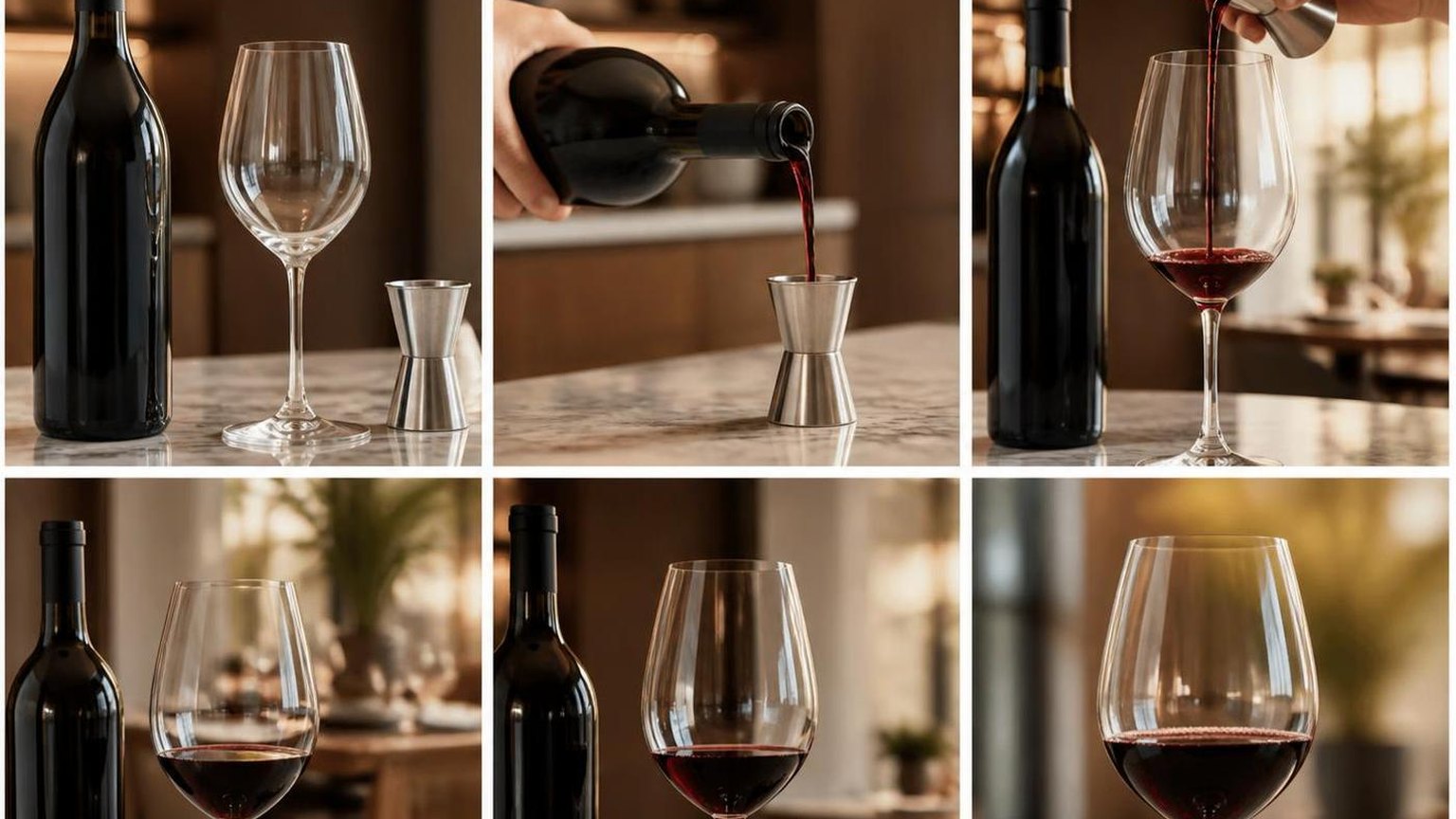
Alcohol Units by Milliliter Pour
Alcohol units depend on two numbers: the pour size in milliliters and the wine’s alcohol by volume, or ABV. In the UK system, 1 unit equals 10 milliliters of pure alcohol, so a larger pour or a stronger wine raises the unit count fast.
The calculation is direct: milliliters poured × ABV% ÷ 1,000 = UK alcohol units. A 175 mL glass at 12% ABV contains 2.1 units, while the same pour at 14% ABV contains 2.45 units.
Pour size changes intake more than many drinkers expect. Moving from a 125 mL pour to a 250 mL pour doubles the alcohol units, even when the wine itself stays the same.
| Pour size | 12% ABV | 13.5% ABV | 14.5% ABV |
| 100 mL | 1.2 units | 1.35 units | 1.45 units |
| 125 mL | 1.5 units | 1.69 units | 1.81 units |
| 150 mL | 1.8 units | 2.03 units | 2.18 units |
| 175 mL | 2.1 units | 2.36 units | 2.54 units |
| 250 mL | 3.0 units | 3.38 units | 3.63 units |
These numbers matter because common wine strengths vary widely. Many dry table wines fall around 11% to 14% ABV, while some reds, Zinfandels, Amarones, and fortified wines run higher.
A standard 750 mL bottle also shows how quickly units add up. At 12% ABV, a full bottle contains 9 units. At 13.5% ABV, it contains 10.13 units. At 14.5% ABV, it contains 10.88 units.
| Container | Volume | 12% ABV | 13.5% ABV | 14.5% ABV |
| Small glass | 125 mL | 1.5 units | 1.69 units | 1.81 units |
| Medium glass | 175 mL | 2.1 units | 2.36 units | 2.54 units |
| Large glass | 250 mL | 3.0 units | 3.38 units | 3.63 units |
| Full bottle | 750 mL | 9.0 units | 10.13 units | 10.88 units |
For U.S. readers, alcohol units are not the same as U.S. standard drinks. A U.S. standard drink contains about 14 grams of pure alcohol, while a UK unit contains 8 grams, so the numbers will not match label-for-label.
The practical move is simple: check the ABV on the bottle, then match it to your pour size. That gives a more accurate alcohol count than assuming every “glass of wine” is the same.
- 125 mL at 12% ABV = 1.5 UK units.
- 175 mL at 13.5% ABV = 2.36 UK units.
- 250 mL at 14.5% ABV = 3.63 UK units.
- 750 mL at 13.5% ABV = 10.13 UK units.
Measuring Wine Without Guesswork
Wine is easy to overpour because most glasses are larger than a standard serving. Measuring the pour, not the bowl size, is what keeps the amount accurate. A quick check with a measuring tool gives repeatable results at home or behind a bar.
In the United States, the standard wine serving used for nutrition labeling and many health references is five fluid ounces. That equals about one hundred forty-eight milliliters.
Restaurants often round to one hundred fifty milliliters because it is simple to mark and easy to train.
| US standard wine serving | 5 fl oz | 147.9 mL |
| Common rounded restaurant pour | 5.1 fl oz | 150 mL |
| Large restaurant pour | 6 fl oz | 177.4 mL |
| Small tasting pour | 2 fl oz | 59.1 mL |
| Half glass | 2.5 fl oz | 73.9 mL |
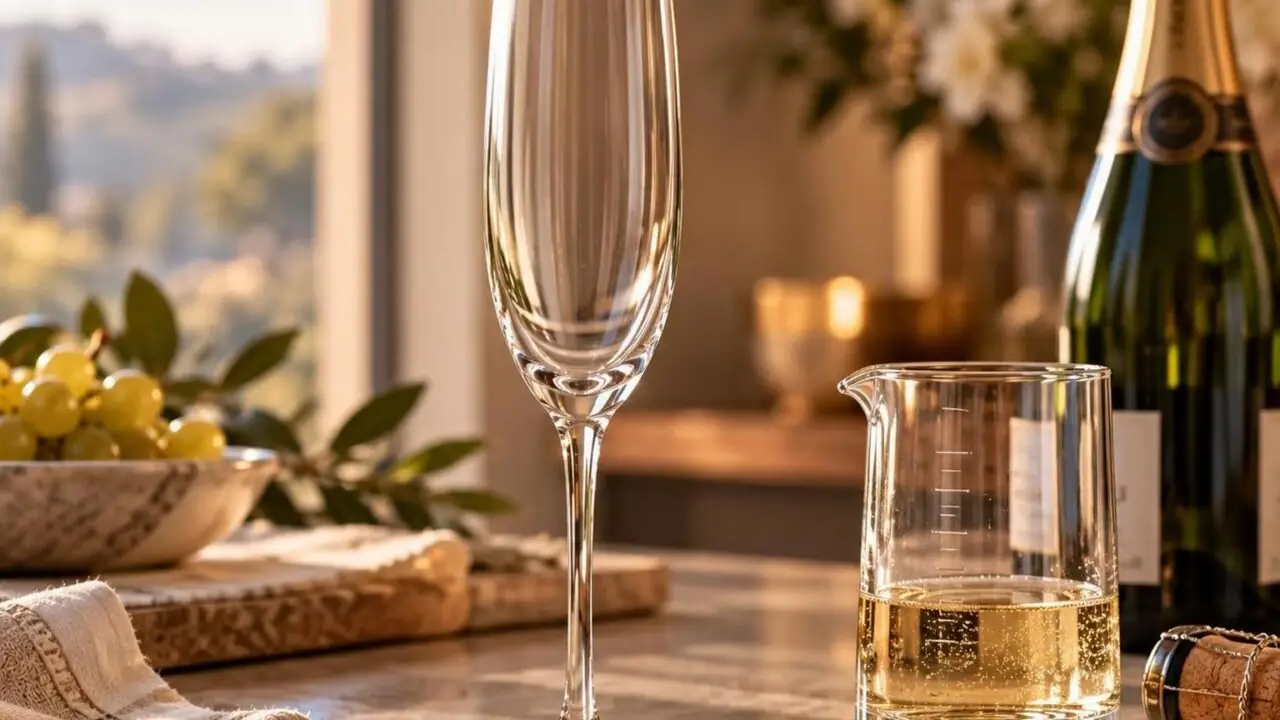
The fastest method is a liquid measuring cup marked in milliliters. Pour to the target line once, then look at where the wine sits in your usual glass. That visual cue becomes your reference for later pours.
A small kitchen scale also works because wine is close to the density of water.
Dry table wine usually falls near one gram per milliliter, so a one hundred fifty milliliter pour will weigh about one hundred fifty grams, plus or minus a few grams by style and temperature.
| Target pour | Approximate scale reading for wine only | Use case |
| 60 mL | about 60 g | Tasting flight |
| 90 mL | about 90 g | Conservative home pour |
| 120 mL | about 120 g | Modest by-the-glass pour |
| 150 mL | about 150 g | Standard reference pour |
| 180 mL | about 180 g | Large pour |
If you serve from a standard bottle, bottle math helps prevent drift. A seven hundred fifty milliliter bottle yields five exact one hundred fifty milliliter pours.
Using larger glasses does not change that capacity, but larger bowls often encourage heavier pours.
| Bottle size | Total volume | Exact 150 mL pours |
| Half bottle | 375 mL | 2.5 pours |
| Standard bottle | 750 mL | 5 pours |
| Magnum | 1,500 mL | 10 pours |
Marked stemware removes guesswork in busy service. Some tasting-room and banquet glasses include etched or printed fill lines.
If your glasses are unmarked, add water to the target volume, pour it into the glass, and note the level before service starts.
- Use a jigger for the first few pours when opening a new bottle.
- Measure in milliliters, then memorize the visual fill line in that specific glass.
- Recheck after switching glass shapes, because wider bowls distort perception.
- For flights, premeasure each pour so every guest receives the same amount.
- At home, keep one dedicated measuring glass near the wine opener.
Accurate pouring controls cost, alcohol intake, and consistency. Measure once, set the visual reference, and each glass becomes easier to pour correctly without relying on guesswork.
Frequently Asked Questions
How many milliliters are in a standard glass of wine?
In the U.S., a standard restaurant pour is 5 fluid ounces, which is about 148 milliliters and usually rounded to 150 mL. That means a 750 mL bottle yields about five standard glasses.
How many milliliters are in a small, medium, or large glass of wine?
A small glass is often about 125 mL, a standard glass about 150 mL, and a larger pour about 175 mL. Some bars also serve 250 mL glasses, which equal one-third of a 750 mL bottle.
Does red, white, or sparkling wine change the milliliter amount in a glass?
The serving volume can change by style, but not because the liquid itself measures differently. Sparkling wine is often poured at 125 mL to preserve bubbles, while red and white are commonly served at 150 mL or 175 mL depending on the venue.
How many milliliters are in a full wine glass versus a proper serving?
A typical wine glass may physically hold 300 mL to 600 mL or more, but it should not be filled to the rim. Proper service leaves headspace for swirling and aroma, so the actual pour is usually only 125 mL to 150 mL.
Why do wine labels and health guidelines use 150 mL so often?
Many nutrition panels and public health references use 150 mL because it closely matches a standard 5-ounce serving in the U.S. That consistency helps estimate alcohol intake, calories, and how many servings are in a bottle.
Related Reading
- Black Friday Wine Deals
- How Many Calories In A Glass Of Chardonnay Wine?
- What Is A Sweet Wine? – 2026
- Sherry Vs Brandy: What Is The Difference?
- What Is Natural Wine? Organic vs Biodynamic vs Natural wines
- How Many Calories In A Glass Of Moscato?
- How Many Ounces Is in a Bottle of Wine?
- All Alcohol Guides