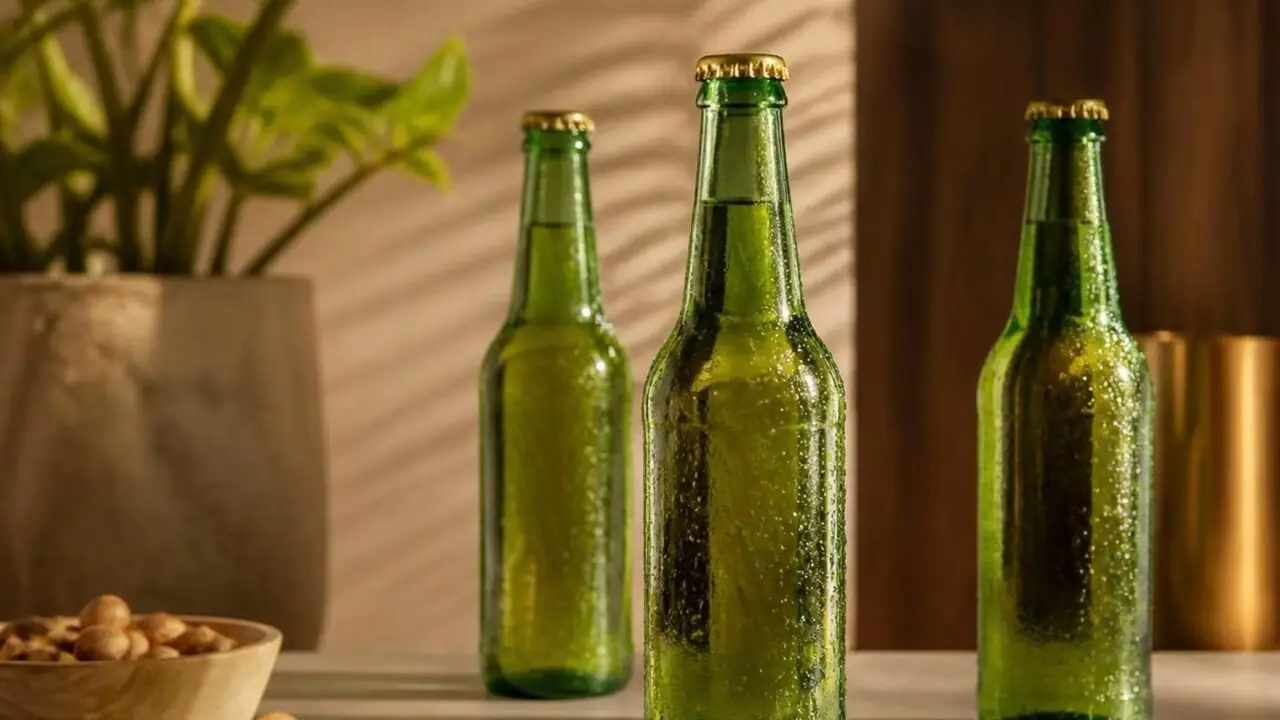
beers in green bottles are beers packaged in green-tinted glass that blocks some visible light but lets in more UV than brown glass, increasing skunking risk.
Green bottles became common in European lager and pilsner branding, especially when clear and green glass signaled premium imports after World War II. The color now communicates style, heritage, and shelf recognition more than technical protection.
This article explains why breweries use green glass, how lightstruck flavors form, which beer styles commonly appear in green bottles, and how to store them to preserve aroma and flavor.
Why Some Beers Use Green Glass
Green bottles are used more for history and branding than for beer protection. They signal “imported” or “European” to many U.S. drinkers, but they let in far more damaging light than amber glass.
The core issue is lightstrike, the reaction that creates the skunky aroma associated with badly handled lager. When hop compounds and riboflavin are exposed to light, they can form 3-methyl-2-butene-1-thiol, usually called MBT.
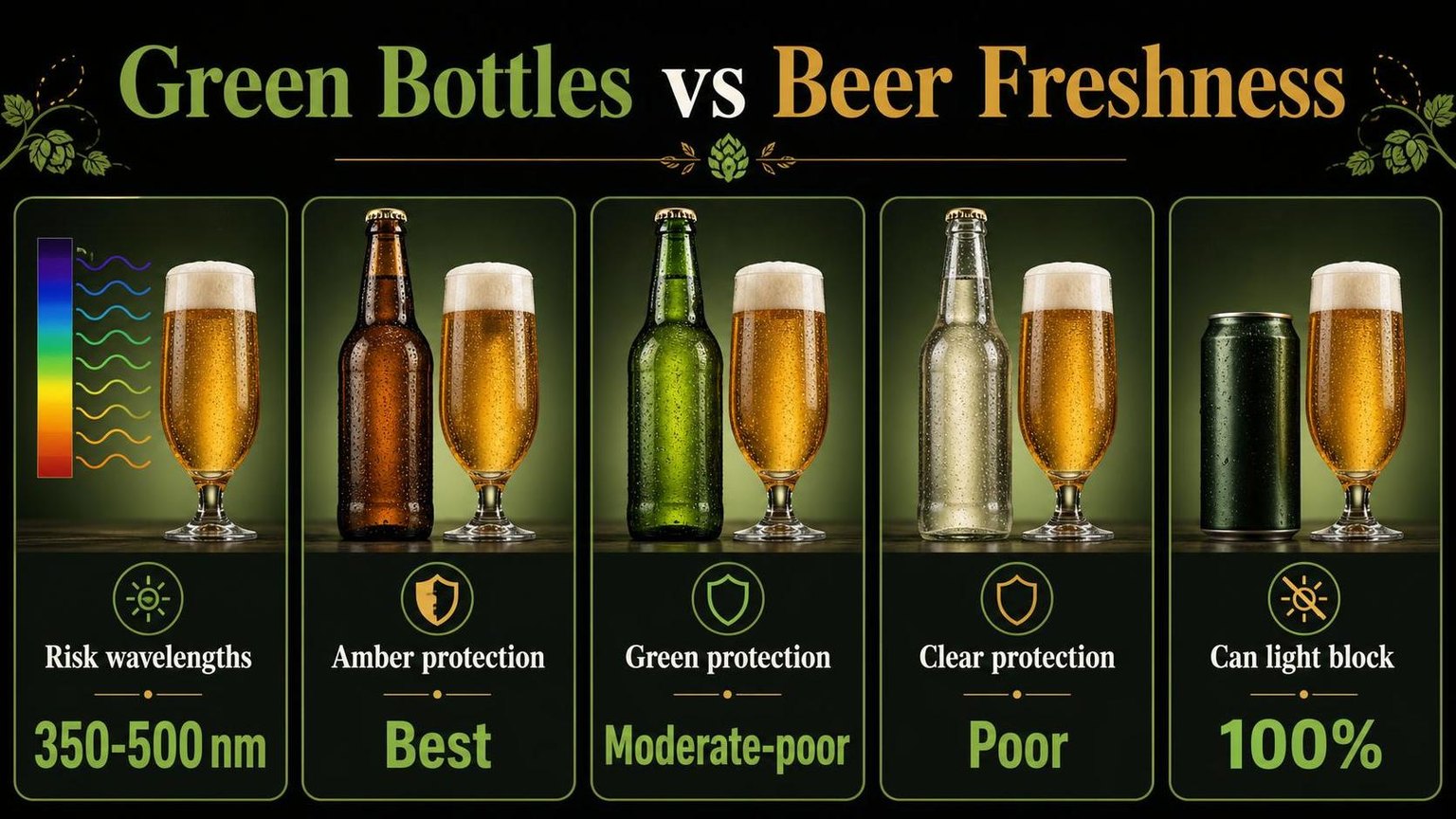
MBT is potent at extremely low concentrations, which is why a beer can smell skunky quickly after sunlight exposure. The most damaging wavelengths are in the blue to near-UV range, roughly 350 to 500 nanometers.
| Beer package | Light protection | Practical effect |
| Amber glass | Best among common bottle colors | Blocks much of the 350–500 nm light that triggers lightstrike |
| Green glass | Moderate to poor | Allows substantially more damaging light than amber |
| Clear glass | Poor | Offers little protection unless the beer uses light-stable hop products |
| Aluminum can | Complete light block | Prevents lightstrike entirely |
That technical disadvantage did not stop green glass from becoming established.
In Europe, especially in the 20th century, some breweries used green because of glass supply patterns, export positioning, and the visual distinction it gave their brands on a shelf.
Heineken is the best-known example. Founded in 1864 in Amsterdam, it helped make green glass globally recognizable, especially in export markets where the bottle itself became part of the brand identity.
By the late 20th century, green bottles had strong commercial value in the United States. Drinkers often linked green glass with imported pilsner or premium lager, even though the package was less protective than amber.
Brewers using green glass usually manage the risk in other ways.
They shorten light exposure during warehousing and retail display, move beer through distribution faster, and in some cases use reduced-isomerized hop extracts that are more light-stable.
- Green glass is a branding choice first.
- Amber glass protects beer better from skunky off-aromas.
- Cans block 100% of light exposure.
- Green-bottled beer should be stored cold and kept out of direct light.
For drinkers, the takeaway is simple. A green bottle can look iconic, but if freshness matters most, choose beer from cans or amber bottles, and avoid bottles sitting in bright retail light.
Green Bottles and Skunky Beer
Green bottles look distinctive, but they do a poor job protecting beer from light.
When beer in a green bottle is exposed to sunlight or strong retail lighting, a fast photochemical reaction can create the “skunky” aroma many drinkers recognize immediately.
The key reaction starts with iso-alpha acids from hops and riboflavin, also called vitamin B2.
Light in the blue to near-ultraviolet range activates riboflavin, which helps break down hop compounds into radicals that form 3-methyl-2-butene-1-thiol, usually shortened to MBT.
MBT is the same sulfur compound associated with skunk spray, and humans detect it at extremely low concentrations. That is why a beer can smell damaged after brief light exposure even when it still tastes otherwise normal.
| Factor | Relevant figure | Why it matters |
| Light wavelengths that drive skunking | About 350-500 nanometers | Blue and near-UV light is especially effective at triggering the reaction |
| MBT sensory threshold | Parts per trillion range | Very small amounts are enough for most drinkers to notice |
| Typical direct sunlight exposure | Can cause damage in minutes | Sunlight contains intense skunking wavelengths |
| Fluorescent store lighting exposure | Usually slower, but still significant over hours to days | Retail display conditions can degrade beer before purchase |
Brown glass filters much more of the damaging spectrum than green glass. Clear glass is worst. Green sits in the middle, which explains why many green-bottled lagers are more vulnerable than the same beer would be in brown glass.
This is one reason some large brands using green or clear bottles reformulated with light-stable hop products.
Tetrahydro-iso-alpha acids and similar modified hop extracts resist the MBT pathway, allowing packaged beer to keep bitterness without the same skunk risk.
- Traditional hop bitterness plus green glass raises skunking risk.
- Brown glass reduces exposure but does not make beer immune.
- Cans block light completely and are the most protective common package.
- Cold storage slows staling reactions, but it does not stop lightstrike.
If a green-bottled beer smells like skunk, burnt rubber, or sulfur immediately after opening, light exposure is a likely cause. The fault is packaging and handling, not a sign that all green-bottled beer is inherently low quality.
For buyers, the practical move is simple: choose cans or brown bottles when freshness matters, and keep beer away from windows, patios, and bright display lights.
For bars and retailers, shaded storage and fast stock rotation materially reduce the defect.
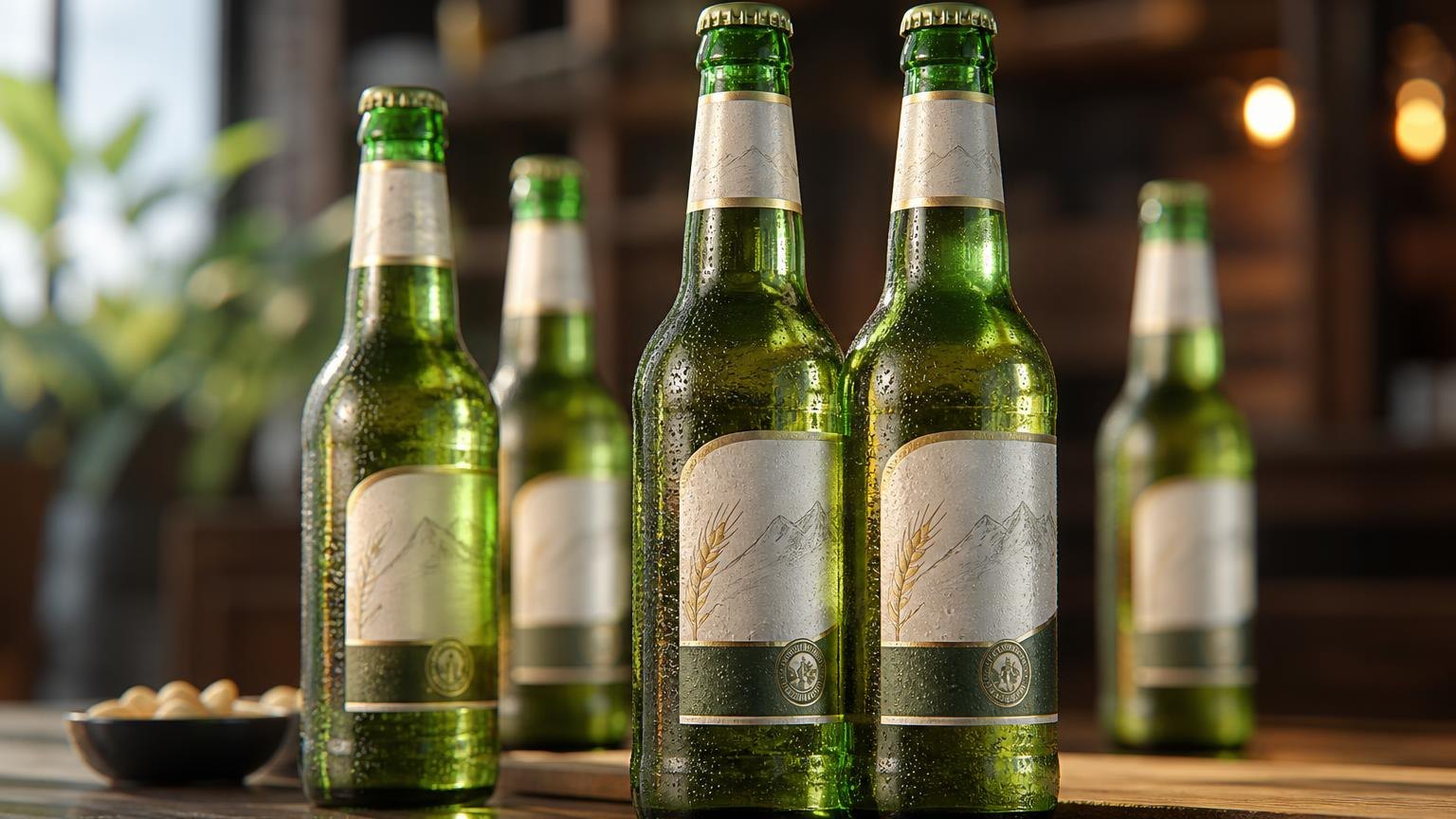
The Heineken Effect on Packaging
Heineken helped make the green beer bottle a global visual shorthand for imported lager. The tradeoff is technical: green glass looks distinctive, but it protects beer from light far less effectively than amber glass.
That tension shaped packaging across the beer market. Brands copied the look because consumers learned to read green bottles as continental, upscale, and familiar on back bars and retail shelves.
Heineken was founded in Amsterdam in 1864, and its export image became especially important in the 20th century. Green glass was not invented by Heineken, but the brand made it commercially powerful by using it at international scale.
By the postwar period, green bottles had become tightly linked with imported European lager in the U.S. market.
Once that association took hold, other breweries used green glass to borrow the same cues: heritage, foreign origin, and premium positioning.
The technical problem is well documented. Beer becomes “lightstruck” when riboflavin reacts under light exposure and helps form 3-methyl-2-butene-1-thiol, the sulfur compound responsible for skunky aroma.
That reaction is triggered most strongly by light in the blue-to-near-ultraviolet range. Brown glass filters much more of that energy than green glass, which is why amber remains the standard for beer needing better flavor protection.
| Packaging factor | Green bottle | Amber bottle |
| Common market signal | Imported/premium lager | Traditional beer protection |
| Relevant light range for lightstruck risk | Allows more transmission in roughly 350-500 nm | Blocks much more in roughly 350-500 nm |
| Flavor risk under retail/bar lighting | Higher | Lower |
| Reason breweries still use it | Brand recognition and shelf impact | Product stability |
Heineken reduced part of the risk through modern recipe and packaging choices, not through green glass itself.
Many large lagers in green bottles use hop extracts engineered to be light-stable, including tetrahydro-iso-alpha-acids or related modified bittering compounds.
That matters because the package is doing two jobs at once. It has to protect the beer, and it has to instantly identify the brand from several feet away in a cooler.
- Green glass became a branding asset because Heineken proved it could carry a premium identity globally.
- The bottle color works best when the beer formula is designed for light exposure.
- The “Heineken effect” is the market choosing recognizability over maximum light protection.
For breweries, the lesson is direct. If the goal is shelf distinction, green bottles can work; if the goal is flavor protection alone, amber is the stronger package.
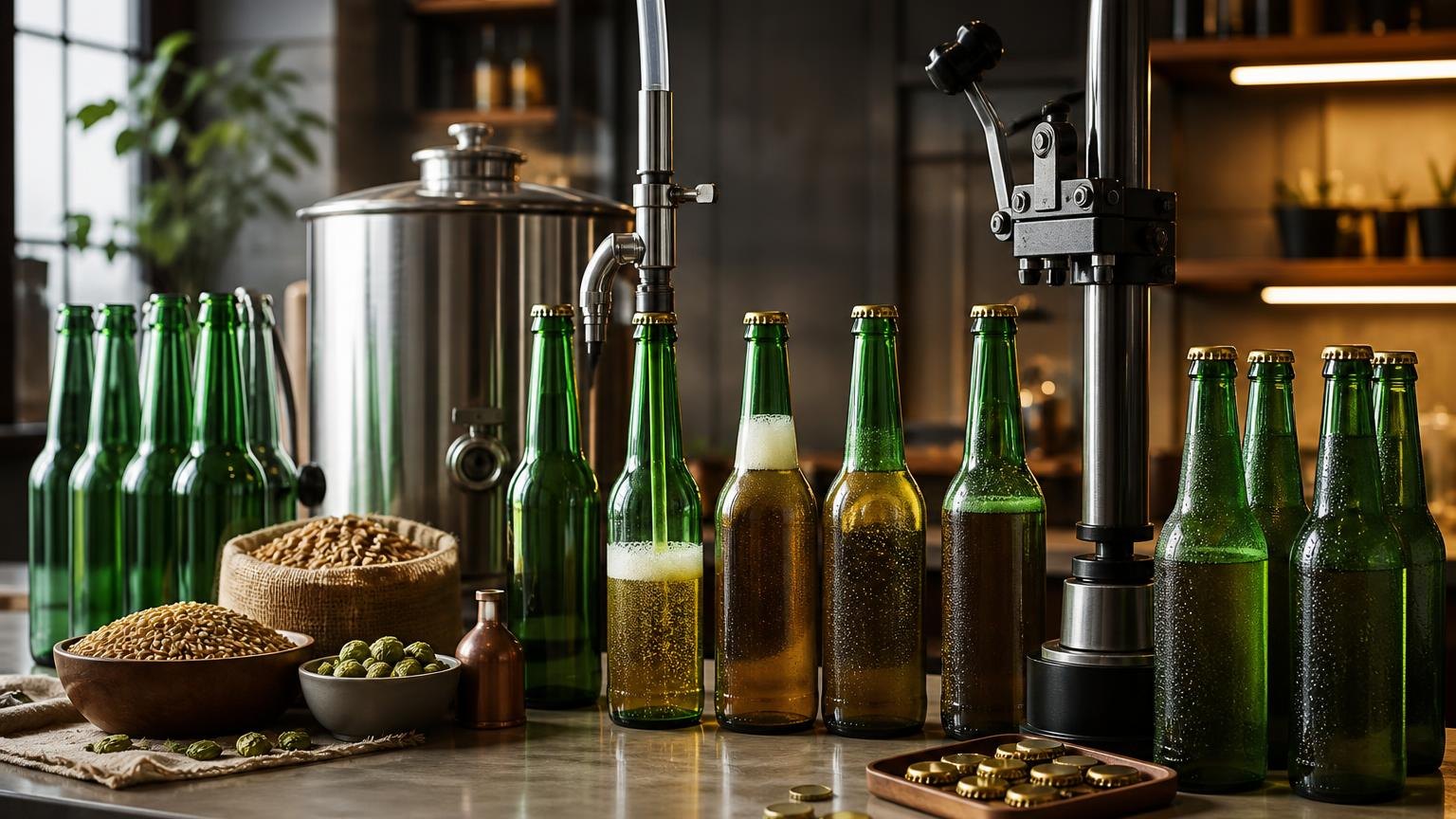
How Light Changes Hop Compounds
Lightstruck beer is a fast photochemical fault, not a slow aging issue. When beer in green bottles sees blue to near-UV light, hop-derived bitter compounds break down and form a sulfur molecule that smells like skunk spray.
The key reactants are iso-alpha acids from hops and riboflavin, also called vitamin B2. Riboflavin absorbs light efficiently, becomes excited, and transfers energy that fragments iso-alpha acids into radicals.
Those radicals react with sulfur-containing compounds already present in beer. The end product is 3-methyl-2-butene-1-thiol, usually shortened to MBT, one of the most potent off-aroma compounds in brewing.
MBT matters because humans detect it at extremely low concentration. Published sensory thresholds are commonly cited in the low nanogram-per-liter range, around 4 ng/L, so only a trace is needed before drinkers notice a skunky aroma.
| Factor | What matters | Why it matters |
| Light wavelength | About 350-500 nm | Riboflavin is activated by near-UV and blue light in this range |
| Main hop substrate | Iso-alpha acids | They fragment under photosensitized conditions |
| Off-aroma compound | 3-methyl-2-butene-1-thiol (MBT) | Creates the classic skunked smell |
| Sensory threshold | About 4 ng/L | Very small amounts become obvious |
Package color changes the speed of this reaction because different glass colors block different parts of the spectrum. Amber glass gives the best protection of the common bottle colors.
Green glass blocks less blue light, and clear glass blocks the least.
| Bottle color | Protection from skunking | Practical result |
| Amber | High | Best at limiting the wavelengths that trigger MBT formation |
| Green | Moderate to low | Beer can skunk quickly under store or sunlight exposure |
| Clear | Low | Most vulnerable unless the beer uses light-stable hop products |
Direct sunlight can damage beer in minutes. Fluorescent retail lighting and bright LED displays are weaker than sunlight, but hours or days of exposure can still produce noticeable fault in green bottles.
Brewers who want a clear or green package often use reduced iso-alpha extracts instead of conventional hop bitterness. Tetrahydroiso-alpha acids and rho-iso-alpha acids are much more light-stable, so they resist MBT formation under the same lighting.
That is why bottle color is not cosmetic. Green glass leaves beer more exposed to the exact wavelengths that activate riboflavin, split hop compounds, and create a sulfur note that drinkers can smell almost immediately.
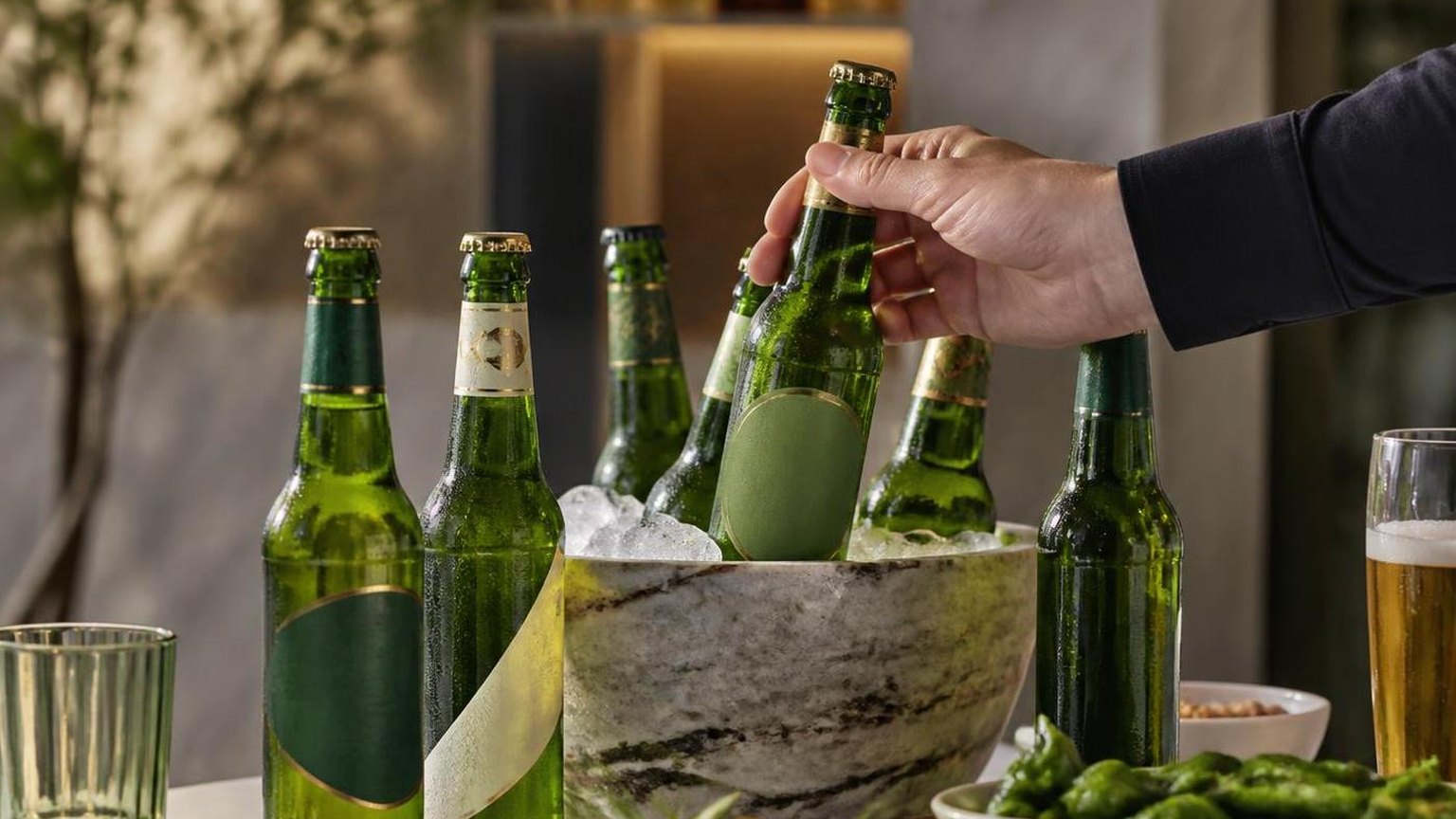
Green Glass Versus Brown Glass
Brown glass protects beer better than green glass because it blocks more of the light that triggers “skunky” aroma.
The difference matters most for hop-forward beers, where light exposure can create 3-methyl-2-butene-1-thiol, the sulfur compound humans detect at extremely low levels.
Beer becomes lightstruck when riboflavin absorbs light and transfers energy to iso-alpha acids from hops. That reaction produces free-radical fragments, then 3-methyl-2-butene-1-thiol, often called MBT.
The risky band is mainly blue to near-UV light, not heat or oxygen.
| Factor | Brown glass | Green glass |
| Most relevant light range for skunking | Blocks a larger share of roughly 350-500 nm light | Lets more of roughly 350-500 nm light pass |
| Protection level | High for packaged beer | Moderate to low |
| Risk in direct sunlight | Lower, but not zero | Higher |
| Best use case | Hop-forward beer, wider retail exposure | Branding-led packaging with stricter light control |
Brown glass works because its iron, sulfur, and carbon-based colorants absorb more short-wavelength light. Green glass filters less aggressively.
Clear glass is worst of all, which is why clear-bottled lagers often rely on chemically modified hop extracts instead of conventional iso-alpha acids.
That packaging choice changes flavor stability on the shelf. A pilsner in green glass can taste unchanged when fresh and cold, then show skunky notes after brief light exposure in a sunny bar, store window, or patio bucket.
Brown glass gives more margin for normal handling mistakes.
| Packaging point | Why it matters |
| 12 oz and 330 mL bottles | Common single-serve sizes spend time under retail lighting and on tables, where glass color affects flavor stability |
| LED retail lighting | Usually lower UV than sunlight, but blue-rich light still contributes to lightstruck risk over time |
| Sunlight exposure | Contains strong UV and visible blue light, making it the fastest path to skunking |
Green bottles persist for historical and branding reasons, especially in European lager categories.
Some breweries also design around the weakness by using light-stable hop products, faster distribution, cartons, closed coolers, and darker secondary packaging.
- Choose brown glass for beers with noticeable hop aroma.
- Store any bottled beer away from windows and bright display light.
- Do not assume refrigeration prevents skunking; cold beer can still become lightstruck.
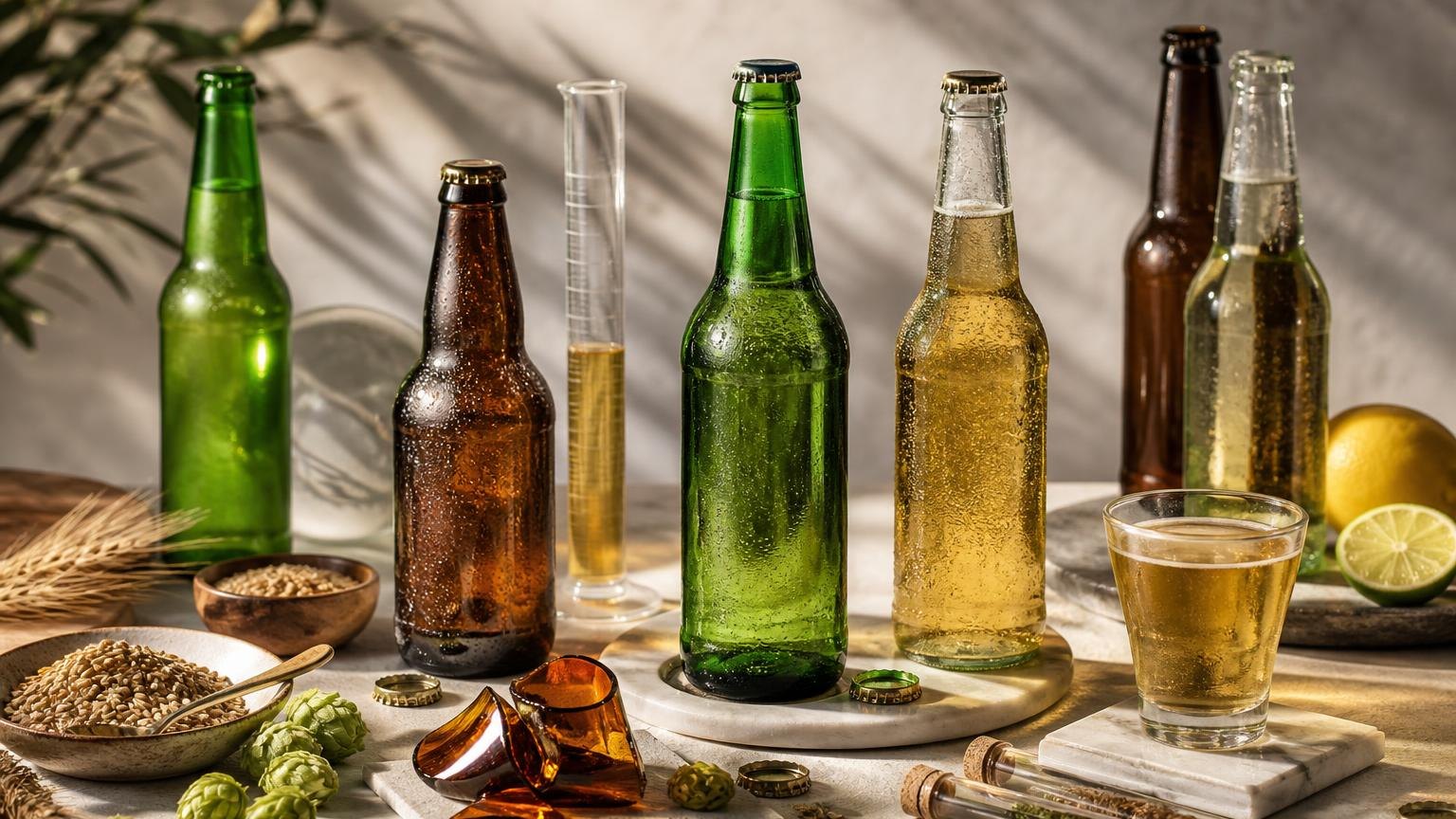
Beers Still Sold in Green Bottles
Green glass has not disappeared from beer shelves. Several large lagers and long-running imports still use it in the U.S., usually because the bottle is part of the brand’s identity and shelf recognition.
Packaging can vary by market and format, but these labels are still commonly found in green bottles.
The tradeoff is technical: green glass blocks less light than amber glass, so breweries rely on fast turnover, controlled storage, and brand loyalty rather than maximum light protection.
| Brand | Origin | ABV | Common U.S. green bottle size |
| Heineken Original Lager | Netherlands | 5.0% | 11.2 oz |
| Beck’s | Germany | 5.0% | 11.2 oz |
| Moosehead Lager | Canada | 5.0% | 12 oz |
| Grolsch Premium Lager | Netherlands | 5.0% | 16.9 oz |
| St. Pauli Girl Lager | Germany | 4.9% | 11.2 oz |
Heineken is the clearest example. Its green bottle has been a core visual cue for decades, and the U.S. market still sees the standard 11.2-ounce green-glass import bottle in six-packs, 12-packs, and restaurant service.
Beck’s also remains strongly associated with green glass in the U.S. The beer traces back to Bremen, and the green bottle continues to do branding work even though amber glass would give better protection against lightstruck off-flavors.
Moosehead is another durable green-bottle holdout. The Canadian brewery was founded in 1867, and its flagship lager still commonly appears in green 12-ounce bottles across U.S. retail and on-premise channels.
Grolsch stands out because the green bottle is often paired with the brand’s swing-top presentation.
That package has strong recognition value, which helps explain why the brewery keeps a format that is visually distinctive but less protective than brown glass.
St. Pauli Girl Lager is also still sold in green bottles in many U.S. stores. As with the other brands here, the bottle color signals “classic import” to shoppers faster than a label can.
- Green bottles are most common among international pale lagers.
- Most are packaged at 4.9% to 5.0% ABV.
- The most common U.S. single-bottle size in this group is 11.2 ounces, the standard 330 mL import format.
- Packaging can change by country, special release, or draft-versus-bottle channel.
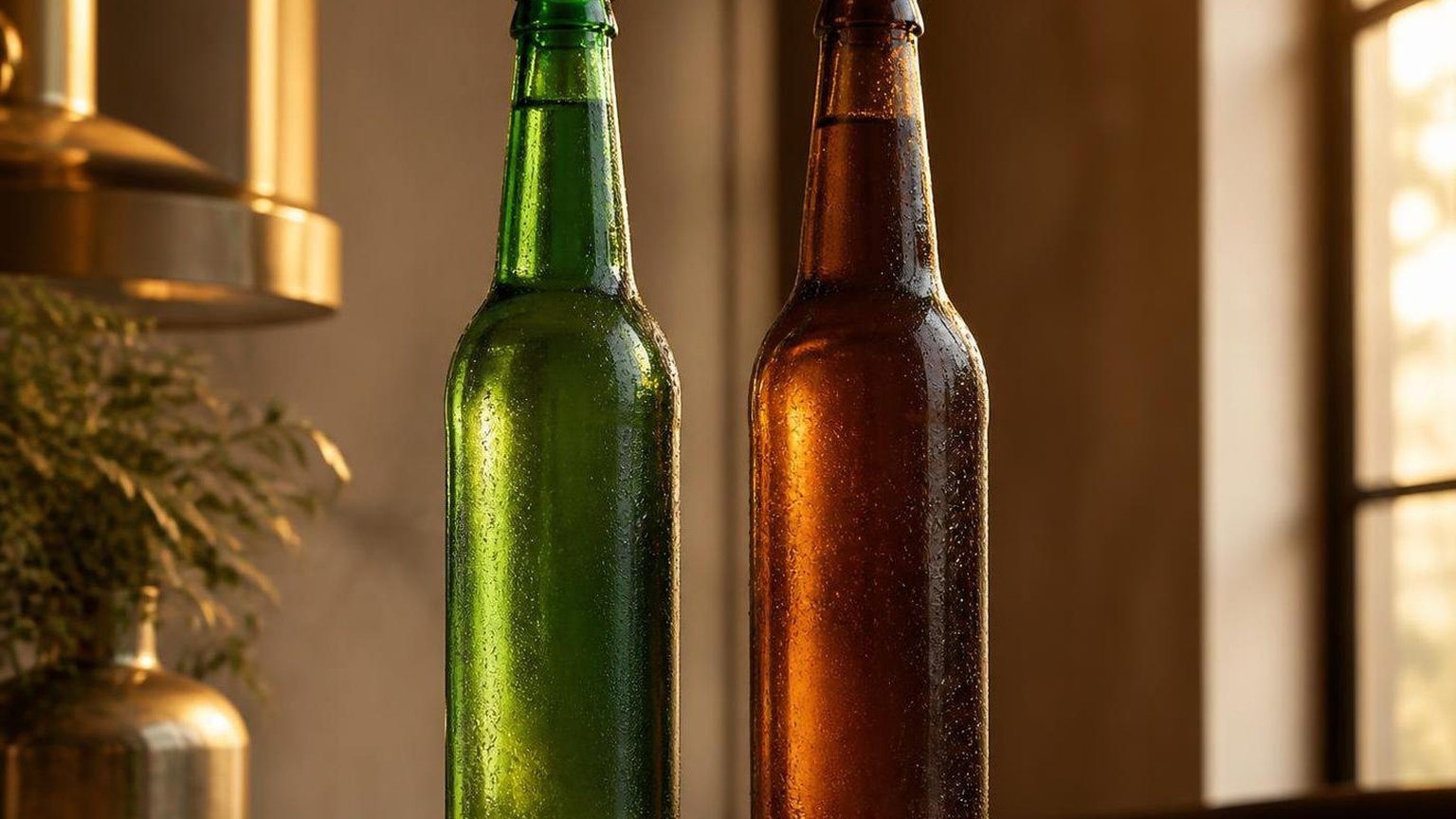
How to Store Green Bottle Beer
Green glass blocks less ultraviolet and blue-violet light than amber glass, so storage matters more. The goal is simple: keep green bottle beer cold, dark, and still to slow oxidation and prevent lightstruck off-flavors.
Store green bottle beer in a refrigerator, cellar fridge, or dark cabinet that stays consistently cool.
Light exposure can trigger the formation of 3-methyl-2-butene-1-thiol, the sulfur compound that creates the “skunky” aroma associated with mishandled beer.
Temperature swings also age beer faster by pushing oxygen and flavor compounds to react more quickly. A steady environment protects hop aroma, carbonation, and malt freshness better than moving bottles between warm shelves and cold storage.
| Storage factor | Best practice | Why it matters |
| Temperature | 38-45°F for most lagers and pilsners; 45-55°F for stronger ales | Cool storage slows staling and preserves intended flavor balance |
| Light | Total darkness or fully enclosed packaging | Green glass offers limited light protection, increasing skunking risk |
| Bottle position | Upright | Reduces oxygen contact area and keeps sediment settled |
| Humidity | About 50-70% if cellaring for longer periods | Helps preserve labels and caps without encouraging mold |
| Movement | Minimal vibration | Helps maintain carbonation stability and sediment structure |
Leave bottles in the original carton or a closed case whenever possible. Cardboard adds another light barrier, and even brief sunlight exposure can damage hop-forward beer faster than many drinkers expect.
Keep green bottles away from windows, back patios, and brightly lit retail-style shelving. Fluorescent and LED lighting are less dangerous than direct sunlight, but long exposure can still degrade delicate lager and pilsner aromas.
- Do not store green bottle beer in a garage that regularly exceeds normal indoor temperatures.
- Do not freeze it. Beer can expand, push out the crown, and lose carbonation.
- Do not lay bottles on their side for standard short-term storage.
- Do not chill, warm, and rechill repeatedly.
For best flavor, drink most non-vintage green bottle lagers fresh rather than aging them. Mass-market pale lagers and imported pilsners usually show their best character within their packaged freshness window, not after extended cellaring.
Check the packaging date if it is available, and buy from cold, dark inventory. Proper storage after purchase helps, but beer that sat warm and bright at retail has already lost aroma and picked up irreversible damage.
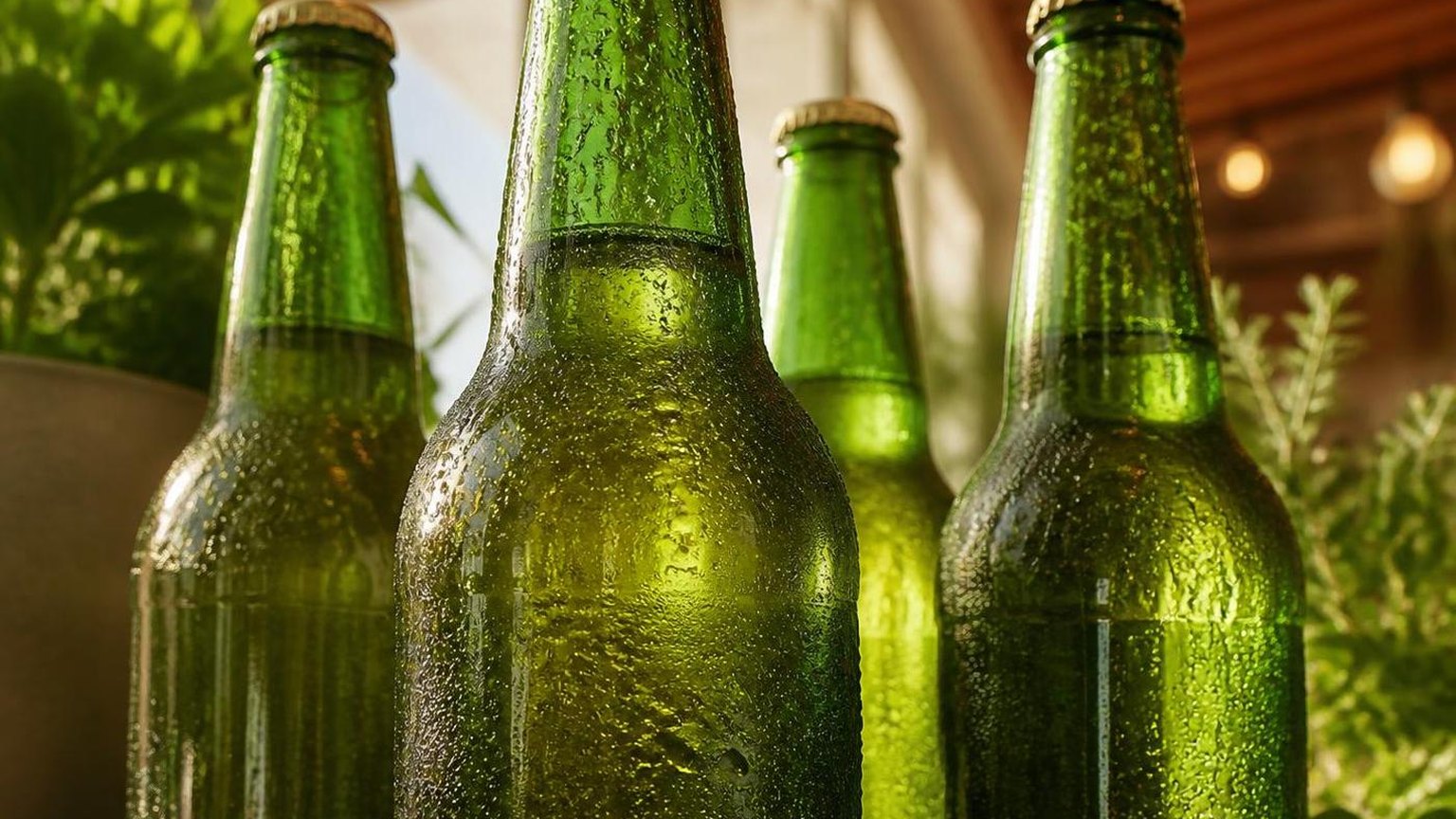
Frequently Asked Questions
Why are some beers sold in green bottles?
Green glass became common largely for branding and export recognition, especially among European lagers.
It protects beer from light better than clear glass but worse than amber, so the color is often a marketing and heritage choice rather than the best option for freshness.
Does green glass make beer go skunky faster?
Yes. Ultraviolet and blue light can react with iso-alpha acids from hops and create 3-methyl-2-butene-1-thiol, the compound associated with a skunky aroma, and green glass blocks less of that light than amber glass.
In practical terms, a green-bottled beer left in sunlight or bright retail lighting can develop off-aromas much faster than the same beer in a can or brown bottle.
Which well-known beers use green bottles?
Heineken is the best-known example in the U.S., and several imported European lagers have also used green glass at different times.
The bottle color is often part of the brand identity, which is why consumers quickly associate green glass with crisp, international pale lagers.
Do green-bottled beers taste different because of the bottle itself?
The glass does not add flavor on its own under normal storage.
The difference comes from light exposure: if the beer stays cold and dark, a green-bottled lager can taste clean and fresh, but if it sits under strong light, it is more likely to show sulfurous or skunky notes.
Are all green-bottled beers light-struck?
No. Storage conditions matter more than bottle color alone, and some breweries use tetrahydro-iso-alpha-acid or other light-stable hop products that resist skunking. A green bottle raises the risk; it does not guarantee the fault.
Is canned beer better than beer in green bottles?
For protection, usually yes.
Cans block 100% of light and provide strong oxygen protection, which helps preserve hop aroma and delays light-struck character, while green bottles leave the beer more vulnerable during transport, retail display, and backyard drinking.
How should you store beer in green bottles?
Keep it cold, upright, and completely out of light. Refrigeration slows staling reactions, and darkness prevents the photochemical reaction that creates skunky compounds, so a closet, fridge, or closed cooler is better than a sunny kitchen counter.
Are green bottles ever a sign of lower quality?
No. Bottle color reflects packaging choice, brand history, and target market more than brewing quality.
Many respected breweries use green glass, but because it offers less light protection than amber glass or cans, handling and storage become more important to the final drinking experience.
Related Reading
- How Many 8 Oz Water Bottles Are In A Gallon?
- How Many Fl Oz In A Liter?
- What Is the Legal Drinking Age in Vietnam?
- How Many Litres Is 30 Gallons?
- Is Vodka Made From Potatoes?
- How Many Ounces In 1 Kg?
- What To Mix With Jim Beam Bourbon?
- How Much Is 10 Oz?
- All Blog Guides
- Cornell Craft Beverage Institute (2018)
- University of California, Davis, Department of Viticulture and Enology (2016)
- National Center for Biotechnology Information, PubMed (1964)
- National Center for Biotechnology Information, PubMed (2009)
- National Center for Biotechnology Information, PubMed (2013)
- Brewers Association (2019)
- Master Brewers Association of the Americas (2017)
- Heineken International (2021)
- MillerCoors Beverage Company (2015)