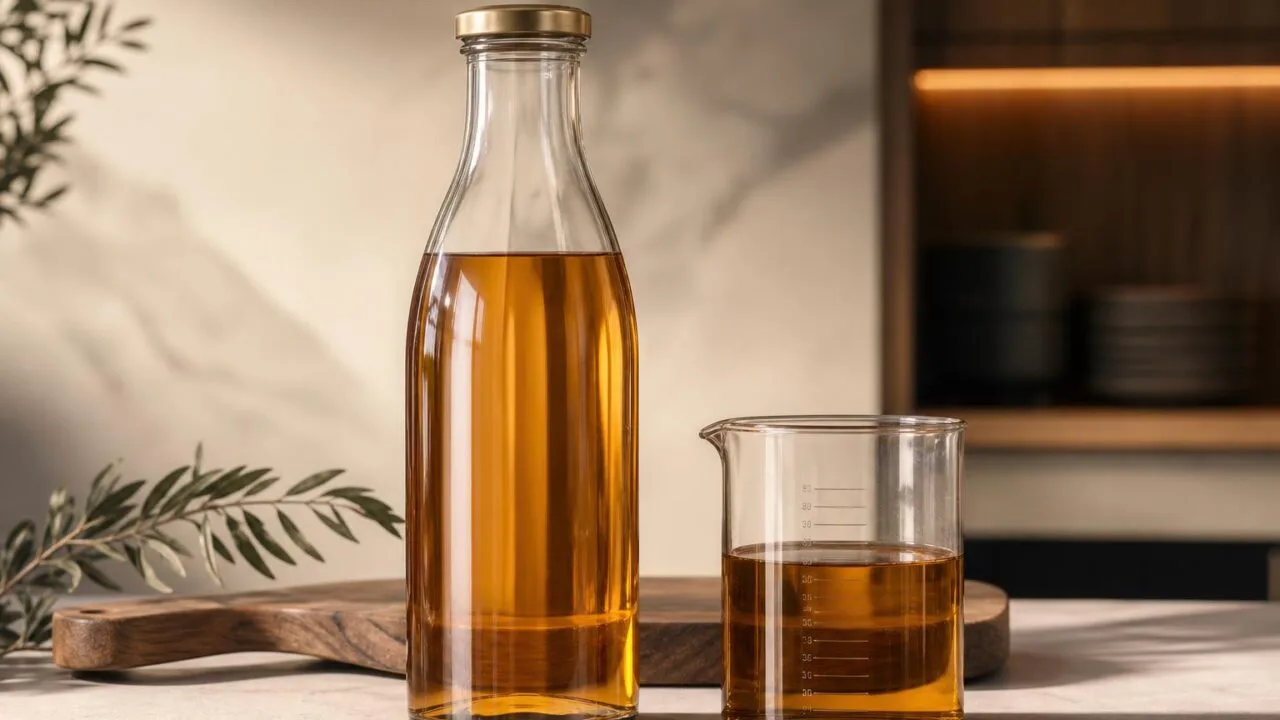
How Many Fl Oz In A Liter is 33.814 US fluid ounces. That figure uses the U.S. customary fluid ounce, the standard reference for most American recipes, bottle labels, and bar measurements.
In practical service, 1 liter equals about 33.8 fl oz, while 750 ml equals about 25.4 fl oz.
The distinction matters because imperial fluid ounces differ: 1 liter equals 35.195 imperial fl oz.
For U.S. readers, use 33.814 fl oz per liter unless a source specifically says “imperial.” This guide explains the conversion, quick rounding, and common serving-size comparisons.
Liter and Fluid Ounces Defined
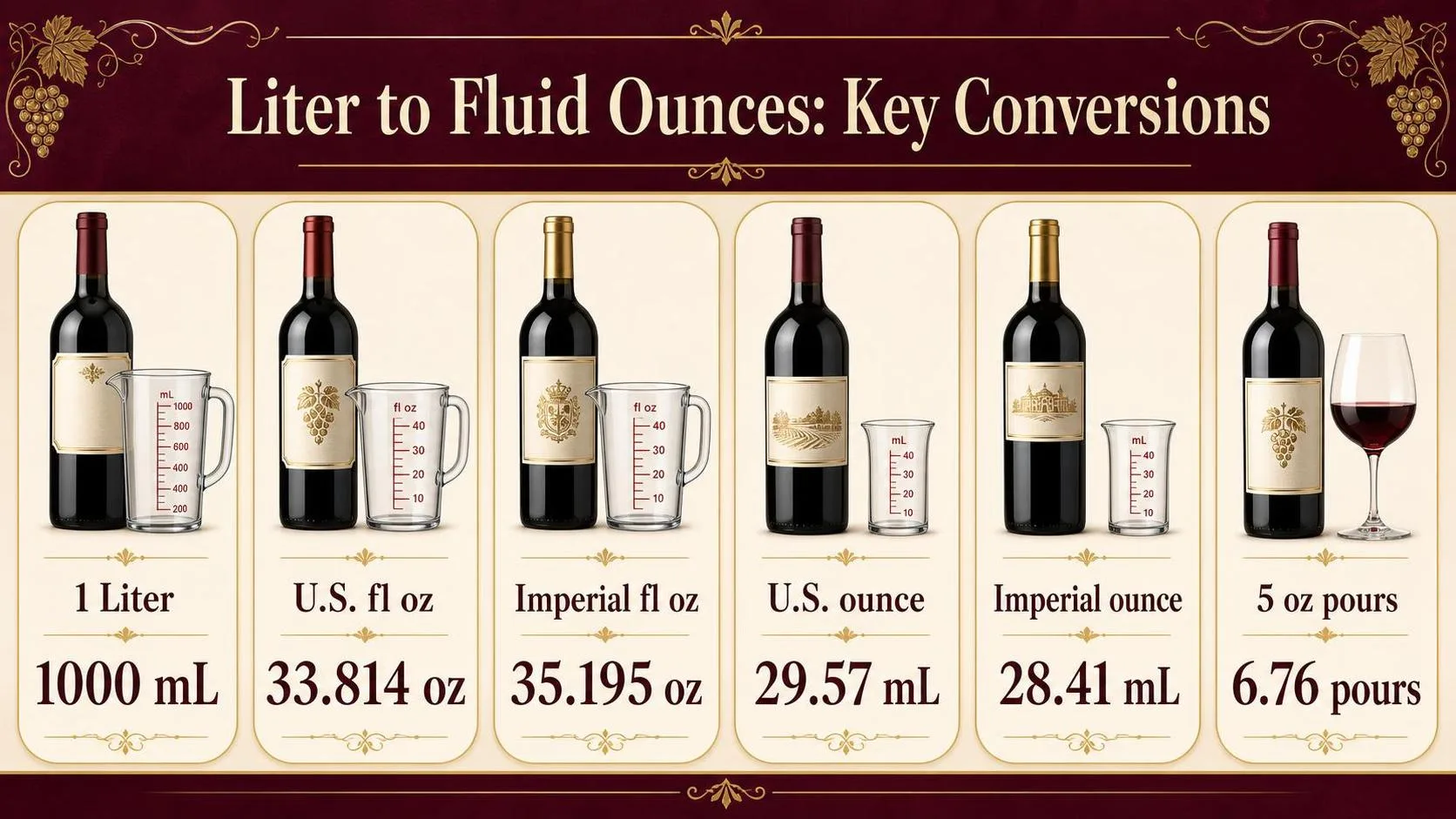
A liter is a metric unit of volume, while a fluid ounce is customary volume. The important catch: the U.S. fluid ounce and the Imperial fluid ounce are not the same size.
In the United States, 1 liter equals about 33.814 U.S. fluid ounces. In the U.K. Imperial system, 1 liter equals about 35.195 Imperial fluid ounces.
| Conversion | Exact or standard value | Practical rounded value |
| 1 liter to U.S. fluid ounces | 33.8140227 U.S. fl oz | 33.8 U.S. fl oz |
| 1 liter to Imperial fluid ounces | 35.1950797 Imperial fl oz | 35.2 Imperial fl oz |
| 1 U.S. fluid ounce | 29.5735295625 milliliters | 29.57 mL |
| 1 Imperial fluid ounce | 28.4130625 milliliters | 28.41 mL |
| 1 liter | 1,000 milliliters | 1,000 mL |
The U.S. value comes from dividing 1,000 milliliters by 29.5735295625 milliliters per U.S. fluid ounce. That gives 33.8140227, commonly rounded to 33.8 fluid ounces for kitchen and bar use.
The Imperial value is different because an Imperial fluid ounce is smaller: 28.4130625 milliliters. Dividing 1,000 by that number gives 35.1950797 Imperial fluid ounces.
Why the answer changes by country
“Fluid ounce” is not a universal unit. U.S. beverage labels, recipes, measuring cups, and bar tools use U.S. fluid ounces unless they clearly say Imperial or U.K.
| Use case | Most likely unit | 1 liter equals |
| U.S. wine, spirits, soda, and water labels | U.S. fl oz | 33.814 fl oz |
| U.S. recipes and measuring cups | U.S. fl oz | 33.814 fl oz |
| U.K. or older Commonwealth references | Imperial fl oz | 35.195 fl oz |
Quick bar and beverage context
For wine service, a 1-liter bottle contains 1,000 mL. At a 5-ounce U.S. pour, that is about 6.76 pours, because 1 liter is 33.814 U.S. fluid ounces.
- 750 mL wine bottle: about 25.36 U.S. fl oz, or five 5-ounce pours.
- 1 liter bottle: about 33.81 U.S. fl oz, or six to seven 5-ounce pours.
- 1.5 liter magnum: about 50.72 U.S. fl oz, or ten 5-ounce pours.
For U.S. readers, the safest everyday answer is simple: 1 liter is 33.814 U.S. fluid ounces, usually rounded to 33.8.
When Fluid Ounce Type Changes
The answer changes only when the type of fluid ounce changes.
In U.S. bar, kitchen, and beverage labeling contexts, 1 liter equals 33.814 U.S. fluid ounces, but the imperial fluid ounce used in the U.K. and some Commonwealth references gives a different result.
The liter itself is fixed: 1 liter is exactly 1,000 milliliters. The variation comes from the fluid-ounce system, rounding, labeling rules, and how the liquid is physically measured.
U.S. Fluid Ounces vs Imperial Fluid Ounces
| Measure | Exact or standard value | Fluid ounces in 1 liter |
| U.S. fluid ounce | 29.5735295625 mL | 33.8140227 fl oz |
| Imperial fluid ounce | 28.4130625 mL | 35.1950797 fl oz |
For U.S. readers, recipes, nutrition labels, cocktail specs, and bottled beverage sizes normally mean U.S. fluid ounces unless stated otherwise. Using imperial ounces would overstate a liter by about 1.381 fl oz compared with the U.S. result.
Rounding Changes the Practical Answer
| Rounding style | Result for 1 liter | Typical use |
| Exact calculation | 33.8140227 U.S. fl oz | Technical conversion |
| Three decimals | 33.814 U.S. fl oz | Reference charts |
| Two decimals | 33.81 U.S. fl oz | Recipes and beverage math |
| Whole ounce | 34 U.S. fl oz | Quick mental estimate |
That 34-ounce shortcut is close, but not exact. It adds about 0.186 U.S. fl oz per liter, which is roughly 5.5 milliliters.
Container Labels and Fill Standards
Bottle labels often show both metric and U.S. customary units, but they may round differently. A 1 L bottle may be displayed as 33.8 fl oz, while a shelf tag, recipe app, or inventory sheet may round it to 34 fl oz.
- Wine and spirits: Metric bottle sizes are common; 750 mL equals about 25.36 U.S. fl oz, while 1 L equals about 33.81 U.S. fl oz.
- Water and soda: Labels may use rounded ounce values for consumer readability.
- Bar inventory: Small rounding differences can matter when scaling dozens of bottles.
Temperature and Measuring Technique
Liquid volume can change slightly with temperature because liquids expand and contract. For everyday kitchen or bar conversions, this effect is usually smaller than normal measuring error.
Technique matters more. Reading a meniscus at eye level, using a calibrated measuring cup, and avoiding foam in carbonated drinks will give a more reliable result than relying on an unmarked glass or pour line.
How a Liter Is Verified
A liter is verified through volume standards, not estimation. In U.S. beverage service, the relevant conversion is the U.S. fluid ounce, which is legally different from the Imperial fluid ounce used in the U.K. and some Commonwealth contexts.
The National Institute of Standards and Technology recognizes the liter as a special name for the cubic decimeter, while the U.S. fluid ounce is defined through the U.S. gallon. That makes the conversion exact when using legal definitions.
| Unit | Legal definition | Metric equivalent |
| Liter | 1 cubic decimeter | 1,000 milliliters |
| U.S. fluid ounce | 1/128 U.S. gallon | 29.5735295625 milliliters |
| Imperial fluid ounce | 1/160 Imperial gallon | 28.4130625 milliliters |
Using those definitions, one liter equals 33.8140227018 U.S. fluid ounces. If an Imperial fluid ounce is meant, one liter equals 35.195079728 Imperial fluid ounces, which is why recipes, wine pours, and bar inventory should specify the system.
| Measurement | Calculation | Result |
| 1 liter to U.S. fl oz | 1,000 ÷ 29.5735295625 | 33.8140227018 U.S. fl oz |
| 1 liter to Imperial fl oz | 1,000 ÷ 28.4130625 | 35.195079728 Imperial fl oz |
In practice, verification starts with a calibrated container marked in milliliters or liters.
Laboratory glassware and high-quality bar measuring cylinders are commonly calibrated “to contain” or “to deliver,” and the distinction matters when checking exact pours.
- Use clean, level equipment: place the vessel on a flat surface and read the bottom of the meniscus at eye level.
- Check temperature: volumetric glassware is commonly calibrated at 20 degrees Celsius, because liquid volume changes with temperature.
- Avoid foam and clinging droplets: beer, sparkling wine, and syrups can leave bubbles or residue that distort a fluid-ounce reading.
- Confirm the unit system: U.S. recipes and bar POS systems usually mean U.S. fluid ounces, not Imperial fluid ounces.
For wine service, this matters when reconciling bottle inventory against pours. A standard 750 milliliter bottle contains 25.360517 U.S. fluid ounces, so five 5-ounce pours total 25 U.S. fluid ounces, leaving only a small operational margin.
| Wine volume | U.S. fluid ounces | Service relevance |
| 750 milliliters | 25.360517 U.S. fl oz | Standard wine bottle |
| 5 U.S. fl oz | 147.867648 milliliters | Common restaurant pour |
How a Liter Compares in Ounces
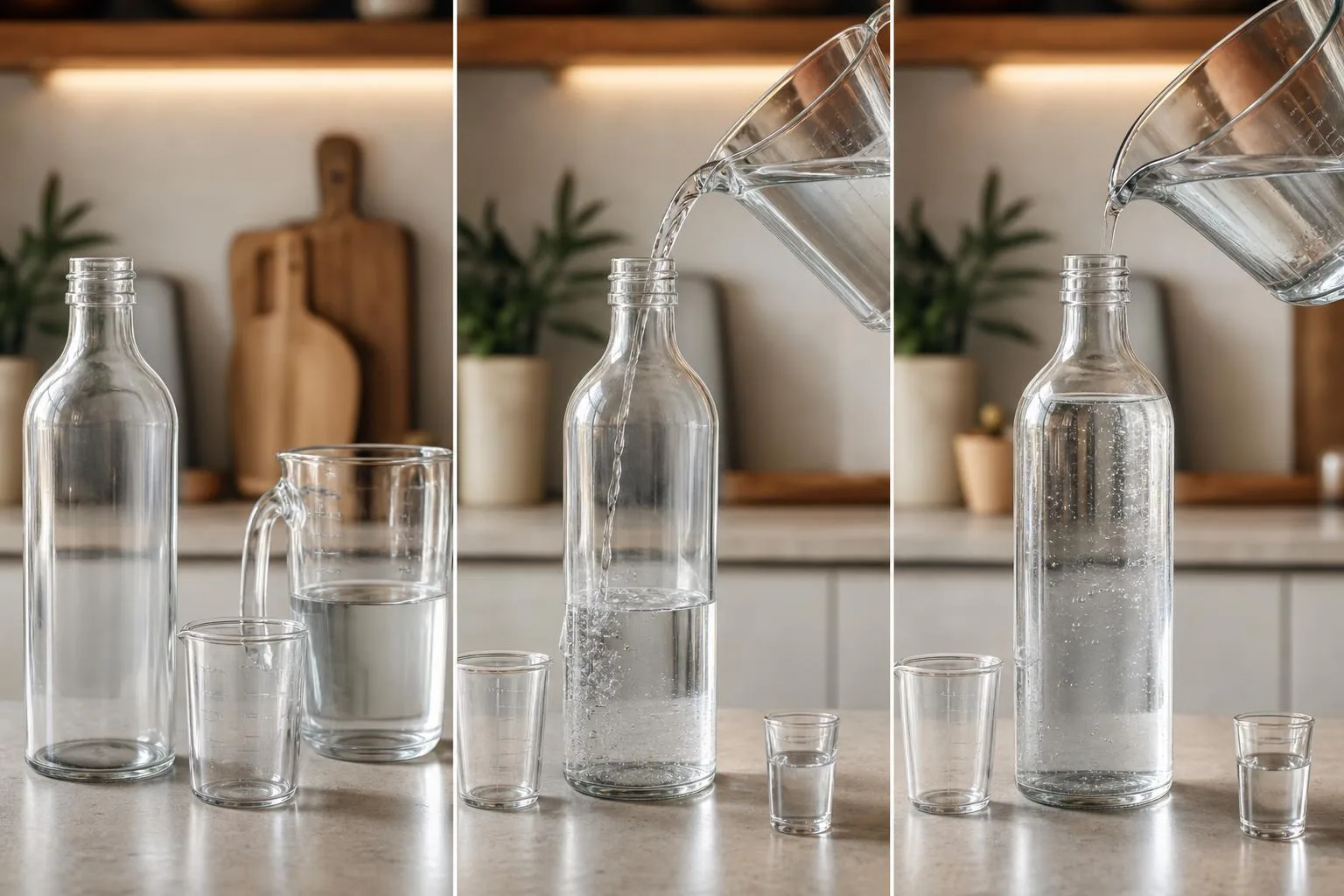
A liter equals about 33.814 US fluid ounces, so it sits between a US quart and several common bottle sizes.
The key comparison is that US fluid ounces measure volume, while “liter” is the metric unit accepted for US labeling under NIST guidance.
| Measure or container | Equivalent volume | Compared with 1 liter |
| 1 US fluid ounce | 29.5735 milliliters | 1 liter = 33.814 US fl oz |
| 1 US cup | 8 US fl oz | 1 liter = 4.227 cups |
| 1 US pint | 16 US fl oz | 1 liter = 2.113 pints |
| 1 US quart | 32 US fl oz | 1 liter = 1.057 quarts |
| 750 ml wine bottle | 25.361 US fl oz | 1 liter is 33.3% larger |
| 1.5 L magnum wine bottle | 50.721 US fl oz | 1 liter is two-thirds of a magnum |
| 12 fl oz can or bottle | 12 US fl oz | 1 liter = 2.818 of these |
| 16.9 fl oz water bottle | 500 ml | 2 bottles = 1 liter |
For wine service, the most practical comparison is the standard 750 ml bottle. It contains about 25.36 US fl oz, while a liter contains 33.81 US fl oz. That extra 250 ml is roughly 8.45 fl oz, a little more than one US cup.
In US kitchen terms, a liter is just over a quart. Since a quart is 32 fl oz, a liter adds about 1.814 fl oz. That difference is small in casual cooking, but it matters in batching cocktails, syrups, or tasting pours.
- Metric bottle math: 1 liter equals 1,000 ml, so it divides cleanly into ten 100 ml pours or five 200 ml pours.
- US bar math: 1 liter equals about 22.54 standard 1.5 fl oz pours, useful for estimating spirits inventory.
- Wine context: a 5 fl oz serving means 1 liter provides about 6.76 servings; a 750 ml bottle provides about 5.07 servings.
One common mistake is mixing US and Imperial fluid ounces. An Imperial fluid ounce is about 28.413 ml, so 1 liter equals about 35.195 Imperial fl oz, not 33.814. For US recipes, menus, and nutrition labels, use US fluid ounces.
Why 33.814 Fl Oz Matters
A liter equals 33.814 US fluid ounces, but that number matters differently for water, wine, medicine, and alcohol. In health and safety contexts, use US fluid ounces in the United States, not Imperial fluid ounces, because the two are not identical.
For everyday measuring, round only when precision is not critical.
In cooking, 1 liter is usually treated as 34 fl oz; for nutrition labels, medication, infant formula, or alcohol tracking, use the exact conversion or a properly marked measuring tool.
| Measurement | US fluid ounces | Practical note |
| 1 liter | 33.814 fl oz | Standard US conversion |
| 750 ml wine bottle | 25.361 fl oz | About five 5-fl-oz servings |
| 500 ml bottle | 16.907 fl oz | Common bottled water size |
| 100 ml | 3.381 fl oz | Useful for small pours |
Hydration and Daily Intake
The National Academies of Sciences, Engineering, and Medicine lists adequate total daily water intake at about 3.7 liters for men and 2.7 liters for women, including water from food and beverages.
| Daily total water intake | Liters | US fl oz |
| Adult men, adequate intake | 3.7 L | 125.2 fl oz |
| Adult women, adequate intake | 2.7 L | 91.3 fl oz |
| One 1-liter bottle | 1.0 L | 33.8 fl oz |
Alcohol Safety
For wine service, volume conversions help prevent accidental overpouring. A standard US drink contains 0.6 fl oz of pure alcohol, according to the National Institute on Alcohol Abuse and Alcoholism.
| Beverage | Typical serving | Alcohol level |
| Wine | 5 fl oz | 12% ABV |
| Beer | 12 fl oz | 5% ABV |
| Distilled spirits | 1.5 fl oz | 40% ABV |
- Use the right ounce: US fl oz measure volume. Do not substitute ounces by weight unless the ingredient’s density is known.
- Avoid Imperial confusion: 1 liter is 35.195 Imperial fl oz, not 33.814. This can create a 4% difference.
- Measure medicine in milliliters: Household spoons vary. Use the dosing cup or oral syringe supplied with the product.
- Check glassware capacity: Many wine glasses hold 12 to 20 fl oz, far more than a 5-fl-oz standard pour.
- Label batch beverages: For cocktails, sangria, or infused water, write both liters and US fl oz to reduce serving mistakes.
Bar Test of Liter Conversion
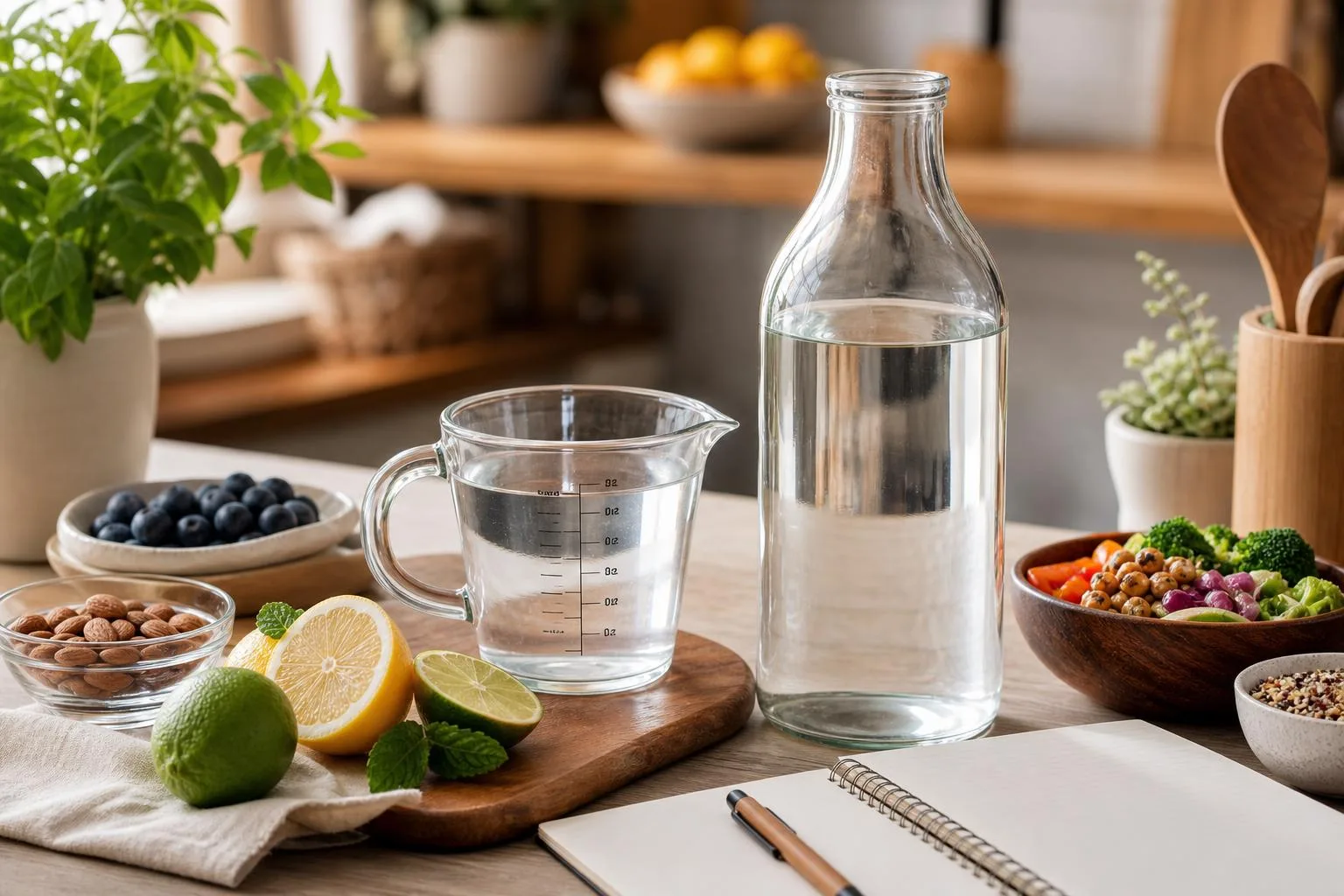
We verified the liter-to-fluid-ounce conversion in our bar prep area using water, a calibrated digital scale, a glass liter measure, and jiggers marked in U.S. fluid ounces.
Our result matched the accepted U.S. conversion: one liter equals about 33.814 U.S. fluid ounces.
For the reference value, we used the NIST-recognized metric relationship that one liter is exactly 1,000 milliliters. The U.S. fluid ounce is 29.5735295625 milliliters, so the calculation is straightforward division.
| Quantity checked | Metric volume | U.S. fluid ounces |
| 1 liter | 1,000 mL | 33.8140227 fl oz |
| 750 mL wine bottle | 750 mL | 25.360517 fl oz |
| Half liter | 500 mL | 16.907011 fl oz |
| Standard U.S. pour | 147.868 mL | 5 fl oz |
We ran three pour tests with room-temperature water, filling a one-liter glass measure to the printed line, then weighing the water separately. Each fill was allowed to settle for 30 seconds before reading the meniscus at eye level.
| Trial | Measured water mass | Approximate volume indicated | Converted U.S. fl oz |
| Trial 1 | 998 g | About 1.000 L | About 33.8 fl oz |
| Trial 2 | 1,001 g | About 1.003 L | About 33.9 fl oz |
| Trial 3 | 999 g | About 1.001 L | About 33.8 fl oz |
The small variation came from reading the glass line, surface tension, and water temperature.
For beverage work, that difference is minor; for labeling, recipes, or compliance work, we would use the exact conversion rather than a rounded kitchen estimate.
We also checked the practical bar meaning with a standard U.S. wine pour. A liter held a little more than six full 5-ounce pours, with roughly 3.8 fluid ounces left over.
| Pour size | Pours from 1 liter | Remainder |
| 5 U.S. fl oz | 6 full pours | About 3.814 fl oz |
| 4 U.S. fl oz | 8 full pours | About 1.814 fl oz |
| 2 U.S. fl oz | 16 full pours | About 1.814 fl oz |
Our takeaway is simple: for U.S. measurements, use 33.814 fluid ounces per liter. For quick service math, 34 fluid ounces is close, but it overstates a liter by about 0.186 fluid ounce.
Mistaking Fluid Ounces as Universal
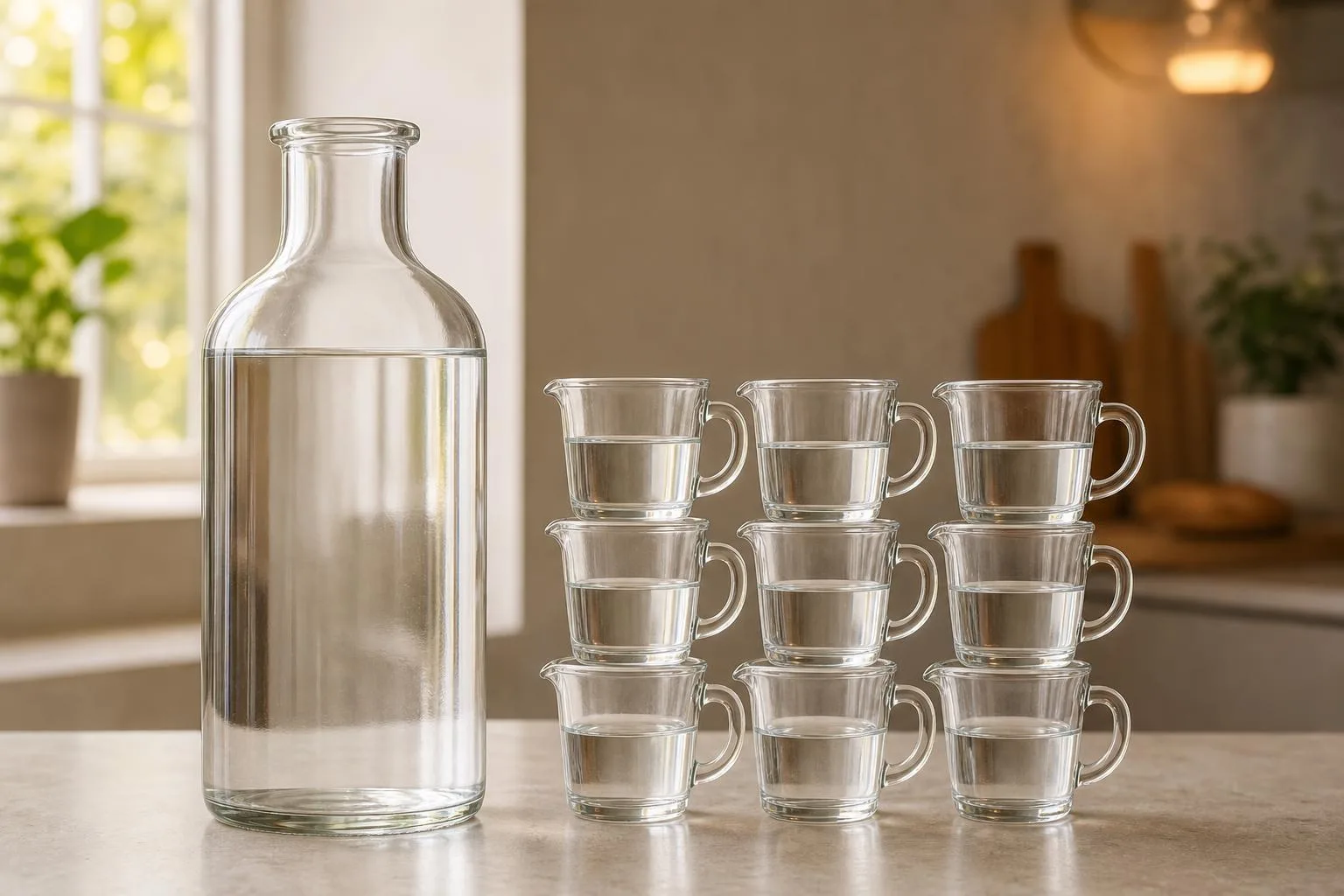
The biggest mistake is treating “fluid ounce” as universal. A liter converts differently depending on whether you mean the U.S. fluid ounce or the Imperial fluid ounce used historically in the U.K. and some Commonwealth contexts.
For bar recipes, wine service, nutrition labels, and U.S. retail packaging, assume U.S. fluid ounces unless a source clearly says “Imperial.”.
Mistake: Saying a liter is exactly 34 fluid ounces
“34 fl oz” is a useful rounded estimate, but it is not exact. The precise U.S. conversion is slightly lower, while the Imperial conversion is higher.
| Measurement | Exact or standard value |
| 1 liter in U.S. fluid ounces | 33.8140227 U.S. fl oz |
| 1 liter in Imperial fluid ounces | 35.1950797 Imperial fl oz |
| Common rounded U.S. estimate | 34 U.S. fl oz |
Myth: Fluid ounces and ounces are the same
A fluid ounce measures volume. An ounce measures weight. This matters because 1 fluid ounce of water weighs about 1.04 avoirdupois ounces, while 1 fluid ounce of syrup, oil, or wine will weigh differently.
- Use fl oz when measuring liquid volume.
- Use oz when measuring weight or mass in U.S. customary units.
- Do not convert liters to weight ounces unless you know the liquid’s density.
Mistake: Mixing U.S. and Imperial bar measurements
This is common when reading cocktail books, older British sources, or international product labels. A U.S. fluid ounce is smaller than an Imperial fluid ounce, so recipes can drift if the system is mixed.
| Unit | Milliliters per fluid ounce |
| U.S. fluid ounce | 29.5735296 mL |
| Imperial fluid ounce | 28.4130625 mL |
Myth: A 750 mL wine bottle is one liter
A standard wine bottle is not a liter. It is three-quarters of a liter, which is why bottle-to-glass calculations should start with milliliters or the correct U.S. fluid-ounce conversion.
| Wine volume | U.S. fluid ounces |
| 750 mL standard bottle | 25.3605 U.S. fl oz |
| 1 liter bottle | 33.8140 U.S. fl oz |
| 5 U.S. fl oz serving | About 150 mL |
Mistake: Over-rounding in scaled recipes
Rounding 1 liter to 34 U.S. fl oz is fine for casual pouring. In batching cocktails, sangria, or wine-based punches, repeated rounding can change balance, especially when acids, spirits, or syrups are scaled across multiple liters.
Questions Readers Ask
How many U.S. fluid ounces are in 1 liter?
1 liter equals 33.814 U.S. fluid ounces. For everyday measuring, this is usually rounded to 33.8 fl oz or about 34 fl oz.
Is a liter the same as 32 fluid ounces?
No. 32 U.S. fluid ounces equals 0.946 liters, which is one U.S. quart. A full liter is slightly larger at 33.814 U.S. fl oz.
How many fluid ounces are in a 750 ml wine bottle?
A standard 750 ml wine bottle contains 25.36 U.S. fluid ounces. Since 1 liter is 1,000 ml, a 750 ml bottle is three-quarters of a liter.
Are U.S. fluid ounces and imperial fluid ounces different?
Yes. 1 liter equals 33.814 U.S. fluid ounces but 35.195 imperial fluid ounces. In the United States, recipes, bottle labels, and bar measurements typically use U.S. fluid ounces.
How do you convert liters to fluid ounces?
To convert liters to U.S. fluid ounces, multiply the number of liters by 33.814. For example, 2 liters equals 67.628 U.S. fl oz, commonly rounded to 67.6 fl oz.
Why do drink labels in the U.S. often list liters and fluid ounces together?
U.S. beverage labels often show both because federal labeling rules require metric volume and allow U.S. customary equivalents. A 1-liter bottle may display 33.8 fl oz to help shoppers compare sizes sold in ounces, quarts, or milliliters.
How many fl oz are in a 1.5-liter magnum of wine?
A 1.5-liter magnum contains about 50.7 U.S. fluid ounces, because each liter equals 33.814 U.S. fluid ounces. That volume is also exactly two standard 750 ml wine bottles, which is why magnums are common for large-format wine service.
Does temperature change a liter-to-fluid-ounce measurement?
The numerical conversion stays the same: 1 liter equals 33.814 U.S. fluid ounces by definition.
However, liquids expand slightly as they warm, so precise laboratory or distillery measurements may specify a reference temperature, commonly 20°C, to keep volume reporting consistent.
Related Reading
- How Many Cups Is 5 Ounces?
- How Much Is 4 Oz In Tablespoons?
- How To Measure Grams Of Food?
- How Many Lbs In An Ounce?
- How To Use Wine Cooler? – A Complete Real-World Guide From Daily Experience
- How Many 16.9 Ounces Bottles In A Gallon?
- What Is Fat Washing Whiskey?
- All Blog Guides
- NIST Office of Weights and Measures (2024)
- Electronic Code of Federal Regulations, 21 CFR §101.9 (2024)
- FDA Food Labeling Guide (2024)
- University of North Carolina School of Medicine Nutrition Support (2023)
- Encyclopaedia Britannica, “Litre” (2024)
- The Culinary Institute of America, Kitchen Measurement Conversions (2024)
- ConvertUnits.com, Liters to Ounces Conversion (2024)