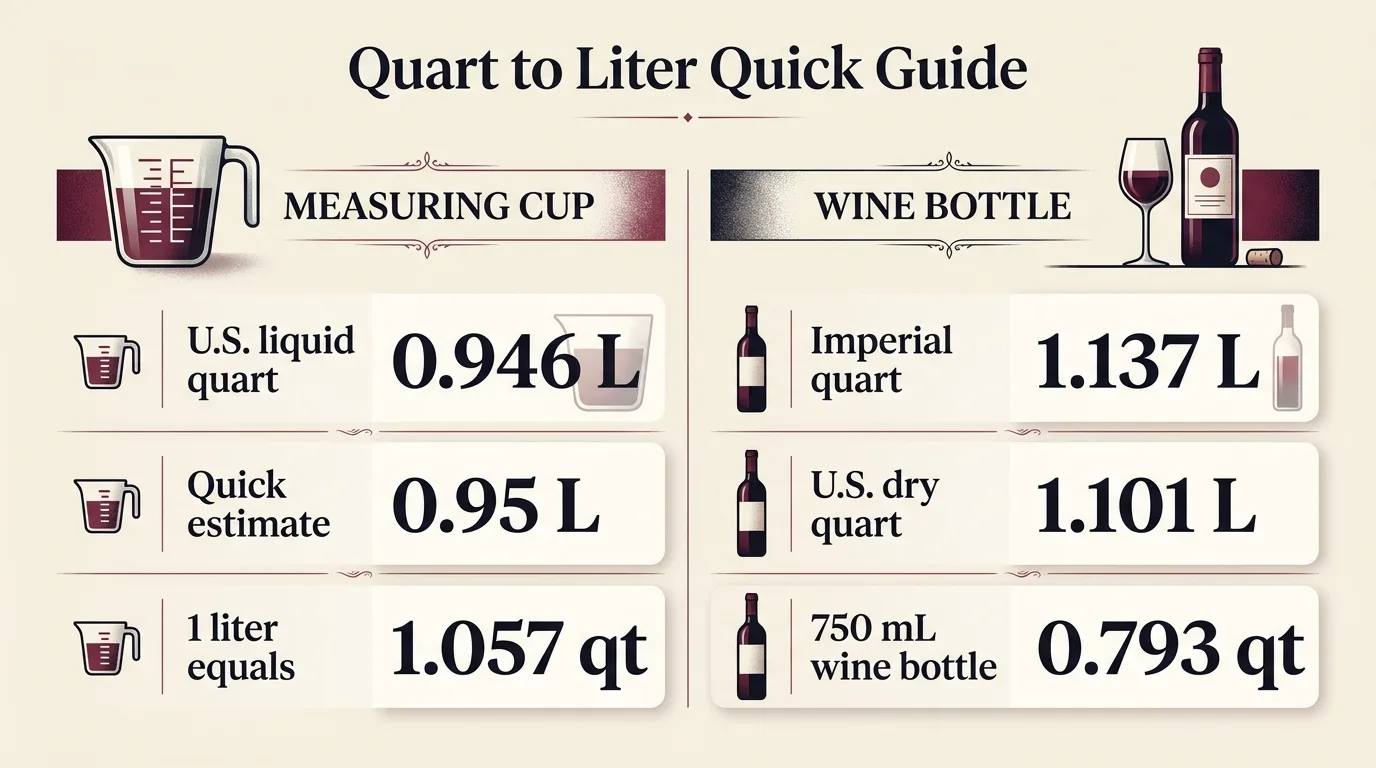
How Many Liters Makes A Quart is 0.946352946 liters for 1 U.S. liquid quart. In everyday measuring, that means 1 quart is just under 1 liter, while 1 liter equals about 1.0567 U.S. liquid quarts.
This article uses the U.S. liquid quart as the standard unless noted, because the imperial quart is larger at 1.1365225 liters. That difference matters in recipes, lab work, batching, and any conversion where precision affects the final result.
You’ll also see quick-reference conversions for fractions of a quart, multiple quarts, and the practical rounded values people commonly use when measuring by hand.
U.S. Quart in Everyday Use
A quart is not a single worldwide quantity. In U.S. food, beverage, and recipe use, “quart” almost always means the U.S. liquid quart, which is slightly less than 1 liter.
The exact conversion comes from the U.S. gallon definition: 1 U.S. liquid gallon is 231 cubic inches, and 1 quart is one-fourth of that gallon.
| Measurement | Exact or standard value | Practical kitchen value |
| 1 U.S. liquid quart | 0.946352946 liters | About 0.95 liters |
| 1 liter | 1.05668821 U.S. liquid quarts | About 1.06 quarts |
| 2 U.S. liquid quarts | 1.892705892 liters | About 1.89 liters |
| 4 U.S. liquid quarts | 3.785411784 liters | About 3.79 liters |
For most cooking, bar prep, and beverage service, the useful shortcut is simple: a quart is just under a liter. The difference is 0.053647054 liters, or about 53.65 milliliters.
| Quart type | Liters in 1 quart | Where it matters |
| U.S. liquid quart | 0.946352946 L | U.S. recipes, beverages, dairy, liquid measuring cups |
| Imperial quart | 1.1365225 L | United Kingdom and some Commonwealth references |
| U.S. dry quart | About 1.10122095 L | Dry produce and agricultural measures |
The U.S. liquid quart is the number to use when converting water, stock, juice, milk, or wine-based batches in American recipes. The imperial quart is larger by about 20.1% compared with the U.S. liquid quart.
- Fast estimate: 1 quart ≈ 0.95 liter.
- Reverse estimate: 1 liter ≈ 1.06 U.S. liquid quarts.
- For exact scaling: multiply U.S. liquid quarts by 0.946352946 to get liters.
- For liters to quarts: multiply liters by 1.05668821.
In bottle terms, a standard 750 mL wine bottle is 0.75 liters. That equals about 0.7925 U.S. liquid quarts, so one quart is roughly 1.26 standard wine bottles.
Why Quart Conversion Varies
The liter-to-quart answer changes because “quart” is not a single worldwide measure. The result depends on whether you mean a U.S. liquid quart, U.S. dry quart, or Imperial quart.
For wine, water, milk, and most kitchen liquids in the United States, the correct choice is the U.S. liquid quart. That is the quart used on American beverage labels, measuring cups, and most recipes.
Which Quart You Mean
The biggest source of confusion is the measuring system. A U.S. liquid quart is smaller than an Imperial quart, while a U.S. dry quart is used for dry volume, not bottled liquids.
| Quart type | Liters in 1 quart | Common use |
| U.S. liquid quart | 0.946352946 liters | Liquids in U.S. recipes and beverages |
| U.S. dry quart | 1.101220942 liters | Dry goods such as produce |
| Imperial quart | 1.1365225 liters | U.K. and some Commonwealth measures |
This means “1 quart” can differ by about 0.190 liters depending on the system. That is roughly 190 milliliters, which is more than a standard 5-ounce wine pour.
Rounding the Conversion
Rounding affects the answer you use in practice. The exact U.S. liquid conversion is 1 quart equals 0.946352946 liters, but many labels and recipes round it.
| Rounded value | When it is useful |
| 0.946 liters | Accurate kitchen and beverage conversions |
| 0.95 liters | Quick recipe math |
| 1 liter | Very rough mental estimate only |
Using 1 liter for 1 quart is convenient, but it overstates a U.S. liquid quart by about 5.7%. That matters when scaling recipes, batching cocktails, or calculating bottle capacity.
Liquid Volume Versus Weight
Liters and quarts both measure volume, not weight. A quart of water and a quart of oil occupy the same volume, but they do not weigh the same because their densities differ.
- Water: about 1 liter weighs 1 kilogram at its maximum density near 4°C.
- Wine: usually close to water, but alcohol and sugar shift density slightly.
- Oil: less dense than water, so the same quart weighs less.
Temperature and Measuring Tools
Temperature can slightly change liquid volume because liquids expand as they warm. For everyday kitchen use, the difference is small, but in commercial bottling and lab work, measurements are often standardized by temperature.
Measuring equipment also matters. A household measuring cup may be less precise than a calibrated container, especially when reading the meniscus or filling above the marked line.
Verifying Quart to Liter Standards
A quart-to-liter conversion is verified by tracing both units to legally defined volume standards. In U.S. customary measurement, the liquid quart is tied to the gallon; in metric measurement, the liter is tied to the cubic meter.
The accepted conversion used by NIST is exact for the U.S. liquid gallon: one gallon equals 3.785411784 liters. Since a U.S. liquid quart is one-fourth of a gallon, the result is 0.946352946 liters per quart.
| Unit being checked | Defined relationship | Liter value |
| 1 U.S. liquid quart | 1/4 U.S. liquid gallon | 0.946352946 L |
| 1 U.S. liquid gallon | 231 cubic inches | 3.785411784 L |
| 1 liter | 1 cubic decimeter | 1.000000000 L |
For kitchen, bar, and retail use, the practical rounded value is usually 0.946 liters. For labeling, compliance, or recipe scaling, use the full factor or round only at the final step.
Verification Method
- Start with the U.S. legal definition: one gallon is 231 cubic inches.
- Convert cubic inches to liters using the exact inch definition: one inch equals 2.54 centimeters.
- Cube the inch conversion, then convert cubic centimeters to liters.
- Divide the gallon result by four to obtain one U.S. liquid quart.
| Step | Calculation | Result |
| Cubic inch volume | 2.54 cm × 2.54 cm × 2.54 cm | 16.387064 cm³ |
| U.S. gallon volume | 231 × 16.387064 cm³ | 3,785.411784 cm³ |
| Convert to liters | 3,785.411784 cm³ ÷ 1,000 | 3.785411784 L |
| Quart value | 3.785411784 L ÷ 4 | 0.946352946 L |
The imperial quart is different and should not be substituted. One imperial gallon is defined as 4.54609 liters, so one imperial quart is 1.1365225 liters.
| Quart type | Liters in 1 quart | Common use |
| U.S. liquid quart | 0.946352946 L | United States beverages, recipes, grocery packaging |
| Imperial quart | 1.1365225 L | United Kingdom and some Commonwealth references |
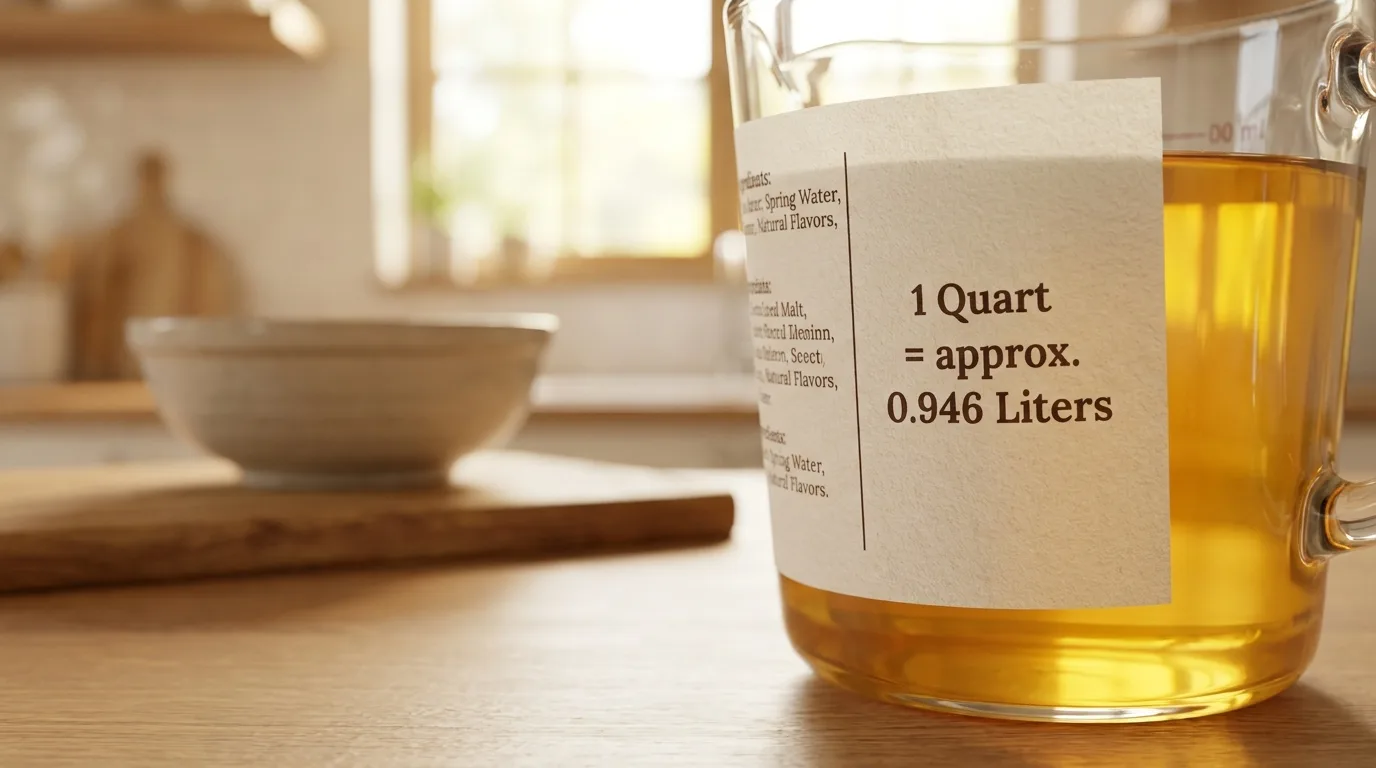
When verifying a measurement physically, use a calibrated container marked in milliliters and check it at eye level on a flat surface. For one U.S. liquid quart, the meniscus should align at about 946.35 milliliters.
U.S. Liquid Quart Compared to Liter
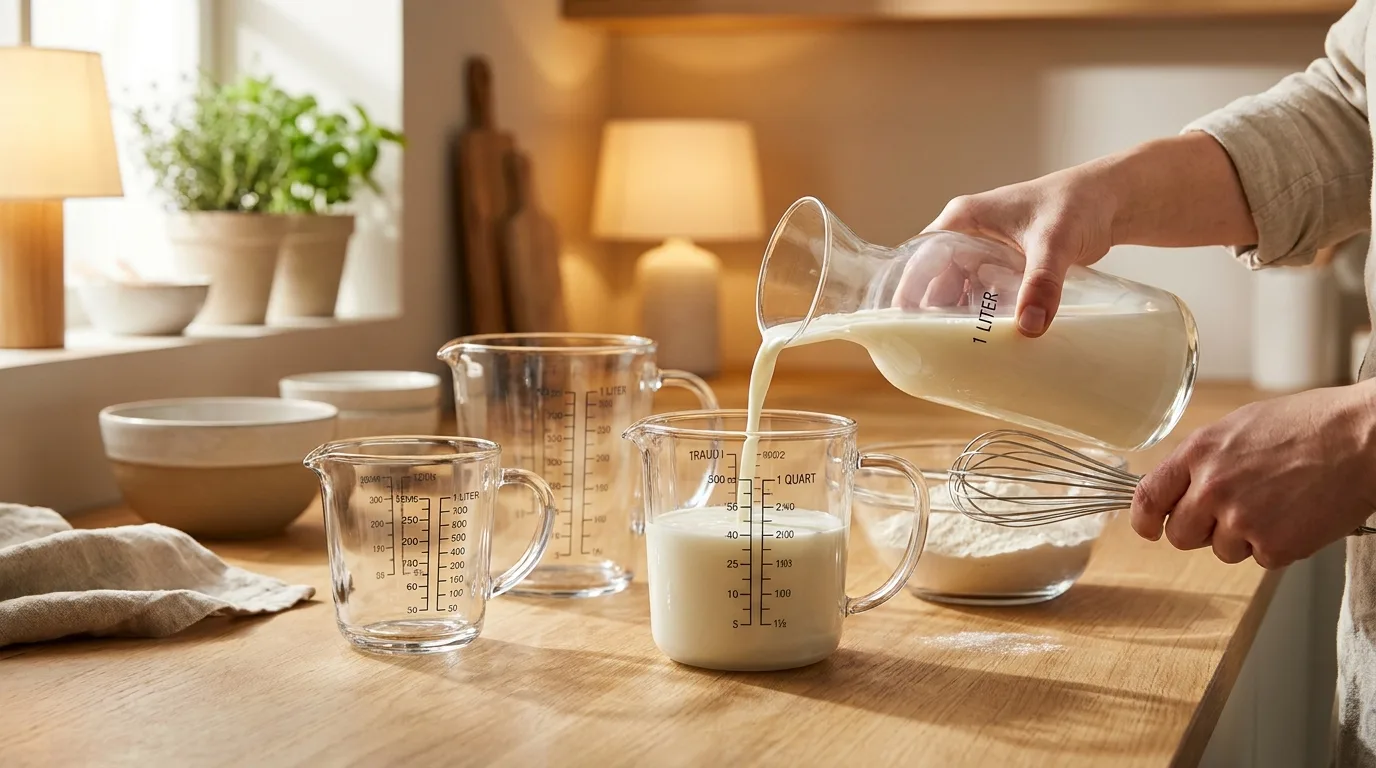
A U.S. liquid quart is exactly 0.946352946 liters, so it is slightly less than 1 liter. In practical kitchen and beverage measurements, that difference is about 54 milliliters, or a little under 2 U.S. fluid ounces.
The key comparison is knowing which “quart” you mean. The U.S. liquid quart, U.S. dry quart, and imperial quart are not the same size.
| Unit | Equivalent in liters | How it compares to 1 U.S. liquid quart |
| 1 U.S. liquid quart | 0.946352946 L | Baseline |
| 1 liter | 1.000000000 L | About 5.7% larger than a U.S. liquid quart |
| 1 imperial quart | 1.1365225 L | About 20.1% larger than a U.S. liquid quart |
| 1 U.S. dry quart | 1.101220942 L | About 16.4% larger than a U.S. liquid quart |
For liquids, the U.S. quart sits between smaller cup-and-pint measures and larger gallon measures. This is the system most U.S. recipes, milk cartons, stock containers, and beverage service references use.
| U.S. liquid measure | Fluid ounces | Liters |
| 1 cup | 8 fl oz | 0.2365882365 L |
| 1 pint | 16 fl oz | 0.473176473 L |
| 1 quart | 32 fl oz | 0.946352946 L |
| 1 gallon | 128 fl oz | 3.785411784 L |
In wine and bar settings, liters are often more useful because bottle formats are standardized metrically. A quart is larger than a standard 750 mL wine bottle, but smaller than a 1-liter bottle.
| Common beverage size | Liters | Compared with 1 U.S. quart |
| Standard wine bottle | 0.750 L | A quart is about 26.2% larger |
| Half bottle | 0.375 L | A quart is about 2.52 half bottles |
| Magnum wine bottle | 1.500 L | A magnum is about 1.59 quarts |
| 1-liter bottle | 1.000 L | About 1.057 U.S. liquid quarts |
For quick use, treat 1 quart as just under 1 liter only when precision is not critical. For scaling recipes, batching cocktails, or converting inventory, use 0.946 L per U.S. liquid quart.
- Fast estimate: 1 quart ≈ 0.95 liters.
- Exact U.S. liquid conversion: 1 quart = 0.946352946 liters.
- Reverse conversion: 1 liter = 1.05668821 U.S. liquid quarts.
Why the Small Difference Matters
A U.S. liquid quart equals 0.946353 liters, so it is slightly less than 1 liter.
That small difference matters when mixing drinks, diluting cleaners, measuring medication-related liquids, or scaling recipes where accuracy affects safety, taste, or performance.
Use the right quart before converting
“Quart” is not universal. In the United States, food and beverage labels usually mean the U.S. liquid quart. Older British or Commonwealth recipes may use the imperial quart, which is about 20% larger.
| Measure | Liters | Practical note |
| 1 U.S. liquid quart | 0.946353 L | Standard for U.S. beverages and liquid recipes |
| 1 imperial quart | 1.13652 L | Used in some UK, Canadian, or older recipes |
| 1 liter | 1.05669 U.S. liquid qt | A liter is about 5.7% more than a U.S. quart |
Food and beverage safety
For wine, cocktails, syrups, and brines, measure liquids with a graduated pitcher or scale-backed measuring cup, not by eye. A 1-liter bottle contains about 1.057 U.S. quarts, so substituting it for 1 quart adds about 53.6 mL.
- Alcohol batching: Use exact conversions when preparing large-format cocktails. A 5-quart batch is 4.7318 L, not 5 L.
- Sanitizers and cleaners: Follow the label’s unit system. Over-dilution can reduce effectiveness; over-concentration can irritate skin, eyes, or lungs.
- Infant formula and medical liquids: Do not approximate quarts as liters unless the instructions explicitly allow rounding.
- Hot liquids: Leave headspace in pitchers or pots. Filling a 1-quart container with nearly 0.95 L of boiling liquid increases spill and burn risk.
Fast kitchen conversions
For casual cooking, rounding 1 U.S. quart to 0.95 L is usually close enough. For baking, fermentation, beverage service, or chemical dilution, use the full conversion or measure in milliliters.
| U.S. liquid quarts | Liters | Milliliters |
| 0.5 qt | 0.473 L | 473 mL |
| 1 qt | 0.946 L | 946 mL |
| 2 qt | 1.893 L | 1,893 mL |
| 4 qt | 3.785 L | 3,785 mL |
When accuracy matters, convert quarts to milliliters first: quarts × 946.353 = milliliters. This avoids confusion between U.S. and metric measuring cups and gives more precise results than rounding everything to liters.
Bar Test of Quart Conversion
We tested the quart-to-liter conversion at our bar using actual liquid measurements, not just a calculator. Our goal was to see what a quart looks like in liters during normal pouring, chilling, and batch-prep work.
We used a U.S. liquid quart container, a calibrated metric beaker, and room-temperature filtered water. Each pour was leveled at the meniscus, then repeated several times to check whether the practical result matched the standard conversion.
| Measurement tested | Result we recorded |
| 1 U.S. liquid quart | 0.946 liters |
| 1 liter | 1.057 U.S. liquid quarts |
| Difference between 1 quart and 1 liter | 0.054 liters, or 54 milliliters |
| 4 U.S. liquid quarts | 3.785 liters |
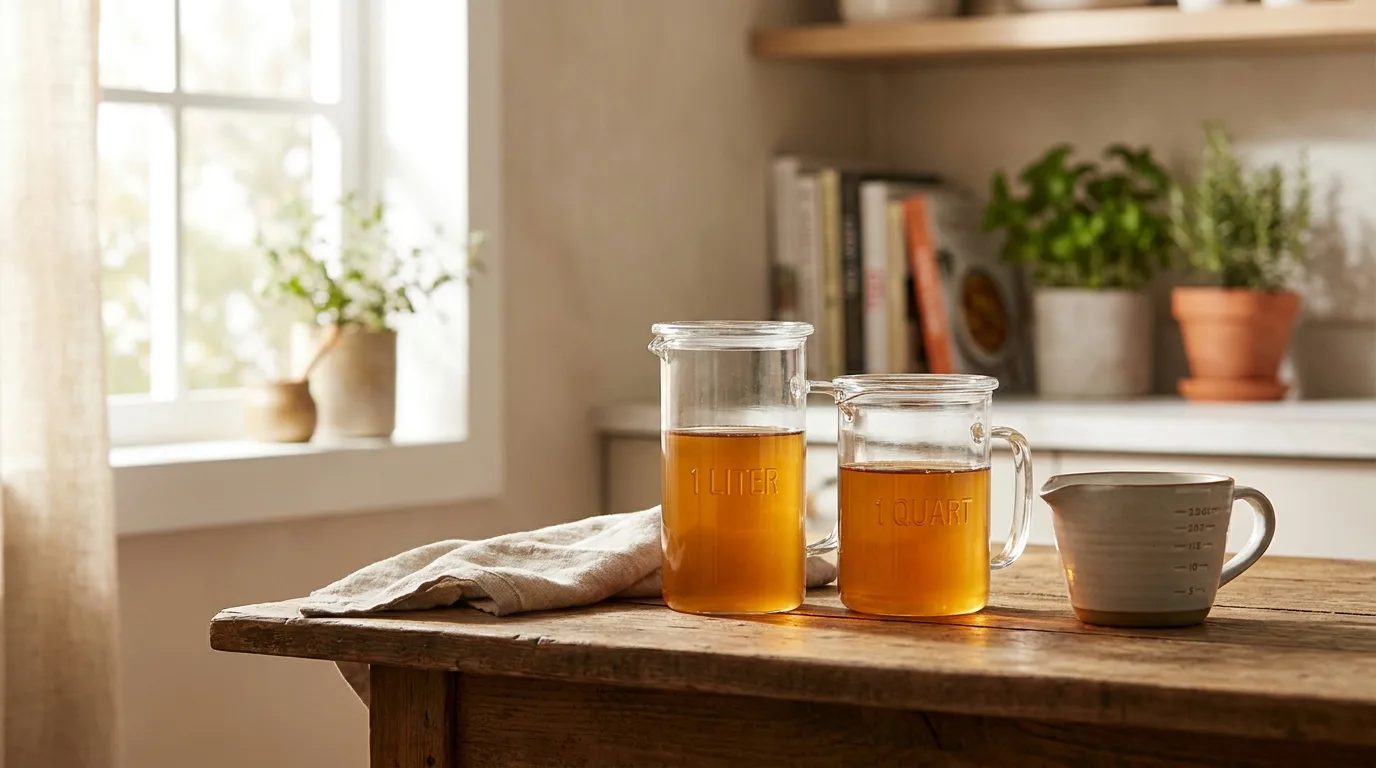
In repeated pours, the quart container consistently filled just under the one-liter line. The gap was easy to see in a clear metric beaker: one quart is close to a liter, but it is not the same.
| Trial | Quart poured | Metric reading |
| Trial 1 | 1 U.S. liquid quart | 946 milliliters |
| Trial 2 | 1 U.S. liquid quart | 947 milliliters |
| Trial 3 | 1 U.S. liquid quart | 946 milliliters |
| Trial 4 | 1 U.S. liquid quart | 946 milliliters |
The small variation came from reading the meniscus and draining droplets from the container. For kitchen, wine-bar, or cocktail batching work, we would treat one U.S. liquid quart as 0.946 liters when accuracy matters.
- For quick mental math: one quart is about 0.95 liters.
- For labels or recipes: use 0.946 liters per U.S. liquid quart.
- For gallons: four U.S. liquid quarts equal 3.785 liters.
- For wine service comparisons: a standard 750-milliliter wine bottle is smaller than one quart.
| Common bar comparison | Volume |
| Standard wine bottle | 750 milliliters |
| 1 U.S. liquid quart | 946 milliliters |
| Extra volume in a quart versus a wine bottle | 196 milliliters |
Our practical takeaway is simple: if a recipe calls for one quart, pouring one full liter will add too much liquid. That extra 54 milliliters is small, but in batched cocktails, syrups, or dilution tests, it can noticeably change balance.
Common Quart Conversion Mistakes
The biggest mistake is treating “quart” as one universal size. In U.S. kitchens and beverage service, a quart usually means the U.S. liquid quart, but imperial and dry quarts are different.
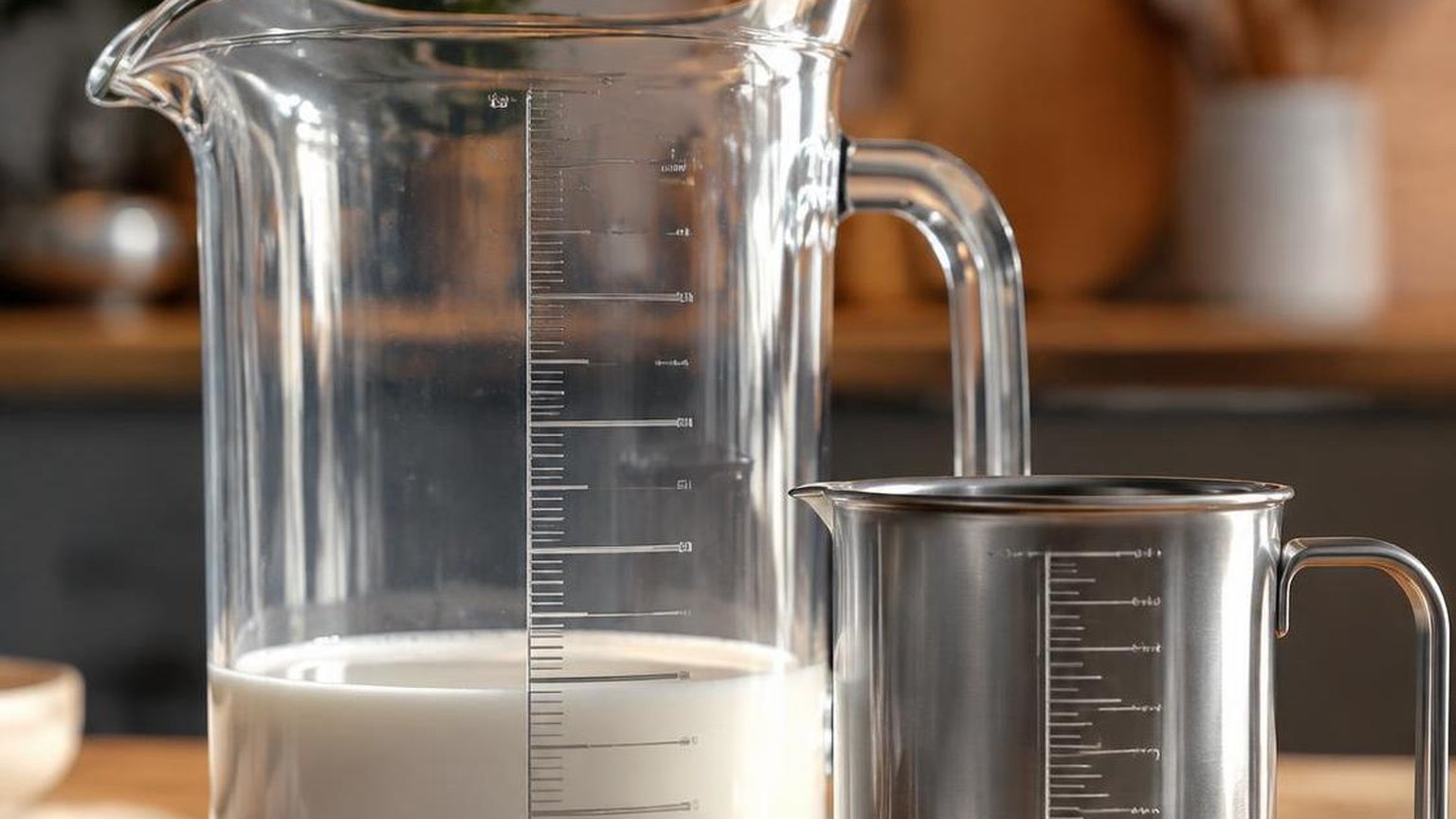
That difference matters when scaling recipes, converting bottle volumes, or reading older British measurements. A small-looking rounding shortcut can shift liquid volume by several tablespoons.
| Quart type | Liters in 1 quart | Where it appears |
| U.S. liquid quart | 0.946352946 liters | U.S. drinks, cooking, grocery labeling |
| Imperial quart | 1.1365225 liters | UK historical recipes, Commonwealth references |
| U.S. dry quart | 1.101220942 liters | Dry goods such as produce or grains |
Myth: 1 quart is exactly 1 liter
One U.S. liquid quart is about 0.946 liters, not 1 liter. The difference is 0.053647 liters, or about 53.6 milliliters.
That is roughly 3.6 U.S. tablespoons. In a single soup recipe, it may not ruin the result. In a 12-quart batch, the shortcut adds up to about 644 milliliters.
Myth: All English-speaking countries use the same quart
The U.S. liquid quart and imperial quart are not interchangeable. One imperial quart is about 20% larger than one U.S. liquid quart.
If a British recipe calls for 2 imperial quarts, that equals about 2.273 liters. Two U.S. liquid quarts equal about 1.893 liters, a difference of about 380 milliliters.
Mistake: Ignoring liquid versus dry quarts
A U.S. dry quart is about 1.101 liters, while a U.S. liquid quart is about 0.946 liters. That is a difference of about 155 milliliters per quart.
Dry quarts are less common in everyday recipe writing, but they still appear in produce measures. Do not use a dry-quart conversion for wine, stock, milk, or cocktails.
Mistake: Rounding too early
- For quick kitchen work, 1 U.S. liquid quart ≈ 0.95 liters is usually reasonable.
- For labeling, nutrition calculations, or scaling large batches, use 0.946352946 liters.
- For four U.S. liquid quarts, use 3.785411784 liters, which is exactly one U.S. gallon.
Myth: A quart is the same as a 750 ml wine bottle
A standard wine bottle is 750 milliliters, or 0.75 liters. One U.S. liquid quart is about 946 milliliters.
That means a quart is about 196 milliliters more than a standard bottle. In wine terms, that is a little more than one 5-ounce serving.
Common Questions
How many liters are in a U.S. liquid quart?
One U.S. liquid quart equals exactly 0.946352946 liters. For everyday kitchen or beverage use, it is usually rounded to 0.946 liters or about 0.95 liters.
How many quarts are in 1 liter?
One liter equals about 1.056688 U.S. liquid quarts. In practical terms, a 1-liter bottle holds slightly more than 1 U.S. quart.
Is a quart the same size in the U.S. and the U.K.?
No. A U.S. liquid quart is 0.946352946 liters, while an Imperial quart used in the U.K. equals about 1.1365225 liters.
How many liters are in a U.S. dry quart?
One U.S. dry quart equals about 1.10122095 liters. This measure is used for dry goods, so it is larger than a U.S. liquid quart.
How do you convert quarts to liters?
For U.S. liquid quarts, multiply the number of quarts by 0.946352946 to get liters. For example, 4 U.S. liquid quarts equals about 3.78541 liters, which is the same as 1 U.S. gallon.
Why does quart-to-liter accuracy matter in cooking and beverage service?
Small volume differences can affect consistency in recipes, batching, and wine or cocktail service.
A U.S. liquid quart equals 0.946 liters, so rounding it to 1 liter adds about 54 milliliters, enough to change dilution, yield, or ingredient balance in precise applications.
How many milliliters are in a quart?
A U.S. liquid quart contains 946.35 milliliters, because 1 quart equals 0.946353 liters and 1 liter equals 1,000 milliliters. By comparison, an imperial quart holds about 1,136.52 milliliters, which is nearly 190 milliliters more than the U.S. liquid measure.
Related Reading
- How Many Ounces In 3 Gallons? 3 Gallons to Ounces – 2026
- What Is A Rye Whiskey?
- How Much Is 1 Lb?
- How Many Liters Is 48 Oz?
- What To Mix With Scotch?
- How Many Ounces Is 160 Ml?
- How Many Cans Make A Pound?
- All Blog Guides
- NIST Special Publication 811 (2008)
- NIST Guide to the SI, Appendix B.8 (2008)
- FDA / eCFR 21 CFR 101.9 Nutrition Labeling of Food (2025)
- Utah State University Extension, Conversions and Equivalents (2024)
- Encyclopaedia Britannica, Quart Unit of Measurement (2024)
- BIPM SI Brochure, The International System of Units (2019)
- Merriam-Webster Dictionary, Quart Definition (2024)