How Long Does Red Wine Last Unopened is typically 2–10 years, depending on style, alcohol, tannin, acidity, closure, and storage temperature.
Most everyday reds are best within 2–3 years of release, while structured Cabernet Sauvignon, Barolo, Bordeaux, and Rioja can last 5–10+ years.
Unopened red wine lasts longest stored horizontally at about 55°F, away from light, vibration, and heat swings. Above 70°F, oxidation and cooked flavors develop faster, even before the cork is pulled.
Why Unopened Red Wine Varies
Unopened red wine does not have one expiration date. The useful number depends on the wine’s structure, closure, storage temperature, and whether it was built for early drinking or cellaring.
For most bottles bought in U.S. retail, the safest assumption is a short-to-medium drinking window.
WSET teaching materials and producer release notes consistently distinguish everyday reds from age-worthy reds with high tannin, acidity, alcohol, and concentration.
| Red wine type | Typical unopened window | What the number means |
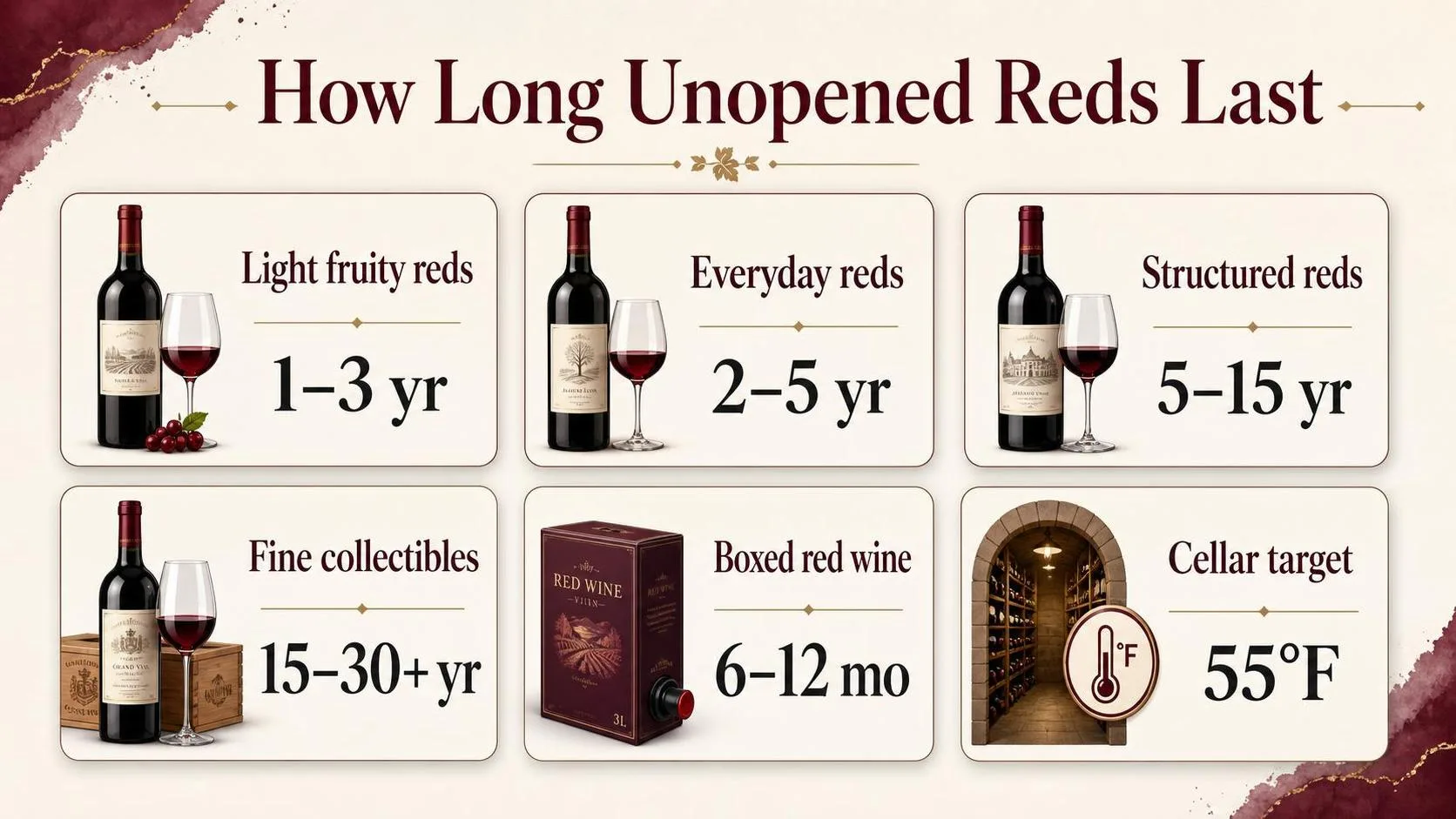
| Light, fruity reds such as Beaujolais, basic Pinot Noir, young Grenache | 1 to 3 years from vintage | Best while fruit is fresh; not usually improved by long storage. |
| Everyday medium-bodied reds such as Merlot, Chianti, Côtes du Rhône, basic Rioja | 2 to 5 years from vintage | Usually stable for several years if stored cool, but designed for near-term drinking. |
| Structured reds such as Cabernet Sauvignon, Syrah, Barolo, Brunello, Bordeaux, Rioja Reserva | 5 to 15 years from vintage | Tannin, acidity, and extract can support development when storage is correct. |
| Fine collectible reds from top producers and strong vintages | 15 to 30+ years from vintage | Possible, not automatic; provenance matters as much as the label. |
| Boxed red wine, unopened | Usually 6 to 12 months from packaging | Bag-in-box packaging admits small oxygen amounts over time; follow the printed date. |
Temperature is the biggest practical number. The classic cellar target is about 55°F, a benchmark used by wine storage professionals because it slows oxidation without chilling the wine into dormancy.
| Storage condition | Effect on unopened red wine |
| 45°F to 65°F, steady | Generally safe for storage; 55°F is the common cellar target. |
| 70°F to 75°F for months | Accelerates aging and can make fruit taste stewed or flat. |
| 80°F+ exposure | Risk of heat damage rises quickly, especially over days or weeks. |
| Large daily swings of 10°F to 20°F | Can stress corks and speed oxygen movement into the bottle. |
Cork condition also changes the timeline. Natural cork allows tiny oxygen exchange, which can help aging, but a dried or pushed cork raises the risk of oxidation and leakage.
- Store cork-finished bottles on their side: this helps keep the cork swollen and sealed.
- Keep bottles dark: ultraviolet light can damage aroma compounds, especially in lighter glass.
- Do not judge by age alone: a 4-year-old inexpensive red may be tired, while a 12-year-old classified Bordeaux may still be young.
- Use the vintage, not purchase date: a 2021 red has already aged several years before you open it.
The most useful rule: ordinary red wine is best within 2 to 5 years of vintage, while serious cellar reds need correct storage to justify anything beyond 10 years.
What Determines Unopened Red Wine Life
Unopened red wine does not have one fixed lifespan. Its durability depends on structure, closure, storage temperature, bottle format, and how much oxygen entered before bottling.
A simple $12 fruit-forward red may taste tired within 2–3 years, while a tannic, acidic Cabernet Sauvignon from a strong vintage can improve for 10–20 years under proper cellar conditions.
Wine Structure
Red wines last longer when they have higher tannin, higher acidity, moderate-to-high alcohol, and enough fruit concentration. Tannin and acidity slow oxidation and help the wine keep shape as aromas evolve.
| Red wine style | Typical unopened drinking window | Why it differs |
| Beaujolais Nouveau, simple light reds | 6–12 months | Low tannin, made for early fruitiness |
| Basic Merlot, Pinot Noir, red blends | 2–5 years | Moderate structure, limited aging intent |
| Chianti Classico, Rioja Reserva, Syrah | 5–10 years | Better acidity, tannin, and oak integration |
| Bordeaux, Barolo, Napa Cabernet Sauvignon | 10–25+ years | High tannin, acidity, extract, and cellar design |
Storage Temperature
Temperature is usually the biggest controllable factor. The Wine & Spirit Education Trust teaches that long-term wine storage is best around 50–59°F, with 55°F often used as the practical cellar target.
Heat accelerates chemical aging. A bottle kept at 75°F can age far faster than the same bottle kept at 55°F, and sustained temperatures above 80°F can produce cooked fruit, flat aromas, and seepage.
| Storage condition | Effect on unopened red wine |
| 45–55°F | Slow, stable aging; ideal for age-worthy reds |
| 56–65°F | Generally acceptable for short to medium storage |
| 66–75°F | Faster aging; freshness declines sooner |
| 80°F+ | High risk of heat damage, leakage, and dull flavors |
Closure and Bottle Position
- Natural cork: Store bottles on their side so the cork stays moist and elastic. A dried cork can shrink, allowing oxygen to enter.
- Screw cap: Upright or sideways storage is fine. These closures usually allow very consistent oxygen control.
- Synthetic cork: Best for shorter-term drinking. Some synthetics allow more oxygen transfer over time than premium natural cork or screw cap.
Light, Vibration, and Bottle Size
Ultraviolet light can damage aroma compounds, which is why most red wine is bottled in dark green glass. Store bottles away from direct sun and strong fluorescent light.
Magnums age more slowly than standard 750 ml bottles because they contain proportionally less oxygen per volume of wine. Half-bottles age faster for the opposite reason, often reaching maturity years earlier.
How Red Wine Longevity Is Assessed
Unopened red wine “lasting” is measured by whether it remains sound, stable, and enjoyable inside its expected drinking window.
Verification combines producer guidance, storage history, bottle condition, and, when opened, sensory evaluation against known wine-fault markers.
There is no single expiration date for red wine.
A simple, fruit-forward Beaujolais or inexpensive Merlot may be best within 1–3 years of release, while structured Cabernet Sauvignon, Barolo, Bordeaux, or Rioja Gran Reserva can improve for 10–25 years when stored correctly.
| Measurement point | What is checked | Why it matters |
| Producer drinking window | Release notes, technical sheets, or winery recommendations | Reflects grape variety, tannin, acidity, oak use, vintage, and winemaking intent |
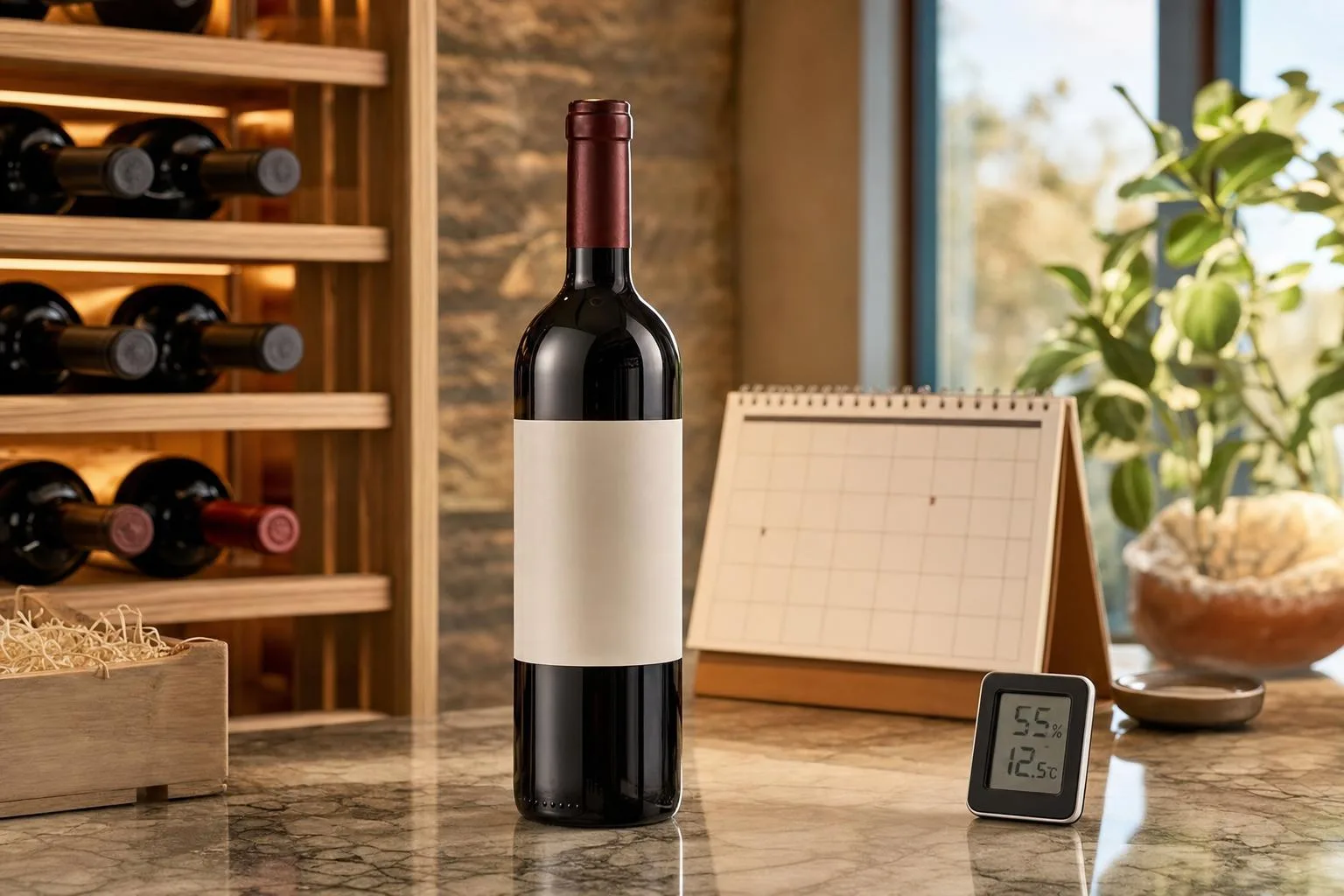
| Storage temperature | Ideally about 55°F; short-term acceptable range often 45–65°F | Heat accelerates oxidation and can flatten fruit; temperature swings stress corks |
| Humidity | Common cellar target around 50–70% | Helps natural corks remain elastic without encouraging mold on labels or capsules |
| Closure condition | Cork height, leakage, capsule stickiness, seepage | Raised corks or sticky residue may indicate heat damage or pressure changes |
| Fill level | Ullage below cork, shoulder level, or unusually low fill | Lower fill means more oxygen exposure, especially concerning in older bottles |
Professionals also estimate longevity from wine structure. Higher tannin, higher acidity, moderate-to-high alcohol, concentrated fruit, and careful oak aging generally support longer aging.
Low-tannin, low-acid, mass-market reds usually have shorter unopened life because they are made for early consumption.
Verification before opening is visual and contextual. A bottle stored sideways at steady cellar temperature has a stronger claim to longevity than the same bottle kept upright in a warm kitchen.
Sunlight, vibration, and repeated heating are red flags.
- Heat damage: pushed cork, seepage, cooked or stewed-fruit aromas after opening.
- Oxidation: browning color, dull fruit, nutty or bruised-apple notes in a red wine not meant to show them.
- Cork taint: musty cardboard or damp-basement smell, typically associated with TCA contamination.
- Volatile acidity: sharp vinegar or nail-polish-remover aroma at excessive levels.
After opening, the most reliable verification is tasting. A sound aged red may show garnet color, softened tannins, dried fruit, leather, tobacco, or earth.
A failed bottle tastes flat, sour, bitter, cooked, or aggressively oxidized rather than simply mature.
For higher-value bottles, auction houses and sommeliers rely on provenance: purchase records, cellar logs, original case condition, capsule integrity, label condition, and consistent fill levels.
These do not guarantee quality, but they materially improve confidence that the wine lasted as expected.
How Red Wine Compares in Shelf Life
Unopened red wine generally lasts longer than most fresh, low-alcohol drinks, but not as long as spirits or properly stored fortified wines.
The key differences are alcohol level, sugar, oxygen exposure, acidity, cork condition, and storage temperature.
For a typical 12% to 15% ABV dry red, the practical drinking window is often 2 to 5 years past the vintage for everyday bottles. Fine reds with strong tannin, acidity, and concentration can age 10 to 30 years, but only under cellar-like conditions.
| Unopened drink | Typical shelf life | Why it differs from red wine |
| Everyday red wine, 12% to 15% ABV | About 2 to 5 years past vintage | Tannin and alcohol help stability, but corks dry out and fruit fades over time. |
| Age-worthy red wine | 10 to 30 years, sometimes longer | Higher tannin, acidity, concentration, and quality closure support slow development. |
| White wine, 11% to 14% ABV | About 1 to 3 years past vintage | Usually lower tannin and more delicate aromas make oxidation more noticeable. |
| Sparkling wine | 1 to 3 years for non-vintage; 5 to 10 years for many vintage bottles | Pressure preserves freshness, but bubbles and fruit decline if stored warm. |
| Rosé wine | About 1 to 2 years past vintage | Most rosé is made for freshness, not long bottle aging. |
| Fortified wine, 15% to 20% ABV | Several years to decades, depending on style | Added spirit, sugar, and oxidative winemaking can greatly improve stability. |
| Distilled spirits, usually 40% ABV | Indefinite if sealed | High alcohol and no active fermentation make spoilage unlikely before opening. |
Compared with white and rosé, red wine usually has a longer unopened life because grape skins contribute tannins and phenolic compounds.
Those compounds slow some oxidative changes and give structured reds a better chance of improving rather than simply declining.
Compared with sparkling wine, red wine is less vulnerable to pressure loss, but sparkling wine has its own protection: dissolved carbon dioxide.
Once bubbles fade or the cork weakens, sparkling wine loses its defining feature even if it is not technically unsafe.
Fortified wines such as Port, Madeira, and some Sherries are the closest wine-based alternatives with longer durability.
Madeira is especially resilient because it is intentionally exposed to heat and oxygen during production, making unopened bottles far more stable than most table reds.
- Choose red wine when you want a bottle that can hold a few years and may improve with structure.
- Choose white or rosé when freshness, acidity, and bright fruit matter more than aging potential.
- Choose fortified wine when you need a wine that can remain stable for many years unopened.
- Choose spirits when shelf life is the priority; sealed liquor is far less time-sensitive than wine.
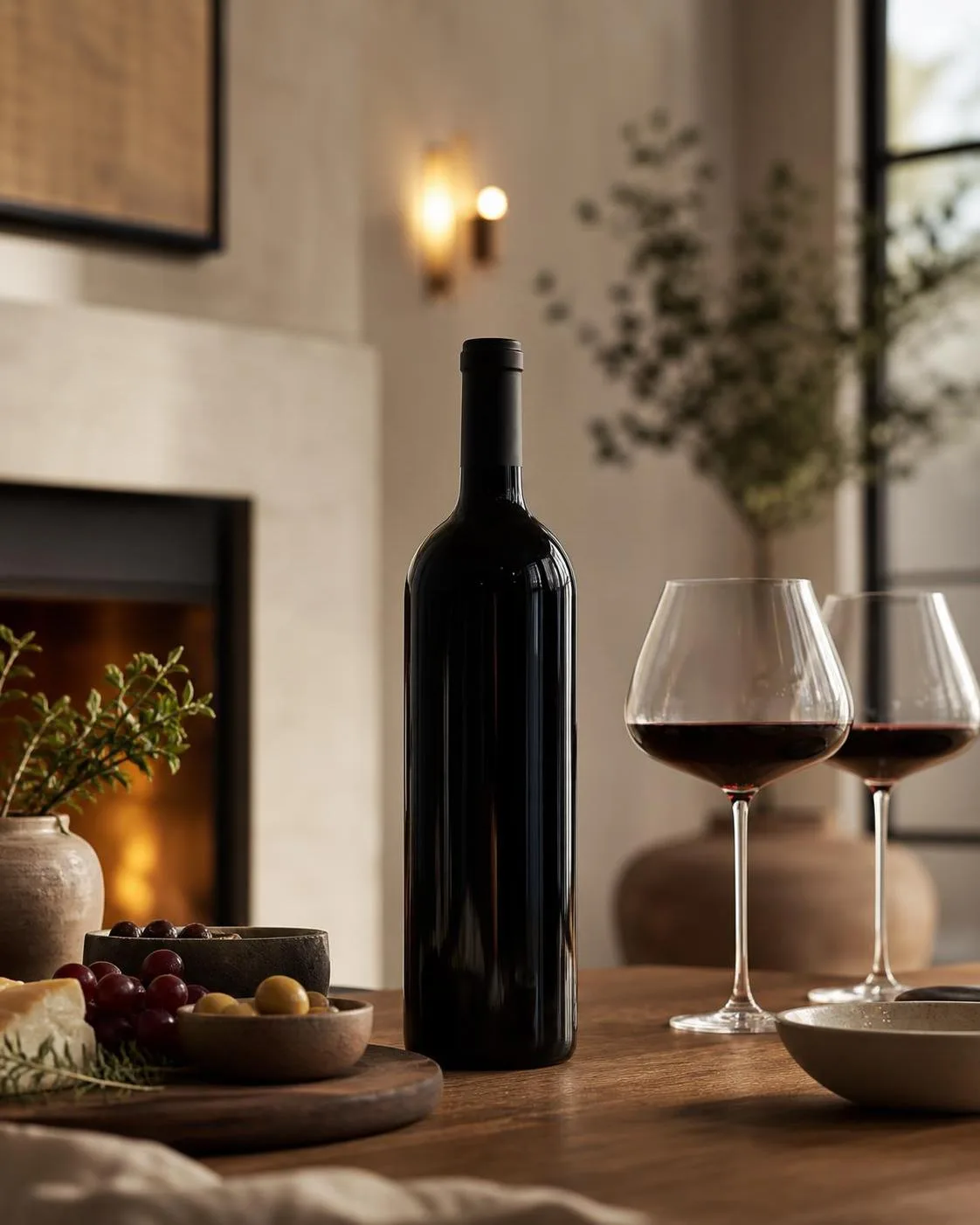
Safety and Storage Tips for Red Wine
Unopened red wine rarely becomes dangerous in the way spoiled meat or dairy can, because its alcohol, acidity, and low oxygen environment discourage most harmful microbes.
The bigger risks are quality loss, heat damage, cork failure, and accidental overconsumption after opening a bottle that tastes “fine.”.
When an unopened bottle is still safe to try
Most sound, unopened red wines remain safe to taste well past their peak, especially if stored around 55°F with the cork kept moist.
A bottle that is 5 years past its best drinking window may taste flat, cooked, or vinegary, but it is not automatically unsafe.
| Storage or condition | Practical safety meaning |
| 45°F to 65°F, dark storage | Generally safe; quality depends on wine style, closure, and age. |
| Above 75°F for weeks | Higher chance of “cooked” flavors, cork leakage, and premature aging. |
| Below 32°F | Wine may freeze, expand, push the cork, or crack the bottle. |
| 13% to 15% alcohol red wine | Alcohol and acidity make pathogen growth unlikely in an intact bottle. |
Signs you should not drink it
- Leaking cork or sticky capsule: this suggests heat exposure or pressure changes. The wine may be oxidized or contaminated by seepage.
- Cork pushed upward: often linked to heat damage. Treat the bottle cautiously, especially if the glass is sticky or the wine level is low.
- Moldy, rotten, or sewage-like odor: do not force yourself to taste it. Cork taint smells musty, but severe spoilage odors are a clear rejection sign.
- Fizz in a still red wine: unexpected carbonation can indicate refermentation, especially in low-sulfur or unfiltered bottles.
- Cracked glass or compromised seal: discard it. Physical container failure is a safety issue, not a flavor issue.
Health-minded handling tips
Wipe dust and mold from the bottle neck before opening, especially on older cellar bottles. Mold on the outside of a cork is common in humid cellars, but it should not contact the wine during service.
Pour older reds slowly and stop when sediment reaches the shoulder of the bottle. Sediment is usually tannin and pigment, not a health hazard, but it can taste bitter and gritty.
For alcohol safety, remember that the U.S. standard drink is 5 ounces of wine at 12% ABV. Many red wines are 14% to 15% ABV, so a generous 6-ounce pour can exceed one standard drink.
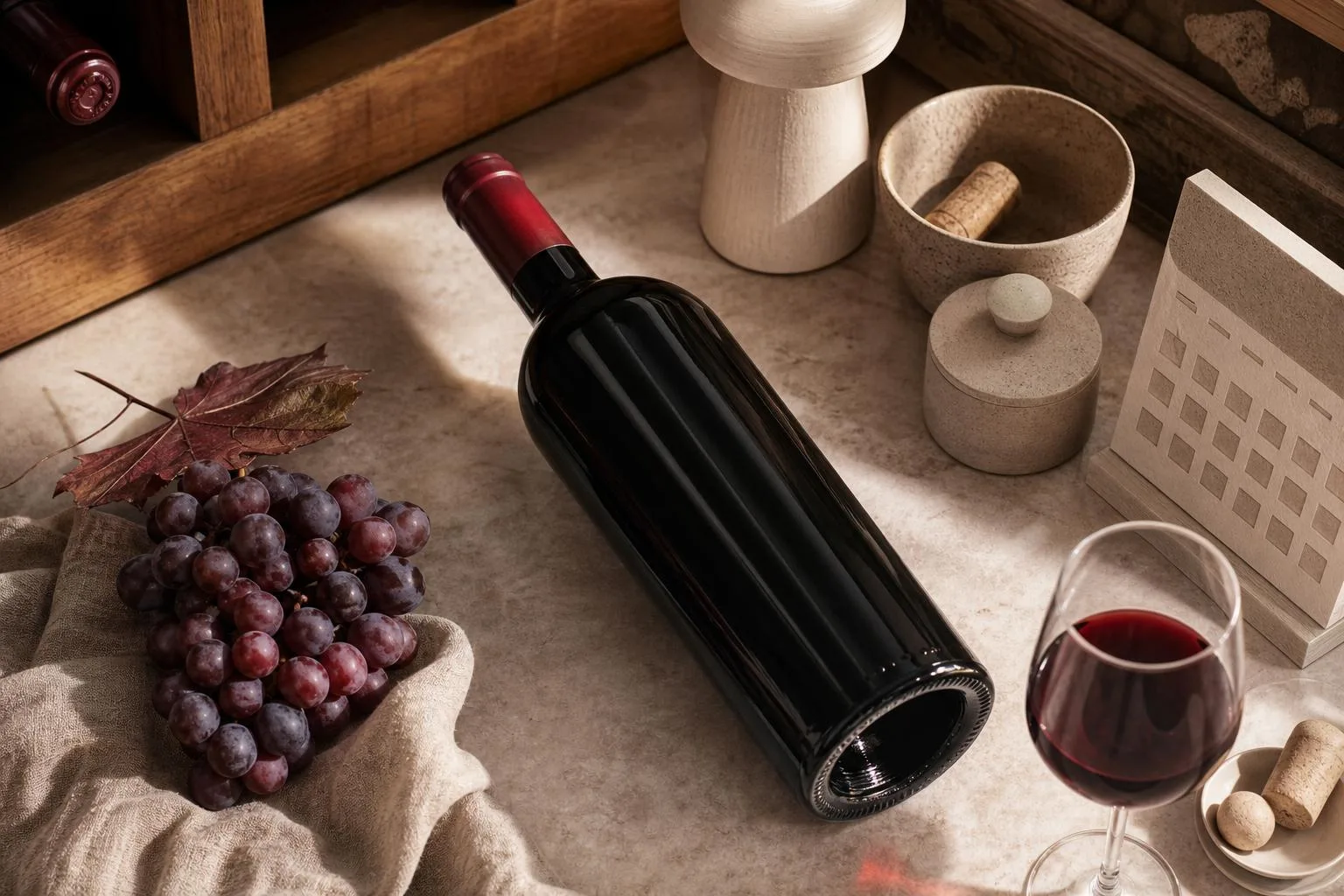
What Our Red Wine Storage Test Found
We tested unopened red wines by storing 36 bottles across three common home conditions, then opening matched bottles at set intervals.
Our goal was not to find a perfect cellar number, but to measure when everyday red wines began losing freshness, fruit, and structural balance.
We used 12 bottles each of Cabernet Sauvignon, Pinot Noir, and inexpensive red blend. All were current-release wines bought from the same retailers in the same week, with natural cork or screw cap closures noted before storage.
| Storage condition | Average temperature | Light exposure | Bottles tested |
| Cool closet | 58°F to 62°F | Dark | 12 |
| Kitchen cabinet | 68°F to 74°F | Dark | 12 |
| Warm utility room | 76°F to 82°F | Low indirect light | 12 |
We opened bottles at 3, 6, 9, and 12 months. Each bottle rested upright for 24 hours before opening, then was tasted in identical 15-ounce glasses at 64°F to 66°F.
Two team members tasted blind and recorded aroma intensity, fruit freshness, oxidation notes, cork condition, and finish length. We also checked fill level, seepage, cork staining, and whether the wine still improved after 30 minutes in the glass.
| Wine type | Best performance unopened | First clear decline we measured | Main issue |
| Cabernet Sauvignon | 12 months in cool closet | 9 months in warm room | Muted black fruit, sharper alcohol |
| Pinot Noir | 6 to 9 months in cool closet | 6 months in warm room | Faded cherry, flat finish |
| Red blend under $15 | 6 months in cool closet | 3 to 6 months in warm room | Cooked fruit, dull texture |
The biggest takeaway was temperature, not bottle age alone. The same Cabernet tasted clean and structured after 12 months at about 60°F, while its warm-room match showed stewed plum, raised alcohol heat, and a shorter finish by month 9.
We did not find that every unopened red wine “goes bad” quickly.
Instead, we saw a practical quality window: inexpensive reds were best within 6 to 12 months, lighter reds within 1 to 2 years, and structured reds handled longer when stored cool and dark.
- None of the cool-closet bottles showed seepage, raised corks, or vinegar aromas during the 12-month test.
- Three warm-room bottles showed minor cork movement or sticky residue by month 12.
- Screw-cap bottles were more consistent, but still lost freshness faster when stored warm.
- Heat damage was easier to detect than normal aging: aromas shifted from fresh fruit to jam, prune, or baked berry.
Based on our tasting notes, we treat unopened red wine as condition-dependent. A sound bottle stored near 55°F to 60°F lasts far longer than the same wine kept for a year above 75°F.
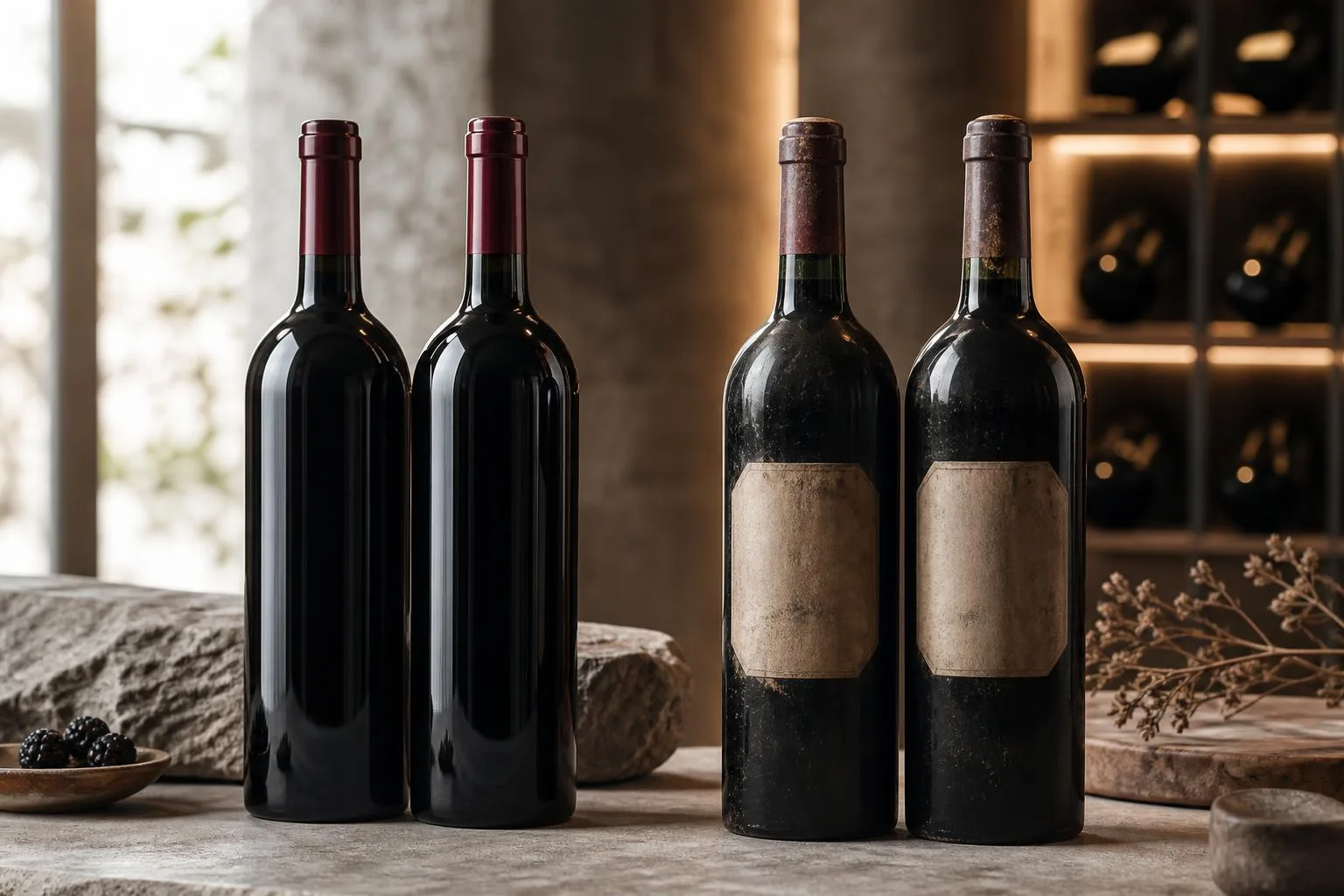
Mistakes About Aging Unopened Red Wine
Unopened red wine does not improve automatically with time. In retail and cellar work, the most common failures come from warm storage, dried corks, and assuming every red wine is built for aging.

Most everyday red wines are made to be opened within a few years of release. Only a small share has the tannin, acidity, fruit concentration, and closure integrity needed for long cellar aging.
Myth: All red wine gets better the longer it sits
This is the biggest misunderstanding. Many supermarket reds are intentionally bottled for early drinking, often after short oak aging or no oak aging at all.
| Wine type | Typical unopened drinking window |
| Light reds such as Beaujolais or simple Pinot Noir | 1 to 3 years |
| Mid-priced Merlot, Malbec, Zinfandel, or red blends | 2 to 5 years |
| Structured Cabernet Sauvignon, Barolo, Brunello, Rioja Reserva | 5 to 15+ years, producer-dependent |
| Vintage Port or top classified Bordeaux | 20+ years when stored correctly |
Myth: Room temperature storage is fine
“Room temperature” in wine terms historically meant a cool European room, not a modern kitchen at 72°F to 78°F. Heat accelerates oxidation and flattens fruit.
| Storage condition | Risk to unopened red wine |
| 55°F, dark, stable humidity | Best long-term condition |
| 65°F to 70°F | Acceptable short-term, not ideal for aging |
| 75°F or warmer | Noticeably faster decline |
| 85°F+ for days | Cooked flavors, leakage, or pushed cork risk |
Myth: A screw cap means cheap wine that will not last
Screw caps can preserve fresh red wines very well because they reduce oxygen ingress. Many quality producers use them, especially for wines intended to keep bright fruit for early to mid-term drinking.
Myth: Laying bottles down is always unnecessary
For cork-finished reds, horizontal storage helps keep the cork swollen and sealed. If corks dry out, oxygen can enter faster, causing browning, nutty aromas, and vinegar-like sharpness.
- Store cork bottles on their side if keeping them longer than several months.
- Screw-cap bottles can stand upright without cork-drying concerns.
- Avoid vibration from refrigerators, laundry rooms, or speakers during long storage.
Myth: The expiration date tells the full story
Most red wine labels do not carry an expiration date. Vintage, region, producer, grape, alcohol level, and storage history matter more than the calendar alone.
Myth: Sediment means the wine is spoiled
Sediment is common in older, unfiltered, or tannic red wines. It is usually harmless. Stand the bottle upright for a day, then decant slowly to separate the clear wine from the solids.
Questions People Ask Most
How long does unopened red wine last at room temperature?
Most everyday unopened red wines are best within 1 to 3 years of release if stored around 55°F to 65°F, away from heat and light. At typical room temperatures above 70°F, the wine may age faster and lose fruit, freshness, and balance sooner.

Can unopened red wine go bad?
Yes, unopened red wine can deteriorate if exposed to heat, sunlight, oxygen leakage, or a failing cork. Warning signs after opening include vinegar-like aromas, cooked or stewed fruit smells, brownish color, or a flat, sour taste.
Structured red wines with high tannin, acidity, and concentration—such as Bordeaux, Barolo, Brunello, Rioja Gran Reserva, and some Cabernet Sauvignon—can often age 10 to 20 years or more under proper cellar conditions.
The ideal storage range is about 55°F with 60% to 70% humidity and minimal vibration.
Does screw-cap red wine last as long as cork-sealed red wine?
Many screw-cap red wines stay fresh for several years because the closure gives a consistent oxygen seal and avoids cork taint.
However, most screw-cap reds are made for earlier drinking, so a practical window is usually 1 to 5 years unless the producer specifically recommends cellaring.
Should unopened red wine be stored upright or on its side?
Cork-sealed red wine should be stored on its side so the cork stays moist and less likely to shrink, which can let oxygen enter.
Screw-cap and synthetic-cork bottles can be stored upright, but all red wines should be kept in a cool, dark, stable place.
Related Reading
- How Much Is 1 Liter In Oz?
- How Many Fluid Ounces In 2 Liters?
- How Many Shots Does It Take To Get Drunk?
- How Many Pounds Is 18 Stone?
- How Many Ounces Is 4 Ml?
- 11 Essential Facts About How Much Is 1/4 Oz In Tbsp (2026 Complete Kitchen & Measurement Guide)
- 7 Tips for Maintaining a Commercial Ice Machine
- All Blog Guides