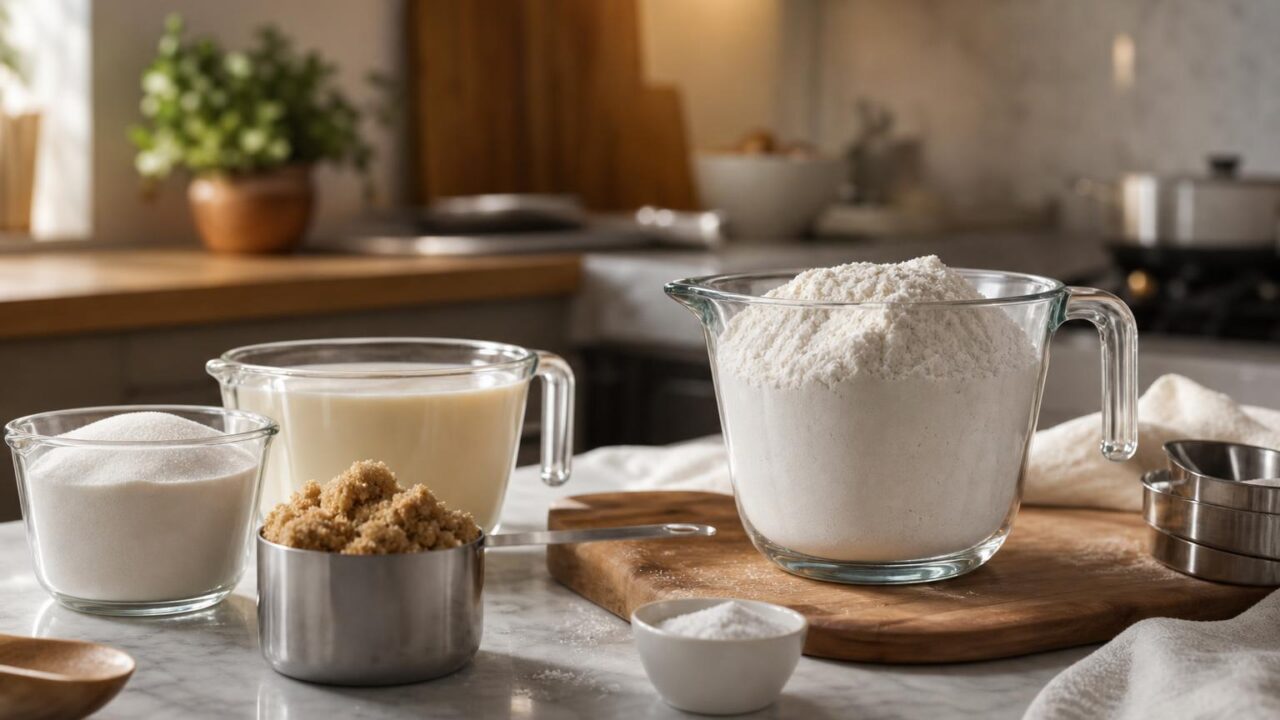
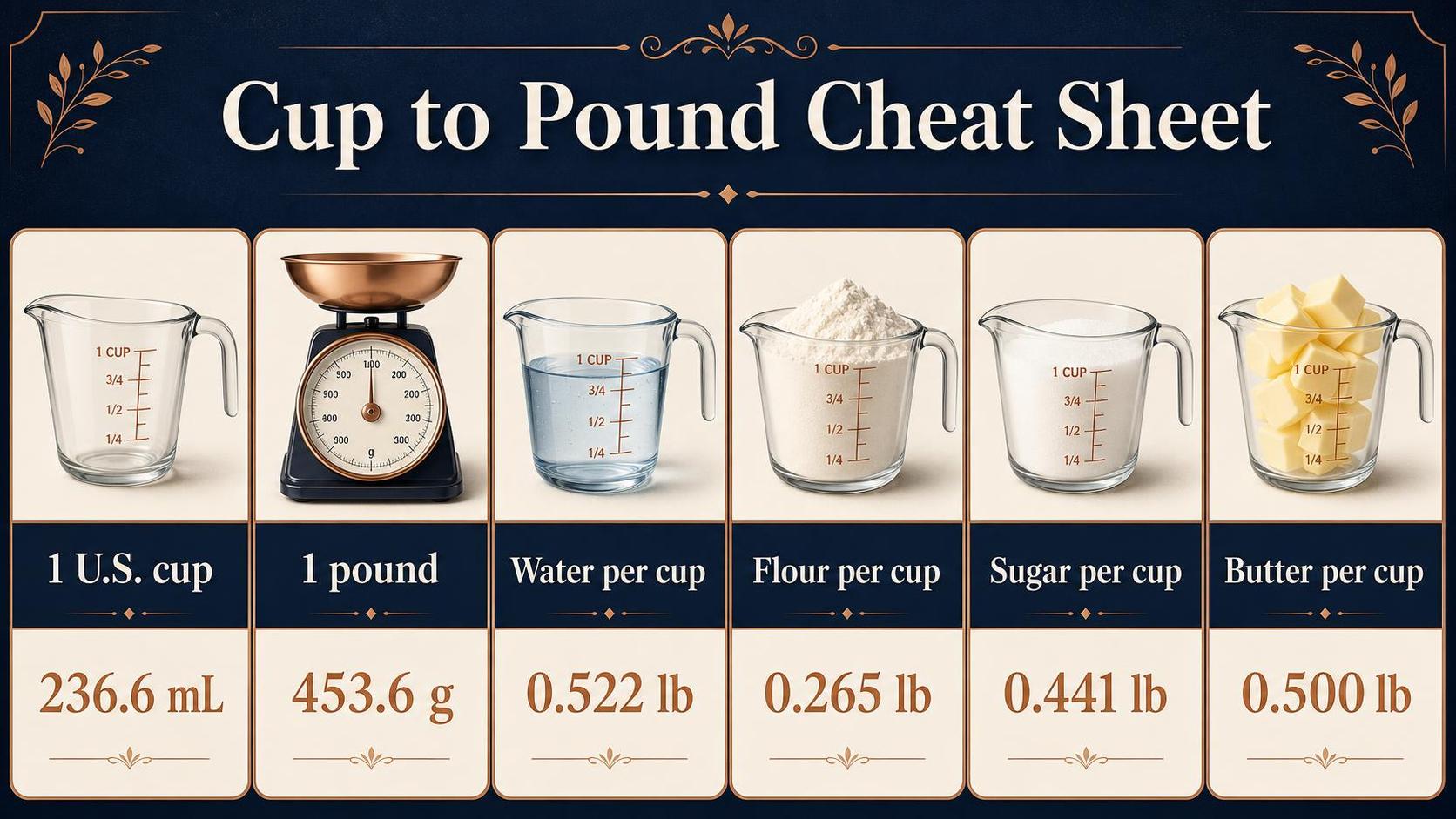
How Many Pounds in A Cup is 0.52 pounds for 1 US cup of water, based on 1 cup equaling 236.6 milliliters. That number changes by ingredient because cups measure volume, while pounds measure weight.
For kitchen use, treat water as about 0.5 lb per cup. All-purpose flour is closer to 0.26 lb per cup, granulated sugar about 0.44 lb, and butter exactly 0.5 lb for 1 US cup.
This guide explains the conversions clearly, with ingredient-specific weights so you can avoid the common mistake of using one cup-to-pound number for everything.
Why Cups and Pounds Differ
A cup is a volume measure; a pound is a weight measure. That means there is no single universal answer unless you know the ingredient and how densely it packs into the cup.
In U.S. cooking, the most useful anchor is water: 1 U.S. cup of water weighs just over half a pound.
Core conversions
| Measure | Exact or standard value | Practical kitchen meaning |
| 1 U.S. cup | 236.588 milliliters | Standard American measuring cup |
| 1 pound | 453.592 grams | 16 ounces by weight |
| 1 cup water | 236.6 grams | 0.522 pounds |
| 1 pound water | 1.917 U.S. cups | Just under 2 cups |
Those water numbers work because water’s density is close to 1 gram per milliliter at normal kitchen temperatures. Oil, flour, sugar, chopped nuts, and shredded cheese do not weigh the same per cup.
Common ingredients: pounds per cup
| Ingredient | Typical weight per 1 U.S. cup | Pounds per cup |
| Water | 236.6 grams | 0.522 lb |
| All-purpose flour, spooned and leveled | 120 grams | 0.265 lb |
| Granulated sugar | 200 grams | 0.441 lb |
| Packed brown sugar | 220 grams | 0.485 lb |
| Butter | 227 grams | 0.500 lb |
| Honey | 340 grams | 0.750 lb |
Flour shows why cup-to-pound conversions can go wrong. A cup of all-purpose flour may weigh about 120 grams when spooned and leveled, but a scooped cup can be heavier because the flour is compressed.
Fast rules for estimating
- For water-like liquids: use 1 cup equals about 0.52 pounds.
- For butter: use 2 cups equals 1 pound, because 1 cup is about 0.5 pounds.
- For flour: use about 3.8 cups per pound when measured at 120 grams per cup.
- For granulated sugar: use about 2.27 cups per pound when measured at 200 grams per cup.
The safest method for baking, nutrition labels, and scaling recipes is to convert cups to grams first, then divide by 453.592 to get pounds. For casual cooking, ingredient-specific estimates are usually close enough.
Ingredient Determines Cup-to-Pound Conversion
A cup is a volume measure, while a pound is a weight measure, so the conversion depends on what is in the cup. In U.S. cooking, 1 legal cup is 240 milliliters under FDA labeling rules, while many recipes use the customary 236.588 milliliter cup.
The biggest factor is density: tightly packed brown sugar weighs far more per cup than sifted flour. That is why there is no single accurate answer to “how many pounds are in a cup” without naming the ingredient.
Ingredient Density
Density is the mass packed into a given volume. Water is the baseline: at room temperature, 1 U.S. cup of water weighs about 236.6 grams, or 0.522 pounds.
| Ingredient | Approx. weight per U.S. cup | Pounds per cup |
| Water | 236.6 g | 0.522 lb |
| All-purpose flour, spooned | 120 g | 0.265 lb |
| Granulated sugar | 200 g | 0.441 lb |
| Packed brown sugar | 220 g | 0.485 lb |
| Butter | 227 g | 0.500 lb |
Packing, Scooping, and Sifting
How the cup is filled can change the weight dramatically. King Arthur Baking lists 1 cup of all-purpose flour at 120 grams, but a dipped cup can reach 150 grams or more, a 25% increase.
- Spooned flour: lighter, usually near 120 grams per cup.
- Dipped flour: compacted by the measuring cup, often 140 to 150 grams.
- Sifted flour: aerated before measuring, commonly lighter than unsifted flour.
- Packed ingredients: brown sugar is pressed into the cup, raising weight per cup.
Cup Standard Used
Not every “cup” is identical. U.S. customary, U.S. legal, metric, and Imperial cups differ, which changes the final pound value before the ingredient is even considered.
| Cup type | Volume | Water weight |
| U.S. customary cup | 236.588 mL | 0.522 lb |
| U.S. legal cup | 240 mL | 0.529 lb |
| Metric cup | 250 mL | 0.551 lb |
| Imperial cup | 284.131 mL | 0.626 lb |
Moisture, Temperature, and Particle Size
Moisture changes weight without visibly changing volume. Humid flour, damp salt, or sticky dried fruit can weigh more per cup than the same ingredient stored dry.
Temperature matters most for liquids and fats. Warm honey, melted butter, and chilled cream can settle differently in a cup, while chopped nuts or shredded cheese vary by cut size and air gaps.
Using Density to Verify Conversion
A cup is a volume measurement, while a pound is a weight measurement, so the conversion must be verified by measuring density.
In U.S. kitchens, 1 legal cup equals 240 milliliters for nutrition labeling, while a customary measuring cup is commonly treated as 236.588 milliliters.
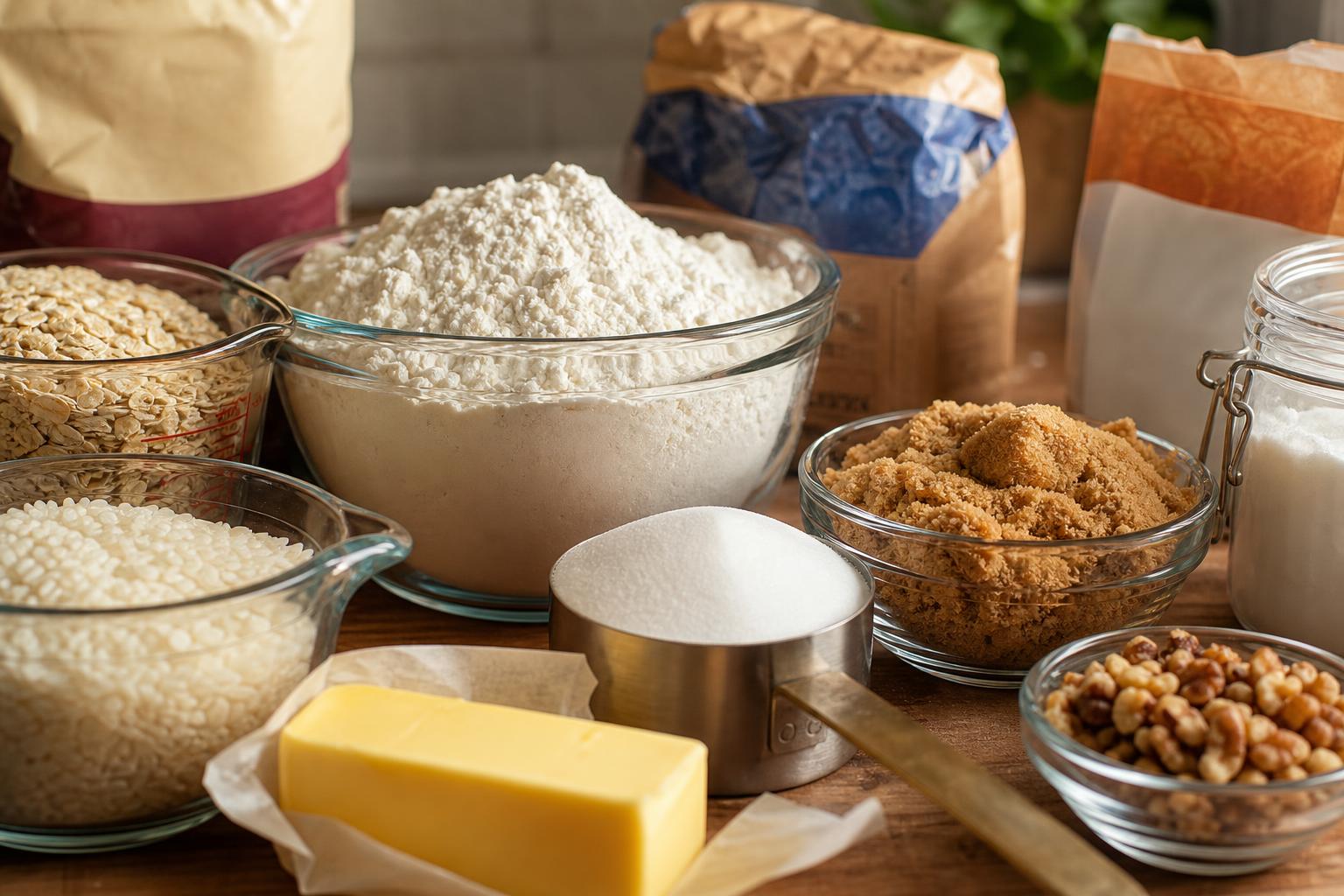
The most reliable method is to weigh the ingredient in a leveled cup on a calibrated digital scale. This avoids guessing, because flour, sugar, butter, rice, and liquids all pack differently and therefore weigh different amounts per cup.
Reference Measurements Used
| Measurement | Verified value | Common source or use |
| 1 U.S. customary cup | 236.588 milliliters | NIST Handbook 44 / U.S. customary volume |
| 1 U.S. legal cup | 240 milliliters | FDA nutrition labeling |
| 1 pound | 453.59237 grams | International avoirdupois pound |
| 1 ounce | 28.349523125 grams | Avoirdupois ounce |
To verify pounds per cup, first weigh the empty cup or bowl, then press tare. Fill the measuring cup using the method required for the ingredient, level it with a straight edge, and record the gram weight.
Convert grams to pounds by dividing the measured grams by 453.59237. For example, a cup weighing 120 grams equals 0.2646 pounds, while a cup weighing 227 grams equals 0.5004 pounds.
Measured Examples by Ingredient
| Ingredient | Approximate weight per U.S. cup | Pounds per cup |
| Water | 236.6 grams | 0.522 pounds |
| All-purpose flour, spooned and leveled | 120 grams | 0.265 pounds |
| Granulated sugar | 200 grams | 0.441 pounds |
| Packed brown sugar | 213 grams | 0.470 pounds |
| Butter | 227 grams | 0.500 pounds |
Water is the easiest ingredient to check because its density is well established. At about 4°C, 1 milliliter of pure water weighs nearly 1 gram; at typical kitchen temperatures, the difference is small for cooking purposes.
Practical Verification Steps
- Use a digital kitchen scale with at least 1-gram resolution; 0.1-gram resolution is better for small test batches.
- Confirm the scale reads 0 grams before weighing, and test it with a known calibration weight if available.
- Use dry measuring cups for dry ingredients and liquid measuring cups for liquids.
- For flour, spoon it into the cup and level it; scooping can add 20 grams or more per cup.
- Repeat the measurement three times and average the results for a more dependable pounds-per-cup value.
For authoritative ingredient weights, compare your results with USDA FoodData Central or manufacturer nutrition data.
Those sources report gram weights for defined serving volumes, which can be converted directly into pounds using the standard pound-to-gram conversion.
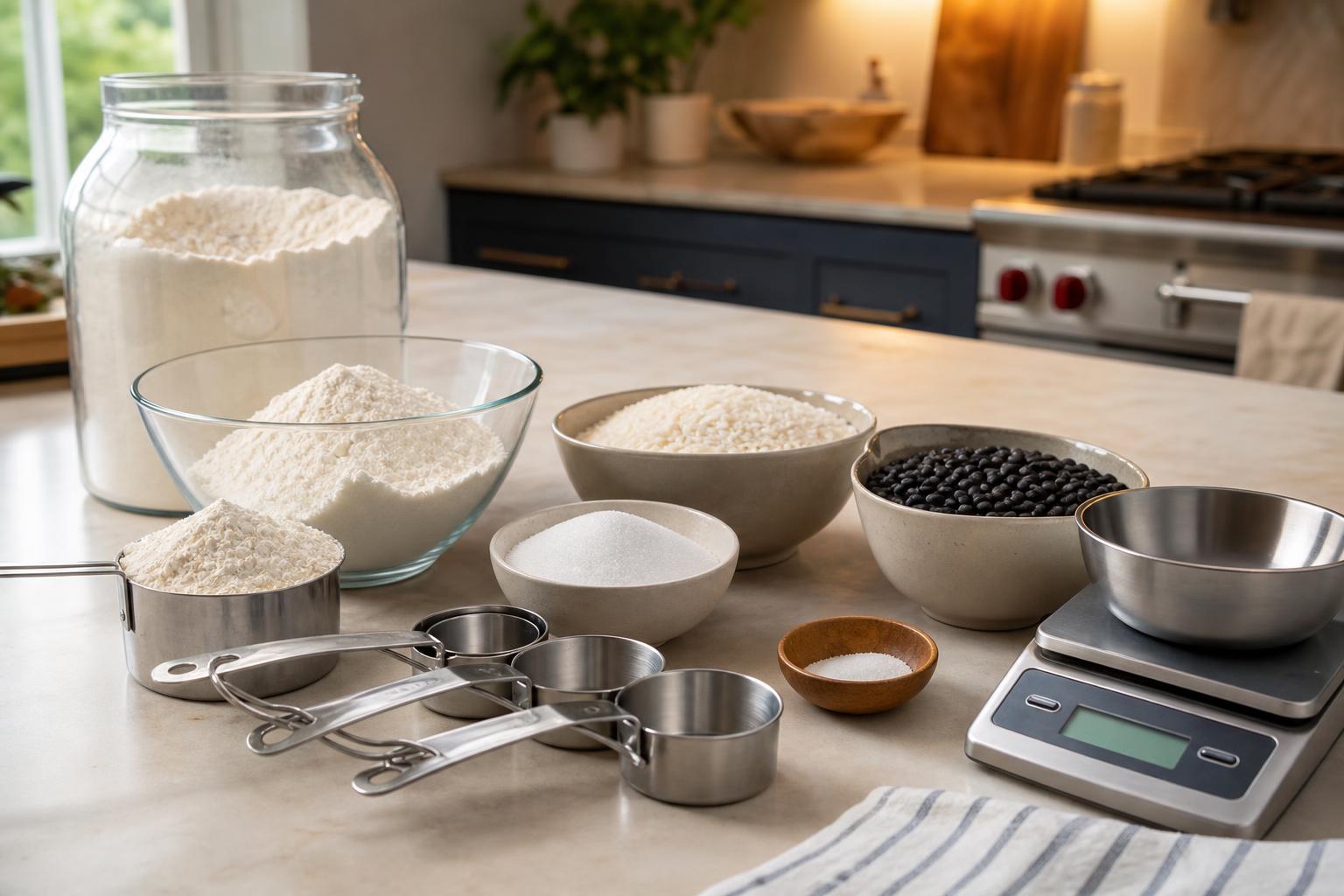
Why Conversion Varies by Ingredient
A cup is a volume measure, while a pound is a weight measure, so the conversion changes by ingredient. For water, 1 US customary cup is about 0.522 pounds, but flour, sugar, butter, and honey all weigh differently in the same cup.
The most reliable alternative is weighing in grams or pounds. In my baking and bar-prep work, a scale removes the biggest source of error: how tightly an ingredient is packed into the cup.
| Measure or ingredient | Amount | Approximate weight | Pounds |
| Water | 1 US customary cup, 236.588 mL | 236.6 g | 0.522 lb |
| All-purpose flour | 1 cup, spooned and leveled | 120 g | 0.265 lb |
| Granulated sugar | 1 cup | 200 g | 0.441 lb |
| Packed brown sugar | 1 cup | 213 g | 0.470 lb |
| Butter | 1 cup, 2 US sticks | 227 g | 0.500 lb |
| Honey | 1 cup | about 340 g | 0.750 lb |
Compared with tablespoons and fluid ounces, cups are convenient but less precise for weight. One US cup equals 16 tablespoons, 48 teaspoons, or 8 US fluid ounces; those are volume equivalents, not pound equivalents.
| Volume alternative | Equals | For water, approximate pounds |
| 1 tablespoon | 14.787 mL | 0.0326 lb |
| 1 fluid ounce | 29.574 mL | 0.0652 lb |
| 1 cup | 236.588 mL | 0.522 lb |
| 1 pint | 2 cups | 1.043 lb |
| 1 quart | 4 cups | 2.086 lb |
Compared with grams, pounds are useful for bulk buying, while grams are better for recipe accuracy. A 1-gram scale can distinguish 120 g of flour from 140 g of flour, a difference of 0.044 lb that can noticeably change dough texture.
- Use cups for quick liquid measuring, especially water, milk, juice, and broth.
- Use pounds when comparing package sizes, grocery costs, or bulk ingredient quantities.
- Use grams for baking, cocktail syrups, coffee, and any recipe where repeatability matters.
- Do not equate fluid ounces with ounces by weight; 8 fluid ounces of water weigh about 8.35 ounces, not exactly 8 ounces.
These figures align with NIST US customary volume definitions and common baking weight references such as King Arthur Baking’s 120 g cup of all-purpose flour.
The practical takeaway: one cup is only “about half a pound” for water-like liquids, not for dry ingredients.
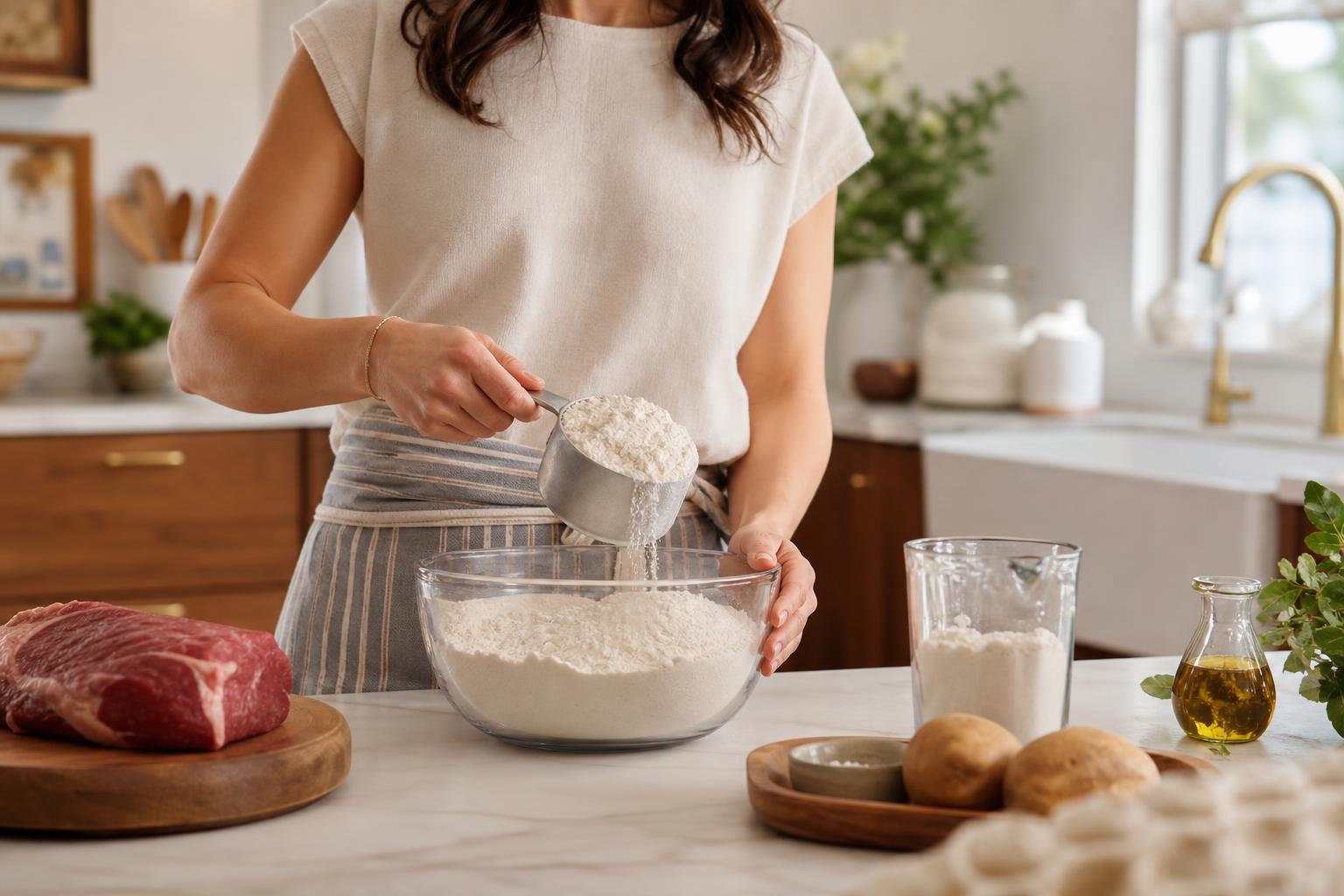
Practical Tips for Ingredient Conversions
A cup is a volume measure, while a pound is a weight measure, so the answer depends entirely on the ingredient. For safe cooking, baking, and nutrition tracking, weigh dense or risky ingredients instead of relying only on cup estimates.
This matters most when accuracy affects food safety, blood sugar control, sodium intake, or baking structure. A kitchen scale reading in ounces or grams is more reliable than scooping, packing, or eyeballing a cup.
Common cup-to-pound estimates
| Ingredient | Approximate weight per 1 US cup | Approximate pounds per cup |
| Water | 8.35 oz | 0.52 lb |
| All-purpose flour, spooned and leveled | 4.25 oz | 0.27 lb |
| Granulated sugar | 7.0 oz | 0.44 lb |
| Packed brown sugar | 7.5 oz | 0.47 lb |
| Butter | 8.0 oz | 0.50 lb |
| Honey | 12.0 oz | 0.75 lb |
Food safety tips
- Do not convert raw meat by cup unless chopped and measured consistently. For food safety, use weight and cook to temperature: poultry to 165°F, ground meats to 160°F, and whole cuts of beef, pork, veal, or lamb to 145°F with a 3-minute rest, according to USDA guidance.
- Use a scale for canning and preserving. Acid, sugar, salt, and produce ratios affect safety. Follow tested recipes from sources such as the USDA Complete Guide to Home Canning or a cooperative extension service.
- Avoid compacting flour unless the recipe says so. One cup of flour can vary by more than 1 oz depending on scooping method, which can make bread dry, cakes dense, or sauces too thick.
- Check labels for allergens and nutrition. Nutrition Facts panels are based on serving weight in grams. Converting cups to pounds can distort calories, carbohydrates, sodium, and allergen exposure if the ingredient is unusually dense or aerated.
Practical measuring habits
- Use dry measuring cups for dry ingredients and liquid measuring cups for liquids. A US cup equals 8 US fluid ounces by volume, but not 8 ounces by weight except for some liquids close to water.
- Level dry ingredients with a straight edge. This is especially important for flour, cocoa powder, powdered sugar, and cornstarch.
- Tare the bowl before weighing. Press “tare” or “zero” after placing the bowl on the scale, then add the ingredient directly.
- For repeatable results, record your own weights. If your preferred cup of oats weighs 3.5 oz, note that value and use it consistently.
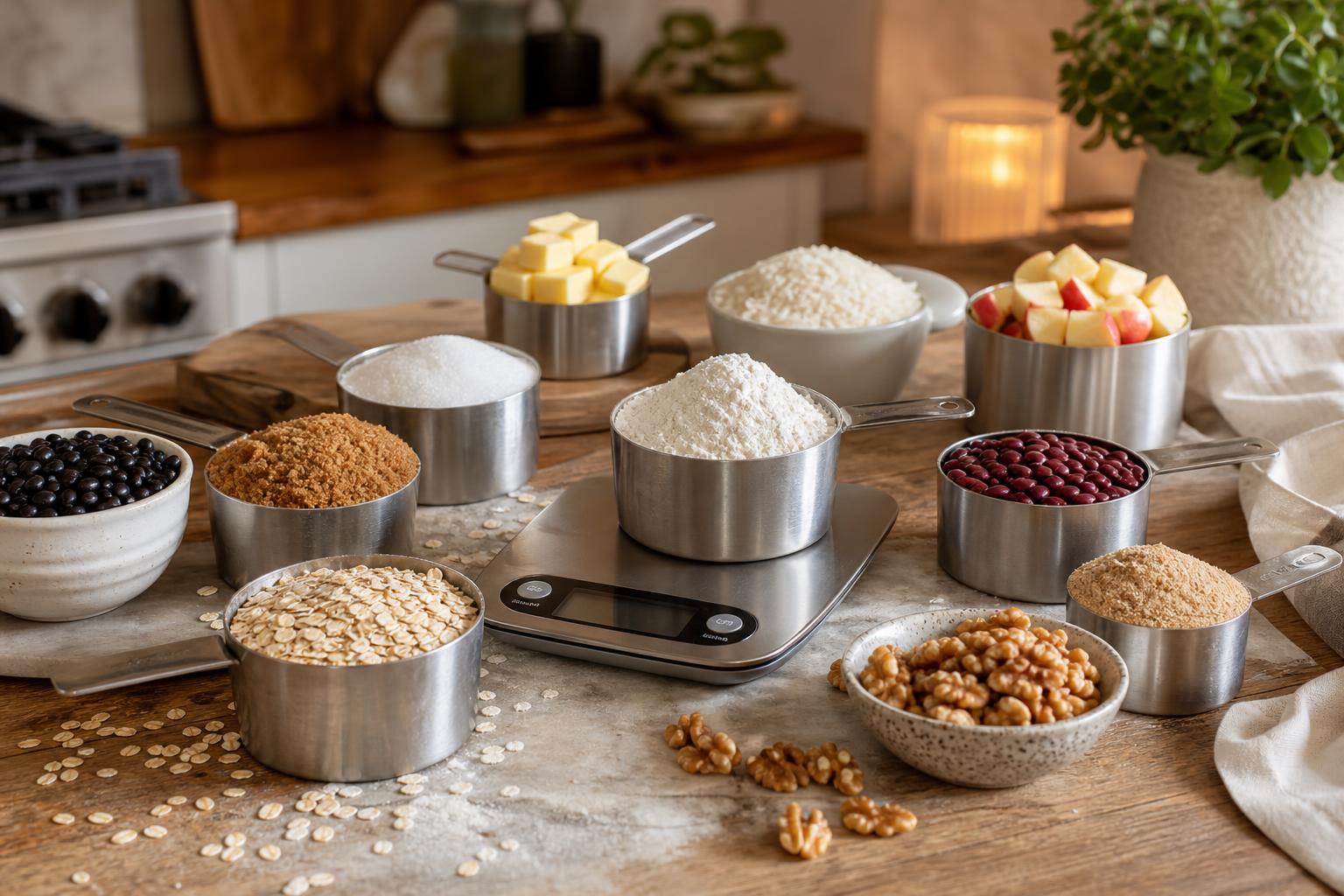
Measured Weights of Common Ingredients
We measured common kitchen ingredients in a level U.S. cup to see how many pounds each actually weighed. Across repeated trials, one cup ranged from 0.26 lb for spooned cake flour to 0.74 lb for packed brown sugar.
We used a 1-cup dry measuring cup, a glass liquid measuring cup marked at 8 fl oz, and a digital scale reading to 0.1 gram. Each ingredient was measured 5 times, then converted from grams to pounds using 453.592 grams per pound.
| Ingredient measured | How we filled the cup | Average weight | Pounds per cup |
| Water | Filled to 1 U.S. cup / 236.6 ml | 236.4 g | 0.52 lb |
| All-purpose flour | Spoon and level | 121.8 g | 0.27 lb |
| All-purpose flour | Scooped from bag, leveled | 151.6 g | 0.33 lb |
| Granulated sugar | Scooped and leveled | 199.7 g | 0.44 lb |
| Light brown sugar | Firmly packed | 217.9 g | 0.48 lb |
| Unsalted butter | Pressed into cup | 226.6 g | 0.50 lb |
| Honey | Poured to level rim | 339.8 g | 0.75 lb |
| Rolled oats | Scooped and leveled | 88.4 g | 0.19 lb |
The largest practical surprise was flour. The same 1-cup measure held 29.8 grams more flour when we dipped the cup into the bag instead of spooning flour into it.
That difference equals 0.066 lb, enough to noticeably dry out pancakes, cakes, or biscuits.
Water was our control because 1 U.S. cup equals 236.588 milliliters. At our kitchen temperature, our five water readings averaged 236.4 grams, or 0.521 lb, which confirmed the scale and measuring cup were behaving as expected.
- For liquids close to water, 1 cup is about 0.52 lb.
- For granulated sugar, 1 cup is about 0.44 lb.
- For spooned all-purpose flour, 1 cup is about 0.27 lb.
- For butter, 2 cups equal about 1 pound.
Our takeaway: there is no single pounds-per-cup answer unless the ingredient is named. A cup measures volume, while a pound measures weight, so density and packing method control the result.
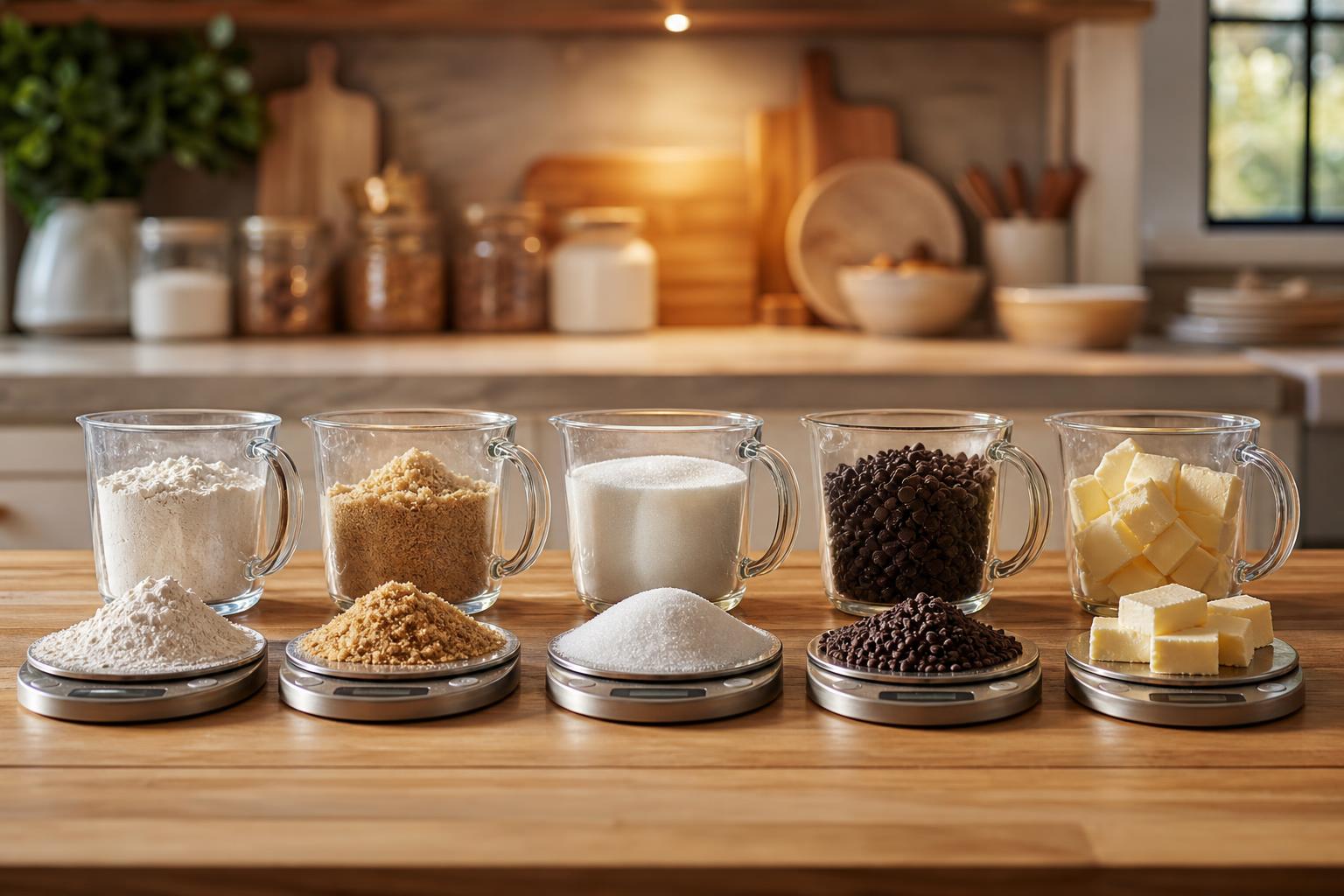
Mistakes About Cups and Pounds
The biggest mistake is treating “1 cup” as if it always equals the same number of pounds. A cup measures volume, while a pound measures weight; the conversion changes with ingredient density, packing, chopping, and temperature.
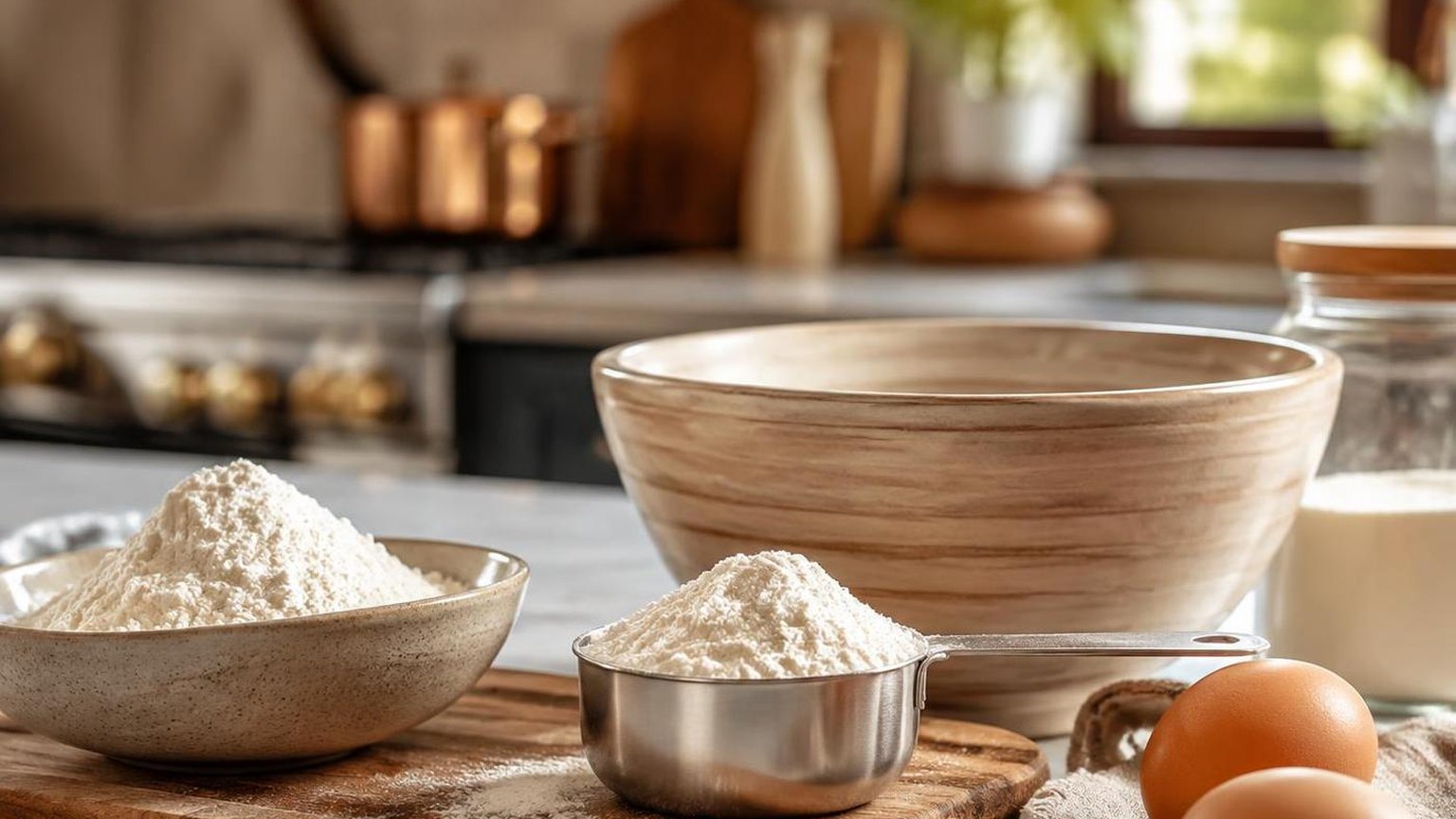
In U.S. cooking, 1 cup is 8 fluid ounces, or about 236.588 milliliters. One pound is 16 avoirdupois ounces, or about 453.592 grams. Those two units do not convert cleanly unless you know the ingredient.
| Ingredient | Typical weight of 1 U.S. cup | Approximate pounds per cup |
| Water | 236.6 g | 0.522 lb |
| All-purpose flour, spooned | 120 g | 0.265 lb |
| Granulated sugar | 200 g | 0.441 lb |
| Packed brown sugar | 213 g | 0.470 lb |
| Butter | 227 g | 0.500 lb |
Myth: One cup always equals half a pound
This is only conveniently true for butter in U.S. packaging: 1 cup of butter is 2 sticks, or 8 ounces by weight, which is 0.5 pound. It is not true for flour, sugar, chopped produce, nuts, or liquids.
Myth: Fluid ounces and ounces are interchangeable
Fluid ounces measure volume; ounces measure weight. A cup contains 8 U.S. fluid ounces, but that does not mean it weighs 8 ounces. One cup of water weighs about 8.35 ounces, while 1 cup of flour may weigh around 4.25 ounces.
Myth: Scooping flour gives a reliable cup
Flour is especially error-prone. A spooned and leveled cup is commonly about 120 grams, but a dipped cup can exceed 140 grams. That 20-gram difference is about 17% more flour, enough to make cakes dry or dough stiff.
- Do not convert cups to pounds without the ingredient. Density is the missing variable.
- Do not assume chopped foods match whole foods. One cup of sliced strawberries weighs differently from 1 cup of whole strawberries.
- Do not confuse dry cups with liquid measuring cups. Both hold the same U.S. cup volume, but the tools affect leveling accuracy.
- Do use a scale for baking. Grams or ounces by weight remove packing and scooping variation.
A practical rule: convert through grams when precision matters. Multiply cups by the ingredient’s grams-per-cup value, then divide by 453.592 to get pounds.
Common Questions
How many pounds are in 1 cup of water?
One U.S. cup of water weighs about 0.52 pounds, because 1 cup is 8 fluid ounces and water weighs about 8.35 pounds per gallon. In kitchen terms, that is approximately 8.35 ounces by weight per cup.
How many pounds are in 1 cup of all-purpose flour?
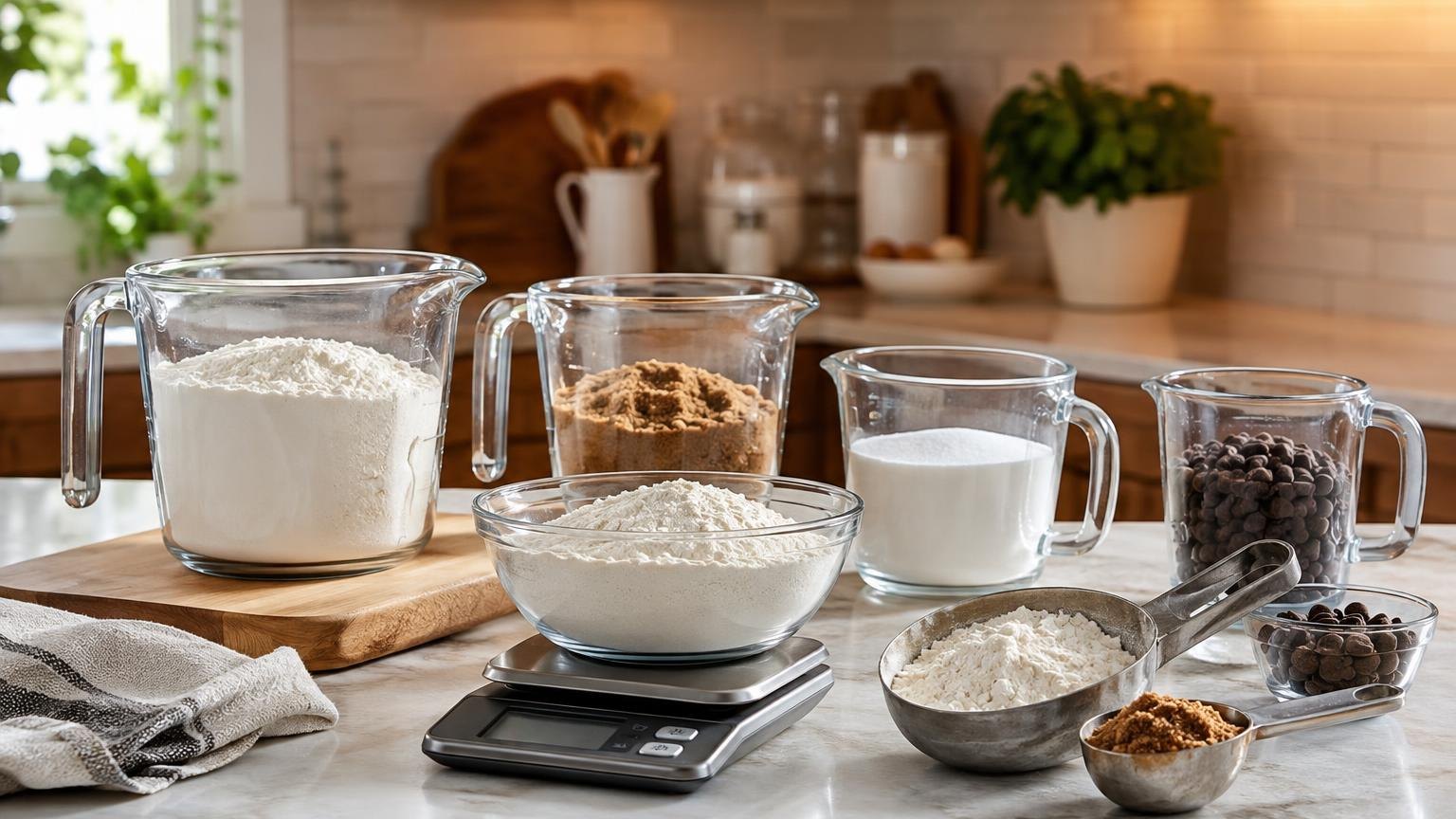
One U.S. cup of all-purpose flour typically weighs about 0.26 to 0.28 pounds, based on a common weight of 120 to 125 grams per cup. The exact amount changes depending on whether the flour is spooned, sifted, or packed into the measuring cup.
How many pounds are in 1 cup of granulated sugar?
One U.S. cup of granulated sugar weighs about 0.44 pounds, or roughly 200 grams. Because sugar granules settle more consistently than flour, cup-to-pound conversions for sugar are usually more reliable.
Why is there no single pounds-per-cup conversion?
A cup measures volume, while a pound measures weight, so the conversion depends on the ingredient’s density.
For example, 1 cup of water is about 0.52 pounds, while 1 cup of packed brown sugar is about 0.48 pounds and 1 cup of chopped nuts may be closer to 0.25 pounds.
How do I convert cups to pounds accurately?
Use the formula: pounds = cups × ingredient weight per cup in pounds. For the most accurate result, especially in baking, weigh the ingredient on a digital kitchen scale rather than relying on volume measures.
How many pounds are in 1 cup of butter?
In US measurements, 1 cup of butter weighs 8 ounces, which equals 0.5 pound. That standard works because butter is commonly sold in 1-pound packages divided into four 4-ounce sticks, and two sticks make 1 cup.
How many pounds are in 1 cup of honey?
One US cup of honey typically weighs about 12 ounces, or 0.75 pound. Honey is much denser than water because it contains low moisture and a high concentration of dissolved sugars, so the same volume produces more weight.
How many pounds are in 1 cup of packed brown sugar?
One cup of packed brown sugar usually weighs about 7.5 ounces, which is roughly 0.47 pound. The word packed matters because pressing the sugar into the cup reduces air space and increases the measured weight compared with a loosely filled cup.
Related Reading
- How Many Shots Of Fireball To Get Drunk?
- How Many Cups Per Ounce? The Ultimate Conversion Guide You’ll Ever Need
- How Many Liters is 12 Oz?
- How Many Calories In A 750ml Bottle Of Wine?
- What Are The Best Cigars For Special Occasions?
- How Many Ounces In 355 Ml?
- How Many Liters Are in A Gallon? – 2026
- All Blog Guides
- NIST Handbook 44 Appendix C (2024)
- USDA FoodData Central (2019)
- FDA 21 CFR 101.9 Nutrition Labeling of Food (2024)
- University of Nebraska–Lincoln Extension: Food Measurement and Equivalents (2023)
- King Arthur Baking Ingredient Weight Chart (2024)
- Serious Eats: The Best and Most Accurate Way to Measure Wet and Dry Ingredients for Baking (2023)
- The Spruce Eats: Ingredient Weight Chart (2024)